
Seat Ibiza is a model that brings the Spanish brand almost half of all its sales. But despite its importance to the company, until recently this hatchback remained the oldest creation of Seat: designers last updated its appearance back in 2003. Fans of the brand had long been waiting for a generational change, and when the Bocanegra concept, a forerunner of the new Ibiza, debuted at the Geneva Motor Show in March this year, everyone hoped that the production version would appear by autumn. However, the Spaniards outwitted everyone: while the prototype was showing off at the stand in the PalExpo exhibition center, the factory in Martorell was already assembling production cars, and within three months journalists were allowed to take them for a spin.
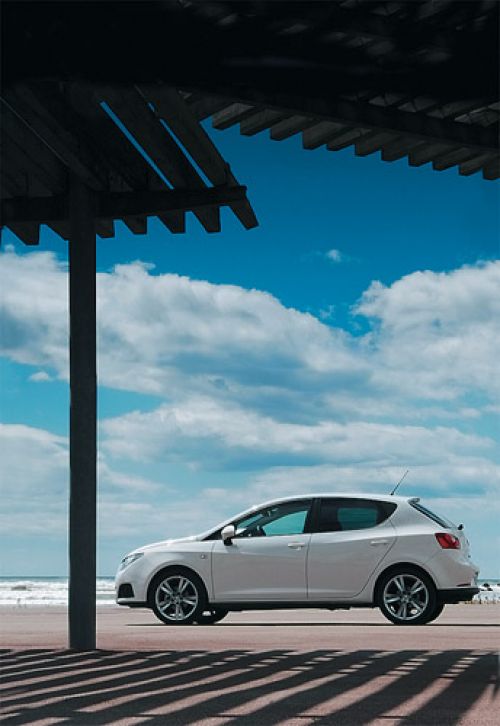
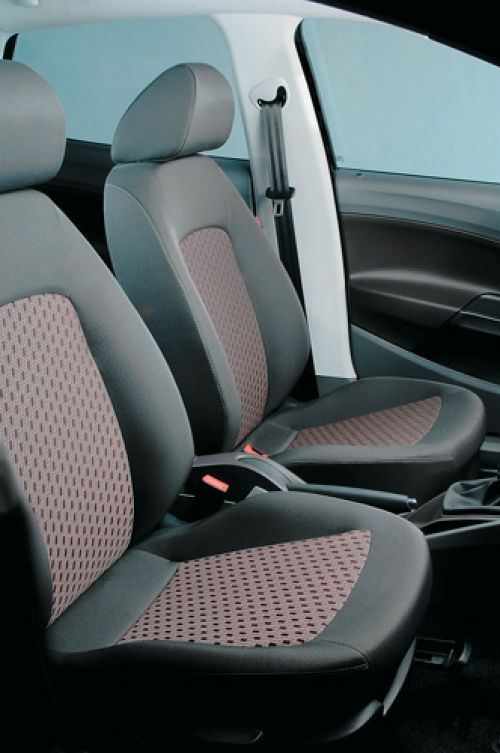
Despite its compact size, the new Seat Ibiza does not look like a harmless toy at all. The stampings on the sides give the body a lean look, the headlights look warily from under the hood visor, and the front air intake is stretched into a predatory grin — it is immediately clear that this car has character. Inside, there is an explosive mixture of German pedantry and Spanish passion. The instruments are recessed into deep wells, the speedometer and tachometer needles point downward, buttons and displays are illuminated in red, the seats boast pronounced lateral support, and the steering wheel seems borrowed from a racing simulator — inside this little one, you really feel the spirit of a sports car. The trim plastic is of good quality but hard, although there are also elastic inserts on the front panel. The assembly pleases: all interior parts are fitted with minimal gaps; it is evident that two decades of cooperation with the Volkswagen Group have not been in vain.
2007 Seat Ibiza
© Photo: Seat
2007 Seat Ibiza
© Photo: Seat
The central console of the Ibiza is arranged in steps: on the upper tier there is the audio system, below is the climate control unit, and even lower is a niche with a USB connector and AUX input for an MP3 player. Factory navigation is not offered even for an extra charge, but in the upper part of the dashboard there is a special slot where you can install any portable navigator or PDA with a GPS module. This solution has drawbacks: when parking, it is better to remove the navigator and take it with you or hide it in the car (for example, in compartments under the front seats), and the recessed podium does not decorate the interior. However, such a scheme will cost much less than factory navigation.
The steering column is adjustable both for tilt and reach, the driver's seat is height-adjustable — so both a short driver and a two-meter giant can get comfortable. The steering wheel is almost ideal in terms of rim thickness, diameter, and the shape of the grips in the hold area — hands reach for it by themselves. The gear lever moves easily, with short throws, and locks clearly into the selected position. The audio and climate control units are designed in a unified style: the display is surrounded by a ring of buttons. It looks stylish, but in practice it is not very convenient — among the row of glossy keys, you have to search for the right one, distracting from the road. The "music" has a remote control that can be operated blindly, but for the "climate" there is no alternative, so the version with a regular air conditioner is more convenient in this regard. Another ergonomic complaint is the folding armrest: it is mounted too high, and if you lean on it, you can no longer reach the short gear lever.
At the test drive, the Ibiza showed the entire range of engines with which the new model enters the Russian market: petrol 1.2, 1.4, 1.6 (70, 85, and 102 hp) and a 1.9 TDI turbodiesel (105 hp). All of them work in conjunction with a 5-speed manual transmission, and from next year a 7-speed DSG "robot" will also appear. Oddly enough, of all the tested engines, the weakest one pleased the most. The three-cylinder 1.2 has a fighting spirit: it pulls excellently from the bottom and willingly revs to the top. Such an Ibiza is a living embodiment of Seat's slogan Auto Emotion. The version with the 1.6 engine also turned out well: not only the dynamics are appealing, but also the sound of the tuned exhaust system. But the 1.4 and 1.9 TDI units did not impress: the petrol one seemed bland, and the diesel disappointed with a narrow operating range.
2007 Seat Ibiza
© Photo: Seat
2007 Seat Ibiza
© Photo: Seat
The brakes on the Ibiza are disc brakes all around, ABS and ESP are standard on all modifications. They work effectively and have good informativeness. A pleasant bonus is the Hill Hold Control system, which allows you to start on an incline without using the handbrake: on a slope, it maintains pressure in the brake line for a few seconds after the driver releases the brake pedal. The suspension and electro-hydraulic power steering are tuned with an excellent balance of comfort and handling: the car obediently follows the steering wheel, but does not annoy with excessive shaking. True, much depends on the tires: on 17-inch wheels with low-profile rubber, the car feels noticeably stiffer and sharper than on 15-inch ones.
All inclusive
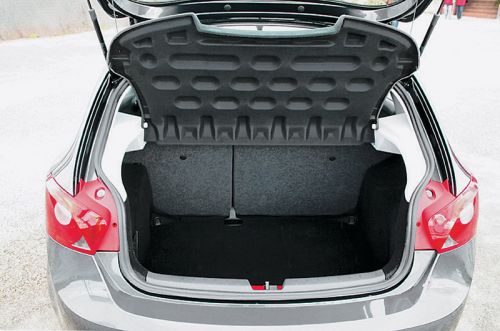
2007 Seat Ibiza
© Photo: Seat
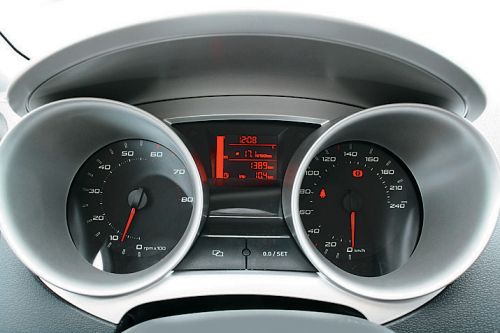
2007 Seat Ibiza
© Photo: Seat
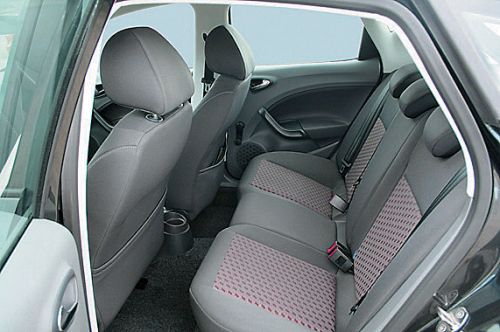
The model will be available in three trim levels: Reference, Stylance, and Sport. The base Reference version already includes four airbags, ABS, ESP, EBA, TCS, Hill Hold Control, tire pressure sensor, Isofix mounts on the rear row, height-adjustable front seats, a steering wheel adjustable in two planes, an MP3 audio system with six speakers and a remote control, front electric windows, and a central locking with remote control. The Stylance version adds climate control, heated mirrors, fog lights with cornering light function, an onboard computer, 15-inch alloy wheels, leather trim on the steering wheel and gear lever, rear electric windows, and cruise control. Sport differs from Stylance with a sport suspension and seats, 16-inch wheels, and air conditioning instead of climate control. The options list includes adaptive bi-xenon headlights, parking sensors, navigation preparation, heated front seats, tinted rear windows, an armrest, a panoramic sunroof with electric drive, USB connector, Bluetooth, curtain airbags, and an alarm system.
Driving
The excellently tuned Volkswagen chassis gives the car a sporty character.
Interior
Spacious cabin, comfortable driver's seat, quality trim materials.
Comfort
Energy-intensive suspension, decent sound insulation, good sound from the standard audio system.
Safety
The new Seat earned 5 stars in Euro NCAP for passenger protection.
Price
The new generation will cost 5–7% more than its predecessor.
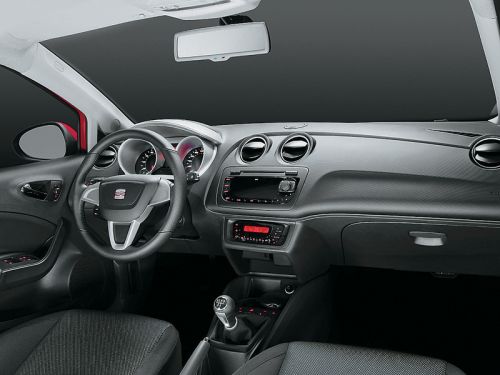
2007 Seat Ibiza
© Photo: Seat
Advantages and disadvantages
+ Stylish design, excellent handling, rich standard equipment, high level of safety.
- Lack of modifications with automatic transmission, inconvenient armrest.
Specifications
Make and model — Seat Ibiza 1.2
Dimensions — 4052x1693x1445 mm
Engine — petrol, 3-cylinder, 1198 cm³, 70 hp/5400 rpm
Transmission — manual, 5-speed
Dynamics — max 163 km/h; 15.0 s to 100 km/h
Competitors — Mazda2, Opel Corsa, Peugeot 207
Our opinion
Bright appearance, comfortable cabin, generous equipment, and confident road behavior make the Ibiza a notable contender in the compact city car segment. But until versions with an automatic transmission appear in Russia, this model will find it difficult to seriously compete with direct rivals.
© 5 Koleso