SAAB 9-3. Scandinavian Extreme
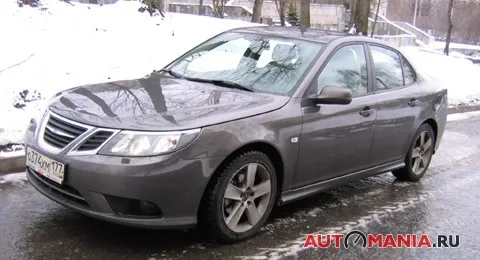
The Swedish brand SAAB in our country is a product for true connoisseurs, so the cars from the famous aircraft manufacturer never achieved mass success. Yes, dealers like to recall that in 2007 sales doubled compared to 2006. But what is 757 cars sold in 2007 against 360 a year earlier? These figures are nowhere near the indicators of Chevrolet (190 thousand) or Ford (175 thousand).
There can be exactly two reasons why someone chooses a SAAB: fanatical love for the brand or a desire to stand out from the crowd. But certainly not rational calculation. There are many more reasons for unpopularity: the most expensive maintenance in the world, a platform from the Opel Vectra (albeit with a different suspension capable of rear-wheel steering), as well as a hefty price tag. Try to convince the mass buyer to pay over a million rubles for a car the size of a Toyota Corolla or Mitsubishi Lancer. Our test car, for example, cost 1,197,000 rubles, and the top Aero version was approaching one and a half million.
In winter, an updated version hit the market. The car transformed not only externally — the main thing is that its character changed. And the price, of course, also increased.
About the character — a bit later. First, about the exterior. GM representatives claim that the new 9-3 differs from the previous one by as many as 70 points. We won't list everything, but some things catch the eye immediately. The "face" of the car is designed in the spirit of the SAAB Aero X concept shown in Geneva about five years ago. The car looks especially impressive at sunset when the parking lights are off. The LED "eyebrows" of the headlights are impressive, although they evoke thoughts of borrowing: a similar solution we have already seen on the Audi A5 and the R8 sport roadster.
The radiator grille and fog light surrounds have changed slightly. The trim on the front and rear doors has been completely redesigned. Extra decor was removed from the sides, and the door handles became simpler and more convenient. The rear lights received smoky-white lenses. The trunk lid acquired a more regular shape, making it easier to load things. 18-inch alloy wheels also appeared.
Of course, SAAB did not abandon its signature features. This includes the night panel, which turns off all instrument and console lighting, leaving only the speedometer with a set maximum speed. And the ignition lock located in the center behind the "automatic". And the signature air vent dials. And the mysterious abbreviation D.T.E. on the onboard computer, which indicates how many kilometers you can drive on the remaining fuel. In 99.9% of other cars, this parameter is designated as "RANGE". But what is "D.T.E."? Even the dealership managers could not explain. For myself, I deciphered it as "Distance Till End" — "until it runs out". In short, "we've arrived". Most likely, that's what it is.
The interior designers barely touched, although they did overcomplicate one thing. In the new 9-3, the central console is edged around the perimeter with a narrow silver strip.
Perhaps in cloudy Sweden this looks beautiful, but in our sunny day this strip reflects in the windshield right at the driver's eye level and glares terribly, creating a dangerous blind spot in the left part of the "windshield". So, having bought a 9-3 for a "lemon" with a tail, immediately stock up on paint so that "Uncle Vasya" from the garage service can carefully fix this flaw. During our test, we had to cover the strip with narrow black masking tape — thirty seconds of work, and the glare disappeared.
In the center, in front of the automatic transmission selector, there is a classic GM radio. Exactly the same was on the previous generation SAAB "three". And now it is also installed on the budget Kaliningrad Chevrolet Aveo in top trim. Somehow it's not solid. They could have found something better.
But all this is petty nitpicking. To understand what a real SAAB is, you just need to get behind the wheel. And then it immediately becomes clear why gourmets turn a blind eye to flaws and price and choose this particular brand.
The front seats are so well thought out that even after eight hours on the road you don't feel tired. They are moderately firm, with excellent lateral support, provide excellent feedback in the "driver — car — road" connection, and suit people of any build. But the rear row is not so flawless. Three passengers are certainly not cramped there, but there is a feeling that these seats are made for children. They are located too low, causing a person of normal height to sit with knees tucked up, and getting out of the car is not very convenient — the sills get in the way.
SAAB can hardly be called a family car. It is one of the few truly driver-oriented cars in the world, created for the driver's pleasure. Just press the gas — and the 9-3 instantly rushes forward, pressing you into the seat. You get a special thrill on a steep turn, for example, at a speed of 90–100 km/h. Here SAAB is unrivaled in its class. The car enters any corner like a professional skier — without the slightest roll. This stability is achieved thanks to the unique ReAxs chassis, which, in the absence of all-wheel drive, engages all four wheels. A "crab effect" occurs: the rear wheels steer in the direction opposite to the turn of the front ones. The chassis is tuned exclusively for spirited driving, and it doesn't matter what surface is under the wheels — dry or slippery. There are no rolls, no hint of a skid. The stability system only kicks in at the very last moment, doing so gently and unobtrusively.
But for aggressive driving, comparable only to the all-wheel-drive Lancer Evolution, you have to pay. The car's suspension is very stiff, and this is especially felt by rear passengers. This car is not for long family trips, especially on our roads. Your companions will feel all the bumps with their fifth point. However, we already said: the SAAB 9-3 is not created for transporting people, but for the driver's pleasure.
Today the new model is offered with five engine options. For Europe there are ten, but two of them — 1.8 Bio Power and 2.0 Bio Power — are unlikely to ever appear here. Also in question are three variants of 1.9-liter turbodiesels with power from 120 to 180 hp, available to Europeans. We have five versions: from 1.8 L with 122 hp to a 2.8-liter V6 with 255 hp and 350 Nm of torque. At the presentation at Tushino airfield, the car overtook an An-2 aircraft during acceleration. True, while it had not yet taken off.
We got the most average version, the Vector, with a 175-horsepower engine and a price tag of 1,133,000 rubles. The amount is considerable, especially if you remember the dimensions of the car. But even with the 2.0-liter engine with a small letter "t" (a big "T" means already 210 hp) and acceleration to 100 km/h in 8.5 seconds, you get tremendous pleasure.
The Saab 9-3 has a minimum of competitors. The Alfa Romeo 159 costs about the same money. The Honda Accord is slightly cheaper, but it is also a purebred "driver's car". So it cannot be said that you can find a car with similar characteristics much cheaper. And the quality of its products is guaranteed by the SAAB concern, whose main profile is aircraft. Aviation technologies will not let you down.
Soon, an all-wheel-drive version Aero XWD with a 255-horsepower engine and a price of about 2 million rubles should appear on the market, as well as a Limited Edition — with a 288-horsepower engine and a torque of 400 Nm, which accelerates the car to 100 km/h in less than 6 seconds. Its release is timed to the 30th anniversary of Saab turbo engines. The price is not yet known; only 26 units will be brought to Russia. They promise it will be a bomb. Prepare bomb shelters and money.
Dmitry Shavyrin
Technical specifications:
| Dimensions (mm) |
4647 x 1802 x 1450 |
| Wheelbase (mm) |
2675 |
| Curb weight (kg) |
1440 |
| Gross weight (kg) |
1970 |
| Engine power (hp) |
175 |
| Acceleration 0–100 km/h (s) |
9.7 |
| Maximum speed (km/h) |
230 |
| Average fuel consumption per 100 km (l) |
14.5 |
| Fuel tank volume (l) |
62 |
| Price of tested model (rub.) |
1,113,000 |
| Price (rub.) |
from 859,000 to 1,700,000 |
We thank the car dealership "Clarus Trading" for providing the car for the test.
Source — AUTOMANIA.RU
