
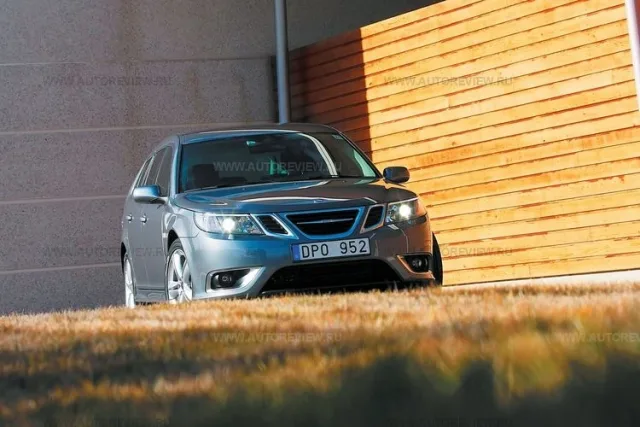
Nikita GUDKOV | Photos by the author and Saab company
An all-wheel-drive Saab is a promise that dragged on for five whole years, although it was originally announced back in 2003. While the Swedes were taking their time, the title of the first "full-hoofed" Saab went to the Subaru Impreza WRX, which was dressed in a Saab 9-2X body. But this hybrid also didn't catch on — even Americans, known for their omnivorousness, turned away from such a "mutant," and it quickly disappeared from the market. And now, finally, Trollhättan has presented its own development — the Saab 9-3 Aero XWD!
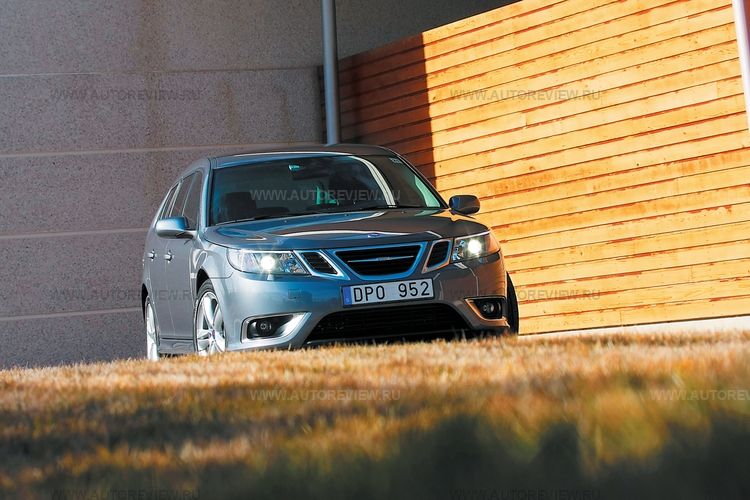
Saab people, unlike many competitors, have always honestly admitted: for a front-wheel-drive car, the reasonable power ceiling is 250 horsepower. Above this limit, acceleration becomes a real nightmare — the unloaded front wheels hopelessly spin, and the steering wheel tears from your hands like a wild beast. And understeer in every second corner becomes not just a nuance, but a verdict.
The Swedes' "hot" models approached this critical mark back in the mid-90s — the Saab 9000 CS Aero already produced 225 horsepower then. But to master all-wheel drive, which requires a serious restructuring of the entire design, the small Swedish company only got around to it now.
 |
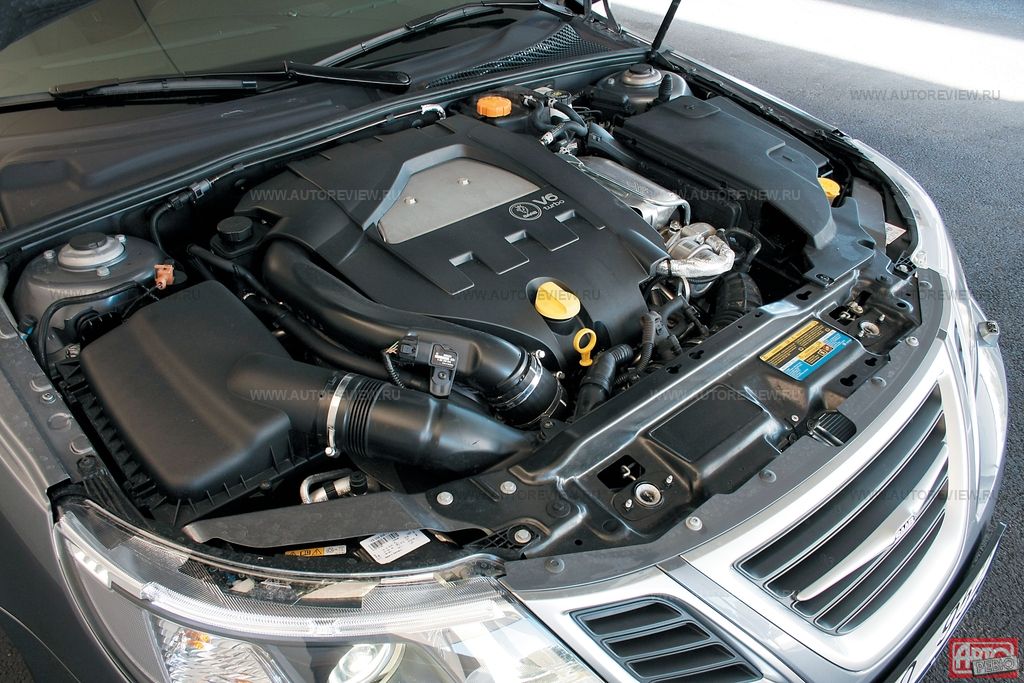 |
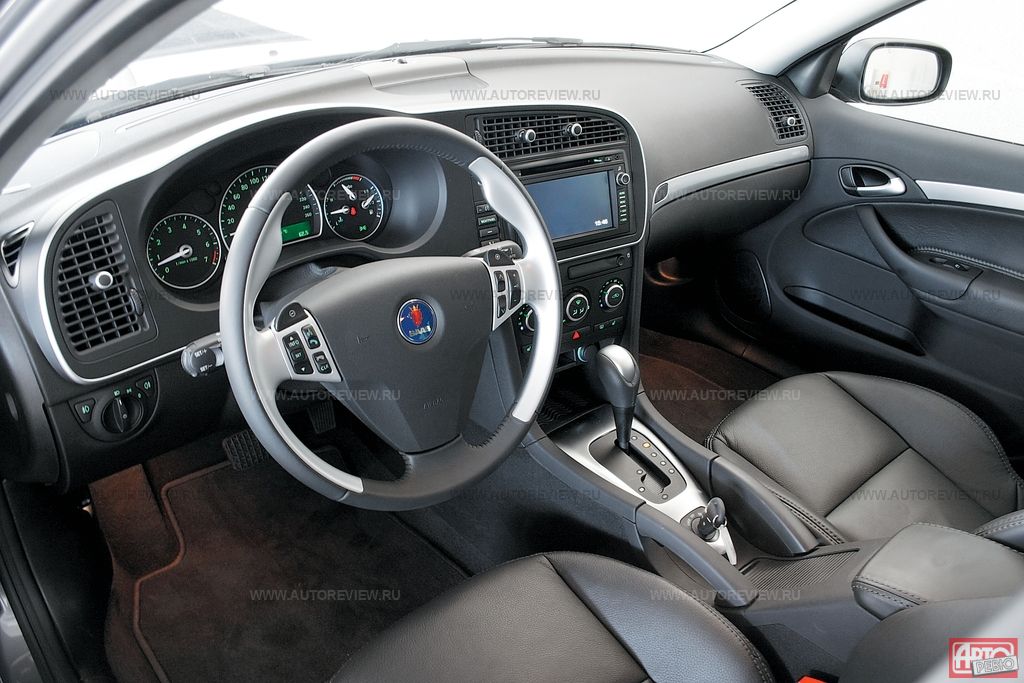
| After the facelift, the interior of the "junior" Saab became slightly better quality, although the plastic joints on the center tunnel still look sloppy. But the steering wheel with plastic "tuning" inserts — fortunately, is the prerogative of only the Aero version. The button to disable the stability control system has disappeared — now this is done through the onboard computer menu and only when the car is completely stopped | Under the hood of the all-wheel-drive Saab 9-3 Aero XWD is an Australian-made engine developed jointly with GM. It produces as much as 280 hp, while the front-wheel-drive Aero versions make do with the previous 250 horsepower |
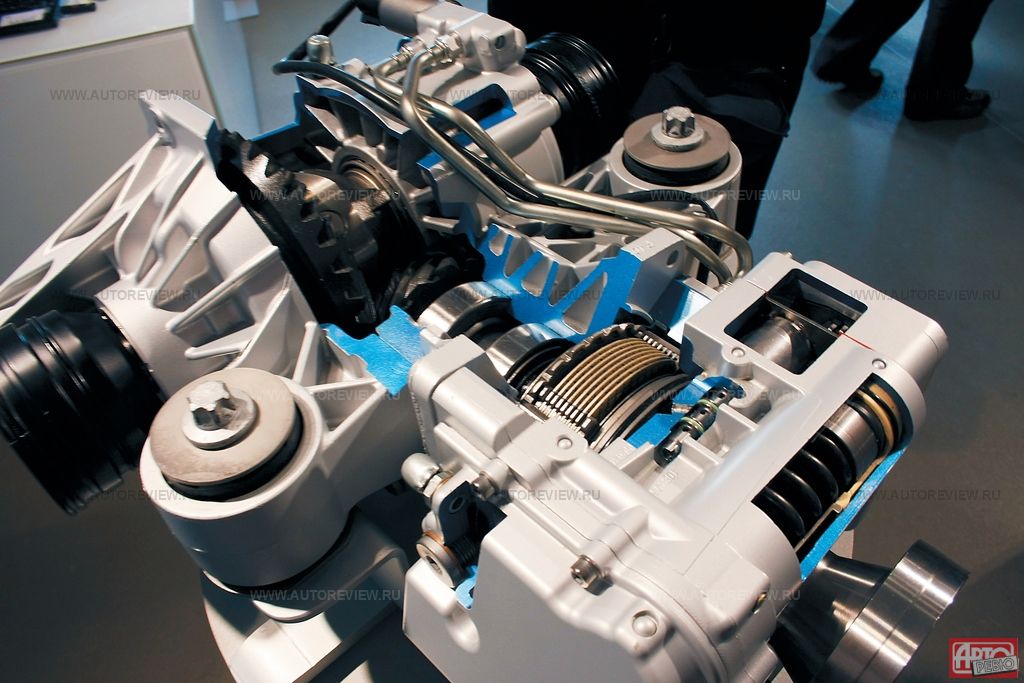
For the all-wheel-drive transmission, there was no need to travel far — from the factory in Trollhättan to Stockholm, where Haldex is based, is only 400 km. It was easy to come to an agreement with compatriots, and the Saab 9-3 became a pioneer, receiving the latest Haldex XWD system with two multi-plate clutches simultaneously.
The first clutch is responsible for driving the rear axle and transfers at least ten percent of the torque to it. This is already the fourth generation of Haldex, which can change the degree of locking in 15–20 milliseconds — faster than the engine reacts to pressing the gas pedal!
The second clutch, called eLSD, acts as a lock for the rear inter-wheel differential. Both clutches are mounted in a single unit together with the rear gearbox and electronic-hydraulic control. This module weighs 30 kg, and the all-wheel-drive Saab 9-3 as a whole has become heavier by exactly 100 kg — a quite average indicator.
 |
|
| The calibration of the all-wheel drive was handled by Swedish engineers, although testing at the Nürburgring was not avoided. In the near plans — installation of a similar Haldex XWD system on the Opel Insignia and Cadillac BLS, and in autumn it will also appear on less powerful versions of the "nine-three" |
The rear transmission module of the Haldex XWD, combining the final drive, both clutches, electrics, and hydraulics, is manufactured in Mexico |
Why was a rear lock needed at all? According to the engineers, for a more lively and driver-oriented character. But the main argument is safety. The locking algorithm of the rear differential is specially tuned to prevent rear axle drift — the most insidious scenario of loss of control, especially for beginners. In a limit corner, the eLSD delivers additional torque to the inner rear wheel, and the rear no longer tends to slide outward. The car follows the steering wheel more obediently... But doesn't the double Haldex increase understeer, like any rear lock that creates a yaw moment against the direction of the turn? The Swedes assure that no: the clutch operates only preemptively and very briefly — at the very moment when the drift is just beginning.
True, not all all-wheel-drive Saabs will immediately get both clutches. The Aero XWD version in 2008 makes do with only the inter-axle clutch, and the eLSD will appear only in autumn and so far as an option. Currently, the rear lock is exclusive to the Turbo X modification.
I had the opportunity to try both versions. It seems there is real benefit from the eLSD, but let's leave the word "seems" until we manage to drive on slippery surfaces.
On dry asphalt, it's not easy to catch the difference between the Aero XWD with one Haldex clutch and the regular Aero. Everything becomes clear only during acceleration: the 280-horsepower 9-3 Aero XWD is the most powerful production passenger Saab in the brand's history.
The boost pressure was raised from 0.6 to 0.8 bar, which gave an increase of 30 horsepower. The engine confidently pulls from one and a half thousand revolutions, and from three thousand — it simply "shoots." A particular pleasure is the steering wheel, which has gotten rid of the annoying jerks during acceleration.
 |
 |
|
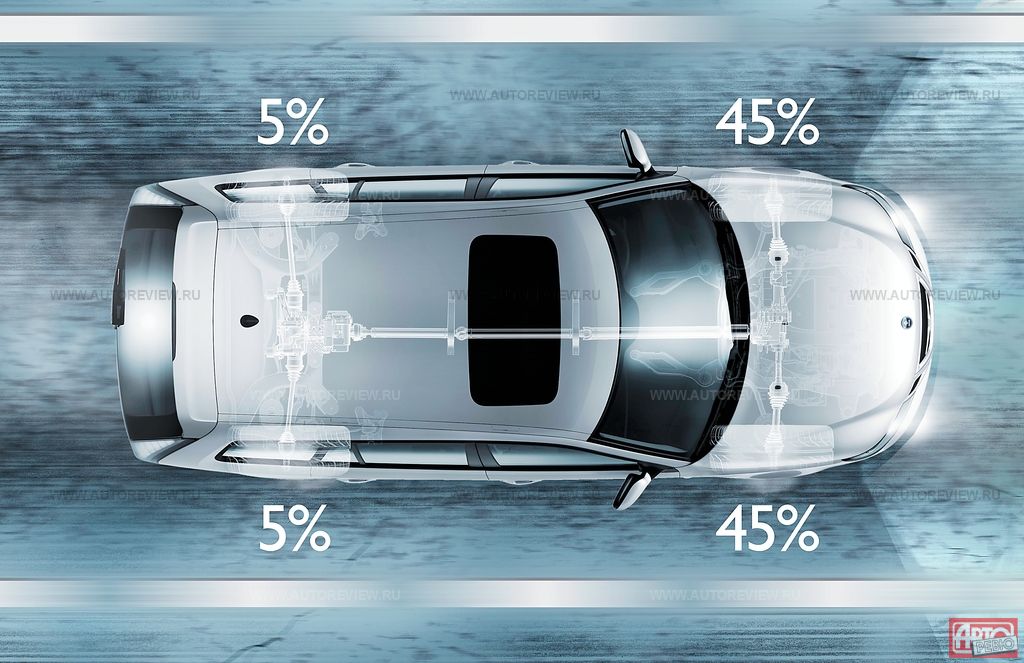
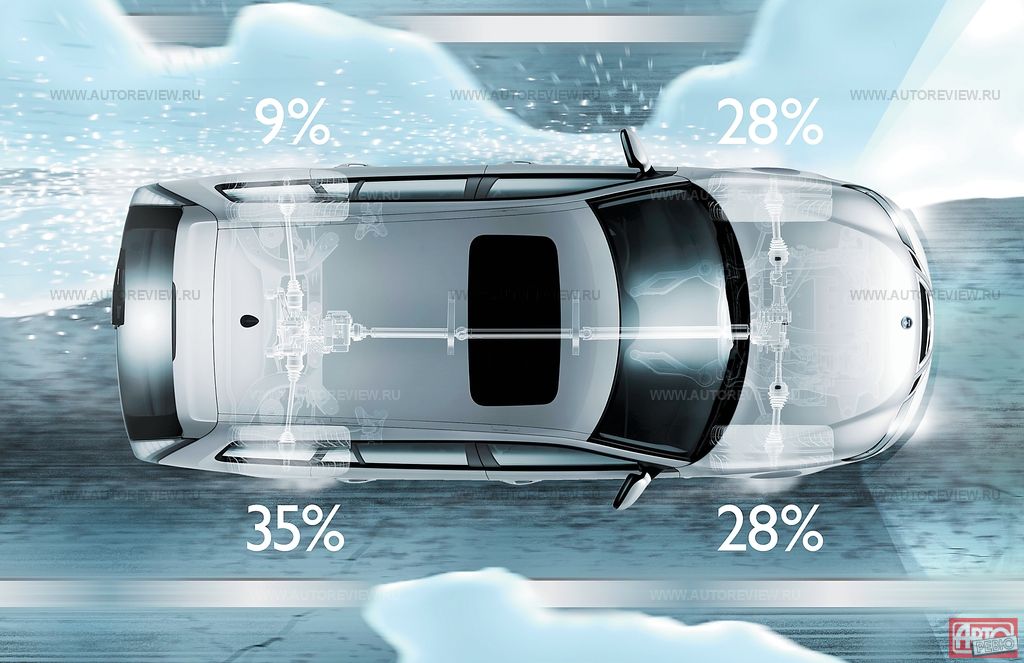
| Under normal conditions, during steady driving, the rear axle receives only a tenth of the torque. The inter-axle clutch locks either when the front wheels start to slip, or preemptively — during acceleration, braking, or maneuvering. The rear differential is also "tightened" when there is a threat of drift in a corner. This scheme has nothing in common with the active "torque-vectoring" rear gearboxes of the Mitsubishi Lancer Evo or Honda Legend. Here the task is the opposite — not to let the car spin around, whereas Japanese sedans, on the contrary, are capable of "turning" the rear into the corner | ||
In corners, however, I didn't feel a big difference. Yes, the Aero XWD holds the trajectory more precisely, but this can also be attributed to the suspension. Moreover, it's not so much about stiffer springs, shock absorbers, and stabilizers, or the reduced ground clearance by 10 mm. The main thing is that the rear suspension has become more stable: as on all post-facelift "nine-threes," it is now not three-link, but four-link, with lateral rigidity increased by 50 percent.
And what does the eLSD rear lock give? We were allowed to drive the black Turbo X only on a closed track, but with the most diverse corners. The effect of all-wheel drive was most vividly manifested on a "slalom" of cones, which had to be passed with acceleration starting from 40 km/h. The character of the Saab in corners has not changed: no matter what you do, no matter how you play with the throttle, in the limit it still floats with the front outward. But the stability control system activates later than on the front-wheel-drive Aero and perfectly suppresses the drift. Directional stability has clearly increased: the car noticeably goes longer without drift and exactly where you direct it. Actually, that's what needed to be proven.
All-wheel drive added confidence to the Saab, and it willingly shares it with the driver. There is still no talk of sharp sporty handling, but Cross Wheel Drive (as the abbreviation XWD is freely deciphered) helped get rid of a couple of shortcomings. The whole situation with the 9-3 model resembles the story of the "900th" Saab of the "new generation" from the GM era. In the first years, the car sells worse than expected. Then modernization follows: bold design, refined suspension and steering — in short, they make it the way it should have been from the start. But the train has already left!
Work on all-wheel-drive transmissions in Trollhättan is not being curtailed. It's not at all a fact that the "double Haldex" will also move to the 9-4X crossover — the Swedes do not hide that they are conducting negotiations with several transmission suppliers with an active rear differential, modeled on BMW and Audi systems. But, taught by bitter experience, they no longer give specific promises.
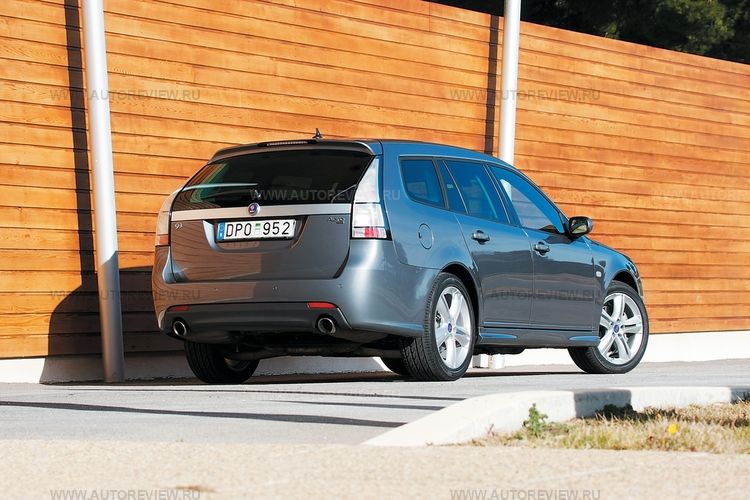
The Saab 9-3 Aero XWD is available both as a sedan and as a SportCombi wagon. Russian sales of both versions start at the end of May. Prices have not yet been announced, but it's worth expecting approximately $50,000–55,000
| Specifications | ||
| Parameters | Vehicle | |
| Saab 9-3 | ||
| Modification | Aero XWD | Turbo X |
| Body type | four-door sedan (five-door wagon) | |
| Number of seats | 5 | 5 |
| Engine | petrol, with multi-point injection, turbocharging and intercooler | |
| Location | front, transverse | front, transverse |
| Number and arrangement of cylinders | 6, V-shaped | 6, V-shaped |
| Displacement, cm³ | 2792 | 2792 |
| Cylinder bore/piston stroke, mm | 89.0/74.8 | 89.0/74.8 |
| Compression ratio | 9.5:1 | 9.5:1 |
| Boost pressure, bar | 0.8 | 0.8 |
| Number of valves | 24 | 24 |
| Max. power, hp/kW/rpm | 280/206/5500 | 280/206/5500 |
| Max. torque, Nm/rpm | 400/2150—4500 | 400/2150—4500 |
| Gearbox | manual, 6-speed (automatic, 6-speed) | |
| Drive | all-wheel | all-wheel |
| Front suspension | independent, coil spring, McPherson | |
| Rear suspension | independent, coil spring, multi-link | |
| Front brakes | disc, ventilated | |
| Disc diameter, mm | 314 | 345 |
| Rear brakes | disc, ventilated | |
| Disc diameter, mm | 292 | 292 |
| Tires | 225/50 R17 or 235/45 R18 | 235/45 R18 or 235/45 R19 |
| Maximum speed, km/h | 250 | 250 |
| Acceleration time 0—100 km/h, s | 6.2 (6.5)* | 5.7 (5.9) |
| Fuel consumption, l/100 km, | ||
| combined cycle | 10.7 (10.8) | 10.7 (10.8) |
| CO₂ emissions, g/km, combined cycle | 254 (258) | 254 (258) |
| * SportCombi — with wagon body | ||
Let's remember...
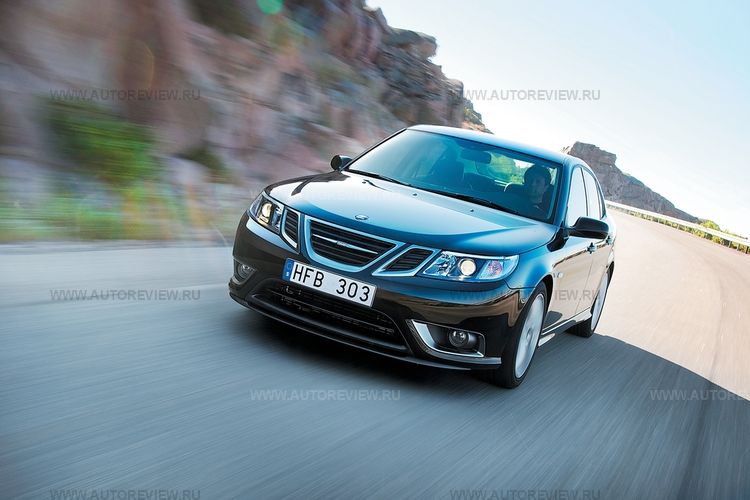
Saab 9-3 Turbo X is distinguished by lower trim under the front and rear bumpers, trapezoidal exhaust tips and — on request — gray 19-inch wheels!
This year is the last when the all-wheel drive system with two Haldex clutches is exclusively available on the 9-3 Turbo X model. The Swedes timed this version to the thirtieth anniversary of Saab turbo engines. The production run is limited to two thousand cars in sedan and wagon bodies. The market distribution is as follows: 600 units will go to the USA, 500 to Britain, 200 will remain at home in Sweden. Russia is allocated 45 cars. Prices have already been announced, and they cannot be called budget: the sedan with a manual gearbox starts at 1 million 479 thousand rubles ($62142). For the wagon they ask 1 million 529 thousand rubles ($64242), and for the automatic transmission you will have to pay an additional 45 thousand rubles ($1890).
An anniversary is a pleasant thing, but the times when the Swedish brand dictated fashion in the field of turbocharging are long gone. Saab was the first to put a turbine on a production car, the first to introduce boost control that takes into account detonation, the first to create a turbo engine with 16 valves in the head and an intercooler, developed the Trionic ignition system, and used low-pressure boost. At that time, the company really set technical trends!
But with the legendary "nine hundred", under the hood of which most of those innovations debuted, the Turbo X is related, perhaps, only by color. The final series of 900 Turbo Commemorative Edition hatchbacks, produced in 1993 in a run of 314 units, was also painted in black lacquer and sported gray wheels, though not three-spoke, but only vaguely reminiscent of them. In addition, the anniversary Saab stands out with different inserts in the bumpers and rear spoilers — this applies to both body versions, both sedan and SportCombi wagon.
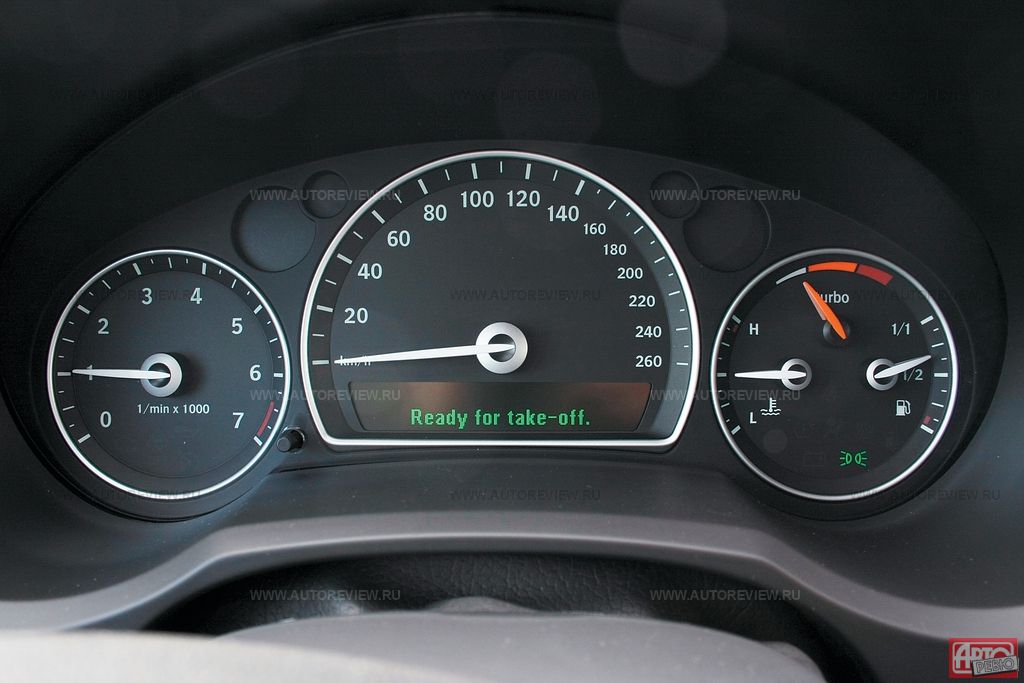 | 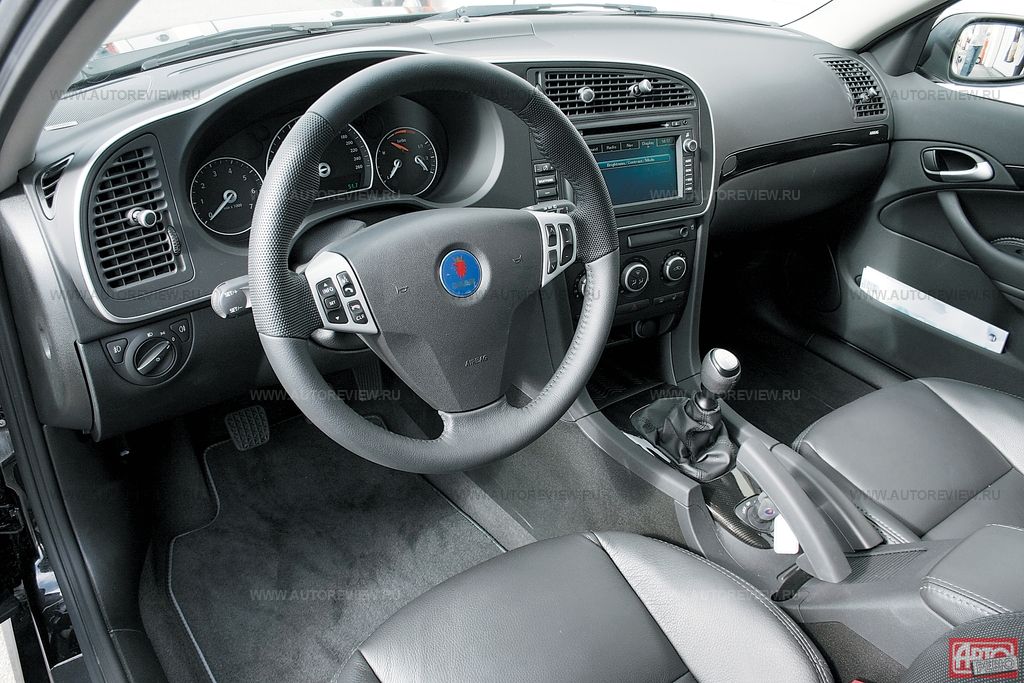 |
| In addition to the inscription "Ready for Take-off", when the ignition is turned on, the instrument panel of the Turbo X version can show the serial number of the instance in the series and any dealer-programmed greeting | The steering wheel is much more pleasant, with a thick rim covered in soft perforated leather. Plastic inserts in the interior imitate carbon. But a plate indicating belonging to the anniversary series is not provided. On the 900 Turbo Commemorative Edition, it was attached near the gear shift lever |
In the interior — seats and steering wheel with different trim. When you turn the ignition key, the on-board computer screen flashes "Ready for Take-off" — like, ready for takeoff. A kind of playful nod to the brand's aviation past, although such a phrase is impossible to imagine on a real plane...
The boost pressure gauge on the instrument panel is made in the style of the similar instrument of the old "900". True, in that car it was connected by a tube to the intake manifold, but here the needle falls into the vacuum zone when the ignition is turned off — meaning the indicator is electronic.
— Do you yourself believe that this car has preserved the spirit of the "black 900"? — I ask Jorgen Nulen, who heads the development of the Saab model range. He replies: "I believe." But his eyes are sad...
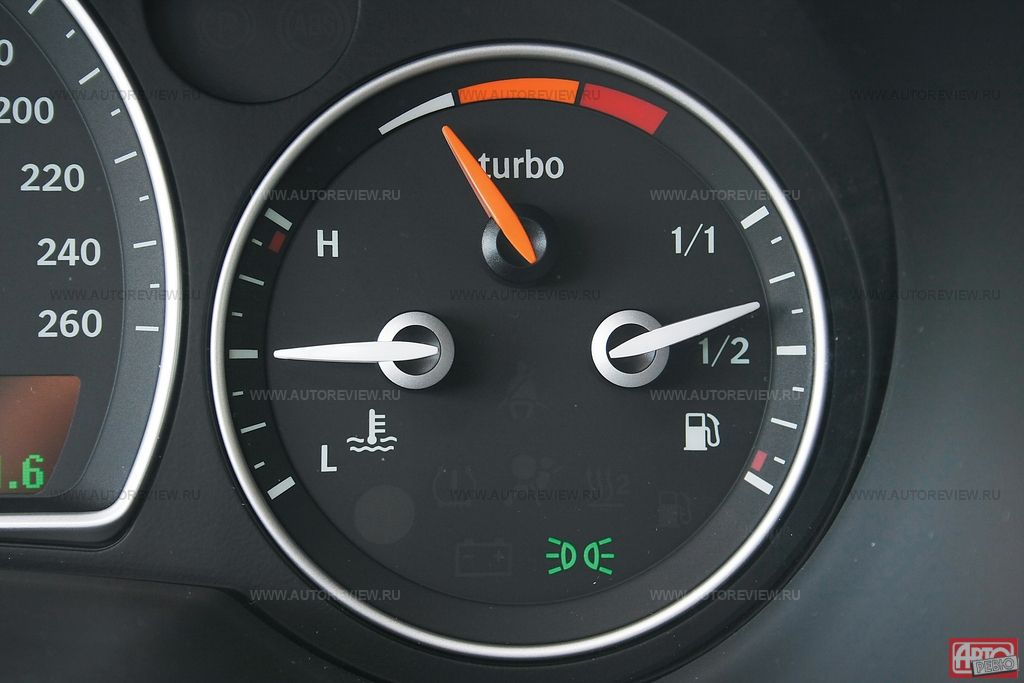 | 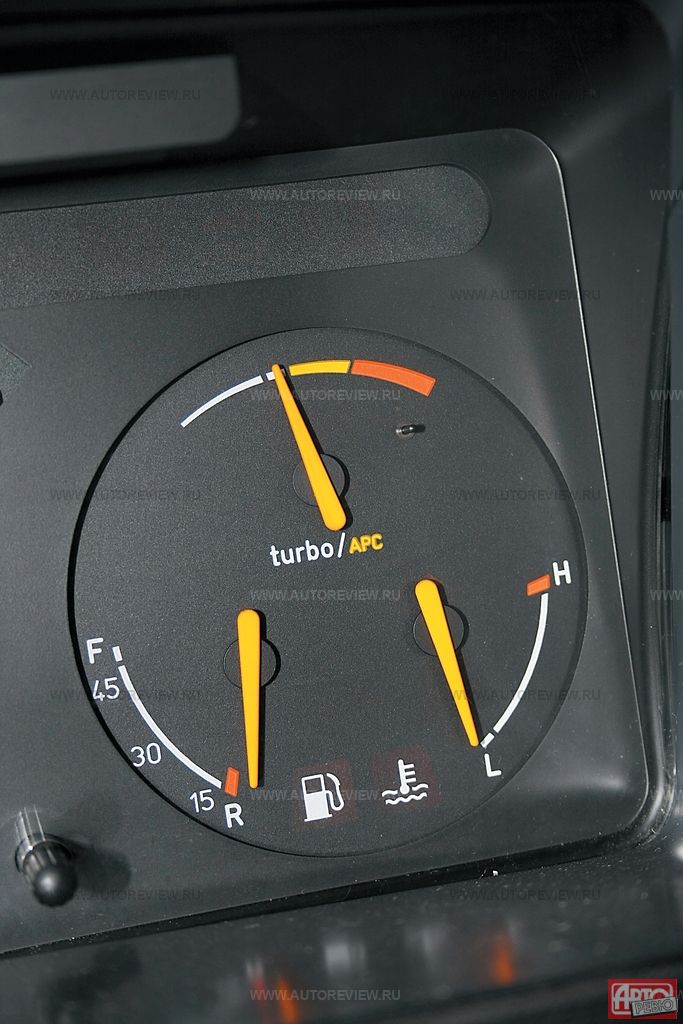 |
| The boost pressure gauge is styled after the instrument of the classic "900" Saab (photo on the right). However, the current boost is not like the first designs. Modern Saab engines "turbo" from almost idle to cutoff, while the first turbines drove the needle to the edge of the orange zone in a narrow range from 3500 to 5000 rpm | |
Nulen has been working at Saab since 1979 and tells interesting things. For example, the complex-to-manufacture classic "900" brought more profit than current models. Its powertrain was inserted into the engine bay only from above, the double-wishbone front suspension was mounted directly to the body, and there was no talk of subframes or modular assembly. A modern car is easier to assemble, but developing it is significantly more expensive.
We recall the fragile gearboxes of the "900", its heater with vacuum-driven flaps — Nulen was just involved in climate control systems in those years. I admit that I had four such cars. Jorgen takes off his jacket, talks about the design of the Saab 9000 and casually dropped: "But that was no longer the same..."
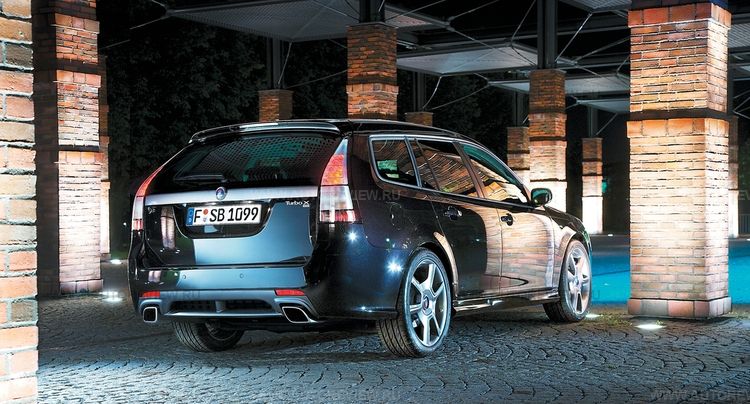
Like the Saab 9-3 Aero XWD, the anniversary Turbo X — both wagon and sedan — has a suspension lowered by 10 millimeters and rear shock absorbers with automatic ride height control
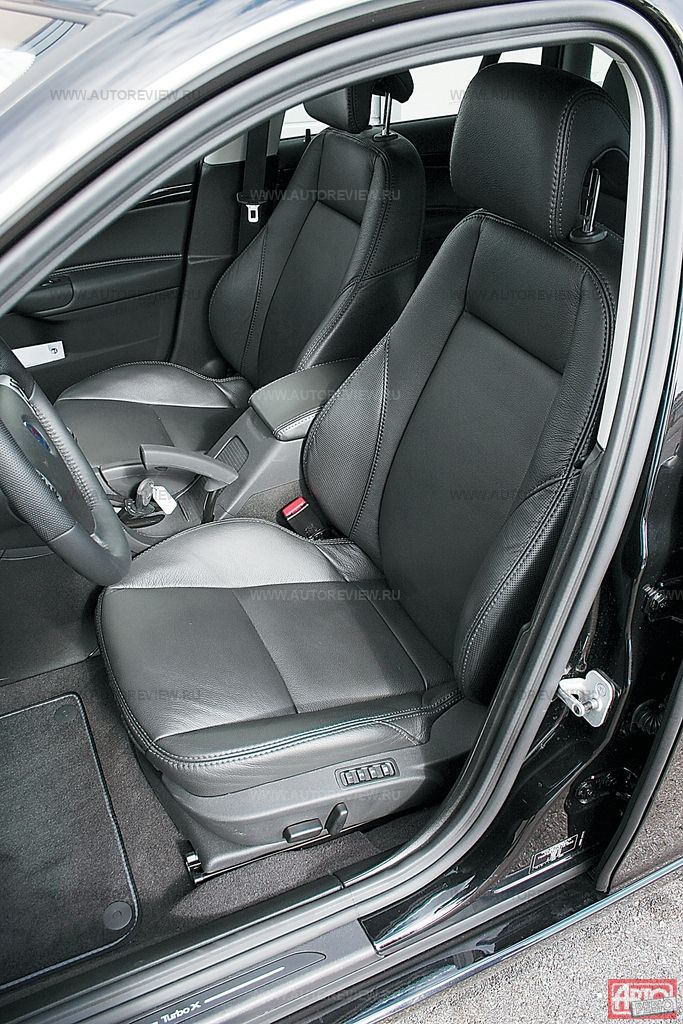 |  |
| The Turbo X features seats with slightly increased lateral support and trim in more expensive leather |