Renault Symbol
we meet by the clothes...
Engine — 1.4 L
Max. Power — 98/6000
Max. Torque — 127/3750 rpm.
Max. speed (km/h) — 186
Acceleration 0-100 km/h — 11.2 sec
Fuel consumption:
combined — 7
city — 9.9
highway — 5.4
Manual transmission 5-speed
Curb weight — 980 kg.
Length — 4261
Width — 1640
Height — 1439
Tires — 175/65 R14
Equipment
Climate control, power steering, 4 power windows, power mirrors, audio system CD MP3 with steering wheel joystick, central locking with remote control, ABS, 6 airbags.
Service interval:
15,000 km
Maintenance 1 — $257 (2,052 UAH)
Maintenance 2 — $257 (2,052 UAH)
Maintenance 3 — $257 (2,052 UAH)
Maintenance 4 — $439 (3,510 UAH)
Maintenance 5 — $257 (2,052 UAH)
Maintenance 6 — $318 (2,538 UAH)
Maintenance 7 — $257 (2,052 UAH)
Maintenance 8 — $439 (3,510 UAH)
Warranty — 2 years without mileage limit.
Price 562,100
Base $15,890 (127,117 UAH)
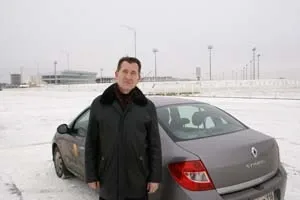
Marat Makhmutov, «Kazan School of Advanced Driving»
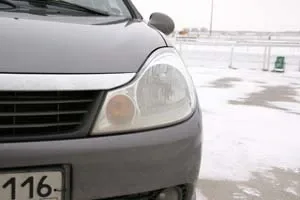
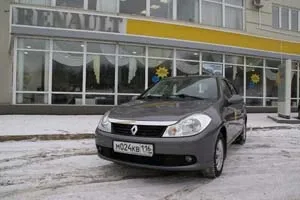
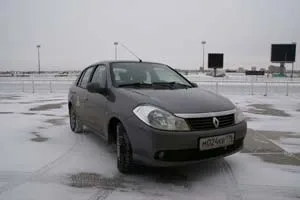
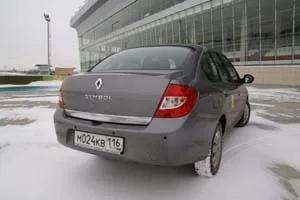
When I was told that the next test subject would be the updated Renault Symbol, I internally prepared for a boring and useless event. What interesting could be expected from a budget B-class sedan assembled in Turkey? Essentially, it's a Clio II with a huge trunk glued to the back to please residents of developing countries — and, as is known, our market is also included. Honestly, such a hybrid can't be called handsome. My colleagues had already taken the car from the official dealer, and I, anticipating a waste of time, went to meet the "Frenchman," having pre-set myself for a lack of emotions. As it turned out, I was greatly mistaken in my expectations. The first pleasant surprise awaited me when I looked at the car: it looks much more interesting and solid than its predecessor. Elongated headlights, redesigned rear optics, additional windows in the rear pillars (previously they were blind), and chrome trims on the hood and trunk lid — all this greatly refreshed the sedan. Now its appearance can be discussed without discounts for budget, and the word "harmony" is quite appropriate here.
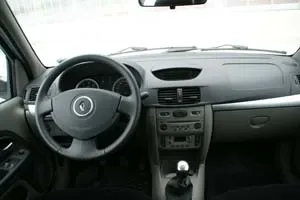
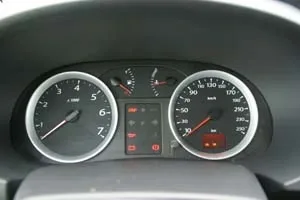
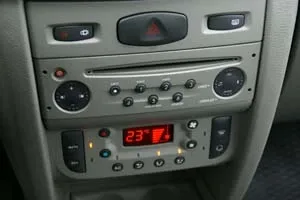
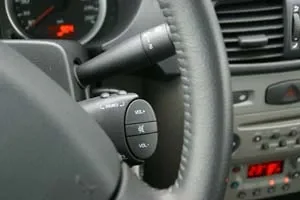
However, there was a fly in the ointment: the door handles look frankly flimsy and cheap, but these are already nitpicks. Inside, there are far fewer changes than outside. The changes affected the upper part of the front panel — chrome inserts appeared there, the radio became slightly more noticeable, the steering wheel received basic height adjustment, and the instruments acquired chrome bezels. Otherwise, the interior remained the same, including numerous niches for small items. Apparently, in this price segment, there is an unwritten law: better is the enemy of good. The platform from the Clio II also remained untouched. One could nitpick about the hard plastic and the lack of micro-lifts on the ceiling handles if it were a premium class, but here it is absolutely normal and corresponds to the car's status. Our test Symbol turned out to be surprisingly well-equipped: climate control, a radio with MP3 support and steering wheel joystick control, an onboard computer, four power windows, and even fog lights — a rarity for a budget car. The interior comfortably accommodates four adults, or two adults and three children in the back, which is standard for this class. But the trunk is a separate story: an impressive 506 liters, a real find for those who often carry a lot of luggage. It opens with a button hidden in the center of the diamond-shaped Renault emblem, not by grabbing the cutout at the bottom, as one might intuitively think. As it turned out, the French deliberately left this cutout for the Russian winter — so that the lid can be opened if it freezes. True, there is a downside: there is no handle or recess inside to close the trunk, so you have to press down on the lid from above, which will surely be dirty in snowy weather. Better to keep a wet wipe handy. But the lid itself is upholstered inside and closes with a much more pleasant, noble sound than the doors — those emit an outright tinny clang that immediately reveals the car's budget origin.
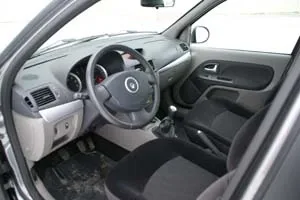
Under the hood of the test car is a time-tested 16-valve engine with a displacement of 1.4 liters, producing 98 hp. It is noteworthy that the previous 8-valve unit is no longer installed on the Symbol. The engine works in conjunction with a five-speed manual, although for those who do not like to fiddle with the lever, there are versions with an automatic. But we have no choice — we drive a manual. In city mode, I sequentially shift from first to fourth, and fifth will be useful outside the city. And here I was in for a second pleasant surprise: the engine turned out to be quite peppy. It doesn't make you feel inferior in traffic, and sometimes even allows you to be a bit mischievous. True, it shows its briskness at above-average revs — the engine clearly likes to be "revved." Gear shifts are not perfectly precise, but you quickly get used to it and stop noticing. Another discovery: in the city, the most working gear is third. At calm, steady driving, you can go on it without touching the lever at all — like an automatic. Of course, when starting from a traffic light and coming to a complete stop, you'll still have to work with the clutch and gearbox. But the main trump card of this car in our road conditions is excellent ride smoothness. The ground clearance here, by the way, is 17 centimeters! Broken city sections, which many more expensive and renowned cars would ask to drive slower, this "Frenchman" swallows perfectly. I deliberately drove on neglected roads at a speed at which others would have long since lifted off the gas. And our subject went as if noticing nothing. Up front, all the bumps seemed just a picture outside the window. Only the complaints of rear passengers about slight shaking brought me back to reality.
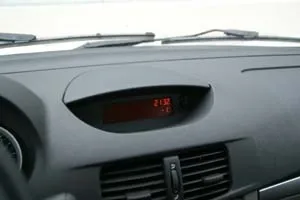
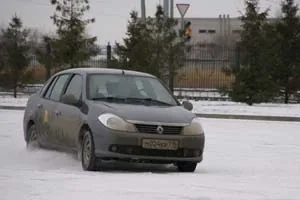
On the highway, at permitted speeds, the Symbol behaves quietly and comfortably, without annoying aerodynamic noises. At high speeds, the engine becomes audible — its torque characteristic is shifted to the high-rev zone — but this sound cannot be called intrusive. The power steering is perfectly tuned, the steering wheel is informative, so handling does not cause any trouble. The brakes are predictable, adequately responding to pedal effort. The final stage of the test took place on a training ground, where we drove the car through the traditional "slalom." The absence of stability control and traction control here only pleased: the Renault's behavior was honest and classic for a front-wheel-drive car — with all its pros and cons, including understeer. We had a special thrill on the snowy area: as soon as you lift off the gas, the Symbol goes into a predictable, easily controlled drift.
To sum up, I'd say the French car is a success, and it suits our realities perfectly. Inside it's quite spacious, the exterior is nice, and it rides comfortably on broken roads. In addition, under the hood there's a powerful yet economical engine that easily handles 92-octane gasoline and doesn't ruin the owner with taxes. Apparently, that's why many foreign companies in Russia buy such cars for their employees—the reliability of the previous model also plays a role.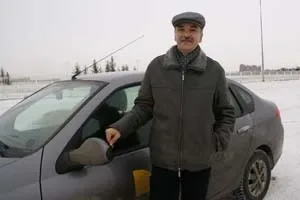 Vadim Sadykov, "Avtoclub-Kazan"
After the trip, I noticed that new Renault Symbol cars are increasingly common on Kazan streets. The car is clearly a success and, I think, will gain popularity. The previous Symbol looked plain, but older folks valued it for its "indestructible" suspension and cheap maintenance. The new version, keeping the same suspension but donning a brighter outfit, should appeal to younger people too. Especially since its price tag is quite attractive.
Alfred and Marat spent the entire test praising the Symbol. But I want to mention the downsides too. The first thing that caught my eye was the vague gear shifting and the long-travel clutch pedal. A beginner behind the wheel will have a hard time with this. The second drawback is that the cabin is a bit narrow in width. Today's B-class representatives (and the Symbol belongs to it) have already surpassed the "fours" of the early 90s in width. But here, the front passenger either has to squeeze against the door or bump the driver. The third flaw shows up on the highway: at a hundred kilometers per hour, the tachometer shows over 3000 rpm (most cars in this mode show 2600–2800). This means that outside the city, fuel consumption will be higher. True, there are also advantages to this, which I'll mention separately. And the fourth drawback is the lack of ESP, which is surprising given the presence of ABS. Other manufacturers offer this option for a pittance—250–350 dollars. That's probably all. As for sound insulation at this price, I think it's not worth mentioning.
Vadim Sadykov, "Avtoclub-Kazan"
After the trip, I noticed that new Renault Symbol cars are increasingly common on Kazan streets. The car is clearly a success and, I think, will gain popularity. The previous Symbol looked plain, but older folks valued it for its "indestructible" suspension and cheap maintenance. The new version, keeping the same suspension but donning a brighter outfit, should appeal to younger people too. Especially since its price tag is quite attractive.
Alfred and Marat spent the entire test praising the Symbol. But I want to mention the downsides too. The first thing that caught my eye was the vague gear shifting and the long-travel clutch pedal. A beginner behind the wheel will have a hard time with this. The second drawback is that the cabin is a bit narrow in width. Today's B-class representatives (and the Symbol belongs to it) have already surpassed the "fours" of the early 90s in width. But here, the front passenger either has to squeeze against the door or bump the driver. The third flaw shows up on the highway: at a hundred kilometers per hour, the tachometer shows over 3000 rpm (most cars in this mode show 2600–2800). This means that outside the city, fuel consumption will be higher. True, there are also advantages to this, which I'll mention separately. And the fourth drawback is the lack of ESP, which is surprising given the presence of ABS. Other manufacturers offer this option for a pittance—250–350 dollars. That's probably all. As for sound insulation at this price, I think it's not worth mentioning.
 Now about the pros. The suspension confidently swallows any potholes and joints. On ice during the "slalom" test, the car's behavior remains clear and predictable. The new 98-horsepower engine briskly hauls the light Symbol (only 980 kg!). Moreover, the engine is flexible: in third gear it calmly drives at 30 km/h. For comparison, the peak torque of the Symbol 1.4 is 127 Nm at 3750 rpm, while the Opel 1.4 has 125 Nm at 4000.
Now more about the increased rpm at speed. Nowadays it's fashionable to put larger wheels on small cars (the most common size is 185/65R15) and select the gearbox so that the rated city fuel consumption doesn't exceed 9 liters. An indirect sign of this approach is 2600–2800 rpm at 100 km/h in fifth gear. If you try, you can actually fit into 8 liters. But if you drive aggressively, city consumption can easily rise to 13–15 liters. The Symbol, however, goes against the tide. It has 175/65R14 tires (and a smaller wheel diameter improves dynamics), and the rated city consumption is 9.9 liters! No matter how you save, you won't get below 8 liters. But there's a benefit: with brisk driving at high rpm, consumption won't differ much from the stated figure.
Attractive price, nice design, reliability, and inexpensive maintenance—what else does a car need to become a hit?
Now about the pros. The suspension confidently swallows any potholes and joints. On ice during the "slalom" test, the car's behavior remains clear and predictable. The new 98-horsepower engine briskly hauls the light Symbol (only 980 kg!). Moreover, the engine is flexible: in third gear it calmly drives at 30 km/h. For comparison, the peak torque of the Symbol 1.4 is 127 Nm at 3750 rpm, while the Opel 1.4 has 125 Nm at 4000.
Now more about the increased rpm at speed. Nowadays it's fashionable to put larger wheels on small cars (the most common size is 185/65R15) and select the gearbox so that the rated city fuel consumption doesn't exceed 9 liters. An indirect sign of this approach is 2600–2800 rpm at 100 km/h in fifth gear. If you try, you can actually fit into 8 liters. But if you drive aggressively, city consumption can easily rise to 13–15 liters. The Symbol, however, goes against the tide. It has 175/65R14 tires (and a smaller wheel diameter improves dynamics), and the rated city consumption is 9.9 liters! No matter how you save, you won't get below 8 liters. But there's a benefit: with brisk driving at high rpm, consumption won't differ much from the stated figure.
Attractive price, nice design, reliability, and inexpensive maintenance—what else does a car need to become a hit?
 Alfred Mardanov, "Avtoclub-Kazan"
Renault introduced its new models quietly, without loud TV and radio advertising. But they're worth it. It's notable that all updated models share a common styling, especially in the hood and headlights! At first glance, the body proportions remain the same; only the exterior has changed. In reality, the French took a simple path: they took the best from the previous generation. The car got a new body, minor rearrangements in the cabin, and a slightly refined chassis! The engine remains the same—98 horsepower (previously only available in top versions). It's more than enough, and that's easy to explain: the car's weight doesn't reach a ton! You can only get such power from a 1.4-liter engine with a 16-valve head (not counting a turbo). This is exactly the case, and like all 16-valve engines, it loves high rpm. But here's the oddity: it also pulls well at low revs. The dealership manager suggested we start in third gear, and the car, without any resistance, moved off at low throttle and accelerated. Third gear here is generally special. As for the exterior, the Symbol has finally become harmonious. I mean it's no longer an "ugly duckling" with a kind soul. If earlier the car won with its driving qualities, now it also pleases the eye. On the move, it's very similar to its predecessor, which is rather a plus—after all, the previous Symbol won love precisely for that. It's just as tightly assembled, obedient, steers well, and is balanced. Ride smoothness and sound insulation have noticeably improved compared to the old model.
Alfred Mardanov, "Avtoclub-Kazan"
Renault introduced its new models quietly, without loud TV and radio advertising. But they're worth it. It's notable that all updated models share a common styling, especially in the hood and headlights! At first glance, the body proportions remain the same; only the exterior has changed. In reality, the French took a simple path: they took the best from the previous generation. The car got a new body, minor rearrangements in the cabin, and a slightly refined chassis! The engine remains the same—98 horsepower (previously only available in top versions). It's more than enough, and that's easy to explain: the car's weight doesn't reach a ton! You can only get such power from a 1.4-liter engine with a 16-valve head (not counting a turbo). This is exactly the case, and like all 16-valve engines, it loves high rpm. But here's the oddity: it also pulls well at low revs. The dealership manager suggested we start in third gear, and the car, without any resistance, moved off at low throttle and accelerated. Third gear here is generally special. As for the exterior, the Symbol has finally become harmonious. I mean it's no longer an "ugly duckling" with a kind soul. If earlier the car won with its driving qualities, now it also pleases the eye. On the move, it's very similar to its predecessor, which is rather a plus—after all, the previous Symbol won love precisely for that. It's just as tightly assembled, obedient, steers well, and is balanced. Ride smoothness and sound insulation have noticeably improved compared to the old model.
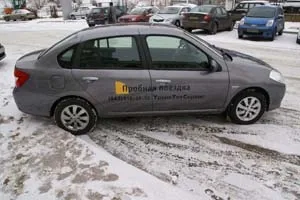
 But the cabin is still cramped, and this is felt even in the front seats. In the back, three people will be quite uncomfortable, especially in the shoulders. There's enough space between the rows: the dealership manager, who is 190 cm tall, sat in the back and, although his knees touched the front seatback, he didn't suffer much. But up front, he felt quite at ease. I drove the first stretch to the hippodrome, and from the first meters the car gave a wealth of impressions that didn't change afterward. First, the clutch pedal has a long travel, and the gearshift lever "stitches" finely and transmits engine vibration. I won't say it's annoying—just stating a fact. My words about the smoother ride were confirmed 100%, as were those about sound insulation. The engine turned out to be lively, loves rpm, and throughout the entire section it begged for action. I wonder what the fuel consumption will be, especially since the fuel gauge was already at zero. I hinted at this back at the dealership, and they jokingly replied not to worry—this Symbol would last a week. Well, well!
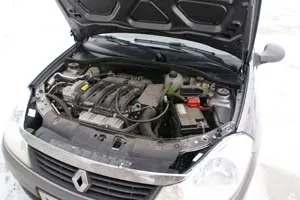
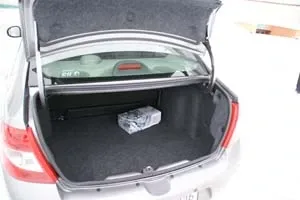 Throughout the entire test, the car didn't let us down and even managed to surprise us. First, with its composure on the "washboard" road. I sat in the front passenger seat, and I didn't care at all about that road, as Marat put it. Only those in the back complained, and even then only after our question: "how is it back there?" I especially enjoyed the ice rink—I missed such discipline. Especially since the car is "alive": no electronics except ABS, and driving it is pure pleasure. My first run on the "slalom" was sloppy: I clipped the last cone in a sideways slide, and I felt I was "losing" the car and warned Sergei (the dealership manager) a second before. Yeah, I won't embarrass myself like that again. The next run was perfect, and at a higher speed too. I was glad again that the car can be controlled directly, not through electronic assistants. How fun it is to go into a controlled drift on throttle lift-off and then almost playfully exit it. I got carried away. And that's no surprise: the car is absolutely adequate and stable. On the same rink, I also tested the praised "Renault" brakes. The ABS engages precisely, exactly when you expect it, the pedal load is well dosed, and braking efficiency even on ice deserves respect.
The car earned a solid four, and that's considering that no one probably gets a five. The test track was the last item on the program, so now we head back to the dealership. As for fuel—just in case, we did add a little gasoline at the station, giving the cashier 100 rubles, although now I realize we could have done without it. There was plenty of fuel anyway. The Symbol left a truly pleasant impression: it managed to retain excellent driving manners while acquiring a modern look. At the dealership, another pleasant bonus awaited me, at least for me personally. I was handed the "2009 Service Maintenance Guide," which details what needs to be replaced, how often, and what it will cost. Simply put, when buying a car, you can plan all ownership costs in advance up to a mileage of 120,000 km. And that, believe me, is an extremely useful thing—it's not for nothing that we publish information about maintenance intervals and costs every time.