
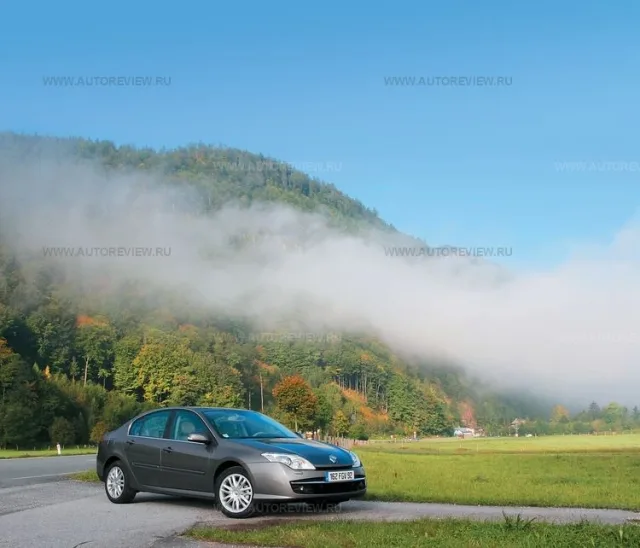
Renault Laguna? Let's recall... Right, there is such a car — not too fast, not too exciting, but a cozy French machine. Pure calm for the family. In a word, deadly boring. And then it dawns on me that the new Laguna will get a four-wheel steering system, and even a V6 engine! Did the French really decide to turn the Laguna into a driver's car? I hoped to find the answer on the Alpine serpentines near Salzburg.
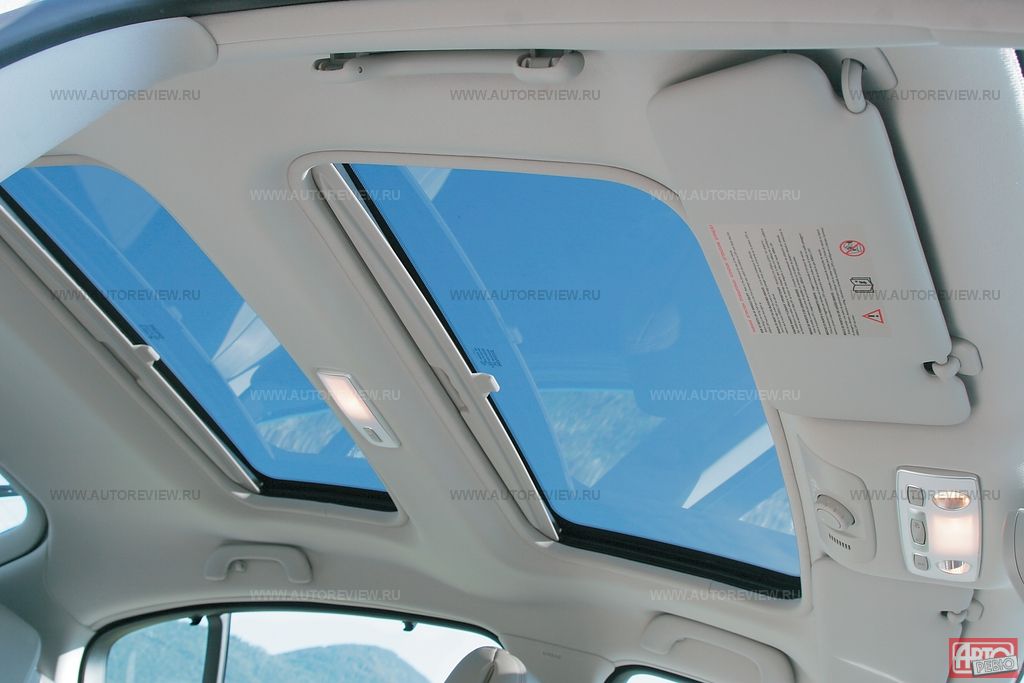 |
| In the most expensive version — two sunroofs in the roof, but only the front one opens |
— Alas, — say the French, — we only demonstrated the version with rear-wheel steering at the Frankfurt auto show, and even then as a pre-production prototype. It will go on sale only next spring. And to Salzburg we brought Lagunas with conventional drive, but with new diesel units…
Thanks a lot! In France, such engines may be held in high regard, but the road to Russia is closed for them: Renault never dared to supply diesel passenger cars to us. For us, they prepared a petrol lineup: 1.6 (110 hp), 2.0 (140 hp), and 2.0 Turbo (170 hp). But even from this list, they only let us drive the most powerful 170-hp petrol car. And only on the second day. Meanwhile, with a sour face, I take the keys to a diesel Laguna with a two-liter 150-hp engine and a six-speed manual gearbox. Or rather, not keys, but a thin transponder card.
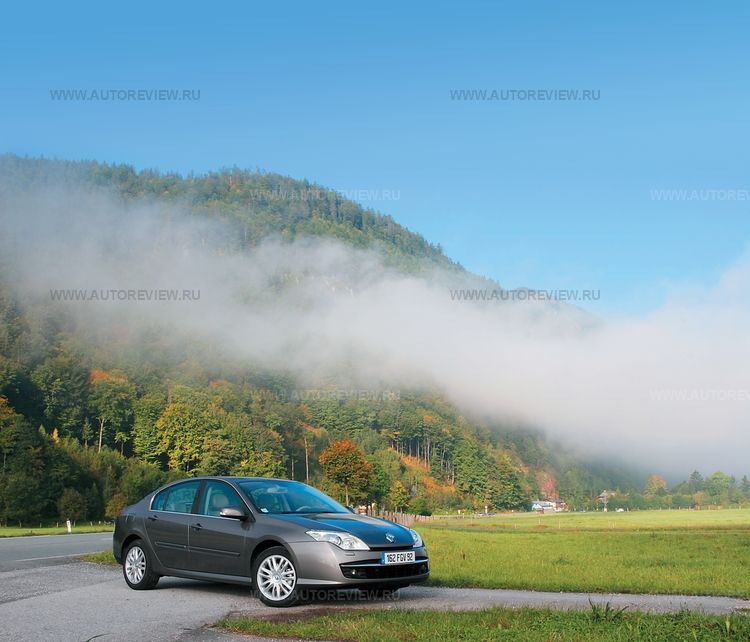
The new Laguna has grown, become angrier and visually more massive. In profile it looks good, but overall... A boulder covered with a patchwork quilt, although some patches are just a sight to behold. Take the headlights, for example.
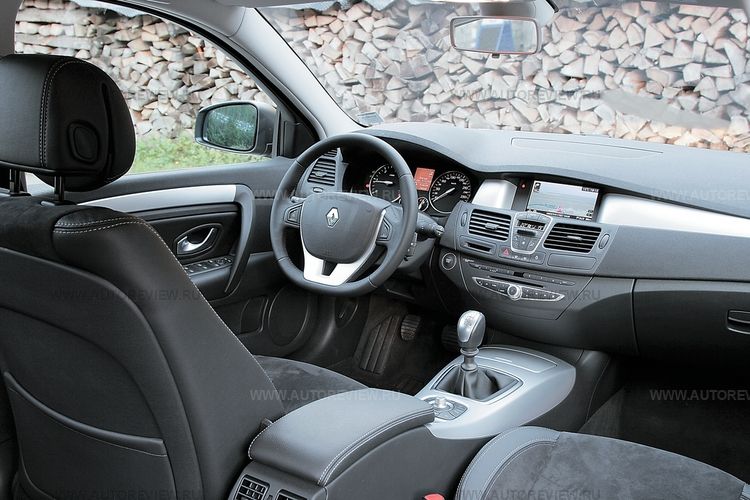
Flattened steering wheel, front panel in the spirit of the BMW 'five', decent materials... The interior pleases much more than the exterior
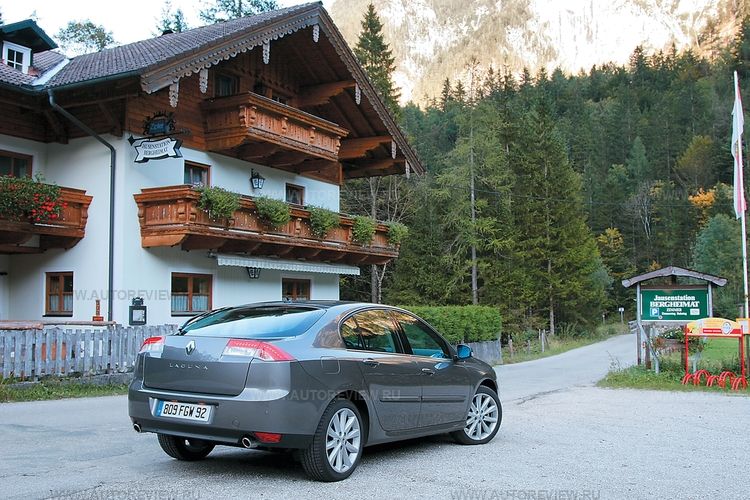
I approach the trunk, press the center of the brand diamond, hear the click of the electric lock and... I can't find a handle to lift the fifth door. But it used to be there. I slide my fingers under the lower edge of the lid, lift it — and see a trunk with flat walls, but by no means a record volume — 450 liters. And — no frills, only two open pockets. True, you can order a more spacious (508 l) and better equipped (with a net, closed side niches, and hooks) cargo compartment, but then you'll have to take not a hatchback, but a station wagon. Sedans, by the way, won't exist at all: in Europe, they say, they are not liked. But in Russia they are liked, especially in this class!
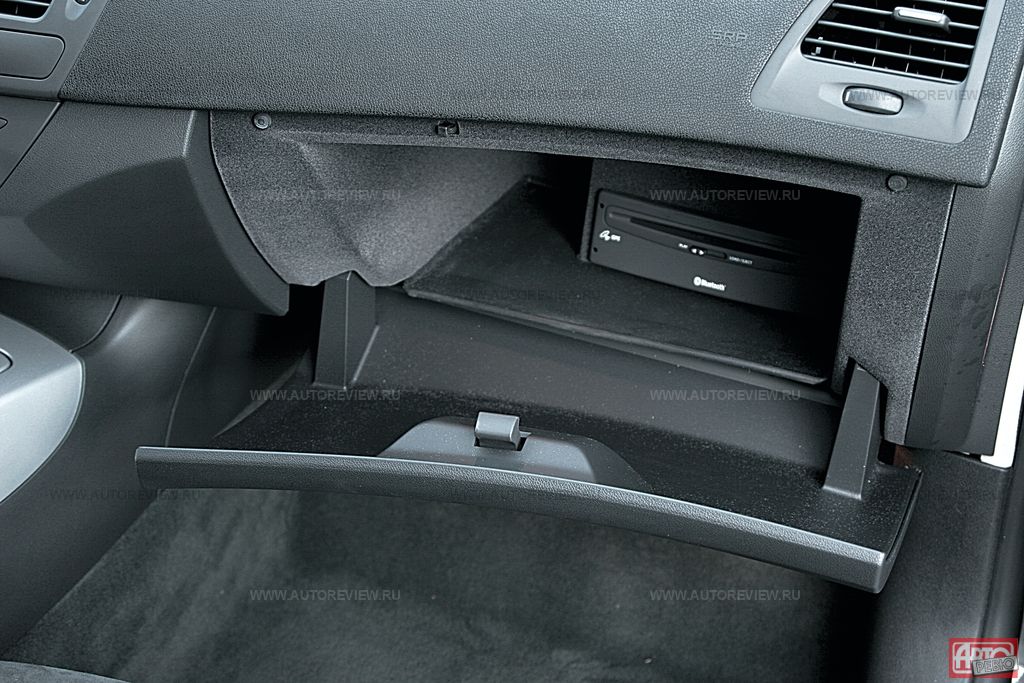 | 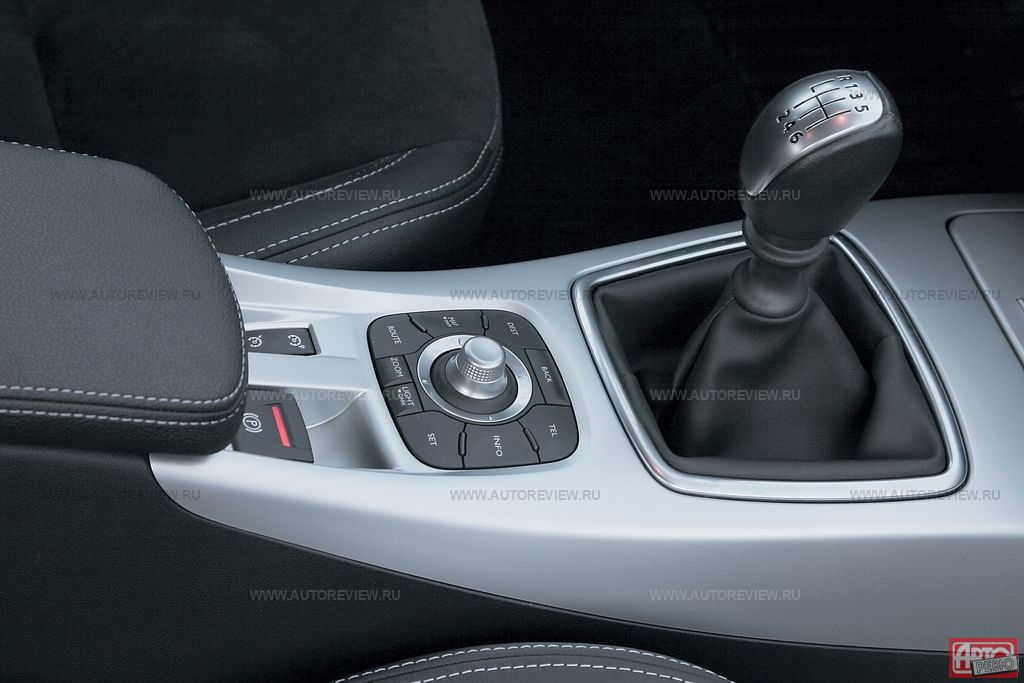 |
| The navigation computer hides in a glove box with a volume of 9.2 liters | The six-speed gearbox is new, but the lever is still 'cottony'. The electromechanical 'handbrake' and navigation joystick — only in rich trim levels |
But the interior turned out to be foldable! The wave of the front panel echoes the BMW 'five', and the materials, though simpler, look solid. The seats pleased me. Usually on French cars they are sofa-like, loose, shapeless, but here they are strict, with proper load distribution, clear lateral support, and also with wide adjustment ranges. For example, compared to the previous Laguna, the height adjustment travel has grown from 13 to 63 mm. True, when I moved to another car with leather power seats, I noticed that the seats are set noticeably higher: with my height of one meter ninety, the top of my head already touches the ceiling, and the steering wheel rests on my knees. And in corners, such seats hold worse.
What you can't fault is the instruments: they are simple and clear, at any time of day. And the display shows various hints about open doors, unfastened seat belts... And also, from time to time, the arrows blink, advising to shift to a higher or lower gear — this is to save fuel.
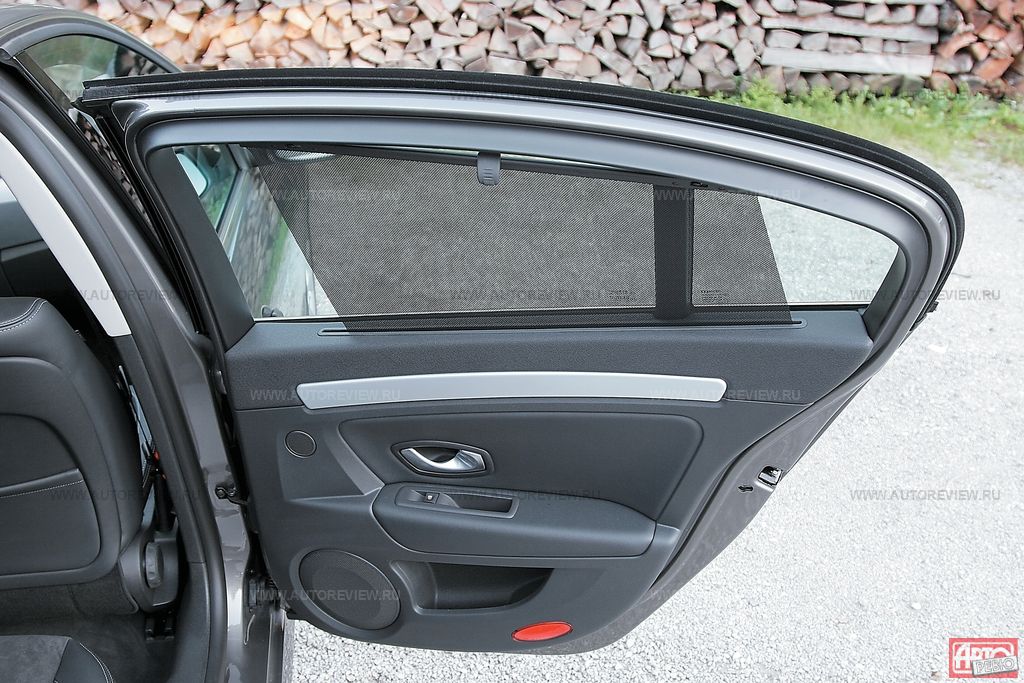 | 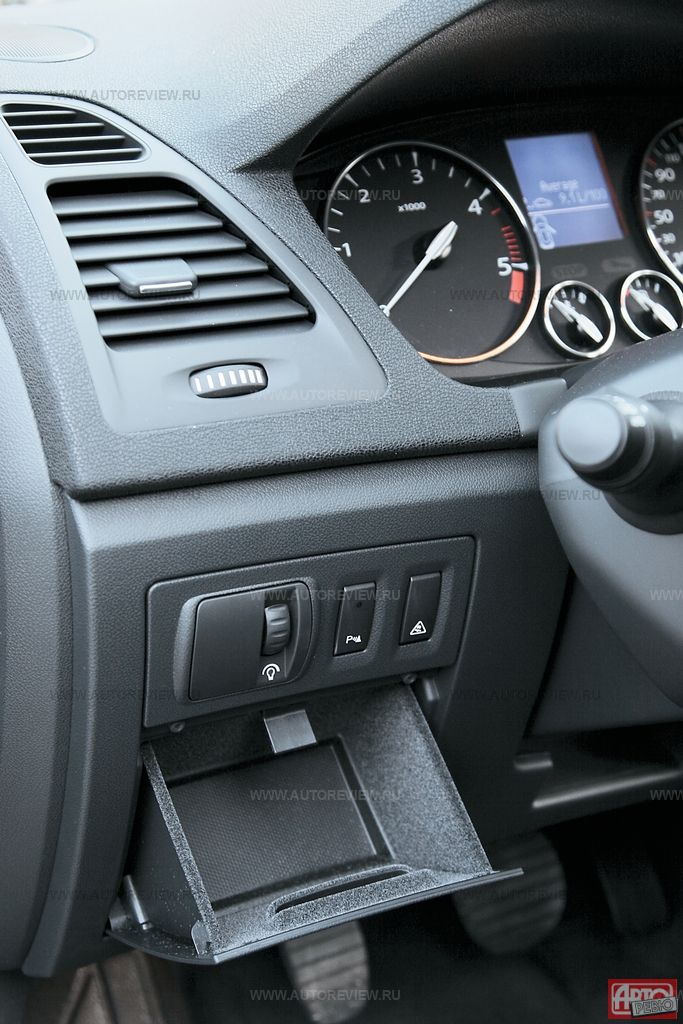 | 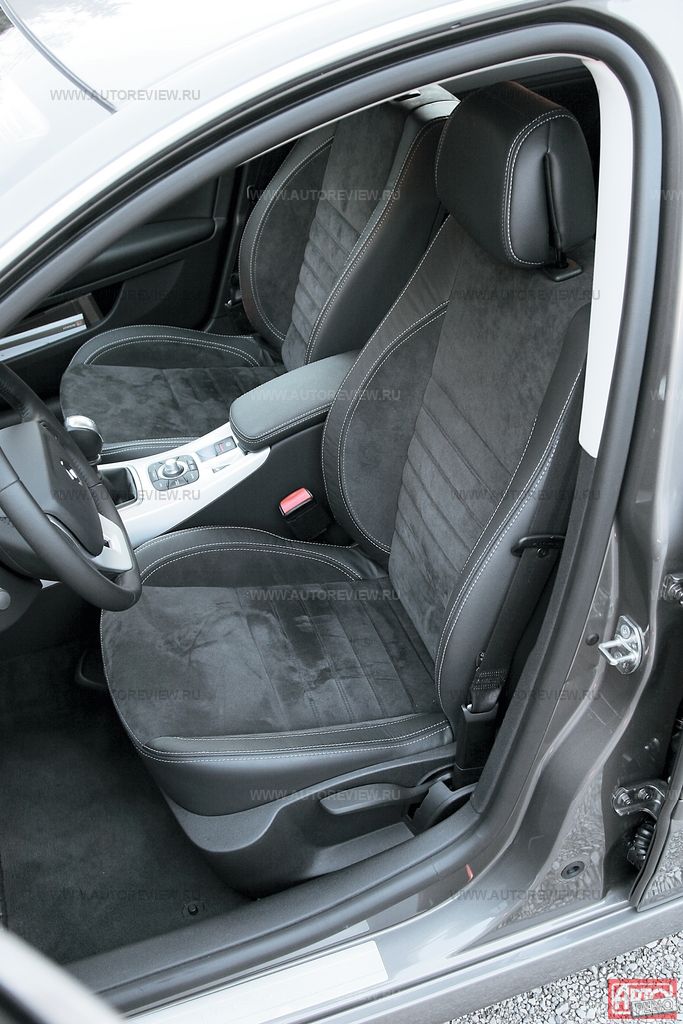 |
| For rear windows, you can order sunshades | To the left of the steering wheel — a small box and buttons to disable the parking sensors and stability control system | Seats with mechanical adjustments give an optimal seating position, but power seats are not as comfortable |
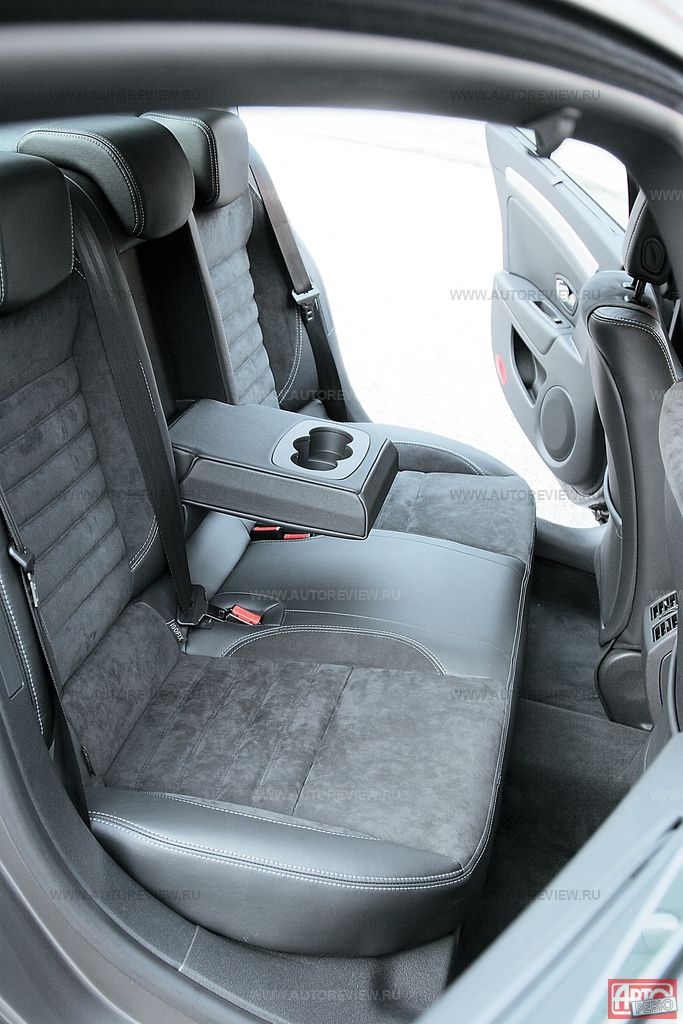 | 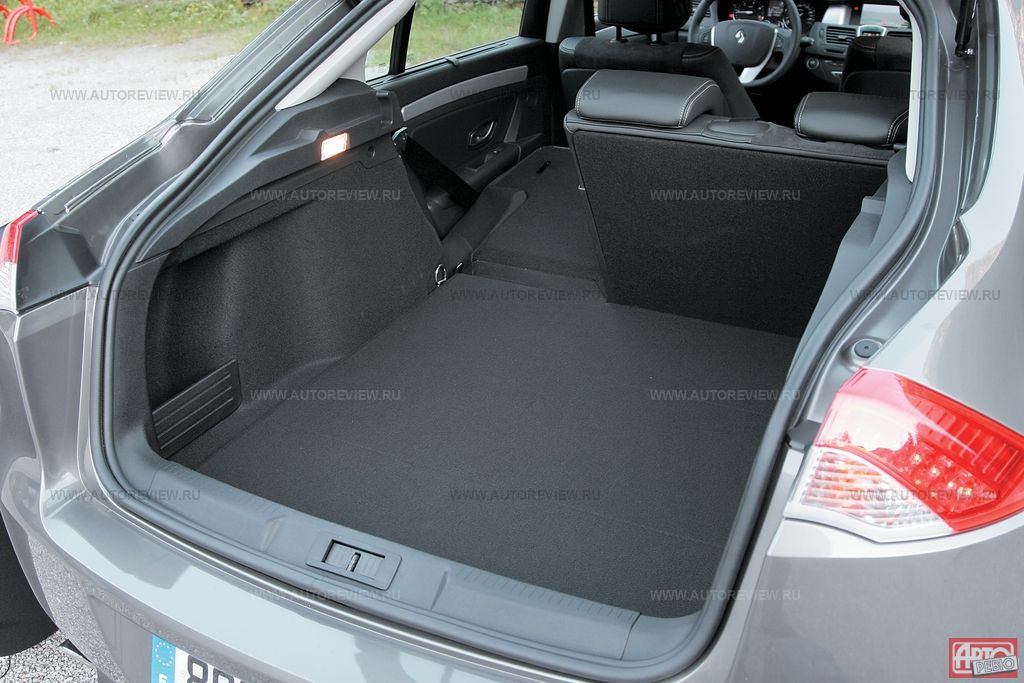 | 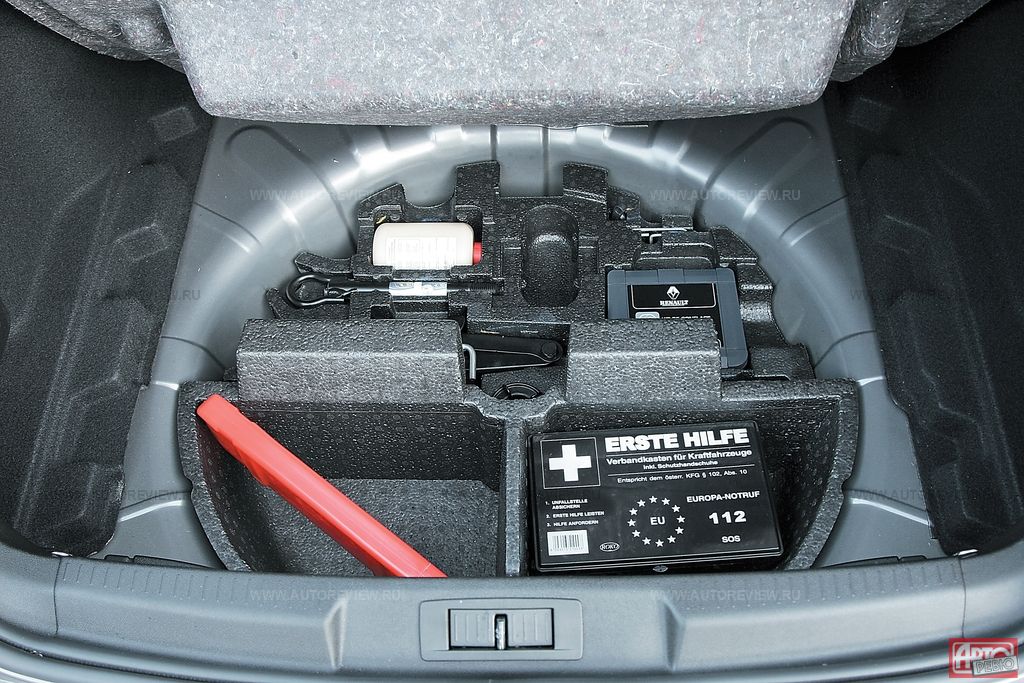 |
| In the back, there is more knee room (+20 mm), but there is nowhere to put your feet — the front seats stand almost on the floor | Unlike the station wagon, the hatchback's trunk is simple | For Europe — a compressor and a can of sealant. But for Russia, a full-size spare wheel is provided |
I quickly figured out the Carminat navigation settings, and was especially pleased that the system knows where stationary speed cameras are located…
'Excellent dynamics', 'precise steering'... Clichés from the press release. But maybe there really are devils in still waters? After all, the body has become lighter by 15 kg, the front springs are stiffer by 20%, and the rear ones by as much as 50%, the diameter of the front stabilizer has grown from 19.5 to 24 mm, and all engines now come with six-speed gearboxes — both manual and automatic (previously there were five-speed manuals and four-speed automatics).
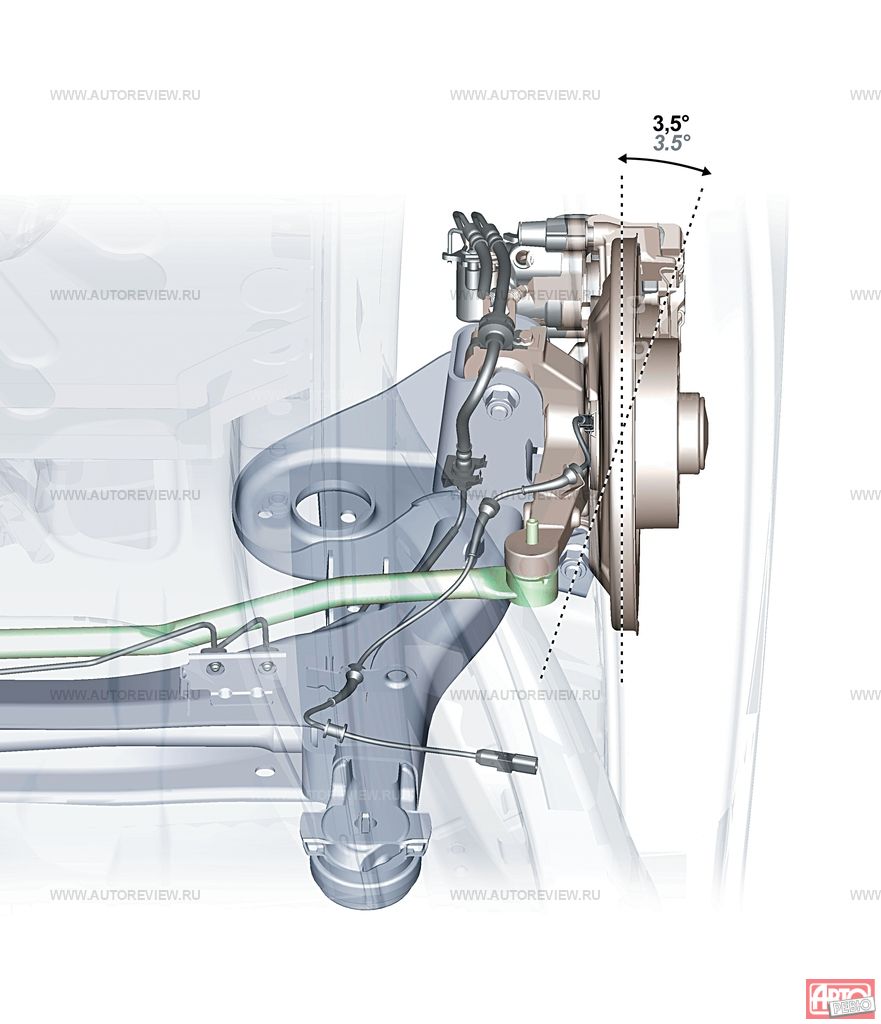 | 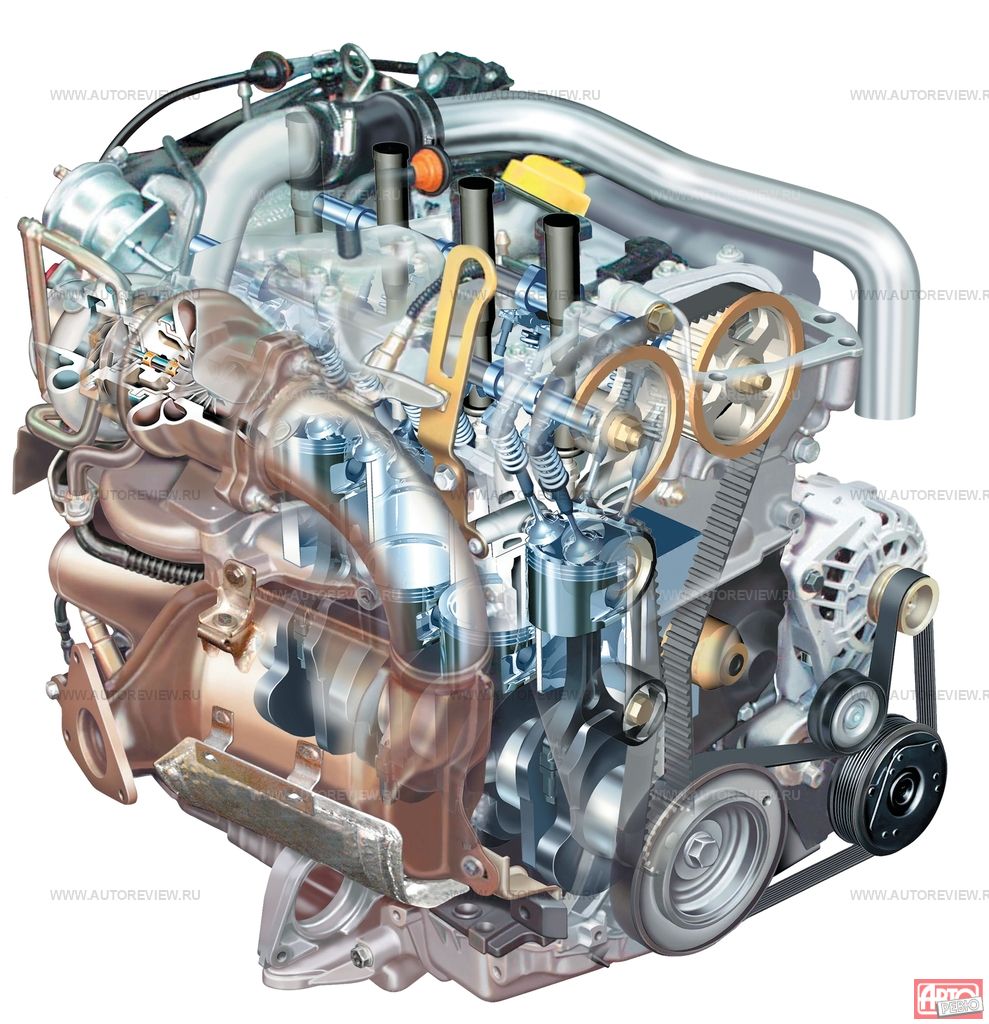 | |
| Next spring, the Laguna with rear-wheel steering will go into production. The wheels turn at an angle of up to 3.5° provided by an electric motor mounted on the rear axle beam. At speeds up to 60 km/h, the rear wheels turn in the opposite direction to the front ones, which reduces the car's turning diameter from 12.05 to 10.8 meters. And at speeds above 60 km/h, the rear wheels turn in the same direction as the front ones, improving stability in smooth turns and during sharp maneuvers in critical situations. The electronic control unit for the rear wheels works in conjunction with ABS and the ESP stability control system | 1 — ABS/ESP control unit 2 — steering wheel angle sensor 3 — rear wheel control unit 4 — CAN bus 5 — electric actuator for rear wheel steering | Currently, the flagship power unit is a two-liter petrol turbo engine with 170 hp paired with a six-speed Jatco automatic. But next year, a petrol V6 will appear under the hood of the Laguna, and then a three-liter turbodiesel 3.0 dCi |
The key card is in my pocket, and I press the Start button. The cabin fills with a barely discernible diesel rumble, though there is not the slightest vibration on the steering wheel or gear lever. Acceleration is brisk but jerky. And the 'loose' gear lever is to blame: overcoming the resistance of tight synchronizers, it barely finds the right 'slot'. That's French style.
But when in the morning I got into the Laguna with the petrol turbo engine, complaints about the gearbox evaporated: here there was already an 'automatic'! Energetic acceleration, smooth shifts. Just what you need! By the way, automatic Lagunas will be supplied to Russia only with such engines.
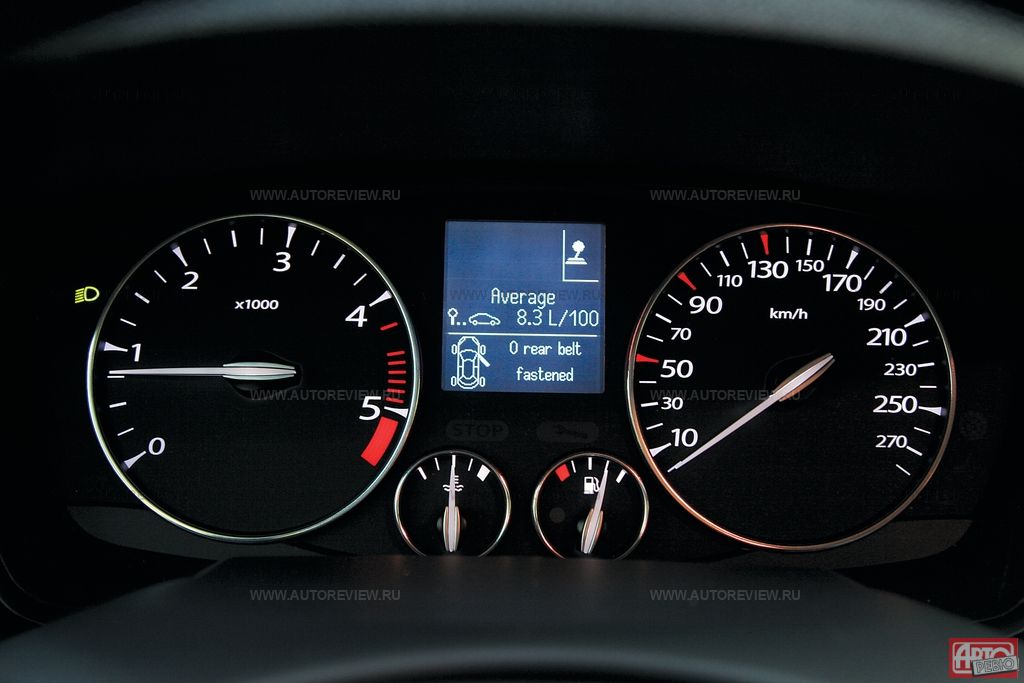 | 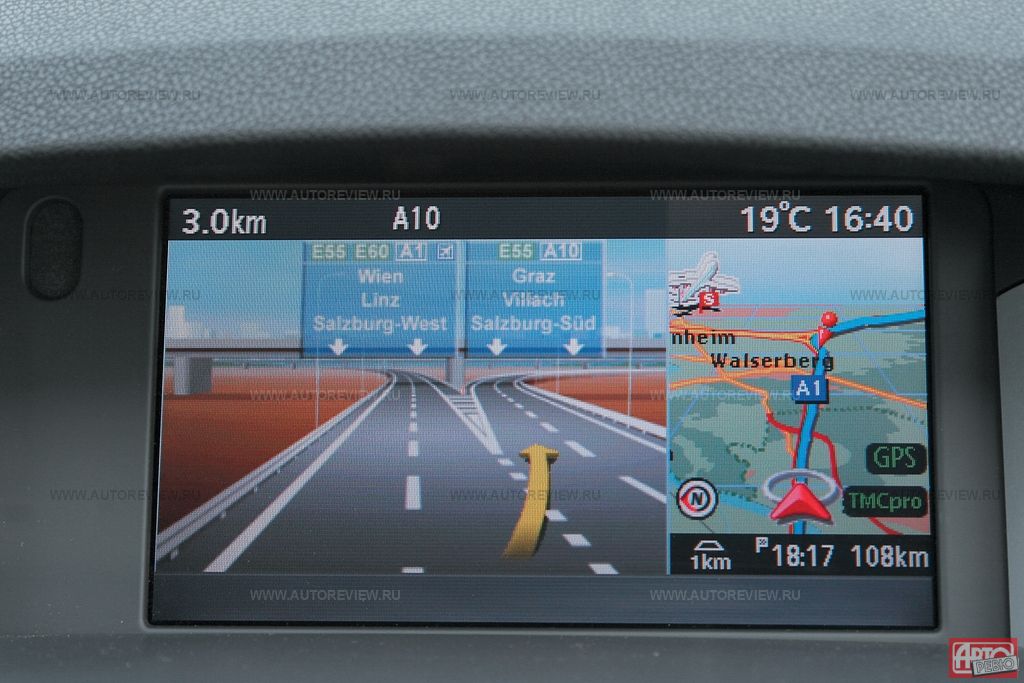 |
| In addition to the usual information, the display shows an arrow-hint about shifting to a higher or lower gear | 3D navigation is magnificent — it even displays on the screen the signs encountered along the way! But Renault does not yet have a Russian-language version |
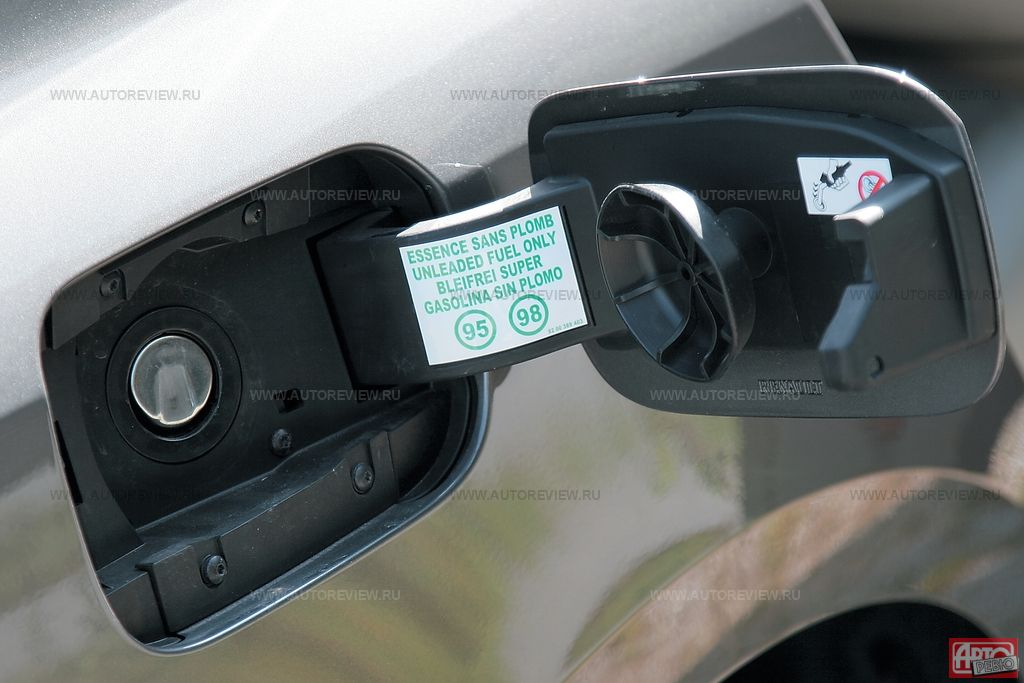 | |
| The seat heating switch, as before, is located in the "blind" zone | The valve on the flap allows you to do without the usual fuel filler cap |
The car behaves quite decently on the road! Reactions are soft and predictable, which allows you to pass mountain serpentines quite briskly. But you don't get real drive: the stability system interferes too intrusively in the process. I, of course, decided to try to turn it off. However, as soon as the speedometer needle crosses 40 km/h, the electronics again take the reins into their own hands. Complete safety, and despite the somewhat stiff springs with stabilizers, the ride is very comfortable.
A separate issue is reliability. The previous Laguna earned a reputation as one of the most problematic cars. The French claim that they have taken into account the mistakes and launched a large-scale fight against defects. For example, all wiring in hidden cavities has received comprehensive protection, and unused connectors are closed with plugs. The approach to maintenance has also seriously changed. To reduce the time of the owner's visit to the service, engineers compiled a list of 800 signs of defects and 6000 types of probable malfunctions. Now the master, asking the client three or four short questions, will quickly find the cause of the problem. For complex cases, a video camera connected to a computer is provided for diagnosing hard-to-reach components. According to Renault's calculations, it will take no more than an hour to accurately determine 80% of probable breakdowns, and 95% will be found within two hours. The company is so confident in the new Laguna that it offers a warranty of three years or 150 thousand kilometers of mileage. Scheduled maintenance — every 30 thousand kilometers for all engines, both gasoline and diesel. The exception is only turbocharged gasoline engines, for which the service interval is reduced to 20 thousand kilometers.
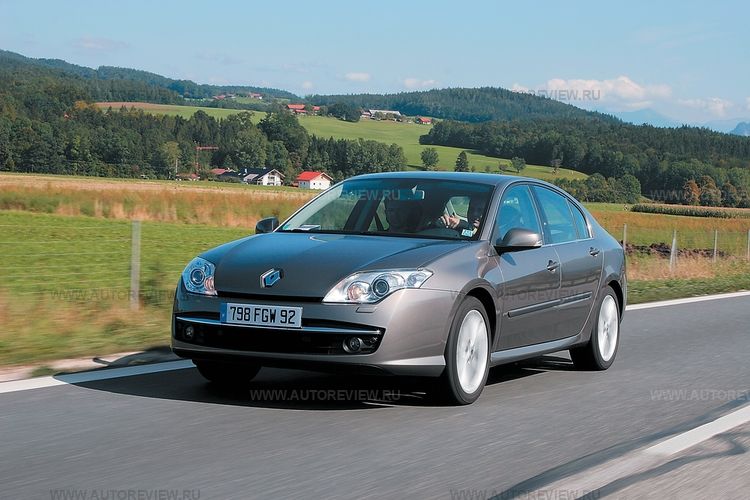
True, it is unclear whether these conditions will apply in Russia: now for all Renault models here the warranty is two years without mileage limit, and maintenance — every 15 thousand km. The reason is broken roads, low-quality gasoline, harsh climate. But all Renault cars for the Russian market undergo special adaptation: increased ground clearance, crankcase protection, improved cold start. The new Laguna was no exception. Even before the premiere, it was tested at the Dmitrovsky autopolygon and driven along the roads of the Kola Peninsula. It is only a pity that due to adaptation the start of sales is delayed: in Western Europe the Laguna is already being sold for 24,700 euros (with a two-liter gasoline engine, and the basic version with a 1.6-liter engine will appear on the assembly line at the end of the year), while here the car is expected no earlier than next spring.
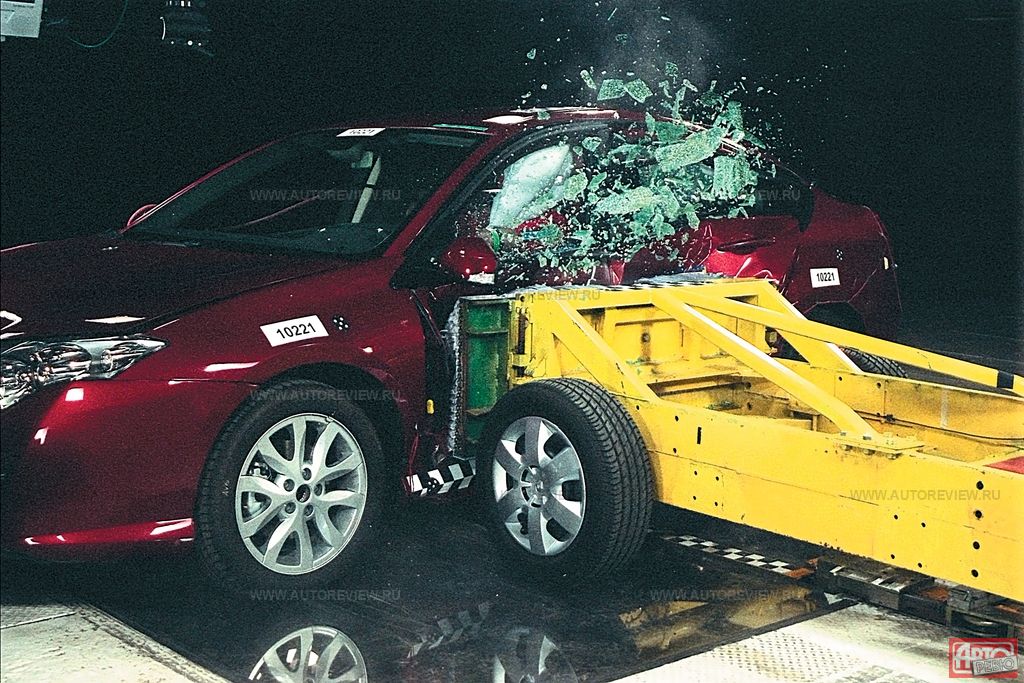 | The previous Laguna was the first to receive the highest score for passive safety in tests according to the EuroNCAP methodology. For the new Laguna, dual adaptive side airbags have been developed, which, depending on the force of the impact, deploy with different effectiveness, protecting both the chest and the pelvic area of the driver and front passenger. The new side airbag system with two lateral impact sensors allows raising the safe side impact speed from the standard 50 km/h to 70 km/h |
Russian prices have not yet been announced, but the goal is clear: the Renault Laguna should cost less than the Peugeot 407 in similar configuration. This will probably allow the new Laguna to overcome the bar of a thousand cars sold per year, but it is far from bestsellers: four models of the D segment, led by the Toyota Avensis sedan, have already exceeded ten thousand.
| Specifications | ||||
| Parameters | Vehicle | |||
| Renault Laguna | ||||
| Modification | 2.0 | 2.0 Turbo | 1.5 dCi | 2.0 dCi 150 |
| Body type | five-door hatchback | five-door hatchback | five-door hatchback | five-door hatchback |
| Number of seats | 5 | 5 | 5 | 5 |
| Trunk volume, l | 450/1377* | 450/1377* | 450/1377* | 450/1377* |
| Curb weight, kg | 1369 | 1467 | 1386 | 1480 |
| Gross weight, kg | 1919 | 1961 | 1936 | 2025 |
| Engine | gasoline, with distributed fuel injection | gasoline, with distributed fuel injection and turbocharging | diesel, with turbocharging | diesel, with turbocharging |
| Location | front, transverse | front, transverse | front, transverse | front, transverse |
| Number and arrangement of cylinders | 4, in-line | 4, in-line | 4, in-line | 4, in-line |
| Displacement, cm³ | 1997 | 1998 | 1461 | 1995 |
| Cylinder bore/piston stroke, mm | 80.0/90.1 | 82.7/93.0 | 76.0/80.5 | 84.0/90.0 |
| Compression ratio | 10.2:1 | 9.5:1 | 15.6:1 | 16.0:1 |
| Number of valves | 16 | 16 | 8 | 16 |
| Max. power, hp/kW/rpm | 140/103/6000 | 170/125/5000 | 110/81/4000 | 150/110/4000 |
| Max. torque, Nm/rpm | 195/3750 | 270/3250 | 240/2000 | 340/2000 |
| Gearbox | 6-speed, manual | 6-speed, automatic | 6-speed, manual | 6-speed manual |
| Drive | front-wheel drive | front-wheel drive | front-wheel drive | front-wheel drive |
| Front suspension | independent, spring, McPherson | |||
| Rear suspension | semi-independent, spring | semi-independent, spring | semi-independent, spring | semi-independent, spring |
| Front brakes | disc, ventilated | disc, ventilated | disc, ventilated | disc, ventilated |
| Rear brakes | disc | disc | disc | disc |
| Tires | 195/60 R16 | 215/55 R16 | 195/60 R16 | 205/60 R16 |
| Maximum speed, km/h | 210 | 220 | 192 | 210 |
| Acceleration time 0-100 km/h, s | 9.2 | 9.3 | 12.2 | 9.8 |
| Fuel consumption, l/100 km | ||||
| urban cycle | 10.7 | 13.0 | 6.1 | 7.8 |
| extra-urban cycle | 6.3 | 6.6 | 4.6 | 5.1 |
| combined cycle | 7.9 | 8.9 | 5.1 | 6.0 |
| Fuel tank capacity, l | 66 | 66 | 66 | 66 |
| Fuel | AI-95 | AI-95 | diesel fuel | diesel fuel |
| * With rear seats folded | ||||