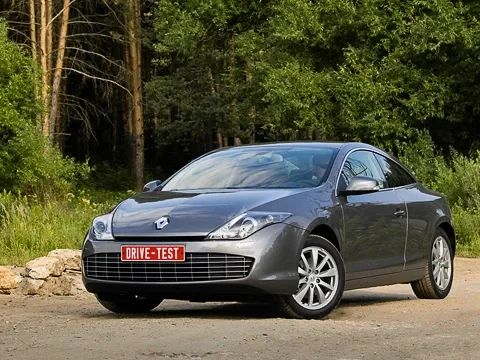
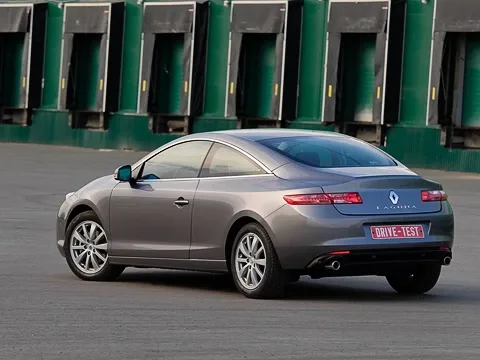
So many emotions in the contours of the rear end! Every body line is precise and full of character. But no matter how much I prepare for the encounter, the sight of the Laguna's face brings a smile to my face on its own. It seems this is the farewell chord of Patrick Le Quément. The massive front overhang, the inexpressive headlights—only the wide radiator grille remains of the Aston Martin hints. Or maybe it's just that the previous Laguna simply didn't allow creating something more attractive given modern pedestrian safety and aerodynamics standards?
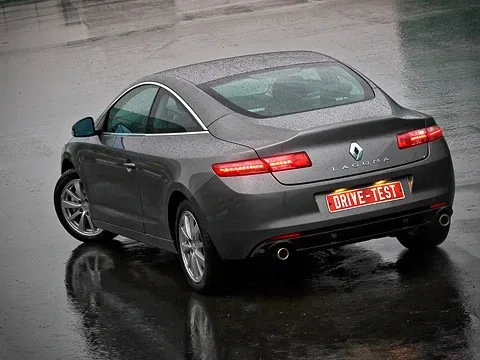
No one will honk at the Laguna coupe from behind—even if you fall asleep at a traffic light. The person behind will always have something to occupy their gaze: there's plenty to look at here.
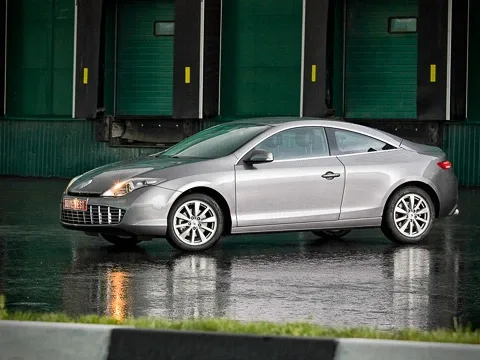
But the Laguna hatchback is just an obstacle on the right.
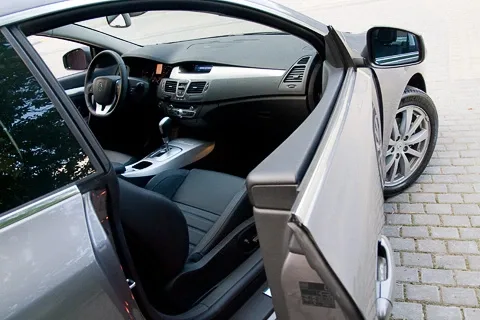
Inside, however, everything is safe for the psyche and body. The hard plastic has been replaced with something soft, resembling a cork underlay for kitchen utensils. Even the door cards are trimmed with a pliable material. The cold metallic insert looks like an ice floe in volcanic ash. But the overall impression of quality doesn't reach the Citroën C5. The materials are the best among inexpensive ones.
Some elements please the eye, especially the climate control unit—a real main toy. But the instrument cluster brings boredom, and the radio buttons are better admired than used. The small, stiff keys click like a lighter's piezo element. And finally, the simple automatic selector sits forlornly on the smooth silver surface of the tunnel. Some might see this as minimalism. I see it as coldness.
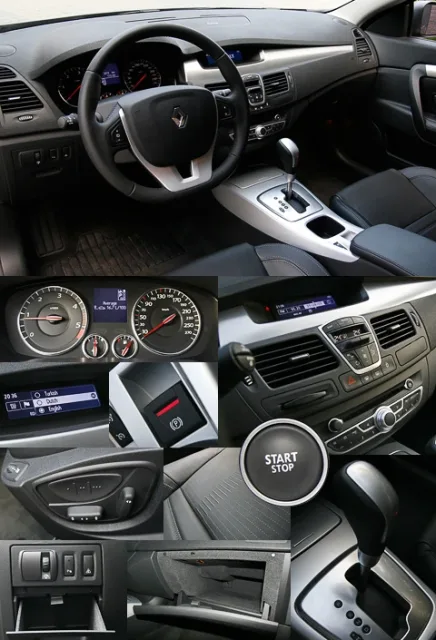
Against the backdrop of the car's overall design, the dashboard disappoints with its simplicity. The plastic of the central tunnel is frankly cheap. When the turn signals are activated, the buzzer instead of the usual ticking plays the first notes of "Dance of the Little Swans."
The cabin, which smells cloyingly of inorganic chemistry, is quite quiet. The noise picture consists of two opposing components. At low speed, you can hear the turbodiesel bubbling like a pressure cooker. Accelerate—and the engine's voice is drowned out by the hum of tires. But neither of these sounds strains the ears. However, they don't please them either.
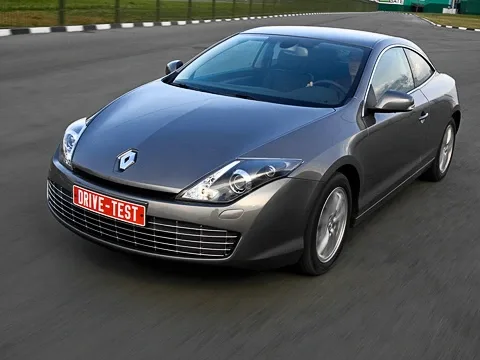
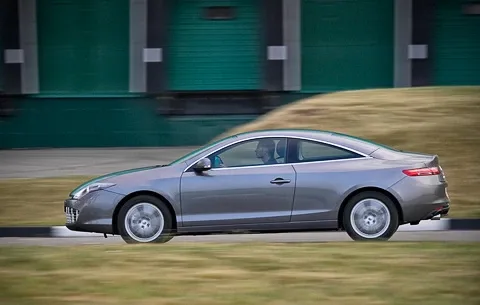
It seems as if not a clay model but a marble one went into production. Some heaviness is also felt in motion.
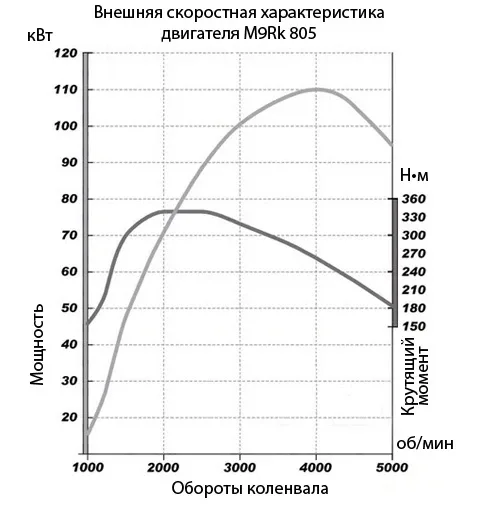
The power of the two-liter turbodiesel, like scale from under a lid, appears unexpectedly and in excess. The reactions to the gas pedal are so smoothed out that it's worth talking not about a throttle but about a gas stove burner. Add fire—everything boils and surges. Reduce—it settles. With such logic, the manual mode of the six-speed automatic is a toy. The gearbox itself knows better how to handle the 340 "newtons" that seem stewed. Thanks to it, you remember the engine only at idle, when large vibration goosebumps run through the body and steering wheel. It shakes noticeably, although this particular diesel version is equipped with a balance shaft.
Combining an economical diesel with a coupe that hints at carefreeness is something incomprehensible to a Russian person. But you quickly get used to such a combination, because the Laguna is generally woven from contradictions. Take ride smoothness. The spacious cabin with a high seating position, decent sound insulation, and a leisurely torque motor—everything sets a relaxed mood. And the chassis destroys this mood. I'm shaken, the steering wheel vibrates in my hands. The rear slightly floats on alternating bumps—that's the semi-independent rear suspension, yes.
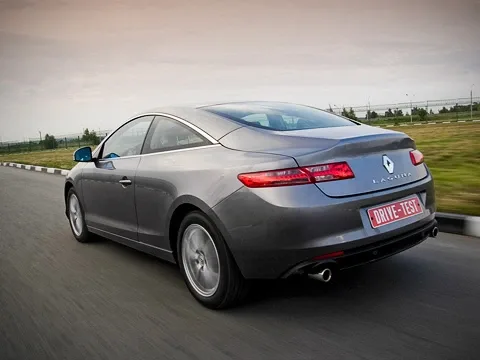
The Laguna's behavior on the road clearly shows: the French are in no hurry to turn into Germans. Renault has its own concept of harmony. Here it doesn't mean order.
On large road defects, there's a lack of the overall composure that new European cars are now famous for. The suspension has energy reserve—but there's no feeling that all elements work in sync. The chassis handles the terrain like a pickup orchestra at the first rehearsal: everyone knows their part, but together it's cacophony. Most likely, the French-favorite bad roads package is involved—look at the gaps between the wheels and arches.
A dacha coupe—that's what the Laguna is. Our editorial colleague Nastya Korolkova, after sitting behind the wheel for about ten minutes, said: "It lacks seedlings." And I immediately imagined my mother in her place, speaking French, with her most intelligent husband on the right and long items from the garden across the folded rear seat. In its own way, even beautiful.
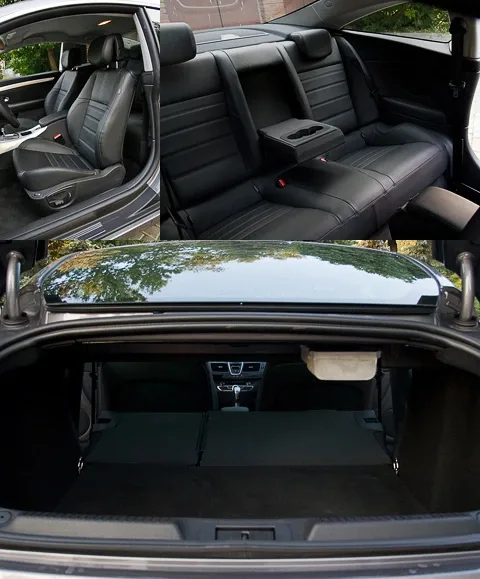
The front seating is still a bit high for a coupe, but it suits people of different builds. But in the back—space for short and slim people, and a third passenger is not provided at all.
And even more surprising is that this dacha coupe doesn't get lost when you start driving aggressively. The steering gives acceptable feedback, the stabilizing effort—without Megane's synthetic feel. In a limit turn, the Laguna almost without understeer goes into a four-wheel drift. True, the tires strongly slip: on an arc, the Laguna manages to dance a couple of bars of lezginka on buckling toes. But if you roll into a corner and lift off the gas, you can count on a slight tuck-in—the strict non-switchable stability control won't let it grow into a spin.
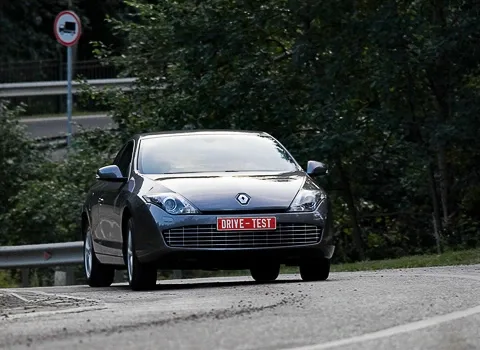
The Laguna doesn't falter on narrow country roads. Especially worth praising the brakes—for impeccable actuation.
Is disharmony really the second name of the Laguna? Perhaps it's welded into the B-pillar, pressed into the rear beam's silent blocks, and poured into the fuel tank devoid of a cork. Not at all. Internal contradictions don't tear the Laguna apart. They don't irritate the driver but transport him into a special parallel reality of Renault. Only the world of the Laguna has nothing in common with Logan's everydayness. Hands down, hitchhikers! The Laguna is not "Patrol Duty" on RTR, but Le Mag on Euronews.
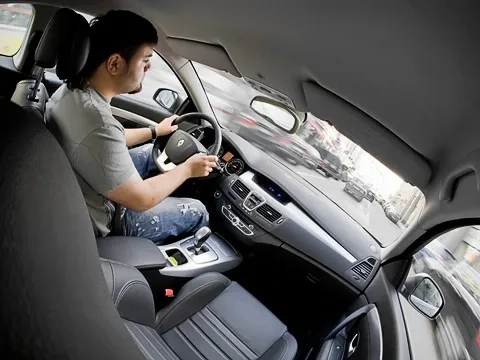
The coupe's cabin pleases with visibility. Especially forward, even despite the heavily raked front pillars. True, the ceiling is a bit low, but the driver in the worst case touches the soft lining with the top of the head, while the rear passenger hits the sloping glass directly.
The coupe is the only Laguna that caught our attention. The hatchback and wagon of the same name lack that irrational grain that turns a second-freshness car into an object of lively interest. The Laguna Coupe is a show-stopper. Everyone in the editorial office noted that the coupe, whatever it is, arouses the curiosity of others. Especially owners of premium models.
If we compare the "Anglo-Saxon" Laguna and the Peugeot 407 coupe, we choose Renault. Partly because the resemblance of half the car to an Aston is better than the resemblance of the whole to a Chrysler. Moreover, the diesel Laguna 2.0 TD is cheaper than the less torquey three-liter petrol Peugeot.
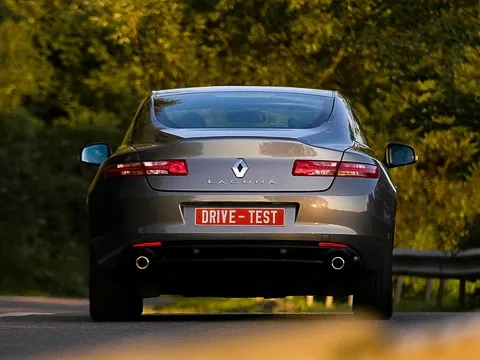
This is exactly the Laguna that children should dream of.
One "but." A woman cannot—must not!—be diesel, so it's worth looking at the faster and cheaper Laguna with the 170-horsepower petrol turbo engine. Of course, when a two-door based on the C5 appears in the Citroën DS lineup (if it ever appears), it will be much harder for the Laguna to defend its original idea of what a French coupe should be. For now, I'll gladly yield the road to the Laguna when the occasion arises—to be behind it.
Technical specifications
| Model | Renault Laguna Coupe |
| Body |
| Body type | coupe |
| Number of doors/seats | 2/5 |
| Length, mm | 4643 |
| Width, mm | 1812 |
| Height, mm | 1398 |
| Wheelbase, mm | 2694 |
| Track front/rear, mm | 1548/1542 |
| Curb weight, kg | 1539 |
| Gross weight, kg | 2017 |
| Trunk volume, l | 423 |
| Engine |
| Type | turbocharged diesel |
| Location | front, transverse |
| Number and arrangement of cylinders | 4, in-line |
| Number of valves | 16 |
| Displacement, cm3 | 1995 |
| Max power, hp/rpm | 150/4000 |
| Max torque, N•m/rpm | 340/2000 |
| Transmission |
| Gearbox | automatic, six-speed |
| Drive | front |
| Chassis |
| Front suspension | independent, coil spring, McPherson |
| Rear suspension | semi-independent, coil spring |
| Front brakes | disc, ventilated |
| Rear brakes | disc |
| Tires | 215/50 R17 |
| Ground clearance, mm | 120* |
| Performance characteristics |
| Maximum speed, km/h | 210 |
| Acceleration time from 0 to 100 km/h, s | 9.8 |
| Fuel consumption, l/100 km |
| — urban cycle | 9.6 |
| — suburban cycle | 5.6 |
| — combined cycle | 7.0 |
| Toxicity standard | Euro-4 |
| Fuel tank capacity, l | 66 |
| Fuel | diesel |
*For European version
Prices and trim levels
Base trim Renault Laguna Coupe 2.0 TD
- Front airbags
- Side airbags and inflatable curtains
- Isofix child seat anchors
- Electronic stability control
- Bi-xenon headlights
- Dual-zone climate control
- Rain sensor
- Light sensor
- Rear parking sensors
- On-board computer
- Cruise control
- Key card
- Multifunction steering wheel
- Steering column with tilt and reach adjustment
- Electrochromic rearview mirror
- Front seat height adjustment
- Heated front seats
- Bose audio system with MP3 support, integrated Bluetooth hands-free and analog audio connector with RCA jack
- Leather interior trim
- Alloy wheels
Additional equipment of the test car
- Cornering headlights, front seats with electric adjustment and memory for driver's seat and mirrors — 35,000 RUB
- Metallic color — 15,000 RUB
Price of base trim (Dynamique) — 1,336,500 RUB
Price of tested car — 1,371,000 RUB
Technology
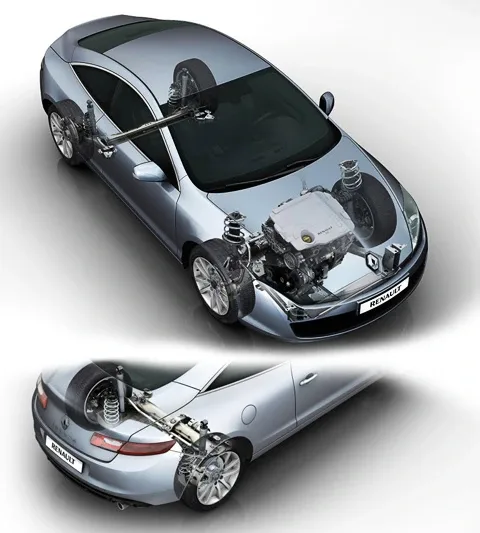
The coupe's chassis is borrowed from the hatchback: classic McPherson struts at the front, torsion beam at the rear. This layout was passed on to the new Laguna generation from its predecessor. The lower photo clearly shows the actuator that changes the rear wheel steering angle on the version with all-wheel steering.
Under the hood of the test car is a two-liter turbodiesel M9Rk 805. Among all diesel engines of the Laguna, it is the only one that received a balance shaft designed to reduce vibrations. But, honestly, the shaking is still noticeable.
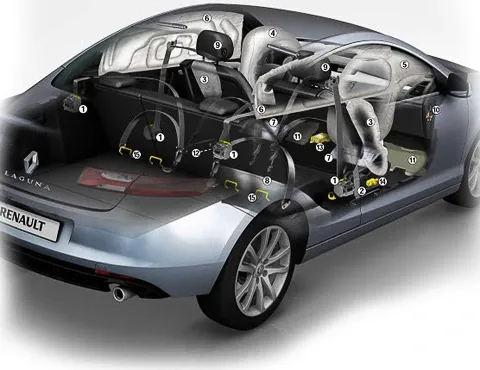
No special crash tests were conducted for the Laguna coupe. However, the hatchback in 2007 according to the Euro NCAP methodology earned the maximum score at that time for adult occupant protection, four stars for children, and two for pedestrians.
Passive safety system of the Renault Laguna coupe
- Belts with double pretensioners and force limiters.
- Pyrotechnic pretensioner.
- Dual-chamber adaptive side airbags.
- Adaptive dual-chamber driver airbag with two gas generators.
- Adaptive dual-chamber front passenger airbag with two gas generators.
- Inflatable curtains.
- Anti-submarining airbags in the seats.
- Padding preventing rear passengers from submarining.
- Head restraints reducing the risk of whiplash injury.
- Switch for front passenger airbag and pretensioners.
- Softening mats on the floor.
- Seat position sensor.
- Airbag control unit.
- Side impact sensors.
- Isofix anchors.
Design
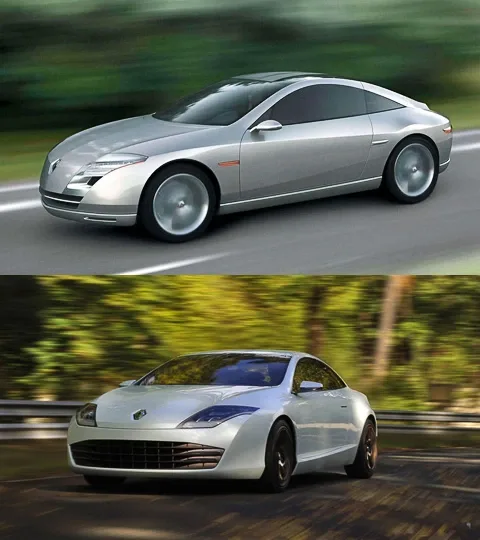
The precursor to the Laguna coupe was the Fluence concept shown in 2004 (top photo). Today this name is borne by a sedan on the Megane platform. The French demonstrated the almost production flagship coupe in Frankfurt in 2007 (bottom photo). Its conceptuality was added by doors opening upward like a guillotine.
Behind the scenes
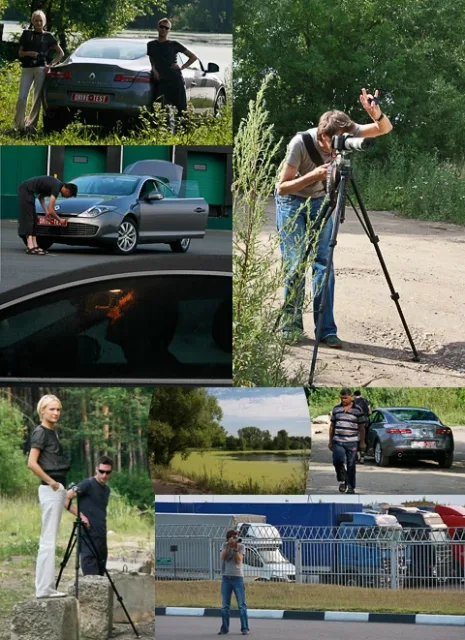
The Laguna test appeared in my schedule unexpectedly: I had to substitute for the departing Klepach and finish the planned work. As a result, I am pleased with the chance acquaintance. Moreover, we had a great time during the shooting, for which special thanks to the company "Eurasia Logistics", where they are not surprised by late calls from crazy journalists who "liked that green building over there".