
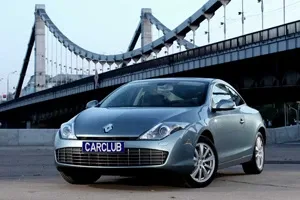
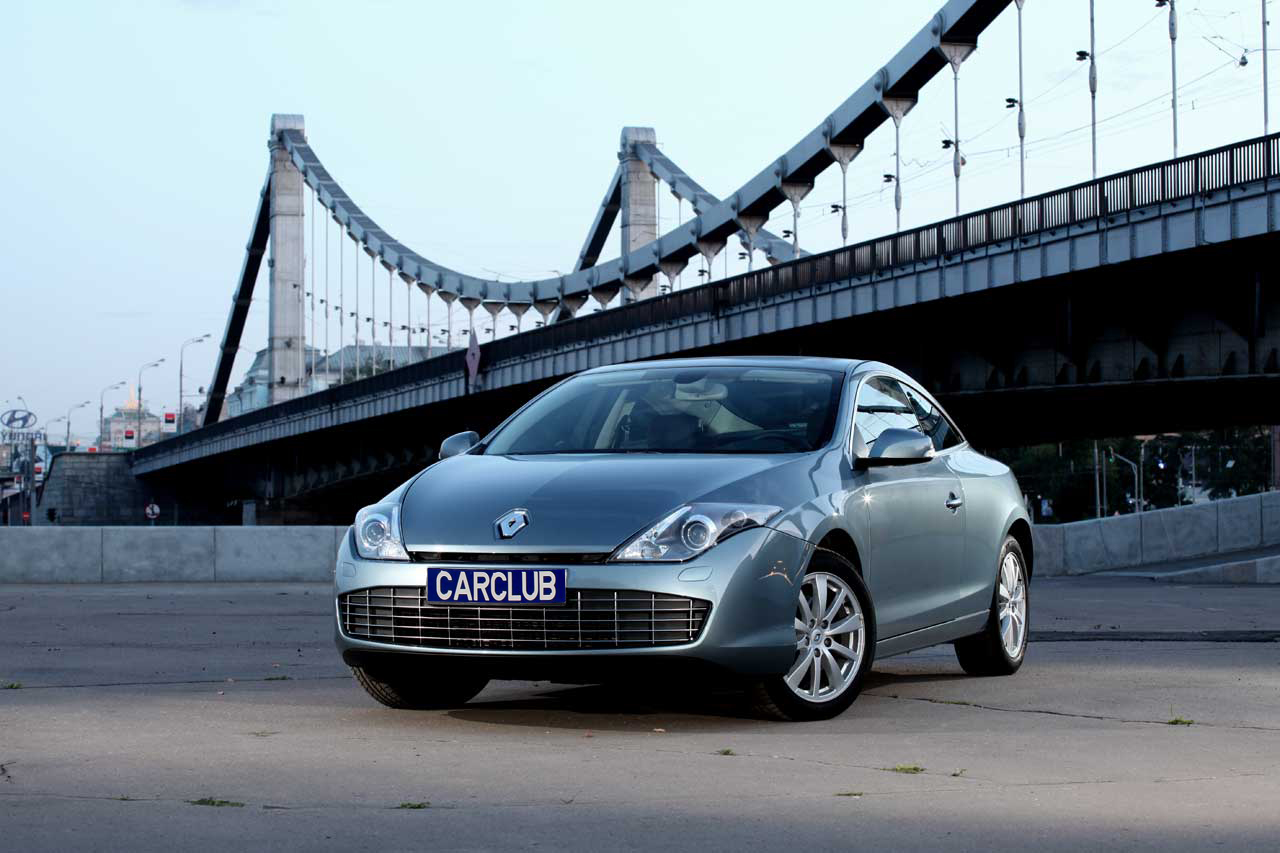
 A coupe is always about design, and the new "Laguna" is clearly in its element here. Laconic lines, like those of the best classic two-doors, emphasize the elegance of the French model.Comments (2)
Back in 2004, French engineers showed a concept called Renault Fluence — a car in the most "selfish" body style. It was remembered for its swift silhouette and smooth contours. And three years later, at the Frankfurt Motor Show, its successor debuted — the Laguna Coupe Concept.
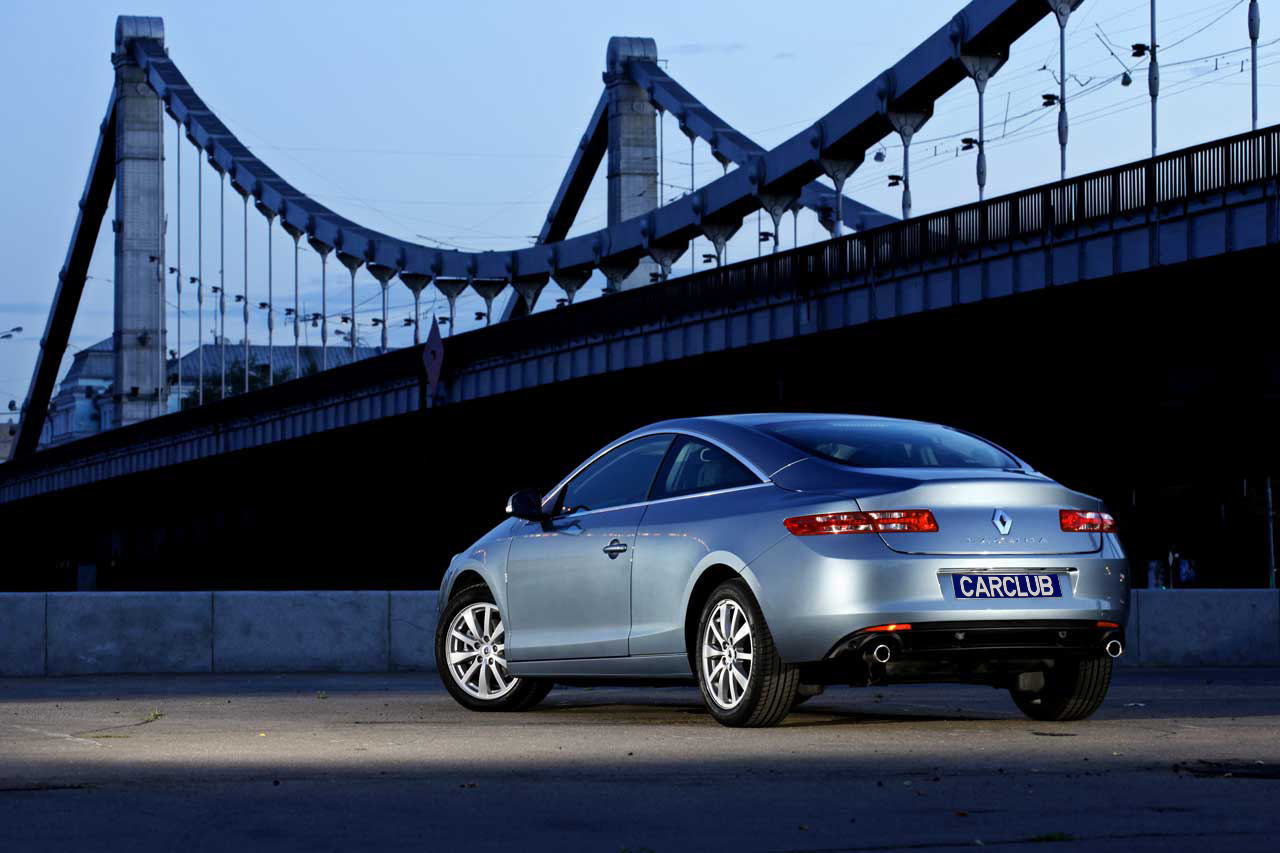 |
| The rear clearly echoes the legendary British aristocrat Aston Martin. How much talk there was about this! Some shouted about plagiarism, others — on the contrary — defended originality. Be that as it may, the appearance of the new Renault coupe turned out well. It seems that, along with the new beautiful Megane, this model opens a new chapter in the design of the French brand. |
French cars have always been distinguished by character. They are emotional, different, unlike anyone else — neither competitors nor their predecessors. And, most interestingly, their future generations will also be different. Perhaps that is why fans of the French auto industry are becoming more and more.
The world premiere of the production Renault Laguna Coupe took place at the Cannes Film Festival and the Monaco Grand Prix. For a coupe of this class, style is the main thing, and the new product fully meets expectations. Clean lines, like those of classic two-doors, emphasize elegance. The complex shape of the front headlights, which caused controversy on the Laguna hatchback, looks organic here. The wide radiator grille with chrome ribs, integrated into the bumper, references the British design school.
 |
| Inside, there are only pleasant-to-the-touch soft materials. The front seats with leather upholstery, excellent profile, and pronounced lateral support greet passengers like old friends. |
The rear of the Laguna Coupe clearly hints at Aston Martin. Envious people immediately started talking about borrowings. But it is worth admitting: together with the new beautiful Megane, this is, apparently, a new stage in Renault's design. Keep it up!
Peugeot 407 Coupe, Audi A5, Infiniti G37 Coupe, Alfa-Romeo Brera — and now the Renault Laguna Coupe. All of them are vivid examples of design thought, "selfish cars," two-door beauties capable of conquering those for whom a car is not just a means of transportation.
 |
| The adaptive gearbox adapts to the driving style: in active mode, the engine revs almost to the cutoff, in calm mode, gears shift almost imperceptibly, saving fuel. Shifts are smooth and unnoticeable, but when starting from a standstill or sharply pressing the gas, a pause is felt. |
Many people think that a coupe is necessarily crazy speed, stiff suspension, and soul-shaking dynamics. The Laguna Coupe is not like that. It knows how to please in a different way. This "Frenchwoman," unlike anyone else, has its own path to the driver's heart.
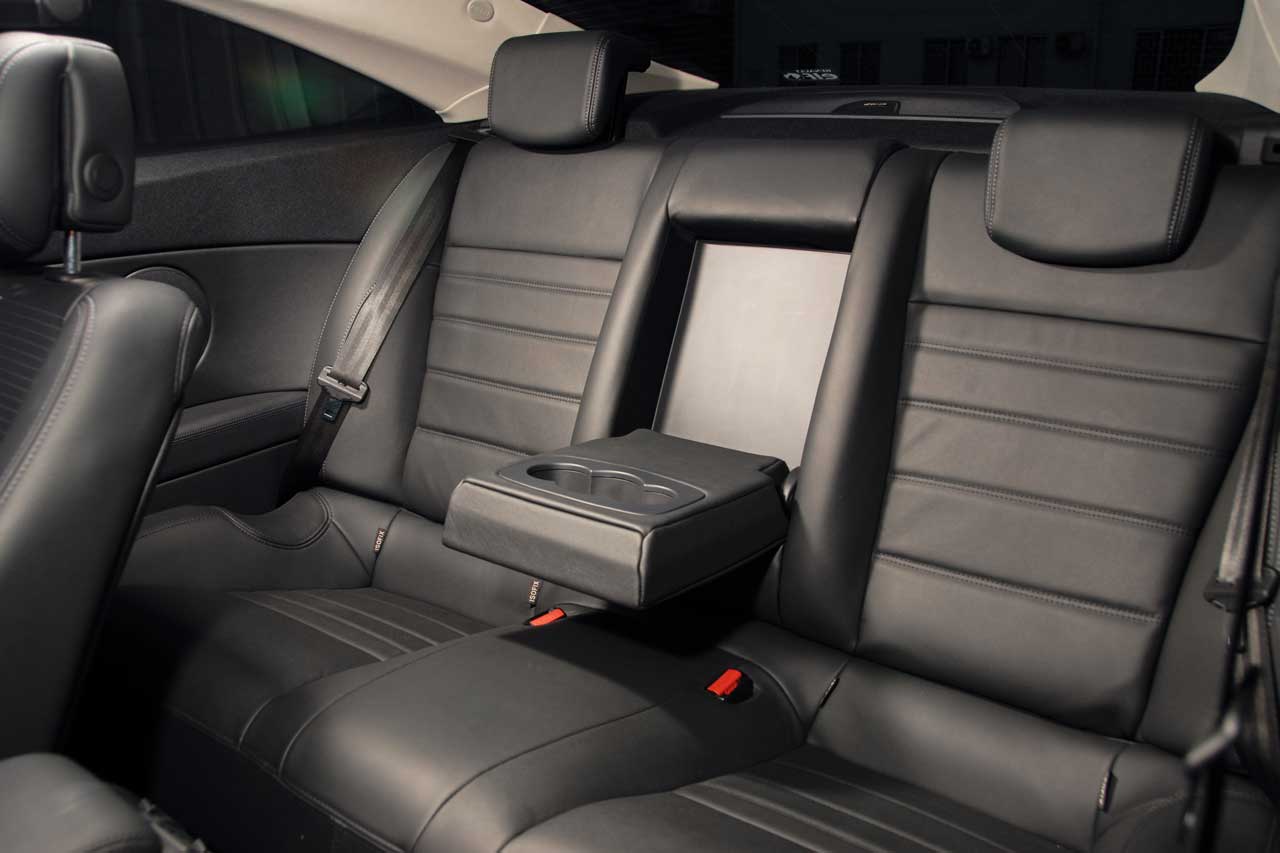 |
| In the back, there are two full seats, but tall passengers better not go there. However, if they do get in, they will appreciate the comfortable sofa with armrest. |
They meet you by your clothes, and with this, the "Laguna" is in perfect order. And what about inside? The interior is neat and well-tailored, materials are soft and high-quality. The front leather seats with good profile and lateral support hug you like an old friend. The instrument panel with traditional French odd-numbered markings is informative and has pleasant lighting.
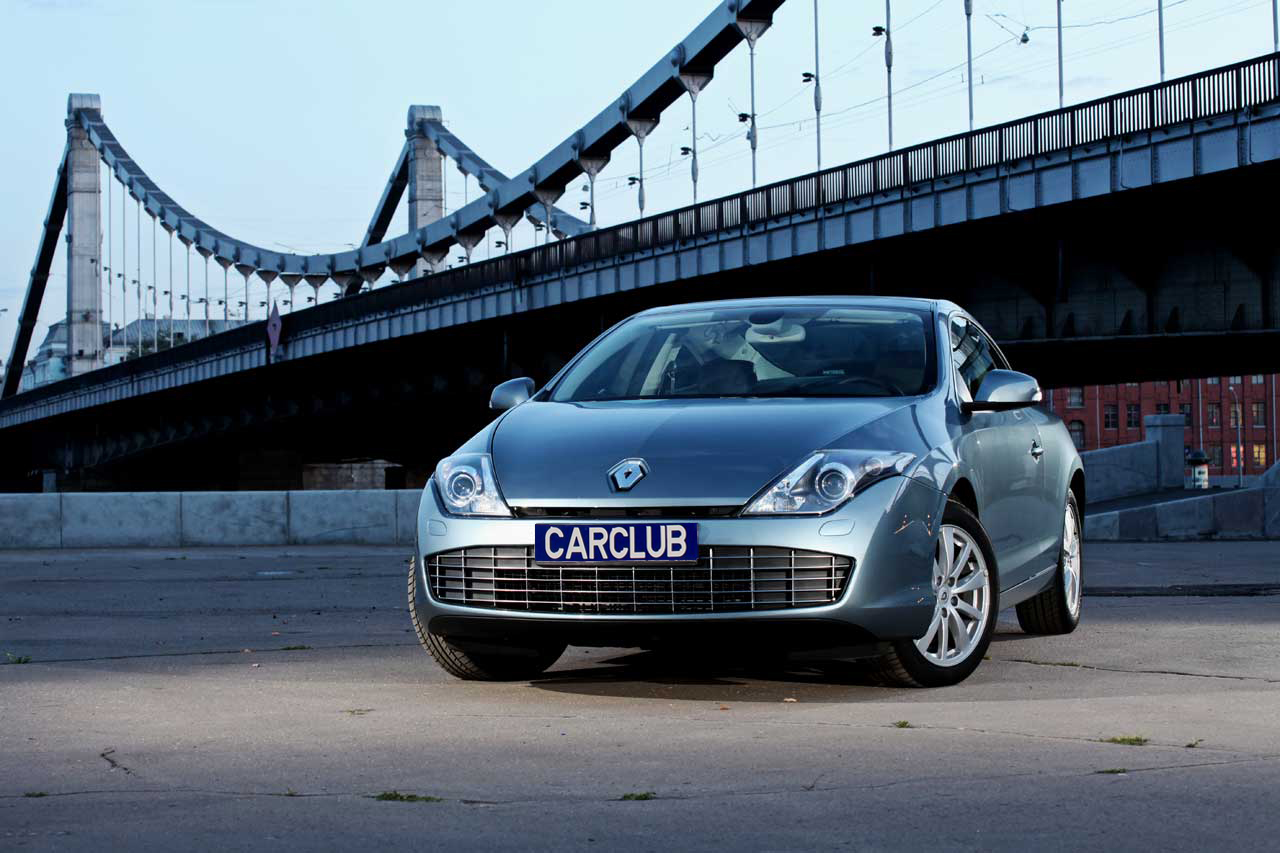 |
| Laconic lines, like those of classic coupes, emphasize elegance. The complex front headlights, which can be argued about for a long time, look in place here. |
The Laguna Coupe became the first Renault model with a new audio system created jointly with Bose. It includes 8 speakers and a powerful amplifier. Optionally available are USB and iPod connectors.
In the back, there are two seats, but they are not suitable for tall passengers. But if you manage to fit, you can enjoy the comfortable sofa with armrest. The trunk for a coupe is not small at all — a full 423 liters. If necessary, you can fold the split rear seat back using special handles in the trunk.
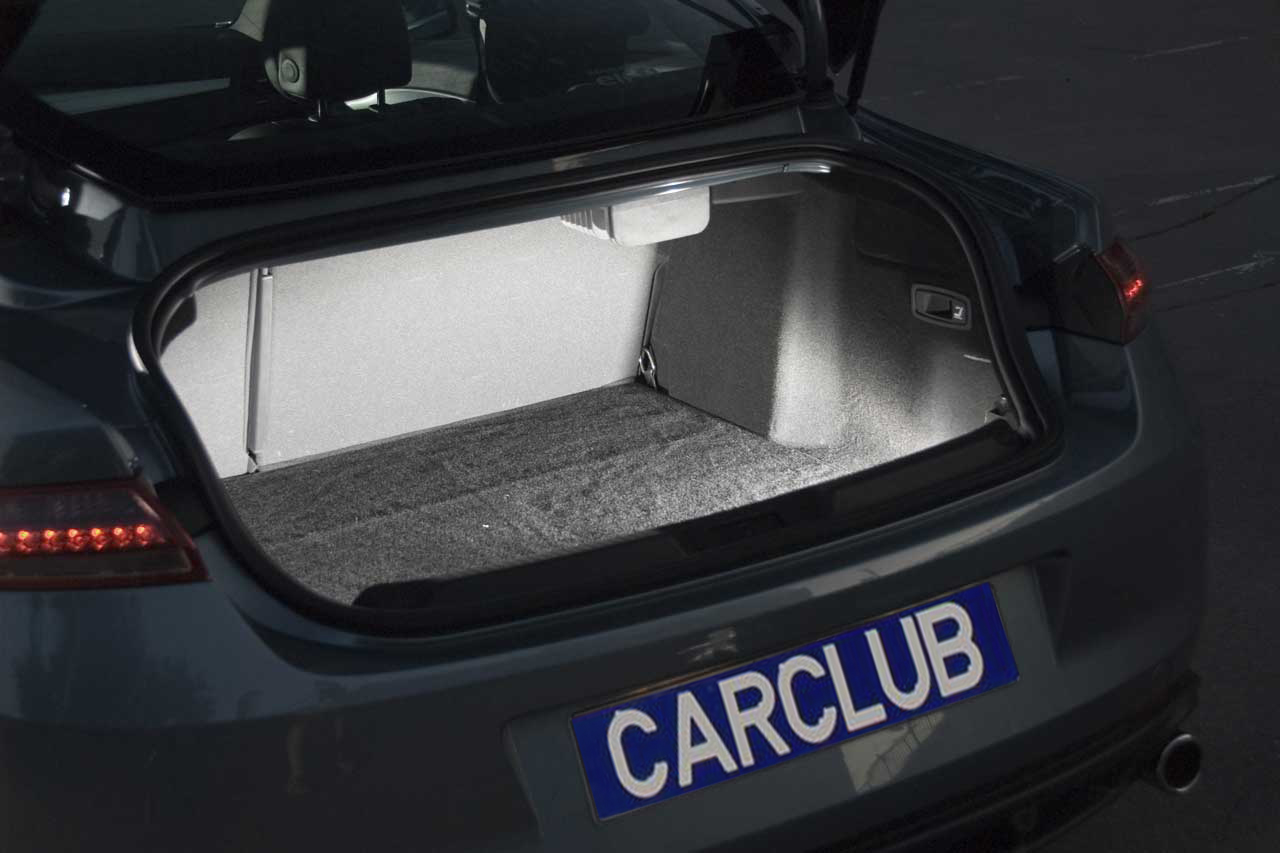 |
| The trunk of the Laguna Coupe is not small for a coupe — 423 liters. And for large items, you can fold the rear sofa back by pulling the handles in the trunk. |
The Laguna Coupe is brought to the Russian market with a 2.0-liter turbo engine with 170 hp. There is also a 150-horsepower turbodiesel of the same volume. Both units work in pair with a 6-speed adaptive "automatic." A diesel coupe for our latitudes is exotic, so for the test we took the gasoline version. According to the passport, acceleration to 100 km/h takes 9.2 seconds. Not to say it's fast. But this modification is not for racing. Such a car is bought for beauty and pleasure. By the way, the Laguna Coupe can be fast, but the version with a 3.5-liter V6 with 238 hp is not supplied to us. Russia will not see the three-liter diesel with 235 hp and torque of 450 Nm, nor the GT version, where the 2.0-liter engine produces 205 hp. What is, is.
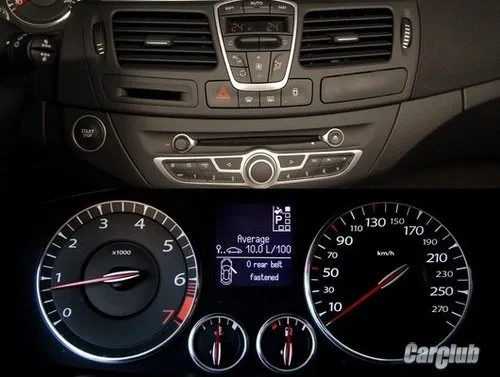 |
| The instrument panel with odd-numbered markings is informative, with pleasant lighting. On the center console, there is an original climate control unit and a new Bose audio system with 8 speakers and an amplifier. Optionally, you can order USB and iPod connectors. |
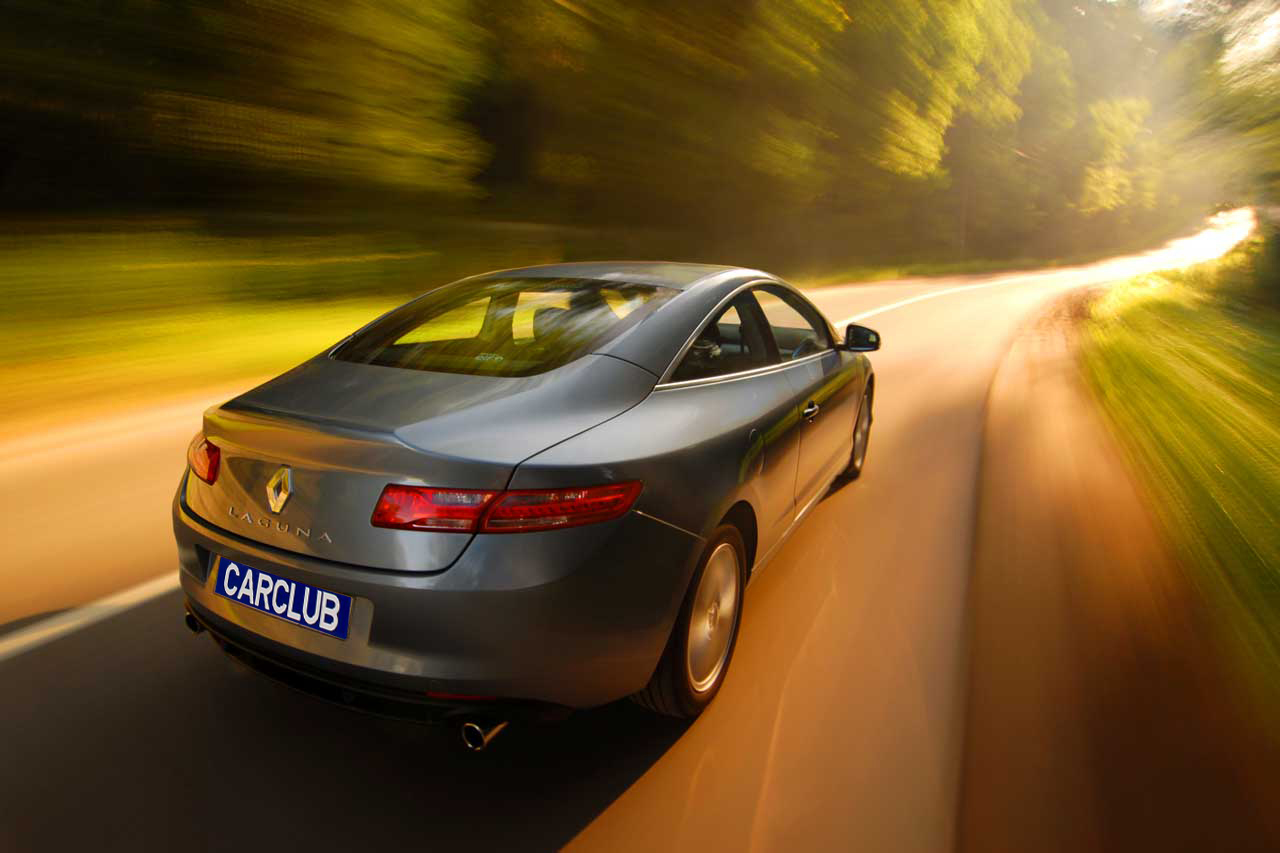
But our "Laguna" can also go fast. The "smart automatic" adapts to the driving style: in active mode, the engine revs almost to the red zone, in calm mode, the gearbox shifts up almost imperceptibly, saving fuel. Shifts are smooth and unnoticeable, but when starting and "kick-down," a delay is felt.
With sound insulation, Renault is, as always, in order: extraneous sounds do not penetrate, and a light rumble of the engine is heard only at maximum revs. When developing sound insulation, the dull noises of the engine at high revs were reduced by 40%.
The suspension of the French coupe is tuned primarily for comfort. The car swallows small road surface defects so that passengers almost do not notice them. And it copes with more serious potholes decently. In corners, the body rolls moderately, but this does not prevent the Laguna Coupe from confidently holding the given trajectory and obediently entering even a very sharp turn.
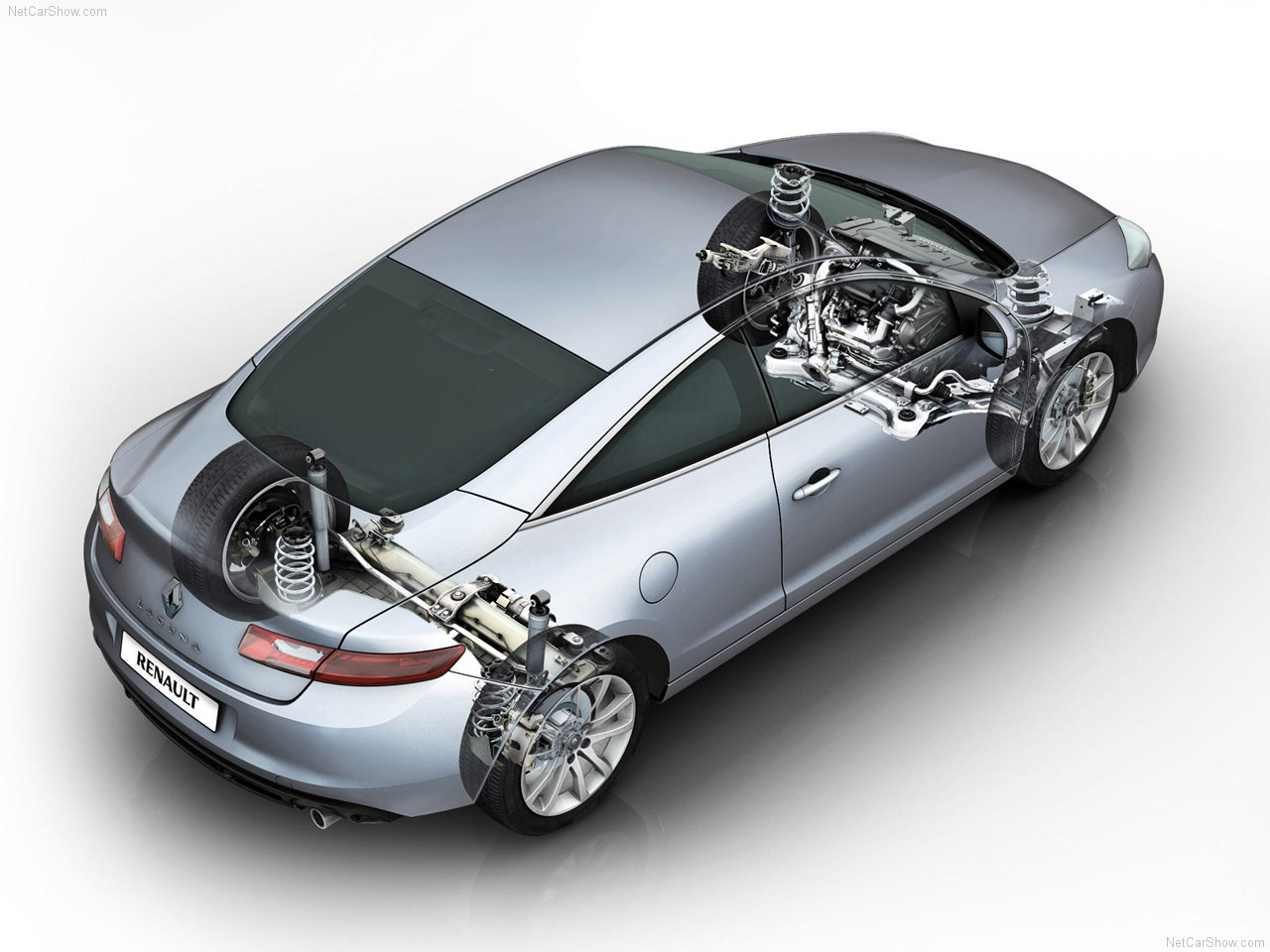 |
| Among the first to receive rear-wheel steering were in the 80-90s of the last century Nissan Skyline, 300ZX, and Honda Prelude. But when dynamic stabilization systems began to be introduced everywhere, the bulky steering mechanism was recognized as too expensive and unnecessary. In 2005, Nissan again remembered this technology and installed it on the Infiniti M35/45 sedan, and later on the G37 coupe. Now the system has reached Renault. The Four Wheels Steering (4WS) system from the Japanese company Aisin is controlled by a computer that constantly monitors the steering effort, speed, and wheel grip. Based on this data, it changes the angle of the rear wheels. While the speed does not exceed 60 km/h, the rear wheels turn in the opposite direction to the front wheels by up to 3.5 degrees. As soon as the car accelerates faster, all four wheels begin to turn in the same direction. Thanks to this, steering becomes more precise, and understeer practically disappears at any speed. |
The secret is that the coupe has a powerful trump card — an active rear suspension with rear-wheel steering, the same as on the Laguna GT. While the speed is below 60 km/h, the rear wheels of the "Laguna" turn by the same 3.5 degrees, but in the opposite direction to the front wheels. When this threshold is exceeded, the rear wheels begin to turn in sync with the front wheels. The result is this: in the city, the car becomes more maneuverable and the turning radius noticeably decreases, while on the highway, handling and dynamics improve. If the driver overdoes it with speed, the coupe will remind of its front-wheel-drive origins — the front axle will start to slide toward the outside of the arc. Fortunately, the active suspension interacts with the stability control system, which instantly intervenes and returns the car to the desired trajectory.
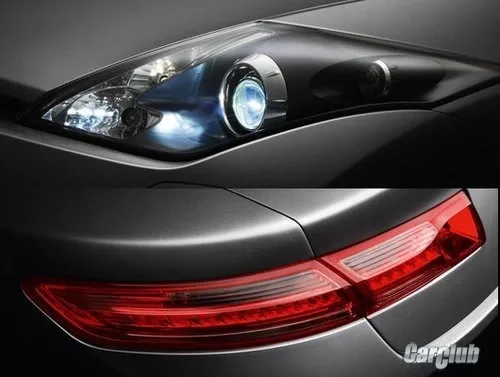 |
| Original headlights are the hallmark of the "Laguna" coupe design. |
The standard equipment of the Laguna Coupe includes bi-xenon headlights, a Bose audio system, six airbags, dual-zone climate control, 17-inch alloy wheels, leather interior, keyless entry and engine start system, cruise control, rain and light sensors. The price for this entire set is 1,297,000 rubles. You can only pay extra for three items: "metallic" color (15 thousand rubles), USB and I-POD connectors (9.5 thousand rubles), and the "Lux" package for 35 thousand rubles, which includes an electrically adjustable driver's seat with memory, folding exterior mirrors with memory, and a swivel module for bi-xenon headlights.
The engineers at Renault managed to create a car that harmoniously combines an elegant coupe body, solid interior trim, comfortable suspension, and excellent handling. The "Laguna" has not lost its individuality — it is visible both in its behavior on the road and, oddly enough, in its appearance, which somewhat resembles luxury British models. Such cars are unlikely to ever become truly mass-market, but they already have their own army of devoted fans. And old friendship, as is known, does not rust.
Ruslan Galimov