
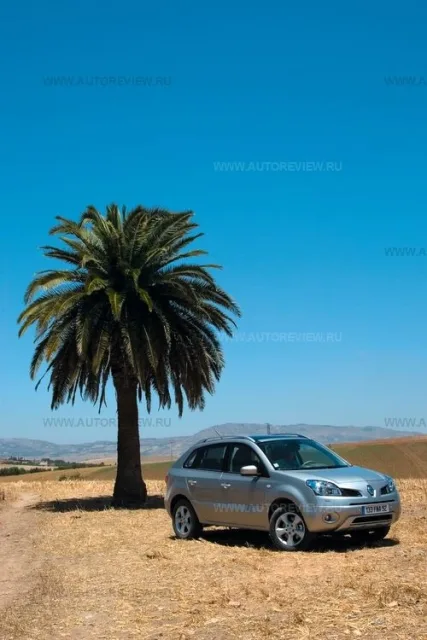
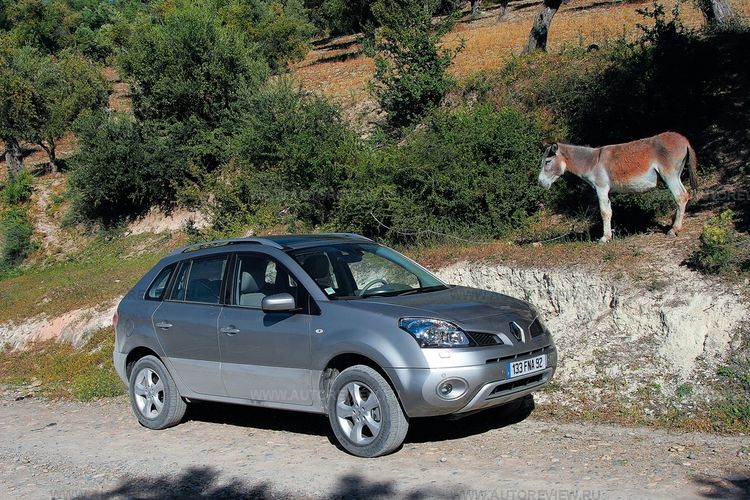
In 2001, when I was getting acquainted with the all-wheel-drive compact van Renault Scenic RX4, I had to experience an unpleasant moment: stuck in the snow, I tried to reverse, and the gearbox failed with a characteristic crunch. That is why, getting behind the wheel of the new Renault Koleos crossover, I was cautious at first — it's one thing to break a unit in Moscow, and quite another in Morocco, among the spurs of the Atlas Mountains, where the presentation of Renault's first crossover was taking place. But this time everything went fine. Koleos is not the Scenic RX4, and not even quite a Renault.
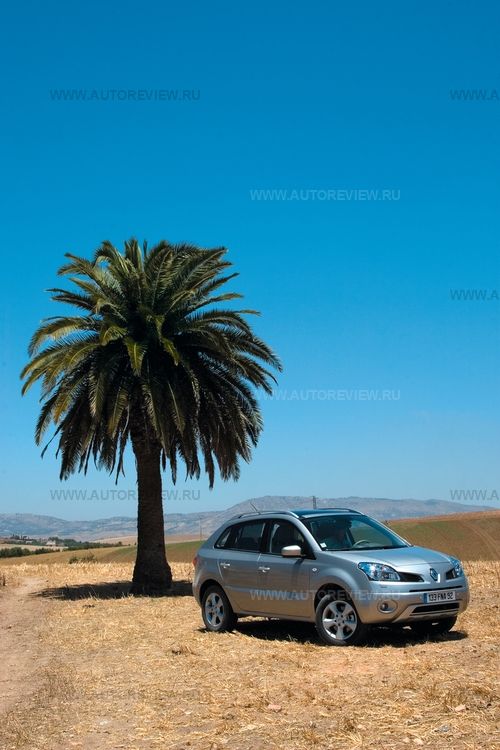
Until 2003, the role of an SUV in the Renault lineup was played by the Scenic RX4, built on the basis of a passenger compact van. How well it coped is a secondary question, but the French simply had no choice. Neither the experience of creating modern all-wheel-drive vehicles nor a suitable platform. However, after the creation of the Renault-Nissan alliance, the French gained access to the Japanese all-wheel-drive developments and did not fail to take advantage of this.
Thus, the Koleos was born.
The exterior of the car is made in the new Renault style — angular, even somewhat rough, but for a crossover such a design suits much better than for the new Laguna. The technical filling is the Nissan C platform, the same one that underlies the Qashqai and X-Trail. The Koleos is assembled in South Korea, at the Samsung Motors plant in Busan (Renault owns 80.1% of this company's shares). Since December last year, the Korean twin — the Samsung QM5 — has also been produced there and is already sold on the local market.
 |
 |
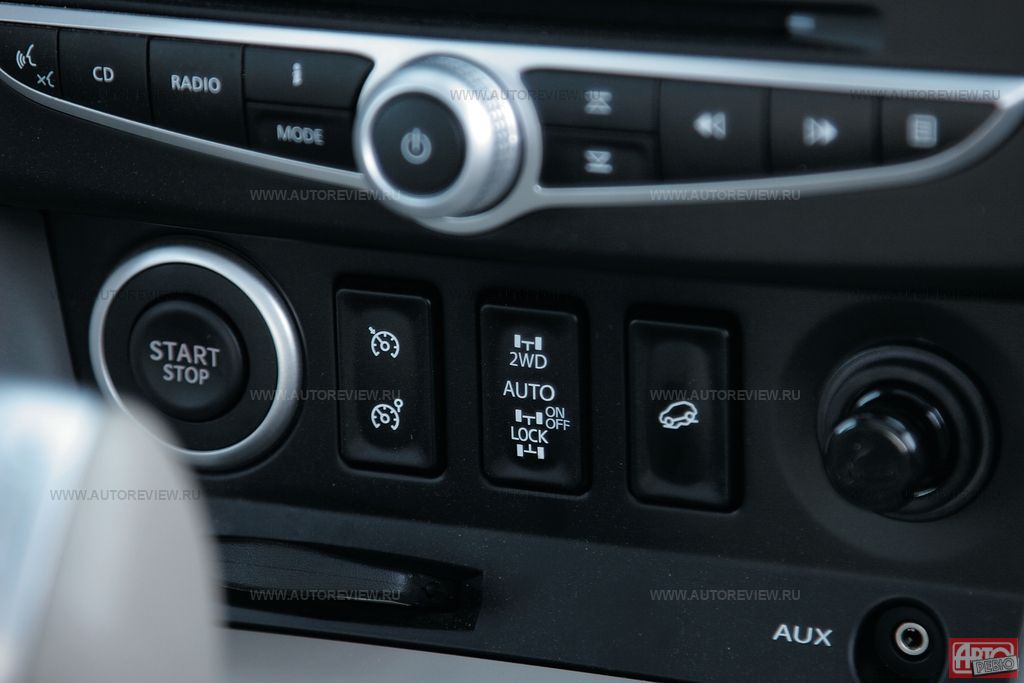 |
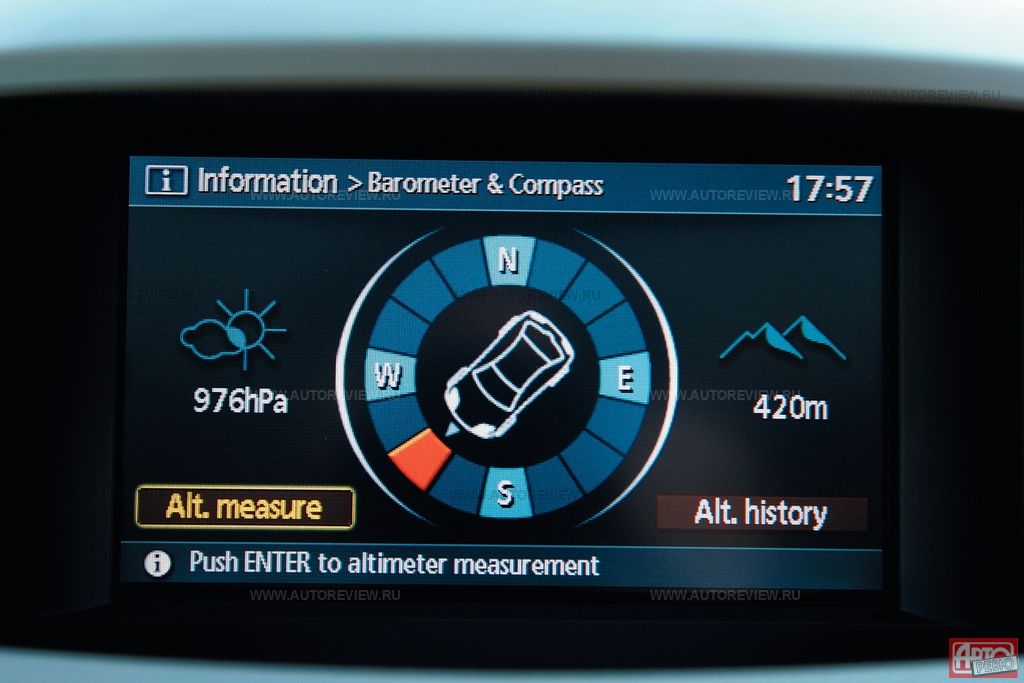
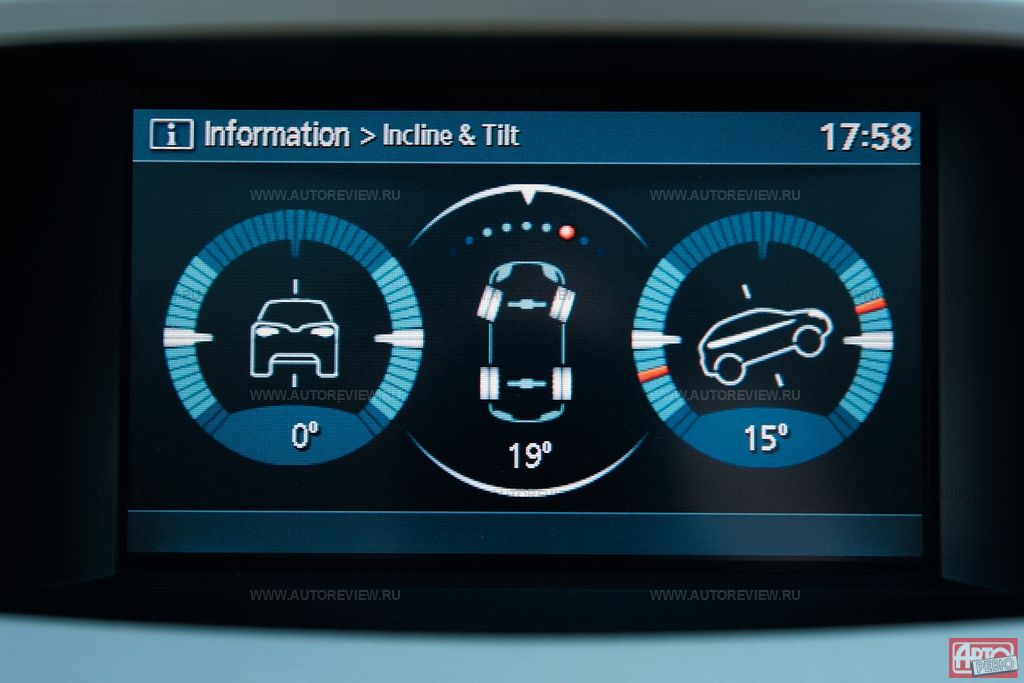
| The color display will be useful not only for off-road enthusiasts, but also for weather-sensitive people — the Koleos will report an increase or decrease in atmospheric pressure. True, versions with a screen and navigation will not be available in Russia yet | To the right of the engine start button are the controls for cruise control, transmission, and the hill descent assist system, which automatically maintains a speed of 7 km/h on slopes greater than 10%. Sometimes you want to go slower, but the driver has no way to reduce the speed | |
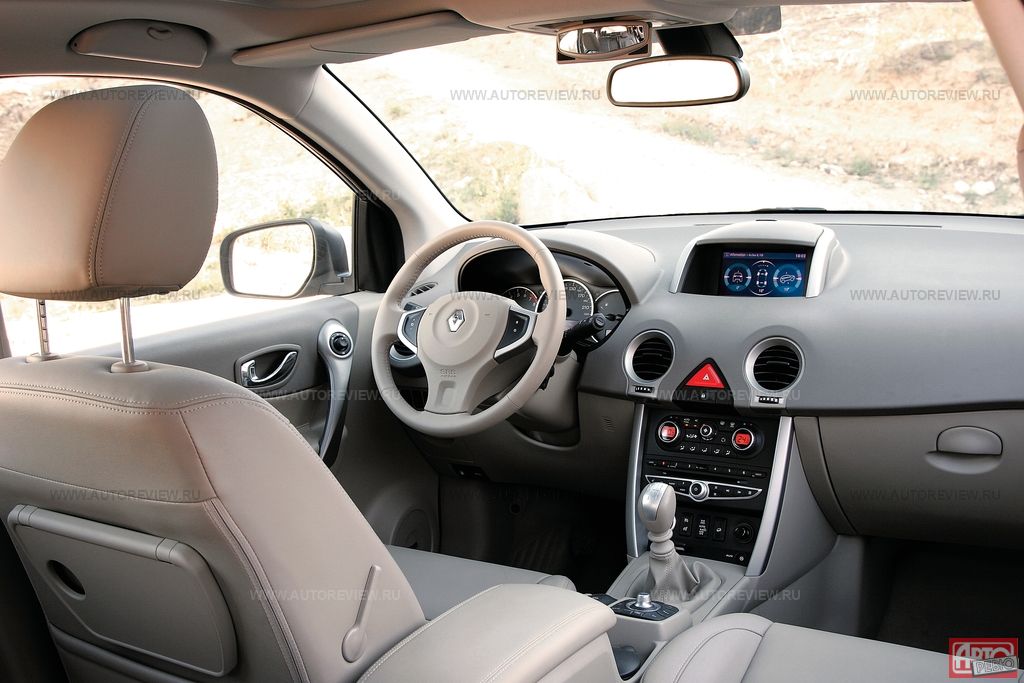
However, if from the outside Korean notes can be discerned in the Koleos (something in common with the Kia Sportage and Hyundai Tucson), the interior is purely European. With its own character, well-chosen materials that match both in color and texture. The soft front panel is enlivened by round air vents. On the center console is a convenient control unit for the dual-zone climate control, slightly lower are the buttons for the Bose audio system, available in the top versions Privilege and Luxe Privilege. Next to the gear lever is the "electronic" handbrake button and the multimedia system joystick familiar from the Laguna. Alas, neither the joystick nor the large color display will be available to Russians — these options come only paired with Garmin at CD Bluetooth navigation, and Renault is in no hurry to introduce it to our buyers. However, even in Morocco, the Renault navigation did not work.
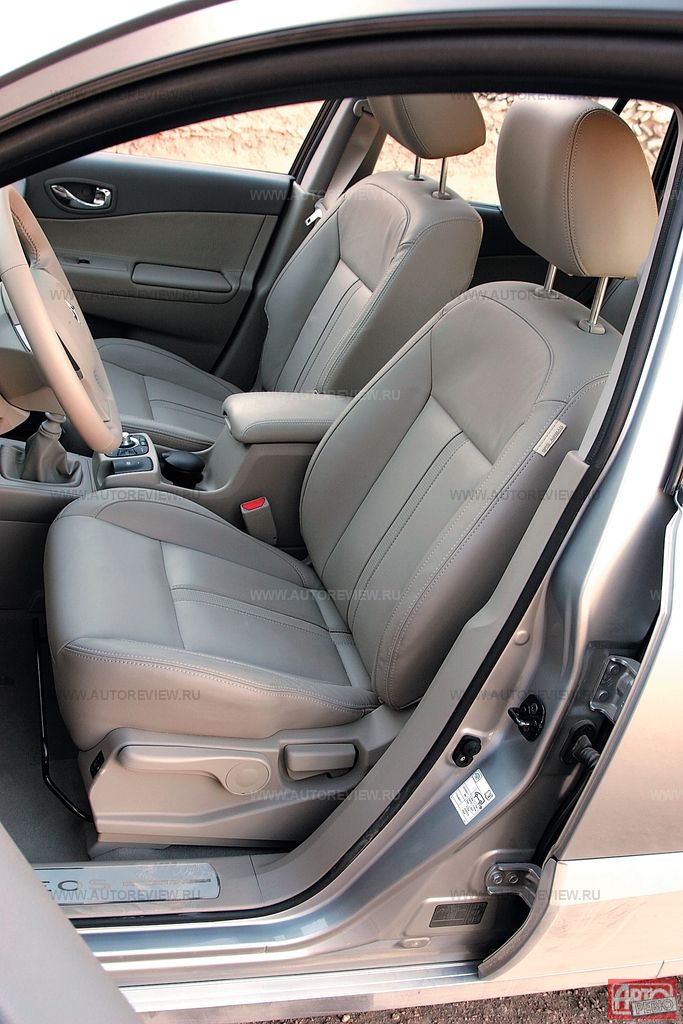
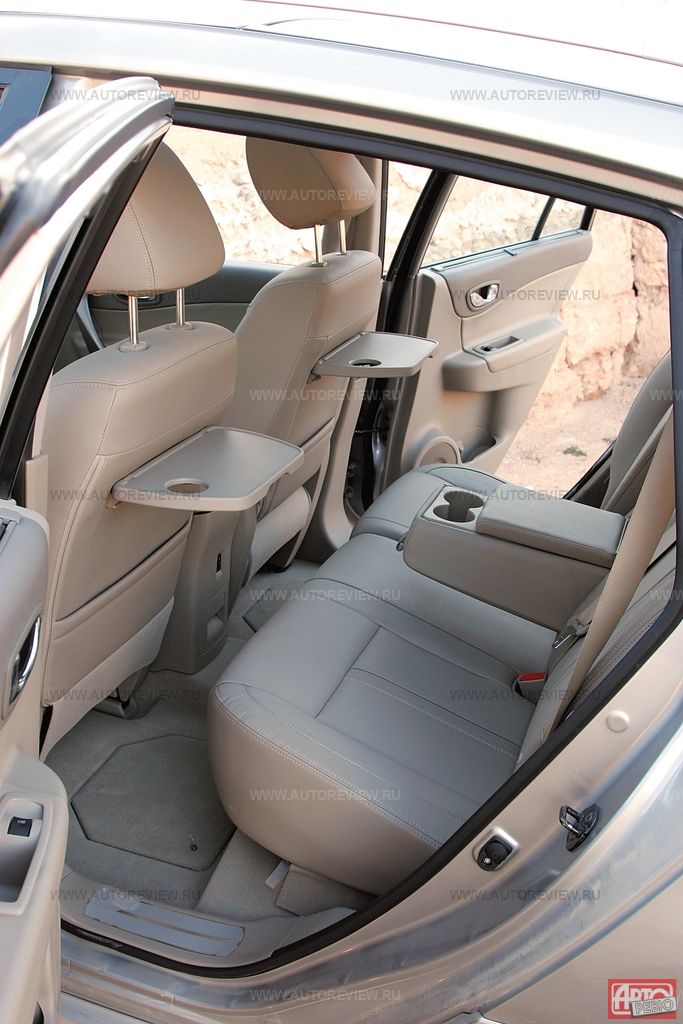
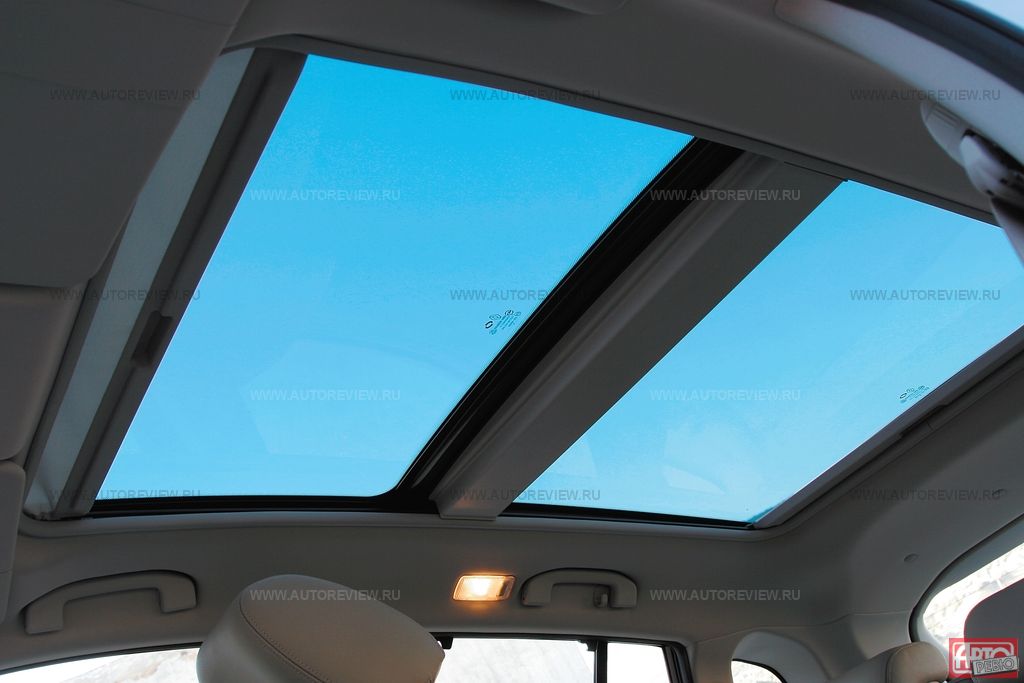
Without it, however, driving is fine: the seat adjusts in four directions (including lumbar support), the steering wheel is leather-wrapped, pleasant to the touch, and adjusts in two directions. The pedals are positioned correctly, gear shifting works clearly. Rear passengers are also comfortable: the backrests adjust for angle, there are window shades and folding tables. The only thing is that there is a bit little space in the back. With my height of 190 cm, if I sit in the front, a passenger of the same height behind me presses their knees into the backrest. But there is enough headroom — both with and without the sunroof.
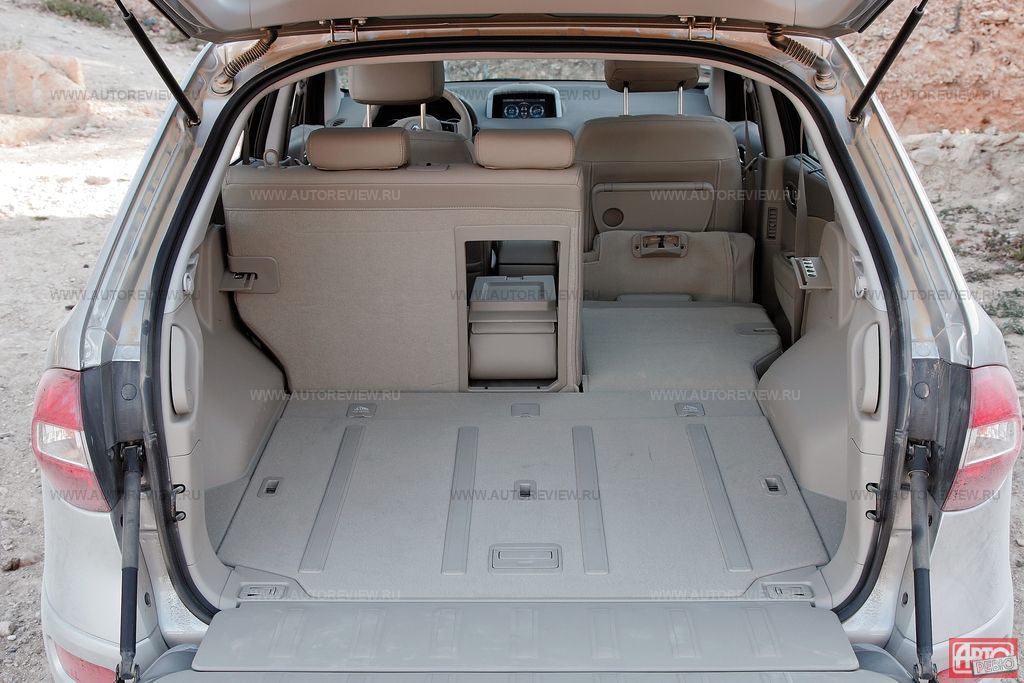
The organization of access to the trunk is like the Mitsubishi Outlander XL: a short fifth door lifts up, and a small tailgate folds down to a horizontal position. The French claim it can withstand 200 kg — and we immediately tested this on two heavy colleagues. It holds!
 |
 |
 |
| In the Koleos cabin, there is a feeling of solidity. And there is almost nothing to complain about regarding ergonomics |
The seat is somewhat simple in shape, but there are no questions about the adjustment ranges | It's a bit cramped in the back, but you can have lunch comfortably |
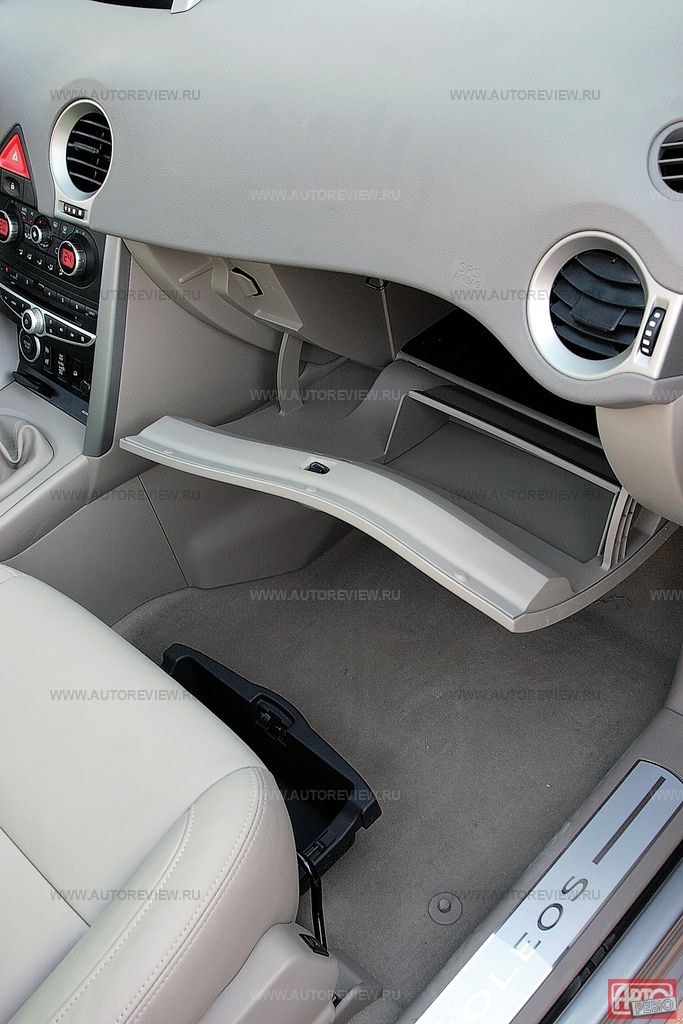
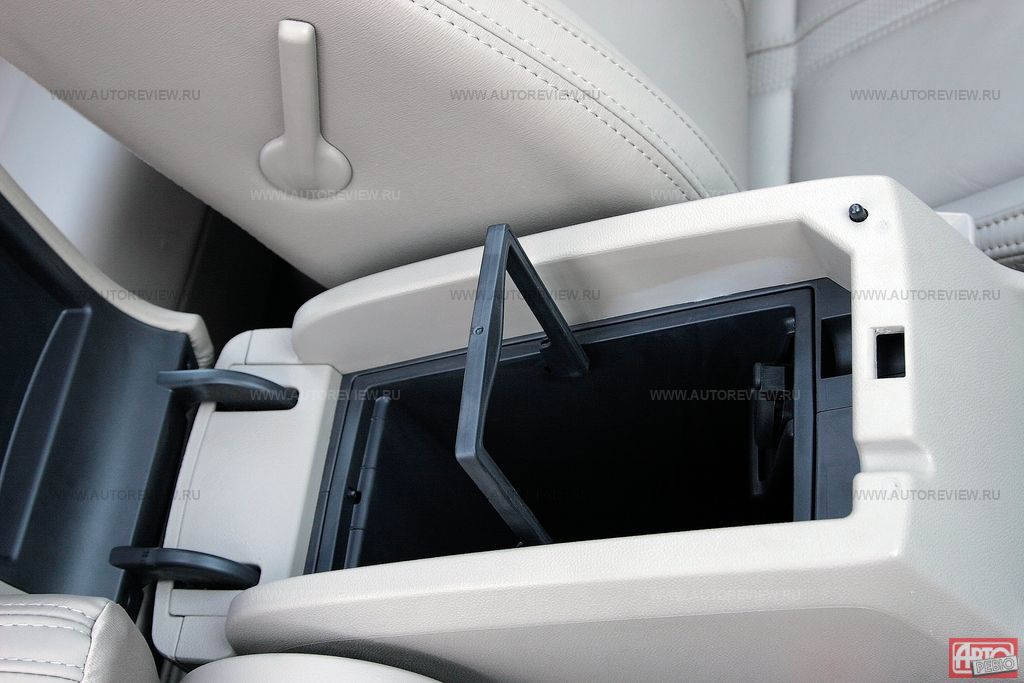
The trunk itself is not large — 450 liters, which is on average a hundred liters less than the main competitors. But Renault, as usual, makes up for it with many boxes and compartments scattered around the cabin. In addition to the spacious glove box (with cooling!), there is a pull-out tray under the right front seat and a roomy box in the armrest with a removable plastic "bucket". Under the feet of rear passengers, like in the Scenic minivan, there are two hatches hiding five-liter secret compartments. And the folding panoramic mirror allows the driver to keep an eye on children in the back seat.
In general, the Koleos cabin is not the most spacious, but it is homely and cozy. Family values!
In terms of dimensions, the Koleos occupies a position exactly in the middle between the Nissan Qashqai and Nissan X-Trail, and in terms of the engine range it is closer to the X-Trail. The transmission is the same All Mode 4X4-i all-wheel drive with automatically engaged rear axle, the engines are two-liter diesels (150 and 175 hp) and a gasoline Nissan TR25 four-cylinder with a volume of 2.5 liters and a power of 170 hp. Diesel versions will reach Russia a bit later, so the main attention is on the gasoline unit, which works either with a six-speed manual or a CVT. But all test cars in Morocco had a manual gearbox.
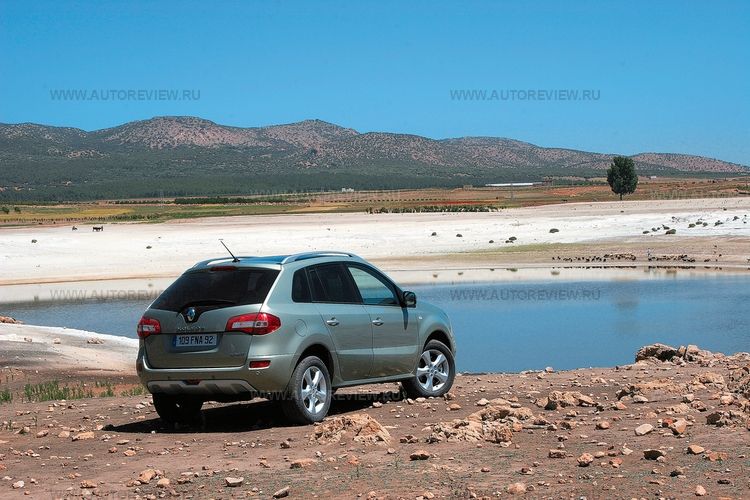
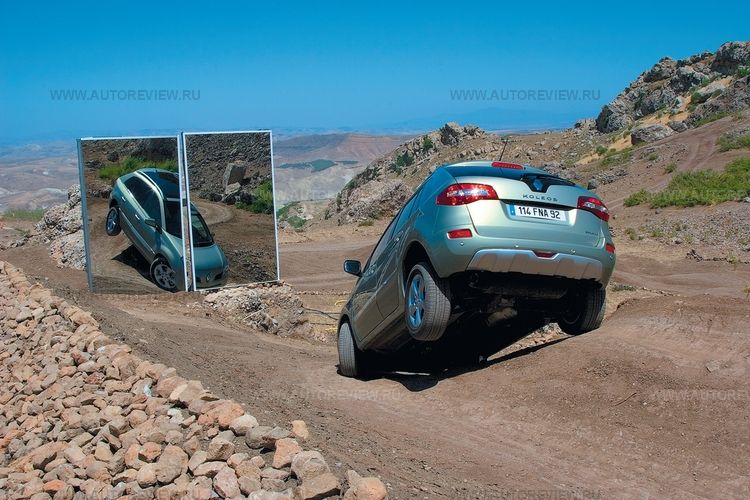
The 206 mm clearance allows you to confidently storm the stone "jungles"
According to the passport, the Koleos 2.5 with a manual accelerates to 100 km/h in 9.1 seconds. But the passport is the passport, and reality is reality. Even revving the engine to the 6500 rpm cutoff, you don't feel thrilling dynamics. The responses to the accelerator seem muted — either for the sake of ecology, or for the sake of that very comfort that Renault representatives love to talk about. During calm driving, everything is fine — no jerks, smooth and confident acceleration. But you go for an overtake — and you start to doubt that there are still two and a half liters under the hood. Off-road, when climbing uphill, there is also no feeling of torque reserve. Maybe it's the "stretched" gear ratios? Unlikely: in second gear, the Koleos goes up to 90 km/h, in third — up to 130 km/h.
At least the shift mechanism works without failures. The brakes are also good, and the suspension behaves decently — even on dirt roads in the vicinity of the ancient city of Fez. Driving in Morocco is unhurried: local drivers, who seem to have been handling donkeys and mules just yesterday, when meeting a car on a narrow road drive in the middle and are in no hurry to give way. But this is not a problem — at a speed of 100-120 km/h, I calmly move the right wheels onto the shoulder, and the soft but sufficiently energy-intensive suspension absorbs bumps without breakdowns. On a dirt road, you can confidently drive at 120 km/h!
 |
|
| The switchable parking sensors see obstacles not only behind, but also in front. The stability control system is fully switchable |
There are two large windows in the roof — the front one opens |
| The folding panoramic mirror allows you to observe those sitting behind |
Under the steering wheel is a convenient joystick for controlling the music |
— When we were shown the first prototype of the Koleos, we sent it for refinement, — recalls Nicolas Remiz, who heads the Renault Koleos project. — We did not like that the car was not comfortable enough. We asked Japanese engineers to soften the suspension and add sound insulation. Now we confidently state that in terms of ride smoothness, our crossover is the best in its class!
To confirm his words, Nicolas shows a graph of vibration measurements at the driver's seat: the Koleos has the lowest, and all other test participants (who remain anonymous) show worse results.
Interestingly, for the Russian market Renault decided not to retune the suspension, which is usually done for our roads. And this is the right approach — why spoil what already works well. Yes, the Koleos is a bit soft and sways slightly on wavy surfaces. But on a straight line it holds its course impeccably, and on bumps in corners it doesn't deviate from the trajectory. The steering wheel is pleasantly weighted, although at speed there's a slight artificiality — typical behavior of an electric power steering, which betrays its "digital" nature.
I also allowed myself to drive on dirt roads in rally style. When the stability system is on, the electronics instantly suppress any hints of sliding and simultaneously reduce fuel supply. Everything is strict and predictable — the car moves exactly on course, not giving the slightest chance of a skid. But even with the stability system off, the Koleos doesn't give in to provocations — no skid occurs even with counter-steering! The secret is that the intelligent all-wheel drive partially takes over stabilization (hence the letter "i" in the name All Mode 4X4-i). At the first signs of slipping, the electronics itself decides how much to lock the clutch, and, for example, can remove excess torque from the rear wheels to prevent a skid — for this, sensors that trigger in time are enough.
 |
|
| Spacious glove box — with cooling | Under the feet of rear passengers — two hidden compartments |
 |
|
| In the door armrests you can hide glasses or several packs of cigarettes | And under the central armrest — a box with a removable "bucket" |
 |
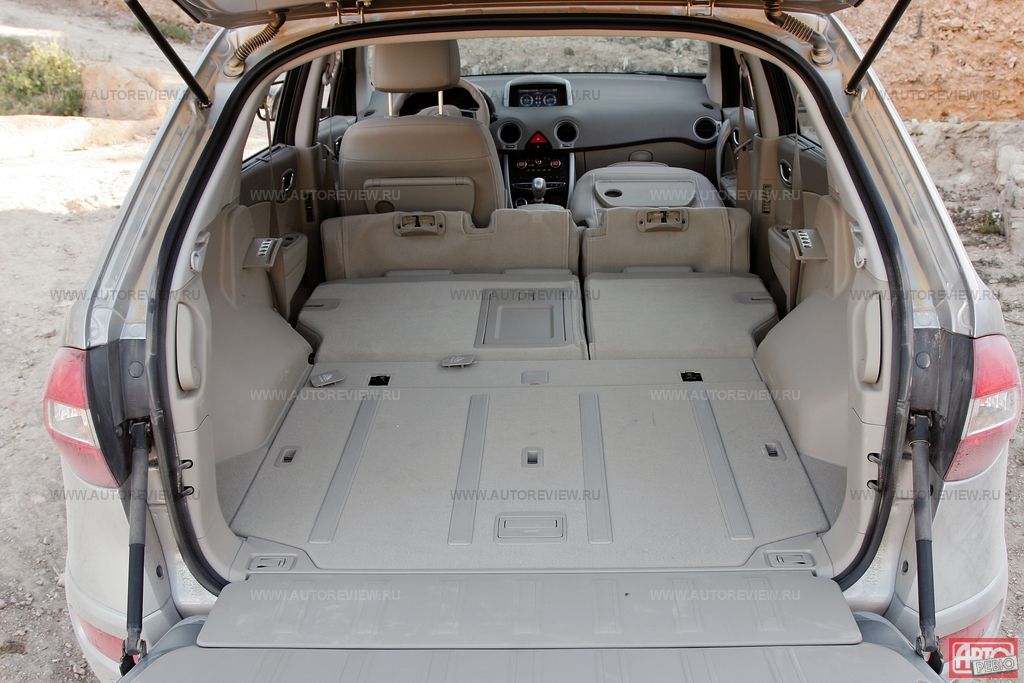 |
| In expensive trim levels, the Koleos offers the Easybreak quick-folding rear seat system: you pull the handle — the spring-loaded cushion rises vertically, and the backrest falls into its place |
The folding front seat backrest allows transporting items up to 2.6 meters long, but you won't be able to lay them on a flat floor — the vertically protruding rear seat cushion gets in the way |
Now about off-road talents. On a track with artificial obstacles, the Koleos behaved confidently — much like the Nissan X-Trail did a year earlier in Greece (see AR No. 12, 2007). And this is no coincidence: the transmission and control algorithms for the rear axle coupling are identical. The driver can select front-wheel drive, automatic mode, or rigidly lock the coupling. But what is truly pleasantly surprising — Renault surpasses Nissan in geometric off-road capability: ground clearance is 6 mm more (206 mm vs 200 mm), approach angle is 4° more (27° vs 23°), and departure angle is 2° more (31° vs 29°)!
That's why the Koleos handles steep slopes and deep ditches quite easily. But on a serious climb or on loose plowed soil, the lack of a low-range gear is felt — you have to carefully work the clutch. And here a nuance arises: after such manipulations, the engine suddenly stops revving up. It seems that the electronics monitoring the engine and transmission temperature at some point limits the fuel supply.
It's worth noting that the diesel version with 175 hp is not much better off-road: at low revs (below 2000) you have to burn the clutch. For such conditions, an automatic transmission is more suitable — a six-speed, modern one, it will be offered paired with the 150 hp diesel.
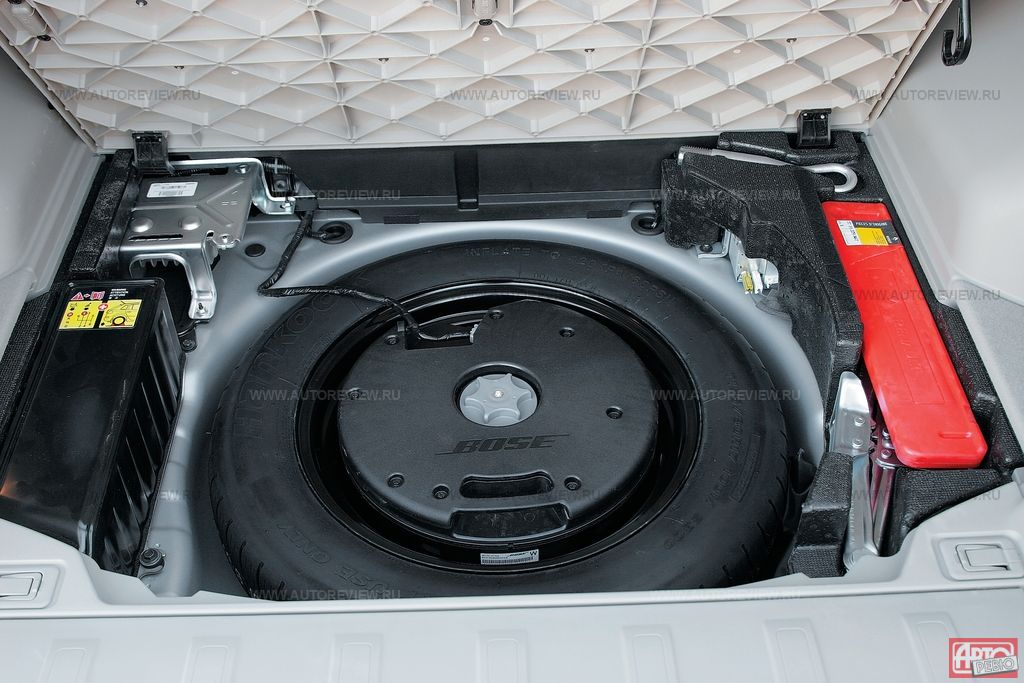 |
| In the underfloor — a "spare wheel" with a Bose subwoofer placed inside |
For Russia, where sales start is scheduled for September, the most in-demand will likely be the petrol version with a CVT in the rich Dynamique Comfort trim. It includes dual-zone climate control, light and rain sensors, front and rear parking sensors, cruise control, a "hands-free" chip card, a CD/MP3 audio system, and adjustable rear seat backrests. The price of such a car is about one million rubles. And the base version with a manual transmission is unlikely to be cheaper than 860 thousand. Thus, the Koleos falls into the same weight category as the Honda CR-V, Toyota RAV4, Mitsubishi Outlander, Nissan X-Trail, and Ford Kuga.
Competition in this segment is currently very high — there are many models, and each is strong in its own way. But the soft and quiet Koleos has every chance to take its place in the sun.
| Specifications | |||
| Parameters | Vehicle | ||
| Renault Koleos | |||
| Modification | 2.0 dCi | 2.0 dCi | 2.5 |
| Body type | Station wagon with five doors | ||
| Number of seats | 5 | 5 | 5 |
| Dimensions, mm | |||
| length | 4520 | 4520 | 4520 |
| width | 1855 | 1855 | 1855 |
| height | 1695 | 1695 | 1695 |
| wheelbase | 2690 | 2690 | 2690 |
| track front/rear | 1545/1550 | 1545/1550 | 1545/1550 |
| Ground clearance, mm | 188 | 188 | 206 |
| Approach/departure angle, deg. | 27/31 | 27/31 | 27/31 |
| Trunk volume, l | 450/1380* | 450/1380* | 450/1380* |
| Curb weight, kg | 1655 (1709)** | 1655 | 1622 (1655) |
| Gross weight, kg | 2300 (2300) | 2200 | 2150 (2200) |
| Engine | diesel, turbocharged | gasoline, multipoint injection | |
| Location | front, transverse | front, transverse | front, transverse |
| Number and arrangement of cylinders | 4, in-line | 4, in-line | 4, in-line |
| Displacement, cm³ | 1995 | 1995 | 2488 |
| Cylinder bore/piston stroke, mm | 84.0/90.0 | 84.0/90.0 | 89.0/100.0 |
| Compression ratio | 15.7 | 15.7 | 9.6 |
| Number of valves | 16 | 16 | 16 |
| Max. power, hp/kW/rpm | 150/110/4000 | 175/127/3750 | 170/126/6000 |
| Max. torque, Nm/rpm | 320/2000 | 360/2000 | 226/4400 |
| Transmission | manual, 6-speed (automatic, 6-speed) | manual, 6-speed | manual, 6-speed (CVT) |
| Drive | all-wheel drive, electromagnetic clutch in rear axle drive | ||
| Front suspension | independent, coil spring, McPherson | ||
| Rear suspension | independent, coil spring, multi-link | ||
| Front brakes | disc, ventilated | ||
| Rear brakes | disc | disc | disc |
| Tires | 225/60 R17 | 225/60 R17 | 225/60 R17 |
| Maximum speed, km/h | 179 (173) | 189 | 185 (181) |
| Acceleration time 0–100 km/h, s | 12.0 (n.a.***) | 9.9 | 9.3 (n.a.) |
| Fuel consumption, l/100 km | |||
| urban cycle | 9.5 (10.5) | 9.6 | 13.2 (12.0) |
| extra-urban cycle | 6.2 (7.0) | 6.8 | 8.0 (8.0) |
| combined cycle | 7.4 (8.3) | 7.9 | 9.9 (9.5) |
| CO₂ emissions, g/km | 197 (221) | 209 | 237 (228) |
| Fuel tank capacity, l | 65 | 65 | 65 |
| Fuel | diesel | diesel | gasoline AI-95 |
| * With rear seatbacks folded | |||
| ** Data in parentheses for vehicles with automatic transmissions and CVTs | |||
| *** N.a. — not available | |||