The modern automotive industry increasingly resembles professional boxing. Car classes are like weight categories, and comparative tests are real fights in the ring. Manufacturers have to get creative to attract the attention of discerning buyers, and designers are increasingly moving models from one class to another — just like boxers who, having won a title in one weight, gain mass and go for victory in another category. Punch, another punch!
Porsche, for all its conservatism, also had to bow to the laws of economics. The Germans started with a "heavyweight" — the mid-size crossover Cayenne, which literally saved the company from crisis and gave it the opportunity to further develop sports models. But competitors are not asleep: BMW, Audi, and Mercedes with frightening regularity release new body modifications. Porsche also did not stand aside, presenting an uncompromising car that does not fit into any class, but at the same time resembles many at once.
Honestly, before getting behind the wheel, I had seen the "Panamera" in person only a couple of times, and even then near the Porsche dealership. Sedan, hatchback, sedanchatchback? Looking closely, you understand: this is undoubtedly a five-door hatchback.
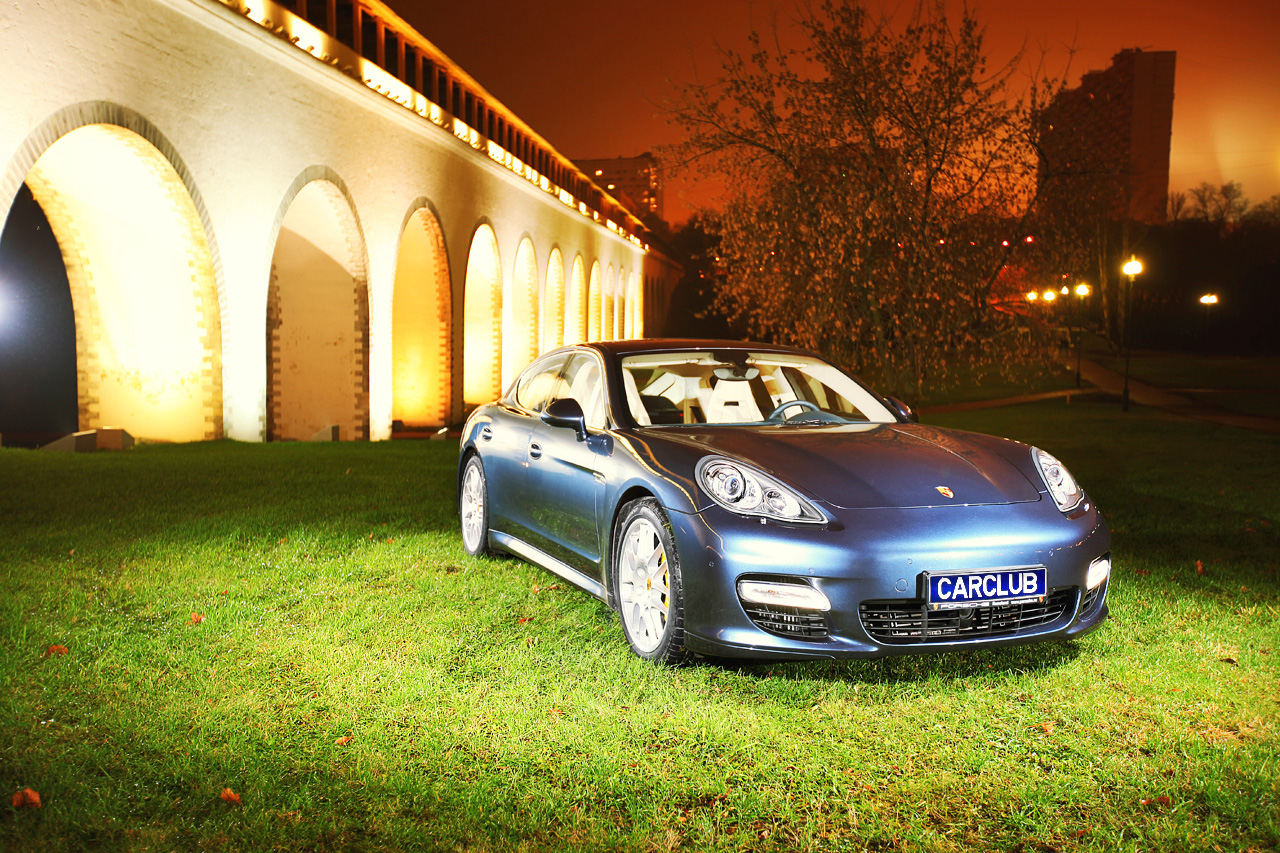
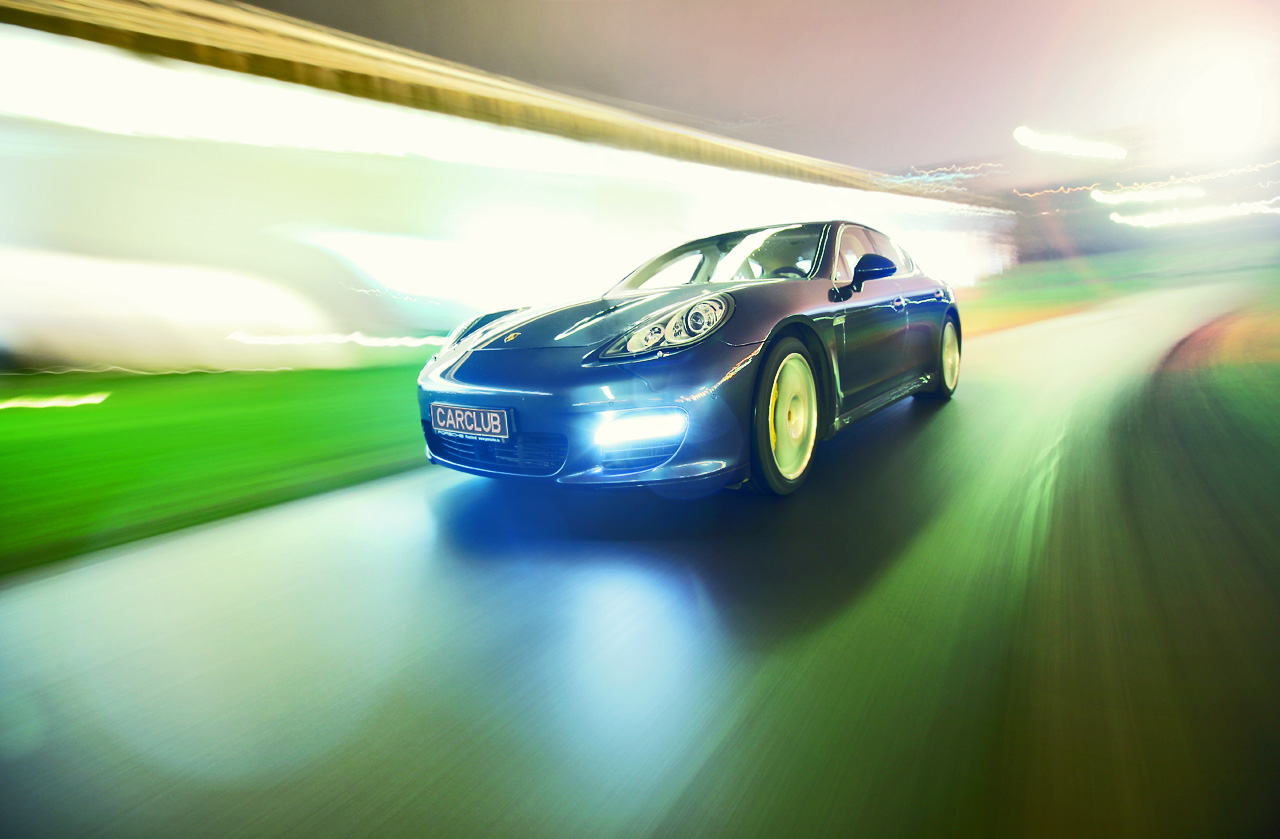
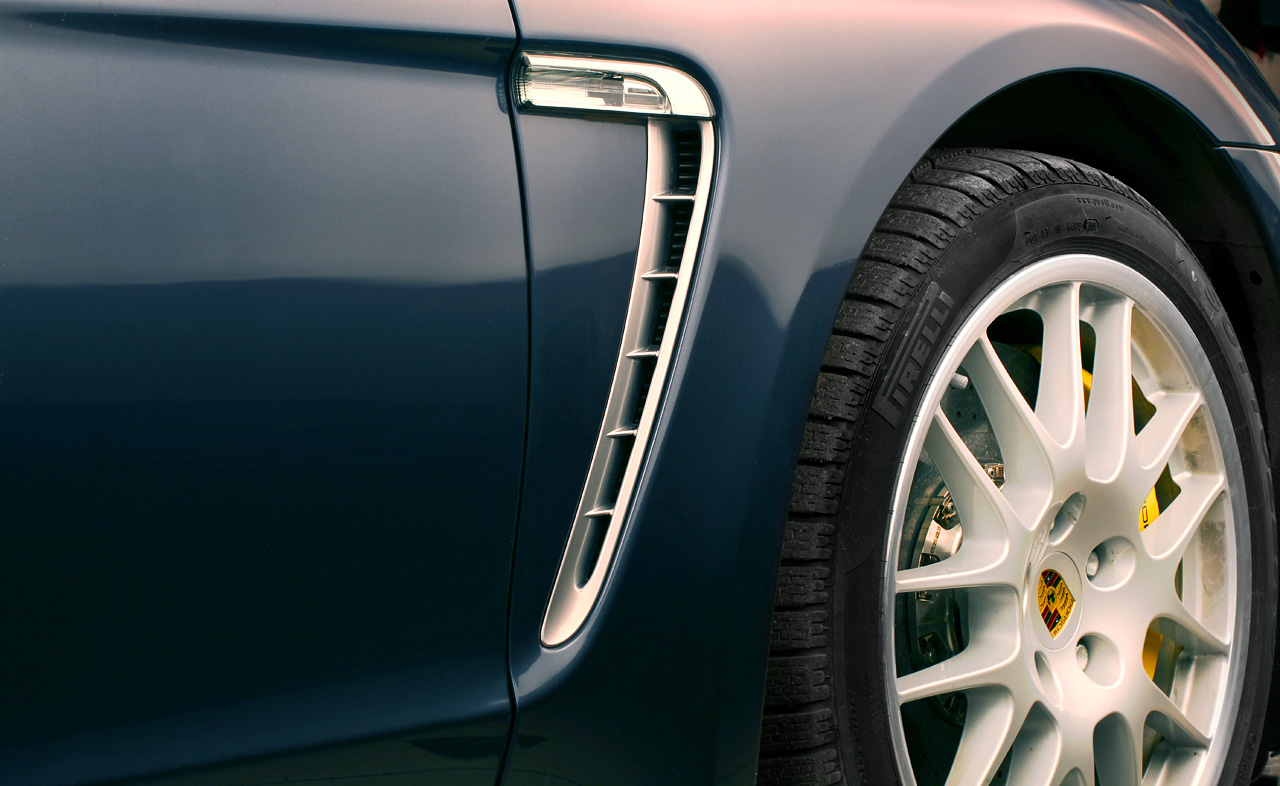
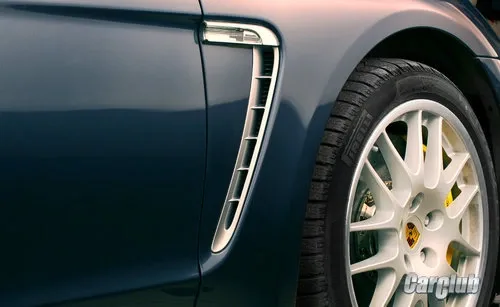
Despite the fact that the world has never seen such a "Porsche", the Panamera is 100% recognizable. At the front — a traditionally massive bumper, "big-eyed" headlights, a trapezoidal hood lid, and pronounced wheel arches emphasizing the sports pedigree. At the rear, the powerful stern, the familiar silhouette of LED lights, and the different track widths of the front and rear axles catch the eye. And only the profile with a tiny rear wing, aggressive stampings on the front fenders, and a "humped" silhouette causes conflicting feelings. Original? Undoubtedly. Beautiful? That's the question. Nothing to be done, such is the feature of the "hatchback" body layout, although I think that at the headquarters in Stuttgart, this word is not favored. It is too "un-Porsche" and not sporty.
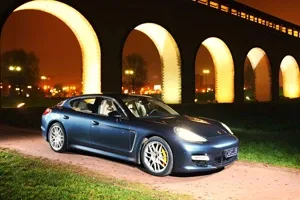
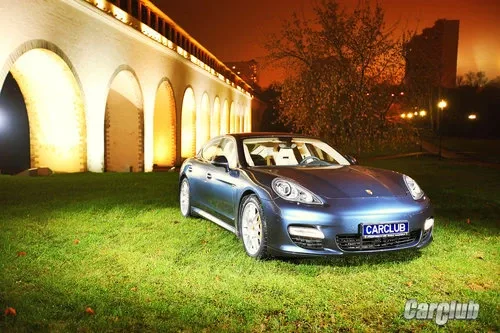
And so, it happened! In front of me is a gray-blue Panamera Turbo with optional 20-inch alloy wheels. At the rear — two twin exhaust pipes. The front optics consist of four bright LED sources that terrify vehicles ahead in daytime running mode. When the low beam is on, the road is illuminated by swiveling bi-xenon.
But the most chic thing is the spoiler that extends from the rear lid, appearing at speeds above 90 km/h. Moreover, in the Turbo version, it splits in the middle, moving apart to the left and right. A real transformer! And starting from a speed of 205 km/h, the mechanism automatically changes the angle of attack to increase downforce.
To be honest, knowing that under the hood of the new front-engine Panamera Turbo is a bi-turbo V8 with a displacement of 4.8 liters, producing 500 hp and 700 Nm, I expected slightly different emotions and sensations from this car. And this does not mean at all that the Panamera disappointed and did not live up to expectations.
Already after the first kilometers, it became clear that the new five-door "Porsche" is not a rigid four-seat sports car, but a quite comfortable business class, but only seasoned with a special spicy sauce, the recipe of which is kept under seven locks at Porsche headquarters in Stuttgart.
By the way, the 500-horsepower engine with minimal changes in settings was borrowed from the Cayenne Turbo. In the basic configuration for Russia, a 7-speed robotic gearbox with two clutches Porsche Doppelkupplung (PDK) and Porsche Traction Management (PTM) with all-wheel drive and an electronically controlled multi-disc clutch, whose locking range is from zero to one hundred percent, is offered.
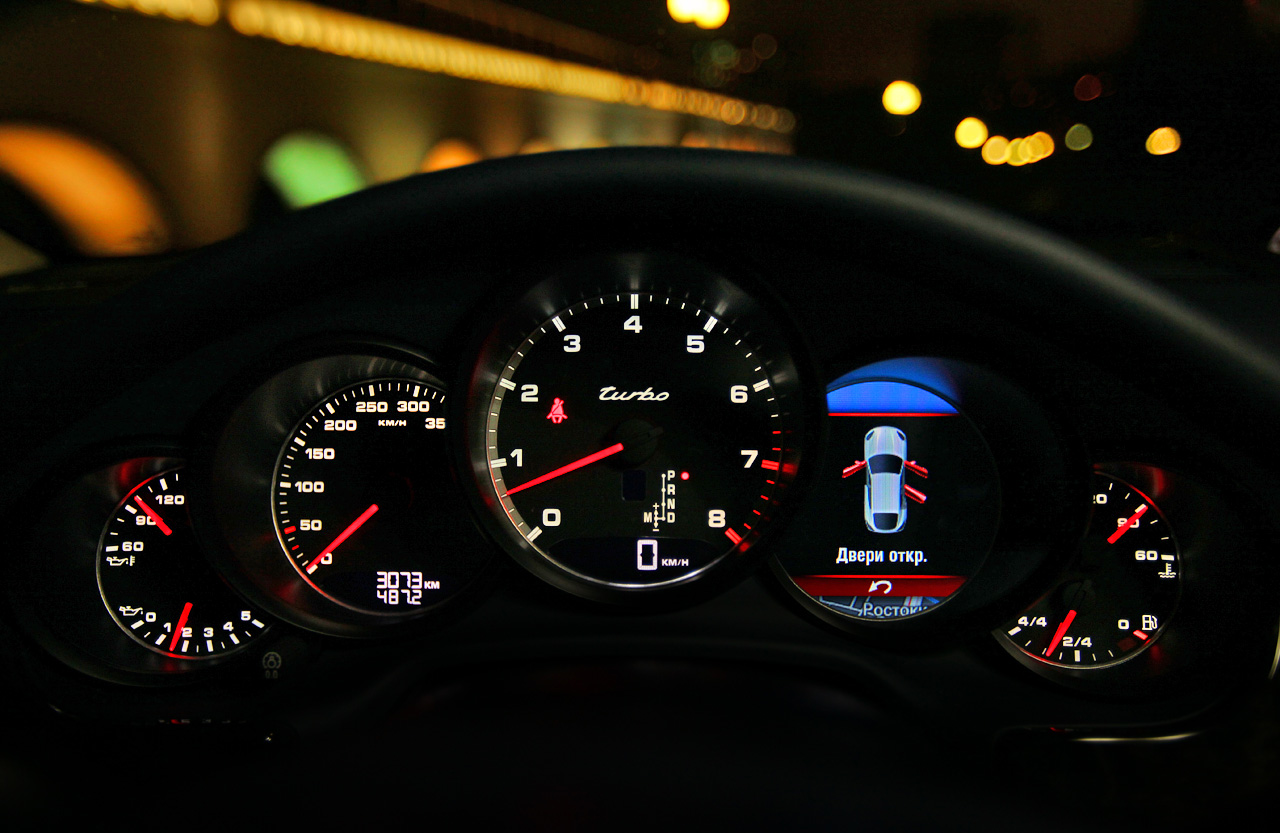
I sit inside and immediately recognize the Porsche-style rigid seat with excellent lateral support and the sports steering wheel that migrated here from the 911 model. The instrument panel, consisting of five wells, is also familiar, but now a color image of the navigation system can be displayed in one of them. Convenient!
Inside is chic, shine, beauty. The finish is top-notch! High-quality leather, wooden inserts. Ergonomics are Porsche-verified to the smallest detail. The seats are sportily rigid with excellent lateral support.
Everything familiar and recognizable ends when the eye falls on the central tunnel between the front seats. Around the PDK selector, a scattering of keys is placed, similar to the keyboard of luxury Vertu phones. A tribute to the business class. Stylish, but to learn to use these keys blindly, you need more than one day.
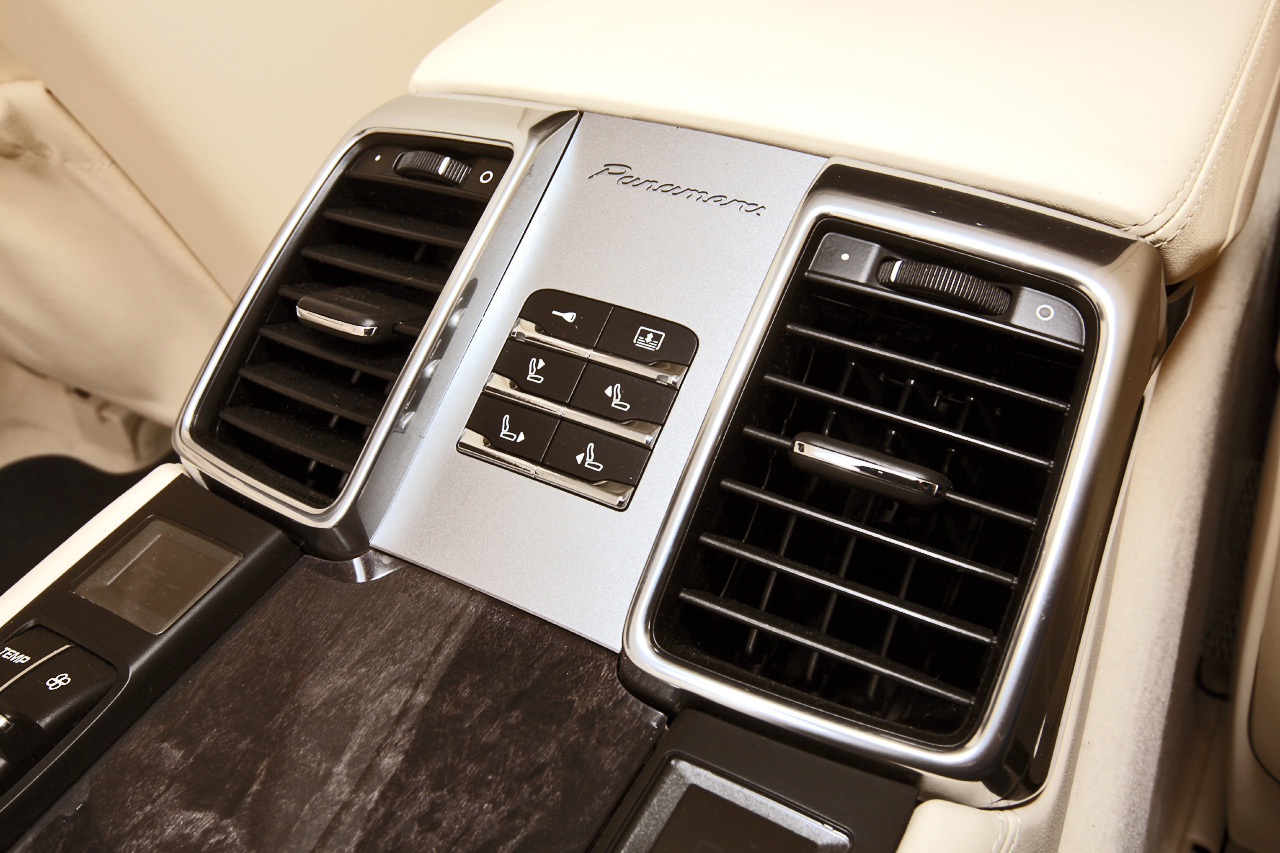
The key, as befits the business class, is in your pocket, but the Panamera starts in a Porsche way using the handle to the left of the steering wheel. The rear sofa is molded strictly for two passengers, who have at their disposal adjustment of the backrest angle and cushion length, as well as a couple of convenient boxes for storing small items, two cup holders, and individual climate control settings. There is enough space for bosses, only if they are not leaders of the basketball team.
The trunk volume is 432 liters (13 liters more in the atmospheric version), and if you fold the rear row of seats, the Panamera can turn into a practical hatchback and take on board 1250 liters of cargo. The rear door is equipped with a servo drive. Under the floor, you will not find either a spare wheel or a space-saver — only a repair kit, a compressor, and a large amplifier of the optional Burmester audio system.
I turn the cherished handle to the left of the steering wheel, the tachometer needle soars up, and a pleasant vibration of the mighty V8 runs through the body. The PDK gearbox selector to Drive mode, and the almost 5-meter hatchback begins to steer out of the parking lot. The first kilometers of the journey already showed that the Panamera is not an ultimate sports car like the 911 family, but a quite comfortable car. The steering wheel is lighter, reactions are calmer, the suspension is softer.
In the standard mode, the "Panamera" is quite suitable for everyday routine — whether in the city or on the highway, and the stiff suspension does not cause much inconvenience. The fact that this is a sports car is reminded only by the overly meticulous behavior of the chassis on small irregularities — cracks in the asphalt or light road ripples. Another annoying moment is the drawn-out pauses when the gearbox shifts to lower gears.
But as soon as you press the Sport button on the panel resembling a Vertu keyboard, the picture changes. The PDK robot begins to instantly respond to the driver's commands, and the suspension acquires that very signature "Porsche" elasticity. However, you can get along with the PDK transmission without the sport mode. It is enough to briefly press the stiff accelerator pedal a second before overtaking — and the gearbox itself will jump down a couple of gears, giving the driver all 500 hp at their disposal. This reserve is enough to make a small leap in time and experience almost cosmic overloads. By the way, even in the normal automatic mode, you can intervene in the process and shift gears manually using the paddle shifters.
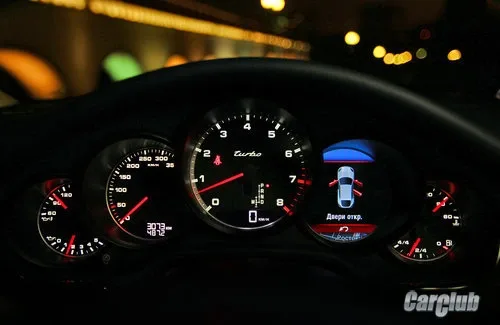 |
| I recognize the familiar instrument panel consisting of five wells, but now a color image of the navigation system can be displayed in one of them. Convenient! |
In "sport" everything is different. Here it is, that very spirit of Stuttgart! Responses have become sharper, the suspension has tightened, and the gearbox, as if sighted in, no longer sins with delays. At the same time, the "Panamera" does not lose comfort. The only thing that still annoys is that very road trifle, which in this mode is even more felt by passengers.
 |
| The 500-horsepower engine with minimal changes in settings was borrowed from the Cayenne Turbo. In the basic configuration for Russia, a 7-speed robotic gearbox with two clutches Porsche Doppelkupplung (PDK) and Porsche Traction Management (PTM) with all-wheel drive and an electronically controlled multi-disc clutch, whose locking range is from zero to one hundred percent, is offered. |
And how juicy, with what smacking sound the big "Porsche" screws into a turn! Remembering the almost two-ton mass, before entering the corner you add a little more steering angle — and the massive hatchback with a slight roll obediently executes what was intended. Of course, this is not the surgical precision of the mid-engine Cayman or "Carrera". The "Panamera" must be driven with a correction for weight. But if you do everything a fraction of a second earlier than common sense dictates — here it is, the signature handling! Amazing stability on the arc. The corner can be stormed "on the gas" — the Panamera Turbo is already equipped as standard with an active all-wheel drive transmission with a connectable front axle and an electronically controlled multi-disc clutch that distributes torque between the rear wheels. The result is phenomenal grip in a corner at extreme speed. And if you add more? No, perhaps I won't risk it. After all, 8.6 million rubles is no joke. Although I have not a shadow of doubt that the "Panamera" will cope. The question is only in my own abilities.
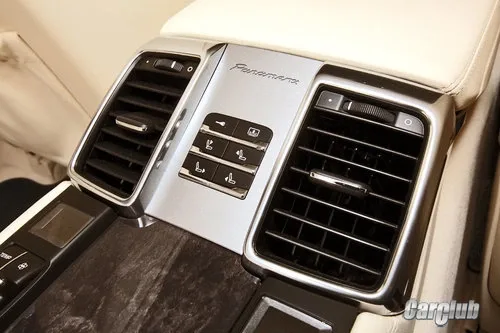 |
| The rear right passenger can move the front right seat! A hint that it is not bad to ride in the "Panamera" as a passenger too. |
On straight roads, the Porsche Panamera feels like a fish in water. Perfect stability at any speed, sporty effort on the three-spoke steering wheel, and instant response to every movement. Bliss! If only we could try the Panamera on a perfect German autobahn. But on ruts, the hot business hatchback starts to get nervous: the 20-inch optional wheels with extra-wide tires demand maximum concentration and attentiveness from the driver.
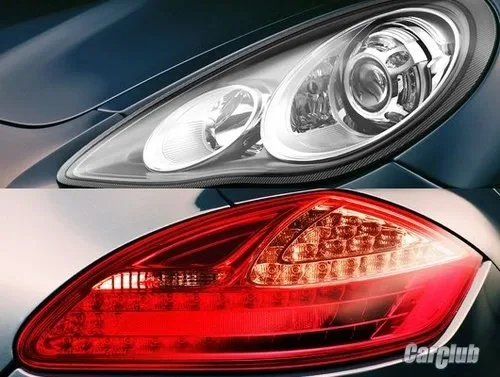 |
| The front lighting consists of 4 bright LED sources that strike fear into vehicles ahead in daytime running light mode. When low beams are on, the road is illuminated by swiveling bi-xenon. |
Acceleration is insane across the entire rev range. Pedal to the floor—and the Panamera lunges forward with the ease of a cheetah spotting prey. And if the Sport Chrono Plus package is activated, you can fully feel that very fist of fury that strikes with lightning speed. Right foot on the gas, left on the brake, Launch Control Activated lights up on the panel, boost pressure briefly rises by 10 percent in the engine, and torque grows by 70 Nm (from 700 to 770 Nm). One more second. Impact! The Porsche shoots off, erasing the boundaries of time. Everyone nearby instantly dissolves in the rearview mirrors. No joke—4 seconds to 100 km/h. Passengers are pressed into their seats harder than during an airplane takeoff.
In Sport Plus mode, the Panamera seems to compress: the suspension stiffens, reactions sharpen to the limit, and the large hatchback transforms into something akin to the 911-series super sports car. Only a slightly more relaxed steering wheel and extra mass give away the business hatchback that disguises itself as a sports car with one button on the pseudo-keyboard of a Vertu. A true fist of fury!
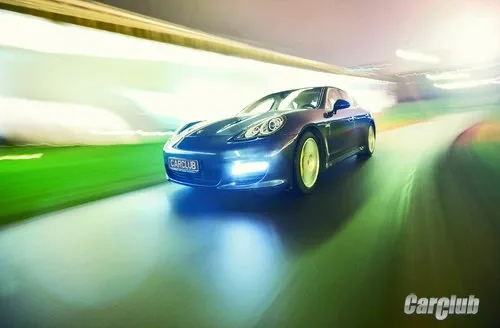 |
| With Sport Plus mode engaged, the Panamera compresses, the suspension stiffens, reactions sharpen to the limit, and the large hatchback becomes similar to the 911-series super sports car. |
The price of the top version Porsche Panamera Turbo in Russia starts from 7 million rubles. The test car with additional options—interior decor elements, ceramic brakes, 20-inch wheels, Sport Chrono Plus package, adaptive cruise control, front seat ventilation, and other bonuses—would cost 8,650,214 rubles.
 |
| As an option for the Panamera, the Porsche composite ceramic brake system (PCCB) is offered. For the Panamera S, it is only available in combination with wheels of 19 inches or larger, and for the Panamera Turbo—with 20-inch RS Spyder Design wheels. The price is steep—385 thousand rubles. |
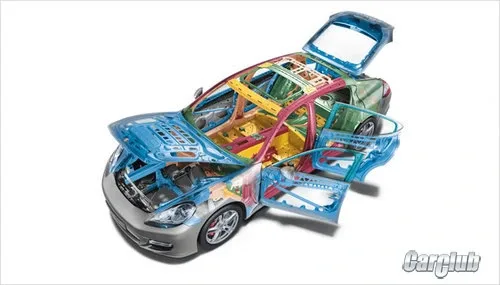 |
| Reinforced doors also contribute to greater body structure rigidity. The aluminum front suspension subframe further enhances passive safety through its targeted deformation. The hood, fenders, doors, and rear lid are made of aluminum—this helps save weight. |
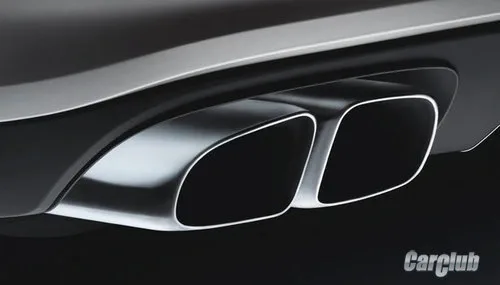 |
| The Panamera Turbo exhaust system has two operating modes: with moderate sound at low revs and load, and with improved flow capacity at high revs and full load. Optionally, a sport exhaust system is available for all Panamera models. The sound character can be changed with a button in the cabin. |
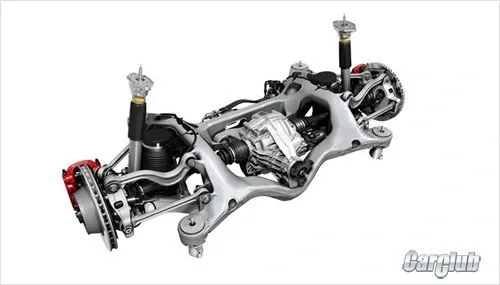 |
| The front suspension is an aluminum suspension with widely spaced double wishbones and an aluminum subframe, which reduces forces arising in the wheel suspension. The rear suspension is an aluminum multi-link setup. This design minimizes unwanted "nose dives" during acceleration and braking. |
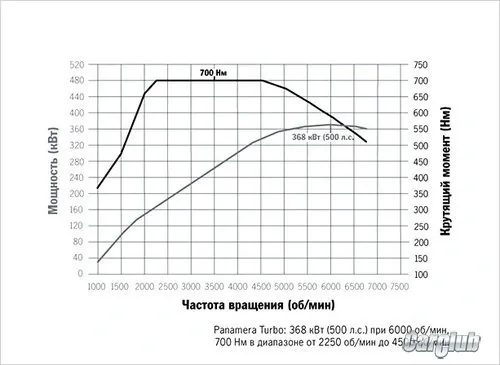 |
| Under the hood of the Panamera Turbo sits a 4.8-liter V8 engine with two turbochargers, direct fuel injection, and a charge air cooler, producing 500 hp at 6000 rpm. Maximum torque of 700 Nm is achieved in the range from 2250 to 4500 rpm. Top speed: 303 km/h. Acceleration to 100 km/h takes 4.2 seconds. The Launch Control system, which is part of the optional Sport Chrono Turbo package, stops the stopwatch at 4.0 seconds. |
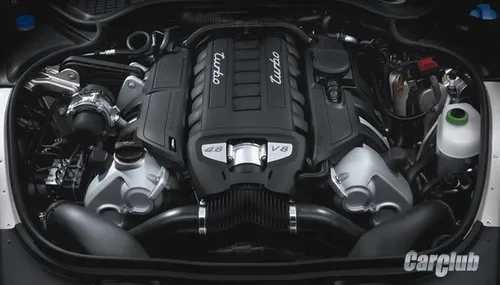 |
| The Panamera Turbo has two turbochargers that operate in parallel—each responsible for its own bank of cylinders. The air drawn in first passes through a common filter, then enters the compressors. After compression, it is sent to the engine through intercoolers, also one per bank. This cooling scheme provides two advantages: cylinders are filled more efficiently, and components do not overheat. Maximum boost pressure at sea level is 0.85 bar, achieved at 2500 rpm and full load. |
Ruslan Galimov