
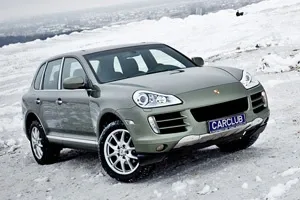
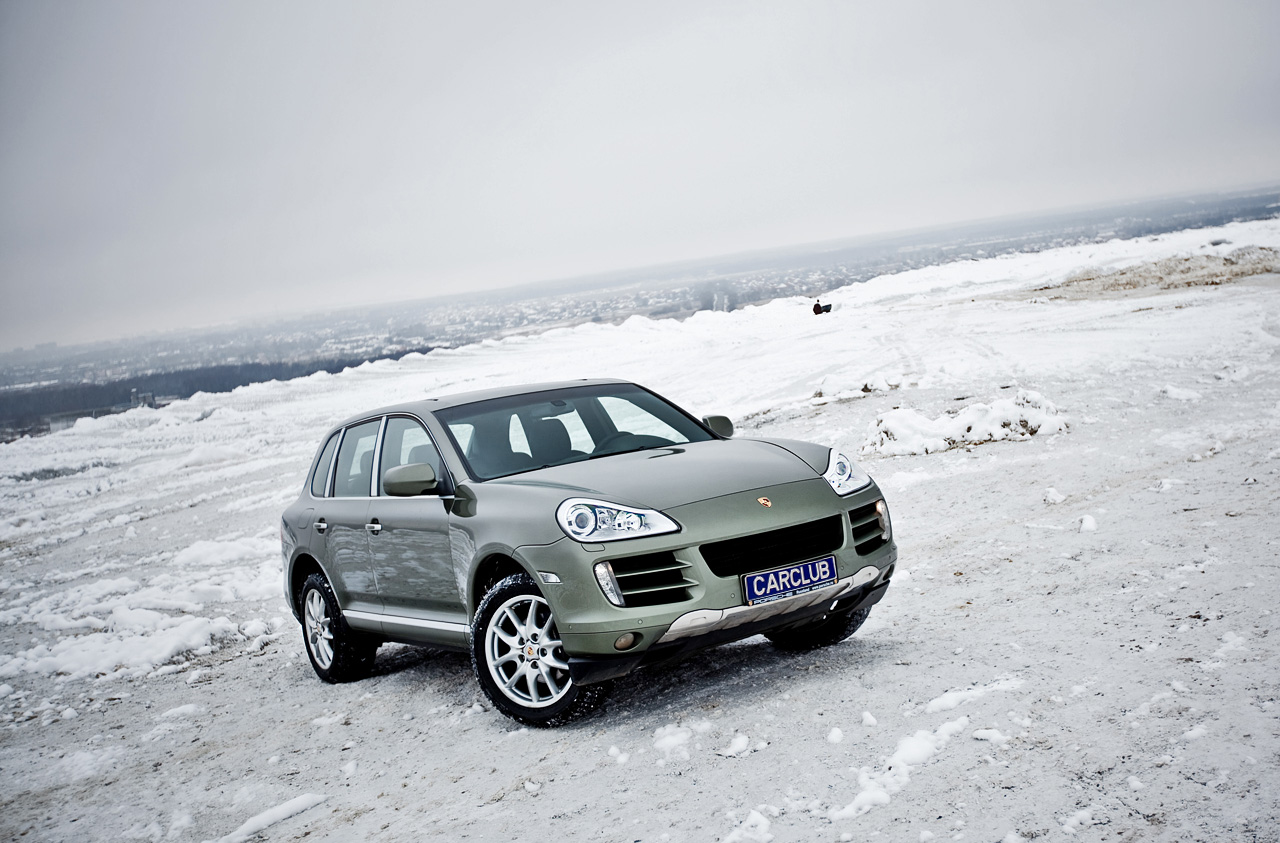
 From the outside, the diesel modification cannot be distinguished from the petrol atmospheric version. There are no special identification marks or the notorious TDI abbreviation here.Comments (8)
The debate about which engine is better — petrol or diesel — for the Russian driver seems never to subside. Europeans have long made their choice, but here the answer to this question is complicated by the quality of diesel fuel, which, as everyone knows, is far from ideal.
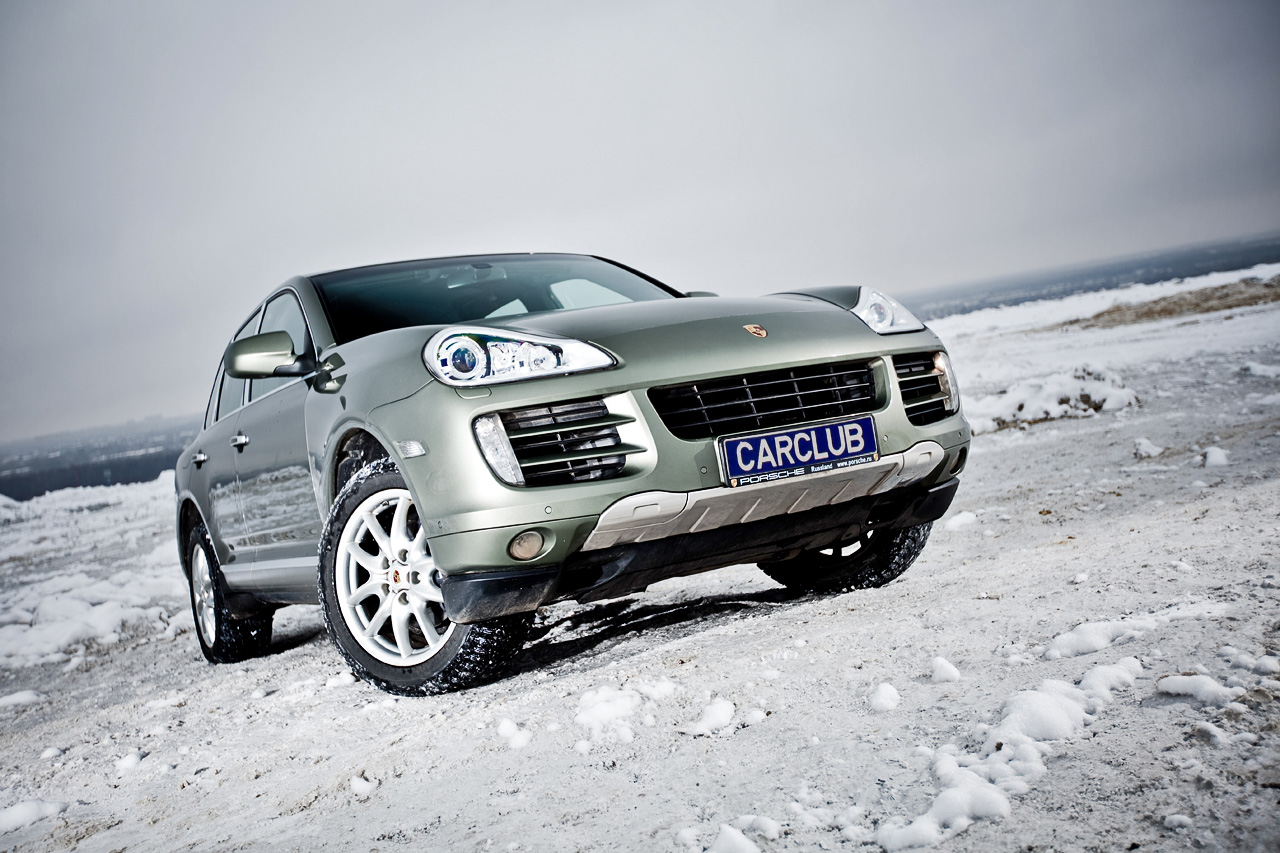 |
| The turbocharged versions of the Cayenne with the V6 engine, Cayenne S and Cayenne Diesel are distinguished by vertical daytime running lights. |
Nevertheless, manufacturers one after another bring their diesel models to Russia, and they gradually gain more and more fans. And the simple rule of trade, according to which the wider the range, the higher the sales, has not been canceled.
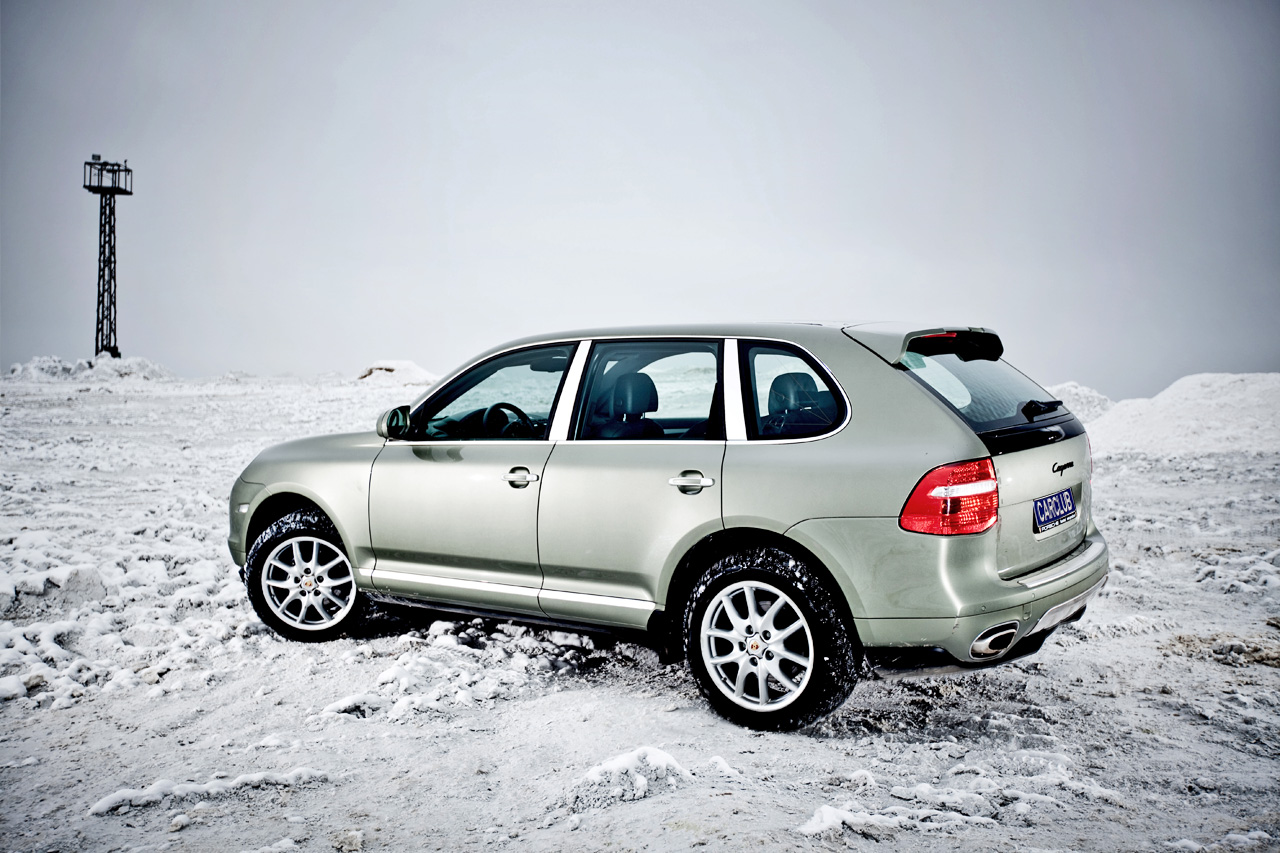 |
| Externally, the diesel version cannot be distinguished from the petrol one. There are no special identification marks or the notorious TDI abbreviation. |
This trend did not bypass the German Porsche: in February last year, the company brought to Russia a diesel modification of the sports crossover Cayenne, which already enjoys great respect among connoisseurs of luxury SUVs. This event is truly significant — previously the Bavarians produced exclusively petrol cars.
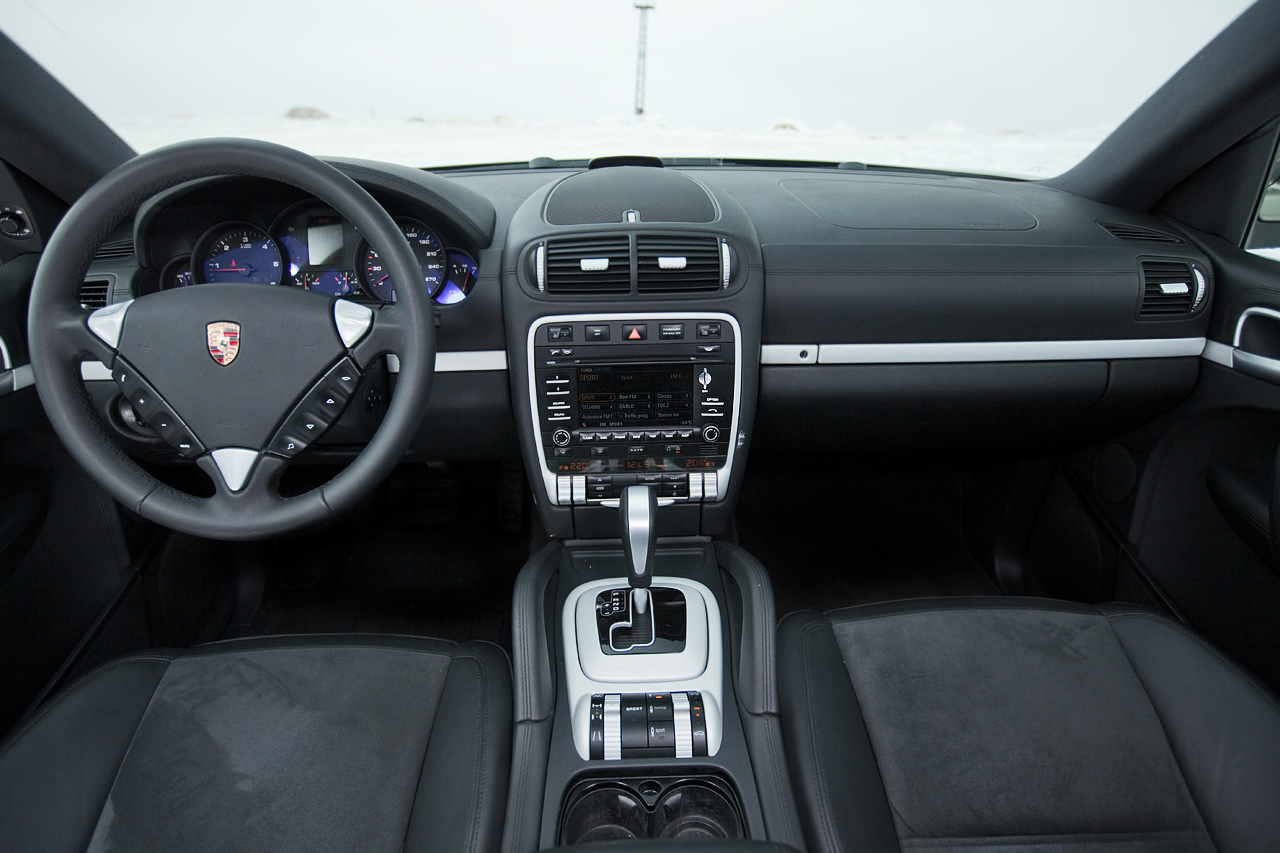 |
| The front panel and door panels are trimmed with first-class leather, and the sporty front seats combine leather with Alcantara. Even the air vents are covered in leather, but this is an exclusive option costing $2,408 (19,263 UAH). |
Encountering a diesel Porsche Cayenne on Russian roads is a real miracle, but we still decided to try this "Cayenne" for taste and find out whether the diesel sports crossover has a future in our conditions.
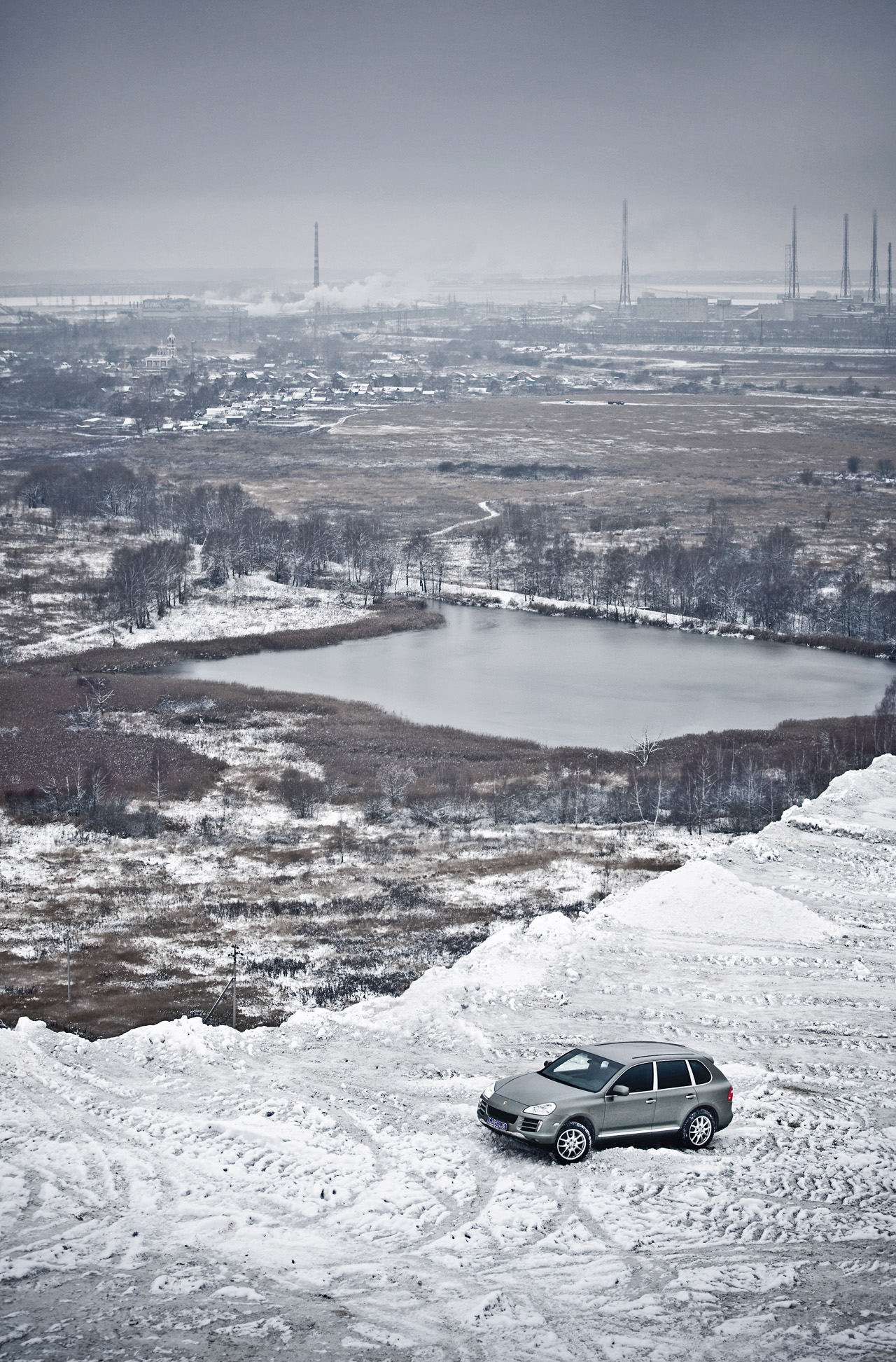 |
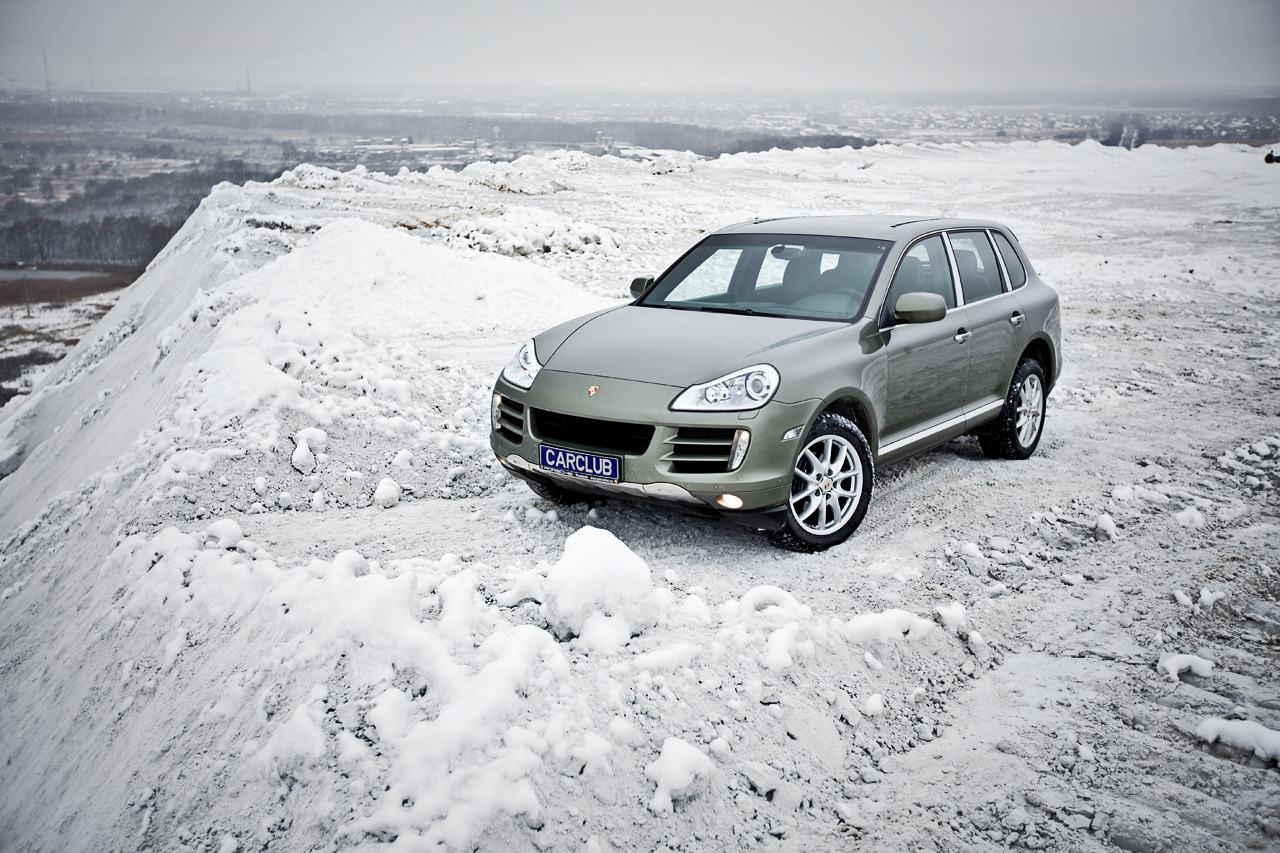
| The luxury SUV looked organic against the backdrop of industrial landscapes near Voskresensk. |
The exterior of the diesel does not betray its origin — the same predatory headlights with silver "eyebrows", the same swift silhouette. The front bumper with side air intakes and vertical daytime running lights makes it related to the Cayenne V6 and Cayenne S versions. But the grille of the air intake and horizontal LED daytime running lights are the prerogative of the top versions with the Turbo prefix.
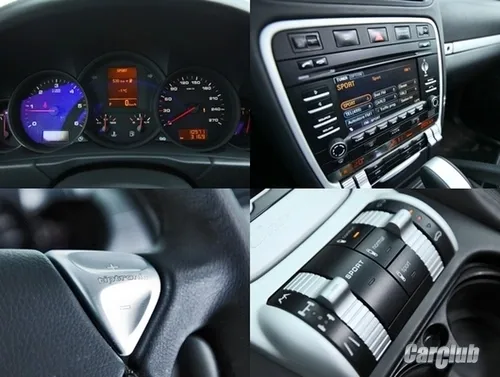 |
| The instrument panel, although already quite outdated, remains informative. On the center console is the PCM system screen with navigation, audio system and optional TV tuner. When pressing the Sport key on the center tunnel, the shock absorbers slightly "tighten", the automatic transmission revs each gear to the cutoff, and the accelerator pedal becomes more sensitive. |
The Porsche interior has not undergone changes. The front panel and doors are upholstered in top-quality leather, the sporty front seats combine leather with Alcantara. And only the plastic of the climate control switches, which looks somewhat budget, reminds of the kinship of the "Cayenne" with the VW Touareg.
 |
| The predatory squint of the Porsche Cayenne headlights enjoys special authority on Russian roads. |
Under the hood of the Cayenne Diesel hides the 3.0-liter V6 well known from the "Touareg", which, according to the manufacturer, was specially retuned to the sporty concept of the "Cayenne". The engine is equipped with Common-Rail direct injection and a turbocharger with variable geometry and electronically controlled guide vanes. In total, this gives 240 hp and 550 Nm of torque, available in the range of 2000-2250 rpm.
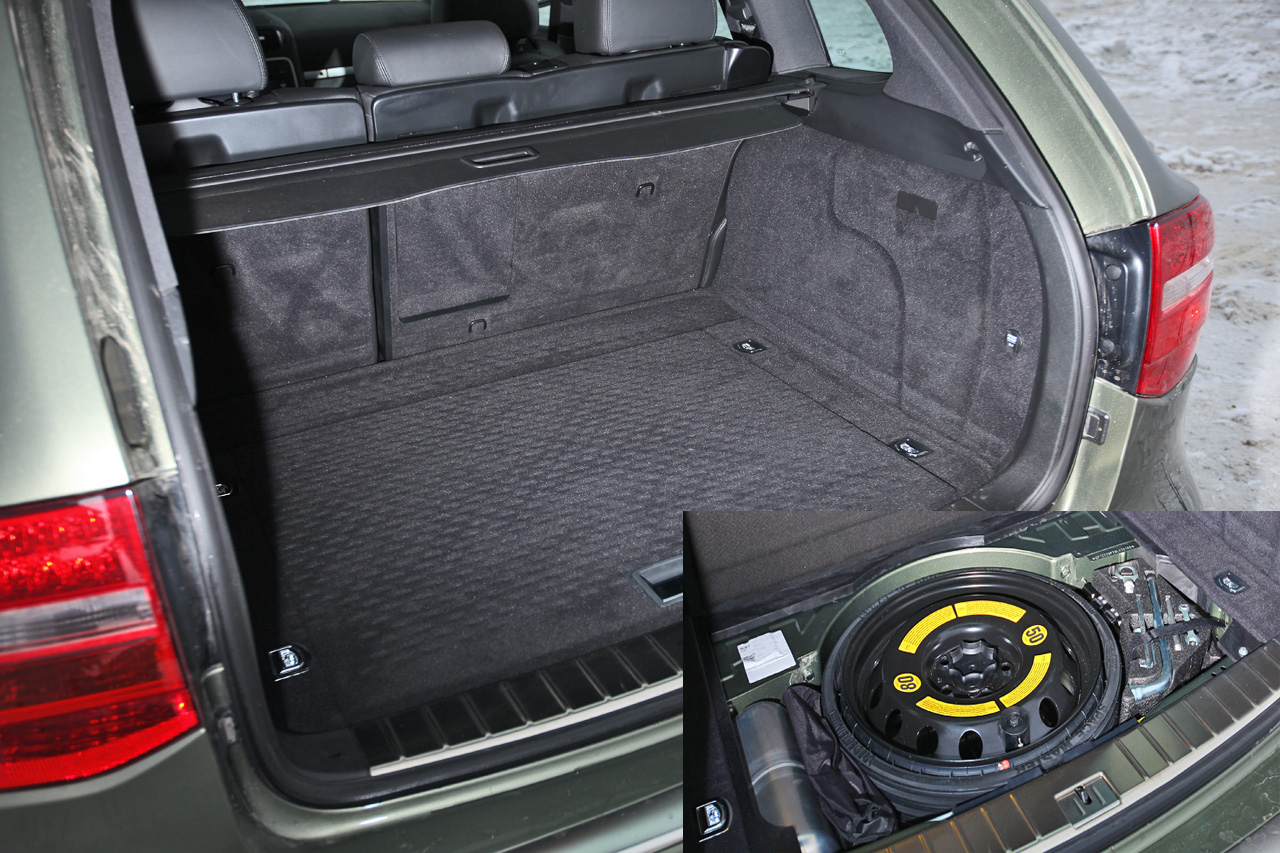 |
| Under the trunk floor is a compact spare wheel, a set of tools and a compressor. |
The curb weight is 2240 kg, and the SUV accelerates to 100 km/h in 8.3 seconds, which is even better than the petrol Cayenne. Of course, the diesel is far from the dynamics of the Cayenne Turbo or Cayenne S, but it will not get lost in traffic. The six-speed automatic, which the diesel version is equipped with already in the base, transmits all 240 hp without delays or jerks. Gears can be shifted both with paddle shifters and the selector.
 |
| The air suspension increases the ground clearance from the standard 215 to 271 mm. For off-road enthusiasts, an optional rear differential lock can be ordered. |
Confident acceleration holds up to 160 km/h, after which the heavy crossover gains speed reluctantly. However, the main advantage of the diesel is something else — fuel consumption. And here Porsche exceeded all expectations: 8 liters on the highway and about 13 in the city. Owners of 500-horsepower "turbos" can only envy. With such an appetite, on one tank the Cayenne Diesel can travel up to 1000 kilometers, and over three years of operation the savings amount to a significant sum.
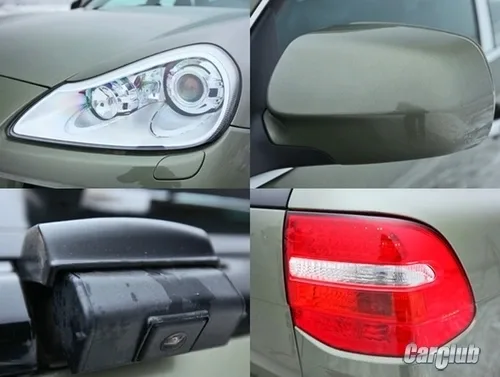 |
| Optional bi-xenon headlights will cost 74 thousand rubles. Another 71 thousand will have to be paid for a rear view camera, which hides in the trunk lid and extends only when necessary, remaining clean in any weather. |
It is worth noting separately the serious work on improving sound insulation before installing the diesel engine. Only a specialist can determine from the cabin that under the hood is a unit running on heavy fuel. There is neither the characteristic diesel rumble nor the usual vibrations on the controls while driving.
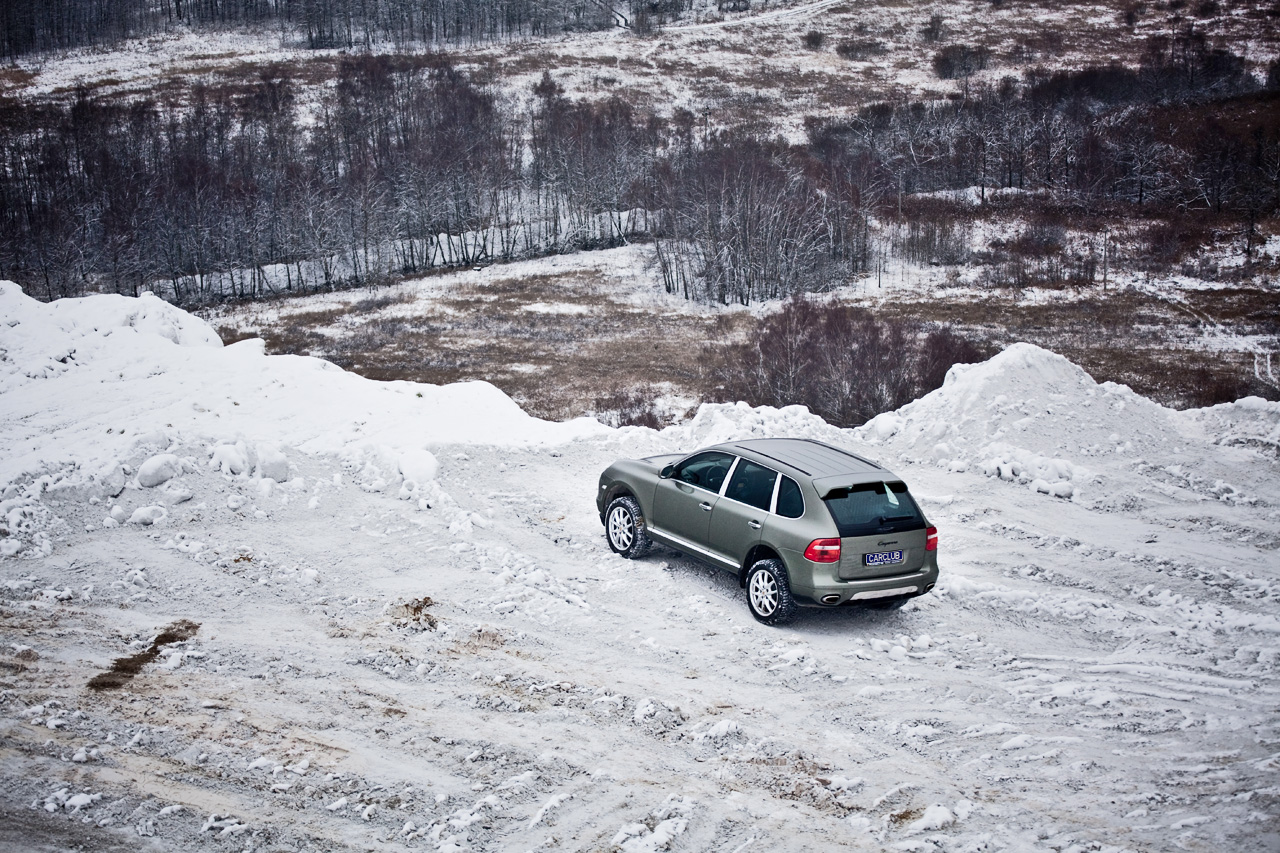 |
| The sports crossover, which most often does not leave the metropolis, has good off-road capabilities. |
The chassis of the Cayenne Diesel did not present any surprises. On bends, the large SUV filigree traces the given trajectory, and on a straight line it holds the road with the grip of a tiger. The equipment on board is complete: air suspension, sport mode, advanced PSM stabilization system and permanent all-wheel drive Porsche Traction Management (PTM), which, if necessary, redistributes torque to where it is realized most efficiently. For an additional charge, lovers of off-road trips can order a rear differential, and drivers — an active roll suppression system PDCC, which for 4 thousand euros brings handling on asphalt to completely new heights.
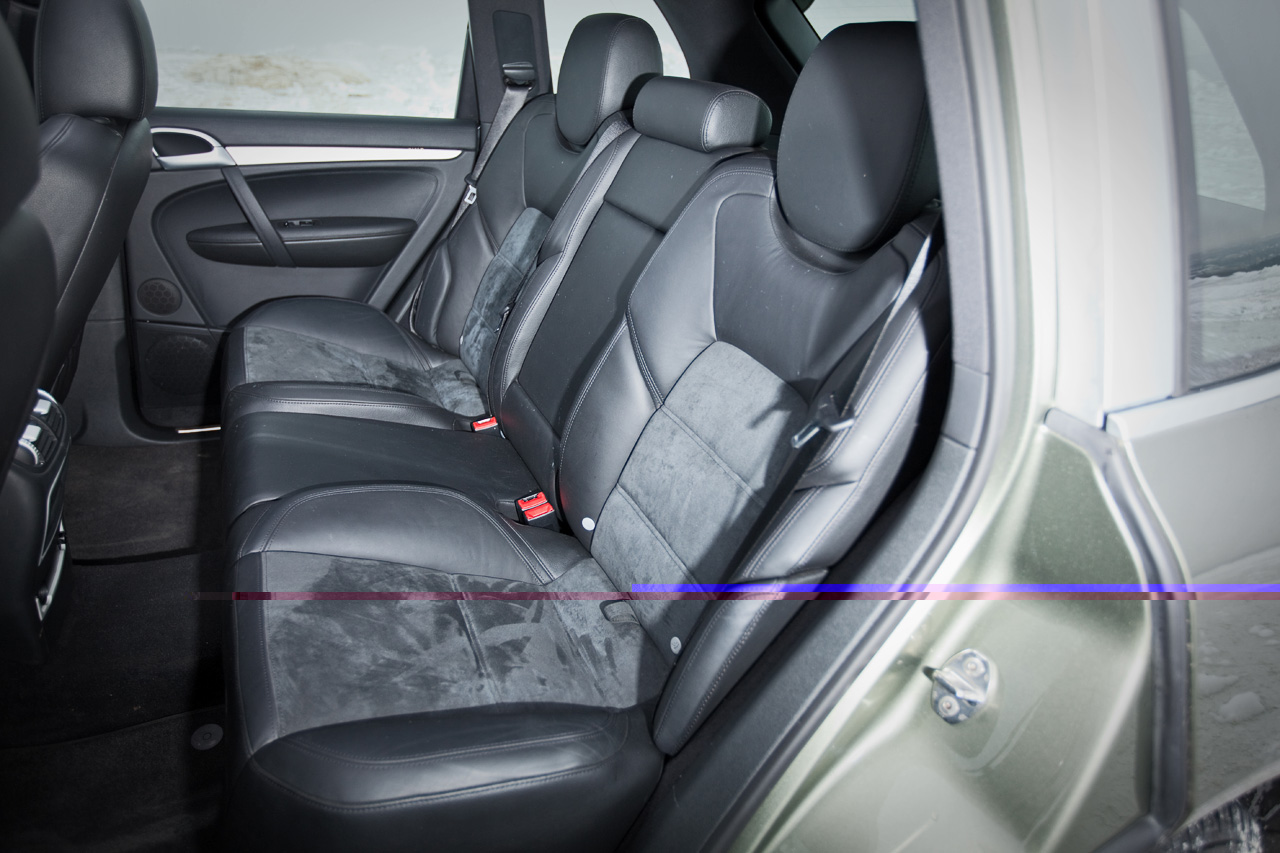 |
| The rear sofa is clearly molded for two. Passengers taller than average will be cramped here. |
 |
| The six-speed automatic transmission, specially tuned for the diesel engine, works flawlessly. Gear changes are smooth and instantaneous. For those who prefer aggressive driving, an active roll compensation system (PDCC) is available for an additional cost, which for 4 thousand euros elevates the crossover's behavior to a fundamentally different level. |
Ruslan Galimov