
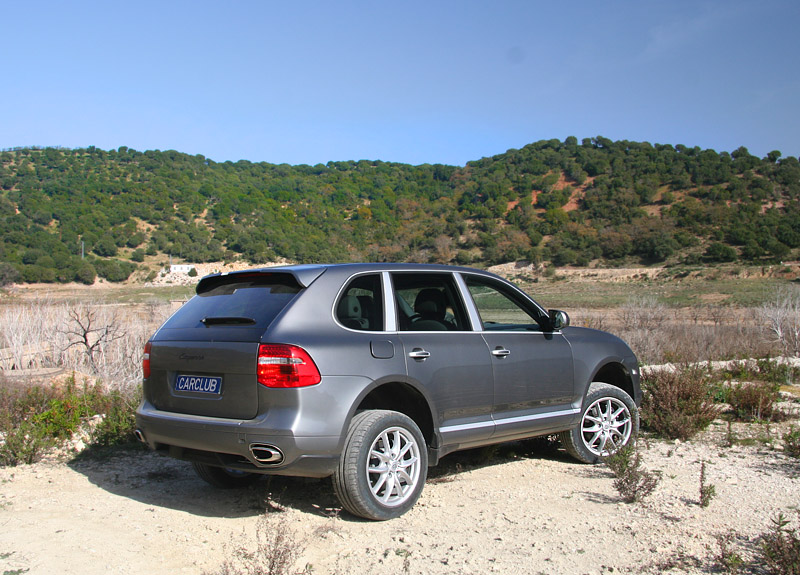
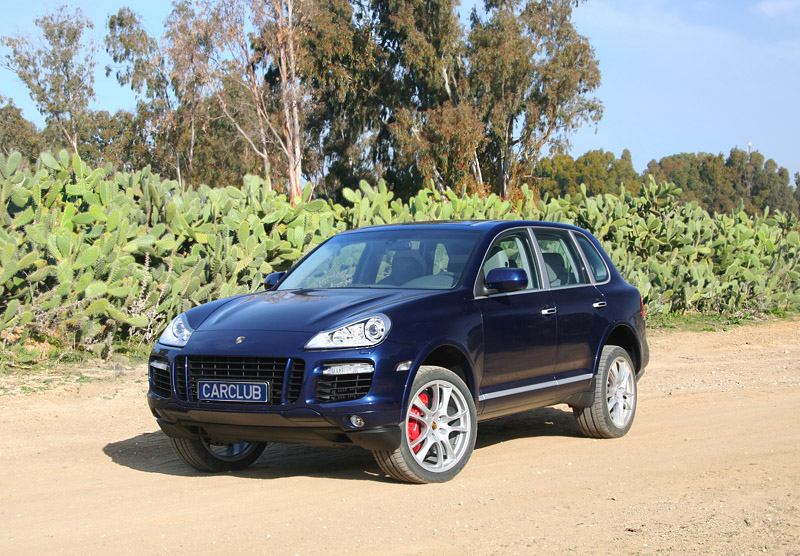
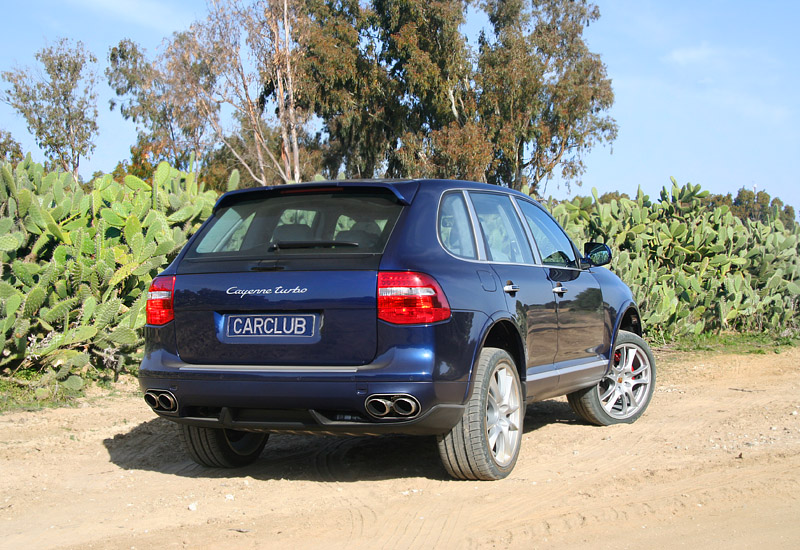
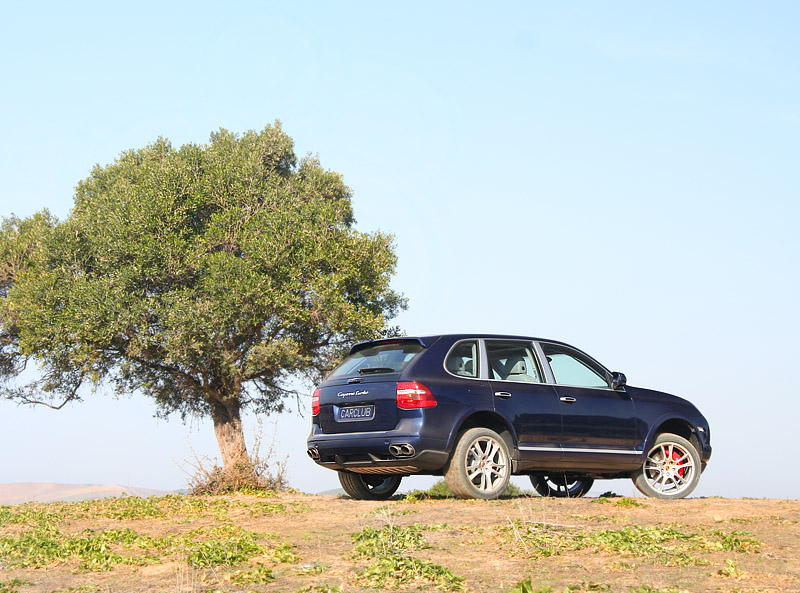
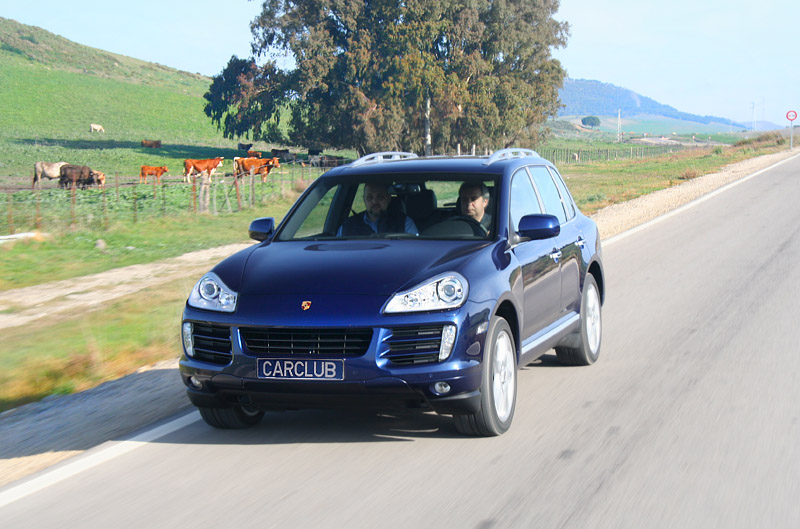
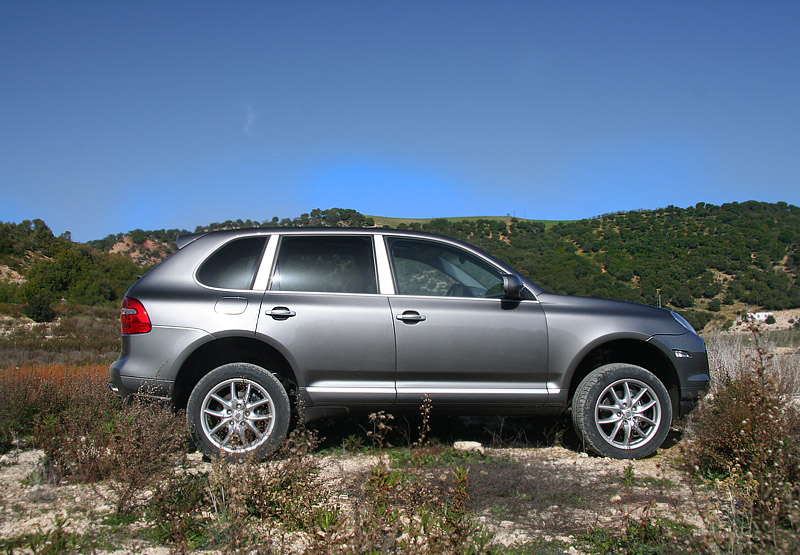
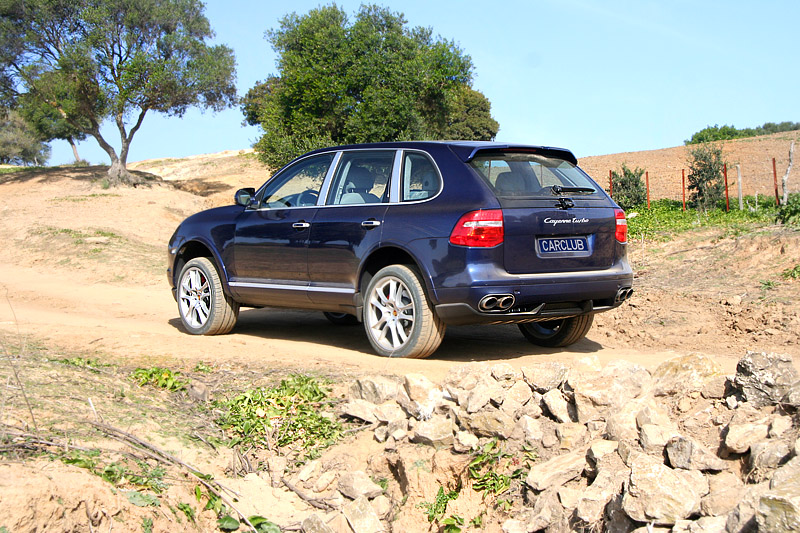
Car fashion, like any other, is fickle: what seemed the height of style yesterday no longer looks so fresh today. Porsche decided it was time to refine the looks of its Cayenne — after all, the same body had been gracing dealer showrooms for a full five years. True, the changes didn't go deeper than light "cosmetics": the main updates are new bumpers, headlights, and taillights. If you look closely, you can spot other touches, such as a slightly different shape for the front fenders and side mirrors. As a result, the facelifted Cayenne looks even more dynamic and aggressive. The interior, however, remained virtually untouched. But the technical side underwent far more serious changes.
Let's start with the engines — their lineup has been completely renewed. The base unit, if that word even applies to such engines, now has a displacement of 3.6 liters and produces 290 horsepower. The next step is a V-shaped "eight" with a displacement of 4.8 liters, developing 385 horsepower; this engine is installed on the Cayenne S version. And the top-of-the-line Cayenne Turbo received the same "eight," but with twin turbocharging, which made it possible to extract all 500 "horses" from it. Porsche engineers claim that the new engines have become not only more powerful but also more economical than their predecessors. It sounds almost like a miracle, but it's all explained simply: the engines have been switched to direct fuel injection. The system is, of course, more complex than the traditional one, but it allows improving almost all key indicators of the power unit simultaneously.
There is also another notable technical innovation — a body roll suppression system called PDCC. Inside the anti-roll bars, which are now made with a split, tiny hydraulic motors are installed. They create the torque needed to keep the body in a horizontal position on loaded wheels.
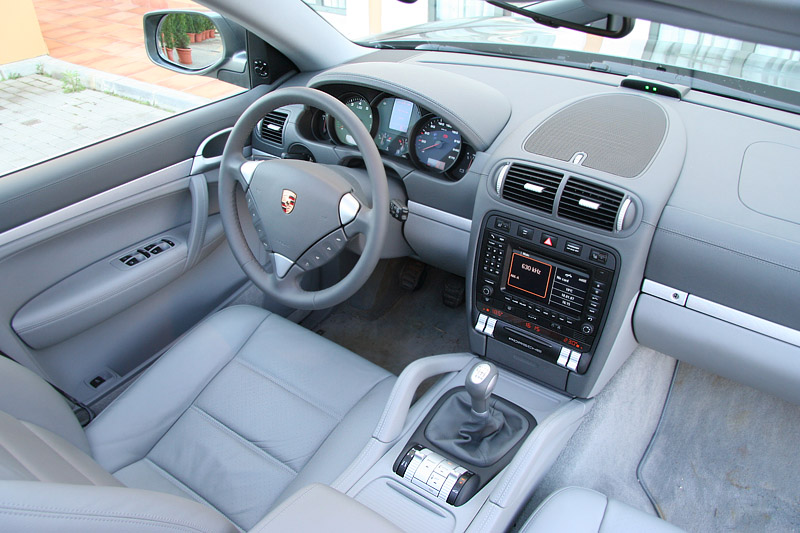
 Getting into the Cayenne's cabin, I expected something special — Porsche cars have always been a benchmark for me. But inside, I was somewhat disappointed: no fantasy, no spaceship attributes — just a very expensive and high-quality SUV. The trim is, of course, impeccable: perfect panel gaps, soft leather, pleasant plastic. The seat, thanks to a huge number of adjustments, will suit a driver of any build. And only the badge on the steering wheel reminds you that you're sitting not in a luxury sedan but in a sports SUV — one of the fastest production models in the world. However, as soon as you turn the ignition key, the serene calm evaporates. The engine greets you with a deep, thrilling rumble, and the illuminated screen on the center console seems to say: "Ready for takeoff."
The base Cayenne is equipped with a manual transmission. Honestly, I expected more from it: the lever travel is a bit long for a "sports car," and the shift precision is not exemplary. The clutch also didn't please — its informativeness leaves much to be desired. However, on a car costing nearly a hundred thousand dollars, "manual" is perceived more as a nod to tradition than a practical solution. It's hard to imagine a CEO of a large company manually shifting gears. But the automatic transmission on the Cayenne is truly magnificent. Even the most active driver is unlikely to often reach for the "tiptronic" paddles on the steering wheel — for sharp acceleration, it's enough to simply floor the gas pedal. The kick-down response is instantaneous: albeit with a slight delay in smoothness, the automatic gearbox drops down several gears, and the more-than-two-ton behemoth makes a swift lunge. The most impressive dynamics, of course, belong to the 500-horsepower version — 5.1 seconds to 100 km/h, and that's no joke! The naturally aspirated engine of the same displacement also turned out to be quite lively. The younger 3.6-liter engine, while not causing problems during overtaking, doesn't deliver the thrill you expect from a Porsche. Moreover, it seemed noisier to me.
 The PDCC roll suppression system is not just a marketing gimmick for wealthy clients; it really works. Even if you deliberately rock the car from side to side, the body begins to noticeably deviate from its static position only at high speeds. The benefit is not only in comfort — safety also improves, as the wheels maintain better contact with the road. PDCC is felt not only in corners but also on dirt roads: bumps are transmitted to the "fifth point" noticeably smoothed out.
The Cayenne's chassis fully matches its power characteristics. Dashingly navigating a "slalom" in this huge SUV is not a problem; it's much harder to provoke it into oversteer or understeer of both axles. If you want to really "let loose," it's worth pressing the "Sport" button on the center tunnel in advance. It switches several systems to sport mode at once: the suspension becomes stiffer, the gas pedal responds faster, and the electronics allow the engine to rev to the limiter before shifting to the next gear.
Prices for the updated Cayenne have increased slightly — the base version with the 3.6-liter engine will cost from 57,850 euros. The cars will appear at dealerships very soon. The SUV, which already enjoyed steady demand in certain circles, will surely continue to sell well: now it has a richer "filling" and a "meaner" appearance, which owners of such cars also like. So be patient for another six months — and the body familiar from photos will catch your eye several times a day, at least on city streets.
Alexey Tikhonov