
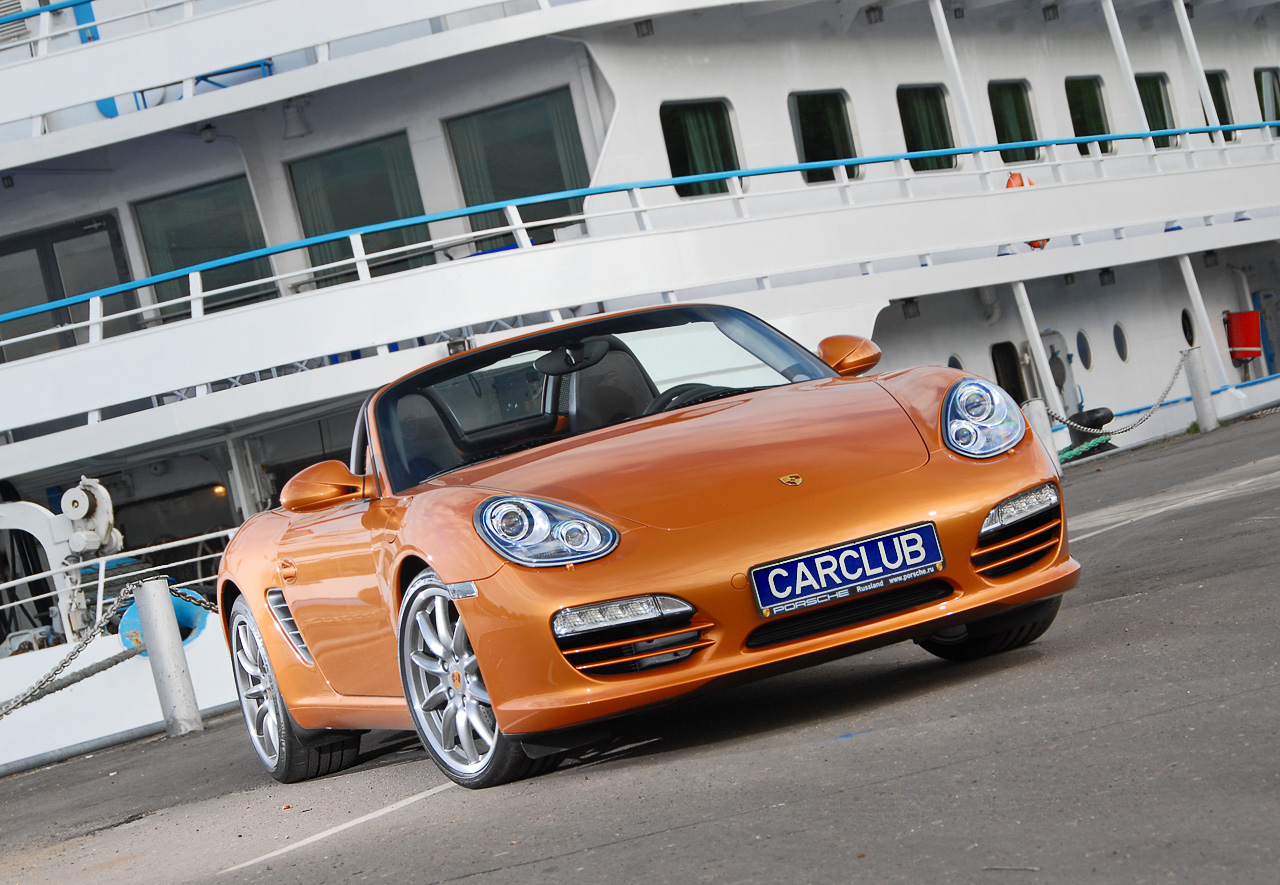
 The second generation of the Porsche Boxster debuted at the Los Angeles Auto Show in November last year. The 2.9-liter engine became 10 hp more powerful than its predecessor — now it delivers 255 hp.Comments (12)
The crisis of the early nineties caught Porsche at a bad time. Production dropped to a minimum, and losses were in the millions. That was when Wendelin Wiedeking took over as head of the company, replacing Heinz Branitzki. It is now hard to overestimate the contribution of the new leader.
In 1996, three years after taking the helm, Wiedeking took a risky step that paid off. Five times more money was invested in developing the new model than the company itself was worth. That is how the Boxster sports car came to be, pulling the firm out of debt and restoring its prosperity. For that, a monument to Wiedeking could well have been erected even then.
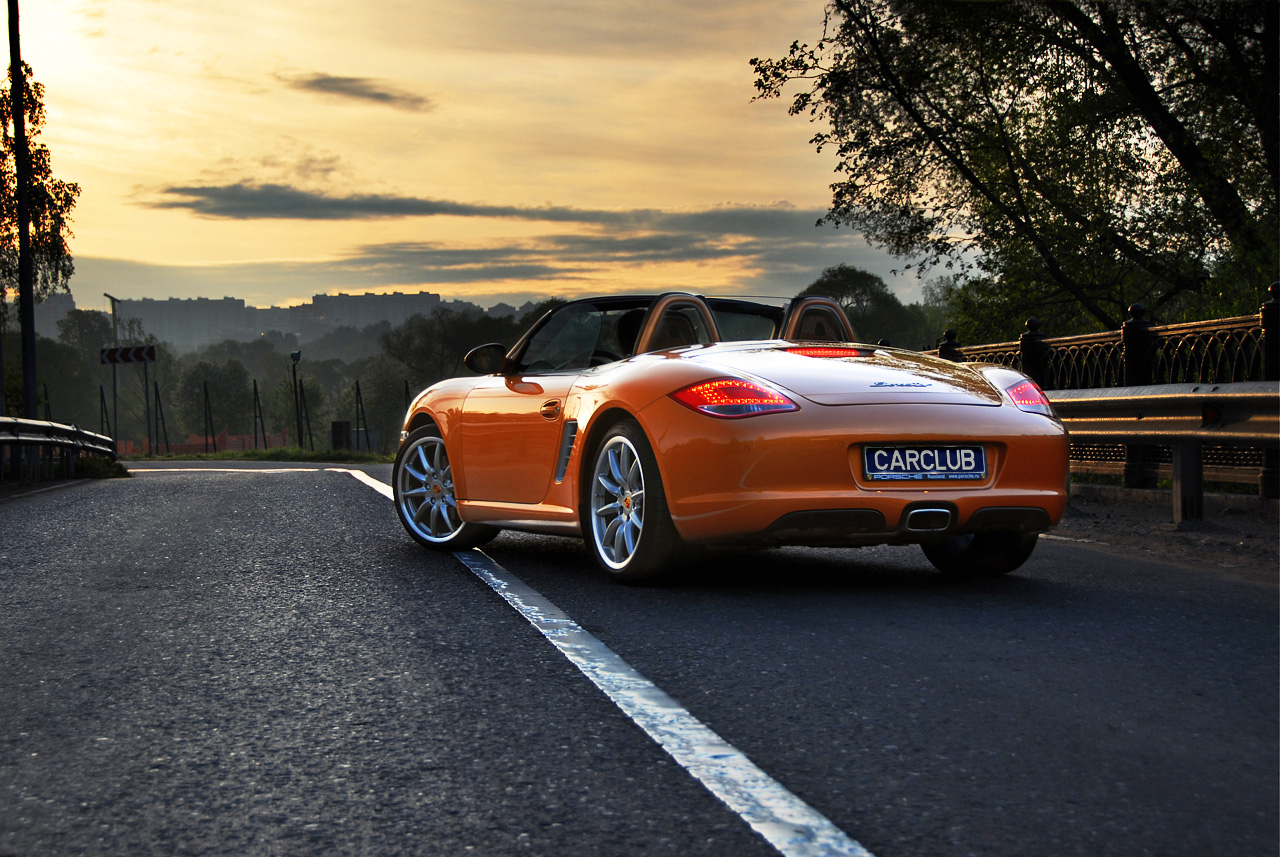 |
| The name Boxster is made up of two words: boxer (flat engine) and roadster (no explanation needed here). It is also important that, unlike previous Porsches where convertibles were made from closed bodies, the Boxster was designed as an open car from the start. |
Back then, the public was not spoiled by a variety of layouts and body types. So the arrival of the Boxster could not have been more timely. A mid-engine layout, modest dimensions, the famous Porsche flat engines and, most importantly, a quite affordable price — these were the ingredients of the newcomer's success.
The exterior was handled by Harm Lagaay, who was responsible for the looks of all Porsches of the nineties and the first half of the two-thousands. He based it on the brand's early open cars — the 550 Spyder and the 356 Speedster.
The name Boxster comes from two words: boxer — a flat engine, and roadster — an open body. Another detail: unlike previous Porsches, where open versions were derived from closed ones, the Boxster was designed as a convertible from the outset. The newcomer quickly became the best-selling model in the Stuttgart lineup and held that title until 2003, when the Cayenne SUV gained momentum, which remains Porsche's bestseller to this day.
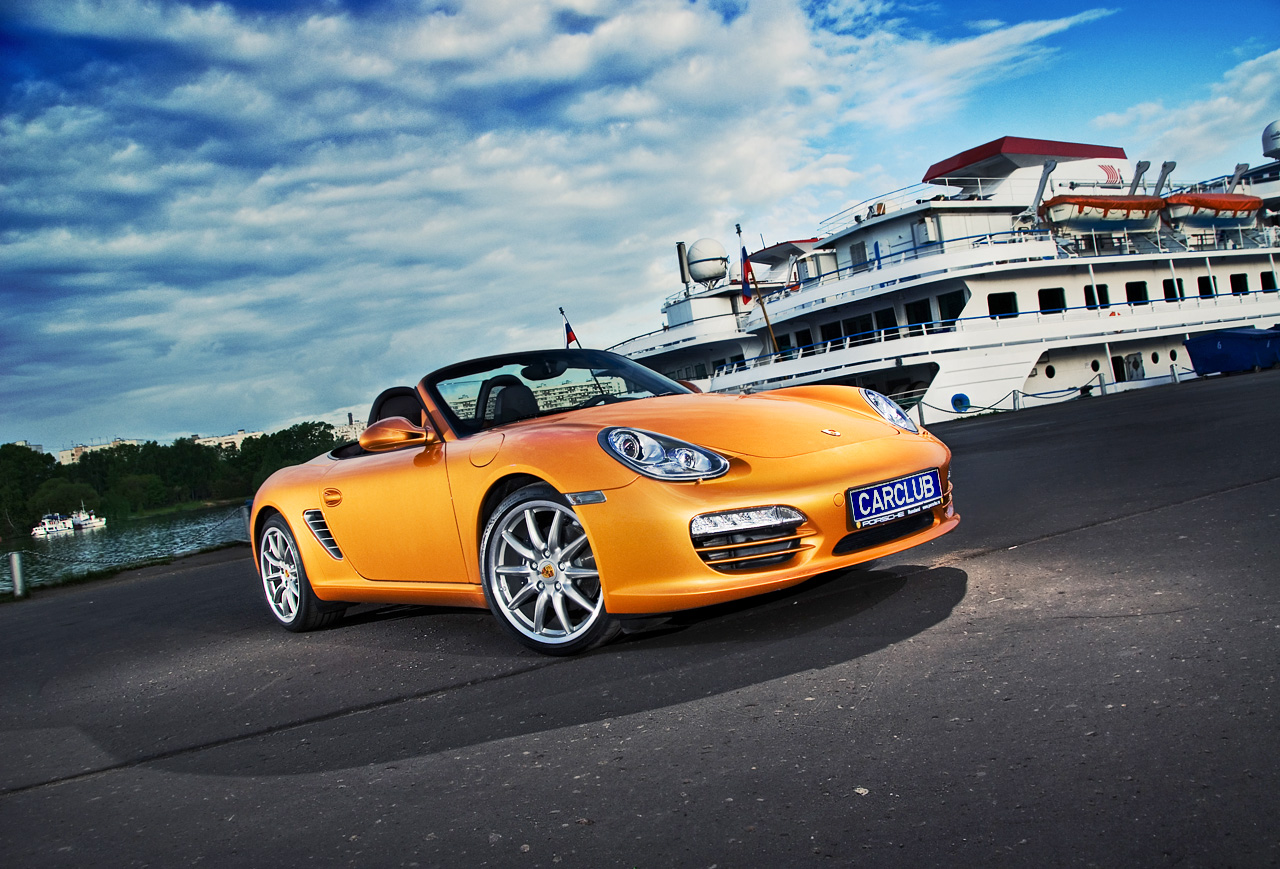 |
| Under the hood of the Boxster is a six-cylinder flat engine with 255 hp. The VarioCam Plus system and optimized intake provide increased torque at low revs and a power boost at the top end. The peak of 290 Nm is reached in the range from 4400 to 6000 rpm. |
Since 1999, the first-generation Boxster was equipped with a 2.7-liter flat engine producing 217 hp. Up to a third of the parts came from the senior 911 model. In 2000, the Boxster S version appeared with a 3.2-liter engine delivering 252 hp. A rigid removable roof, named Speedster after the legendary Porsche 356, was offered as an option.
In 2005, a new generation of the Boxster was released. The roadster received an updated body and interior, as well as refined engines. Thanks to continuous engine improvements since 1999, the regular Boxster gained 25 hp, and the S version gained 43 hp. A little later, the Porsche Cayman appeared — close in design to the Boxster, but produced only as a coupe and positioned as a standalone model.
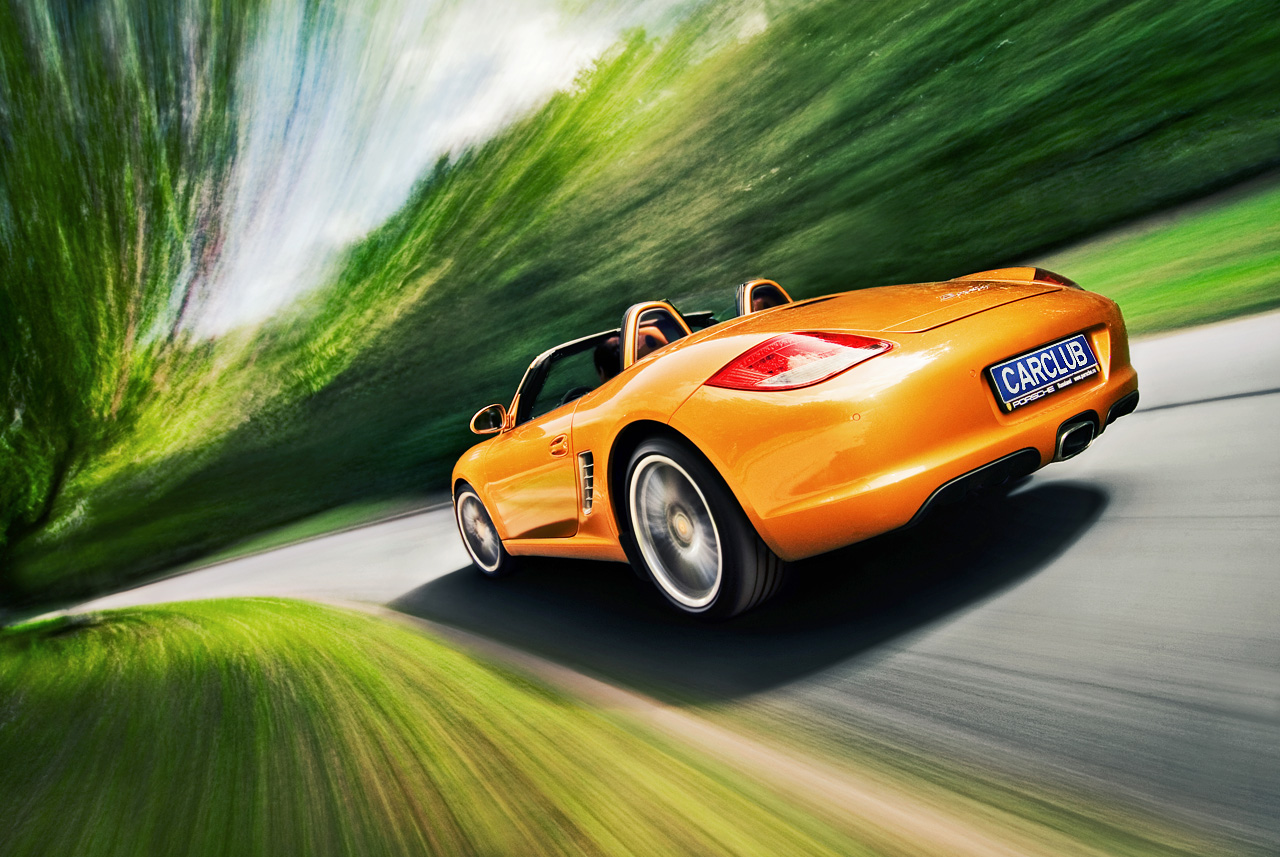 |
| The lightweight McPherson strut suspensions have a sporty setup. The use of lightweight constructions keeps the weight of the running gear and unsprung masses in check. Almost all moving elements are made of aluminum. The result is precise handling with decent comfort. |
The premiere of the updated second-generation Boxster took place in Los Angeles in November last year. The engine displacement grew to 2.9 liters, and power, compared to the previous generation, increased by 10 hp — to 255 hp.
The updated roadster can be distinguished by new halogen headlights with integrated turn signals and rear lights with LEDs. A lighting package with bi-xenon headlights, dynamic cornering lights and LED daytime running lights is also available for the Boxster.
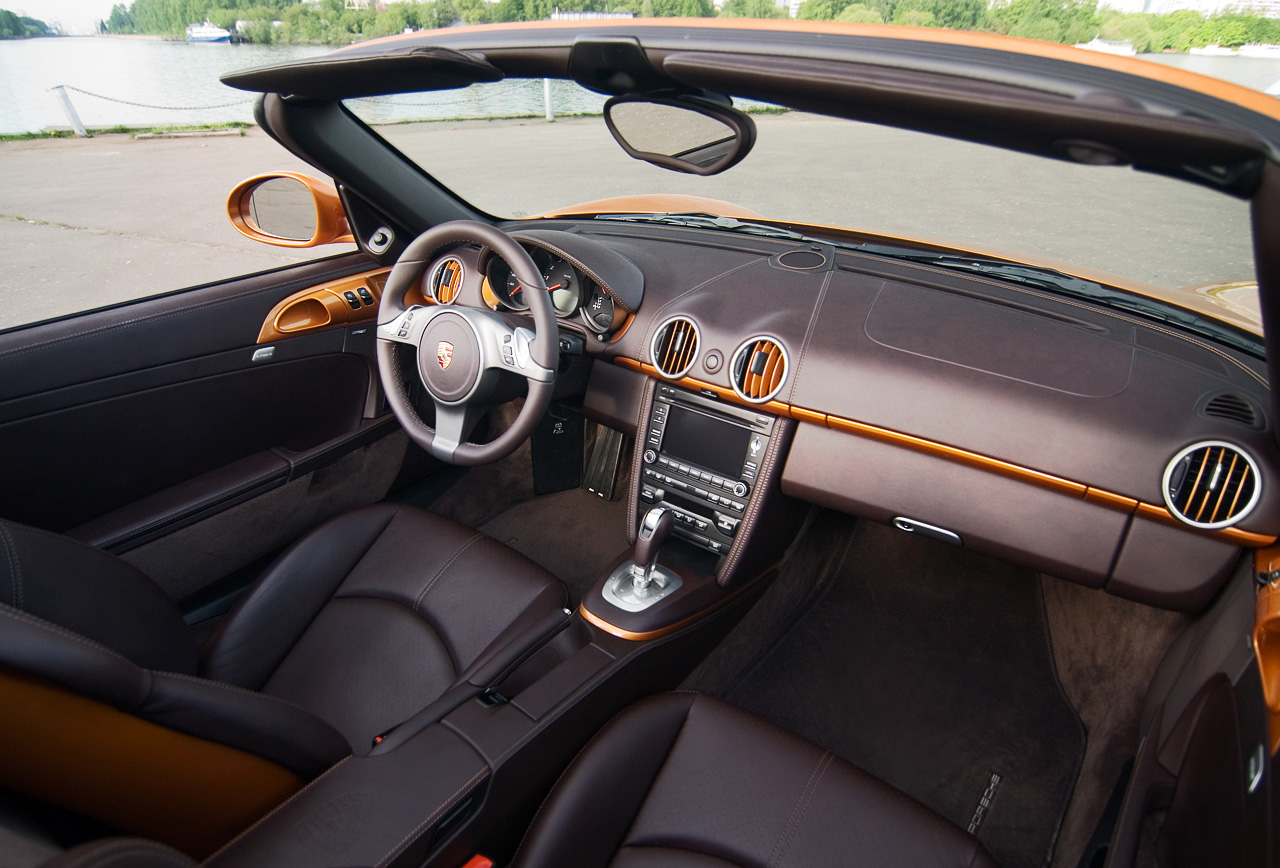 |
| The interior features only top-quality materials, and assembly is flawless. Everything is strict and laconic. Ergonomics are excellent. The steering wheel sits almost vertically and adjusts in four directions. The seats are magnificent! There are enough adjustments for a driver of any build to get comfortable. |
Instead of the previous Tiptronic S transmission, a robotic Porsche Doppelkupplung (PDK) gearbox with two clutches is now offered as an alternative to the six-speed manual. The version for the Boxster is based on the gearbox from the Carrera, so the clutch diameters and hydraulic block are identical. At the same time, the PDK is 11 kg lighter and 60% faster than the “automatic”. With the PDK, the Boxster accelerates to 100 km/h 0.1 seconds faster than with the manual. The new gearbox is also more economical: the manufacturer claims a 16% reduction in fuel consumption compared to the previous generation. The official average consumption is just 8.9 liters per 100 km.
The PDK also has a manual mode. Gears can be shifted both via the selector on the center tunnel and via two paddles on the steering wheel. The gearbox responds to paddle input even in Drive mode. The PDK will continue to shift on its own, but it will respond to a command from the wheel without delay.
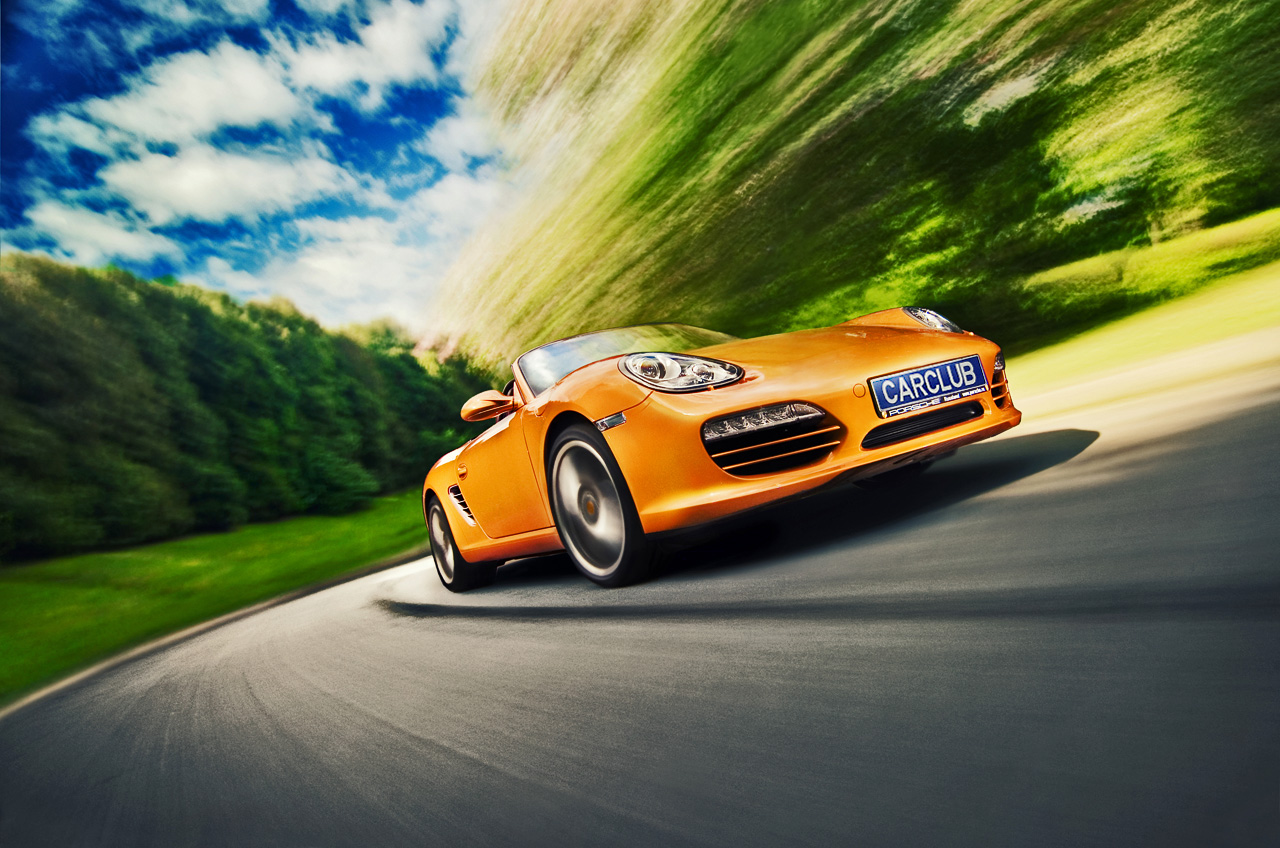 |
| Instead of the previous Tiptronic S transmission, a sporty Porsche Doppelkupplung (PDK) robot with two clutches is offered for the first time as an alternative to the 6-speed manual. With the PDK, the Boxster accelerates to “100” 0.1 seconds faster than with the manual. The new gearbox also saves fuel — a 16% reduction in consumption compared to the previous generation is claimed. |
The interior is sheer bliss! Top-quality materials, flawless assembly. Everything is strict and laconic. Ergonomics are top-notch. The steering wheel is almost vertical and adjusts in four directions. The seats are magnificent! There are enough adjustments for a driver of any build to get comfortable. In the center of the instrument panel is a large tachometer, flanked by a speedometer and two gauges. The speedometer with a 50 km/h scale division is duplicated by a more precise electronic display showing the current speed.
The base price of the Porsche Boxster is 2,249,000 rubles. But can one resist the optional 19-inch wheels or the Bose audio system? The test Boxster was equipped with adaptive sport seats, a TV tuner, navigation and a set of exclusive trim options: interior elements in body color, a leather panel with orange stitching. These “extras” raised the price of the convertible to 4,107,000 rubles — that is already almost the price of a base Carrera 4. So why the Boxster?
Many stereotypes have formed around the “Boxster”. For example, that it is not quite a “real” Porsche, because 255 hp is not serious for a sports car, and the suspension is overly comfortable. Many believe that its main purpose is to show off thanks to the badge with the famous Stuttgart crest. I am ready to object — all of this is fundamentally wrong.
Of course, it does not have the breathtaking acceleration of the 385-hp Carrera S, but 5.8 seconds to 100 km/h is, you must agree, a respectable figure. Yes, after the 180 km/h mark, the roadster's enthusiasm noticeably fades, and each subsequent division of the speedometer is given with increasing difficulty. But where in our parts can you calmly accelerate to two hundred?
I turn the ignition key, select Drive mode, floor the accelerator — and to the noble roar of the flat engine, the Boxster takes off, pressing the occupants into the seatbacks. Even with an aggressive full-throttle start, the tires never squeaked. I disable the stability system, but the picture does not change. Even without the electronic “leash”, the roadster does not want to waste time on useless wheelspin, which would only take away precious moments.
The true pleasure of the Porsche is revealed not on straights! The engine located in the base, the piercing roar of the flat engine, the tight steering wheel and the almost horizontal seating position — that is the very element that completely consumes you. How delightful it is to race along a country highway with the top down, listening to the rich baritone of the engine and impeccable handling! A barely noticeable movement of the steering wheel or a light press on the accelerator — and the Boxster instantly fulfills any desire. The McPherson strut suspension with minimal body roll confidently handles the trickiest hairpins and chicanes.
The undoubted advantage of the Boxster is its versatility. Unlike the Carrera with its sporty stiff suspension, which transmits every road imperfection into the cabin, this roadster handles small potholes and protruding asphalt patches tolerably well. The power steering with variable ratio provides a wealth of feedback. Sometimes the steering wheel even seems too heavy for a Porsche. At high speed on broken and rutted asphalt, the car starts to wander a bit, and where the Carrera flies like on rails, behind the wheel of the Boxster you need to be more attentive.
The PDK swiftly clicks through its seven gears, but for me, in a real sports car, there is no alternative to a conventional manual. No matter how much they talk about lightning-fast shifts and fuel savings, the absence of a third pedal makes driving somewhat artificial, like kissing through a plastic bag.
In the center of the instrument panel, as expected, a large tachometer is displayed, flanked by a speedometer and a couple of gauges. The speedometer's scale division is 50 km/h, so more precise readings are duplicated on an electronic display. Our test car also had optional navigation and an excellent Bose audio system. You can shift gears of the robotic PDK gearbox either with the selector on the center tunnel or with convenient paddles on the steering wheel. Moreover, the gearbox will respond to a press even in Drive mode, although it will then continue shifting on its own, but it will respond to a new command from the steering wheel without delay.
The luggage compartment consists of two sections with volumes of 130 and 150 liters at the front and rear, respectively. For an additional charge, a lighting package is available, including bi-xenon headlights with dynamic cornering lights and LED daytime running lights. Headlight washers, painted in body color, are also an option. The 19-inch Carrera Sport wheels are not a cheap pleasure ($5,442), but they are definitely worth it.
The updated roadster can be recognized by its new halogen headlights with integrated turn signals and LED taillights.
Whatever they say, the Boxster is a true Porsche through and through. Its versatility and suitability for daily driving are an undoubted advantage that attracts new customers to the brand. After all, the Cayenne crossover, whose appearance was once blamed on Porsche for deviating from tradition, still provides the lion's share of the company's sales even in today's difficult economic times.
If you need a genuinely sporty character, a mid-engine layout, sharp handling, and driving pleasure, but without extremes like the "ultima" suffix, then your choice is the Boxster. And those who have already "grown up" and do not accept compromises can safely head into the world of the Carrera. However, that is a completely different story…
Ruslan Galimov