
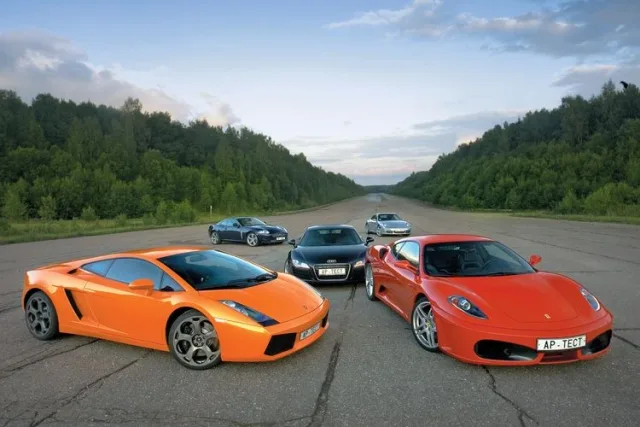
I returned to the asphalt patch in the special roads sector of the proving ground, clumsily, without any grace, grabbed the front pillar and, grunting, climbed out of the Lamborghini Gallardo. That's enough for today. Then I got into a Fiat Bravo, started its diesel engine, and headed towards Moscow. What smoothness of ride, what visibility, what silence! It doesn't get thrown around in ruts, the steering wheel doesn't jerk, the tank lasts a week, and the price is just a bit more than the annual CASCO insurance for a Lamborghini. True happiness! And I deserved it, having spent three days among monsters. Friday — on the race track in Myachkovo, Saturday and Sunday — at the proving ground.
Why all this madness? Who needs these crazy engines on wheels? Who are they, these slaves of vanity?
In the morning, as usual, the world had changed. And when I didn't see the silver Porsche 911 under the windows, which I had driven for almost three years, a brief panic seized me: where?
It's all right. The car is at the proving ground, in safe hands. But I already miss it.
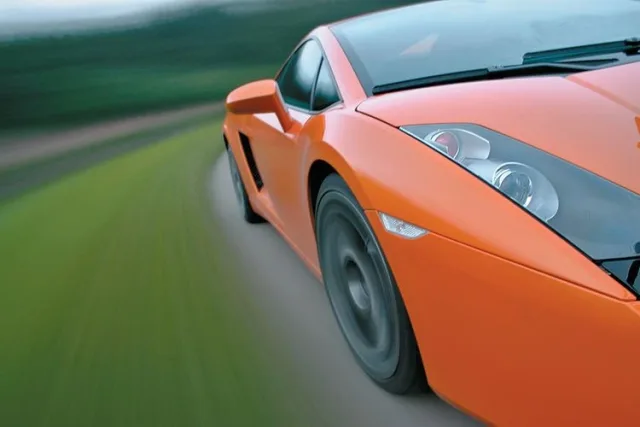
The start was unlucky. Four cars arrived at the race track in Myachkovo on their own, while the Lamborghini Gallardo was brought on a tow truck: the car was brand new, and the dealer and I were worried about its showroom condition. But we still damaged the rear bumper skirt. Not on the track and not at the proving ground, but during loading onto the tow truck. But even worse was that it started raining, which buried the idea of ranking the cars by "racing circuit" order. It became clear that those with better tires and all-wheel drive would be in the lead. Both were available on the Lamborghini Gallardo and Audi R8. The Jaguar XKR could boast relatively fresh tread, while the Ferrari F430 and Porsche 911 S had neither all-wheel drive nor new tires. Especially disappointing for Porsche: the honor of the brand in this test was supposed to be defended by the all-wheel-drive Porsche 911 Turbo with its 480-horsepower engine. But we couldn't get one. And without a Porsche, it's impossible here! So I came to Myachkovo in my "S", dooming it to failure: rear-wheel drive and the weakest engine in the test — 355 hp...
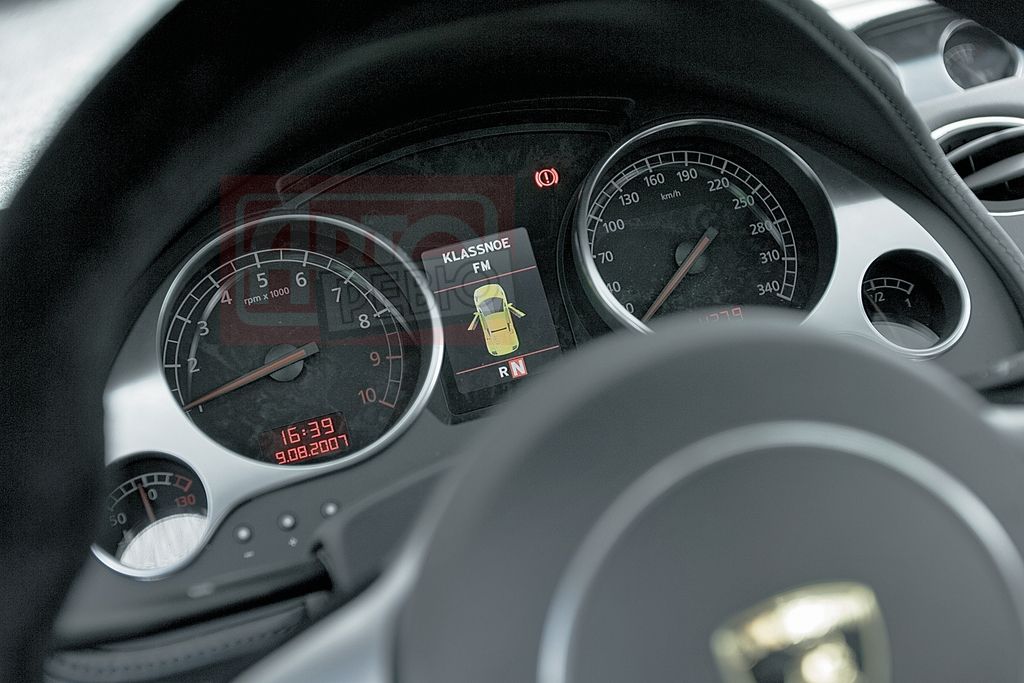 | |
| The "architecture" of the instrument panel is modeled after Audi. Although on the Lamborghini, the tachometer belongs in the center of the panel | The paddle shifters behind the steering wheel are convenient, but they feel too "plastic" to the touch |
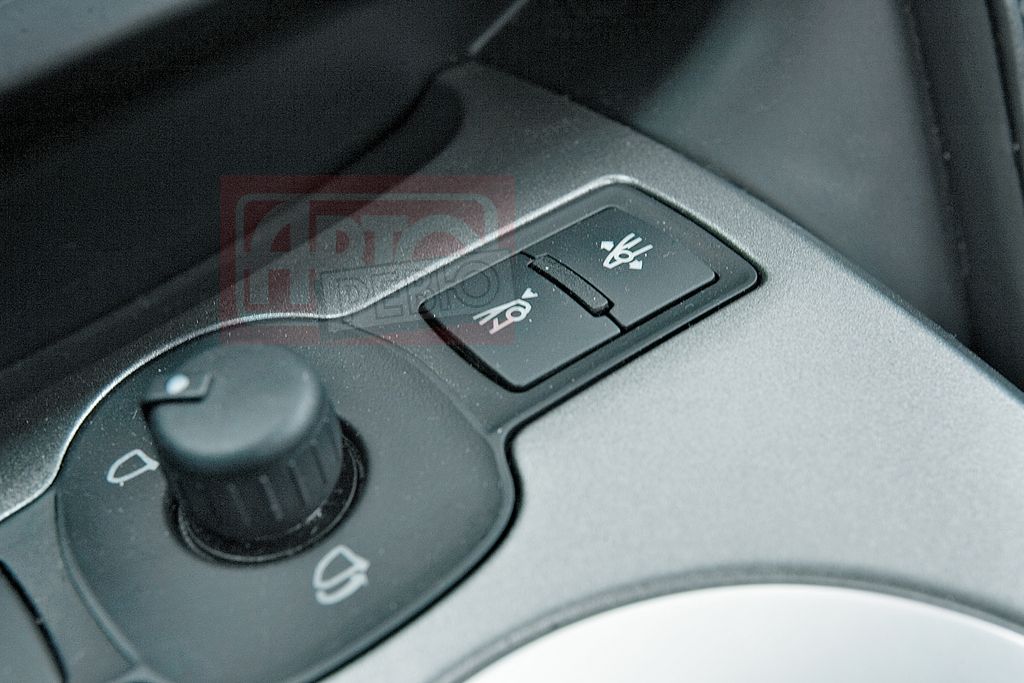 | 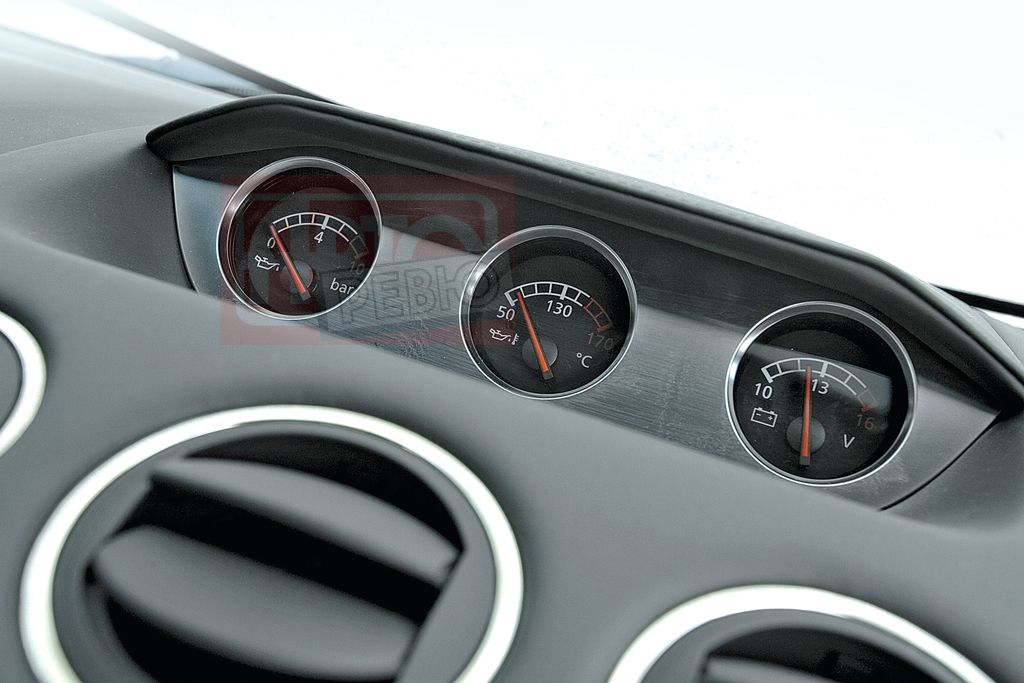 |
| Next to the mirror adjustment knob is a button that allows you to raise the front end by 45 mm. We used it when loading onto the tow truck | The "sporty" instruments — oil pressure and temperature gauges, along with the electrical system voltage, are placed in the center of the front panel |
In Myachkovo, we invited two young racers who had already participated in our tests — multiple Russian karting champion Kyrylo Ladyhin and Danylo Move, who currently competes in the World Series by Renault. They would each do four laps in each car: the first lap — "acceleration", two "scoring" laps, and the last — "braking" lap. To avoid chases and overtakes, we sent the racers out at half-minute intervals. We placed their impressions separately, and here we'll say that there were no surprises: the best results were achieved in the Audi and Lamborghini.
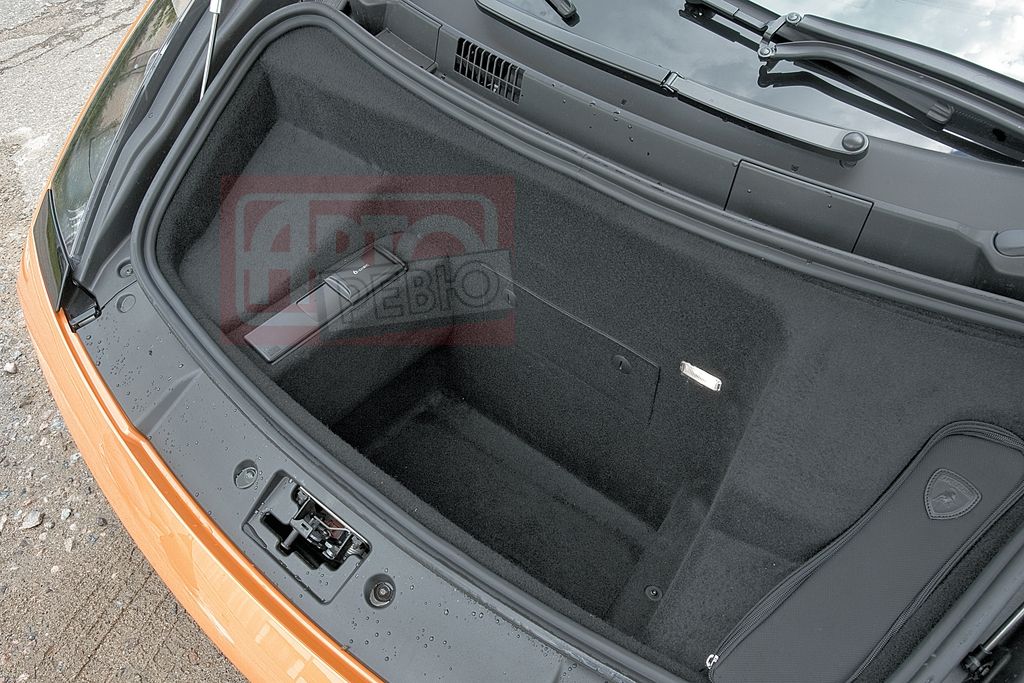 | |
| The Lamborghini's trunk is the smallest. If this opening can be called a trunk | A vivid example of inappropriate economy: you can't make handles out of plastic in such a car! |
| After you look into the trunk, the miniature glove box no longer surprises | Reverse gear is irrelevant for a Lamborghini! And so its activation button is placed on the periphery |
And what did it look like from the outside? Oh, it looked and sounded!
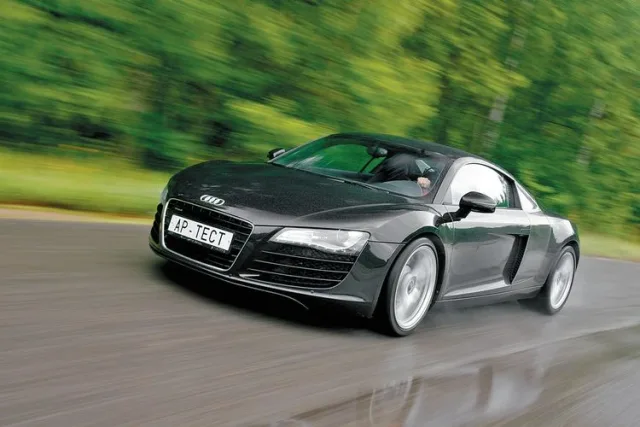
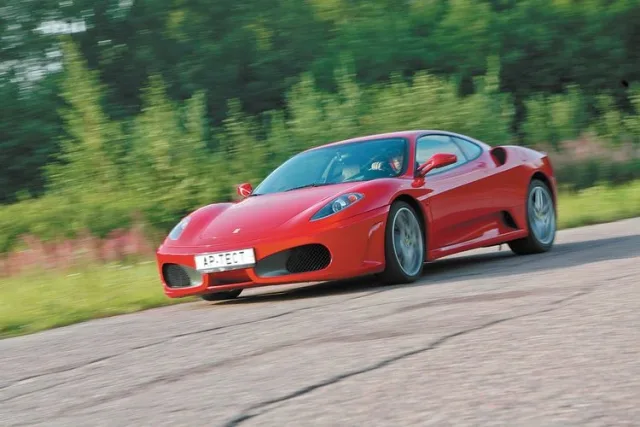
The Jaguar grumbled laboriously, it was working: in eight cylinders, with the help of a supercharger, the Jaguar converted the chemical energy of 98-octane BP Ultimate gasoline into 420 horsepower and forward motion of the aluminum, but heaviest in the test, body. The Audi also worked. The voice of the naturally aspirated V8 also had low, bubbling tones. The power is the same, but less strain. The sound of the Porsche 911's flat-six, enhanced on the S version with a Helmholtz resonator, is higher and livelier: the acoustic ambiance perfectly matched the swift appearance and the smallest "official" weight. The orange Lamborghini also pleased with the harmony of sound and image. It didn't squeal, didn't growl, didn't groan, and didn't moan. It screamed. With a dry, angular, like the car itself, roar of the 520-horsepower V10. Very impressive. And the Ferrari F430... You look at the red Ferrari gliding over the wet asphalt, hear the jubilant, triumphantly ringing voice — and a puppy-like delight seizes you. Viva, Ferrari! Viva, V8! Here it is, the untainted by unification voice of a great breed! Beautiful. The power is 490 hp, but it feels like all 600...
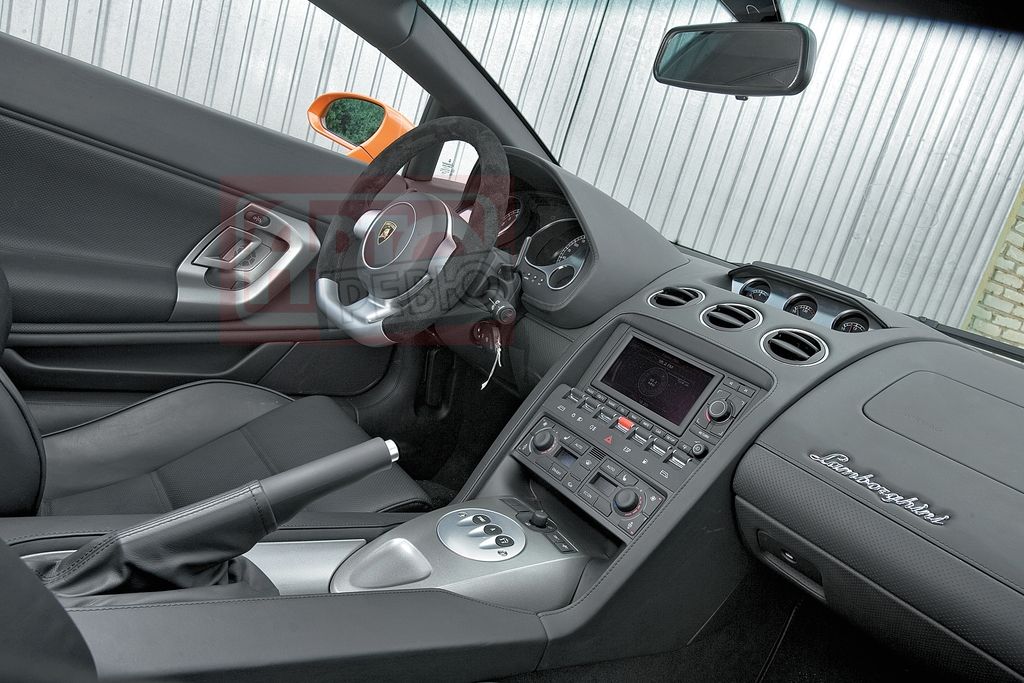 | 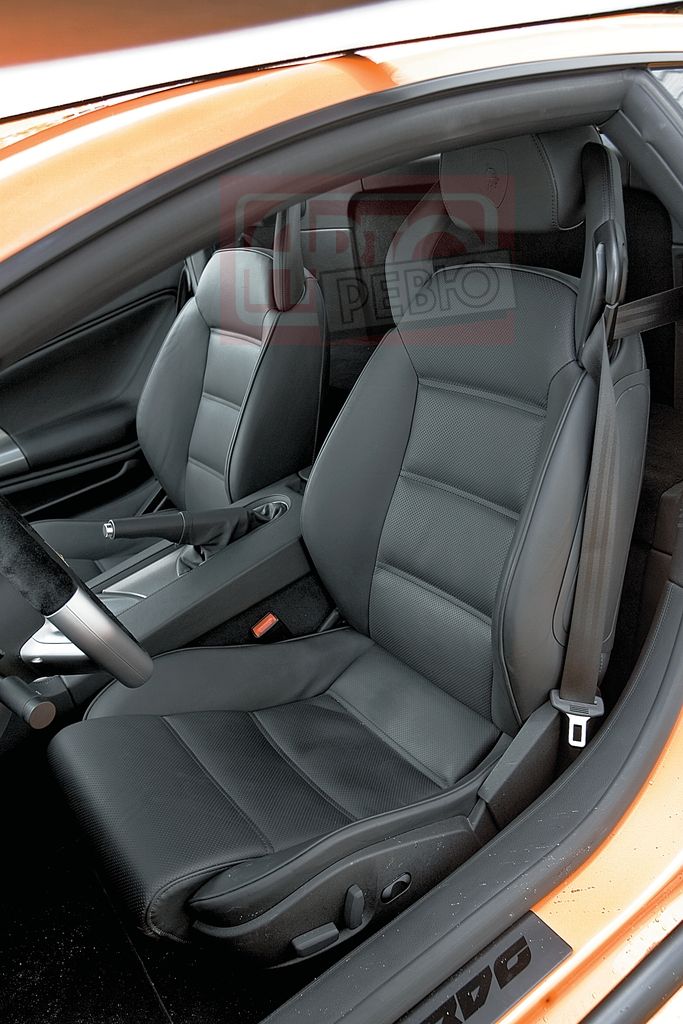 | 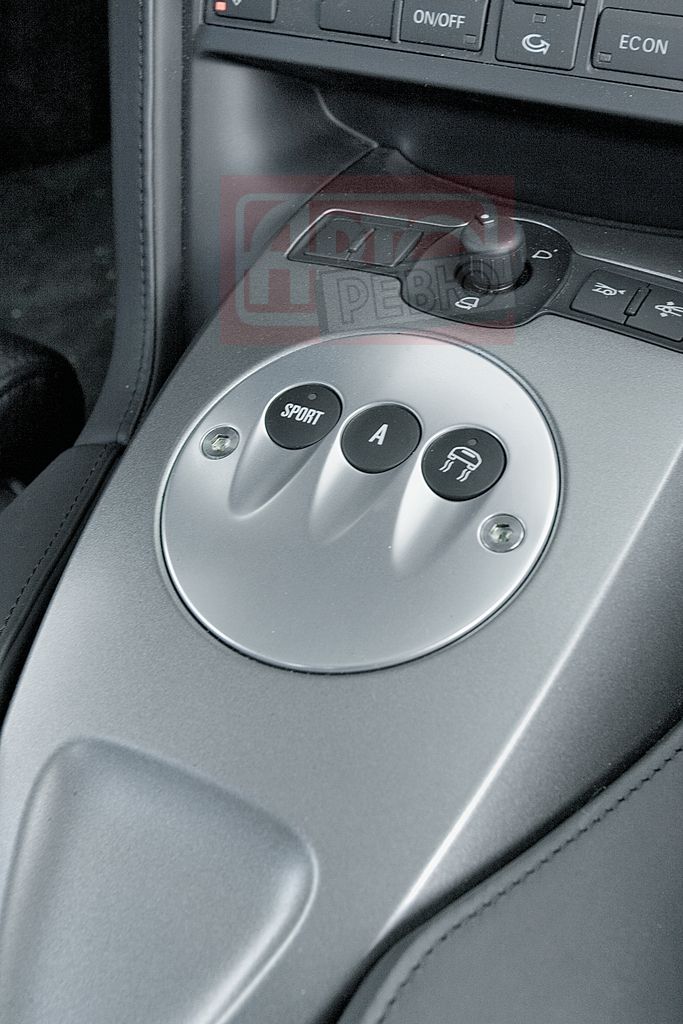 |
| The Lamborghini's interior is good in every way, if not for the strange, for a car costing 222 thousand euros, combination of luxurious leather and simple plastic. The apogee of this dissonance is the steering wheel: its chord-cut part is "wrapped" in slippery gray plastic, while the main part of the rim is upholstered in luxurious "friction" suede | The seats are hard, but the pliable top layer helps avoid "peak" loads on the body | These buttons set the transmission modes, and in the base version, there's a gear lever here |
The runs, the rain, and the track rental time ended simultaneously. Again, we load the Lambo onto the tow truck, shake hands with the racers — and head to the proving ground, hoping for mercy from the heavens: just no rain! It's only a joke that if Moscow is the heart of the Motherland, then Dmitrov is its bladder. But in every joke...
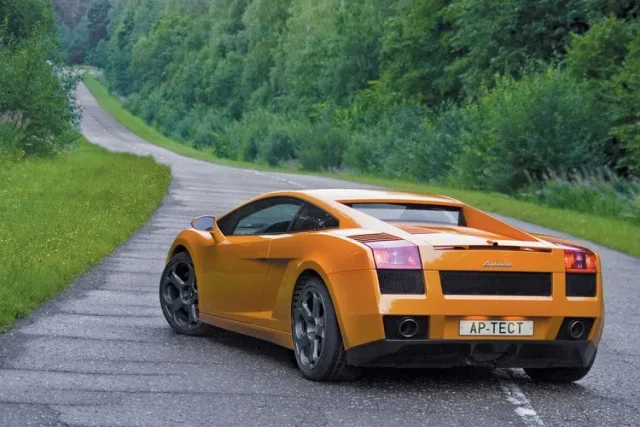
The rain either poured or stopped, which dragged out the measurements on the dynamometer road for two days. Fortunately, the testers had plenty of other things to do. For example, the cars had to be weighed, which our instrumentation specialist Andrii Mokhov took care of. An interesting detail! Three cars — Audi, Lamborghini, and Jaguar — have "progressive" aluminum bodies, while two, Porsche and Ferrari, have "conservative" steel ones. And which are lighter? Porsche and Ferrari — 1490 and 1579 kg respectively! And the heaviest is the Jaguar, 1775 kg.
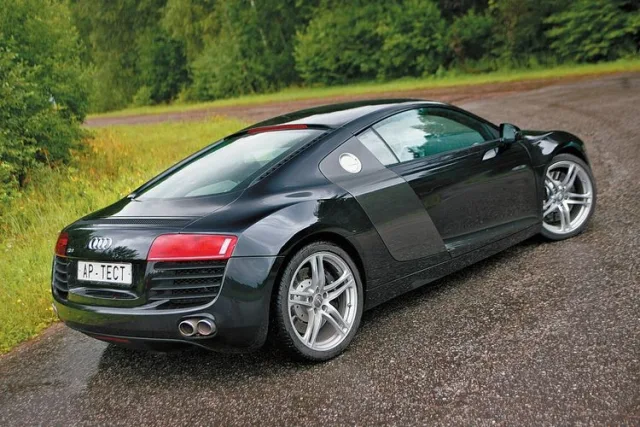
Now, knowing the true weight, we can anticipate the outcome in the sprint to 100 km/h. Dividing the power by the mass (not the one in the "specs", but the one in Mokhov's protocol!), we get the value of the so-called power-to-weight ratio. And we bet on the Lambo: 316.5 hp per ton. Then in descending order: Ferrari F430 (310.3), Audi R8 (253.8), Porsche 911 S (238.3), and Jaguar XKR (236.6). Will the forecasts match the measurement results?
 |  |
| We've seen this somewhere before... Those who drove any other Volkswagen Group car before the Audi R8 won't have to get used to it | The glove box is interesting not so much for its functionality as for its "button" opening mechanism. The passenger will gasp! |
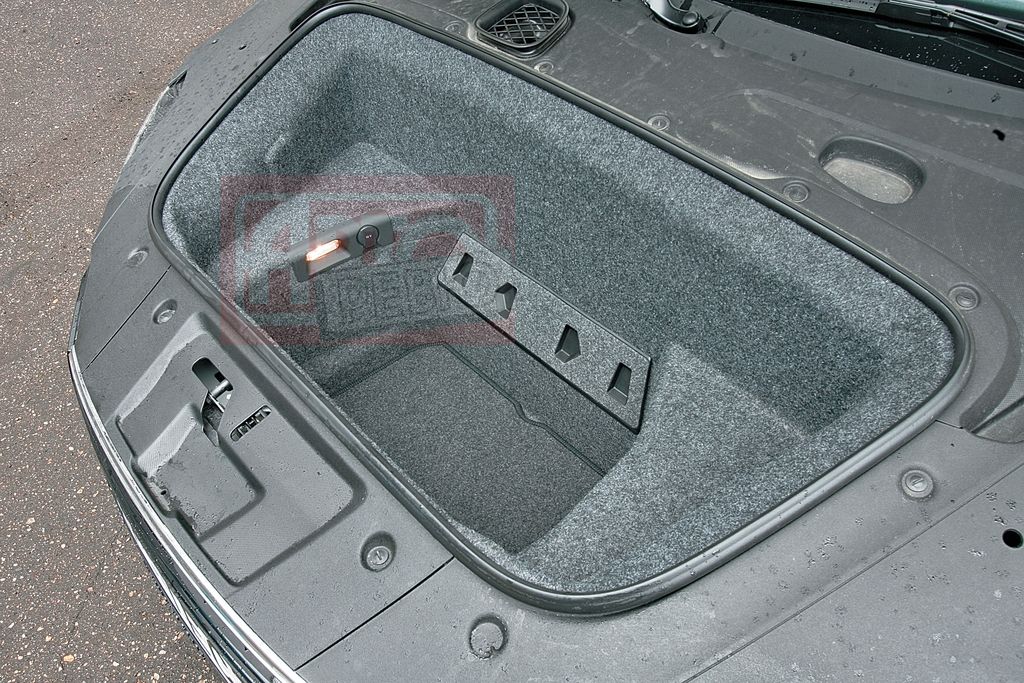 | 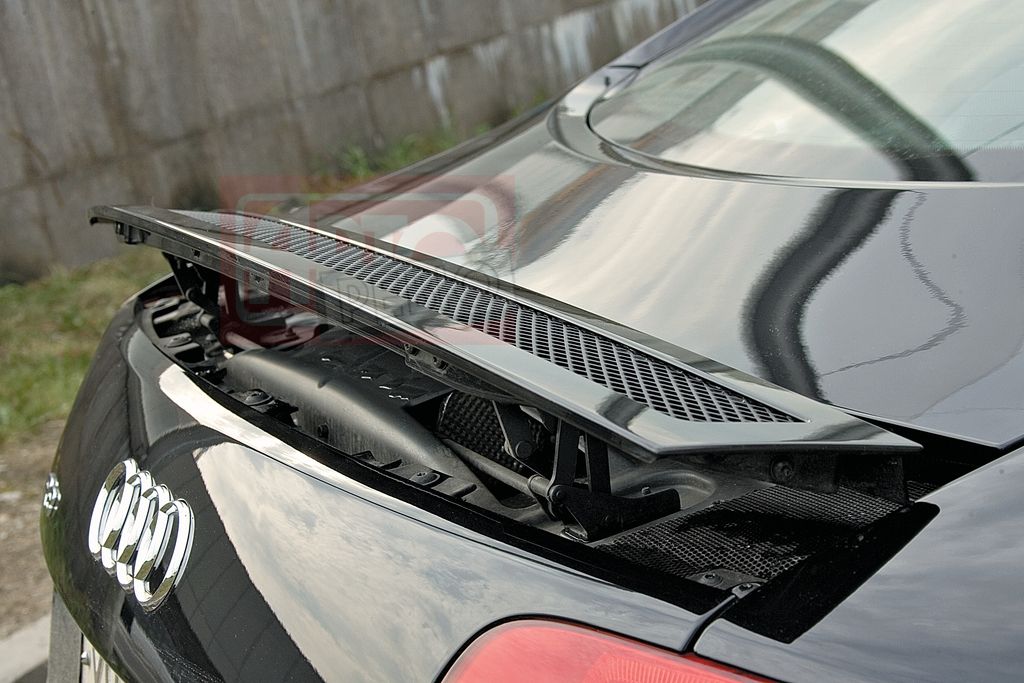 |
| Not every "airplane" suitcase will fit here, but compared to the Lamborghini, this is already a trunk! | In addition to the Audi R8, "active" aerodynamic elements are also present on the Lamborghini Gallardo and Porsche 911 |
The sun came out, and work went into full swing. Uncle Vanya, together with Andrei Mokhov, headed off in a Ferrari to the dynamometer road — while they fiddle with the instruments there, the asphalt might just dry out. Yaroslav Tsyplenkov, meanwhile, was marking out cones on the special road section for the moose test. As for us, Alexander Divakov and I got the 'free' cars and all the test track routes. The plan is simple: rattle over the Belgian paving, brake on the 'mixed surface', scrub the tires on the mountain road, squeeze everything out on the 'dyno', then swap and repeat.
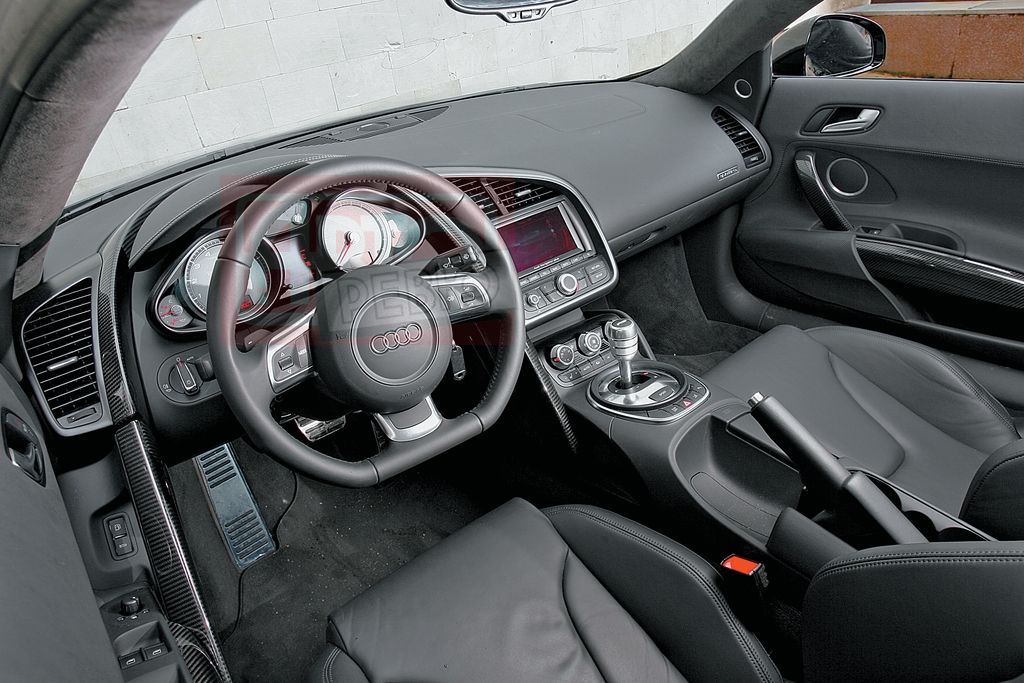 | 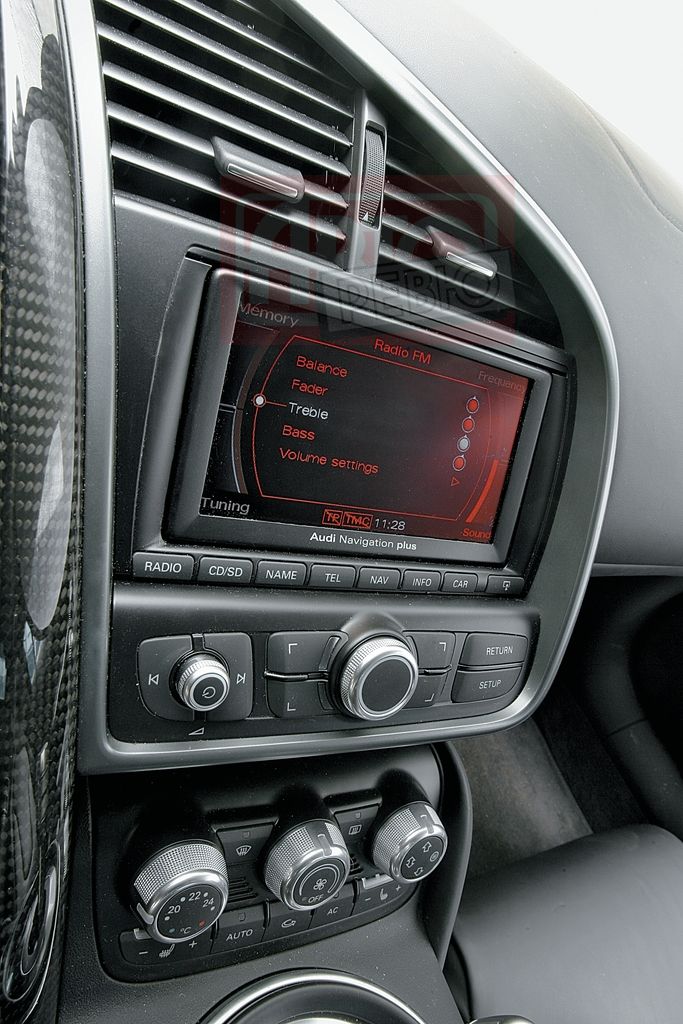 | 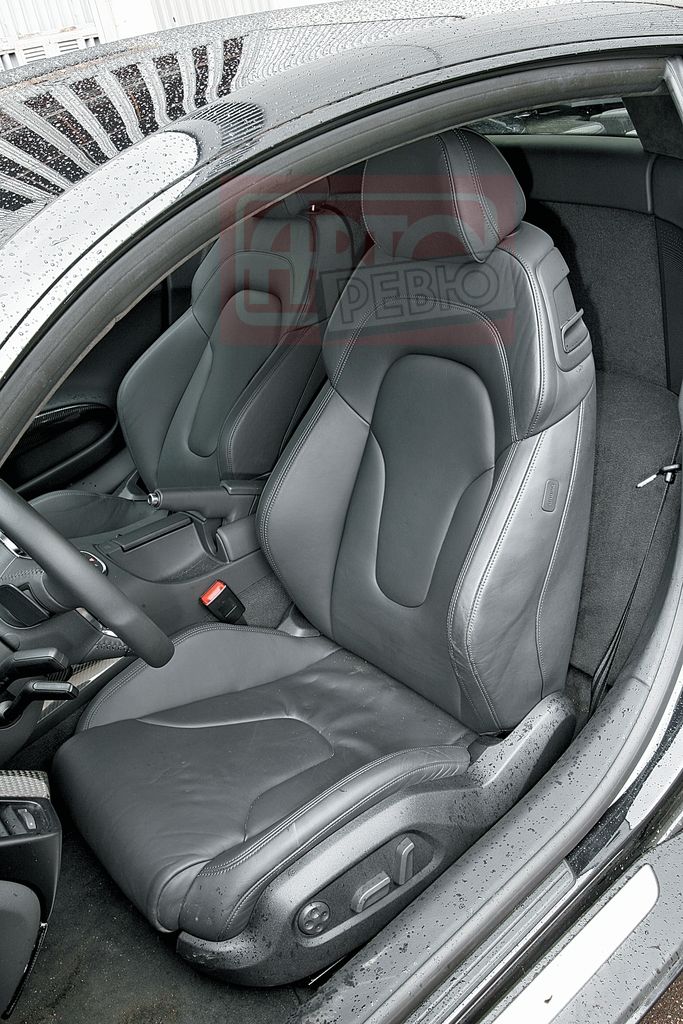 |
| Ergonomics are not bad, but for a car aiming at serious sports cars, the interior turned out too glamorous and flashy | The large multimedia screen — and perhaps the most convenient interface | The seats are a bit softer than in the Lamborghini, but 'sportiness' is in full order here too |
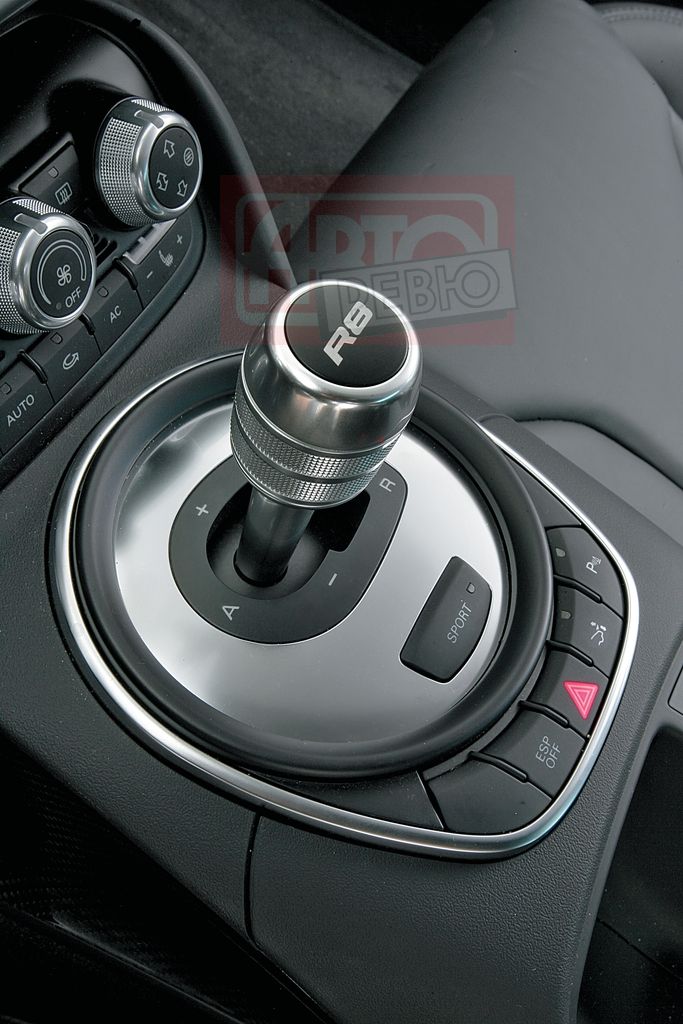 | 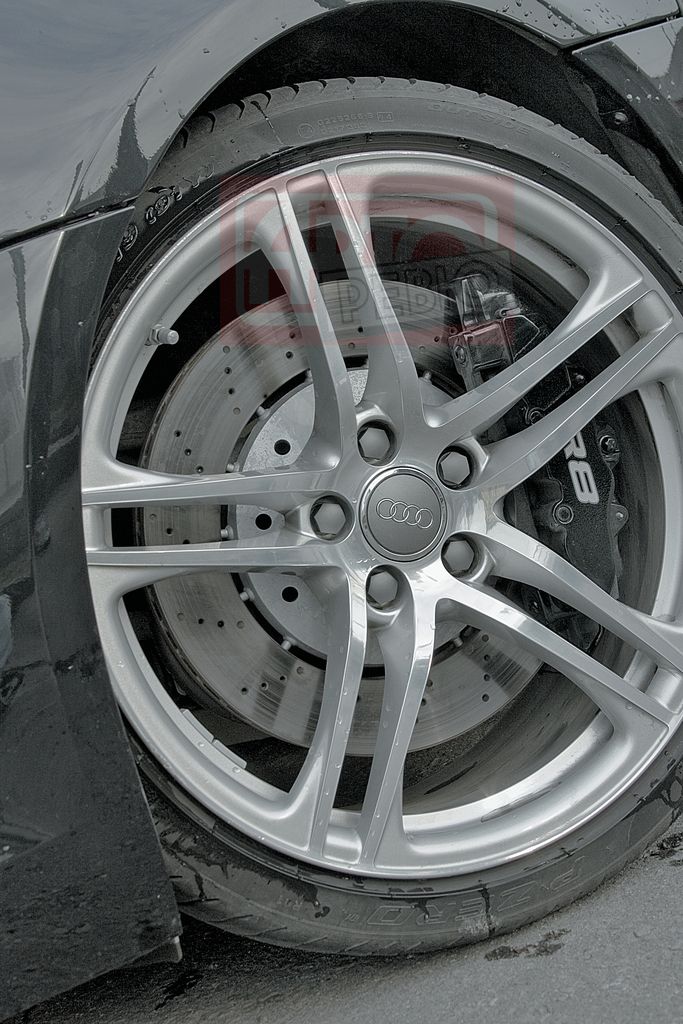 | 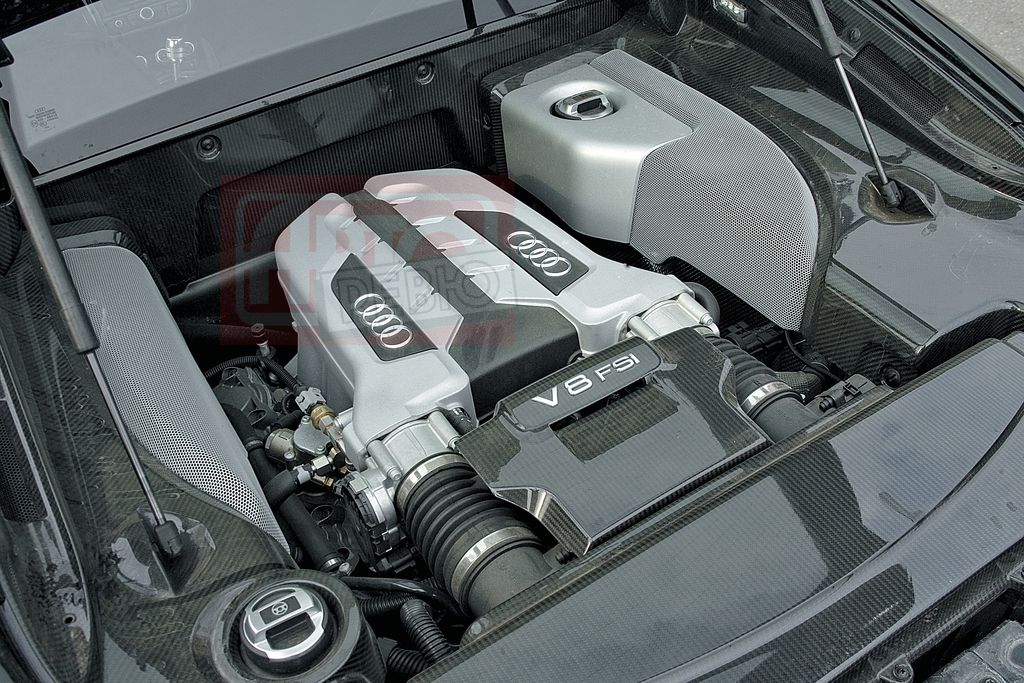 |
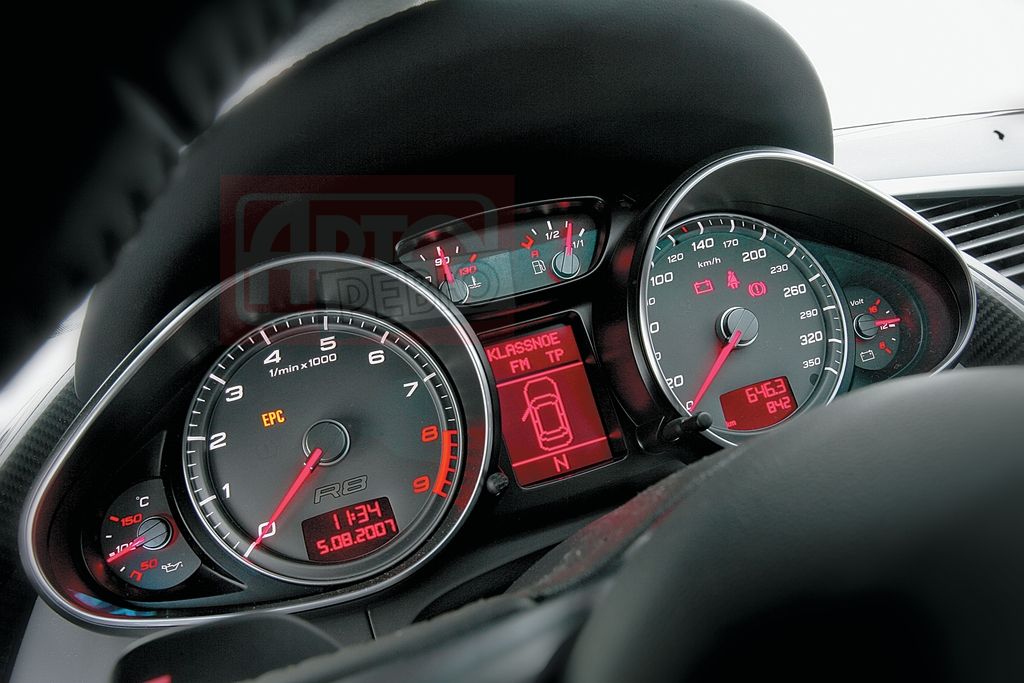
| One complaint about the robotic gearbox control: it would be more logical to engage a lower gear by moving the lever forward, not backward, as is done in Audi | Our Audi had standard brakes, but ceramic composite discs will soon be available (they can also be ordered for the Ferrari) | This engine is also found in other Audi models, but the version for the R8 features a 'dry sump' lubrication system that prevents oil starvation under severe loads |
First, we took on the Lamborghini. The seat is a bit hard, with pronounced lateral support, but the soft top layer adapts well to the body. To get at least some sense of the dimensions (right behind the lower edge of the huge windshield — immediately asphalt), you raise the seat, but the steering wheel won't go higher — the adjustment range is too small. Fine, we'll sit lower, and lower the center of mass at the same time. The steering wheel continues to surprise. The fact that it's flattened at the bottom is good — knees don't catch. But the flat section is covered not with Alcantara like the rest, but with cheap slippery plastic — that's a minus. The only consolation is that with such a steering ratio (less than three turns lock-to-lock), you won't have to 're-grip' the wheel often. The tiny, uncomfortable footrest for the left foot also puzzled me. Seriously?
The engine starts with a button, and transmission modes are also selected with buttons. Let me remind you: in the base Gallardo (like the Audi R8 and Ferrari F430) there's a regular six-speed manual, but ours has a robot for an extra charge. There's no clutch pedal, no gear lever either, but there are paddle shifters: left — down, right — up, and neutral engages if you pull both at once.
At idle, the engine growls promisingly, but there's almost no vibration. Foot on the brake, right hand pulls the paddle, the display shows first gear, I move my foot to the gas, release the handbrake, add throttle… and the Lamborghini stands still. I check the handbrake — it's released. More gas… And then the Lambo lunges, jumps! Sharply, impudently. Damn 'robots'! If they can't even set them up properly for a Lamborghini, then what complaints can we have about Opels!
The rocket-like acceleration lasted a second. The tachometer needle flew to 8000 rpm — and then everything stopped: the car just coasted, and my head jerked forward from the surprise. Maybe the automatic accidentally disengaged? And then it repeated: another push in the back, and off it went again… We didn't measure how many fractions of a second the thrust disappeared, but at first it seemed like betrayal. And so on every gear — third, fourth…
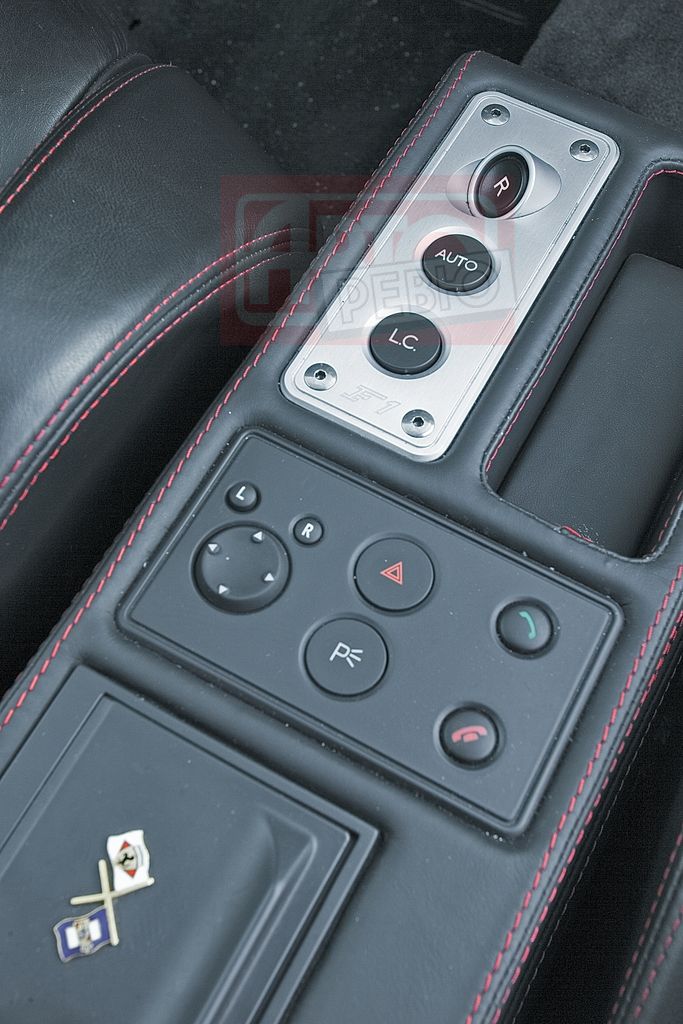 | ||
| The Ferrari's metal paddles look serious, and the 'robot's' responses are the fastest | The lever on the steering wheel sets transmission modes ('snow', 'slippery', 'sport', and 'race') and disables the stability system. 'Sport' is considered the everyday mode… And on the center console — buttons for reverse, automatic mode, and Launch Control for a quick start | |
Maybe shift manually? That's even better: at least you know when the acceleration will disappear and can brace yourself against the wheel. But it's still annoying — especially against the backdrop of responses to the stiff but perfectly tuned gas pedal: it seems the engine's reactions outpace not only the movement of your foot, but even the very thought of acceleration! There's also a Sport mode where shifts are only via paddles. True, at the limit of 8000 rpm the gear will engage itself, but if you press the gas at low revs, there won't be a downshift. Foolproofing. Stability can only be turned off in Sport. Logical.
We drive hard, noisy, and bumpy. At first you only hear the engine, then, as speed increases, the engine and tires, and after 170 km/h — also the wind howling in the wipers. The steering is deliberately heavy, to the detriment of feedback. But the 'feel of the car' is still excessive. Reactions are precise, sharp, instantaneous. And after 200 km/h the connection weakens: the Lambo starts to dance, scaring with half-meter drifts left and right. You grip the wheel, and you no longer think about maneuvers — just hold the straight! The speedometer shows 320 km/h. God, don't let us take off on another bump, and there are almost all of them on the 'dyno', as it turned out! God save the aerodynamicists! And the brake specialists too.
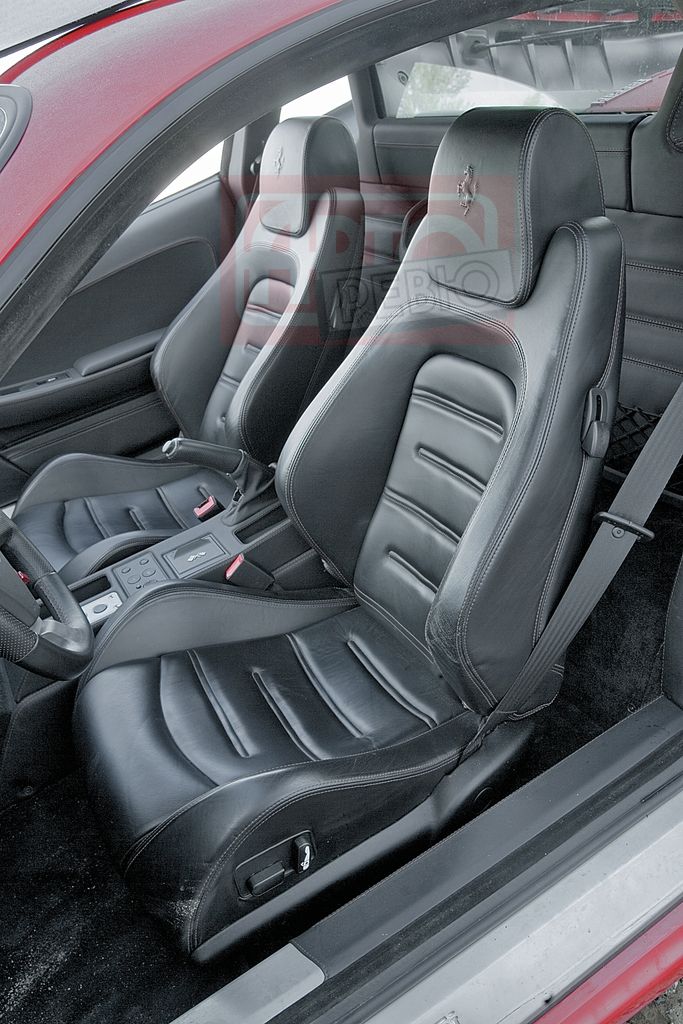 | 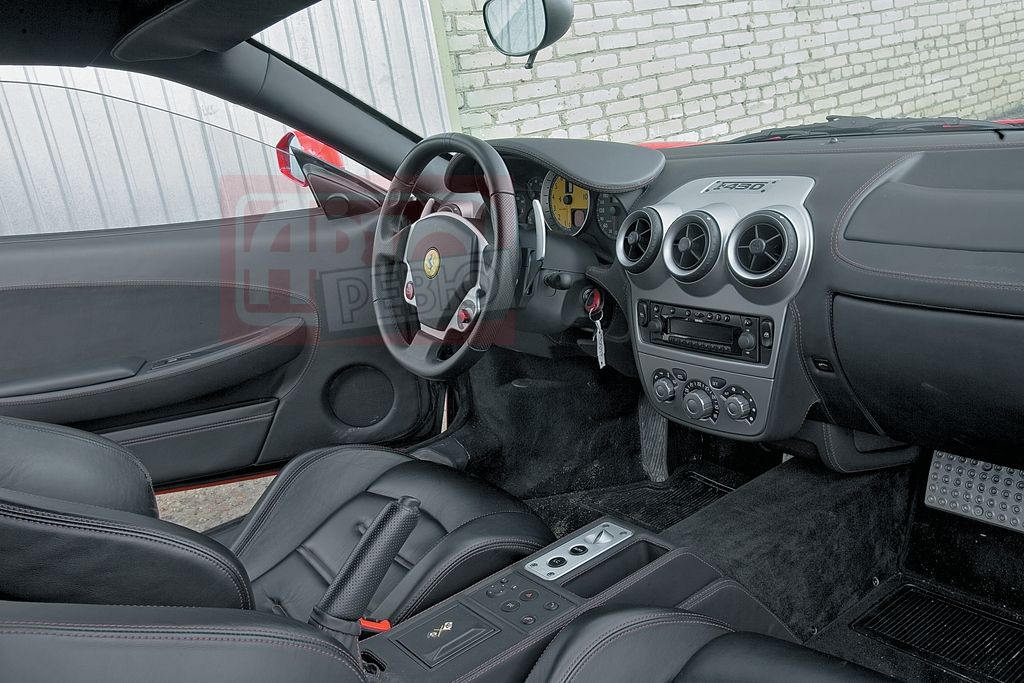 |
| The Ferrari seats are contoured, but the slippery leather doesn't hold the body well | The interior's refinement — large stitches of red thread. But the stereo panel, even with the Ferrari inscription, seems bought at a radio market. Look at the steering wheel: it's slightly 'square' — flattened at the top and bottom |
We didn't take off. The brakes are brilliant, except for the blurred transition of the pedal from free play to working.
In honor of the next milestone of 300 km/h, everyone took the turnaround loop of the 'dyno' with a slide: here the all-wheel-drive Lambo is irresistible! Yesterday the racers talked about it, today we talk too, having already driven the mountain road.
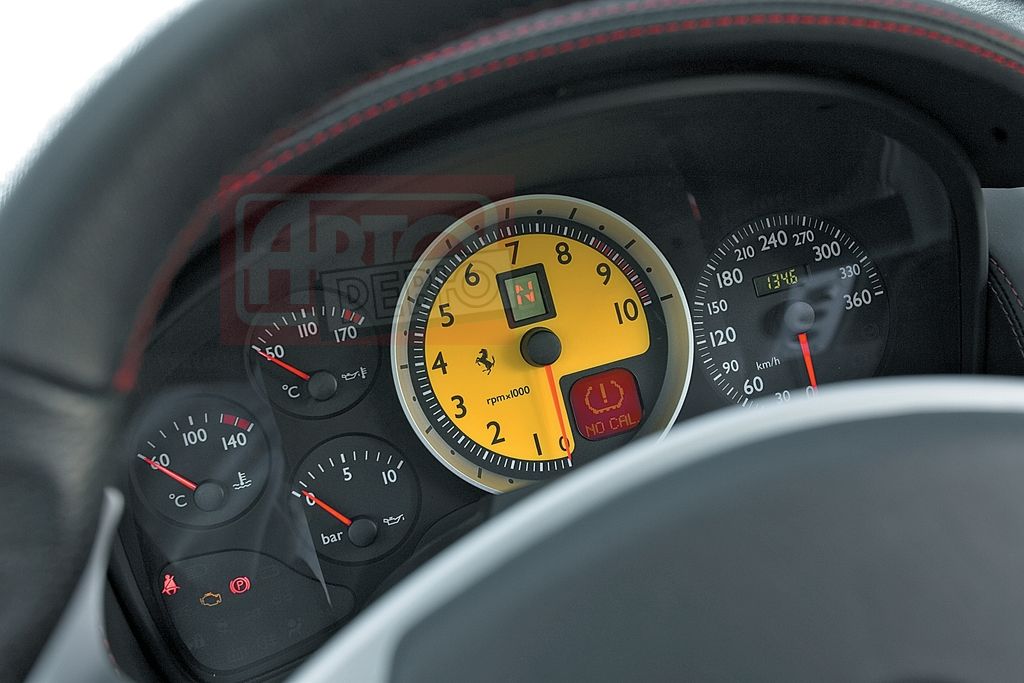 | |
| The importance of the tachometer is emphasized both by its central position on the dashboard and the yellow scale. And not in vain: only the Ferrari engine revs up to 8500 rpm! | The start button on the steering wheel is a somewhat contrived solution, because you still need to insert the key into the ignition, and you can start the engine with it too |
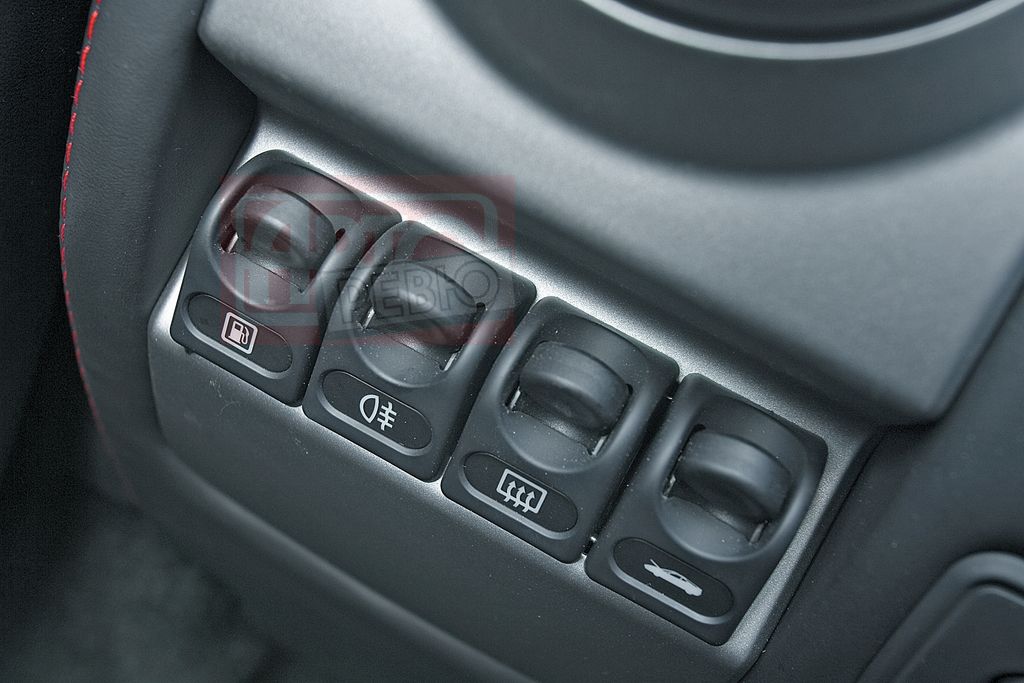 | 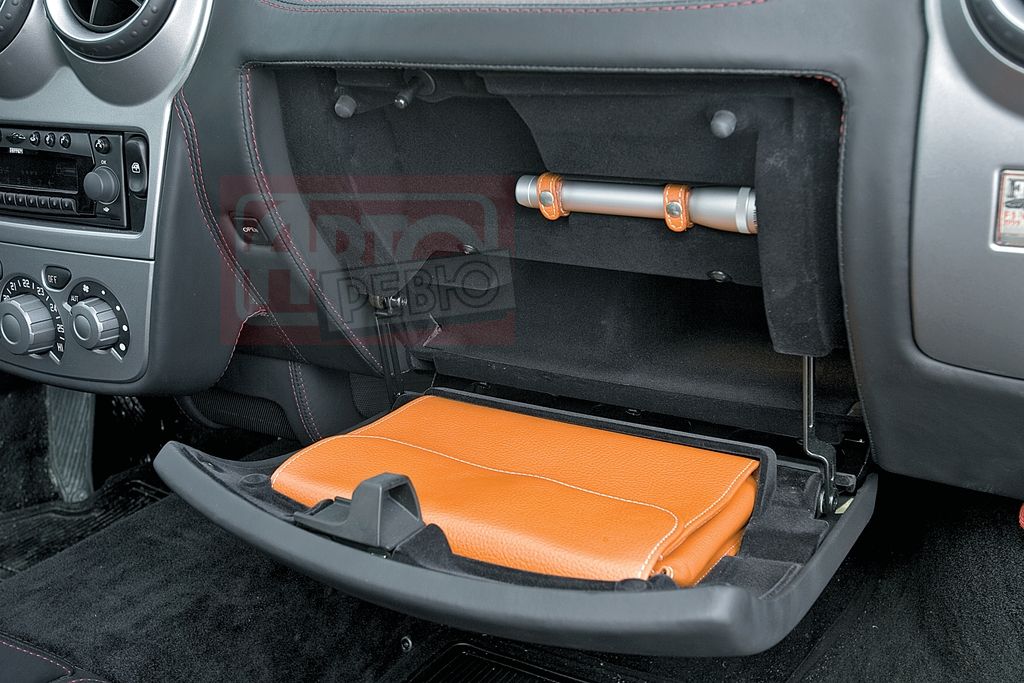 |
| The secondary function keys are more stylish than convenient. And it's not always clear whether the function is on | The large glovebox lid deceives expectations: behind it is a tiny compartment |
The car takes the desired arc instantly. Then, playing with the throttle, you can drift through the entire corner. Slides develop smoothly, are controlled almost intuitively, and the restoration of stability is smooth, without jolts. And if you misjudge the throttle and the slide threatens to become a spin, even the previously disabled stability system will wake up and help. The main thing is to have time to point the heavy steering wheel in the right direction. Sporty, exciting, and reliable. Magnificent!
 |
| The associations with 'Formula 1' turned out to be stronger than we expected: about the same way a couple of months ago the author pulled away at the Paul Ricard track when he tried himself behind the wheel of a race car (see AR No. 11, 2007). On the F430, first gear only started to engage after we had accelerated a bit… After that, everything fell into place |
By the way, while we were gripping the Lambo's wheel on the dynamometer, a Ferrari flew by with its lights on: the road had already dried, so measurements could be taken. That means Tsyplenkov will now take on the 'lane change'. We hand him the Lamborghini, and we ourselves get into the Audi R8.
Now the Audi R8 looks right: black, and only black! All those plastic gills, Kevlar inserts, and other decor no longer seem like cheap trinkets. Thumbs up! But even in black, the Audi hasn't lost its striking resemblance to the Gallardo. Not surprising: the Audi is based on the same all-wheel-drive platform with a viscous coupling on the front axle, albeit stretched by nine centimeters. And when you start the engine, when you put the robotic gearbox lever into automatic mode and vainly try to pull away without jerks... It's a spitting image of the Gallardo! But so glamorous, so "civilian," with extremism trimmed by about 20 percent. There, ten cylinders — here, eight; there, 520 horsepower — here, 420; there, the steering wheel makes 2.75 turns — here, 3.25. And so it goes, point by point. Twin brothers. No, brother and sister. The Audi is more comfortable and more refined. And the "robot" seems to have been improved: the clutch engages more smoothly, and shifts are a bit quicker.
On the high-speed straight, the Audi doesn't bounce, the steering wheel doesn't shimmy, but the handling character in fast corners is almost the same as the Lambo's. The result — delight again. Minus twenty percent. But the driver's seat is better.
Ferrari. The brakes haven't cooled down after the dyno exercises, and the engine radiates heat. Everything here is red and black, including the interior. You look at it, and a smile spreads across your face on its own. You've got to live with skill, you've got to live playfully... Your gait becomes leisurely, your speech measured, your gaze veiled with indifference. But instant happiness didn't happen.
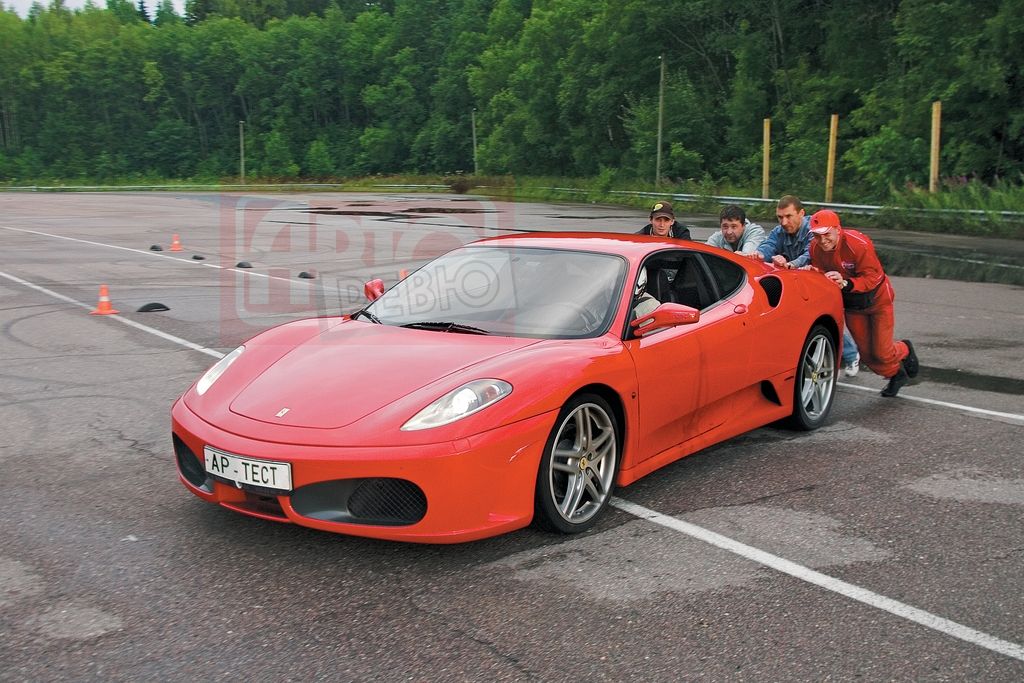
If you want, start the engine with a button; if you want, with a key. We pressed the button. R-r-roar! People turned around, birds scattered, and the body trembled with a fine vibration. Controlling the "robot" is almost like in the Lamborghini: buttons between the seats, paddles behind the steering wheel. Right paddle toward you, a bit of gas... Already taught by experience with the Lamborghini and Audi, I brace for the launch and grip the slightly "square" steering wheel. A little more... But instead of a furious start, the Ferrari just beeped. It turned out the horn buttons are right on the rim, under your thumbs. The car itself had no intention of moving, as indicated by the red letter N replacing the number one on the display. Right paddle again, number one again, gas again — and N again. I turn the little lever on the steering wheel, changing transmission modes: Snow, Sport, Race... No use. We call Uncle Vanya: maybe we're doing something wrong? No, he says, everything's right. And he advises letting the car cool down — maybe its brains will come to their senses. A true Italian car.
Worth the wait! It turns out the "robot" can work quite differently than in the Lambo and Audi! Of course, provided it works at all. Shifts — both in automatic and "manual" modes — are smoother and more responsive.
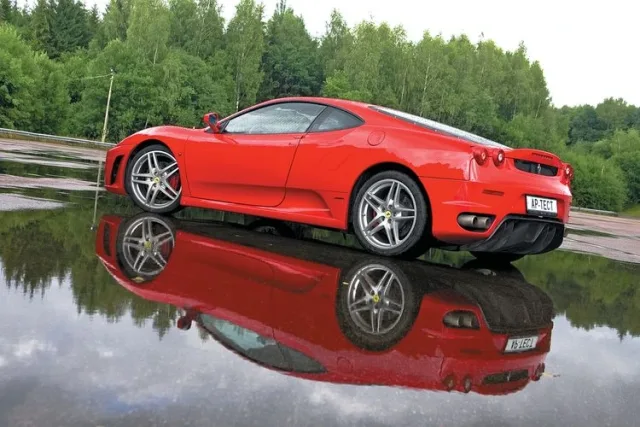
A furious, wheel-spinning start, 8,000 rpm, second gear, wheel spin again, third — and at about two hundred km/h we're flying toward the mountain road. The feeling of mind-blowing dynamics is amplified by the engine sound, rattling panels, and the light accelerator pedal.
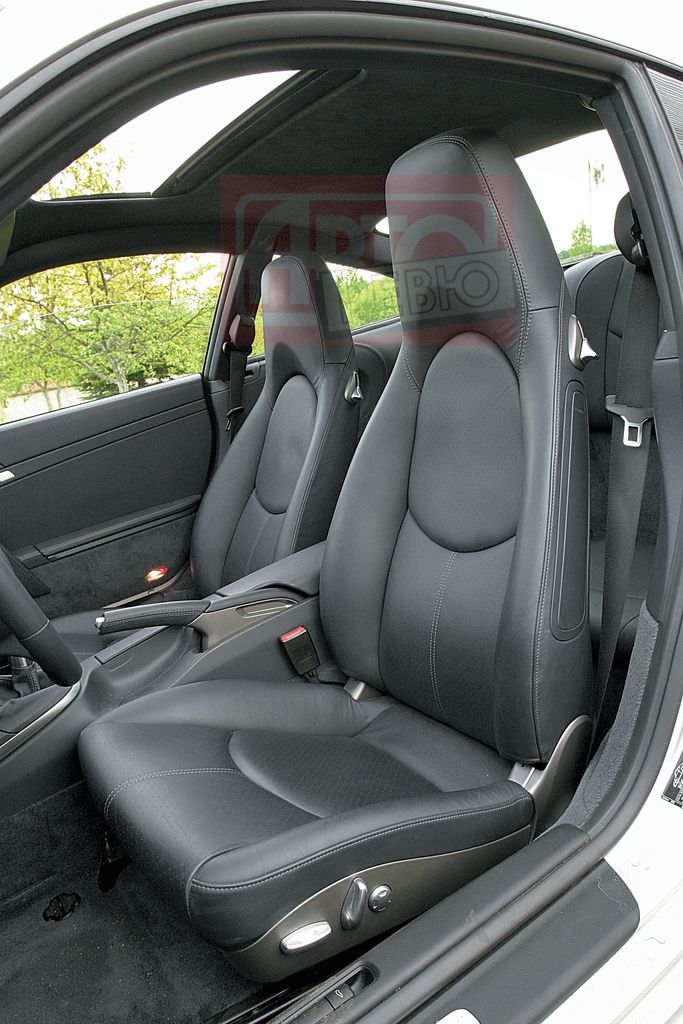 | 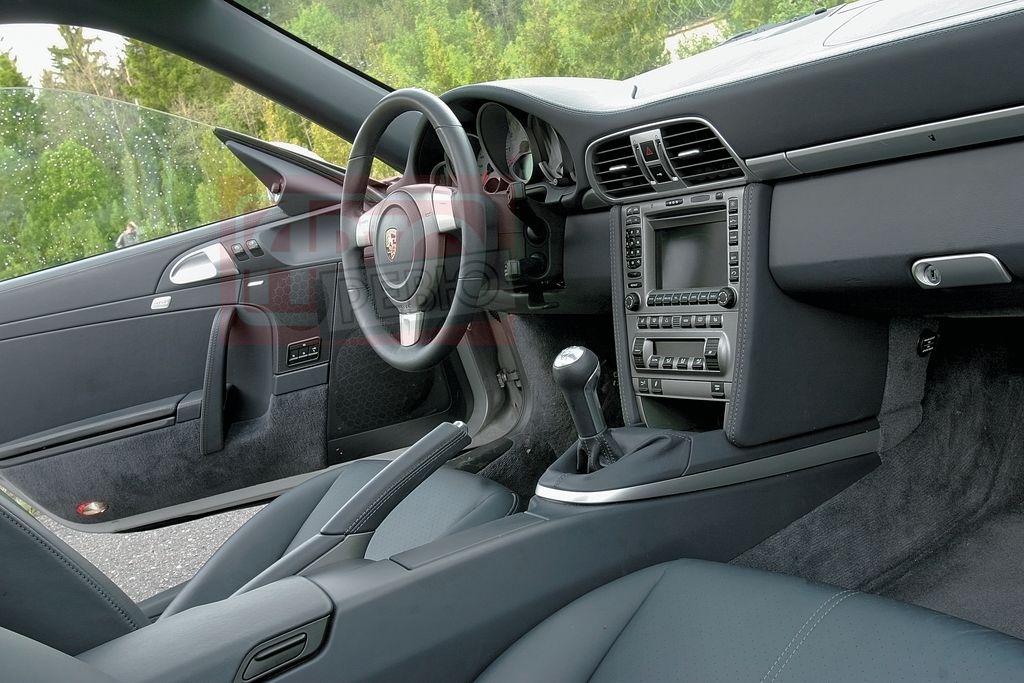 | |
| Outwardly, Porsche seats don't look sporty, but no one complained about a lack of "connection with the car" | You can endure a short trip in the rear seats of the Porsche | The Porsche interior is laconic, expensive, and functional. Impeccable selection of materials in quality, texture, and color |
Now I need to rein it in and remember that here it's not all-wheel drive but rear-wheel drive only, albeit with an E-Diff differential — with an electronically controlled lock. Ha-ha, you'll forget! In the first corner of the mountain road, the Ferrari steps sideways. But catching the slide with a light steering input restores confidence: reactions are no less precise than the Lamborghini's, and lighter efforts on all controls turn极限 driving from work into fun. Viva, Ferrari! How was it you're supposed to live? Playfully! But still with skill. And the fact that breakaways into slides (be it oversteer, understeer, or wheelspin from power) happen at unexpectedly low g-forces, we'll chalk up to worn Bridgestone tires. We don't rule out that the smart differential lock is also acting up. Stability control? Oh, in the context of Ferrari, it's tuned superbly! First, you get a scare from the slide, and then it comes to the rescue. It's a blast.
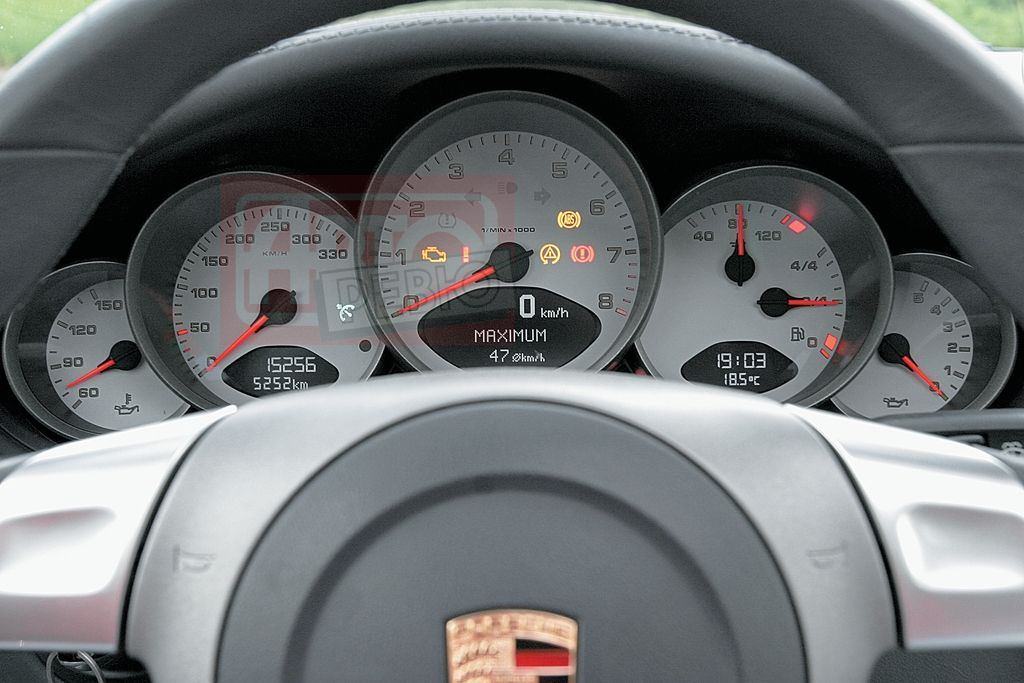 |
| The analog tachometer combined with a digital speedometer is a very successful solution. But the speedometer with a needle on the left is useless. Especially since part of its scale is covered by your left hand |
And on the high-speed section? No worse than the Lamborghini with its heavy steering! Fewer jumps, weaker impacts on the steering wheel, and even at speeds over 300 km/h, you can dare to make smooth lane changes. True, the already light steering wheel goes completely numb near the center.
Noisy? You bet! But would we reproach the Ferrari engine for its ringing, wound-up tenor? No, we'll reproach the Ferrari for the tires trying to drown out that song on rough asphalt. Aerodynamic noise appears after 120 km/h, and in a somewhat erratic way: bursts of whistle and hum. Ride comfort is predictably nonexistent, and yet in other cars' cabins, road "small stuff" is felt less.
But you want to forgive this passionate car its flaws! Is the fuel gauge lying? No problem: we know that five minutes ago the tank was filled to the brim! Is the tire pressure monitoring system warning light flashing on the display? Nonsense: Uncle Vanya just checked the pressure. Something knocking and creaking in the cabin? Oh, leave your spiteful nitpicking: a good knock will show itself. And if it does, we'll call another tow truck — we won't go broke. A Car-Sun. You've got to live playfully...
Stunned, we climb out of the Ferrari.
By the way, we did call a tow truck: even on a cooled-down car, first gear soon began to engage only if colleagues pushed the car to 10 km/h.
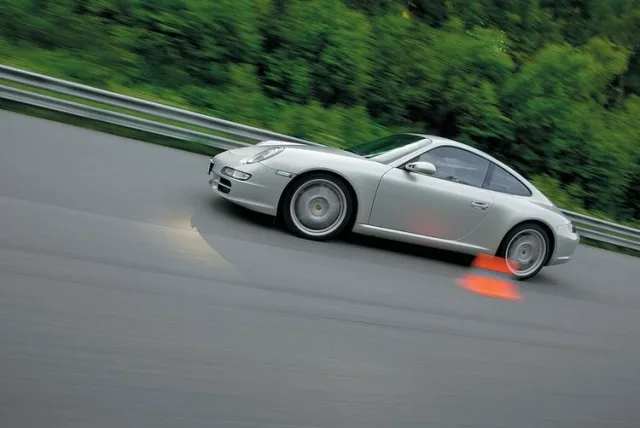
The Porsche has no less sensuality and elegance. But there's a chill in the air. A northern sea of dignity. Ergonomics, despite the seeming austerity of the environment, are nearly flawless. And I recall the words of one of Porsche's top bosses: "We monitor all innovations in the automotive industry, but new devices and systems will be applied to Porsche cars only when we have no doubts about their expediency and reliability." Everything is serious, everything is thorough.
The hoarse, metallic-tinged voice of the flat-six accompanies the assertive acceleration, reaching fortissimo at 7,300 rpm. The Porsche is the only car in the test with conventional gearbox control, and this doesn't put it at a disadvantage next to the "robotic" Lamborghini, Audi, and Ferrari. In fact, it has the most convenient speed control here. You only need to get used to the long-travel and heavy clutch pedal. And the brakes are the best. The ABS too: on the "mixed" surface — not a hint of yaw oscillations, and during full braking, the most adequate responses to steering input are maintained.
"I see you're driving this car more confidently on the mountain road than the others," comments Divakov, sitting next to me, after the first slight slide. "You'll drive more confidently too," I reply. And I'm wrong: on the mountain road, Divakov preferred the Lamborghini. But he insists that in terms of lateral g-forces the Porsche can withstand in corners, it can only be compared to the Lamborghini. But when you cross that limit, you need to be on guard: lifting off the throttle will result in a sharper and deeper slide, requiring instant correction. However, the chassis is tuned so that it's easier and more effective (if not more spectacular) to take a corner not in a slide but with understeer, controlling it with throttle.
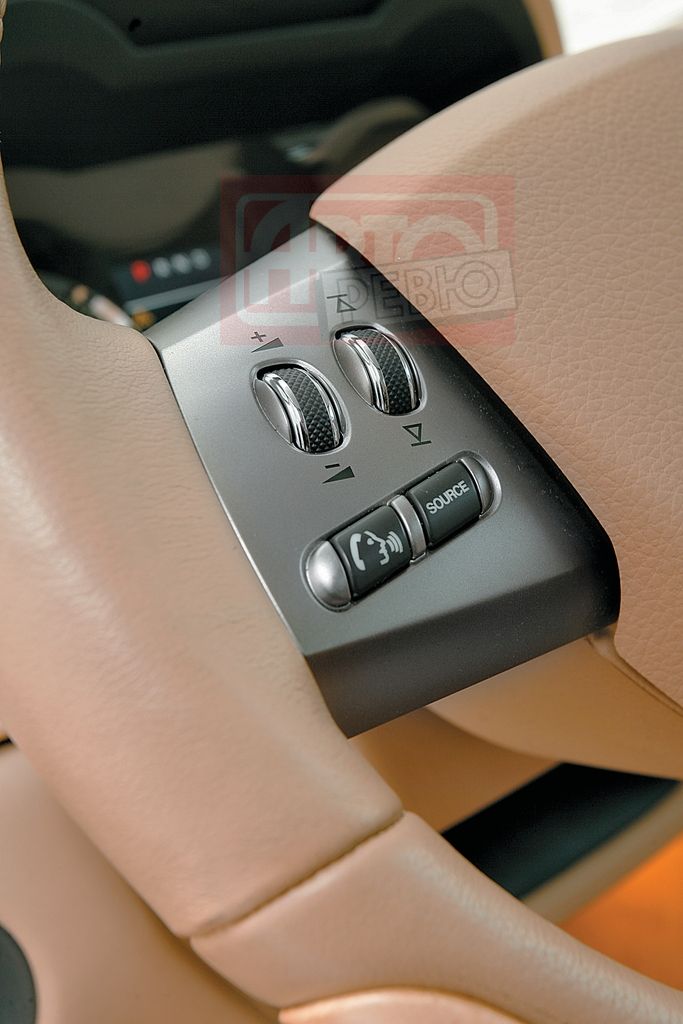 | 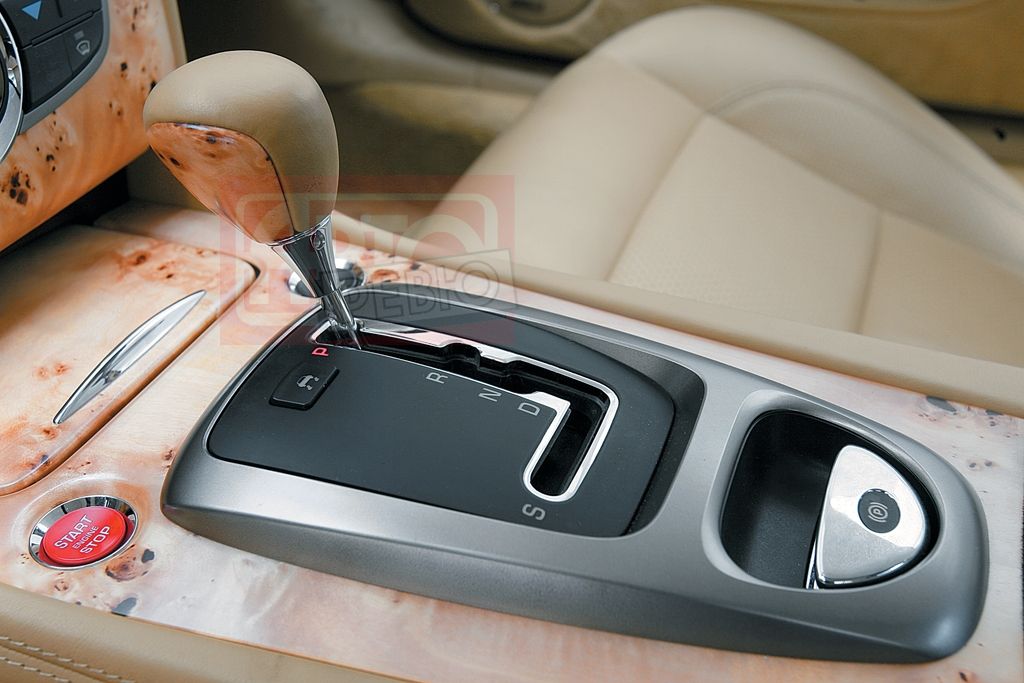 | |
| Every little detail in the Jaguar's cabin is imbued with a love for details. It's flattering and endearing | You can also control the gearbox with paddle shifters, but that's a luxury: the "automatic" does everything brilliantly on its own | Previously, the lever slot was in the shape of a letter J, from the word Jaguar. Now it's a "mirrored" letter L. No, no, Lamborghini has nothing to do with it... |
As soon as the speedometer needle passes 160 km/h, the steering wheel begins to tremble slightly on its own, and the car deviates a bit from the intended path. But you shouldn't be scared of this as you would in the Lamborghini: feedback through the steering wheel remains clear and informative. In terms of ride comfort, the car is only slightly inferior to the Audi, although light secondary oscillations are felt on bumps — a result of the 50,000 kilometers on the odometer.
Acoustic comfort also reminds me of the Lamborghini. At first, only the engine is heard, then tires join in, and then wind. True, if in the Lambo the wind starts making noise only at 170 km/h, here it makes itself known after 140 km/h. When speed exceeds 220 km/h, wind noise drowns out both the engine and tires and the voice of your companion. However, this isn't a problem: at speeds around 300 km/h, passengers usually fall silent on their own. And they turn off the music as unnecessary. So not a word about it.
 <\/a><\/td> <\/a><\/td> |  <\/a><\/td> <\/a><\/td> | <\/td><\/tr> | ||||
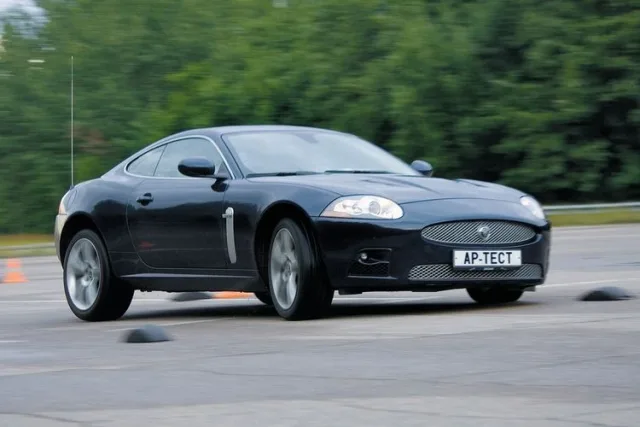
| And who, finding themselves in this luxury, would think of screeching through corners? Only us. But even we quickly came to our senses...<\/td> | It would be a sin to reproach Jaguar's seats for insufficient lateral support. They are exactly what this car needs: not seats, but armchairs<\/td> | You can still squeeze in here, but sitting is only possible if the front occupant is a midget. But then it's better to swap places<\/td><\/tr><\/tbody><\/table> We were told from the very beginning that the Jaguar was an outsider in this company. Like, even with the XKR prefix (and 'R' stands for Race, doesn't it?), it's not a 'pure sports car' but a representative of the Gran Turismo class. Let's say. But where are the boundaries? Ask the people at Ferrari if they classify their cars as Gran Turismo? Of course! And they'll immediately recall many models with the GT index. And recently, it was announced that the Jaguar XKR would compete in the GT3 racing series — alongside our acquaintances — the Lamborghini Gallardo, Ferrari F430, and Porsche 911... Maybe the Jaguar doesn't suit us because of its classic layout — the engine is in the front, while in all others it's behind the driver? But if we had front-engined Dodge Viper or Chevrolet Corvette, we would have included them in the test without hesitation. And we look at the Jaguar — and feel awkward: there is, there is a stretch...<\/p> Maybe the Jaguar doesn't qualify as a pure sports car because of the rear seats? Well, the Porsche has them too. And if you can, with some contortion, get into the Porsche's rear seats and even make it to the nearest taxi stand, then in the Jaguar — only after dismemberment.<\/p>
| The speedometer and tachometer are equal in size, and in the case of the Jaguar, this is quite justified<\/td> |
 <\/a><\/td>
 <\/a><\/td>
But if you're curious about the opinion of the owner of one of the test cars, then...<\/p>
At the same time, I'm ready to debunk a couple of persistent misconceptions.<\/p>
Kirill Ladygin
Ten-time Russian karting champion
Daniil Move
Renault World Series driver
due to heavy rain, the track condition changed significantly from run to run
Moose test

Visibility
Audi R8Ferrari F430Jaguar XKRLamborghini GallardoPorsche 911 Carrera S CarTotal viewing angle, deg.Total "blind" zone angle, deg.Audi R8255.5104.5Ferrari F430258.5101.5Jaguar XKR264.096.0Lamborghini Gallardo230.5129.5Porsche 911 Carrera S256.5103.5
Ivan Shadrichev
Expert from Autoreview who conducted tests on the dynamometer road
What's the price?
The junior Jaguar XK model with a naturally aspirated engine (300 hp) starts at 101,430 euros.
Warranty — 2 years without mileage limit. Audi dealer network — 34 companies in 25 Russian cities.
The lightweight Gallardo Superleggera version will cost 265 thousand euros.
What else?
Aston Martin V8 VantageMaserati GranTurismoMercedes-Benz SL 500 BMW M6Dodge Viper SRT-10 Speedometer accuracyCarsSpeedometer readings, km/h406080100120140160180200220240True speed, km/hAudi R841597696115135154170190210229Ferrari F43041608097117137155173192212232Jaguar XKR37577695115134153172191211231Lamborghini Gallardo36567492112128145165184203220Porsche 911 Carrera S37577797117137157175194214234Some results of Autoreview measurementsParametersCarsAudi R8Ferrari F430Jaguar XKRLamborghini GallardoPorsche 911 Carrera SMax speed, km/h281.1309.2256.4302.5286.7Acceleration time, s0—50 km/h 1.72.42.12.61.60—100 km/h4.85.05.04.54.70—150 km/h9.49.010.19.19.40—200 km/h17.015.017.815.616.40—250 km/h31.925.936.527.730.6over 400 m13.013.013.412.912.9over 1000 m23.623.024.123.123.360—100 km/h (III)—*3.0—*3.63.660—100 km/h (IV)—*4.6—*5.55.180—120 km/h (V)—*5.5—*6.76.080—120 km/h (VI)—*7.2—*9.69.160—100 km/h (D/A)3.23.53.03.7—80—120 km/h (D/A)3.74.23.94.3—Coast-down, mfrom 50 km/h514485624443637130—80 km/h942101511438451172160—80 km/h14531563174712941795Braking from 100 km/hdistance, m39.739.341.239.638.4deceleration, m/s²9.79.89.49.710.0Braking from 150 km/hdistance, m82.985.489.686.782.0deceleration, m/s²10.510.29.710.010.6Braking from 200 km/hdistance, m147.4157.8161.5153.5145.5deceleration, m/s²10.59.89.510.010.6* Due to transmission settings, it was not possible to accelerate within the specified speed range on the selected gear (gear changes occurred automatically)