
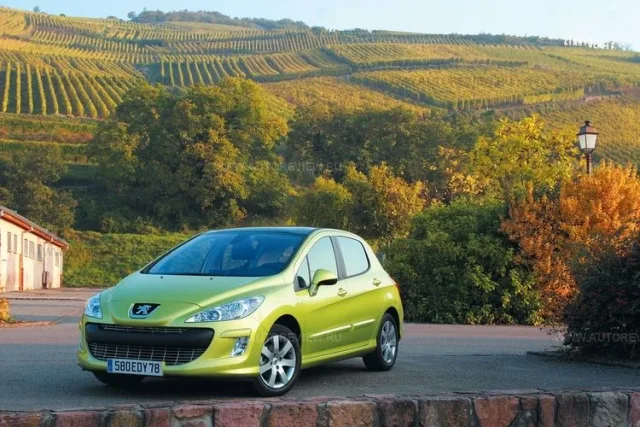
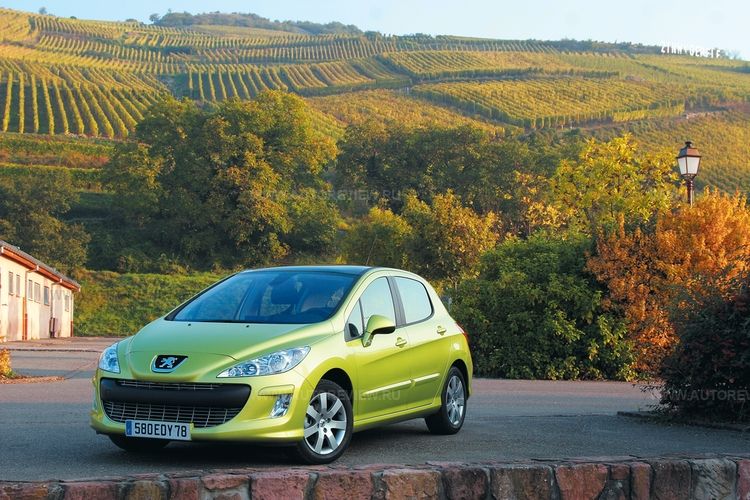
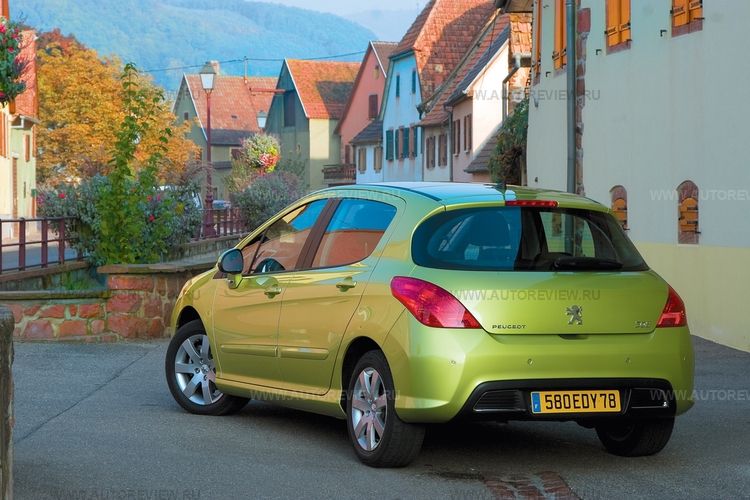
Agree, in photos it's easy to mistake this car for a Peugeot 207. And that's not just photos — even in person, approaching the car, I checked the rear just to be sure with the badge: no, it's correct, 308. This is indeed a Peugeot 308 — the firstborn of the new generation of "eights" in the brand's lineup. And the impression is as if you're looking at a 207...
So I got behind the wheel without much enthusiasm: I had experience driving a Peugeot 207, and on a Peugeot 206 I had clocked about 120,000 kilometers. Their characters are similar. But everything changed in the very first minute, as soon as I started the Peugeot 308's engine and began to move. This is a real breakthrough!
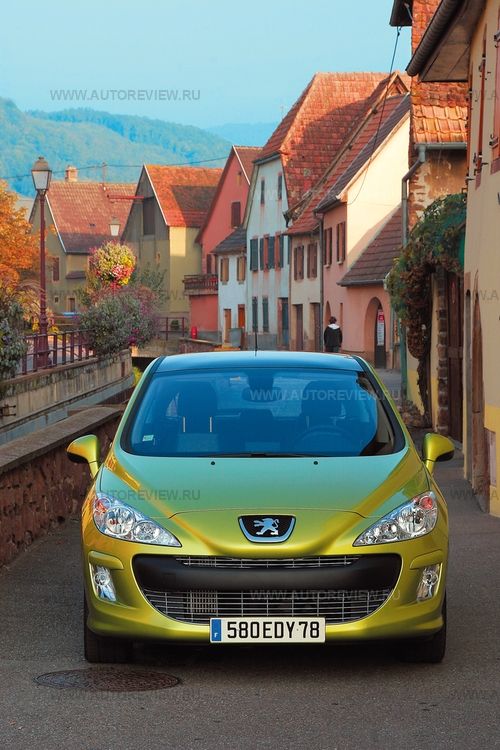
And under the hood was not a diesel (where the French are strong), but a 1.6-liter gasoline engine! That's the breakthrough! True, its name is not Peugeot, but BMW. All three new gasoline engines for the Peugeot 307 — 1.4 L (95 hp), 1.6 L (120 hp), and turbocharged 1.6 (150 hp) — were created by BMW engineers. And the "jointness" is that they are produced at Peugeot factories, and some of the engines are sent to England to end up under the hoods of Minis.
Acceleration is confident from 1500 rpm, and the pace of acceleration pleases: although the Peugeot 308 has gained 37 kg compared to the Peugeot 307 with the old engine of the same displacement, acceleration to 100 km/h has become a second faster, and the top speed has increased by 5 km/h. At the same time — surprisingly precise, refined responses to the gas pedal. Like on BMW cars! Oh, if only the French could organize another joint project — not for gearboxes, but at least for shift mechanisms — for example, with Ford or Volkswagen! Otherwise, the mechanism remains as vague as it was.
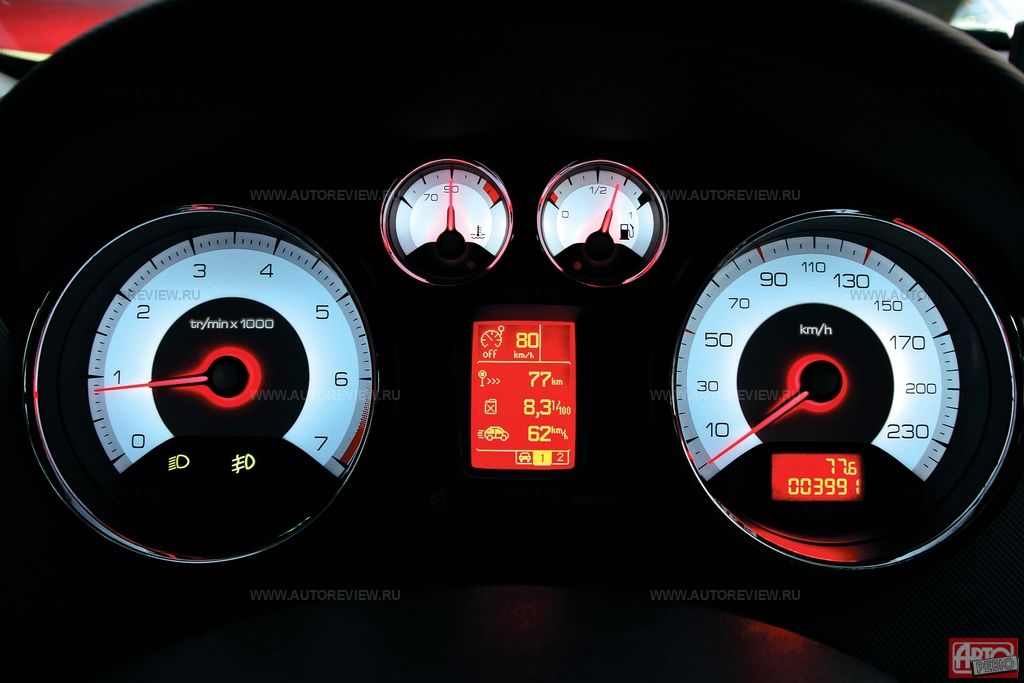 | |
| The instruments are a delight. And the average fuel consumption is also pleasing — 8.3 L/100 km with a 150-hp engine! | The parking sensors indicate the direction to the obstacle not only on the display but also by sound: now — a beep from the left front speaker |
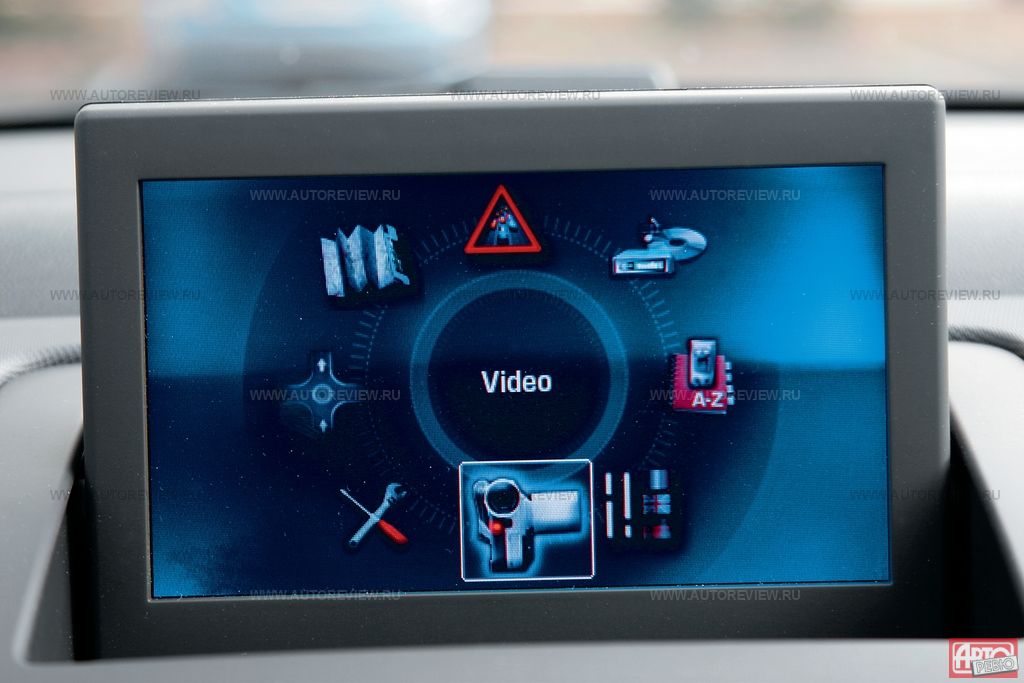 | 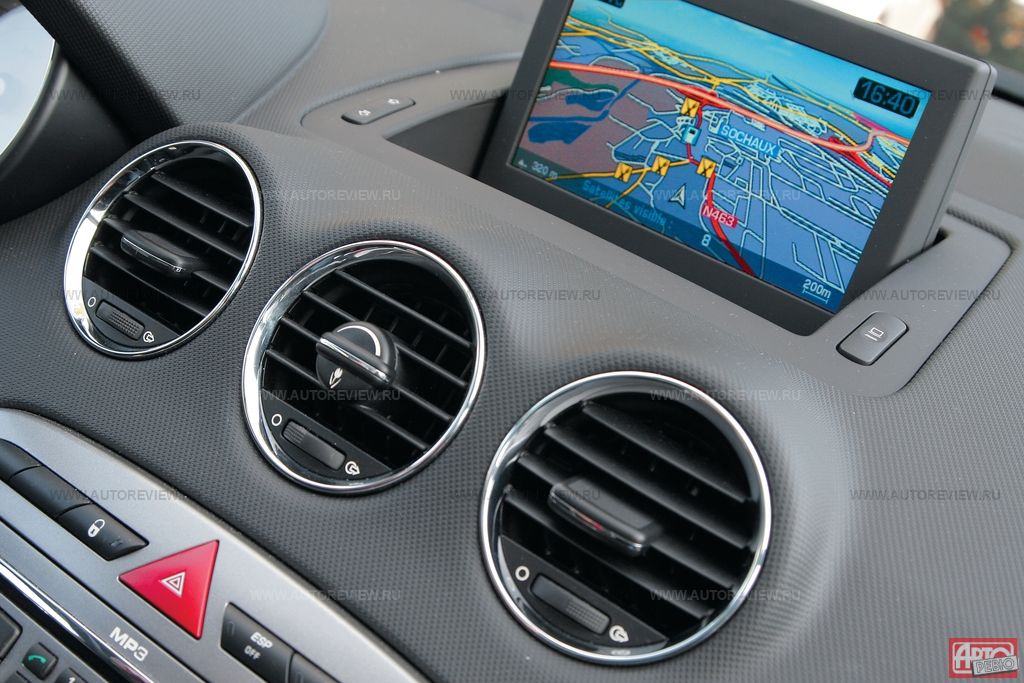 |
| You can even watch a movie — there are video input connectors in the glove box | The navigation is still "raw" — it made mistakes more than once, and then completely turned off |
But handling is in order — no need to bow to anyone here: Peugeot is back on top! Interestingly, the suspension architecture hasn't changed — the same McPherson struts at the front, the same torsion beam at the rear. Essentially, the new model is based on the Peugeot 307 platform. But everything is tuned as if the team of specialists who once taught the Peugeot 405 and 306 to drive has returned from a long vacation! The car holds a straight line perfectly and goes through corners accurately, but without overly sharp reactions to changes in throttle. Plus — excellent steering feedback: the steering mechanism remains hydraulic, and the pump is driven by an electric motor. The result is complete mutual understanding.
I enjoyed driving along the winding roads around the French town of Sochaux (where, by the way, the Peugeot 308 is assembled). I also appreciated the unexpectedly low level of aerodynamic noise (engineers claim the new hatchback has a record-low drag coefficient of 0.29) and good ride comfort with no pitching at all.
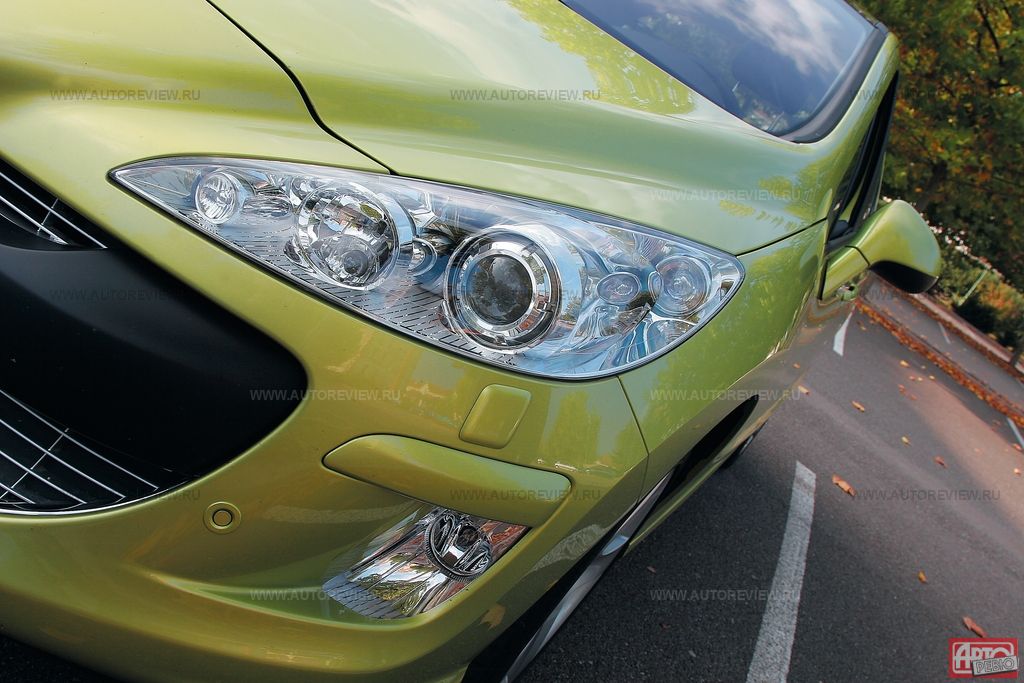 | |
| The headlights on the Peugeot 308 have reached a length of 80 cm — a record in the golf class! | These are not cigarette lighters, but replaceable cartridges with air fresheners — vanilla, floral... |
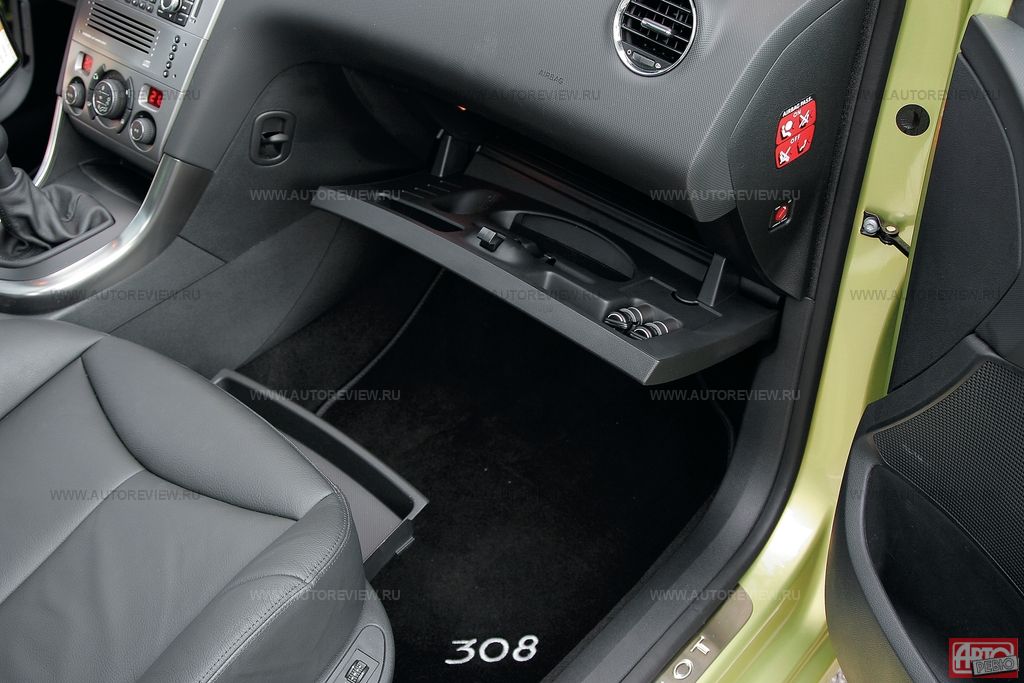 | 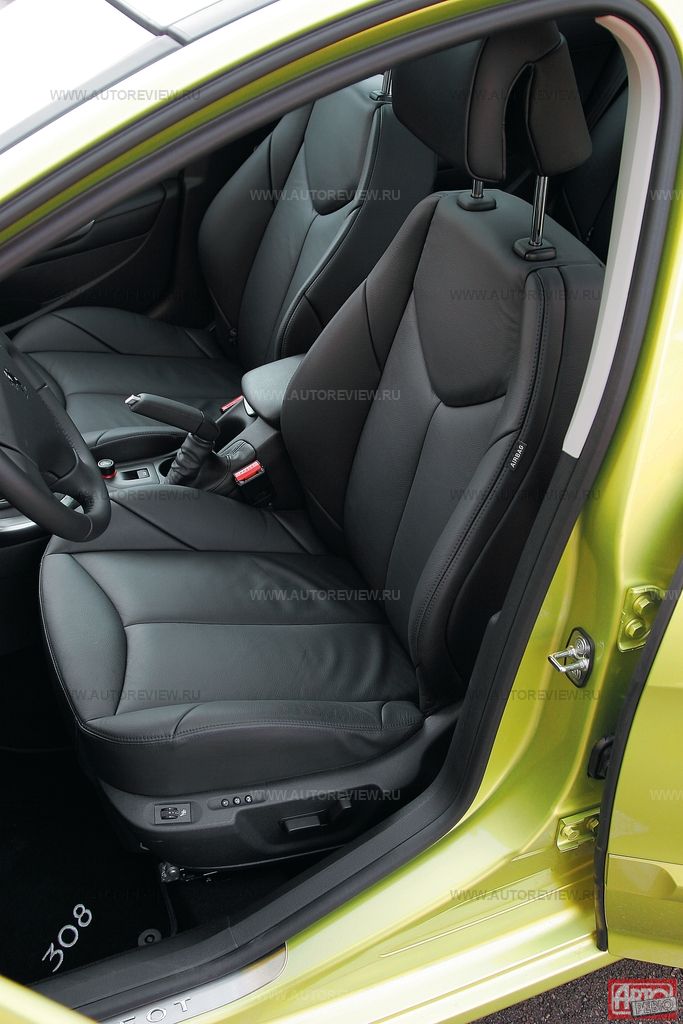 |
| The cooled glove box fits a 1.5-liter bottle | The seats are both comfortable and hold you well in corners |
But when I switched to the same car but with the 150-hp turbo engine and not on 16-inch but 17-inch tires... That's the difference between enjoyment and pleasure!
The stability control system can be turned off, but only at speeds up to 50 km/h; then it turns itself back on. Well, let it be: it didn't bother me at all. I only woke it up once, and even then deliberately — sharply yanking the wheel to simulate an obstacle avoidance maneuver. The system skillfully corrected the skid, but the steering sensitivity during such a maneuver turned out to be higher than I expected.
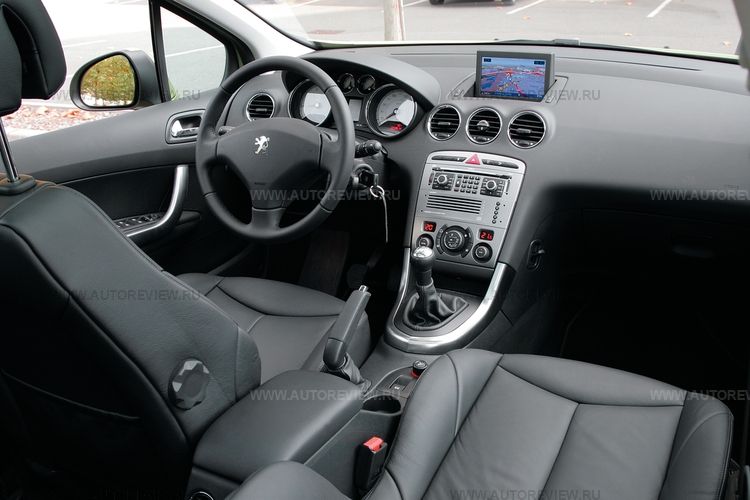
The Peugeot has become cozier and more charming. A significant role in this was played by the quality of materials: soft dashboard, elegant chrome trim, "metal-look" inserts
Of course, low-profile 17-inch tires reduce ride comfort, but even in this version, the Peugeot 308 is far from being called a "stool": the car responds to small bumps with "rounded" jolts.
What I lacked a little, believe it or not, was the engine. I expected the Turbo-BMW to be lively, but it is deliberately smooth, like a good naturally aspirated 2.3–2.5-liter engine — there's torque always and everywhere. But for those who want something hotter, you can wait until next year when the RC version goes into production with the same engine but boosted to 175 hp.
The interior also left a pleasant impression. The designers faced the task of making the car feel lighter. The previous model felt like a minivan from the driver's seat — a huge dashboard and a windshield stretching into the distance. In the Peugeot 308, the windshield is in place, and the dashboard is there too, but it no longer looks so monumental. And all this is thanks to the changed angle of the center console: if it used to stand almost vertically, now it smoothly descends from the round air vents to the gear lever. Beautiful and convenient.
Rear passengers also got more space. The cabin has become 35 mm wider, and the recess in the front seat backrest has increased legroom by 27 mm. Among other pleasant touches — separate air vents and places for small items (pockets in the doors, a box in the folding armrest). But what I liked most was the niche on the parcel shelf: its lid opens both from the cabin side and from the trunk side.
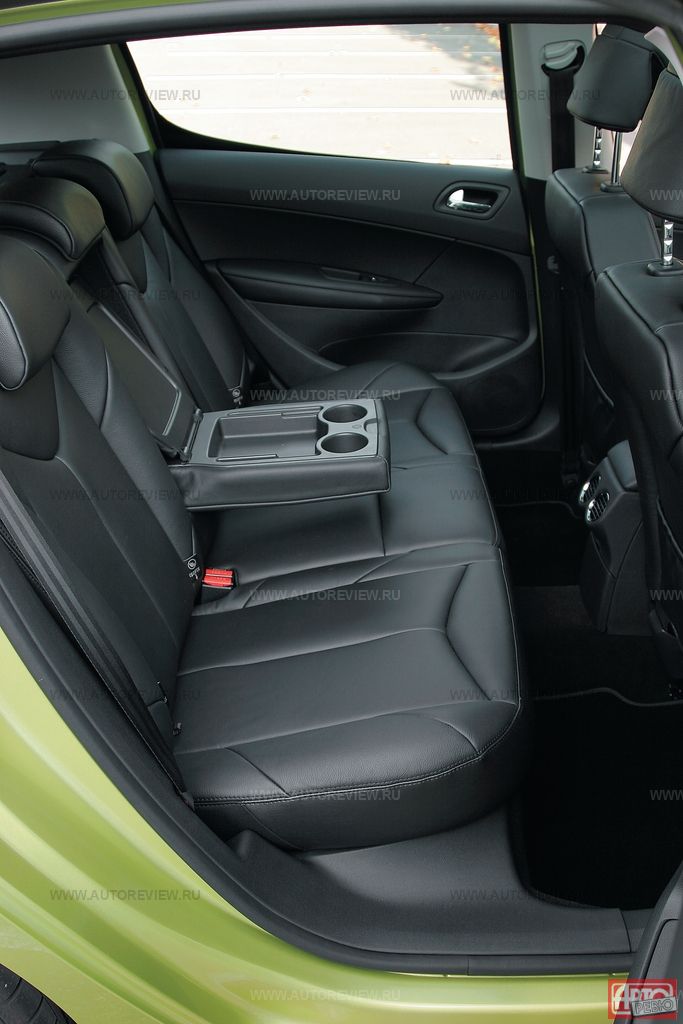 | 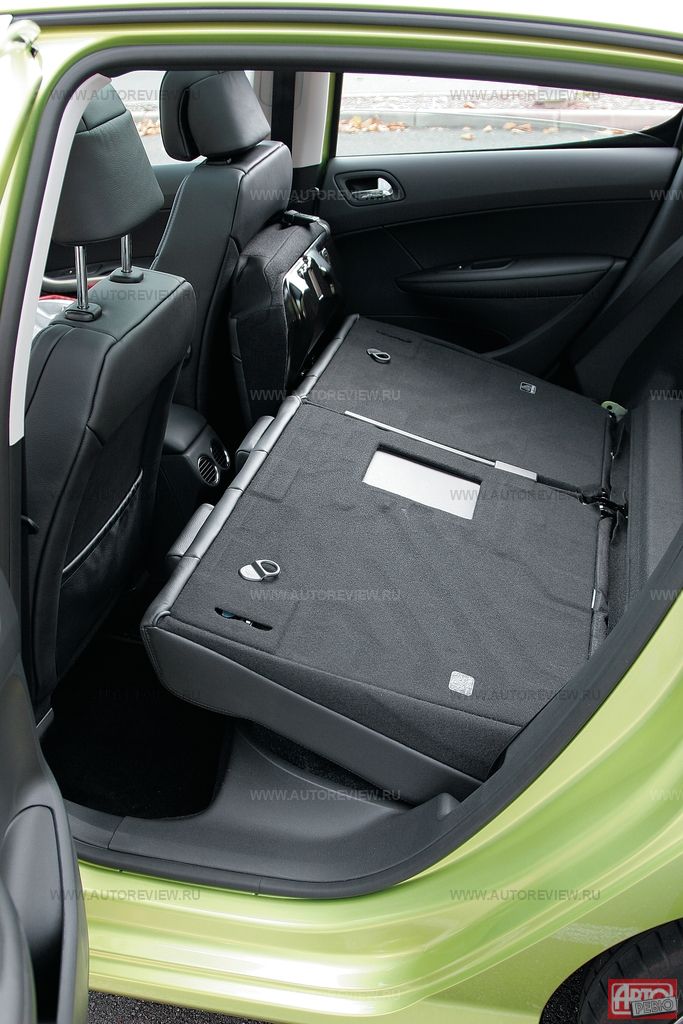 | 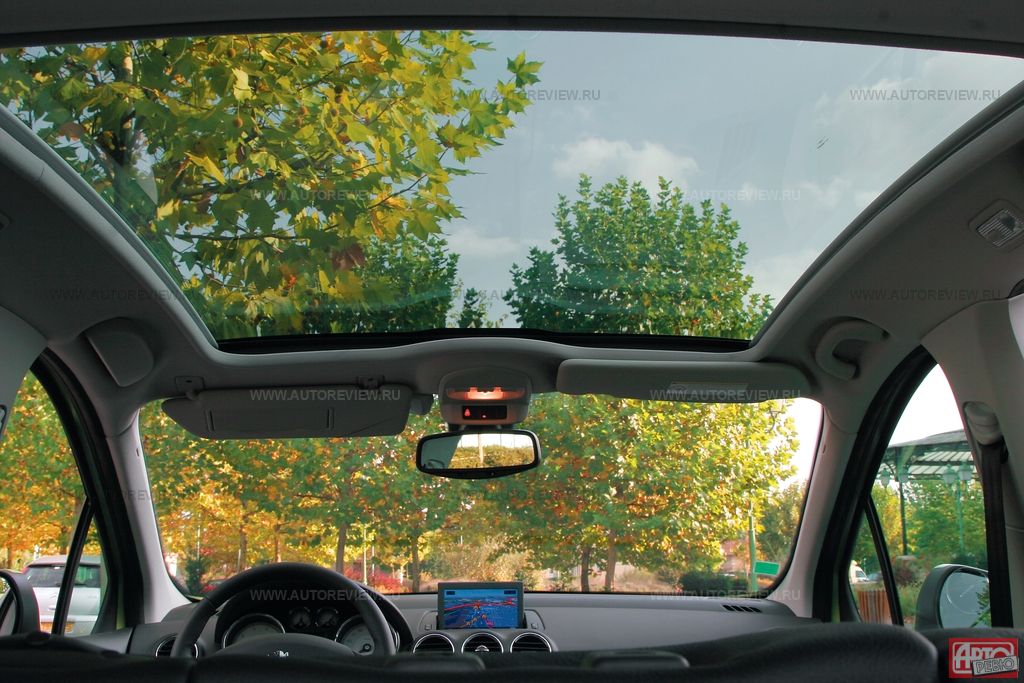 |
| Thanks to the recesses in the front seat backrests, rear passengers have more legroom | Standard transformation options are supplemented by removable rear seat cushions (in the photo, the left part of the cushion is removed) | Very bright interior: the glazing area of the five-door version is 3.6 m², and with the panoramic roof — almost five square meters! |
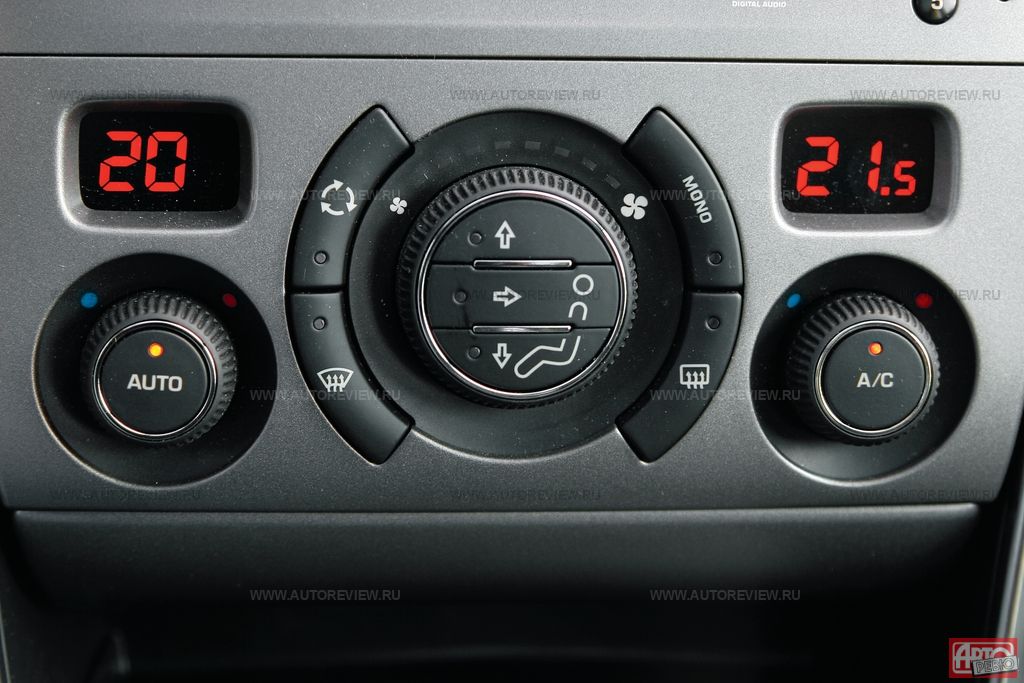 | ||
| Rear passengers have separate air vents at their disposal | New control unit for dual-zone climate control: three rotary knobs allow you to adjust temperature and fan speed by touch |
And the interior now fully has what is called a sense of quality. Although... On one car, the navigation suddenly failed — first it got lost with us in the vineyards of native Alsace, and then it completely turned off, dimming the screen. On another car, during hard braking, the hazard lights came on. Actually, that's by design. But this time, the hazards turned on and refused to turn off. Of course, this is one of those teething problems that, I hope, will be cured by next spring when deliveries of the three- and five-door Peugeot 308 hatchbacks to Russia begin. And if not, we'll rely on the two-year warranty, regardless of mileage.
Sales of the new Peugeot 308 have already started in France. The base car with the 1.6 engine is priced at 20,350 euros, while the 1.6 Turbo version is only 1,400 euros more expensive. If the Russian price list maintains a similar proportion, then the Peugeot 308 1.6 Turbo has every chance of becoming more popular than the Peugeot 307 with the two-liter engine. And if suddenly the 308 starts being assembled here as well... However, no one yet knows exactly which models the PSA concern plans to produce at the not-yet-built plant — whether they will be Peugeots, Citroens, or possibly both brands at once.
What is known for sure is that next year the Peugeot 308 SW station wagon will see the light of day, followed by the coupe-cabriolet. But they definitely won't be assembled in Russia.
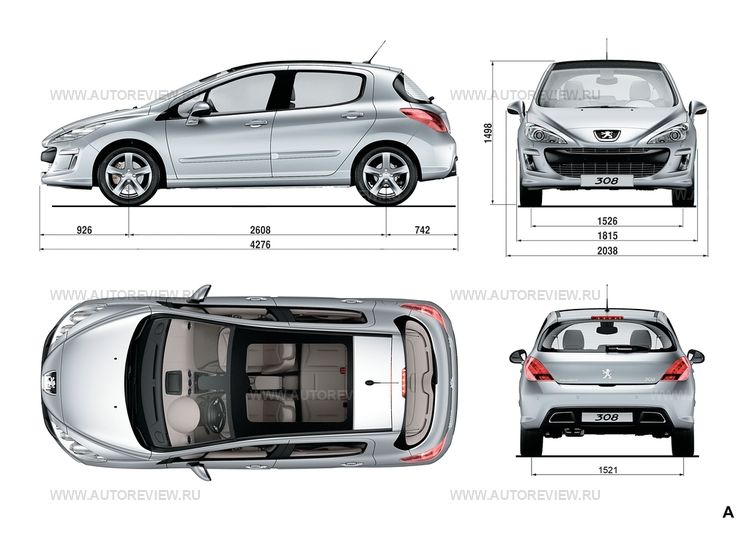
The new Peugeot 308 is based on the platform of its predecessor, the 307 model. The suspension and steering schemes have not changed, and the wheelbase remains the same. However, engineers managed to lower the center of mass by 5 mm, and due to increased overhangs, the body has stretched by 65 mm in length. Body rigidity has increased by 10%.
The diesel version of the Peugeot 308 1.6 HDi is shod with Michelin Energy Saver tires. Thanks to reduced rolling resistance, such tires allow saving 0.2 l/100 km — the final average consumption for this modification is 4.7 l/100 km.
All petrol engines for the Peugeot 308 are developed using BMW technologies: they feature the Valvetronic variable intake valve lift system and variable valve timing on both intake and exhaust. Compared to previous French units, the new engines have become noticeably more powerful and economical.
The trunk has a convenient compartment that opens equally easily from both the cabin and the luggage area.
Specifications
| Specifications | |||
| Parameters | Vehicle | ||
| Peugeot 308 | |||
| Modification | 1.4 VTI | 1.6 VTI | 1.6 THP |
| Body type | five-door hatchback | ||
| Number of seats | 5 | 5 | 5 |
| Trunk volume, l | 348/1201 | 348/1201 | 348/1201 |
| Curb weight, kg | 1271 | 1287 (1312) | 1327 (1355) |
| Engine | petrol with distributed fuel injection | petrol with direct fuel injection and turbocharging | |
| Location | front, transverse | ||
| Number and arrangement of cylinders | 4, in-line | 4, in-line | 4, in-line |
| Displacement, cm³ | 1398 | 1598 | 1598 |
| Number of valves | 16 | 16 | 16 |
| Max. power, hp/kW/rpm | 95/70/6000 | 120/88/6000 | 150/110/5800 (140/103/6000) |
| Max. torque, Nm/rpm | 136/4000 | 160/4250 | 240/1400 |
| Gearbox | manual, 5-speed | manual, 5-speed (automatic, 4-speed) | |
| Drive | front-wheel drive | ||
| Front suspension | independent, spring, McPherson, with anti-roll bar | ||
| Rear suspension | semi-independent, spring, with anti-roll bar | ||
| Front brakes | ventilated disc | ||
| Rear brakes | disc | disc | disc |
| Tires | 195/65 R15 | 195/65 R15 | 205/55 R16 |
| Maximum speed, km/h | 182 | 195 (188) | 213 (202) |
| Acceleration time 0—100 km/h, s | 12.7 | 10.8 (13.8) | 8.8 (10.2) |
| Fuel consumption, l/100 km | |||
| urban cycle | 9.0 | 9.3 (10.3) | 9.8 (11.4) |
| extra-urban cycle | 5.2 | 5.2 (5.7) | 5.6 (6.0) |
| combined cycle | 6.5 | 6.7 (7.3) | 7.1 (7.9) |
| Fuel tank capacity, l | 60 | 60 | 60 |
| Fuel | AI-95 | AI-95 | AI-95 |
| * Figures in parentheses are for vehicles with automatic transmissions | |||