
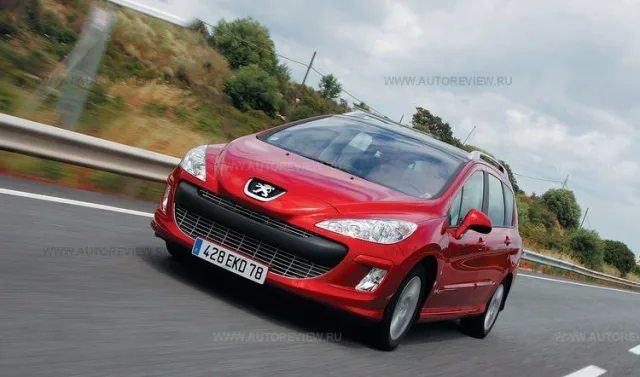
The Peugeot 307 SW was in a class of its own in the golf segment. First, it featured a huge glass roof. Second, it had almost "compact MPV-like" three rows of individual seats and tables that could be folded down. Third...
And third, it's no longer in production: the "307" was taken off the assembly line. But a successor has appeared — the Peugeot 308 SW. Did it manage to become even more unusual?
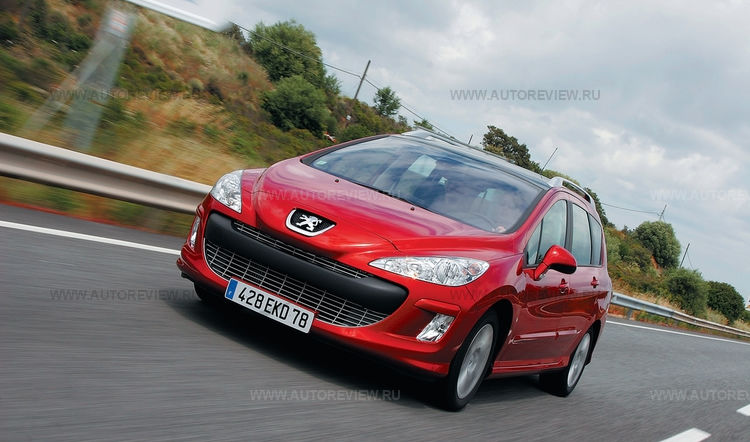
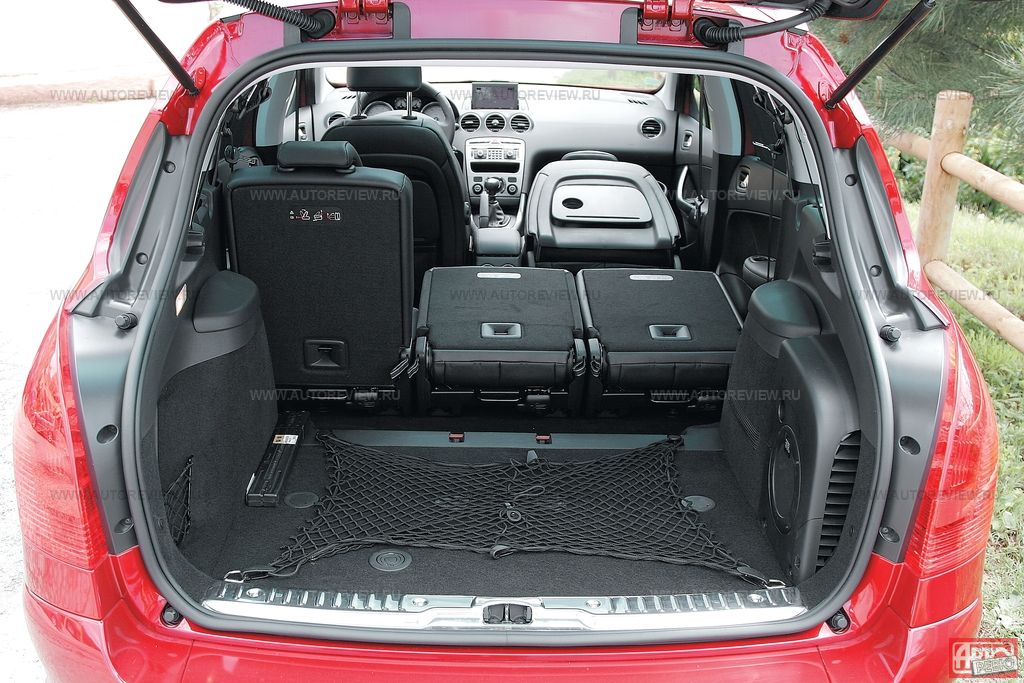
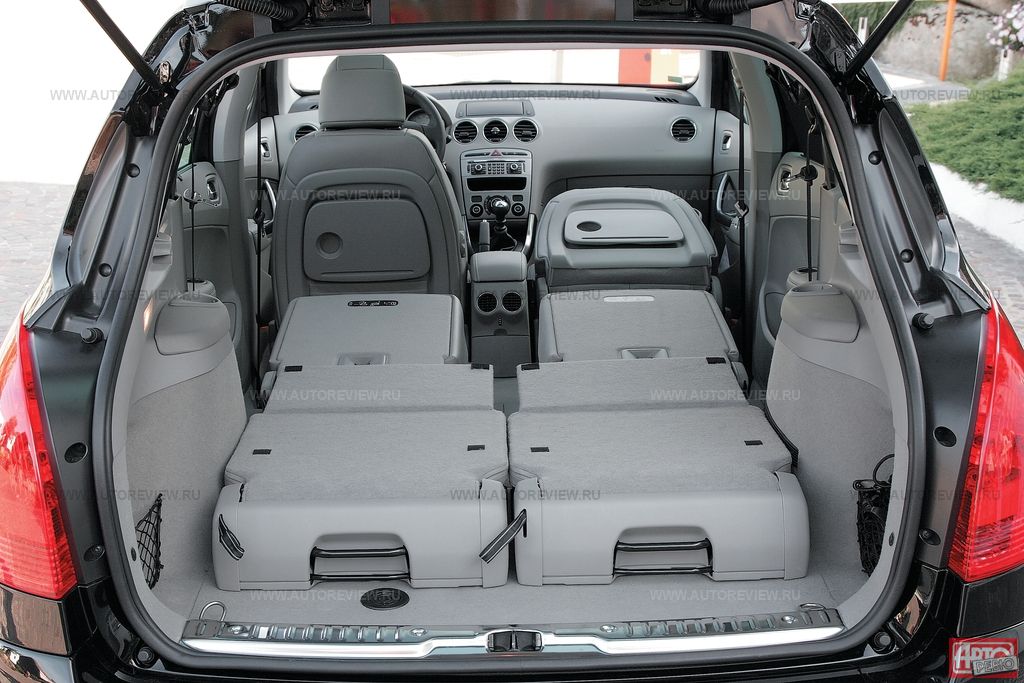
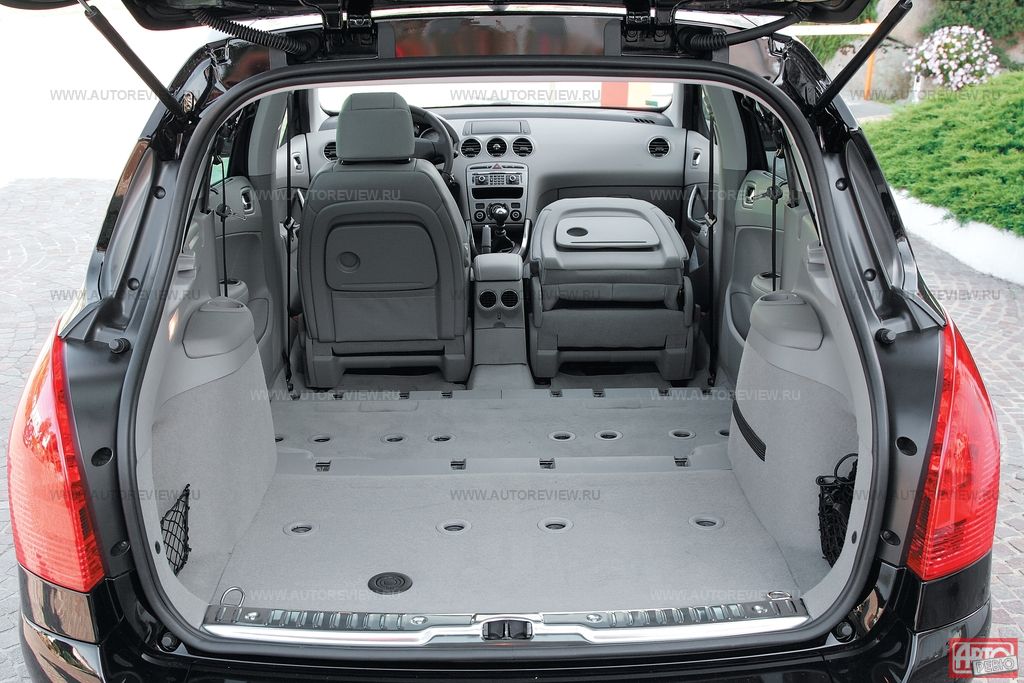
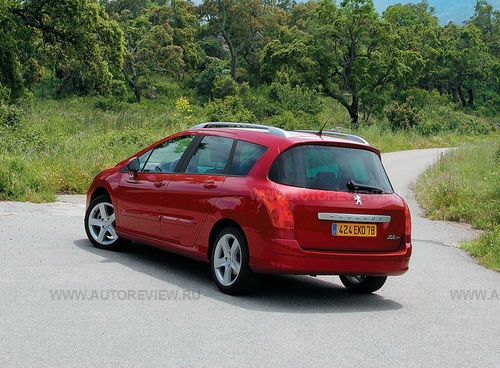
Judging by the appearance, yes — the Peugeot 308 SW looks even more expressive than its predecessor. The rear end alone, in the spirit of the "senior" 407 SW estate, is something else! And the interior... It's the same as in the 308 hatchback, that is, assembled with better quality and more interestingly than in the "307". And in the SW version, which still stands for Station Wagon, the trunk comes standard with mounting points for two seats — just like before. And even if you bought a five-seat car with a "two-row" cabin, nothing stops you from moving one or two of the three rear seats into the trunk. Complete freedom! Or you can order a seven-seat estate right away — in France, the extra charge for two "trunk" seats is 600 euros. 300 euros per "chair", a very reasonable price.
However, Peugeot "does not recommend passengers taller than 170 cm to sit in the 'trunk'". Where would I fit with my 190 cm...
 |
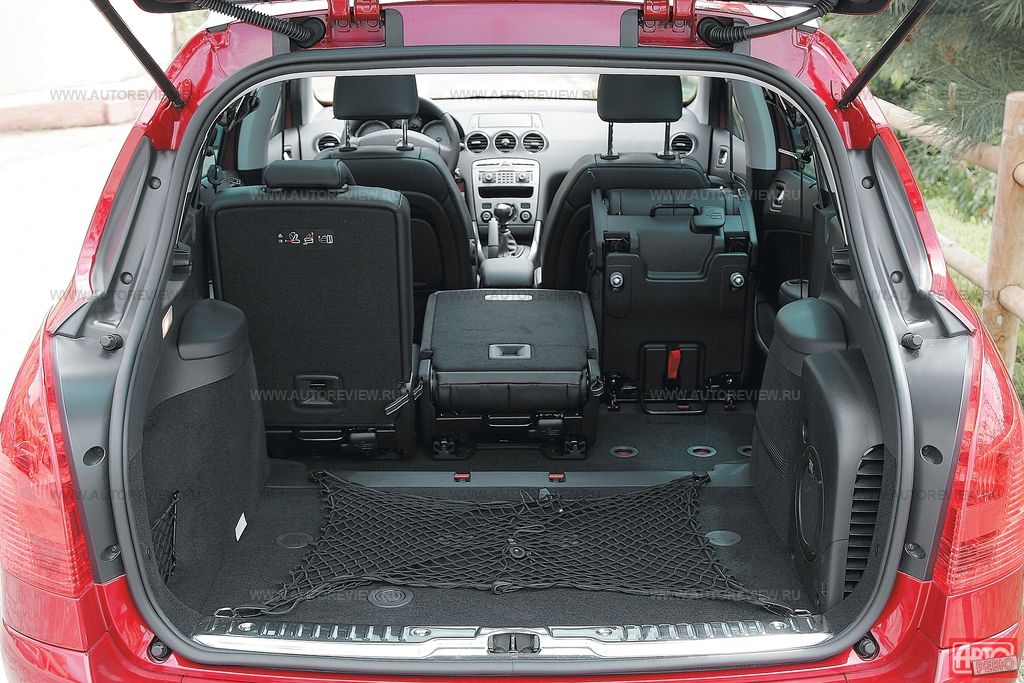 |
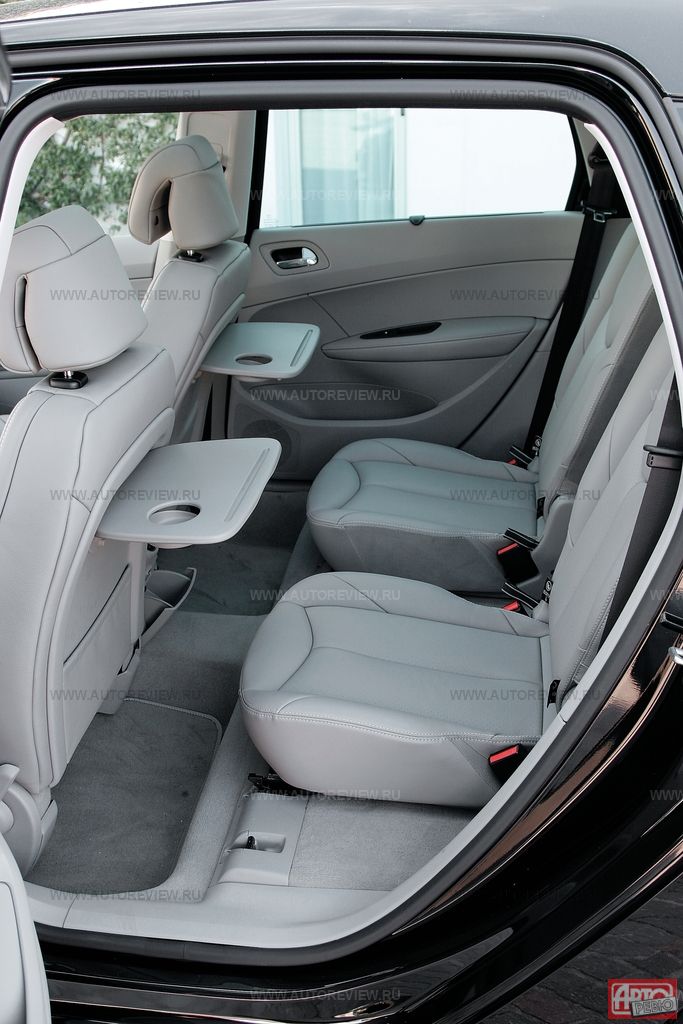
| The seats of the second and third rows are easy to fold, swap, or remove. And the front passenger seat backrest folds down to carry long items | |
 |
 |
But I tried it anyway! And in vain. I got stuck immediately — my legs pressed against the front seat backrest, my head against the ceiling. Only children should sit here. And you don't need to worry about their safety — both third-row seats are equipped with three-point inertia reel belts, whose buckles rest in magnetic holders on the ceiling. It's just a pity that the third row has no Isofix brackets for child seats — only the second-row seats have them.
The trunk volume hasn't grown: from 508 to 573 liters depending on the position of the rear seats (they slide lengthwise). And the Peugeot 307 SW had a trunk of 520—559 liters.
However, the rear window now opens separately. And the front passenger seat backrest has been made foldable — so you can carry items up to 3.1 meters long.
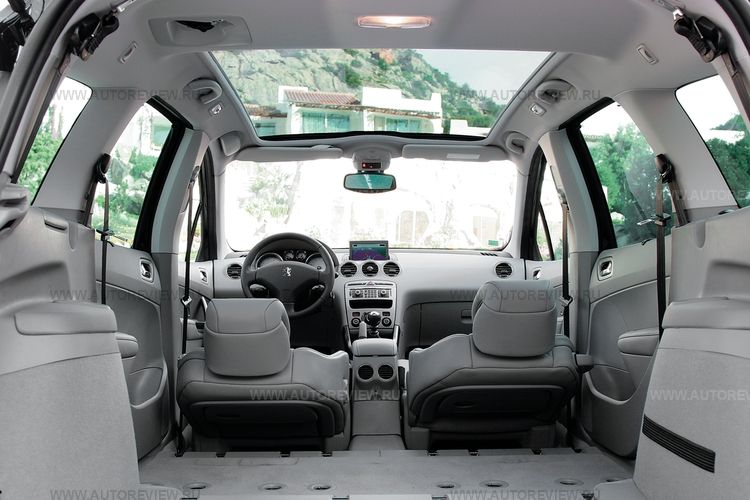
The glazing area reaches 5.58 m², of which 1.68 m² is the transparent roof
Convenient! Not so for the spare wheel mounting, suspended under the floor. In Europe it's clean, but here, changing a wheel in the rain, crawling on your knees in the mud... Brrr!
The third row is clear, but what about the second? Despite the Peugeot 308 SW being 71 mm longer and 53 mm wider than its predecessor, I didn't feel a significant gain in rear space. I sat almost knee-to-knee — though with the front seat fully pushed back. But there's plenty of headroom!
And the views...
The expanse of the bottomless sky — across the entire glass roof. It already delighted Peugeot 307 SW owners, and now there's even more light and joy: the glass panel has become 30 cm longer and ends at the level of the rear seat backrests. True, the roof is still "solid" — no sunroofs are provided. Well, no need — there's climate control, and dual-zone at that.
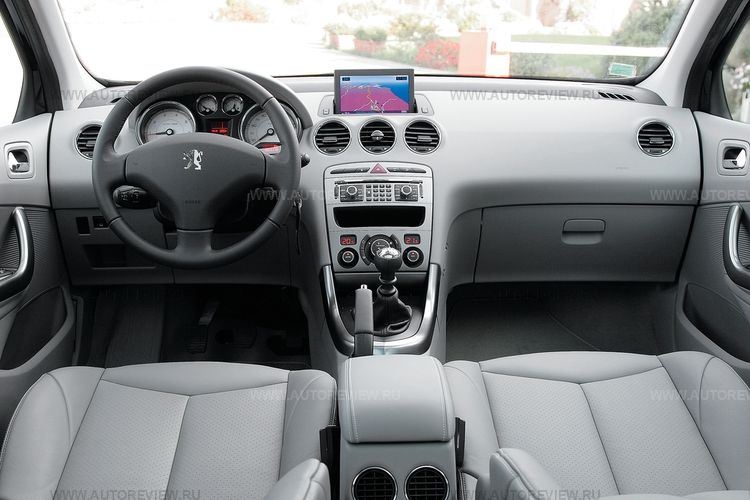
The interior of the "308" pleases with quality trim materials
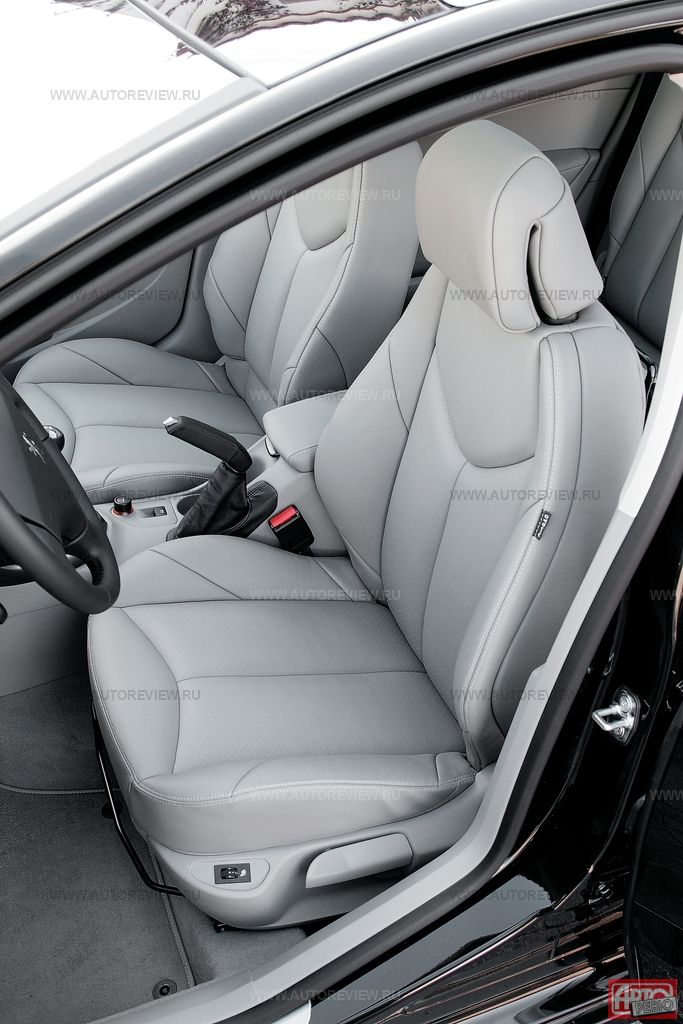
Behind the wheel — no revelations: everything is the same as in the Peugeot 308 hatchback. Comfortable seats, a proper steering wheel with two adjustments, a "soft" dashboard. But on the manual gearbox lever — a six-speed pattern! Where did the sixth gear come from on the petrol version, if six months ago at the Peugeot 308 presentation it was only mentioned for the 2.0 HDi diesel (see AR No.20, 2007)? I remember many journalists criticized the "cottony" long-throw five-speed gearbox, and the French just smiled and asked to wait. So we waited — the petrol Peugeot 308 (not only the estate, but also the hatchback) finally gets a more modern six-speed gearbox. Shifting gears is now much more pleasant, and the sixth gear allows saving fuel at "cruising" speeds.
But... In classmates from Ford or Volkswagen, the "manual" still shifts more precisely. In addition, the new gearbox is so far available with the most powerful engines — petrol turbo 1.6 with 150 hp and 175 hp, and diesels 1.6 HDi (110 hp) and 2.0 HDi (136 hp).
 |
 |
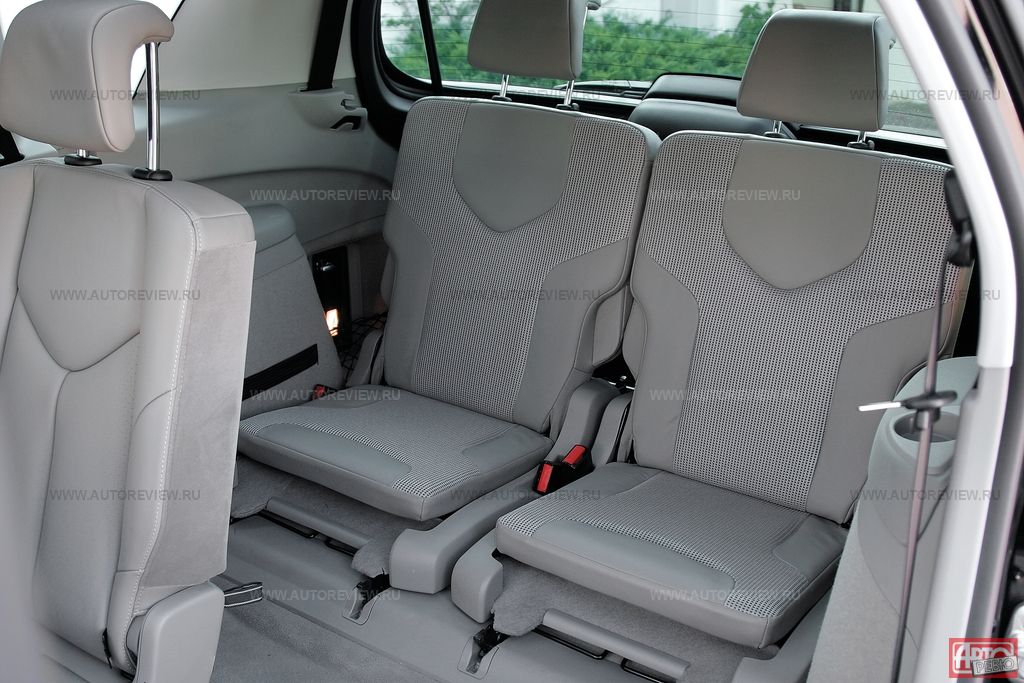 |
| The seats are good, but the "wheel" for adjusting the heating is hidden in a "blind" zone | After removing one seat, the other two can be moved closer to the center and... start lunch | Trunk "stools" — for those whose height does not exceed 170 cm |
I like the chassis of the "308", and the estate also proved good on Sardinian roads. Its body is 15 percent stiffer than the predecessor 307 SW, and the center of mass is 10 mm lower. True, the Peugeot 308 SW with the glass roof is 150 kg heavier than the hatchback, and its wheelbase is 100 mm longer. And this shows — the Station Wagon doesn't turn into corners as eagerly as the hatch, and in a limit turn it starts to understeer earlier. But the steering effort is informative — thanks to a well-tuned electro-hydraulic power steering. And the brakes are good — strict and adequate. Interestingly, during hard braking, the hazard lights come on at a lower deceleration threshold than in the 308 hatchback. And there's logic in this — because in the estate, in a rear-end collision, third-row passengers could also be hurt, their heads located just ten centimeters from the fifth door glass.
What was alarming was the ride comfort — it's slightly stiffer than the hatchback's. Even on 16-inch tires, the Peugeot 308 SW shudders on small bumps. And what will happen with 17- or 18-inch wheels, especially on our roads?
 |
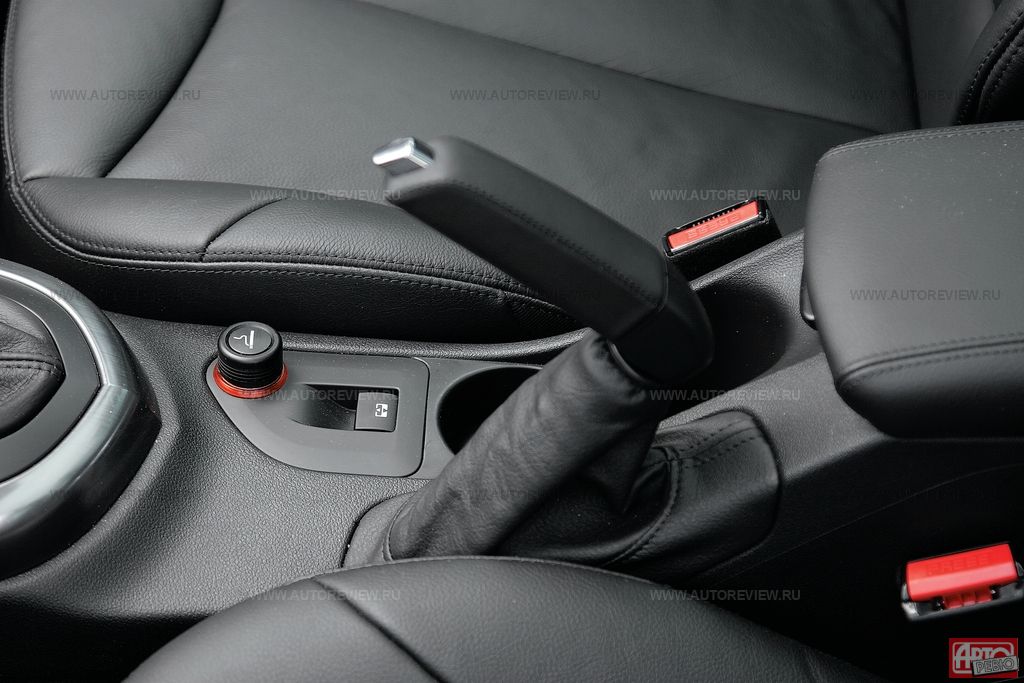 |
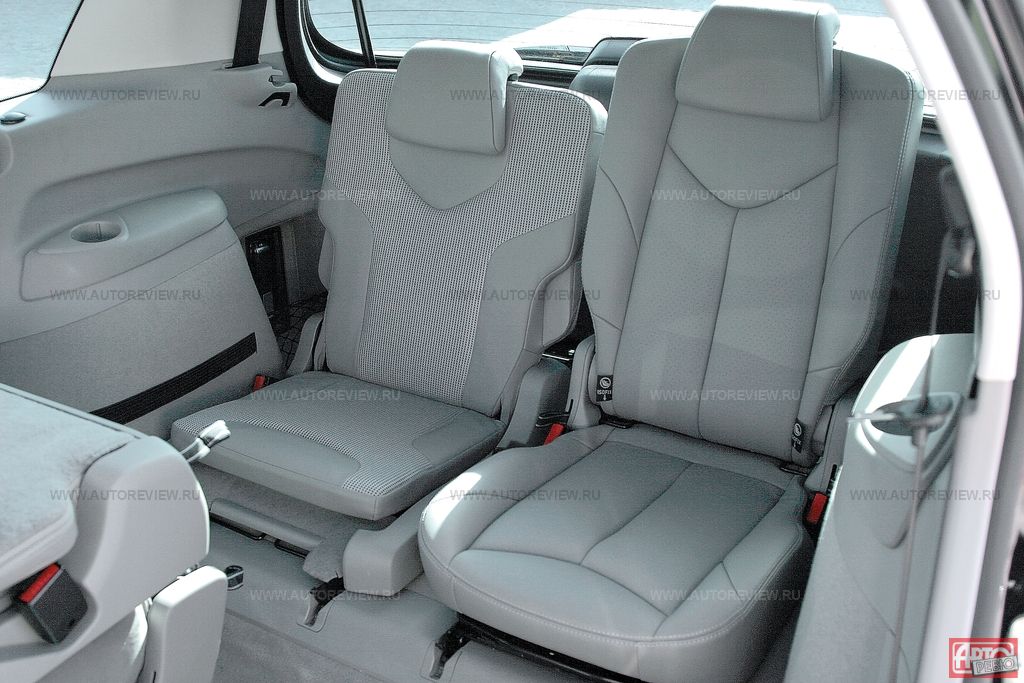
| The second-row seat (on the right in the photo) can be moved to the trunk, but sitting on it is not as comfortable due to the higher cushion | The button on the center tunnel controls the roof sunshade |
 |
|
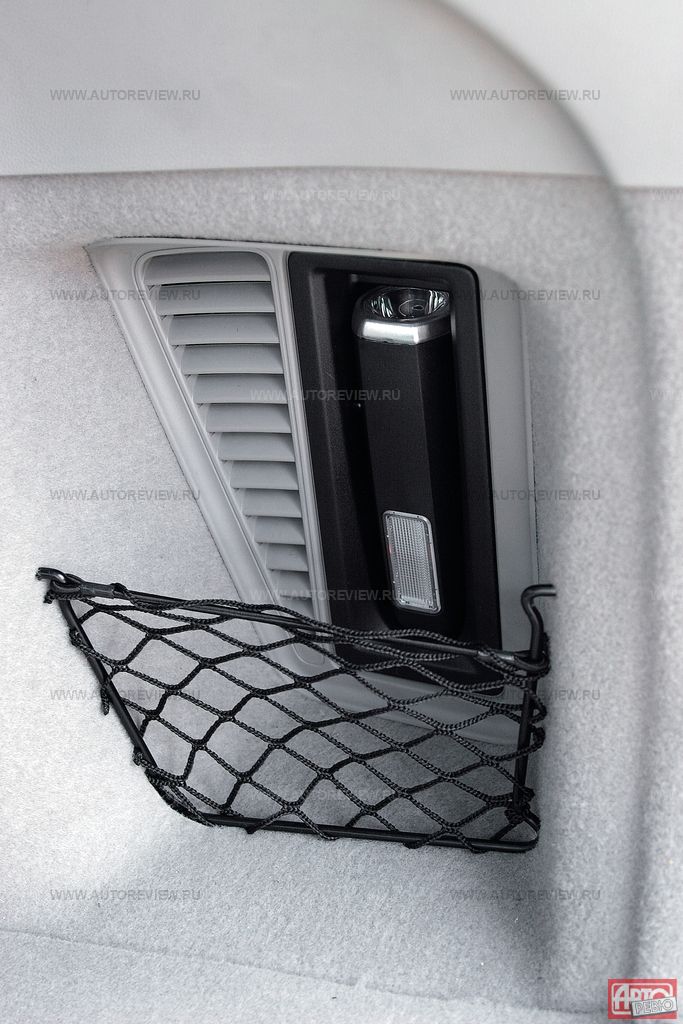
| Rear passengers have two air vents and a small "glovebox" | The SW trunk has a rechargeable flashlight |
However, it's too early to judge the ride smoothness: as usual, Russia will get versions with an adapted suspension — softer and with a 20 mm increased ground clearance. The wait won't be long — in August the Peugeot 308 SW will be shown at the Moscow Auto Show, and in September the first production cars will arrive. Prices are not yet set, but it's already known that the base version, similar to the hatchback, will be the 120-hp Peugeot 308 SW 1.6, equipped, sadly, with the old five-speed manual or a four-speed automatic. With the same automatic or the new six-speed manual, you can buy the 1.6 Turbo (150 hp) version.
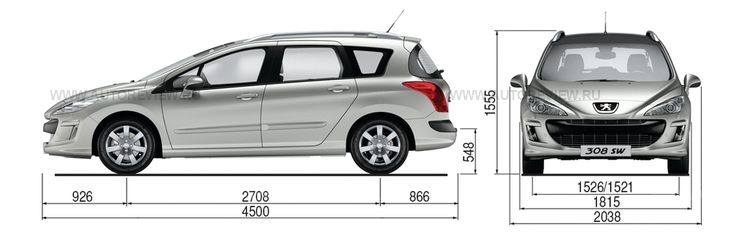
The flagship of the model range will be a version with the same 1.6 turbo engine, boosted to 175 hp — and it will be offered exclusively with a six-speed manual gearbox. Next year, the Peugeot 308 SW family will also include a simplified modification with a metal roof, a non-opening rear window, and a regular rear bench instead of three separate seats. Previously, this variant was called Break, but now it also goes under the 308 SW index.
The question of supplies of diesel Peugeot station wagons to Russia remains unresolved, although unofficially they say that following the first-born Peugeot 4007, other models with HDi engines, including the 308 SW, will begin to be brought to our market.
 |
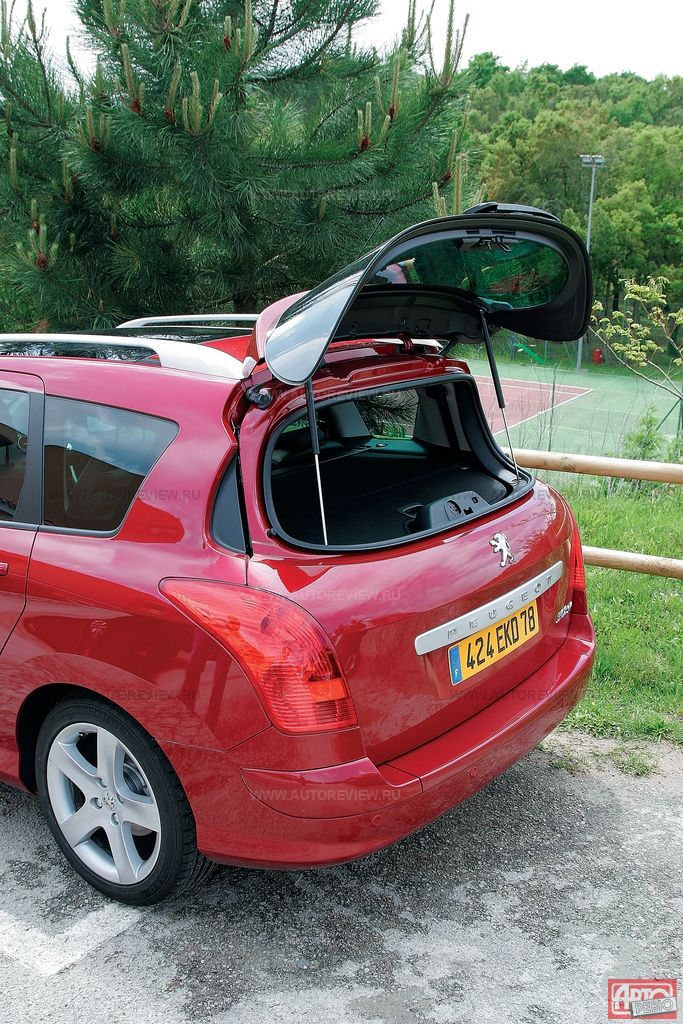 |
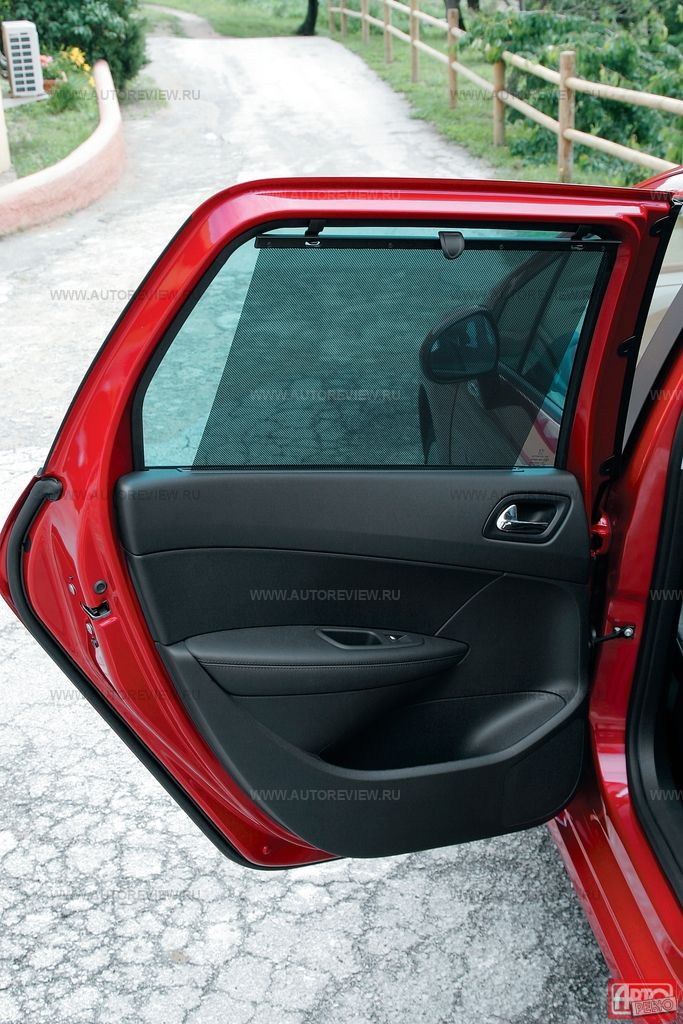
| Window blinds are a privilege of expensive versions | The rear window now opens separately — including remotely |
This would be very useful, because PSA's diesels have always been famous. However, the petrol versions of the SW also have good prospects: last year, station wagons (both the 307 SW and its simplified Break version) accounted for 20% of all Peugeot 307s sold. And the 308 SW is larger, has an even bigger glass roof, and its design is even more expressive... By the way, about the design: the classmate Kia cee'd SW from the rear strongly resembles the Peugeot 308 SW. Which is better — the cee'd or the standalone Peugeot? We'll find out in the autumn!
| Specifications | |||
| Parameters | Vehicle | ||
| Peugeot 308 SW | |||
| Modification | 1.6 VTI | 1.6 THP | 1.6 THP |
| Body type | five-door hatchback | five-door hatchback | five-door hatchback |
| Number of seats | 5 | 5 | 5 |
| Trunk volume (VDA), l | 508—1736* | 508—1736* | 508—1736* |
| Curb weight, kg | 1440 (1466)** | 1486 (1502) | 1524 |
| Engine | petrol, with multipoint fuel injection | petrol, with multipoint fuel injection and turbocharging | petrol, with multipoint fuel injection and turbocharging |
| Location | front, transverse | front, transverse | front, transverse |
| Number and arrangement of cylinders | 4, in-line | 4, in-line | 4, in-line |
| Displacement, cm³ | 1598 | 1598 | 1598 |
| Number of valves | 16 | 16 | 16 |
| Max power, hp/kW/rpm | 120/88/6000 | 150/110/5800 (140/103/6000)** | 175/128/6000 |
| Max torque, Nm/rpm | 160/4250 | 240/1400 | 240-260/1600 |
| Gearbox | manual, 5-speed (automatic, 4-speed) | manual, 6-speed (automatic, 4-speed) | manual, 6-speed |
| Drive | front-wheel drive | front-wheel drive | front-wheel drive |
| Front suspension | independent, coil spring, McPherson | ||
| Rear suspension | semi-independent, coil spring, with anti-roll bar | ||
| Front brakes | disc, ventilated | disc, ventilated | disc, ventilated |
| Rear brakes | disc | disc | disc |
| Tires | 195/65 R15 | 205/55 R16 | 225/45 R17 |
| Maximum speed, km/h | 189 (182) | 209 (199) | 215 |
| Acceleration time 0—100 km/h, s | 12.0 (14.0) | 9.6 (11.1) | 9.0 |
| Fuel consumption, l/100 km | |||
| urban cycle | 9.6 (10.7) | 10.6 (11.8) | 10.9 |
| extra-urban cycle | 5.4 (6.1) | 5.8 (6.2) | 6.0 |
| combined cycle | 6.9 (7.7) | 7.5 (8.2) | 7.8 |
| CO₂ emissions, g/km | 164 (182) | 177 (194) | 185 |
| Fuel tank capacity, l | 60 | 60 | 60 |
| Fuel | AI-95 | AI-95 | AI-95 |
| * With the second and third row seats removed from the cabin | |||
| ** In parentheses — data for vehicles with automatic transmissions | |||
"Turbo horses"
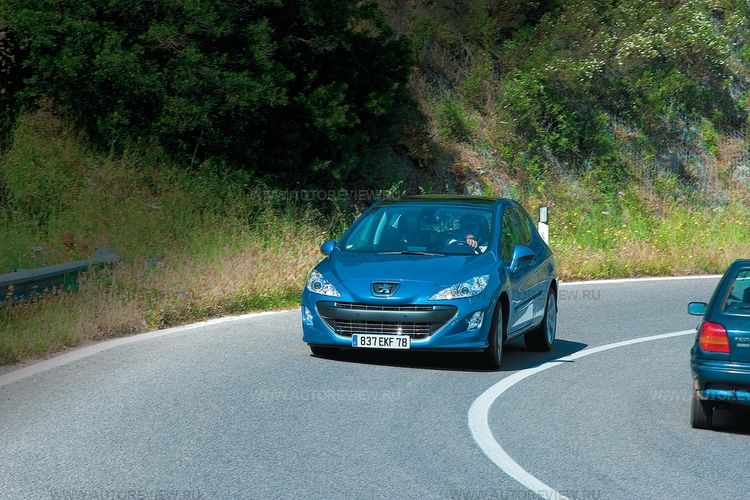
The "heated" 175 THP version is distinguished by the aggressive grin of the trapezoidal air intake
Along with the premiere of the Peugeot 308 SW station wagon, a new flagship engine appeared in the "three hundred eighth" engine range — a 1.6 turbo engine, developed jointly with BMW and boosted to 175 hp, as in the Mini Cooper S. In essence, this is the result of chip tuning: the engine control program was changed, the maximum boost pressure is now 0.8 atm, but in Overboost mode the turbocharger is allowed to briefly raise it to 1 atm, which increases torque from 240 Nm to 260 Nm.
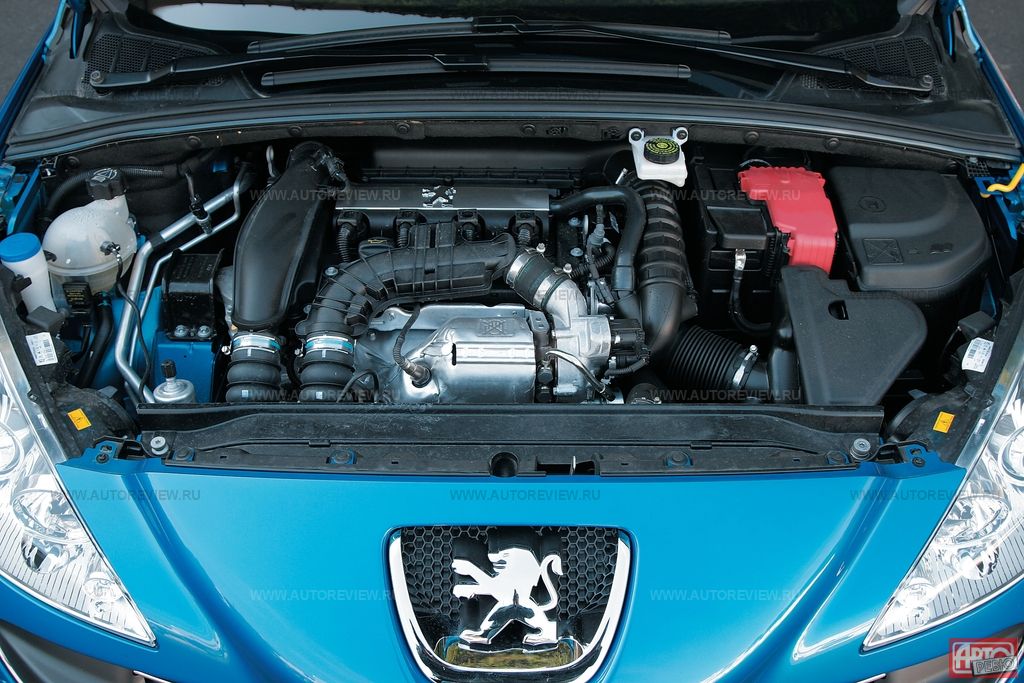 Sounds tempting, but the 175-horsepower Peugeot 308 does not try to pretend to be a sports car — despite the different bumpers (at the rear there is even a semblance of a diffuser), an excellent steering wheel in the spirit of the Peugeot 407 coupe, aluminum pedal pads and a ball on the gear lever. The car accelerates smoothly, without a pronounced turbo pickup, up to the electronic limiter at 6600 rpm. And it doesn't ignite in handling, although the suspension is 10 mm lower.
However, Peugeot representatives themselves do not claim the "heated" 308 into the golf-class GT league, because the "entry ticket" there now starts from 200 hp. Therefore, the 175-horsepower version did not receive the RC index, but is called THP 175: from the English "turbo horse power", that is, "turbo horsepower".