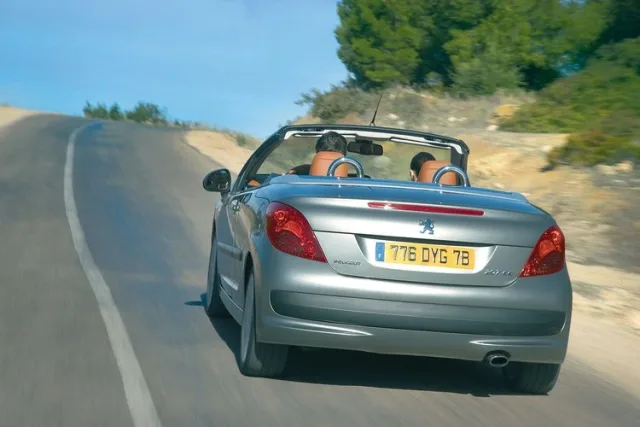
Winding Spanish serpentines, a cute two-door and a complete lack of racing ambitions. I press the button between the front seats for half a minute. The hard roof, "breaking" in half, goes into the trunk. A real sunroom! So I'll drive slowly, enjoying the birdsong.
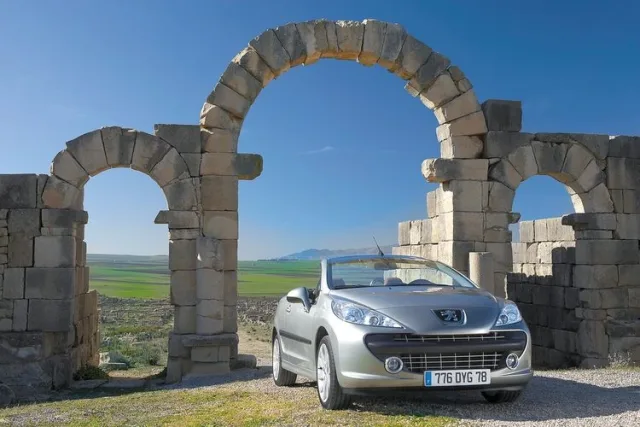
The idea to create a Peugeot with a hard folding roof appeared back in 1933, and a year later the Paris Motor Show saw the production model 401 D Eclipse: the solid top section could be stowed in the trunk manually or, if the budget allowed, with an electric drive. True, then the roof was designed and manufactured by specialists from the Pourtout atelier, and until recently such orders were given to third-party firms. For example, the folding top of the Peugeot 206 CC coupe-cabriolet was made by the famous French atelier Heuliez. But the roof for the 207 CC was designed by Peugeot engineers themselves.
From any angle, it's just a beauty! And if the hatchback "two hundred seventh" with its huge grille sometimes seems to yawn from boredom, the coupe-cabriolet is clearly smiling — we are both in love with life! In my opinion, the car looks much more harmonious than its predecessor 206 CC, which had a bulky trunk hiding the hard roof. And among the interesting details are thick chrome arches behind the rear seat that "shoot up" when tipped over, and characteristic stampings on the sides that seem to continue the lines of the window arches.
Inside, everything is familiar from the hatchback: both the nice front panel with instruments recessed into slanted wells, and the comfortable front seats. The differences are in the combination of colors and materials. For example, the interior of my car pleased with "aluminum" inserts and red and black leather trim. Impressive! And practical: the steering wheel adjusts in two directions, the seat adjusts in height. By the way, the seating position here is 10 mm lower than in the hatchback. A sporting spirit?
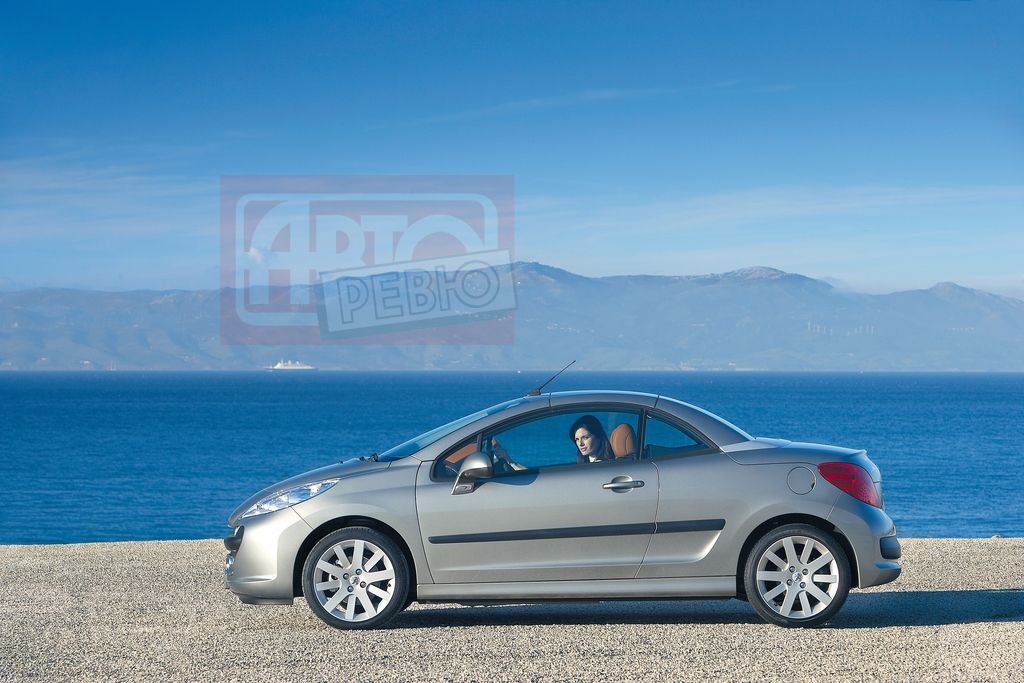 | 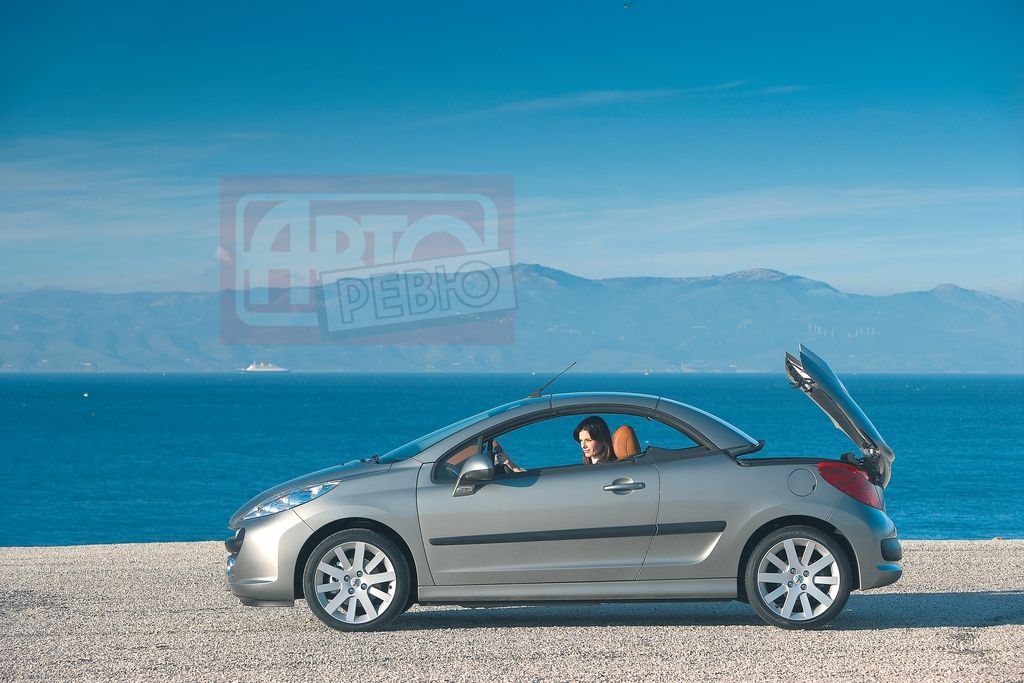 | 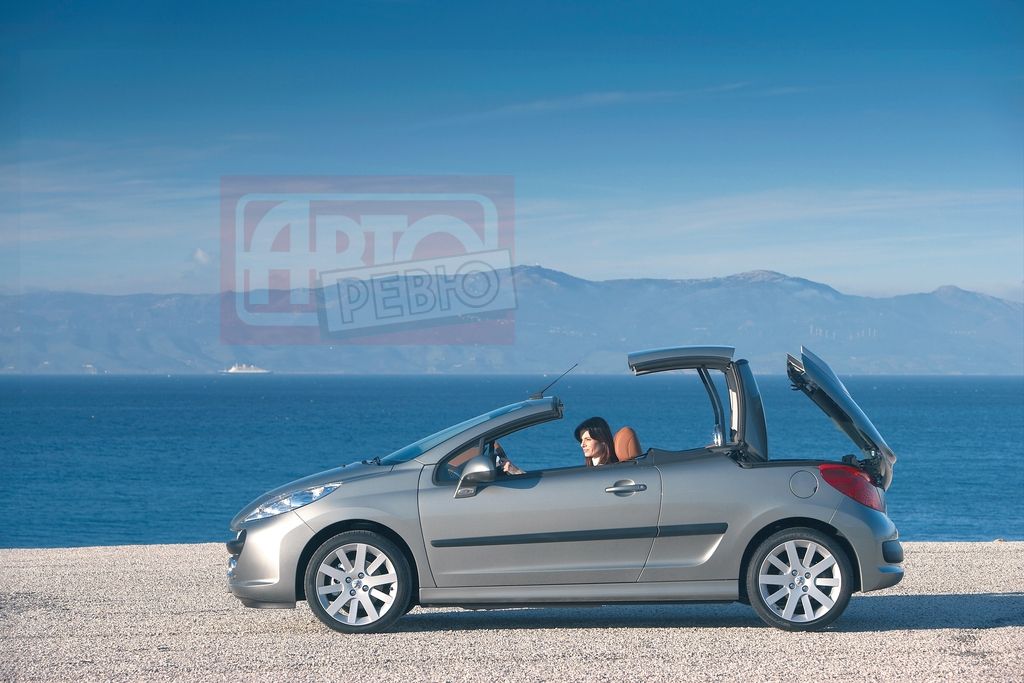 |
| The hard roof of Peugeot's own design folds and unfolds automatically in 25 seconds. The only inconvenience is that if you start the transformation into a coupe with the windows raised, they will first lower automatically, and you'll have to raise them yourself with a separate button |
I have the fastest version — with the 1.6 THP turbo engine (150 hp), developed jointly with BMW. Direct injection, variable intake phases. The car with this engine features stiffer front shock absorbers and springs, as well as "sporty" settings for the electric power steering and stability control.
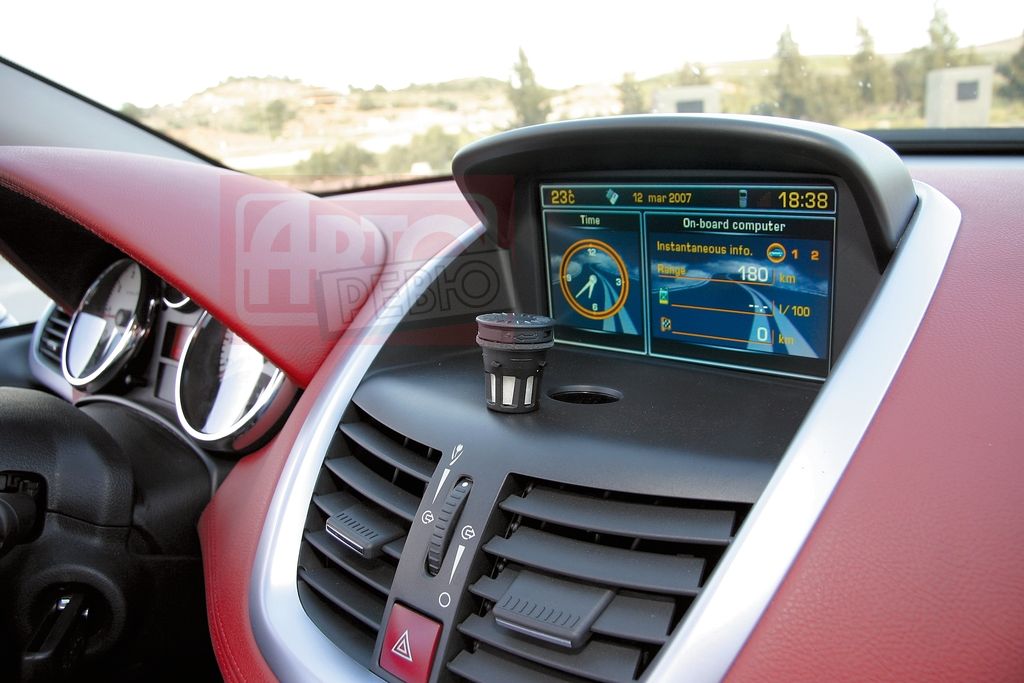 | 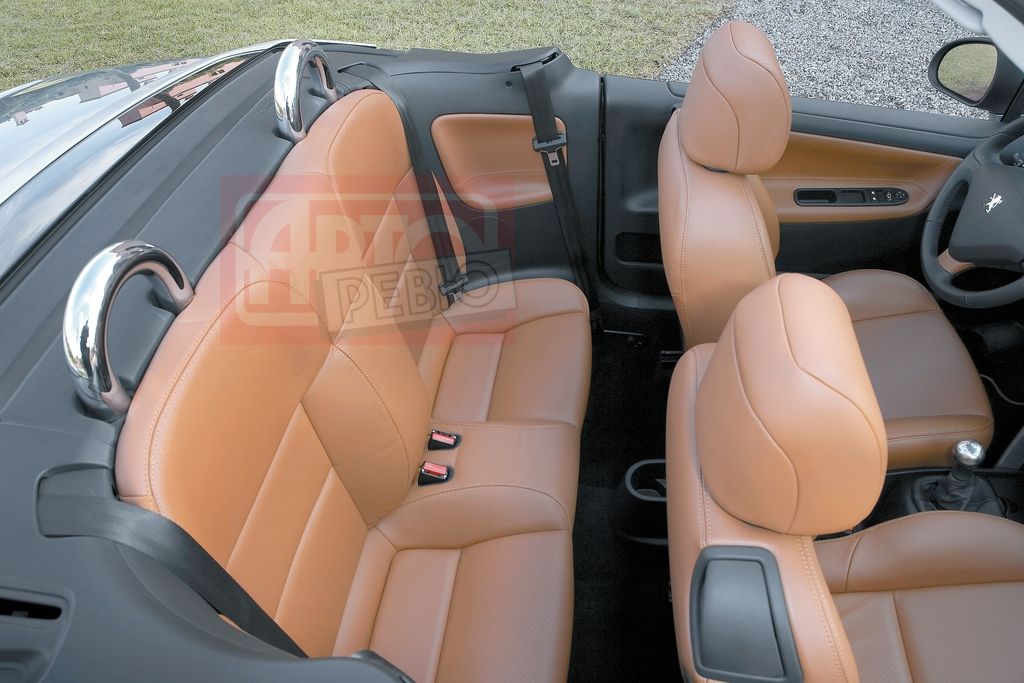 | 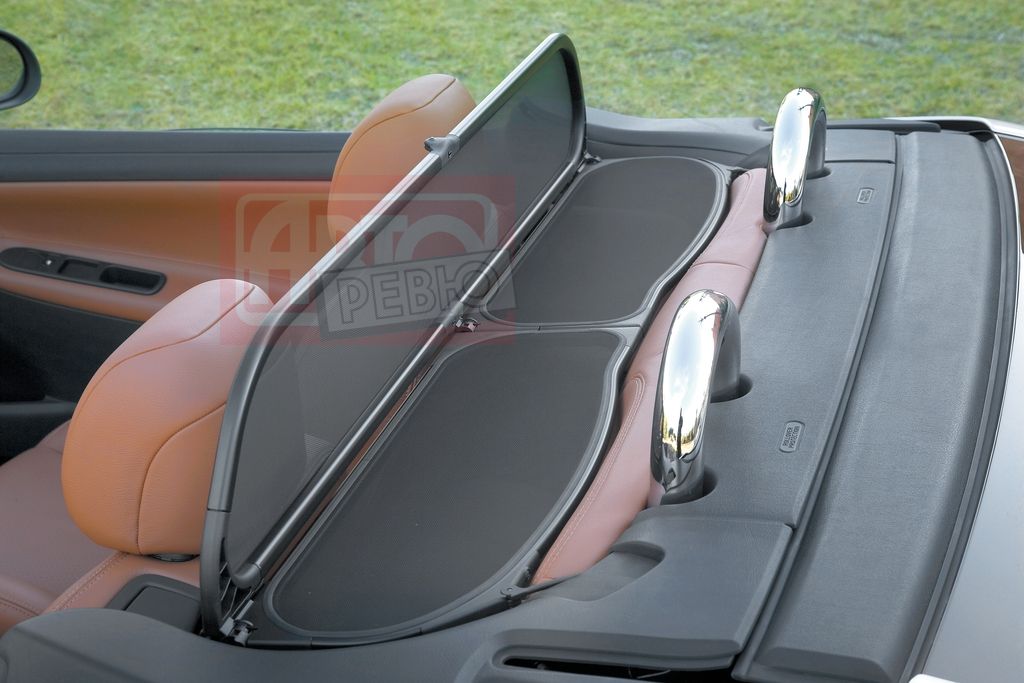 |
| On request — a built-in cartridge that aromatizes the air (seven scent options) from the central vents | The rear seats are for bags and flowers; an adult doesn't fit here | The removable aerodynamic screen covers the "bag" places but perfectly tames the air currents wandering through the cabin |
First discovery: the engine is very torquey! It easily "pulls" any gear from 1500 rpm. Very convenient, but... As soon as I drove faster, it became clear: there's no sport here. Just fitness. The engine's character is so smooth that there's no point or desire to rev it above 4000 rpm, especially since the sound turned out to be tasteless. At speeds up to a hundred, the steering responses are sleepy-calm, and corners have to be taken by intuition — the weak background effort on the wheel doesn't provide adequate feedback. Fortunately, after 100 km/h the steering "hardens," starting to imitate feedback more skillfully. And the brakes feel like "rubber": under load, the pedal travels further and further. In an emergency, no problems: good deceleration and intelligent ABS operation. In general, the "lion" seems to convince: if something happens, I'll help out, but I won't let you hooligan for no reason. I didn't really want to! Over the entire two-hundred-kilometer route, I never even triggered the stability control! I hid the roof in the trunk and breathed fresh air: in early March near Jerez it was plus fifteen.
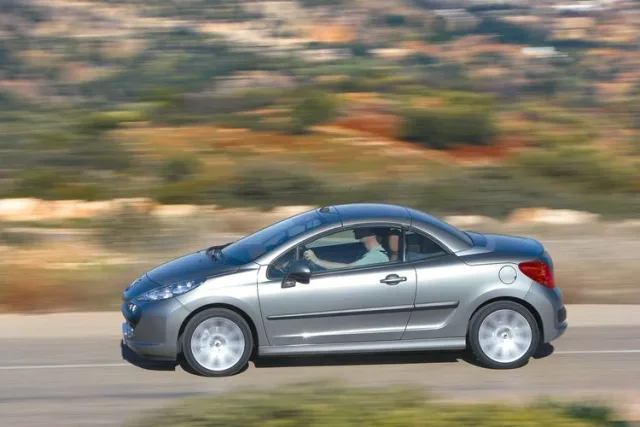
The roof position affects handling — with the top up, the car becomes noticeably more composed
And the people at Peugeot can be proud that they made this roof themselves! First, regardless of whether the car has a roof or not, the image of the car remains whole. Second, with the roof up, the trunk is 179 liters larger than in the "two hundred seventh" hatchback and more spacious than the cargo compartment of the Peugeot 206 CC. And third, the roof now folds automatically from start to finish (previously, on the 206 CC, you had to unclip two locks from the windshield frame yourself). Now — just press the button between the front seats and wait 25 seconds. As before, this operation can be performed at speeds up to 10 km/h, for example, before a traffic light. "Hostile whirlwinds" are tamed by the screen behind the front seats, and if you also raise the side windows, the breeze will only slightly tousle the top of your head. One thing is unclear: why is this screen an option?
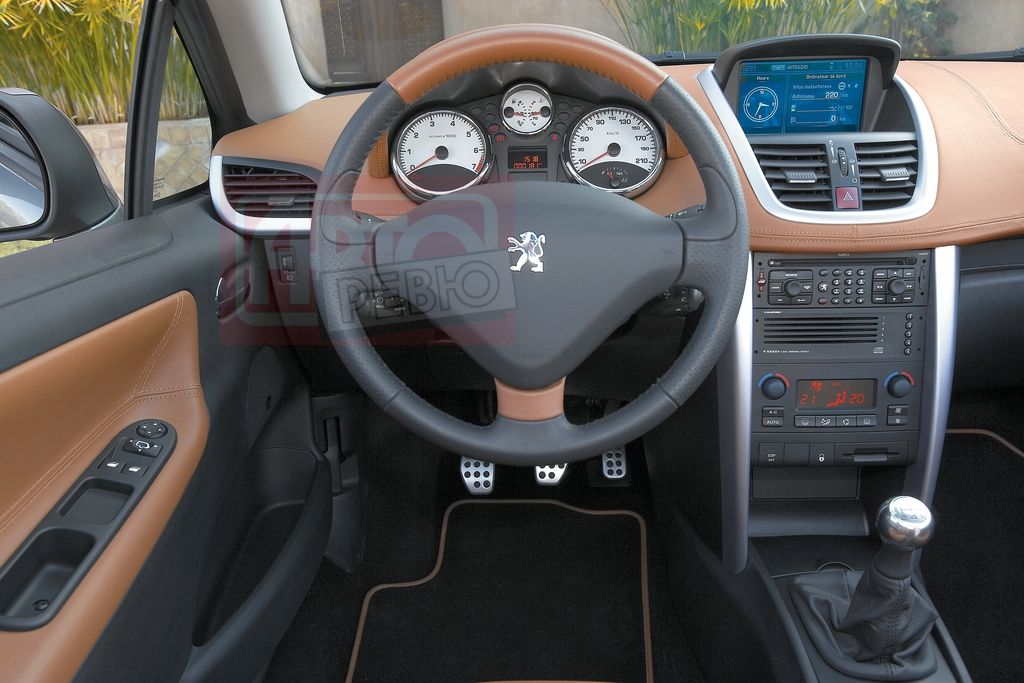 | Nice interior — like the Peugeot 207 hatchback |
The body of the coupe-cabriolet is literally stuffed with additional reinforcements: they are hidden in the sills, windshield frame, tunnel, behind the rear seats, and the floor is crisscrossed with them. Still, with the top folded, torsional rigidity drops by one and a half times — this affects handling: with the top open, the car plays along more with the rear axle during braking, and the steering column "comes alive" on bumps. But at a "tea" pit stop, it turned out that this wasn't the end of it: colleagues from Turkey had a cracked windshield. "A stone!" the French immediately explained. "No!" the Turks countered. If you believe the journalists, the glass cracked on its own while they were peacefully rolling along the serpentines. I looked closely at the cracks, ran my hand over them — no traces of a stone... And a little later, pulling off to the side of the road, I got a real scare myself. Above my head there was such a knock, as if a tap dancer was dancing on the roof and suddenly furiously stamped his heel into it. It turned out that the locks securing the roof to the windshield frame had skewed. Later, this knock occurred several more times, and sometimes it even happened when I was calmly driving along the streets of a Spanish town. But the glass remained intact.
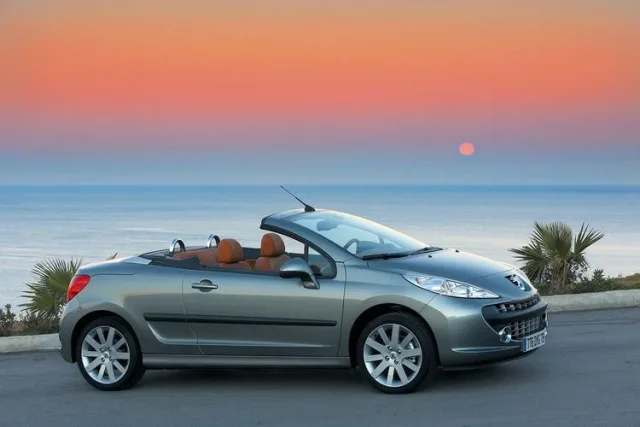
In Europe, the only "direct" competitor to the Peugeot 207 CC will be the cute "convertible" Micra with the same 2+2 seating formula. And the main "indirect" competitor is the two-seat Opel Tigra TwinTop. However, the rear seats of the Peugeot 207 CC are just a name: it's almost impossible for an adult to squeeze in here, so it's better to throw a bag on them or, as the press release suggests, put a bouquet of flowers. These are French, after all! Moreover, they interpret the CC abbreviation not only as coupe-cabriolet, but also as Coup de Coeur — "heart stroke." As for me, my heartbeat didn't quicken (as a "pilot" car it's "boring-boring"), but as a "folding sunroom" the Peugeot 207 CC is incomparable.
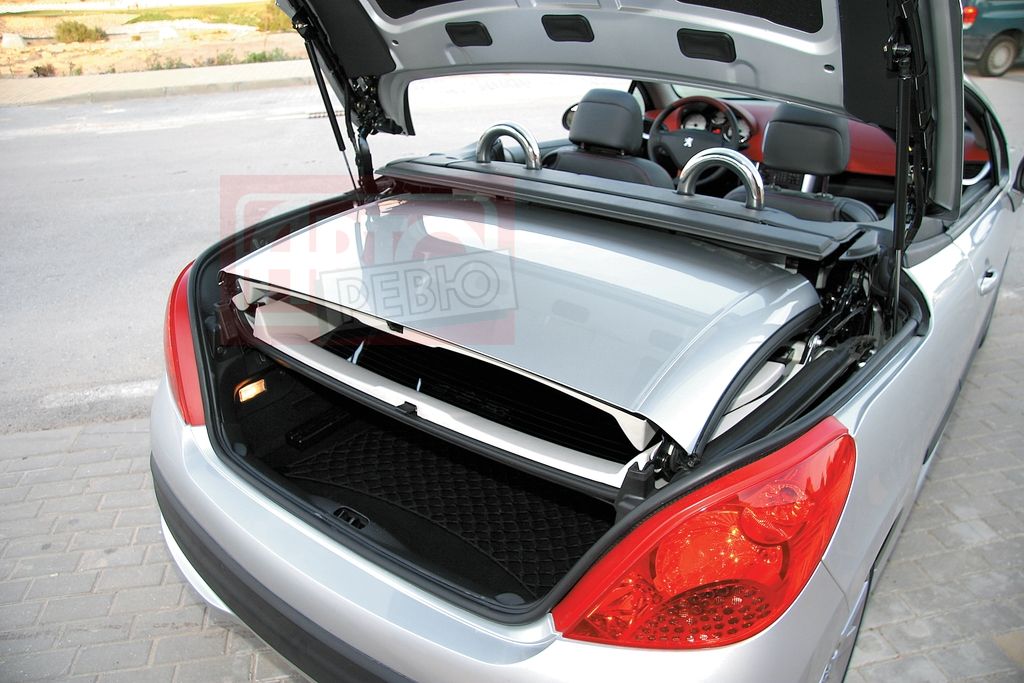 | 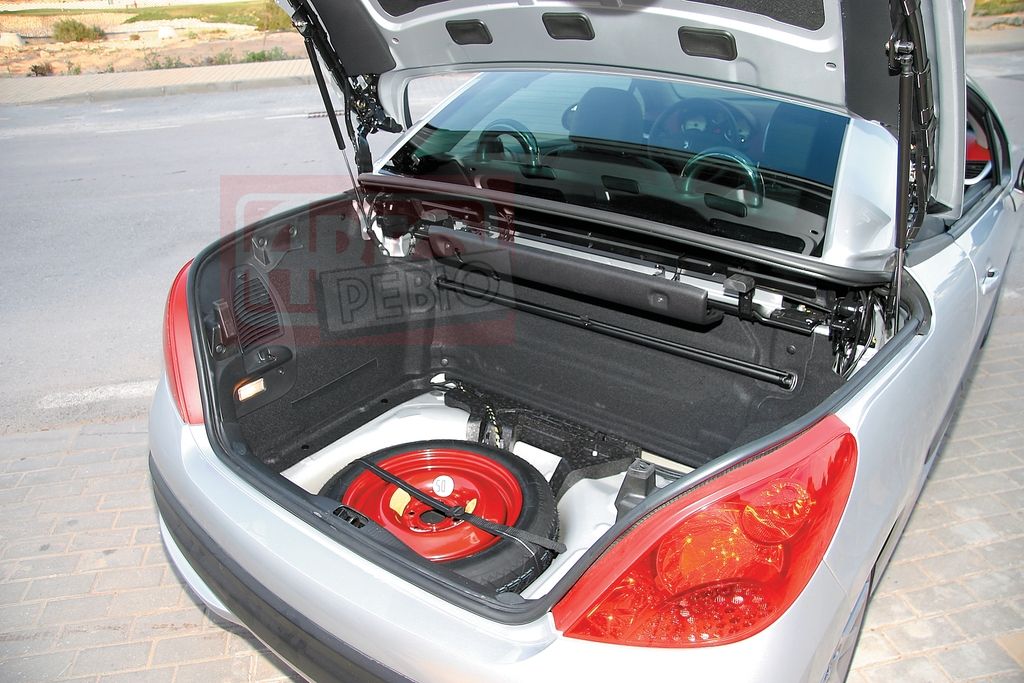 |
| The folded roof eats up more than half of the trunk, and under the roof, as on the 206 CC, there is a horizontal safety curtain that must be pulled out before transforming the coupe into a cabriolet | Unlike the Peugeot 206 CC, which had only an aerosol can for neutralizing minor tire punctures, in the "underground" of the Peugeot 207 CC there is a lifesaving "donut" spare tire |
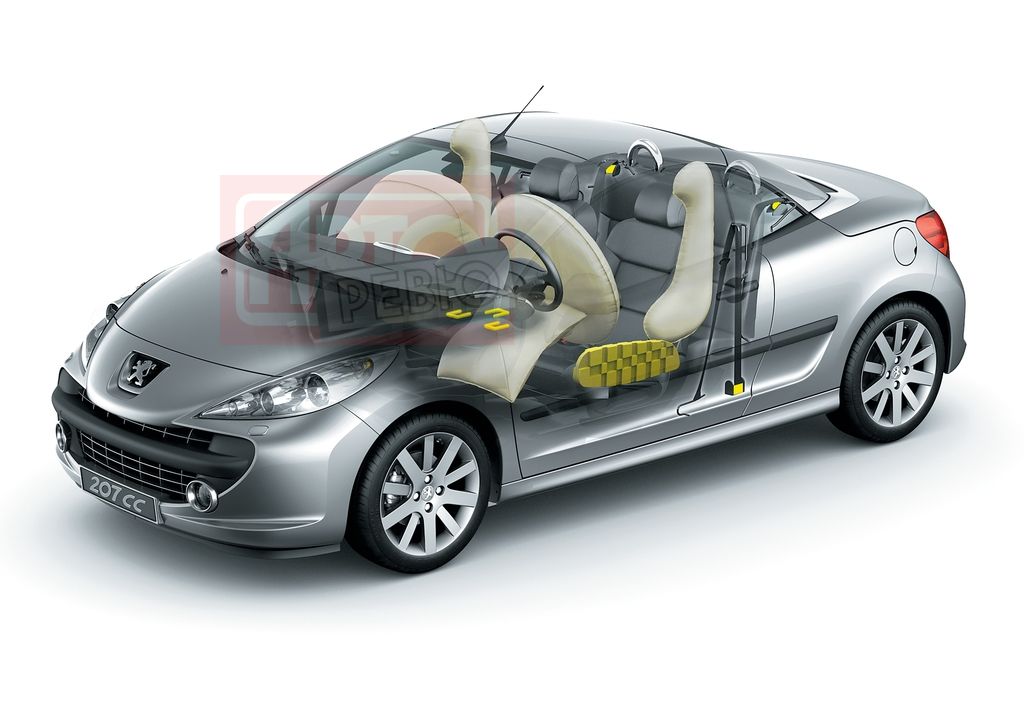 | |
| There seem to be problems with body rigidity: according to the driver of this car, the glass cracked on its own while he was peacefully driving along the road. I looked closely at the crack, ran my hand over it, and found no traces of external impact | The "passive" armament of the coupe-cabriolet includes five airbags, including a knee airbag for the driver |
On the Russian market, the Peugeot 207 CC will effectively have no rivals — there are simply no similar offerings. Although official prices for Russia have not yet been announced (sales start in April), it can be predicted with reasonable confidence that the coupe-cabriolet version with the 1.6 THP turbo engine producing 150 hp will be priced at approximately 23,500 euros. This is four thousand less than what is asked for the 307 CC with a two-liter engine producing 143 hp. The turbocharged 1.6 THP engine is combined exclusively with a manual gearbox, while the naturally aspirated engine of the same displacement, producing 120 hp, can be paired with an automatic transmission. The diesel modification 1.6 HDi (110 hp), available to Europeans, will not reach us. However, this is unlikely to hinder the fulfillment of a modest plan — to sell between one hundred and one hundred fifty cars in Russia in 2007.
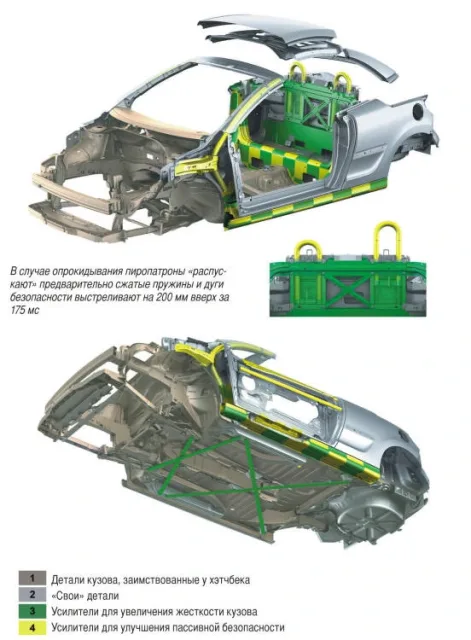
When the roof is raised, the torsional rigidity of the body reaches approximately 17,000 Nm/deg, but after folding the top, this figure decreases by one and a half times — to 11,000 Nm/deg. For comparison: this is 8.5% more than the previous Audi TT roadster, and significantly better than its predecessor, where the figures were 12,500 Nm/deg and 8,000 Nm/deg, respectively
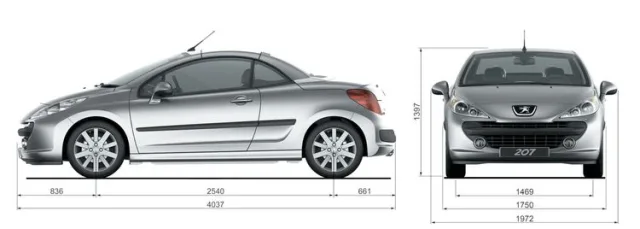
Compared to the hatchback, the coupe-cabriolet is 30 mm wider, 7 mm longer, and 75 mm lower
| Specifications | ||
| Parameters | Vehicle | |
| Peugeot 207 CC | ||
| Modification | 1.6 16V | 1.6 16V THP |
| Body type | coupe-cabriolet | coupe-cabriolet |
| Number of seats | 2+2 | 2+2 |
| Trunk volume, l* | 187—449 | 187—449 |
| Curb weight, kg | 1352 | 1418 |
| Gross weight, kg | 1720 | 1760 |
| Engine | petrol, with distributed injection | petrol, with direct injection and turbocharging |
| Location | front, transverse | front, transverse |
| Number and arrangement of cylinders | 4, in-line | 4, in-line |
| Displacement, cm³ | 1598 | 1598 |
| Cylinder bore/piston stroke, mm | 77.0/85.8 | 77.0/85.8 |
| Compression ratio | 11.0:1 | 10.5:1 |
| Number of valves | 16 | 16 |
| Max power, hp/kW/rpm | 120/88/6000 | 150/110/5800 |
| Max torque, Nm/rpm | 160/4250 | 240/1400 |
| Gearbox | manual, 5-speed (automatic, 4-speed) | manual, 5-speed |
| Drive | front | front |
| Front suspension | independent, spring, McPherson | independent, spring, McPherson |
| Rear suspension | semi-independent, spring | semi-independent, spring |
| Front brakes | disc, ventilated | disc, ventilated |
| Rear brakes | disc | disc |
| Tires | 195/55 R16 | 205/45 R17 |
| Maximum speed, km/h | 200 (195)** | 210 |
| Acceleration time 0—100 km/h, s | 10.7 (12.6) | 8.6 |
| Fuel consumption, l/100 km | ||
| urban cycle | 8.8 (10.0) | 9.6 |
| extra-urban cycle | 5.3 (5.7) | 5.8 |
| combined cycle | 6.5 (7.2) | 7.2 |
| Fuel tank capacity, l | 50 | 50 |
| Fuel | petrol AI-95 | petrol AI-95 |
| * With folded/raised roof | ||
| ** In parentheses — data for modifications with automatic transmission | ||