Peugeot 207
Issue number 107
Powertrain — 1.4 L
Output — 90 hp
Torque — 133 Nm at 3250 rpm
Fuel consumption:
combined cycle — 6.2 L
5-speed automated manual transmission
Curb weight —
Tires — 185/65 R15
Equipment
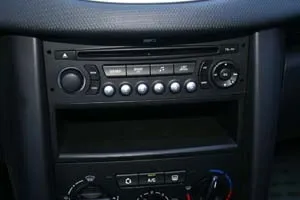
Climate control, screen, 4 power windows, fog lights, airbags, audio system with CD and MP3, central locking, immobilizer, ABS.
Service intervals:
20,000 km
First service — $164 (UAH 1,305)
Second service — $218 (UAH 1,739)
Third service — $211 (UAH 1,685)
Fourth service — $443 (UAH 3,543)
Fifth service — $164 (UAH 1,305)
Sixth service — $329 (UAH 2,630)
Seventh service — $164 (UAH 1,305)
Eighth service — $443 (UAH 3,543)
Warranty — 2 years without mileage limit.
Price 582,000
Base version — $17,247 (UAH 137,970)
Competitors:
Opel Corsa, Fiat Grande Punto, Honda Jazz, Toyota Yaris, Nissan Micra, Kia Picanto,
Hyundai Getz.
Marat Makhmutov
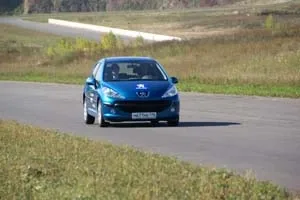
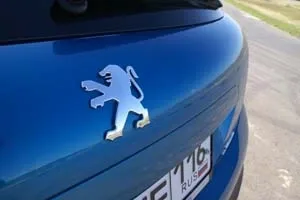
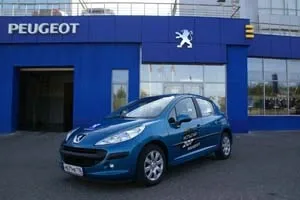
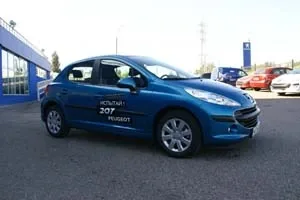
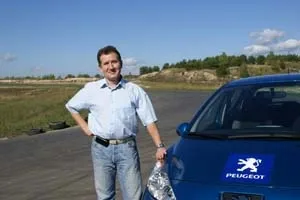
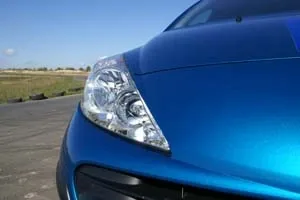
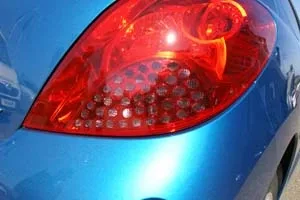
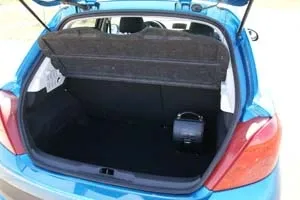
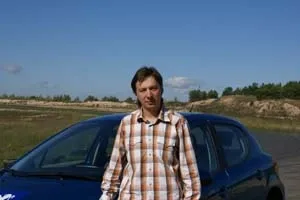
I noticed this Peugeot 207 with the lettering on the doors even before we entered the showroom to process the test paperwork. The blue hatchback had just been washed for our arrival, and its paint gleamed so brightly that it was impossible to miss. “What a beauty,” flashed through my mind. A compact, neat car that didn’t replace the 206 but complemented it looked very attractive, especially in such a rich color that suits the B-segment so well. This connection between the car’s size and its color became even more obvious in the showroom: there stood a black Peugeot 206 and a bright red Peugeot 207. Black, in my opinion, suits large and solid sedans, while small cars look good in bright tones. With the red example, Vadim and I began our inspection of the car with the lion on the hood. And what about the blue one? It was just posing for photos, so we combined the pleasant — studying the exterior and interior — with the useful — saving time. While we were getting acquainted with the car, the manager told us about it: four airbags, 1.4 engines with 75 and 90 hp (currently) and a future 1.6 with 120 hp, anti-corrosion treatment with a 12-year warranty against through rust, soft plastic on the dashboard — a rare occurrence in this class. Something else surprised us: the 8-valve engine, the weakest, meets Euro-5 standards, while the more powerful 16-valve one only meets Euro-4. I already mentioned the appearance — the French know how to make things beautiful. If you compare the 206, which was a sales hit, with our subject, the old-timer clearly loses: the 207 is not only fresher and prettier but also larger. True, the increase in size is mainly felt in the front seats — there’s more room there. But in the back, only two will be comfortable, although five seats are claimed. Children will be fine on the rear bench, but adults not so much. The trunk is small, about 300 liters with the seats up, but that’s enough for a city car. I didn’t like how the side doors close — the sound is somewhat tinny, not solid. But the fifth door closes with a much more pleasant sound.
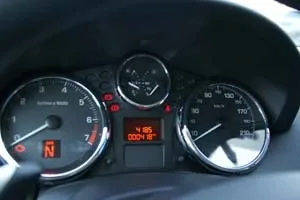
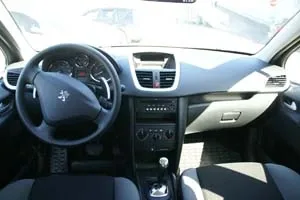
The driver’s seat, which can be manually adjusted for height, is comfortable, and the seating position is good. The steering wheel with electric power steering adjusts in two directions; there’s air conditioning, front power windows, a standard stereo, and a display. The dashboard, although made of pleasant soft plastic, doesn’t shine with design flair — rather a classic shape. But the French wouldn’t be French without elegant silver inserts around the vents and screen. The instruments are round, with a speedometer where the numbers are odd, recessed into wells. The temperature and fuel level indicator needles are in one block and face each other — also original. We even measured the ground clearance to the lower edge of the bumper on both cars with an inch ruler (we couldn’t find another!). It turned out to be almost the same — about 6 inches (approximately 14.5 cm). Of course, this isn’t clearance in the full sense, but at least we got some idea of how the car handles bumps like speed bumps.
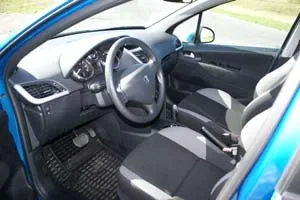
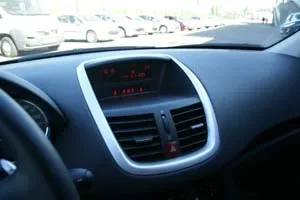
The photo shoot ended, and we got into the blue “lion” to test it in action. It differed from the red one with a 90-hp engine and a robotic gearbox with manual mode — you can shift with both the selector and paddle shifters. Most modern “robots,” except perhaps Volkswagen’s DSG, are far from ideal. Let’s see how Peugeot’s is. I found nothing revolutionary in the gearbox’s operation. If you press the gas smoothly, everything happens calmly and evenly: acceleration is smooth and confident. But if you sharply press the accelerator, the gearbox hesitates, and the car doesn’t respond immediately. You’d better forget about swift overtaking on the highway with such a “robot.” True, if you shift the selector down one or two gears, acceleration improves, but then the engine starts to hum unpleasantly at high revs. It also turned out that manual mode via the selector and via the paddles works differently. In the first case, the electronics intervene almost like in automatic mode — shifting up in advance. But with the paddles, it’s an honest manual gearbox: you can rev the engine to the red zone, and only then will it shift up. When downshifting, the processor also delays until the last moment and intervenes only when the engine is about to stall. “Foolproofing.” A nice detail in all modes: the display always shows which gear is engaged, no matter what position the selector is in. That’s convenient! Not all cars have this, even those a class or two higher. But if the dynamics with the “robot” didn’t impress, the handling of the 207 pleased much more.
On the highway outside the city, when the speedometer needle approached 150 km/h, the “lion” held confidently and precisely, as if glued to the asphalt. The steering wheel filled with pleasant heaviness and clearly conveyed where to turn the wheel. At first, I thought it had a classic hydraulic power steering, but as it turned out, the electric power steering has a progressive characteristic. The handling of this city hatchback impressed us so much that we decided to test it on the “Canyon” ring track. And there, in conditions usually alien to a 100% city dweller, the Peugeot 207 performed admirably, confidently navigating the tricky series of corners. It’s far from a sports car, of course, but the result is quite decent. There are a couple of complaints: first, when lifting off the gas in a corner, the rear steps out slightly, though you can get used to it; second, on the 400-meter straight, the maximum speed was only 130 km/h according to the gauge. I think the sluggishness of the robotic gearbox is to blame. The flip side of the praised handling is a not-comfortable-enough suspension on our broken roads. I won’t say it’s outright bad, but I can’t call it smooth and soothing. For everyday driving, the car seemed a bit stiff, though that’s a small price for the ability to stylishly navigate winding sections.
Overall, in my opinion, the car turned out well. It’s attractive, modern, easy to drive, and spacious. It’s more oriented toward women than men, although the mentality of metropolis residents is gradually shifting toward the practicality of the average European city dweller who knows how to count both maintenance costs and time spent finding a parking spot. And for a small car, you’ll agree, very little space is needed.
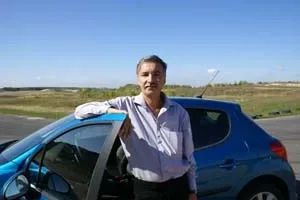
Vadim Sadykov,
“Autoclub-Kazan”
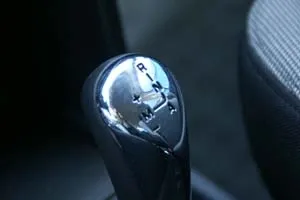
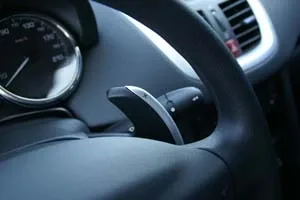
When Alfred and I learned that the test 207 was equipped with a robot, we were pleased — it means it can be safely compared with our family cars that have the same gearbox. The first look at the robot selector caused bewilderment: the 'R', 'N', and 'A' modes are on the same line, and it's easy to miss when selecting. True, when engaging 'R', a sound signal sounds. To switch to manual mode, the lever must first be moved to the left, and only then can you shift gears manually. In the Opel Corsa and Fiat Grande Punto, this is done more conveniently and faster: directly from 'A' mode, you can change gear while simultaneously switching to manual mode. However, on the 207, this can be done with paddle shifters, but there are two nuances. First, after a couple of seconds, the robot returns to 'A' by itself, and second, using the paddles in a turn is inconvenient. Unlike other analogues I know, here the paddles are fixed on a stationary vertical bar: if you miss slightly with your finger, the press hits the bar, and no shift occurs. There is another difference from the robot on the Corsa: if you stand still, engage 'A' and don't press the gas, the 207 won't move. Now about the robot's behavior in motion. It's clear that perfectly smooth shifts, like on an automatic, won't be here, but there are no frightening jerks either. I liked that during sharp acceleration, while you press the gas, the robot allows the engine to rev to the cutoff. A similar picture is on the Corsa in sport mode 'S'. As soon as you release the gas, the robot immediately shifts up. Naturally, the gearbox is tuned for fuel economy: at the first opportunity, it engages fifth and holds 1500–2000 rpm. According to the specs, consumption with the robot is 0.1 L less than with the manual — however, that's the case for everyone. There is a slight thoughtfulness if you need to accelerate sharply from low rpm, but overall, this doesn't spoil the picture.
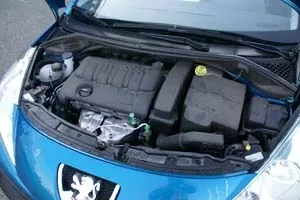
Under the hood here is a 1.4-liter engine with 90 hp and excellent torque at low rpm: 133 Nm at 3250 rpm. But for some reason, normal acceleration is only achieved at high rpm, and at low rpm, traction could be better. Perhaps it's a matter of gearbox settings. For example, 3000 rpm at 100 km/h is clearly too much. On the highway, the expected drawback of a small-displacement engine manifested: when overtaking trucks, the robot drops to third or even second gear, and the engine's whine becomes annoying. However, the 207 is quite comfortable on the highway if there are two lanes in one direction. At least, it holds the road confidently.
The suspension is quite comfortable. It seemed to me that on the front seats, it shakes less on potholes than on the rear ones. The flip side of comfort showed on the race track: in corners, there's no confidence, the rear axle oversteers excessively. The Grande Punto handled better. Also, when braking before a turn, the car was pulled to the side. Perhaps it's a matter of unadjusted rear brakes on this particular example with almost 5000 km on the odometer. That's quite possible. Test cars, unfortunately, experience much greater loads than cars in personal use. However, the trip to the race track was rather impromptu — it's clear that the 207 was originally created for the city.
In the cabin, it seemed a bit boring to me. Too strong a contrast with the bright exterior design. Occasionally, extra engine noise breaks into the cabin. The rear seats don't please with space, and the armrest is clearly non-functional — it's uncomfortable to rest your hand on it. But there are no complaints about the driver's seat. And, most importantly, excellent visibility in the rearview mirrors. They are narrow but quite tall — you can see everything.
As they say in car dealerships, the buyer now primarily looks at the price. Peugeot has tried to make its cars in demand. Here, there's an inexpensive initial price, discounts from the manufacturer and dealer, and a favorable Peugeot Finance program. Probably, now this matters no less than design or other qualities of the car.
Alfred Mardanov,
"Autoclub-Kazan"
If my memory serves me right, the previous "Peugeot" was the sales leader in Europe for three years in a row, and more than 6 million cars were produced in total. Not a bad indicator, and the current 207 has a responsible task ahead. The main feature of the 206 was its design, which literally turned conventional ideas about car appearance upside down. The 207 is a worthy successor: it's modern, easily recognizable, and stylish. Confusing it with another car is simply impossible — you'd have to be blind. The fashionable enlarged facial features make the look more aggressive and memorable. As was rightly noted, the variety of colors for such small cars is only a plus. Multi-colored like M&M'S candies, they stand cheerfully in a row in the parking lot, and it's a beautiful sight. So our subject is bright blue, cleanly washed, ready for tests. Marat was the first to get behind the wheel, and we immediately hit the highway. The washboard road immediately revealed the fighting character of the suspension settings. It handles bumps quite elastically, rather collected-elastic than loose-soft. But Marat couldn't contain his surprise at the car's behavior on the highway. The crazy speed of 150 km/h is absolutely not felt. The car behaves completely adult-like, pressing to the asphalt. Aerodynamic noises are minimal, only when overtaking does the ringing sound of the engine bother. It feels like the car is made for the highway, but everyone knows it's a true city dweller, a slave of the asphalt paradise. Narrow streets with lanes for public transport, yards packed with cars, lack of parking — that's where you can truly appreciate the agility, maneuverability, and small dimensions of this car. True, in winter certain difficulties arise — the ground clearance is a bit low, but they are surmountable even for a beginner. The interior space is accented with chrome circles, a chrome gearshift knob, and a display on the central console that resembles in shape the large badge on the hood. Solid execution of details with an abundance of chrome advantageously emphasizes the car's fashionability.
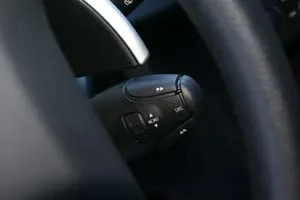
The idea to test it on the real race track "Canyon" came naturally — it behaved too boldly on the regular highway. I didn't aim to squeeze the maximum out of this place, but I did try a couple of things. The car grips the asphalt very confidently and isn't in a hurry to give up. If a breakaway does happen, it starts from the rear axle, but stabilization comes quickly. I carefully tried to provoke a drift — it happened so easily that I had to immediately bring the car back on course. Hence the conclusion: don't demand the impossible from it. There is grip, but it's not limitless. The paddle shifters of the robotic gearbox seemed interesting, but their element is exactly such tests. In the city, they're unlikely to be useful, although it's nice to have them in reserve.
On the way back, we traveled together with Vadim, splitting the road in half. The robot's operation seemed a bit strange to me: reverse gear can be engaged accidentally right while driving. To be fair, the display flashes 'R' at that moment, and the gear doesn't engage, but the feeling is still unpleasant. The city bustle didn't reveal any drawbacks in the car: the robotic gearbox acts adequately, smooth pressing on the pedal gives even acceleration, and sharp pressing — first thoughtfulness, then a jerk. One moment stood out the most. The fashionable side mirrors, which were clearly made for design's sake, turned out to be informative and not at all "blind" as one might expect. And the car itself as a whole is cozy and comfortable. It's pleasant to sit in it, and even more so to drive.
The brakes here are like in most modern cars: the effort is clear and metered, ABS activates exactly when you expect it. The car came out even, solidly assembled, and stylish. It's made for daily trips, doesn't pretend to be more, and is made without obvious flaws. Such a car is for those who choose with their heart, because it's simply impossible not to fall in love with it.