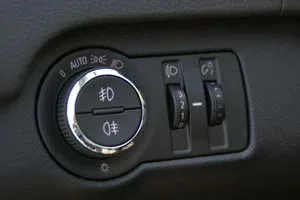
Opel Insignia
Insignia
Powertrain — 2.0 L
Peak power — 220 hp
Maximum torque —
Top speed (km/h) —
Sprint 0-100 km/h — 7.5 sec
Fuel consumption:
combined cycle — 9.6
city — 14
highway — 7
6-speed automatic transmission
Curb weight —
Length — 4830
Width — 1858
Height — 1498
Tires — 245/45 R 18
Insignia Sport trim
Winter package, engine protection, single-zone climate control, cruise control, display on instrument panel, sport leather multifunction steering wheel, sport seats with extendable leg support, sport exhaust system, 4 power windows, front fog lights, front parking sensors, CD 300 audio system, anti-theft alarm, adaptive FlexRide chassis, immobilizer, active headrests, ABS, ESP
Maintenance intervals:
15,000 km
Maintenance 1 — $271 (2,160 UAH)
Maintenance 2 — $338 (2,700 UAH)
Maintenance 3 — $406 (3,240 UAH)
Maintenance 4 — $507 (4,051 UAH)
Maintenance 5 — $406 (3,240 UAH)
Maintenance 6 — $608 (4,860 UAH)
Price $36,123 (288,981 UAH)
Base version $29,441 (235,522 UAH)
Competitors: Mazda 6, Honda Accord, Mitsubishi Galant, Volkswagen Passat, Toyota Avensis, Nissan Teana.
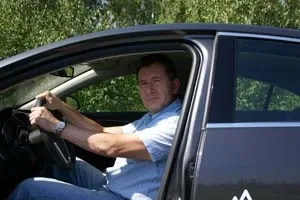
Marat Makhmutov
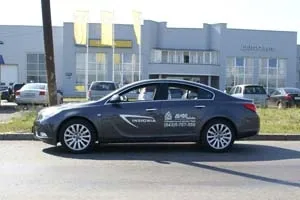
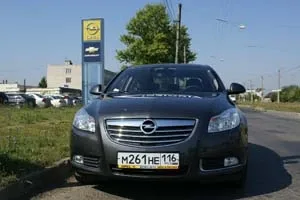
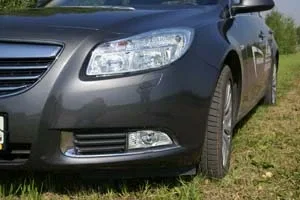
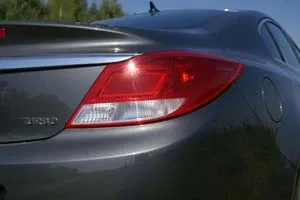
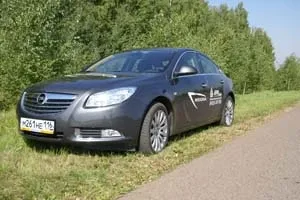
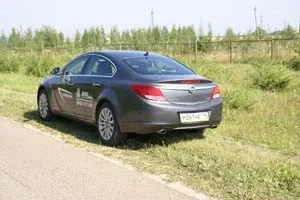
This is a completely different Opel that has nothing in common with the previous Vectra or its earlier versions. That thought came to me back in the spring of this year when I noticed an unfamiliar dark car with a sloping roof and the brand's lightning bolt emblem on the rear near my house. In the appearance of the new model, which turned out to be the Insignia, there was no trace of the strict rectangular contours of its predecessor — the silhouette became truly dynamic. The body design of the new sedan, which looks like a coupe, the striking stampings on the doors, narrow aerodynamic mirrors, LED headlights, and a pair of chrome exhaust tips — in just five years, engineers have made a real revolution, completely abandoning the old pragmatism. Time flies unnoticed: in 2004, I was choosing a car and among other candidates considered the then-fresh Vectra.
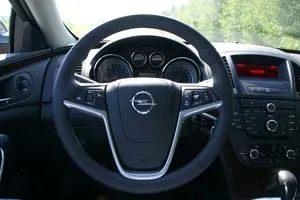
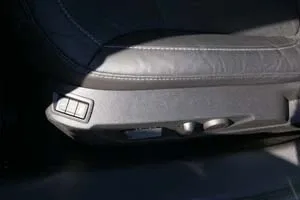
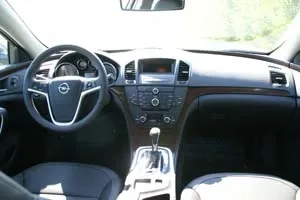
It was the coldness of the exterior, the confusing climate and audio controls, the not-so-high-quality trim materials, and the cramped rear row — because a D-class car, in my opinion, should carry a family — that made me refuse to buy it then. "Insignia" translates from English as "sign of distinction," and as a model name, this word appeared back in 2003. As you can see, only six years later it was finally assigned to the current representative of the family class from Rüsselsheim. And it is undoubtedly justified, as it accurately reflects the company's new philosophy. The interior of the new model has also undergone serious reworking. The quality of materials has noticeably improved, although it is still far from ideal, but progress is evident. The seats are simply excellent; they received the highest rating from German doctors as "caring for the driver's health"; the driver's seat has electric adjustments in all directions and memory for two drivers, while the passenger seat has a combined electromechanical drive. The center console, styled like a bird's wing (they say this motif will continue in the company's next models), looks very beautiful. The many buttons on it are not intimidating: they have become larger, and their placement is better thought out from an ergonomic standpoint. The only thing that disappointed while driving was that the smooth plastic around the button block creaks slightly even on barely noticeable bumps. This does not affect speed, but such a sound clearly clashes with the luxurious interior, making you want to glue that area as soon as possible.
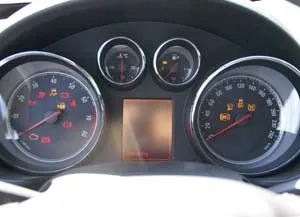
The instrument panel with chrome rings around the dials looks stylish. A sporty note is present here too: when turning the ignition key (there is no "Start-Stop" button even in the top version), all needles synchronously sweep around the dial in one direction and return to their place. The numbers on the speedometer and tachometer are too small and frequent, which makes them hard to read on the go, but the backlight changes color from white in normal mode to red when the "Sport" button on the console is activated. The three-spoke steering wheel with thickened grip areas is a bit thin, although it looks attractive and carries cruise control and audio system buttons. The steering column stalks have become round and, importantly, with detents again — owners of previous Vectras will surely appreciate the return to the familiar scheme. The triple flash of the turn signals with a short press on the lever is preserved, as in all European models.
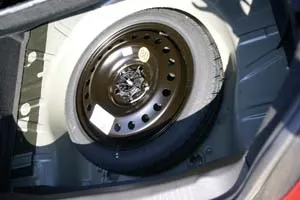
The sloping roof initially makes you worry about headroom in the back. Vadim and I, both about 180 cm tall, thought we would have to press our heads against the ceiling. But in reality, rear passengers usually sit relaxed, stretching their legs and slightly slouching down. In this position, there is enough headroom, no discomfort. The lack of sound insulation on the rear parcel shelf was surprising — this is noticeable if you look from the trunk. But the hood with a gas strut and good sound and heat insulation, which folds in a parallelogram scheme, slightly shifting toward the windshield, pleased us. In the trunk, instead of a full-size spare tire, there is a space-saver spare.
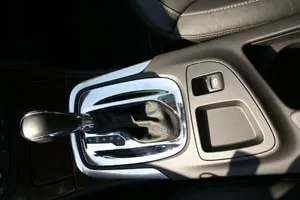
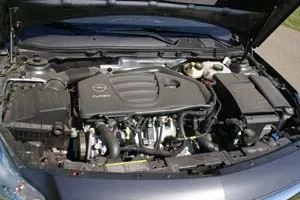
The test car was in Sport trim: under the hood — a two-liter turbocharged "four" with 220 hp and a six-speed automatic. The engine is almost silent at idle; only the tachometer reminds you of its operation. The gearbox has a manual mode, but as it turned out, it will be more useful on long descents than in normal driving — the power and torque of 350 Nm are more than enough, despite a barely noticeable turbo lag. The engine is really good: it easily and quickly accelerates the car with a total weight of about two tons, and this ease is felt even from the front passenger seat. You feel the ease of acceleration, not the dynamics of acceleration. The automatic transmission shifts are so soft and smooth that you physically feel it when moving the selector, for example, from "P" to "D," but this does not affect dynamics — the claimed 7.8 seconds to 100 km/h is a very decent result for a family car. In my opinion, these figures are not taken from the ceiling. The steering wheel is informative, with clear feedback and a pronounced "center." We tested the handling on a winding section of a suburban highway near the northern bypass road. Taking an improvised "slalom" at a speed of about 130 km/h deserves the highest praise: not a hint of understeer or oversteer, precise trajectory following, minimal body roll. Our driving euphoria was interrupted only by slow cars ahead.
This was largely facilitated by the excellent chassis and low-profile tires 245/45 R18. The latter deserve special mention: initially, we feared they would be "teeth-rattling."
As for comfort on such wheels — everything is excellent, no problems. Not every car with such wheels can boast the same confident handling and at the same time a smooth ride. The brakes also pleased: the pedal is responsive, the deceleration clearly corresponds to how hard you press, and the mechanisms themselves are grippy. Overall, the car is very worthy in all key parameters. But there are a couple of drawbacks. First, the exterior mirrors are a bit small, making rear visibility leave much to be desired. Second, at speeds over 120 km/h, aerodynamic noise appears in the area of the pillars. And third, on a suburban highway, small stones from under the wheels clearly indicated that the manufacturer decided to save on sound insulation of the rear wheel arches. During the short test, we did not manage to try the optional intelligent AFL+ headlight system with its nine modes and the proprietary adaptive FlexRide suspension, which affects not only the shock absorbers but also the sharpness of the steering — they were simply not on the test car. There was also no all-wheel drive. But even in this form, the car made a very pleasant impression. It is not surprising that it was the "Car of the Year 2009." Perhaps this year, competitors like the Ford Mondeo and Volkswagen Passat will have to make room.
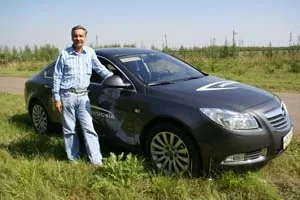
Vadim Sadykov, "Autoclub-Kazan"
Long gone are the days when, due to a lack of information, people repeated the stupid saying: "Every German eventually becomes an Opel." Now it is nothing more than a relic of the past. Just look at how many Opel Corsas are driving around the streets.
In 2005, I reviewed almost the entire D-class in search of a suitable car. The Vectra was also on the list. The strict, angular design — for my age, such solidity was perhaps suitable. But the front panel, all made of sharp corners, as if chopped with an axe, I categorically did not like. The Insignia, however, received not only softer shapes in the cabin, but also a swift appearance. Is this good or bad? I won't judge. But I must admit: automotive fashion exists, and all manufacturers, one way or another, borrow stylistic solutions from each other.
You get used to the Insignia instantly. Everything is at hand, the gas pedal responds easily, the steering wheel is clear and informative. Special mention deserves the brakes: immediately, without any getting used to, you get exactly the deceleration you expect at any speed. True, in the cabin there was one thing that frankly irritated: the adjustment of power windows and mirrors — there is some flimsy "nub" sticking out (I can't find another word), it's inconvenient to use. I've seen a similar design on two budget cars (one of them Chinese), and on the "non-Chinese" one it was almost broken off. But I didn't even pay attention to the narrow mirrors at first — fashion, what can you do. But when at a speed of 110 they began to make aerodynamic noise, then you start to think. The Toyota Avensis doesn't have this. Yes, the mirrors are uncomfortable, visibility is worse, but they are beautiful. The Insignia's mirrors are only beautiful. No practical use. Okay, let's chalk it up to fashion and look at the average consumption — for this particular example, it was 22.6 liters. Apparently, the test drivers didn't stand on ceremony. However, after resetting the counter, we got quite acceptable 12.9 liters, and no one specifically saved — when necessary, they pressed the pedal to the floor. Such efficiency is the result of the coordinated work of the modern 6-speed automatic transmission and the new 2.0 turbo engine with 220 hp. The stated acceleration to 100 km/h is 7.8 seconds. Impressive. On the highway, I tucked in behind a truck and at a speed of 80 km/h went to overtake: quickly, confidently, safely. By the way, aerodynamic noise is also heard in the area of the rear window. In the city, high engine speeds are not needed — the Insignia drives easily, but if desired, it allows you to quickly overtake a slow driver. I didn't even try the manual mode of the automatic transmission, there's no point — everything works perfectly anyway.
But with the suspension, everything is not so clear. On small potholes and bumps, it behaves impeccably. And this is on 18-inch wheels! For comparison, the Avensis on 17-inch was overly stiff. Large potholes with gentle edges are also handled decently, but if the edges are steep — sometimes the struts bottom out. By mistake, we drove onto a terrible dirt road, and even there it was quite comfortable to drive. Handling was tested on our favorite winding road. Everything is predictable and clear, there is a feeling of complete control and even permissiveness. But as soon as you enter a corner on a road with irregularities, the car starts to drift to the side. A useful reminder that caution does not hurt. For someone, such excellent handling on smooth surfaces can play a cruel joke if they encounter "washboard" sections. Perhaps the reason is the short-travel suspension.
Now about the combination of engines and transmissions. The 1.8 (140 hp) and 1.6 turbo (180 hp) are offered only with a manual. The automatic is available only with the 2.0 turbo (220 hp) and 2.8 turbo (280 hp). A very similar situation is with the Ford Mondeo, where the automatic transmission comes only with the 2.3-liter engine. The choice is strange. The most popular engines in this class are the usual naturally aspirated 1.8 and 2.0, and almost all competitors offer both manual and automatic (or CVT with robot) to choose from. Thus, those who need the comfort of an automatic transmission but do not need excessive power fall out of the number of potential buyers — because this is not only extra fuel consumption, but also higher taxes.
In the near future, a test Insignia with a 1.8 engine will appear at "Delpho-auto" — we will definitely take a ride and compare it with the 2.0 turbo version.