
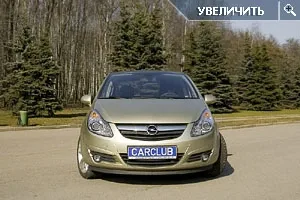
The Opel Corsa has always been positioned as a car, let's say, primarily for women, and moreover, inexpensive. For independent and self-sufficient ladies, this model is a real stroke of luck, but there are not yet many such women in Russia, unfortunately or fortunately. When a man buys the car, any hint of its budget nature can spoil the impression of the gift. Launching a new advertising campaign with slogans like Rulezzz and Common, Opel marketers tried to refresh the Corsa's image, making it more attractive to young people. But, as advertising market experts noted, in Russia this strategy did not resonate with the solvent audience. Perhaps it did catch the end consumers—students and especially female students—but the decision to buy a car is usually made not by them, but by their parents or wealthy life partners. Therefore, it was decided to return to simpler advertising with an emphasis on price... As they say, you reap what you sow.
Meanwhile, the Corsa is not actually as cheap as they try to portray it in advertising. For the attractive $11,990, you get a practically bare car with a three-cylinder engine of just one liter. As long as AvtoVAZ with its affordable compact cars equipped with relatively powerful engines is alive in Russia, microcars are doomed to failure here. This is confirmed by sales statistics: according to dealers, demand for base versions is almost zero. The average price of a new Corsa ranges from $14,000 to $16,000. And in the top trim, the price tag can exceed $20,000. For the test, we chose a car in the top Cosmo version with a leather and fabric interior, sunroof, and a large color display on the center console, whose navigation does not work in Russia, but with a modest 1.2-liter engine and the Easytronic robotic gearbox. In total, the retail price of our car was $18,170.
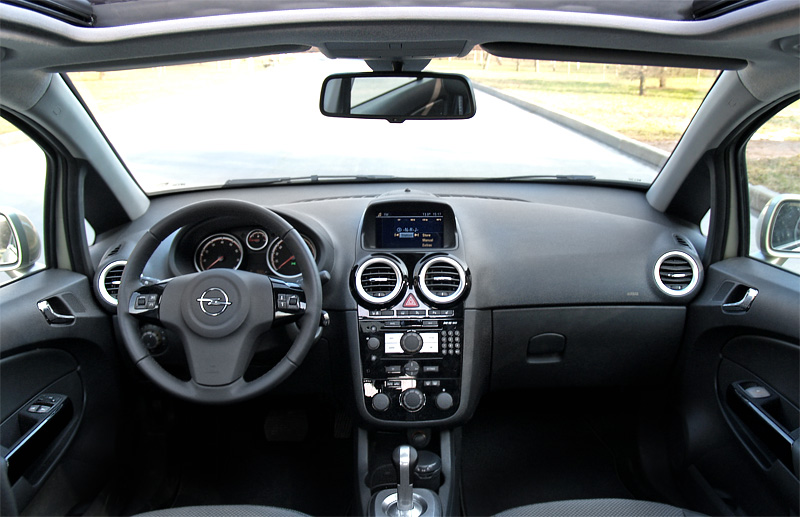
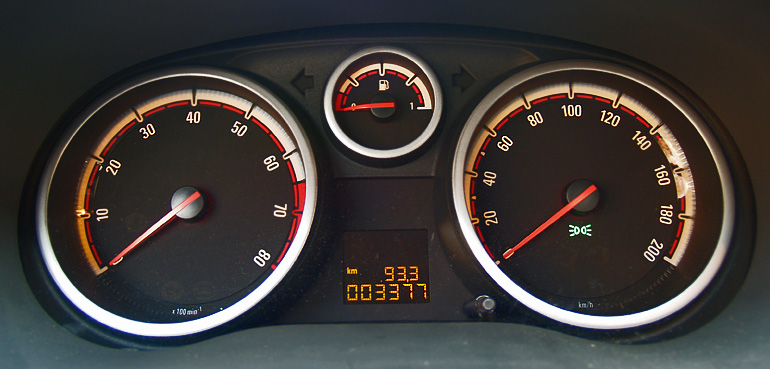
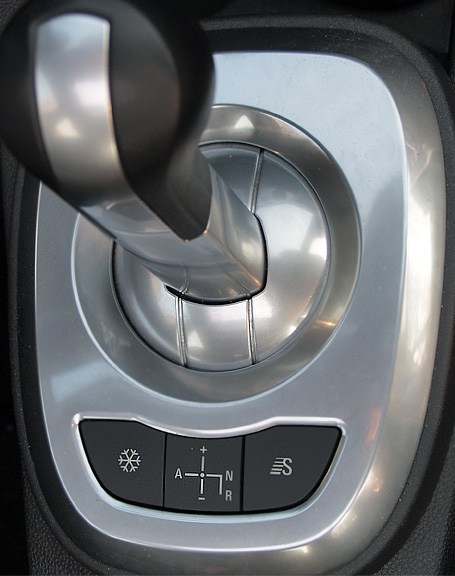
To form an objective opinion about the appearance of the new Corsa, we asked the entire CarClub.ru team to comment on the car. At the same time, of course, priority was given to the fair half of humanity. And how could it be otherwise on a sunny spring day...
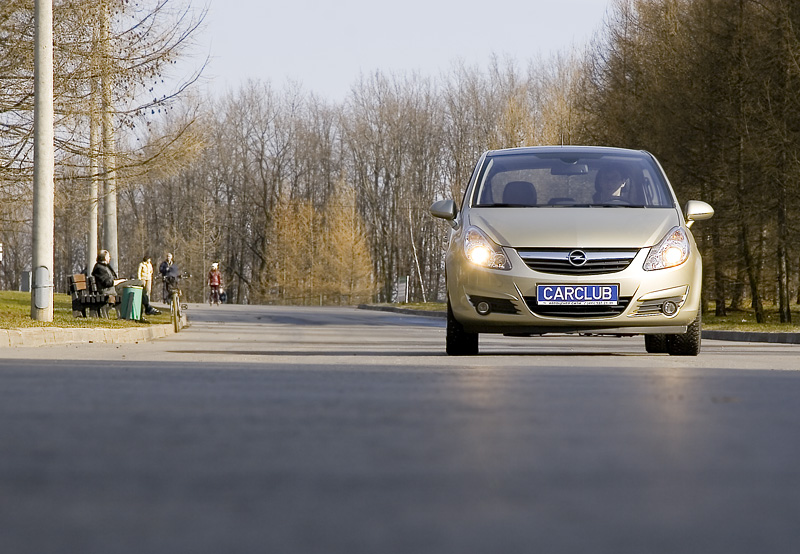
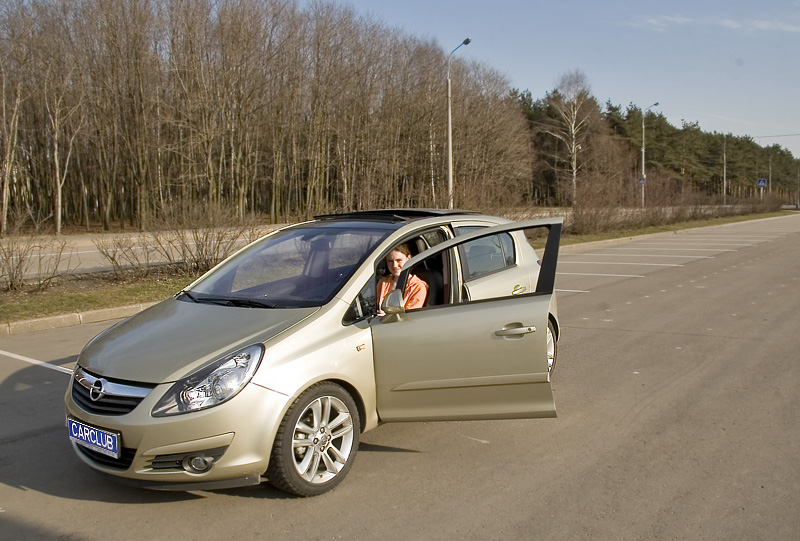
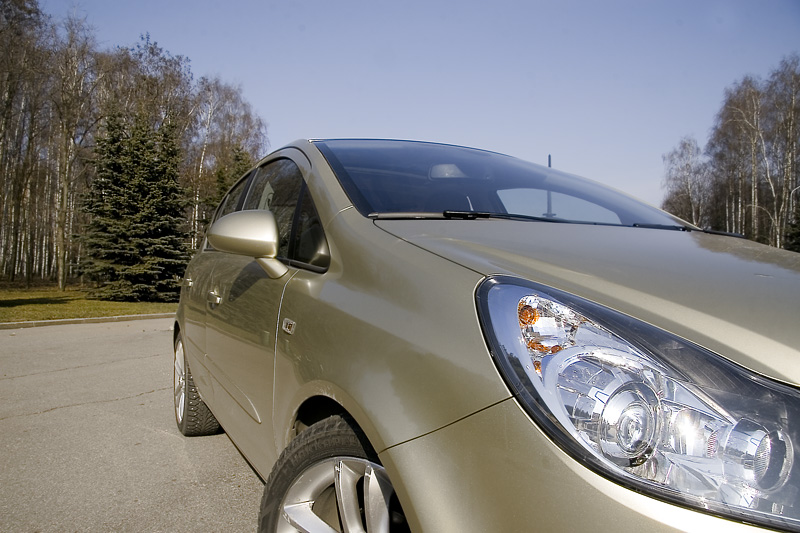
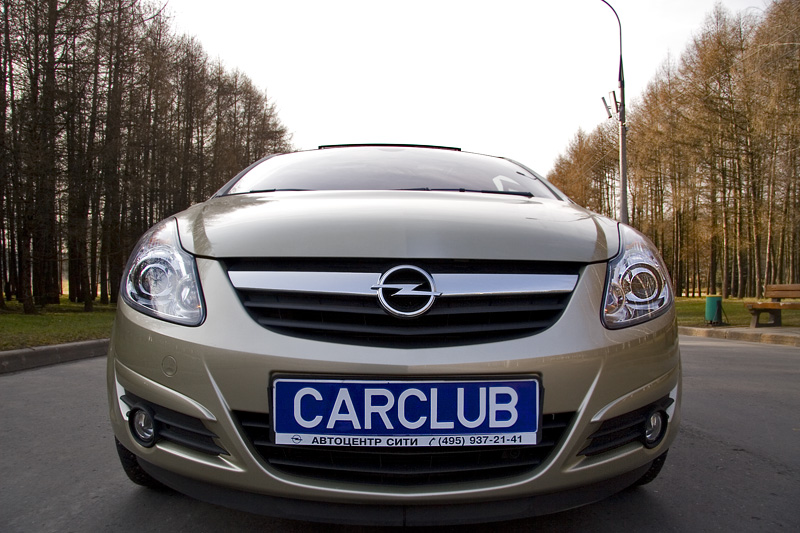
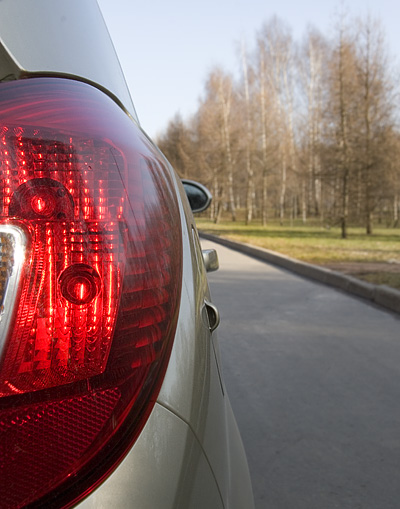
The male part of the team was divided into two camps: some were won over by the wedge-shaped silhouette and striking 17-inch wheels, while others—and they turned out to be the majority—complained about the small trunk and the completely unserious image of the model. But the girls unanimously recognized the Corsa as a beauty. The slightly "surprised" slanting headlights in the style of the Peugeot 206, the swift profile, and the oval rear lights create a cohesive and harmonious image of a stylish city car. Moreover, many girls admitted that if their boyfriend drove such a car, but in a dark color, they would not mind. Down with complexes and stereotypes—everyone switch to Corsas! It was this slogan that we followed, throwing open the wide front doors of our Opel.
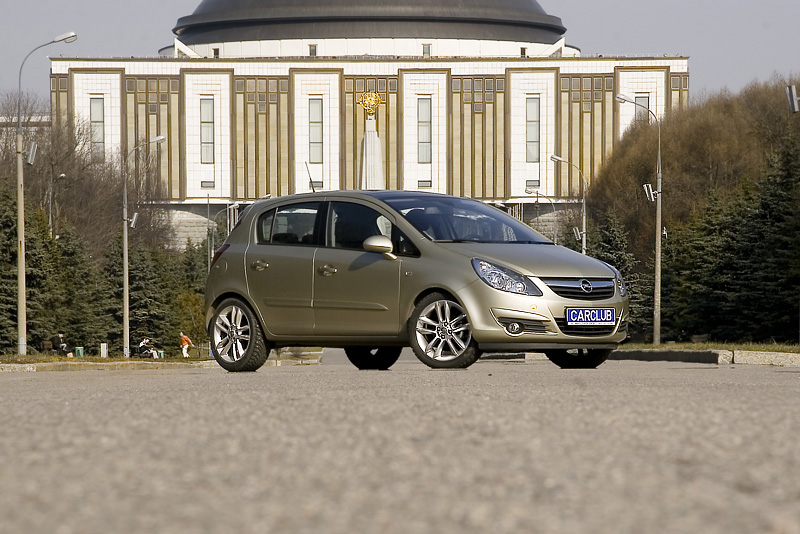
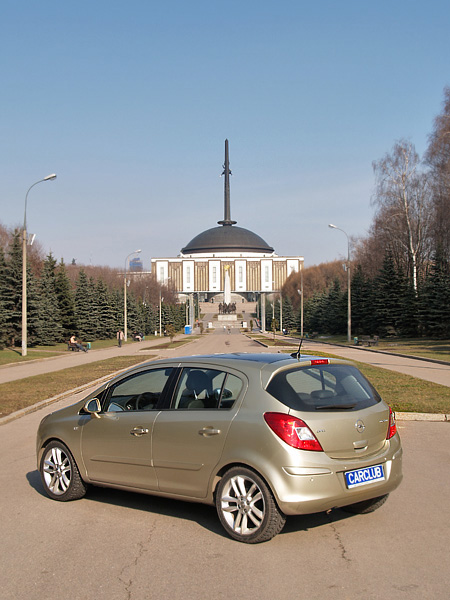
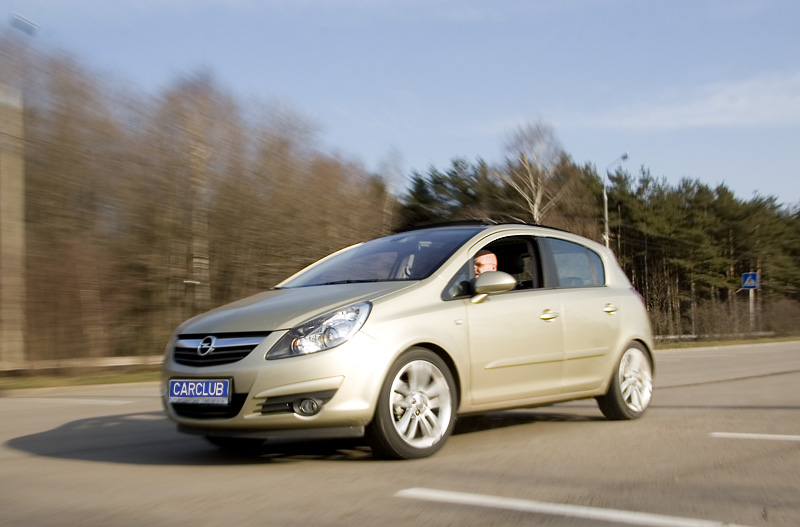
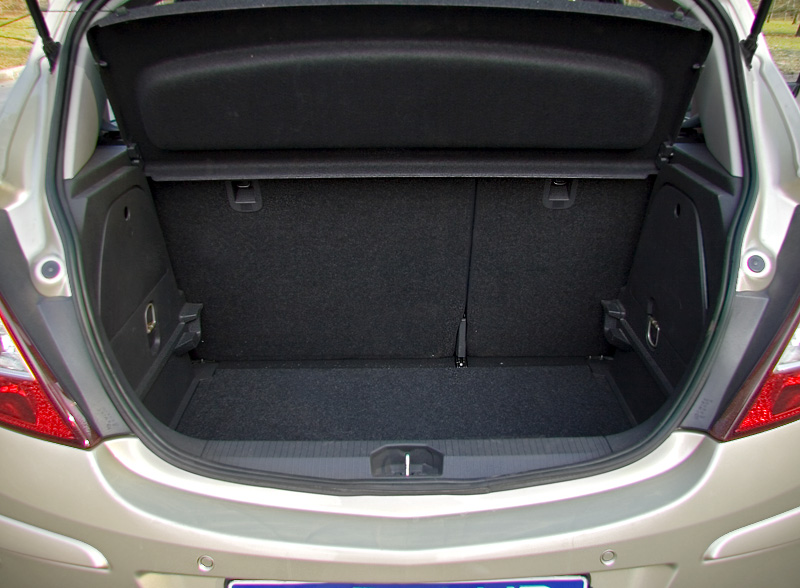
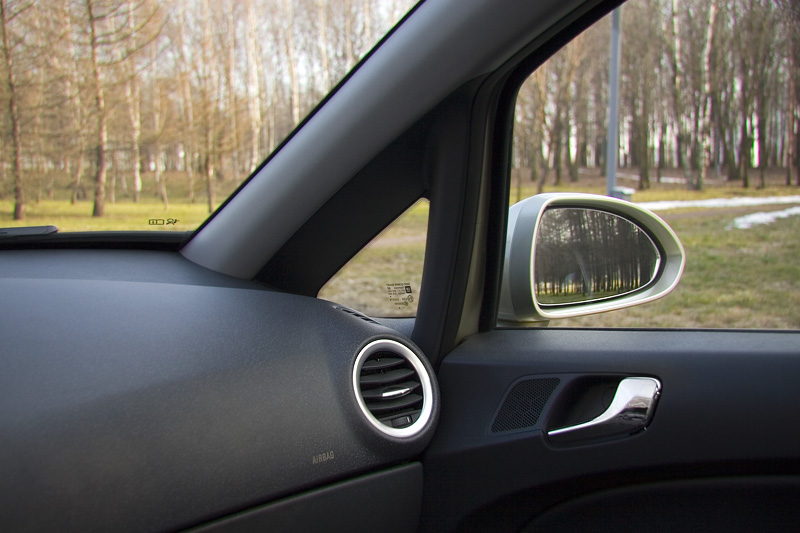
There is more free space in the front seats than in some business-class sedans. The windshield is pushed so far forward that there is even room for small triangular windows in front of the doors. It cannot be said that they greatly affect visibility—due to the thick pillars, almost nothing is visible through them. But they clearly adorn the Corsa's silhouette. As befits a German car, the front seats have a large range of longitudinal adjustment, and the backrest itself holds well under the shoulder blades even in the sharpest turns. But I fear that a larger driver will already be uncomfortable—the rigid side support bolsters will press into the back. Rear passengers, of course, do not have as much space, although at a height of 181 cm, you can quite sit behind yourself without touching either the ceiling or the front seat. However, three in the back is already cramped—the Corsa is clearly not intended for transporting passengers, although if desired, five skinny female students can still be accommodated in the car. The trunk of the hatchback turned out to be quite convenient for its class. It cannot be called large—with a body length of less than four meters, that is unattainable—but the available space is organized as efficiently as possible. The trunk can be divided horizontally into two levels, which is useful when packing bags. Moreover, if the full volume is not needed, the floor raised to the edge facilitates loading and unloading.
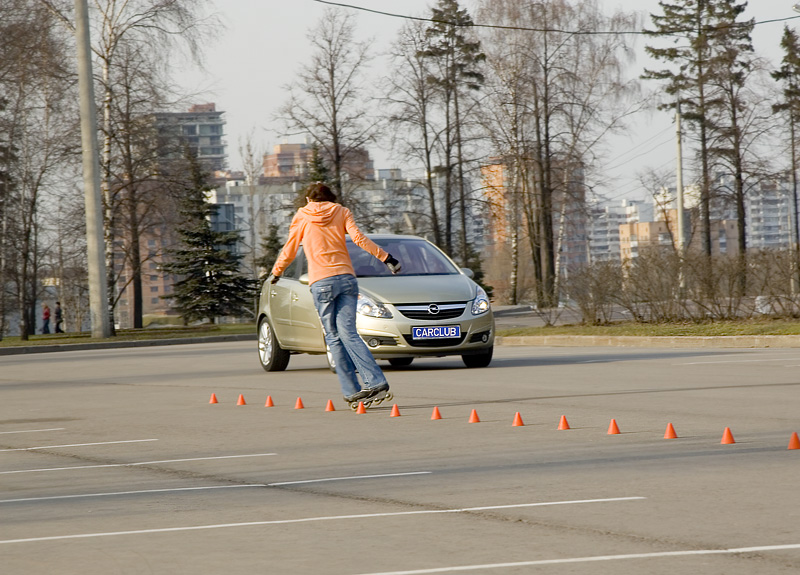
On the road, the Opel Corsa behaves unexpectedly composed and taut. The striking 17-inch wheels made the little car's reactions extremely precise and quick. Even on soft Nokian winter tires, the Corsa takes corners at a speed unattainable for the previous generation. The steering wheel is constantly filled with rich reactive force, just like on the... Fiat Grande Punto. And this is no coincidence: these cars share the same chassis platform, even the triangular windows in front of the doors are the same shape. In a limit corner, the Corsa slides slightly outward with the front wheels and screws into the turn perfectly when lifting off the throttle. As usual, the victim of sportiness was ride comfort. On speed bumps, the little car is tossed around considerably. If the front suspension handles bumps tolerably, the rear axle almost jumps over humps. And exceeding the speed limit can even lead to suspension bottoming out. But on the other hand, the Corsa has no hint of pitching.
With such handling, you can safely participate in street races in a Corsa, at least in the city center, where there are significantly more turns than straights. After all, under the hood hides a modest 1.2-liter engine. And even though it produces a respectable 80 hp, we did not expect any particular sprightliness from it. And... we were right: paired with the robotic Easytronic gearbox, the 1.2-liter Corsa is a solution for calm drivers. Compared to the previous generation of the "robot," when gears shifted incredibly slowly, the current Easytronic has advanced significantly. Nose dives during acceleration have been reduced, and if you shift in manual mode, they can be avoided altogether. At the same time, shift time is quite comparable to what the average driver would do. Although, of course, the robot is still far from the shift speed of traditional "automatics," and there is no certainty that they will ever achieve the same smoothness of operation.
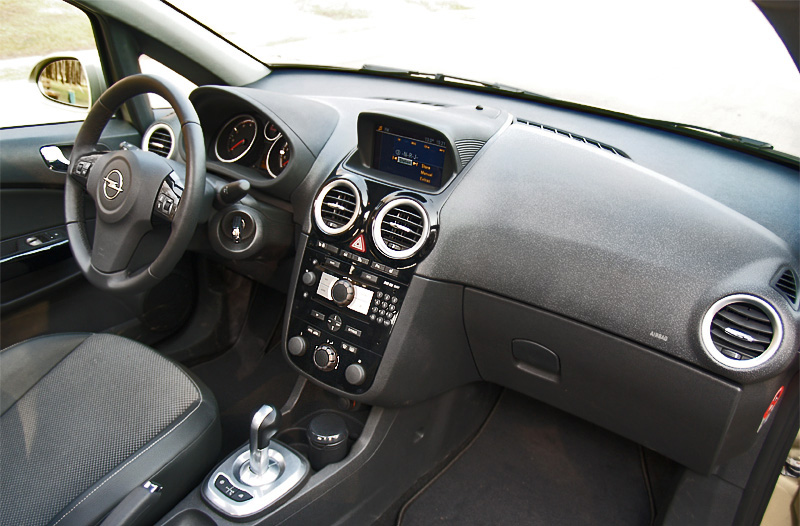
But for those who like to tickle their nerves and suddenly find themselves behind the wheel of a Corsa, the engineers have provided a full-fledged Launch Control — a mode that allows you to start with maximum possible acceleration. Here, the electronics act strictly according to sports canons: it revs the engine to 3–3.5 thousand rpm and then quickly, though quite smoothly, releases the clutch, only slightly slipping it. There is almost no wheelspin, and if there were summer tires under the wheels, there would likely be none at all. The Corsa takes off like... no, the word "scalded" is not quite appropriate here. Opel simply begins to accelerate — and expecting anything more from a 1.2-liter engine would be naive. It would be good if it could even compete with domestic front-wheel-drive cars. In sport mode, the gearbox continues to work correctly: it shifts down and keeps the tachometer needle no lower than three thousand rpm. However, the capabilities of the engine itself, even at high revs, are unfortunately very limited. Active acceleration ends in second gear, somewhere around 90 km/h. Further, speed builds up very slowly, and at about 150 km/h, engine thrust and air resistance practically reach a balance. I never managed to accelerate the Corsa faster, although the official data promises a maximum of 168 km/h.
If moderate dynamics can still be tolerated, attributing it to concern for ecology and fuel economy, then some details begin to frankly irritate. One gets the impression that the developers invested in soft and pleasant-to-the-touch plastic of the front panel, made stylish buttons and knobs on the center console — a clear claim to a new level of quality. But at the same time, even in the top Cosmo trim, there was no place for a mirror in the passenger sun visor, although it needs it much more than the driver. Even without lighting — just so the passenger could glance at herself, fix her hair or makeup. In addition, everyone who sat in the car noticed that the decorative trim on the door is about to fall off. Although the latter is most likely explained by the active use of the car during the test.
Parting with the Corsa left me with a mixed impression. I liked the car. I won't say I fell in love with it, but sympathy — definitely. Of course, the version with the 90-horsepower 1.4-liter engine and manual gearbox would have been much more preferable. And even better — a 1.6-liter engine. Under the hood of this little one, 110–120 "horses" would look great. However, such a version is unfortunately not available in Russia, and if it appeared, its price would easily cross the $20,000 mark, after which it makes no sense to look at B-segment cars, no matter how beautiful and well-handling they are.
If you choose a compact car from a purely pragmatic point of view, the most reasonable purchase looks like the Chevrolet Aveo. In its class, it is the maximum car for your money. I won't argue: the Corsa is both better and prettier, but in terms of functionality and interior space, these two cars are very similar, but the price difference is significant. Therefore, the Corsa, alas, will remain a niche "women's car," and not for everyone at that. And its excellent handling will most likely go unnoticed by most buyers.
Text: Leonid Pavlov. Photos by the author and Dmitry Malygin.