
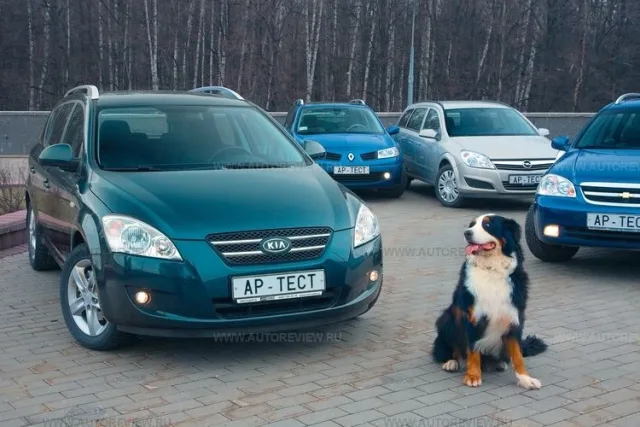
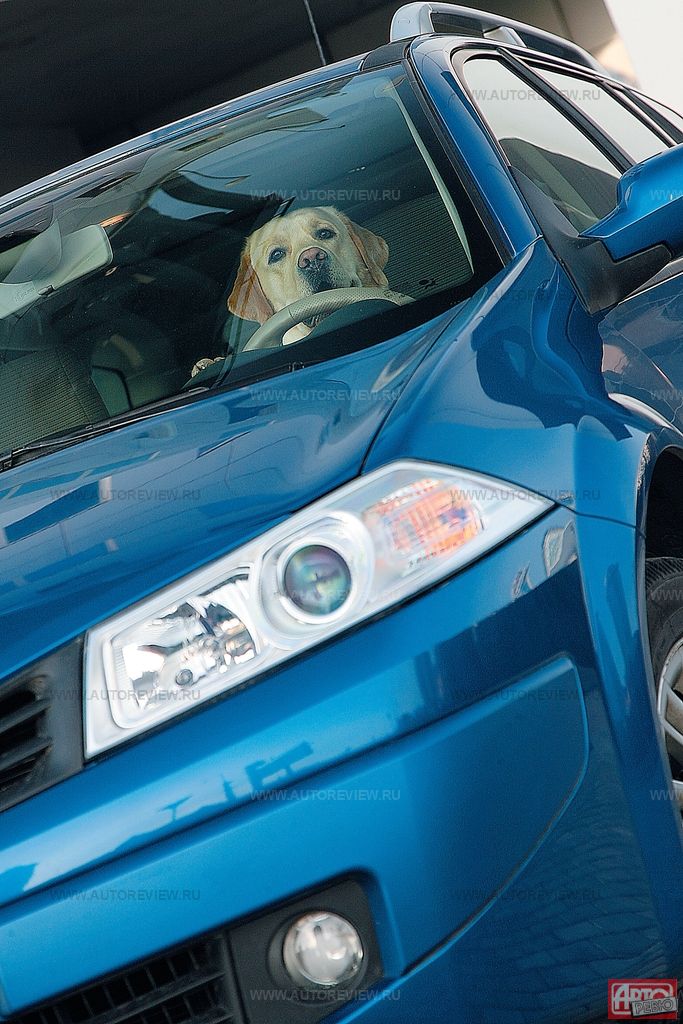
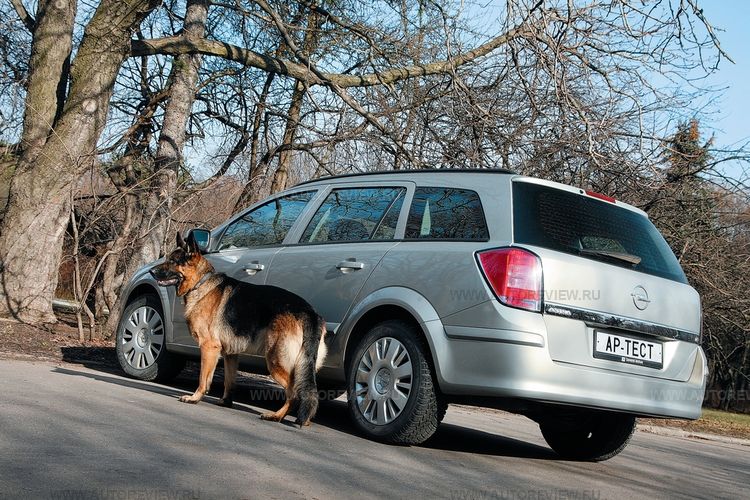
A basket, a picture, a cardboard box and a little dog... Or not so little — for example, a shepherd, a retriever, or even a Bernese Mountain Dog. What don't people haul to their dachas during the May holidays! Though, most often — in regular sedans and hatchbacks: station wagons make up only 5.3% of the half a million C+ class cars sold in Russia in 2007.
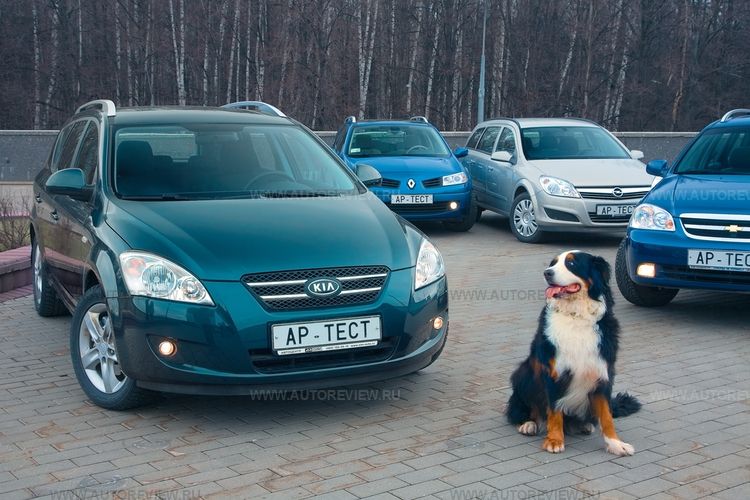
Are station wagons clearly underestimated? We decided to fix that. We compare the Kia cee’d Sporty Wagon, Chevrolet Lacetti Station Wagon, Opel Astra Caravan, and Renault Megane Estate.
The sales leader in this segment is the Ford Focus, but we couldn't get one for the test. Also, all participants have different powertrains: the Lacetti has a 1.6-liter engine with a manual, the Astra has a 1.8 engine with an automatic, and the Megane and Kia have two-liter engines with automatic transmissions. All three 'automatics' are four-speed. However, the dynamics are similar for all: acceleration to 100 km/h in 10.7–11.7 seconds, top speed from 187 to 195 km/h.
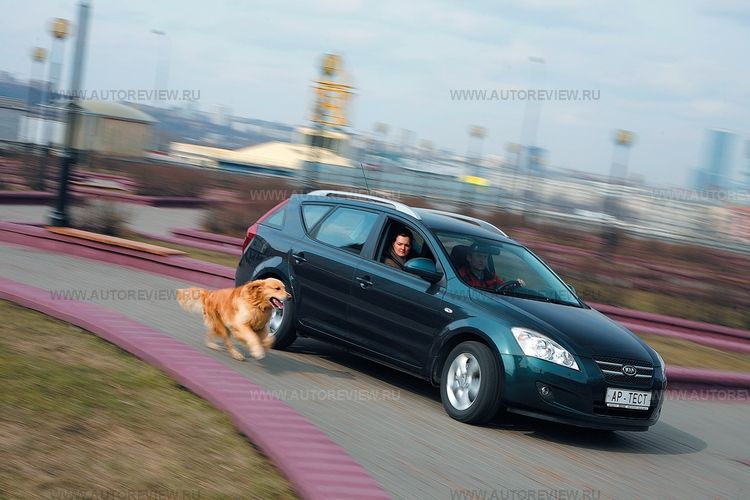
But people buy station wagons not for dynamics, but for hauling cargo and passengers!
The rated payload for the Kia cee’d is up to 491 kg, for the Chevrolet Lacetti up to 515 kg, and for the Opel Astra 552 kg. And the Renault Megane is ready to take up to 580 kg on board!
 |
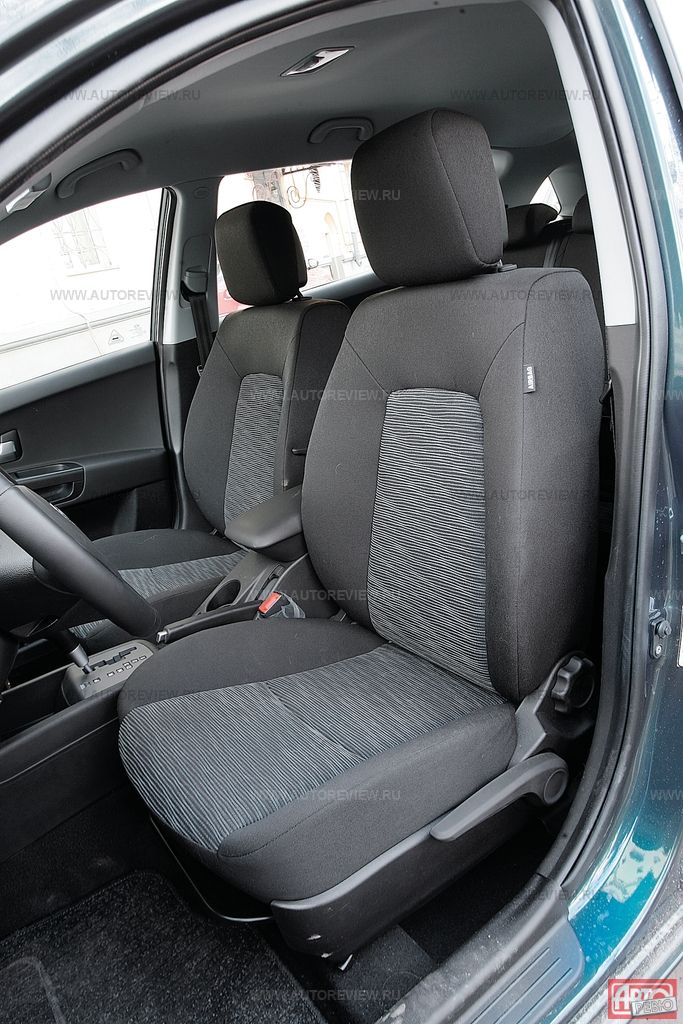 |
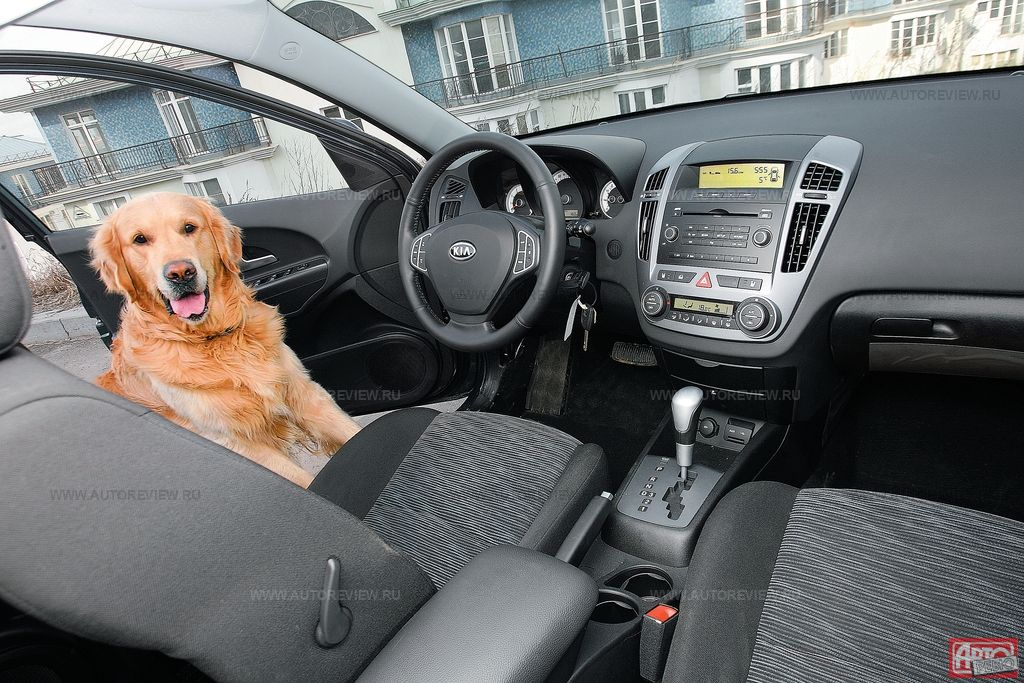
| Kia cee’d Sporty Wagon: simple but high-quality and ergonomic interior. Didn't like the steering wheel with a narrow 'pocket' between the spokes and rim | The shape of Kia's firm front seats is German-correct, though the side support bolsters are set a bit wide |
 |
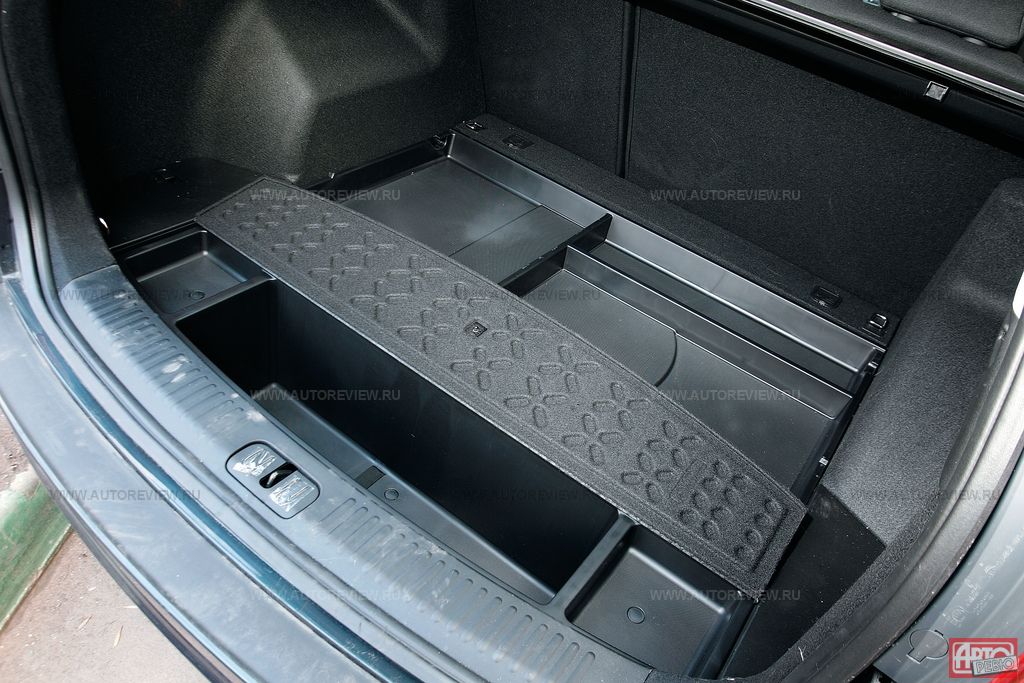 |
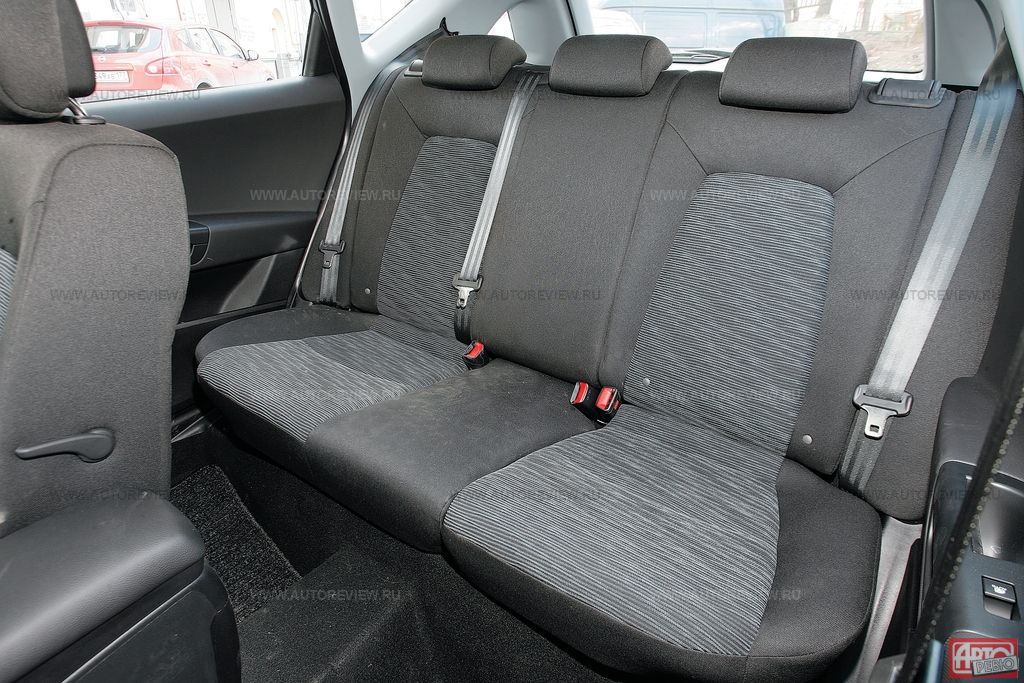
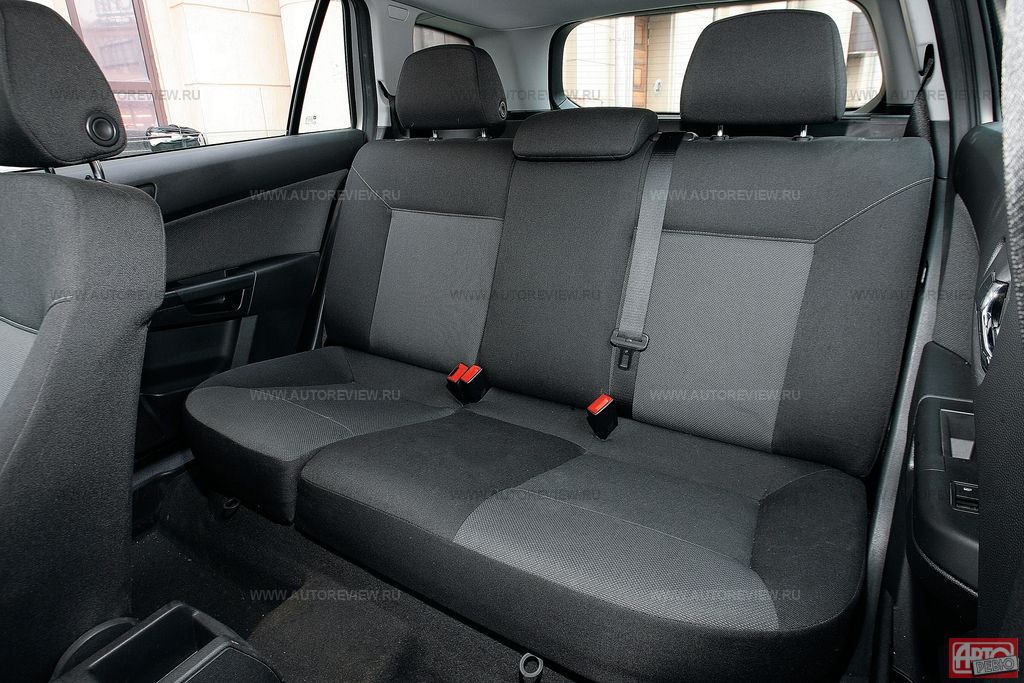
| The Kia rear bench is the most comfortable for three. And getting in here is easiest, especially for the elderly — you don't have to twist your legs in the door opening like in the Astra | Under the floor in the Kia's trunk hides another — a 'semi-trunk' — a huge 'organizer'. The Lacetti and Megane also have niches around the spare tire, but small ones. And the Opel has none at all |
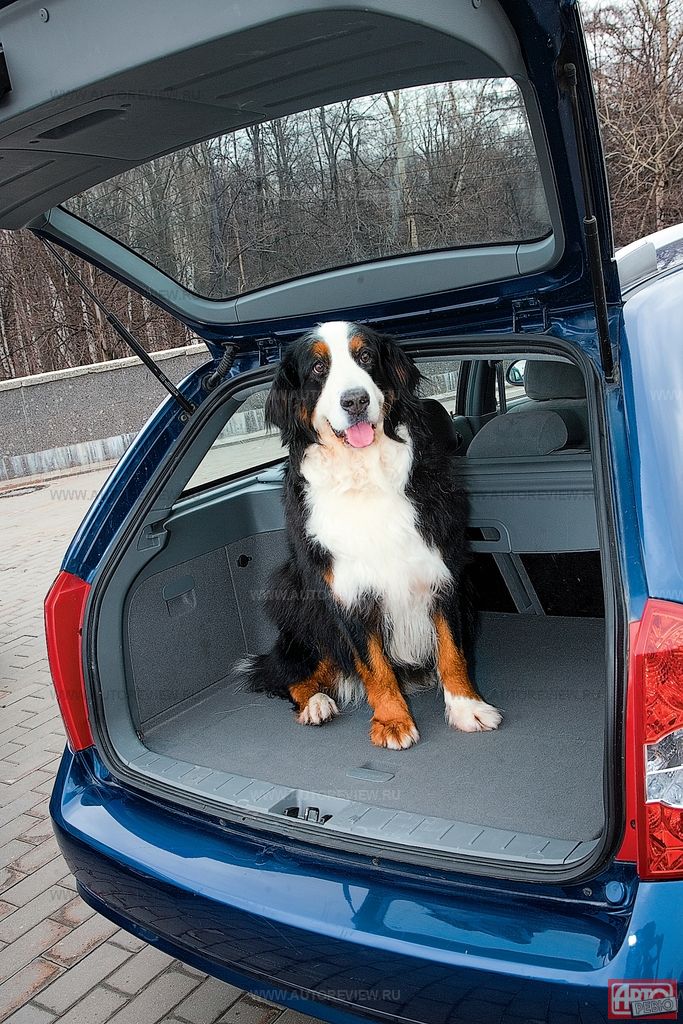
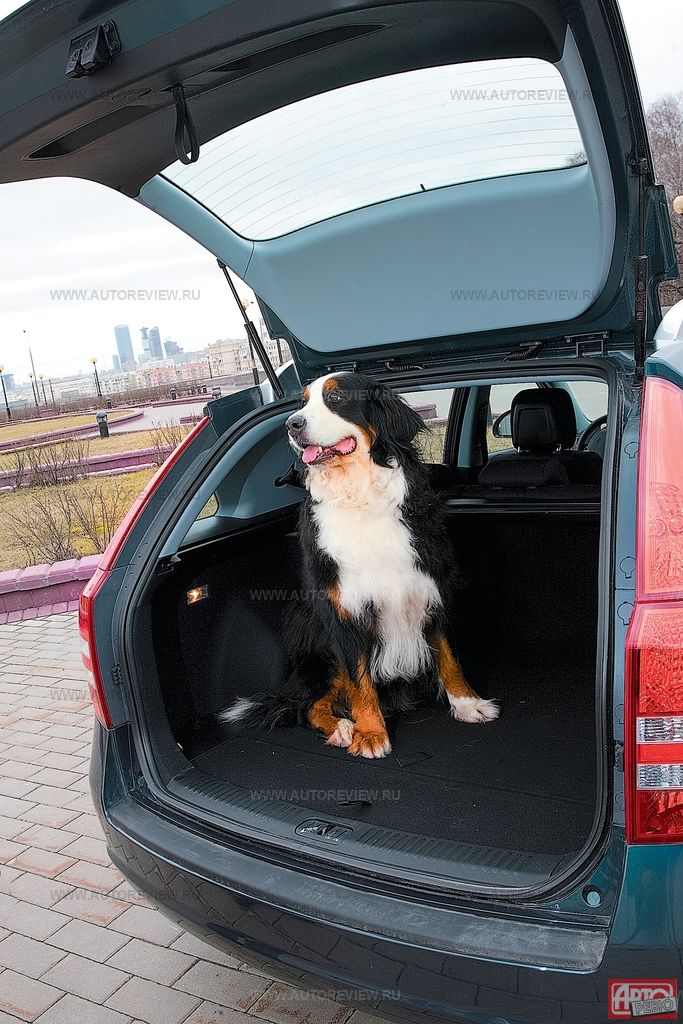
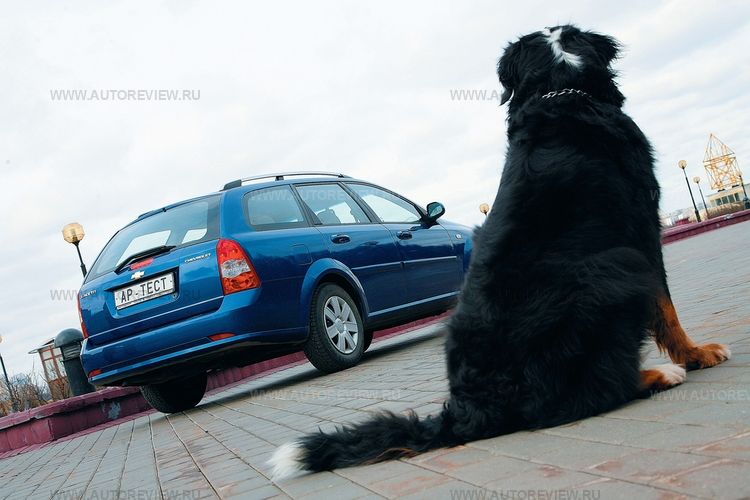
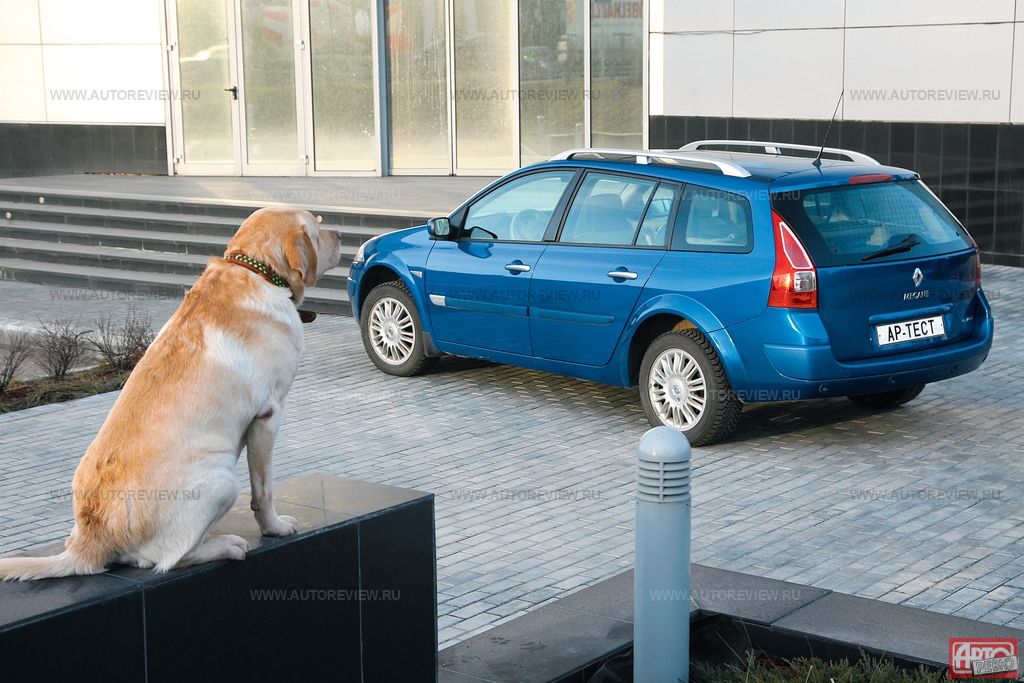
The numbers might be boring, but for us they're not empty words: on the test route, we drove each car twice — with the driver, two passengers in the cabin, and with ballast simulating the weight of five people and a 75-kg load in the trunk (about 450 kg in total). And for evaluating the trunks, we brought in a 'guest expert' Geba, a Bernese Mountain Dog — an eight-year-old Swiss herding dog: 50 kg and 60 cm at the withers. Actually, we had four four-legged experts, but the retriever and Labrador, cheerfully wagging their shaggy tails, dodged trunk evaluations in every way. And the shepherd Tyson outright refused to climb into the Astra.
| Chevrolet Lacetti | Kia cee‘d | Opel Astra |
 |
 |
 |
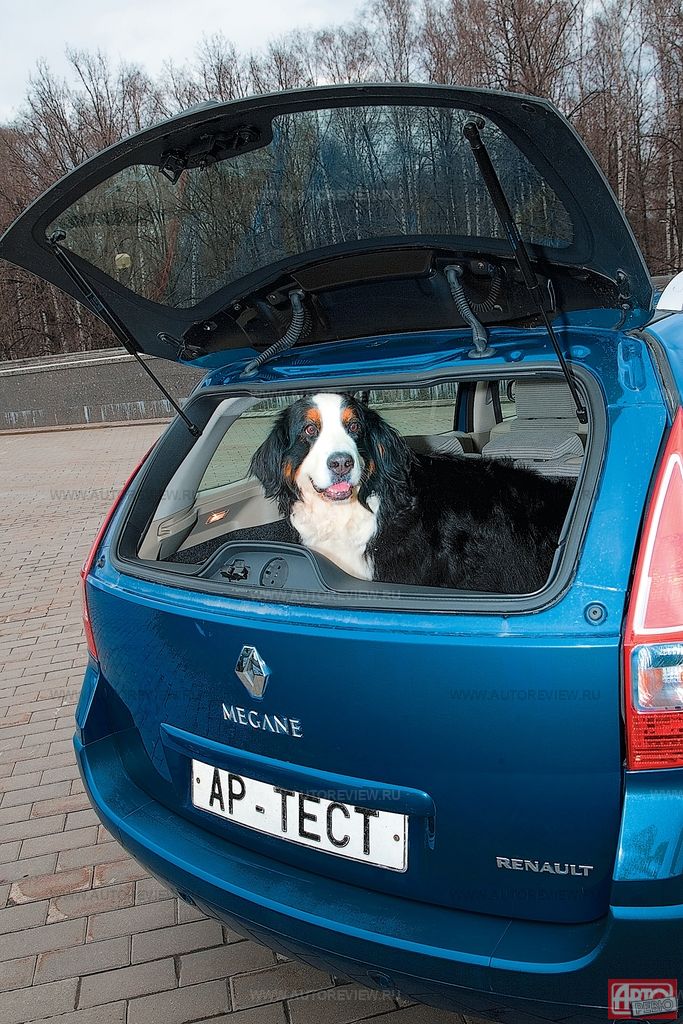
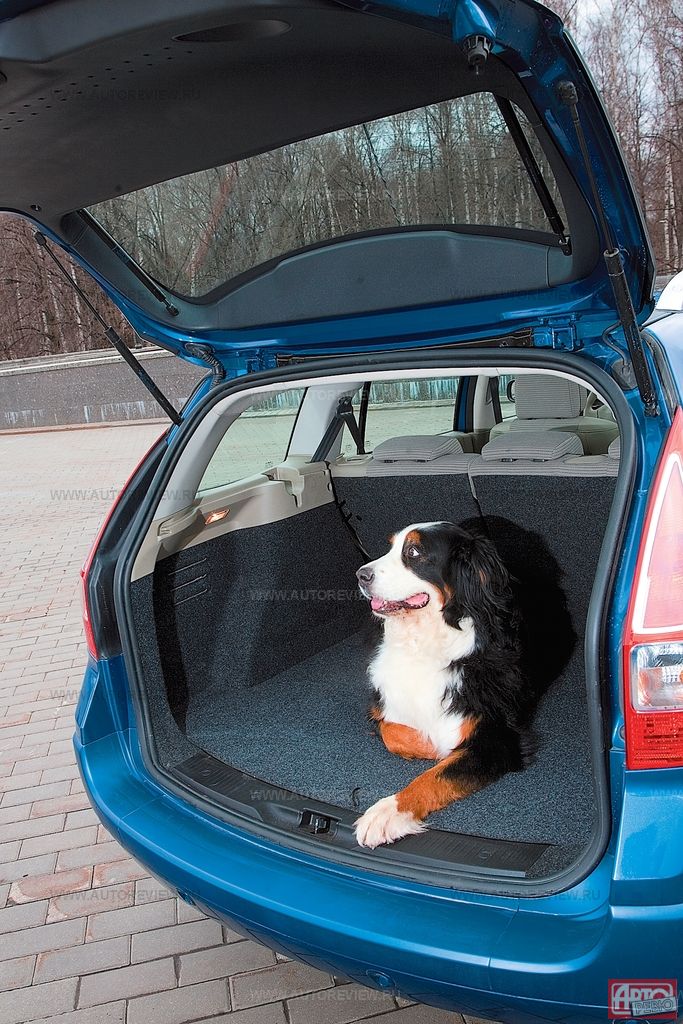
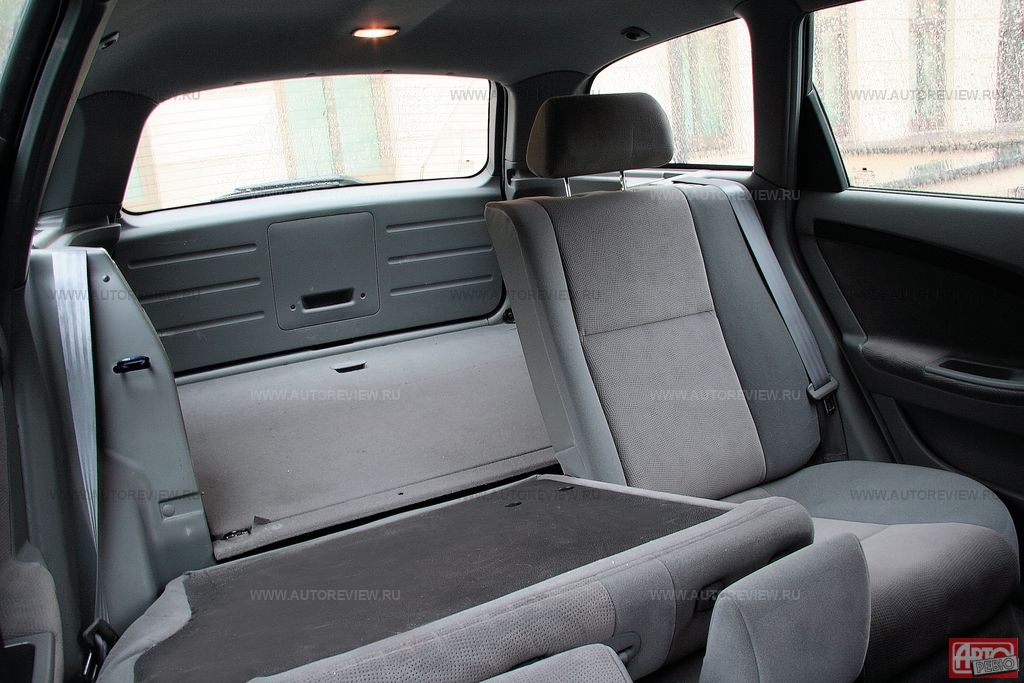
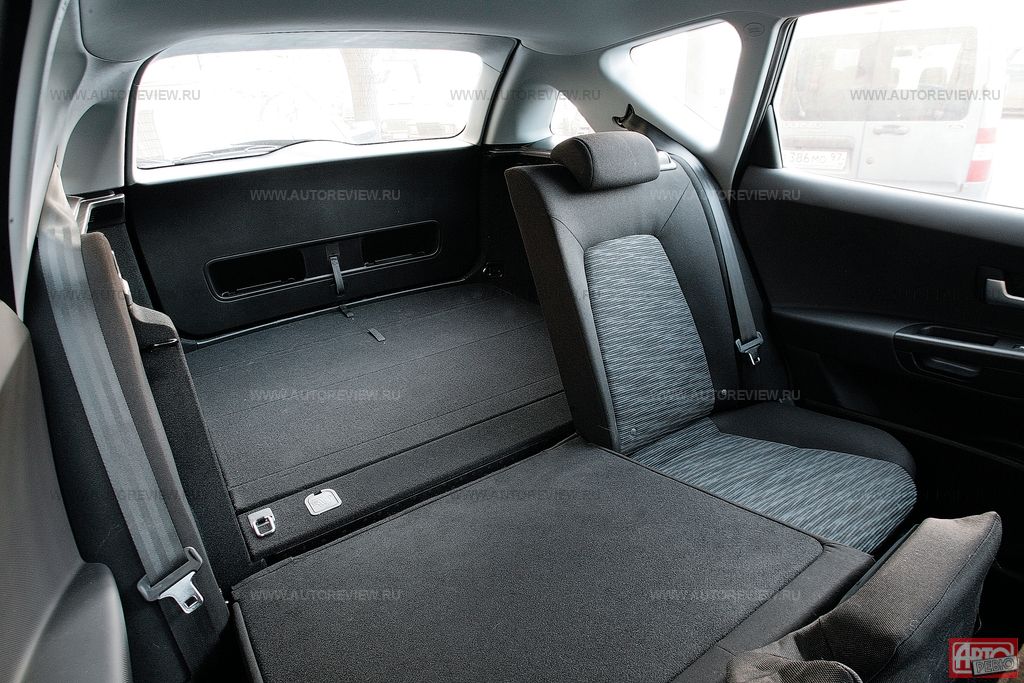
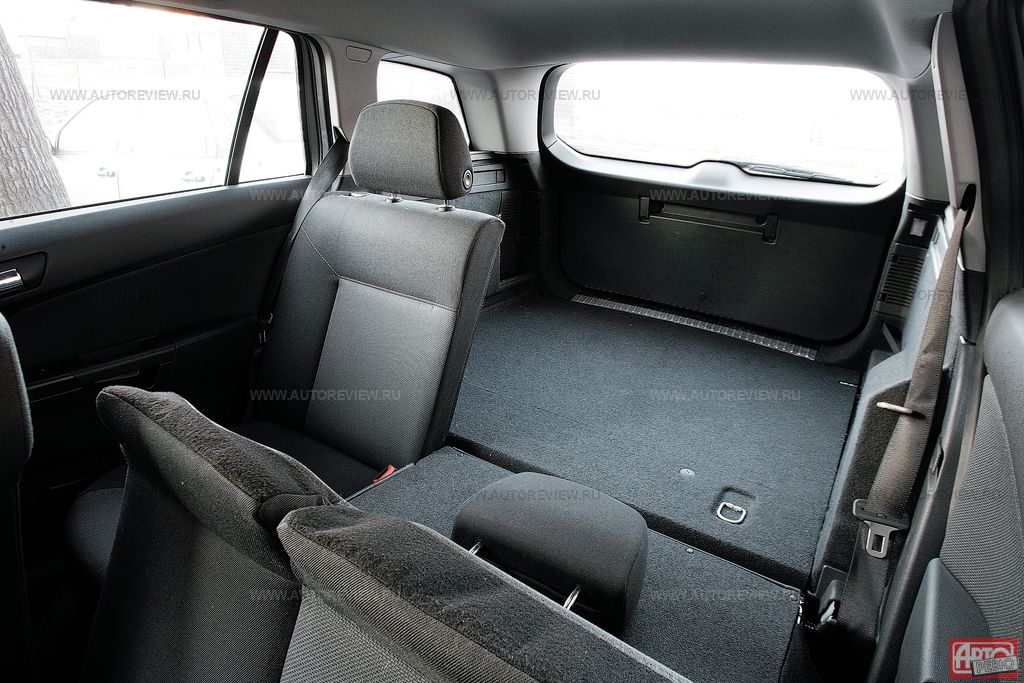
| In the Lacetti's cargo area, our 'reference' dog Geba entered 'at the limit'. In the Opel, the Bernese can already stand at full height, and in the Renault there's even more space. The largest cargo compartment is in the Kia. It pleases both dogs and their owners | ||
| Renault Megane | ||
 |
 |
|
| The lift-up rear window is only available for the Megane, and only in the expensive Privelege trim |
||
Geba is a different story. She sniffed everything, sat everywhere, and even lay down... She liked the Lacetti's trunk the least, and we understand Geba. The fifth-door opening here is the smallest, and the compartment's volume is modest — 400 liters. It can, of course, be increased to 1400 liters with a simple move — folding forward the rear seat backrest sections. But you won't get a flat floor, and the loading height is 60 centimeters, like Geba's height.
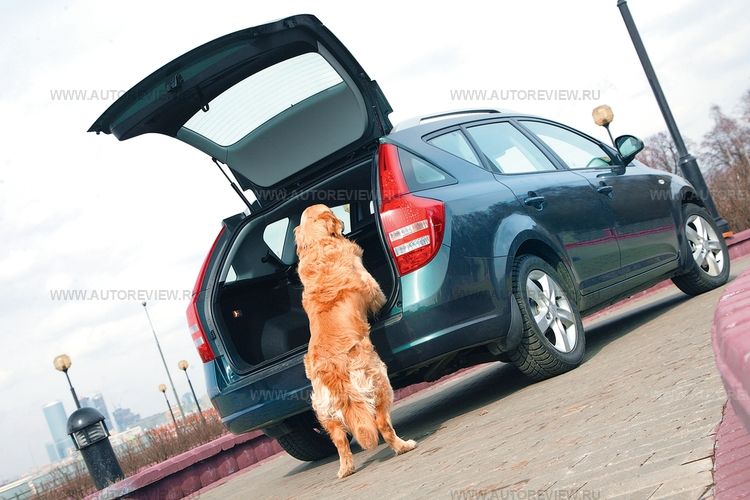
Only the Kia's rear door extends into the roof, easing loading of both cargo and four-legged pets. True, it closes with difficulty, as if the latch isn't adjusted. The same defect was in the cee’d wagon tested by our colleagues from Autoreview-Ukraine
In the Opel, Geba was cozier: the opening is bigger, and it's easier to jump in — the floor here is 54 centimeters from the ground. The cargo compartment volume is from 500 to 1600 liters. One bad thing — the Astra's trunk has no light fixture. They saved money.
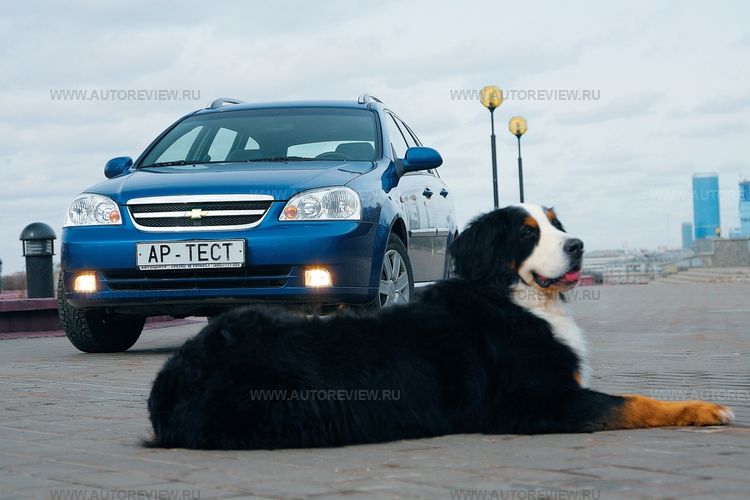
In the Megane, Geba had just as much space, but the cargo floor under the 50-kg beast sagged like cardboard. Another problem: the rear seats, when folded, press against the front seats, hindering a tall 'driver' from sitting comfortably. You can, of course, remove the rear cushions, but where to leave them? In the garage?
After carefully sniffing everything along with Geba, we awarded victory to the Kia's cargo compartment. The largest volume (from 534 to 1664 liters), quality finish, wide opening extending into the roof. And under the sturdy floor — a huge 'organizer' with plenty of compartments for small items. Too bad there are no side windows — so let Geba look forward: how are the owners doing there?
 |
 |
 |
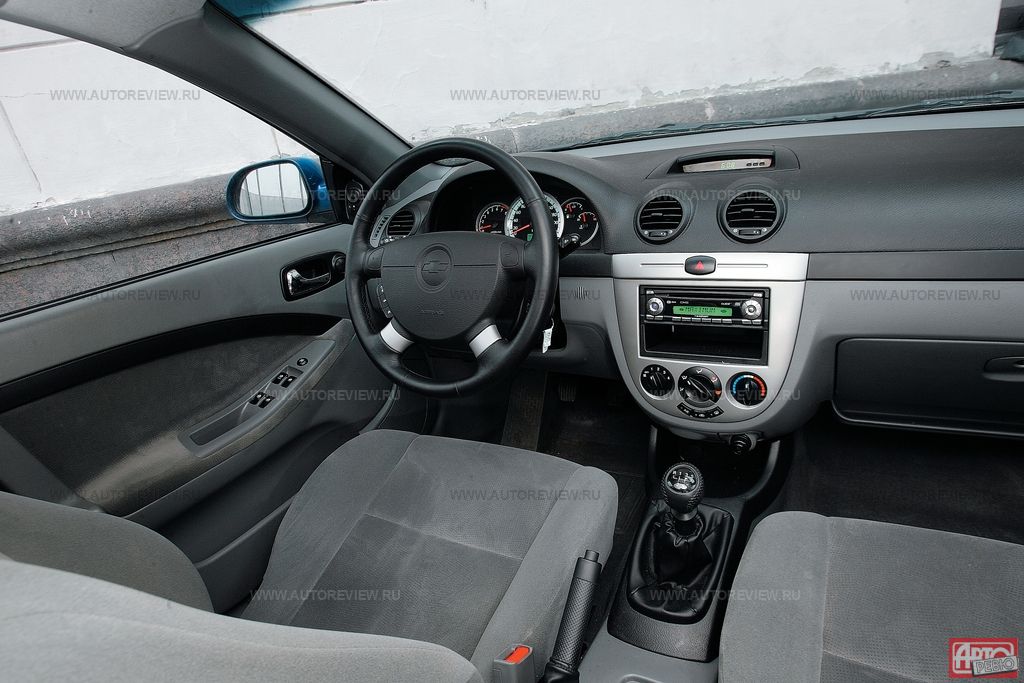
| Lacetti: cheap plastic, big steering wheel, sloppy gear shifting... But the seating position is good, and the seat cushion adjusts for tilt angle. However, steering wheel reach adjustment is an option |
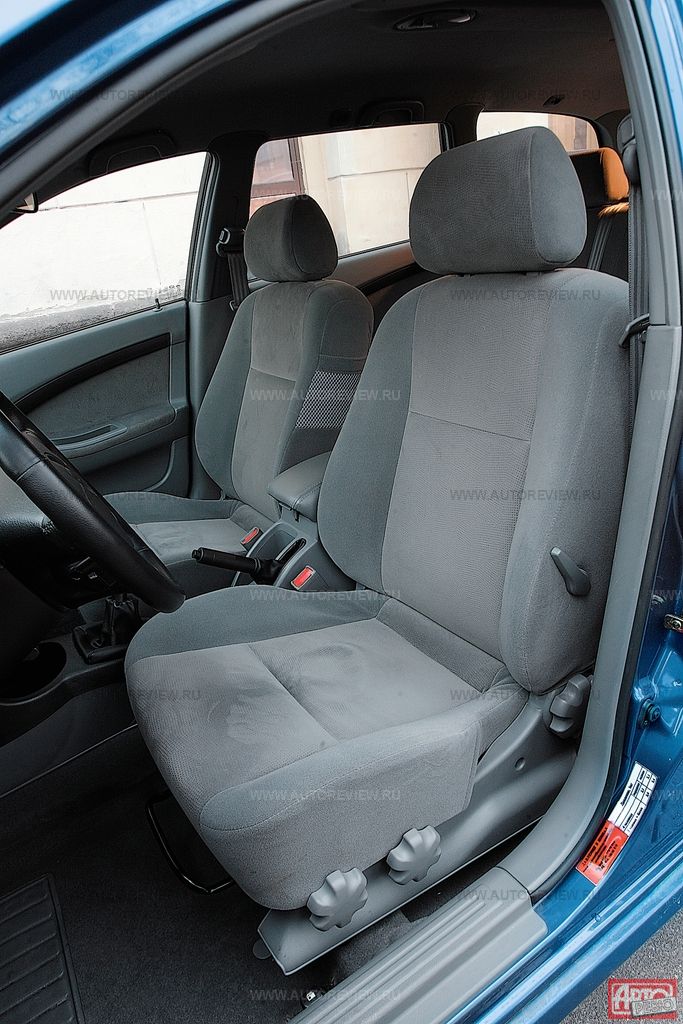
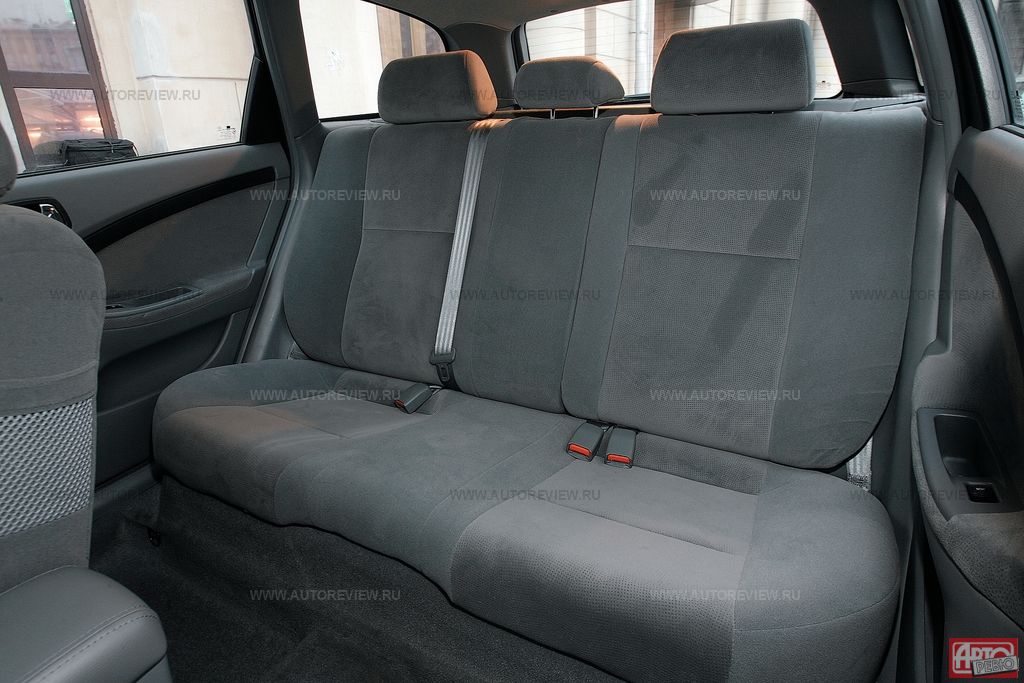
Getting into the Chevrolet's front seats is hard for people with back or joint issues: the door opening is low. The seats themselves are simple and moderately soft | In the back of the Lacetti, it's not cramped, but still rather uncomfortable — the seat cushion sits low, and the reclined backrest leaves passengers' shoulders unsupported. You can ride three abreast, but a tall person is better placed in the center — otherwise their head will almost touch the pillar |
On the Kia's rear bench, complaining about life would be a sin — it's more spacious here than in the other three wagons. The Renault Megane is a bit tighter in the shoulders and foot area. In the Lacetti, the reclined backrest hinders a comfortable position, which will surely tire you on a long trip. And the Astra Caravan is the tightest of all — less legroom, and the narrow cabin and seat molded for two will make a three-person ride uncomfortable.
And what about the head of the family, who, of course, is behind the wheel?
| Chevrolet Lacetti | Kia cee'd |
 |
 |
| Opel Astra | Renault Megane |
 |
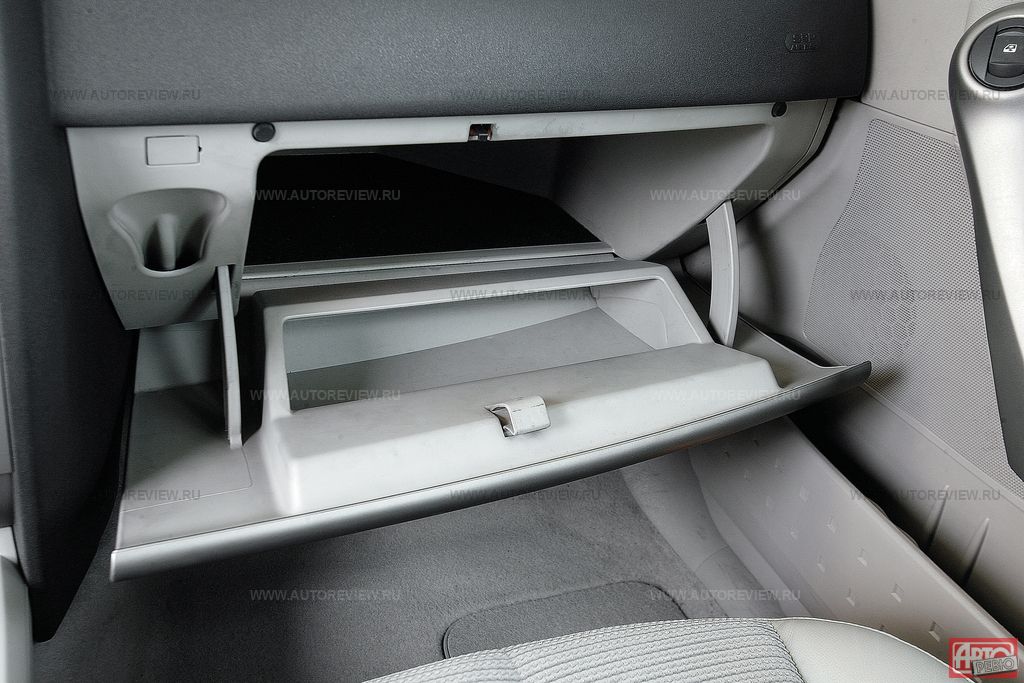 |
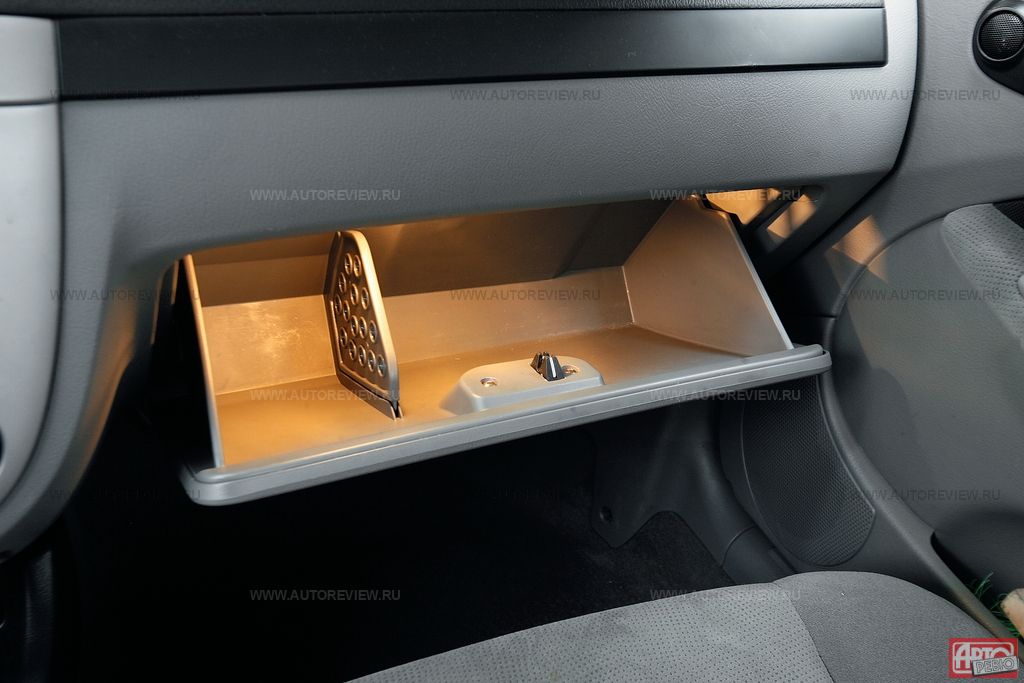
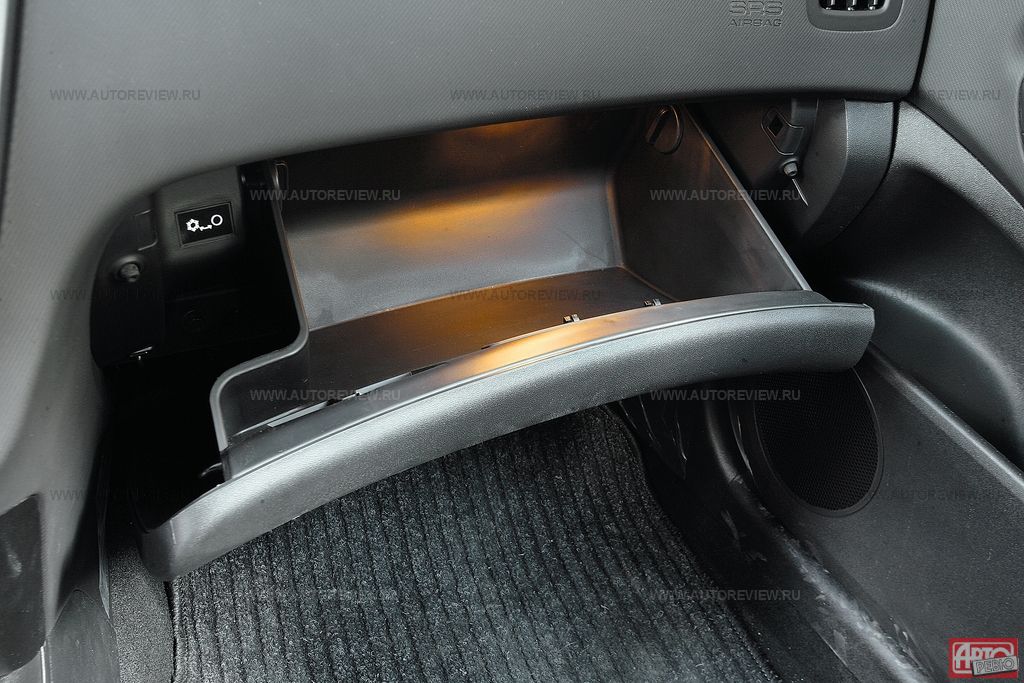
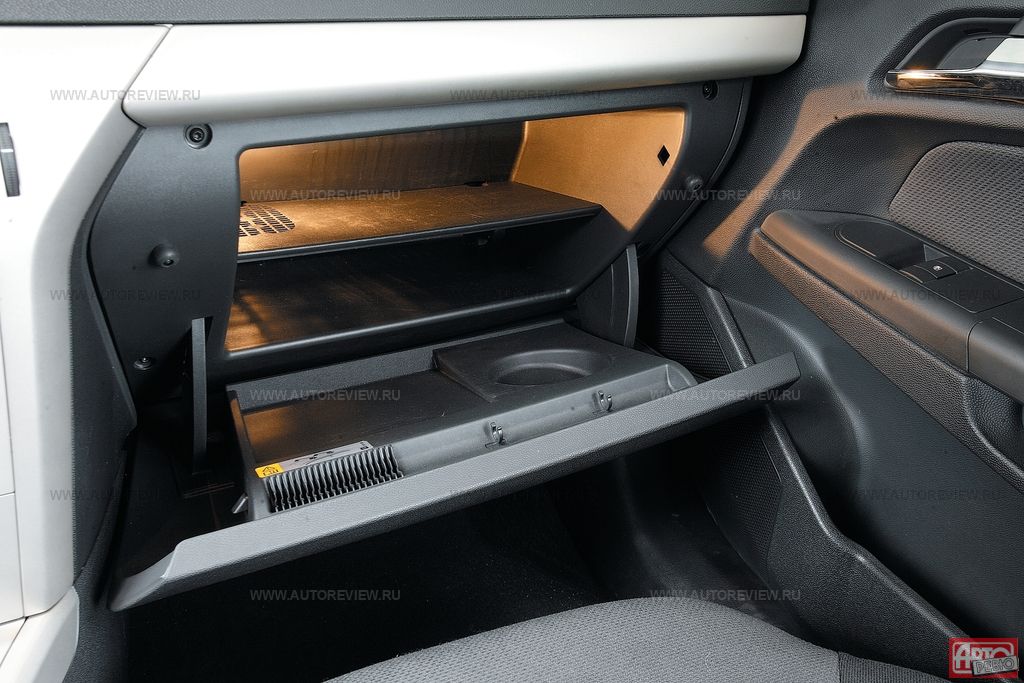
| The storage compartments in the Chevrolet and Kia cannot boast of either capacity or the number of shelves and retainers — in this regard, the Opel looks preferable. But the most spacious glove box went to the Renault, and the Megane has plenty of nooks for small items throughout the cabin | |
If someone else gets behind the wheel of the Kia cee'd, you can only envy them. The two-liter engine briskly pulls the Sporty Wagon — both empty and loaded, the car accelerates faster than all rivals. The automatic transmission works flawlessly, the accelerator responds instantly. As for handling, this wagon cannot be called sporty (the Sporty prefix in the name is nothing more than marketing), but body roll is moderate, no diagonal rocking in corners, and responses to driver inputs are precise and predictable. The only disappointment is the artificial steering effort, and in a high-speed turn, the cee'd stubbornly slides outward, like a mouse's snout. Not a drop of driving excitement.
Although there is a hint of character. The name obliges, and the Kia's suspension is stiff: every pothole and bump reaches the occupants as noticeable jolts…
The Astra looks sporty, but there is no more excitement in it. The 1796 cc engine is quite decent, as is the Opel's automatic. But the gas pedal is slightly dulled, and with a full load, the car starts to hesitate. Moreover, a more powerful petrol engine is not even available for the Astra wagon.
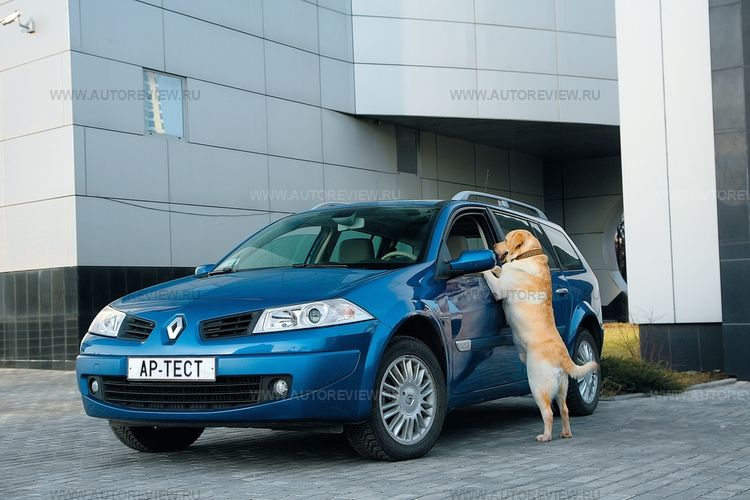
Let's look inside, buddy? The beige upholstery (exactly like the fur of this Labrador) is the only option for cars with the two-liter engine
But the brakes here are the best in this quartet, grippy and predictable. And the Opel's chassis is good. However, it seems that the test car's behavior was influenced by the second-tier winter tires Kleber Kapnor — the same ones were on the Peugeot 308 hatchback in the previous test (see AR No. 7, 2008). And the Astra behaves familiarly: at a calm pace, everything is fine — only at large steering angles does the wheel "sag" in effort. But during sharp maneuvers, the Caravan behaves unpleasantly — first it reluctantly responds to steering input, then sharply "turns in" further. And with a full load, this "screwing in" becomes simply dangerous!
| Chevrolet Lacetti | Kia cee'd |
 |
 |
| Opel Astra | Renault Megane |
 |
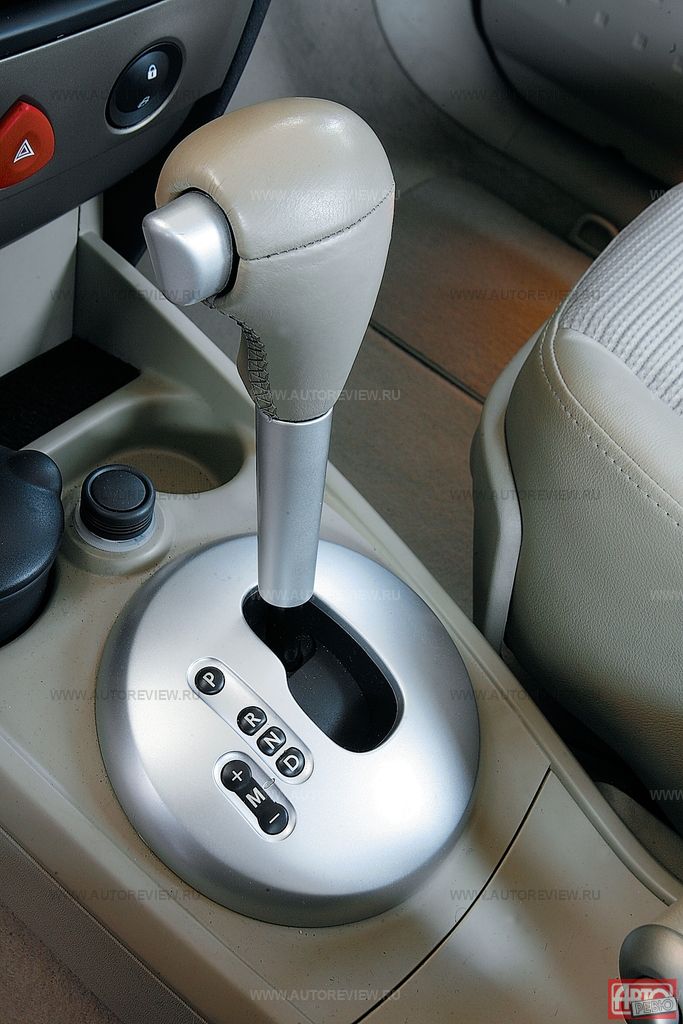 |
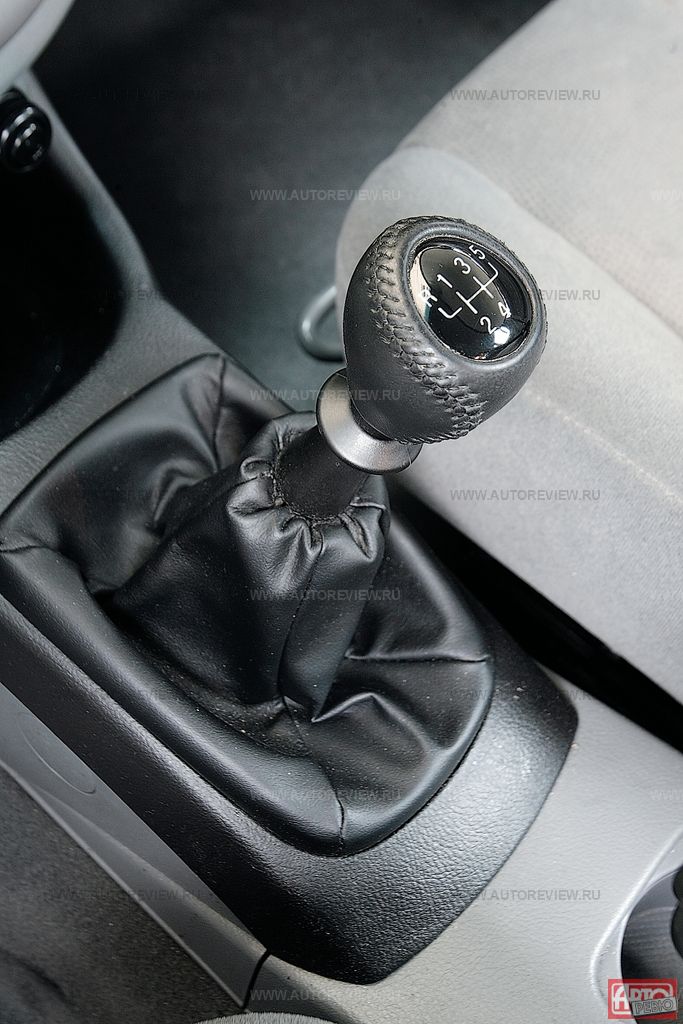
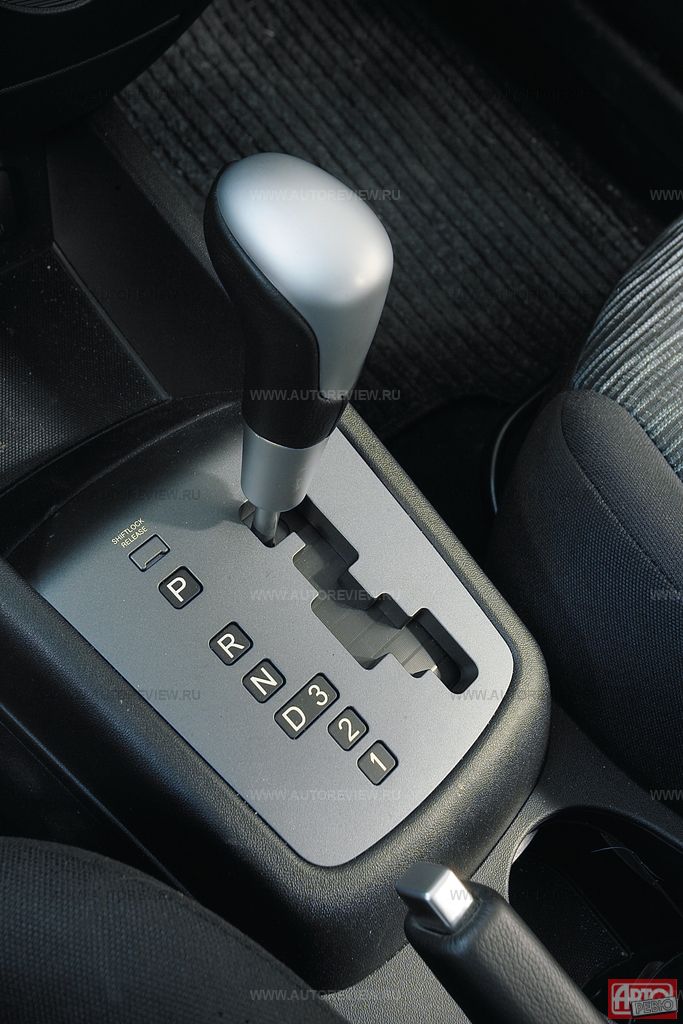
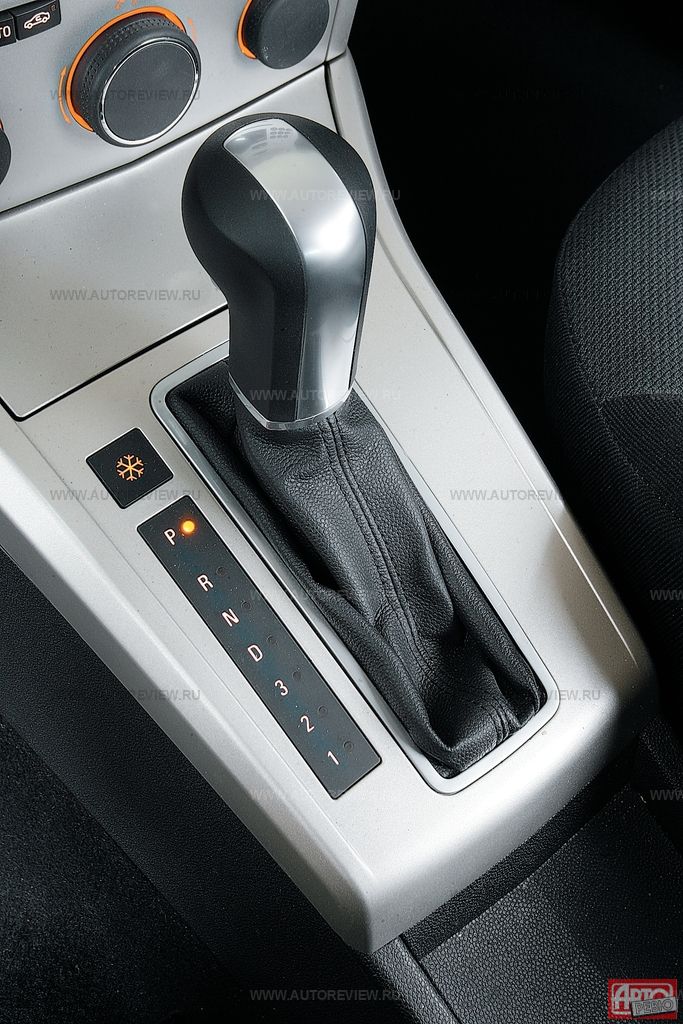
| The Chevrolet Lacetti wagon is devoid of an automatic — the driver has to work with the long-throw manual gearshift lever. In cars with automatic transmissions, the selected mode is visible in the instrument cluster, and manual gear selection is only available on the Renault | |
And the Caravan's ride comfort is so-so — the wagon repeats all the waves of spring asphalt and shakes passengers on any unevenness. Loading softens the shaking a bit, but not significantly.
 |
 |
The Renault Megane encourages calm driving: cozy seats, a welcoming interior. Ride comfort is top-notch — only minor surface defects reach the occupants. And the fact that acceleration, despite the two-liter engine, is at the level of the 1800cc Opel is not a big deal. It's a pity that the automatic sometimes acts up, jerks during shifts, and is slow to react, and the gas pedal feels like it's not electronic but rubber. The French-sensitive brakes also require getting used to. And handling… The Megane floats on the trajectory at speed, reacts more strongly to ruts, and the steering is completely uninformative.
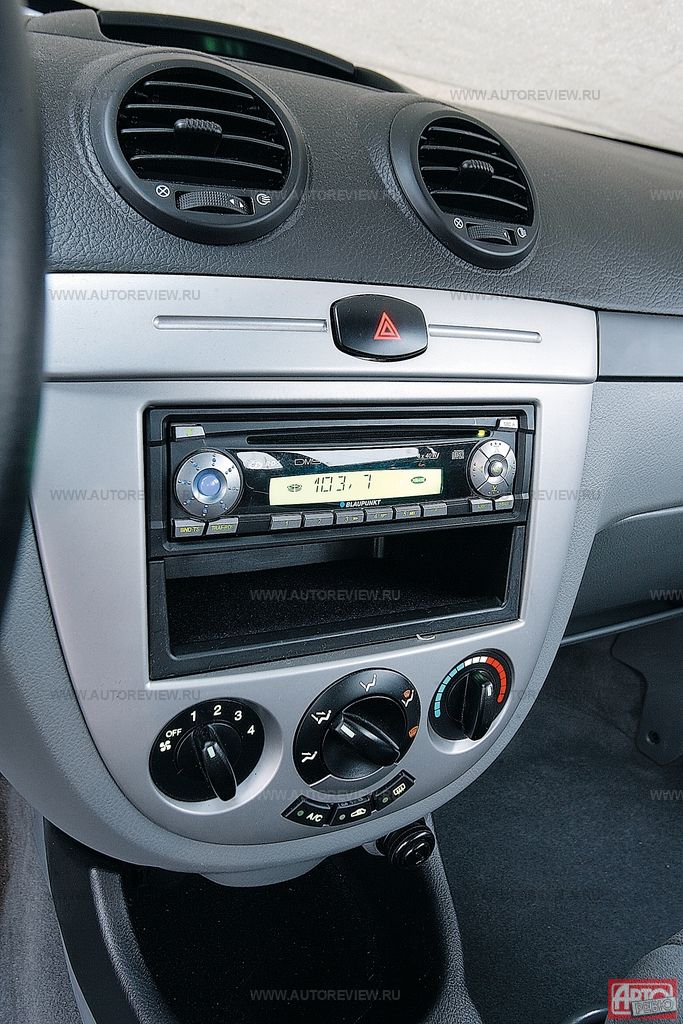
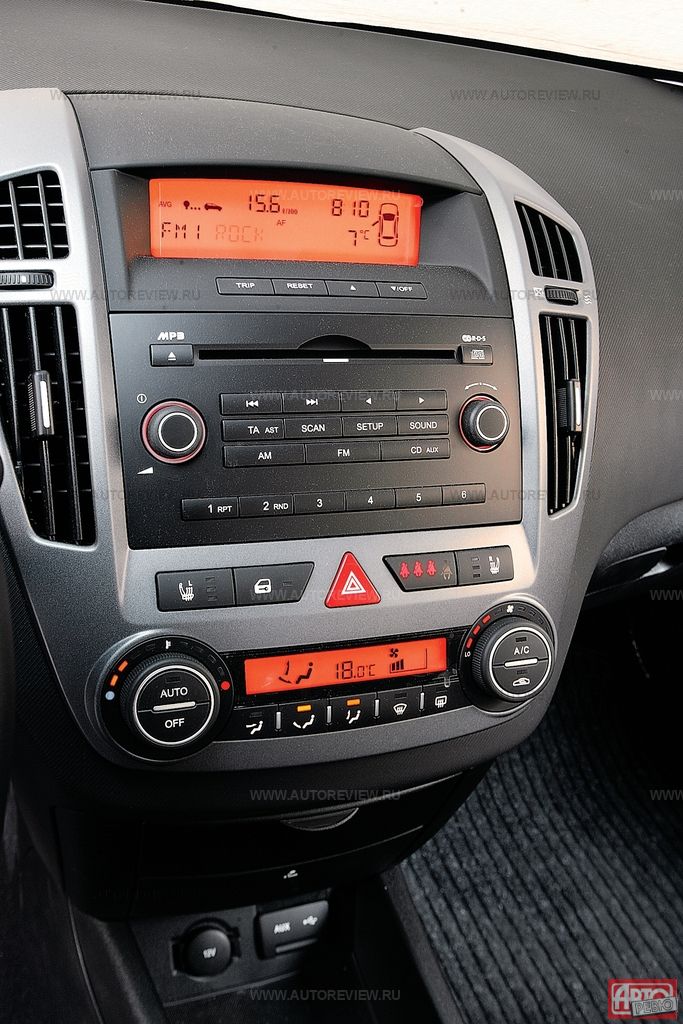
| Chevrolet Lacetti | Kia cee'd |
 |
 |
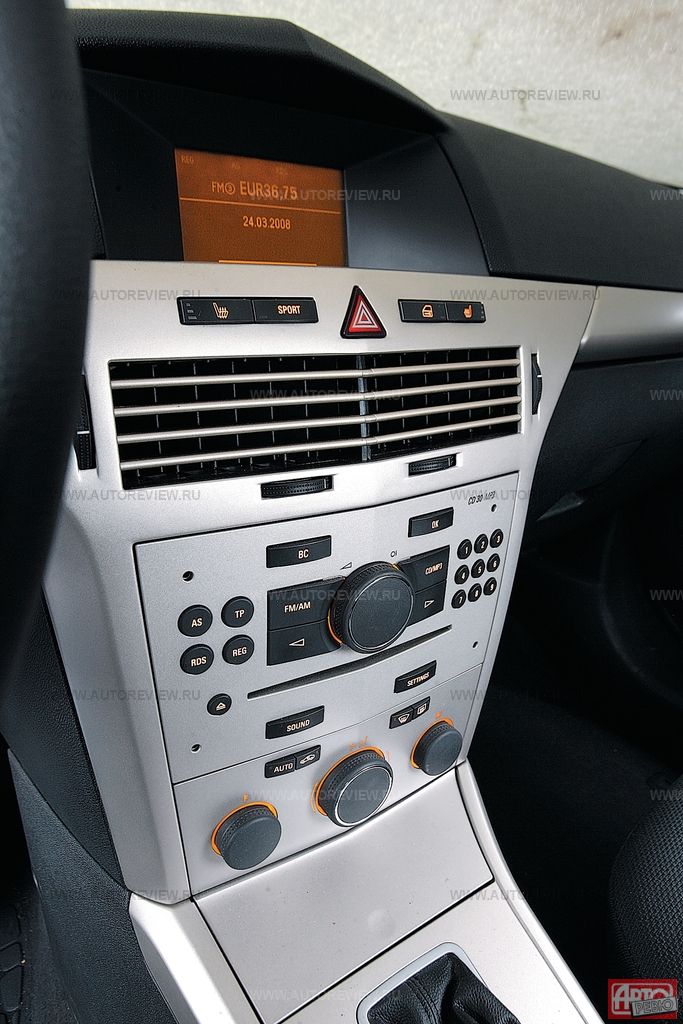
| Opel Astra | Renault Megane |
 |
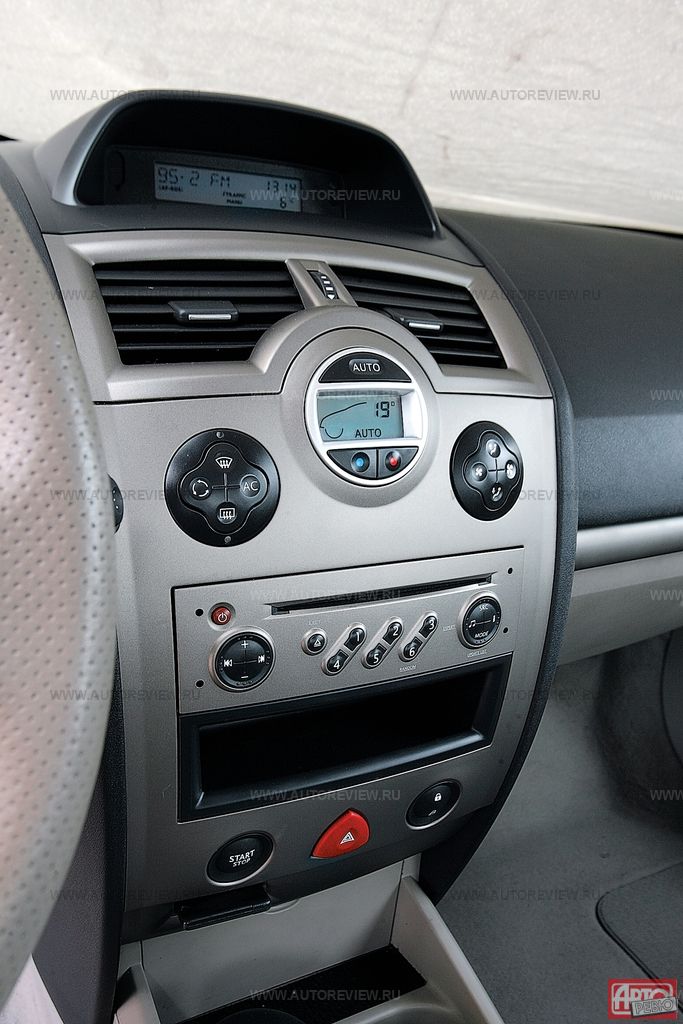 |
| The logic of the Lacetti's climate control management raises no complaints. But the dangling buttons and stiff knobs do. The Kia's climate "dials" are conveniently placed, and airflow distribution is set with three keys. The stylish Megane unit is also good, but the Astra disappoints with small buttons hidden at the bottom of the console | |
But the loaded Megane Estate drove noticeably better. The secret is simple: before loading the ballast, we raised the tire pressure according to the factory instructions. And if usually it's prescribed to add 0.2–0.4 atmospheres to the rear wheels (which is logical), then for the Megane, only the front ones are to be pumped up, and immediately by half an atmosphere! We followed the instructions — and the Megan was transformed. The delays disappeared, the wagon stopped leaning and rocking heavily — and even some informativeness appeared in the steering. Do we really have to drive with "overinflated" front tires all the time — even without cargo?
 |
 |
 |
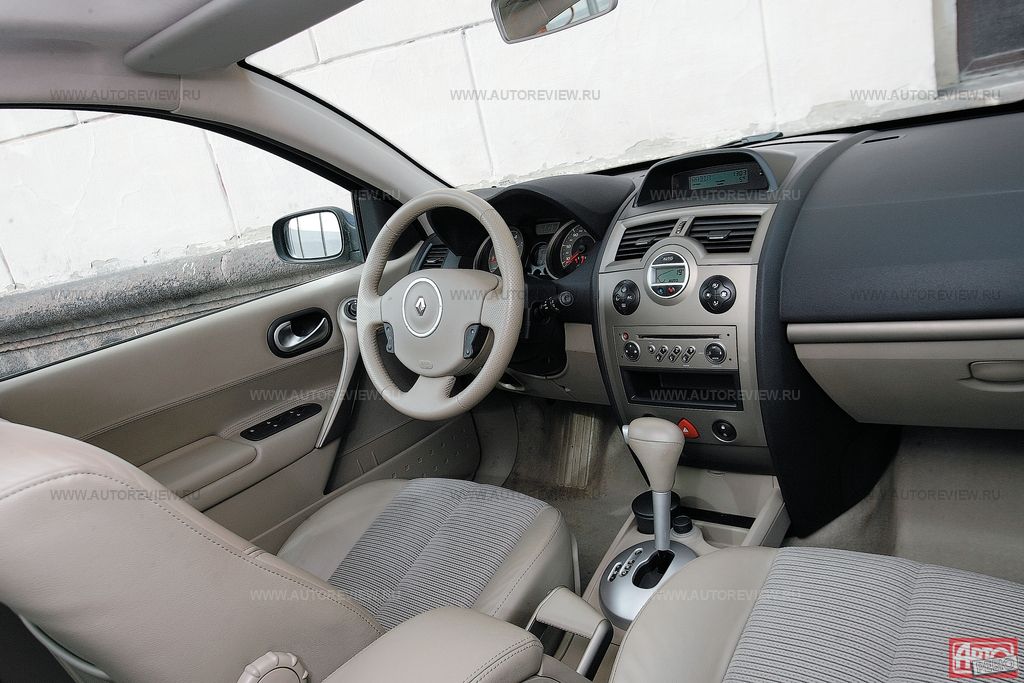
| The Renault's interior hasn't aged yet, but there are plenty of ergonomic miscalculations. Over six years, they could have fixed the inconvenient seat adjustment handles and allowed the backrests to be set more vertically. The cramped pedal box on the Megane with automatic transmission should also have been redesigned |
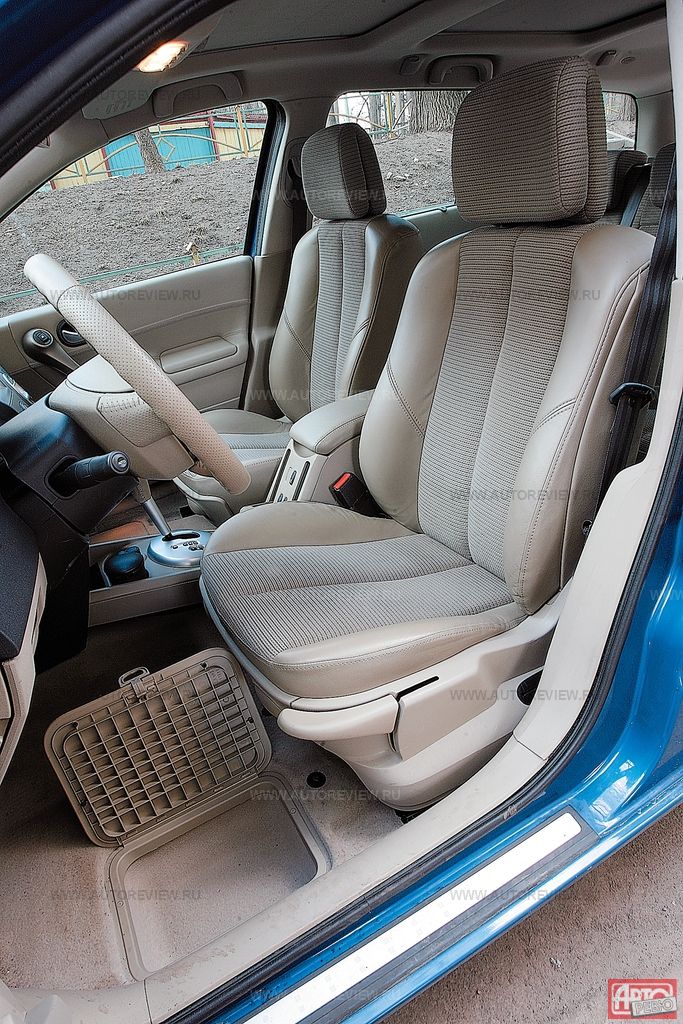
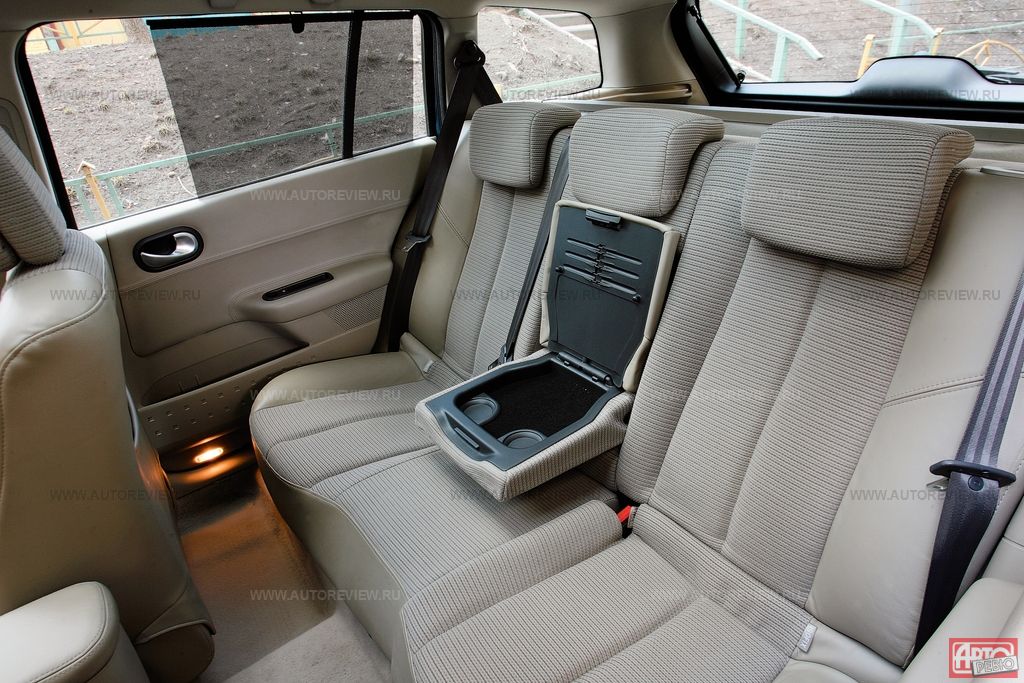
At first, the Renault's seats seem comfortable, but on a long journey, their softness will lead to quick fatigue | The soft rear sofa of the Megane is only slightly tighter than the cee'd's — outer passengers almost touch the pillars with their heads, and feet press against the front backrests. But the main thing is that the optional central armrest noticeably worsened the life of the middle passenger. It, like the side curtains, is only available in rich trim levels |
The Chevrolet Lacetti looks like a black sheep in this company. First of all, it is noticeably simpler: the interior is trimmed with hard plastic, the buttons dangle, the brake pedal wobbles on its axis, and the gearshift lever has noticeable play. Moreover, the test car was only the most modest version with 109 horsepower, and with a full load, this is felt immediately — the loaded Lacetti 1.6 noticeably deflates. But when unladen, the short gears work wonders: second gear pulls all the way to 90 km/h, so acceleration is brisk. Plus, the responsive cable throttle and clear clutch are pleasing. And the Lacetti is the only one of all four wagons to have a truly informative steering wheel!
However, in other respects, the Chevrolet is so-so: it wanders on straight roads, leans noticeably in corners, and in a fast turn it can easily break into a skid. With a load, the reactions become split — the car responds with a delay to steering input at the entry of an arc.
| Chevrolet Lacetti | Kia cee'd |
 |
 |
| Opel Astra | Renault Megane |
 |
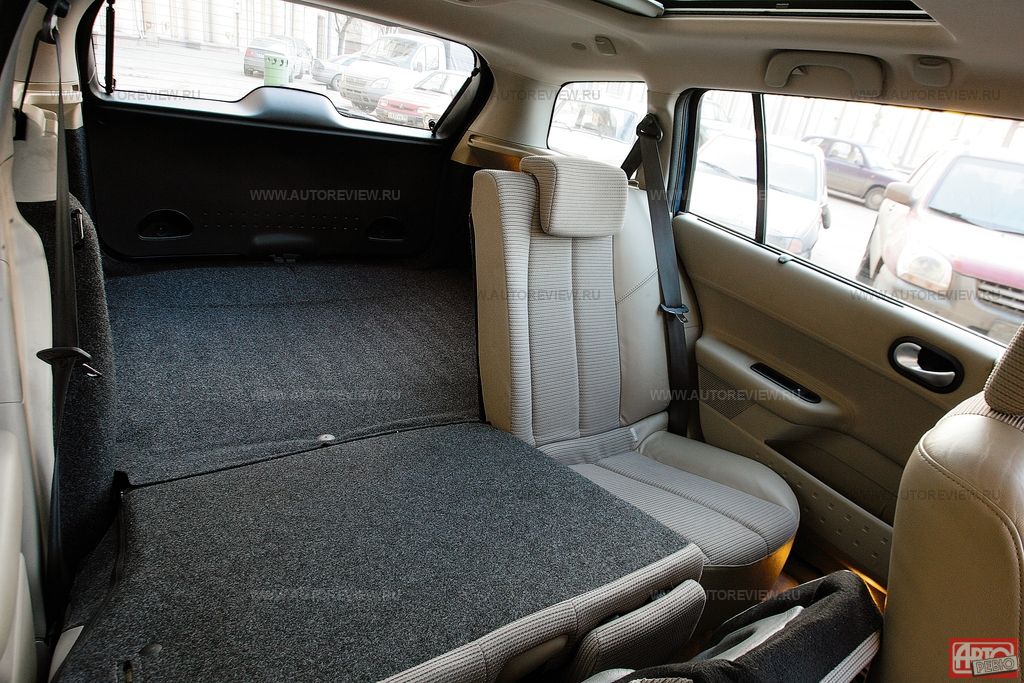 |
| The trunk of the Chevrolet Lacetti wagon transforms in the simplest way — the rear seatbacks fold forward, and the cargo floor remains uneven (unlike all other cars). True, in the Renault, to create a flat surface, you have to remove the cushions and leave them in the garage | |
Under load, ride comfort also suffers. While the Lacetti is empty, it doesn't rock, handles small bumps decently, and boldly swallows large potholes and speed bumps. But once you load the trunk and seat passengers, the suspension starts to give in: shaking is joined by rocking. Moreover, the Chevrolet turned out to be the noisiest in the quartet — neither tires, nor engine, nor external sounds are dampened properly.
The Astra and Megane are quieter, although the Opel's low-frequency tire hum gets annoying, and the Renault's engine roars impudently during sharp accelerations. And the quietest turned out to be... yes, again the Kia cee'd!
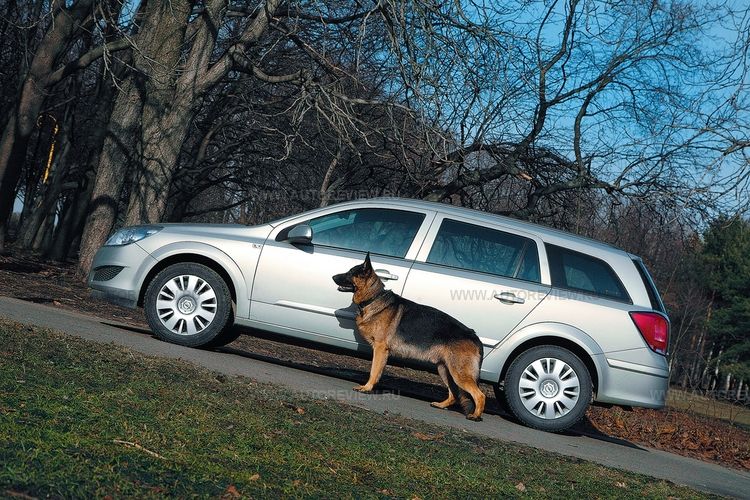
The sleek Opel Astra Caravan looks great from the side. But from some angles, the rear lights turn into sloppy blobs
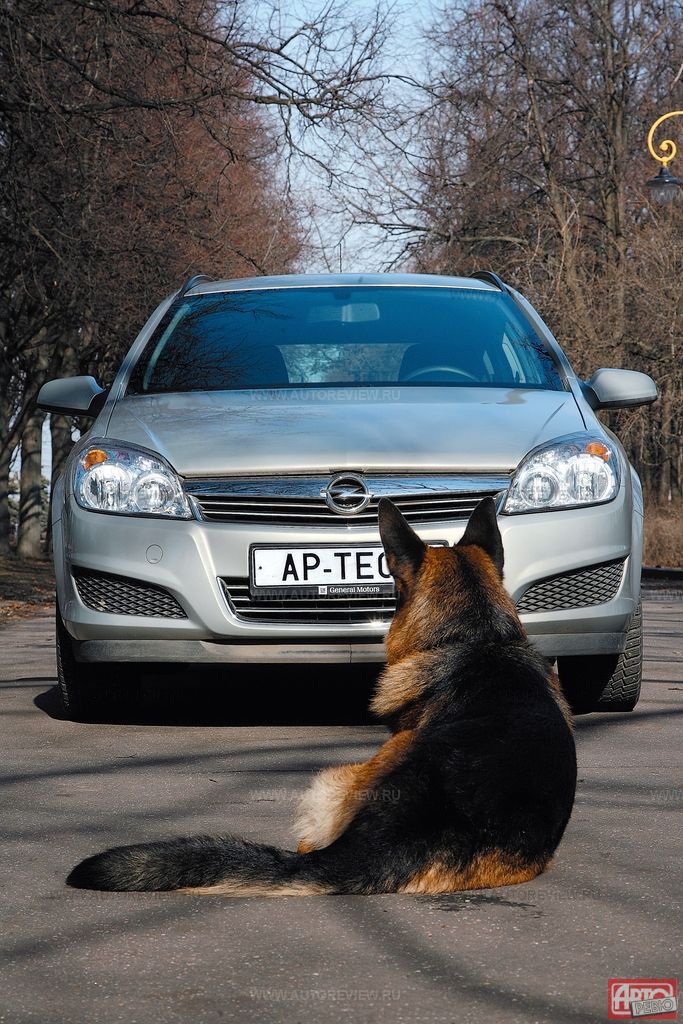
And its appearance is not bad, although the elegant curve of the rear roof pillar is clearly borrowed from the Japanese and French. But if you place the Kia cee'd Sporty Wagon and Renault Megane Estate side by side, it's immediately obvious that the "Korean" looks more interesting than both the "Frenchman" and the Opel Astra... Not to mention the plain Lacetti — a "simple wagon" without any frills.
 |
|
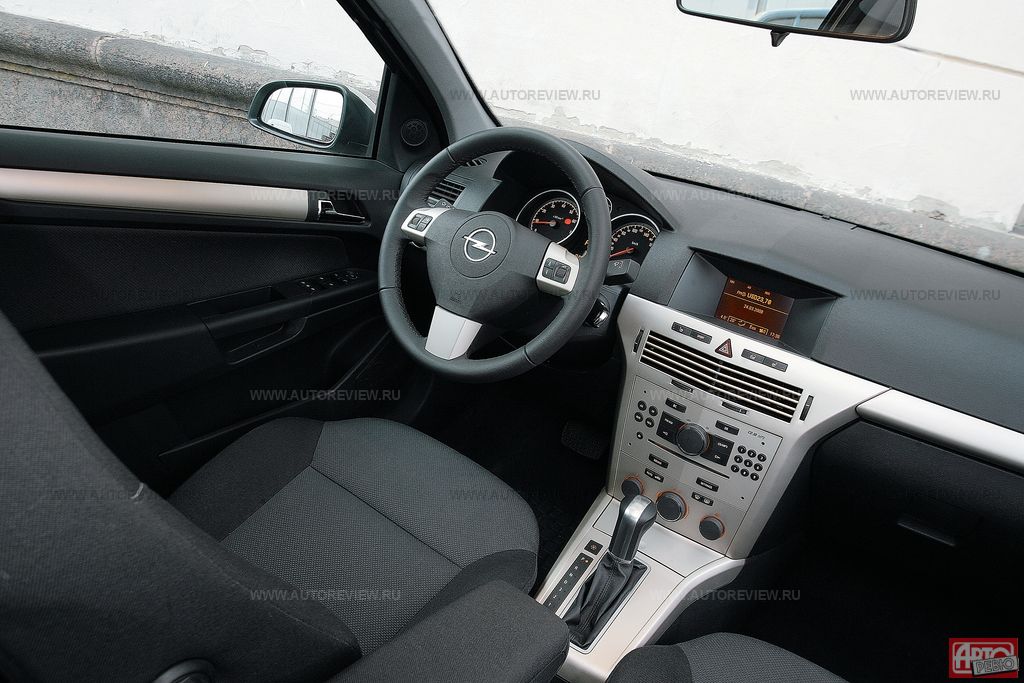
| Opel Astra: a solid, bright interior design coexists with "signature" ergonomic flaws like the convoluted audio system controls and an uncomfortable steering wheel rim in grip areas |
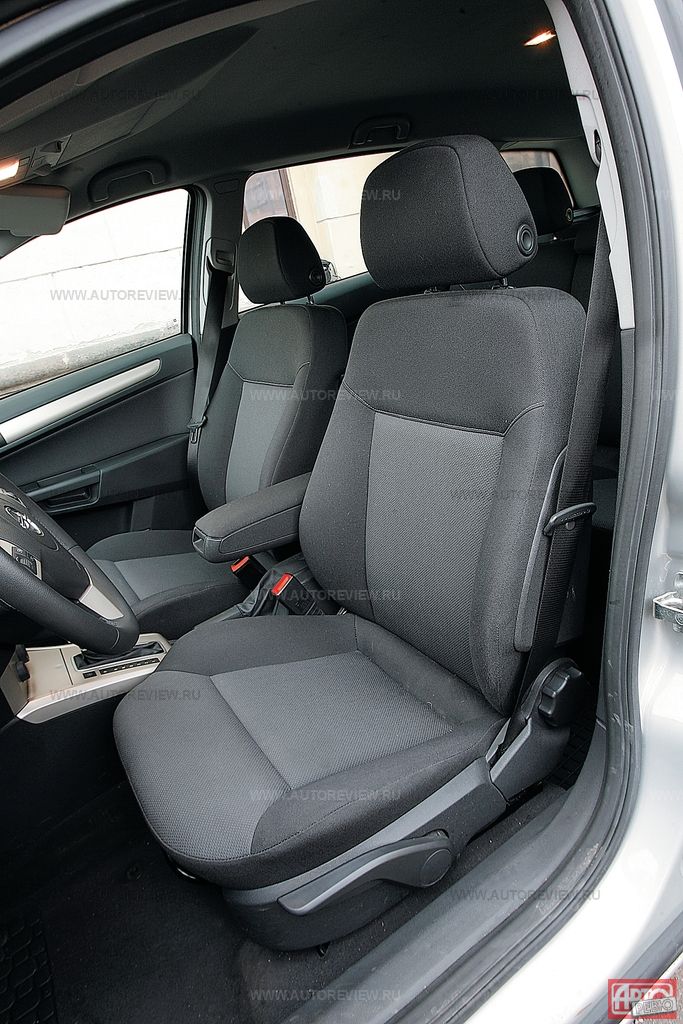
In the Opel, it's comfortable to sit in the back only for two — the comfort of a third occupant is limited not only by the width of the seat, but also by its shape |
 |
 |
| The cushion of the Opel's seats is deep, and the backrest pushes the occupant out, which is not eliminated even by adjusting the lumbar support (it can only be increased) |
But the Lacetti also costs accordingly — in running trims with air conditioning, it's the most affordable wagon with a 1.6 engine in its class. And the Chevrolet is not as much worse than the others as it is cheaper. The only "but" — the Lacetti loses its qualities more than others when fully loaded. An "automatic" is not even available for it, and the list of options is more modest — for example, there's no stability control here.
Most likely, the Opel Astra Caravan would have shown itself better on smooth roads and with summer tires. But here and now, in Russia and on Kleber tires — it's an average performer.
The Renault Megane Estate is more spacious and comfortable than the Opel Astra Caravan, but noticeably more expensive, even when talking about basic trims. Unjustifiably more expensive.
Well, the Kia cee'd Sporty Wagon won on almost all counts. Even if the hints of sport in the name remain just hints, the new Korean wagon is a choice not only for the driver, but also for rear passengers. And even for the Greater Swiss Mountain Dog named Geba.
Autoreview Readers' Forecast
On the eve of this test, we asked visitors of the website www.autoreview.ru to answer the question: "Which of the cars participating in the next Autoreview test would you prefer?"
Here's how the votes were distributed:
Chevrolet Lacetti 6.97%
Kia cee'd 31.62%
Opel Astra 44.84%
Renault Megane 16.57%
17,623 people voted
Autoreview Expert Ratings
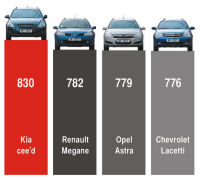
| Expert assessments of Autoreview | ||||||
| Parameters assessed | Max. score | Cars | Why? | |||
| Chevrolet Lacetti | Kia cee’d | Opel Astra | Renault Megane | |||
| Ergonomics | 190 | 151 | 157 | 134 | 149 | The visibility of the Opel and the comfort of its driver fell victim to design. In the Chevrolet, nothing outstanding, but everything is in its place. Renault's scores are lowered for poorly readable instruments and small mirrors. The Kia is not perfect either, but in this test it is more comfortable than its competitors |
| Driver's workplace | 100 | 77 | 83 | 70 | 75 | |
| Visibility | 90 | 74 | 74 | 64 | 74 | |
| Dynamics | 300 | 241 | 255 | 245 | 227 | The Kia wins with good dynamics and a precise automatic transmission, but disappoints with boring handling - however, the Ceed's character does not depend on load. The other three station wagons drive comparably without load, each with its own drawbacks, but when trying to "take weight", the Chevrolet loses the most. The Megane traditionally disappointed with a lack of understanding with the driver |
| Acceleration dynamics | 90 | 68 | 80 | 73 | 68 | |
| Braking dynamics | 110 | 95 | 95 | 100 | 87 | |
| Handling | 100 | 78 | 80 | 72 | 72 | |
| Ride comfort | 240 | 173 | 185 | 183 | 183 | The Kia's suspension is a bit stiff for a family car, but the low noise level is just right. The Chevrolet is the most "vocal" station wagon, and cargo noticeably worsens its generally good ride smoothness. The Kia's climate control with rotary knobs is the most convenient |
| Ride smoothness, vibration protection | 90 | 68 | 55 | 63 | 68 | |
| Acoustic comfort | 80 | 55 | 70 | 65 | 60 | |
| Microclimate | 70 | 50 | 60 | 55 | 55 | |
| Interior comfort | 270 | 211 | 233 | 217 | 223 | The outsider in terms of trunk volume is the Lacetti, and in terms of rear seats - the Astra. Otherwise, it's a game of nuances, in which the Kia slightly beats the Renault due to the largest trunk and a slightly more spacious rear sofa |
| Passenger seats | 90 | 71 | 79 | 69 | 76 | |
| Trunk | 90 | 74 | 82 | 76 | 80 | |
| Interior transformation | 90 | 66 | 72 | 72 | 67 | |
| Total score | 1000 | 776 | 830 | 779 | 782 | |
Visibility
| Chevrolet Lacetti | Kia cee’d |
 |
 |
| Opel Astra | Renault Megane |
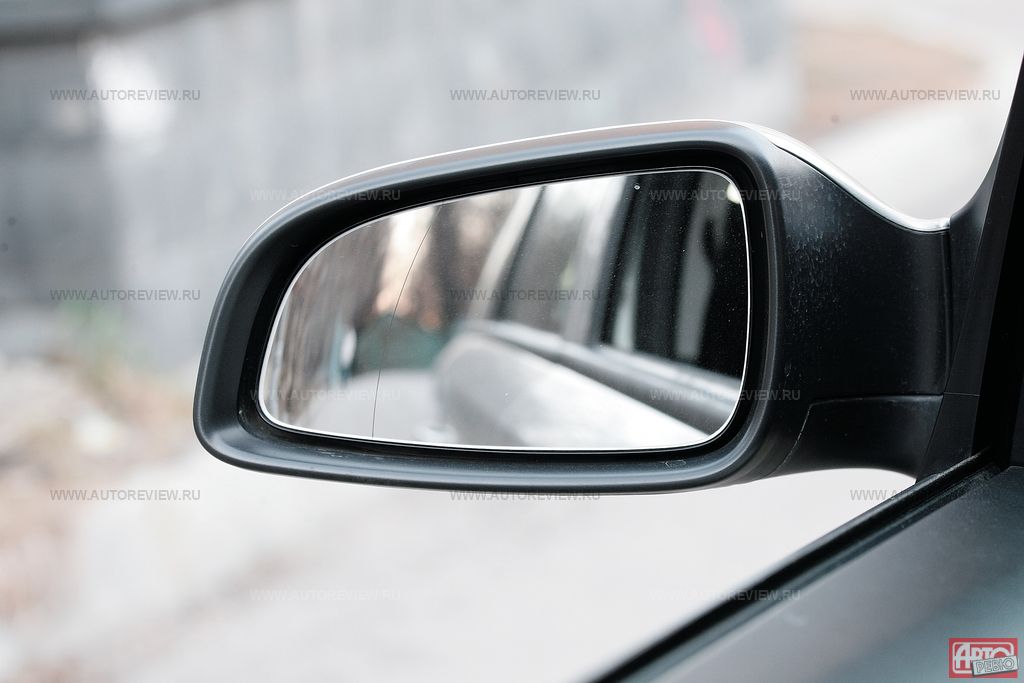 |
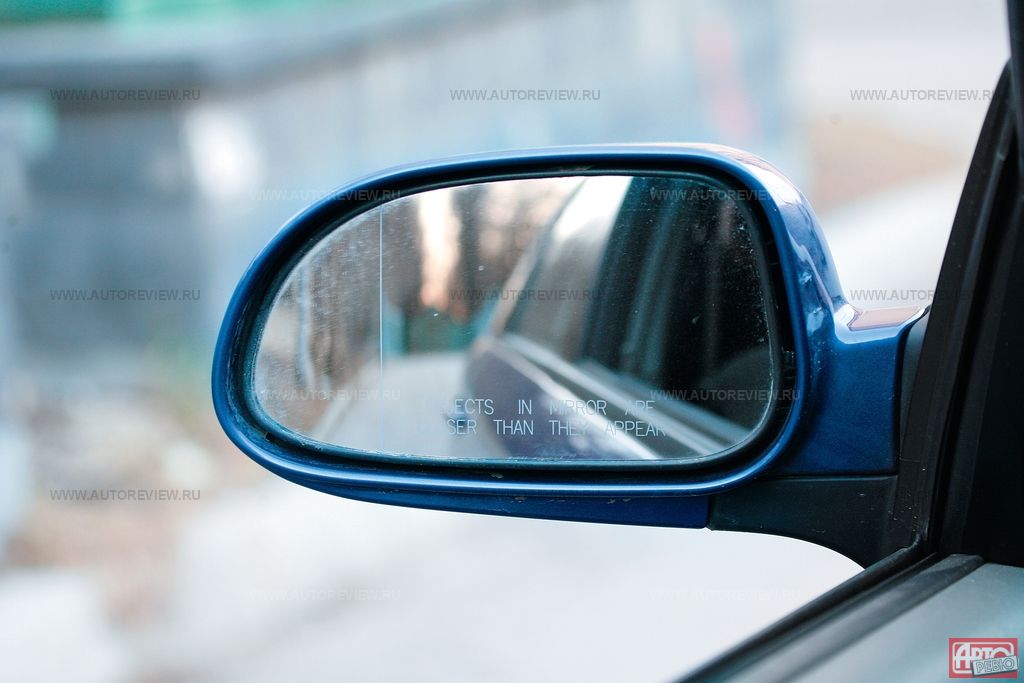
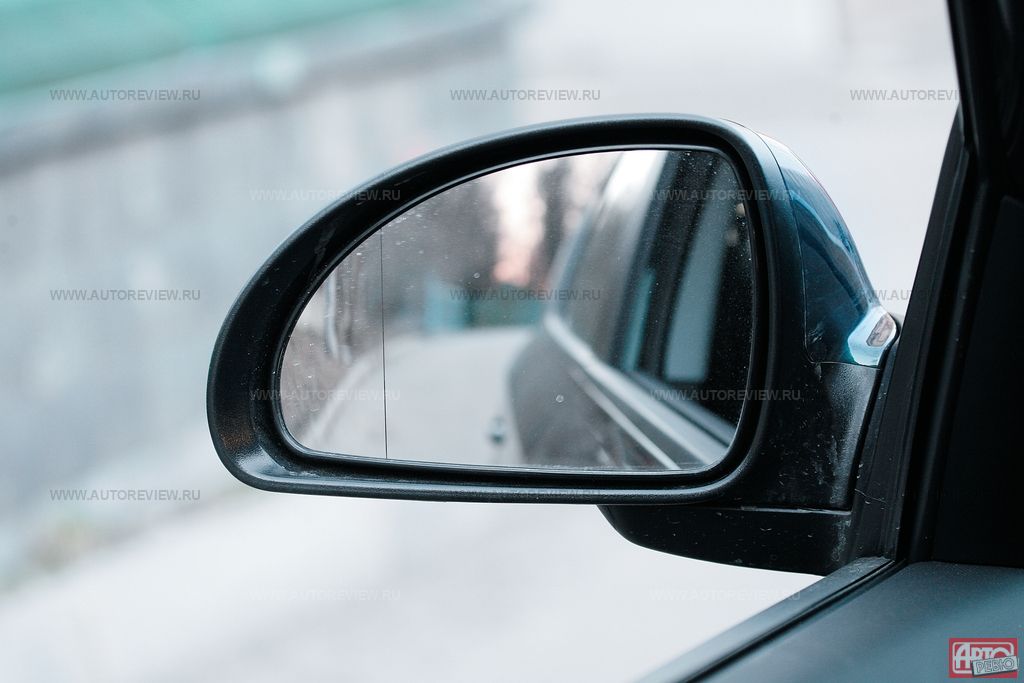
If you look at the dry numbers, the best all-round visibility is in the Chevrolet Lacetti. But in reality, experts lowered its scores due to mirrors located too low. The Renault's mirrors are even smaller, but the situation is saved by the largest and tallest rear door with glass that is not blocked by headrests. Moreover, the wiper on the Megane leaves almost no dead zone near the left pillar. The largest mirrors went to the Kia, but it has a smaller rear window. The Opel lost points due to massive triangular inserts in the doors that hinder short drivers.
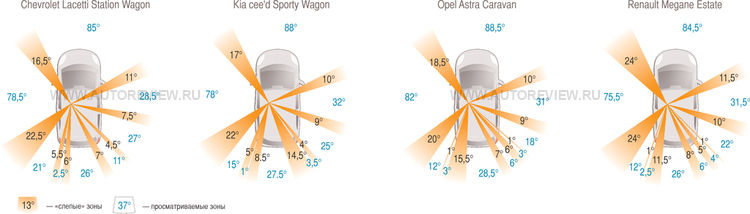
| Car | Total viewing angle, deg. | Total angle of "blind" zones, deg. |
| Chevrolet Lacetti | 279.5 | 80.5 |
| Kia cee’d | 270.0 | 90.0 |
| Opel Astra | 272.0 | 88.0 |
| Renault Megane | 264.0 | 96.0 |
| Specifications | ||||
| Parameters | Vehicles | |||
| Chevrolet Lacetti Station Wagon | Kia cee'd Sporty Wagon | Opel Astra Caravan | Renault Megane Estate | |
| Body | station wagon, 5 doors | station wagon, 5 doors | station wagon, 5 doors | station wagon, 5 doors |
| Number of seats | 5 | 5 | 5 | 5 |
| Trunk, l | 400—1410* | 534—1664* | 500—1590* | 520—1600* |
| Curb weight, kg | 1250 | 1409 | 1278 | 1305 |
| Gross weight, kg | 1765 | 1900 | 1830 | 1885 |
| Engine | petrol, multipoint injection | petrol, multipoint injection | petrol, multipoint injection | petrol, multipoint injection |
| Location | front, transverse | front, transverse | front, transverse | front, transverse |
| Cylinders | 4, in-line | 4, in-line | 4, in-line | 4, in-line |
| Displacement, cm³ | 1598 | 1975 | 1796 | 1998 |
| Cylinder bore/piston stroke, mm | 79.0/81.5 | 82.0/93.5 | 80.5/88.2 | 82.7/93.0 |
| Compression ratio | 9.5:1 | 10.1:1 | 10.5:1 | 9.8:1 |
| Valves | 16 | 16 | 16 | 16 |
| Max power, hp/kW/rpm | 109/80/5800 | 143/105/6000 | 140/103/6300 | 135/98.5/5500 |
| Max torque, Nm/rpm | 150/3600 | 186/4600 | 175/3800 | 191/3750 |
| Gearbox | manual, 5-speed | automatic, 4-speed | automatic, 4-speed | automatic, 4-speed |
| Gear ratios | ||||
| I | 3.82 | 2.82 | 2.81 | 2.72 |
| II | 2.16 | 1.55 | 1.48 | 1.50 |
| III | 1.48 | 1.00 | 1.00 | 1.00 |
| IV | 1.13 | 0.71 | 0.74 | 0.71 |
| V | 0.89 | — | — | — |
| Reverse | 3.33 | 2.48 | 2.77 | 2.46 |
| Final drive | 3.72 | 4.12 | 4.12 | 4.48 |
| Drive | front | front | front | front |
| Front suspension | independent, coil spring, McPherson | independent, coil spring, McPherson | independent, coil spring, McPherson | independent, coil spring, McPherson |
| Rear suspension | independent, coil spring, McPherson | independent, coil spring, multi-link | semi-independent, coil spring | semi-independent, coil spring |
| Front brakes | disc, ventilated | disc, ventilated | disc, ventilated | disc, ventilated |
| Rear brakes | disc | disc | disc | disc |
| Tires | 195/55 R15 | 205/55 R16 | 205/55 R16 | 205/55 R16 |
| Maximum speed, km/h | 187 | 195 | 188 | 192 |
| Acceleration 0—100 km/h, s | 11.4 | 10.7 | 11.7 | 11.3 |
| Fuel consumption, l/100 km | ||||
| City | 10.1 | 10.2 | 10.6 | 11.8 |
| Highway | 6.4 | 6.2 | 6.3 | 6.5 |
| Combined cycle | 7.8 | 7.7 | 7.9 | 8.4 |
| CO₂ emissions, g/km, combined cycle | 181 | 183 | 189 | 201 |
| Fuel tank, l | 60 | 53 | 52 | 60 |
| Fuel | AI-95 | AI-95 | AI-95 | AI-95 |
| * With rear seats folded | ||||
| Equipment of the comparative test participants | ||||
| Option | Model | |||
| Chevrolet Lacetti | Kia cee’d | Opel Astra | Renault Megane | |
| Cost of the initial version, RUB | 410900 | 613180 | 573000 | 731450 |
| Front airbags | + | + | + | + |
| Side airbags | – | + | + | + |
| Curtain airbags | – | + | – | + |
| Anti-lock braking system | + | + | + | + |
| Power steering | + | + | + | + |
| Automatic transmission | – | O | P | P |
| Steering wheel with control buttons | P | + | + | +* |
| Tilt-adjustable steering wheel | + | + | + | + |
| Reach-adjustable steering wheel | P | + | + | + |
| Leather-wrapped steering wheel | + | + | O | + |
| Heated windshield | – | +** | – | – |
| Heated front seats | – | + | + | + |
| Driver's seat height adjustment | + | + | O | + |
| Driver's seat cushion tilt adjustment | + | – | + | – |
| Central locking with remote control | + | + | + | + |
| Security alarm | – | – | + | – |
| Air conditioning | P | + | + | + |
| Climate control | – | + | + | + |
| Power-adjustable and heated mirrors | + | + | + | + |
| Power-folding mirrors | – | – | – | + |
| Front power windows | + | + | + | + |
| Rear power windows | P | + | O | + |
| Folding rear seat | + | + | + | + |
| Rear center armrest | – | – | – | + |
| CD player | + | + | + | + |
| Engine start button | – | – | – | + |
| Light sensor | – | – | – | + |
| Rain sensor | – | – | – | + |
| On-board computer | – | + | – | + |
| Cruise control | – | – | – | + |
| Electric sunroof | – | – | – | O |
| Panoramic roof | – | – | – | O |
| Rear parking sensors | – | – | – | + |
| Rear head restraints | + | +*** | + | +*** |
| Net between cabin and trunk | + | – | – | + |
| Remote trunk lock | + | – | – | +**** |
| Remote fuel filler flap lock | + | + | – | – |
| Front fog lights | P | + | – | + |
| Sun blinds on side windows | – | – | – | + |
| Alloy wheels | – | + | – | + |
| Full-size spare wheel | – | – | + | + |
| Metallic paint | O | + | O | O |
| Tires | Pirelli Carving 195/65 R15 | Bridgestone Ice Cruiser 5000 205/55 R16 | Kleber Kapnor 5 205/55 R16 | Goodyear Ultra Grip 500 205/55 R16 |
| Price of the test car, RUB | 447900 | 638640 | 635600 | 806950 |
| * Additional remote control on the steering column | ||||
| ** Wiper rest zone | ||||
| *** Recessed | ||||
| **** Button on the key fob | ||||
| (+) Included in the base trim | ||||
| (–) Not available in the base version | ||||
| (O) Option installed on the test cars | ||||
| (P) Included in the package trim of the test car | ||||
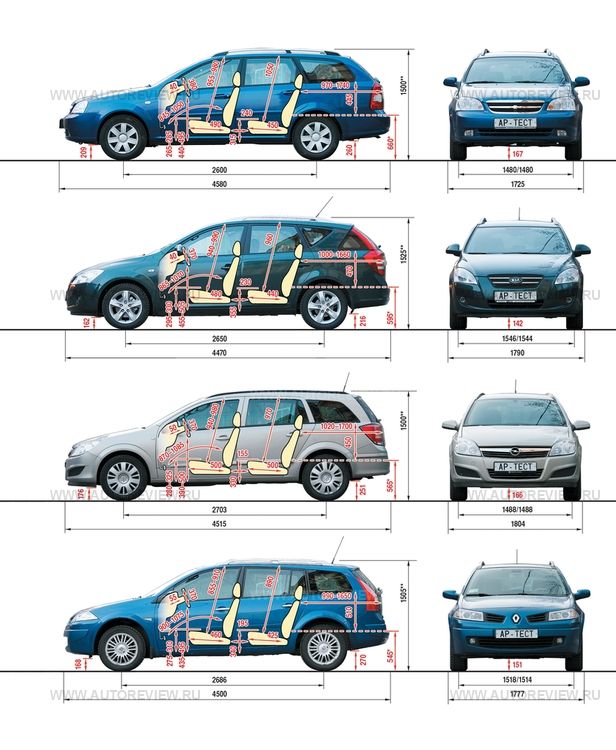
In black — manufacturer data, in red — results of Autoreview measurements
* Loading height ** With roof rails

Prices and trim levels
Chevrolet Lacetti Station Wagon — one of the most affordable golf-class station wagons on the Russian market. The starting price is 410,900 rubles for a car in the base Plus version with a 1.6 engine (109 hp), a pair of airbags, ABS, front electric windows, CD player, as well as mirrors with electric drive and heating. For air conditioning you need to pay an additional 21,400 rubles. The maximum Platinum version with four airbags, climate control, full electric package, rain sensor, CD changer, fog lights, alloy wheels and roof rails costs 498,300 rubles. Only in this configuration is the 1.8 engine (122 hp) available for 523,100 rubles. An automatic transmission is not provided for the station wagon at all — unlike the sedan and hatchback. Such cars are rare in dealer showrooms; you will have to wait from two to five months for an order.
Warranty — two years without mileage limit. Chevrolet is sold by 114 dealers in 76 Russian cities.
Kia cee’d Sporty Wagon in the initial version with a 1.4 engine (109 hp), six airbags, ABS, air conditioning, mirrors with electric drive and heating, front windows, CD player and roof rails will cost 511,610 rubles. This is 79,310 rubles more expensive than the Chevrolet Lacetti 1.6 station wagon in a similar configuration, although the Korean car has more airbags — six versus two. The version with a 1.6 engine (122 hp) costs 532,250 rubles, and the Kia cee’d Sporty Wagon 2.0 (143 hp) with climate control, rear electric windows, heated front seats, fog lights and alloy wheels — 613,180 rubles. A four-speed automatic transmission is available only with 1.6 and 2.0 engines, the surcharge is from 23,850 to 25,460 rubles. There is also a version with a 1.6 liter turbodiesel (115 hp) for 618,280 rubles. Dealers practically do not have such station wagons in stock; the order will arrive within four months.
Warranty — five years or 120,000 km. Kia of Kaliningrad assembly is sold by 88 dealers in 46 Russian cities.
The starting price of the Opel Astra Caravan station wagon is 512 thousand rubles, and for this money the buyer gets a car with a 115-horsepower 1.6-liter engine in the Essentia trim. Standard equipment includes four airbags, ABS, air conditioning, and front electric windows. If you choose the Enjoy trim, such a station wagon will cost 543 thousand rubles — for this surcharge you get single-zone climate control, heated front seats, power-adjustable and heated mirrors, a CD player, and roof rails. Interestingly, this is 9,080 rubles cheaper than the Kia cee'd Sporty Wagon 1.6, which, however, has six airbags and alloy wheels, but instead of climate control — a regular air conditioner. The Astra Caravan version with a 140-horsepower 1.8 engine is priced at 573 thousand rubles. Diesel modifications are noticeably more expensive: the 120-horsepower 1.9 CDTI turbodiesel starts at 698 thousand, and the version of the same engine boosted to 150 horsepower costs at least 737 thousand, but in the top Cosmo trim with alloy wheels and fog lights. A four-speed automatic transmission is available exclusively with the 1.8 petrol engine, and you will have to pay an extra 40 thousand rubles for it. For the 1.6 engine, an Easytronic "robot" is provided, which costs 20 thousand rubles. An important nuance: such station wagons in Russia are made only to order, and you will have to wait from three to six months for the car.
Opel's warranty obligations are two years without mileage limit. The brand's dealer network includes 111 points in 62 Russian cities.
Renault Megane Estate turns out to be more expensive: for 545,950 rubles, a station wagon is offered in the modest starting version Authentique+, which has only two airbags, ABS, air conditioning, front electric windows, and engine start with a chip card, but the rear seat back is not split. The comparison is not in favor of the "Frenchman": the Astra Caravan with four airbags is 33,950 rubles cheaper. The Megane with the same 115-horsepower 1.6 engine in the Expression trim, which includes six airbags, a CD player, power package, heated mirrors, and roof rails, costs 580,400 rubles. Interestingly, for just 9,000 rubles extra, you can get a station wagon in the fixed Extreme version with climate control, heated front seats, fog lights, and light and rain sensors. The flagship Privilege trim with a two-liter engine producing 135 horsepower, fabric-leather interior, alloy wheels, and parking sensors costs from 731,450 rubles. A four-speed "automatic" for the Expression and Privilege versions is an additional 31,800 rubles. Unlike the competitor, the Megane Estate can be found in stock at dealers, and if you order — you will have to wait three months.
Renault also has a two-year warranty without mileage limit. The brand is represented by 109 dealers in 70 Russian cities.
| Cost of scheduled maintenance with consumables and parts, rub. | |||||
| Scheduled maintenance | Cars | ||||
| Chevrolet Lacetti | Kia cee'd | Opel Astra | Renault Megane | ||
| Cost of standard hour | 1200 | 1100 | 1500 | 1300 | |
| Mileage, km | 1000 | — | 3200 | — | — |
| 15000 | 6050 | 5800 | 4620 | 7200 | |
| 30000 | 7400 | 8000 | 8080 | 7200 | |
| 45000 | 8800 | 5800 | 4620 | 7200 | |
| 60000 | 15150 | 9500 | 17700 | 28000 | |
| 75000 | 5300 | 5800 | 4620 | 7200 | |
| 90000 | 12820 | 13700 | 8080 | 9500 | |
| Total | 55520 | 51800 | 47720 | 66300 | |
| Approximate prices for parts at dealers in Moscow, rub. | ||||
| Parts | Cars | |||
| Chevrolet Lacetti | Kia cee'd | Opel Astra | Renault Megane | |
| Oil filter | 390 | 170 | 390 | 228 |
| Fuel filter | 474 | 837 | 1383 | 457 |
| Air filter | 560 | 740 | 544 | 638 |
| Cabin filter | 1185 | 1100 | 1433 | 1139 |
| Spark plug | 212 | 150 | 361 | 197 |
| Front brake pads | 2500 | 2670 | 4035 | 3150 |
| Rear brake pads | 2190 | 2100 | 2742 | 2884 |
| Front shock absorber | 4570 | 3900 | 4420 | 3500 |
| Rear shock absorber | 4063 | 3540 | 3340 | 3500 |
| Front stabilizer link | 880 | 920 | 1090 | 2400 |
| Clutch disc | 3115 | 2200* | 7700* | 12413** |
| Front headlight | 8130 | 4300 | 8610 | 7628 |
| Rear light | 3980 | 3820 | 4930 | 3500 |
| Front fender | 4953 | 3500 | 5685 | 7300 |
| Front bumper | 19470 | 5300 | 21156 | 12000 |
| Hood | 10640 | 8200 | 18587 | 9670 |
| Windshield | 12362 | 10000 | 12896 | 14000 |
| * For version with manual transmission | ||||
| ** In a set with clutch "basket" | ||||
| Sales statistics of C+ class station wagons in Russia in 2007 | ||
| Car | Quantity, pcs. | Share of total model sales |
| Ford Focus Combi | 7025 | 7.8% |
| Chevrolet Lacetti SW | 5753 | 14.2% |
| Opel Astra Caravan | 3654 | 12.5% |
| Mitsubishi Lancer SW | 3253 | 10.3%* |
| Suzuki Liana Combi | 3238 | 58.7% |
| Kia cee'd SW | 1915 | 15.6% (35.0%**) |
| Peugeot 307 Break/SW | 1511 | 19.6% |
| Skoda Octavia Tour Combi | 1081 | 6.9% |
| Renault Megane Estate | 967 | 5.6% |
| Skoda Octavia Combi | 531 | 13.3% |
| Subaru Impreza Combi | 472 | 21.0%* |
| Volvo V50 | 368 | 7.3%*** |
| Toyota Corolla Combi | 331 | 12.4%* |
| * Relative to cars of "its" generation | ||
| ** Since the start of station wagon sales (October—December) | ||
| *** Share of total sales of the Volvo S40/V50 family | ||
Alternative
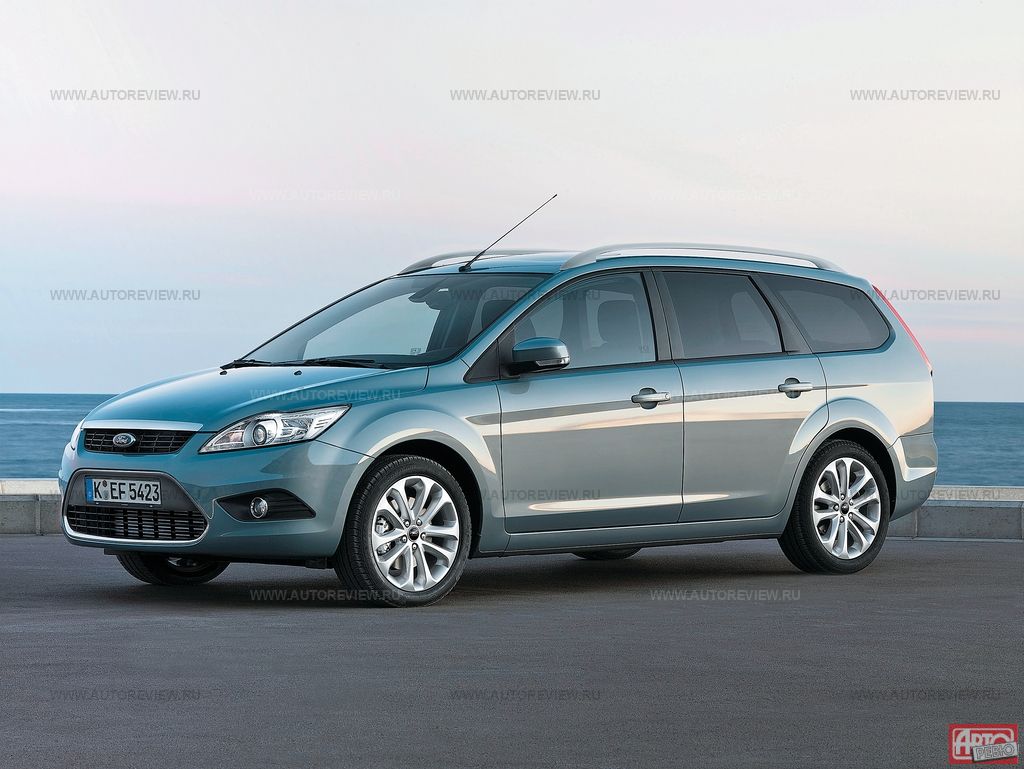
If you look at formal indicators, the most affordable golf-class station wagon on our market can be considered the restyled Ford Focus from Vsevolozhsk. The price for the base version starts from 398 thousand rubles — for this money you get a 1.4 engine (80 hp), one airbag, and front electric windows. A station wagon with a 1.6 engine (100 hp) in a trim with air conditioning and heated mirrors will cost 460 thousand, and for a version with a two-liter engine (145 hp) they ask from 499 thousand. For a four-speed automatic transmission you will have to pay an additional 32 thousand rubles, and for roof rails — only 2,400 rubles. The Focus has a rear seat that folds in a 60:40 ratio, and the trunk pleases with a volume from 482 to 1,525 liters.
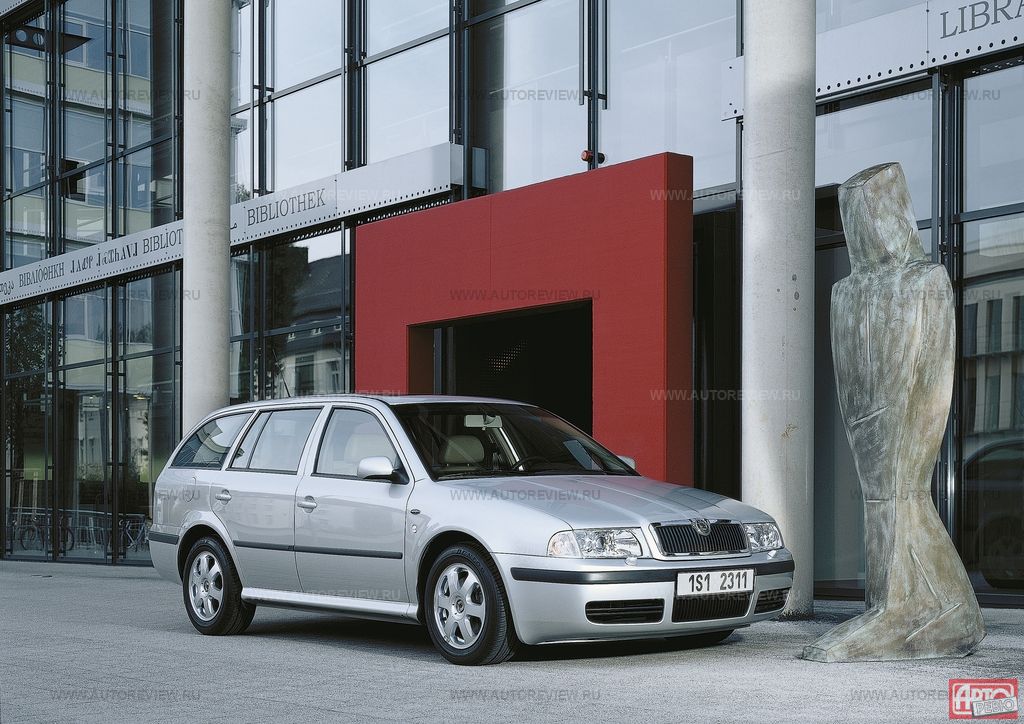
Skoda Octavia Tour Combi is a model that is far from new, it has been produced since 1996, but it will live on the assembly line for at least another couple of years. The base version with a 1.4 engine (75 hp) costs 429 thousand rubles, the version with a 1.6 engine (102 hp) starts from 495 thousand, but a station wagon with a turbocharged 1.8T (150 hp) will cost 575 thousand rubles. The gearbox is exclusively "manual", but even in the base there are two airbags, ABS, front electric windows, fog lights, and mirrors with heating and electric drive. The aging Octavia can boast a spacious trunk (548—1,512 liters) and a rear seat with a split backrest, but roof rails will not be offered even for an additional fee.
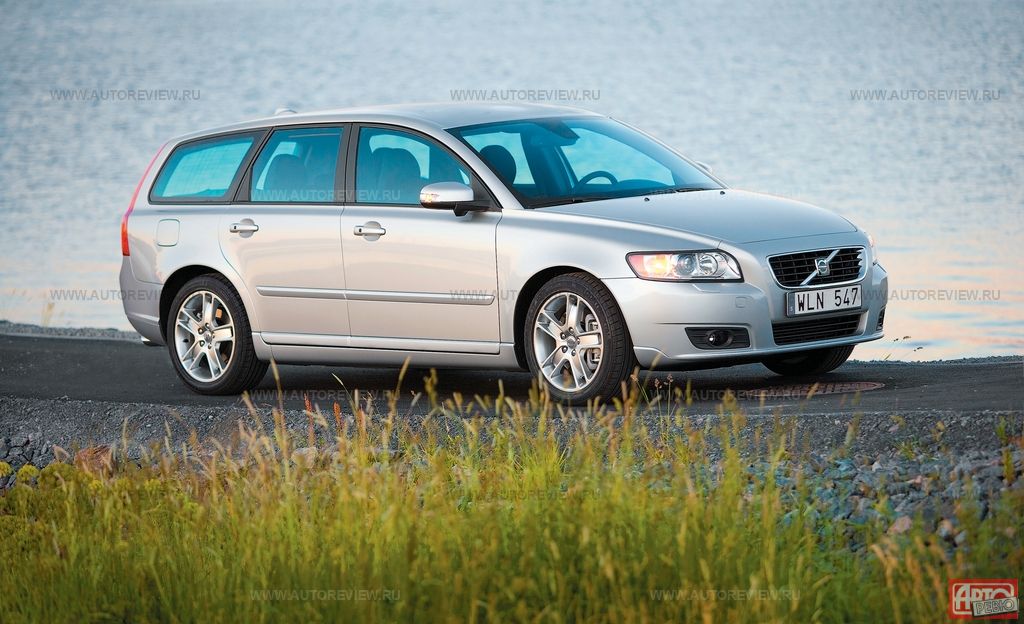
| Ford Focus | Skoda Octavia Tour Combi | Volvo V50 |
 |
 |
 |
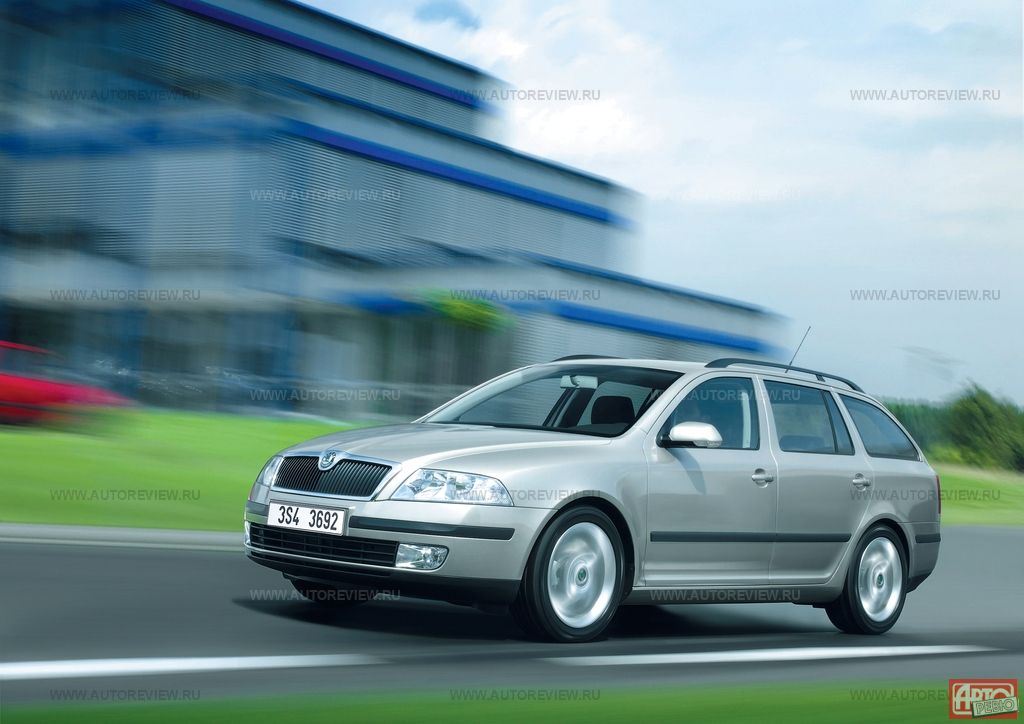
As for the Skoda Octavia Combi of the second generation, it appeared four years ago and costs noticeably more than its predecessor — from 573 thousand rubles for the version with a 1.4 engine (80 hp). However, the basic configuration already includes air conditioning and heated front seats. The version with a 1.6 engine (102 hp) will cost 633 thousand, the modification with direct injection 1.6 FSI (116 hp) will raise the price to 653 thousand, and the station wagon with 2.0 FSI (150 hp), equipped with four airbags, power package and CD player, costs at least 831 thousand rubles. The "second" Octavia has an even more spacious trunk — 580-1620 liters, and roof rails are available in all trim levels except the most basic. Details — in AR No. 23, 2004.
Volvo V50 of 2003 is already a premium segment, and the price is correspondingly higher than other classmates. The base version with a 1.6 engine (100 hp) has six airbags, ABS, air conditioning, CD player, heated front seats and power package, but costs 713100 rubles. The modification with a five-speed automatic and a 2.4 engine (140 hp) starts from 883700 rubles. The trunk here is quite modest — 415-1310 liters, and for roof rails you will have to pay an additional 12900 rubles. Details — in AR No. 5, 2004.
| Skoda Octavia Combi | Mitsubishi Lancer SW |
 |
Do not forget about the Mitsubishi Lancer SW station wagon of the previous generation — its production will be closed already in July of this year. The version with a 1.6-liter engine (98 hp) is estimated from 478380 rubles, but for the variant with a two-liter unit (135 hp) they ask 597370 rubles. Details — in AR No. 8, 2004.