
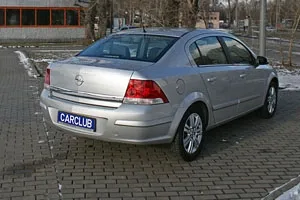
 Why did the Opel Astra, so popular in Russia, not have a sedan until now — this question was surely asked by many motorists...Comments (1)
Today, hatchbacks dominate automotive fashion — they are almost considered the standard of style. Compact, urban, all of Europe drives them, and it's also more convenient to carry potatoes from the dacha in a station wagon. But if we set aside fashion trends, statistics speak for themselves: 65% of Russian buyers choose the classic four-door body, while in Europe only 5% are such enthusiasts. That is why the absence of a sedan in the lineup of the Opel Astra, popular here, puzzled many who were considering the car in the price range of $20,000–$25,000. However, that is in the past: since October last year, the Opel Astra Sedan has been officially sold at Russian dealers. But residents of Western Europe won't see this model — General Motors management decided to limit it to Central and Eastern Europe, as well as Turkey.
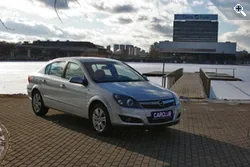 The new member of the Astra family is assembled in Poland, at the Gliwice plant. Moreover, the station wagon was taken as the base, not the hatchback, so the dimensions are corresponding: the length of the new model is 4,587 mm, which is 37 cm more than the hatch. The wheelbase is 2,703 mm, which is even 3 mm more than the older Vectra, and in length the sedan is only 2.4 cm shorter. By the way, the exterior of the Astra Sedan easily reveals Vectra features, which clearly plays into the hands of the more affordable model. Overall, the sedan turned out harmonious, proportional, and even solid — the trunk is organically integrated into the overall silhouette. Tinted optics with bi-xenon, 16-inch alloy wheels... True, it's worth noting that GM spared no expense for tests and gave journalists an almost top-end version. But even without the striking headlights, which cost only 13,500 rubles as an option, the car will look decent.
The trunk, by the way, is pleasing: 490 liters of volume. The Vectra, for comparison, has 500 liters. For an average family's hypermarket shopping, this is definitely enough. Under the floor is not a modest space-saver spare, but a full-size spare wheel. And if you fold the rear row, the volume grows to 870 liters.
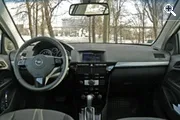
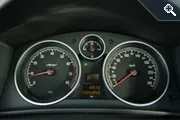
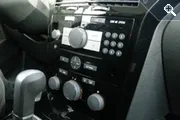
We won't linger long in the cabin — the interior is familiar from other Astras. Rigid seats with lateral support and leather inserts, leather-wrapped steering wheel with a comfortable grip, clear geometry of lines, neat instruments in chrome trim, hard but decent plastic, and the vertical center console is finished in black lacquer in the Piano Paint style. In more affordable versions, however, there will be other trim options — gray, aluminum, or beige. Our configuration also had a color display showing information from the onboard computer and the radio with a CD changer. Control of these systems is duplicated on the steering wheel, and over time, adjusting the volume or temperature stops distracting from the road. Finding a comfortable seating position is easy: the driver's seat adjusts in six directions, and the steering column adjusts for height and reach.
But where to put small items is a puzzle. Door pockets, glove box... It's not super convenient, but there's no choice: there's also a box between the front seats that doubles as an armrest. However, reaching it from the driver's seat is impossible, and the elbow just hangs in the air. The cup holder between the seats is also out of reach — it seems designed for rear passengers. The front passenger is luckier: they have a spacious glove box, and even with a shelf — at least some consolation.
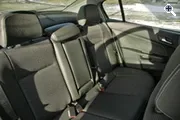
Rear passengers in the Astra will be quite comfortable — if there are two of them. Then you can fold down the armrest and feel almost like in business class, especially since there's enough legroom.

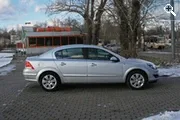

Well, the driver just has to turn the key and remind everyone who's in charge. And here the Astra doesn't disappoint: the 1.8-liter engine with 140 horsepower works very decently, even despite the outdated four-speed automatic. The car responds to the gas almost without pause, allowing confident and quick maneuvering. It's nice that the gearbox shifts smoothly, without jerks. You should be careful with the brakes — if you press harder, the sedan can stop dead in its tracks, surprising those around. And they don't yet know about the little Sport button... Press it, and the automatic becomes noticeably more aggressive, shifting at 5,000–6,000 rpm, and the car drives much more spiritedly. We easily accelerated to 170 km/h, and the sedan clearly hinted it was ready for more. It's far from a sports car, of course, but in traffic you can move respectably, and if desired, even have some fun. The suspension fully supports the mood of the engine and gearbox: the Astra willingly enters corners, responds clearly to the steering, and confidently holds the line. True, you have to pay for this — all bumps and joints are transmitted to the body, though not too intrusively. But sound insulation disappoints: wheel arches are especially audible, and the engine doesn't hesitate to remind you of itself with a hum. By the way, street noise is the only way to tell if the sunroof is closed. Yes, our version had this option rare for Russia — a sunroof that opens in two planes. But it's impossible to catch the moment when it's closed, and the car gives no hint — you have to rely on sound. The auto-dimming rearview mirror (also an option from the top trim) works perfectly — it saves you from blinding xenon or poorly adjusted headlights behind in a timely and reliable manner. Another detail that might confuse is the non-latching steering column stalks. It's a matter of habit: a light press for triple blink of the turn signal or all the way for a constant signal — at first it's easy to get confused and scare fellow drivers with chaotic blinking, but over time you get used to it. Though not everyone likes this scheme.
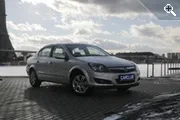
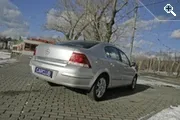
The German manufacturer has indeed produced a successful car: harmonious, solid, spacious enough, yet also dynamic. So why, even considering our 65 percent of the market, are they so rarely seen on the roads? Although, of course, it's too early to draw conclusions — the model has been on sale for less than a year, and the results are not yet in. But didn't Opel delay entering the market? Apparently, the company is confident in its abilities — otherwise, they wouldn't have launched assembly of Russian Astras at the GM plant near St. Petersburg. It will be interesting to see if they lower prices for domestic versions — for now, it's a secret. Currently, the sedan's price ranges from 497,000 to 598,000 rubles, excluding options. For a minimum of 497,000 rubles, you can get the base Essentia trim: under the hood is a 1.6-liter engine with 115 hp, manual gearbox, air conditioning, ABS, front electric windows, and front and side airbags for the driver and front passenger. The Enjoy version starts at 528,000 rubles and adds an audio system with steering wheel controls, power-adjustable and heated mirrors, climate control, and heated seats. The top Cosmo with a leather three-spoke steering wheel, fog lights, dual-tone horn, illuminated vanity mirrors, and 16-inch alloy wheels will cost at least 552,000 rubles. For an additional charge on any version, pleasant extras are offered: color display, onboard computer, power sunroof, cruise control, rain sensor, and more. The choice of powertrains is a 1.6-liter engine with 115 hp or a 1.8-liter with 140 hp, paired with a five-speed manual, Easytronic robot, or a four-speed automatic.
Author: Svetlana Aleeva