

Alexander Alexandrov, 28 years old, CEO of a company. Drives a Chevrolet Captiva
Opel Antara. Price: from 937,000 RUB. On sale: since 2007
Chevrolet Captiva. Price: from 798,700 RUB. On sale: since 2007.
We offered the owner of a Chevrolet Captiva to compare it with the Opel Antara. The goal is to find out how the two cars are similar and different, and to understand whether he would like to swap one for the other right now.
Opel Antara
Driving
2007 Opel Antara vs 2007 Chevrolet Captiva
© Photo: Igor Kuznetsov, 5 Koleso
Interior
Inside it is quite spacious, but you cannot call this space comfortable. There are questions about the trim materials and sound insulation. For such a price, I expected more.
Comfort
Overall, it is fine, but the confusing center console can drive anyone to the brink of patience.
Safety
The base trim is well equipped and fully fits this class of car.
Price
Quite adequate.
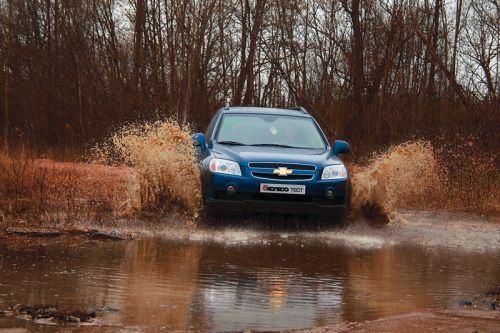
2007 Chevrolet Captiva
© Photo: Igor Kuznetsov, 5 Koleso
Chevrolet Captiva
Driving
The car does not amaze the imagination, but it does not let you down either. If I were choosing now, I would definitely take a closer look at the version with the 3.2-liter engine.
Interior
Inside it is spacious and comfortable, and the third row of seats is a pleasant bonus. It seems unnecessary, but when you need it, it is right there.
Comfort
Sound insulation is clearly a bit weak. That is what I would improve first.
Safety
Active and passive protection systems fully correspond to this class of car.

2007 Chevrolet Captiva
© Photo: Igor Kuznetsov, 5 Koleso
Price
Quite reasonable.
Right before the arrival of the new 2008, I became the happy owner of a Chevrolet Captiva. When choosing a car, I was guided by several main conditions. First, the budget was no more than 950 thousand rubles. Second, the off-road capability had to be higher than that of a regular passenger car. And third, the car had to be available for purchase right away. As a result: to date, I have driven 9,000 km on it over 3.5 months of ownership.
Exterior
In my opinion, the design of the Captiva is more traditional and European. At the front, there is a massive bumper smoothly transitioning into the hood, familiar headlights, and fog lights integrated into the bumper. At the rear, two exhaust pipes peek out from under the bumper, adding aggression to the car, along with rounded taillights and a sculpted bumper. The result is a quite attractive car that does not reveal its Korean roots at all.
The front of the Antara makes a different impression. There is no sense of massiveness; the car looks lighter. The combination of bumper elements with the radiator grille and the edges of the headlights forms a kind of “American smile.” The low-mounted fog lights add a bit of aggressiveness. For their direct purpose, they are placed even more conveniently, but there is a risk of breaking them with a stone flying out from under the wheels of the car ahead. The rear bumper of the Antara is completely different: it stands out excessively against the rest of the body, and I do not really like that. Also noteworthy is the tailgate, which tapers toward the bottom.
Verdict: Captiva is for those who appreciate restrained classics and do not like overly flashy cars. Antara, on the other hand, is unisex for lovers of bright and unusual cars, to whom classic smooth lines seem boring.
Let's look inside
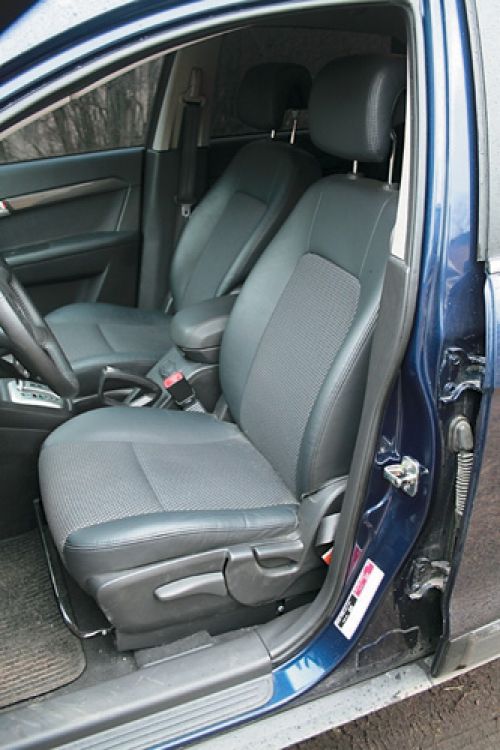
2007 Chevrolet Captiva
© Photo: Igor Kuznetsov, 5 Koleso
You move to the back and realize: there is even more space here than in the front! Three tall passengers can easily fit on the rear sofa. And if that is not enough, there is a third row of seats hidden in the trunk, which forms a flat floor when folded. For lovers of long trips with a full load, the Captiva has an important plus – a separately opening rear window. On the road, it is very convenient to take things out of a compartment packed to the top without opening the entire door. It is also important that the trunk of the Captiva is larger than that of the Antara, and it is easier to load. In the Antara, part of the opening is eaten up by the tapering door and side plastic trim.

2007 Opel Antara
© Photo: Igor Kuznetsov, 5 Koleso
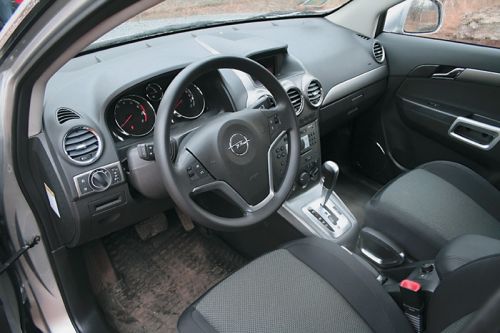
In the Antara's cabin, you feel not calm and peace, as in the Captiva, but some kind of fuss and drive. This interior does not invite relaxation! The first thing that catches your eye is the orange backlight. In the dark, I think it is very irritating. In the Captiva, it is green, and green, as is known, is calming.
Now, in order, about what I did not like. The information display is located at the top, and the control buttons for it are at the bottom! The control of the computer and stereo is intuitively unclear; you need time to figure out the purpose of each button, and until you memorize it, you constantly have to glance at the screen to understand what has changed. The door closing handles are located horizontally and too far away – it is inconvenient to close the door, and during a trip it is impossible to hold onto them. The block of buttons for window heating and other things is placed low, and the buttons themselves are very small. The climate control is controlled by rotary knobs, like in cars from the 90s.
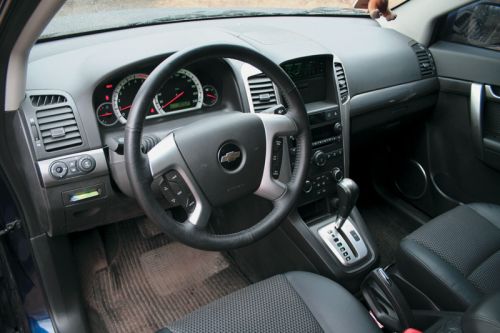
2007 Chevrolet Captiva
© Photo: Igor Kuznetsov, 5 Koleso
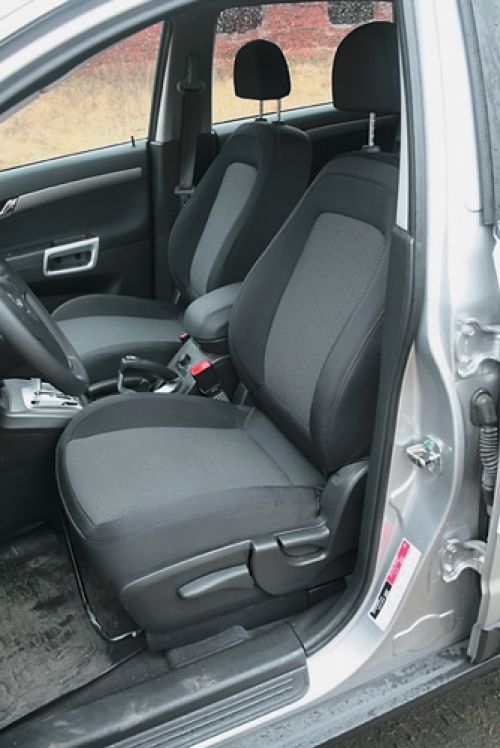
2007 Opel Antara
© Photo: Igor Kuznetsov, 5 Koleso
Let's go
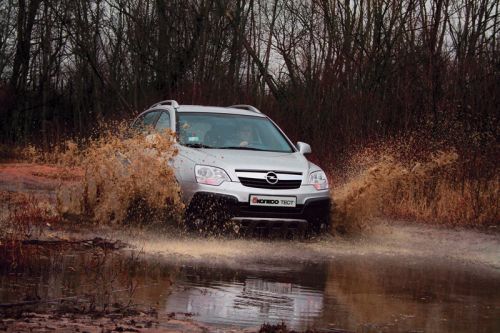
2007 Opel Antara
© Photo: Igor Kuznetsov, 5 Koleso
On the highway, when the cars enter sand or a puddle and the front wheels start to slip, the rear axle comes into play. In both models, the electronic all-wheel-drive engagement system functions identically. I expected the Antara to have better sound insulation, but my assumptions were not confirmed: both the engine and the tire noise clearly penetrate the cabin.
The interior of the Captiva creates an atmosphere conducive to unhurried, smooth driving. But in the Antara, the orange instrument lighting and gray plastic make you feel not too cozy.
My verdict
Opel Antara and Chevrolet Captiva are very similar at first glance: similar technical parameters and appearance, if you don't delve into details. However, a closer look reveals numerous differences, and it becomes clear — these are two completely different cars created for different people. Chevrolet Captiva will appeal to those who prioritize comfort and a familiar, almost classic European interior. Opel Antara will surely interest energetic drivers looking for unconventional solutions.
2007 Opel Antara
© Photo: Igor Kuznetsov, 5 Koleso
Expert opinion
Oleg Kalaushin, journalist of «5 Kolesa»
Opel Antara and Chevrolet Captiva are built on a common platform and with similar engines demonstrate roughly equal dynamics. But at the same time, Antara is noticeably more expensive than Captiva. Is there any point in overpaying? Probably not, because in essence this money is paid only for the brand name. Although, to each their own. Moreover, selling an Opel on the secondary market later will be significantly easier than a Chevrolet.
May 6, 2008
Author: Alexander Alexandrov
© 5 Koleso