
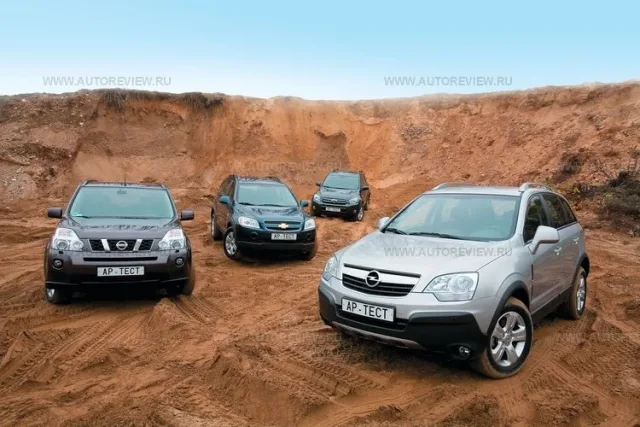
As they say, better late than never. And it is certainly better to finally bring your own mid-size crossover to the market than to continue silently ceding the lead to the Toyota RAV4 and other Japanese models... And so, under the aegis of General Motors, a pair of "relatives" appeared — the Chevrolet Captiva and Opel Antara. Although calling them completely identical is not possible: the Antara is shorter, but also more expensive than the Captiva. So what is the difference between them?
And will they be able to compete with the recognized leaders — the Toyota RAV4 and Nissan X-Trail?
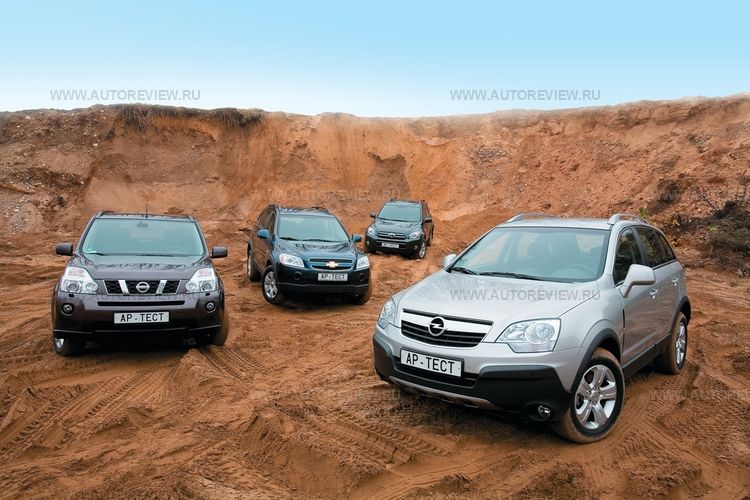
The homeland of these "almost twins" is actually South Korea: the Captiva was created within the GM DAT division, which was previously known as Daewoo. But look — does the appearance have anything Asian about it? A neat crossover with sculpted sides and protective cladding made of unpainted plastic.
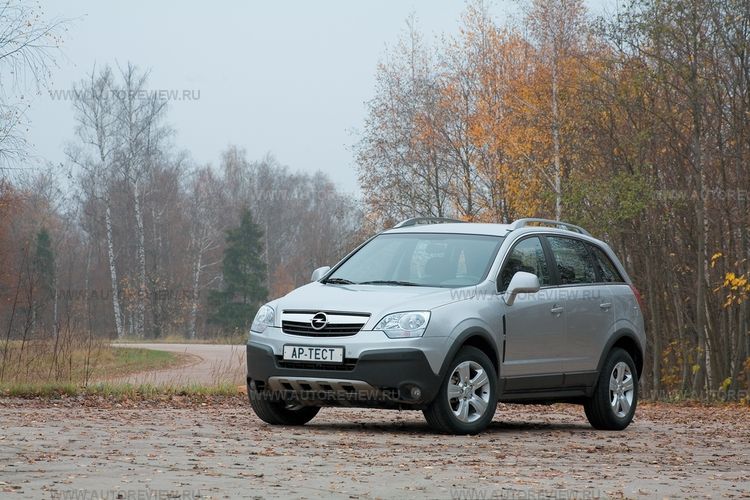
The Opel Antara, in turn, is the result of a "creative reinterpretation" of the Captiva. First, the rear overhang is shortened by 59 mm. Second, the exterior: a wide chrome "smile" strip and expressive Opel-style body creases. If the Captiva is just pretty, the Antara is truly beautiful!
And this applies not only to the exterior! The faceted console with a "metallic" finish, large rectangular buttons, and convenient climate control dials is topped with three round air vents, the instruments glow amber, and all around are expensive fabrics and soft plastic... But the Chevrolet Captiva looks like a poor relative: the interior is modest, in the spirit of the budget Aveo, and although the plastic is also soft, it clearly yields to the Opel's.
And what about the "Japanese"?
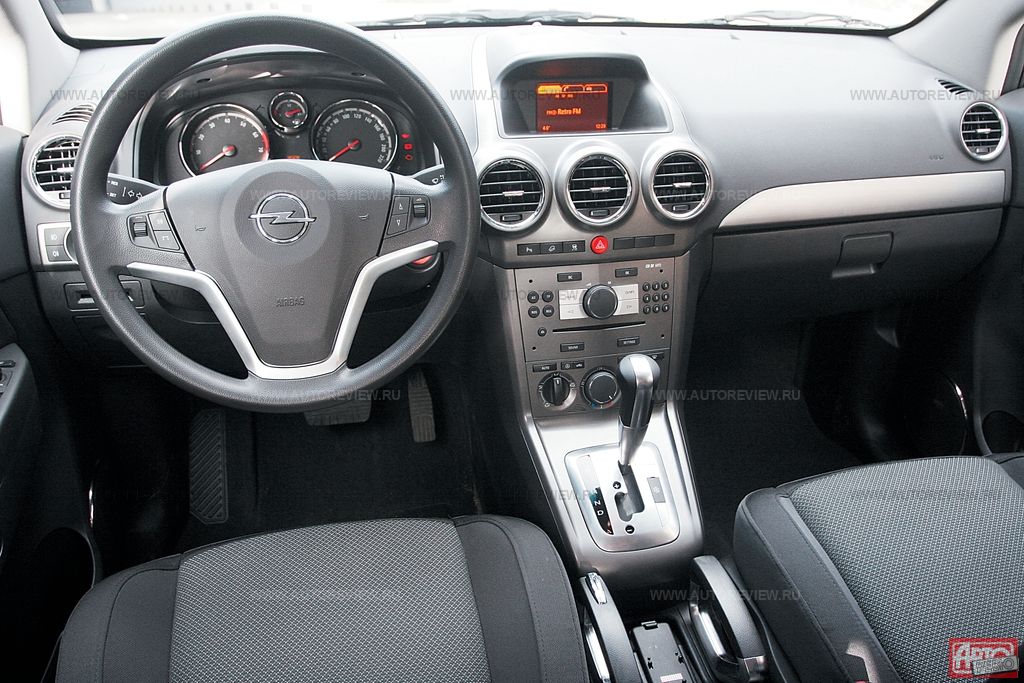 | 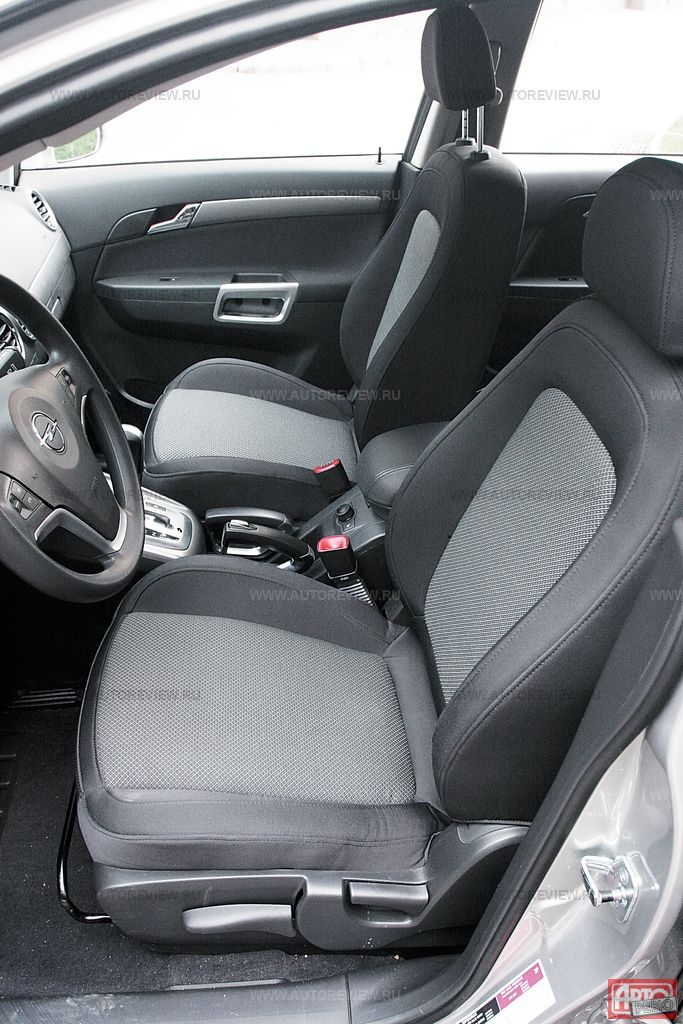 |
| The Antara's cabin is 100% Opel: striking and high-quality | Seats with excellent profile, precise firmness, and strong lateral support |
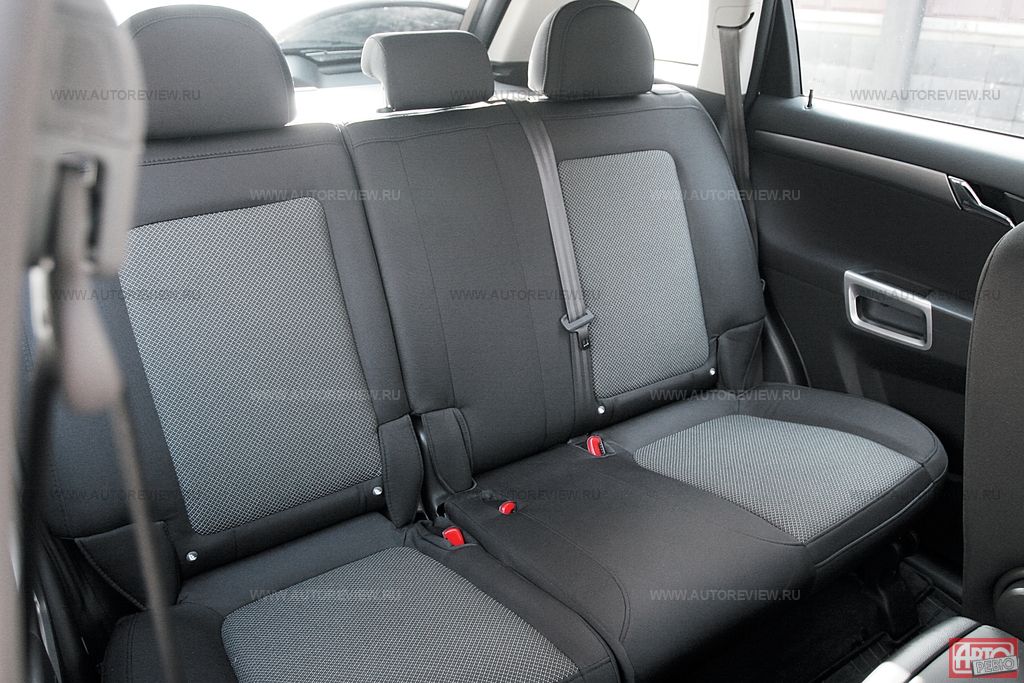 | 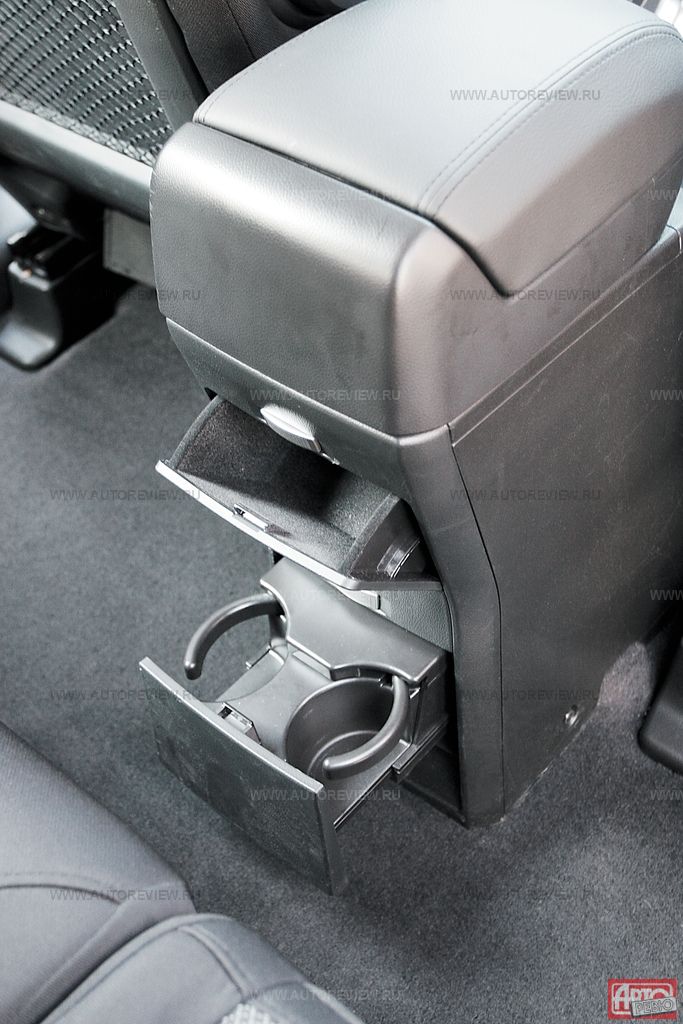 |
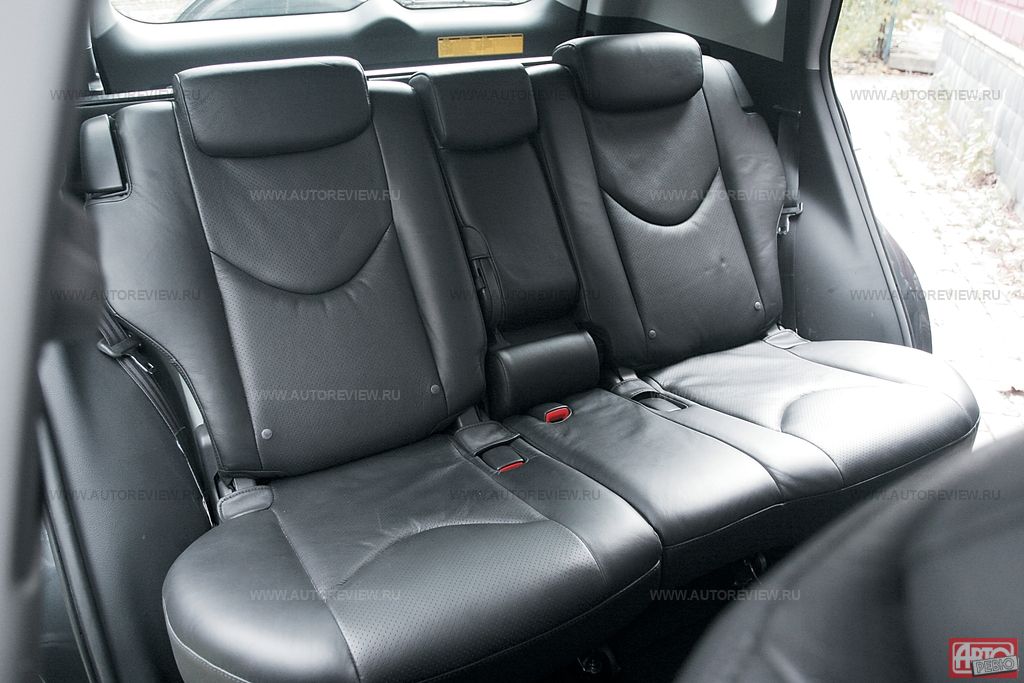
| In the back, there's room even for three — no central tunnel! | A pair of cupholders and a small hidden compartment — as in the Captiva |
On the outside, the Japanese don't shine: the Nissan is angular, the Toyota is blandly rounded. But inside, they are more interesting than the Captiva. The Nissan X-Trail's cabin, like a Russian izba, is "red in its corners" — soft plastic pleases. Meanwhile, the Toyota's hard trim materials are compensated by bold and striking design: a two-tier panel with a "sun" radio in the center and "planets" of climate control — a sight to behold, as are the optitronic instruments.
Toyota also leads in ergonomics. The small "sporty" steering wheel pairs perfectly with softly embracing seats of perforated leather, and the button-controlled dual-zone climate is more convenient than the three low-set knobs of the competitors. Second place goes to the Antara: the sculpted and grippy "bucket" seats are excellent, but the steering wheel is too large and awkward. The Captiva's wheel is just as big, but the rim, on the contrary, is surprisingly thin, and the flatter seats are less comfortable. There are also complaints about the Nissan: the soft leather seats don't match the small "grippy" steering wheel at all.
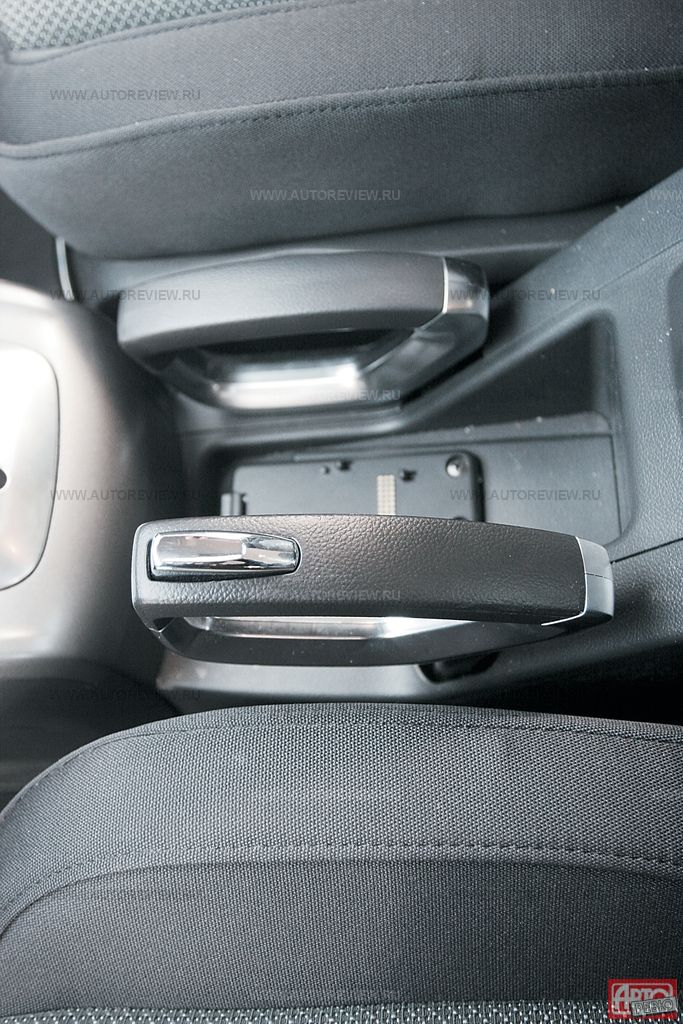 | 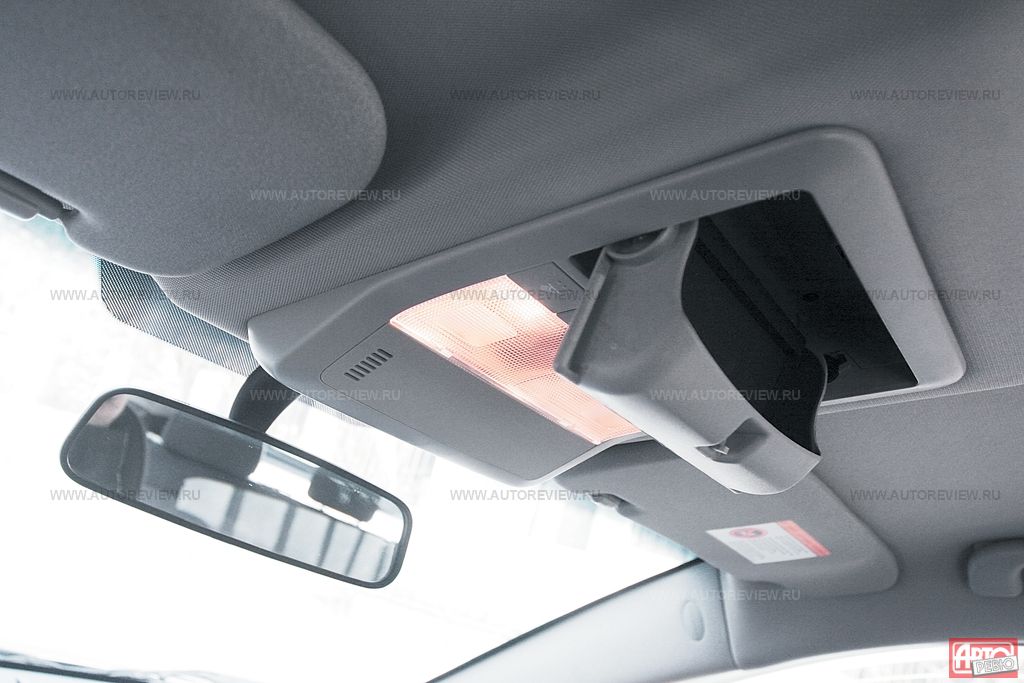 | 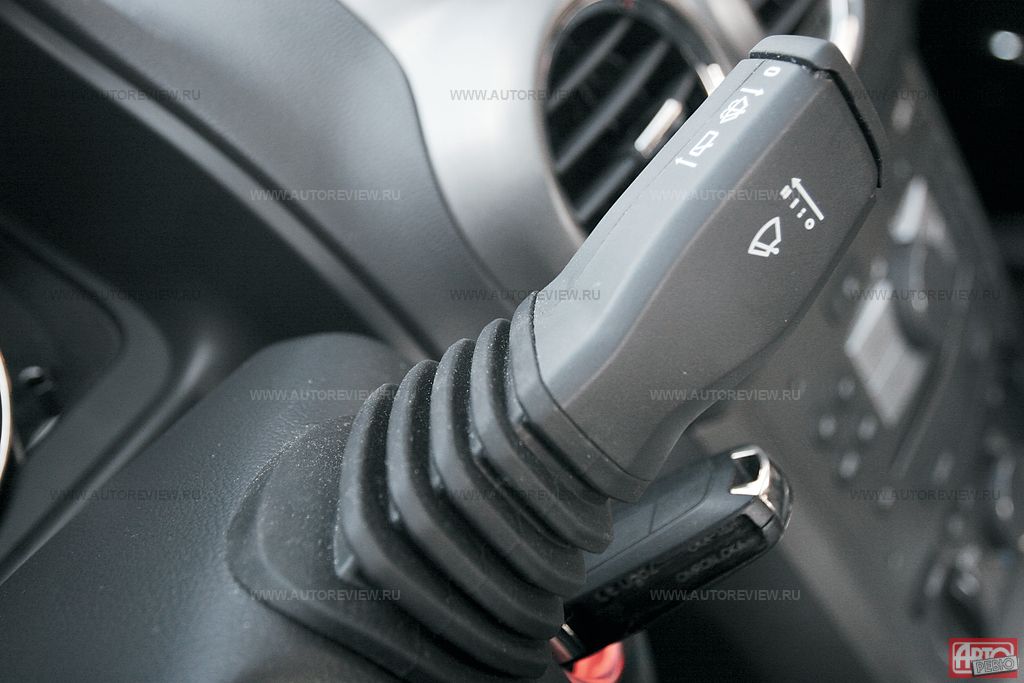 |
| For the driver — a "handbrake", for the passenger — a handle: the main thing is not to mix them up | Such conveniences are present in all four cars | The steering column stalks, as in the Captiva, are of the fixed type |
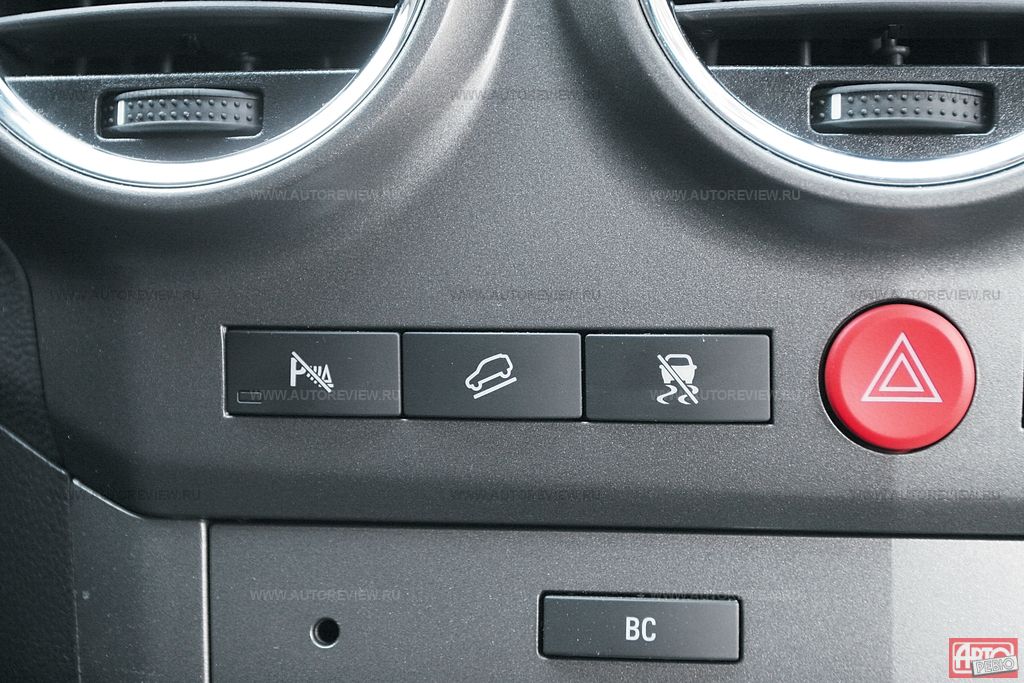 | 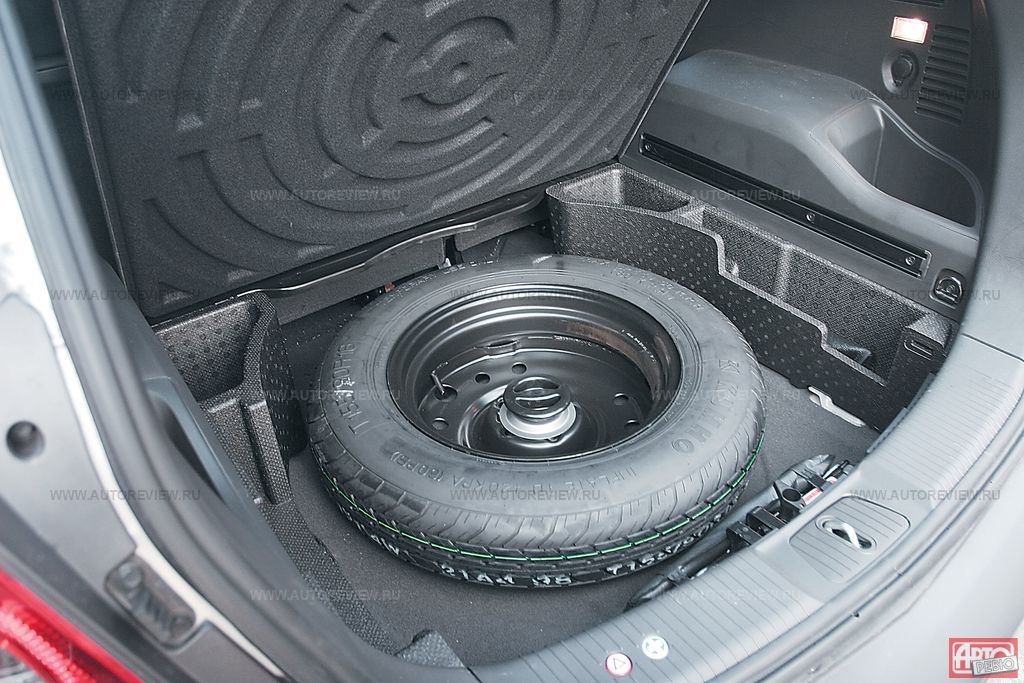 | |
| Disabling parktronic and ESP, activating the hill descent assist — off-road, it's better to press all three buttons at once | The Nissan and Toyota have full-size spares, while the Opel and Chevrolet only have space-saver spares |
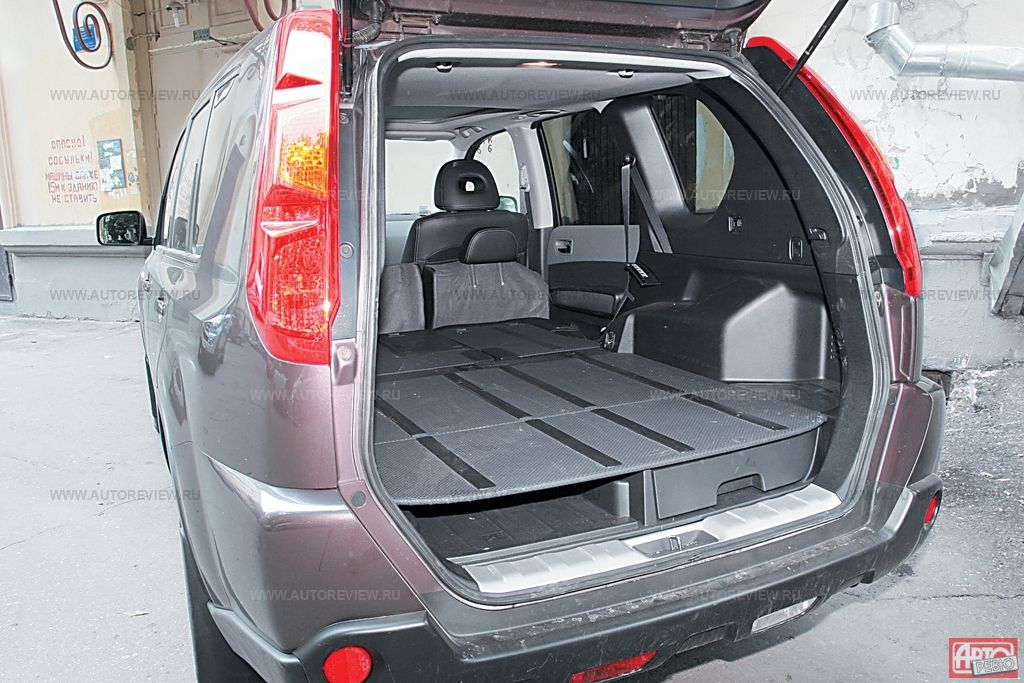
But when it comes to rear seats and trunk, the Chevrolet Captiva is ahead of everyone. First, it's the only seven-seat crossover in its class! For an extra 18,300 rubles ($750), you can order an additional row of seats, and quite adult ones — even a tall passenger of 180 cm won't hit their head on the ceiling. Moreover, when folded, the third-row seats don't eat into the trunk volume: they hide in the underfloor area, where the five-seat version has its hidden compartments. Additionally, only the Chevrolet has a separately opening rear window. Need to put in light bags — no need to swing open the whole "gate"!
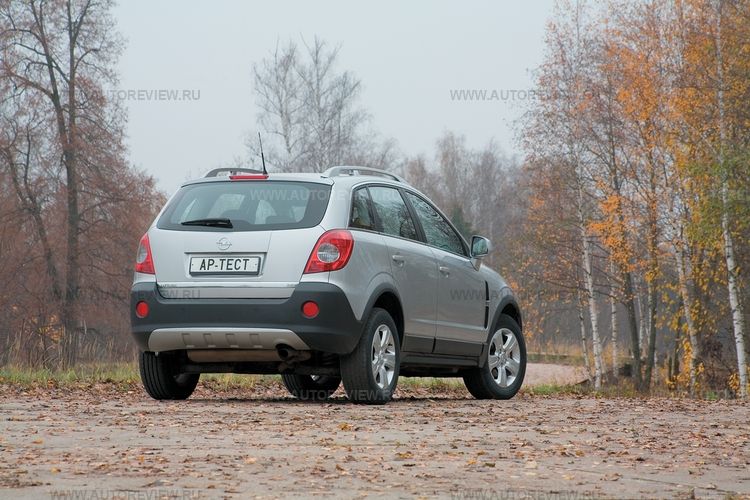
The Antara, as already mentioned, is shorter than the Captiva: a third row won't fit here, the trunk is smaller, and loading is hindered by a narrow opening and the highest bumper in the quartet. But the rear bench is more comfortable — the seat is more sculpted and welcoming. And there's no central tunnel, just like in the Captiva. Even three people in the back have plenty of room!
The Nissan X-Trail stands out with the most spacious trunk with a sliding tray in the "underfloor", but it's let down by the same high loading height as the Chevrolet and less cozy rear seats. The Toyota is more hospitable: the rear bench is more spacious and slides forward and backward, and the trunk, though slightly smaller, has a bumper edge that is a full 15 cm lower! Plus a plush lining, plus a cargo net...
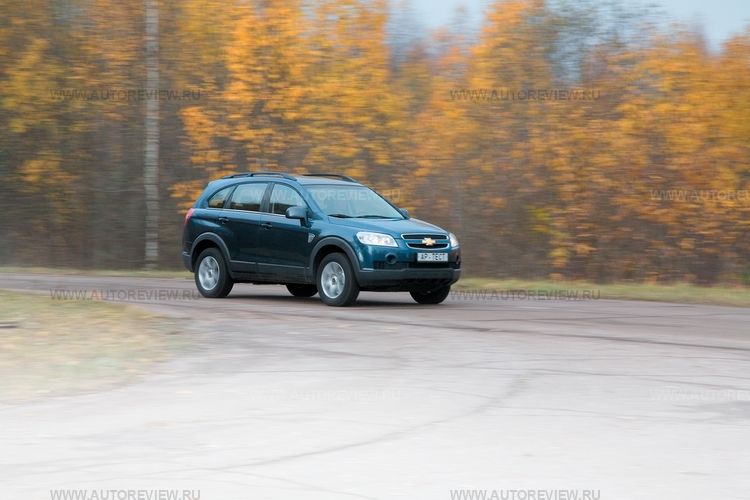
The Captiva is reliable and understandable, although it responds to the driver's commands unhurriedly
So, the "cargo-passenger" breakdown is as follows: the best is the Captiva, followed by the Toyota RAV4, and then the Antara and X-Trail.
And who will outrun whom on the track?
Here everything is clear: the Nissan pulls ahead and races into the beautiful distance! Only the Toyota can possibly keep up with it...
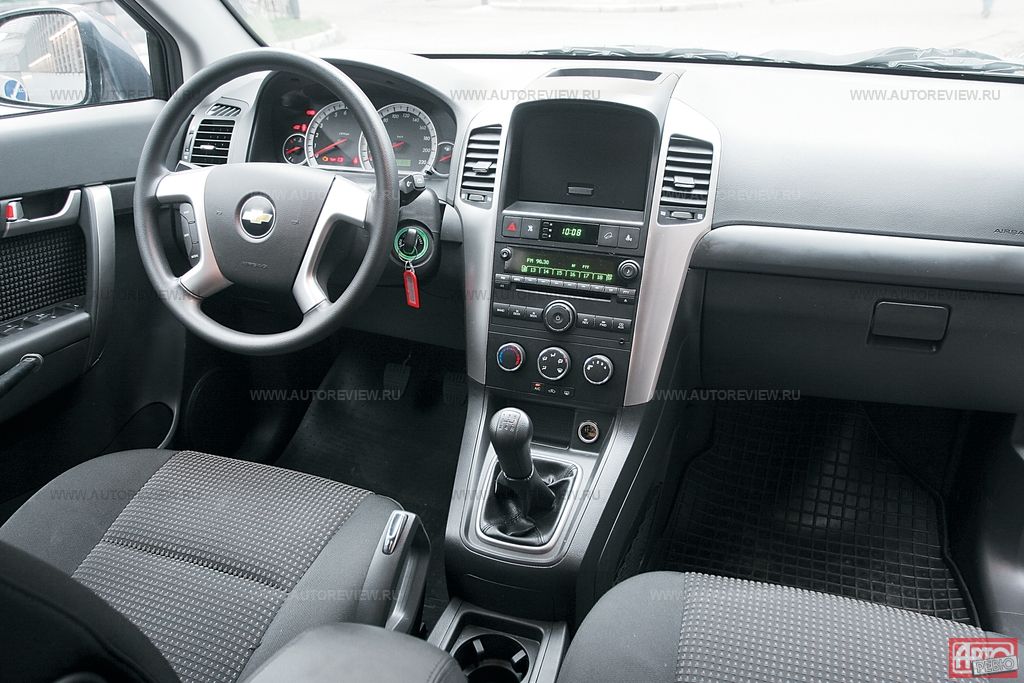 | 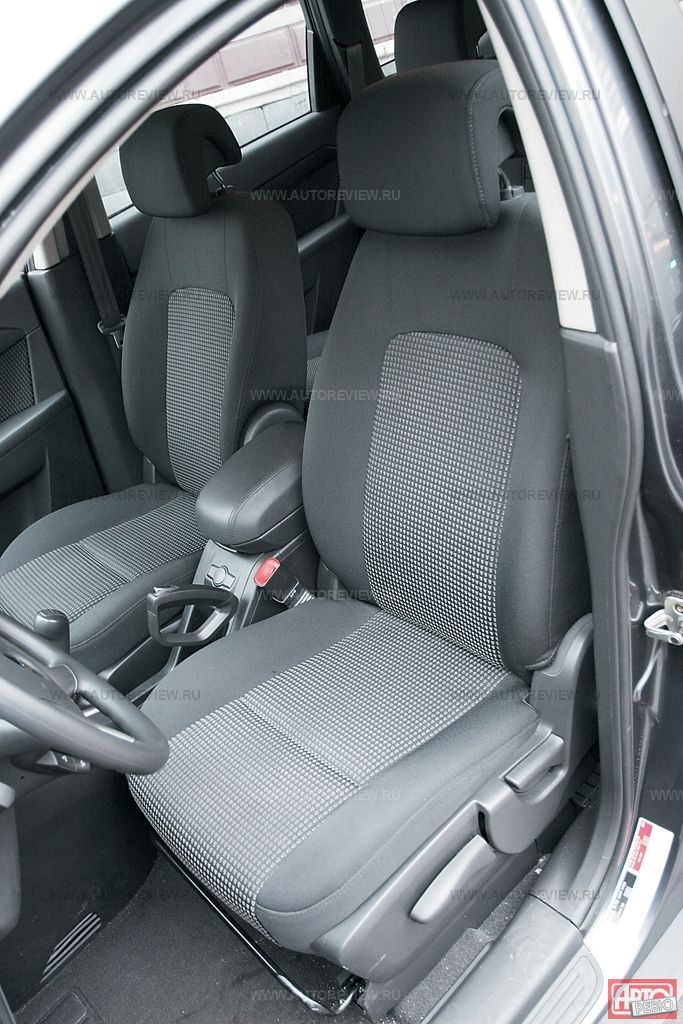 | 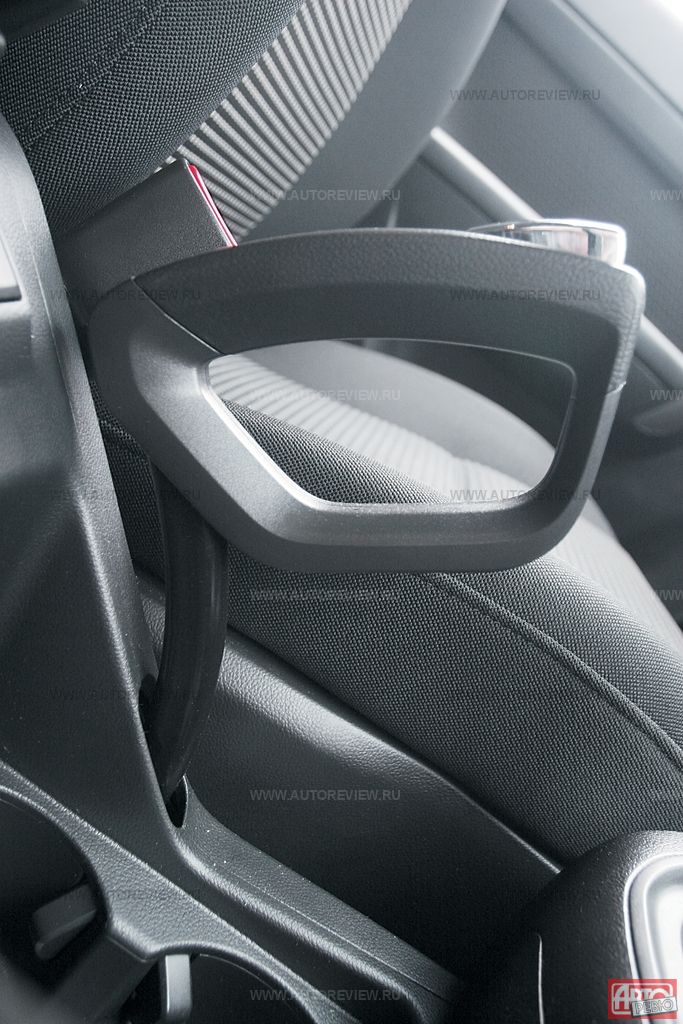 |
| Chevrolet Captiva: soft plastic in a modest budget interior | The seats will only please people of solid build | As in the Antara, the "expander" handbrake lever forces you to bend your arm at the elbow a lot |
For this test, we took cars with 2.4–2.5 L gasoline four-cylinder engines. Moreover, the Nissan has a CVT, the Toyota and Antara have "automatics", and only the Captiva has a "manual".
What did the measurements show? A rare case: on the dynamometer road, the Toyota accelerated 6 km/h faster than the claimed 180 km/h! True, in the sprint to 100 km/h it was 0.6 s slower than the stated 10.6 s. In this discipline, the Nissan X-Trail was "true to itself" — our instrument gave the same 10.3 s as promised by the manufacturer, and the "top speed" was only 2 km/h less. But the "Euro-Koreans"... Never mind that their speed didn't exceed 170 km/h, but even to the qualifying 100 km/h, the Captiva took 2.7 s longer than the Toyota! Why? Because the weakest engine in our test had to accelerate the heaviest car — the Captiva, as shown by the electronic scales, weighs 1850 kg: it's 200 kg heavier than the Nissan and 250 kg heavier than the Toyota. So the result of the dynamometer tests is quite logical. And if you look through our tests involving two-liter cars in this segment, it turns out that the Chevrolet with a 2.4-liter engine is more appropriately compared with them. At least in terms of dynamics. Most likely, the situation could be saved by a V6 engine, especially since such a Captiva exists. But then it would be about different costs for purchase and fuel — and different competitors...
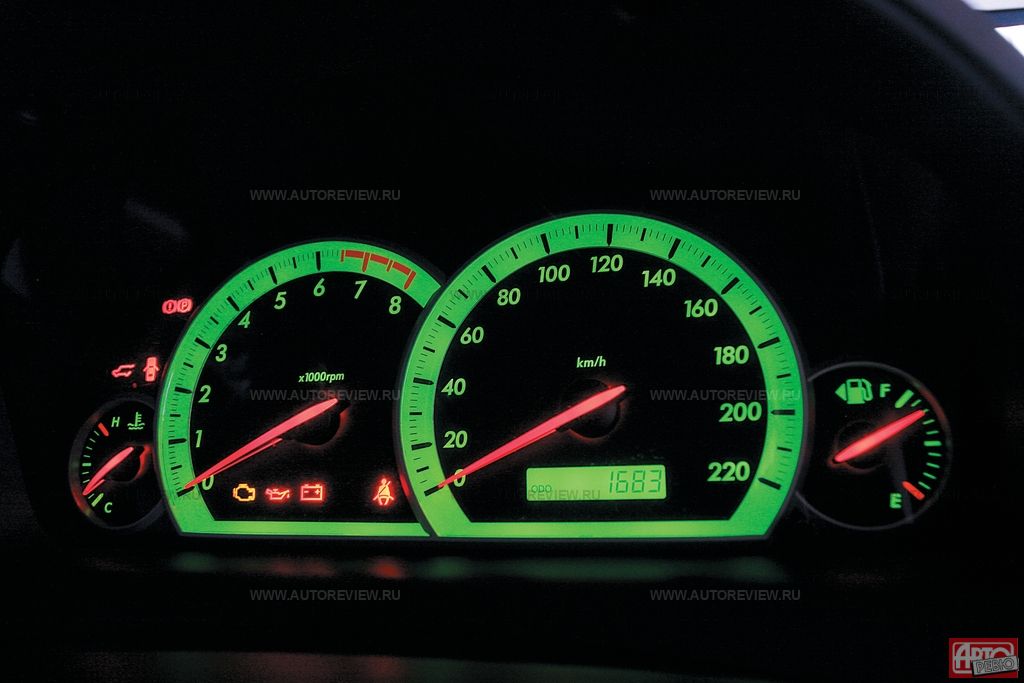
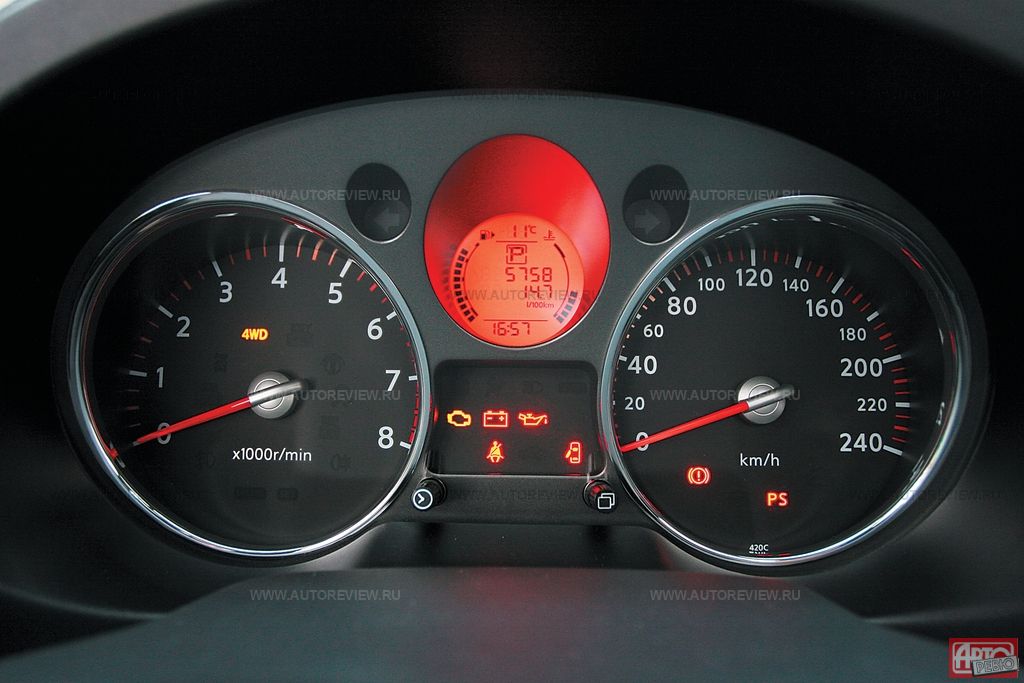
| Chevrolet Captiva | Nissan X-Trail |
 |  |
| Opel Antara | Toyota RAV4 |
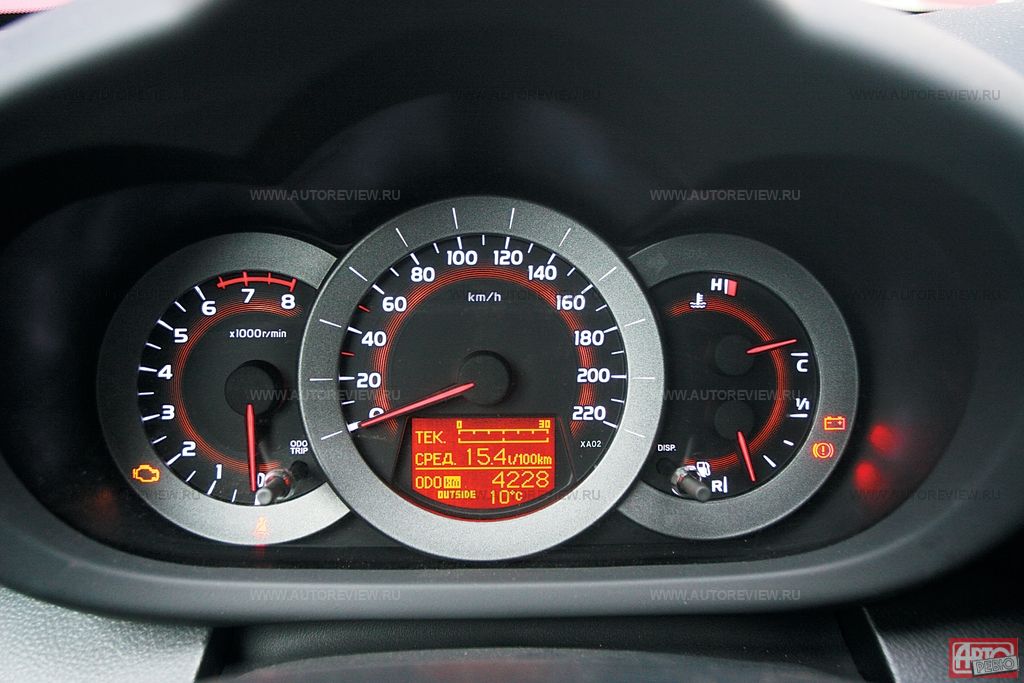 | |
| Nissan's simple round dials are recognizable at first glance, but the small divisions on the orange 'fisheye' scale can be hard to read. Toyota's Optitron panel is unrivaled: Chevrolet's greenish dials lose to it in visual appeal, and Opel's amber ones in readability | |
Opel is no exception in this regard: the Antara also starts reluctantly. Even though it's lighter than the seven-seat Captiva, it's a full 180 kg heavier than the X-Trail. The result is predictable: the sprint to 100 km/h stretches to a good 14 seconds! In dense traffic, the automatic's delays on kickdown add to the problems. Manual mode isn't a panacea either — more of a mockery: revving the engine to the 6200 rpm redline with its flat torque curve is pointless — you'll just burn extra fuel.
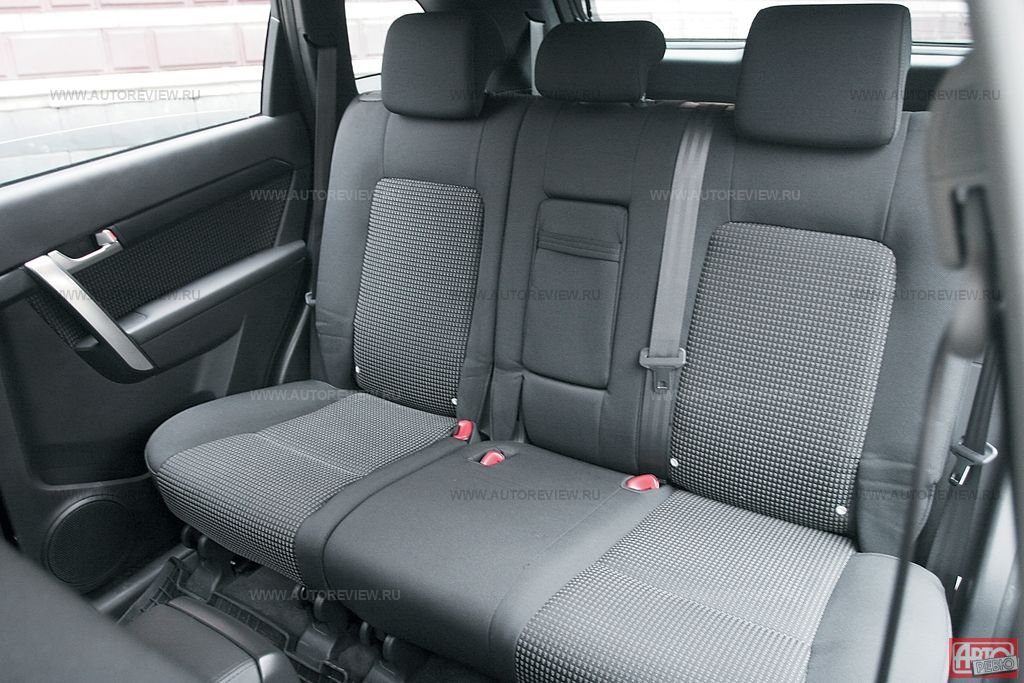 | 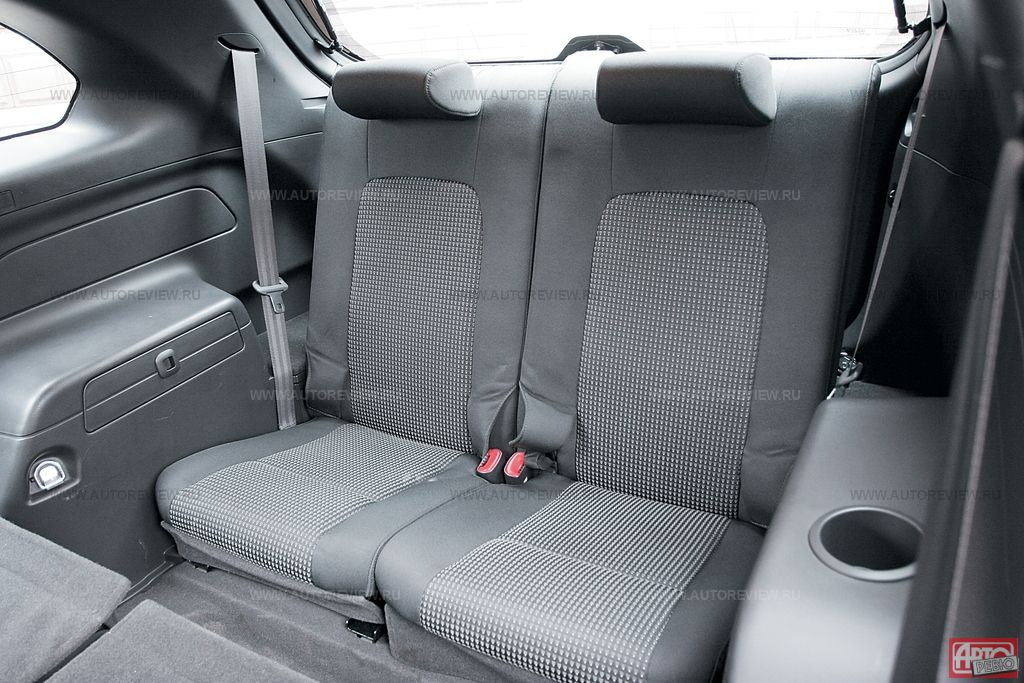 |
| In the Captiva, passengers are more cramped than in the Opel — the cushion is shorter... | ...but in the trunk, there are two full-fledged seats for adults and a cupholder |
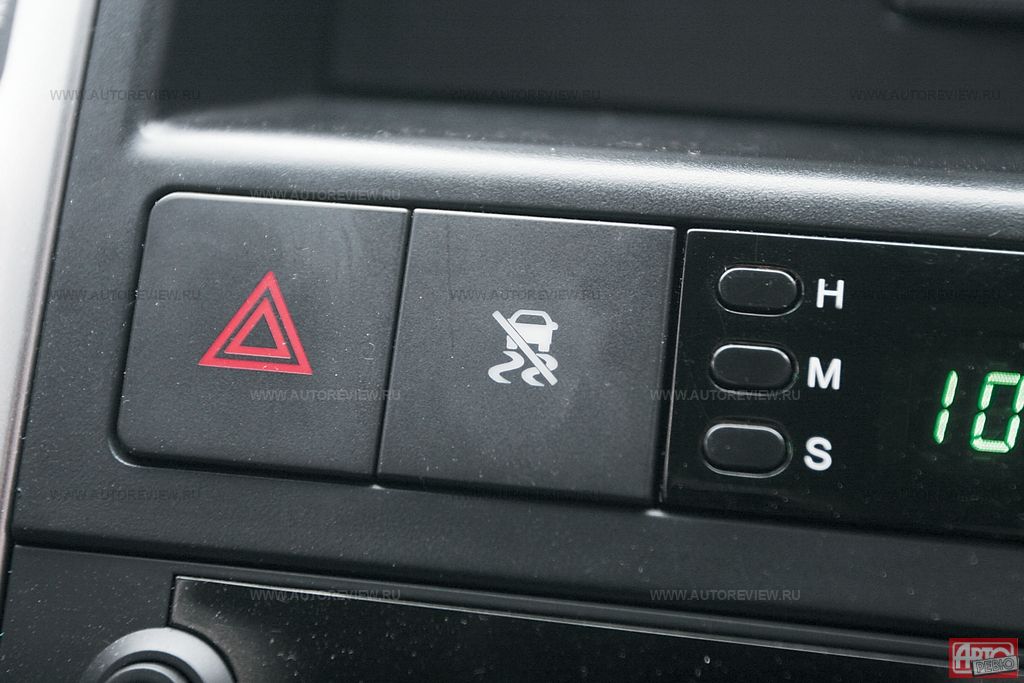 | 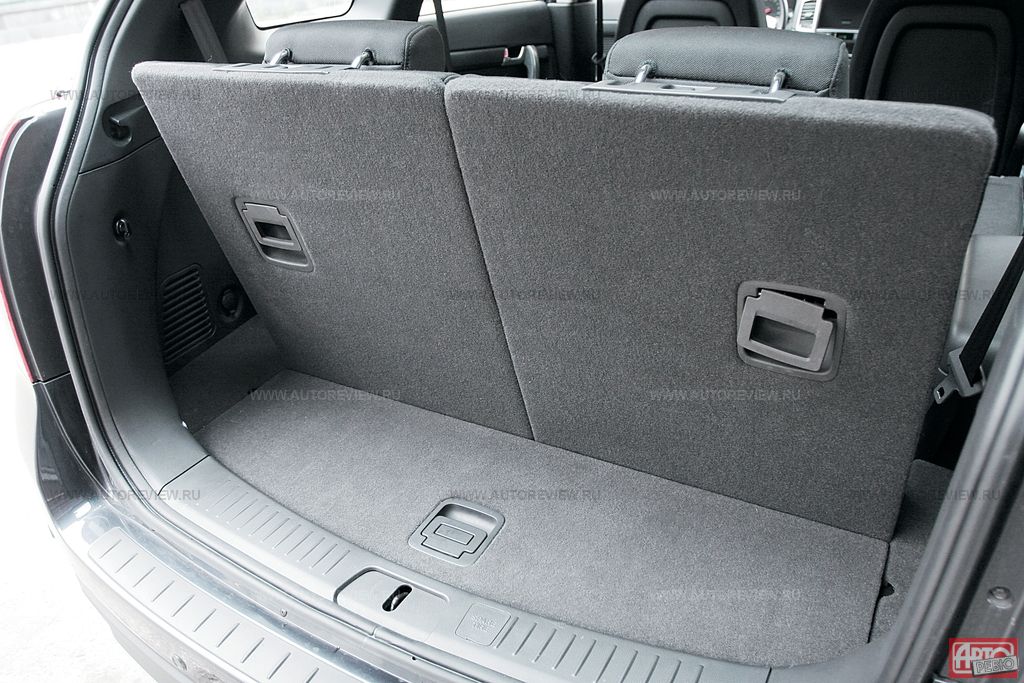 |
| The strict but switchable ESP on the 'Euro-Koreans' tames both understeer and oversteer | Behind the folded 'flip-up' seats, there's even room for grocery bags |
The Captiva with a manual feels more lively, and the engine sounds more refined, but the impression is spoiled by the vague shift mechanism and the damped accelerator pedal.
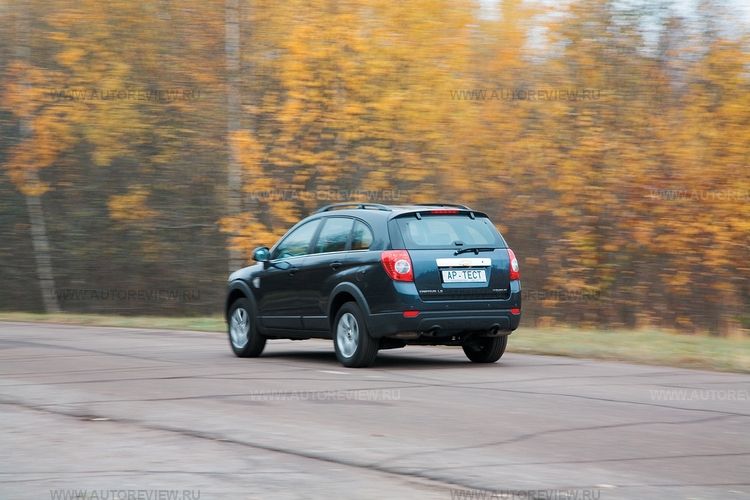
The brakes aren't perfect either. In an emergency, the Captiva's pedal sinks deep, and in normal mode it feels 'spongy'. But these are subjective impressions; objective measurements tell a different story: from 100 km/h, the Captiva stops better than all — it comes to a halt in 41.8 meters. The Antara needs a meter and a half more, but the driver feels the braking process fully. The only flaw is on 'mixed' surfaces: the Opel slightly veers toward the grippier surface, then smoothly returns to course.
The Japanese also pleased with feedback. If the Toyota, when braking 'to the floor', stopped almost as if nailed to the spot, on par with the Opel, then the Nissan from 100 km/h rolled two meters further, and from 150 km/h — already eight.
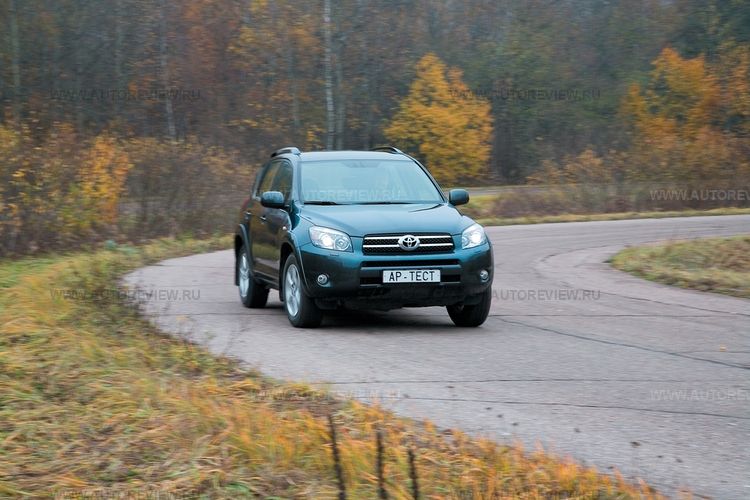
Toyota is obedient and eager in corners
On a straight line, the Opel flies like an express train — you can feel the German autobahn training. It changes lanes with dignity, almost without body roll, and in sharp turns shows only mild understeer, which on lift-off transitions into a four-wheel drift or a smooth controlled slide. ESP successfully combats even understeer. All would be well, but the steering wheel disappoints: the effort build-up is felt only at small angles, and in corners — emptiness.
The Captiva sets a calm mood: the steering response is lazy. But in the city, the Chevrolet and Opel are twins: the same elephantine clumsiness due to the huge turning circle (the Nissan and Toyota have one more than a meter smaller!). In fast corners, the Chevrolet understeers more than the Opel, reacts sluggishly to lift-off, and the ESP is just as strict — it quells both understeer and oversteer. And here's the paradox: the Chevrolet is more pleasant to drive! The reason is that at any speed, the steering wheel gives the driver excellent feedback, and the reactive action is very informative!
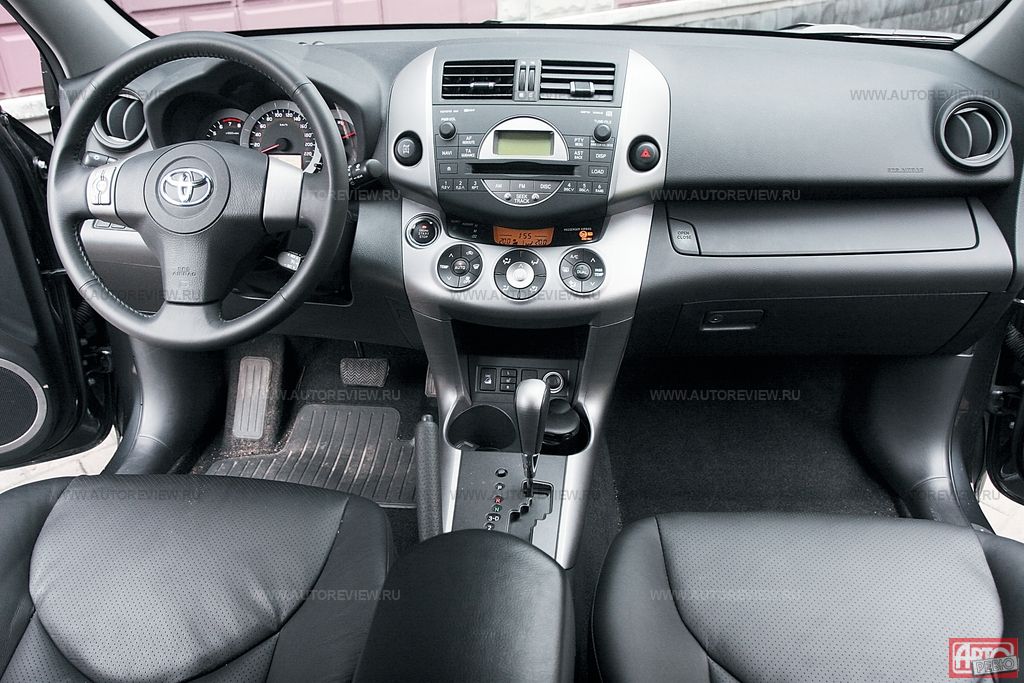 | 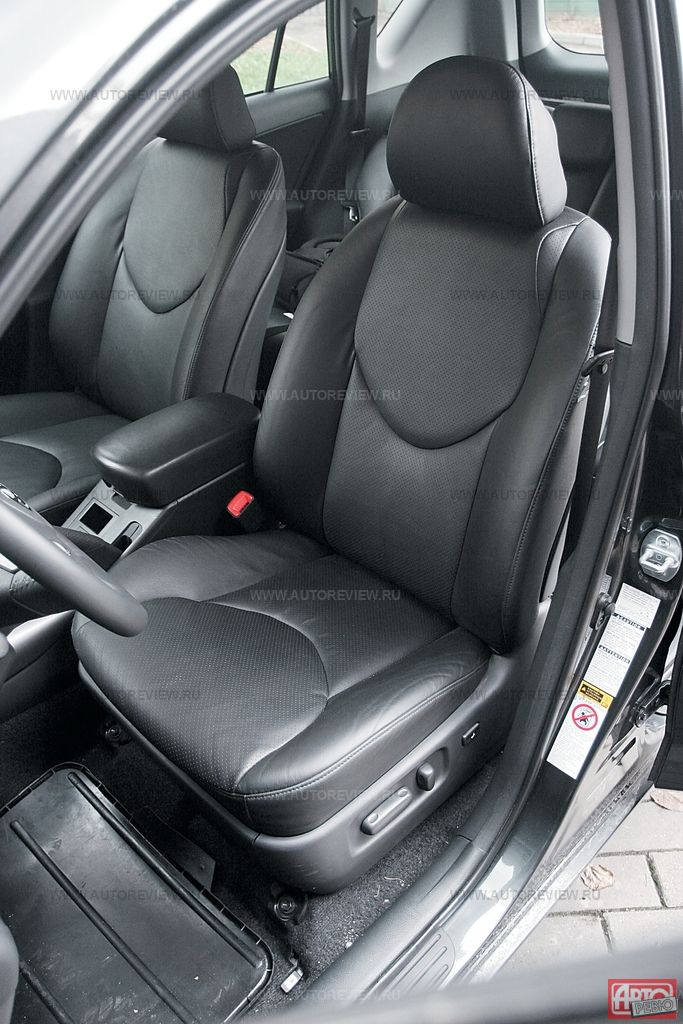 |
| Toyota RAV4: interesting design, Japanese quality, but hard plastic | Comfortable leather seats — with perforation |
 | |
| The pseudo-locking of the center differential is almost useless — in tough conditions, the rear-wheel drive coupling still overheats | Only the Toyota has longitudinal adjustment of the rear seats, and the range of backrest angle adjustment is the largest |
Behind the wheel of the Nissan, you feel like the captain of an ocean liner: it confidently holds its course and is in no hurry to change it. In response to turning the light 'helm' near the center position, there's a noticeable delay and body roll, though maneuverability in alleys is good. But there's no desire to hustle: strong diagonal rocking takes the car off its trajectory, and at the limit — an oversteer inappropriate for a family car, which the liberal ESP only quells in response to a counter-steer.
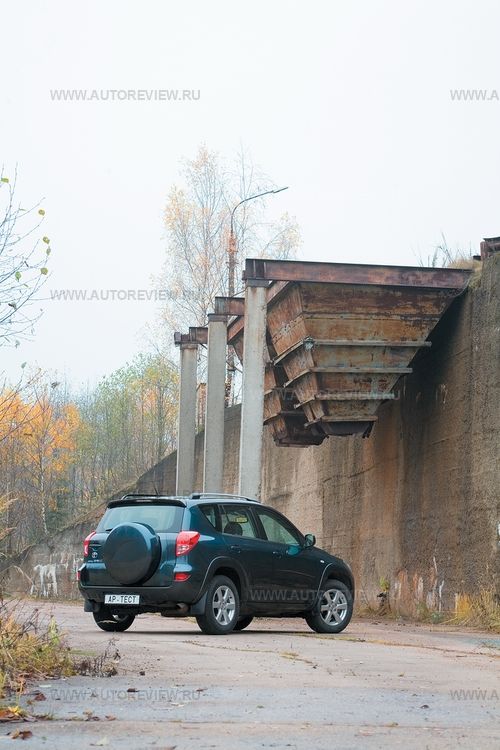
But the Toyota is like a sports car: full understanding! The reactive action on the steering wheel is so informative that even light jumps on bumps are corrected intuitively by the driver — they don't annoy. In tight courtyards — no problems: the turning circle is minimal. And only in the Toyota do you want to 'let loose' on a winding road. The steering wheel perfectly conveys lateral forces, without sharp pulsations on bumps. When exceeding speed on a curve, the non-switchable stability system protects against understeer and oversteer, and it does so extremely delicately.
And comfort? In acoustics, the Chevrolet is the best. Tire hum, aerodynamic whistle, and muffled engine growl are perfectly balanced. The Opel annoys with a loud and tedious engine whine and tire hum. The RAV4 and X-Trail are quieter than the Antara but louder than the Captiva. The main irritant in the Nissan is the engine, straining under full throttle, while the Toyota driver is 'bothered' by tires, but only on rough asphalt.
| Chevrolet Captiva | Nissan X-Trail |
 |  |
| Opel Antara | Toyota RAV4 |
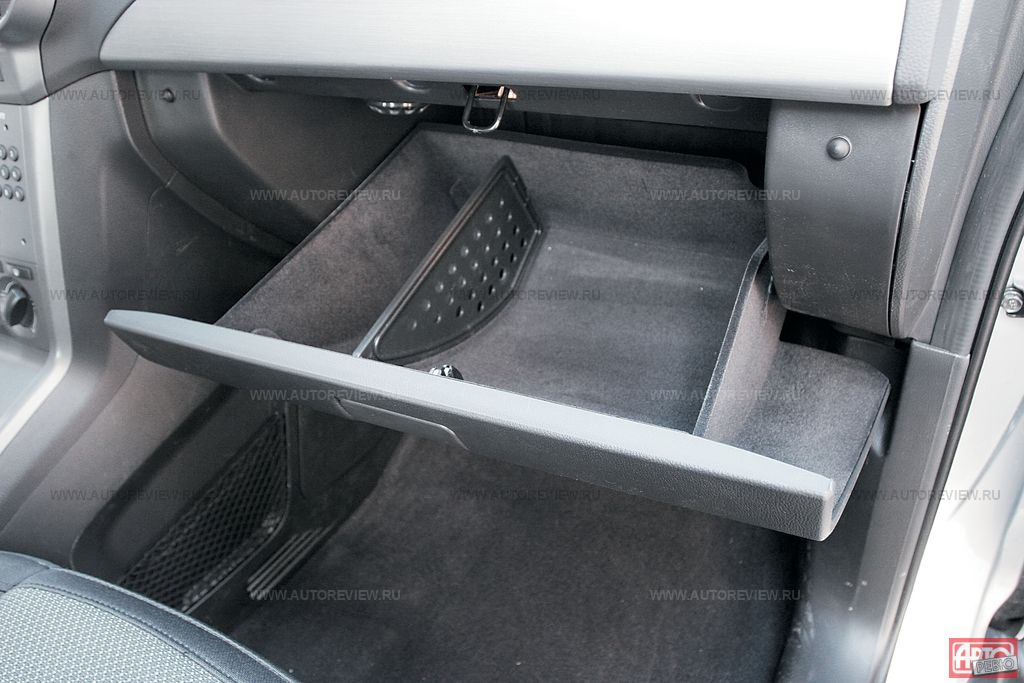 | 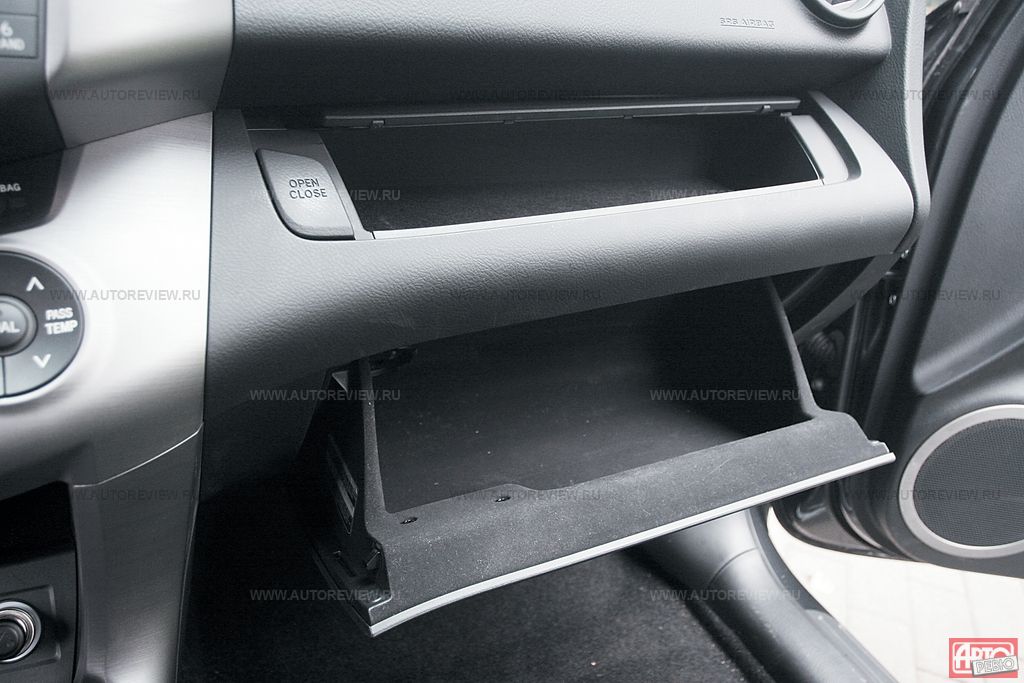 |
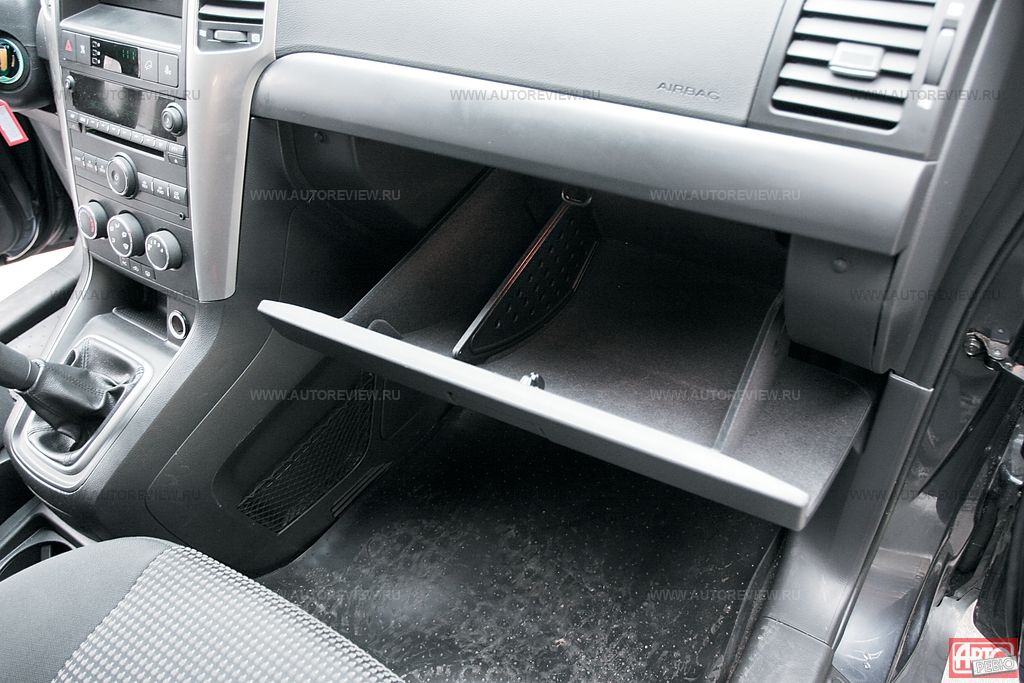
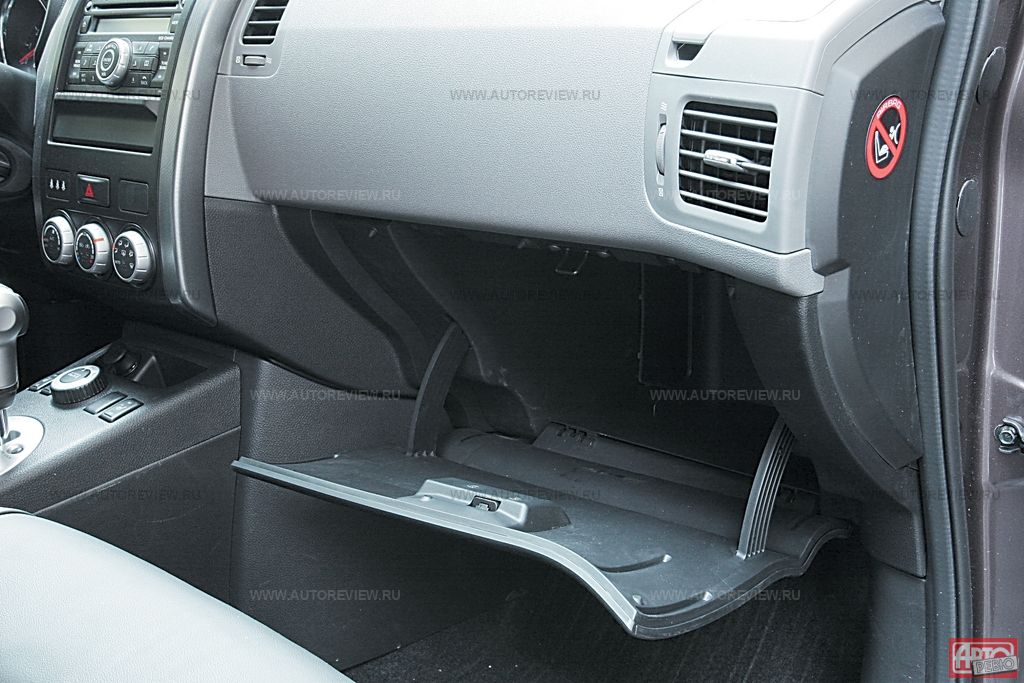
| The huge gloveboxes of the Antara and Captiva are a find for hoarders. The Nissan's deep compartment is more modest, and the total volume of the Toyota's two cubbies is even smaller | |
Nissan and Chevrolet ride softest. The Captiva is slightly more composed, but it also transmits small and medium bumps, complete with sound effects. The Nissan only annoys with excessive rocking on gentle waves and large body rolls, but it swallows bumps of all sizes with ease. The price for the Toyota's precise chassis is shaking on all the 'horrors of our town'. But the most uncomfortable is the Opel. It 'collects' everything from the road, not disdaining even tiny imperfections.
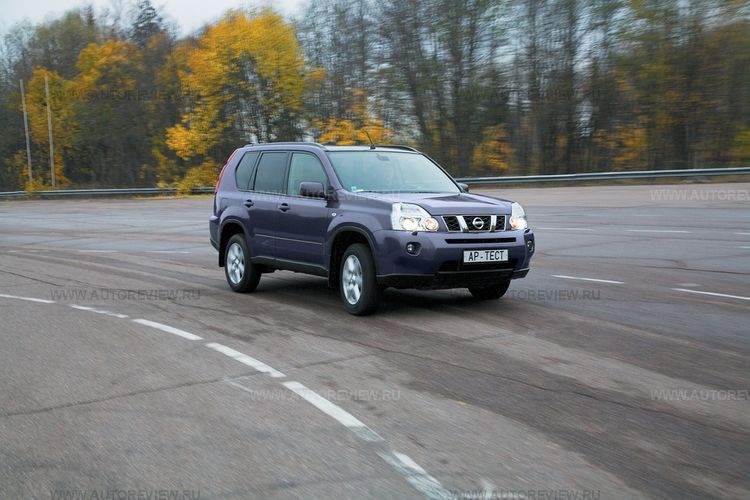
Nissan is unhurried and stately in turns
On rough terrain, the Chevrolet Captiva and Opel Antara noticeably lose ground — they clearly lack traction. This is especially acute on the Chevrolet with a manual gearbox: the Opel, thanks to its automatic transmission, at least partially smooths over this drawback. But the rear axle engages instantly as soon as the front wheels start to slip. We disable the stability control system (along with it, the traction control also goes off), floor the gas pedal… This driving style proves to be the most effective here when tackling muddy sections. The hill descent assist, set to fairly high speeds, works in unison with this tactic. Both crossovers briskly overcome bumps, but their suspension travel is more modest than the Nissan's, so diagonal wheel hanging occurs earlier. And ride comfort is worse — especially in the Antara, where the suspension works stiffly.
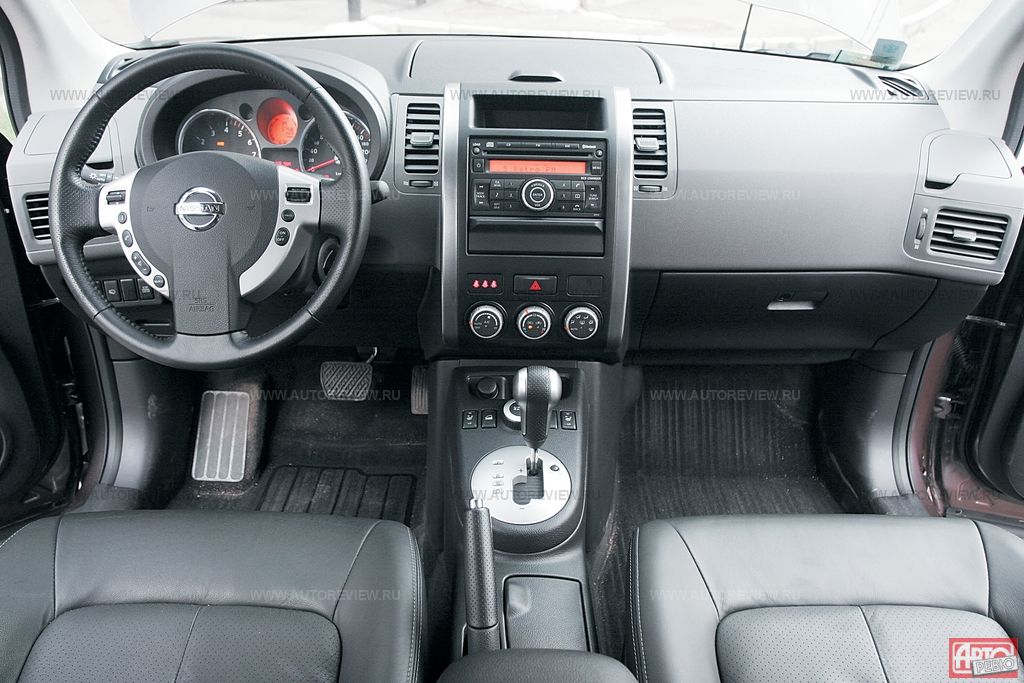 | 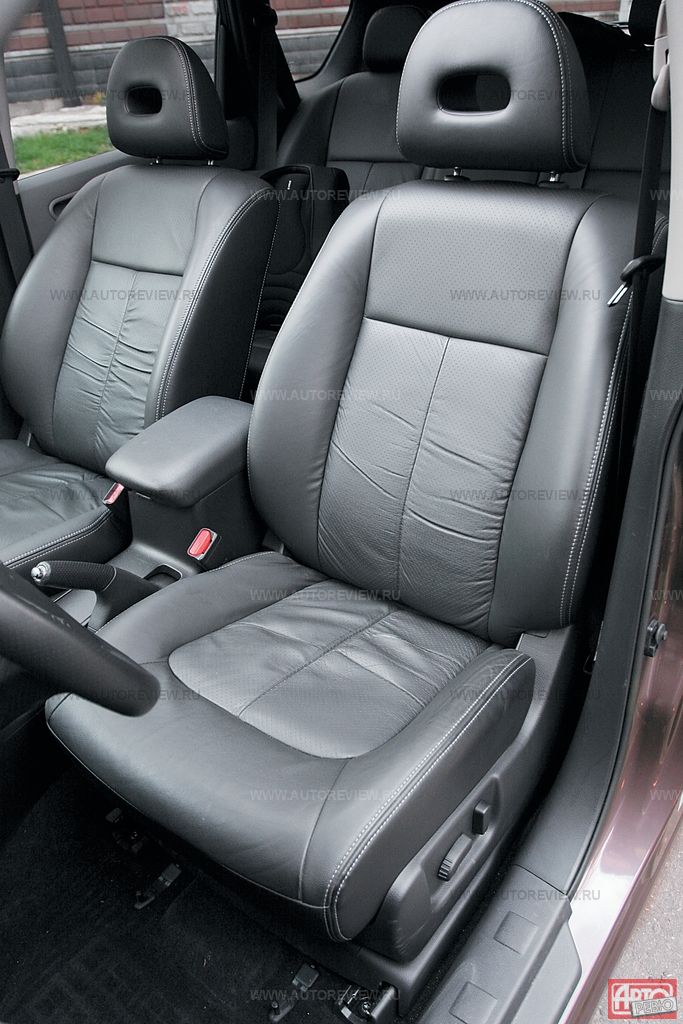 | 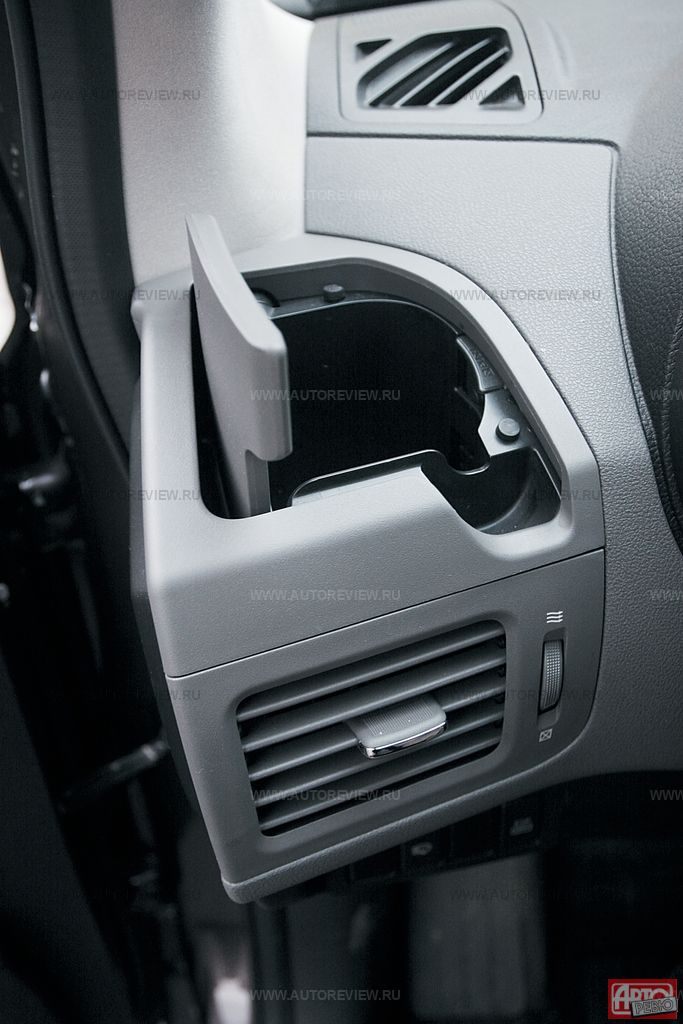 |
| The "rectangular" interior of the Nissan matches its exterior | The slippery soft seat, like a favorite leather sofa, conforms to any body shape | Cooled cup holders — right at hand |
The Toyota shakes its passengers even more. However, at the risk of leaving plastic underbody protection elements and the rear license plate on the trail, it can tackle equally serious obstacles on the move. On steep descents, the delicately working Hill Descent Control comes to the rescue. But if you do get stuck — you'll have to grab a shovel! The reason is that in a stuck vehicle, the rear-wheel drive coupling overheats after a few minutes of wheelspin. The same ailment is common to the Chevrolet and Opel, since they share the same coupling. We already know this from tests in 2007 (AR No. 7 and No. 20).
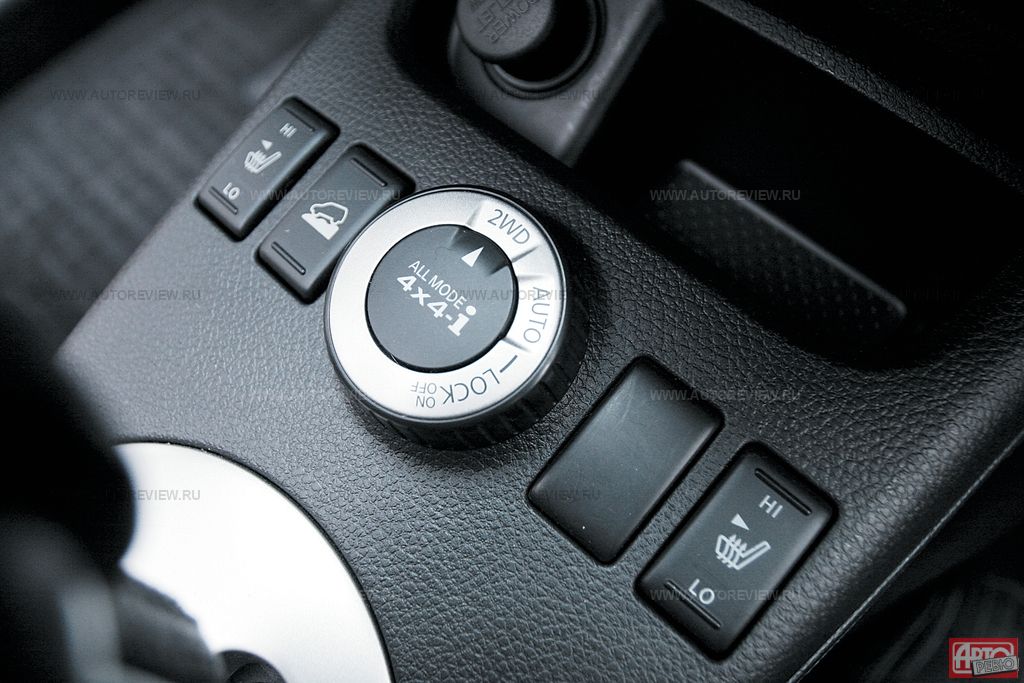 | 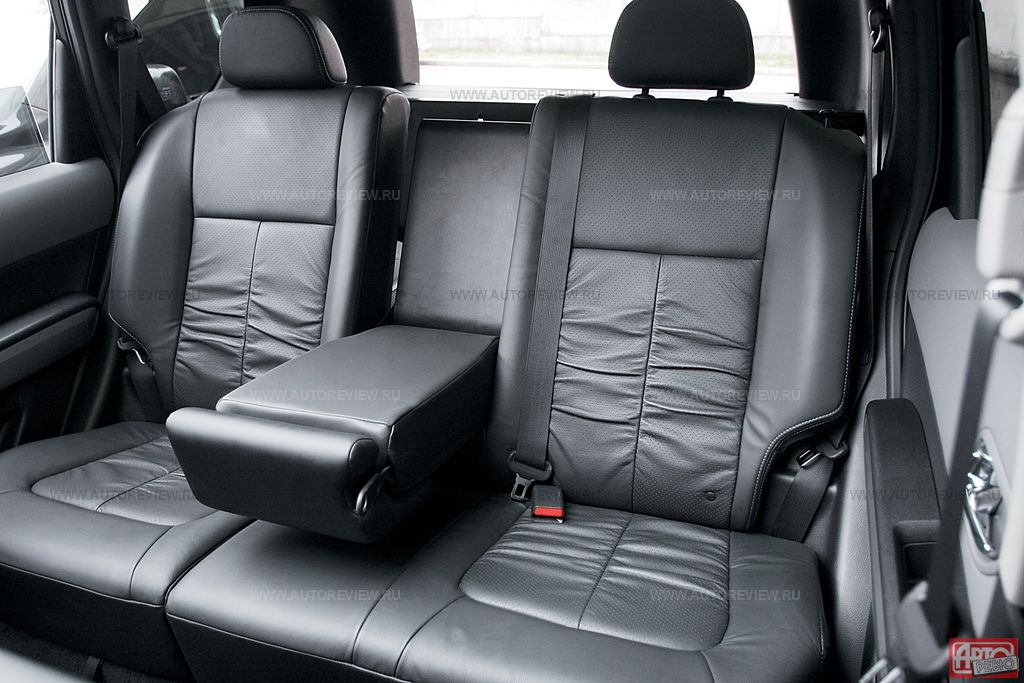 |
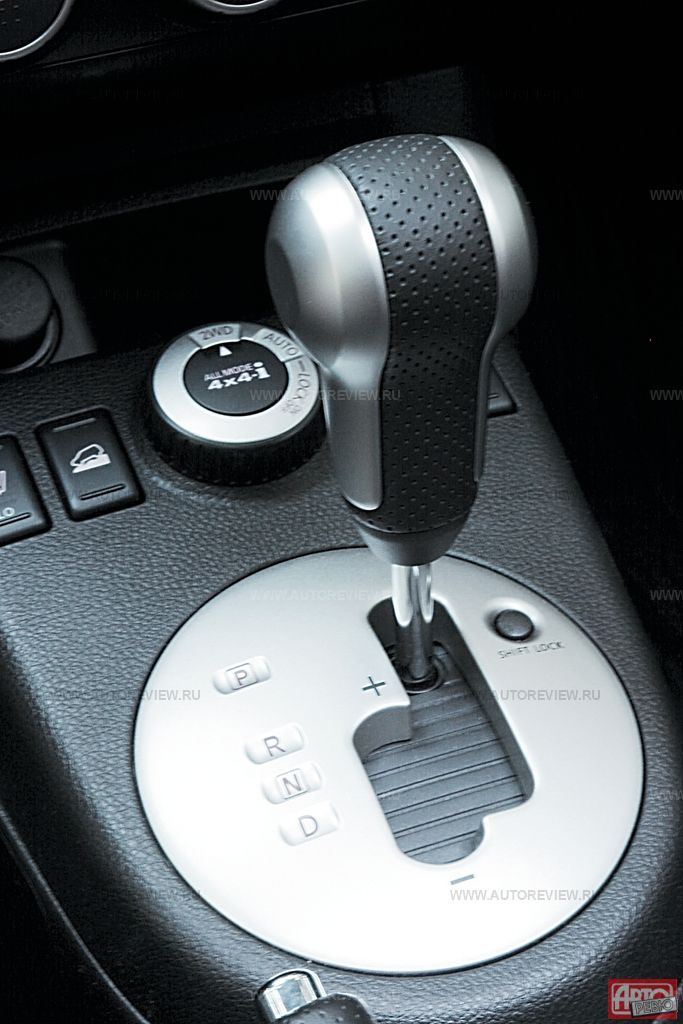
| By turning the dial on the center tunnel, you can make the X-Trail front-wheel drive — to save fuel | For two rear passengers — plenty of room, but three are cramped in the Nissan |
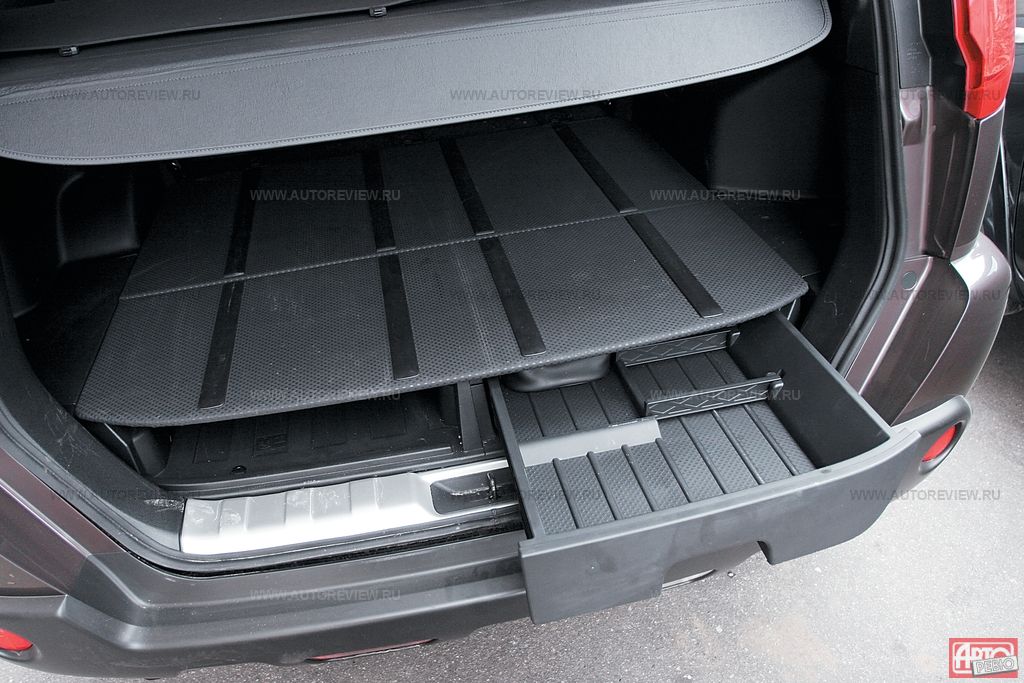 | 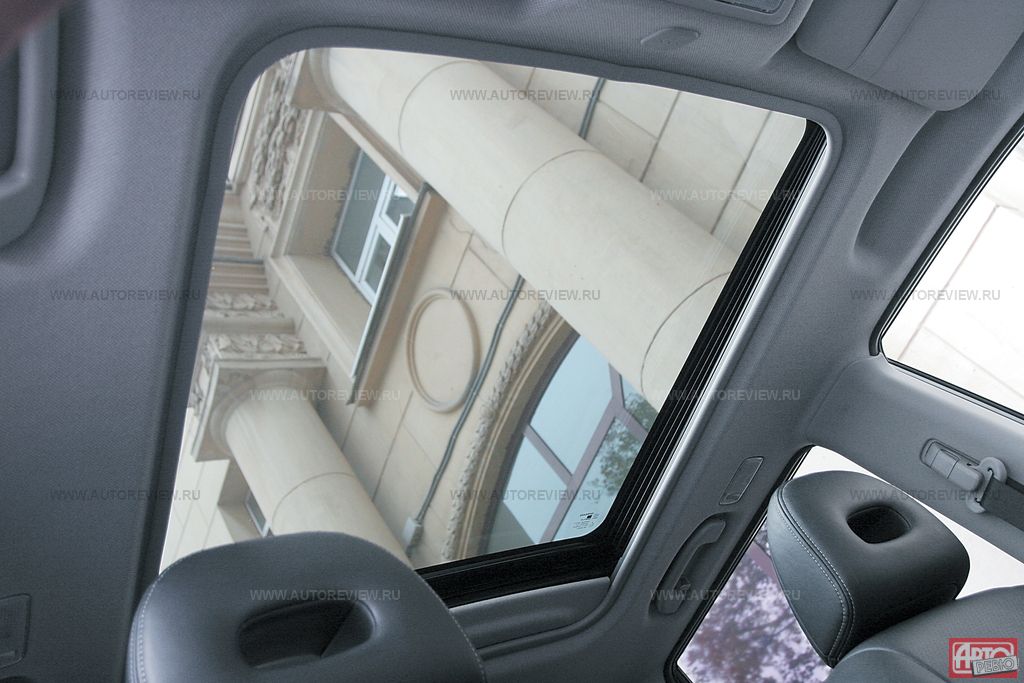 |
| The sliding tray — a delight for neat freaks | The X-Trail 2.5 is equipped with a glass sliding sunroof |
The absolute leader in off-road capability is the Nissan. The long-travel, energy-intensive suspension allows attacking the most treacherous sections at maximum speed. An additional aid is the full locking of the rear axle coupling in 4WD Lock mode. Only the non-switchable traction control system disappoints, as does the hill descent assist, which maintains too high a speed — descending steep slopes was frankly scary.
| Chevrolet Captiva | Nissan X-Trail |
 |  |
| Opel Antara | Toyota RAV4 |
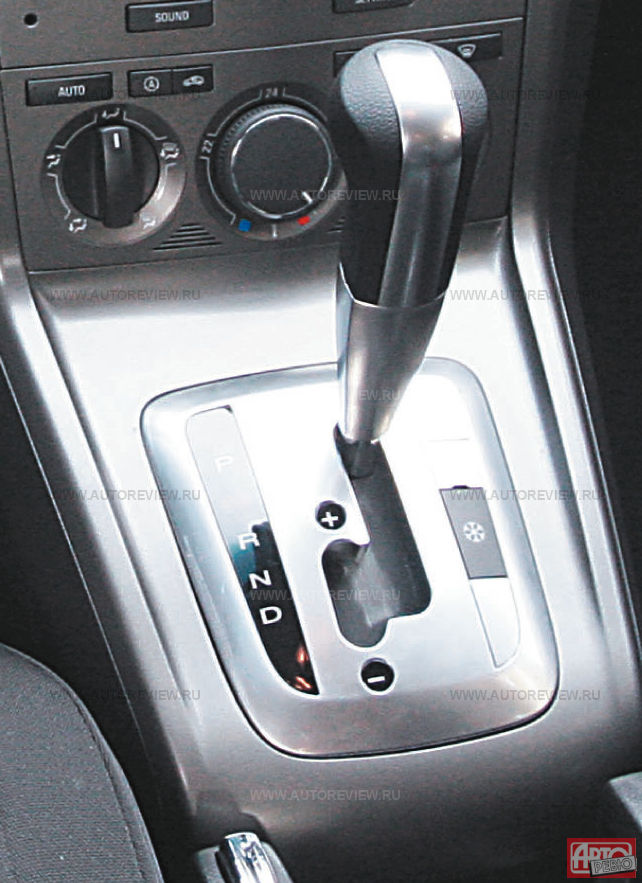 | 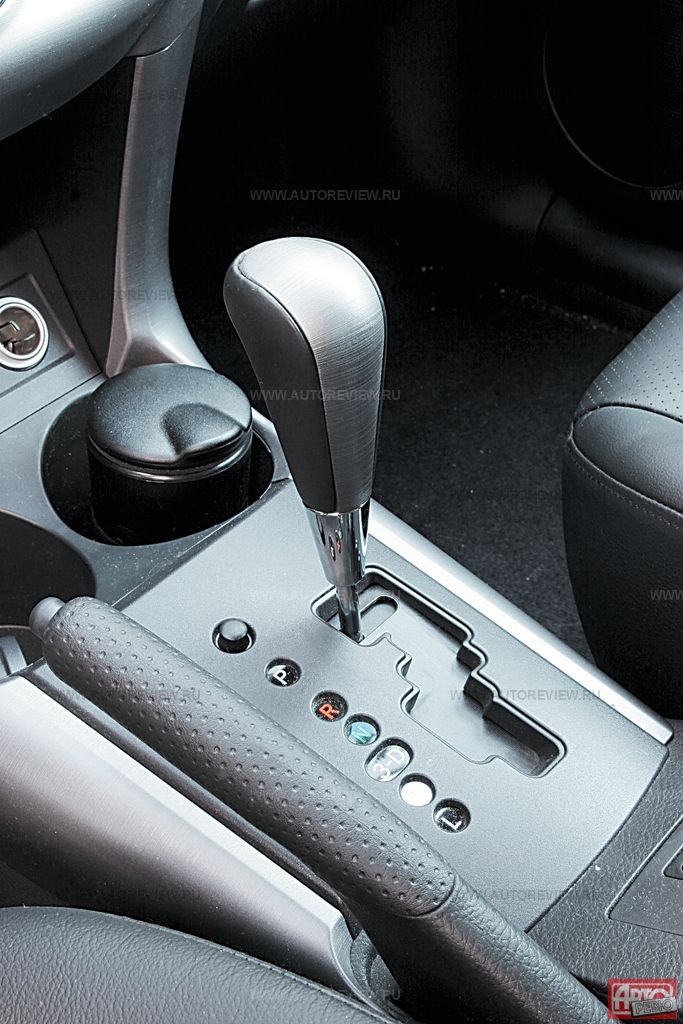 |
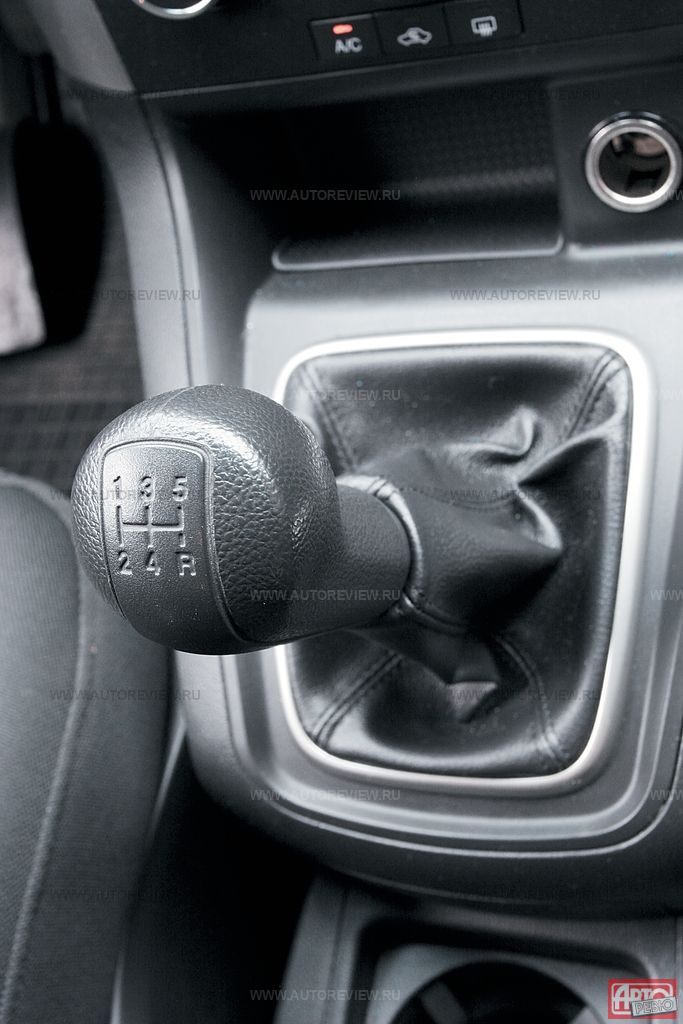
| The gears of the Captiva's manual transmission engage indistinctly — as if the detent ball isn't spring-loaded. The automatic is better — on the Opel it shifts smoothly and unhurriedly. The Toyota's automatic shifts even more predictably. But the delays of the Nissan's Jatco CVT mask the sense of dynamics | |
The Opel, distinguished by its stylish design and rich equipment, will surely attract those for whom appearance and finish quality matter. However, in driving characteristics, the Antara does not surpass the Captiva, and in comfort level it even yields to it. Moreover, the choice of options for the Opel is small: in fact, only one trim level is available, and optionally only a bike rack, 18-inch wheels, a Comfort package, and navigation are offered. But the most significant drawback is an engine too weak for a car of this weight. We can only wait for the version with a V-six… But it will appear no earlier than spring.
Those who need a spacious and relatively inexpensive crossover should take a closer look at the Chevrolet Captiva with the 2.4-liter engine. Yes, the car doesn't shine with dynamics and its trim is simple. But comfort and space are top-notch, handling is predictable, and the price is attractive — from 792,000 rubles ($32,470). For the third row of seats, you'll have to pay only 18,000 rubles ($740) extra.
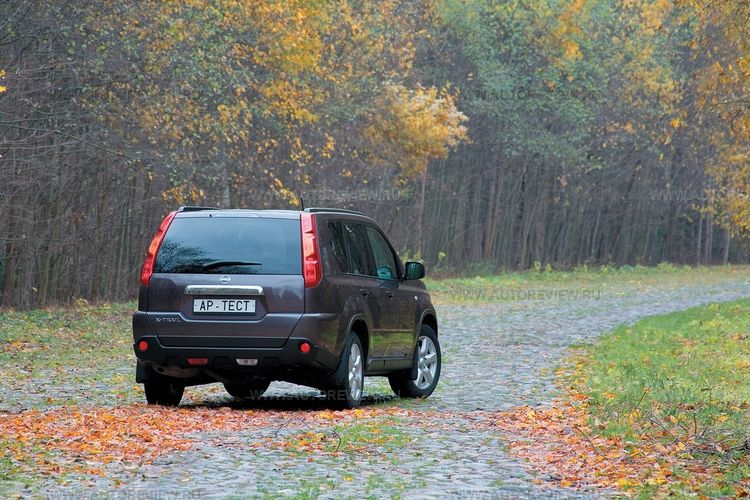
The Nissan is the optimal helper around the house, especially outside the city. It will get through mud, carry cargo, and allow fast driving on the highway. At the same time, the X-Trail pleases with comfort and generous equipment. The price, of course, is considerable — 1,069,480 rubles ($43,830), but still lower than that of the test winner.
| Chevrolet Captiva | Nissan X-Trail |
 |  |
| Opel Antara | Toyota RAV4 |
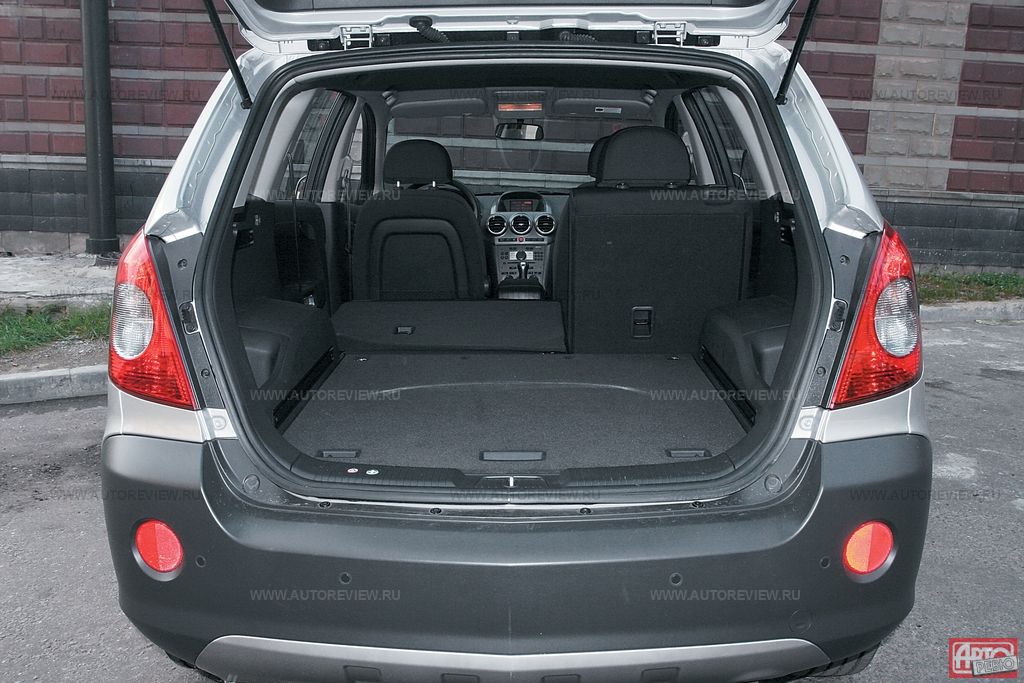 | 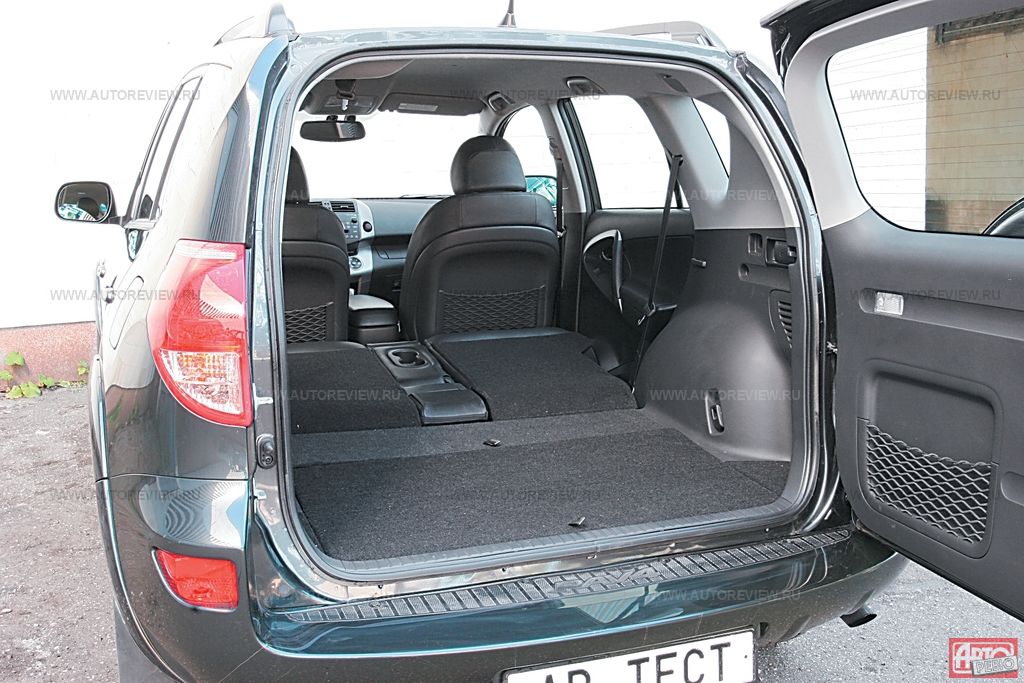 |
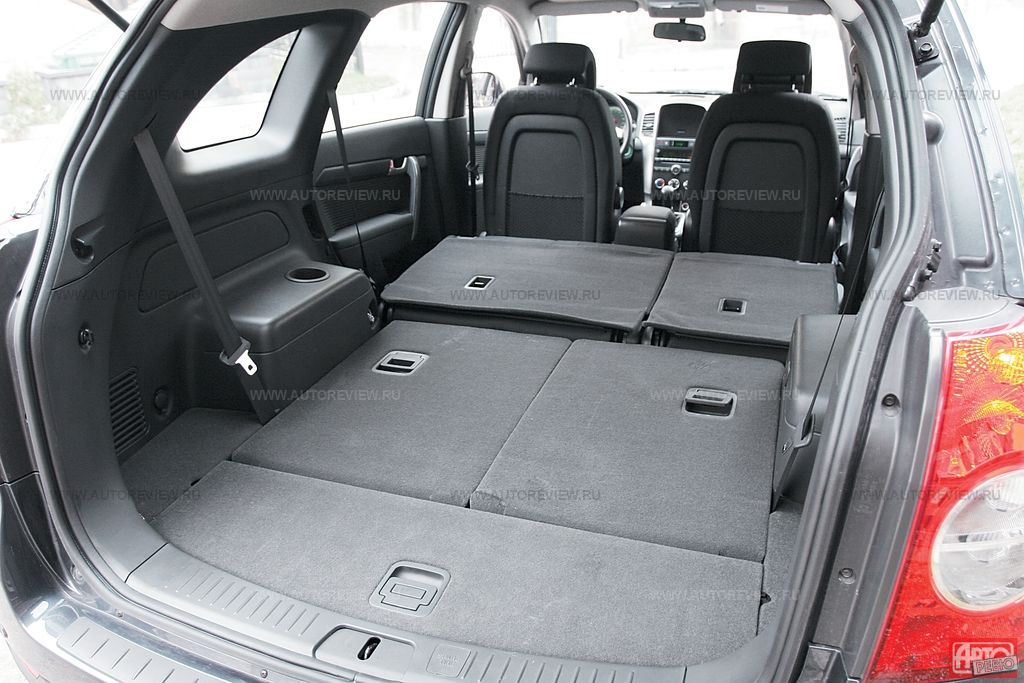
| Loading luggage into the Toyota is the most convenient: the seats fold in seconds, and the bumper is the lowest. The Captiva's huge trunk can be extended by folding the front seat. The Nissan's compartment with the rear bench folded is even larger, but disappoints with a slippery floor, lack of a net, and the need to remove headrests for transformation. The Opel is in the rearguard: the most modest compartment and the greatest loading height. And we couldn't fold the front seat like in the Captiva: the optional mechanism was faulty | |
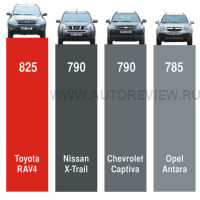
So, victory goes to the Toyota RAV4. This car continues to set the standard in its class, not losing a single comparison! Regardless of the composition of competitors, dollar exchange rate fluctuations, and other circumstances. Even in rear-seat space and trunk volume, it almost matches the larger and heavier Captiva. But you have to pay for the benchmark — 1 million 113 thousand rubles ($45,615).
Autoreview readers' forecast
Before this test, we asked visitors of www.autoreview.ru: "Which car from the participants of the next Autoreview test would you choose?"
The votes were distributed as follows:
Nissan X-Trail 40.22%
Toyota RAV4 35.93%
Opel Antara 16.51%
Chevrolet Captiva 7.33%
A total of 4,445 people voted
| Autoreview Expert Ratings | |||||
| Parameters Assessed | Max Score | Vehicles | |||
| Chevrolet Captiva | Nissan X-Trail | Opel Antara | Toyota RAV4 | ||
| Design | 160 | 125 | 125 | 140 | 125 |
| Exterior | 80 | 65 | 60 | 70 | 60 |
| Interior | 80 | 60 | 65 | 70 | 65 |
| Ergonomics | 160 | 125 | 120 | 130 | 140 |
| Driver's workspace | 80 | 60 | 60 | 65 | 70 |
| Visibility | 80 | 65 | 60 | 65 | 70 |
| Dynamics | 330 | 250 | 275 | 255 | 275 |
| Acceleration dynamics | 80 | 60 | 70 | 60 | 70 |
| Braking dynamics | 100 | 85 | 85 | 90 | 90 |
| Handling | 80 | 65 | 65 | 60 | 70 |
| Off-road capability | 70 | 40 | 55 | 45 | 45 |
| Ride comfort | 180 | 145 | 145 | 130 | 145 |
| Ride smoothness, vibration protection | 70 | 55 | 55 | 45 | 50 |
| Acoustic comfort | 60 | 55 | 50 | 45 | 50 |
| Climate control | 50 | 35 | 40 | 40 | 45 |
| Interior comfort | 170 | 145 | 125 | 130 | 140 |
| Rear seats | 70 | 65 | 50 | 60 | 55 |
| Trunk | 60 | 45 | 45 | 40 | 50 |
| Interior transformation | 40 | 35 | 30 | 30 | 35 |
| Total score | 1000 | 790 | 790 | 785 | 825 |
Autoreview Final Ratings
Puncture? Let's Change the Wheel!
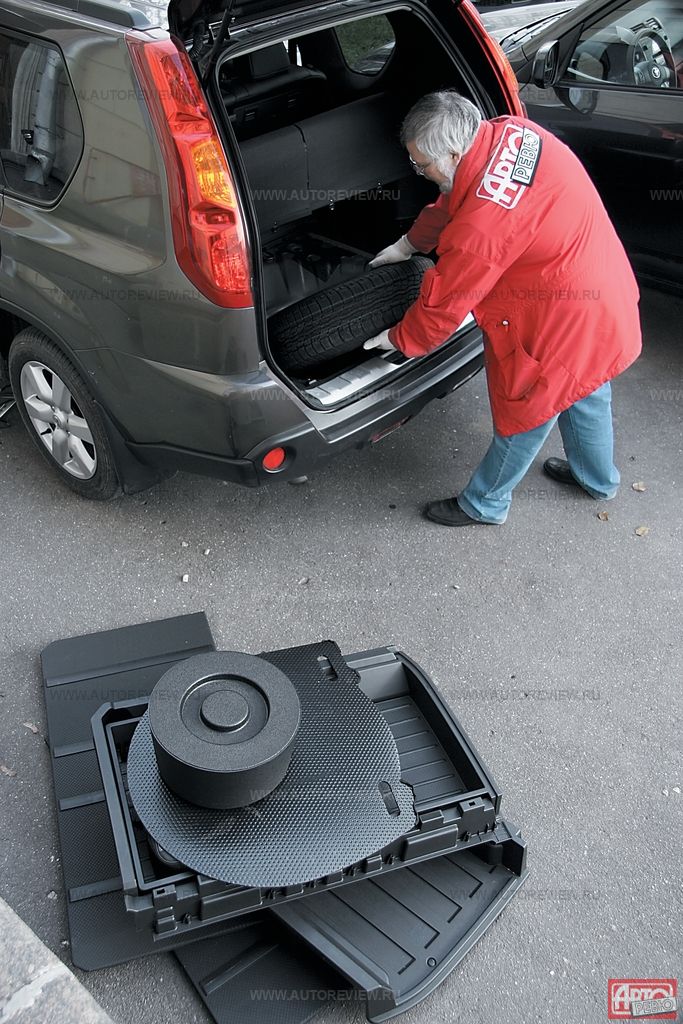 |
| Dismantling the double floor parts did not prevent the Nissan from winning the timed wheel change competition |
A deep pothole with torn edges, a protruding nail, or an old self-tapping screw that has long pierced the tread — and here you are, forced to stop right in the middle of a field. Where is the spare wheel hidden, where is the jack, and how securely is all of it fastened? We conducted impromptu competitions, timing the wheel change, to understand which car allows you to handle this task the fastest and without getting dirty.
Getting the space-saver spare out of the Antara's trunk niche turned out to be the easiest and fastest — this operation took only 27 seconds. The trunk shelf can be hung on a special hook, and the only inconvenience is the rather high loading height. In the Captiva, the spare wheel is secured under the floor, and to unscrew the special bolt, I needed four times as long, plus it's much easier to get dirty here. In the Nissan, just disassembling the "double floor" structure took 48 seconds, and fully extracting the spare stretched to almost two minutes. But the longest was fiddling with the Toyota's cover shielding the wheel — you can easily get hurt on the sharp latches! And only after three minutes was the wheel finally ready for replacement.
The fastest car to jack up was the X-Trail, which had the most convenient jack. The RAV4 and Captiva took almost twice as long to lift. The Antara was at the rear: the Opel's jack handle is extremely illogical, requiring constant repositioning.
Despite the fact that reinstalling the sliding drawer took considerable time, we changed the wheel fastest on the Nissan — the entire process took seven minutes. If you act carefully, you might not even get dirty. Although the Antara and Captiva have differently placed space-savers, their pit-stop times matched to the second — 8 minutes 49 seconds. But the Opel's procedure is more hygienic: you don't need to squat and try to hook the catch into the frame holding the wheel.
Toyota, however, proved the least friendly: first you need to unzip the "cover," then unscrew the spare from the door... and then do everything in reverse. In total, it took us over nine and a half minutes! And lifting the heavy wheel to a height of 60 centimeters to mount it on the tailgate studs is clearly not a task for fragile girls.
| Rear wheel change time, s | ||||
| Actions | Vehicles | |||
| Chevrolet Captiva | Nissan X-Trail | Opel Antara | Toyota RAV4 | |
| Extracting the spare wheel | 85 | 116/48* | 27 | 186/126** |
| Setting up the jack and lifting the car | 174 | 99 | 265 | 160 |
| Lowering the car and stowing tools | 270 | 206 | 237 | 225 |
| Total | 529 | 421 | 529 | 571 |
| * Disassembling the "double floor" | ||||
| ** Removing the cover | ||||
"Moose Test"
This test, which simulates an emergency avoidance of an unexpected obstacle, is conducted in two stages. First, an expert finds the maximum speed at which the maneuver is still possible over several runs, then five drivers, already familiar with the cars in normal conditions, attempt to avoid the "moose" on the first try at 65 km/h. The test includes a surprise — traffic lights that indicate at a strictly set moment which side to pass: right or left.
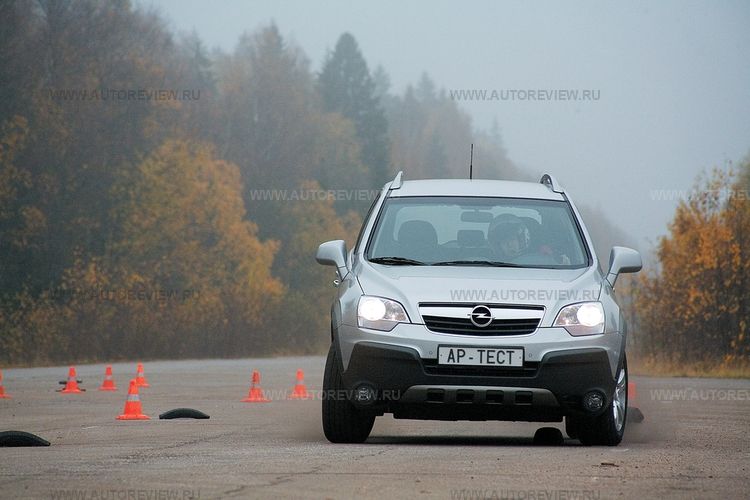
The Antara's strict stability system literally hits the driver's hands, preventing a change of trajectory
The slowest in the "moose test" was the Captiva — the expert could not exceed 73.1 km/h due to extremely sluggish steering response and overly intrusive stability control. At the limit, ESP fought so hard for directional stability that it completely blocked any attempts to change trajectory. After disabling the stability system, an additional 2 km/h was achieved!
The Opel Antara, built on the same platform, performed better thanks to a sharper steering response — 74.9 km/h. But here ESP is tuned even more rigidly: when it activates, the steering wheel is literally torn from your hands.
The Nissan completed the maneuver noticeably faster — 77.2 km/h. The secret to success lies in the lenient stability control settings and the tester's skill. However, the X-Trail responds to sharp steering inputs as lazily as the Chevrolet, then breaks into deep slides that ESP extinguishes with difficulty.
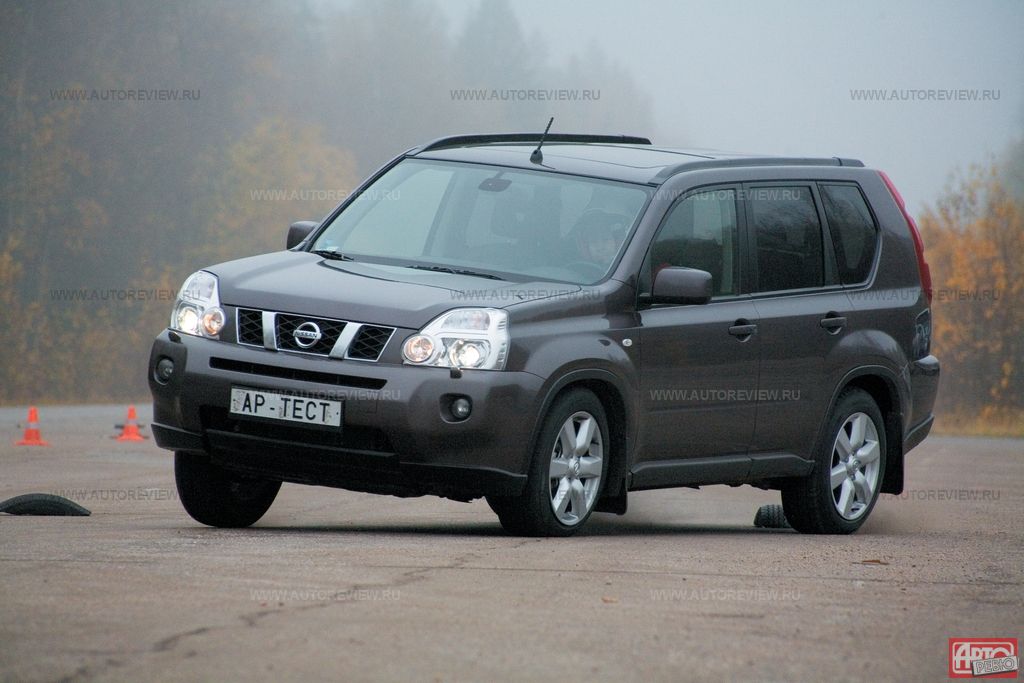 | 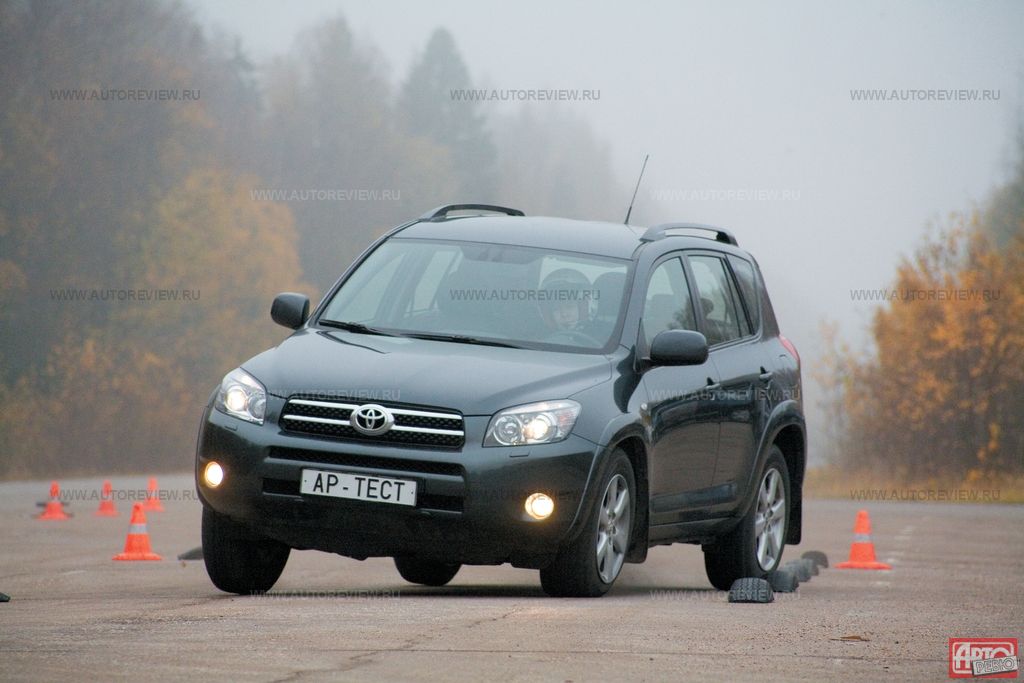 | |
| X-Trail is prone to slides during emergency maneuvers | Captiva is "straight-line," like the Antara | But the RAV4 behaves perfectly in an emergency |
Only the Toyota RAV4 in the tester's hands passed the "moose test" with flying colors — the highest speed (78.1 km/h) combined with quick and precise reactions, excellent steering feedback, and a perfectly tuned VSC system that effectively dampens both understeer and oversteer. But... At 65 km/h, none of the "volunteers" managed to complete the task in the Toyota! Some, trusting the car's obedience, were genuinely puzzled when they knocked down cones, while others complained of a noticeable decrease in sensitivity compared to normal modes.
The other cars also disappointed: only one volunteer avoided the "moose" in the Nissan and Opel, and by his own admission, completely by chance, while in the Captiva, two out of five succeeded. The Chevrolet's success is not accidental: its sluggish responses in normal conditions subconsciously teach the driver to work the wheel more actively in an emergency.
| Maximum speed in the moose test, km/h | |
| Vehicle | Speed |
| Chevrolet Captiva | 73.1 |
| Nissan X-Trail | 77.2 |
| Opel Antara | 74.9 |
| Toyota RAV4 | 78.1 |
| Moose test on the first attempt at 65 km/h | |
| Vehicle | Maneuver completed |
| Chevrolet Captiva | 2 out of 5 drivers |
| Nissan X-Trail | 1 out of 5 drivers |
| Opel Antara | 1 out of 5 drivers |
| Toyota RAV4 | 0 out of 5 drivers |
Safety
In the base configuration of all four cars, there are ABS, stability control, front seat belts with pretensioners and force limiters, Isofix anchors, and six airbags. The exception is the Captiva, which has only four airbags.
The RAV4 additionally has a driver's knee airbag. However, in EuroNCAP crash tests, it did not work as intended: the dummy broke through the airbag and hit its knees on the dashboard. As a result, the Toyota earned only four out of five stars, although it passed side impacts brilliantly. Child protection — four stars, pedestrian protection — three out of four.
The Captiva underwent the crash test in its base version — without side airbags, which are only available on V6 models. The result is decent: the pedals and steering wheel did not shift critically, but the dashboard was deemed injury-prone. In the pole impact, the curtain airbag did not deploy fully, costing the car a point. The final score is 31 points, four stars. With children, things are not entirely smooth either: in the frontal impact, the dummies' chests received excessive load — three stars. Pedestrians — two stars due to the stiff hood edge.
The Nissan X-Trail, despite excellent side protection, did not please the experts. The dummy's neck was overloaded, and the legs were in the 'orange' risk zone due to the dashboard and pedals — only nine points out of 16 for the frontal impact. However, children are comfortable here: the only complaint was poor Isofix labeling. The Nissan is not too friendly to pedestrians either — the hard hood edge limited the rating to two out of four stars.
The Opel Antara has not yet undergone independent tests. However, its American brother, the Saturn VUE, has already been through NHTSA crash tests. The results are respectable: four stars for driver protection in frontal impact and five for the other three parameters, giving an overall five-star rating. Rollover risk — 15%, or four stars.
| Chevrolet Captiva* | ★★★★☆ | 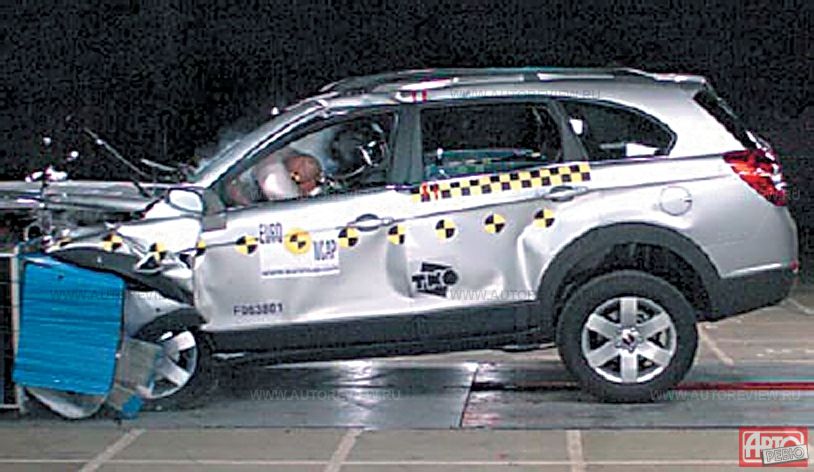 |
| Overall rating | 31 points | |
| Frontal crash test | 12 (75%) | |
| Side crash tests | 17 (94%) | |
| SBR** | 2 | |
| Child passenger protection | 36 (73%) | |
| Pedestrian protection | 17 (47%) | |
| Curb weight | 1905 kg | |
| * Tests conducted according to EuroNCAP methodology | ||
| ** Seat belt reminder availability | ||
| Nissan X-Trail* | ★★★★☆ | 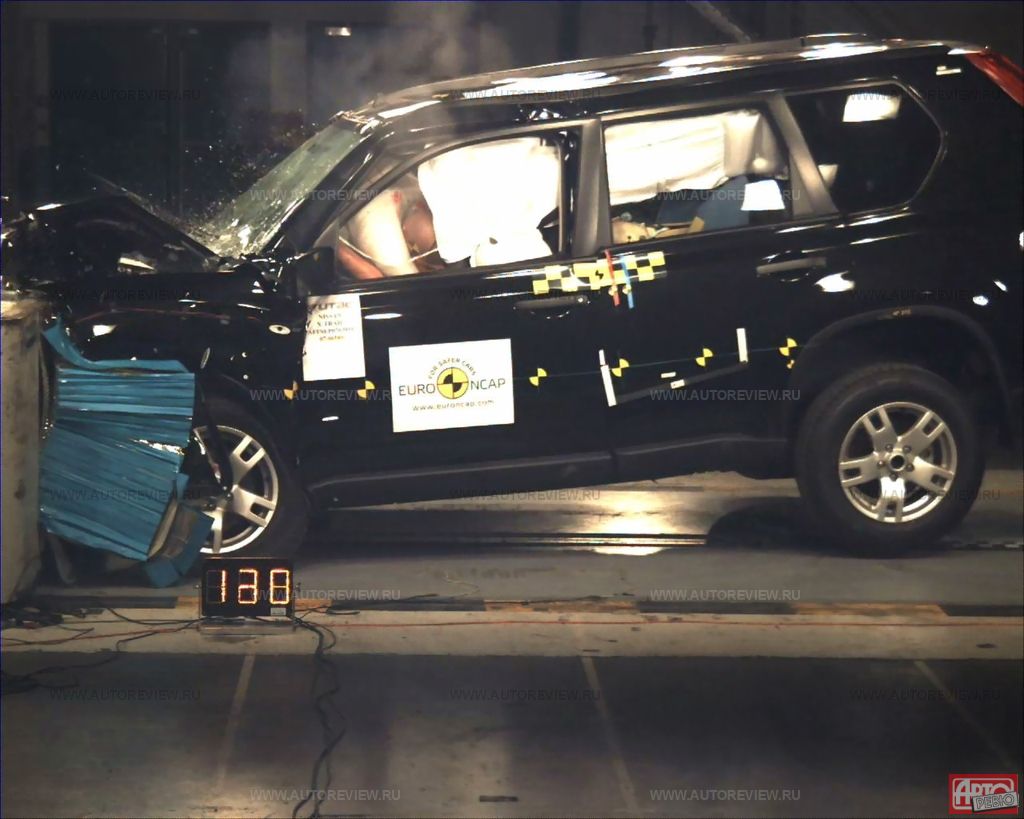 |
| Overall rating | 30 points | |
| Frontal crash test | 9 (56%) | |
| Side crash tests | 18 (100%) | |
| SBR** | 3 | |
| Child passenger protection | 43 (88%) | |
| Pedestrian protection | 12 (33%) | |
| Curb weight | 1646 kg | |
| * Tests conducted according to EuroNCAP methodology | ||
| ** Seat belt reminder availability | ||
| Toyota RAV4* | ★★★★☆ | 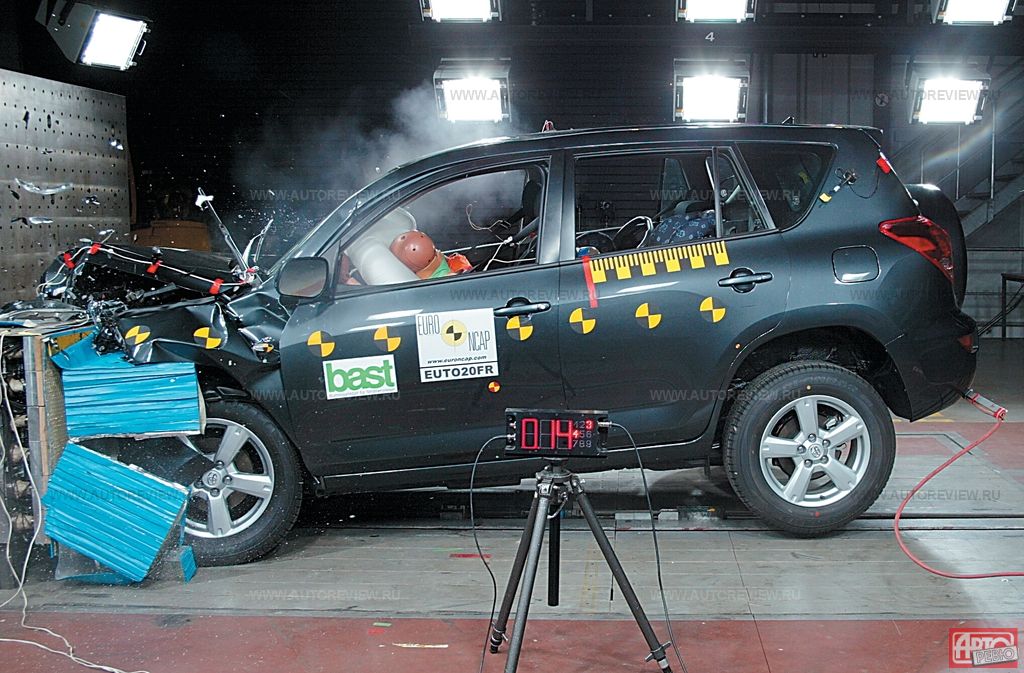 |
| Overall rating | 32 points | |
| Frontal crash test | 12 (75%) | |
| Side crash tests | 18 (100%) | |
| SBR** | 2 | |
| Child passenger protection | 39 (80%) | |
| Pedestrian protection | 21 (58%) | |
| Curb weight | 1620 kg | |
| * Tests conducted according to EuroNCAP methodology | ||
| ** Seat belt reminder availability | ||
| Saturn VUE* | ★★★★★ |
| Driver protection in frontal impact | 4 stars |
| Passenger protection in frontal impact | 5 stars |
| Driver protection in side impact | 5 stars |
| Rear passenger protection in side impact | 5 stars |
| Rollover rating | 4 stars |
| Curb weight | 1867 kg |
| * Tests conducted according to NHTSA methodology | |
Light output
To understand how effectively the headlights work, we filmed the cars at night from one point. The Opel performed best: a pedestrian on the roadside at 80 meters is fully illuminated. The Captiva's low beam is slightly weaker. The Nissan, the only one in the quartet with xenon, shines no better than the regular halogen lights on the RAV4 — the person is only half visible. High beam is excellent in all cars.
During filming, only the driver was in the cars, the xenon headlight levelers worked in automatic mode, while the halogen ones were set to the zero position
| Low beam. Pedestrian standing on the roadside 80 m from the car | High beam. Pedestrian standing in the middle of the road 160 m from the car |
| Chevrolet Captiva | |
| Nissan X-Trail | |
| Opel Antara | |
| Toyota RAV4 | |
Underbody view
The Nissan X-Trail is the clear leader in off-road readiness. Ground clearance is 195 mm, approach angle is a maximum of 26°. The plastic shields on the underbody are hard to tear off, and the small mud flaps and flexible aprons near the wheels can only be lost with great effort. The engine and CVT are protected by a subframe. Towing is convenient: a screw-in tow hook at the front, a fixed one at the rear. However, the brake lines are routed without protection, the exhaust pipe hangs below the rear suspension subframe, and the mounting points for the rear shock absorbers are located low.
The Captiva is also ready for nature outings, although the ground clearance is more modest — 180 mm, approach angle — 24.5°. The powertrain is covered by subframe beams, there are no plastic aprons or covers at all, but the brake lines are well hidden, and the radiators are protected by a sturdy polypropylene cover. The lower part of the bumpers is unpainted — scratches on it are not noticeable. There are four tow hooks: three fixed and one screw-in into the rear bumper. The fuel tank is covered by a metal sheet, the exhaust system is recessed, and the spare tire is in place. Only the hanging parking brake cable loops are concerning.
The Antara, with the same construction as the Captiva, is more asphalt-oriented. Its departure angle is the largest — 25°, but the bumper sides are painted all the way down for design reasons. What's worse: the exhaust system at the rear becomes the lowest point — only 173 mm to the pipe. The muffler, turned transversely, hangs 30 mm lower than the Captiva's, and the risk of damaging it is higher — dents were already visible on it.
The Toyota, on the other hand, is categorically not designed for off-road. Only the brake lines are reliably hidden. The oil pan is not protected at all. The distance from the exhaust system to the ground is 175 mm. On slopes, you can damage not only the resonator on the right but also the fuel tank on the left — both protrude below the sills. In a deep rut, you'll catch the long stabilizer pins, and in simple conditions, you'll lose poorly secured plastic shields and aprons. Even the license plate hangs below the bumper! And don't even think about reversing in deep snow — the front bumper scoops it up like a bulldozer blade and will simply tear off.
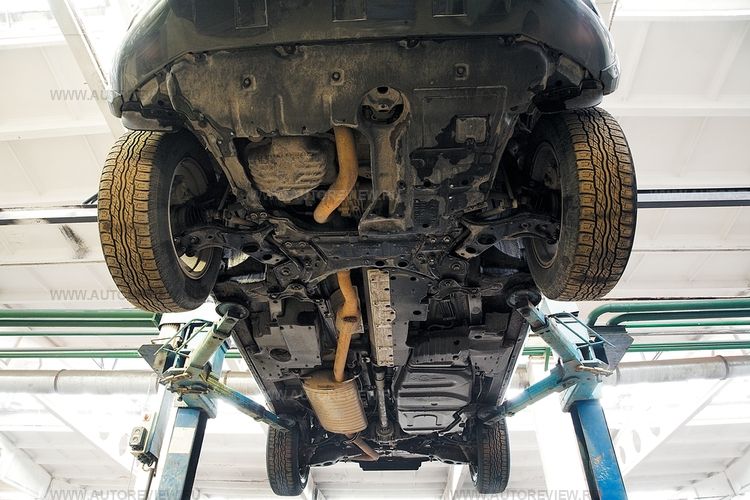
In the Toyota, off-road the most damage is to the oil pan, fuel tank, muffler, and... the rear license plate: it is the lowest point of the bumper
Visibility
Again, the Toyota RAV4 is the leader in visibility. Despite the massive front pillars reducing the overall viewing angle to 268 degrees, they do not create any obstruction even for shorter drivers. The same applies to the small protrusion of the spare tire on the fifth door. The rearview mirrors here are large and distortion-free, and the wiper blade misses the pillar by just a couple of centimeters.
The Chevrolet Captiva and Opel Antara have an even smaller uncleaned area left by the wiper. However, their mirrors are somewhat more modest, and the lower edge of the fifth door glass is positioned quite high — if a passenger car approaches from behind, only its roof is visible. Moreover, the pillars here are even more massive.
Nissan X-Trail shows the worst results, although its total blind spot angle is the smallest at 83.5 degrees. The mirrors are large but have noticeable distortion zones. The rear window opening is high but compressed on the sides, and the area near the left pillar that the wiper doesn't clean is three times larger than in the Toyota.
| Car | Total viewing angle, deg. | Total blind spot angle, deg. |
| Chevrolet Captiva | 263.5 | 96.5 |
| Nissan X-Trail | 276.5 | 83.5 |
| Opel Antara | 268.5 | 91.5 |
| Toyota RAV4 | 268.0 | 92.0 |
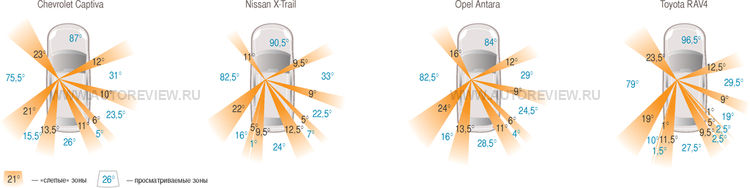
| Chevrolet Captiva | Nissan X-Trail |
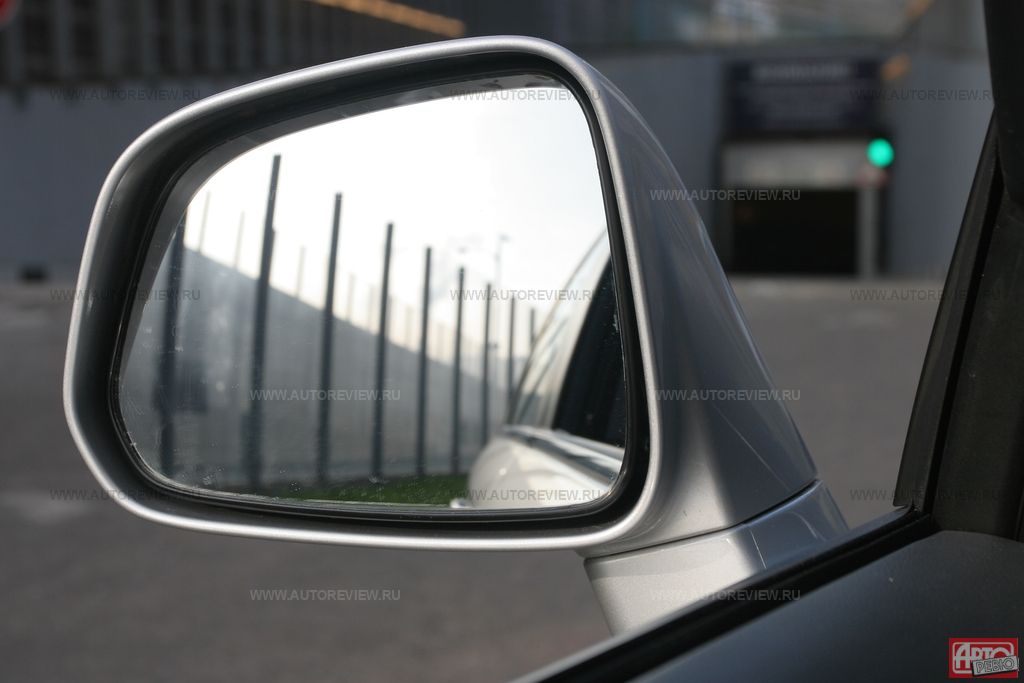 | 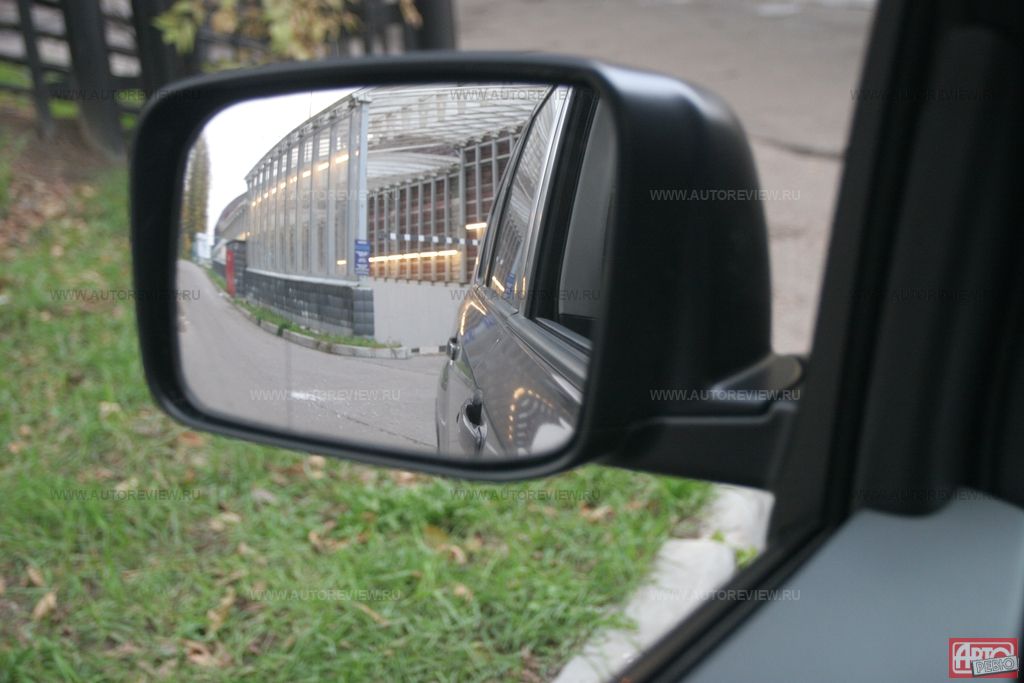 |
| Opel Antara | Toyota RAV4 |
 | 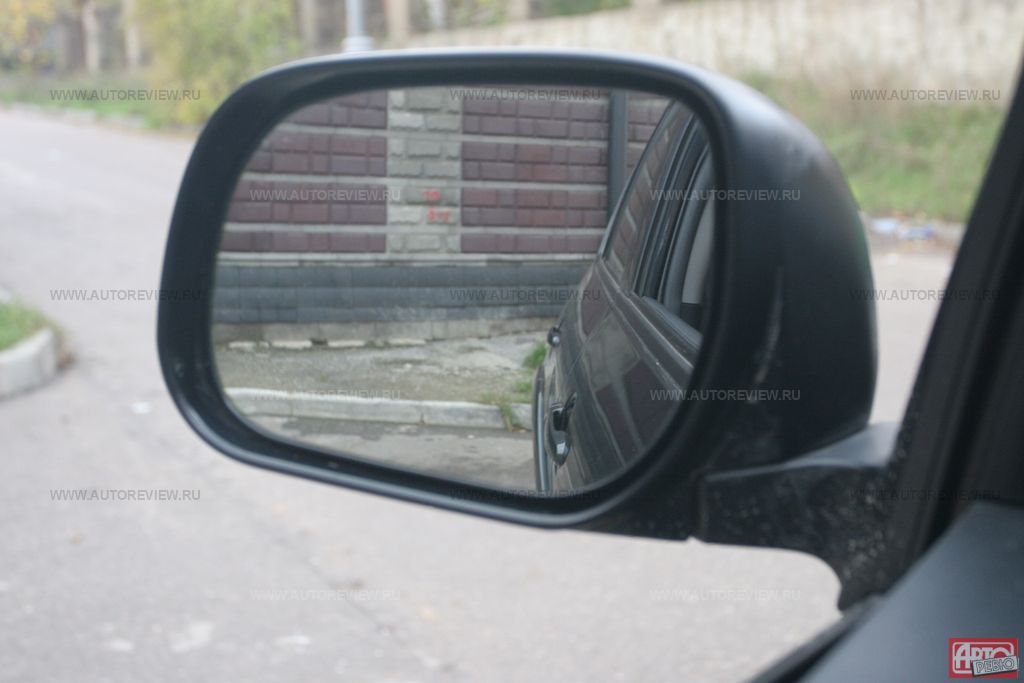 |
Equipment and price: who offers more for their money?
Let's start with the price lists. The base Captiva is priced at 792,200 rubles, which is noticeably more affordable than its competitors. The Nissan X-Trail asks for 967,300 rubles, the Antara — 897,000, and the Toyota RAV4 — 1,102,500. However, the starting price is just the tip of the iceberg. The trim levels differ significantly. The Chevrolet in the base version pleases with all-wheel drive, a stability control system, and even hill descent control. But for side airbags you'll have to pay extra, and there's no automatic transmission in the initial version at all — only manual. However, there is a rear air suspension with adjustable ground clearance, which is rare for this class. The Nissan X-Trail has a richer base equipment: it already includes side airbags, climate control, leather steering wheel, cruise control, and even a sunroof. True, for the CVT and some options you'll need to pay extra. The Opel Antara occupies an intermediate position: it has climate control and side airbags, but no leather steering wheel trim or auto-dimming mirror. The Toyota RAV4, being the most expensive, offers the maximum set already in the base: dual-zone climate control, leather interior, power driver's seat, push-button engine start, and even a heated windshield. In the end, if you count money, the Captiva looks attractive, but in the top version it's no longer so cheap. The test Chevrolet cost 823,600 rubles, the Nissan — 1,069,480, the Opel — 977,500, and the Toyota — 1,113,000. So the choice between a "bare but cheap" and an "expensive but rich" trim is obvious.Inside: ergonomics and comfort
The Captiva's interior is a separate story. The driver's seat has no power adjustments, but there are enough manual adjustments. However, the seating position seemed uncomfortable: the steering wheel is low, and you want to lower the seat even further, but it's already at the minimum. The buttons on the center console are scattered chaotically, and there's no climate control — only air conditioning. But there is a third row of seats, albeit as an option. True, it's hardly suitable for adults — you can only carry children there. The X-Trail's ergonomics are in order. The seating position is comfortable, and all controls are logically grouped. The two-level trunk was especially pleasing: the lower box can be used for small items, and the shelf as a picnic table. There's also a sunroof that adds a sense of space. The only remark is that the CVT doesn't work as quickly as you'd like, but in city traffic it's not critical. The Antara feels more "car-like" inside. The trim materials are pleasant, but there are some quirks. For example, the steering column switches aren't always convenient to use, and the buttons on the doors are positioned so that in the dark they're easy to confuse. Rear passengers lack legroom — at 180 cm tall, I was already touching the front seat back. The Toyota RAV4 is the benchmark in terms of thoughtfulness. Everything inside is intuitive, the seats are comfortable, and the dual-zone climate control pleases with precise settings. There's even power-folding mirrors and a rain sensor. But the rear row of seats adjusts for recline angle and fore-aft, adding comfort for passengers.On the road: dynamics and handling
The fastest in our test was the X-Trail. Its 2.5-liter engine accelerates the car to 100 km/h in 10.3 seconds, with a top speed of 188 km/h. In second place is the RAV4 (11.2 seconds to 100 km/h and 186 km/h). The Captiva and Antara are noticeably slower: 13.9 and 14.3 seconds respectively, with a top speed of about 168 km/h. The difference is felt immediately: when overtaking on the highway, you need to plan the maneuver more carefully. The brakes are best tuned in the Captiva: the braking distance from 100 km/h is 41.8 meters. The RAV4 has 42.3 meters, the Antara — 43.3, but the X-Trail showed the worst result — 45.6 meters. However, the difference isn't critical, but the impression remained. As for handling, opinions were divided. The Captiva and Antara, which are technically close, behave similarly on the road. They have a soft suspension, but noticeable body roll appears in corners. The steering is "empty" in the center zone, requiring corrections at high speed. The X-Trail is more composed: less roll, and the steering effort is more informative. But the CVT during sharp acceleration creates a "rubber band" effect on the gas pedal. The Toyota RAV4 is the undisputed leader in handling. It seems "glued" to the road, the steering is sharp and precise, and body roll is minimal. But you have to pay for this with a stiff suspension: on broken asphalt, the car shakes noticeably and transmits every crack into the cabin. If comfort is more important to you than sportiness, you should look at other participants in the test.Off the asphalt: geometry and off-road capability
We tested the crossovers not only on the road but also off-road. For this, we measured the height of an obstacle at which the rear wheel lifts off the ground. The results were as follows: Captiva and Antara — 290 mm, X-Trail — 320 mm, and RAV4 — only 280 mm. This means that on rough terrain, the X-Trail feels most confident, while the RAV4 will "sit on its belly" faster than others. All cars are equipped with a hill descent control system, but it works differently. In the Captiva and Antara, it's activated by a button and works correctly, reducing speed to 5-7 km/h. The X-Trail has a similar system, but it operates more smoothly. As for the RAV4, it only activates on very steep slopes and isn't always predictable. Regarding all-wheel drive, the Captiva and Antara use a clutch that connects the rear axle when the front wheels slip. The X-Trail has a similar scheme, but with the option of forced locking. The RAV4 has the most modern system with electronic control that distributes torque between the axles depending on conditions.Results: who won?
Each of these cars has found its audience. Chevrolet Captiva is the choice of a pragmatist: for moderate money, you get a spacious interior and decent off-road capability. But you need to be prepared for outdated ergonomics and weak dynamics. Nissan X-Trail is a universalist: it's fast, spacious, and one of the best off-road. The CVT isn't the most sporty unit, but in everyday life it doesn't annoy. Perhaps this is the best balance of price and quality. Opel Antara is a solid middle-of-the-road option. It's comfortable on asphalt, but off-road it yields to the X-Trail, and in equipment to the RAV4. Nevertheless, if you value suspension softness, the Antara could be a good choice. Toyota RAV4 is the most expensive and most "driver-oriented" car in the test. It handles excellently, but the stiff suspension and high price make it less versatile. If you're looking for a family crossover, for this money you can find more balanced options. In the end, we declared Nissan X-Trail the winner — it's closest to the ideal of a universal car that suits both the city and trips out of town.What costs how much?
Chevrolet Captiva 2.4 LS (136 hp) with a manual transmission is the most affordable option among the test participants, although with more modest equipment. The price for a car with four airbags, ESP, air conditioning, heated mirrors, CD/MP3 radio and parking sensors starts from 792,200 rubles ($32,470)*. For climate control and light and rain sensors, which competitors already have in the base, you will have to pay extra — they are only included in the LT trim, which is 66,500 rubles ($2,725) more expensive. Moreover, heated seats on versions with fabric upholstery are available exclusively as a dealer option! If you want an automatic transmission, leather, CD changer and 18-inch wheels — prepare another 135,800 rubles ($5,570). But only for the Captiva can you order a third row of seats for 18,300 rubles ($750) — like on our seven-seat car for 823,600 rubles ($33,755) in metallic color. The seven-seat Captiva 2.4 with automatic transmission in LT trim will cost 916,200 rubles ($37,550). The version with a V6 3.2 L (230 hp) and side airbags — 1,028,400 rubles ($42,150), and the top five-seat with leather interior — 1,066,200 rubles ($43,700). In showrooms, most dealers only have four-cylinder cars, while the V6 will have to be ordered and wait up to four months.
Warranty — 2 years without mileage limit. Chevrolet is sold by 90 dealers in 57 Russian cities.
Opel Antara 2.4 (140 hp) is currently offered in a single trim, similar to the Captiva's LT, but already with heated seats: with manual transmission — 897 thousand rubles ($36,760), with automatic — 937 thousand rubles ($38,400). In total, the overpayment relative to the Captiva is 20,800 rubles ($850), but the Opel does not have a seven-seat interior. Available options include a branded bike rack that slides out from the rear bumper (23 thousand rubles, or $940) and navigation with a CD changer (40 thousand rubles, or $1,640). There are no queues, but there is also no six-cylinder version — it is expected in spring.
Warranty — 2 years without mileage limit. Opel is sold by 86 dealers in 52 Russian cities.
Nissan X-Trail in the base is equipped as generously as the Opel: six airbags, climate control, cruise control, heated mirrors and front seats, CD changer, light and rain sensors. The two-liter engine (141 hp) produces as much as the heavier Antara, and the car costs less — 872,980 rubles ($35,780). For the CVT, they ask for an extra 41,920 rubles ($1,720). The more spirited X-Trail with a 2.5 L engine (169 hp) and CVT for 988,260 rubles ($40,500) is 40,140 rubles ($1,645) cheaper than the Captiva with V6, although its arsenal includes a panoramic sunroof with electric drive and spotlights on the roof rails. The top LE version with leather interior and xenon, which we tested, costs 1,069,480 rubles ($43,830). Two-liter versions are available, but the 2.5 will have to wait from two to four months depending on the trim.
Warranty — 3 years or 100,000 km. Nissan is sold by 44 dealers in 29 Russian cities.
The cheapest Toyota RAV4 is only four thousand more expensive than the Opel — 901 thousand rubles ($36,930) for a car with manual transmission, seven airbags, climate control, CD changer and heated mirrors. The two-liter engine here is more powerful — 152 hp. The four-speed automatic is an extra 38 thousand rubles ($1,560). For leather, heated front seats, light and rain sensors in the top Sol version — another 92 thousand rubles ($3,770). The RAV4 with a 2.4 engine (170 hp) and automatic transmission comes only in the Sol version and stands out with different wheels, extended arches, chrome grille and roof rails. Price — 1,102,500 rubles ($45,180). Any modification will have to wait at least three months.
Warranty — 3 years or 100,000 km. Toyota is sold by 55 dealers in 39 Russian cities.
* At the exchange rate of $1=24.4 rubles.
What else?
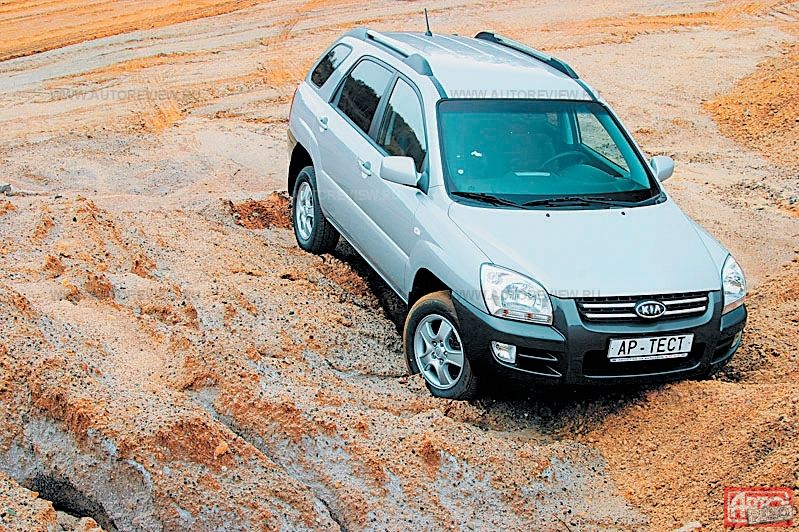
Among budget crossovers cheaper than the seven-seat Captiva with a 2.4 engine, there are only three models. One of them is the all-wheel drive Hyundai Tucson (2.0 L, 142 hp) for 725,900 rubles ($29,750*), and the front-wheel drive version is even more affordable — 645,900 rubles ($26,470). The turbodiesel Tucson (2.0 L, 112 hp) costs from 833,900 rubles ($34,180). Details — in AR No. 21, 2004. The twin of the Tucson, the Kia Sportage, is slightly more expensive. Details — in AR No. 22, 2005.
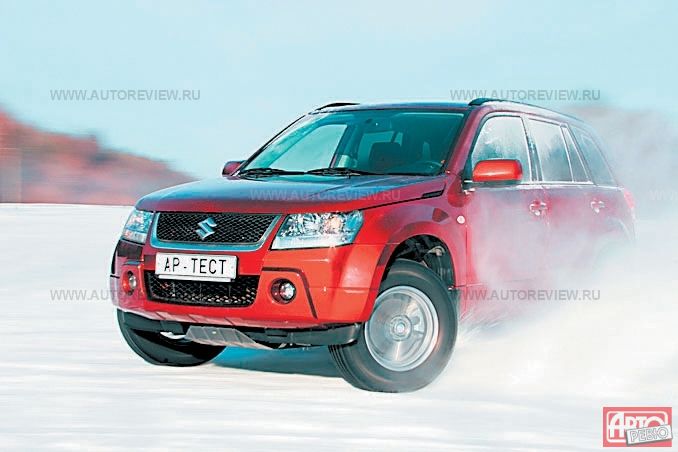
The five-door Suzuki Grand Vitara (2.0 L, 141 hp) is also cheaper than the test participants: from 751,400 rubles ($30,800) with manual transmission and from 810,080 rubles ($33,200) with automatic. Off-road, the car feels excellent (permanent all-wheel drive with center lock and low range), ergonomics are pleasing, but the suspension is too soft, and handling on slippery surfaces is ambiguous. Details — in AR No. 7, 2006 and AR No. 22, 2005.
The first-generation Mitsubishi Outlander with a 2.4 engine (160 hp) and automatic transmission at a seasonal discount costs from 826,810 rubles ($33,890). Drive — permanent all-wheel with a symmetrical center differential locked by a viscous coupling. The Outlander will appeal to experienced drivers with its sporty handling, but the tendency to oversteer is a serious drawback in the absence of a stability control system. Details — in AR No. 23, 2006 and AR No. 7, 2006.
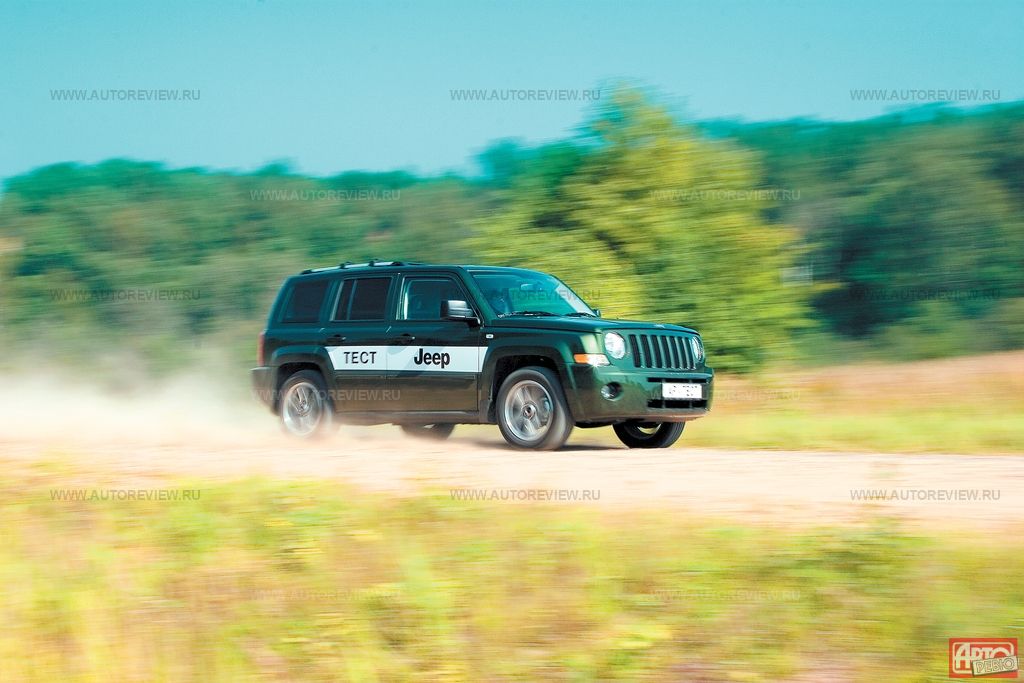
| Kia Sportage | Jeep Liberty |
 |  |
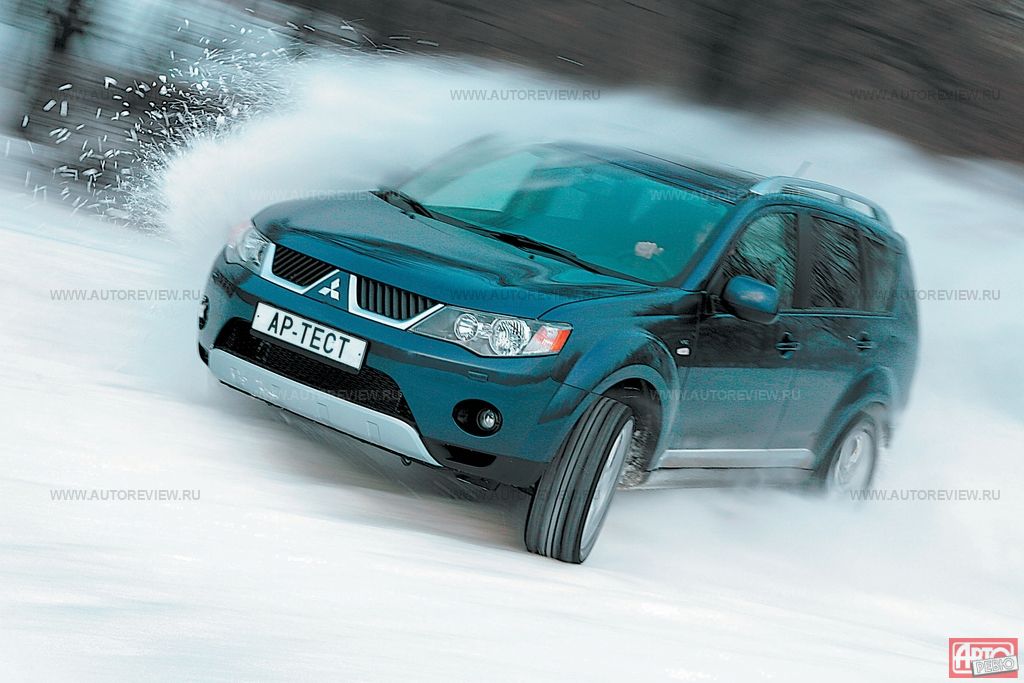
| Suzuki Grand Vitara | Mitsubishi Outlander XL |
 |  |
| Jeep Compass | Honda CR-V |
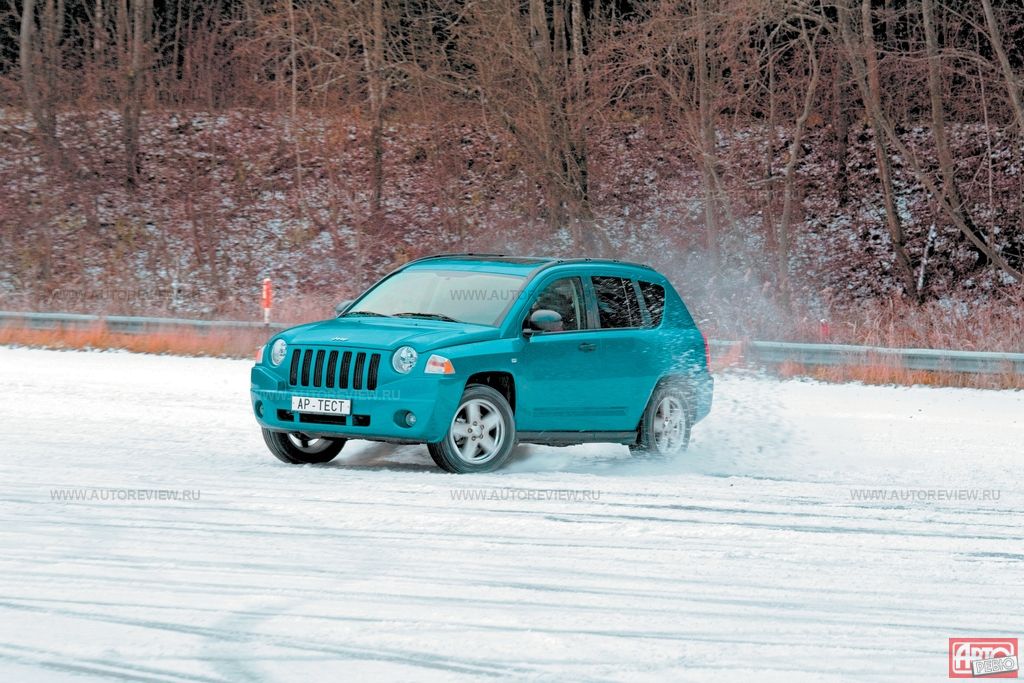 |  |
Jeep Compass (2.4 L, 170 hp) with a belt-type CVT costs 864,850 rubles ($35,440**). The American crossover pleases with smooth ride and suspension energy reserve, but the interior is trimmed with cheap plastic, and on-road behavior leaves much to be desired — on slippery asphalt, the car is noticeably prone to understeer. More details — in AR No. 23, 2006.
Jeep Liberty essentially repeats the Compass, differing only in exterior body styling. The price for the version with CVT is also the same — starts from 864,850 rubles ($35,440**). Details — in AR No. 20, 2007.
Mitsubishi Outlander XL with a 2.4 engine (170 hp) in the base trim will cost more than all test participants — 937,730 rubles ($38,430). The interior has plenty of space for both passengers and cargo, and the interior is done in a sporty style. The chassis is tuned in the same spirit, but the suspension feels stiff. Details — in AR No. 6, 2007 and AR No. 17, 2007.
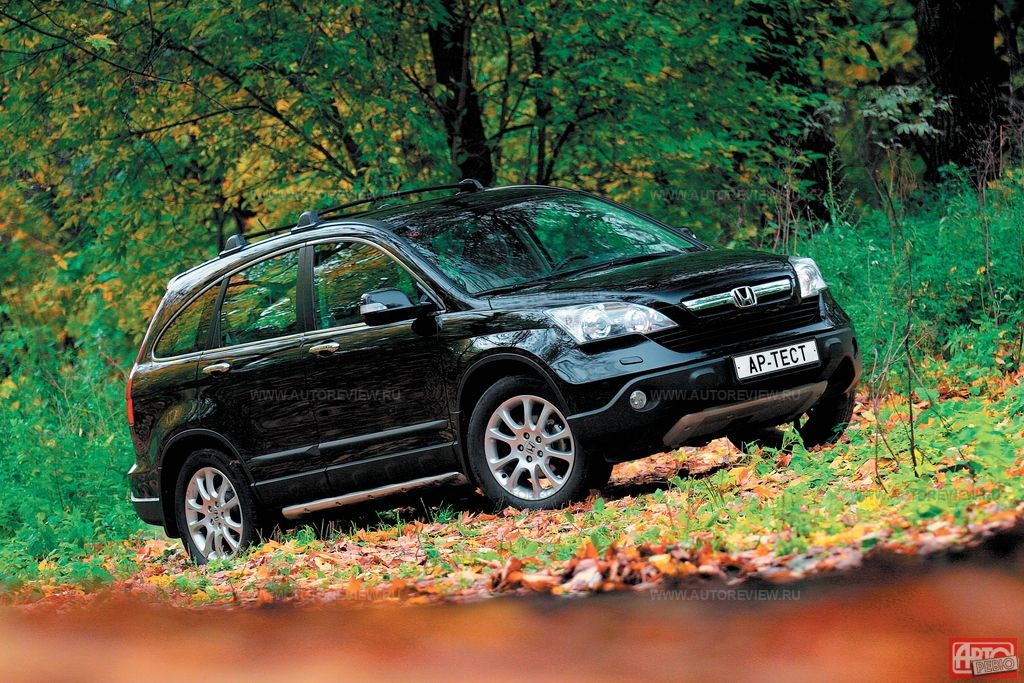
Honda CR-V is among the most expensive representatives of the class. The crossover with a two-liter engine (150 hp) and automatic transmission costs at least 938 thousand rubles ($38,440). The CR-V impresses with silence in a cozy interior and thoughtful ergonomics, but its off-road capabilities are modest. Details — in AR No. 5, 2007.
* At the exchange rate of $1=24.4 rubles.
** Ruble equivalent of a fixed price in dollars at the exchange rate of $1=24.3 rubles.