
I ended up in the homeland of Adam Opel thanks to an invitation from General Motors — the concern organized something like an extended tour of its product line for journalists. I was most interested in diesel engines: shortly before that, at the Interauto-2007 exhibition, Opel representatives confirmed their intention to bring such versions to the Russian market.
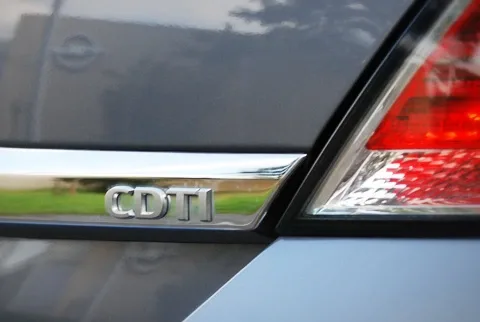
On the outside, Opel cars running on diesel hardly give themselves away. The only difference is a small CDTI badge.
As soon as we landed in Frankfurt and walked out to the airport parking lot, I immediately headed for an unremarkable gray Astra hatchback with a CDTI plate on the tailgate. Under the hood was a 1.3-liter engine from FIAT, producing 90 horsepower. At first, the figure may seem modest, but just look at the technical passport and find "200" in the maximum torque line — and the questions disappear by themselves.
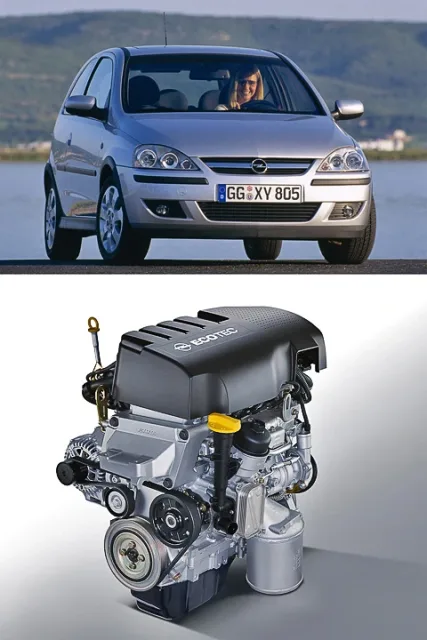
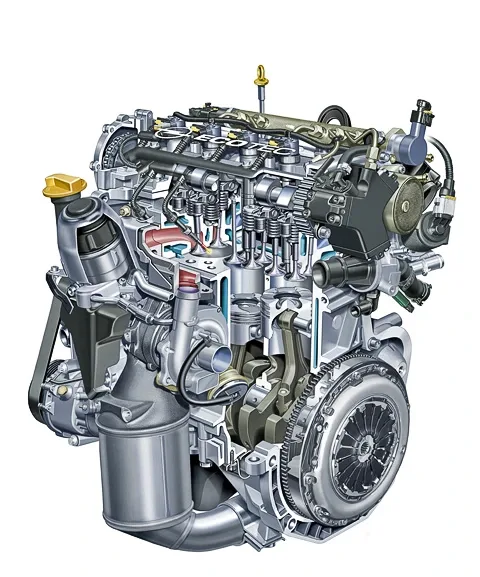
The 1.3-liter CDTI engine, which the Germans got through a partnership with the Italians from FIAT, first appeared on the previous generation of the Corsa.
By the way, 200 Nm is 1.6 times more than the base 1.4-liter gasoline engine installed on the Astra and Corsa. Even a two-liter naturally aspirated engine would not be ashamed of such figures. So the diesel turned out to have character. In practice, the car starts confidently, and in city traffic you feel quite comfortable without feeling a lack of power. True, you want a slightly more spirited acceleration — sometimes it seems that the Astra is a bit heavy for such an engine.
On the autobahn, I had to try hard not to fall behind the other two Opels in our convoy. Although, to be fair, both cars bore proud OPC badges. And I would not have started racing them, but there was no choice: my Astra lacked factory navigation. So it was easier to stay close to the "hot" OPCs than to rely on hints from a German phone.
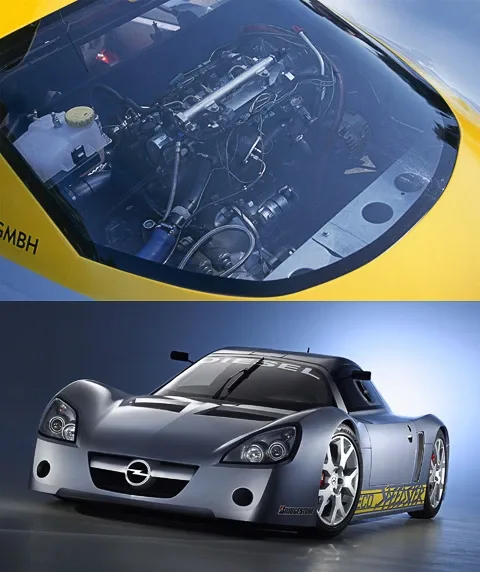
Interestingly, the same 1.3-liter turbodiesel was in the Opel ECO-Speedster concept car presented in 2003. The ECO-Speedster featured a very low drag coefficient (0.20) and low weight (660 kilograms).
In this chase, I managed to squeeze out 180 km/h on the speedometer. Thrill-seekers are unlikely to like such a figure. But something else will please — the engine's appetite is more than modest. Even after a high-speed run, the fuel gauge needle did not move a millimeter. And that's not surprising: average consumption in the combined cycle is only 4.8 liters per hundred kilometers!
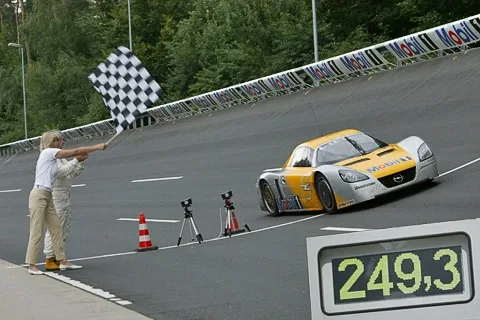
During a 24-hour run at the Dudenhofen test track, the car achieved an average fuel consumption of 2.5 liters per 100 kilometers and a top speed of 249.3 km/h. In total, the Opel ECO-Speedster set 17 world records.
The racing, however, quickly ended — following the "Opels," I reached the Opel test center in Dudenhofen. There, after a short press conference and briefing, I immediately jumped into a Corsa with exactly the same engine. Now that's a different story! The "younger" model, not burdened by an extra hundredweight, accelerates noticeably more briskly. I especially enjoyed the perky whistle of the turbo as the revs climbed. For a little thing like the Corsa, it's just what the doctor ordered!
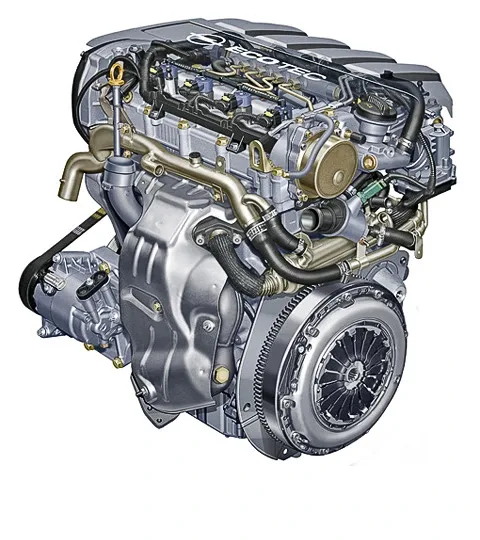
But my diesel adventures did not end there. For dessert, I saved an Astra with a 1.9-liter unit. It is also of Italian origin — the Germans borrowed it from the FIAT concern (20% of whose shares belong to General Motors). Think diesel can't be "sweet"? I thought so too, until I closed the door and started the engine. After a little clatter at idle, I head out onto the road.
Wow! Is this a five-door OPC?! As soon as the turbo enters its working range, you get such a shove that you immediately remember the "hot" Opel Performance Center. The Italian temperament is felt right away. And that's no coincidence: the torque of this diesel and the gasoline turbo engine of the OPC is the same — 320 Nm. Yes, the official figures are not impressive: 8.9 seconds to 100 km/h and 210 km/h top speed. But in practice, this 150-horsepower Astra can give more powerful gasoline rivals a run for their money. Who now will say that a diesel can't "ignite"?
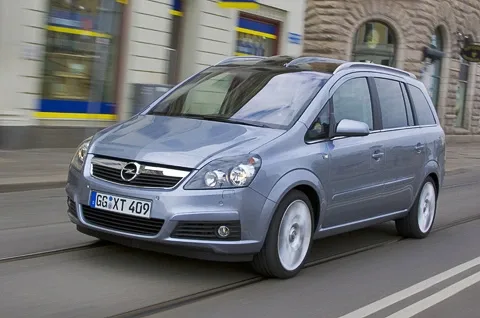
If the 100-horsepower versions of the Vectra or Zafira are successfully used in Europe as corporate cars or taxis, then engines with 120 and 150 "horses" add a lot of zest to the character of Opels. True, diesel minivans will not appear here in the near future.
There was also a diesel Vectra at the test track, but in the most modest version — with a 100-horsepower 1.9-liter engine. I didn't get to drive it — my time at the track was up. But judging by the specs, such a ride would hardly have given vivid emotions. Moreover, only versions with 120 and 150 "horses" are planned for delivery to Russia.
Now about the main thing that worries many — prices. It's clear that a diesel version will not be cheaper than a gasoline one with equal power. For example, a Vectra with a 120-horsepower 1.9 CDTI and six-speed manual in Elegance trim will cost 701 thousand rubles. And the 150-horsepower version in the rich Cosmo trim will cost 775 thousand. For comparison: a Vectra sedan Elegance with a gasoline 1.8 (140 hp) starts from 636 thousand.
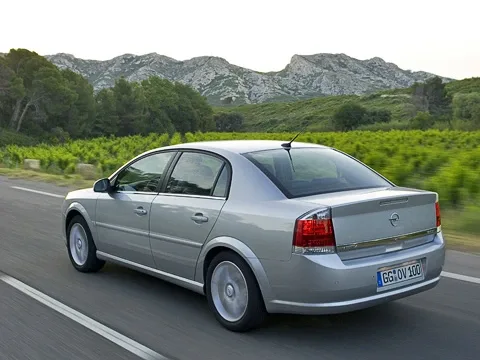
In Russia, diesel Vectras are offered only with a sedan body. And you can order a four-door car with a 120- or 150-horsepower engine right now.
As for Russian prices for diesel Astra and Corsa, there is no clarity yet. But if we look at the cost of these cars in other markets, we can assume a price increase of at least one and a half to two thousand euros relative to gasoline versions of similar power. True, these are just assumptions for now, so it's better to wait for official figures.
One thing is for sure — automakers are gradually coming out of their "diesel hibernation" and are increasingly bringing cars with heavy-fuel engines to our market. Even if they are still hedging and supplying not the freshest units (for example, in Europe, the weak 1.9 versions have already been replaced by Opel's 1.7 CDTI). The main thing is that the ice has broken. Now it's up to buyers.
Technical specifications of diesel modifications