
Preservation of success
Create a new car, almost completely preserving the concept and exterior data of its predecessor, – this is the paradoxical task that Nissan solved while working on the second generation of the X-Trail SUV.
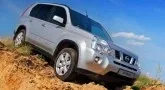
When the new X-Trail was being created, Nissan engineers found themselves in a difficult situation: the previous generation of the model was hugely successful, and changing anything drastically was risky. In Russia, since 2001, this crossover had consistently held second place in the Compact SUV segment, second only to the Toyota RAV-4, and demand for it had not fallen for all six years. Many owners around the world directly asked not to touch the successful design. But time passed, and an update was still needed. To understand whether the Japanese managed to maintain a balance between customer wishes and the need for progress, the Russian representative office of the brand organized a "driving" presentation for journalists in early August. The route ran through the roads of the Moscow and Tver regions.
Externally, the new X-Trail is almost indistinguishable from its predecessor — and this is a deliberate step. Although in fact this is not a facelift, but a full change of generations. The body received a reworked power structure with increased torsional rigidity, and all exterior panels are new. The optics, radiator grille, shape of door handles and mirrors, as well as the rear side windows have changed. Dimensions have also grown: the car has become 175 mm longer, 20 mm wider, and 10 mm higher. The wheelbase has increased by 5 mm. But with all this, the resemblance to the previous model is striking — the public accustomed to the old look will be pleased.
But the interior has changed much more seriously, and above all, the quality of materials is pleasing. But the main news is that the instrument panel has finally moved to its usual place: on the left, above the steering column. No matter how much they previously talked about the advantages of the central location, in practice you had to glance to the right for the readings, and the aesthetics of such a solution were dubious. The central console is also designed in a new way: it houses the audio system, a couple of compartments for small items, and a climate control unit, whose rotating "rings" strongly resemble the solution on the Mitsubishi Outlander XL.
On the tunnel between the front seats, there is room for a round transmission mode selector, a CVT lever, seat heating buttons, and buttons for hill descent and hill start assist systems (Downhill Drive Support and Uphill Start Support). The cabin has many useful containers: there are bottle holders, cup holders (two — on the sides of the front panel, they are cooled), and a spacious armrest box with air supply from the air conditioner. The previous inexpressive four-spoke steering wheel was replaced with a three-spoke one, in Nissan's corporate style, with pleasant leather and bulges at the grip points. The sunroof has become noticeably larger.
The trunk has also increased — in this indicator, the X-Trail is now the leader in its class. At the bottom, you can install a false floor with a sliding drawer, where it is convenient to put, for example, dirty things. The volume is 603 liters in the normal state, 479 liters with the false floor, and as much as 1773 liters if the false floor is removed and the rear seats are fully folded (they fold in a 40/20/40 ratio). Even with the false floor, the trunk has become 69 liters larger than before.
The technical content has also been updated, although without radical changes. The engines remained the same displacements, but the 2.5-liter unit was modernized (now it produces 169 hp and 233 Nm), and the 2-liter one is new, borrowed from the younger Qashqai (141 hp and 196 Nm). Diesels are not provided for Russia, and whether they will appear is unknown. But new gearboxes have appeared: to choose from — a 6-speed manual or a CVT. On the version with the 2.5-liter engine, the CVT is called M-CVT and allows manual shifting of six pseudo-gears. The drive is the electronic All-Mode 4x4-i system, operating on the same principle: there are no rigid connections, everything is controlled by electronics. Modes are available: 2WD (front-wheel drive only), Auto (when slipping, up to 50% of torque goes to the rear), and Lock (forced distribution equally between axles at speeds up to 40 km/h). In the latter case, ESP can be turned off. The hydraulic power steering has given way to an electric power steering — for the sake of saving power and fuel, and it is tuned quite decently. The suspension is of the same scheme: MacPherson struts in front and a multi-link in the rear, but they have been refined. The front one was installed on a stiffer subframe with an increased stabilizer, and the rear shock absorbers were tilted more — this also allowed increasing the trunk.
Our test was short — only 150 kilometers for two of us with a colleague, so it was difficult to form a complete impression. But it can already be said: on the move, the new X-Trail is very similar to the old one, which will again please conservatives. First, about the tandem of the 2-liter engine and CVT — we drove most of the route in such a car. Honestly, it's a bit weak. There is clearly not enough dynamics: you press the gas to the floor — the engine hums monotonously, and the X-Trail accelerates without enthusiasm. The claimed 11.9 seconds to "hundred" look overly optimistic. On the highway, over a hundred, before overtaking, you need to carefully calculate everything — the two-liter X-Trail with a CVT goes a bit heavily.
A completely different matter is the 2.5-liter engine. The sound is more pleasant, the dynamics are good. But the most surprising was the 2-liter version with a manual. Where does it come from — by feel, acceleration is almost like the older engine. Most likely, it's about the convenience of torque control, excellent responses to the gas, and a decent shifting mechanism. The only thing that disappointed was the flimsy gearshift lever.
On good asphalt, the car drives confidently: there is both comfort and the necessary firmness. Rolls in corners are quite small for a crossover. But the last twenty kilometers to the Volga bank went on broken asphalt and "rough" dirt road — and here the interesting began. The rear suspension made alarming sounds, and impacts were noticeably transmitted to the body. Loud and harsh even at a harmless speed. It seems the suspension lacks energy intensity, although its travel is very decent — I checked this by hanging the X-Trail diagonally in the forest. By the way, the electronic All-Mode 4x4-i drive even with two hanging wheels slowly pulled the car up a fairly steep hill. So on medium off-road, the crossover will most likely not let you down.
Summary. Despite minor flaws typical of cars from the first batches, and the obvious sluggishness of the 2-liter version with a CVT, the new X-Trail can be considered a success. If only because it is very similar to its predecessor.
**PRICES AND TRIM LEVELS**
Sales of the new Nissan X-Trail in Russia have already started. The most affordable version — with a 2-liter engine, manual transmission, and fabric interior — costs 873,000 rubles. True, in this trim (SE B-B) there is no sunroof, rear athermal windows, roof rails with additional lights, and the Hill Descent Control system. All this is available in the SE BD-B and BA-B versions with a 2- or 2.5-liter engine and a "manual" or CVT — they cost from 910,000 to 988,000 rubles. The top trim LE — with leather interior, electric seat drives and folding heated mirrors, Intelligent Key system, and "xenon" with auto-correction. It is sold only with a CVT: with a 2-liter engine — for 1,004,000 rubles, with a 2.5-liter — for 1,070,000.
Test drive photos
Comments
No comments yet. Say the first word.