
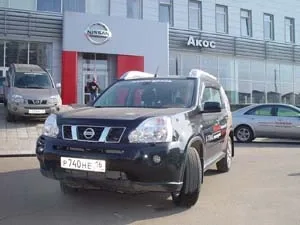
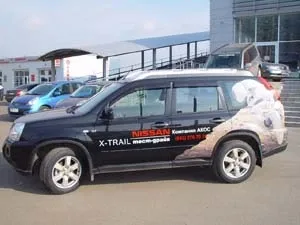
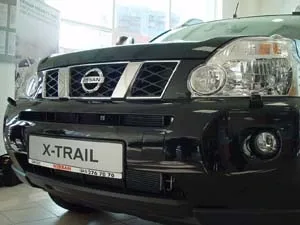
Nissan X-trail
Reliable companion
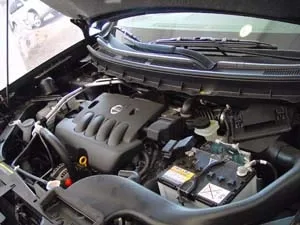
Powertrain — 2.5 L
Peak power — 169 hp/6000 rpm
Maximum torque — 233 Nm/4400 rpm
Top speed — 185 km/h
Transmission — CVT
Drive type — intelligent all-wheel drive
Fuel consumption:
city — 12 L/100 km
highway — 7.7 L/100 km
combined — 9.6 L/100 km
Exterior dimensions
body length — 4630 mm
width — 1785 mm
height — 1770 mm
Maximum weight — 2050 kg
Ground clearance — 20 mm
Wheels — 17x6.5J
Pages of the past
The history of Nissan Motor Co., Ltd. dates back to December 26, 1933, when the predecessor company Jidosha Seizo Co., Ltd. was founded, entrusted to Mr. Yoshisuke Aikawa. Already in 1934, the company's first plant, Nissan Yokohama Plant, opened its doors.
In the autumn of 1963, production of the second-generation Skyline began, and in November of the same year, the car went on sale in Japan. A little later, in February 1965, the Skyline 2000GT-B version saw the light, whose outstanding driving characteristics left even the most demanding drivers indifferent.
By 1966, a clear trend had emerged: more and more people had free time for trips in their own cars. Catching this trend, Nissan created and launched the compact Datsun Sunny 1000, which quickly became a hit during the mass motorization of Japan.
In 1969, the legendary "two-forty" — the 240Z model — rolled off the assembly line. With a slightly over two-liter engine (2.4 L, 150 hp) and Porsche-like manners, it cost more than twice as much as the German competitor. In the seventies, the 240Z was recognized as the best-selling sports car on the planet. And when the energy crisis broke out, the Sunny model led in fuel economy tests and gained enormous popularity in the States.
In 1973, the name Datsun, under which the company traded, was replaced by a single brand — Nissan.
In 1997, the company actively engaged in ecology and introduced a "hybrid electric vehicle" capable of running on both gasoline and electricity.
In 1999, Renault and Nissan signed a Global Alliance agreement, leading to the creation of the world's fourth-largest automotive group with an annual output of over 5 million cars and a workforce of 265,000 employees.
At the end of April 2004, Nissan announced a three-year business plan that came into effect in April 2005.
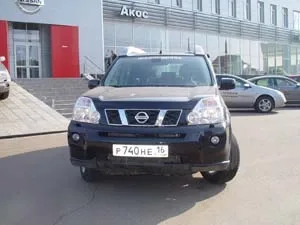
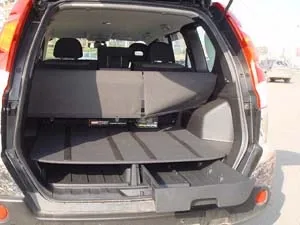
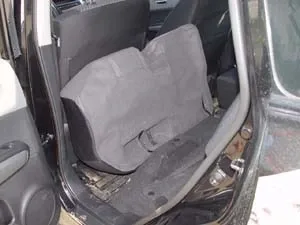
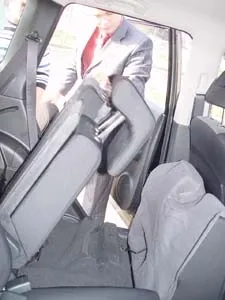
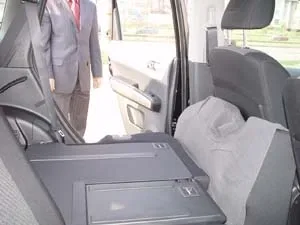
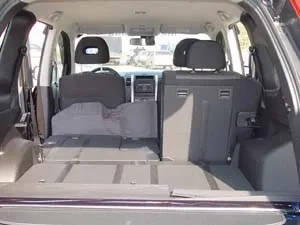
The new X-Trail has noticeably matured: the wheelbase has grown by 5 mm, and the overall length has increased by 175 mm. Thanks to this, the interior has become more spacious, passengers more comfortable, and the trunk has grown to 603 liters versus the previous 410.
Fully independent suspensions front and rear completely rid the X-Trail crew of the "pleasure" of shaking and vibrating on a broken road.
The intelligent All Mode all-wheel drive offers two operating modes. Up to 80 km/h in Auto mode, all the advantages of the all-wheel drive scheme are utilized. At higher speeds, the car switches to front-wheel drive, and the rear axle engages only when urgently needed. You can also forcibly disable all-wheel drive.
The DDS (Downhill Drive Support) and USS (Uphill Start Support) systems ease descents and ascents.

Ruslan Kasimov, commercial director of the Pegasus car dealership. Driving experience — 7 years.
We got a model with a 2.5 L engine, CVT, brisk acceleration, real off-road manners, and excellent handling.
At first glance, it might seem like a regular restyling, something tweaked, and that's it. But that's not the case at all — this is a COMPLETELY NEW car. Right after getting acquainted, the feelings were rather wary: the body, widened and lengthened, on "smallish" R17 wheels gave an impression of instability at speed and raised doubts about off-road capability, and together with the roof rails, the car looked bulky, like a "mule with a load."
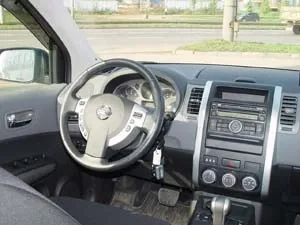
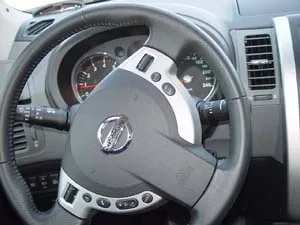
Opening the door, I doubted whether there were seals here: the sills were dirty, but dirt didn't get into the cabin. You can only get dirty on purpose. The instruments are logically arranged, there are many adjustments, but the temperature and fuel level scales are hard to read.
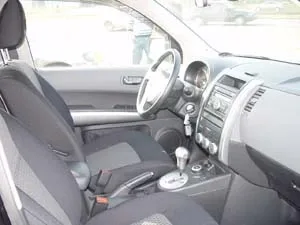
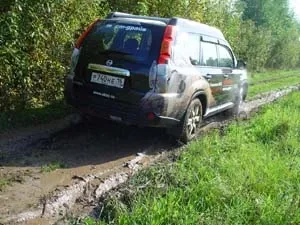
They are displayed on the central LCD screen, which clearly lacks a "magnifying glass." We inspected, felt — and off we go. Asphalt, a straight road, I press the gas — the CVT pleases with response, no delays when pressing, acceleration is just excellent. In my opinion, 2.5 L is the most successful displacement for cars of this class. We drove around the city a bit, caught a couple of decent potholes, crossed tram tracks — the suspension never let us down, no impacts to the body, and no "teeth-rattling" shaking. An excellent balance of smoothness and stability. Turning onto a dirt road, we check the main thing for this class — off-road capability. After all, it must differ from a regular family wagon. And here it is impeccable, but in moderation. Crossing a half-meter-deep puddle with an unknown bottom is no problem, the main thing is not to stop.
This is an excellent choice for family people with a country house or dacha who get out into nature once a week. Time is always short, and after two hours behind the wheel, there is a persistent desire for the test to last about two years of continuous operation.

Alfred Mardanov, editor of "Autoclub," experience — 12 years.
After the Honda CR-V, this is perhaps the most anticipated new product on the world and Russian markets. The change of generation of the X-Trail was already overdue, and a delay would mean losing in the fight against the Toyota RAV4, Honda CR-V, and Land Rover Freelander. But the Japanese know how to do everything thoroughly and almost on time. The new car is very similar to the previous one, and this is no accident. When creating the new image, the manufacturer surveyed a focus group assembled from owners of the previous X-Trail.
The company did not take risks and experiment, but bet on developing the already achieved success. If the previous X-Trail was like a school graduate in search of adventure, the current one is a matured, "upgraded" guy who has been through fire and water. Despite the external similarity, this is a completely different car — from the platform to the interior. Only the engine migrated from the old model, and even that with changed settings! The platform is an adapted development of Renault-Nissan alliance engineers, already tested on the Nissan Qashqai, Renault Megane, and Renault Scenic. The result in the X-Trail is fantastic. Although the dealership manager Artyom assures that the car is primarily tuned for handling, the word "comfort" is also familiar to it.
I won't argue: the car really obeys the steering wheel perfectly, doesn't roll in corners. It has a rigid body and smart electronics (ABS, EBD, ESP), but at the same time it is comfortable. During the entire test, I only managed to unsettle it once by driving one wheel through a decent pothole. Nothing terrible happened, only my test colleagues asked in surprise: "What was that?" The combination of a 2.5-liter gasoline engine and a CVT is a very successful pair. Acceleration to 100 km/h in 10.3 seconds is a good result.
The first thing that wins you over is the superbly tuned operation of the engine and CVT. Reactions are instantaneous, no delays. Even at idle around 1000 rpm, the car confidently pulls, and overtaking on the highway becomes an absolutely predictable and easy maneuver. I suspect that the two-liter modification will seem noticeably more modest against this background. Compared to the previous X-Trail, descent and ascent assistants have appeared. The hill-start assist system activates itself when the slope reaches 10 degrees and works even when reversing. But the descent assistant does not allow the car to accelerate faster than 7 km/h, so the driver only needs to set the direction. Another big plus is that the car has not lost its off-road genes, but on the contrary, has become even more capable. The current fashion for crossovers turns them into delicate "refined" vehicles accustomed to asphalt, warmth, and sewers, and they try not to venture into the real wilderness.
But this guy is not one of the timid ones — he will calmly turn off the asphalt. Artem brought us to a site where potential buyers are usually taken for test drives, and I was surprised that there was so much mud and ditches within the city limits. The off-road was serious, but the Nissan didn't even hint that it could get stuck. Nissan engineers clearly know how to make real SUVs, and in the new X-Trail this trait is clearly visible. The only nuance: in this slush, I suddenly lost the feel of the front wheels. The electric power steering, alas, suffers from a lack of feedback, and this time it let me down again — the wheels seemed to 'come loose.' I unexpectedly popped out of a deep rut and immediately fell back into it with shame, but that didn't stop us from getting through the difficult section.
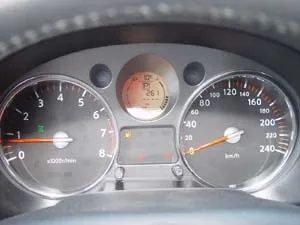
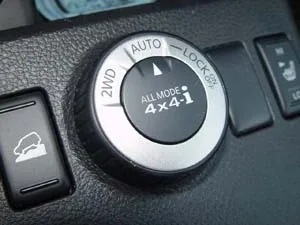
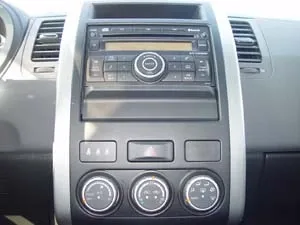
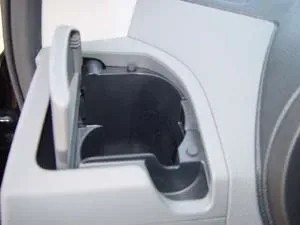
Inside, it has become more spacious and cozier. First, the instruments have finally returned from the center of the panel to their usual place in front of the driver. True, the temperature and fuel level readings on the onboard computer display are not perfectly readable. The seat pleases with developed lateral support and a wide range of adjustments. The climate control unit has moved here from the previous X-Trail, and it is easy to operate by touch without taking your eyes off the road. The cabin has a whole scattering of cup holders, and the front ones and the glove box are cooled by the air conditioner. The angular shapes leave no doubt that the car has no unisex tendencies. This is definitely a masculine character.
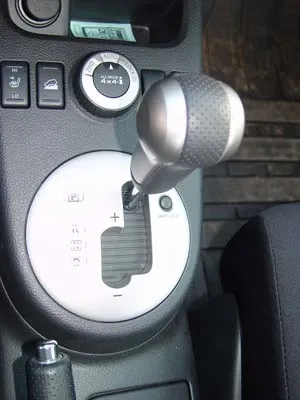
Maintenance cost:
Maintenance 1 - up to $136 (1,080 UAH)
Maintenance 2 - ~$203 (1,620 UAH)
Maintenance 3 - ~$136 (1,080 UAH)
Maintenance 4 - ~$203 (1,620 UAH)