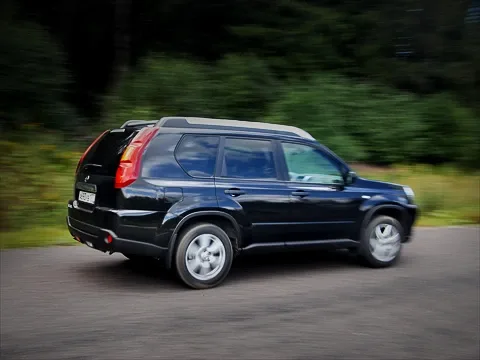
I didn't get to be present at the birth of the new Nissan X-Trail, but I suspect the process looked something like this. Surprisingly, the crossover that debuted in 2001 guessed buyers' desires so accurately that for many owners it became a real dream. "What else would you like, dear customers?" the marketers asked. "Nothing!" came the reply. "Well, that's great." And here I am with the second-generation X-Trail, which looks almost unchanged on the outside.
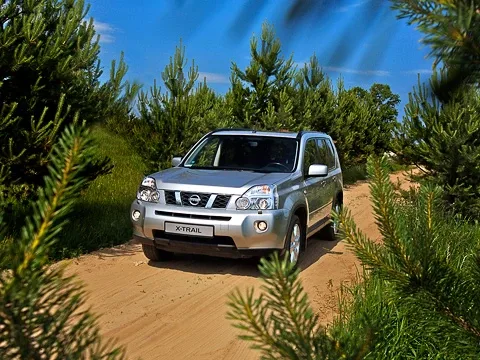
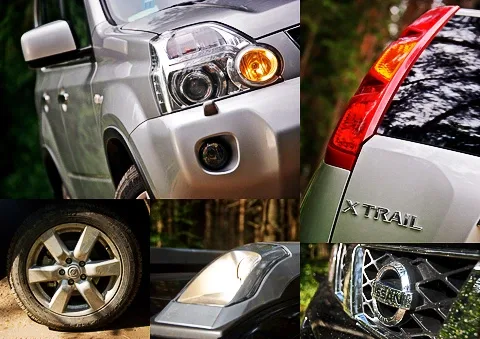
Distinctive features of the new X-Trail are intricate headlights and sculpted bumpers.
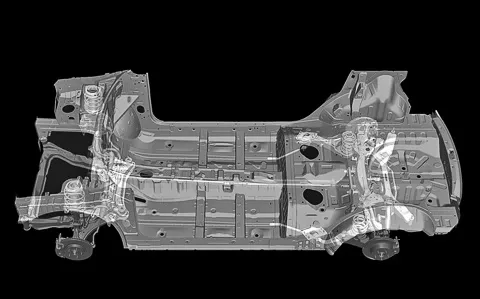
Although, of course, that's a bit of a fib. The X-Trail has plenty of changes. Even if the exterior looks more like a facelift than a generational change, that shouldn't be misleading. The new X-Trail is based on a completely different platform — the same as the Qashqai — and has moved far ahead of its predecessor in terms of technology. And still, I can't believe it. Am I really standing next to a new model?
All doubts dissipate as soon as you sit in the cabin. The relocation of the instrument panel to its usual place is, without a doubt, the main interior change. Finally, everything is done in a human-friendly way! By the way, previously Nissan's press releases extolled the virtues of the central instrument layout and claimed nothing could be more convenient. It seems they came up with something after all.
But the cabin of the new X-Trail pleased me not only because of the traditional instrument layout. In addition to the attractive design, there's thoughtful ergonomics and decent trim materials. True, the plastic on the dashboard and doors, though soft, looks quite variegated. But there are as many as 10 (!) cupholders, four of them cooled. The steering column adjusts in two directions, and the seats are comfortable with good lateral support. The huge sunroof has become even bigger — extended by 9 centimeters. And it still opens fully!
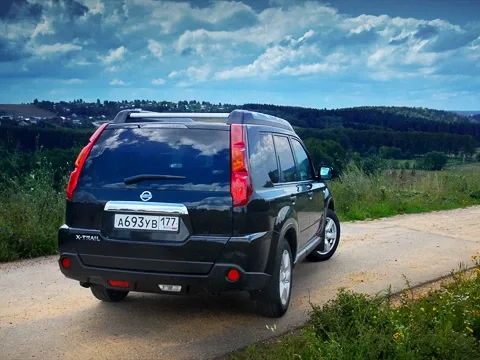
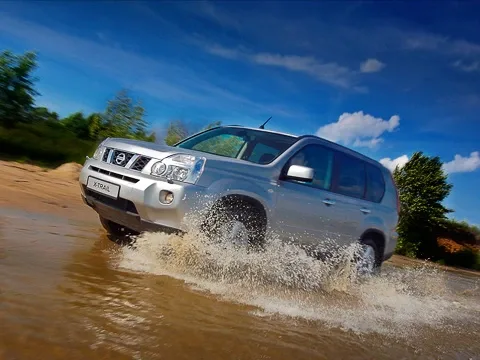
On a broken dirt road, the X-Trail feels very confident — passengers bounce around the cabin, but the suspension doesn't bottom out.
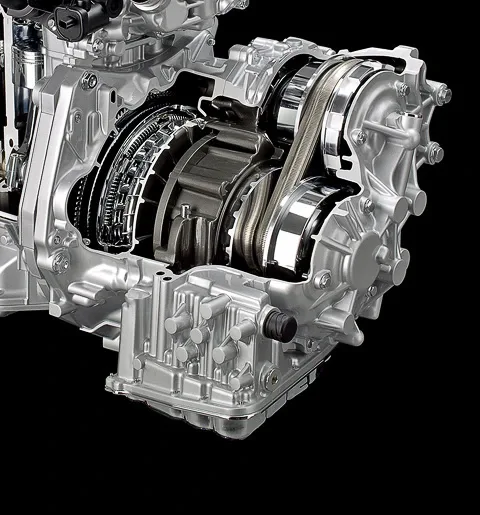
I got a version with a two-liter gasoline engine and a manual gearbox, although I'd bet that most X-Trails, as before, will be bought with "automatics." More precisely, with CVTs — they are installed on both the two-liter and 2.5-liter versions. The difference is that on the more powerful modification, the CVT has a manual mode with six "virtual" gears, while on weaker cars it doesn't.
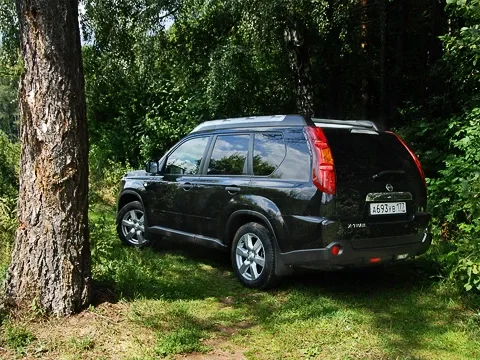
The new X-Trail has grown by almost 18 centimeters, with the lion's share going to the rear overhang.
The first kilometers through the city during rush hour gave me mixed feelings — both pleased and wary. Pleased because the X-Trail turned out to be very soft and comfortable. The steering wheel is light, the pedals are light, the suspension swallows bumps indiscriminately, and sound insulation is up to par. Seems great. But what will happen to all this on open roads? From experience, I know: a soft suspension usually makes a car wallow, and a light steering wheel makes it "empty"... I crossed the ring road without much enthusiasm.
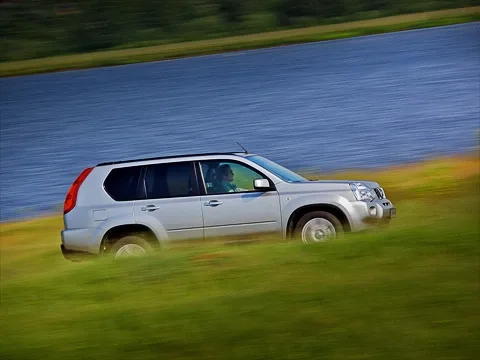
But my fears were unfounded. The X-Trail is certainly not a driver's car and is far from that proud title, but I wouldn't call it a "lumbering barge" either. Yes, on the highway the steering is a bit empty, but the car holds its line precisely. Yes, the suspension is soft and reactions to the steering wheel are delayed, but you don't feel uncertain in corners.
It got to the point where I even deviated from the route proposed by the organizers and went to drive along one of my favorite winding roads. And, you know, I don't regret it one bit. Body roll is quite moderate — thanks to the proprietary "dual-circuit" shock absorbers, as the Nissan folks call them. On straights they're quite soft, but in corners they stiffen up.
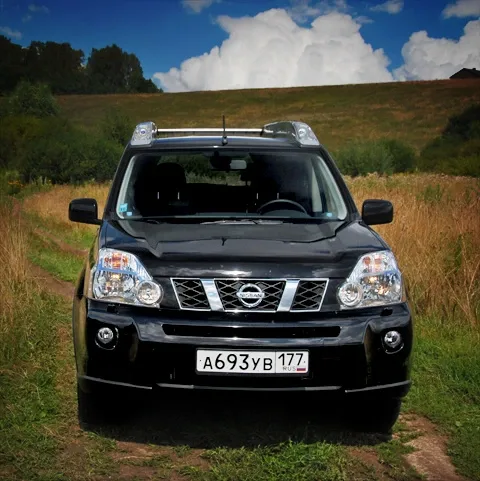
The additional lights in the roof rails only come on together with the high beams.
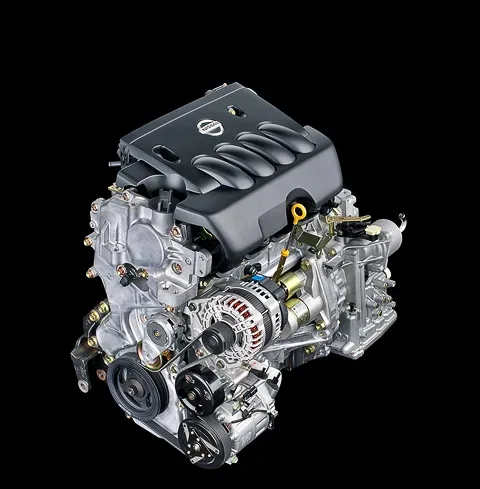
The two-liter engine whines unpleasantly and quite loudly, but it accelerates the car quite decently. The engines in the new X-Trail are essentially the same but refined. The two-liter unit now produces 141 horsepower and 196 Nm of torque, while its 2.5-liter counterpart produces 169 and 233 respectively. But diesels will no longer be available in Russia — if Nissan wasn't afraid to bring the previous generation's engine here, the new, much more technologically advanced one (and therefore more demanding on fuel quality) got the cold shoulder. However, only 5% of buyers chose the old X-Trail with the dci badge, so few will be upset.
During the trip, I never understood why "my" two-liter X-Trail needed a six-speed gearbox. With the engine's fairly wide operating range, five gears would have been enough, and as it is, you just shift more often. And although there are no complaints about the gearshift lever's precision, the X-Trail is not the kind of car where you enjoy the shifting process.
Apart from the noisy engine, comfort is top-notch. The suspension categorically refuses to notice minor and medium road defects, and when they become serious, it pleases with quite decent energy intensity. Sound insulation is good even at high speeds, and the seats with good support don't tire you on long journeys.
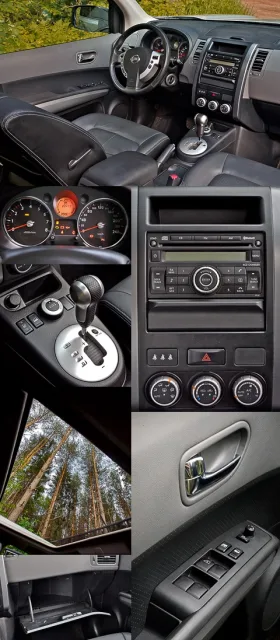
The interior trim has become much better quality, and the instruments have finally moved to their proper place. But there's no talk of luxury.
"The X-Trail is a true compact SUV with a spacious and practical cabin," says Pierre Loing, Vice President of Product Planning at Nissan Europe. We were only able to partially verify his words. The cabin — yes, it's quite spacious and roomy. True, with the huge glass sunroof above passengers' heads, there's not much room left, but by measurements, there's plenty to spare. The trunk is very good — with a double floor and sliding compartments for small items.
But we never managed to find any off-road terrain on the route. Although once or twice during "free time" we did find a place where we could test the car for diagonal wheel hanging. And what happened? The car moves slowly and hesitantly, but it does move. Considering that the All Mode 4×4-I transmission here is not at all off-road oriented.
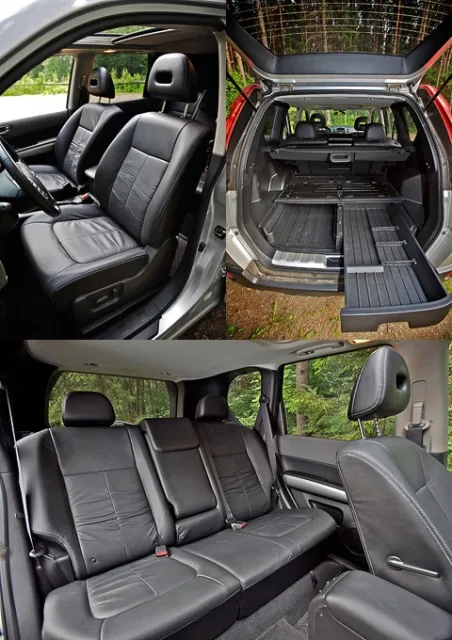
There's enough room for everyone, especially if the car doesn't have a sunroof. The front seats have a good profile and decent lateral support. And the trunk with sliding trays is simply superb.
By the way, the letter I in the name didn't appear by chance. The transmission itself is simple to the point of being basic — the rear axle is engaged by an electromagnetic clutch at the computer's command. There are three modes — 2WD, Auto, and Lock. It's not hard to guess how the car behaves in the first mode. In Auto mode, the lion's share of torque is sent to the front axle by default, with the rear engaging as needed. Lock mode distributes traction between front and rear equally, but only at speeds up to 40 km/h. This is, in principle, standard for crossovers. There are also hill-start and hill-descent assist systems. But the "smartness" of the transmission lies precisely in the electronic "filling." The X-Trail's stability control system works not only by selectively braking wheels but also by redistributing torque between them. Like the new Toyota RAV4, in general. By the way, how is that one doing?
Nissan is determined to beat the world's most popular crossover. At least in our market, which has already become the most important for them in Europe. And quite possibly, they will succeed — after all, the previous X-Trail was already the sales leader here, only losing the top spot at the end of its production life. And the new one has every chance to win it back — especially since it will be assembled in Russia. But the main thing is that those who liked the previous X-Trail (and there are many) will definitely not be disappointed by the new one. Because it's absolutely the same as the old one. Only better.
An all-road vehicle that replaces a model familiar to Russian buyers for many years is no easy task. The new car must not only retain loyal fans but also attract new ones. And, judging by everything, the engineers have succeeded. The car has become more modern in every respect, but at the same time has not lost its key qualities for which it was valued.
I'll say right away that I had a version with a two-liter engine and a CVT. This is perhaps the most popular option that most buyers will choose. And it is this one that best demonstrates the car's character in everyday life. There's not the same briskness as with the older 2.5-liter unit, but the displacement is smaller, which means the appetite is more modest. For the city, this reserve of traction is quite enough, and on the highway, overtaking requires some planning.
Exterior and interior
The design of the new body has become noticeably more interesting. The appearance can no longer be called plain — the car looks fresh and dynamic. The front end is especially successful, where the headlights and grille form an aggressive and memorable image. From the side, the car also doesn't seem boring: the stampings on the doors and the sloping roofline give the silhouette a sense of swiftness. At the rear, it's neat and concise, without excess.
The interior is perhaps the biggest step forward compared to its predecessor. The quality of materials has noticeably improved, and assembly is beyond reproach. The front panel is logically organized, although some buttons had to be searched for. But the comfortable driver's seat with a wide range of adjustments was a pleasant surprise — it's easy to find the right seating position. In the back, there's enough room for both legs and head, and the rear seat backrest adjusts for angle, adding comfort on long journeys.
On the move
On the road, the car shows a character that could rather be called "European." The suspension is firm and composed, but it doesn't shake on every bump. Small irregularities are swallowed almost imperceptibly, and on large joints and potholes, there's no harsh impact. The suspension's energy capacity is excellent — on a dirt road with deep ruts, the car goes confidently without bothering passengers with hard jolts. The electric power steering adjusts in three modes, but even in the "heaviest" one, feedback remains artificial. However, parking is easy — the wheel in light mode turns with literally one finger.
The CVT works intelligently, simulating gear shifts. It doesn't "howl" or hold revs in the red zone when you sharply press the gas, but smoothly and quickly picks up. In traffic jams, this behavior is ideal. It's just that on a long incline with overtaking, you have to press the pedal to the floor. However, for calm driving, the engine's capabilities are more than enough.
Off the asphalt
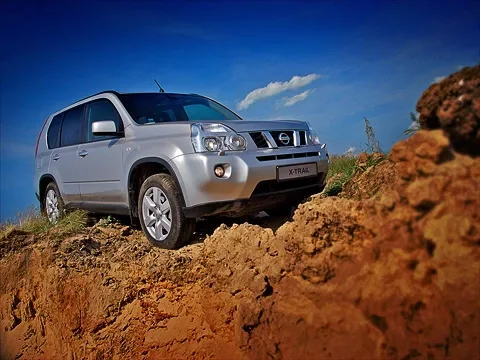
Ground clearance of 200 millimeters and short overhangs allow you to feel confident on country roads. The all-wheel drive system here is not permanent but on-demand — the rear wheels are engaged by an electromagnetic clutch when the front wheels slip. For light off-roading and snowy drifts, this is more than enough. There's also a hill descent assist — it brakes the car, allowing you to focus on steering. And the hill start assist button works so that the car is held firmly in place without rolling back.
The brakes are informative, with good effort and clear feedback. ABS and the stability control system work precisely, intervening without panic. In corners, body roll is moderate; the car holds its line predictably, although not without the roll typical of a tall body.
Bottom line
The car turned out to be very balanced. It's equally well suited for the city, trips to the countryside, and long journeys. Its main trump cards are the comfortable suspension, spacious interior, and thoughtful ergonomics. The drawbacks include perhaps the not-so-responsive CVT paired with the two-liter engine on the highway during overtaking, and the artificial steering effort. However, for the target audience, these flaws are unlikely to be decisive.
Prices for the car start at 872,984 rubles for the version with a manual gearbox and a two-liter engine in the base trim. For the top version with a 2.5-liter engine, leather interior, and xenon, they ask 1,069,484 rubles. That's a lot, but for this money, the buyer gets a truly versatile car that is not ashamed to put in the garage or in the office parking lot.
Specifications
Behind the scenes
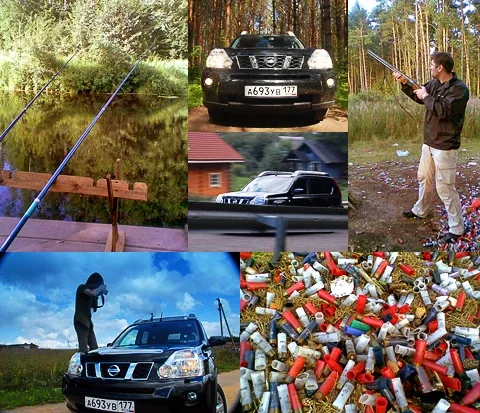
The introduction to the new X-Trail was held in Moscow and the Tver region. We were brought to the latter not only to test the local roads — which, by the way, are in terrible condition — but also to have a good rest. At our disposal were the Volga River, jet skis, a boat, and other water equipment. While some colleagues donned wetsuits and went to conquer the river, I and the others decided to go fishing and shoot at clay pigeons. The catch, though, was so-so: all the fish were scared away. But we did handle the alien invasion, using up five boxes of 12-gauge shells.