
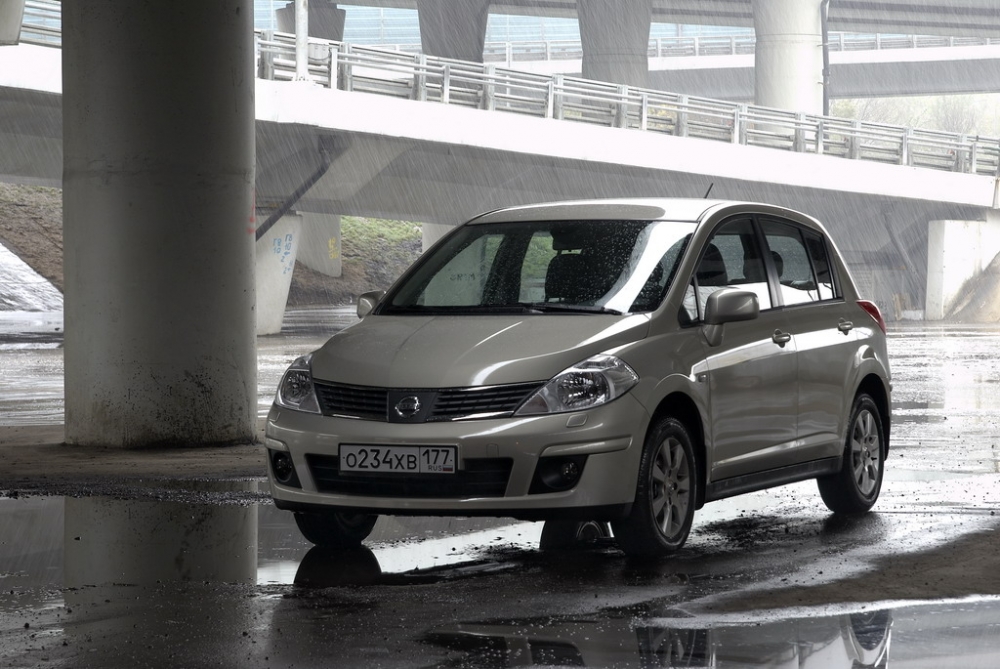
 It's hard to call the Nissan Tiida a fresh model – its production started back in 2003 at three plants in Mexico, China, and Japan, and it's based on the common platform of the Renault–Nissan alliance. The Micra, Note, and also the Renault Clio and Modus are built on the same "cart." Cars for our market will be brought from the American continent. A long-produced model has an obvious plus: all "childhood diseases" have already been cured, the design has been refined. But on the other hand, it's a bit disappointing that we get, so to speak, a secondary product. Although most buyers don't care about this history. And externally, the Tiida looks quite modern. It's hard to call the Nissan Tiida a fresh model – its production started back in 2003 at three plants in Mexico, China, and Japan, and it's based on the common platform of the Renault–Nissan alliance. The Micra, Note, and also the Renault Clio and Modus are built on the same "cart." Cars for our market will be brought from the American continent. A long-produced model has an obvious plus: all "childhood diseases" have already been cured, the design has been refined. But on the other hand, it's a bit disappointing that we get, so to speak, a secondary product. Although most buyers don't care about this history. And externally, the Tiida looks quite modern. |
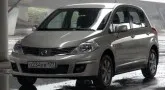
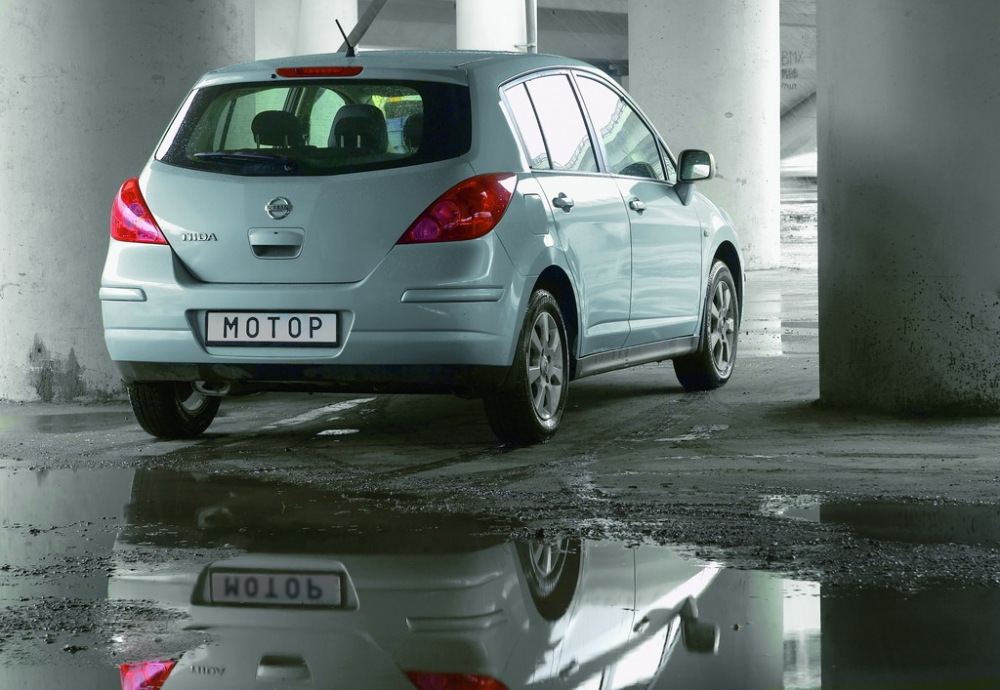 By the way, Nissan has high hopes for the new model for the Russian market: this year they plan to deliver 9,000 Tiidas, and next year – all 20,000. Where does such optimism come from? Is it really just about the consumer boom? To find out, we took for a test a very popular option in Russia – a hatchback with a 1.6 L engine and an automatic transmission. "And it's good that it's a hatchback," I thought, walking around the parking lot among Nissans of various modifications, including Tiida sedans. From the front, both versions are absolutely identical, but the rear... The awkward trunk definitely doesn't adorn the sedan. Yes, it's almost twice as large as the hatch's (467 L vs. 272 L). Yes, sedans are held in high regard here. But in such a body, the car looks clumsy. The hatch is much more pleasing to the eye. By the way, Nissan has high hopes for the new model for the Russian market: this year they plan to deliver 9,000 Tiidas, and next year – all 20,000. Where does such optimism come from? Is it really just about the consumer boom? To find out, we took for a test a very popular option in Russia – a hatchback with a 1.6 L engine and an automatic transmission. "And it's good that it's a hatchback," I thought, walking around the parking lot among Nissans of various modifications, including Tiida sedans. From the front, both versions are absolutely identical, but the rear... The awkward trunk definitely doesn't adorn the sedan. Yes, it's almost twice as large as the hatch's (467 L vs. 272 L). Yes, sedans are held in high regard here. But in such a body, the car looks clumsy. The hatch is much more pleasing to the eye. |
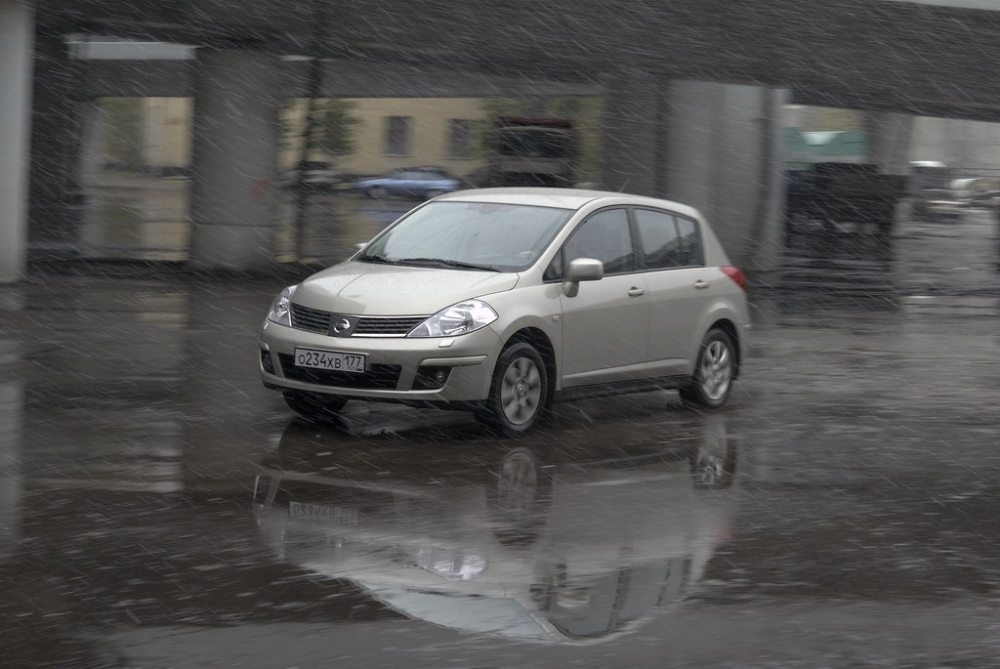 In silhouette and proportions, the Tiida echoes the Renault Megane. The rear reminds of the Peugeot 307. But the signature radiator grille leaves no doubt – this is a Nissan. In terms of dimensions, both external and internal, the car seemed to me similar to the Nissan Note. I checked the technical passport – indeed, the sizes are almost identical. And the prices are about the same. Why then bring two such similar cars to the market? Who do Nissan's marketers see as Tiida buyers? They say – "successful young people who prefer an active lifestyle." Approximately the same was said about the Note. And, by the way, about the Qashqai, whose most affordable front-wheel-drive version costs as much as a well-equipped Tiida. The situation is somewhat confusing. In silhouette and proportions, the Tiida echoes the Renault Megane. The rear reminds of the Peugeot 307. But the signature radiator grille leaves no doubt – this is a Nissan. In terms of dimensions, both external and internal, the car seemed to me similar to the Nissan Note. I checked the technical passport – indeed, the sizes are almost identical. And the prices are about the same. Why then bring two such similar cars to the market? Who do Nissan's marketers see as Tiida buyers? They say – "successful young people who prefer an active lifestyle." Approximately the same was said about the Note. And, by the way, about the Qashqai, whose most affordable front-wheel-drive version costs as much as a well-equipped Tiida. The situation is somewhat confusing. |
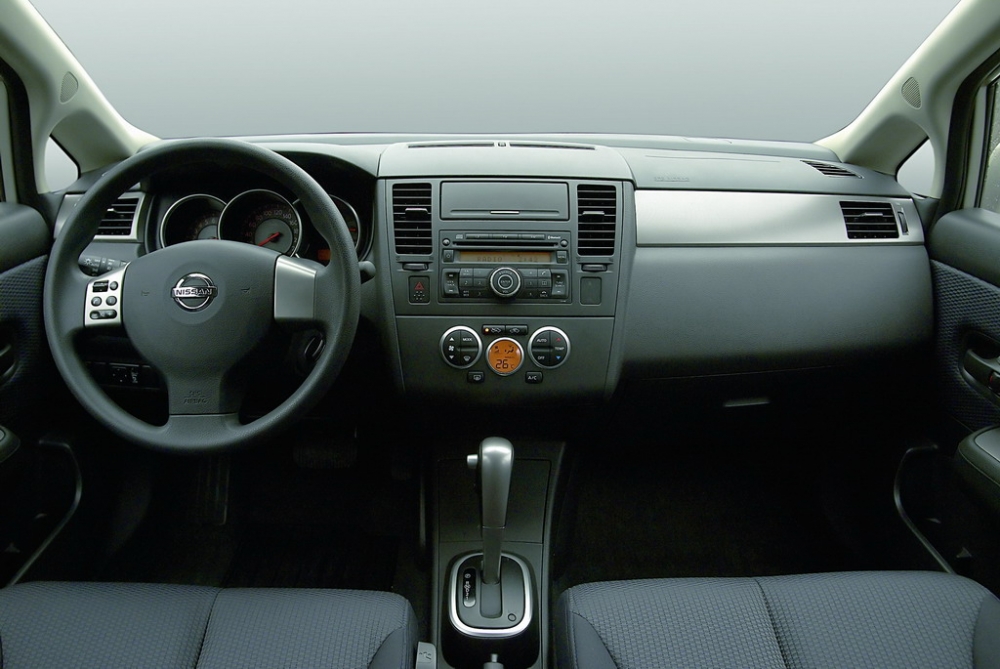 The first thing that catches the eye is the chip key. To open the door or start the engine, you don't need to take the key out of your pocket. For cars of this class, this is still a rarity. I sit in the seat and immediately note the advantages of the "minivan-like" layout with a high roof. The interior is spacious, bright (large glazing area), and there's a huge amount of air above your head. But the fabric front seats disappointed. Too soft, shapeless, and lateral support is completely absent. Over a couple of days, I drove about 700 km in the Tiida, and my body constantly ached from fatigue and discomfort. And the adjustment levers are located near the central tunnel – unusual. The first thing that catches the eye is the chip key. To open the door or start the engine, you don't need to take the key out of your pocket. For cars of this class, this is still a rarity. I sit in the seat and immediately note the advantages of the "minivan-like" layout with a high roof. The interior is spacious, bright (large glazing area), and there's a huge amount of air above your head. But the fabric front seats disappointed. Too soft, shapeless, and lateral support is completely absent. Over a couple of days, I drove about 700 km in the Tiida, and my body constantly ached from fatigue and discomfort. And the adjustment levers are located near the central tunnel – unusual. |
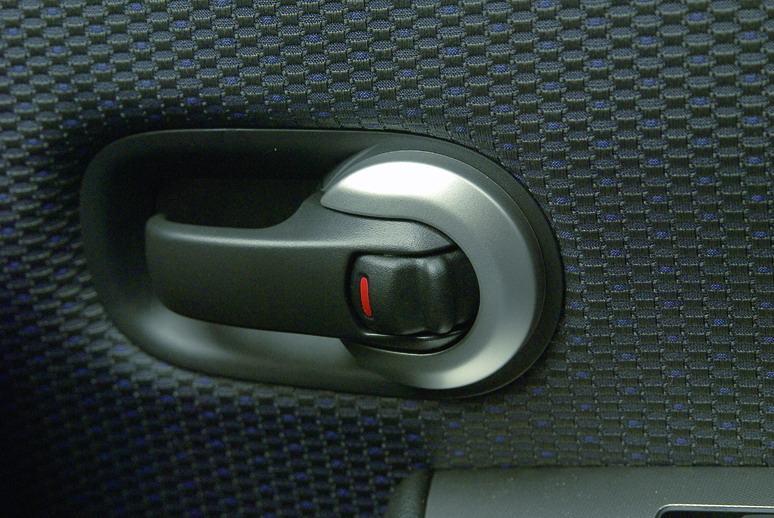
 There, in the center, right under the folding armrest box, the seat heating buttons are hidden. Reaching them is extremely difficult; you have to get distracted from the road. But in the back, oddly enough, the seats are firmer and more comfortable. Plus, there's a lot of space there. The cushion moves longitudinally (by as much as 240 mm), and you can change the backrest angle. Even a person up to 190 cm tall will fit without problems. The quality of interior trim materials is very decent. The armrests on the doors are soft and upholstered in leather. The three-spoke multifunction steering wheel, familiar from other Nissan models, is also wrapped in it. There, in the center, right under the folding armrest box, the seat heating buttons are hidden. Reaching them is extremely difficult; you have to get distracted from the road. But in the back, oddly enough, the seats are firmer and more comfortable. Plus, there's a lot of space there. The cushion moves longitudinally (by as much as 240 mm), and you can change the backrest angle. Even a person up to 190 cm tall will fit without problems. The quality of interior trim materials is very decent. The armrests on the doors are soft and upholstered in leather. The three-spoke multifunction steering wheel, familiar from other Nissan models, is also wrapped in it. |
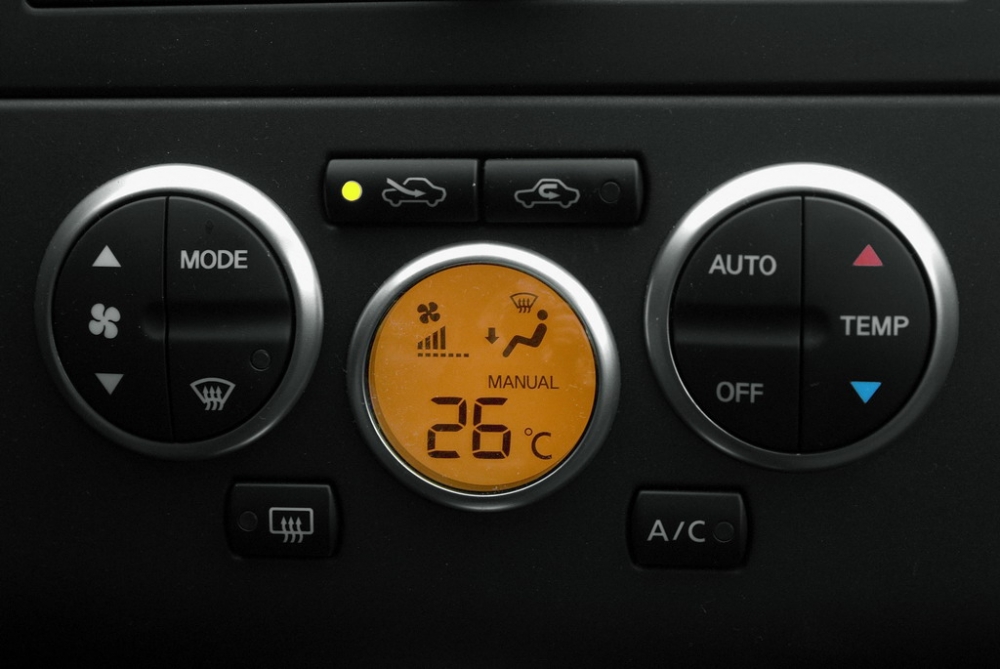
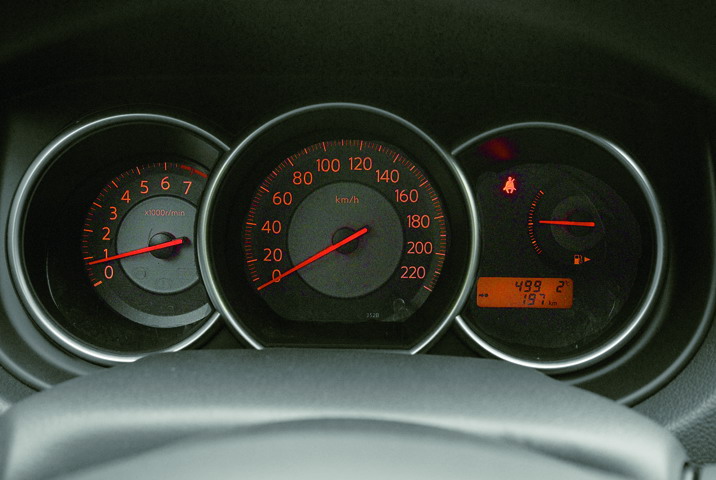 The instruments in three "wells" with red backlighting are perfectly readable, as are the readings of the onboard computer. At the top of the central panel is a 2-DIN stereo with decent sound. Below is the climate control unit with a round screen that constantly glares from light coming through the rear door. If you don't nitpick, the Tiida's interior can be called very solid, spacious, and quite ergonomic, except for the mentioned front seats. Well, how does the Nissan drive? I didn't expect miracles from the 110-horsepower 1.6-liter engine and 4-speed automatic transmission. The instruments in three "wells" with red backlighting are perfectly readable, as are the readings of the onboard computer. At the top of the central panel is a 2-DIN stereo with decent sound. Below is the climate control unit with a round screen that constantly glares from light coming through the rear door. If you don't nitpick, the Tiida's interior can be called very solid, spacious, and quite ergonomic, except for the mentioned front seats. Well, how does the Nissan drive? I didn't expect miracles from the 110-horsepower 1.6-liter engine and 4-speed automatic transmission. |
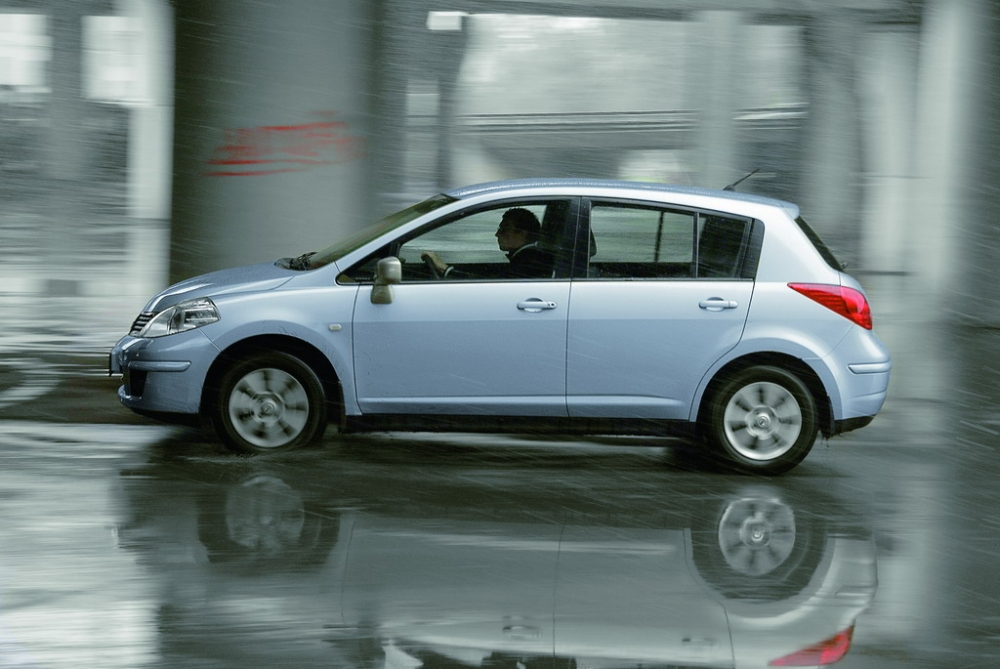 And they didn't happen. The Tiida accelerates calmly, without excitement. The little engine hums inexpressively, the "automatic" leisurely shifts gears. The car's load greatly affects dynamics. Flooring the gas is a thankless task. The acceleration doesn't match either the engine's roar or the noticeable kick of the gearbox shifting down. It's better to drive smoothly, calculating the situation in advance. And then the Nissan will please. Because the suspension is well-tuned. Quite firm, but at the same time comfortable. It doesn't annoy passengers with shaking or noise. And the brakes are excellent – clear and grippy. And they didn't happen. The Tiida accelerates calmly, without excitement. The little engine hums inexpressively, the "automatic" leisurely shifts gears. The car's load greatly affects dynamics. Flooring the gas is a thankless task. The acceleration doesn't match either the engine's roar or the noticeable kick of the gearbox shifting down. It's better to drive smoothly, calculating the situation in advance. And then the Nissan will please. Because the suspension is well-tuned. Quite firm, but at the same time comfortable. It doesn't annoy passengers with shaking or noise. And the brakes are excellent – clear and grippy. |
 The impression of the car is spoiled by the empty steering wheel. When changing lanes, especially at speed, there's a feeling of play in the steering mechanism. In corners, you have to feel for the trajectory; the steering wheel gives no information at all. Nevertheless, once turned, the Tiida demonstrates tenacity and holds the arc to the last, going into understeer at the limit. Safe suspension settings. Moreover, even in the base, the Tiida has ABS, Brake Assist, and EBD (Electronic Brake Distribution) systems. Another plus for such an inexpensive car. And for an extra charge, a stability control system is also offered. But even without it, on the days when the first snow hit Moscow, I didn't feel any tension behind the wheel. The Nissan overcame treacherous snowy roads with honor even on summer tires, showing surprising confidence for a small car. Many who need a car precisely as a "means of transportation" will like the Tiida. Calm, reliable, comfortable, and very spacious. I don't know if these "many" will be enough for the Tiida to become a bestseller. Probably, it will still be enough. The consumption boom, say economists and marketers... The impression of the car is spoiled by the empty steering wheel. When changing lanes, especially at speed, there's a feeling of play in the steering mechanism. In corners, you have to feel for the trajectory; the steering wheel gives no information at all. Nevertheless, once turned, the Tiida demonstrates tenacity and holds the arc to the last, going into understeer at the limit. Safe suspension settings. Moreover, even in the base, the Tiida has ABS, Brake Assist, and EBD (Electronic Brake Distribution) systems. Another plus for such an inexpensive car. And for an extra charge, a stability control system is also offered. But even without it, on the days when the first snow hit Moscow, I didn't feel any tension behind the wheel. The Nissan overcame treacherous snowy roads with honor even on summer tires, showing surprising confidence for a small car. Many who need a car precisely as a "means of transportation" will like the Tiida. Calm, reliable, comfortable, and very spacious. I don't know if these "many" will be enough for the Tiida to become a bestseller. Probably, it will still be enough. The consumption boom, say economists and marketers... |
 PRICES AND TRIM LEVELS PRICES AND TRIM LEVELSIn Russia, the Nissan Tiida is available in hatchback and sedan bodies. Engines – 1.6 L (110 hp) and 1.8 L (126 hp). Trim levels – Comfort, Elegance, and Tekna. Comfort (from $16,872 (134,973 UAH)) is available only with the 1.6 L engine, 5-speed manual or 4-speed automatic. Base includes: ABS, fabric interior, audio system with CD and 4 speakers, power-adjustable and heated exterior mirrors, steel R15 wheels. For Elegance, a 1.8-liter engine is offered, which is paired only with a 6-speed manual. The trim is supplemented with a chip key, climate control, onboard computer, rain and light sensors, front and rear armrests, fog lights, folding mirrors, and alloy R15 wheels. Tekna (from $20,112 (160,893 UAH)): the 1.6 L engine is available only with the "automatic," and the 1.8-liter only with the 6-speed "manual." Here, the interior, steering wheel, and gearshift knob are upholstered in leather, and a 6-disc CD changer appears. The most expensive Tiida hatchback with the 1.6 L engine and "automatic" in Tekna trim costs $20,571 (164,565 UAH). |
Child of the boom
Compact cars of any brand sell like hot cakes in our country. A consumption boom – that's what economists and marketers say. At Nissan, they are well aware of this, so they expanded their model lineup with a model that has already been sold worldwide for more than three years.
Test drive photos
Comments
No comments yet. Say the first word.