
Polish speech sounds strange to our ear: full of hissing and ringing sounds. But reading newspapers is as easy as pie: rosyja, nafta, energetyczna niezaleznosc… In mid-May in Poland, they only
talked about our country: an energy forum with a palpable anti-Russian undertone was held in Krakow. But just a week later, Russia was mentioned here with different words and for a different reason: our market should become the main one in Europe for the new Nissan Tiida hatchbacks and sedans, the presentation of which was arranged in Krakow.
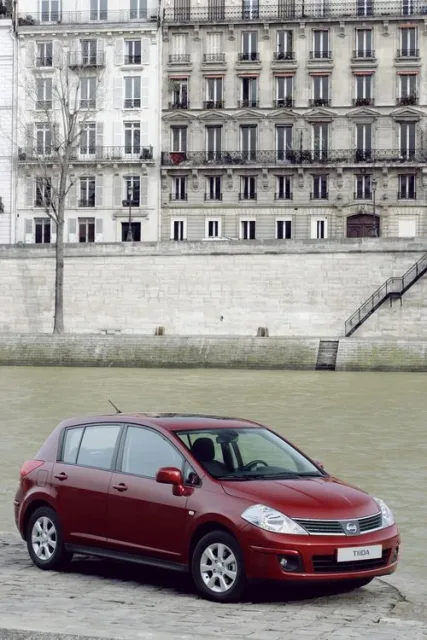
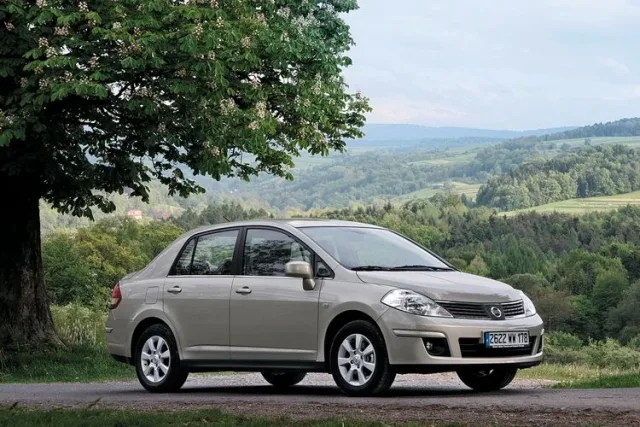
"The young was not young"... The new Tiida is not new: this model first appeared in Japan in the fall of 2004, replacing the Nissan Sunny. It is based on a modified B platform of the Renault-Nissan alliance with a wheelbase stretched to 2600 mm, like the Nissan Note compact van. Moreover, the Note and Tiida are unified by 25%. However, despite the class B platform, the Nissan people themselves classify the Tiida in the more expensive golf class segment. Due to what? The arguments are the large wheelbase and dimensions. The four-door Tiida falls exactly between the main competitors: it is 16 mm longer than the Honda Civic sedan and 66 mm shorter than the Toyota Corolla. It is even slightly taller than them. And what is the Tiida like "in real life"?
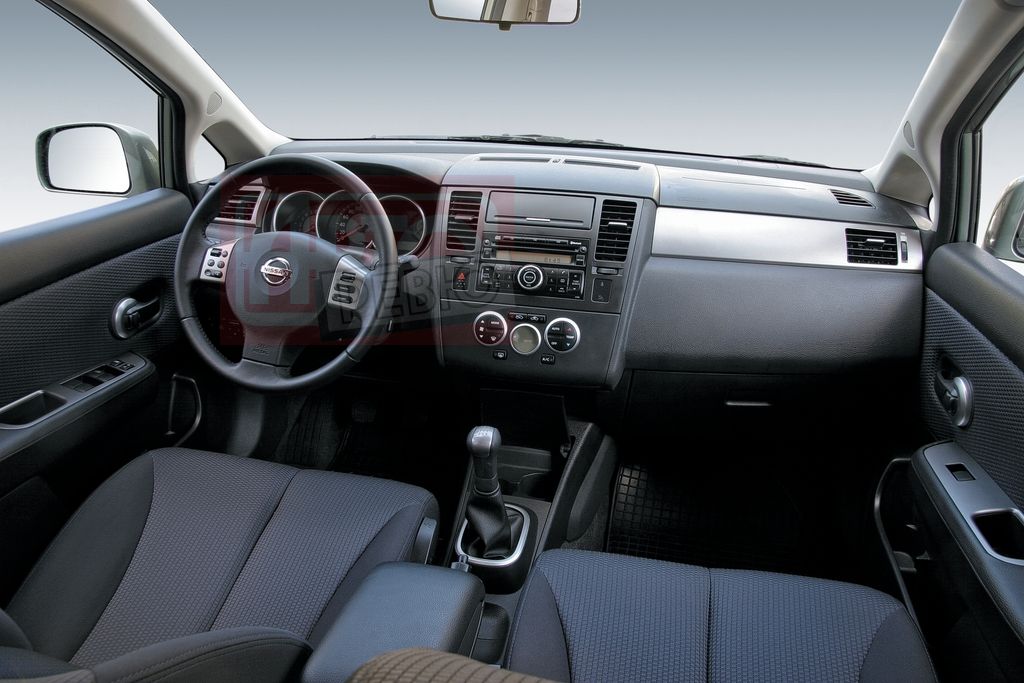 |  |
| Massive front panel, strict shapes: inside the Tiida looks restrained and solid. The only frivolous detail is the convex round knobs of the climate control from the Nissan Micra and Note hatchbacks |
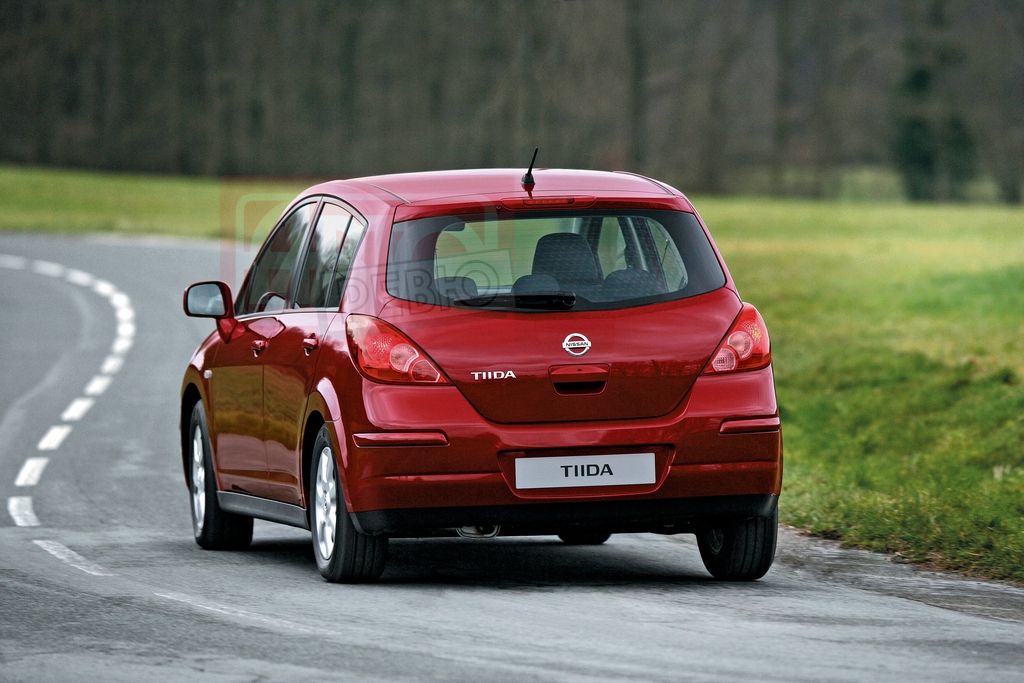
The ancient Wawel Castle, churches, the leisurely flow of the Vistula... Krakow residents call their city, founded more than a thousand years ago by Prince Krak, urod, which in Polish means "handsome". You can't say that about the Tiida either in Russian or Polish: large slanting headlights, a somewhat awkward tall silhouette, weak side panels. Thanks to the sharp-angled rear lights, the hatchback looks livelier, but overall it's a very average appearance.
Although you could say it differently: an international appearance. After all, the Tiida sells successfully all over the world: in Japan, America (under the name Versa), Australia... And now in Europe too.
On the outside, the European Tiida differs with its "own" radiator grille and a new front bumper that meets "pedestrian" safety requirements. There are also few changes in the technical part: the "American" Tiida was taken as a basis, but new characteristics of springs, shock absorbers, and stabilizers were selected taking into account the driving style of Europeans. Adaptation work began two and a half years ago at the English engineering center in Cranfield, the German division handled ride refinement, and another center in Barcelona prepared a 30-million program to modernize the Mexican plant in Civac, where the Tiida for Europe will be assembled. Yes, yes, delivering cars of Mexican assembly across the Atlantic is easier than bringing cars from any of Nissan's plants in China, Japan, or Thailand! And producing cars at the English plant in Swindon is unprofitable: the volumes of European sales are too small.
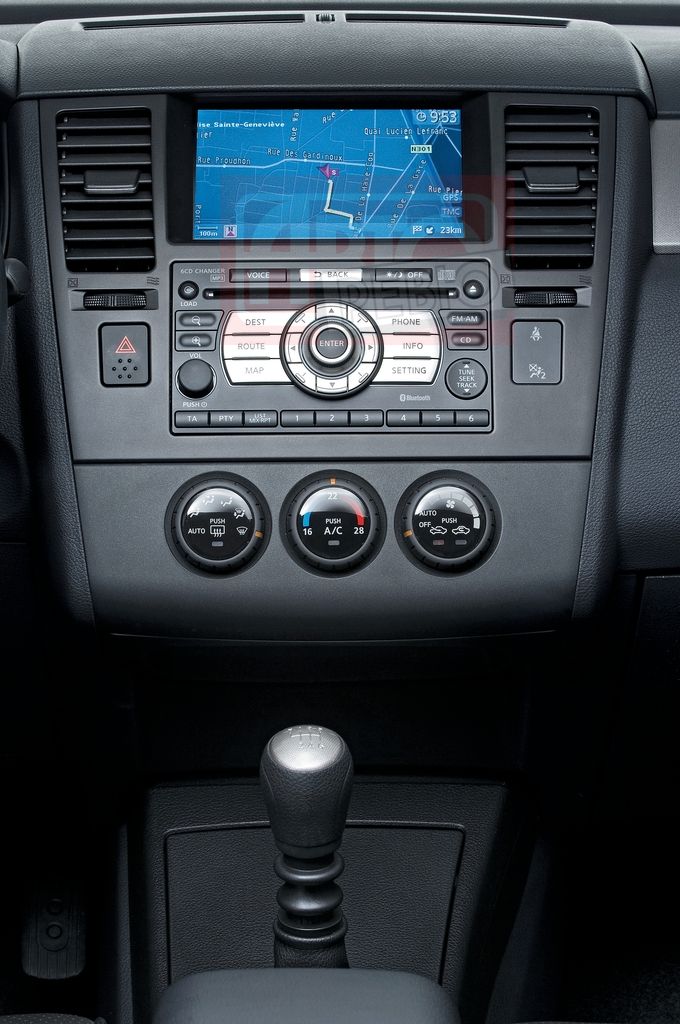 | 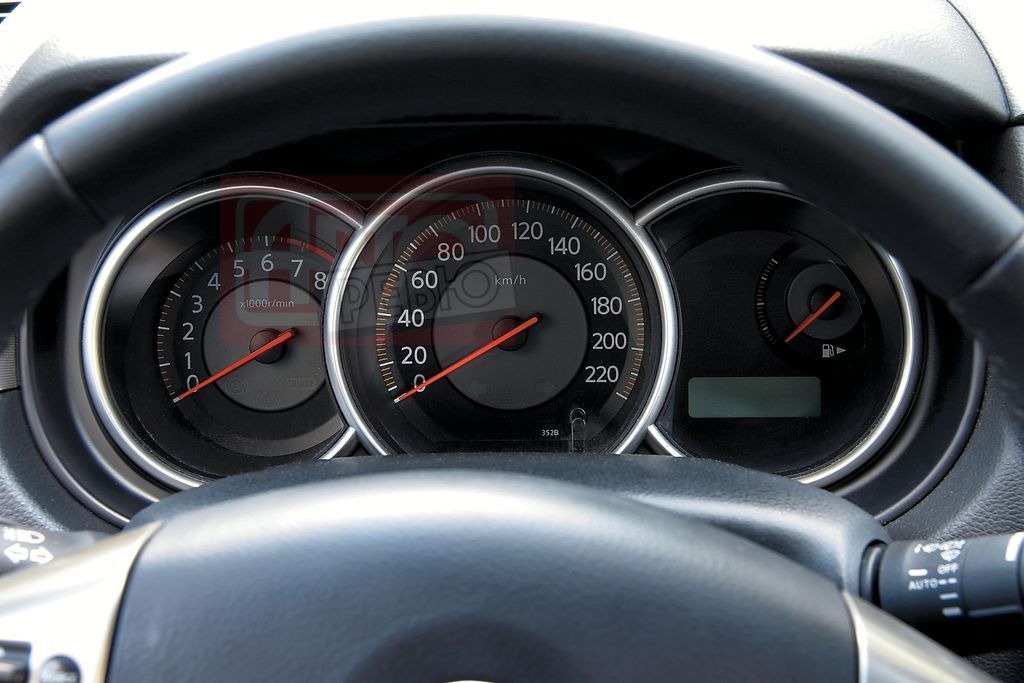 | 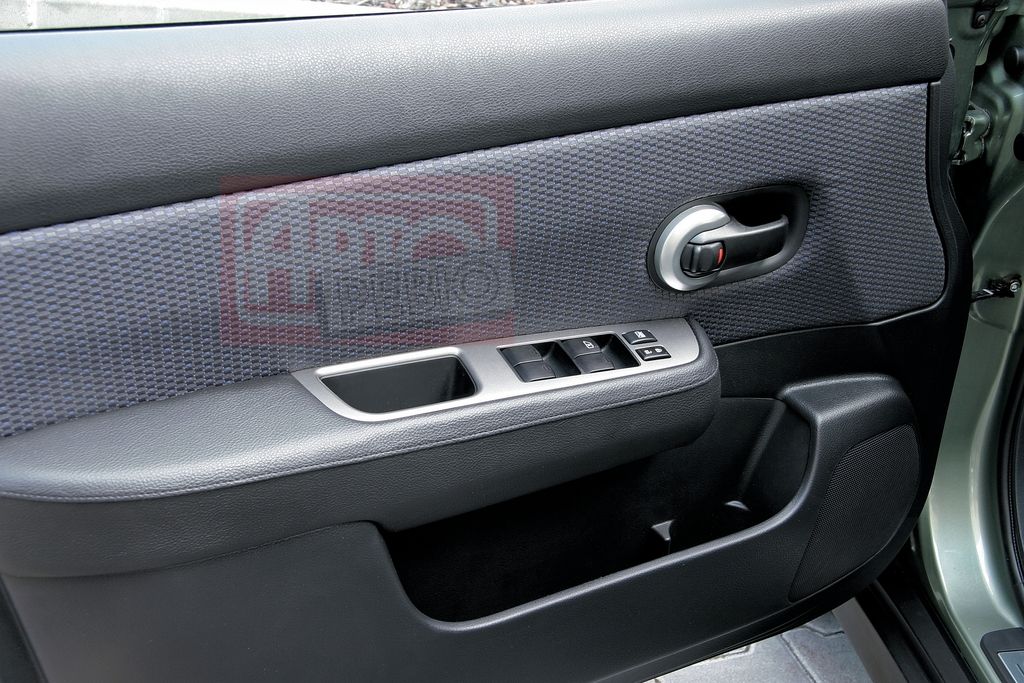 |
| In the most expensive version — a navigation system with a color screen, a six-disc CD changer, and climate control with "serious" knobs | Speedometer, tachometer, fuel level indicator. You can switch the trip computer modes using a convenient button on the steering wheel | Soft upholstery, a spacious pocket, and electric windows for all windows — "in the base" |
A door that opens almost 900 degrees gives access to a light-beige interior. The optimistic color cannot hide the texture of the hard plastic of the front panel — soft inserts are only on the armrest and doors. The black interior of the Tiida, by the way, looks much better. There are no designer frills here, but there is a healthy bourgeois solidity: a massive central console, a branded steering wheel. And also very wide front seats — a comfortable receptacle for extra kilograms. For the sake of additional centimeters of comfort, the designers resorted to a trick: the handles of the mechanical adjustments are not on the outer but on the inner side of the seats. This does not affect ease of use, but now a large gap between the cushion and the door is not needed. True, I — thin and tall — dangle in such a seat. And I also suffer from the lack of longitudinal adjustment of the steering wheel.
In fact, the Tiida is a car for rear passengers. They have at their disposal an armrest with two cup holders, and a backrest adjustable for incline. And the sofa itself slides forward and backward by 240 mm. In the extreme rear position, the space is truly royal, like in the Note compact van. Just imagine: in terms of cabin length, that is, the distance from the pedals to the back of the rear sofa, the Tiida is as much as 55 mm ahead of the Volkswagen Passat!
At the same time, the trunk volume of the sedan is 467 liters. True, the hatchback's luggage compartment is more modest — 272 liters. By the way, the Note one-box has almost the same: 280 liters.
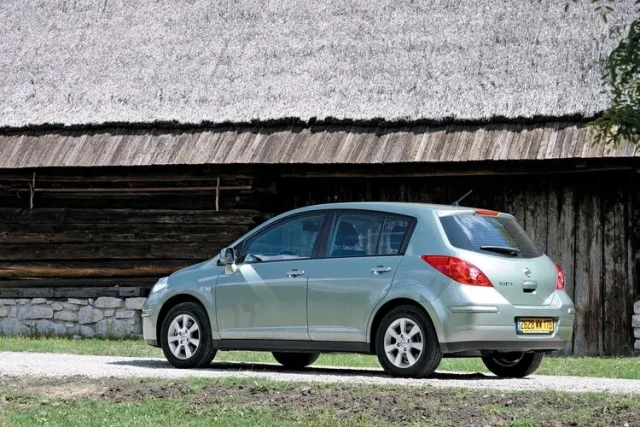
The Tiida is equipped richer than the Note. European cars already "in the base" have a stylish radio with Bluetooth protocol, a full electric package, and a multifunction steering wheel. For an additional charge, you can install climate control and a navigation system with a large color screen. However, configurations for the Russian market will become known closer to September.
Engines — gasoline with a volume of 1.6 liters (110 hp) and 1.8 liters (126 hp) plus a 1.5-liter 105-horsepower diesel, which will not reach Russia. The 1.8 engine is equipped only with a six-speed "manual", and the more modest gasoline Tiida, in addition to the five-speed manual gearbox, also has a four-speed "automatic". I happened to have the key fob of just such a car.
The key fob — in the pocket: the smart Intelligent Key system does not need a key. When turning the ignition key, the engine responds... with silence! That the motor is running can only be judged by the revived tachometer needle: there is almost no sound or vibration at idle. The European Tiida, unlike American cars, has different engine mounts and additional sheets of sound insulation under the hood, on the bottom, on the wheel arches... Alas, this is not enough. I started moving, pressed the gas — and a strained voice of the motor begins to break through from under the hood, and a small unpleasant itch spreads across the floor.
The acceleration of the "automatic" car with a 110-horsepower engine turned out to be boring. The Nissan people assure that the engine and "automatic" settings here are exactly the same as the Note's, but the Tiida is perceived differently. Is it really all about the extra hundred kilograms? The Tiida with the same engine and "manual" turned out to be a completely different car. The gearbox lever, although long-throw, has good shift clarity: first, second, third... And the engine is peppy! It wakes up after 3000 rpm and "revs" well at high speeds. So if you "pedal" without sparing your own eardrums, there will be no problems in traffic.
But there is a simpler way: the Tiida with the 1.8 engine. This motor allows you to do all the same things with half the effort. It is both quieter and more tractive. You can be brisk, or you can roll leisurely in sixth gear, which "pulls" already from 60 km/h. The optimal engine for the Tiida.
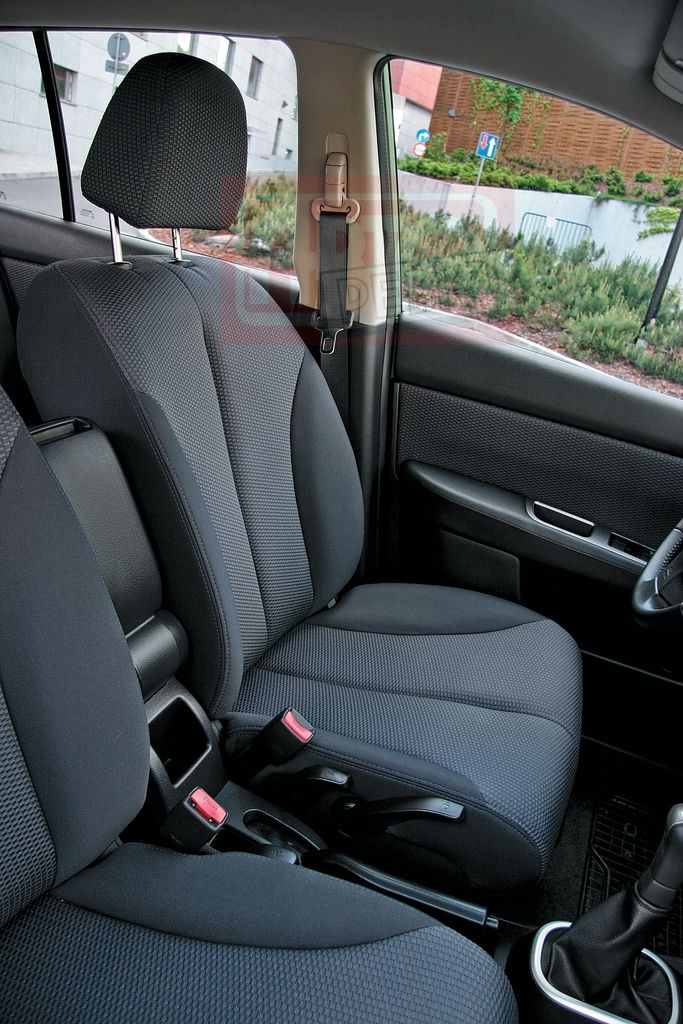 | 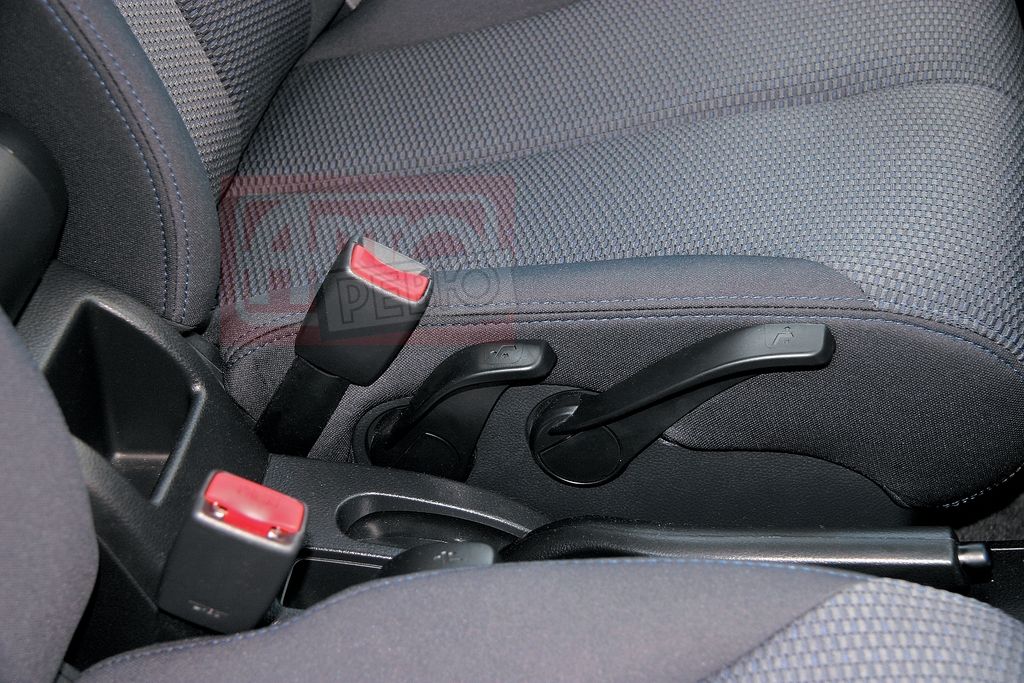 |
| The seats are wide — almost like in the Nissan Murano crossover | The Tiida is the first and so far only Nissan with a central location of the seat adjustment levers |
No complaints about the brakes: the pedal is "dense" and allows you to dose deceleration almost with one effort. ABS works perfectly, and most importantly, it is included in the standard equipment of all versions. The stability control system is also available, but for an additional charge.
The handling did not present any surprises: the Tiida is a typical middle-of-the-road car. Both the sedan and the hatchback stand reliably on the high-speed straight, willingly perform lane changes. But as soon as the paid Polish "motorway" turns into a winding road of the Tatra foothills, nervousness arises: there is not enough reactive effort on the steering wheel for a reliable connection with the car. In a turn, the Tiida noticeably rolls and twitches its "rear" on bumps. You constantly have to correct the steering.
But the smoothness of the ride makes up for everything!
Polish place names like Zebrzydovice, Krzywaczka or Holerna Polana can confuse anyone, but local roads are even more unpredictable: the asphalt here is laid just as imperfectly as at home. Nevertheless, the Tiida smooths out the most serious potholes without much effort, neatly rolls over "heaved" sections of the surface, and seems not to feel cracks and patches at all. The only remark is noticeable pitching on long, gentle bumps.
Impressive space in the cabin, excellent ride comfort and generous equipment are obvious advantages of this model, which are always highly valued in Russia. The catch is that Nissan already has a car with exactly the same set of qualities — the Note, which enjoys steady demand. And there is also the Qashqai.
So who is the Tiida intended for?
It is a vivid example of Nissan's current "targeted" marketing. According to statistics, among fans of the unconventional compact MPV Note, only 35% are those who already owned cars of this brand. For the Qashqai crossover, brand loyalists are as few as 20%. In other words, for experienced "Nissan owners", the Note and Qashqai look too unusual. They don't want to lose regular customers, and creating a separate golf-class model just for them is too costly. That's why the Tiida appeared! According to marketers' calculations, both owners of the aging Almera and those who drove the discontinued Primera should switch to it.
It's curious, because the Almera was chosen for its attractive price, and the Primera for its original design. The Tiida, alas, has neither.
The base version with a 1.6 engine is priced at over $18,000, and for the top modification with a 1.8 engine you'll have to pay about $24,000!
However, Nissan looks at things soberly: in Europe they plan to sell about 25,000 such cars annually. The European market in this case is 18 "second-tier" countries: Bulgaria, Cyprus, Latvia, Lithuania, Czech Republic, Finland, Ireland, Croatia, Estonia, Greece, Hungary, Malta, Poland, Romania, Slovakia, Slovenia, Ukraine... Plus Russia, which accounts for about half of the entire planned volume.
We'll see how accurate this forecast turns out to be. Although in recent years Nissan's marketers have hardly missed.