
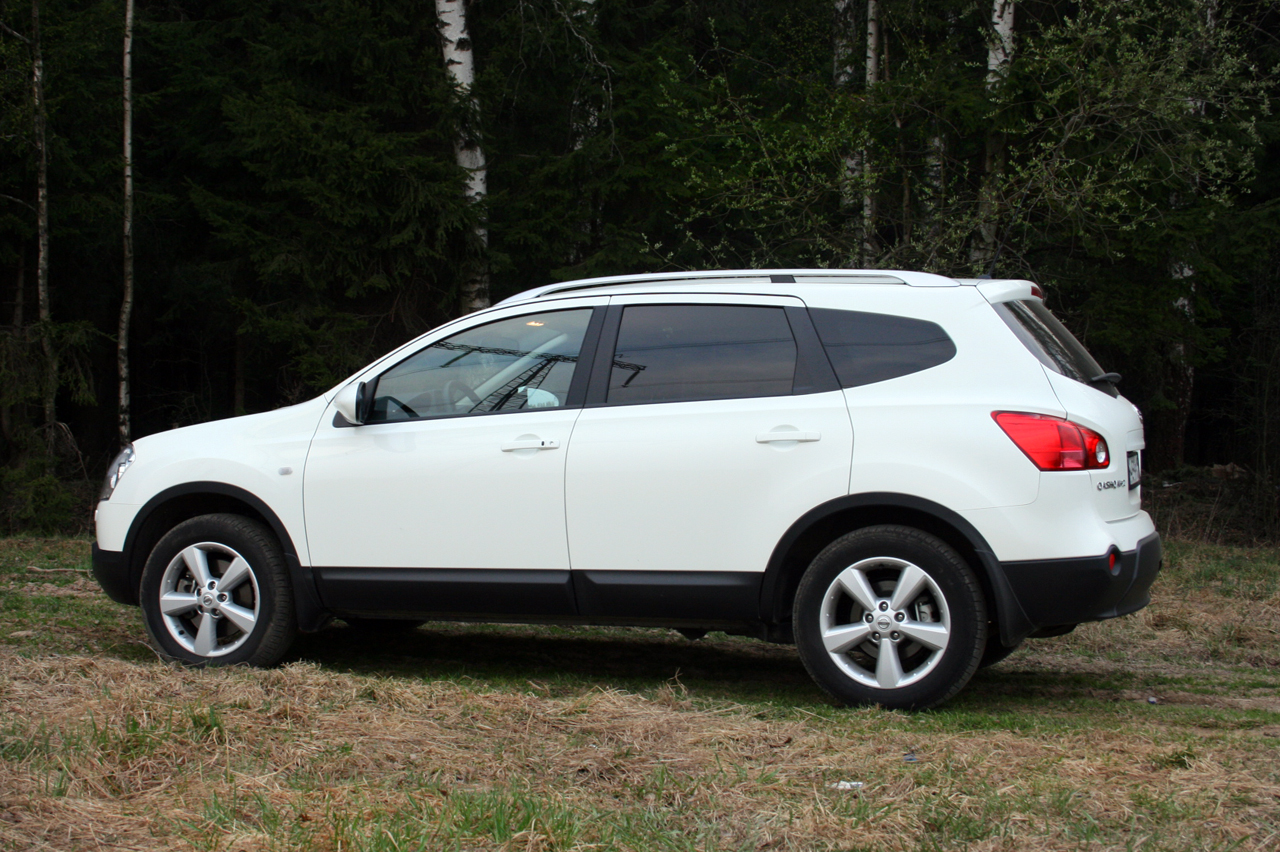
 The new Qashqai has won primarily in terms of cargo capacity, rather than passenger space. And at the same time, the seven-seat configuration is always possible and can sometimes really come in handy. Kids will definitely love it.Comments
 I first got acquainted with the Nissan Qashqai in 2007, when this "Urban Nomad" – that's how the name translates from one of the African dialects – had just debuted on the market. Back then, the "Qashqai" caused a real sensation, breaking conventional ideas about classes and instantly winning an army of fans across Europe and here. The car managed to successfully combine the advantages of the golf class with the capabilities of a crossover. It would seem, what else is needed for happiness?
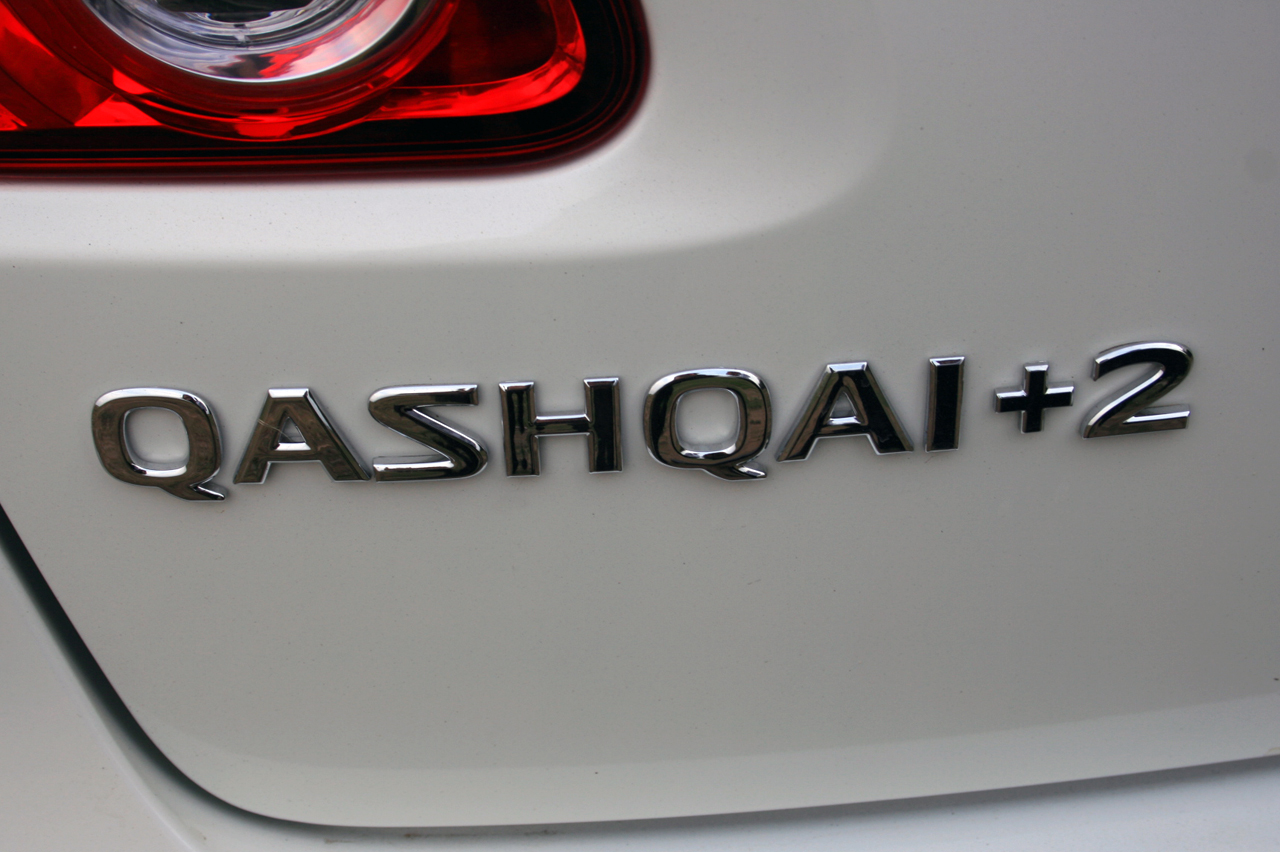
However, in "Nissan" they decided differently: they rethought the strengths of the original Qashqai – compactness and spaciousness – and announced that the public needs a Qashqai+2! This index hides an additional third row of seats, increased dimensions, and a higher price. How does the updated version plan to attract new buyers?
 |
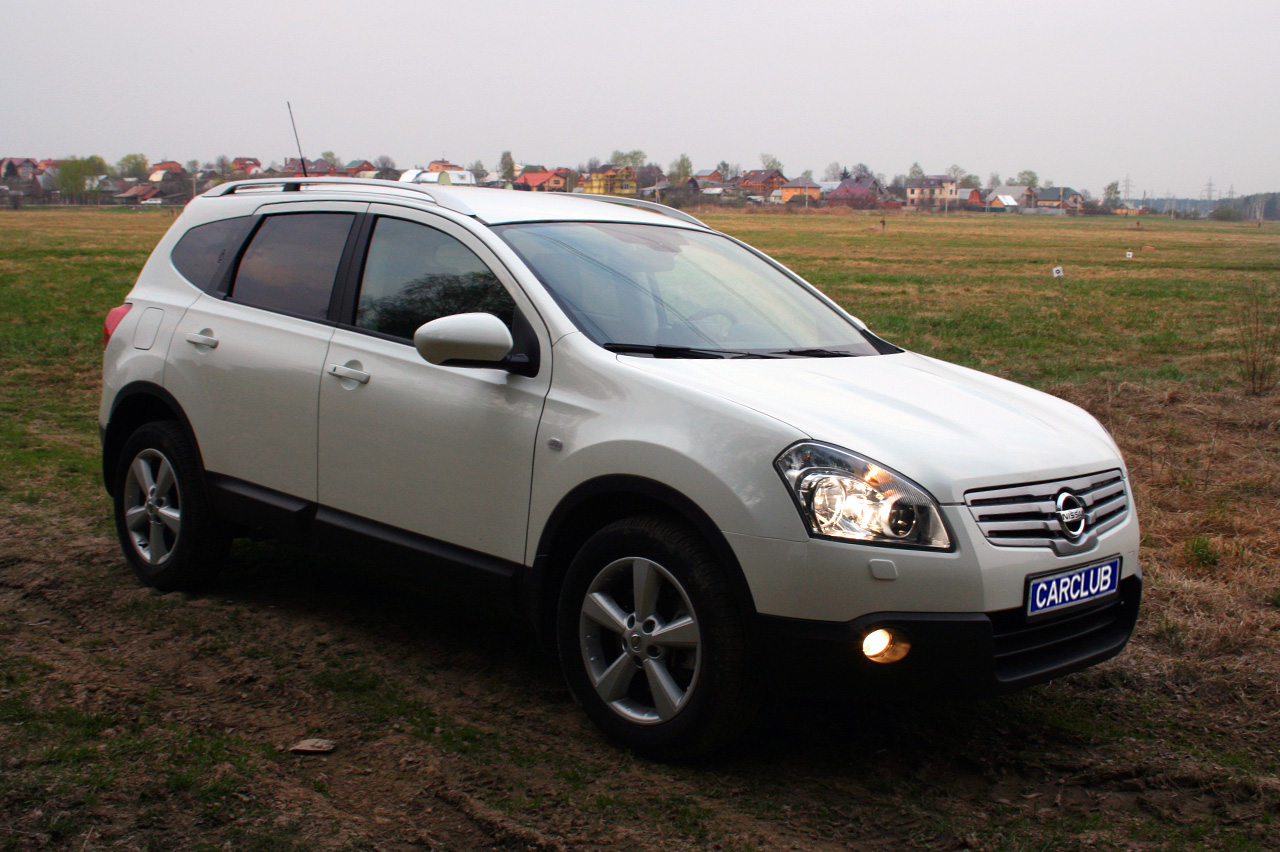
| The Nissan Qashqai+2 has become heavier, more imposing, and larger. And that has benefited it |
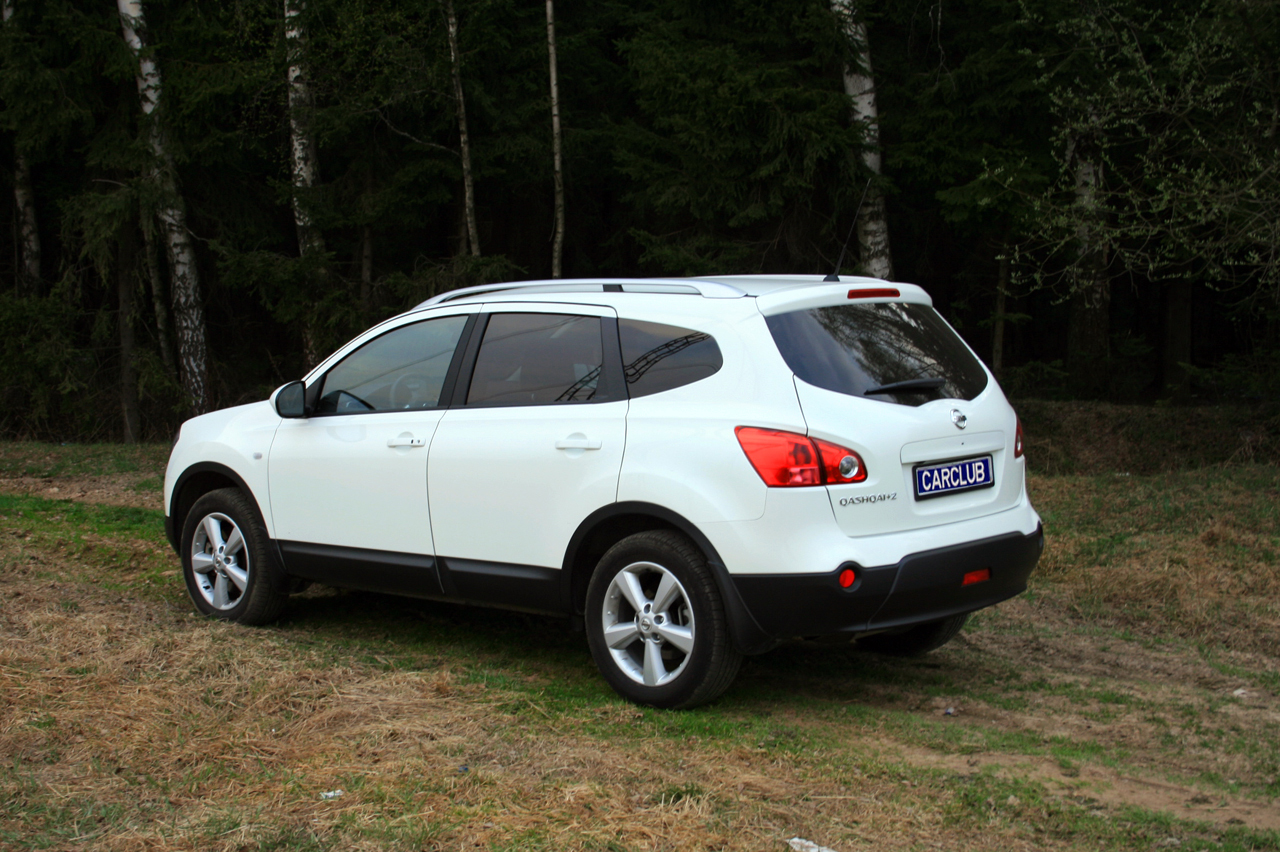
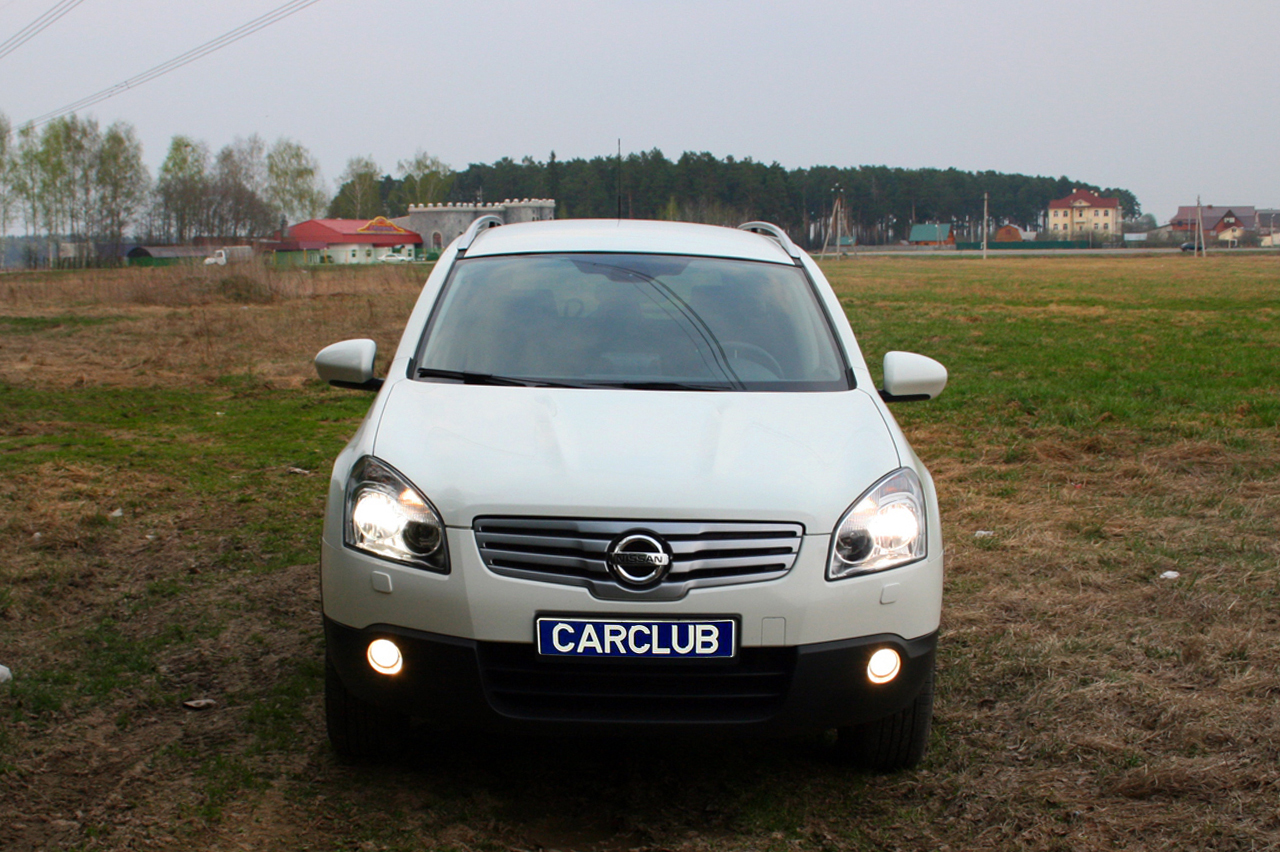
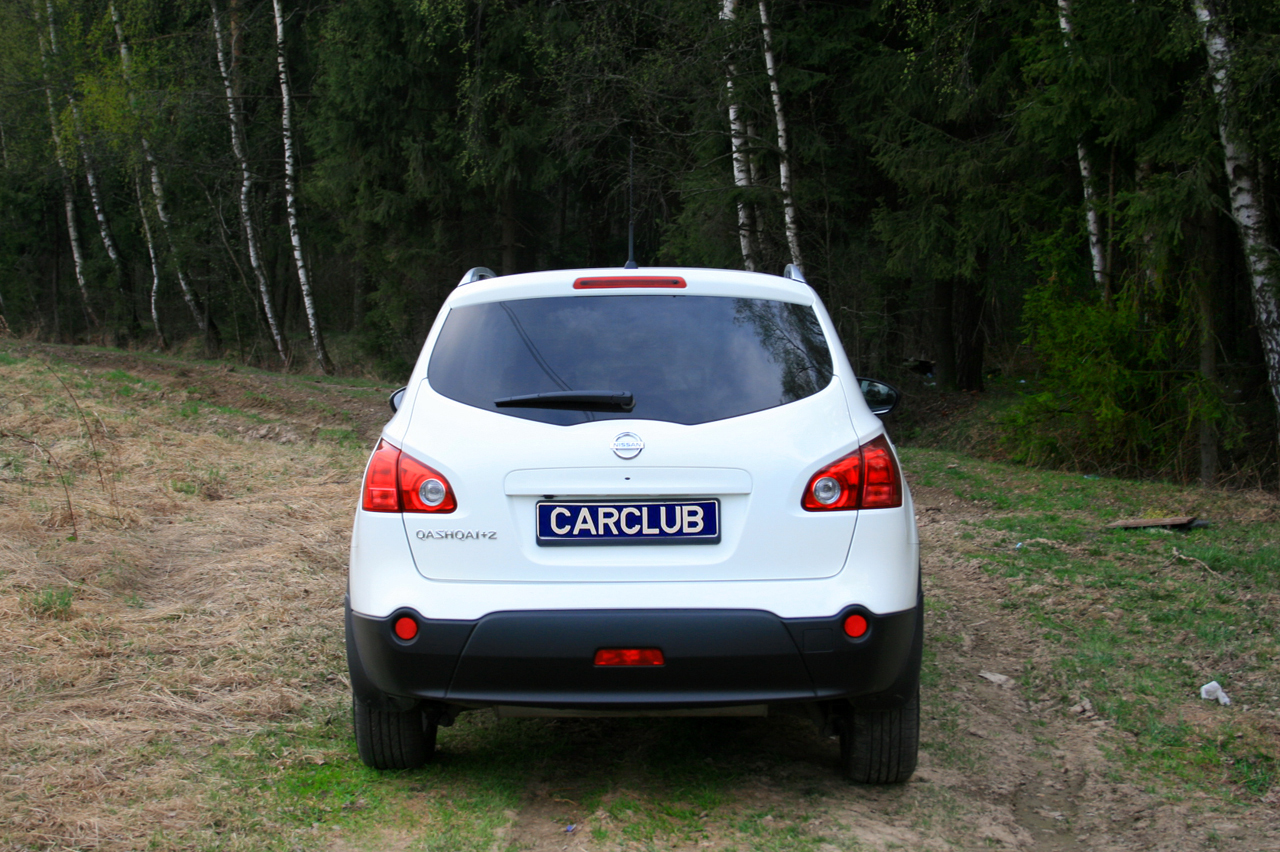
The "Qashqai+2" still pleases the eye with familiar body contours, but something has clearly changed. The car has become more massive, more solid, and bigger. To be sure, it's enough to check the numbers: length has grown from 4315 mm to 4525 mm, wheelbase – from 2630 mm to 2765 mm, the rear overhang has lengthened, and the shape of the windows has changed. The width remains the same, but the height has increased by 30 mm. The rear doors have become wider by 135 mm. The model has left the segment of compact crossovers and now aims at the Murano class. And that has definitely benefited it.
 |
| The smooth body lines are still recognizable, but the increased dimensions and the changed window line catch the eye |
Despite the familiar silhouette, the new model looks fresh and modern. The "Qashqai+2" looks especially impressive in white, which is advantageously emphasized by the factory tinting of the rear windows and bright red taillights.
 |
 |
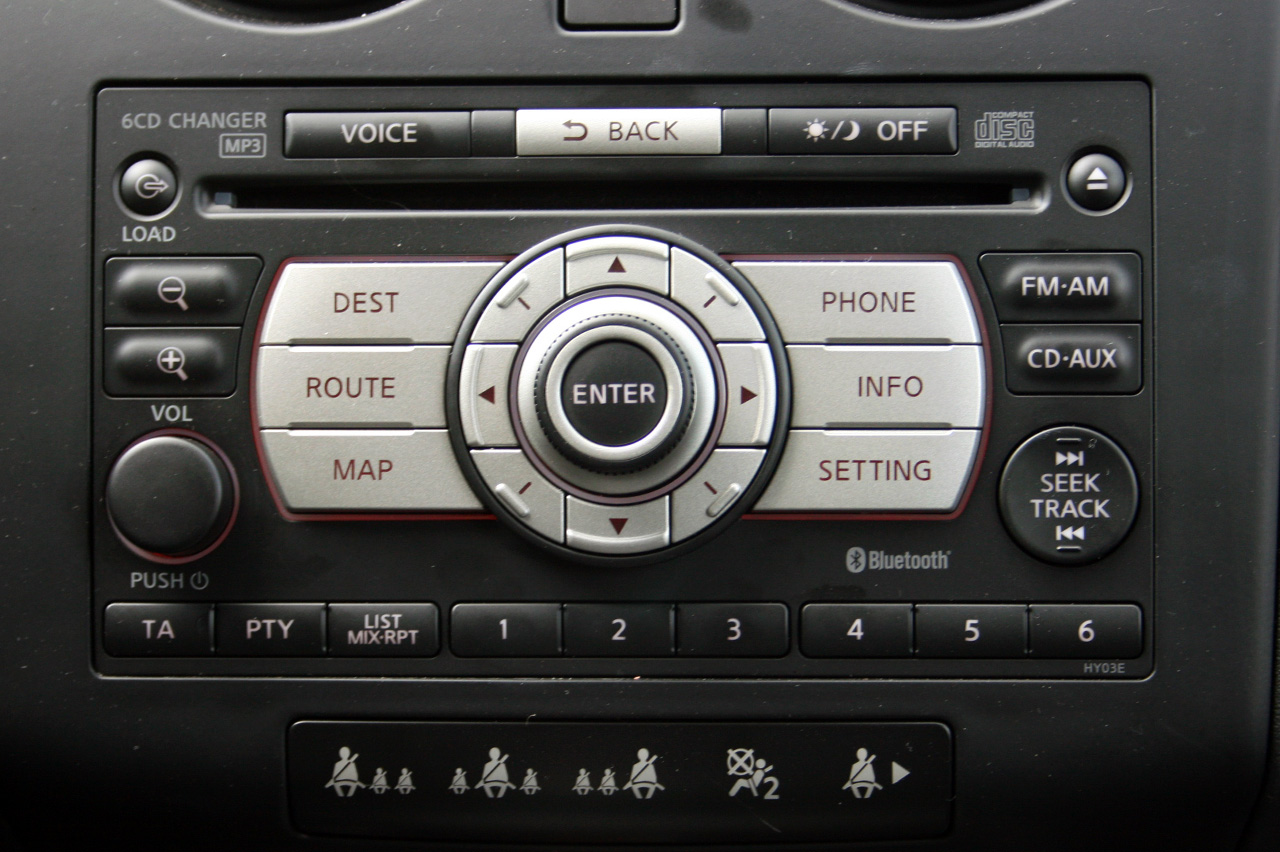
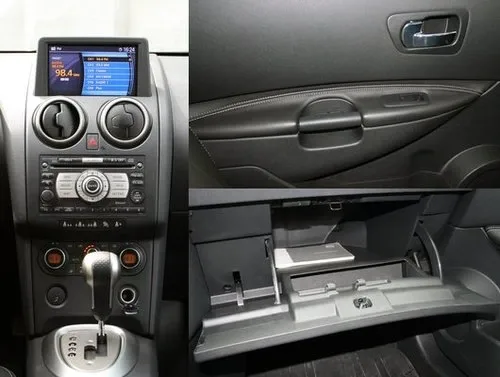
The interior has also hardly changed, and frankly, there's not much to change: everything is just as convenient and comfortable. There's nothing for the eye to catch on, but nothing irritates either. The black seats are adorned with stylish white stitching.
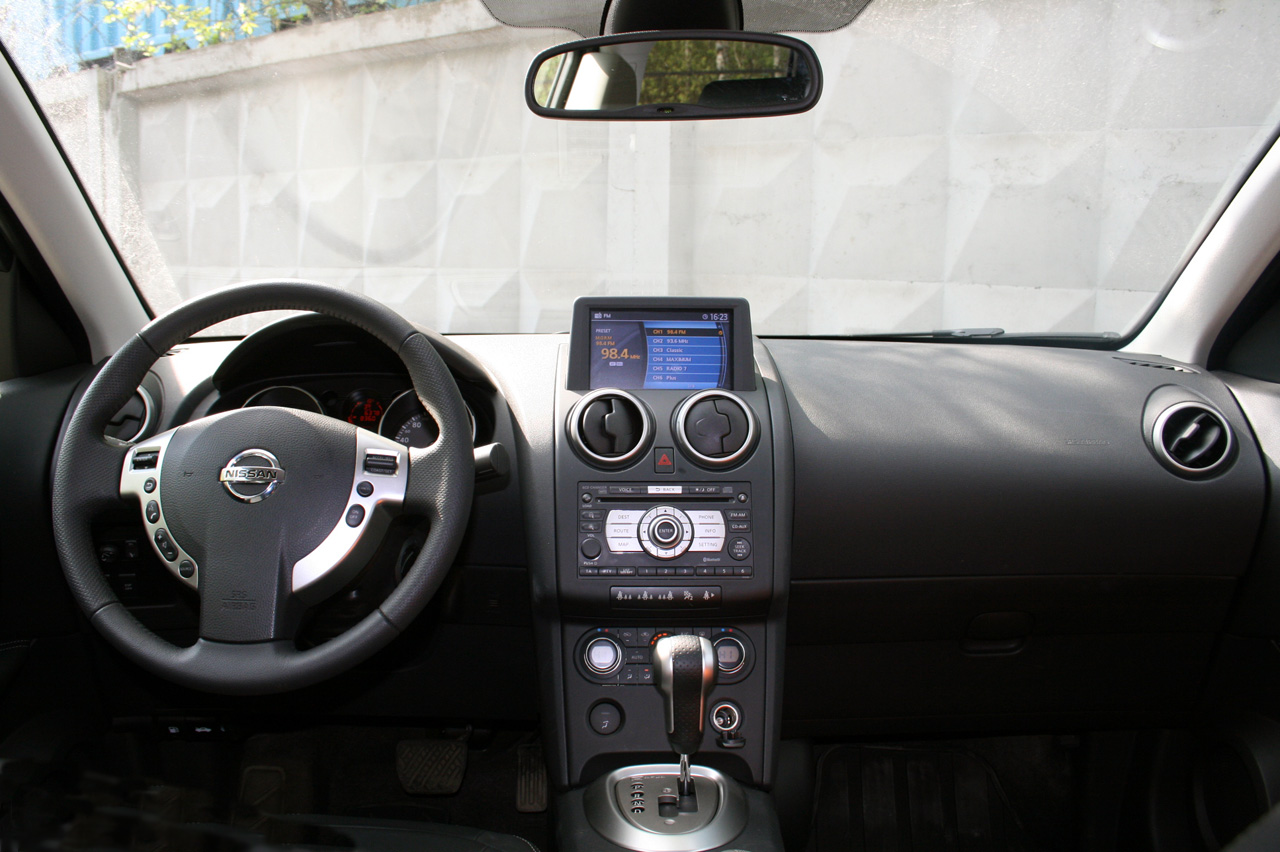 |
| The cabin remains without significant changes, everything is still comfortable and convenient. There's nothing for the eye to catch on, but nothing irritates either. |
I immediately head to the second row.
The changes begin right behind the front seats: thanks to the lengthened wheelbase, the second row has become noticeably more spacious in all directions. Moreover, passengers can now adjust the backrest angle and slide the seats forward and backward by 240 mm. Of course, this is done for the sake of those "+2"...
Looking at the third row, you immediately understand why the new Qashqai is called not a full seven-seater, but only "+2". Such a euphemism is usually applied to coupes – like, there are seats, but you don't have to count them. The two little seats hidden in the trunk of the Qashqai+2 are clearly not for adults. If you want, you can climb in there, bending in three deaths and collecting a couple of bruises. But then what? Sitting almost on the floor, with your knees against the ceiling? And it's not even about how far the second-row backrests are pushed back, but that the seats are located right on the floor.
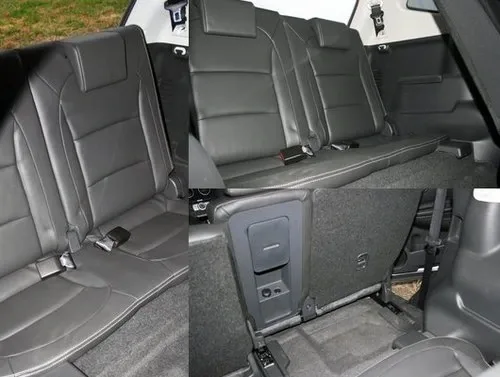 |
| The rear seats +2 are designed only for children. Even photographing them is not easy - it's hard to reach. |
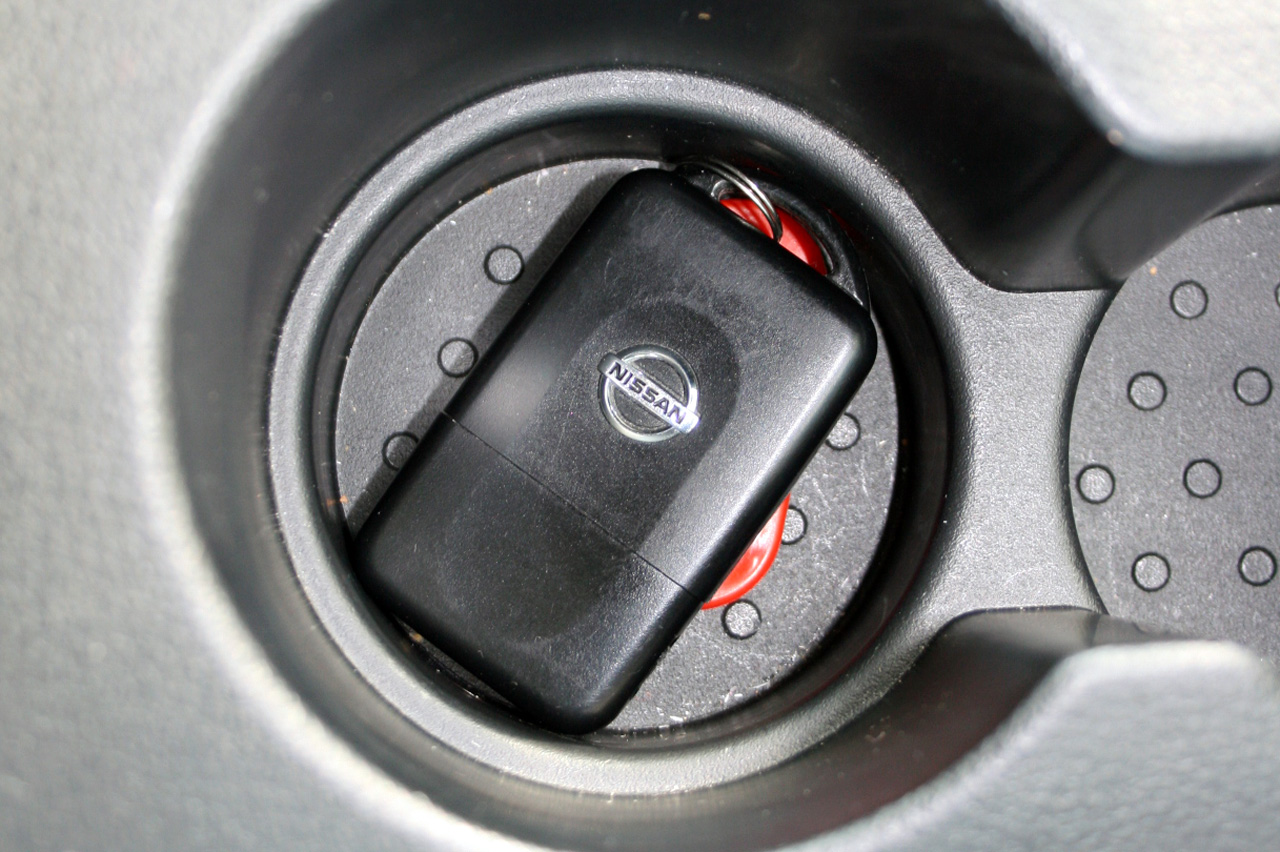
However, kids will probably love it here: their own separate places from adults, their own windows, and a feeling of cozy intimacy, like a personal children's room. And if you fold down the backrest of the middle seat of the second row, turning it into an armrest with cup holders and two 12V sockets, you can, if desired, communicate with the "adult" zone. But with all this fun, one question doesn't let go: if a rear-end collision happens, how reliable will the thin door separating the little passengers from the outside world be?.. The first Qashqai at one time received a record number of EuroNCAP stars – let's hope that the "+2" won't let us down either.
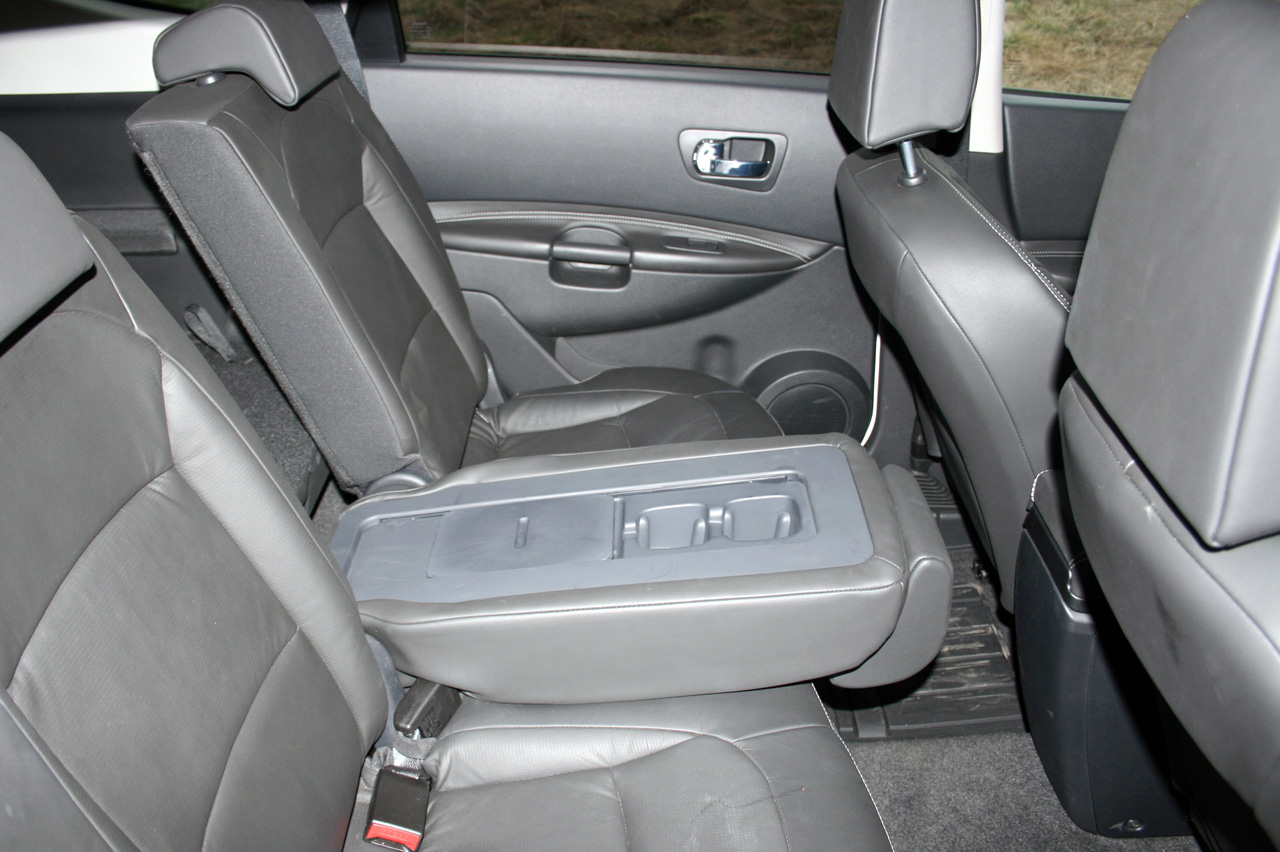 |
| A big plus - two 12V sockets, hidden in the armrest of the rear seat |
 |
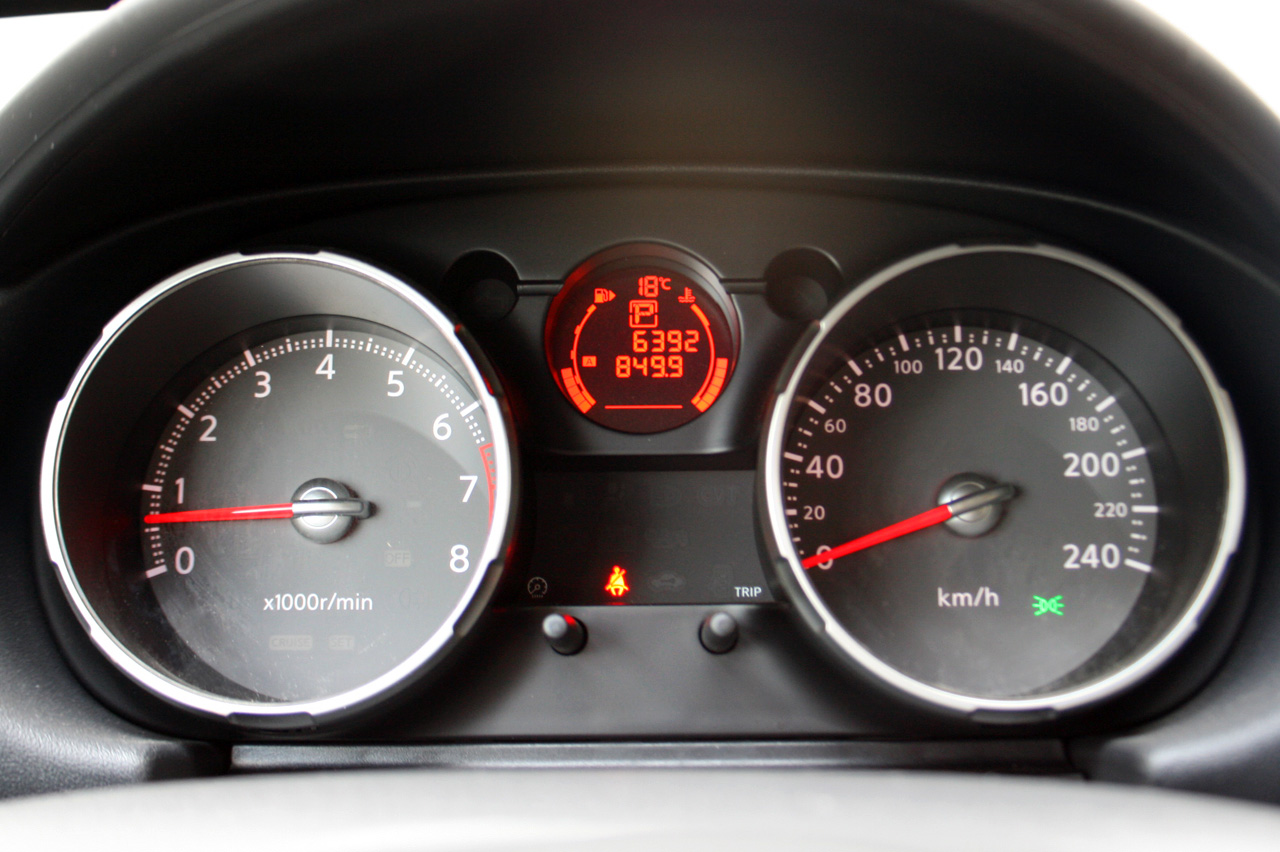
On the move, the car has also noticeably changed. Of course – it's not just that a couple of seats were added, the car is essentially built on a new platform and has become heavier, so engineers had to retune the suspension and steering, as well as increase the diameter of the brake discs. The engines remain the same.
 |
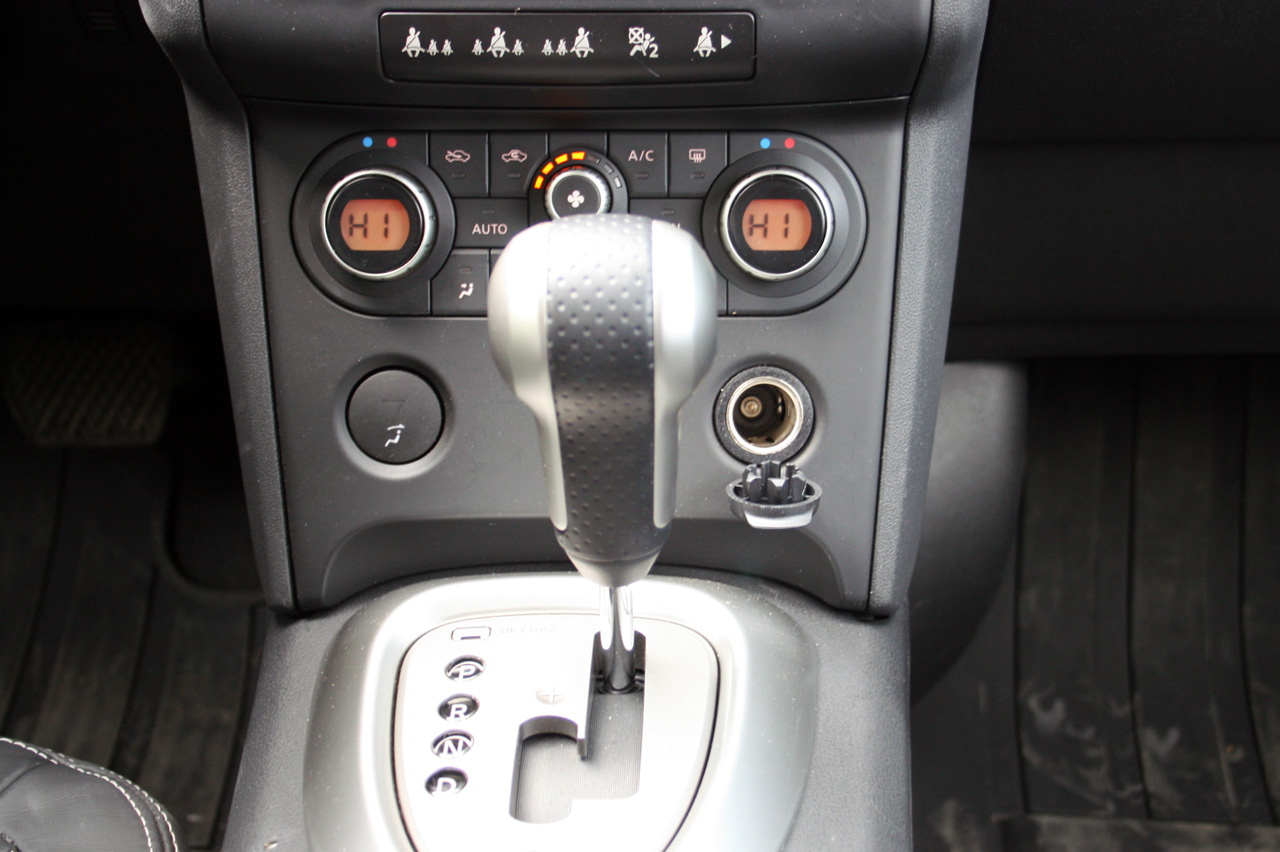
The Qashqai is still intuitively easy to drive, but now it rides more "smoothly" and measuredly, has become friendlier to the driver, and swallows bumps more softly. Among the drawbacks are amorphous flat seats, in which it's hard to stay put during body roll in corners. It's better not to leave things on the seats – they'll fly off. And yet, on the road, you feel greater stability than in the five-seat crossover, and in dynamics, the Qashqai+2 is not inferior to its younger sibling: the car still doesn't provoke aggressive driving, but allows you to easily keep up with traffic.
 |
 |
Despite the increased dimensions, the new model has retained the very quality for which the regular five-seat version was so loved – an amazingly accurate sense of dimensions. Ladies who liked the first Qashqai in this regard will like the new one too. Excellent visibility is also facilitated by large side mirrors that fully cover the picture around the crossover. The rear part is harder to feel, but here the rear-view camera helps out, doing its job perfectly.
 |
The Qashqai+2 is conceived as a spacious crossover for a large family – like, here you have seven seats, no less. But in this configuration, the trunk behind the third-row backrest resembles a supermini Fiat 500, you can't even fit a bag. A large family won't be able to take luggage with them. But how many possibilities for transforming the interior space does Nissan offer!
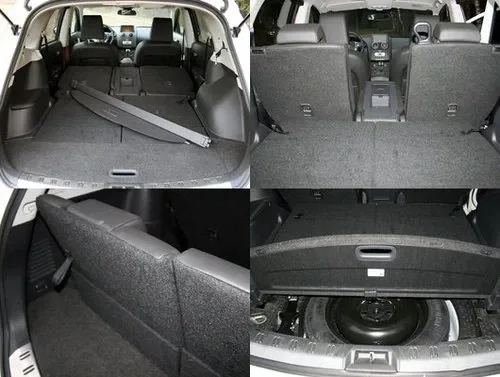 |
| The Qashqai+2 will rather please with its increased cargo capacity than with additional seats. In the seven-seat configuration, the trunk resembles microcars. With the third row folded, the car offers 550 liters of useful space - 90 liters more than the regular Qashqai. And if you remove the middle row, it will be hard to think of what to transport in this almost cargo wagon with a volume of 1520 liters and a flat floor! |
The third row of seats folds in a 50/50 ratio, but you'll have to fiddle with the tricky system of straps and latches — it's unlikely to work on the first try. When both seats are folded, you get 550 liters of free space, which is 90 liters more than the standard Qashqai. And if you fold the second row as well, you get almost a cargo van with a flat floor and 1520 liters of volume — it's hard to think of something that wouldn't fit in there. So the new Qashqai wins primarily in terms of cargo capacity, not passenger space. Although the seven-seat layout is still there, and in certain situations it can really be a lifesaver. Kids will be delighted with this arrangement.
 |
 |
In my opinion, on the Russian market, the main trump card of the Qashqai+2 over the regular Qashqai will be the increased cargo capacity, not the ability to seat seven people. The second important advantage is the noticeably increased space in the second row. Plus, in the city, the car has become noticeably more pleasant to drive — comfort and stability have reached a new level. And, to be completely subjective, the seven-seat version looks more attractive than its five-seat sibling.
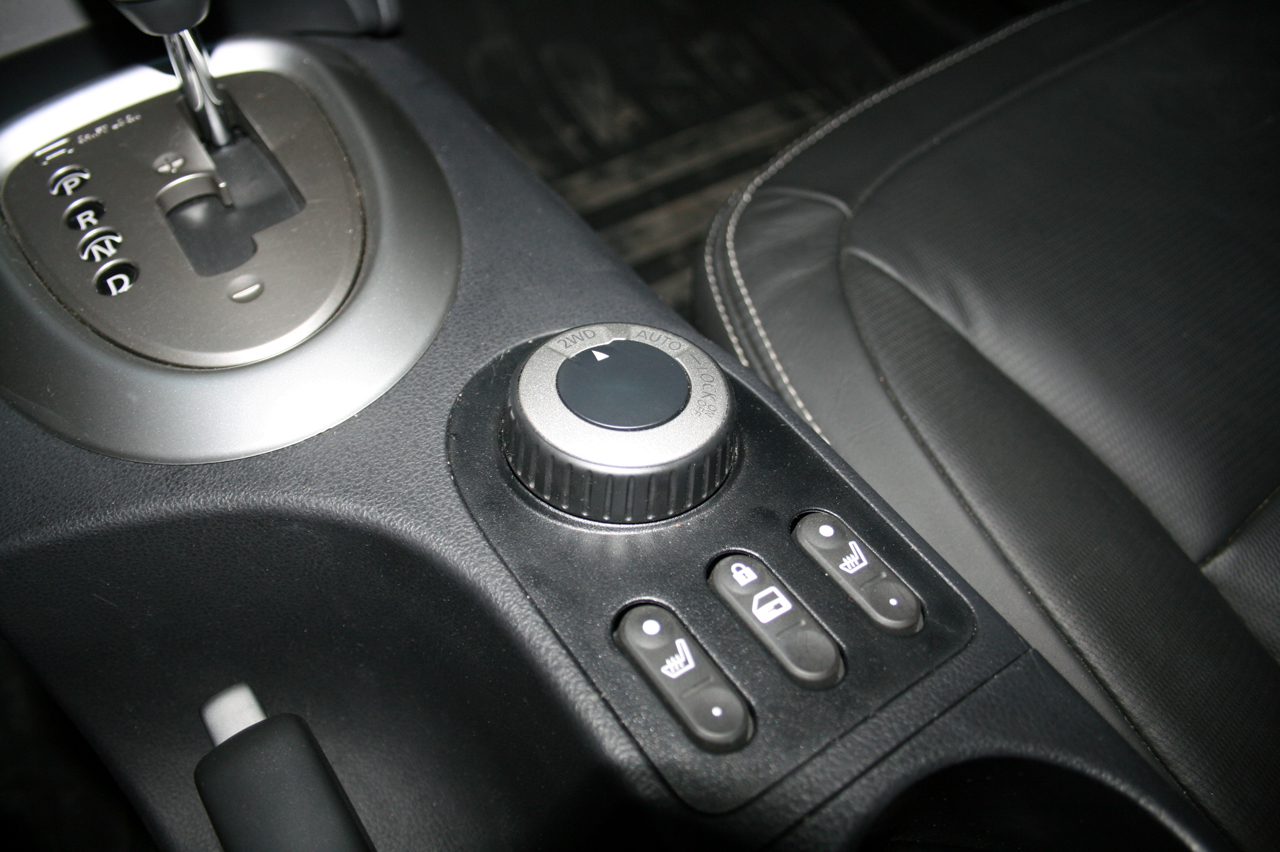
As for off-road ambitions, it's worth recalling that Qashqais come with either front-wheel drive or all-wheel drive, although most buyers still choose two-wheel drive. Even despite the availability of all-wheel drive with an electronically controlled Haldex coupling and plastic underbody protection, the Qashqai remains primarily a "urban nomad," although if desired, it's quite ready to turn off the asphalt with passengers.
Price of Qashqai+2 starts at 777,000 rubles — that's 51,000 more than the base Qashqai. For this money, the buyer gets a 1.6-liter petrol engine paired with a manual gearbox, four airbags and curtains for two rows, Nissan Brake Assist system, audio system with four speakers, onboard computer, air conditioning, steering wheel audio controls, headlight washers, steering column adjustable for reach and tilt, Hands-free system with Bluetooth and steering wheel controls, power windows for all doors, leather armrest, and power-adjustable and heated mirrors. Top trims can go up to 1,126,900 rubles. All-wheel drive and a CVT come paired with a 2.0-liter petrol engine.
Svetlana Aleeva