
Nissan Qashqai
Engine - 2.0 16V
Max power - 141 hp/6000 rpm
Max torque - 196 Nm/4800 rpm
Top speed (km/h) - 190
Acceleration time
0-100 km/h - 10.6 sec.
Fuel consumption (l/100 km):
city - 11
highway - 7
combined - 8.4
Fuel tank capacity (l) 65
Wheelbase - 2631 mm
Track front/rear -
1540 / 1550 mm
Length - 4315 mm
Width - 1783 mm
Height - 1606 mm
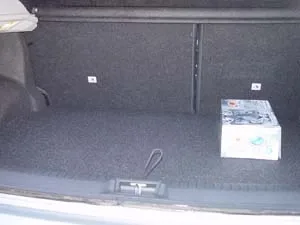
Trunk volume (l) min / max - 410 / 1513
Curb weight - 1454 kg
The history of Nissan Motor Co., Ltd. dates back to December 26, 1933, when the predecessor company Jidosha Seizo Co., Ltd. was founded. Mr. Yoshisuke Aikawa was appointed as the head of the enterprise. Already in 1934, the first Nissan Yokohama Plant went into operation.
In September 1963, the release of the second-generation Skyline was announced, and in November of the same year, the car appeared at Japanese dealers. Two years later, in February 1965, the Skyline 2000GT-B saw the light. Even the most demanding drivers recognized the outstanding qualities of this model.
By 1966, more and more people had free time for trips in their own cars. Catching this trend, Nissan created the Datsun Sunny 1000. As a representative of the compact class, the Sunny quickly became a hit during the mass motorization of Japan.
In 1969, production of the iconic 240Z model started. With a 2.5-liter engine producing 150 hp and Porsche-level dynamics, it cost more than twice as little as its German competitor. In the 70s, the 240Z was recognized as the best-selling sports car in the world. During the fuel crisis, the Nissan Sunny model won fuel economy tests and gained huge popularity in the US.
In 1973, the Datsun brand, under which Nissan products were sold, was abolished — the entire company switched to the single name Nissan.
In 1997, the company engaged in environmental developments and created a hybrid car capable of running on both gasoline and electricity.
In 1999, Renault and Nissan signed an agreement on the Global Alliance. This alliance formed the fourth-largest automotive group in the world, producing mass-market models, with an annual production volume of over 5 million cars and a workforce of 265,000 employees.
At the end of April 2004, Nissan announced a three-year business plan that came into effect in April 2005.
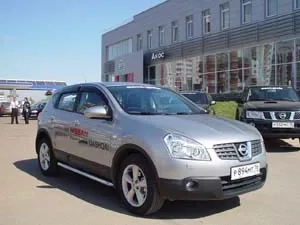
In 2007, the Nissan Qashqai appeared. The unusual name is borrowed from an ancient Iranian nomadic tribe that still lives in Iran. By the way, naming cars after nomads was not invented by Nissan — Volkswagen was the first to do this with the Tuareg SUV.
Marketers and advertisers did their best, creating a buzz around the new product long before its debut. They positioned the Qashqai as a car for conquering the city, and this idea ran like a red thread through all slogans, videos, and the entire advertising campaign. “Urban nomad” — and that says it all.
Thanks to such advertising, even before sales started, Europeans had formed the right impression of the car.
In Russia, everything is simpler: the model's popularity is explained not so much by Nissan's successful PR as by the terrible condition of the roads.
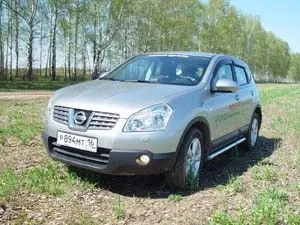
Externally, the Qashqai tries to resemble the Murano — the same radiator grille, characteristic of fresh Nissan models, the same tightly packed body shapes. True, if the Murano looks futuristic, the Qashqai looks simpler.
With a length of 4310 mm, this car is unlikely to boast powerful engines. Under the hood is one of four engines. Two gasoline: the first with a volume of 1.6 liters and 115 hp, the second is a two-liter producing 140 “horses,” but paired with it is the ALL-MODE 4x4 all-wheel drive system.
The remaining two engines are diesel, intended for Western Europe: a 1.5-liter with 106 hp and a 2-liter with 150 hp. Diesel versions will not be supplied to Russia.
There are also four gearboxes. Five- and six-speed manuals — for connoisseurs of full control, a new six-speed automatic and a CVT — for those who prefer not to strain.
www.nissan-car.ru

Nadyrov Ildar, director of the car store “Zhiguli.” Driving experience - 18 years
I first got acquainted with the Qashqai in absentia — I saw a photo of a nice crossover and an attractive price under it in a city automotive publication. True, my enthusiasm waned when it turned out that for that money only a front-wheel-drive version with a modest 1600 cc engine was offered. And now finally — a test drive.
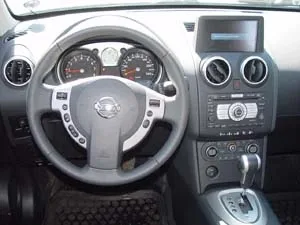
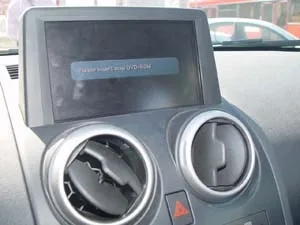
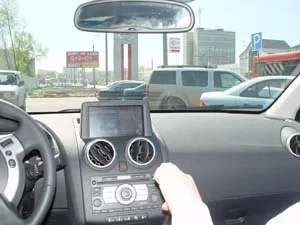
We were given a “loaded” car: a two-liter engine, continuously variable transmission, all-wheel drive, ABS, stability control, LCD display on the center console, color rear-view camera, stereo with a six-disc changer and MP3 support, dual-zone climate control, leather interior, and much more, up to a rich set of active and passive safety systems. This is important, given the chaotic and aggressive traffic on Kazan roads. As usual, we inspected the car from the outside, slammed the doors, looked into the trunk — a decent part of it is eaten up by a full-size spare tire. If we talk about styling
The Qashqai is a modern versatile city car with a fashionable triangular window in the rear pillar, which gives the appearance both retro charm and sporty swiftness. The interior, contrary to expectations, turned out to be spacious. If in the front it is comfortable and cozy without any reservations, then in the back the seat is clearly designed for two, despite the third headrest, and you sit a bit low. But here is a significant plus for the manufacturer: with my height of 182 cm, from knees to the back of the front seat — a good 10-15 cm. And this is despite the fact that in the front a manager of 185 cm tall sat comfortably! The downsides were not long in coming — getting out from the back is sheer torment due to the narrow and shaped door opening, and the lower chrome sill actively dirties trousers. In rainy weather, it will be tough... After the test, I read that Nissan is preparing a version extended by 200 mm with enlarged rear doors. They reacted promptly. Another fly in the ointment — the recessed handle-trough of the left rear door, sunk into the armrest, kept popping out of its socket when closing (later this same incident repeated on another new car). To put it mildly, it's not solid! Well, okay... Let's go!
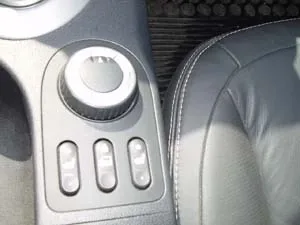
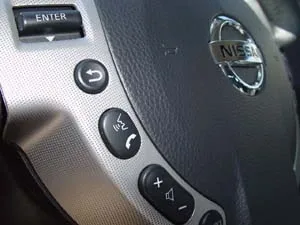
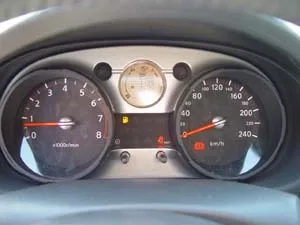
I turn the key — many indicator lights come on, blink, and go out. At idle, the two-liter engine is inaudible, but it actively makes itself known when gaining speed. But the aerodynamics of the body are excellent: even the huge “burdocks” of the side mirrors (by the way, with excellent visibility) do not create extra noise. The rear multi-link suspension works out bumps and potholes quite harshly and noisily, but thanks to the overall rigidity, the car handles excellently — it enters corners even at high speed without rolls, only the electric power steering fills with heaviness, giving good feedback. After 80 km/h, you can turn on cruise control. A convenient thing, as is the rear-view camera, which activates automatically when reverse is engaged. The brakes pleased — they work clearly and predictably, without sharpness. I also drove a bit on a dirt road. No longitudinal pitching! The 200 mm ground clearance and pluggable all-wheel drive allow you to feel confident on light off-road. The CVT provides smooth acceleration. For those who want to shift gears themselves, there is a manual mode with six virtual steps. At first, it's fun, but I didn't see much practical sense in it: increased consumption and extra fuss with “gears” will quickly return an ordinary driver to the embrace of smart automation.
Overall, the car left a pleasant impression. It is like comfortable clothing or, rather, sports shoes: it does not require long adaptation — you sit down and go, and you can figure out the nuances of the onboard electronics later. In my opinion, thanks to a reasonable pricing policy and a rich choice of equipment, the Qashqai is assured of steady demand and success on our roads, which sometimes are no different from off-road.

Vadim, commercial director of the newspaper “Autoclub-Kazan.” Driving experience — 10 years.
Before meeting it in person, my attitude towards the Qashqai was ambiguous. On the one hand, a crossover at a quite reasonable price. But for that money you get only front-wheel drive and a 1.6 engine, which is clearly too weak for a weight of 1300 kg. You can't argue with the fact that the car caused a lot of noise and gained huge popularity: the order queue has already reached February 2008.
Design. In the showroom, the Qashqai looks bright and catches the eye, but on the road you hardly notice it. However, this is typical of many current models. Inside, there is no hint of spaciousness, but the manufacturer immediately warned that this is a transitional link between the C-class and full-fledged crossovers like the X-Trail. As in the Opel Corsa D with five doors, getting out from the rear row is inconvenient: the wheel arches interfere. Separately, I note the quality of the leather on the seats — I really liked it! It doesn't slip, and the body doesn't sweat under it.
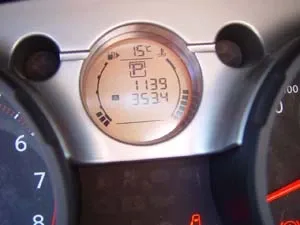
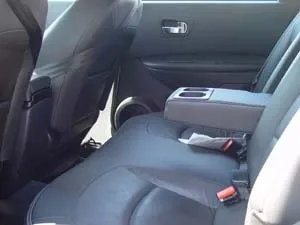
On-road behavior. The suspension is very well balanced: comfortable over potholes, holds firmly in corners, and doesn't rattle your teeth on tram tracks, unlike the RAV4. It also rides smoothly on dirt roads, but you need to be careful there: the tire tread is shallow, and mud clogs it up instantly. However, the 2.0 engine disappointed me; its age is immediately apparent. Both in the city and on the highway, I constantly had to manually downshift for overtaking. There was no other way. For the sake of a fair test, I tried another experiment: in manual mode at 2000 rpm, I attempted to accelerate. And what happened? A modern 1.8 feels much more responsive from low revs. This 2.0 behaves exactly like the engines in the new Hyundai Elantra 2.0 or Ford Focus 2.0: the same sluggishness at low revs and eagerness at high revs, at the cost of increased fuel consumption. Although, perhaps I'm being too harsh—the status of a crossover inherently rules out racing. The presence of a CVT also points to that: smoothness is key. But the transmission is convenient to use: there are 2WD, AUTO, and 4WD Lock modes, and you can switch them on the fly. 2WD is ideal in summer: on dry asphalt, the car feels lighter and consumes less fuel. AUTO is for wet or slippery roads, with the rear axle engaging automatically when wheelspin occurs. And 4WD Lock is designed for low speeds and poor roads (of course, venturing into serious off-road terrain is pointless).
Trim levels. This is the most appealing aspect of the Qashqai: there are simply no bare-bones versions. I tried to imagine the price list for myself: what would I choose? My answer: either the 1.6 in mid-level trim, or the 2.0 with all-wheel drive in top trim. However, the top version exceeds 920,000 rubles.
And most importantly—now I like the Qashqai much more than before, when I judged it only by hearsay.

Alfred, editor of the newspaper “Autoclub-Kazan”. Driving experience — 12 years.
Lately, there's been nothing but talk about the Qashqai, so much hype around it. And opinions are completely opposite—from sheer delight to outright rejection. What can I say? It's a case where seeing once is better than hearing a hundred times. The name itself sounds a bit awkward in Russian; I understand that the Iranian nomadic tribe is a super-popular image worldwide, but for our people—no. In short, in my opinion, the car's name is unfortunate. But the design is not without interesting solutions. The car looks solidly built, with restrained lines, yet a stylish front end. Inside, you feel kinship with the larger Murano, for example, the paddle shifters are identical to its. I'll note right away: this is the top version. What doesn't it have: cruise control, dual-zone climate, and even a rear-view camera. How do you like that set, and for quite reasonable money? (about 915,000 rubles).
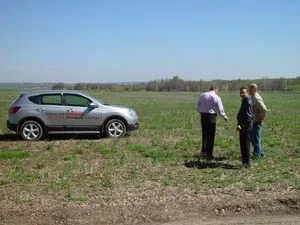
Already for this alone, the car starts to appeal, and testing it would seem unnecessary—I'm ready to forgive it minor flaws in behavior in advance, if any. But I still need to drive it! So, despite the common opinion that it's a bit cramped, I'll say: yes, it is a bit cramped. But what did you expect for that money? A large adult man will feel somewhat uncomfortable in width, but a person of average build or slender like me will fit quite comfortably. Personally, the power of the 2-liter engine was enough for me, but there are still delays in acceleration dynamics. If you switch the gearbox to manual mode, the car, as expected, runs noticeably more lively. Overtaking on the highway is not difficult; the car confidently and willingly picks up speed. Maybe the freshly bloomed foliage, or maybe the general mood, prompted us to leave the asphalt and head straight into a field. Initially, that wasn't planned—the car is designed as purely urban and is marketed as a “urban nomad”—but nevertheless, it's worth testing on dirt and light mud. And it handles quite well, I must say... especially when you're behind the wheel, but rear passengers will have a tough time. The discomfort from the struts' work and tire noise is hard to miss. From how it handles bumps, it's clear the car has a slight bias toward the driver.
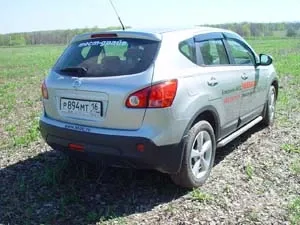
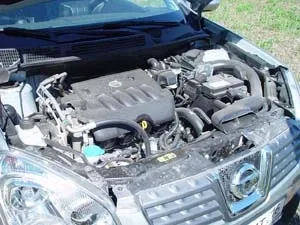
The high center of gravity is compensated by the suspension's grip. You can easily weave through dense city traffic, and only the high seating position reminds you that you're driving an SUV. And, by the way, there's still a feeling that this is a golf-class car. So who are you, “urban nomad”? Still golf-class or already a crossover? Apparently, it's somewhere in between. In the city, it behaves like a front-wheel-drive passenger car, and the pluggable rear drive allows confident cornering without fear of understeer. 200 mm of ground clearance, short overhangs, a massive bumper, side steps, all-wheel drive—attributes of a “soft-roader” that inspire confidence on country roads, I emphasize—roads, albeit broken ones. But nothing more. In general, the essence of the car is clear to me. With its appearance, it opens a new, yet unknown class of vehicles. Are we witnessing the birth of a “Qashqai class”? Today, it doesn't fit into any segment of the conventional classification. It's no longer a C-class hatchback and not yet a crossover, and that's precisely what makes it interesting. It combines the handling of a passenger car and the capabilities of a crossover. And the buyer votes with their wallet. At official dealers, the queue for the car stretches to the end of this year.
Maintenance costs:
15,000 km — $160 (1,275 UAH)
30,000 — 10,436
45,000 — 4,920
60,000 — 16,125
75,000 — 4,920
90,000 — 10,946
105,000 — 4,920
120,000 — 16,125