
 Comments (11)
 Automakers, hunting for new niches, sometimes take bold steps. For example, they mount a minivan body on all-wheel drive with a 500-horsepower engine, or create a four-door coupe, or even hide a supercar engine under the hood of a business sedan. Some projects hit the mark, giving birth to new categories, while others remain in the role of Don Quixotes — their owners are perceived by others as eccentrics.
Our today's test subject — Nissan Qashqai — is also an experimenter in its own way, mixing different genres and fillings in one bottle. The base modification carries a 1.6-liter engine, front-wheel drive, and ground clearance over 200 mm, and they ask only 21,900 dollars for it, making it a serious argument against fancy golf-class hatchbacks. The opposite pole — all-wheel drive and maximum equipment for 34,350 dollars — brings the car into direct rivals to the Toyota RAV4 and other crossovers, but the Qashqai is slightly more compact, and parking with it is easier. We were given an almost top version, which lacked only a rear-view camera (replaced by regular parking sensors), a color display, and MP3 disc support. Such a car is priced at 32,050 dollars.
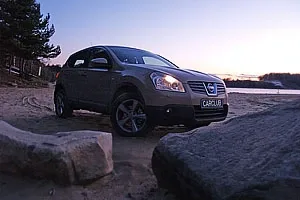
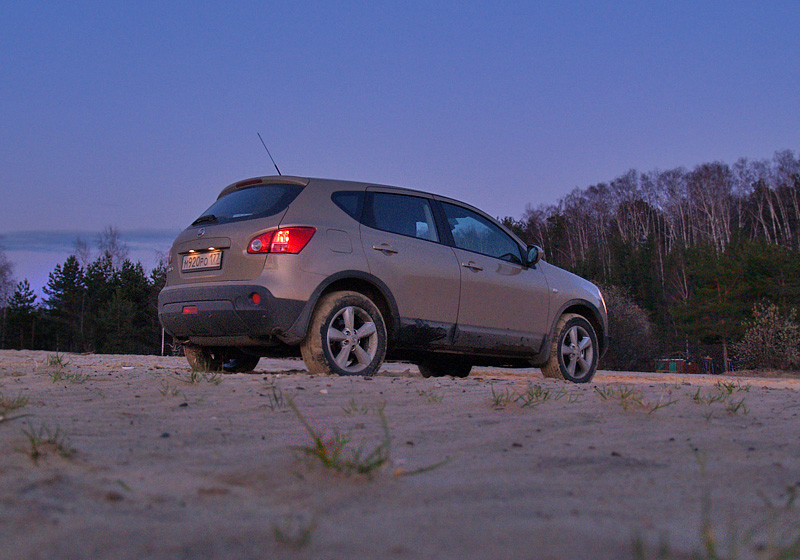
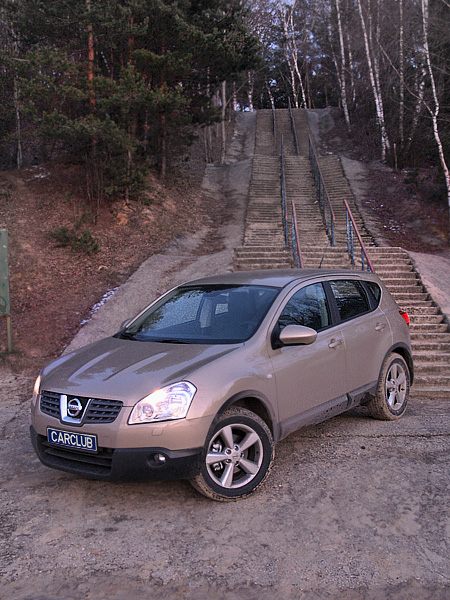
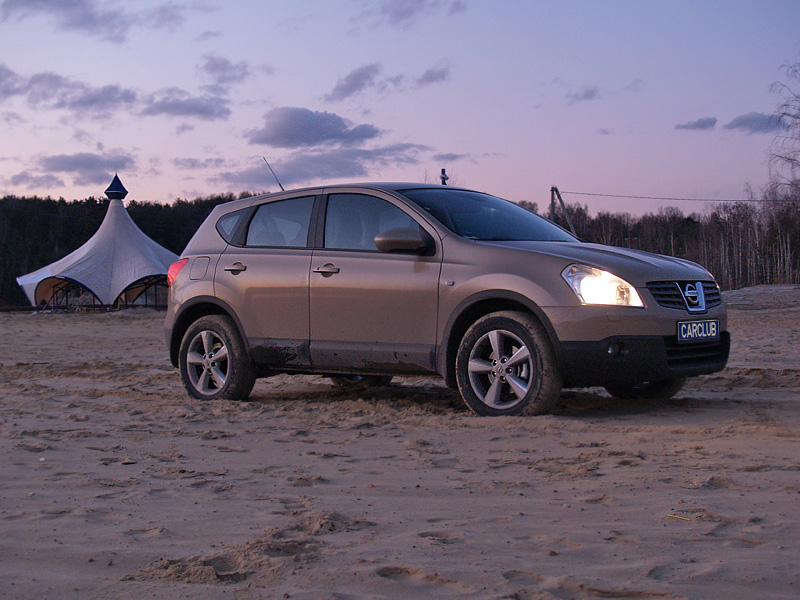
In silhouette, the Qashqai seems like a reduced copy of the Nissan Murano, and that's rather a plus. Many like the cartoonish appearance of the Murano, but are put off by its size and far from toy-like price tag. Here, it's a compact "Murano-like" golf-class baby. Although I'd like to see the front of the Qashqai more friendly: the flat bumper line with the radiator grille and the protruding black "lip" at the bottom give the face a strange grimace. It should smile, not frown. On the other hand, the appearance accurately reflects the model's positioning. Advertising promises that in the city the crossover will be bullied, and it should steadfastly get out of trouble in the concrete jungle. The car's height is visually hidden by black plastic trim around the body. The Qashqai only looks small: in reality, it's only ten centimeters lower than the trendsetter among crossovers — the Toyota RAV4. The trim also protects the wheel arches, which will come in handy during accidental contact in traffic jams or parking lots. Essentially, at the height where a passenger car's bumper runs, the Qashqai is belted with plastic, so minor scratches and chips are not scary for it.
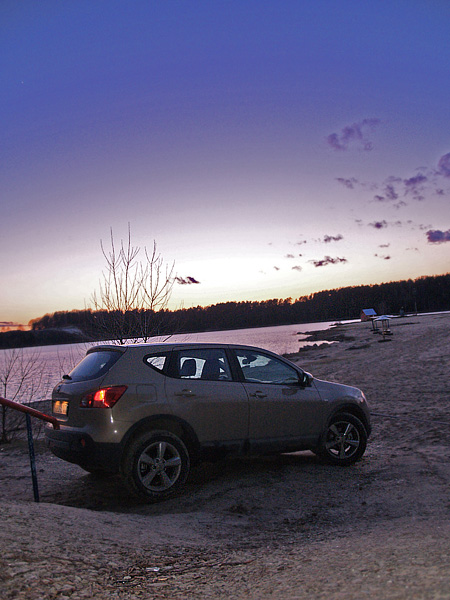
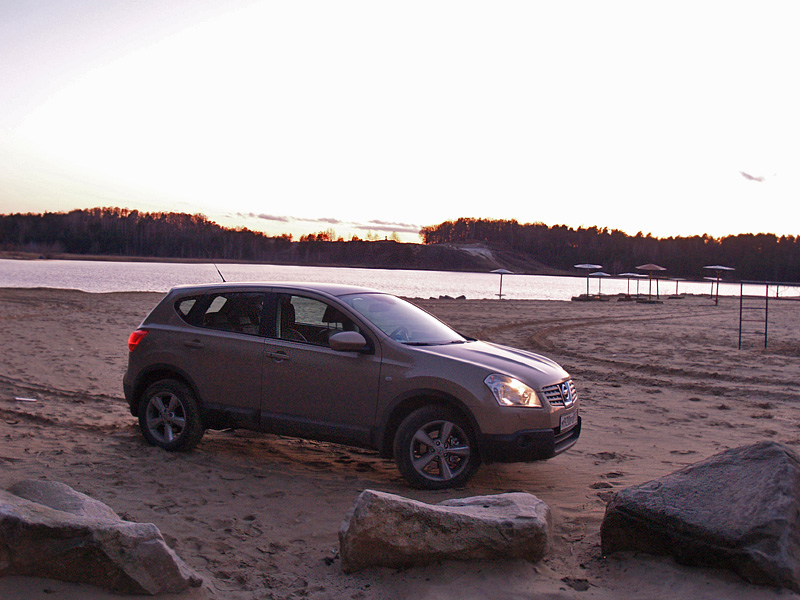
The only thing that suffered due to the Qashqai's sleek sporty profile is visibility. Forward during maneuvers, large side mirrors save the day, reminding that under you is not an ordinary car, but when moving backward, visibility through the rear window is almost zero, and you have to rely on parking sensors.
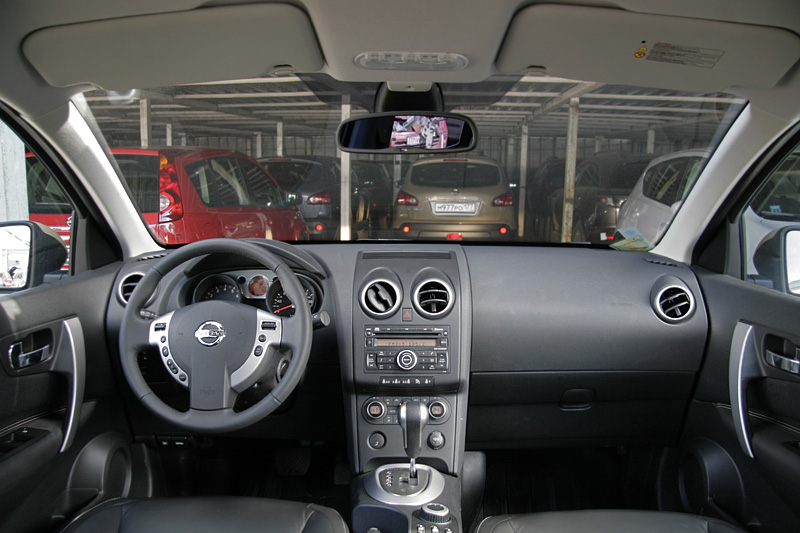
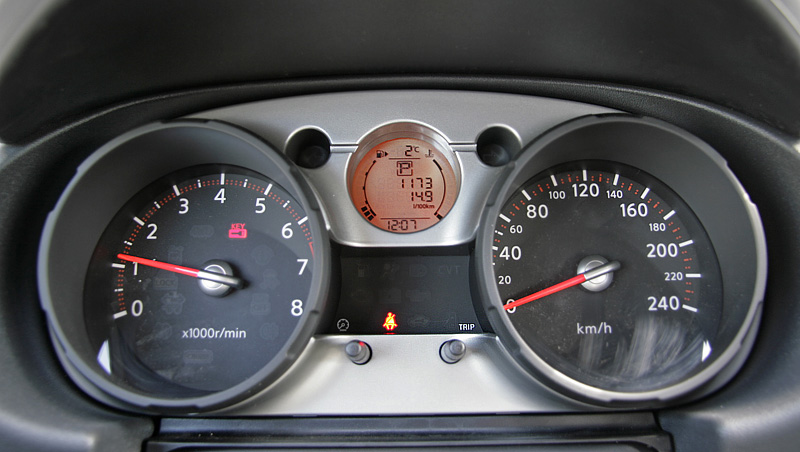
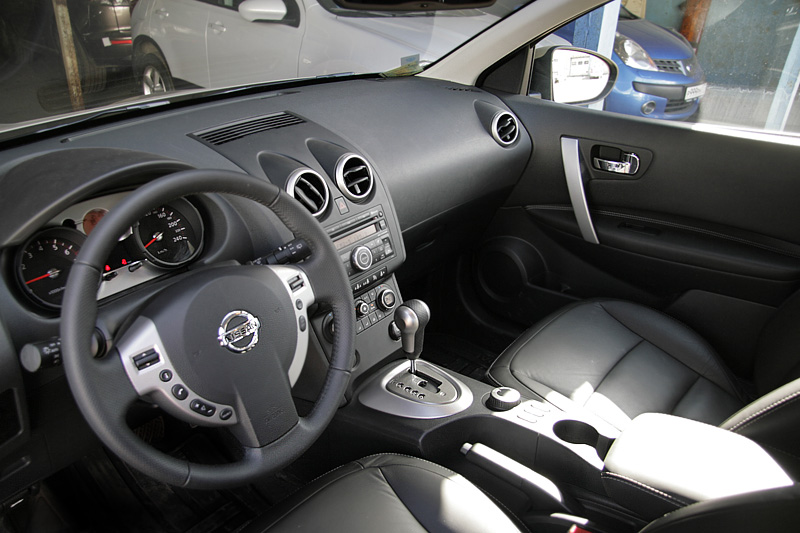
Inside, there's also a slight aggression. The instrument panel is slightly overloaded with details. On the speedometer and tachometer, there are many red marks of different formats, making your eyes water, and the stylish round display requires a long stare to make out anything. Designers, chasing style, clearly got carried away with circles. Perhaps they were tasked with keeping the driver on edge — then it's done perfectly. The saying comes to mind: in war as in war.
The climate control and audio system blocks are also stuffed with buttons. Basic functions are understandable but require too much attention. However, for adherents of the principle "feet warm, head cold," the Qashqai has a separate air duct for the hair. The quality of finishing is top-notch. Soft plastic is not only on the top of the front panel but also on the center console and door cards, and the armrests are upholstered in leather. The round air vents hark back to Alfa Romeo and Mazda. The glove box is Europeanly spacious: it fits three two-liter bottles, which can even be cooled if desired. In the sun visors, there are mirrors with auto-illumination, which for a Japanese golf-class car is simply luxury.
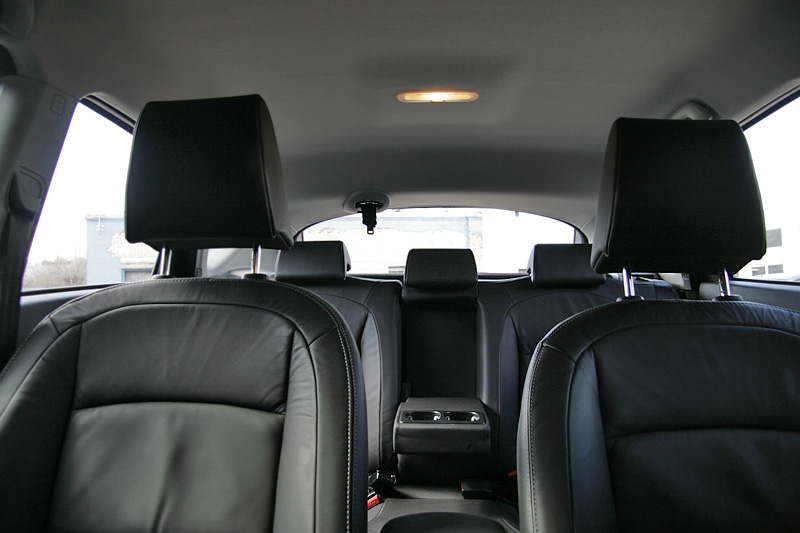
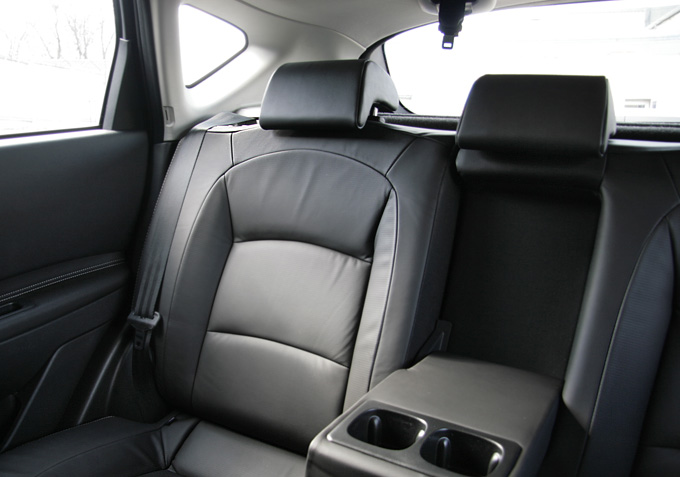
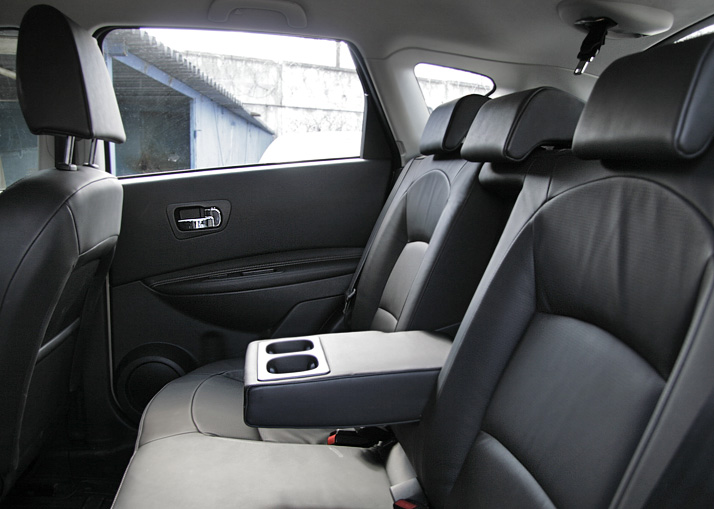
The rear row in terms of space is comparable to regular golf-class hatchbacks. Three can sit, but it's cramped, although the central tunnel is low. Judging by the shape of the rear, you expect a trunk of about 500 liters, but you get only 350 liters. The reason is the high floor, under which hides a full-size 17-inch spare wheel with tall rubber. You're tempted to mount the wheel on the tailgate, like on real SUVs, to increase the volume and lower the loading height. But for a city car, a space-saver spare would be more logical.
In the pursuit of sportiness, the steering wheel was made excessively heavy, which is inconvenient in the city. Although you quickly get used to it, it adds no advantages. There have long been systems with variable effort depending on speed. Especially since the Qashqai has an electric power steering controlled by electronics — it would seem, what's stopping them.
The suspension is tuned stiffly, in a European way: it doesn't like speed bumps and readily reports every bump. However, the tall Qashqai hardly rolls, although this doesn't create sports car sensations, but rather generates a discrepancy between how the car is perceived and what it's actually capable of. On a broken road, the crossover sways, and sometimes the suspension bottoms out — which you don't expect at all at a calm pace.

The CVT also behaves overly sporty. In any mode, when you release the gas, it seems to drop half a gear: the revs jump by 500-700 rpm, active engine braking begins — and that's not always needed. If the suspension were softer, the Qashqai would surely nose-dive, but as it is, passengers have to bow. For sport mode, such a scheme is just right, but in normal Drive, it's overly aggressive. You coast to a traffic light, and the car brakes so hard with the engine that it stops earlier than planned, and you have to accelerate again.
So, the Qashqai constantly pushes toward an aggressive driving style, which is unlikely to please most drivers, especially women. But we couldn't resist and had a race. On a country highway, the speedometer needle confidently crept to 185 km/h, although the passport data says 178 km/h — clearly the instruments are lying. The engine roars at extreme revs, and you don't want to drive like that for long. A comfortable cruising pace is up to 150 km/h. Further acceleration only happens at high revs, and the cabin fills with a tense engine howl: speed is gained by changing the gear ratio in the CVT.
We also decided to test the Qashqai's off-road talents, but honestly, the crossover didn't shine here. The main culprit is the CVT. On sand, and, apparently, on any other pliable surface like loose snow or mud, the transmission struggles to digest the torque, and you get the impression that it's about to give up. The car especially struggles with starting uphill: with a classic "automatic" or manual, there would likely be no such torment. However, the forced locking of the center differential works flawlessly. You just have to catch the moment when the front wheels start to dig in, turn the washer near the selector — and the Qashqai seems to be picked up by an invisible tow truck. If only the front bumper were raised higher, you could safely attack sand dunes. However, for most city curbs, the ground clearance is quite sufficient.
When Nissan first announced the name Qashqai, internet forums exploded with debates: how exactly should this word be pronounced? Imagination painted the most unexpected variants — from "Kvash-Kai" to "Kuash-Kai." The truth turned out to be simpler: it is correctly pronounced "Kashkai," which in one of the African dialects translates as "Urban Nomad." Personally, I hear something feline in this name. And looking at the exterior, you understand: before you is a real mischievous cat. It will roll on the curtains, and scream deafeningly on the fence, and then dash at full speed into the thick of a dog fight. In a word, a hooligan.
Despite some flaws, it can be confidently said: Nissan hit the bull's-eye, and Qashqai is guaranteed a great future in the market. In its concept, it resembles the Ford Fusion, but it occupies a class higher and covers a much wider price segment, and therefore a larger audience. The manufacturer gives the buyer the right to choose: if you want, take a raised front-wheel-drive hatch for the city, or a compact all-wheel-drive crossover that can handle light off-road. In both guises, the Qashqai is good, and most importantly, it has virtually no competitors. The only one that can stand alongside is Dodge Caliber, but it is sold only in front-wheel-drive and with more powerful engines, which automatically makes it more expensive. Moreover, many buyers still treat the Dodge brand with distrust.
As for my choice, I would opt for the front-wheel-drive version with a 2.0-liter engine and 6-speed manual — this combination provides enough drive both in the city and on a long trip. For overcoming obstacles off the asphalt, the Qashqai's solid ground clearance is enough, and without all-wheel drive, the car becomes both faster and more economical. Plus, the price is more attractive: from $24,400 to $28,150.
Text: Leonid Pavlov. Photos by the author.