
First impressions matter
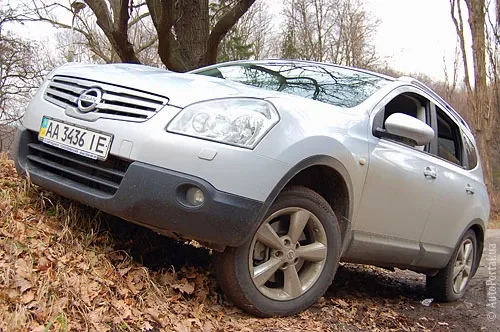
The queues for the first Qashqai, stretching for a year, prompted Nissan to develop the successful project. That's why in the summer of 2008, at the London Motor Show, the seven-seat Qashqai+2 debuted. In Europe, sales of the new model started in the autumn of that year, and by the beginning of winter, the car reached the Ukrainian market.
From the outside, the Qashqai+2 is easiest to recognize by its redesigned rear, which has become more solid and vaguely resembles the Murano.
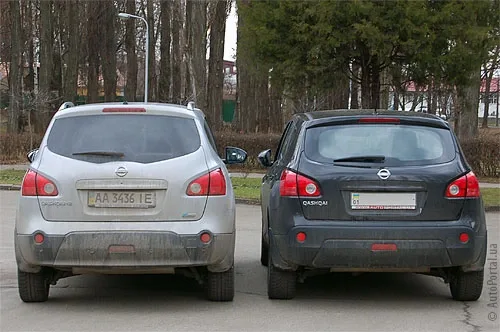
The crossover got different rear doors, including the tailgate. The rear windows are now tinted straight from the factory — in the American style. The roof gained roof rails, and it no longer slopes back as sharply.
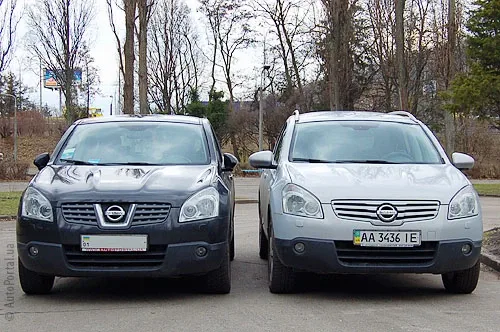
From the front, the two versions can be distinguished only by the radiator grille: on the seven-seat version it is silver. The Nissan emblem on it has lost its chrome trim. On a dark body, such a grille would look more advantageous, but on our light test car it seems as if it was simply painted in the body color.
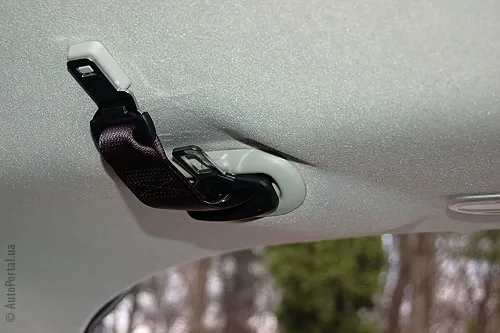
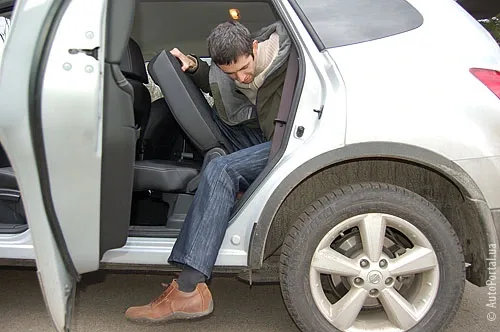
The front part of the interior is identical in both models. You can understand which Qashqai you are in only from the rear seats. Due to the increased wheelbase, the second row has become noticeably more spacious, and getting into it through the widened rear doors is now much more convenient. The higher roof also contributed. A nice detail: the seat belt of the middle passenger can be secured with a magnet under the ceiling so that it doesn't dangle in the air.
The main difference, of course, is the third row of seats. Just one look at these seats makes you doubt the comfort of riding in them.
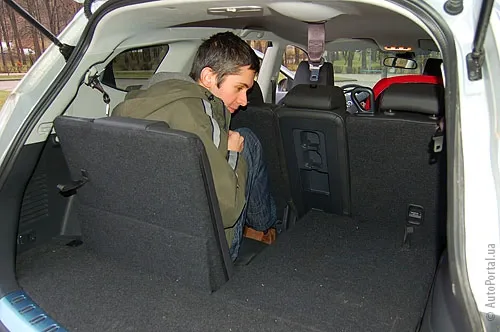
Climbing into the gallery through a narrow opening is a dubious pleasure. An adult would find themselves squeezed between the second row and the ceiling, with knees raised high. However, Nissan does not hide it: the third row is intended exclusively for children, and it should not be taken seriously.
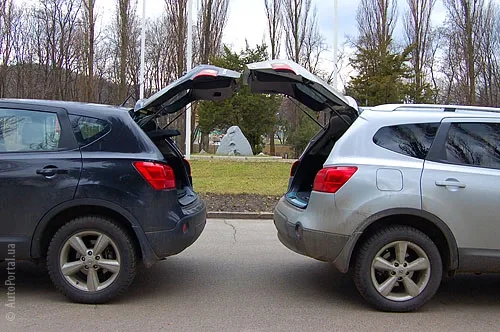

But if you fold the gallery into the floor, the trunk grows to 550 liters. The five-seat Qashqai has a volume 140 liters less. The second row can also be moved forward to stuff something else into the trunk — and you won't have to drop off passengers, as there will be enough space.
Fully equipped
The equipment of both versions is almost identical, but the Qashqai+2 in all trim levels except the base gets 17-inch wheels. Plus — tinted rear windows and roof rails. The trim level names remain the same: Visia, Accenta, Tecna, Navi.
The technical content of the Qashqai+2 also completely repeats the five-seat model.
The same two engines (1.6 and 2.0) and three gearboxes: five- and six-speed manuals, as well as a CVT. Our comparative test involved two two-liter all-wheel-drive Qashqais with CVTs.
According to the specs, the two extra seats cost the Qashqai+2 half a second of acceleration to 100 km/h and 1 km/h of top speed. In motion, this difference is not felt. Probably, the credit goes to the continuously variable transmission, which smoothly accelerates the heavier crossover.
The fuel consumption of both crossovers is also the same — in the city it fits into 11–11.5 liters.
And this is despite the fact that the Qashqai+2 is almost 200 kg heavier. How the manufacturer managed to maintain the same appetite remains a mystery to us.
The difference between the models is well felt on uneven roads — that is, on our Ukrainian ones. The retuned suspension of the Qashqai+2 is more comfortable and reacts to potholes more quietly than the five-seat version. And thanks to the wheelbase extended by 135 mm, the seven-seat Qashqai also holds the road more stably.
+2 and more
Nissan's research showed that 12 percent of potential buyers refused the Qashqai due to the cramped interior. In the Qashqai+2, the space has noticeably increased, and to make overly demanding customers understand what truly limited space is, the third row of seats appeared.
The price difference between identical trim levels of the five- and seven-seat versions is about 2,500 dollars.
But the overpayment goes not only for two extra seats, but also for a more comfortable interior and suspension. Moreover, the compact seven-seat crossover Nissan Qashqai+2 currently has no direct competitors.
The comparative test showed that the Qashqai+2 differs from the five-seat version not only in the third row. It proved to be a more family-oriented and comfortable car, and the two seats in the trunk are just a pleasant bonus for the future owner.
Nissan Qashqai owner's opinion:
The extended Qashqai seemed softer in handling. The little things also pleased — a more convenient handle for closing the trunk and, of course, the spacious rear row. But the changed radiator grille did not impress at all.