
Mykhailo PETROVSKYI | Photos by the author and Nissan company
My colleagues were already joking on the way to Barcelona: why fly to a test drive of the new Nissan Qashqai crossover when you already know everything about it. That's not true. During the year of my acquaintance with the Qashqai as part of the project "Nissan Qashqai: Behind the Scenes" (see AR No. 20, 2006), I never got to drive it! But after the first day of testing, my colleagues' jokes became more biting. They say it wasn't worth spending twelve pages of Autoreview on the Qashqai. Is that really true?
Something like this has happened to me before. In my youth, when I first found myself behind the scenes at the Moscow Art Theatre, I was captivated by the mysterious atmosphere of the stage. I saw what was hidden from the public eye. Even weak performances were interesting to watch from behind the curtains. But over time, reality seeped through the dusty beams of the spotlights. I noticed how much the stars drank and swore, how intrigues were woven and grievances accumulated. And most importantly, no matter how self-sufficient the rope-and-rebar underside of the theater seemed, it existed only for the sake of the performance...
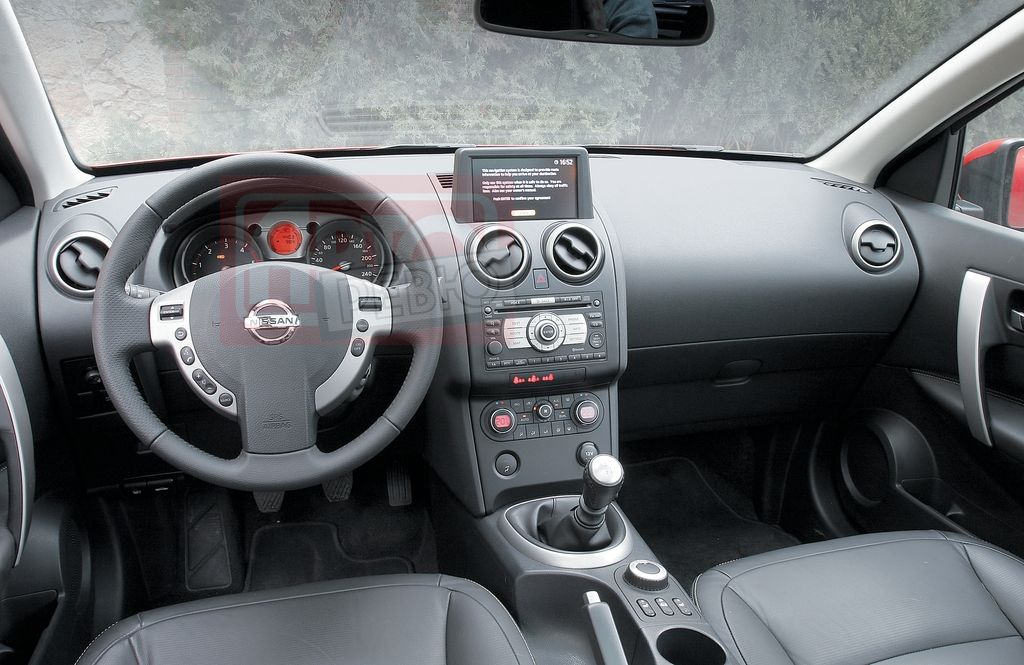 | 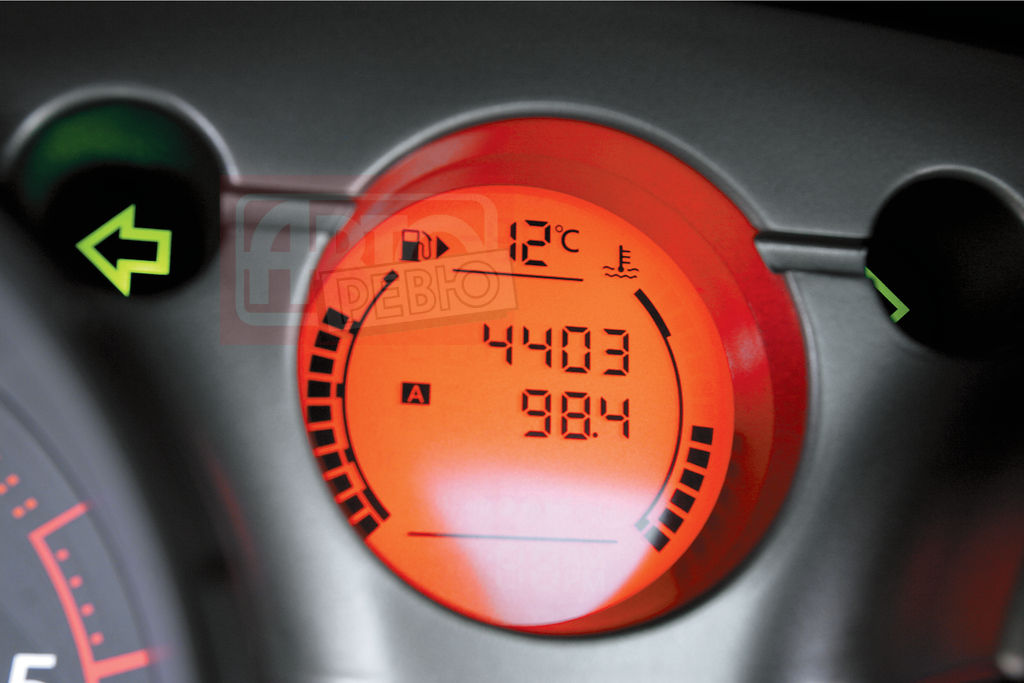 |
| The interior is high-quality, though there are some rough details: for example, the lower sections of the door panels or the overly "plastic" central tunnel | The original odometer display: it shows fuel level, outside temperature, and coolant temperature |
Nissan's backstage was no less enchanting. Everything here was magical: mystery, the surprise of small discoveries, interesting people whose lives unfold on the other side of the stage. And I got carried away. Project P32L, as the Qashqai is designated in factory documents, became dear to me. I spent a year of my life with it and used 6010 minutes to write it all down. But now I see that the "performance" itself is far less emotional than what happened behind the scenes. Hence the frustration.
Glossary.ru says: "frustration (from Latin frustratio — 'the destruction of plans') — a psychological state of a person characterized by the presence of a stimulated need that has not found its satisfaction." If we trust the glossary, this test drive is a "frustration situation," and the Qashqai, therefore, is my "frustrator." Frus-tra-tor...
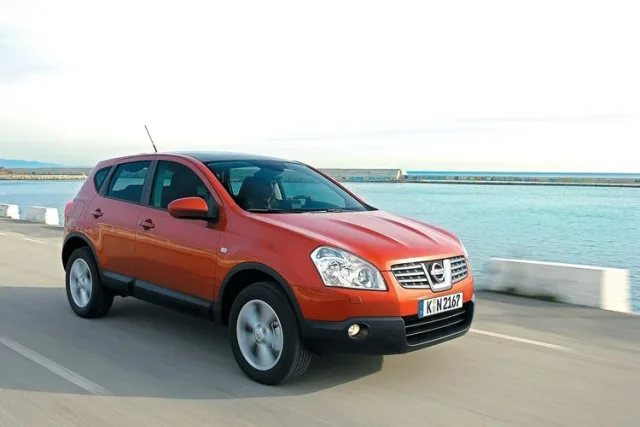
But you wouldn't say so by looking at it. Even if the production car is more prosaic than the concept car of the same name, even if it's more mature than I would have liked, the image turned out harmonious and restrained. From some angles, for example in profile, the Qashqai is handsome. From others, it's simply presentable. And the high seating position suits it. True, the Qashqai's exterior has much less pathos and glamour than the speeches of its creators. It lacks individuality; it seems assembled from quotes. But that's precisely what makes it a mass-market car in the best sense of the word. A normal car for normal people. For everyone.
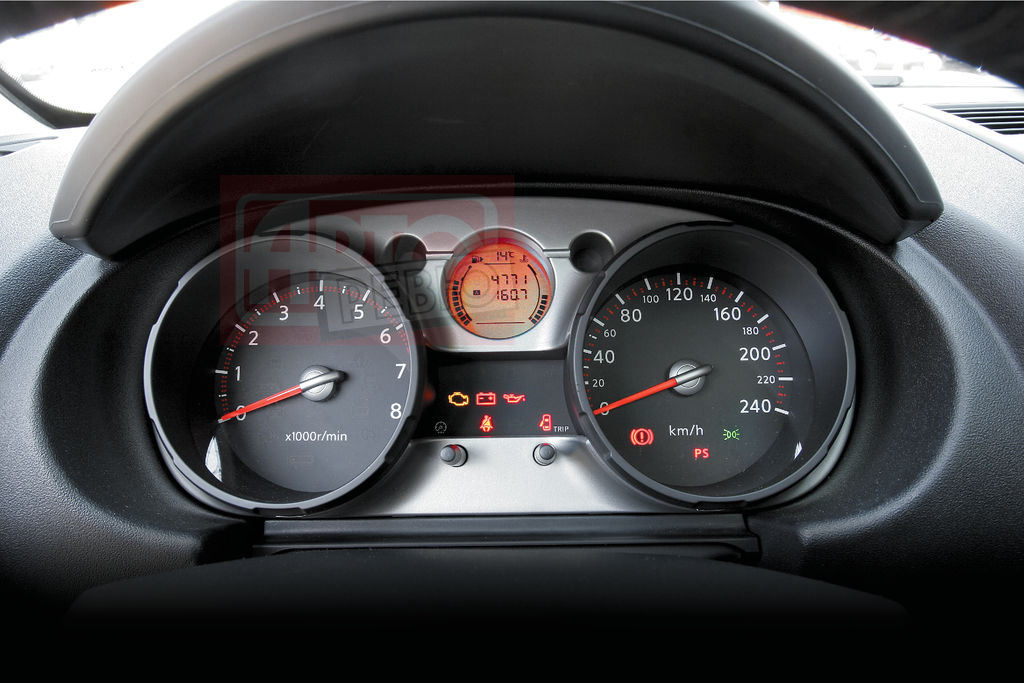 | 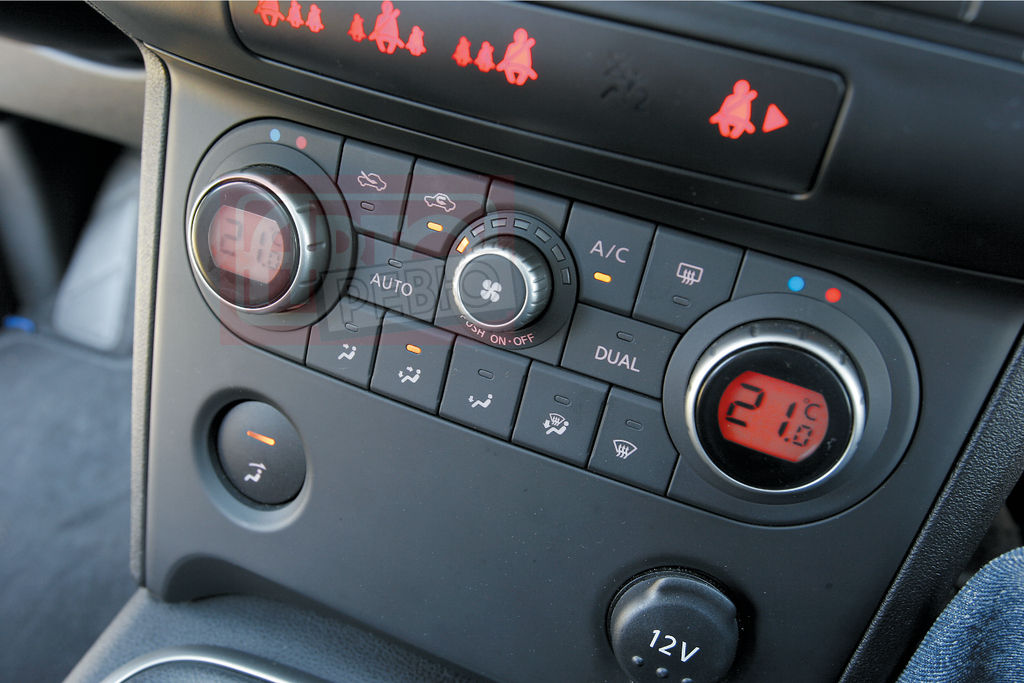 | 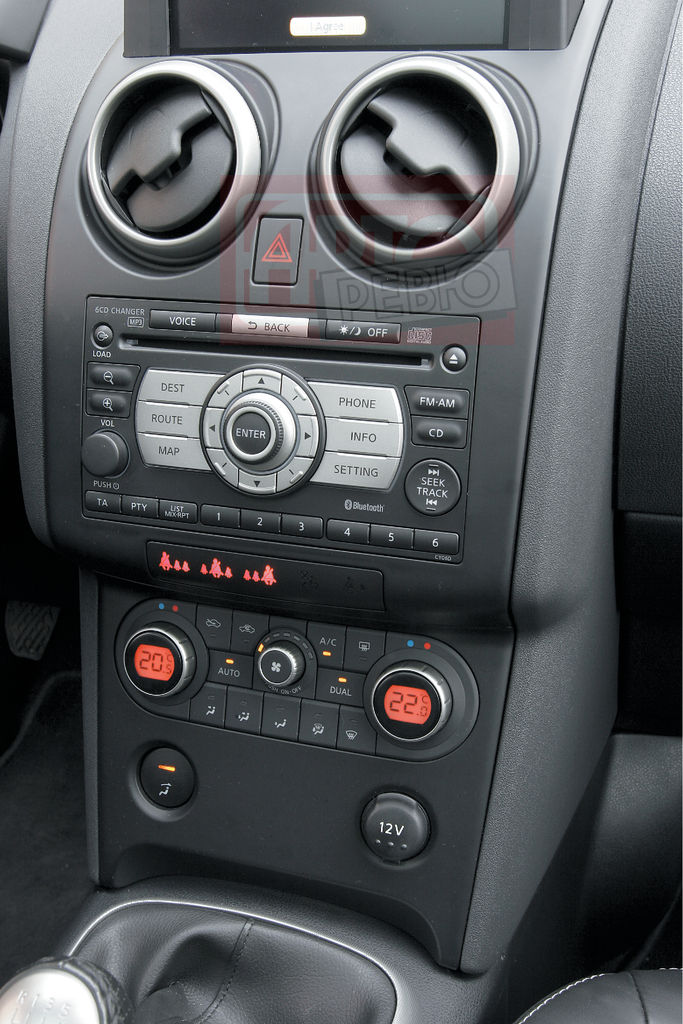 |
| According to the designers, this combination was inspired by motorcycle instruments. The orange backlighting will become common for Nissan cars in the future | The climate control unit is located low — the small, identical buttons are inconvenient to use. The recirculation mode is turned on and off with different buttons. The division into temperature zones is ineffective: the airflow intensity depends only on the mode selected by the driver. At the bottom is the button for activating airflow for rear passengers. | All Qashqais will be equipped with a Bluetooth phone headset. And top versions will have a navigation system. Even in Russia! The controller is almost like on Infiniti cars |
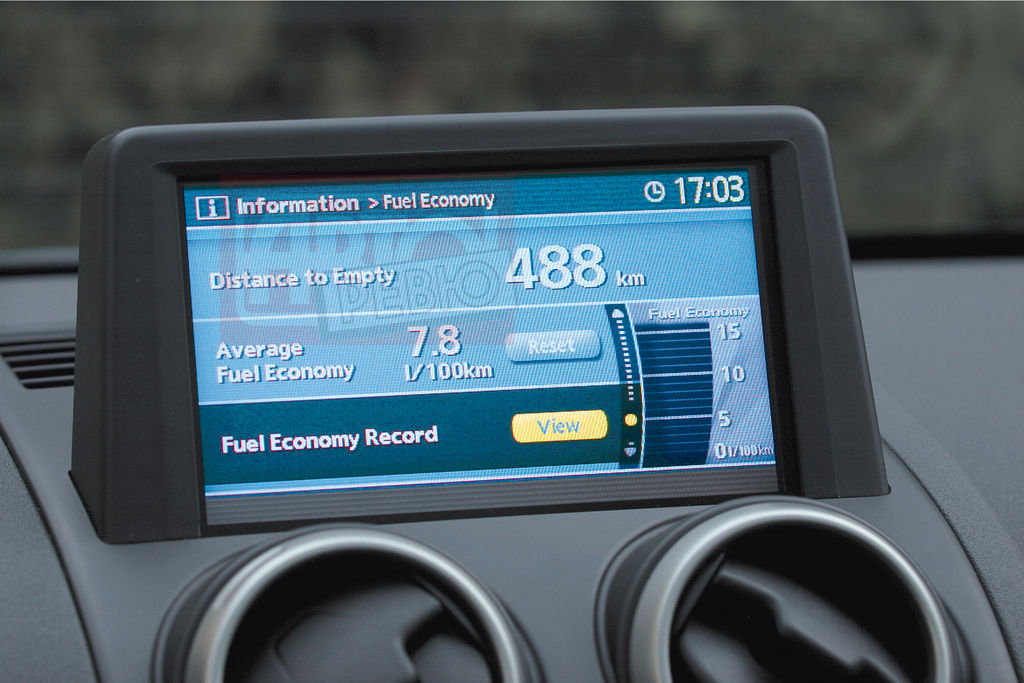 | 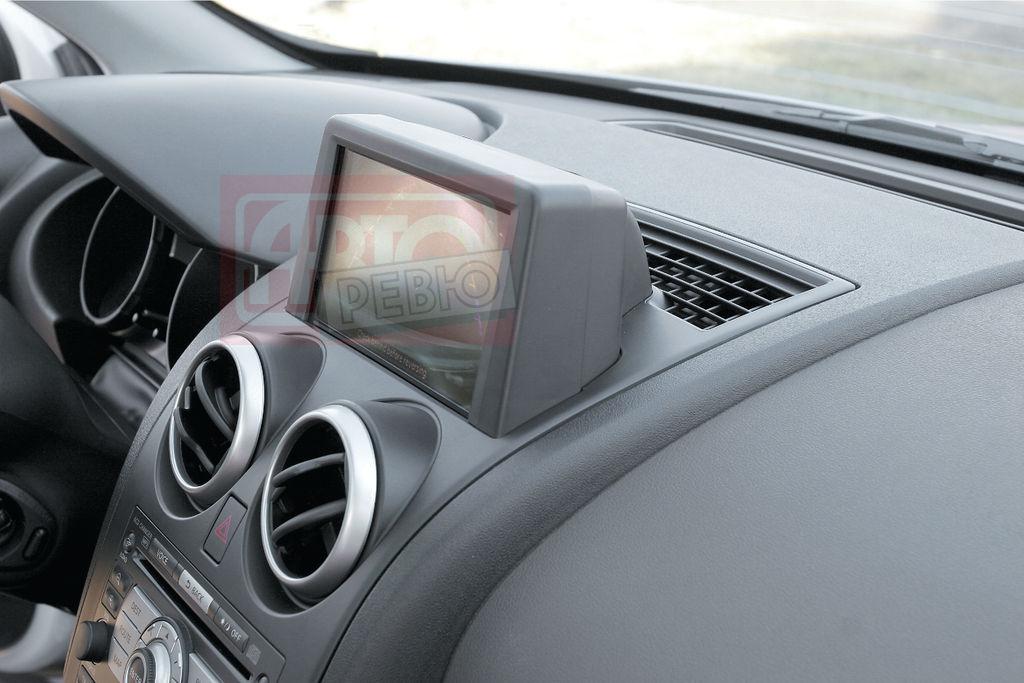 | 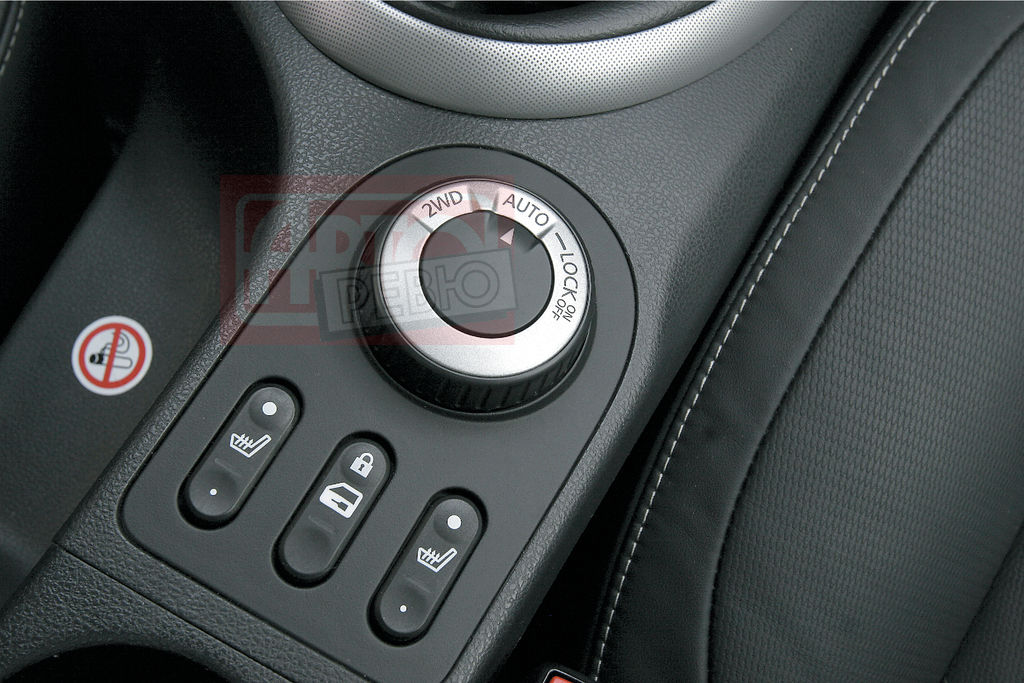 |
| The seven-inch display doesn't look like a factory-installed element and might attract car thieves. But it pleases with high-quality graphics and menu animation | Air flows along the roof from a special duct on the dashboard. Due to the complex ventilation system, the multimedia screen cannot be retracted | The all-wheel drive on the Qashqai is like on the Nissan X-Trail "soft-roader": in auto mode, an electromagnetic clutch transfers torque to the rear wheels when the front wheels slip or when the computer detects the likelihood of slip — for example, when pulling away or when sharply opening the throttle. The "brains" were recalibrated due to different weight distribution: the Qashqai sends more torque to the rear — up to 50%. The clutch can be forcibly locked by turning the "washer" on the central tunnel to the lock position, but upon reaching 30 km/h, the system will switch to auto mode |
Inside, the Qashqai will also please everyone. But I feel uneasy here. It's not my own anxiety, but the anxiety of Nissan people about the Qashqai's future. After all, the experience of the extravagant Primera, rejected by Europeans, really scared them. That's why they didn't let any controversial detail within a stone's throw. It turned out solid but cold. Good panel fit, soft plastic. There are even amusing details: the amber medallion of the onboard computer in the instrument cluster's neckline, matte climate control knobs with small displays inside, notches on the rims of the dials... But it's obvious that this interior didn't have a single father-author. It lacks a strong idea.
There's none in motion either. Nissan people keep talking about the urban nomad, but they interpret the word "nomad" in their own way. I imagined someone armed, mounted, dynamic, maneuverable. But in reality, the definition "wanderer" suits the Qashqai better.
We drove two-liter versions: a front-wheel-drive with a 140-horsepower gasoline engine and an all-wheel-drive with a 150-horsepower turbodiesel.
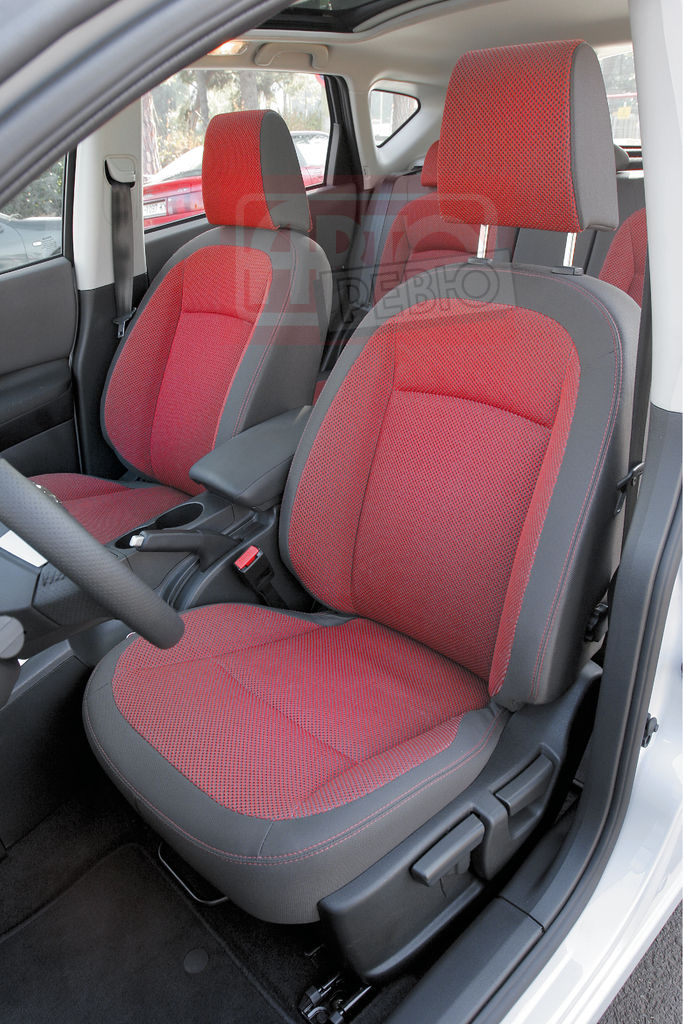 | 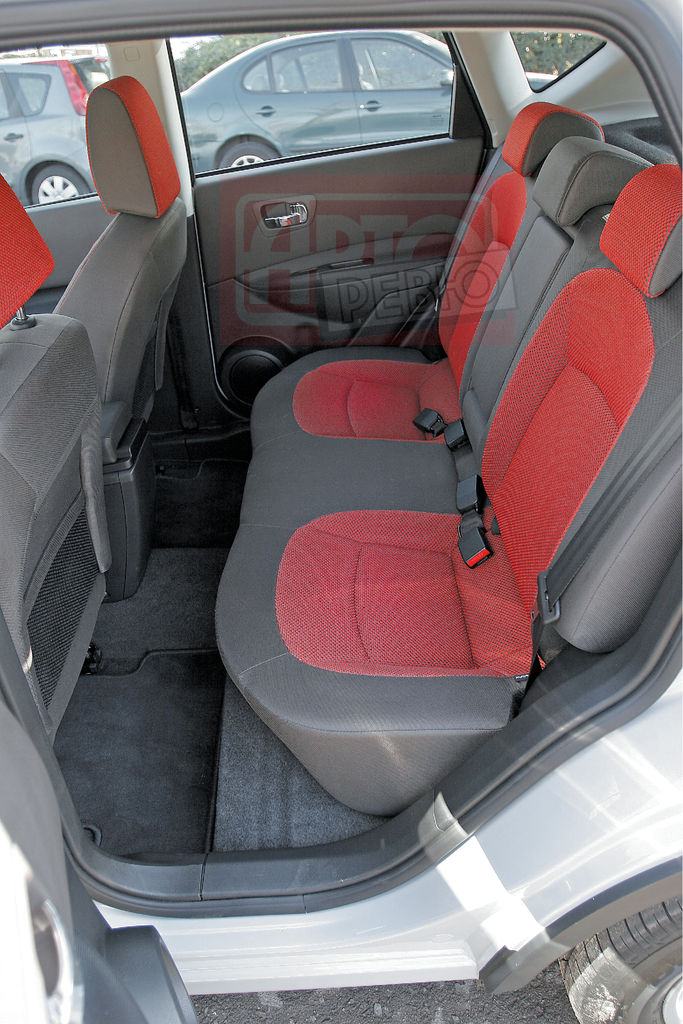 | 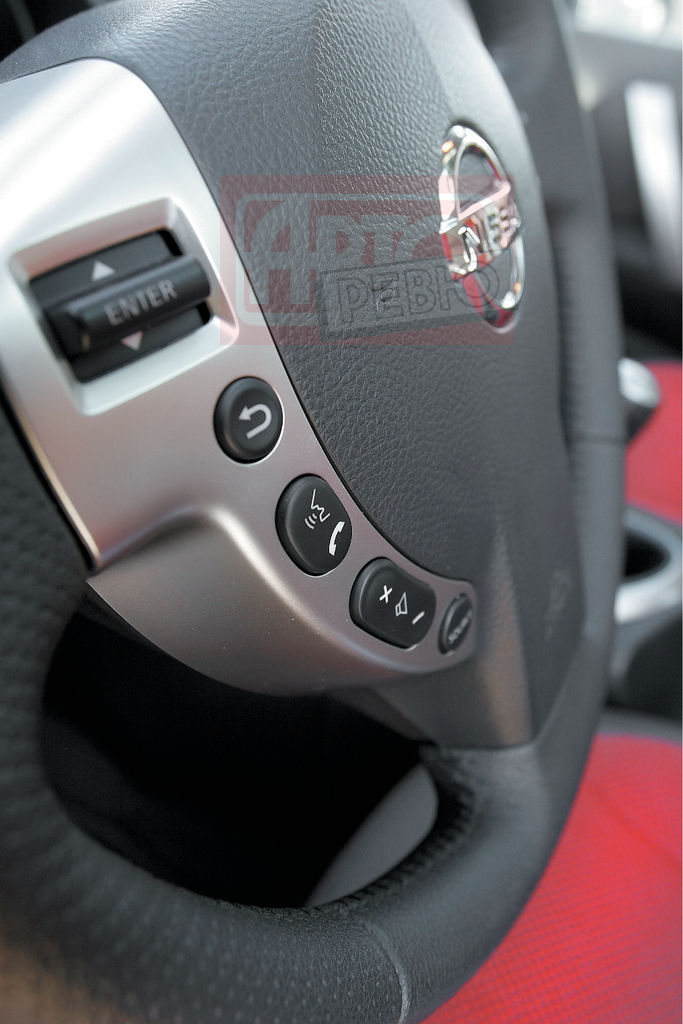 |
| The profile of the front seats was never perfected — the cushion now presses under the knees | The rear is very spacious, but the seat is clearly molded for two occupants | The steering wheel is functional, and the steering column adjusts for reach and tilt. Too bad the rim is covered with unpleasant slippery "leather" |
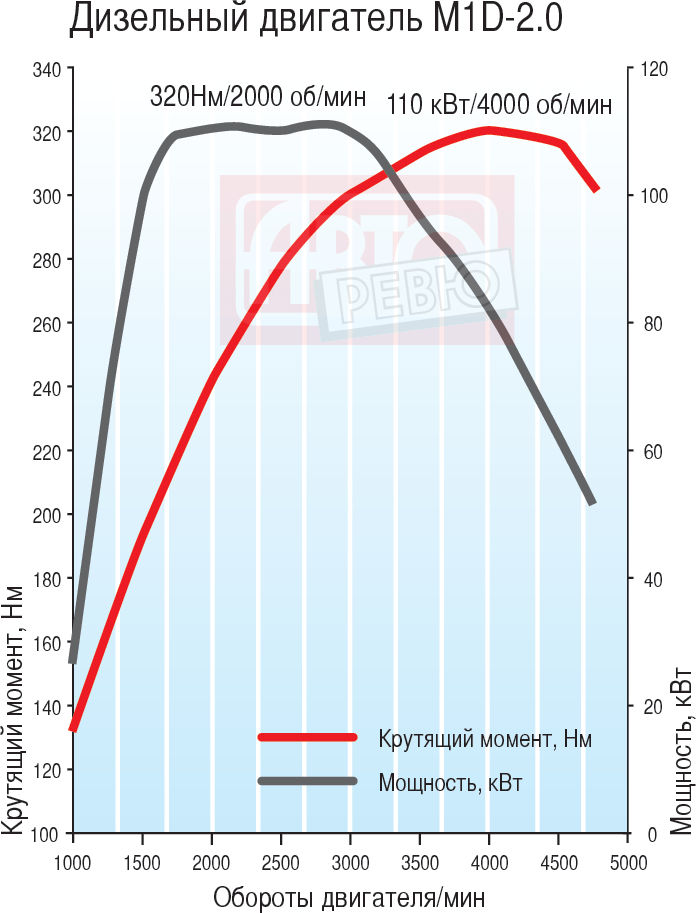
The newest diesel engine M1D-2.0 is one of the most advanced in Europe. Balance shafts, piezo-ceramic injectors that allow fuel to be injected up to five times per cycle... Torque is 320 Nm at 2000 rpm. It's felt right from one and a half thousand rpm. But the diesel Qashqai weighs over 1600 kg, so there's no ease in acceleration. There's noise and vibration. True, the cars brought to Barcelona were from the first pilot batch, production trial 1 (PT1).
The gasoline Qashqai 2.0, even though it's two hundred kilograms lighter, seems even more sluggish. It's not just phlegmatic — it's boring. The gear ratios of the first two gears seem to be the same as on the diesel, and the final drive is much "shorter." But the acceleration is so colorless that it's hard to believe the claimed ten seconds to 100 km/h. And although the Qashqai can reach that 100 km/h on second gear, you don't want to rev the engine. First, after 3000 rpm it howls unmelodiously, and second, the best traction is in the middle. After all, 90% of the torque is available from 2000 rpm.
Noisy engines are a disappointment. Because the overall level of sound insulation is outstanding! This is especially noticeable to me, as I remember how noisy the first prototypes were. On summer tires and good roads, the Qashqai creeps so quietly that only the speedometer knows the true speed. This is especially true for the diesel version: the Qashqai easily reaches 180 km/h. And these figures don't match subjective impressions at all! The high seating position masks the sense of dynamics, and the overall feeling of isolation from what's happening is like in an Audi. But the resemblance to expensive cars evaporates as soon as a turn begins...
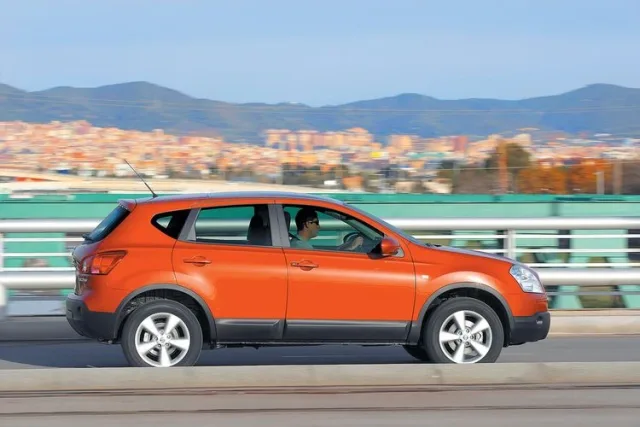
From this angle, the Qashqai seems as its creators promised — with character, energy, dynamics... Alas, appearances are deceiving. But it's precisely in them that the key to the hearts of the majority lies
The Qashqai is based on the same C platform as the Nissan Serena minivan, which I had a chance to drive in Japan. The Serena surprises with a strange combination of a stiff suspension and a completely dead steering wheel. The Qashqai is the complete opposite: its ride comfort is excellent, but the steering wheel feels like a lifeless game controller with an intrusive stabilizing force. It pulls the wheel back to center so persistently that every turn becomes a battle with an exercise machine. At the same time, there is no feedback at all — all information seems to have drowned in rubber! The steering wheel feels like a resistance band. Until you get used to it, it's impossible to guide the car into a corner with a single motion — you constantly have to correct, overcoming the elastic resistance.
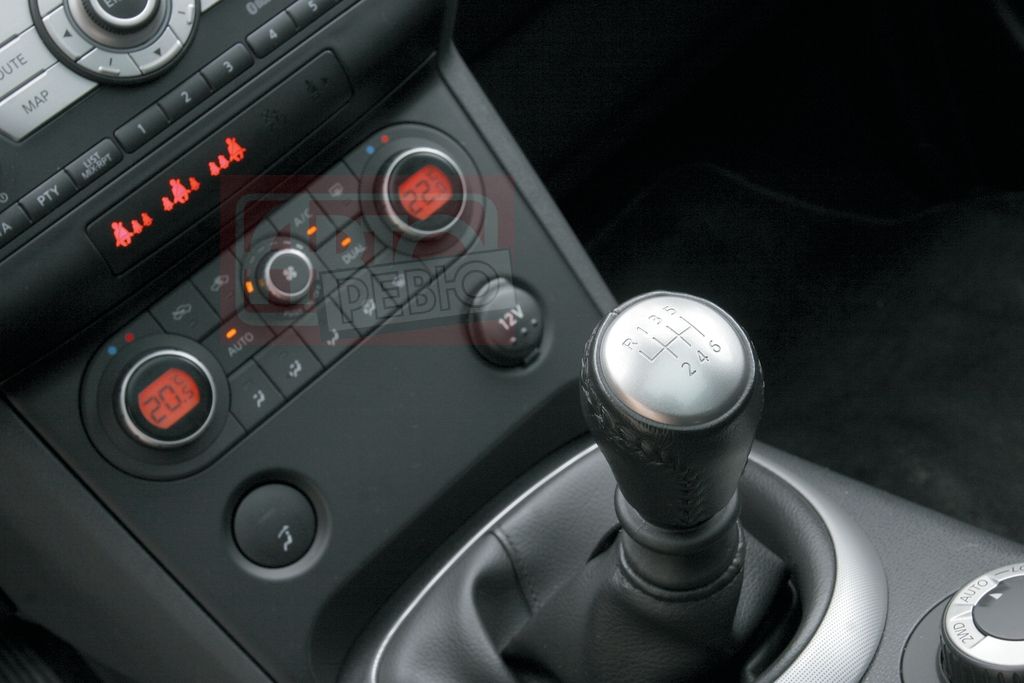 | 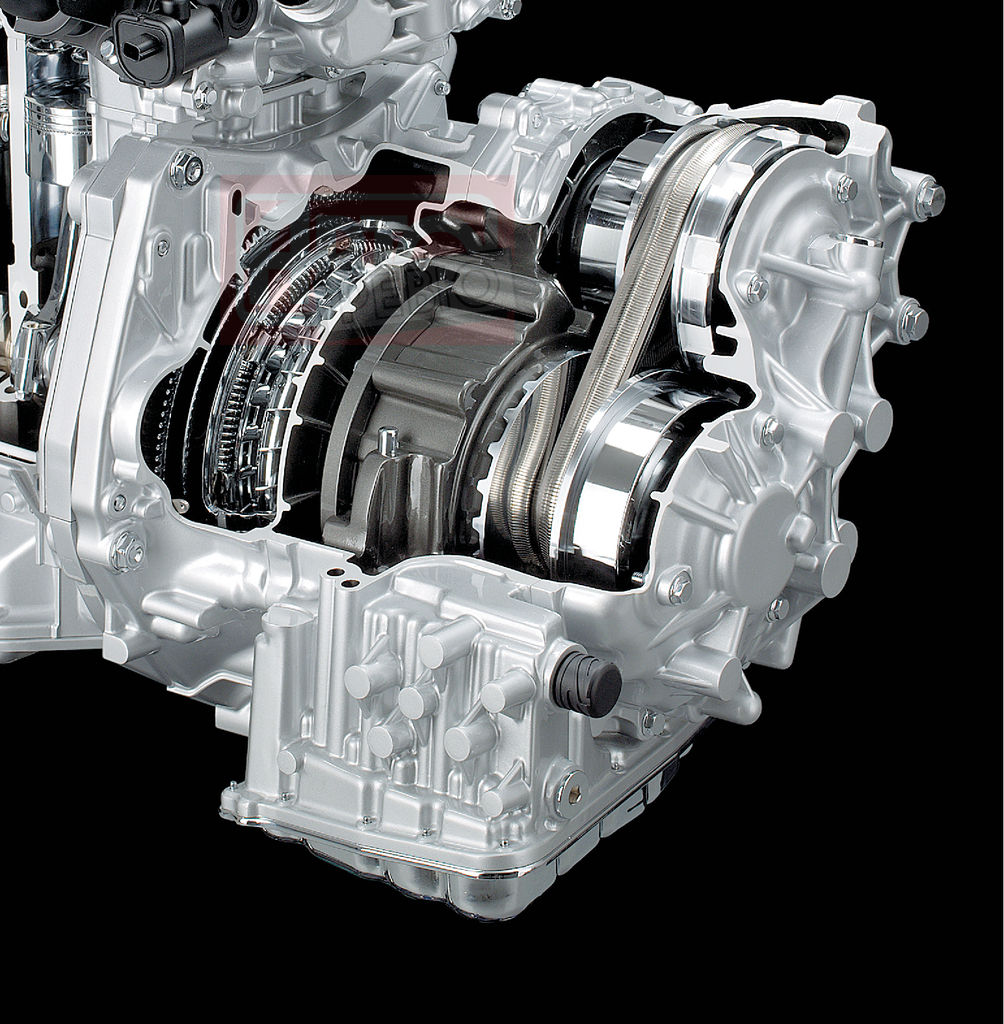 | 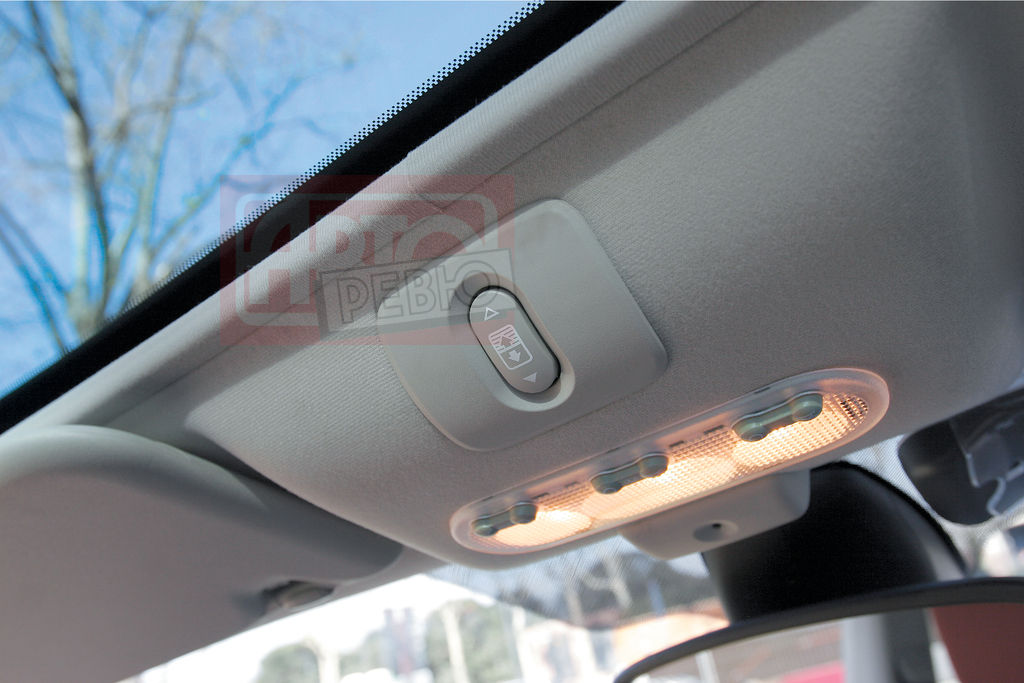 |
| The six-speed manual is generally decent: the lever throws are a bit long, but gear selection and engagement are beyond reproach | For two-liter gasoline versions, including all-wheel drive, the role of the "automatic" is played by a belt-driven CVT | Russian buyers won't get the glass roofs with a power-operated sunshade — instead, they're promised an extra 30 mm of headroom |
On mountain serpentines, the steering no longer seems so stubborn, but understeer is tiring.
In the evening before the press conference, engineer John Fetiss, whom I know from the "Behind the Scenes" project, explained why they had to sacrifice responsiveness. "Handling and comfort settings are developed in parallel, but the chassis tuning process is conventionally divided into three stages. First, the car must pass certification for handling and stability — that's the 'moose test' according to the VDA standard and tests on a circle of a given radius with braking in a turn. With such a high center of gravity, the Qashqai needs stiff springs and stabilizers. Then we work on comfort: we select shock absorbers, having calculated their impact on handling in advance. And last comes the fine-tuning of the electric power steering to balance the chassis. You see, if the steering is too light, there's a risk of understeer due to 'over-rotation' of the steered wheels — that's a sin of our diesel X-Trail, which had its power steering recalibrated in response to criticism. Besides, a light steering wheel gives too quick a control impulse — and you feel body roll more acutely. And we don't want the customer to think the car is wallowy. A heavy steering wheel creates a feeling of stability and safety — and most people like that. Critics like you, who lack feedback, certainly exist. I'll even agree with you, but our priorities are dynamic safety and comfort."
| External speed characteristics of engines | ||
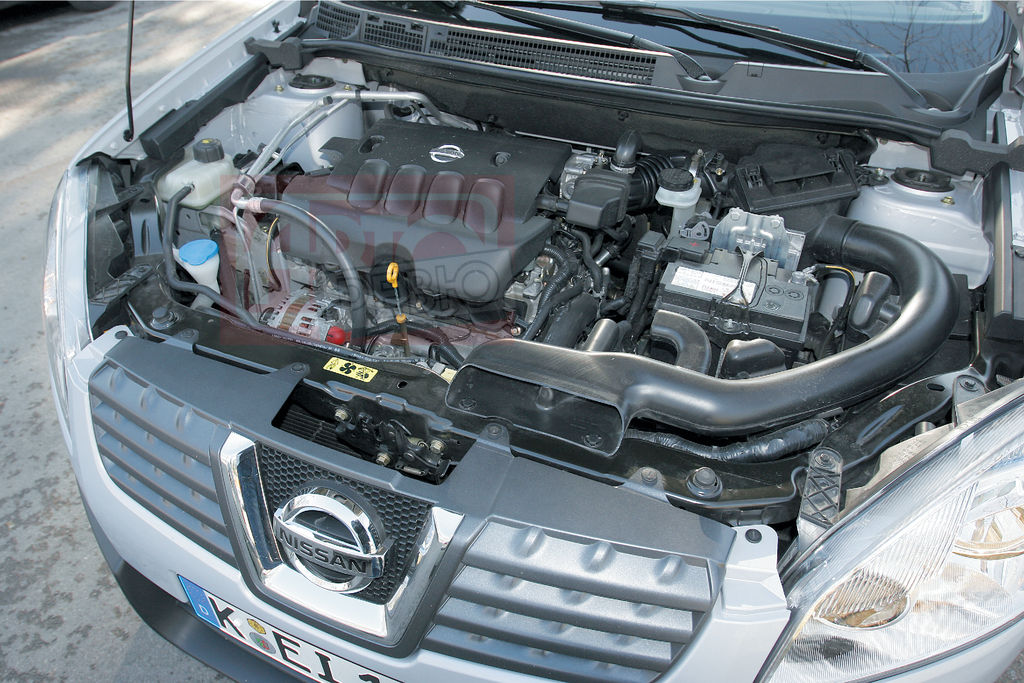 | 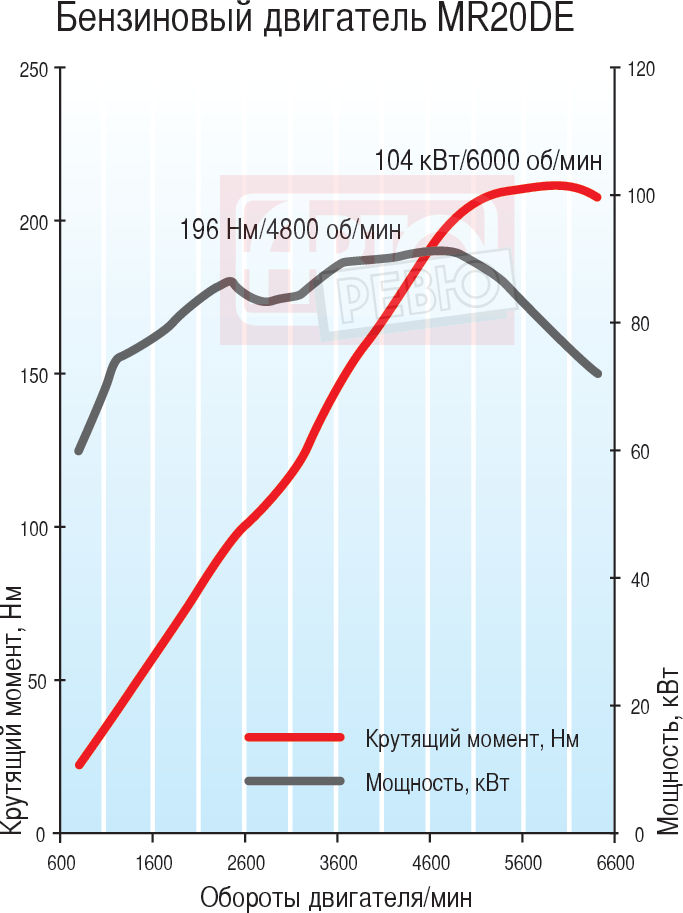 |  |
| The all-aluminum two-liter gasoline engine MR20DE was previously installed only on Japanese models for the domestic market. The European version produces 140 hp, but for a one-and-a-half-ton car, that's only enough for calm driving | ||
To be fair, the Qashqai's front end only slides when you're clearly going too fast. And the electric power steering indeed doesn't let you turn the wheels so far that they lose grip. But I keep coming back to Fetiss's words: "the steering wheel creates an impression of stability"... So, if you "loosen" the steering, will the illusion of a well-tuned chassis disappear? Or is the platform for the Qashqai too "Japanese" and attempts to make it European hopeless? There will be no official answer, of course. But the picky European buyers who value driving pleasure as much as design will answer it. If they sense an engineering surrogate in the Qashqai, Nissan Europe faces another Waterloo. Or rather, another Primera — after all, the reason for that model's failure in Europe was not only its bold looks, as the official version says, but also its "raw" chassis.
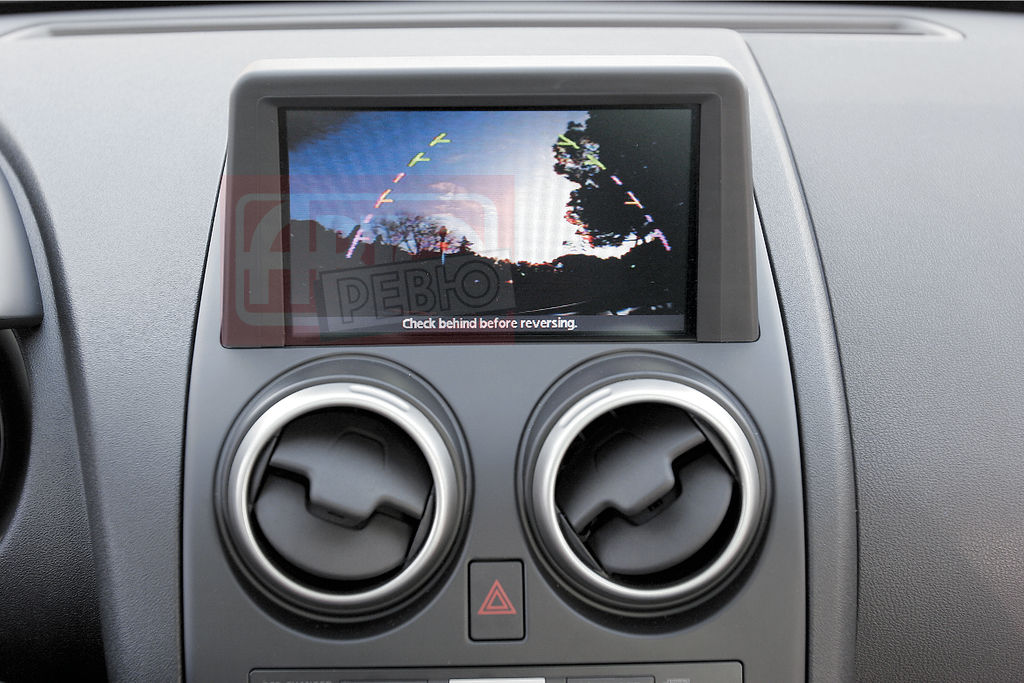 | 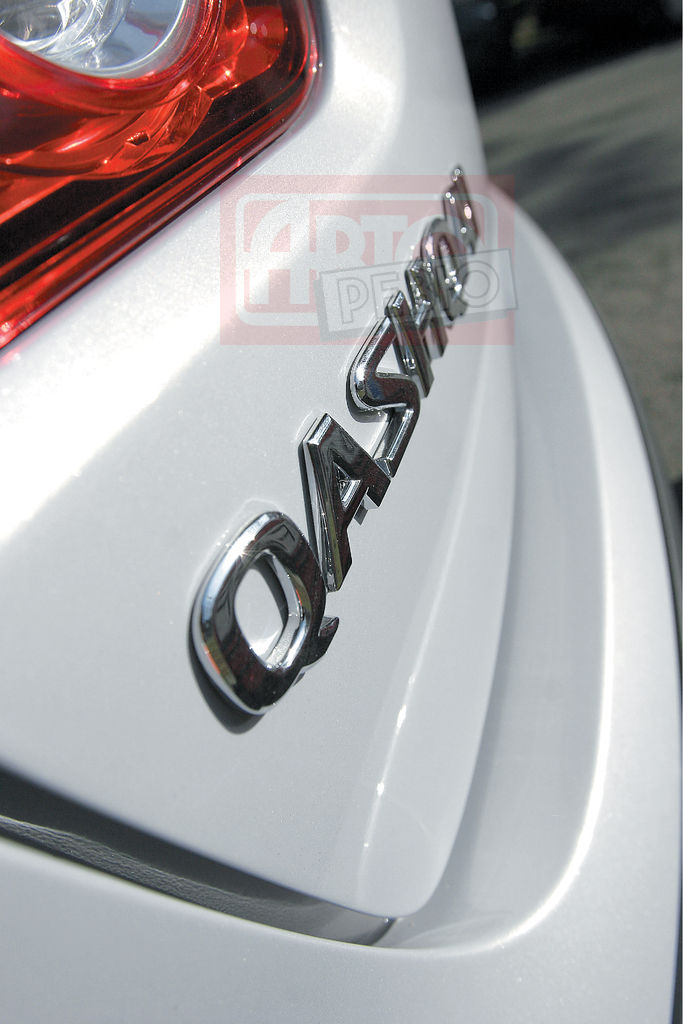 | |
| A funny place to park... The rear-view camera is only available in expensive versions with navigation. The color image on the display is supplemented with hints about the trajectory and distance to obstacles | Qashqai is a strange word. A set of letters, as if someone is playing "Boggle" in Latin... | |
After the test drive, I was beside myself. And when at the press conference the head of Nissan's European design center, Stephan Schwarz, started talking again about his team's inspiration — about Gorillaz music, Swarovski crystals, and the poetic image of the urban nomad — I wanted to cry. I held back. But then I sat down next to Schwarz and politely laid out everything that had been building up. That his conceptual speeches were unfulfilled hopes. Why repeat what the Qashqai was meant to be when it's obvious that something else turned out? That the visual image created by Schwarz is undoubtedly good, but it can no longer be considered separately from the vague chassis and pale dynamics.
The quiet, insinuating Schwarz instantly found the right word: "You have frustration." Exactly! It was frustration: I was rooting for this project, I believed in it. But on the road, the Qashqai turned out to be undercooked. I expected it to be a car for me, but it turned out to be for everyone except me. It's older, it's more ordinary.
"You're certainly being provocative," Schwarz purred. I obediently spread my hands: sorry, it's been building up. "But I like it, I appreciate your interest," he continued. "There's sense in your words. Perhaps I really am overcomplicating things. I'm just trying to convey what inspired us in this project. Maybe it's time to be simpler. I'm just thinking about how to speak tomorrow in front of French journalists — a difficult audience. As funny as it sounds, it's not easy for me to talk about design in French. I'll look for other words..."
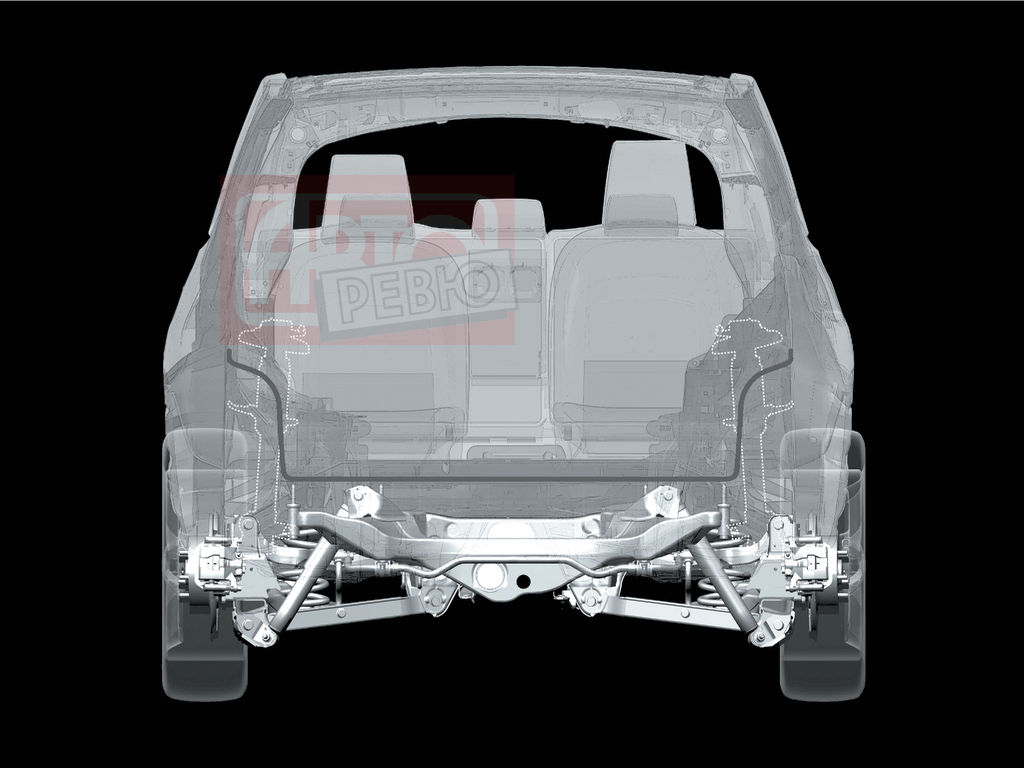 | ||
| Here it is, the global C platform: up front — McPherson struts with a powerful subframe on elastic mounts, at the rear — a compact multi-link on a subframe rigidly attached to the body. Inclined rear shock absorbers save space in the trunk. Unlike its platform siblings, the Qashqai features stiff springs, thick stabilizers, and "purely asphalt" Sachs shock absorbers. No package for bad roads is provided | The steering mechanism has electric power assist: the gearbox is located on the steering column. There are four fixed control programs. The first is "Japanese," with the lightest steering. The second and third are "European": for gasoline cars, the steering is lighter; for heavy diesel ones, heavier. Alas, both settings seem suboptimal. The spot for the fourth program is still empty... | |
We'll also look for other words, less emotional ones. Especially since in March we have a home test drive of completely production gasoline cars: with the 115-hp 1.6 engine and a five-speed manual, and a two-liter version with all-wheel drive. Perhaps on our "unbiased" experts, the Qashqai will make a completely different impression. And the cars will likely be a bit different too. For example, the Nissan folks have already taken on the electric power steering. Although there are few options: either the overweight pan-European one or the lightened Japanese one. It seems to me that something in between is needed...
It seems to me that the Qashqai with any settings — whether Japanese or European — will easily find its place on our roads. After all, what matters is not how the car drives, but how we look in it. And we'll look great. Judging by how briskly Nissan sells its cars in Russia (last year — more than 14% of all European sales), our dealers can well count on a thousand cars sold per month. And in the current situation with a total shortage of cars, they definitely won't be disappointed. Especially since the Qashqai will be cheaper than all popular crossovers. The front-wheel-drive version with the 1.6 engine (115 hp) will cost from $21,900 to $23,320 — depending on the trim. The two-liter car (140 hp) will cost $24,400–$31,950. All-wheel drive — only on 140-hp versions, and that's already $26,800–$34,350. There will be no diesel modifications. It's a pity that the trims are still kept secret. Although, if you think about it...
I myself won't rush to buy a Qashqai first. Although the thought crossed my mind.
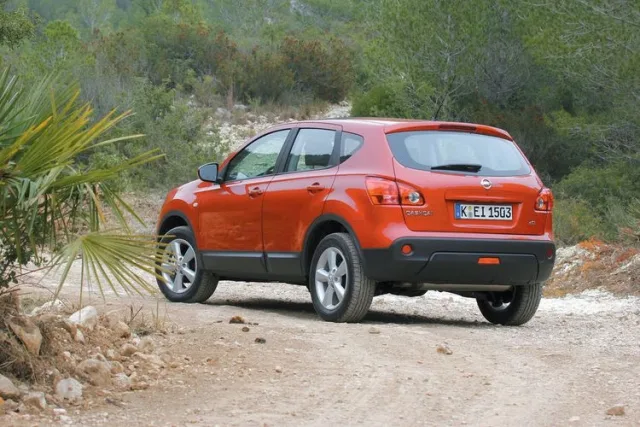
The protruding rear lights are a successful element that appeared after... blowing the Qashqai in a wind tunnel
| Passport data | ||||
| Parameters | Vehicle | |||
| Nissan Qashqai | ||||
| Modification | 1.6 | 2.0 | 1.5D | 2.0D |
| Body type | 5-door hatchback | 5-door hatchback | 5-door hatchback | 5-door hatchback |
| Number of seats | 5 | 5 | 5 | 5 |
| Overall dimensions, mm | ||||
| length | 4315 | 4315 | 4315 | 4315 |
| width | 1783 | 1783 | 1783 | 1783 |
| height | 1606 | 1606 | 1606 | 1606 |
| wheelbase | 2631 | 2631 | 2631 | 2631 |
| track front/rear | 1540/1550 | 1540/1550 | 1540/1550 | 1540/1550 |
| Trunk volume, l | 352—1513* | 352—1513* | 352—1513* | 352—1513* |
| Curb weight, kg | 1297—1392 | 1356—1535 | 1407—1471 | 1520—1685 |
| Gross weight, kg | 1830 | 1960 | 1930 | 2085 |
| Engine | petrol, with distributed injection | petrol, with distributed injection | diesel, turbocharged | diesel, turbocharged |
| Location | front, transverse | front, transverse | front, transverse | front, transverse |
| Number and arrangement of cylinders | 4, in-line | 4, in-line | 4, in-line | 4, in-line |
| Displacement, cm³ | 1598 | 1997 | 1461 | 1994 |
| Cylinder bore/piston stroke, mm | 78.0/83.6 | 84.0/90.1 | 76.0/80.5 | 84.0/90.0 |
| Compression ratio | 10.7:1 | 10.2:1 | 15.3:1 | 16.0:1 |
| Number of valves | 16 | 16 | 16 | 16 |
| Max. power, hp/kW/rpm | 115/84/6000 | 140/104/6000 | 106/78/4000 | 150/110/4000 |
| Max. torque, Nm/rpm | 156/4400 | 196/4800 | 240/2000 | 320/2000 |
| Transmission | manual, 5-speed | manual, 6-speed (CVT) | manual, 6-speed | manual, 6-speed (automatic, 6-speed) |
| Drive | front | front/all | front | front/all |
| Front suspension | independent, coil spring, McPherson | |||
| Rear suspension | independent, coil spring, multi-link | |||
| Front brakes | disc, ventilated | disc, ventilated | disc, ventilated | disc, ventilated |
| Rear brakes | disc | disc | disc | disc |
| Tires | 215/65 R16, 215/60 R17 | 215/65 R16, 215/60 R17 | 215/65 R16, 215/60 R17 | 215/65 R16, 215/60 R17 |
| Maximum speed, km/h | 175 | 192 (180)** | 174 | 190 (n.a.)*** |
| Acceleration time 0—100 km/h, s | 12 | 10.1 (10.7) | 12.2 | 10.5 (n.a.) |
| Fuel consumption, l/100 km | ||||
| urban cycle | 8.4 | 10.8 (10.4) | 6.2 | n.a. |
| extra-urban cycle | 5.7 | 6.8 (6.5) | 5.0 | n.a. |
| combined cycle | 6.7 | 8.2 (8.0) | 5.4 | 6.6 |
| Fuel tank capacity, l | 65 | 65 | 65 | 65 |
| Fuel | petrol AI-95 | petrol AI-95 | diesel fuel | diesel fuel |
| * Trunk capacity with rear seats folded | ||||
| ** Data in parentheses — for vehicles with automatic transmission or CVT | ||||
| *** N.a. — no data | ||||