
Who are such cars intended for? Of course, marketers of every self-respecting company know the answer. Or they are sure they know. Moreover,
in this situation, the portraits of future owners drawn up by marketers almost coincide: these are successful family men who adore travel and trips into nature, and instead of drive and excitement, they choose comfort and versatility. The youngest buyer is for the Kia Sorento: from 30 years and older. More than half of those interested in the Nissan Pathfinder are men over 35, and the majority of potential owners of the SsangYong Rexton are people from 40 to 45 years old. Moreover, the latter extremely need to emphasize their own uniqueness, simply put — to stand out from the crowd.
But a diesel engine won't surprise anyone now: more and more Russians are choosing SUVs with heavy fuel. So did we.
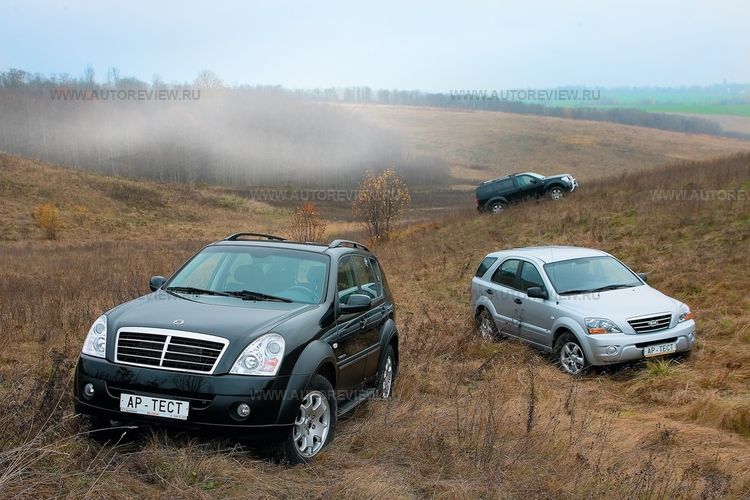
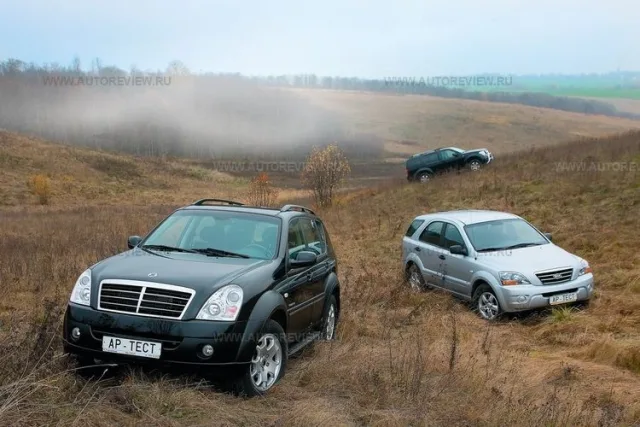
As for uniqueness, it is the Rexton, especially after the update, when the "bean" headlights separated from the false radiator grille, that got the most memorable face. It's just hard to understand what it expresses... Not joy and not aggression — rather surprise and stubbornness. Although you can't deny this appearance originality. As well as the Nissan's appearance.
The Sorento, next to the formidable Pathfinder (that's how "Pathfinder" is translated), is friendliness itself, seasoned with familiar features of the first generations of Mercedes ML and Lexus RX300 crossovers. And it's not surprising that the Sorento, unlike the other two SUVs, is often chosen by women too.
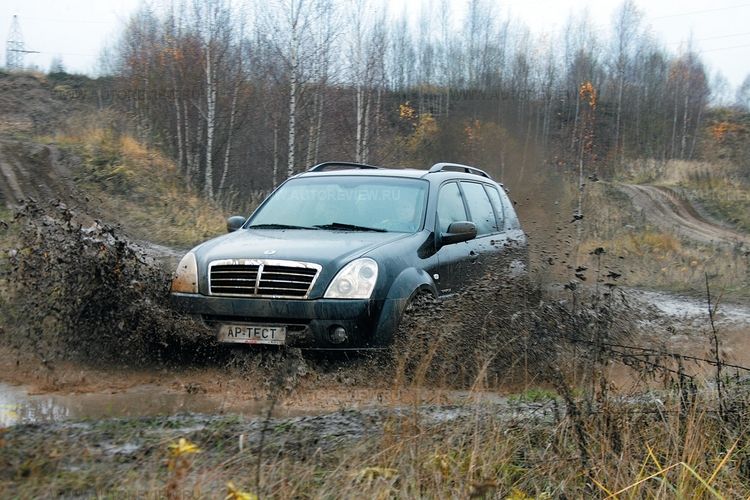
On off-road, it's better to move on the Rexton 2.7 XVT with momentum — without low range, its off-road potential is seriously limited
The Kia Sorento is assembled with "screwdriver" assembly in Izhevsk at the Izh-Auto plant, while the Rexton is produced in semi-knocked-down mode (with welding and painting of bodies) in Naberezhnye Chelny at the Microcar Plant (ZMA). And this had a positive effect on prices. The top version of the diesel Rexton (exactly such a car participated in the test) recently lost 70 thousand rubles in price and now costs 1 million 210 thousand rubles ($48990). The equipment is generous: five-speed automatic, leather interior, rain and light sensors, front and side airbags, stability control, hill descent assist... But a well-equipped Kia Sorento is another 140 thousand rubles ($5670) cheaper, however, it doesn't have electric drive for the front passenger seat, light and rain sensors, hill descent assist, and factory audio. True, the Sorento we managed to find for the test is even simpler — with a manual transmission and manual transfer case control. Of the electronic-mechanical assistants, there's only ABS. The price is 889990 rubles ($36030).
| Kia Sorento | Nissan Pathfinder | SsangYong Rexton |
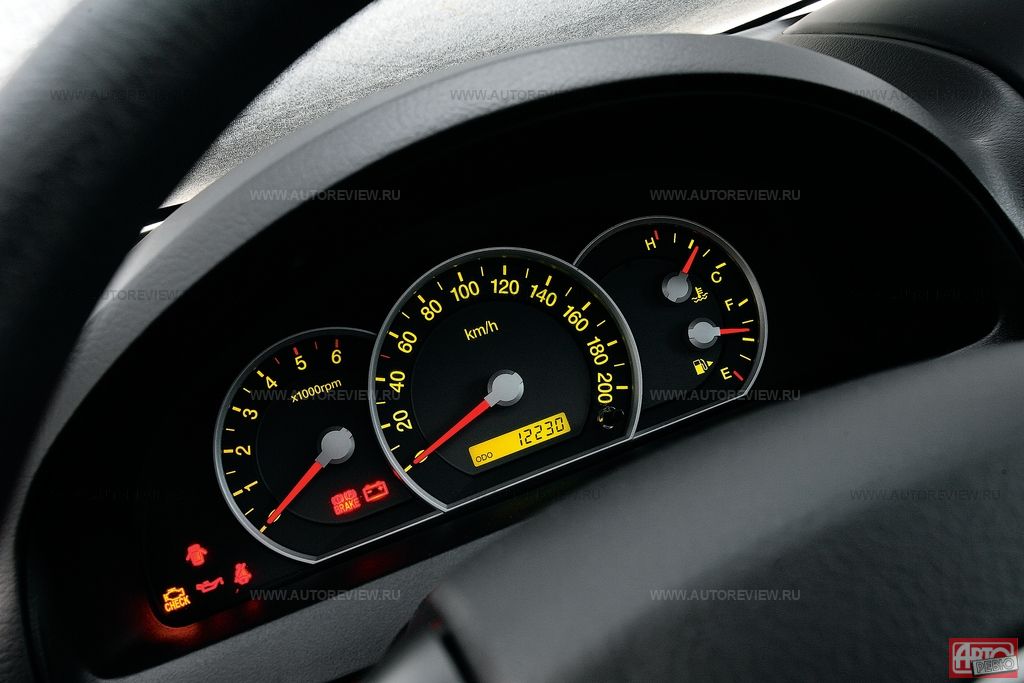 | 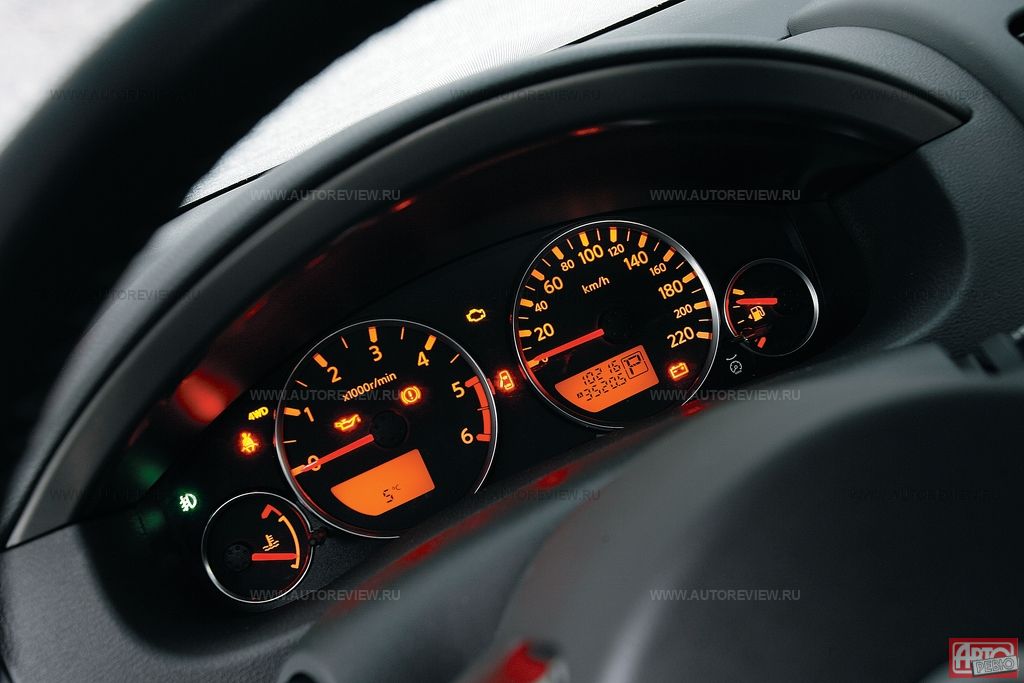 | |
| Despite the frivolous design, the Rexton's instruments are quite informative. The Sorento's instruments are a bit harder to read due to the "radial" numbering, while the classic dials of the Nissan are spoiled by mismatched fonts | ||
But the Pathfinder is assembled not in Russia, but in Spain — at the Nissan Motor Iberica plant in Barcelona. In the minimum configuration — with diesel and manual — it is $140 cheaper than the "top" Rexton — 1206510 rubles ($48850), but at the same time it is almost not inferior in equipment: six airbags, dual-zone climate control, power package, CD stereo. We, however, found the Nissan Pathfinder only in the top version: with automatic, seven-seat leather interior, additional air conditioning for rear passengers, bi-xenon headlights, and even a rear-view camera with a color display! And that's already 1515408 rubles ($61350)... Well, we'll try not to forget about this during the test.
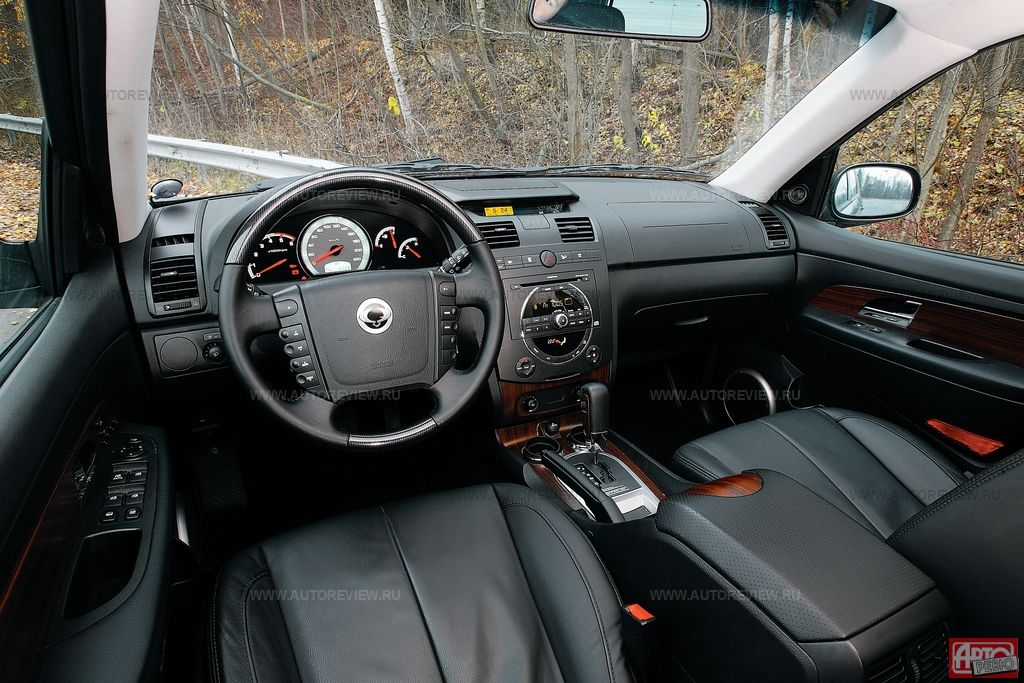 | 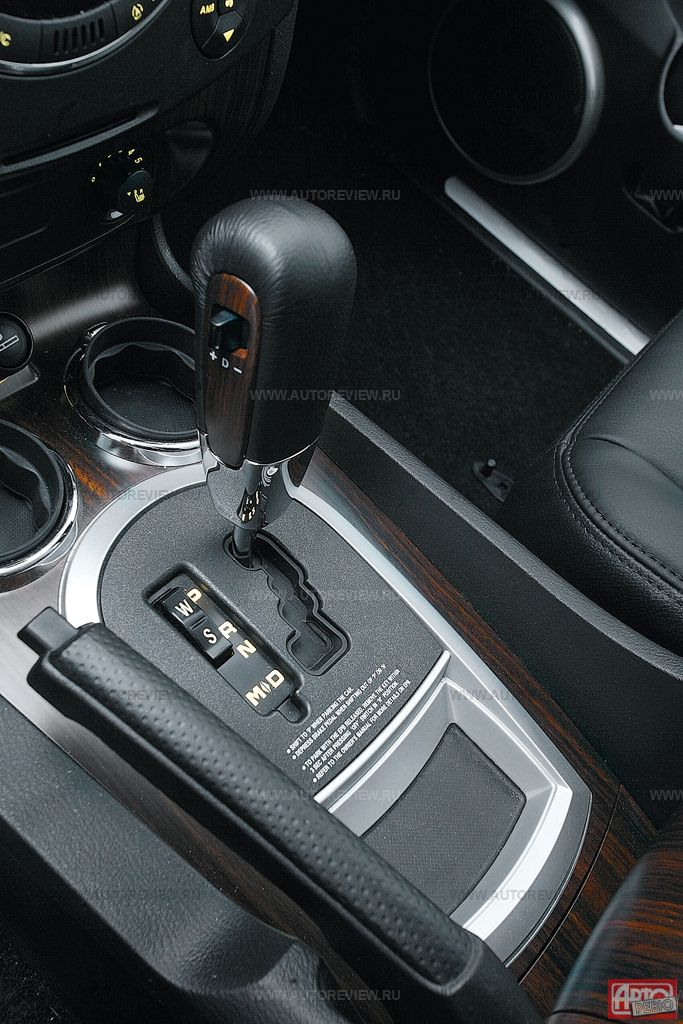 | 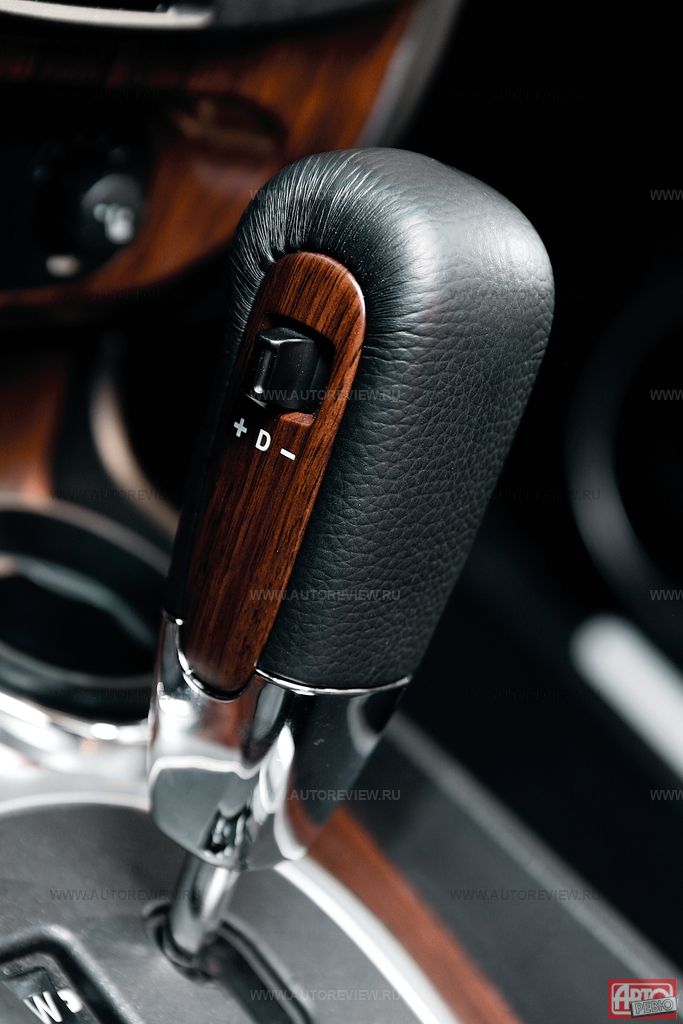 |
| The leather-wood interior of the Rexton tries its best to be respectable, but the greenish instrument scales and "carbon" steering wheel trim are out of place here | The five-speed automatic of the Rexton shifts smoothly, but the "manual" mode is untamed: the gears jump "up-down" by themselves, and changing them with buttons on the steering wheel is much more convenient than with the tiny flag on the selector lever | |
The Nissan driver sits high, looks far, and holds onto the most comfortable steering wheel. And yet, the Nissan's ergonomics didn't cause delight: the soft seat has vague lateral support, the pedals have a large height difference, the instrument numbering is mismatched...
Here, for example, is the Kia Sorento. You sit down, look, feel — and you understand: it's like your Renault Logan. But it's hard to find fault with the ergonomics: the seating position is almost "passenger car-like", the seat is firmer, with a convenient lumbar support and effective lateral support. And also — the most convenient steering wheel adjustment: it moves up and down in small steps, slightly changing the tilt angle, while in the other two SUVs the steering wheel either stands almost vertically or falls forward.
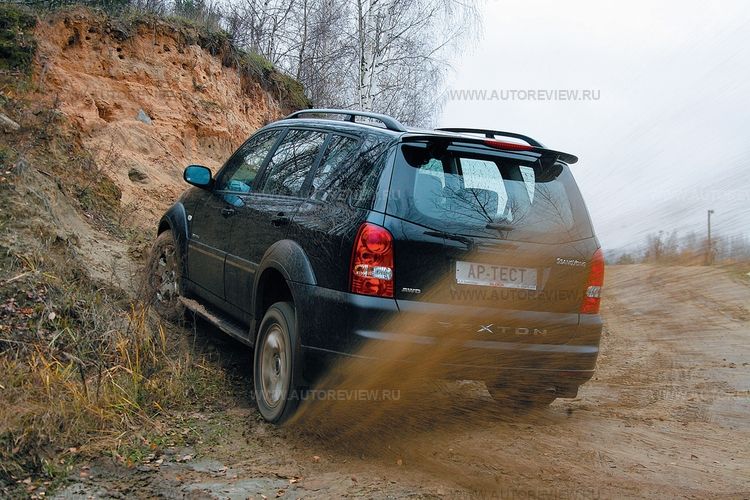
The Rexton, like its rivals, is unable to overcome diagonal wheel hanging
If the Nissan's interior is dominated by techno-style, and the Kia's by monumental simplicity, then the leather-wood interior of the SsangYong is an example of eclecticism. The center console resembling a compact disc looks good. The pseudo-carbon steering wheel trim, while not spoiling the look, is hardly appropriate. But the thick greenish edging of the speedometer is already frankly absurd. And here's another quirk: the tiny flag for controlling the manual mode of the automatic, located on the side of the selector lever — having found it, you need to rock it with your thumb, although much more convenient "transmission" buttons are on the steering wheel. And in terms of ergonomics, the Rexton is at the Sorento's level: due to the wide front pillars and the smallest side mirrors, visibility is slightly worse here, but the seating position in the electrically adjustable seat is quite comfortable.
| Kia Sorento | Nissan Pathfinder | SsangYong Rexton |
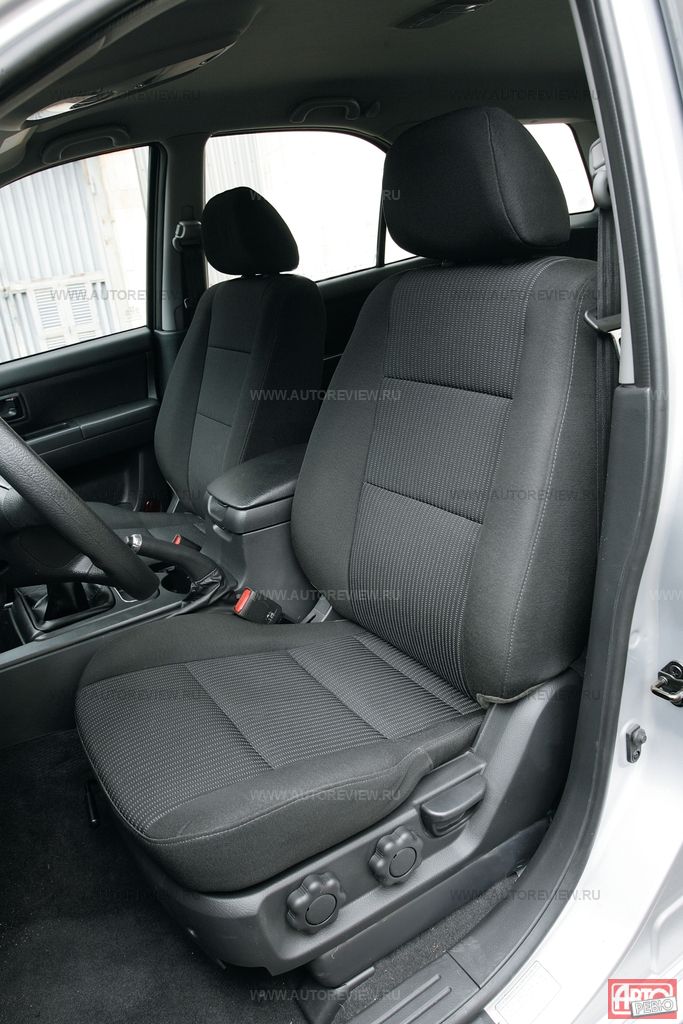 | 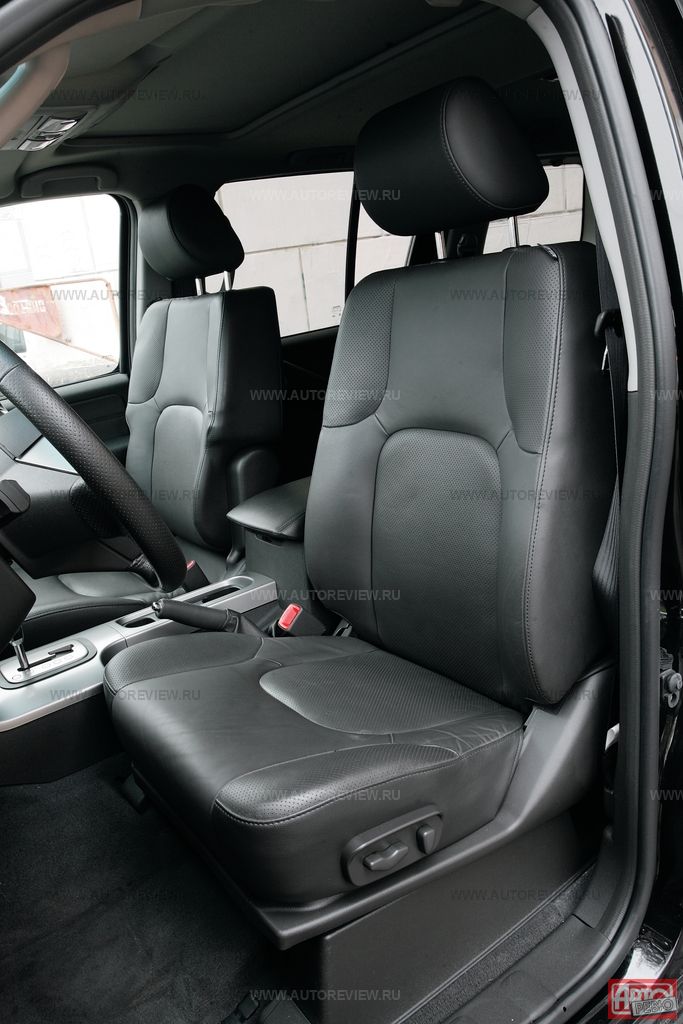 | 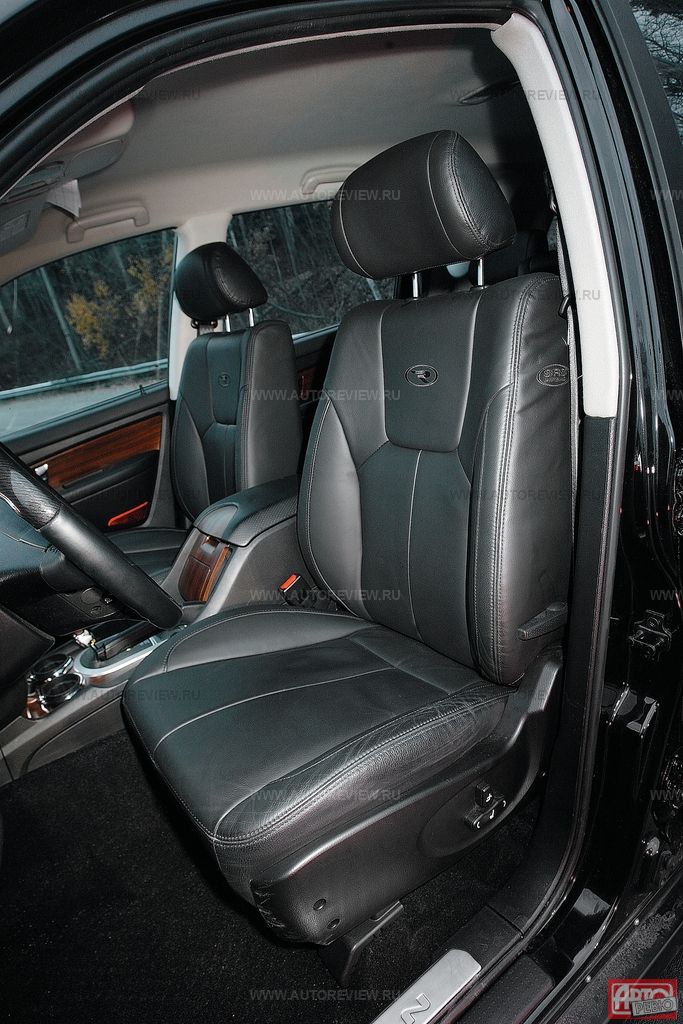 |
| The most comfortable seats are in the Rexton and Sorento, and in the more expensive versions, the Kia's seat also has electric adjustments. The Nissan's seat disappointed with vague lateral support and too low lumbar support | ||
It's most convenient to climb into the rear seats of the Nissan, but it's more pleasant to sit in them in the Kia, whether two or three. The SsangYong is an average: three are a bit cramped "in the shoulders", but still more comfortable than in the Nissan. Its rear sofa is spoiled by a low cushion, due to which you sit with your knees raised, and a backrest that protrudes excessively in the lumbar area.
| Kia Sorento | Nissan Pathfinder | SsangYong Rexton |
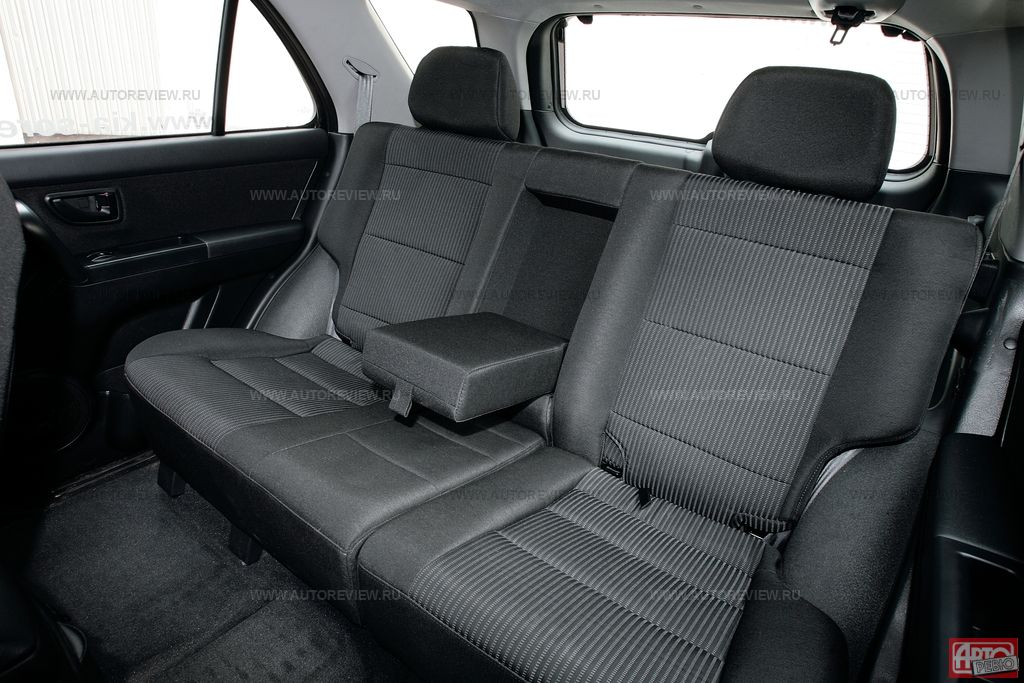 | 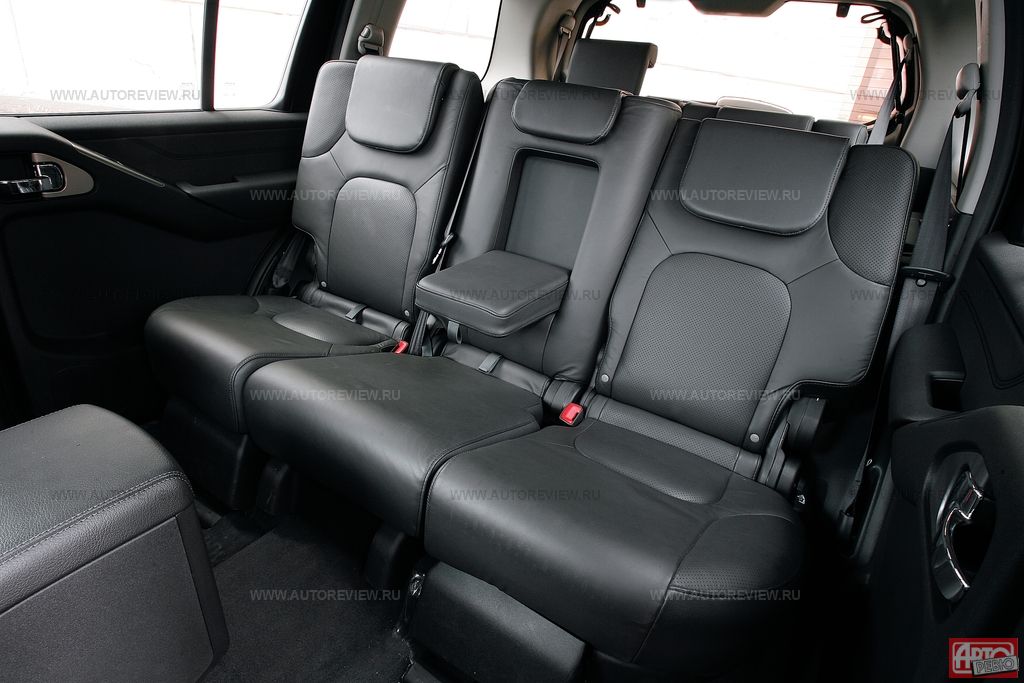 | 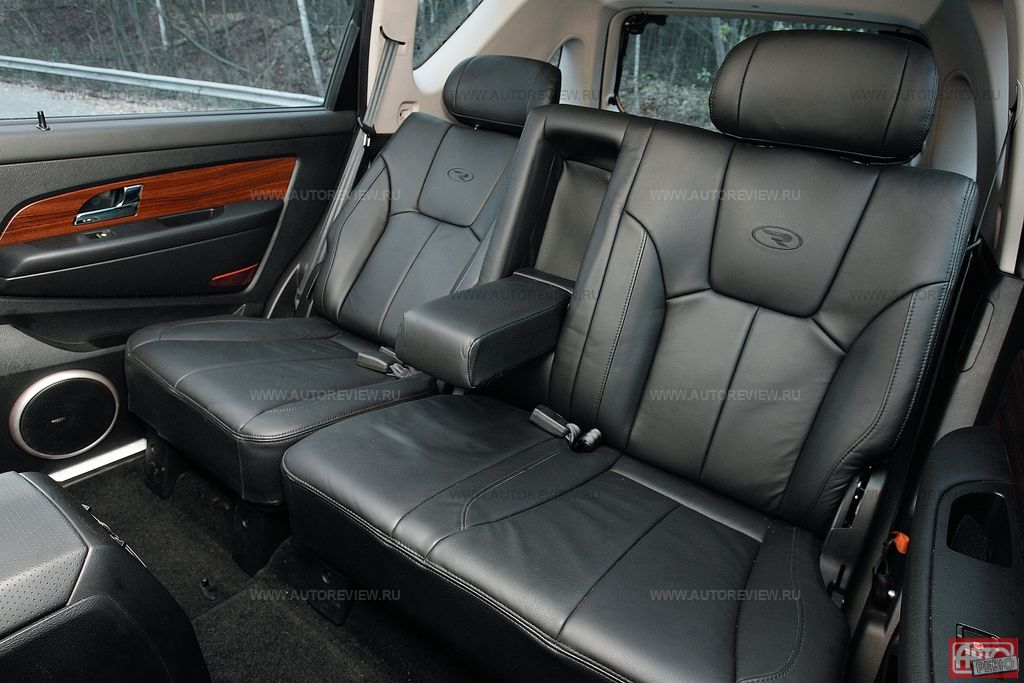 |
| Despite the fact that, unlike the rear sofa of the Sorento, the seatbacks of the Rexton and Pathfinder are adjustable for tilt angle (in the first case they can take five positions, and in the second — seven), we most liked sitting in the back in the Kia: spacious, comfortable. In the Rexton it's more cramped for three, and in the Nissan the seating geometry is unsuccessful — knees are raised, and shoulders "hang" | ||
With the trunks, the situation is reversed. The Sorento has the most compact cargo area, but the loading height is the greatest, and the only thing that can please is the spacious underfloor storage. The Rexton's area is spacious, but it is spoiled by the protruding bumper, although the loading height here is minimal and there are two cargo nets. Nissan, in addition to a large trunk, offers the widest transformation possibilities — even the front passenger seat backrest can be folded into a table.
What else is important for an SUV buyer?
Diesel! Since the beginning of the year, such engines have been chosen by 89% of Nissan Pathfinder buyers and 80% of Kia Sorento buyers. The share of diesel Rextons is smaller — 60%, but it is also growing: among updated cars, it is already 89%. And this is Russia, not Western Europe, which has long been hooked on diesel!
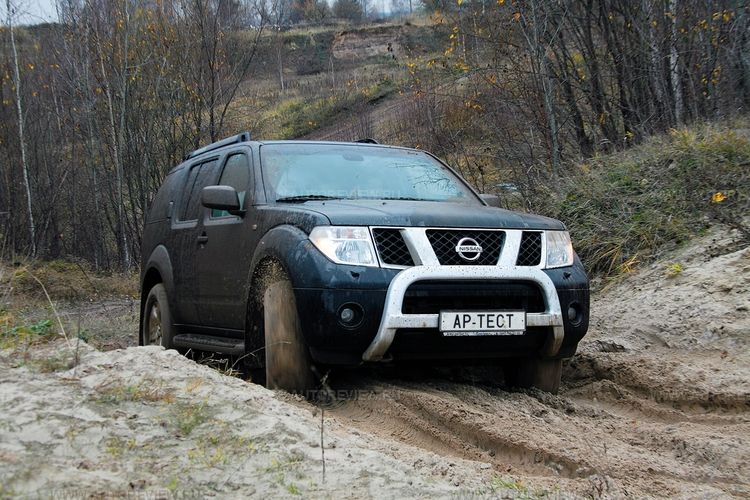
Off-road, the Nissan is good thanks to the intelligent operation of auxiliary electronics and the presence of a low-range gear. By the way, on 2008 model year cars, turn signals appeared in the mirrors and the design of 17-inch wheels changed
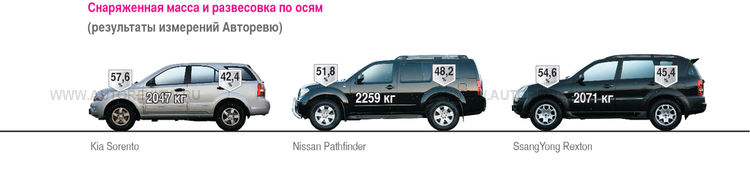
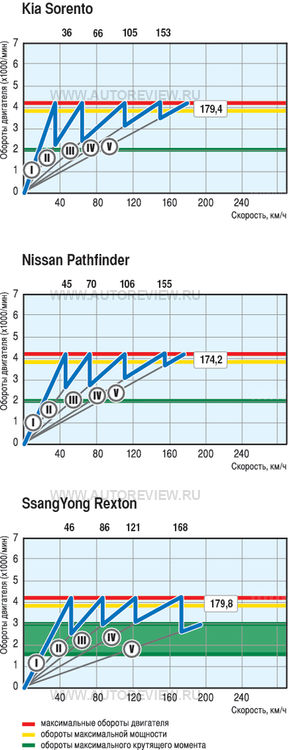
The most powerful in our company is the updated SsangYong Rexton: with a new turbocharger, the five-cylinder diesel produces 186 hp instead of the previous 165 hp. The Nissan and Kia have 174 hp and 170 hp, respectively. But although the Pathfinder is almost 200 kg heavier than its two-ton rivals, it is only slightly behind them in acceleration to 100 km/h: 12 seconds versus 11.5 s for the Sorento and 10.9 s for the Rexton. However, behind the wheel of an SUV, it is better to think of seconds with disdain — in everyday driving, the ease of managing torque is more important. And here Nissan and Kia are ahead.
After the start, the Nissan tachometer needle jumps into the active zone, and from 2000 to 4500 rpm there is confident acceleration. The automatic transmission shifts gears logically and smoothly, when releasing the gas it shifts to higher gears, and in manual mode it honestly holds the gear, not allowing spontaneous shifts either up or down.
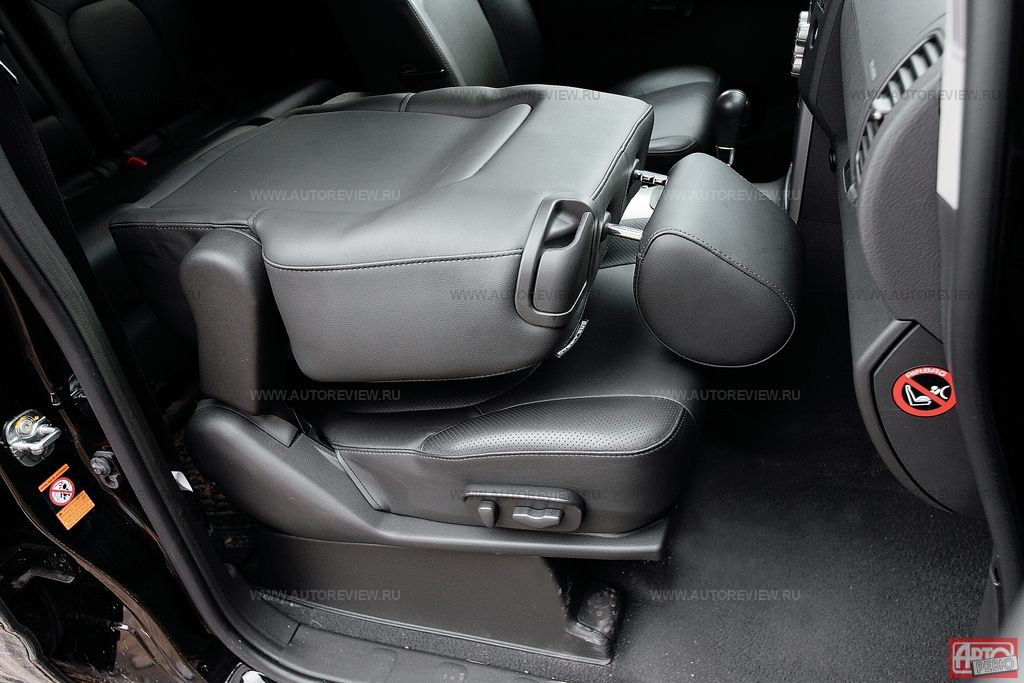 | 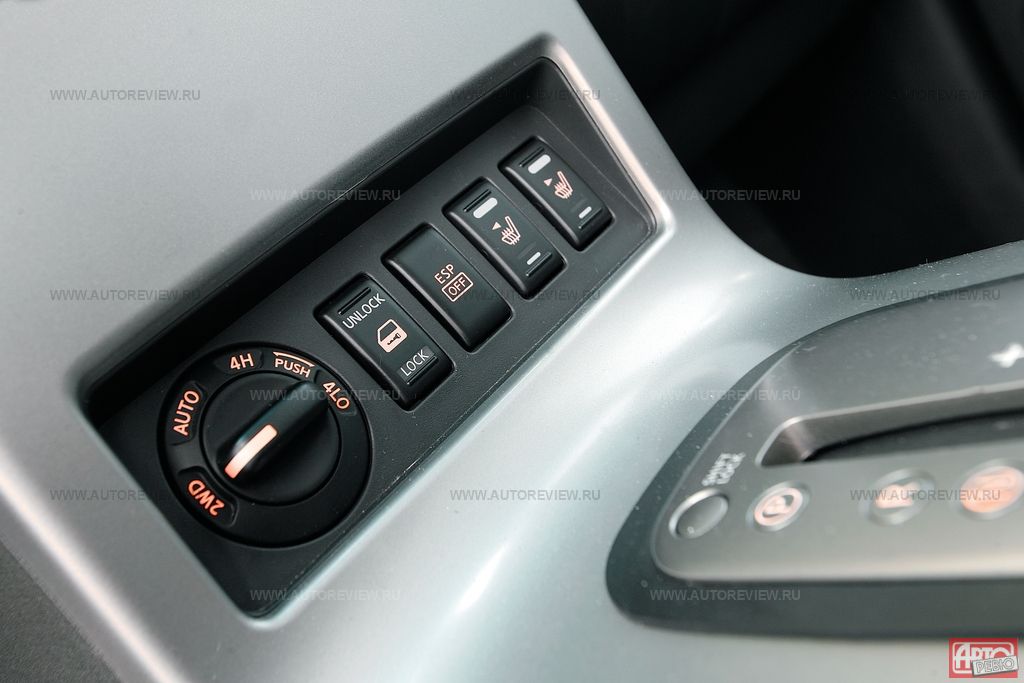 | 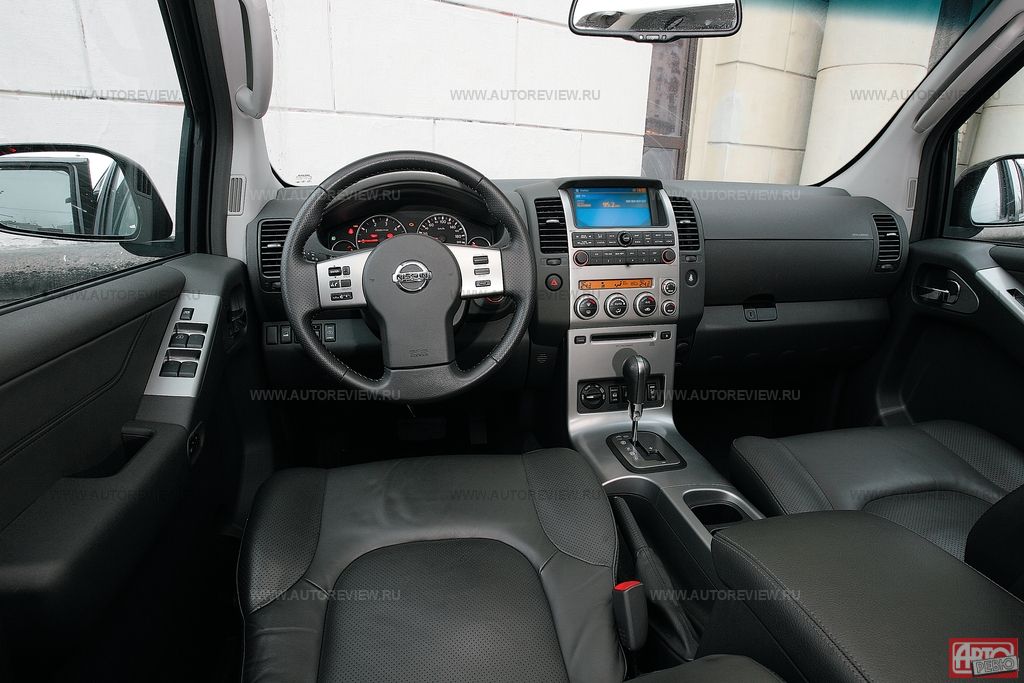 |
| Only the Pathfinder allows you to turn the front seat into a table | The modes of the All Mode 4x4 off-road system are selected by turning this knob at the bottom of the center console | Tech style |
The Sorento is on a manual transmission. On the one hand, this makes acceleration more predictable, but you can no longer accelerate from idle revs: up to 1500 rpm the diesel responds sluggishly to the gas, forcing you to wait or shift down. Fortunately, there are no problems with shifting, and the engine only loses its activity after 4000 rpm.
But the Rexton, equipped like the Pathfinder with a five-speed automatic, accelerates jerkily — from 1500 to 2000 rpm the engine revs reluctantly, and already at 4000 rpm a shift follows. In manual mode, the current gear is held when releasing the gas, but when adding throttle, the gears jump up and down by themselves.
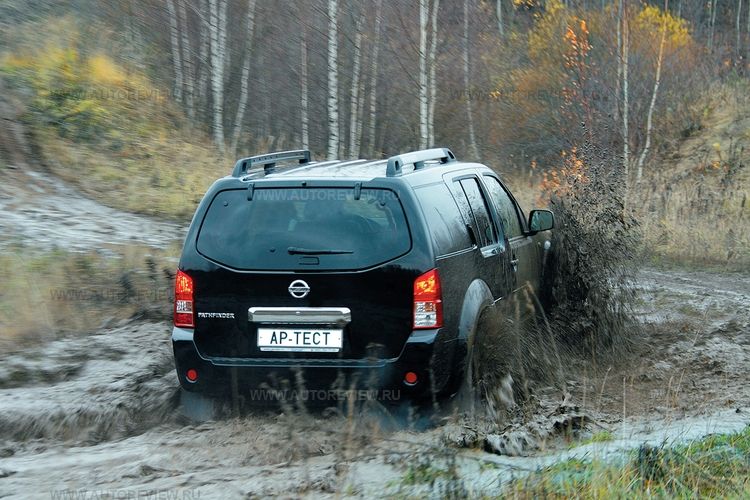
The Pathfinder frolics in the mud bath: stop, go again — no problem!
In standard modes, we liked the Kia brakes the most, but the most effective are the Nissan's: from 100 km/h the Pathfinder stops in 41.3 m — two meters earlier than the Sorento, and almost four meters earlier than the Rexton, and due to the too long travel of the soft pedal, calculating the braking distance of the SsangYong is the most difficult.
But ahead are ravines and gullies!
The most advanced transmission is the Nissan's: you can choose automatic or permanent all-wheel drive mode, and you can use the low-range gear. The type of transmission of the updated Rexton depends on the engine. With the old 165-hp 2.7 Xdi diesel, the SsangYong is switched to all-wheel drive manually (by rigidly engaging the front axle) or, if the car has an automatic, automatically (TOD system, Torque On Demand). And with the 2.7 XVT diesel, the Rexton already has permanent all-wheel drive, but without a low-range gear. The Kia Sorento is equipped with a low-range gear regardless of trim — it is present in ours, with a rigidly engaged front axle, and in more expensive ones with the TOD system.
| Kia Sorento | Nissan Pathfinder | SsangYong Rexton |
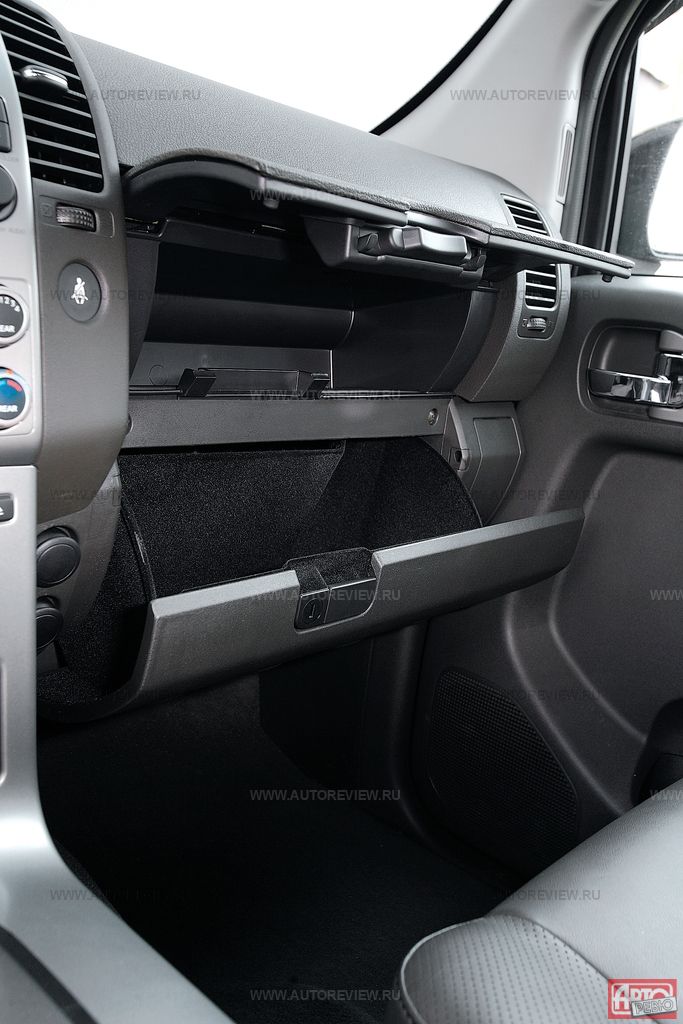 | ||
| The most places for small items are in the Nissan: two glove boxes, cup holders and a two-tier box with a socket on the center tunnel, and in the doors — pockets with room for a bottle. The Kia has one spacious glove box, narrower door pockets, but also a two-tier box and cup holders on the tunnel. And in the Rexton, although you can put bottles in the doors, the glove box is the most modest, and the box on the tunnel is single-tier | ||
And this is pleasing: in first low gear, the Kia confidently, almost without wheelspin, storms a steep sandy incline. Without any electronic assistants! But if you stay in 4x4 Hi mode (that is, in the high range of the transmission), you will have to constantly play with the gas, not allowing the engine revs to drop below 1500 rpm — otherwise the engine will stall.
We climbed the same hill several times in the Nissan as well. We hardly felt the difference between the automatic and permanent all-wheel drive modes, but on the low range of the transmission, conquering the summit turned out to be even more difficult — the wheels tended to turn every depression into a full-fledged hole. This way you can dig yourself in.
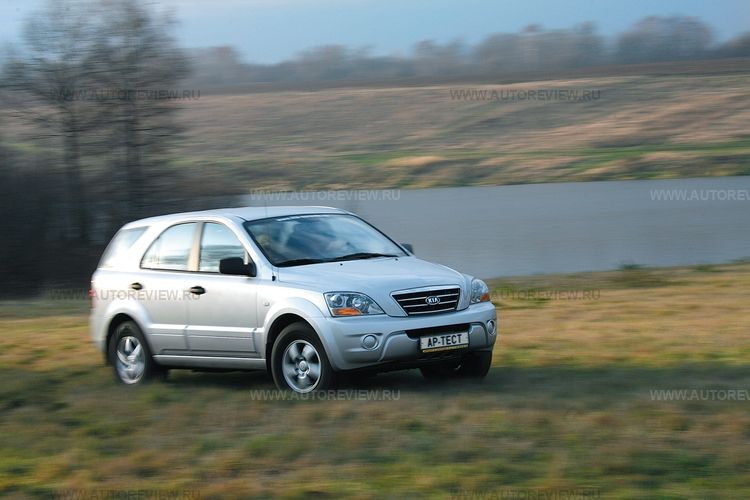
The Kia Sorento holds the straight line perfectly, but enters corners the least willingly
And the Rexton? You will have to storm the incline with momentum — there is nothing to engage! But apparently, we didn't gain enough momentum: barely overcoming the foot, the SsangYong spun its wheels and stopped. We try to move off — and the engine stalls. And this is with an automatic! We disable the traction control system. The Rexton crawled more actively, but working with the damped accelerator was extremely inconvenient: you press the pedal — and after a second the car jumps forward, you release the pedal, and it is still in flight. I didn't guess — it dug in and stopped. We managed to conquer the incline only after a considerable run-up and with the electronics disabled. But this way it's not long before you hit something...
However, if anyone doesn't remember from childhood, it's not so scary to climb to the top as to descend... On the Sorento with its manual transmission and reduction gear, it wasn't scary. Automatics, of course, do not allow braking with the engine as effectively, but both the Nissan and the SsangYong are also equipped with electronic hill descent control systems! But if on the Nissan this assistant works as it should, allowing only minimal acceleration, then on the Rexton the system is one-time: once you try it, you won't want to again! This happens as follows: the car gains speed, the driver is scared, he is ready to hit the brakes — and only then does the electronic assistant wake up... No, it's more reliable to descend the Rexton by braking yourself.
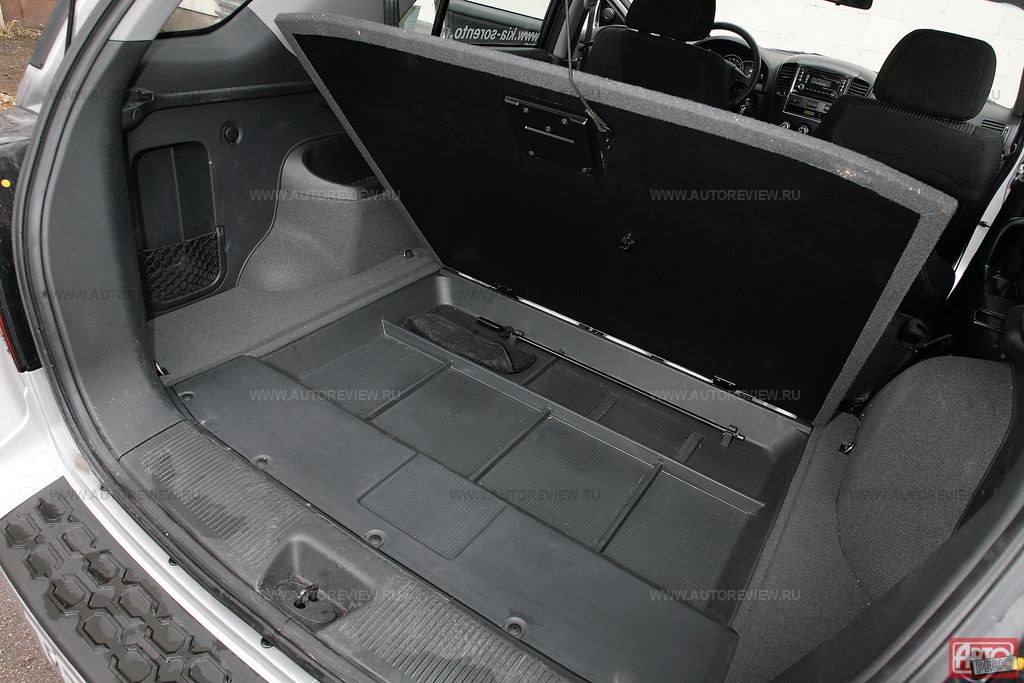 | 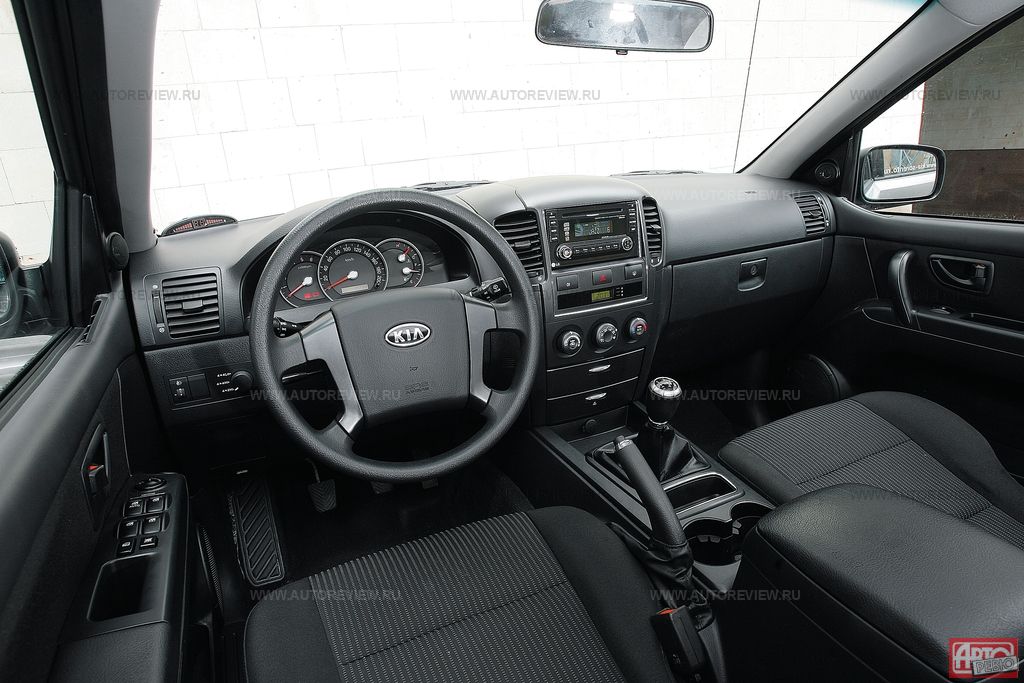 | |
| The Kia's trunk has the most voluminous underfloor storage | On the simplest versions of the Sorento, the front axle is engaged manually — by turning this knob | Modest, calm, functional |
From the point of view of geometric cross-country capability, all three cars are close — we never found anything to catch on the hills and ruts of the crossover track, although the Sorento is inferior to its rivals in ground clearance: 185 mm versus 210 mm for the Pathfinder and 217 mm for the Rexton. From light diagonal wheel hanging, the Pathfinder and Rexton have a better chance of getting out — thanks to the electronic imitation of cross-axle locks, which the base Sorento lacks. But if the hill is higher and the angle steeper, all three will stop, although the Pathfinder will burn the brakes of the hanging wheel to smoke, and the Sorento will give up without a fight.
In terms of comfort, the leader is the Kia Sorento. The engine is almost inaudible. Whether on dirt or asphalt, the Sorento collects all the small stuff from the road, but rounds off large irregularities without a single suspension breakdown or pitching. Comfort is disturbed only by vibrations from unsprung masses and vertical pitching on long waves of the surface.
The SsangYong Rexton shakes a little more on small irregularities and annoys with lateral sway. There are fewer vibrations from unsprung masses here — obviously thanks to the independent rear suspension, but the diesel runs louder. And on dirt, the SsangYong behaves frankly worse: on large potholes, the suspension sometimes breaks through to the bump stops, and low-frequency rumble presses on the ears.
| Kia Sorento | Nissan Pathfinder | SsangYong Rexton |
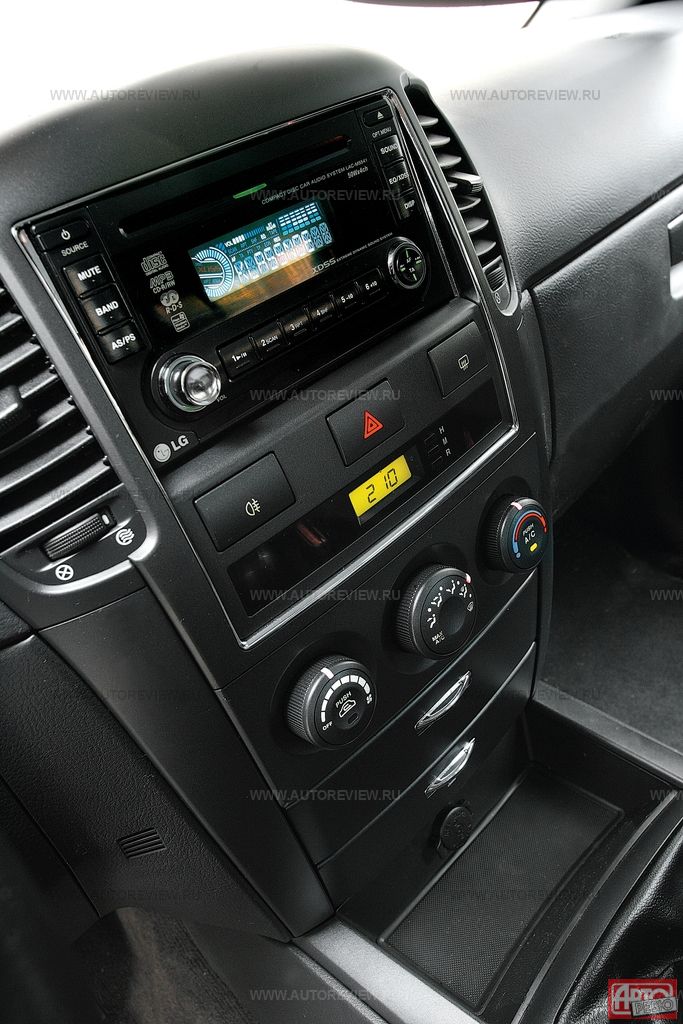 | 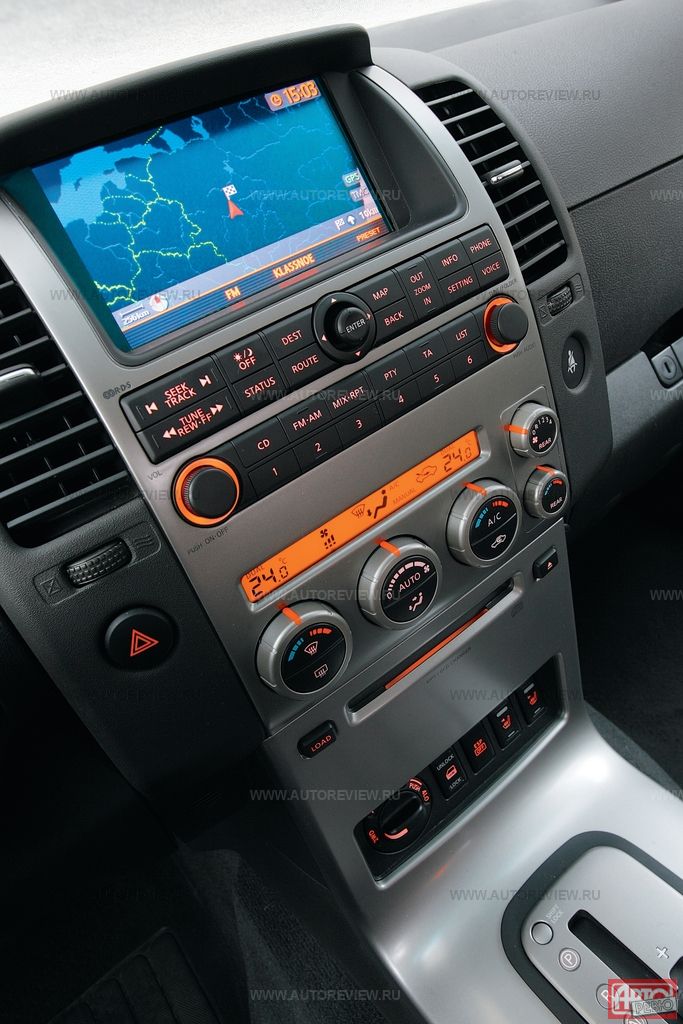 | 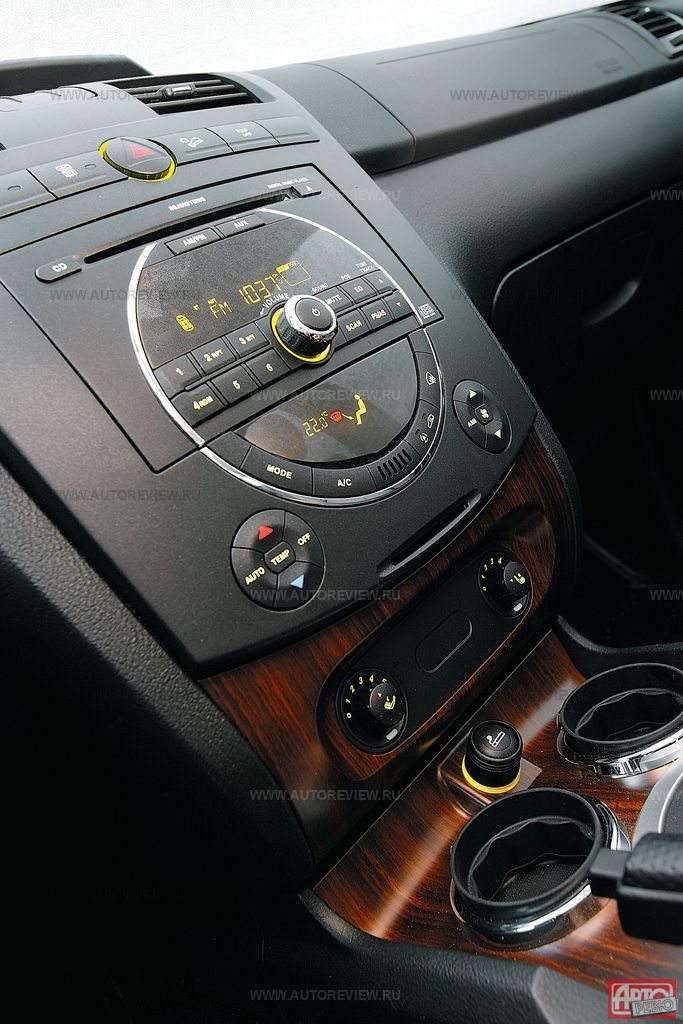 |
| The climate control in all three is arranged differently: the Sorento has rotary knobs, the Nissan has rocker switches, and the Rexton has conventional buttons. An additional "rear" air conditioner with separate controls (visible on the right side of the console) and a color screen are available only in top trim levels | ||
However, we were far more disappointed by the ride smoothness and vibration isolation of the Pathfinder. The engine transmits vibration to the body at almost any rpm. On uneven surfaces, the car is jolted by harsh impacts, and it floats on the highway... The Pathfinder swallows only small cracks without issue, but it meticulously repeats every contour of the road surface.
Handling is also not entirely smooth for the Nissan: on a straight line, it refuses to hold its course steadily, forcing constant steering corrections, and in sharp bends it starts to turn in on its own, again requiring driver intervention. When the road becomes wavy, the Pathfinder begins to rock, deviating from the intended line, although the electronic stability control works flawlessly. On curves, the steering provides good feedback, but on straights, you literally have to keep your eyes on it...
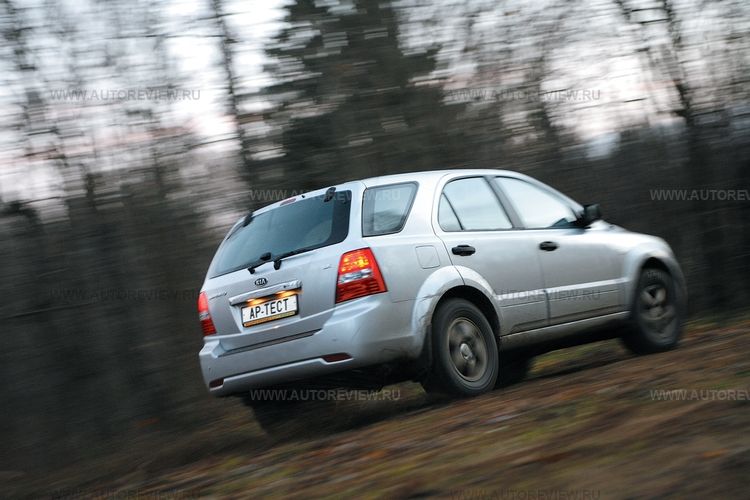
The Sorento demonstrates the best ride smoothness regardless of the surface type
The Kia behaves in exactly the opposite way: it holds its course on a straight line impeccably, but enters corners reluctantly. On a winding road with surface defects, the Sorento seems to ignore them and remains understandable and predictable. The flaws in behavior are largely due to the lack of stability control in our version: if you exceed the speed on a curve, the car first understeers, then may suddenly break into a slide.
And finally, the Rexton. It is the golden mean. It holds a straight line confidently, like the Kia, but in corners it tends to turn in, like the Nissan. If there are bumps on the curve, the SsangYong starts to rock in both planes, similar to the Pathfinder, but it maintains its trajectory better. True, its steering is the most "empty" in terms of feedback. However, it absorbs unpleasant impacts better than the others.
| Kia Sorento | Nissan Pathfinder | SsangYong Rexton |
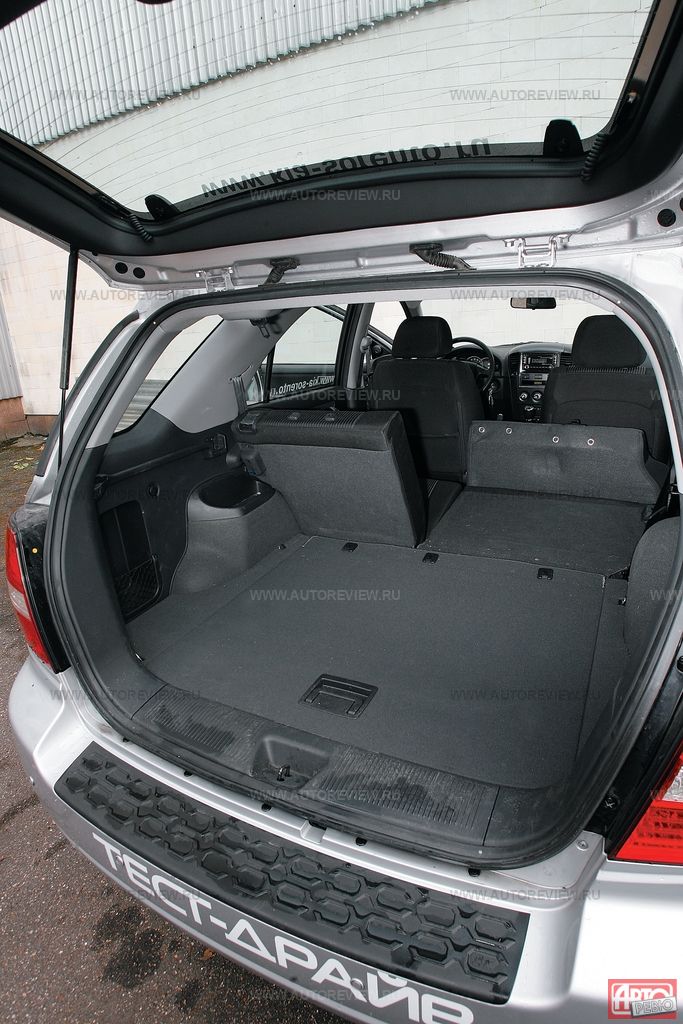 | 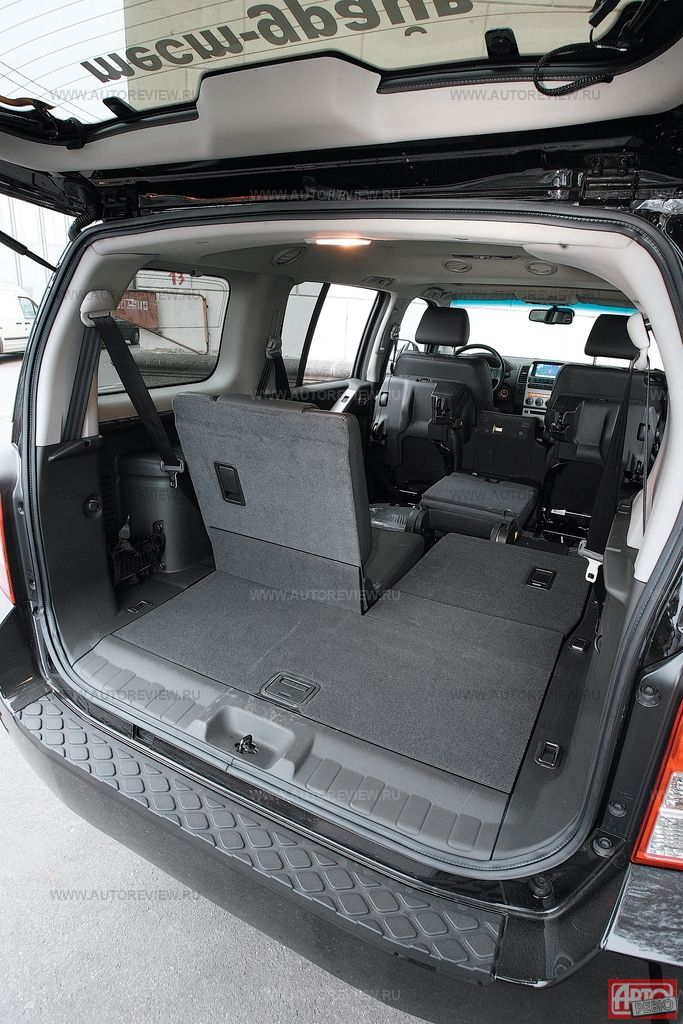 | 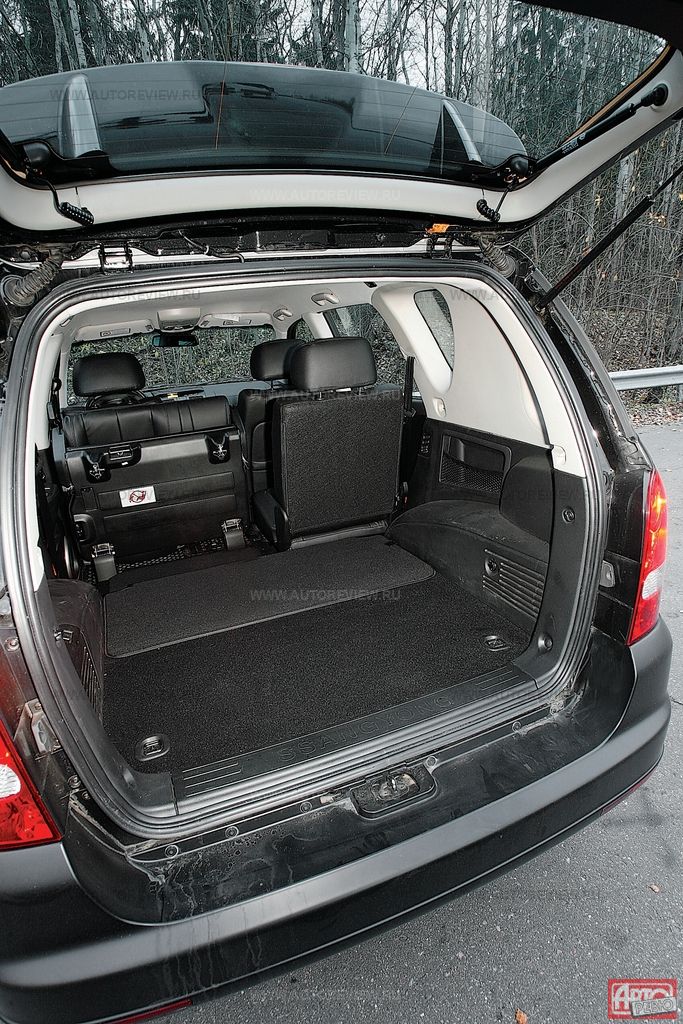 |
| The trunks of the Rexton and Pathfinder are the most spacious. The Kia's cargo area is more modest, and its loading height is the highest. However, all three cars allow you to open only the glass of the tailgate to toss bags inside | ||
So what is the verdict?
First place in our test goes to the Nissan Pathfinder. Impressive looks, serious off-road credentials, and a cabin that easily transforms to suit any needs. Moreover, it is the only one of the three that offers the option of a third row of seats. True, comfort could be higher — we would like a softer ride and more supportive seats. But overall, the marketing concept has worked: for hunting, fishing, or family trips into nature, the Pathfinder is excellent, even if it is not ideal for long highway journeys. And sales confirm this: in the first ten months of last year, 3,799 Pathfinders were sold — more than the Land Rover Discovery (3,372), but fewer than the five-door Mitsubishi Pajero (4,977).
Kia Sorento owners primarily look at the price-to-quality ratio, and to be fair, it is almost perfect here: the cabin is comfortable, the ride is smooth, and it does not shy away from off-road conditions. The image, of course, is not as solid as the Nissan's. But the price is at least $5,000, or even $15,000, lower than the "base" Pathfinder (when talking about diesels). The result — 4,285 units sold in ten months.
As for the Rexton... It certainly allows you to stand out from the crowd: since the beginning of the year, 2,950 such daredevils have been found. Moreover, the facelift has appealed to buyers — with parallel sales, the updated version outsells its predecessor by a ratio of 61:39. But when choosing a new Rexton, you will have to decide: either a powerful engine or off-road capability. After all, all the boosted versions, both petrol and diesel, lack a low-range gear, which severely limits their off-road capabilities and calls into question the versatility that SsangYong claims. For serious excursions, it is much more logical to take a well-equipped Rexton with the old 165-horsepower diesel and a "low-range." Besides, it is cheaper.
Autoreview Readers' Forecast
Before the test, we invited visitors to www.autoreview.ru to vote: "Which car from the participants would you choose?"
The votes were distributed as follows:
Kia Sorento 13.64%
Nissan Pathfinder 80.53%
SsangYong Rexton 5.82%
A total of 14,102 people voted
Autoreview Expert Assessments
| Autoreview Expert Assessments | ||||
| Parameters Assessed | Max. Score | Vehicles | ||
| Kia Sorento | Nissan Pathfinder | SsangYong Rexton | ||
| Design | 160 | 120 | 130 | 130 |
| Exterior | 80 | 60 | 65 | 60 |
| Interior | 80 | 60 | 65 | 70 |
| Ergonomics | 160 | 140 | 140 | 135 |
| Driver's workspace | 80 | 70 | 65 | 70 |
| Visibility | 80 | 70 | 75 | 65 |
| Dynamics | 330 | 260 | 265 | 240 |
| Acceleration dynamics | 80 | 65 | 60 | 60 |
| Braking dynamics | 100 | 80 | 80 | 75 |
| Handling | 80 | 55 | 60 | 55 |
| Off-road | 70 | 60 | 65 | 50 |
| Ride comfort | 180 | 140 | 135 | 135 |
| Ride smoothness, vibration protection | 70 | 55 | 45 | 50 |
| Acoustic comfort | 60 | 50 | 45 | 45 |
| Climate control | 50 | 35 | 45 | 40 |
| Cabin comfort | 170 | 130 | 135 | 130 |
| Rear seats | 70 | 55 | 50 | 50 |
| Trunk | 60 | 45 | 50 | 50 |
| Cabin transformation | 40 | 30 | 35 | 30 |
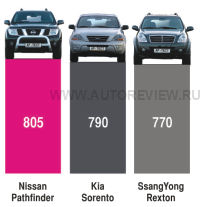
| Total score | 1000 | 790 | 805 | 770 |
| Turning circle of vehicles | ||||
| Vehicle | By the track of the outer front wheel, m | By the outer front overhang, m | Number of steering wheel turns from lock to lock | |
| Kia Sorento | 11.1 | 11.8 | 3.7 | |
| Nissan Pathfinder | 11.9 | 12.7 | 3.5 | |
| SsangYong Rexton | 11.3 | 12.1 | 3.6 | |
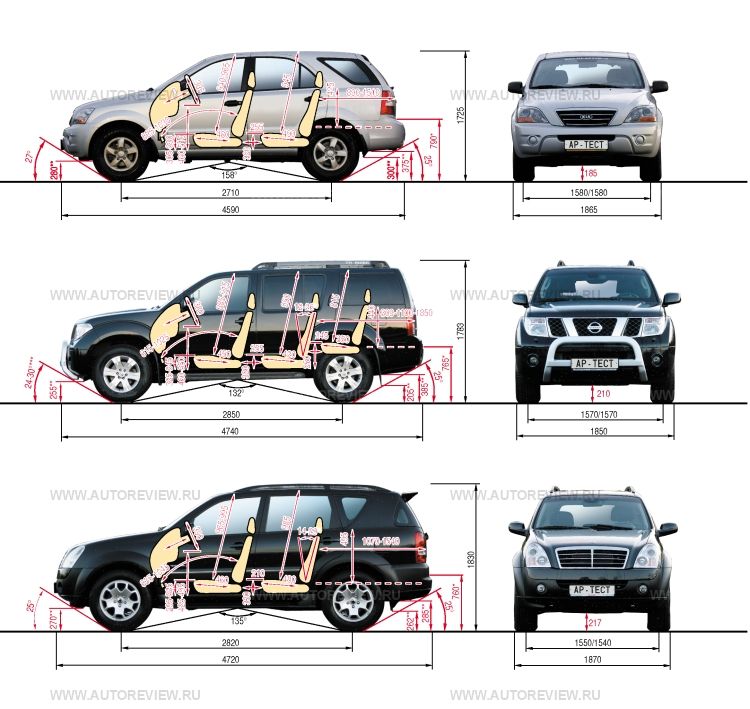
Black indicates manufacturer data, red indicates Autoreview measurement results
* Loading height
** Maximum height of an obstacle, such as a curb, that can be touched by the wheels when parking without risking damage to the vehicle.
It may be less than the ground clearance due to mud flaps and aerodynamic skirts, which we do not take into account when measuring ground clearance
*** Approach angle: 24° — with a bull bar, 30° — without it
"Moose Test"
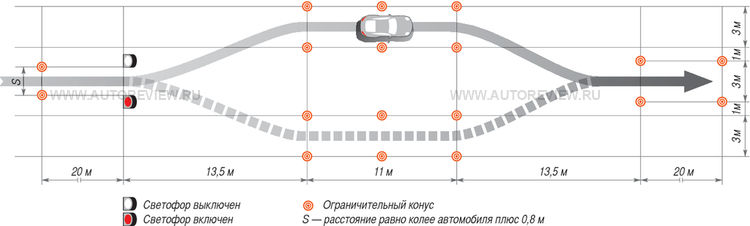
We practiced the maneuver that simulates avoiding a suddenly appearing obstacle in two stages. First, four drivers, already accustomed to the cars in everyday driving, tried to dodge the "moose" in a single attempt at a speed of 65 km/h. Then a professional test driver, through a series of attempts, determined the maximum speed at which this trick is possible at all.
The fastest to complete the task was the SsangYong Rexton. Swaying and even lifting one wheel off the ground, it passed the "moose test" at a speed of 78.7 km/h. A huge credit for this goes to the stability control system — it clearly suppressed both understeer and oversteer. Even when the rear end slightly deviated from the trajectory, the car instantly responded to steering input and returned to course. However, of the four amateur drivers, only two managed to cleanly avoid the obstacle — the rest complained that the steering wheel did not provide sufficient feedback.
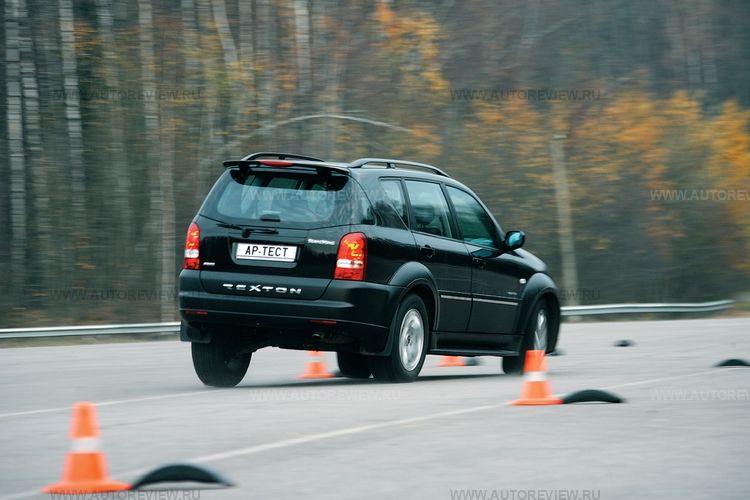
It was the effective operation of the stability control that allowed the SsangYong Rexton to achieve the best result in the "moose test": 78.7 km/h
The Nissan Pathfinder in the hands of the test driver also proved to be quite fast — 74.0 km/h. When you turn the steering wheel smoothly, the car calmly follows the given arc, but the steering wheel itself seems insensitive — you have to turn it at excessively large angles. However, if you turn the wheel sharply, the Pathfinder breaks into a skid, and the electronics begin to roughly and persistently suppress it. While ESP is working, it is almost impossible to change the trajectory. Nevertheless, three of the four "one-time" drivers completed the maneuver without problems, and only one complained about the sluggish response of the steering.
The Kia Sorento, which has no auxiliary electronics, showed a result of 73.8 km/h. But even this value was achieved by the test driver only after provoking a rear-axle slide. If you don't do this, the Sorento stubbornly slides outward with its front wheels, and then the maximum speed drops to 71.6 km/h. The volunteer drivers also lacked an electronic assistant — the maneuver was successful for only one of the four, and the rest unanimously spoke about the lack of steering sensitivity.
| Maximum speed of the "moose test", km/h | |
| Car | Speed |
| Kia Sorento | 73.8 |
| Nissan Pathfinder | 74.0 |
| SsanYong Rexton | 78.7 |
| "Moose test" on the first attempt at a speed of 65 km/h | |
| Car | Maneuver completed |
| Kia Sorento | 1 driver out of 4 |
| Nissan Pathfinder | 3 drivers out of 4 |
| SsanYong Rexton | 2 drivers out of 4 |
What else?
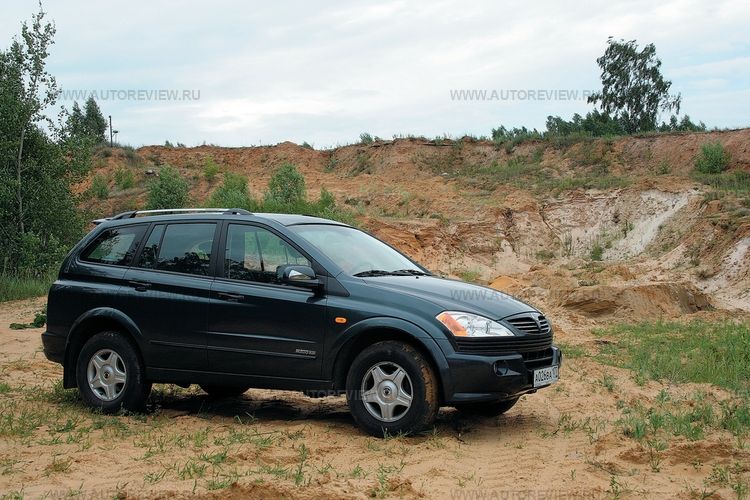
SsangYong Kyron
If you are considering a diesel SUV with a budget of up to 1 million 400 thousand rubles ($56680*), it makes sense to pay attention to other options as well.
For example, the pre-facelift SsangYong Kyron with a two-liter turbodiesel (141 hp). The base version with a manual transmission costs from 750 thousand rubles ($30360), and for a five-speed automatic you will have to pay at least 830500 rubles ($33620). The drive here is full-time, with a rigidly connected front axle, and wheel locking is simulated by the traction control system. The Kyron stands out with its unusual appearance, good off-road capability, and a comfortable interior. More details on this — in AR No. 9, 2006. The updated Kyron FL is currently sold only with a gasoline engine, while the diesel version is expected within the next year.
There is also a seasoned veteran — the Mitsubishi Pajero Sport with a 2.5 turbodiesel (100 hp) and a manual gearbox, priced from 794620 rubles ($32170). An automatic transmission is not combined with this engine. The Pajero Sport has all-wheel drive with a rigidly connected front axle and a self-locking differential at the rear. This SUV handles quite decently, and it has enough comfort. Details — in AR No. 3, 2000.
The classic Land Rover Defender after the update is available in a five-door body for 900 thousand rubles ($36440). The 2.4 turbodiesel (122 hp) works in conjunction with a six-speed manual gearbox, and the transmission is permanent all-wheel drive with a locking center differential. In addition to the new engine, the updated Defender received a front panel in the spirit of the Discovery and improved sound insulation. More details — in AR No. 8, 2007.
The Jeep Wrangler Unlimited in a five-door version with a 2.8 CRD turbodiesel (177 hp) is priced at 1278900 rubles ($51780). The main feature of the Wrangler is the removable hard top: in good weather, the SUV easily turns into a convertible. The gearbox is a five-speed automatic, and the all-wheel drive has a rigidly connected front axle.
For 1380500 rubles ($55890), you can also consider the previous Nissan Patrol with a three-liter turbodiesel (160 hp) and a manual transmission. For an automatic, you will have to pay an additional 42 thousand rubles ($1700). The all-wheel-drive transmission has a rigidly connected front axle and a self-locking rear differential. The Patrol is famous for its excellent off-road capability, but on asphalt it is not the best. Details — in AR No. 17, 2000.
* At the exchange rate of $1=24.7 rubles.
What are the prices?
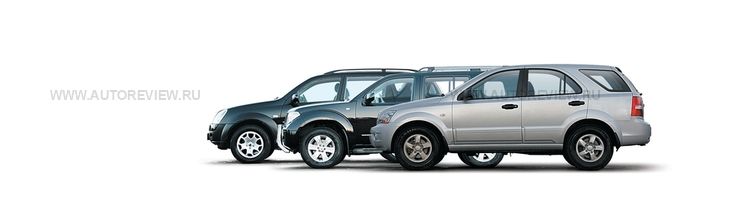
The Kia Sorento LX of Izhevsk assembly with a turbodiesel (2.5 L, 170 hp), manual transmission, and manual transfer case will cost 839990 rubles ($34010*). True, the equipment is modest: only a driver's airbag, air conditioning, and power windows. ABS is not available even for an extra charge! For this system, along with a passenger airbag and electrically adjustable and heated mirrors, you will have to pay another 50 thousand rubles ($2020). The same amount costs a five-speed automatic. The EX version for 999990 rubles ($40490) already has the Torque On Demand system with automatic connection of the front wheels. The equipment list includes a stability control system, curtain airbags, dual-zone climate control, and heated front seats. The top trim with a leather interior, power driver's seat, sunroof, and cruise control — 1069990 rubles ($43320). The gasoline Sorento with a V6 3.3 (241 hp) is offered only in EX: from 1099990 rubles ($44530) to 1149990 rubles ($46560) for the version with leather. Cars are available at dealers; on order — up to two months of waiting. Some sellers have Korean-assembled Sorentos — such cars are about $1000 more expensive than Izhevsk ones.
Warranty — 3 years or 100000 km. Kia of Izhevsk assembly is sold by 111 dealers in 71 cities of Russia.
The updated SsangYong Rexton in the base version with a 2.7 Xdi turbodiesel (165 hp), five-speed manual and all-wheel drive with a rigidly connected front axle costs 970 thousand rubles ($39270). Equipment includes two airbags, ABS, stability control, climate control, heated front seats and mirrors, power accessories and a CD/mp3 stereo. With an automatic transmission, it is 100 thousand rubles ($4050) more expensive, using an automatic front-wheel connection system (Torque On Demand), plus light and rain sensors appear. The version with the 2.7 XVT turbodiesel (186 hp) gets permanent all-wheel drive, side airbags, leather with wood inserts and power front seats. The price is 1 million 210 thousand rubles ($48990). This is 140 thousand rubles ($5670) more than the Kia Sorento in top trim with sunroof and cruise control, but without music, powered passenger seat and electronic hill descent control. The petrol Rexton (3.2 L, 220 hp) is only in the top version for 1 million 160 thousand rubles ($46960), which is 10 thousand rubles ($405) more expensive than the similar Sorento. Dealers have all modifications, delivery of a car in the desired color takes no more than a month.
Warranty is 3 years or 100,000 km. SsangYong is sold by 64 dealers in 42 Russian cities.
The diesel Nissan Pathfinder (2.5 L, 174 hp) in the initial XE version with a manual transmission is 3500 rubles ($140) cheaper than the top Rexton — 1206510 rubles ($48850). Equipment: six airbags, stability control, dual-zone climate control, heated mirrors and front seats, power accessories and a CD stereo. The SE version with a third row of seats, CD changer, cruise control, light and rain sensors is 57500 rubles ($2330) more expensive, with an automatic transmission — another 44500 rubles ($1800). The LE trim for 1 million 434 thousand rubles ($58060) includes an additional air conditioner for rear passengers, leather, sunroof, power front seats, bi-xenon and cruise control. The petrol Pathfinder (4.0 L, 269 hp) is 1 million 534 thousand rubles ($62110). For 100 thousand rubles ($4050) on SE and LE versions, you can install a rear-view camera and a CD/mp3 system with two subwoofers. Dealers only have automatics; manual versions are supplied to order with a three-month wait.
Warranty is 3 years or 100,000 km. Nissan is sold by 44 dealers in 29 Russian cities.
* At the exchange rate of $1=24.7 rubles.
| Cost of scheduled maintenance with consumables and parts, rub. | ||||
| Scheduled maintenance | Vehicles | |||
| Kia Sorento | Nissan Pathfinder | SsangYong Rexton | ||
| Standard hour | 1070 | 1350 | 980 | |
| Mileage, km | 5000 | — | — | 4200 |
| 10000 | — | 4450 | 8500 | |
| 15000 | 8890 | — | — | |
| 20000 | — | 13850 | 15500 | |
| 30000 | 15700 | 4450 | 11500 | |
| 40000 | — | 15000 | 15500 | |
| 45000 | 8890 | — | — | |
| 50000 | — | 4450 | 8500 | |
| 60000 | 16700 | 22670 | 25000 | |
| 70000 | — | 4450 | 8500 | |
| 75000 | 8890 | — | — | |
| 80000 | — | 17600 | 15500 | |
| 90000 | 16900 | 4450 | 11500 | |
| Total | 75970 | 91370 | 124200 | |
| Approximate prices for original parts at Moscow dealers, rub. | |||
| Parts | Vehicles | ||
| Kia Sorento | Nissan Pathfinder | SsangYong Rexton | |
| Oil filter | 460 | 390 | 420 |
| Fuel filter | 1086 | 3660 | 4653 |
| Air filter | 440 | 715 | 844 |
| Cabin filter | 1340 | 1380 | 1270 |
| Front brake pads | 3060 | 3200 | 4550 |
| Rear brake pads | 2500 | 2130 | 2650 |
| Front shock absorber | 3500 | 5880 | 5524 |
| Rear shock absorber | 2100 | 4243 | 2853 |
| Front headlight | 9900 | 7600 | 12500 |
| Rear light | 4260 | 6830 | 3900 |
| Front fender | 5500 | 11596 | 9900 |
| Front bumper | 8100 | 14506 | 15000 |
| Hood | 18130 | 15686 | 28500 |
| Windshield | 12155 | 9480 | 15000 |
Driving force
The Kia Sorento has the simplest transmission: permanent drive to the rear wheels and a rigidly connected front axle. Transfer case modes are selected with a convenient rotary knob: 4x2 Hi, 4x4 Hi or 4x4 Lo. All-wheel drive modes are only for off-road, and in the 4x4 Lo position, a low range with a reduction ratio of 2.48 is engaged. The Sorento in EX trim is equipped with the TOD system, Torque On Demand, which transfers torque to the front wheels via an electronically controlled clutch when the rear wheels slip. There are two modes — Auto and Low, with the latter locking the clutch forcibly. The low gear can only be engaged at a complete stop.
The SsangYong Rexton with the 2.7 Xdi turbodiesel (165 hp) is available with the same transmission options: on manual versions, the front wheels are connected manually, while on automatic versions, they are connected automatically via the TOD system. For the Rexton with the 3.2 petrol engine (220 hp) or the 2.7 XVT turbodiesel (186 hp), permanent all-wheel drive with a center differential that distributes torque between the axles in a 40:60 ratio is claimed. However, these SUV modifications do not have a low gear.
As for the Nissan Pathfinder, all versions are equipped with the All Mode 4x4 system with rear-wheel drive, automatic all-wheel drive engagement, full all-wheel drive, and the ability to engage a low gear with a reduction of 2.6. Torque is transferred to the front wheels via a hydraulically actuated multi-disc clutch, and electronic imitators perform the functions of inter-wheel locks, braking the spinning wheels. Mode selection is done with a rotary knob at the bottom of the center console.
Light output
Night photography of vehicles from the same point allows assessing the effectiveness of headlights. In our case, only the SsangYong is equipped with conventional halogen low-beam headlights, the Kia has dealer-installed xenon low-beam bulbs, and the Nissan's headlights are bi-xenon. The best low beam is from the Pathfinder: from 80 meters, a person standing on the roadside is illuminated at full height. In the light of the Rexton's halogens, a pedestrian is visible up to the waist, while the dealer-installed xenon of the Sorento shines clearly but short — a person in white is practically invisible. However, high beam is good on all vehicles.
During photography, only the driver was in the vehicles; the headlight levelers of the Rexton and Sorento were set to the zero position, while the Nissan's leveler is automatic.
| Kia Sorento | Nissan Pathfinder | SsangYong Rexton |
| Low beam. A pedestrian stands on the roadside 80 meters from the vehicle | ||
| High beam. A pedestrian stands in the center 160 meters from the vehicle | ||
Visibility
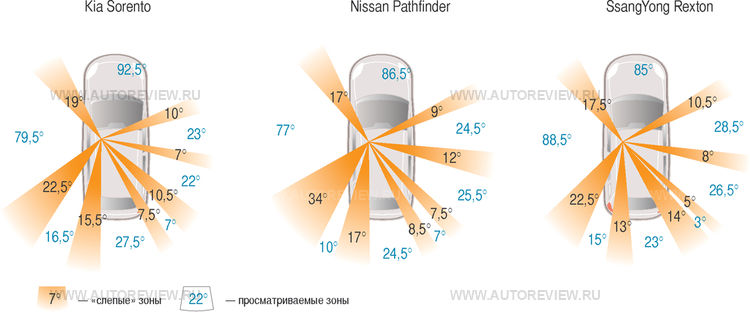
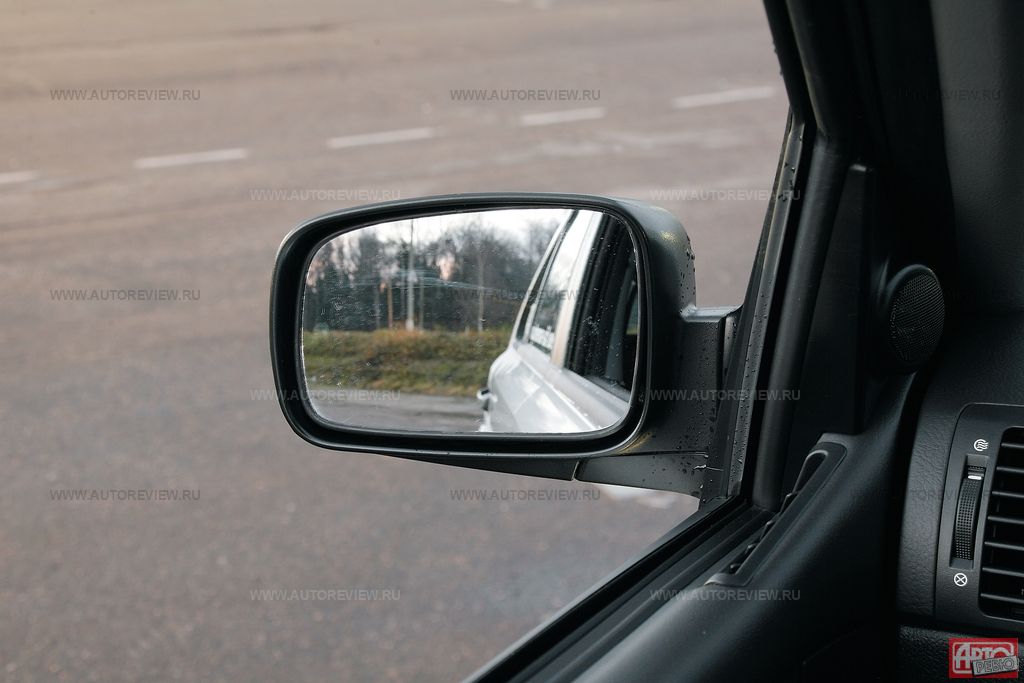
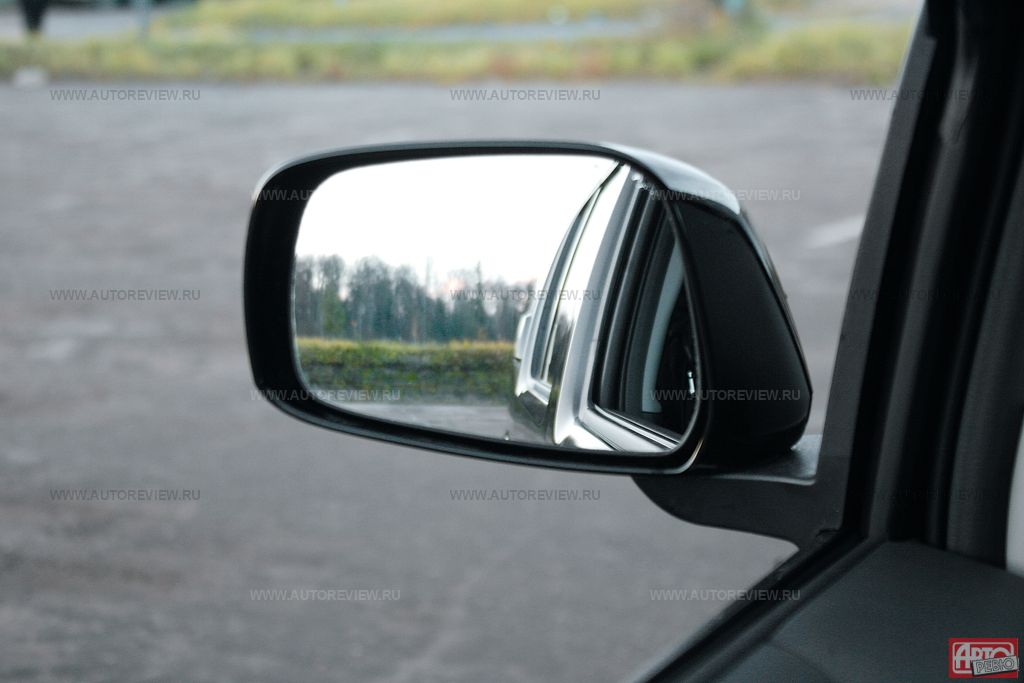
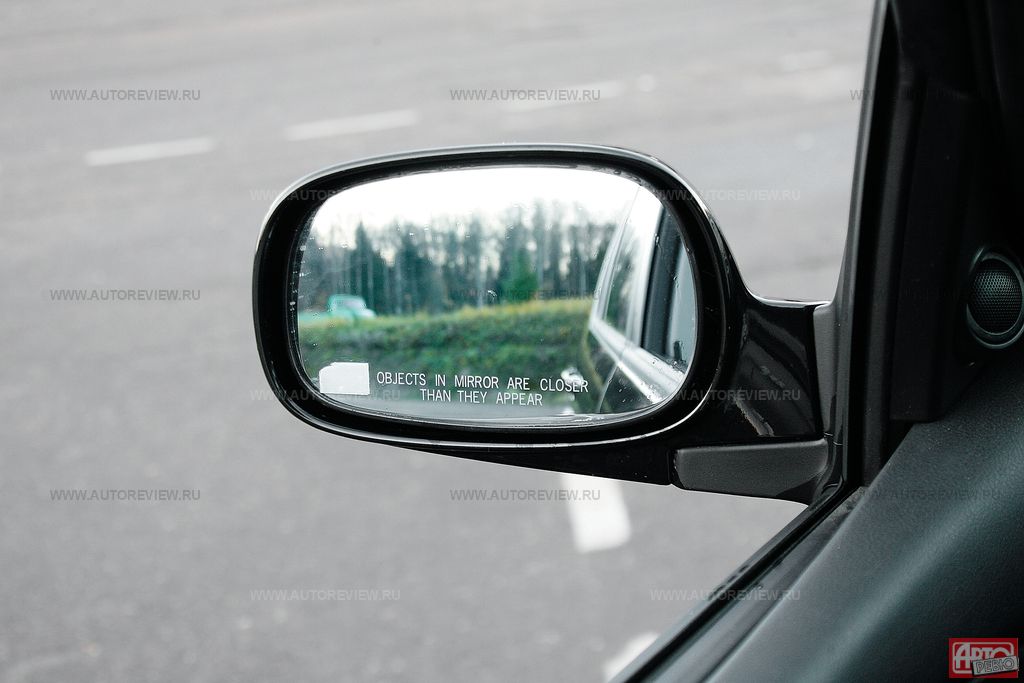
The best visibility is in the Nissan. The view forward is hindered only by the massive angles at the base of the windshield pillars and the low-mounted interior mirror. Although the pillars themselves are not an obstacle, the entire rear window is visible in the interior mirror (thanks to the retractable rear headrests), and the large side mirrors contain everything needed. Plus, off-road, there is a low side window line and visible hood corners.
The Kia's visibility is close to the Nissan's — except the mirrors are slightly smaller.
But the view of the road from the Rexton is hindered by the widest front pillars and the smallest mirrors. The SUV's assets include visible hood corners, unlike the Sorento, and a low rear window edge.
| Kia Sorento | Nissan Pathfinder | SsangYong Rexton |
 |  |  |
| Vehicle | Kia Sorento | Nissan Pathfinder | SsangYong Rexton |
| Total viewing angle, deg. | 268.0 | 255.0 | 269.5 |
| Total blind spot angle, deg. | 92.0 | 105.0 | 90.5 |
Off-road safety
In the base configuration, the Kia Sorento is equipped with only one airbag, pretensioner seat belts, and Isofix anchors. That's too little for a modern SUV costing over $30,000! You have to pay extra for ABS and a passenger airbag, while stability control and side curtains are only available on the expensive EX version. And yet, on the North American market, the Kia Sorento even comes with a driver's knee airbag!
The EuroNCAP crash test was conducted on the Kia Sorento with only two frontal airbags: the steering wheel noticeably shifted into the cabin, and the driver dummy pierced its airbag. In the side impact, the Sorento performed well and ultimately earned a four-star minimum: 25 points. Child occupant protection is average: during the frontal crash test, the chest of the "one-and-a-half-year-old child" was overloaded. And pedestrian safety for the Korean SUV is poor — one star out of four possible.
The SsangYong Rexton "in base" has two airbags and ESP, and on more expensive versions, there are also side airbags up front. The Nissan Pathfinder is better equipped than the "Koreans" — it has side airbags and curtain airbags in any trim.
The SsangYong Rexton has not yet undergone independent crash tests, while the Nissan Pathfinder earned four stars under the EuroNCAP methodology, just barely missing a five-star rating. The culprit is the injury-prone front panel. Child safety is rated three stars out of five — in a frontal impact, increased loads were placed on the dummies' chests. Pedestrian safety is at an average level.
| Kia Sorento* | ★★★★ | 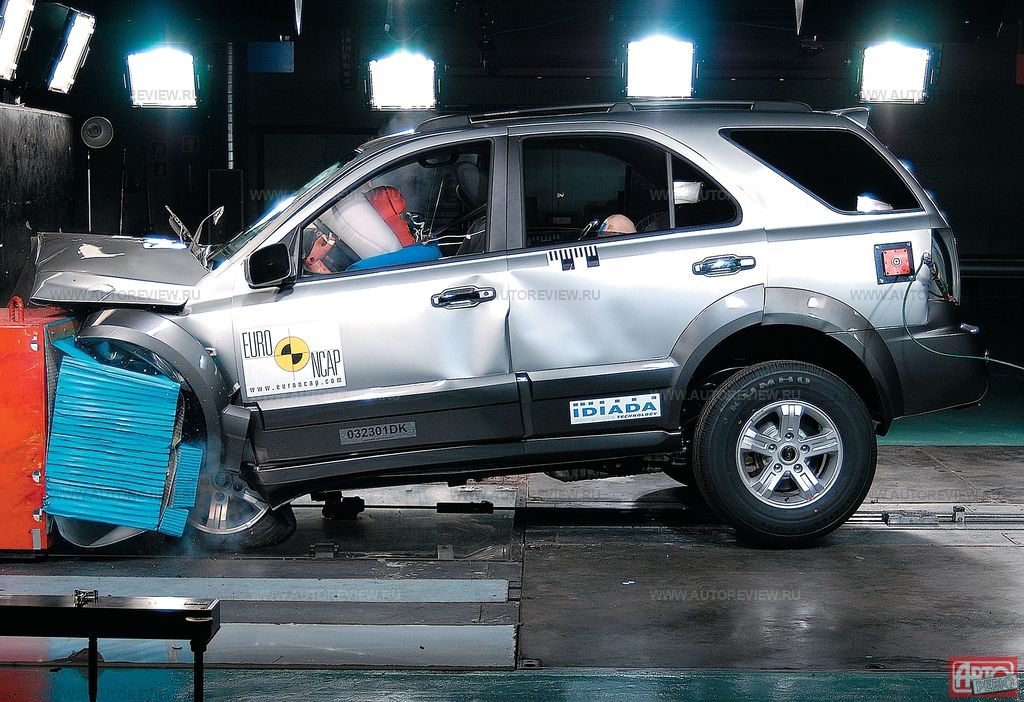 |
| Overall rating | 25 points | |
| Frontal crash test | 9 (56%) | |
| Side crash tests | 16 (89%) | |
| SBR** | 0 | |
| Child occupant protection | — | |
| Pedestrian protection | 3 (8%) | |
| Curb weight | 2115 kg | |
| * Tests conducted according to EuroNCAP methodology | ||
| ** Availability of seatbelt reminder | ||
| Nissan Pathfinder* | ★★★★ | 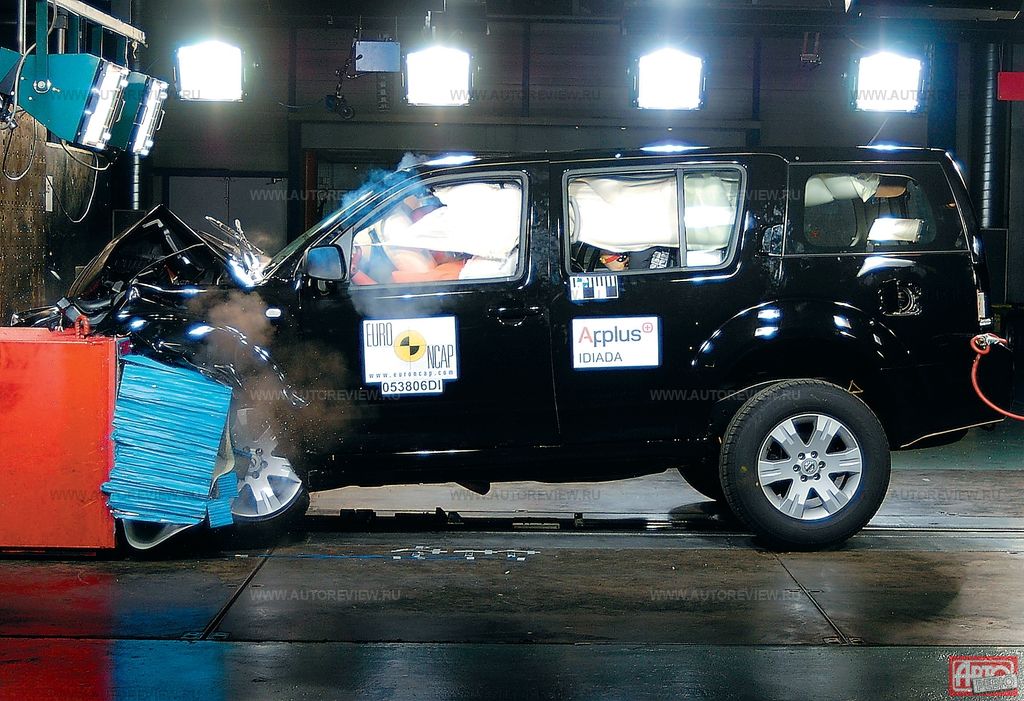 |
| Overall rating | 32 points | |
| Frontal crash test | 12 (75%) | |
| Side crash tests | 18 (100%) | |
| SBR** | 2 | |
| Child occupant protection | 32 (65%) | |
| Pedestrian protection | 18 (50%) | |
| Curb weight | 2132 kg | |
| * Tests conducted according to EuroNCAP methodology | ||
| ** Availability of seatbelt reminder | ||
View from below
To find out what owners of these cars risk off-road, we drove the crossovers onto a ramp for a detailed inspection.
Apparently, the Nissan Pathfinder is best suited for off-road: large ground clearance (210 mm), a flat underbody with plastic aprons covering the frame's "windows," deeply hidden brake and fuel lines — even the exhaust cut is angled to not worsen geometric off-road capability. At risk are only the spare tire hanging below the rear bumper edge, the rear stabilizer bar, and the shiny paint on the bumpers.
The SsangYong Rexton yields to the Nissan primarily due to the low-hanging muffler with resonator, although most of the exhaust system is routed deep within the frame and goes over the rear suspension. Ground clearance here is the largest — 217 mm, but there is a risk of damaging the low-mounted steering gear tubes and, less likely, the fuel tank (on the left side) — it has metal protection but hangs below the frame rails. The lower part of the bumpers is carefully painted with matte paint.
The Kia Sorento, when viewed from below, pleased the least. The smallest ground clearance — 185 mm, unprotected steering gear and rear ABS sensor wires, and the frame abounds with crossmembers that hang noticeably lower than the rails and can act as an anchor off-road. As with the other two cars, the Sorento's powertrain is hidden behind the frame, and only the front part of the engine and radiators are protected by a steel sheet, like the Nissan. But we do not recommend attaching a tow rope to the rear of the Kia — the fixed tow hooks are located above the bumper edge, so there is a high risk of damaging it.