
The demand for crossovers is not accidental. As in the song, one can count half a dozen reasons: such a car is not inferior in status to a business sedan, five people fit comfortably in the cabin, it is no worse than a station wagon in terms of capacity, the high seating position helps in city traffic and adds confidence, and there is also an impressive ground clearance.
The question is only which of the four candidates deserves your money: BMW X3 3.0si, Lexus RX 350, Nissan Murano, or Subaru Tribeca?
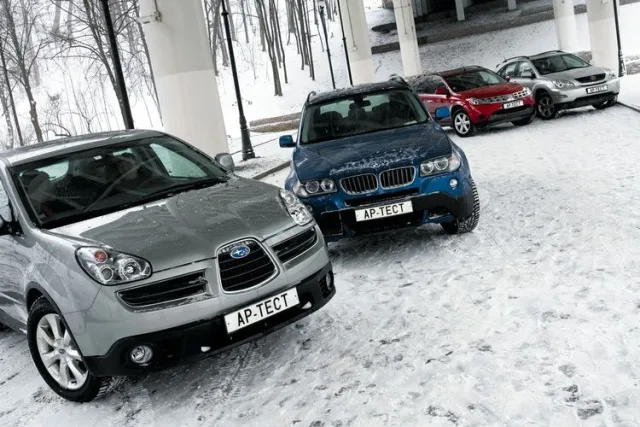
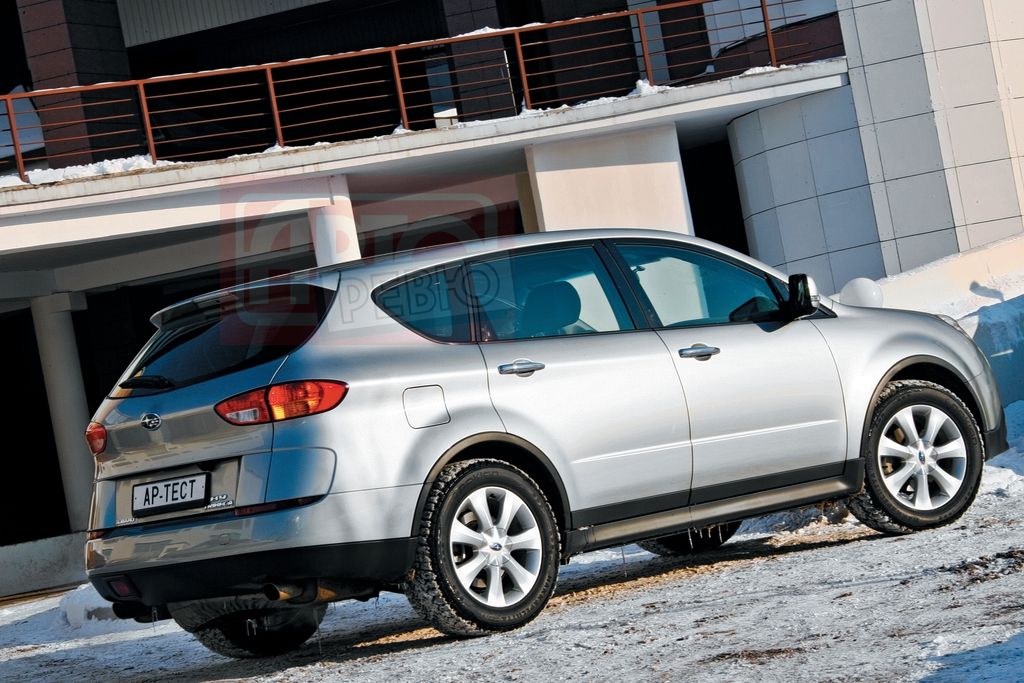
Each of the test participants is attractive in its own way: the imposing Lexus, the Murano with its recognizable "smile" of the radiator grille... But the Subaru Tribeca stands out even against their background — the car is flashy, one might say, provocative. Andreas Zapatinas, who previously headed Subaru's design, said that the front part with the trapezoidal insert references the brand's aviation roots. But this appearance looks rather zoological: the Tribeca resembles a rhinoceros. It inspires respect, but without aggression.
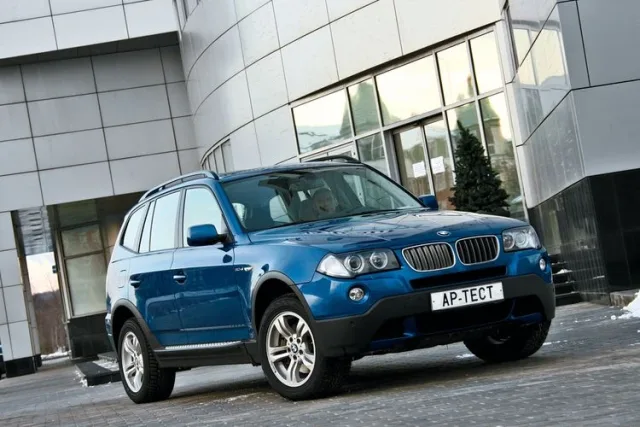
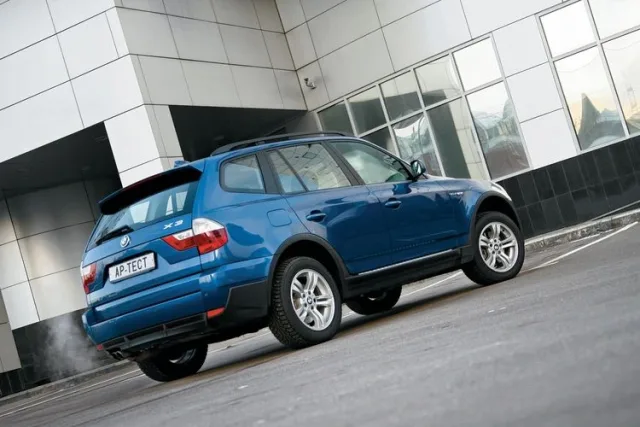
The BMW X3, after the "nostrils" of the grille were enlarged, began to resemble its older brother X5 more strongly, but still looks unusual. The sides with whimsical curves, the optics seemingly assembled from different elements... This is the legacy of Christopher Bangle's experiments.
But inside the X3, there is exemplary order. The console, albeit slightly, is still turned toward the driver. Materials and build quality are top-notch, the front seat is almost a benchmark, only lacking lumbar support adjustment. The steering wheel with a plump leather rim fits comfortably in the palms, and all controls are exactly where you expect to find them...
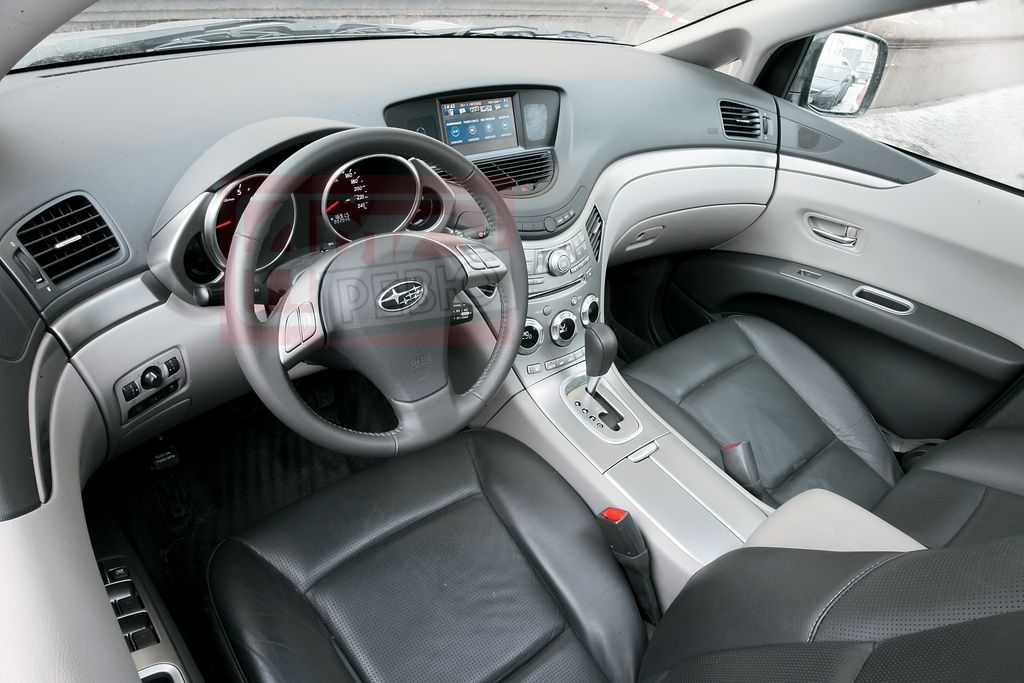 | 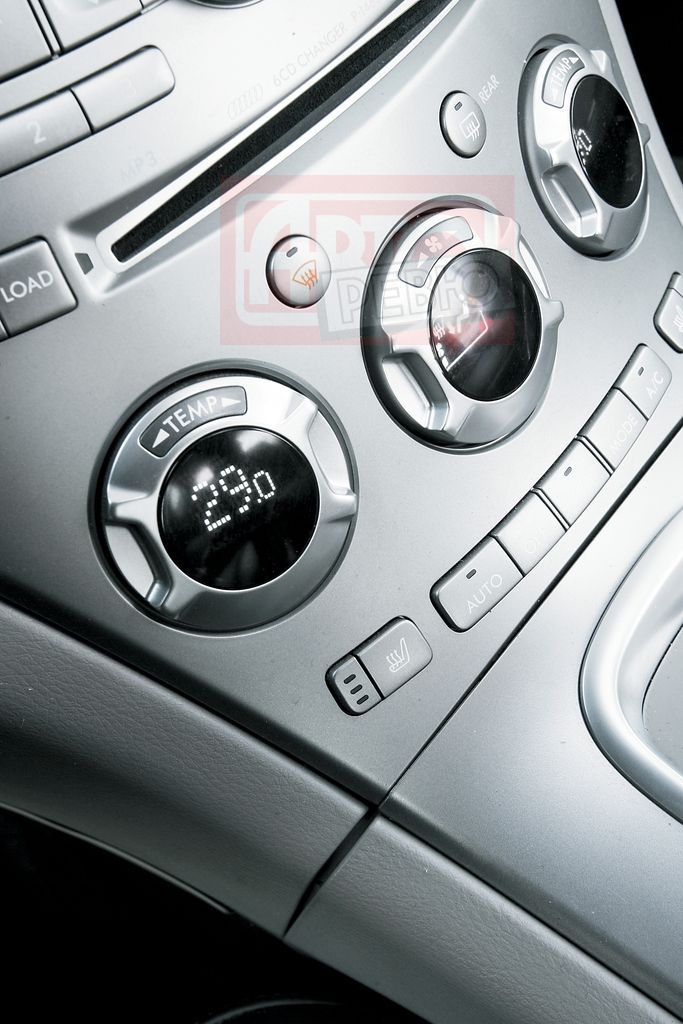 |  |
| Beautiful interior: the panel with its "wings" seems to embrace the front occupants. But ergonomics are not without flaws — Lexus and BMW are better thought out | Dual-zone climate with "rocking" handles — a convenient and pleasant thing to use |
However, from the driver's seat, the Subaru interior deserves no less attention! The front panel spreads widely across the cabin, its "wings" extend to the center tunnel and doors, and the instrument cowl additionally "flows around" the driver. When you turn the ignition key, red backlighting flashes at the bottom of the instrument wells, and the needles effectively sweep across the entire scale and return back. This is Subaru's signature style!
It's just a pity that the seating position is not as successful as in the BMW: the soft seat distributes weight well, but the flat backrest is not too successful in profile. The steering wheel adjusts only in height, and the central display, which also shows the rear-view camera image, is pushed far away — you have to reach for it. But the dual-zone climate control pleased with unusual "rocking" handles. They resemble parts from transformer toys, and in the center of each is a small screen with temperature and airflow direction. Unusual and practical.
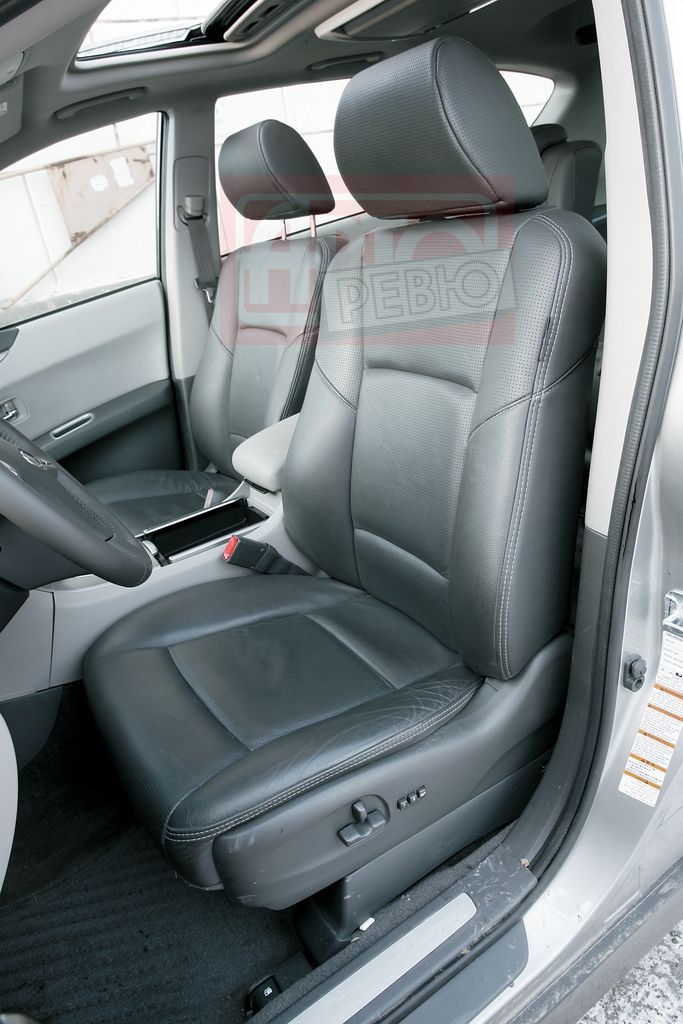 | 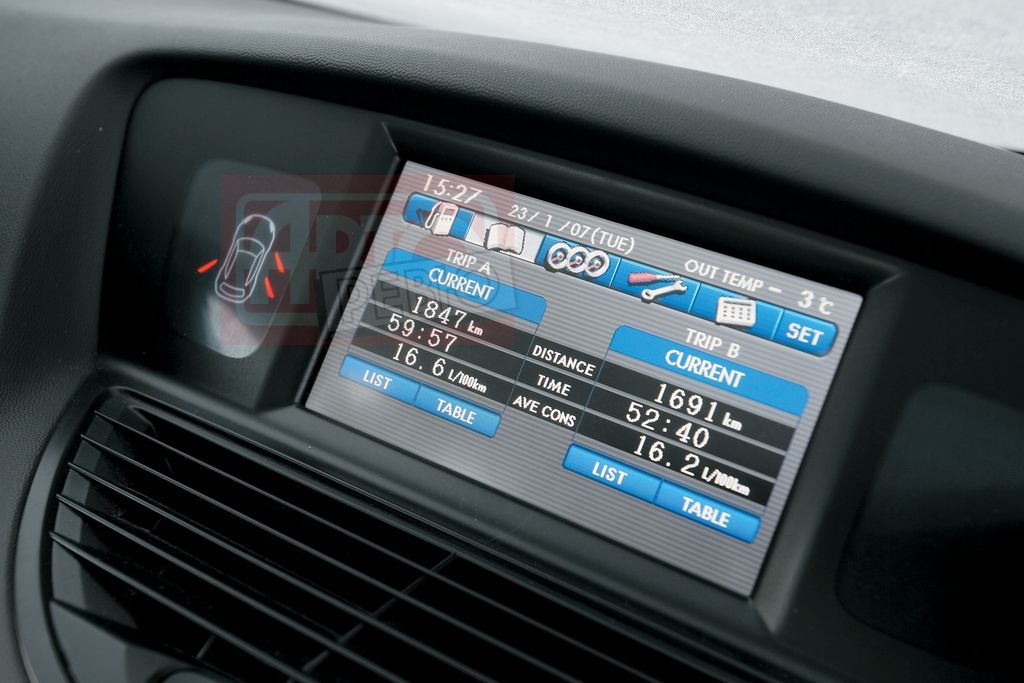 | |
| Subaru seats could have more pronounced lateral support | The display is touchscreen, and optionally for Subaru, a rear-view camera is available... | ...and a DVD player for rear passengers |
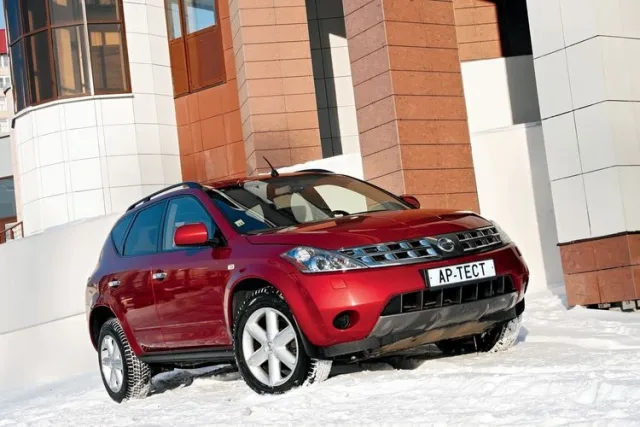
The Murano interior also tries to be "driver-oriented." The center console is pushed forward, the instruments are styled after the 350Z sports coupe... But all this is executed noticeably simpler than in the BMW and Subaru. The instruments are somewhat small, the scales are yellowish and inexpressive, and the graphics of the monochrome onboard computer display are primitive. And controlling it is inconvenient, especially for short drivers: the buttons on the end of the console are directed upward. The front seats are overly soft and loose, the steering wheel changes position only in height and, in the American manner, rocks on a short arm, noticeably changing the tilt. The adjustable pedal assembly saves the day — also a typically American option.
Interestingly, when we tested the "gray" Murano three and a half years ago (see AR No. 17, 2003), the buttons with the joystick were conveniently located, and the climate control was dual-zone, not "monophonic." But when adapting to the European market, Nissan had to redo the steering column, front panel, and even the glove box — due to stricter requirements for cabin injury safety.
The spirited handling resulted in mediocre ride comfort
The Lexus is also primarily oriented toward America, but there is no talk of simplicity here — leather and wood in the trim create an atmosphere of solidity. Even the soft plastic of the "two-story" front panel can easily be mistaken for leather. The three instrument wells with optitronic scales are especially pleasing. The driver's seat with delicate leather upholstery distributes the load no worse than the Bavarian one — except that the lateral support is weaker. But the lumbar support adjusts within wide limits.
So, up front, the most comfortable are the BMW and Lexus. And what about the second row?
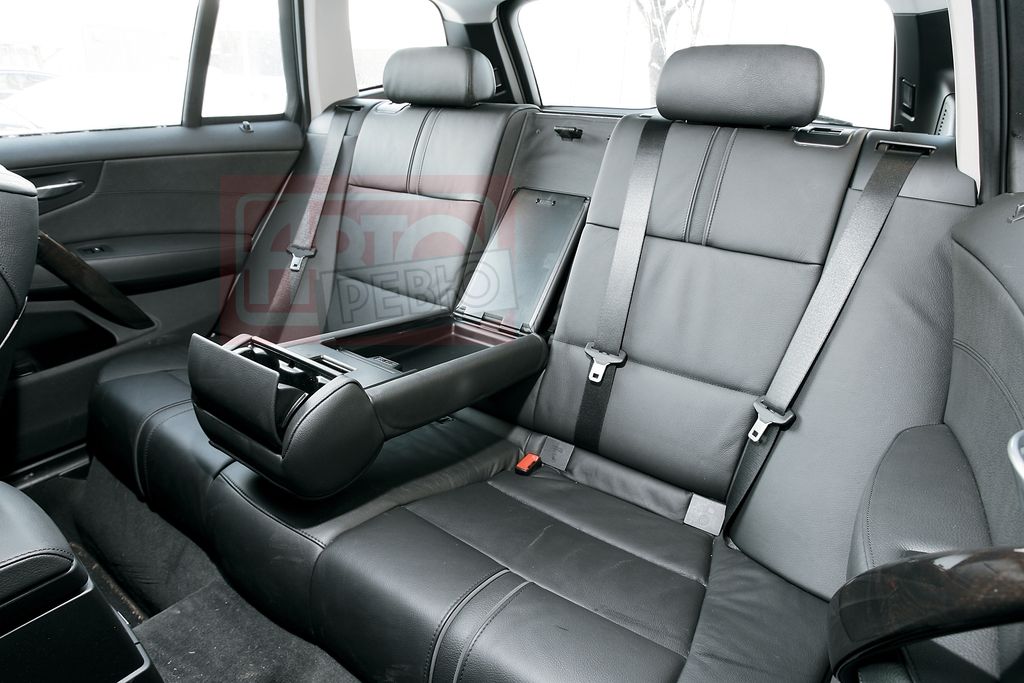
Here, the BMW X3 hopelessly lags behind: the narrow door opening and the decorative sill that you have to step over to avoid soiling your trousers make getting in and out a torment. The rear bench has no adjustments, there is little legroom, and the center tunnel is overly massive. Only the armrests and door handles turned out well.
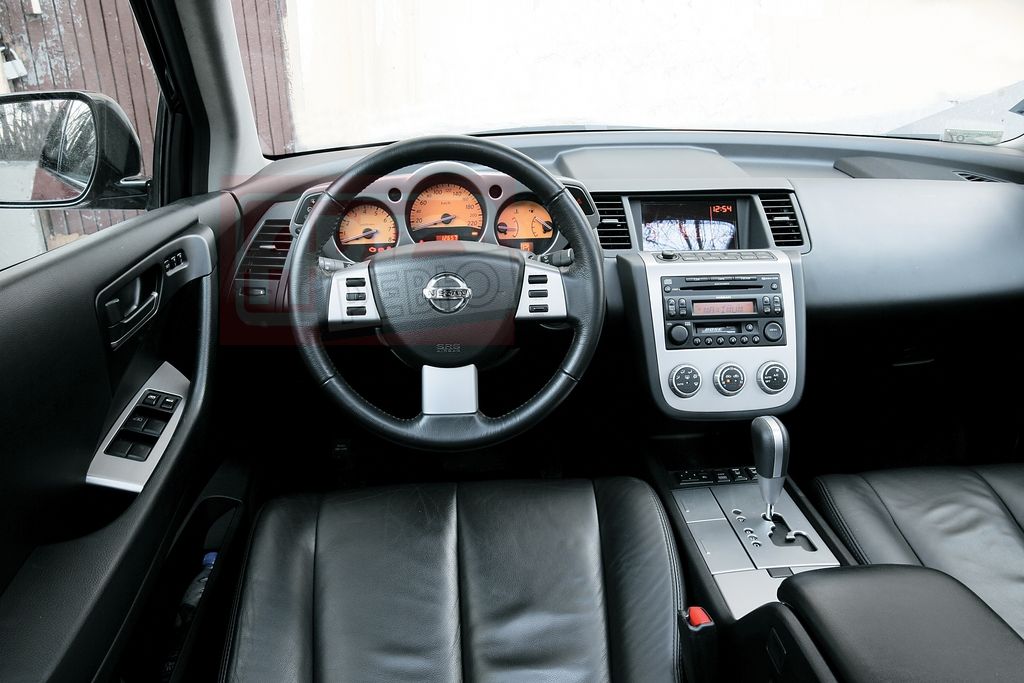 | 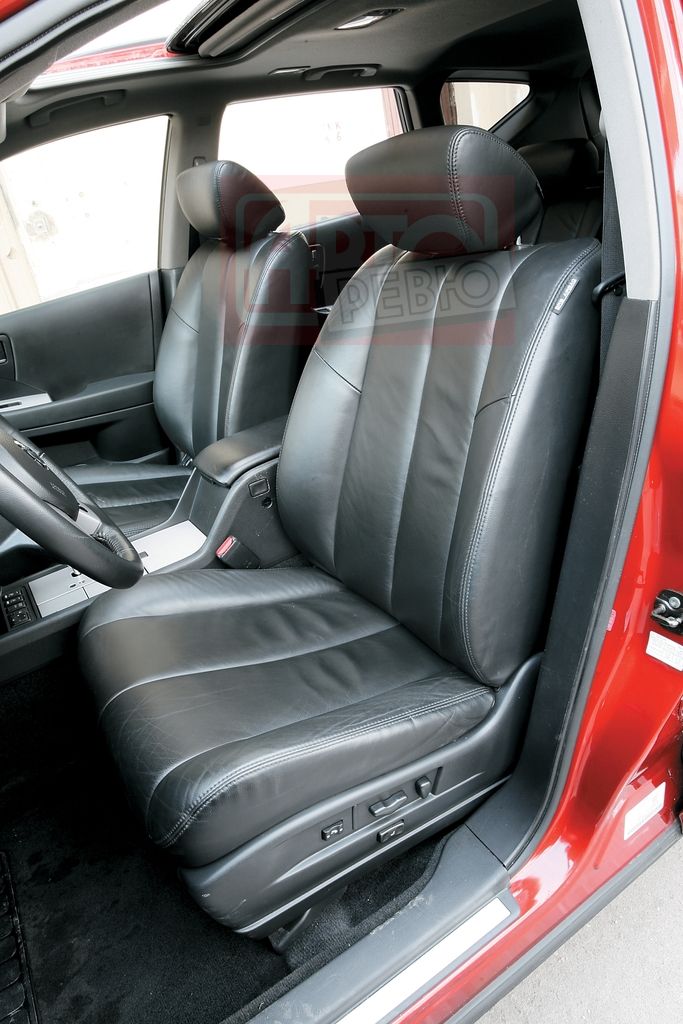 | 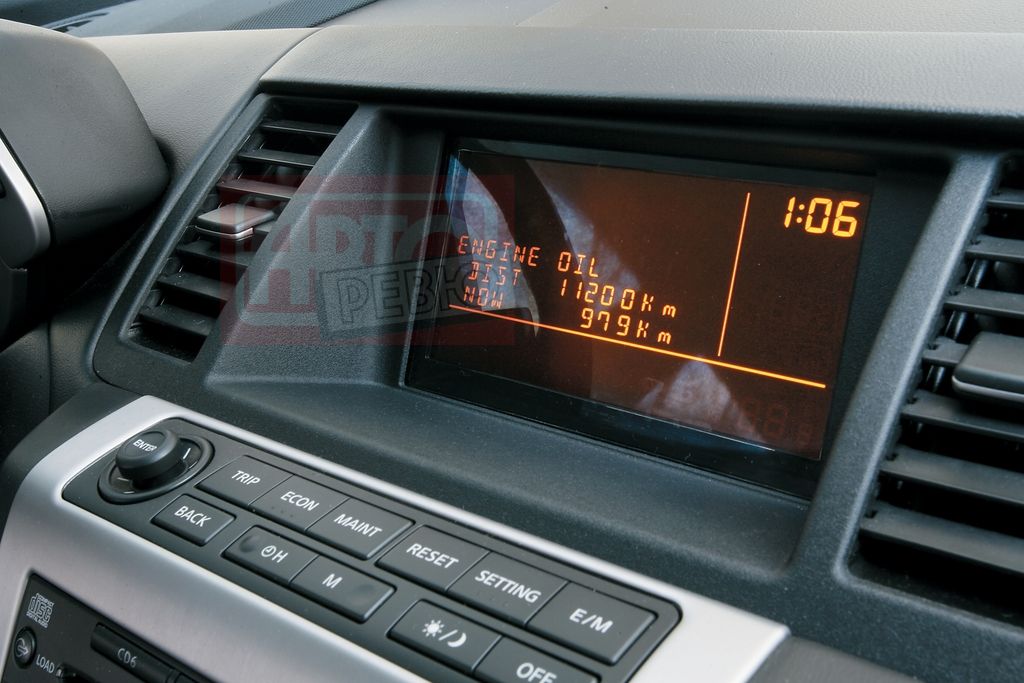 |
| The Murano interior is somewhat simple — both visually and to the touch | Nissan's seats are overly wide, the steering wheel adjusts only in height, but the pedals can be moved | Nissan's display has primitive graphics, and the onboard computer buttons are inconveniently directed upward |
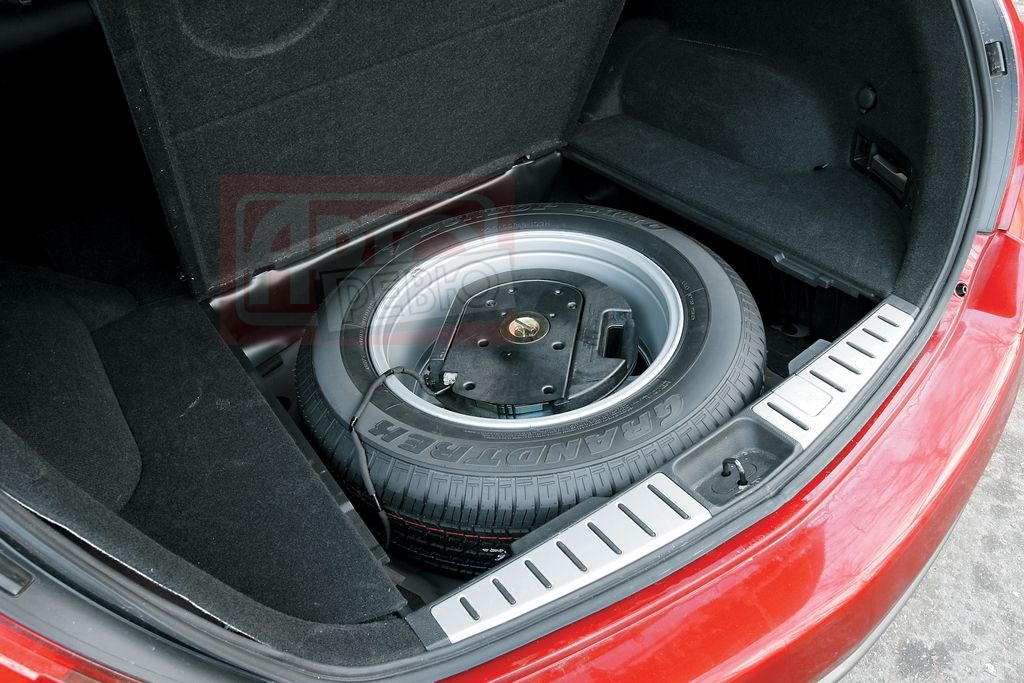 |  | |
| Nissan (pictured) and Lexus have full-size spare wheels, while BMW and Subaru have "space-saver" spares |
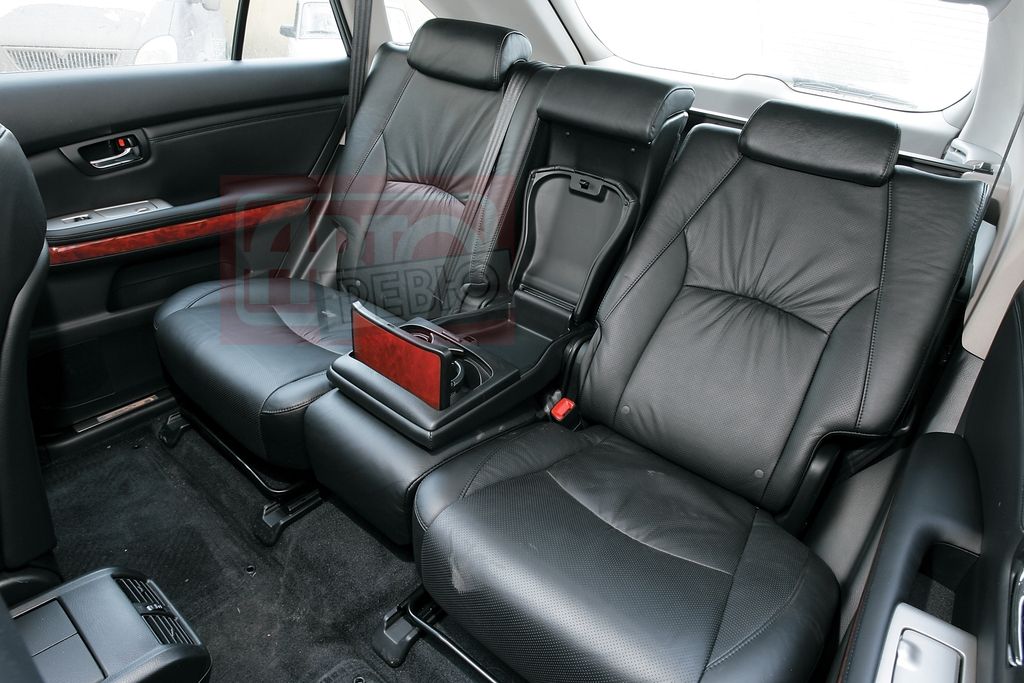
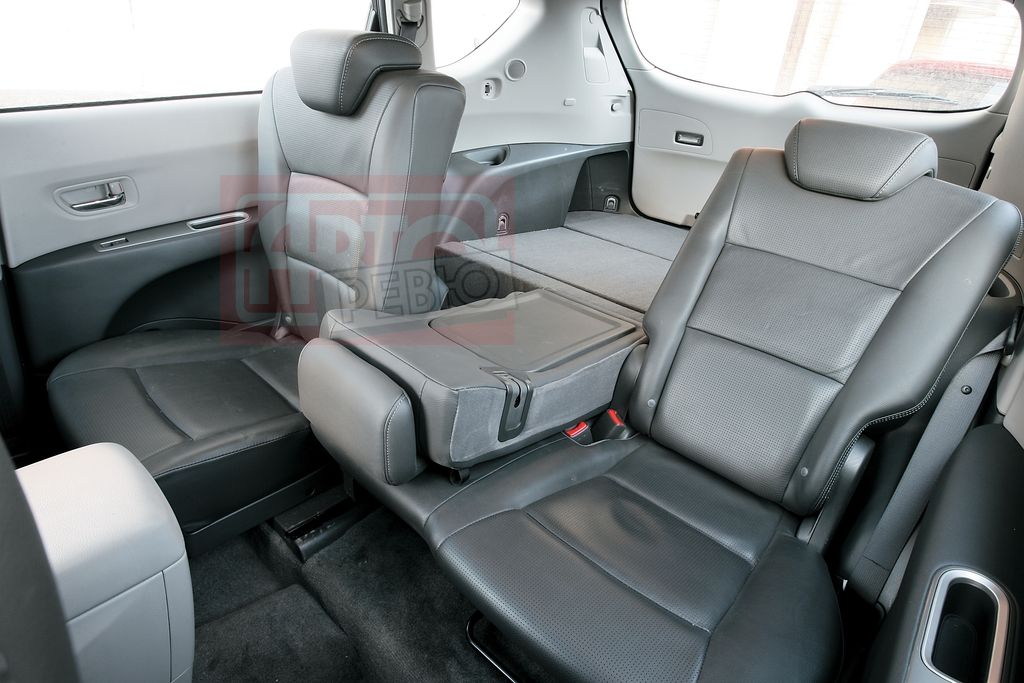
The Lexus and Subaru are middle-of-the-road. Both are more spacious than the BMW. But in the Lexus, the seat cushion is positioned somewhat low, and the roof slopes press on the heads of the outer passengers. In the Subaru, due to the low cushion, you also have to sit with your knees raised. But the bench has longitudinal adjustment, and the backrests recline.
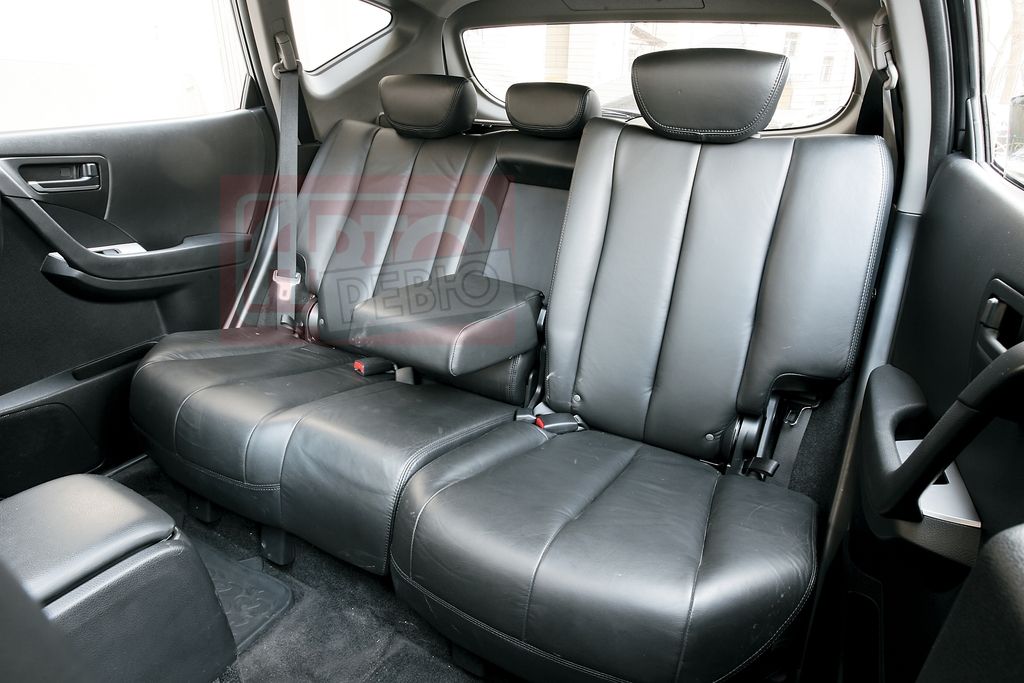
The undisputed leader in rear seats is the Nissan Murano. Easy entry, comfortable seats with adjustable backrest sections — and plenty of space. Even three people are not cramped here. The only drawback is the small center armrest that always hangs down.
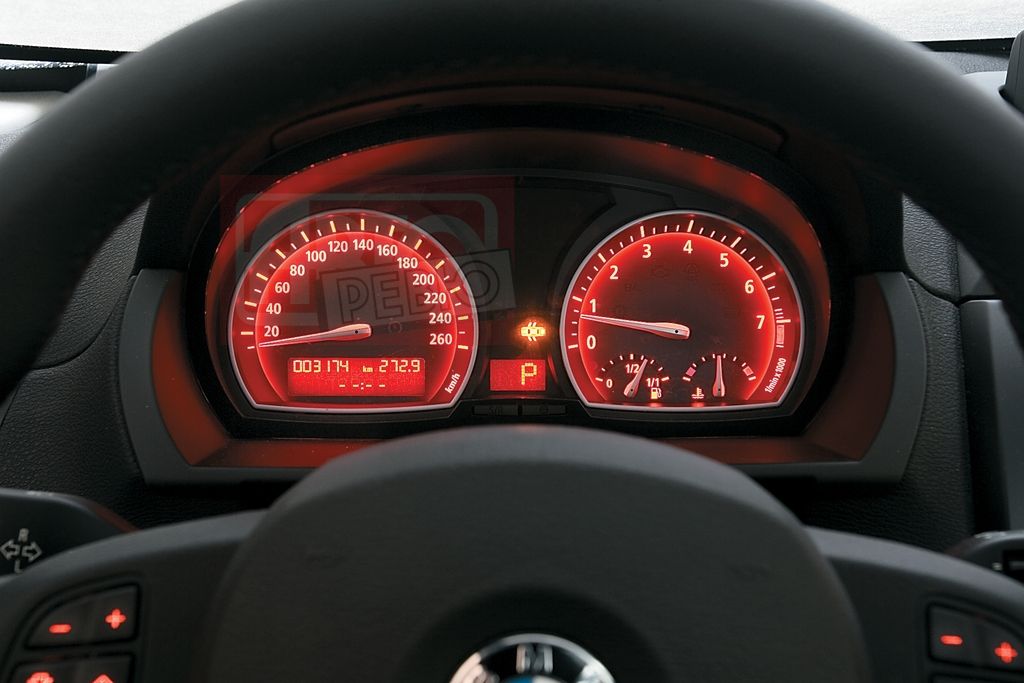 |  |
| BMW X3 | Lexus RX 350 |
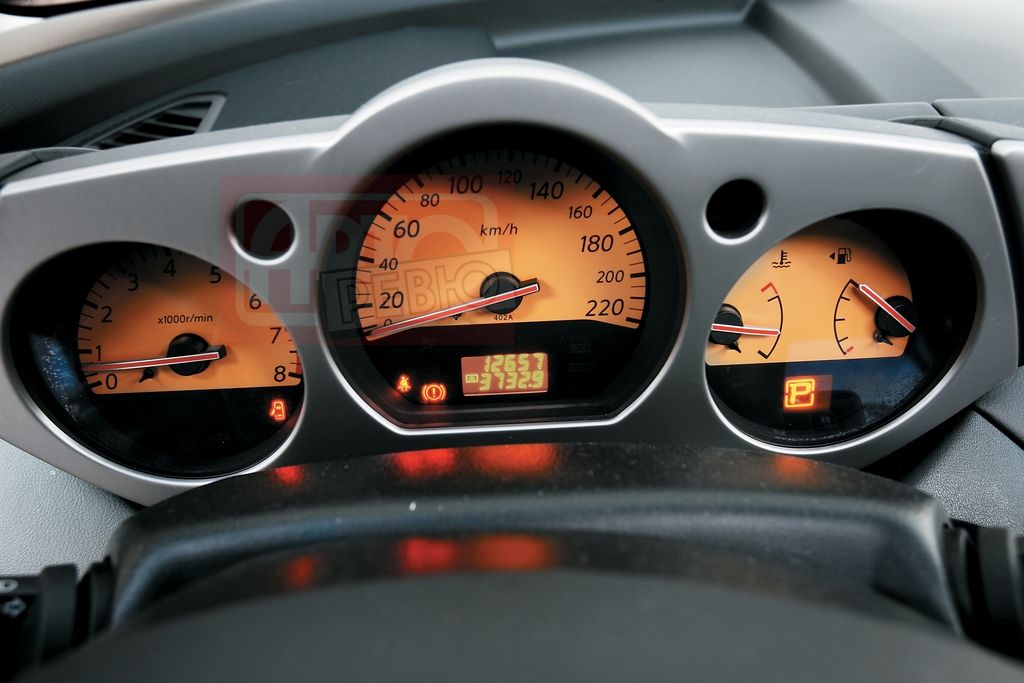 | 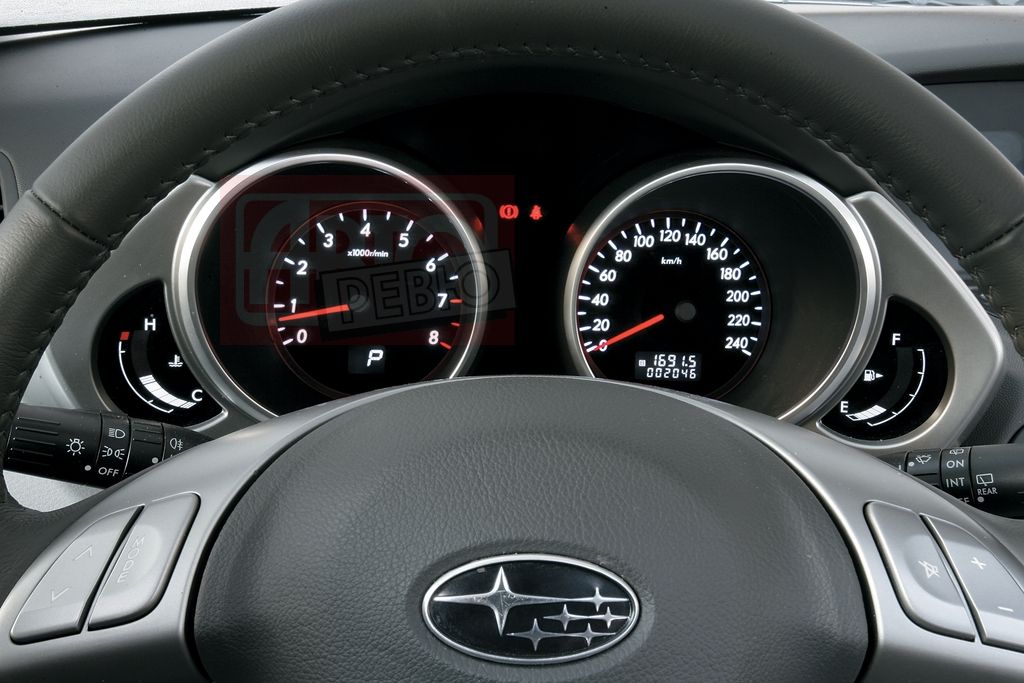 |
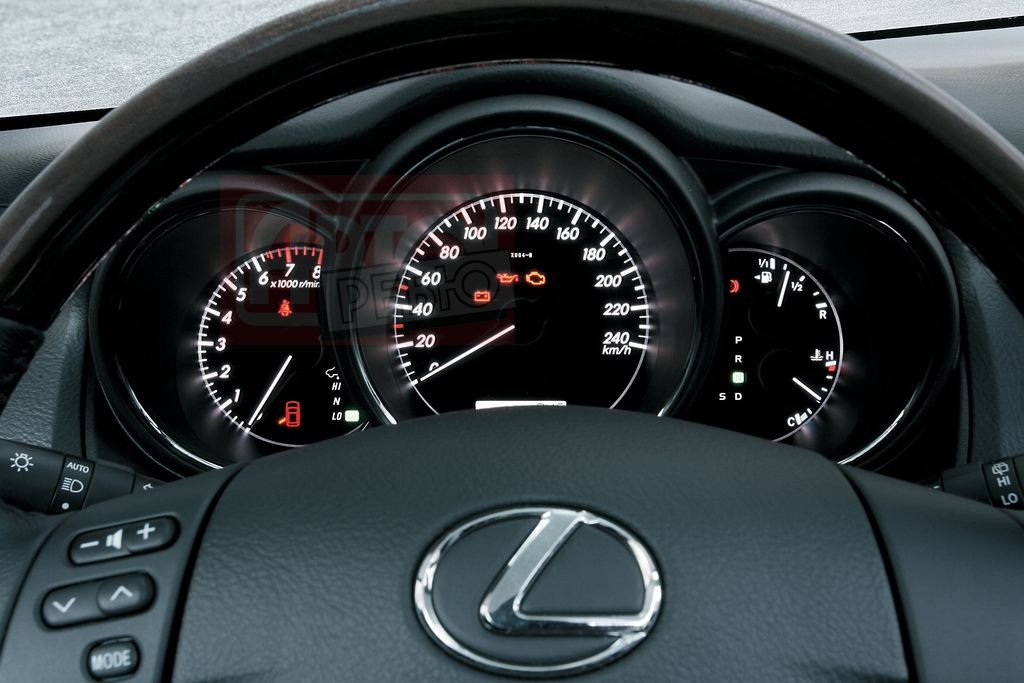
| Nissan Murano | Subaru Tribeca |
| We liked the Lexus instruments the most — clear and understandable. The Subaru's "toolkit" is also good. But the font on the BMW X3 and Murano scales is somewhat small | |
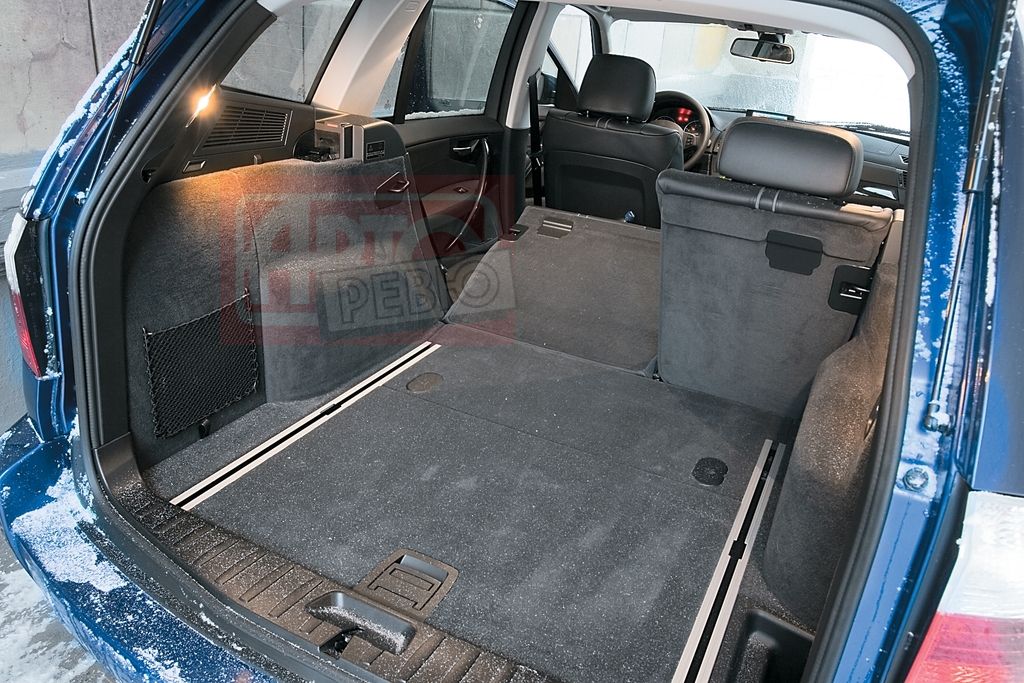
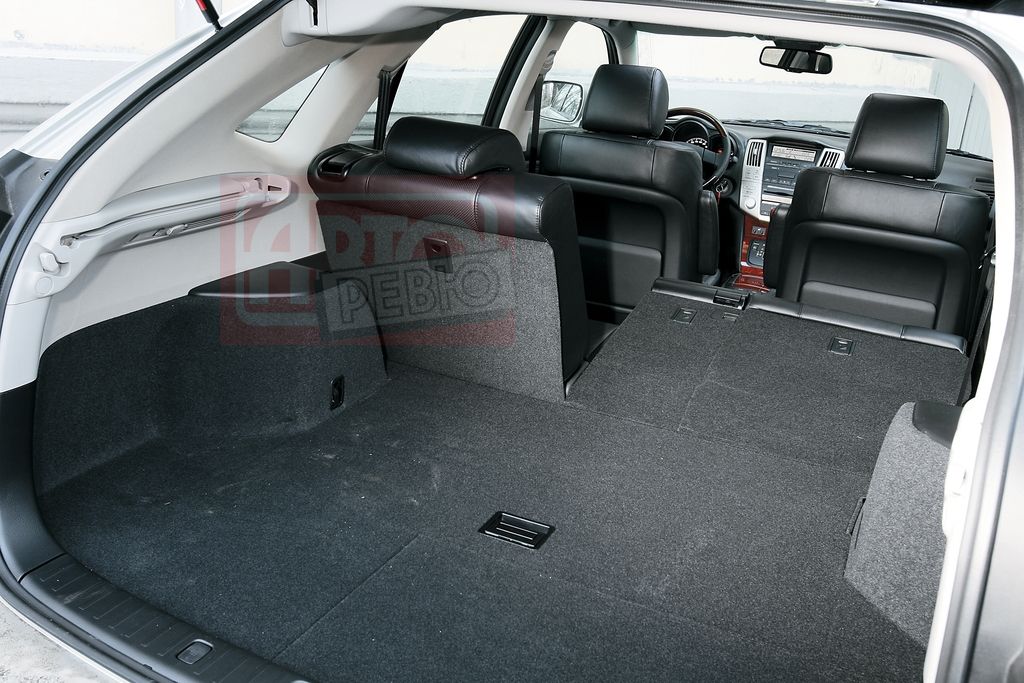
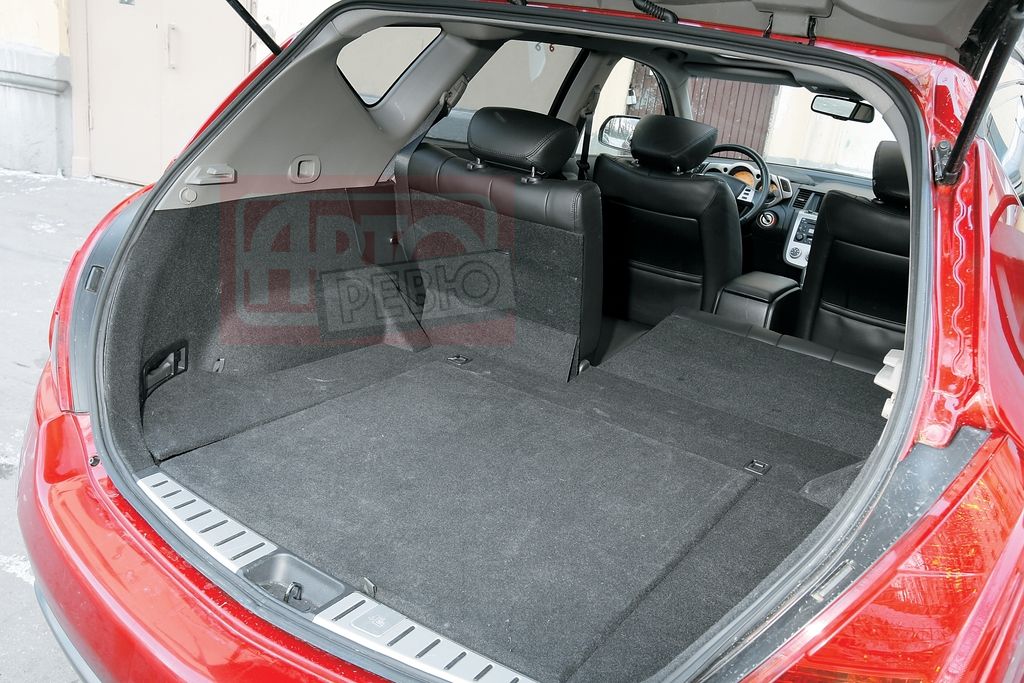
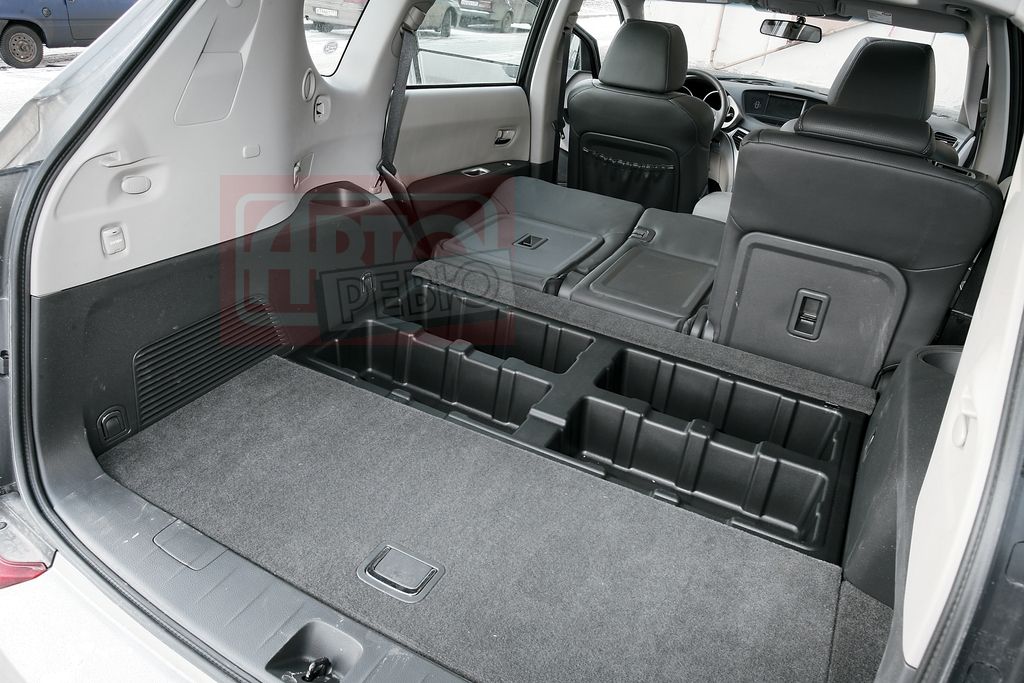
If the question arises of transporting bulky cargo — bags or, say, bicycles — then Lexus looks like the undisputed favorite. Its trunk is the most spacious and convenient: the floor is almost perfectly flat, the seatbacks fold easily, and the power tailgate closer is available in all versions except the base Comfort. Nissan and Subaru have comparable volumes, with the Murano's opening becoming the widest after folding the seats, and the Tribeca, like the Lexus, boasts a sliding rear bench. But BMW disappoints in this quartet: the trunk is modest, and transformation options are limited by the rigidly fixed side bolsters of the bench. The only consolation is the minimal loading height.
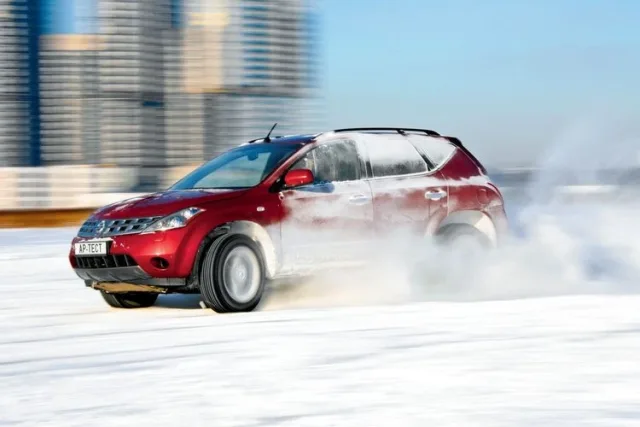
In the Murano, at the limit, pronounced understeer transitions into outright front-axle plow. The center coupling engages the rear wheels too slowly, so the plow only intensifies
Under the hoods of all four are six-cylinder engines, but they differ fundamentally in design. The Lexus RX 350 (276 hp) and Nissan Murano (234 hp) have classic V6s, the BMW (272 hp) has an inline six with a bimetallic block, and the Subaru (245 hp) has a boxer engine. A complete contrast of approaches!
The same story with transmissions. All cars are all-wheel drive with automatic shifting, but the implementation differs. The Lexus and Subaru are equipped with permanent all-wheel drive with a self-locking center differential: the former uses a viscous coupling, the latter an electronically controlled clutch. In the BMW X3 and Murano, only one axle is driven, and the second engages automatically: in the Bavarian, electronics transfer torque to the front via a clutch in the transfer case; in the Nissan, the rear wheels engage similarly.
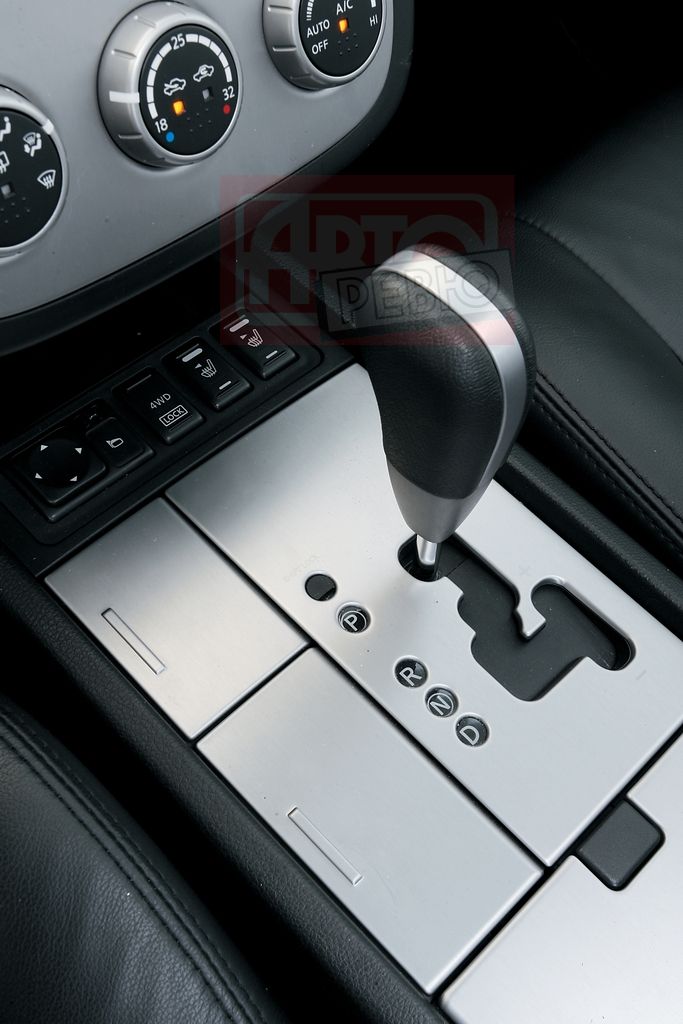
And another fundamental difference of the Murano: instead of a traditional automatic, it has a belt-driven CVT, the X-Tronic CVT.
Which of them is quicker?
The logic is simple: the one with more horsepower. That is, BMW and Lexus.
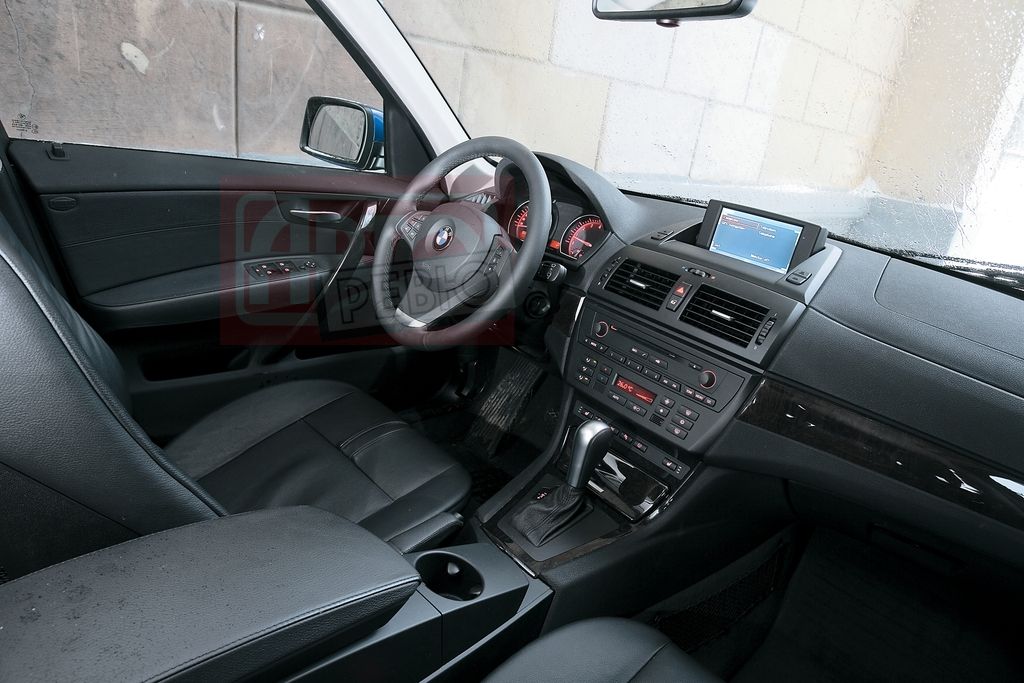 | 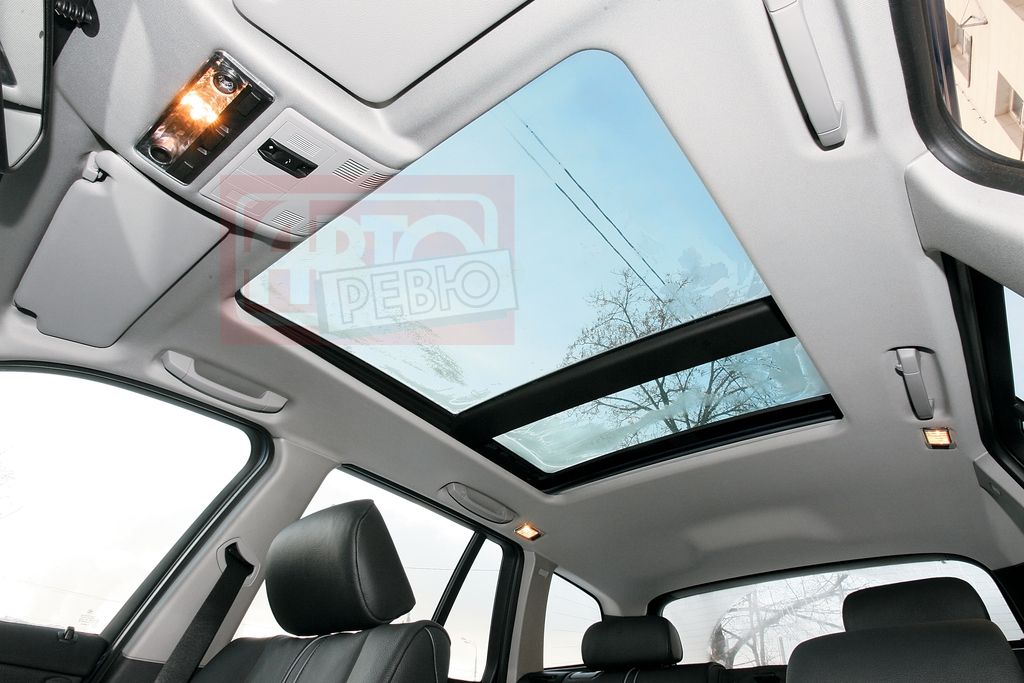 |
| BMW X3: best ergonomics in the quartet | Panoramic roof — a privilege of the top Luxury version |
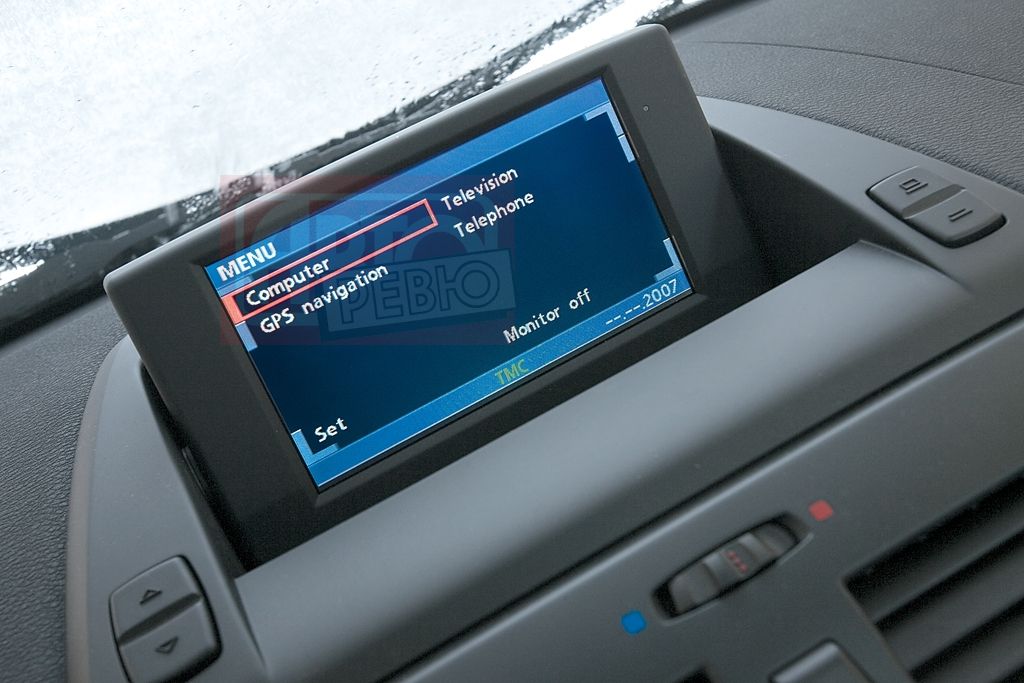 | 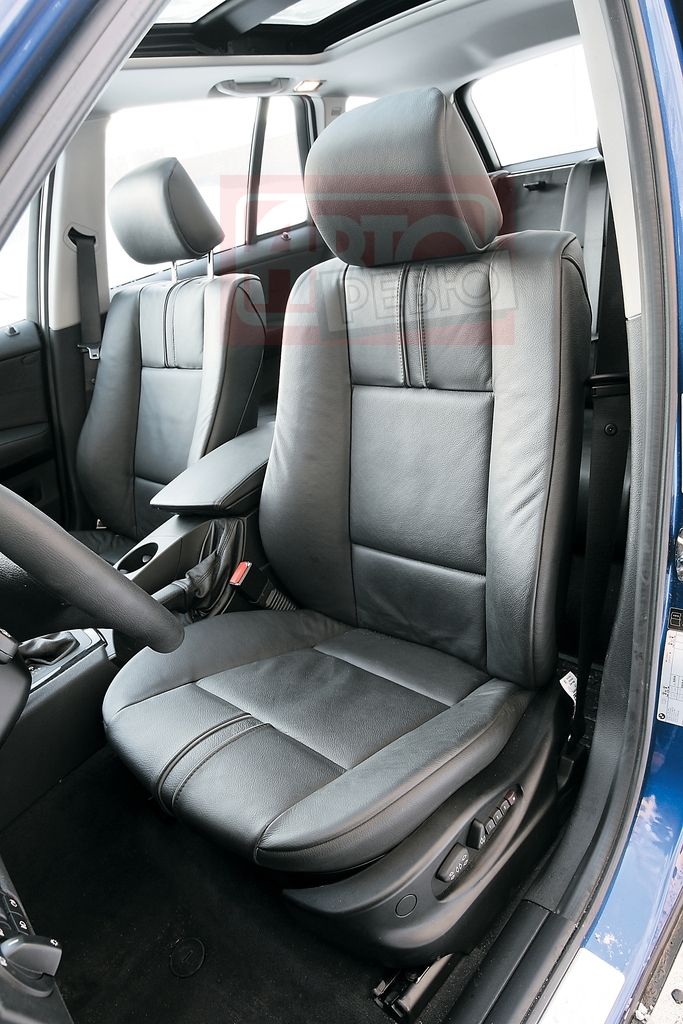 |
| The display "slides out" from the panel — including to show the readings of the Russian-language navigation system | BMW seats are the most comfortable |
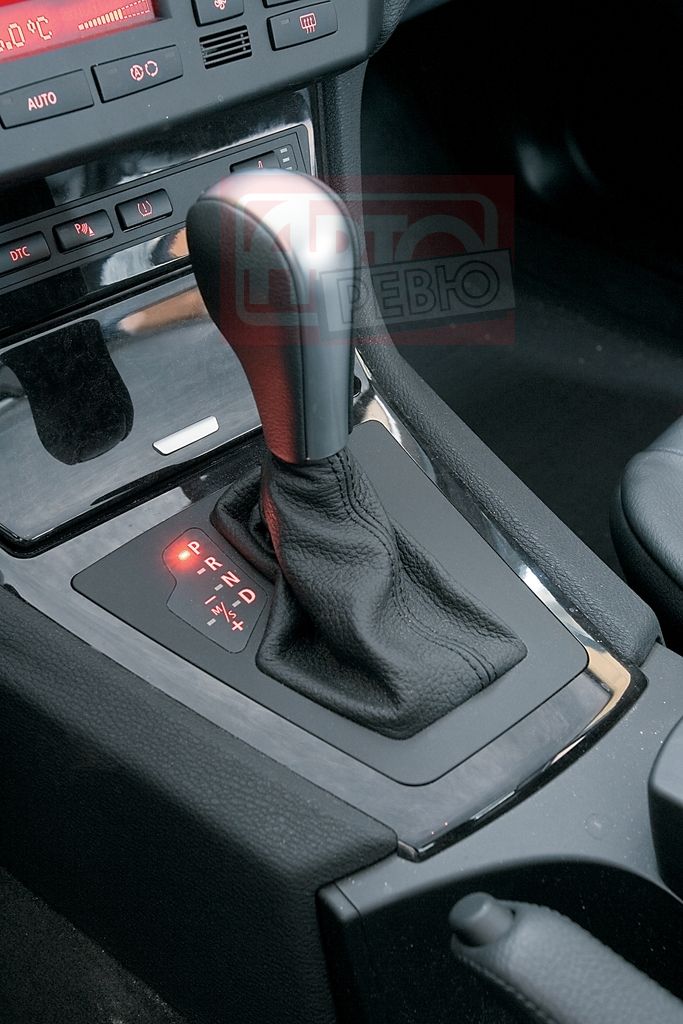
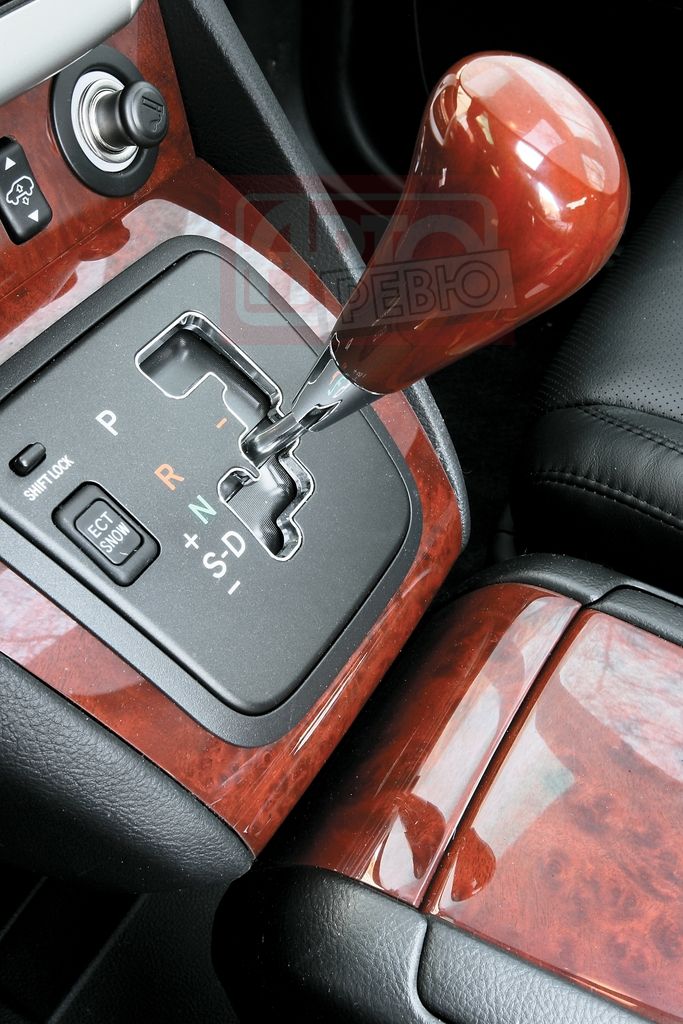
These two accelerate assertively and almost evenly. But in city traffic, managing the thrust is more convenient... no, not in the BMW. The X3 surprised unpleasantly with a heavy gas pedal and sharp, illogical automatic transmission behavior. It reacts nervously to partial presses, but when you really floor the pedal, the X3 eagerly shoots forward.
The Lexus RX 350, in this regard, is a model of obedience: the accelerator responds easily, clearly, and predictably. The gearbox also pleased more, although it too sometimes allows harsh shifts.
 |  |
| BMW X3 | Lexus RX 350 |
 |  |
| Nissan Murano | Subaru Tribeca |
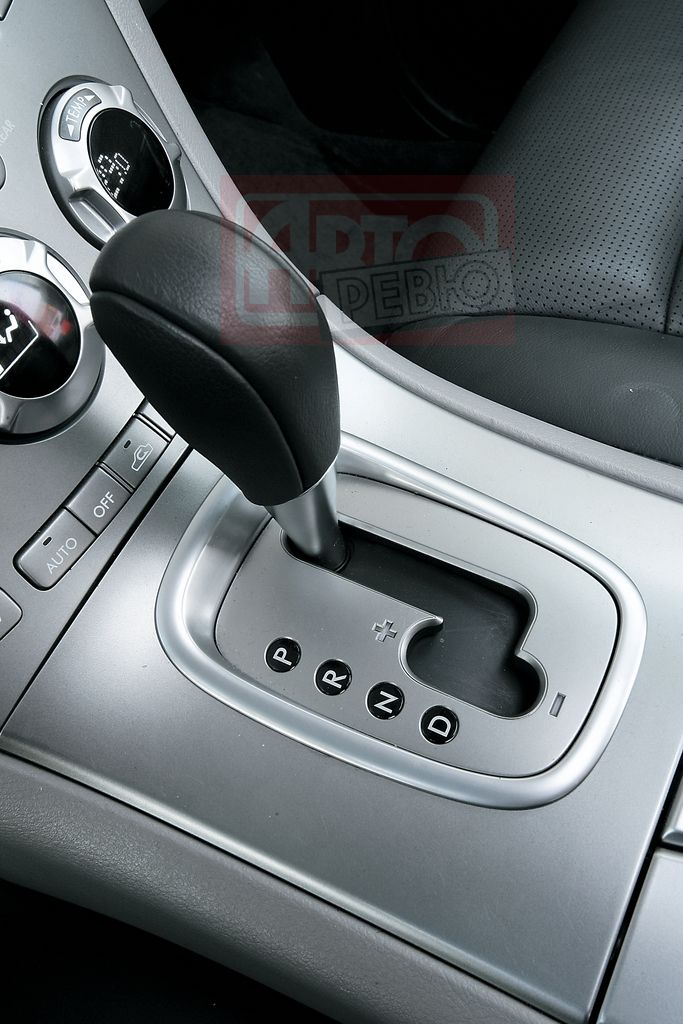
| In terms of ease of managing thrust, we liked the Murano's CVT and the Lexus's nearly flawless automatic the most. But the BMW and Subaru transmissions have noticeable delays in shifting | |
If you want to drive more dynamically, you can shift the gearbox into sport mode — essentially, the electronics will hold one gear lower. Moreover, in manual mode, the Lexus can hold a gear, "pushing" the engine against the rev limiter. But the BMW, in such a situation, automatically shifts up a gear.
Nissan and Subaru lag behind BMW and Lexus — they are heavier, and their engines are weaker. In the Murano, the sense of dynamics is further muddied by the most "thoughtful" accelerator. Moreover, to press the long-travel pedal "to the floor," the driver has to "stretch the toe," and at idle the pedal buzzes unpleasantly.
 |  |
| BMW X3 | Lexus RX 350 |
 |  |
| Nissan Murano | Subaru Tribeca |
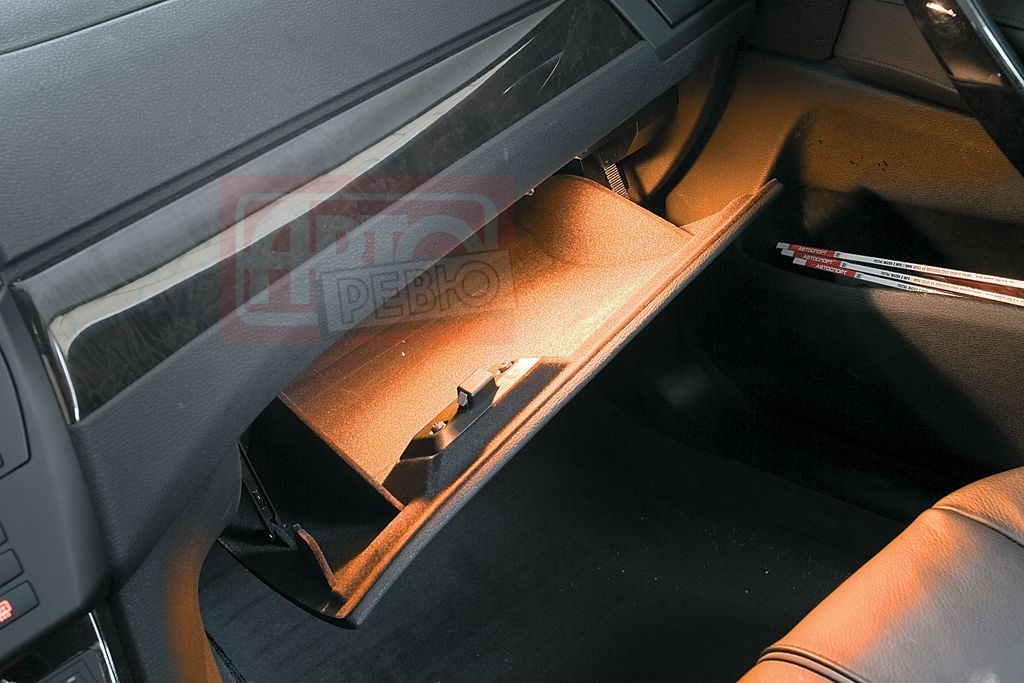
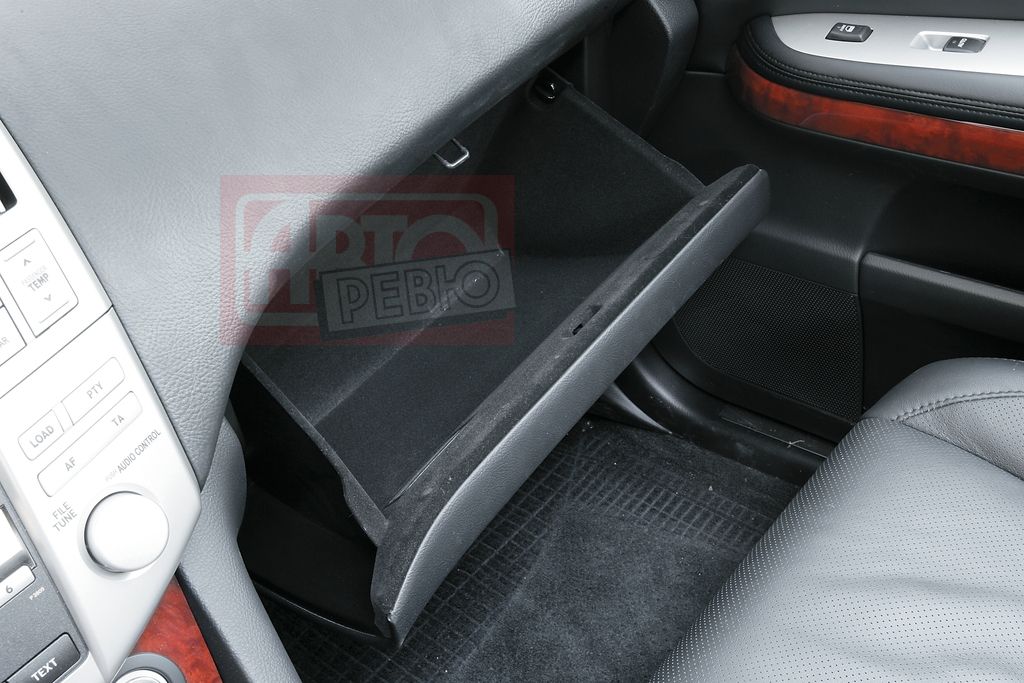
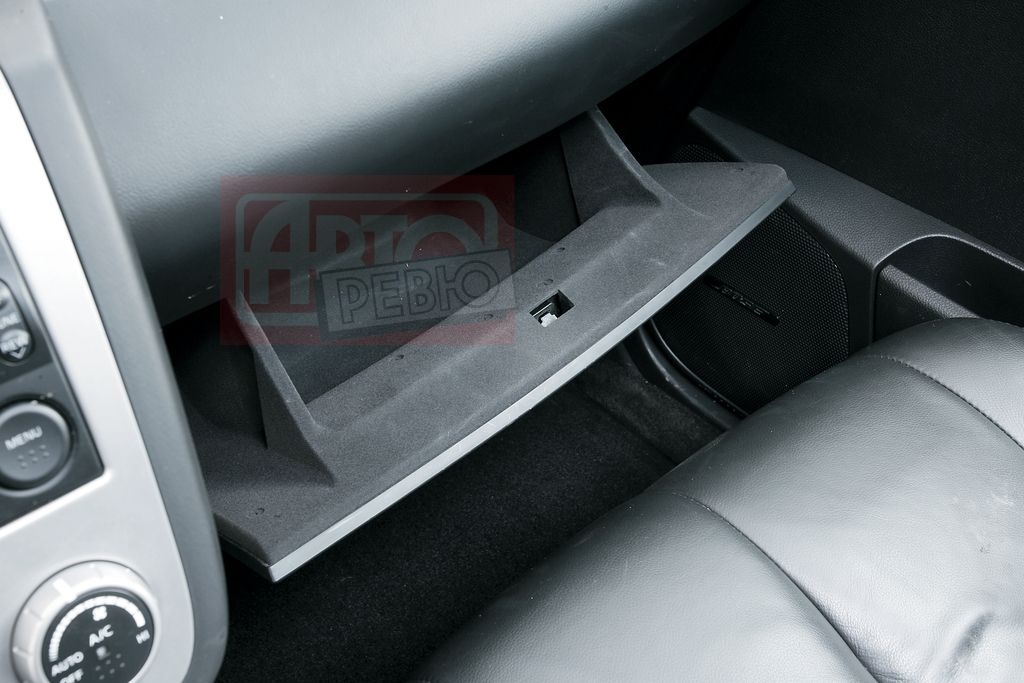
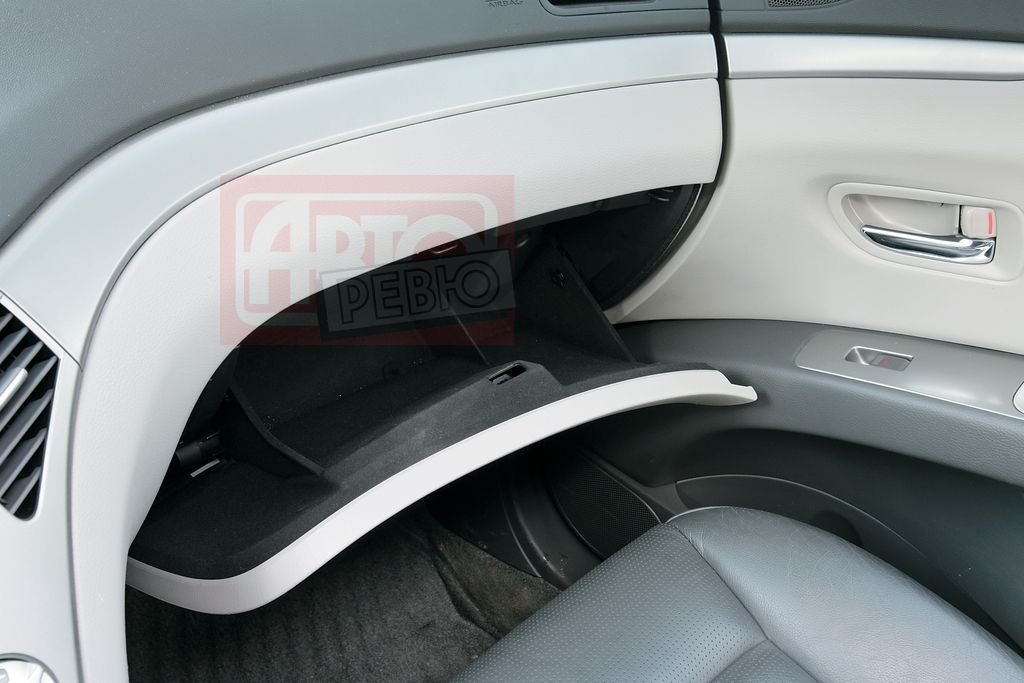
| The most spacious glovebox is in the Lexus RX 350, and the most modest is in the BMW X3 | |
But the CVT is still a thing. If not for the "lazy" accelerator, the Nissan would be unrivaled in ease of managing thrust. Moreover, in standard modes, the engine revs up gradually, so the Murano is also spared the characteristic "CVT" droning on one note.
The Tribeca is even heavier than the Murano. In addition, the accelerator here is also damped, and the automatic disappoints with delays in shifts — like the BMW X3. Moreover, the gearbox's sport mode gives almost nothing.
Now about handling. Here the undisputed leader is BMW. But, as they say, there are nuances.
Sharp, precise responses to steering inputs, a firm suspension, minimal body roll — on smooth surfaces, the X3 writes corners with calligraphic precision. However, if there are bumps under the wheels, the situation changes: the BMW follows the road profile and, due to diagonal pitching, deviates slightly from the trajectory in corners, and the reactive force on the steering wheel decreases. Moreover, the stability control encourages slides — it will start to quell a skid only if you signal it with a corrective counter-steer. Exciting handling!
Not so the Lexus. Its stability control reacts to the slightest wheel slip on any axle: safety above all. On a high-speed straight, the RX 350 stands more confidently than the X3, reacting less to ruts and waves in the surface. Its reactions are calmer, the reactive force on the steering wheel is decent... It's pleasant to drive the Lexus! But — only if you don't attempt active maneuvers. If you want to change lanes more sharply, the RX 350 starts to roll preemptively, and feedback instantly disappears. And in an emergency situation, when the wheel needs to be turned very quickly, a step in effort gets in the way.
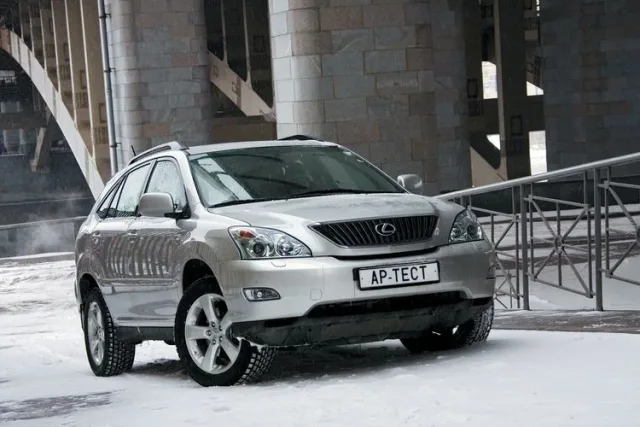
In short, the Lexus, though not designed for rally-style driving, is perfectly adapted to Russian realities. And the BMW X3, even bouncing over potholes, remains a more "lively" car.
What about the Murano and Tribeca?
The Murano holds a straight line excellently. Its reactions during lane changes are quite lazy, but precise and unambiguous, and body roll is modest. But in a sharp turn, the Nissan resists — slightly exceed the speed, and the car runs wide with its chrome front end. And the stability control stays silent. Moreover, "over-turning" the wheel and worsening the situation is all too easy: the Murano doesn't spoil you with good feedback. Another minus is the step in effort when turning the wheel quickly.
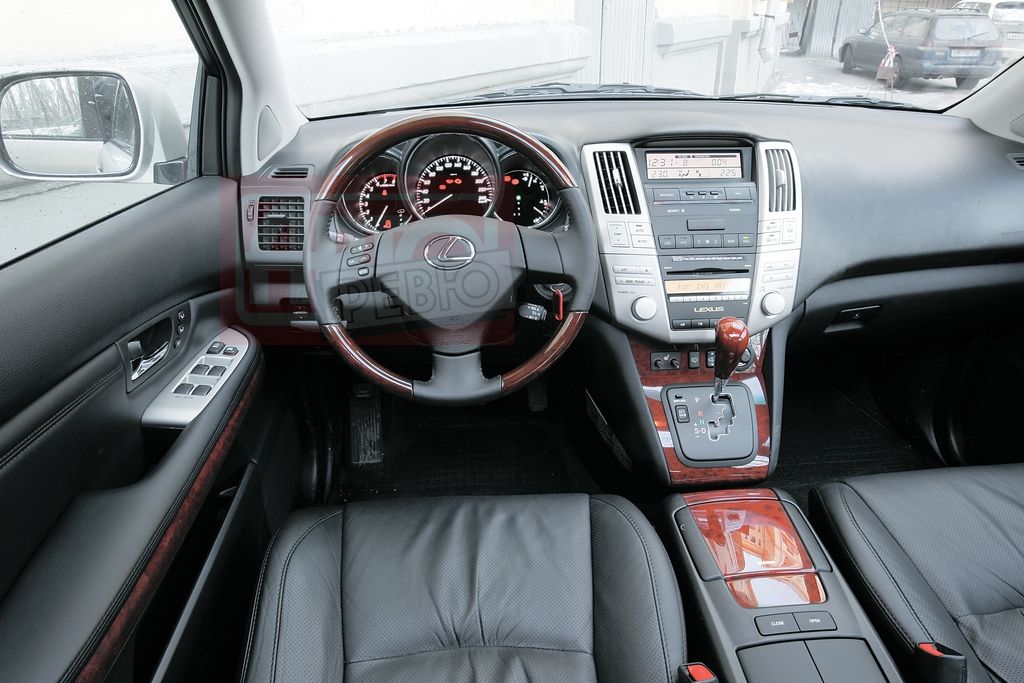 | 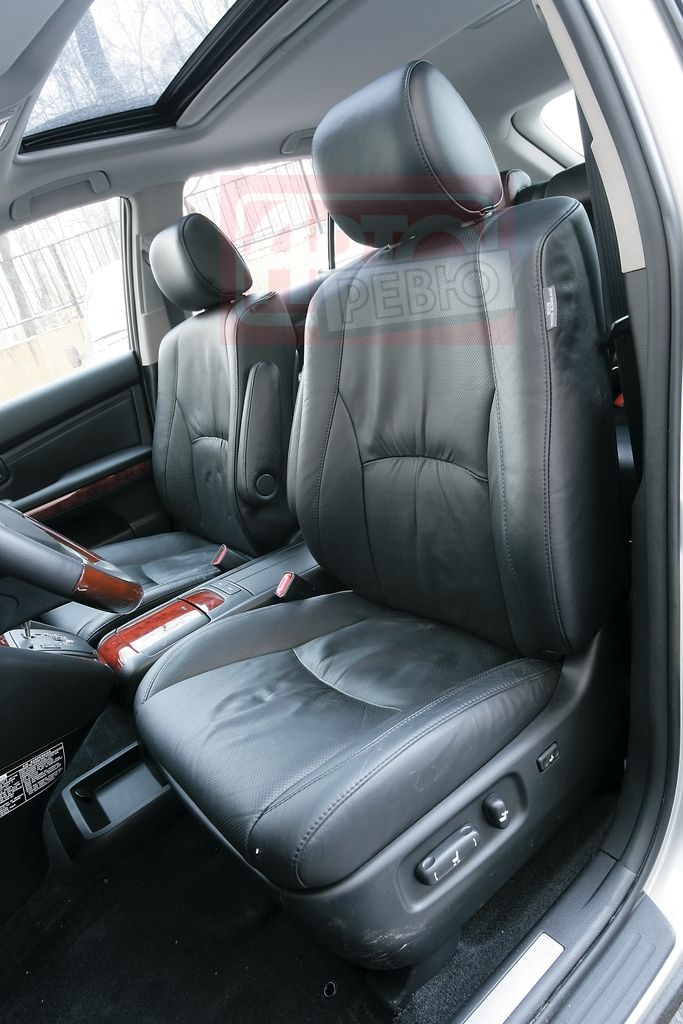 |
| Leather, wood... Luxurious, but quite functional | Lexus seats are very hospitable |
In short, far from sporty behavior...
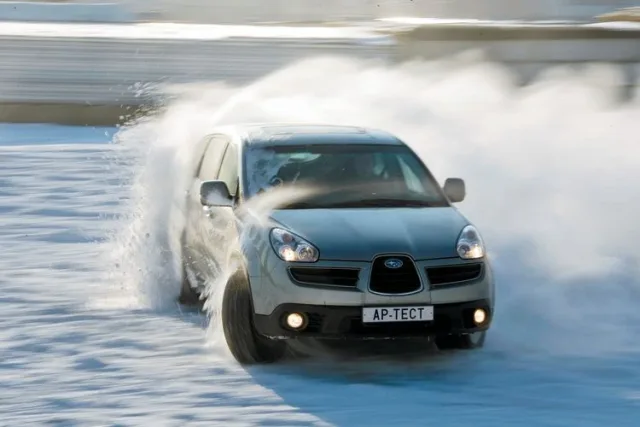
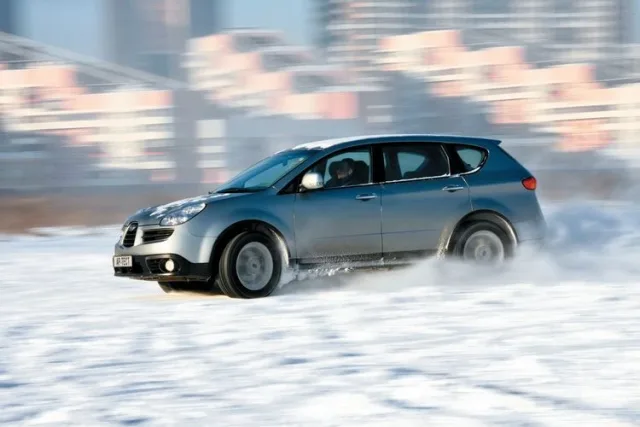
Subaru is a completely different story, and here you can afford a bit of excitement. Tribeca, not yielding to Lexus in directional stability, delights with a quick and precise steering wheel with excellent feedback — somewhere close to BMW. In a sharp turn, Tribeca dives with more enthusiasm than Lexus or Nissan. At the limit, it first slides with the front axle, then all four wheels engage, and only then the rear. But even here, electronics are on guard and intervene in time. Subaru's steering wheel doesn't 'bite' during sharp movements, and body rolls, though more noticeable than in the X3, are less than in its Japanese competitors.
Brakes are fine in all. But BMW is the best, while Nissan pleased the least — the pedal is too soft, making it harder to modulate braking. Also, the ABS engages somewhat harshly.
However, in terms of ride smoothness, BMW loses to all — that's the price for benchmark handling on smooth asphalt! The stiff suspension 'swallows' only small bumps, while medium and large ones cause serious jolts and hollow thuds. Moreover, the X3 meticulously, as if memorizing, repeats the road profile — both longitudinally and laterally.
But Tribeca, which also impressed us with its handling, isn't very 'smooth' either — the suspension handles road imperfections a bit softer, but noisily and loosely.
 |  |
| BMW X3 | Lexus RX 350 |
 |  |
| Nissan Murano | Subaru Tribeca |
| In the back, even with three passengers, the Nissan is the most spacious, while the BMW is the tightest due to its large central tunnel and lack of footroom. Moreover, unlike the X3, parts of the Murano's rear seat backrests are adjustable for angle, and in the Subaru and Lexus, the 'halves' of the seat can even slide | |
But Lexus… Ours came in a rich trim with air suspension. On the road, the RX 350 is composure itself. You can feel the suspension is somewhat stiff, but it successfully rounds off bumps of all sizes, and the Lexus 'floats' unwaveringly over waves in the pavement.
However, the Nissan Murano with its conventional coil-spring suspension is smoother. It handles large bumps, 'small stuff,' and asphalt waves with equal composure. Its undisputed leadership is only hindered by the fact that the suspension absorbs bumps without a noticeable energy reserve, and at high speeds it sometimes allows repeated body oscillations.
 |  |
| BMW X3 | Lexus RX 350 |
 |  |
| Nissan Murano | Subaru Tribeca |
| We liked the easily transformable Lexus trunk the most — it's spacious, with the flattest floor and a power tailgate. The large cargo areas of the Nissan and Subaru are also commendable. The BMW's trunk is more modest, but easier to load due to the lowest load-in height | |
But for full comfort, the Nissan is a bit noisy — tires hum, and wind rustles outside the windows. The Subaru's 'acoustics' are on par with the Murano: except here, tires and engine take the lead. In the BMW, this duo is joined by aerodynamic noise from the exterior mirrors. And the 'quietest' car is the Lexus. It's no wonder that during the update, the Japanese 'muffled' the engine bay and covered the windshield with a special anti-noise film.
What about off-road capability?
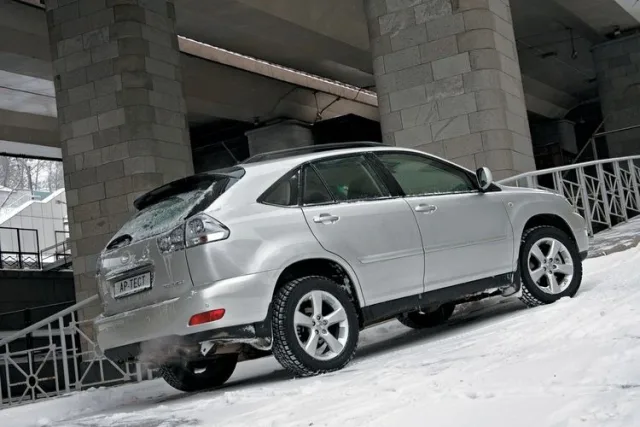
Here, the leader is the Lexus RX 350 with its adjustable air suspension. It's clear that with such crossovers, serious off-roading is out of the question. But even in the standard, normal air suspension position (with 190 mm of ground clearance), the Lexus drove through snowy virgin land with ease and climbed steep slopes without trouble.
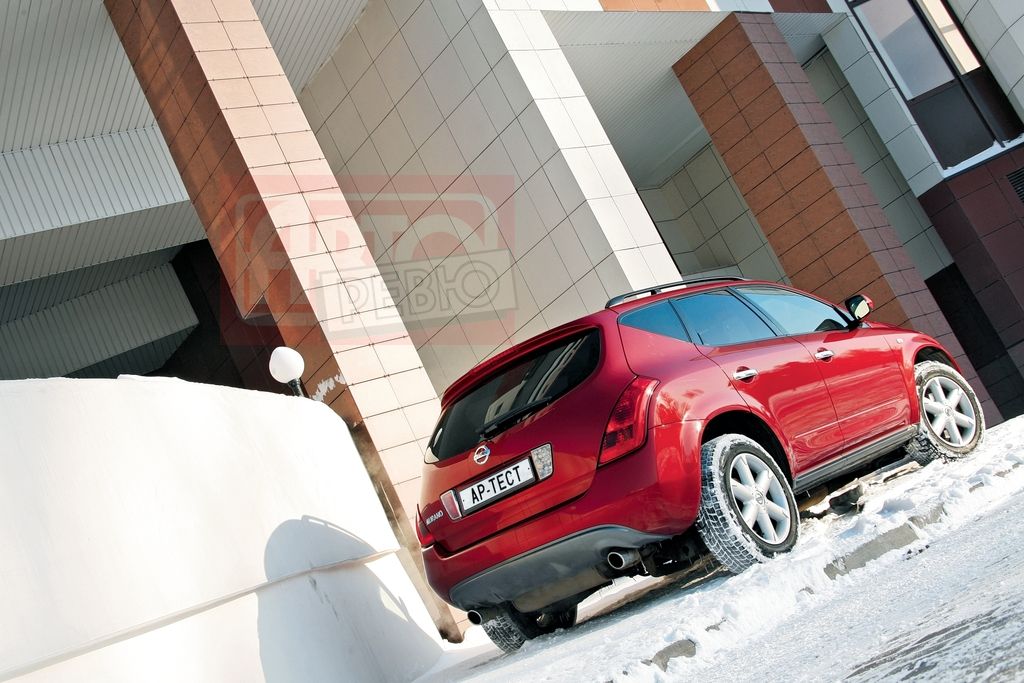
The other three are also not averse to plowing through shallow snow. But the BMW, with its 190 mm clearance, is slightly inferior to the Lexus in traction delivery — it 'crunches' the brakes more often and tackles steep slopes with smaller gaps between the ground and sills. The Tribeca (183 mm clearance) kept trying to tear off the low 'apron' of the front bumper due to its long front overhang. Finally, the Murano, with the most modest ground clearance (155 mm), frequently scraped its underbody on the ground and, even with the rear drive coupling forcibly locked, 'crunched' the brakes and 'choked' the engine: that's how the electronics prevent the CVT from overheating.
Let's sum up the 'five reasons' to buy one of our four crossovers. And we realize that…
Yes, the winner by total expert scores is the Lexus RX 350. It's well-balanced, comfortable, pleasant, and the easiest to drive. But it's also the most expensive — for example, its current rival, the BMW X3 3.0si, is almost $3000 cheaper 'in base' — though in the simplest trim with a fabric interior. However, in our test, the X3 took only third place — it delivers 'driver's' joy, but at the expense of comfort, and the cabin is a bit cramped.
We gave second place to Subaru — for its bold design, comfortable cabin, and good 'driver's' skills. By the way, the Tribeca is noticeably more affordable than the Lexus. The price-to-'quantity and quality' ratio is excellent!
And the Nissan Murano rounds out the quartet. It can't boast of refined ergonomics, polished handling, good acoustic comfort, or genuinely enhanced off-road capability. But it has the most comfortable suspension, the most spacious cabin, the most 'CVT-like' transmission, and the most attractive price — $57,490.
| Expert ratings from Autoreview | |||||
| Evaluated parameters | Max score | Vehicles | |||
| BMW X3 | Lexus RX 350 | Nissan Murano | Subaru Tribeca | ||
| Design | 160 | 130 | 135 | 130 | 140 |
| Exterior | 80 | 60 | 65 | 65 | 65 |
| Interior | 80 | 70 | 70 | 65 | 75 |
| Ergonomics | 160 | 130 | 135 | 125 | 120 |
| Driver's workplace | 80 | 70 | 65 | 60 | 60 |
| Visibility | 80 | 60 | 70 | 65 | 60 |
| Dynamics | 330 | 290 | 285 | 260 | 275 |
| Acceleration dynamics | 80 | 70 | 70 | 65 | 65 |
| Braking dynamics | 100 | 95 | 90 | 85 | 90 |
| Handling | 80 | 70 | 65 | 60 | 70 |
| Off-road capability | 70 | 55 | 60 | 50 | 50 |
| Ride comfort | 180 | 140 | 155 | 140 | 140 |
| Ride smoothness, vibration protection | 70 | 50 | 55 | 55 | 50 |
| Acoustic comfort | 60 | 50 | 55 | 45 | 45 |
| Climate control | 50 | 40 | 45 | 40 | 45 |
| Cabin comfort | 170 | 120 | 145 | 140 | 140 |
| Passenger seats | 70 | 50 | 55 | 60 | 55 |
| Trunk | 60 | 45 | 55 | 50 | 50 |
| Cabin transformation | 40 | 25 | 35 | 30 | 35 |
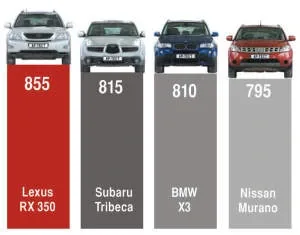
| Total score | 1000 | 810 | 855 | 795 | 815 |
Autoreview readers' forecast
Before this test, we asked visitors to the website www.autoreview.ru to answer the question: 'Which of the cars participating in the next Autoreview test would you prefer?'
Here's how the votes were distributed:
Lexus RX 350 42.55%
BMW X3 30.95%
Subaru Tribeca 16.47%
Nissan Murano 10.03%
16883 people voted
Final Autoreview ratings
Interior heating dynamics
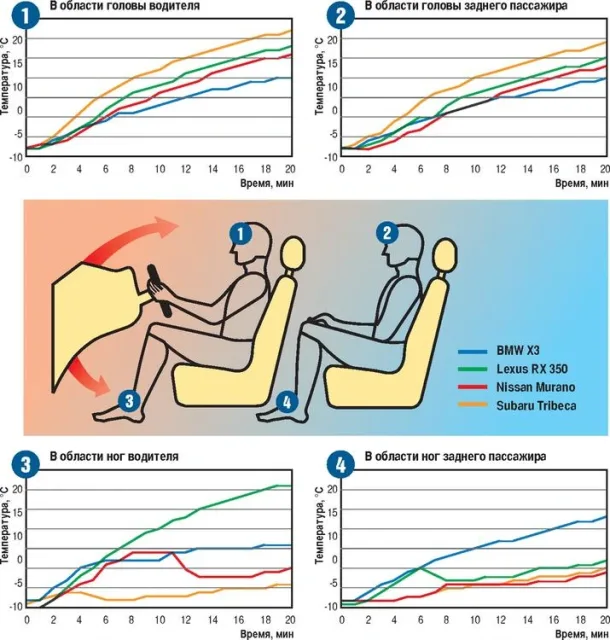
To find out whose heater performs better, we left the cars outside overnight in the cold, and in the morning at -10°C started the engines and set the climate control to "windshield and feet" mode with maximum temperature. Sensors were placed at four points: at the driver's feet and head, as well as at the rear passenger's feet and head. Readings were taken every minute for twenty minutes. Based on the measurements, the Lexus turned out to be the fastest to warm up, while the Nissan took the longest. Meanwhile, the Subaru directs airflow to the head better than the others, and the Lexus to the feet.
Visibility
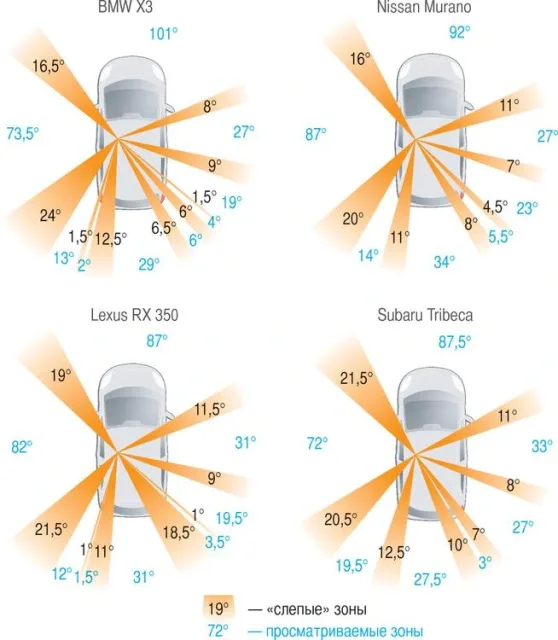
The wide front pillars of the Subaru noticeably restrict visibility, while in the Murano they hardly interfere. Looking into the interior mirror, the Lexus provides the best view, while the BMW and Subaru lose out here. True, the Subaru's inconvenient rear window opening is compensated by the largest exterior mirrors, while the BMW's mirrors, on the contrary, are somewhat small.
Maximum safety
All four crossovers are equipped to the maximum with active and passive safety systems. Each comes standard with ABS, stability control, and brake force distribution, as well as a brake assist system that applies extra pressure to the pedal during emergency braking. Inside, there are two front and two side airbags, plus side curtain airbags. The Lexus additionally has a driver's knee airbag. Isofix child seat anchors are present on all vehicles.
As for crash tests, the BMW X3 has not undergone impact testing by any independent organization. However, the Japanese-American trio has been tested by the U.S. National Highway Traffic Safety Administration (NHTSA): a frontal impact into a concrete wall at 56 km/h and an oblique side impact at 62 km/h. All three crossovers performed excellently, and only the Lexus slightly lagged behind its competitors in front-impact passenger protection — four stars out of five.
| Lexus RX 350 | |
| Driver protection in frontal impact | 5 stars |
| Passenger protection in frontal impact | 4 stars |
| Driver protection in side impact | 5 stars |
| Rear passenger protection in side impact | 5 stars |
| Curb weight | 1887 kg |
| Nissan Murano | |
| Driver protection in frontal impact | 5 stars |
| Passenger protection in frontal impact | 5 stars |
| Driver protection in side impact | 5 stars |
| Rear passenger protection in side impact | 5 stars |
| Curb weight | 1817 kg |
| Subaru Tribeca | |
| Driver protection in frontal impact | 5 stars |
| Passenger protection in frontal impact | 5 stars |
| Driver protection in side impact | 5 stars |
| Rear passenger protection in side impact | 5 stars |
| Curb weight | 1893 kg |
What costs how much?
The most affordable in our quartet turned out to be the Nissan Murano. For $57,490* you get a car with a 3.5 V6 gasoline engine (234 hp), X-Tronic CVT, six airbags, power accessories, climate control, leather interior, Bose audio system, bi-xenon headlights, and a sunroof. There are no other options; you can only choose the color. Cars are already at dealers, with no queues.
Warranty — 3 years or 100,000 km. In Russia, Nissan is sold by 35 dealers in 20 cities.
The Subaru Tribeca is also available in Russia only in a single Luxury version. Under the hood is a six-cylinder boxer engine of 3.0 liters (245 hp), paired with a five-speed automatic. Equipment includes six airbags, an audio system with CD changer, leather interior, climate control, power accessories, sunroof, heated mirrors and front seats. Price — $60,450. For an extra $3,370, you can order a DVD system for rear passengers and a rearview camera. But you'll have to wait five to six months for such a car.
Warranty — 3 years or 100,000 km. Subaru sales are handled by 28 dealers in 22 Russian cities.
The Lexus RX 350 in the initial but already very rich Comfort trim (nine airbags, leather interior with wood inserts, power accessories, climate control, stereo with CD changer, heated front seats and mirrors, xenon) costs $65,360. The version with air suspension and adaptive lighting is $6,000 more, and the top Premium with sunroof is $73,940. The hybrid RX 400h (270 "gas-electric" horsepower) is $80,060. True, dealers may still have 2006 models, saving up to $3,100. A fresh Lexus will have to wait three to four months.
Warranty — 3 years or 100,000 km. Lexus sales are handled by 7 dealers in 4 Russian cities.
The BMW X3 with a 3.0si engine (272 hp) and six-speed automatic in the base trim costs $62,900 — noticeably cheaper than the "base" Lexus, but it's also less equipped. The Business version (six airbags, leather interior, air conditioning, power accessories, heated front seats, CD stereo, light and rain sensors, bi-xenon) will cost $69,200. The Luxury trim with panoramic roof, wood inserts, cornering lights, CD changer, and hi-fi audio system is $9,430 more. There are also more affordable modifications: the X3 with a 2.0 gasoline engine (150 hp) and manual transmission — $52,050, and with a turbodiesel of the same displacement and power — $54,630. The version with a 2.5si gasoline engine (218 hp) and automatic starts at $61,090, and with a three-liter turbodiesel (218 hp) — from $70,650. A custom-ordered car will have to wait three to four months, although some versions are in stock.
Warranty — 2 years without mileage limit. BMW sales are handled by 40 dealers in 27 Russian cities.
* Prices are calculated at $1 = 26.57 rubles and 1 euro = 34.32 rubles, including dealer commission and internal company exchange rates. BMW and Nissan dealers use the official Central Bank rate, while Subaru and Lexus sellers add 1% to it.
| Cost of scheduled maintenance with consumables and parts* | ||||
| Scheduled service | Vehicles | |||
| BMW X3 | Lexus RX 350 | Nissan Murano | Subaru Tribeca | |
| Cost per labor hour | 77 | 75 | 51 | 68 |
| Mileage, km | ||||
| 5000 | — | — | — | 188 |
| 10000 | — | 376 | — | — |
| 15000 | — | — | 222 | 365 |
| 20000 | 297 | 376 | — | — |
| 30000 | — | 376 | 489 | 854 |
| 40000 | 646 | 865 | — | — |
| 45000 | — | — | 222 | 365 |
| 50000 | — | 376 | — | — |
| 60000 | 775 | 376 | 734 | 858 |
| 70000 | — | 376 | — | — |
| 75000 | — | — | 222 | 376 |
| 80000 | 646 | 865 | — | — |
| 90000 | — | 376 | 553 | 865 |
| Total | 2364 | 4362 | 2442 | 3871 |
| * Prices are in US dollars | ||||
| Approximate prices for original spare parts at dealers in Moscow* | ||||
| Parts | Vehicles | |||
| BMW X3 | Lexus RX 350 | Nissan Murano | Subaru Tribeca | |
| Oil filter | 17 | 16 | 12 | 15 |
| Fuel filter | 133 | 24 | — | — |
| Air filter | 29 | 33 | 24 | 44 |
| Cabin filter | 43 | 53 | 42 | 82 |
| Spark plug | 25 | 20 | 23 | 33 |
| Front brake pads | 191 | 132 | 102 | 223 |
| Rear brake pads | 148 | 82 | 67 | 237 |
| Front shock absorber | 424 | 178 | 396 | 329 |
| Rear shock absorber | 226 | 166 | 220 | 213 |
| Front headlight | 1330 | 728 | 1667 | 686 |
| Rear taillight | 129 | 188 | 208 | 218 |
| Front fender | 426 | 273 | 348 | 635 |
| Front bumper | 969 | 378 | 631 | 792 |
| Hood | 891 | 558 | 557 | 1044 |
| Windshield | 904 | 515 | 1621 | 1268 |
| * Prices are in US dollars | ||||
What else?
In the segment of all-wheel-drive crossovers priced from sixty to seventy thousand dollars, there is plenty to choose from. Take, for example, the Infiniti FX35 with 280 horsepower. This model has been brought in by "gray" suppliers for three years, and since September last year it has been officially sold here starting at $69,900. Four years ago, we tested the "gray" FX35 together with the Murano and Lexus RX 300 — back then it impressed us with its striking looks and sporty character (see AR No. 17, 2003). The versions supplied officially differ in enhanced anti-corrosion treatment of chrome, a more comfortable suspension, a reinforced body, and larger brake discs with more powerful calipers. However, even after suspension adaptation, the Infiniti FX remains a rather stiff car that encourages dynamic driving (see AR No. 19, 2006).
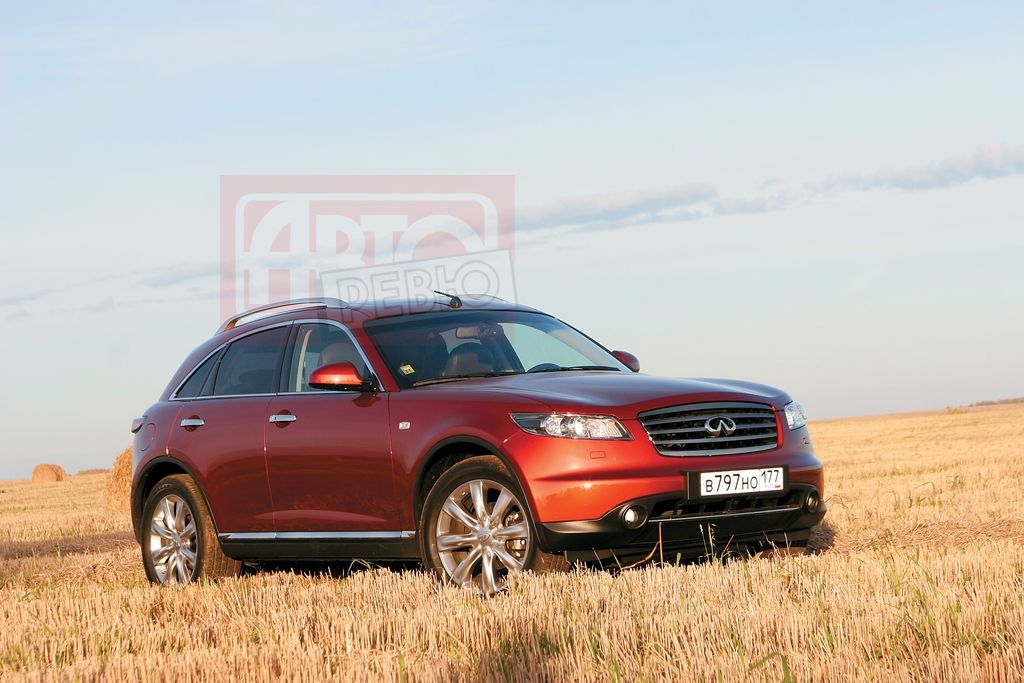 | 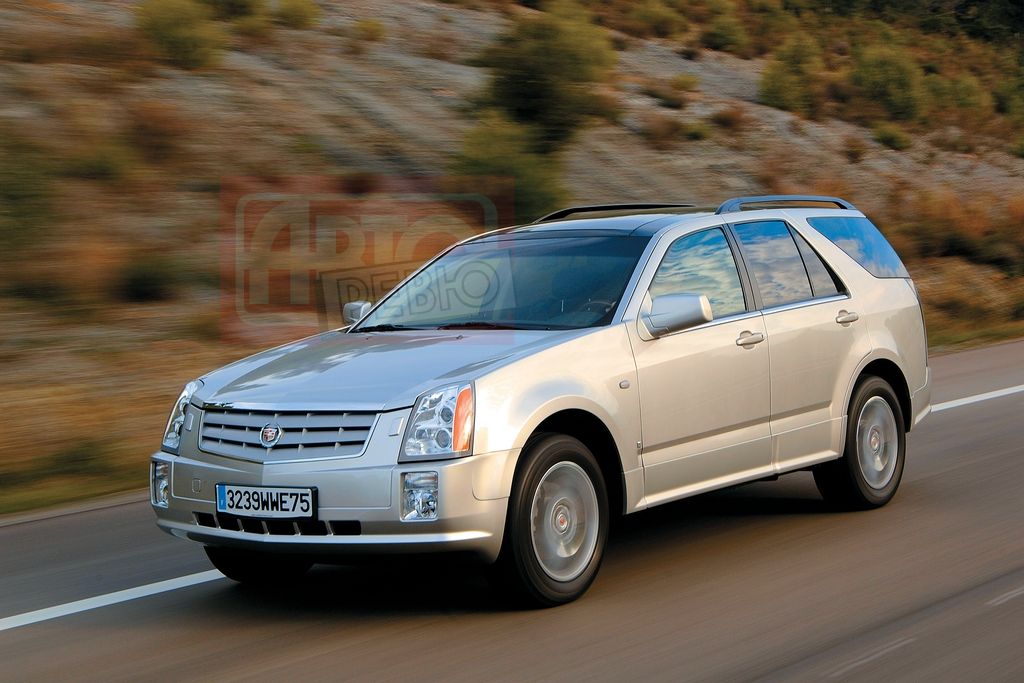 | 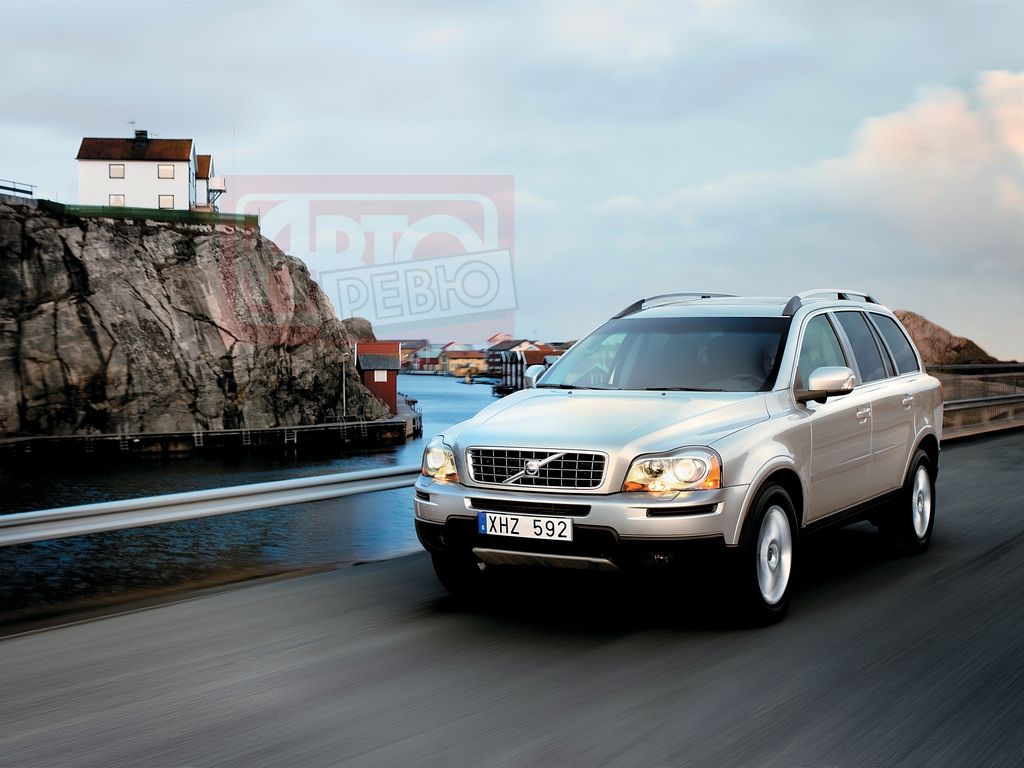 |
| Infiniti FX35 | Cadillac SRX | Volvo XC90 |
If you take the Cadillac SRX, it is larger than the Infiniti, but costs only three thousand more — from $72,900. Under the hood it has a 4.6 V8 with 320 hp. Its appearance is imposing, and the equipment is rich: a third row of seats and a panoramic roof are offered as options. But it drives so-so: the steering is uninformative, there is pronounced understeer, delayed reactions, noticeable body roll and diagonal pitching in corners (see AR No. 17, 2005).
The Volvo XC90 with the base 2.5T engine (210 hp) costs $56,900. The car is very comfortable, but its off-road capabilities are modest (see AR No. 15, 2005).
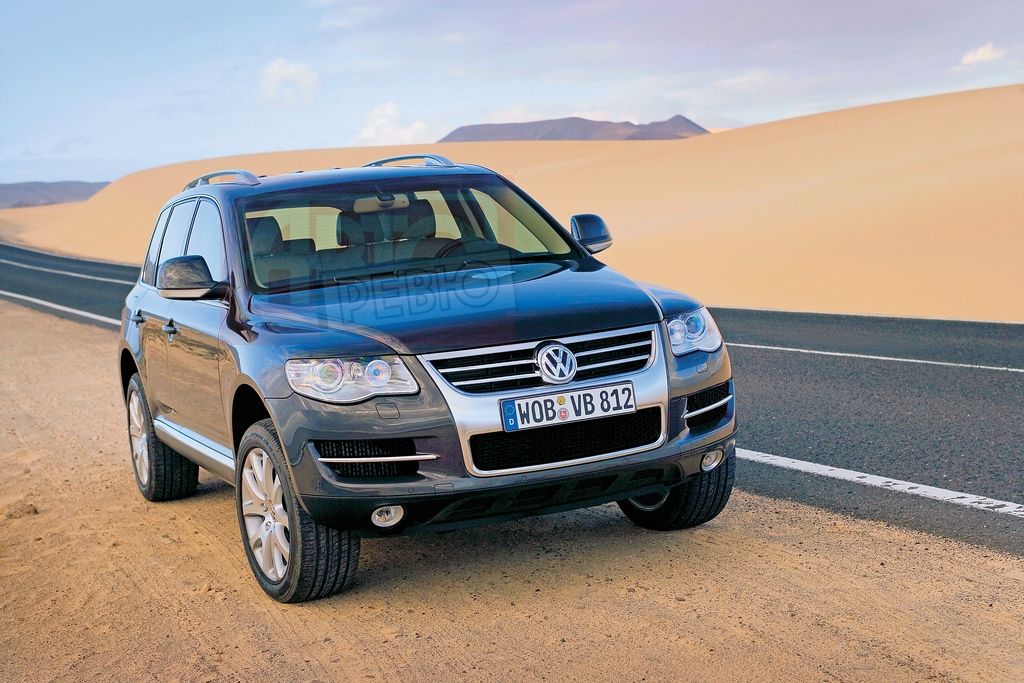 |  |
| Volkswagen Touareg | Land Rover Freelander |
For those seeking a truly capable off-road vehicle, it is worth looking at the updated Volkswagen Touareg with the 3.6 V6 engine (206 hp) — it starts at $66,400. Thanks to its long-travel suspension, low-range gearing, and central differential lock, the Touareg feels at home off-road, and it is also good on asphalt.
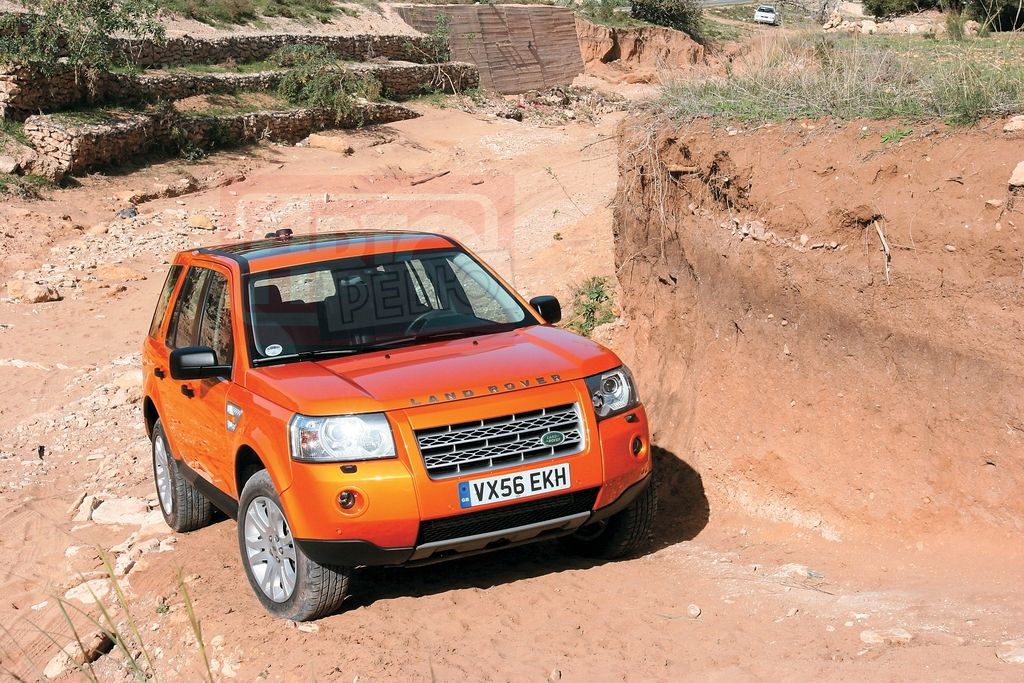
And the cheapest option among the alternatives is the new Land Rover Freelander 3.2 V6 (233 hp) for $52,000. Its sales in Russia are expected to begin in March.
| Equipment of cars participating in the comparative test | ||||
| Option | Models | |||
| BMW X3 | Lexus RX 350 | Nissan Murano | Subaru Tribeca | |
| Base version price, USD | 62900 | 65360 | 57490 | 60450 |
| Front airbags | + | + | + | + |
| Side airbags for front occupants | + | + | + | + |
| Driver knee airbag | – | + | – | – |
| Inflatable curtains | + | + | + | + |
| Anti-lock braking system | + | + | + | + |
| Traction control system | + | + | + | + |
| Stability control | + | + | + | + |
| Adaptive suspension | – | O | – | – |
| All-wheel drive | + | + | + | + |
| Power steering | + | + | + | + |
| Automatic transmission | O | + | +* | + |
| Steering wheel with control buttons | + | + | + | + |
| Tilt steering wheel adjustment | + | O** | + | + |
| Telescopic steering wheel adjustment | + | O** | – | – |
| Leather steering wheel | O | + | + | + |
| Wood trim on steering wheel | – | O | – | – |
| Heated windshield wiper zone | – | + | – | + |
| Power front seats | O | + | + | + |
| Power adjustable pedals | – | – | + | – |
| Driver seat memory | O | O | + | + |
| Heated front seats | + | + | + | + |
| Auto-dimming interior mirror | O | + | + | – |
| Central locking with remote control | + | + | + | + |
| Security alarm | + | + | + | – |
| Single-zone climate control | O | – | + | – |
| Dual-zone climate control | – | + | – | + |
| Power and heated mirrors | + | + | + | + |
| Power folding mirrors | – | + | – | + |
| Power windows | + | + | + | + |
| Split-folding rear seat | + | + | + | + |
| Rear seat backrest angle adjustment | – | + | + | + |
| Rear seats fore/aft adjustment | – | + | – | + |
| Folding center armrest for rear seat | – | + | – | + |
| Armrest for rear passengers | + | + | + | + |
| Navigation system | O | – | – | – |
| Rearview camera | – | – | – | O |
| Audio system with CD | O | + | + | + |
| CD changer | O | + | + | + |
| TV tuner | O | – | – | – |
| DVD player | – | – | – | O |
| Screen for rear passengers | – | – | – | O |
| Light sensor | O | + | – | – |
| Rain sensor | O | + | – | – |
| Tire pressure monitoring | + | – | – | – |
| Onboard computer | + | + | + | + |
| Cruise control | – | + | – | + |
| Power sunroof | O*** | O | + | + |
| Front parking sensors | O | O | – | – |
| Rear parking sensors | O | O | – | – |
| Active front head restraints | – | – | – | + |
| Leather upholstery | O | + | + | + |
| Wood trim in interior | O | + | – | – |
| Remote trunk release | – | + | – | + |
| Power tailgate | – | O | – | – |
| Remote fuel filler flap lock | – | + | – | + |
| Xenon low beam | O | + | + | – |
| Xenon high beam | – | – | + | – |
| Swivel headlights | O | O | – | – |
| Fog lights | + | + | – | + |
| Headlight washers | + | + | + | – |
| Alloy wheels | + | + | + | + |
| Full-size spare tire | – | + | + | – |
| Metal engine protection | – | – | – | – |
| Metallic paint | O | + | + | + |
| Price of tested vehicle, USD | 78660 | 71360 | 57490 | 63820 |
| * CVT | ||||
| ** Power adjustment | ||||
| *** Panoramic | ||||
| (+) Included in base version | ||||
| (–) Not available in base version | ||||
| (O) Additional equipment on test vehicles | ||||
| Specifications | ||||
| Parameters | Vehicles | |||
| BMW X3 | Lexus RX 350 | Nissan Murano | Subaru Tribeca | |
| Body type | 5-door wagon | 5-door wagon | 5-door wagon | 5-door wagon |
| Number of seats | 5 | 5 | 5 | 5 |
| Trunk volume, l | 480—1560 | 439—2130 | 438—2100 | n/a* |
| Curb weight, kg | 1840 | 1835 | 1865 | 1910 |
| Gross weight, kg | 2300 | 2380 | 2380 | n/a |
| Engine | petrol, with distributed injection | petrol, with distributed injection | petrol, with distributed injection | petrol, with distributed injection |
| Location | front, longitudinal | front, transverse | front, transverse | front, longitudinal |
| Number and arrangement of cylinders | 6, in-line | 6, V-shaped | 6, V-shaped | 6, opposed |
| Displacement, cm³ | 2996 | 3456 | 3498 | 2999 |
| Cylinder bore/piston stroke, mm | 85.0/88.0 | 94.0/83.0 | 95.5/81.4 | 89.2/80.0 |
| Compression ratio | 10.7:1 | 10.8:1 | 10.3:1 | 10.8:1 |
| Number of valves | 24 | 24 | 24 | 24 |
| Max. power, hp/kW/rpm | 272/200/6650 | 276/203/6200 | 234/172/6000 | 245/180/6600 |
| Max. torque, Nm/rpm | 315/2750 | 342/4700 | 318/3600 | 297/4200 |
| Transmission | automatic, 6-speed | automatic, 5-speed | CVT | automatic, 5-speed |
| Gear ratio range | — | — | 2.37—0.45 | — |
| Gear ratios | ||||
| I | 4.06 | 4.24 | — | 3.84 |
| II | 2.37 | 2.36 | — | 2.35 |
| III | 1.55 | 1.52 | — | 1.53 |
| IV | 1.16 | 1.05 | — | 1.00 |
| V | 0.85 | 0.76 | — | 0.84 |
| VI | 0.67 | — | — | — |
| Reverse | 3.20 | 3.38 | 1.77 | 2.76 |
| Final drive | 4.44 | 3.29 | 5.17 | 3.58 |
| Drive | all-wheel, with automatically engaged front wheels | permanent all-wheel | all-wheel, with automatically engaged rear wheels | permanent all-wheel |
| Front suspension | independent, coil spring, McPherson | independent, air, McPherson | independent, coil spring, McPherson | independent, coil spring, McPherson |
| Rear suspension | independent, coil spring, multi-link | independent, air, McPherson | independent, coil spring, multi-link | independent, coil spring, double wishbone |
| Front brakes | disc, ventilated | disc, ventilated | disc, ventilated | disc, ventilated |
| Rear brakes | disc, ventilated | disc | disc, ventilated | disc, ventilated |
| Tires | 235/55 R17 | 235/55 R18 | 225/65 R18 | 255/55 R18 |
| Maximum speed, km/h | 228 | 200 | 200 | 195 |
| Acceleration time 0—100 km/h, s | 7.5 | 7.8 | 9.5 | 9.7 |
| Fuel consumption, l/100 km | ||||
| urban cycle | 14.3 | 15.7 | 17.2 | 17.1 |
| extra-urban cycle | 8.0 | 8.5 | 9.5 | 9.5 |
| combined cycle | 10.3 | 11.2 | 12.3 | 12.3 |
| Fuel tank capacity, l | 67 | 72 | 82 | 64 |
| Fuel | petrol AI-95—98 | petrol AI-95 | petrol AI-95 | petrol AI-92 |
| * N/a — not available | ||||
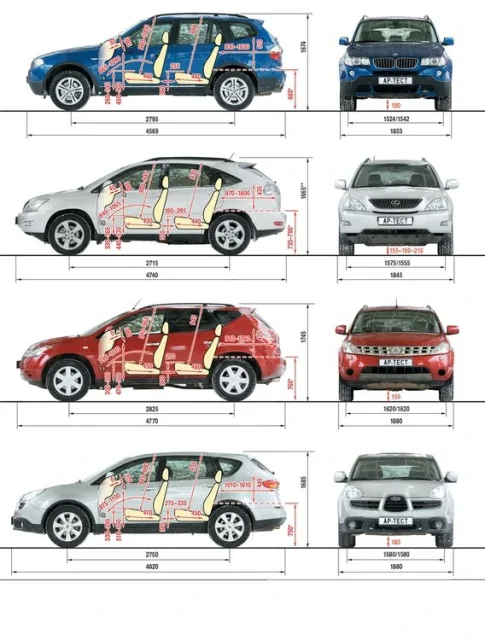
Black indicates manufacturer data, red — Autoreview measurement results
* Loading height
** In normal air suspension position (with 190 mm ground clearance)