
Nissan Murano
OUT OF COMPETITION
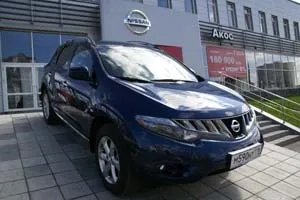
Powertrain — 3.5 L
Peak power -
249 hp/6000 rpm
Maximum torque - 336 Nm/4400 rpm
Top speed (km/h) — 210
Sprint 0-100 km/h — 8 sec
Fuel consumption:
combined cycle — 10.9
city — 14.9
highway — 8.6
Xtronic CVT continuously variable transmission
ALL MODE 4x4-i transmission
Curb weight - 1905 kg
Length - 4835
Width - 1885
Height - 1720
Ground clearance - 180 mm
Tires 235\65 R18
Equipment:
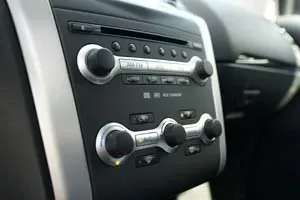
leather interior trim, dual-zone climate control, remote central locking access, Intelligent Key, 4 power windows, driver's seat power adjustment in 8 positions, cruise control, multifunction steering wheel, AM/FM radio + CD(MP3) for 6 discs/DVD+ 11 BOSE speakers + subwoofer, 7-inch color touch screen display in the center console, DVD navigation, rear view camera, ABS, EBA, EBD, ESP stability system, Nissan Brake Assist, light sensor, rain sensor, 6 airbags, alloy wheels, fog lights.
Service intervals:
15,000 km
Service 1 — $223 (1,783 UAH)
Service 2 - $490 (3,916 UAH)
Service 3 - $223 (1,783 UAH)
Service 4 — $709 (5,670 UAH)
Service 5 - $223 (1,783 UAH)
Service 6 — $557 (4,455 UAH)
Service 7 — $223 (1,783 UAH)
Service 8 — $709 (5,670 UAH)
Warranty — 3 years or 100,000 km mileage
Price at the time of testing $66,184 (529,470 UAH)
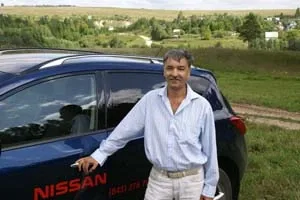
Vadim Sadykov, «Avtoclub-Kazan»
Just after finishing the test, I mentally formulated a concise characteristic of this car: it is like a polished ball — nothing sticks out anywhere, there are neither outright weak points nor outstanding features. To get a full impression of it, it is most logical to compare it with other crossovers with engines around 3.5 liters. Let's take, say, the Mazda CX-9 and Honda Pilot.
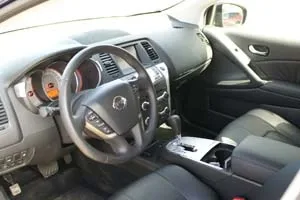
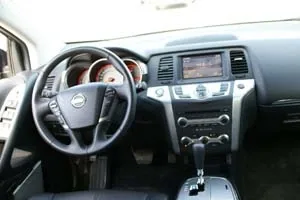
Interior. If we talk about the quality of plastic, the Pilot is clearly in the role of the chaser here — it is evident that the manufacturer saved on materials. The Murano, however, pulls a step higher. The restrained front panel with «knobs», familiar from the previous generation, has given way to a fancy and convenient «update» from Infiniti. Inside is spacious, the seats are comfortable. The rear seat backrest has a tilt adjustment. The leather upholstery is non-uniform: on the sides — solid, in the seating areas — with perforation. I will separately note the excellent sound insulation. Neither the engine nor the CVT is almost audible, and aerodynamic noises on the highway are also barely noticeable.
Off-road capability. We churned real mud only on the Pilot — it is, perhaps, the best in this trio. The CX-9 with its low profile and purely asphalt tires made no sense to drag into the field. The Murano, however, went quite confidently on the dirt road. Even a forced lock is provided here. Can one expect more from it? I am not sure. Moreover, Nissan has a large selection of practical SUVs — from the X-trail to the «truck» Navara. If you are an avid fisherman, there is plenty to choose from.
Engine and «automatic». The CX-9 has a modern 6-speed automatic transmission. So modern that its main task became fuel economy, not driver comfort. Sharply starting off or quickly accelerating «on the go» will not work here — you need to adapt and smoothly work the gas pedal. Sometimes, for example when overtaking on an incline, you have to switch to «manual» mode and engage a lower gear. All the power of the 3.7L engine is revealed only when maintaining speed and lightly playing with the «gas». The Pilot has a 5-speed automatic that tries to imitate a six-speed. The trick is curious and unusual (more details in the test drives on the «Avtoclub-Kazan» website). Here, economy is achieved not by the «dullness» of the transmission, but by shutting off a couple of cylinders during steady motion. And after the cylinders shut off, a pause is indeed felt when pressing the gas. But when all six are working, the Pilot pleases with a lively character. But the best tandem, in my opinion, is the combination of the newest Xtronic CVT and the legendary VQ35 in the Murano.
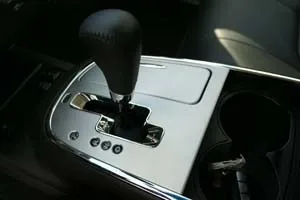
By the way, the engine of this series was installed on the «sporty» 350Z and the legendary «right-hand drive» rear-wheel drive Skyline. As for the CVT, it is beyond all praise. Thoroughly refined, it reduces friction losses by twenty percent, and the new adaptive control processor favorably affects both the speed of the transmission and fuel consumption. Modern solutions have made it possible to speed up «gear changes». The Xtronic CVT memory has more than 1000 driving scenarios. The system itself selects the optimal one at the moment. This saves fuel and makes acceleration and gear ratio changes smooth. It is clear that there is no talk of sticking at 6000 rpm, as with old CVTs. At a calm pace, the revs stay around 1500. When pressing the gas, there is not the slightest delay — the car responds with either light or sharp acceleration. And behind the wheel of such a car, you no longer feel like aggressive driving. «Calm, only calm.» The car allows you to safely bypass a «slowpoke» both in city traffic and on the highway. And it does this without a strained roar of the engine. And what about efficiency? Less than 15L/100km at the end of the test is an excellent result. The official city figure is 14.9L. By the way, for the sake of economy, there is not a hydraulic power steering here, but an electric power steering. And if you want to be the first to leave the traffic light — that is also possible: 8.0 seconds to a hundred.
Suspension. The most comfortable of the trio is the Pilot. The CX-9 on 20-inch wheels is a bit stiff at low speed, but at 70 km/h potholes are passed better. The Murano's suspension is the ideal middle ground. True, on a completely ruined country «road», sitting in the back was uncomfortable, in the front passenger seat — tolerable, and in the driver's seat — quite good. But on city cracks in the asphalt, passengers do not worry. It is clear that one should not demand from the Murano handling like a sedan, but we still tested it on a winding road. At a speed of 100-110, it behaves confidently and predictably. By the way, the new Mazda6 on the same track drove noticeably worse. Somewhere I read that on sharp steep turns, the Murano's steering wheel lags. What can I say? A truck crane also does not shine with stability, but that is hardly its drawback. Same with the Murano: you need to use the car for its intended purpose, not try to squeeze everything out of it. In normal, non-extreme driving, the Murano is quite friendly and safe.
You know, in its philosophy, the Murano reminds me a lot of my current car: there is no clear leadership in any discipline (trim, handling, etc.), but in the sum of all parameters, it is one of the best cars in the class.

Alfred Mardanov, «Avtoclub-Kazan»
Already after the test was completed, when emotions subsided and thoughts came into order, I wondered: who can even compete with it? The car seems not to claim a special status — and only because of the Nissan badge — but at the same time it clearly stands out from the general lineup of the brand. So who is its rival? Lexus? But that is a luxury brand, and it costs more. Like Infiniti, putting them on the same level as the Murano is incorrect. Acura would be closer, but it is not officially supplied to our country. In general, the Murano is no longer a familiar Nissan, but not yet an Infiniti, although it has a lot in common with the latter. I mean, the Infiniti FX has the same powertrain, only more horses: 307 versus 249 for the Murano. Moreover, the power is adjusted to Russian legislation, which will allow future owners to save on taxes. (And «gray» Muranos will be with inconvenient 252 horses).
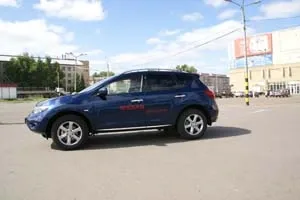
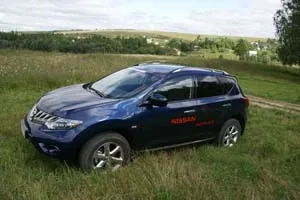
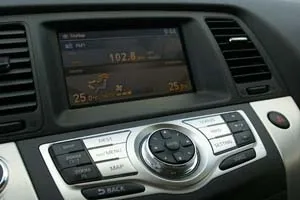
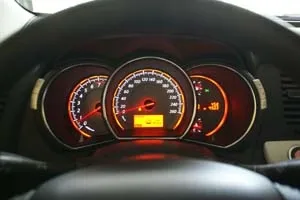
In addition, it has part of the platform from Infiniti and interior elements. From the older «rich» brother, the central console with a touchscreen multimedia display was inherited. I frankly did not want to delve into its intricacies, but a quick glance at the interface showed a clear structure with large, well-readable buttons, and there will be no difficulties with the monitor at all. Also, although poisonous, but well-readable orange instrument lighting has moved over. This time I accidentally found a place where you can appreciate its beauty: despite the bright sunny day, the lighting does not hurt the eyes in the dark, and you will not have to reduce the brightness when the time of day changes.
Even before I saw the Murano live in this test, looking at its photos, I imagined something like an alien ship with not the friendliest intentions towards Earth. However, in reality, the car turned out to be interesting, attractive, and, I am not afraid of this word, fashionable. Personally, I liked it, even despite some controversial design decisions. In its appearance, features and lines of many other cars are guessed.
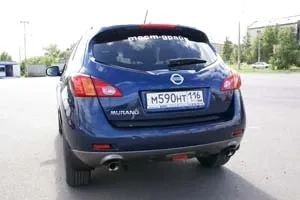
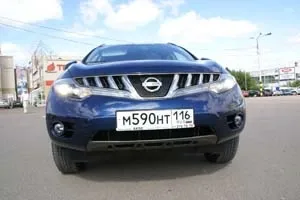
The rear in profile and the rear lights strongly echo the Qashqai, and a keen eye will also notice Lexus-like notes. Nevertheless, the Murano is distinctive, and that cannot be taken away from it. The signature "trick" of the front end, which so adorned the previous model, remains here. The radiator grille, seemingly fused with the headlights, forms an intricate shape, and it seems the car is wearing fashionable sports glasses. Moreover, from different angles it is perceived differently: sometimes daringly aggressive, sometimes quite good-natured. Contrary to the global trend of increasing dimensions, the Murano has not become larger, but only slightly grown in length — by 64 mm. I remember, in the article about the X-Trail, I compared the old and new models to a school graduate and a matured soldier returning from the army — so different they were. Here, the analogy is different: the new Murano seems to have gone to the gym to tone its figure. The body has become 50% stiffer, which means reactions should be sharper. The driver's seat does not offer a tight sporty seating position, lateral support is weakly developed, but it is very comfortable to sit in.
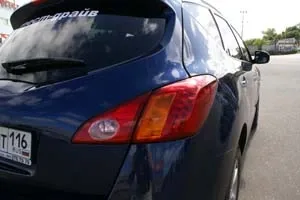
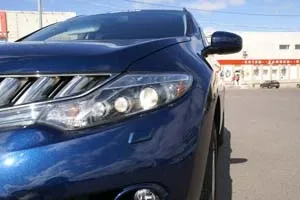
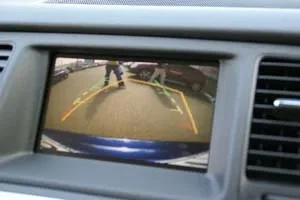
Apparently, the car's character is not sporty, but rather comfortable, although the suspension settings have become stiffer and shorter in travel. Well, let's check this in practice. Engine start — by button, as befits a modern car. After startup, the instrument panel comes to life, and... silence. The engine's operation is drowned in sound insulation and is almost inaudible in the cabin. Unfortunately, this time we did not get to a special site, so we are not performing the "slalom" and "lane change" exercises. A pity — they are the ones that best reveal the car's character. Today we will limit ourselves to the city and the highway. I get behind the wheel first and carefully drive out of the dealership. I engage reverse gear — the monitor with the rear-view camera image comes to life. A handy thing. Moreover, the current Murano has navigation that also works in Russia.
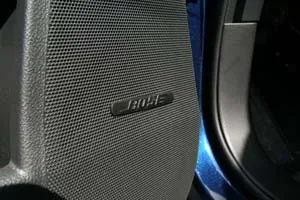
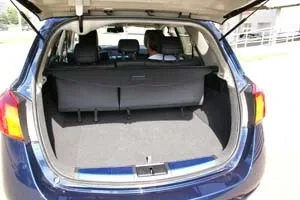
It is displayed on the front screen, and for rear passengers there is another one under the ceiling — but it is only for DVD. The new CVT with a 20% reduced friction coefficient promises smooth and quick acceleration. Already in the city, the confident engine thrust is felt, which the CVT easily digests and transmits to the wheels with smooth pedal pressure. If you press hard, the car thinks for a second, then takes off. This is normal — almost all "two-pedal" cars with any type of gearbox behave this way. The question is only the amount of delay. And what a pleasant steering wheel, or rather, the entire steering system! It is tight as a string, with excellent feedback. It does not shine with sharpness — a car weighing over two tons does not need that — but it provides enough information. Too bad I have no experience with the previous Murano; it would be interesting to compare them, especially in terms of ride quality. Now the suspension uses aluminum parts to reduce unsprung mass.
This should add softness on large potholes, but on a fine "washboard" it may cause vibration. The forecasts were confirmed: on fine ripples, the car nervously shudders, causing concern to the driver and especially the passenger, but it handles undulating sections calmly, without longitudinal pitching. On the highway, I again noted the excellent work of the CVT. Overtaking is easy, and there is no desire to switch to manual mode for a lower gear. The CVT gets a solid five. And the car itself turned out to be very friendly. Honestly, I cannot find anything to fault. The interior is well-executed, with a touch of luxury but without kitsch. Soft expensive plastic, leather with double stitching, metal inserts — all this creates a feeling of premium quality. I cannot ignore the new "trick" — a special body coating that "heals" minor scratches. To do this, you just need to warm the car in the sun to 50 degrees.

All-wheel drive here is implemented by the ALL MODE 4X4 system, which automatically distributes torque, sending up to 50% to the rear axle. There are also locks, but the off-road potential is small — this is an honest urban crossover, and that is wonderful. I cannot imagine a person who would seriously take it into the mud. Summing up, I will say: the car, in my opinion, is very successful. It pleased me in all respects. Stylish, dynamic, comfortable, well-equipped, obedient and, importantly, prestigious. An ideal combination of price and quality. And I have not found any direct competitors that would challenge it head-on.