
 Comments (18)
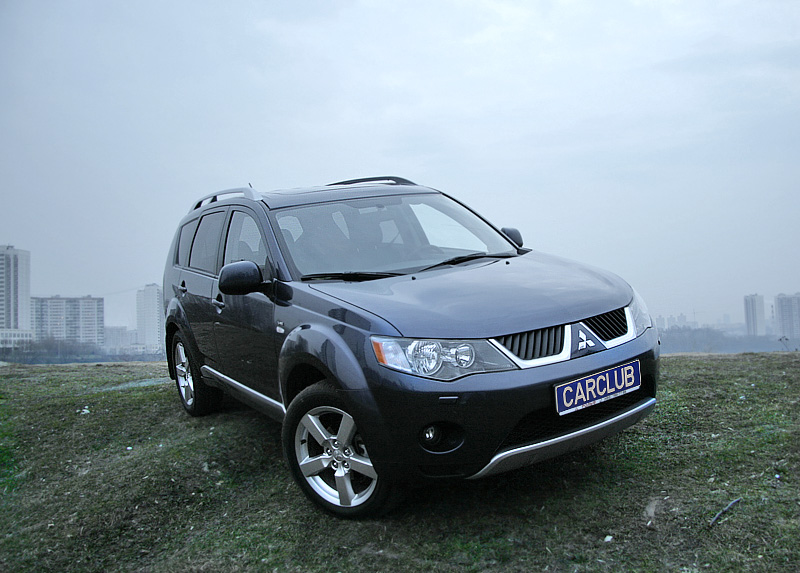
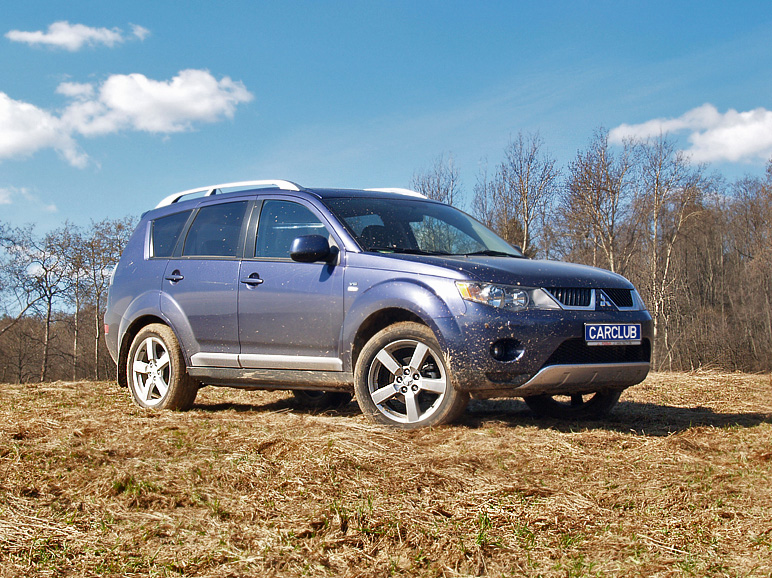
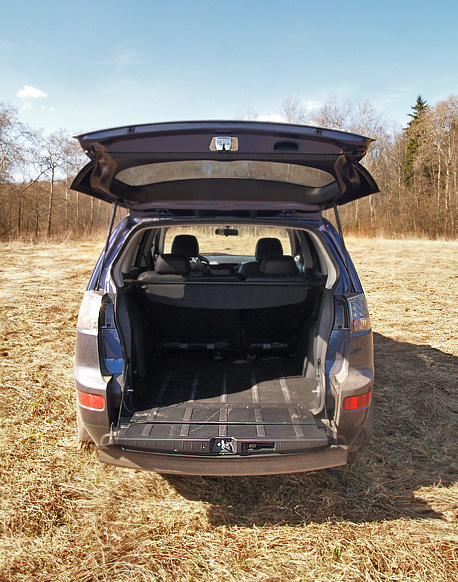
 Mitsubishi doesn't have many passenger models, but with SUVs the Japanese have always been in perfect order. Need a truly serious off-roader – get into a Pajero. Tight on money – take a Pajero Sport. Need a workhorse – the L200 pickup, an excellent choice. And crossovers are a dime a dozen: Pajero Pinin, Pajero io, Outlander, and in Japan there's even a tiny Pajero Mini with a 660cc engine. Not long ago, another new player joined this family – the Outlander XL, built on a completely fresh chassis. The SUV lives up to its name: it can be 7-seat (in Russia this option is somehow unavailable), and in the 5-seat version it has a simply huge trunk. And the engine in the Outlander is also XL – a 3.0-liter producing 220 hp, paired with a new 6-speed automatic. However, the price is correspondingly high – the tested example costs 44,990 USD (at an exchange rate of 26.80 rubles per 1 USD), and if converted to usual dollars, it comes to 46,770.
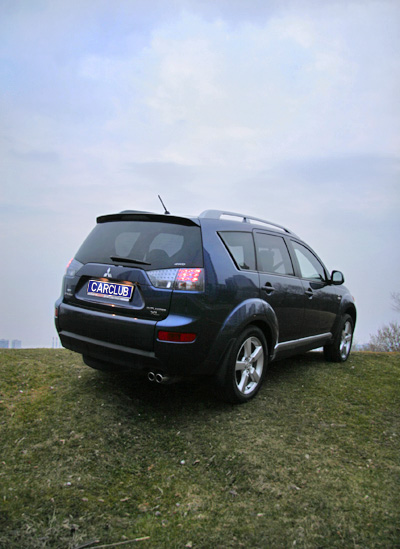
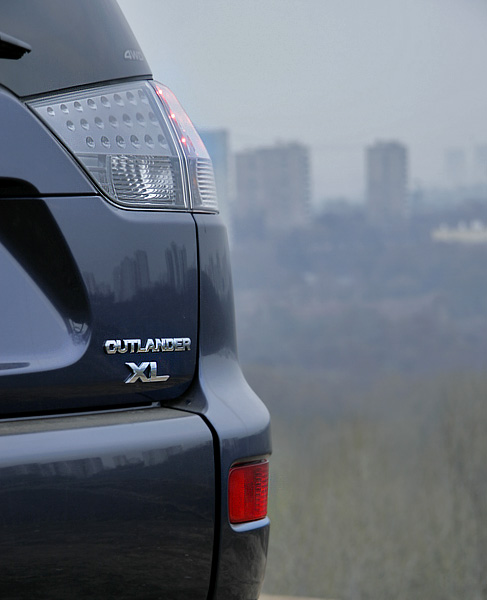
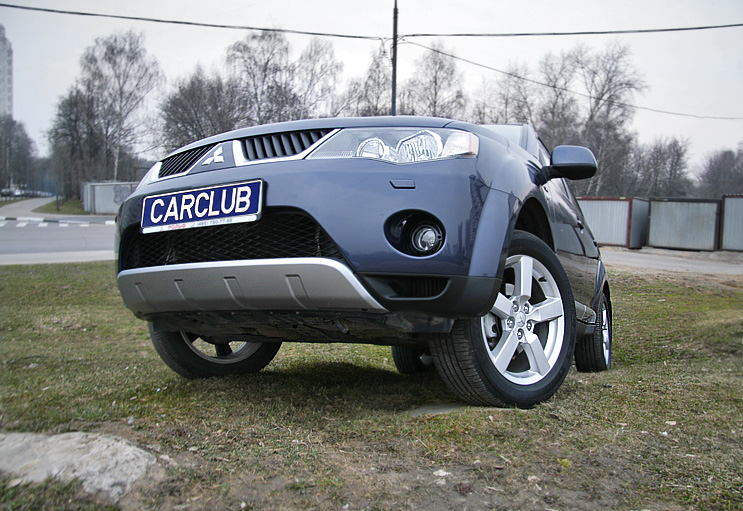
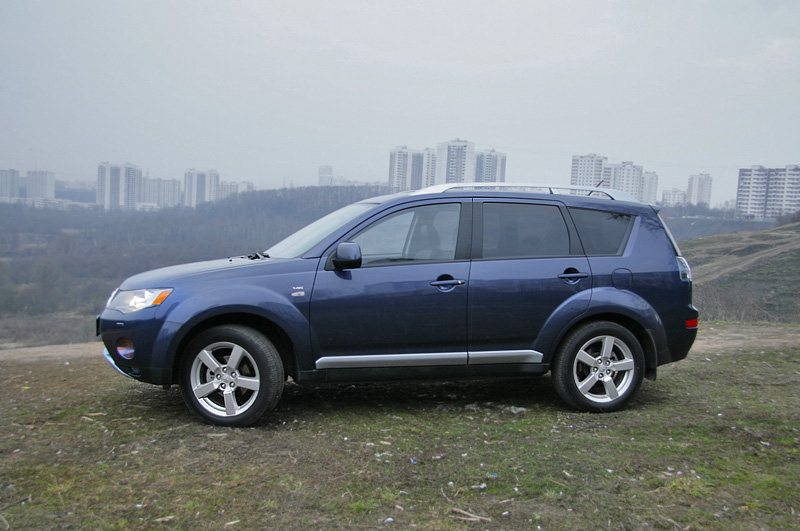
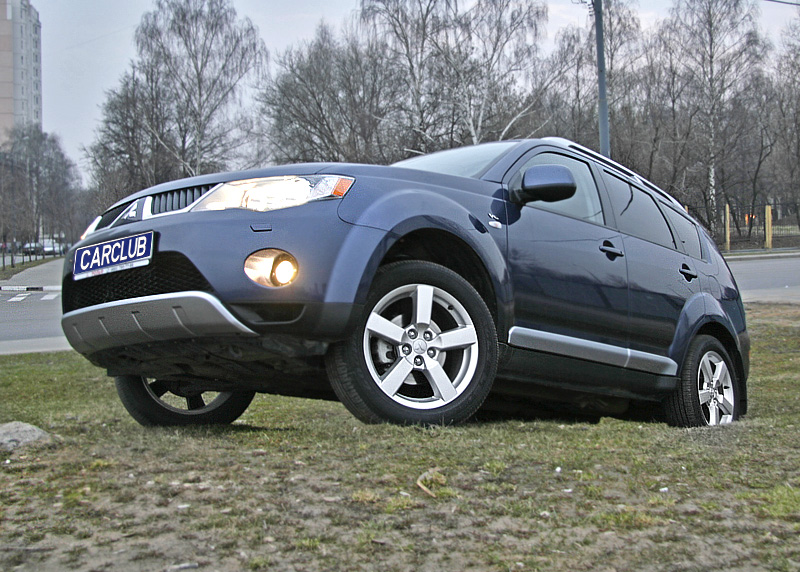
The Outlander's exterior has nothing in common with other Mitsubishis. The Japanese worked on it themselves, without the participation of European Olivier Boulay, who had a hand in the Lancer, Colt, Grandis, and first-generation Outlander. In the new model, one can only guess at the features of the sport prototypes that have won the Dakar multiple times. From them came stylish headlights, mounted flush with the bumper, and a massive aluminum "lip" at the bottom. The Outlander's rear strongly resembles the Lexus RX, but in a more technocratic style, with neon taillights. In general, the entire XL style can be called techno or high-tech. If you're close to such a direction in clothing or interior, then the new Outlander will surely appeal to you.
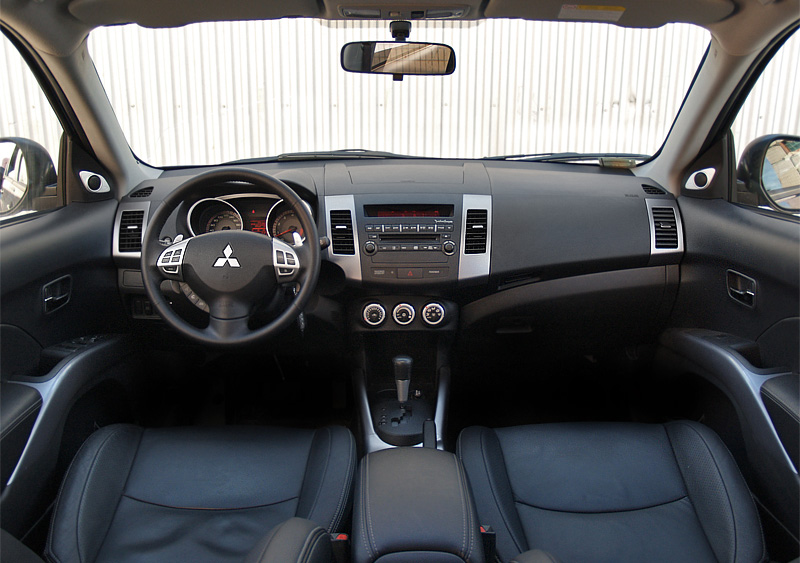
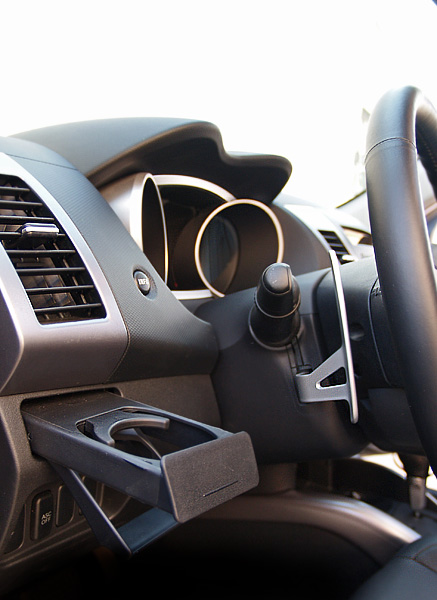
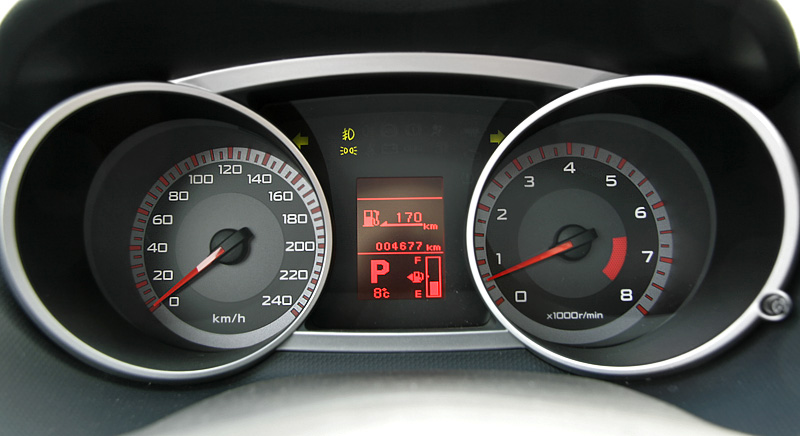
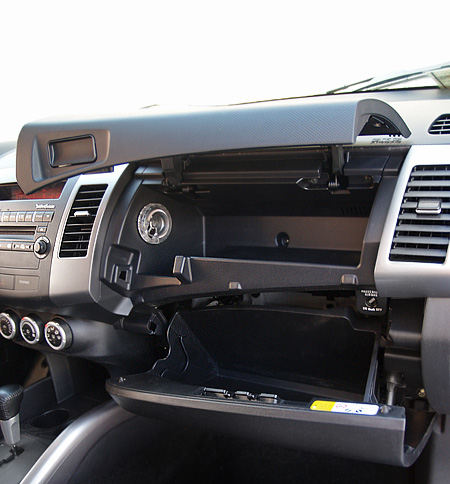
There's a saying: you meet people by their clothes, but see them off by their mind. If applied to the interior, you first assess the design, then ergonomics and materials. And the first acquaintance with the Outlander was very pleasant: an impressive instrument cluster with wells and a multifunction display, very similar to the Mercedes ML panel, beautiful designer inserts on the doors and glovebox lid, a luxurious Rockford Acoustic audio system with a subwoofer in the trunk, and nice climate control knobs. But within a quarter of an hour, the impression changed drastically. The plastic is hard everywhere, even subcompacts like the Opel Corsa, not to mention the golf class, are finished noticeably better. And it's hard to justify this with a desire to ease cleaning – dirt and dust get into the ribbed texture perfectly. The steering wheel, as it turned out, adjusts only for height, doesn't move longitudinally a millimeter, and is positioned not in the most successful way. Although the wheel itself sits comfortably in your hands, despite its small diameter, and the abundance of buttons doesn't interfere even during active turning. In front of the driver and passenger, there are as many as 6 cupholders – it's time to build a toilet into the Outlander, otherwise where to put so much liquid on board.
But while engineers were looking for places for cupholders, they apparently forgot about such an important option as seat heating, and as a result, they stuck its activation buttons anywhere, or rather – in the most "warm" place. If I hadn't known in advance that heating is on the options list, I would never have found these tiny keys hidden between the seat and the center tunnel. Good thing they light up in the dark. But turning off the heating while driving is a dangerous activity: you need to be distracted from the road and stare intently.
"And instead of a heart, a fiery motor" – that's exactly about the Outlander XL. The newest 3.0-liter V6 paired with a 6-speed automatic is just a delight. The engine, without the usual laziness and heaviness of large motors, briskly revs up to 6500 rpm and swiftly accelerates the SUV to 210 km/h by the speedometer, although the official top speed is 200 km/h. But at speed, the XL behaves strangely. On smooth asphalt, everything is fine: the tall body barely notices side winds, and the steering wheel fills with pleasant heaviness. But as soon as the road goes into light waves, which are plenty even on fresh surfaces of secondary highways – and the car's integrity is gone. Already at 160 km/h, keeping the rolly SUV under control is not easy. The steering wheel is still heavy, but the soft long-travel suspension allows the body to sway, and the Outlander deviates from course. You have to grip the wheel with both hands and steer – for a modern car, this is a serious drawback, especially given such a powerful engine.
As for sound, here the mighty engine and the "chopped" body, which starts whistling already at 120 km/h, battle for the main part. Further – more: during acceleration, you hear the engine; during calm driving, you hear the whistle. As a result, after 150 km/h, you don't want to talk in the cabin, and the music starts to press on your ears.
In the city, the Outlander feels much more confident. The suspension calmly digests speed bumps of any size, even if you don't slow down. The energy intensity of the suspension and decent ground clearance allow you to easily jump onto curbs while staying comfortable. The XL even tries to pretend to be sporty: for this, it has both a powerful engine and a heavy steering wheel. But the suspension is tuned for comfort. As a result, fast driving works only in a straight line, and in corners the Outlander noticeably rolls and slides outward with the front wheels. But the soft suspension almost completely eliminates oversteer – it's possible only with serious provocation, like the handbrake. You won't accidentally throw the car into a slide, which is natural for such a suspension, plus the M-ASTC stability system is on guard. But you need to be careful with ruts: during acceleration, the SUV still digests them, but during hard braking, you have to hold the steering wheel with all your might.
I hardly used the beautiful paddle shifters, just out of curiosity – the 6-speed automatic works very logically anyway. Of course, during kick-down from sixth to third, the gearbox doesn't shift as fast as I'd like – it sequentially goes through gears, as if trying them on. But all shifts are smooth, and that's perhaps more important if you don't plan to use the Outlander as a sports car. Although for complete happiness, the automatic could use a sport mode, where the last gear isn't engaged and the gearbox reacts more sharply to the gas pedal. By the way, the Outlander is almost the only car where the paddles are made of real aluminum, and on the road it's pleasant to stroke them, feeling the metallic coolness.
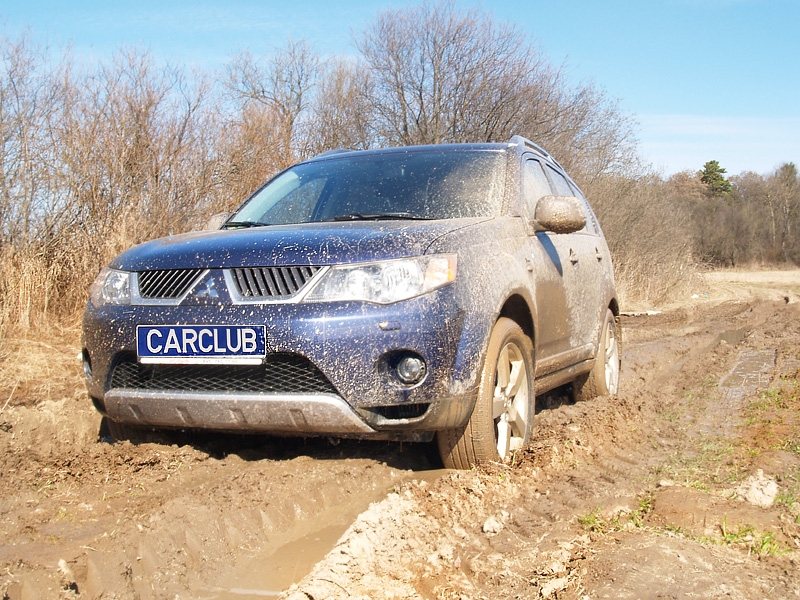
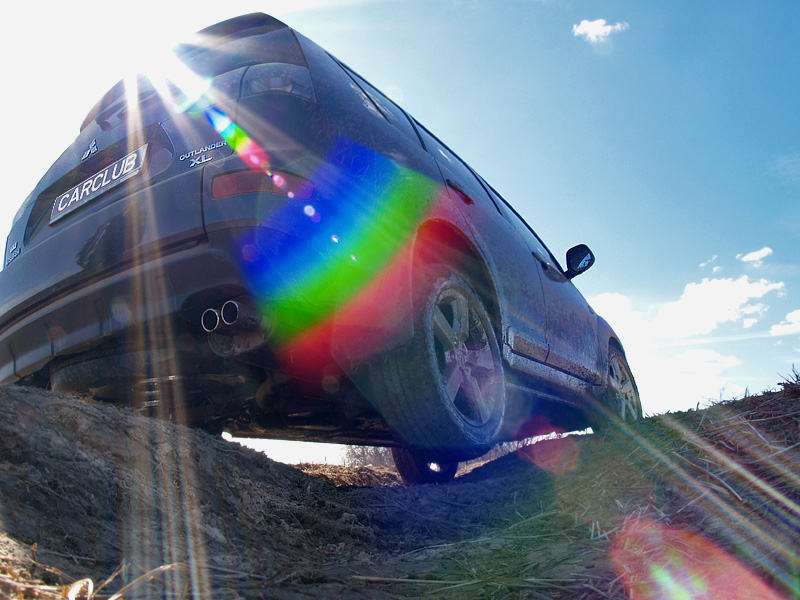
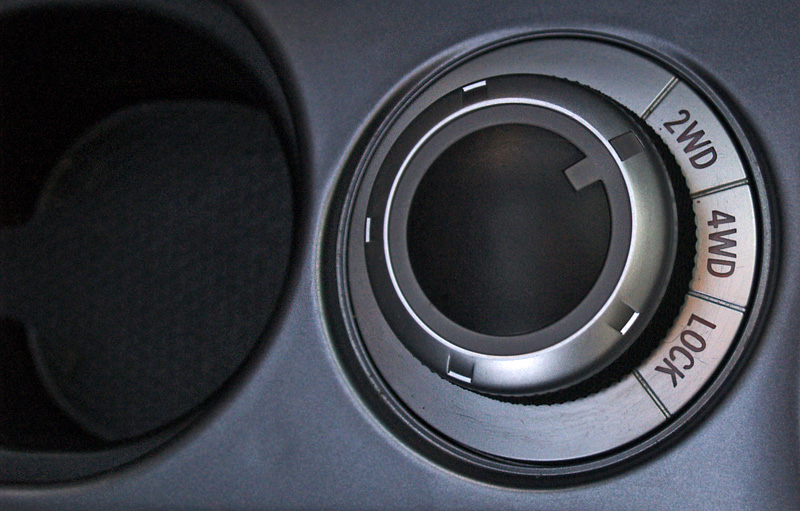
We couldn't avoid testing its off-road capabilities, although we didn't deliberately go looking for mud. On the way to a picturesque clearing, where in summer any sedan, except perhaps a Ferrari, would get there without problems, the melted snow had created a real bog. In my presence, the drivers of a Volkswagen Touareg and a Land Rover Discovery III refused to tackle this puddle. After the "kings of off-road" demonstratively turned around, it was a bit scary to venture into the mud in a crossover, but, having made sure that the SUV crews were in no hurry and had a reliable tow rope at hand, we decided to take the risk with the Outlander. I engage all-wheel drive, lock the center, and turn off the stability control... A slight acceleration – and, after spinning the summer tires a bit, the crossover easily crossed to the other side. Feeling almost invincible, on the way back I treated this same obstacle much more carelessly, and paid for it. I forgot to turn off the electronic "leash," and the Outlander got stuck at the exit of the puddle – the traction control system wouldn't let the wheels spin freely: the car stopped, barely catching the front bumper on the edge of the soft ground. I realized my mistake as soon as we hit the water. My hand instinctively reached for the button to disable the electronics, but to deactivate it, as per the instructions, you need to hold the key for at least three seconds. In my situation, that was enough time for the crossover to lose momentum and come to a halt.
When the wheels finally got free to spin, the Outlander was completely immobilized – we had to get out of the cabin and dig out the ruts so they wouldn't exceed the 215-millimeter ground clearance. In the end, we got out within fifteen minutes, but the incident with the traction control system stuck in my memory for a long time.
Next, we faced another serious test. A deep ditch had to be crossed strictly diagonally, otherwise we could lose at least the bumpers, or even the exhaust system. The body geometry left no doubts, but I was worried that the suspension would use up all its travel and a wheel would hang in the air. And so it happened: the XL lifted a rear wheel and also unloaded one front wheel. In such a situation, most crossovers, even with a locked center, give up, but the Mitsubishi, to my surprise, didn't surrender.
To wrap up, at the editorial office we staged a duel between the Mitsubishi and a 3.0-liter BMW X5. In terms of power, the rivals were absolutely equal: 220 "horses" for the Outlander versus 218 for the "Bavarian," both with a 6-speed automatic. Contrary to expectations, the "Japanese" turned out to be quicker, and this was confirmed by three runs with different drivers. Slightly losing at the start due to a brief spin of the front wheels (even with the center forcibly locked) and a less responsive gearbox, by the time it reached 100 km/h the Outlander confidently pulled ahead by a car length, and then its advantage only grew. So if you're choosing based on power and dynamics, the Outlander is a very good purchase: a strong engine in a spacious body is offered for relatively moderate money. Plus, for street racing, the powerful Rockford audio system will come in handy.

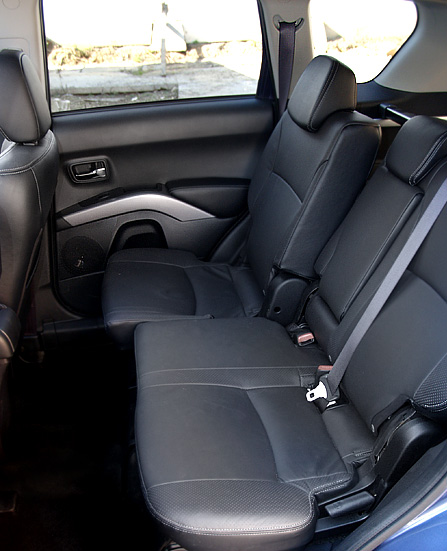
If handling and interior comfort are the top priorities, then it's better to look at other options, for example, wait for the arrival of the Peugeot 4007, built on the Outlander platform. The French will surely refine the "Japanese" suspension and also improve the quality of the interior trim.
As for the comparison with a used BMW X5, the Bavarian, even having lost in dynamics, unquestionably wins with its interior finish quality and the impeccable handling that is a hallmark of all BMWs.
Text: Leonid Pavlov. Photos by the author and Dmitry Malygin.