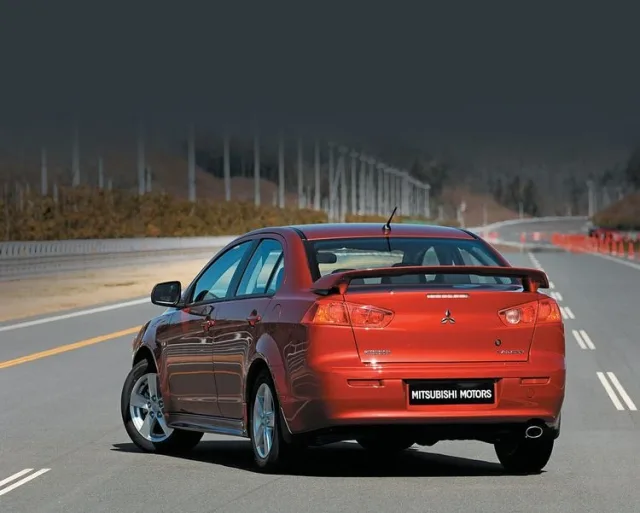
Samurai did not carry shields: their katana served as both weapon and protection. A light, sharp, and durable blade easily cut through nails and withstood powerful blows. The new Lancer is a katana, and above all in its main role — as a weapon of attack. It is with this sword that Mitsubishi intends to win back lost positions in the American and Japanese markets and strengthen its presence in Europe.
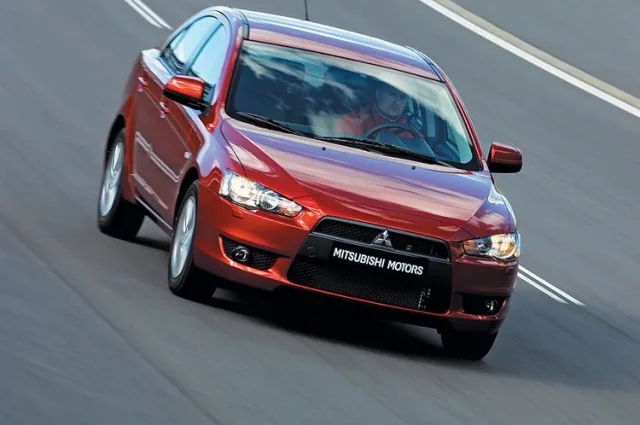
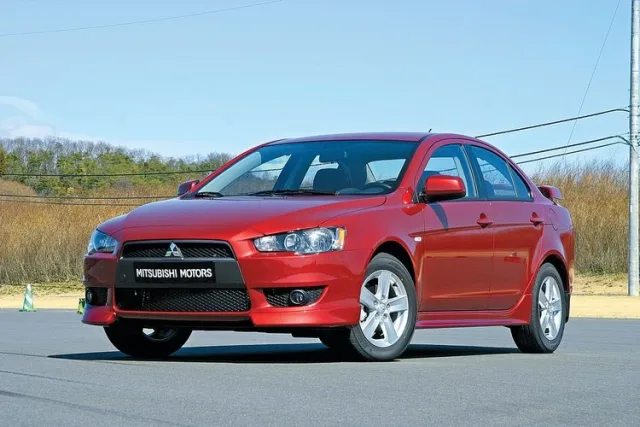
Mitsubishi's chief designer, Akinori Nakanishi, is a true master! Laconic lines, an elongated hood, a short rear, sharp edges — and every detail is perfected with Japanese meticulousness. A Japanese BMW? Maybe an Alfa? No, neither! A blade-like silhouette, a radiator grille with a "reverse" rake, like the legendary eighth-generation Galant... This is pure Mitsubishi! Of course, from behind, the new Lancer could be mistaken from a distance for a small Lexus or Alfa Romeo, but only if viewed from far away. And if the car has a rear wing from the factory "aero kit," it cannot be confused with anything, no matter where you look.
How cleverly Nakanishi-san managed to hide the true dimensions! By the numbers, the new Lancer has grown considerably: 35 mm longer, 40 mm taller, and 65 mm wider. So it is now as wide as and even a matchbox longer than the fresh Corolla. And yet Toyota looks much more massive! It is a pity that the Lancer has become heavier, but the 56% increase in body rigidity is more than a worthy compensation for the extra 60 kg.
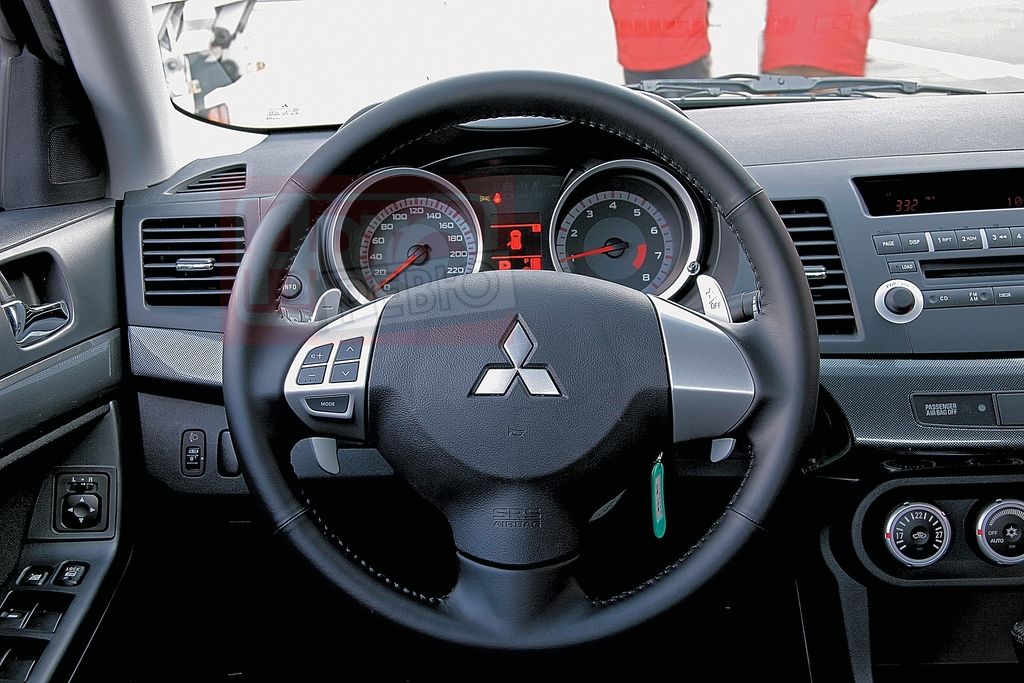 | 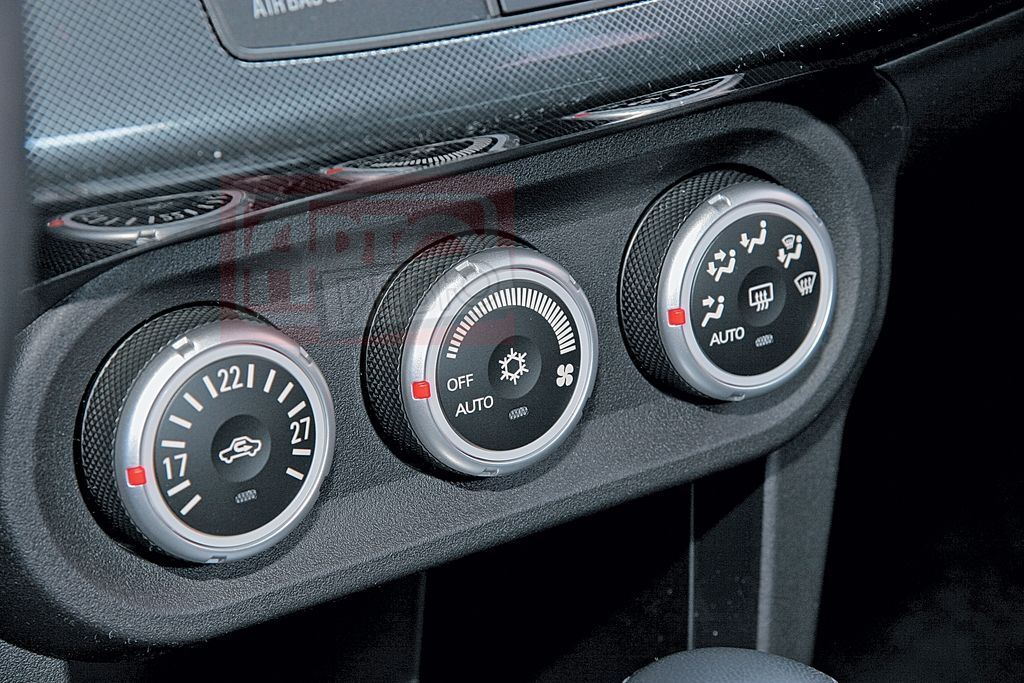 | 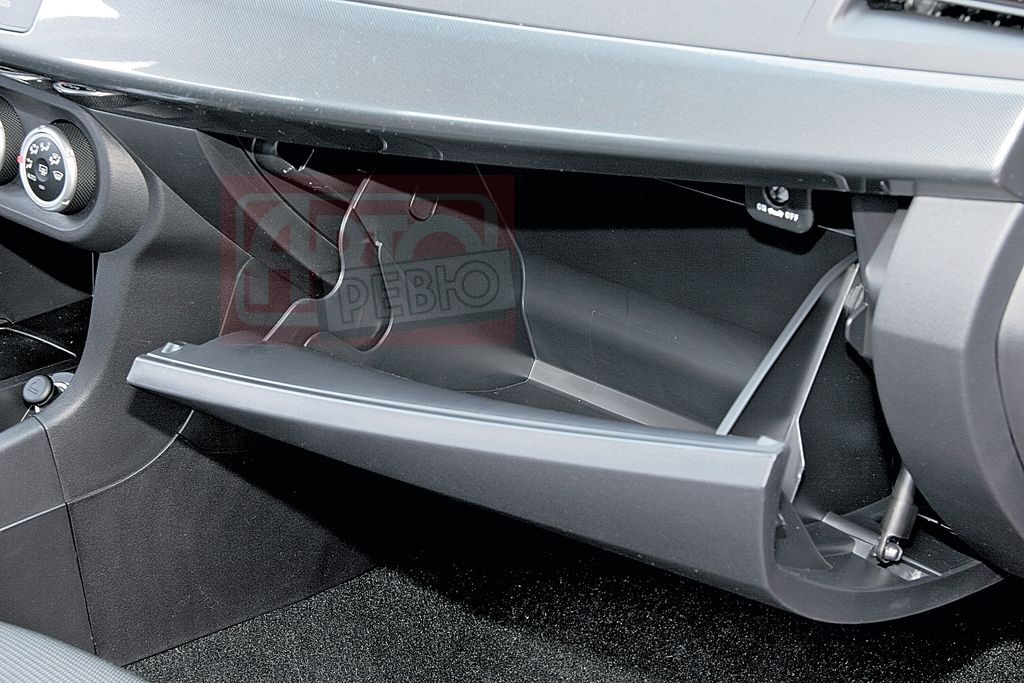 |
| Instruments in recesses under a curved visor — this is the Italian spirit | Three knobs for climate control: what could be more convenient? | The lower "glove box" is like the Outlander's, but there is no upper cooled compartment here |
The chassis remains the same in layout: MacPherson struts at the front and a multi-link at the rear. They did not install an economical H-shaped beam, because in a year a four-wheel-drive version with a rear-axle coupling (like the Outlander) will appear. The car with the 1.5 L engine got an electric power steering, while the two-liter top version retained hydraulic power steering.
— We must deliver more driving pleasure than the Mazda 3, — insists Shinichi Kurihara, responsible for the development of C-segment cars. — We did not try to please everyone, as competitors do: Mitsubishi must have its own character and its own face!
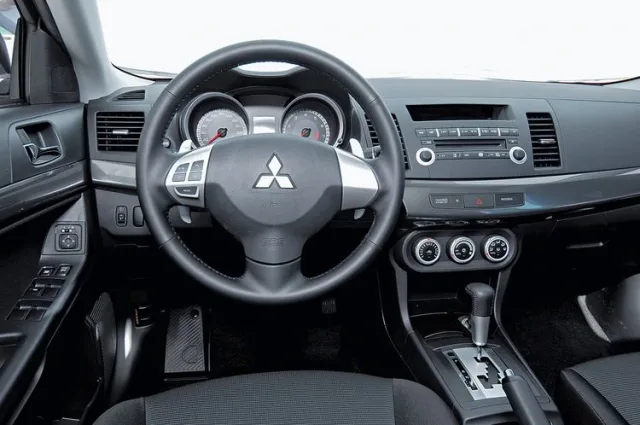
The interior is exactly like the Outlander XL crossover. Except the plastic texture is simpler and there is a strip of "carbon"
A bold statement. But how true is it?
The C-segment platform (on which the Lancer and Outlander XL are built) began development at the turn of the century, during the height of the crisis. Its depth is evidenced by the fact that from 2001 to 2005, Mitsubishi Motors' staff was almost halved. The alliance with DaimlerChrysler collapsed. But the company survived and now relies on its own strength and "local" partnerships — for example, with the PSA group (Peugeot and Citroen) under the scheme "Outlander in exchange for a modern diesel" (soon the Outlander XL will be sold in Europe as the Peugeot 4007 and Citroen C-Crosser).
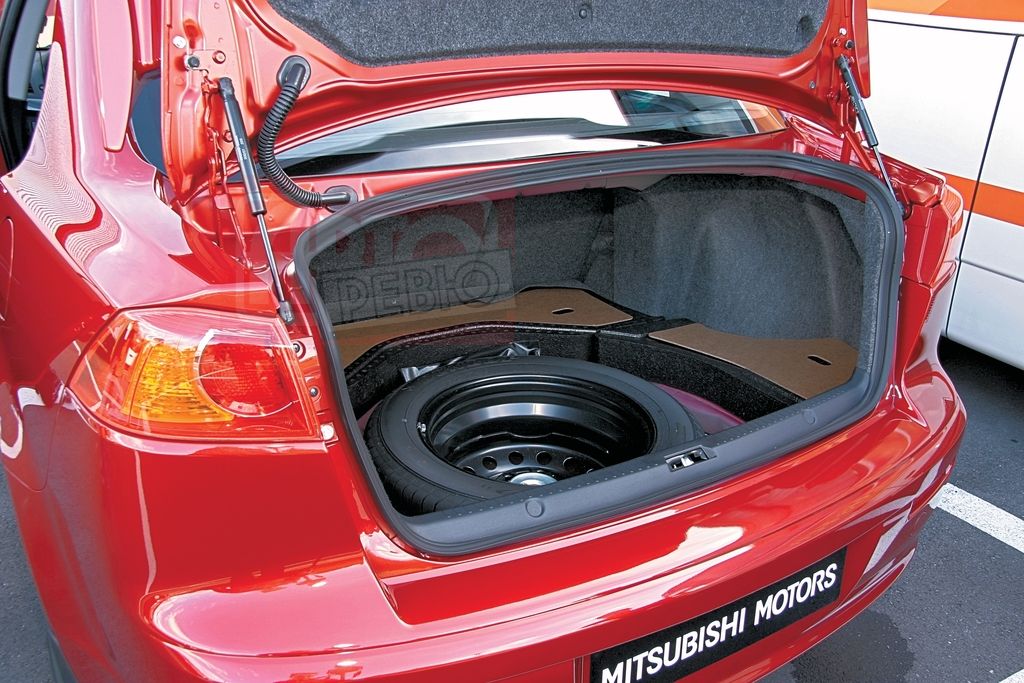 | 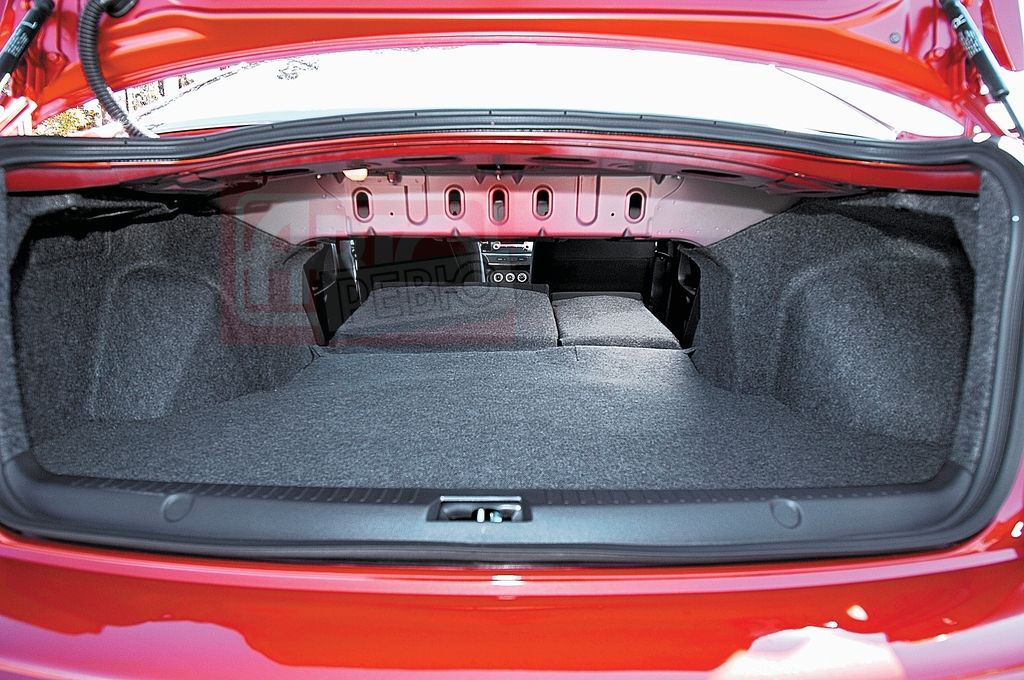 | |
| The stability system (switchable) is not available to Russian buyers. A pity | A full-size spare wheel along with a foam insert "eat up" the already small trunk volume | There is little use from the folding backrest — the opening into the cabin is too narrow |
— But the Dodge Caliber and Jeep Compass, which are also built on your C platform, do not shine with refined manners.
Kurihara-san only smiled slyly at my remark.
— It's all in the tuning.
 |
| Shinichi Kurihara began his career at Mitsubishi in 1972 as a chassis developer. It is to him that the Outlander XL and the new Lancer owe their fighting character |
And that is true: the Outlander XL, as we have already seen, indeed has a spirited nature (see AR No. 6, 2007). And what about the new Lancer?
My palms were sweaty even before the start: we were to drive in the company of the creators not just anywhere, but at the JARI test track near Tokyo. A high-speed ring with banked turns, a huge area with cones for "figures" — and all this was ours for a full three hours! But the pre-start briefing turned out to be a spoonful of fish oil instead of the promised jam: "On the ring — no more than 150 km/h, on the 'slalom' and 'figure eight' — 40 km/h. Do not rock the car, and no tire squeal!" A pity. Okay, I console myself, we will save the questions about fighting qualities and ride smoothness (the surface here is like a katana blade) for tests in Russia...
As for behavior in "civilian" modes, the Lancer made a pleasant impression. It confidently holds a straight line and willingly enters corners. The only disappointment was the high rate of body roll — we also noticed this during the test of the new Outlander. The steering feedback is clear, although the effort is low, and the Lancer 1.5 with electric power steering even pleased more than the two-liter with "hydraulics": the reactive action is cleaner and more transparent. I did not notice other differences, although the more powerful Lancers have a strut brace between the strut towers, a rear stabilizer, and slightly stiffer front springs.
But I learned almost everything about the character of the engines. Those waiting for the "budget" 1.3 version will be disappointed: such an engine is no longer in the Lancer lineup. The old 1.6 L unit (98 hp) has given way to a 1.5-liter engine with 109 hp and the MIVEC variable valve timing and lift system (the same as in the Colt). Paired with a five-speed manual, it briskly accelerates the Lancer, despite the rather "long" gears: second pulls to 97 km/h, third to 140 km/h. The engine is elastic at low revs, spins merrily with a slight surge at 4000 rpm up to the limit of 6800 rpm — and growls aggressively. Plus a delightfully light short-throw gearshift and an informative clutch pedal — a delight! But the old automatic is sluggish: the loss in acceleration to 100 km/h is almost three seconds.
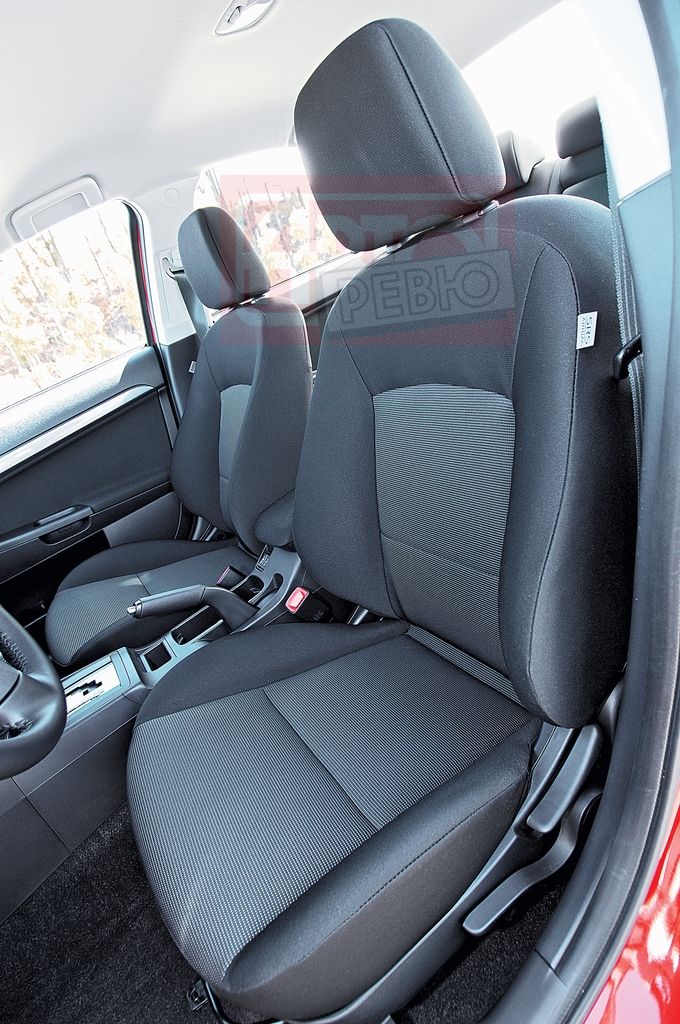 | 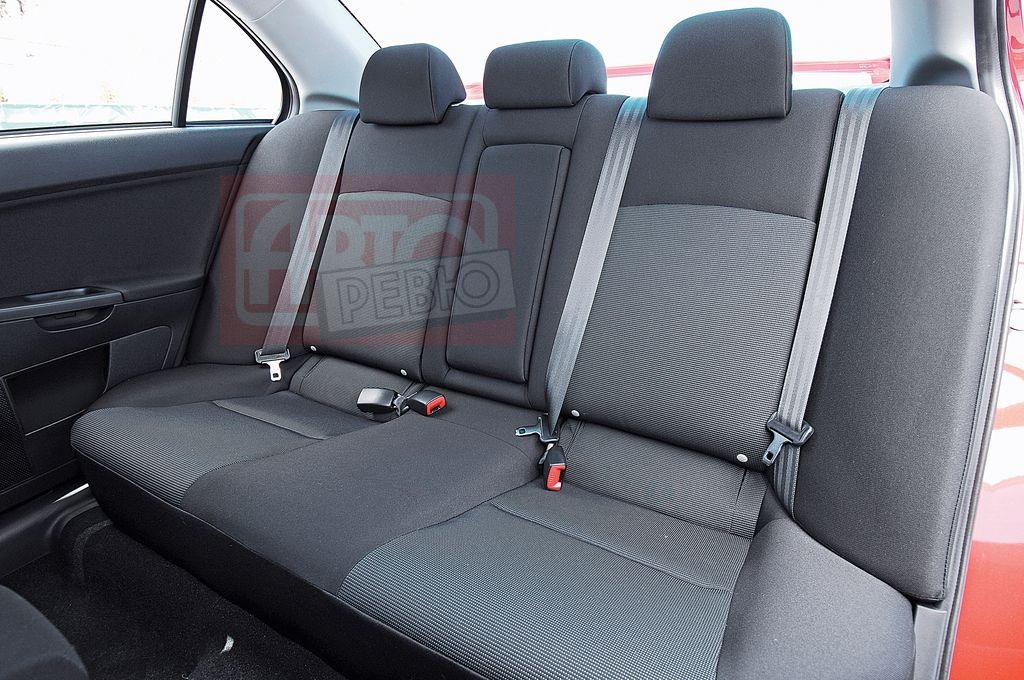 |
| The seats are simple but quite comfortable | Space on the soft rear sofa is limited only by the sloping roof |
The two-liter 150-hp unit is a different story. It also has MIVEC, but the engine is clearly designed for those who value comfort more, especially in combination with the CVT. It is quieter, more torquey, and 15 hp more powerful than its predecessor. With the CVT, it quickly reaches 4500 rpm — and monotonously hangs on one note, although acceleration continues. But there is no mood. Subjectively, there is no "dynamic" gain either. Of course, it is good that the engine can digest 92-octane gasoline, but I would raise its compression ratio — maybe then it would gain more "horses" and character. And what is the use of the "fixed" steps that are shifted via paddle shifters? There is little benefit from them, and you can forget to exit manual mode.
The brakes are excellent: precise feedback, confident deceleration, clear ABS operation. But this was not the case on all the cars we tried. This can be attributed to "pre-production" status — many examples were assembled using bypass technology.
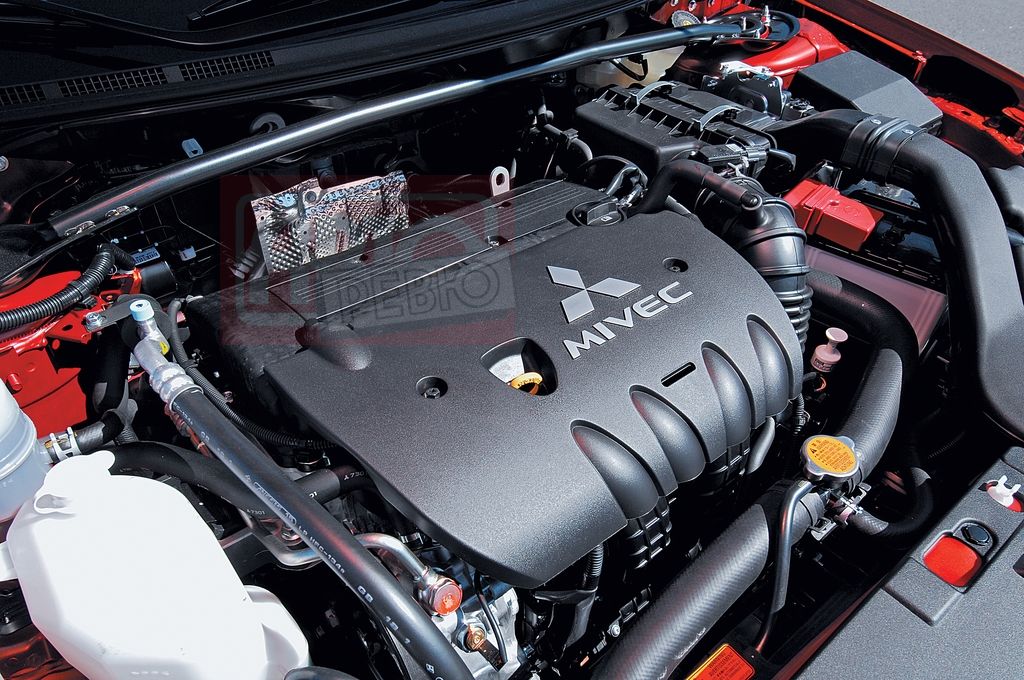 | 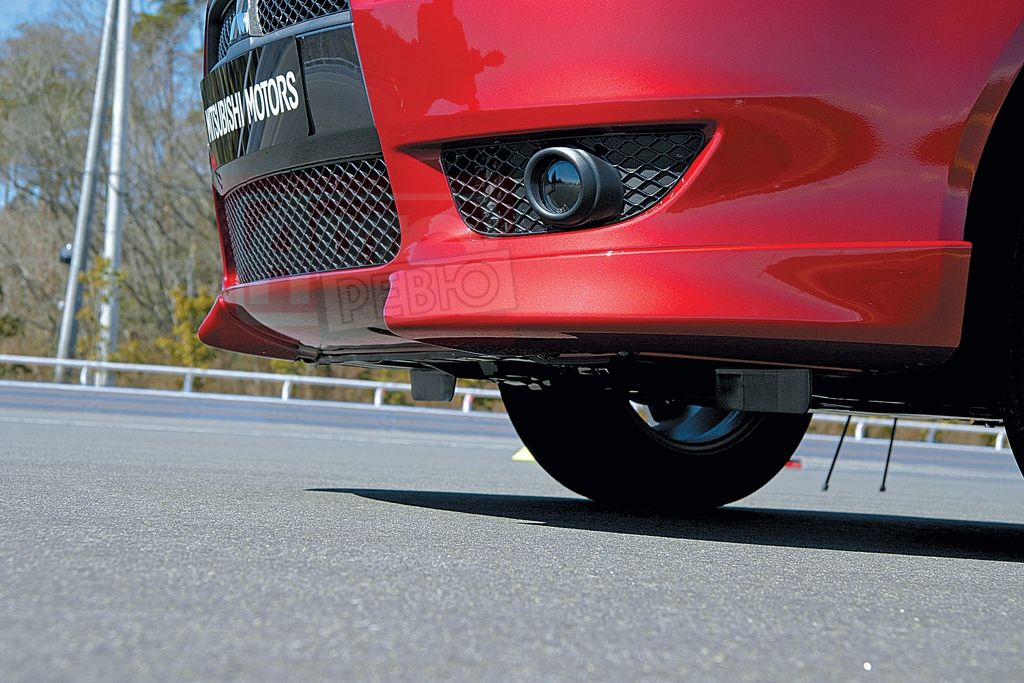 |
| The "world" engine with a volume of 2.0 L (150 hp) with the proprietary MIVEC variable valve timing and lift system is designed for AI-92 gasoline — specifically for Russia and the USA | For the striking aerodynamic package (rear wing, bumper and sill overlays), buyers of the top 2.0 Intense version will not have to pay extra |
But what cannot be attributed to the pre-production status of the car is the frankly budget materials in the cabin. The design here is top-notch, Mr. Nakanishi did his best in this direction as well. But the execution... The front panel is almost identical to the Outlander's. However, why is it made of ordinary soft-look plastic here, and not the 'mesh' type like on the crossover? Apparently, cost-cutting. Fine. But then why does the door trim rattle? Perhaps I wouldn't have nitpicked these details if Mr. Kurihara hadn't dropped a phrase that when choosing materials and working on the 'feeling of quality,' they took Toyota as a benchmark. But even in the old Corolla, everything looked a head more solid, let alone the new one.
I have no complaints about ergonomics. Visibility is excellent, largely thanks to the large mirrors. The fabric seats are moderately firm, comfortable, with proper lateral support and a wide range of adjustments. True, the shoulders of very large drivers will likely hang in the air. The leather steering wheel is also good, pleasant to hold, although it doesn't adjust for reach.
The space for rear passengers in width and length is like in the Galant. But tall people feel uncomfortable here: the sloping roof forces them to duck their heads.
Passive safety also seems to be in order. The European specification includes inflatable 'curtains' and a 'knee' airbag for the driver. But for Russia, 'in the base' there are only two front airbags (side and 'knee' are optional). And the stability control system available to Europeans cannot be ordered here at all. Oh, the Japanese don't take care of Russians, the most loyal Mitsubishi customers: it's no joke, last year we bought almost 47 thousand Lancers, more than in America, Outlanders and Lancers combined! I'm sure many would agree to pay extra for ESP. Personally, I certainly wouldn't be stingy!
But it is Russians who will see the new Lancer in the Old World first: it will appear here at the end of May, and in Western Europe only in autumn. And that's pleasing: a beautiful car!
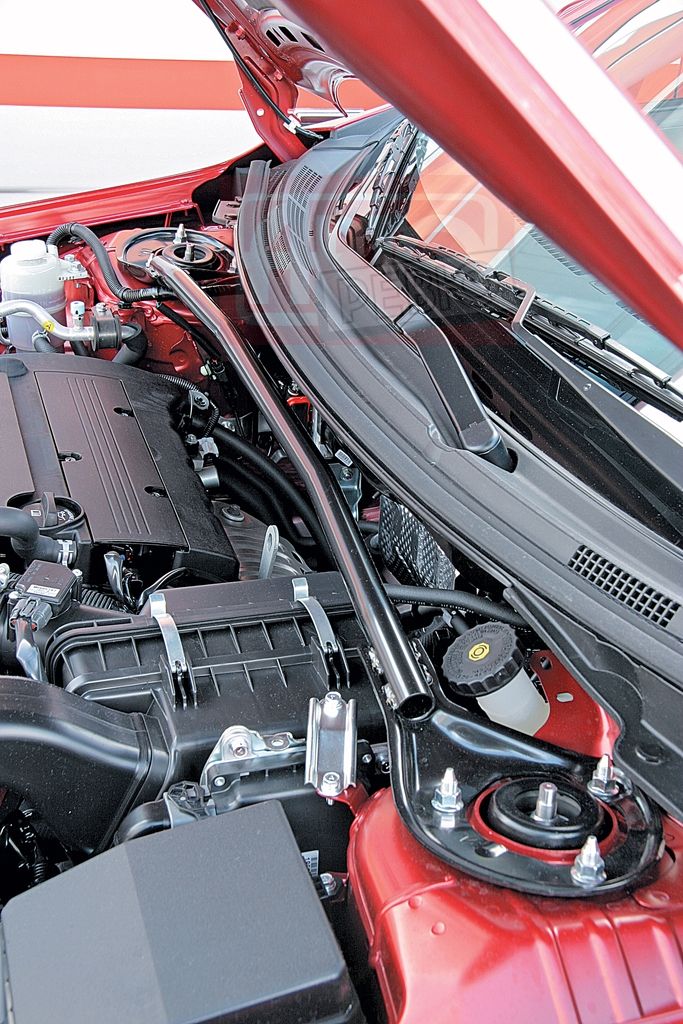 | 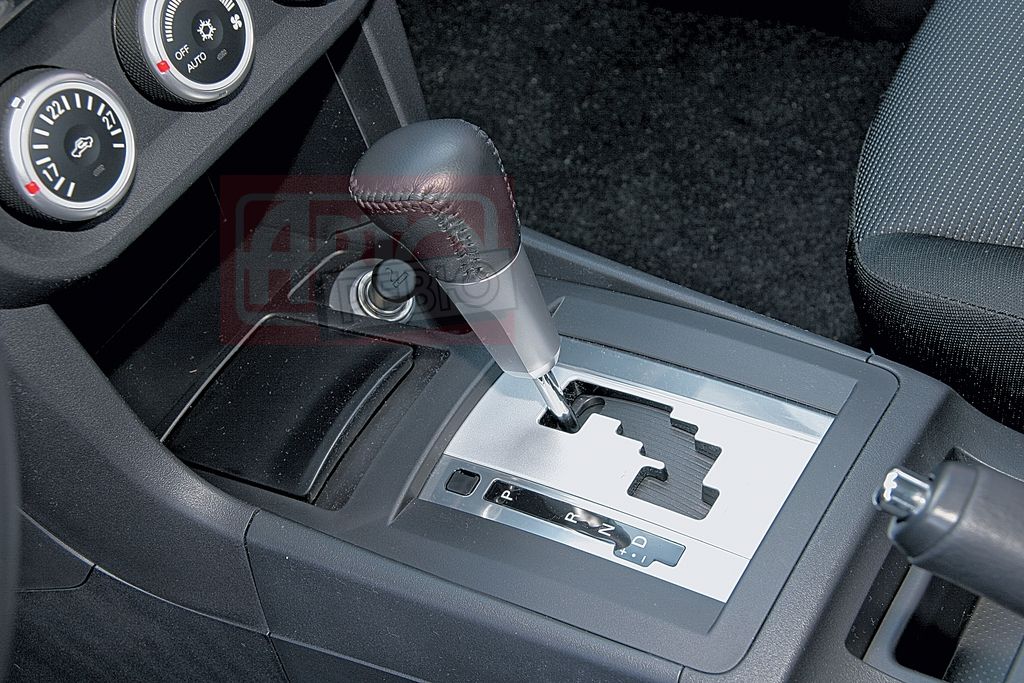 | |
| The 'strut' under the hood is a distinctive feature of two-liter cars with 'sport' suspension (stiffer front springs plus rear stabilizer) | Paddle shifters are made of magnesium alloy | The CVT is always ready to keep the engine 'on its toes.' And if its steady hum is annoying, you can use the manual mode with six fixed steps |
And beauty, as we know, demands sacrifices. One of them is the trunk. It's tiny — only 315 liters, with a high loading height and constrained by wheel arches. I was pleased with the folding seatbacks, but a hefty crossmember blocks a good third of the opening from above. So the new Lancer is not well suited for hauling stuff.
But is it worth using a samurai sword to chop firewood? That's what axes are for. And with its sharpened design, the new Lancer will win the hearts of hundreds of thousands of buyers. And if the driving manners of production cars also turn out to be top-notch, then you can turn a blind eye to the dull plastic, the puny trunk, and even the fact that the new Lancer will cost on average $2,200 more than its predecessor.
A year later, a five-door hatchback will appear, but there will be no more wagon.
| Specifications | ||
| Vehicle | Mitsubishi Lancer | |
| Modification | 1.5 | 2.0 |
| Body type | sedan | sedan |
| Number of seats | 5 | 5 |
| Length, mm | 4570 | 4570 |
| Width, mm | 1760 | 1760 |
| Height, mm | 1505 | 1505 |
| Wheelbase, mm | 2635 | 2635 |
| Track front/rear, mm | 1530/1530 | 1530/1530 |
| Ground clearance, mm | 165 | 165 (150)* |
| Trunk volume, l | 315 | 315 |
| Curb weight, kg | 1245 (1275)** | 1320 (1350)** |
| Gross weight, kg | 1750 (1750) | 1850 (1850) |
| Engine | petrol | petrol |
| Location | front, transverse | front, transverse |
| Number and arrangement of cylinders | 4, in-line | 4, in-line |
| Displacement, cm³ | 1499 | 1998 |
| Cylinder bore/stroke, mm | 75.0/84.8 | 86.0/86.0 |
| Compression ratio | 10.5:1 | 10.0:1 |
| Max power, hp/kW/rpm | 109/80/6000 | 150/110/6000 |
| Max torque, Nm/rpm | 143/4000 | 198/4250 |
| Transmission | manual, 5-speed (automatic, 4-speed) | manual, 5-speed (CVT) |
| Drive | front-wheel drive | |
| Front suspension | independent, coil spring, McPherson | |
| Rear suspension | independent, coil spring, multi-link | |
| Front brakes | disc, ventilated | disc, ventilated |
| Rear brakes | disc | disc |
| Tires | 205/60 R16 | 205/60 R16 |
| Top speed, km/h | 191 (178) | 200 (200) |
| Acceleration 0-100 km/h, s | 11.6 (14.3) | 9.5 (10.5) |
| Fuel consumption, l/100 km | ||
| Urban cycle | 8.2 (n.a.)*** | 10.8 (11.9) |
| Extra-urban cycle | 5.4 (n.a.) | 6.6 (6.4) |
| Combined cycle | 6.4 (n.a.) | 8.1 (8.4) |
| Fuel tank capacity, l | 59 | 59 |
| Fuel | petrol AI-95 | petrol AI-92 |
| * For Intense trim | ||
| ** In parentheses — data for vehicles with automatic transmission/CVT | ||
| *** N.a. — not available | ||
Ten Generations of the Lancer
The first Mitsubishi Lancer appeared in 1973 and was designed to fill a gap in the company's lineup — between the compact hatchback Minica and the mid-size sedan Galant. Technically, the Lancer was merely an extension of the extensive Colt family and was initially even called the Mitsubishi Colt Lancer. It was a rear-wheel-drive car, produced in 12 modifications with four-cylinder engines from the Saturn family with displacements of 1.2, 1.4, and 1.6 liters. Three body types were offered — a two- or four-door sedan, as well as a five-door wagon. Distinctive features of the 'first' Lancer were disc brakes on all wheels and a collapsible steering column. At the top of the range was the Mitsubishi Lancer 1600 GSR, whose engine was equipped with two carburetors and developed 98 hp.
It is noteworthy that already in 1973, a specially prepared Lancer 1600 GSR with a 165-hp engine took the first four places in the Australian rally, and a year later a crew in a Lancer became the winner of the East African Safari Rally. Only in the 80s did the Lancer 'take a break' — then the honor of the brand on rally tracks was defended by the Starion coupe and Galant VR4 sedans.
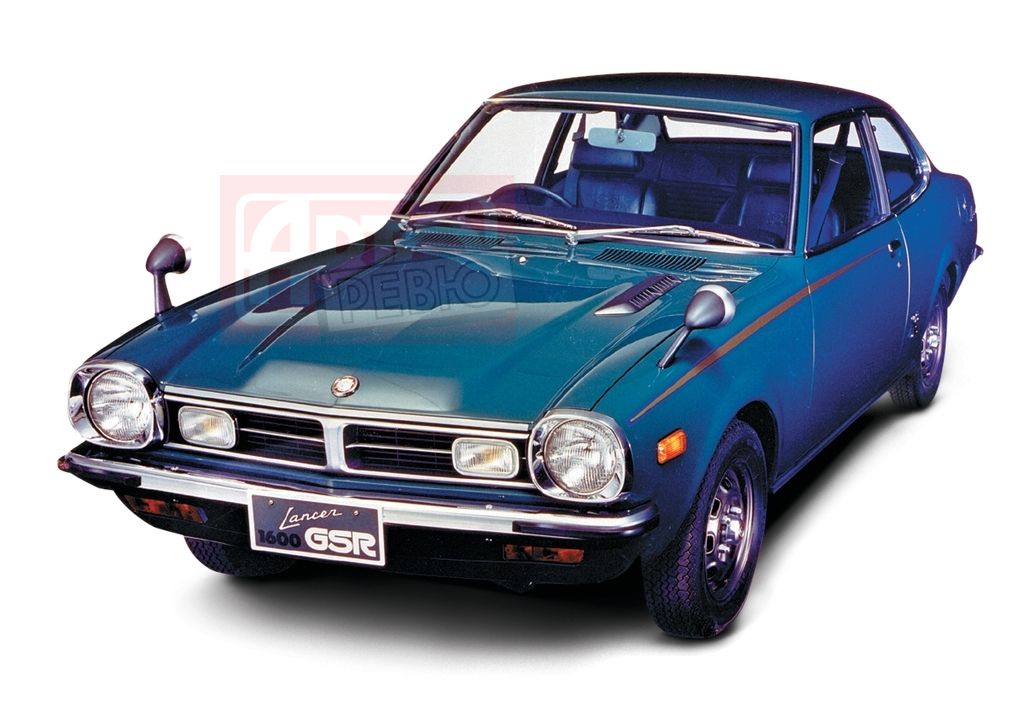 | ||
| Mitsubishi Colt Lancer 1600 GSR, 1973 | Mitsubishi Lancer second generation, 1976 | Mitsubishi Lancer third generation, 1979 |
 | ||
| Mitsubishi Lancer Fiore fourth generation, 1982 | Mitsubishi Lancer fifth generation, 1983 | Mitsubishi Lancer sixth generation, 1988 |
In 1975, the three-door coupe Mitsubishi Lancer Celeste appeared with a completely new body, and a year later the second-generation Mitsubishi Lancer entered production, which was actually a modernization of the existing car. The main changes were a different front end design and larger bumpers that met American safety standards: from the end of 1976, Lancers began to be supplied to the USA, where they were sold under the name Dodge Colt (previously, export Galants were called that).
The third 'Lancer,' completely new, appeared in 1979: only a sedan, only rear-wheel drive. The Italian Aldo Sessano worked on the appearance. Inside, it became more spacious, and instead of a dependent beam, an independent four-link was installed at the rear. Initially, there were two engines — 1.4 and 1.6 liters, both with the proprietary Silent Shaft system that dampened vibrations with a pair of balance shafts. A year later, a 1.8 engine was added — both naturally aspirated and turbocharged. And for a number of markets, the Lancer 2000 Turbo was made with a two-liter unit producing 170 hp. In 1981, the range was supplemented by a modest 1.2 engine.
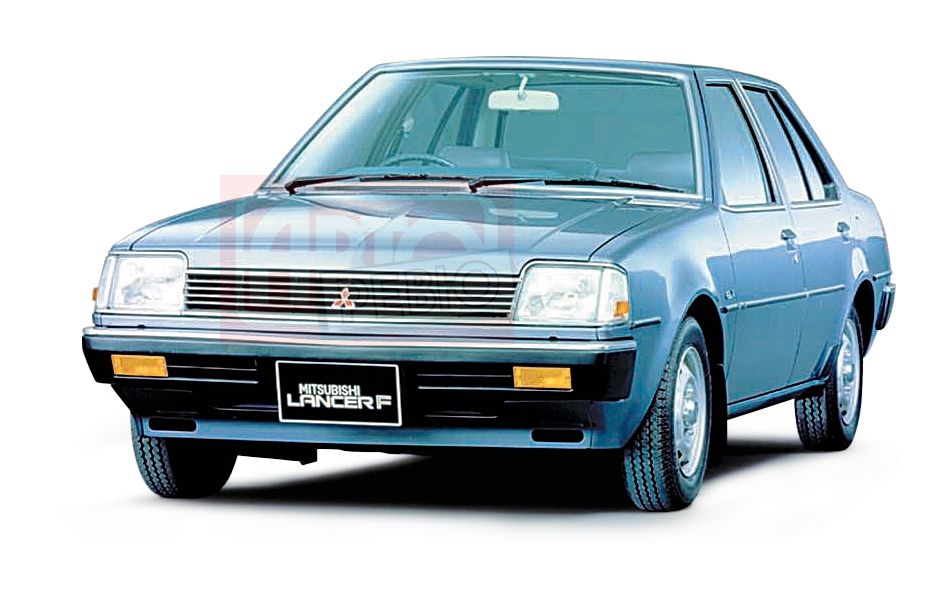
In those same years, Mitsubishi set a course for front-wheel drive. The first sign of this in 1978 was the Mirage hatchback, which was exported as the Colt. In 1982, a four-door sedan was built on its basis — outside Japan it was called the Lancer Fiore (from the Italian for “flower”) or simply Lancer F. So the “third” and “fourth” Lancers were on sale simultaneously. The front-wheel-drive sedan was offered with engines from 1.2 to 1.6 liters. There was also a separate turbocharged 1.4 producing 105 hp. A three-speed automatic could be ordered in addition to the manual. Starting with the fourth generation and up until 2000, the Colt and Lancer remained relatives within the same family.
The “flower” did not last long: already in 1983, the new Colt and the fifth-generation Lancer debuted, replacing both previous generations at once. A 1.8-liter diesel appeared in the lineup. The top version, as before, came with a 1.6-liter turbo engine (120 hp), but now with fuel injection. There was also initially a version with a 1.5-liter engine and the MD system, which could deactivate a pair of cylinders, saving 10–20% of fuel. In 1985, the Lancer gained a station wagon, and a year later it received a version with permanent all-wheel drive.
The sixth generation arrived in 1988. Externally, it was a scaled-down Galant. Body styles were a sedan and a five-door hatchback, while the station wagon remained in its previous form. There were five engines: from a 16-valve 1.6 (124 hp) to a 1.8 diesel (60 hp). The base 1.3 was carbureted (69 hp), while the other gasoline engines already had fuel injection. There were also all-wheel-drive versions. In North America, from 1989, this car was sold as the Eagle Summit.
| Mitsubishi Lancer seventh generation, 1991 | Mitsubishi Lancer eighth generation, 1995 |
| Mitsubishi Lancer Cedia for Japan, 2000 | Mitsubishi Lancer ninth generation for Europe, 2003 |
In the autumn of 1991, the seventh generation was shown in Tokyo. A year later, a station wagon appeared (at home, the Libero), and the hatchback disappeared from the lineup. In some places, a two-door coupe was also offered. Europeans got three engines: 1.3 and 1.6 gasoline, plus a two-liter diesel. In Japan, however, the main focus was initially on the all-wheel-drive 1800 GSR (195 hp), and in 1992 the legendary Evolution was born with a two-liter turbo four producing 244 hp. The Japanese also got an exotic option — a V6 of just 1.6 liters (135 hp).
The eighth Lancer came out in March 1995. The body was now only a sedan (on some markets, a coupe was still available). The driver’s airbag was already standard, while the passenger’s was an option. In Europe, the “eighth” had to share the market with the slightly larger Carisma, which began to be assembled in Holland the same year. Europeans were offered 1.3 and 1.6 gasoline engines; elsewhere, the choice was wider.
The ninth generation was presented by the Japanese in the spring of 2000. At home, it was called Cedia — from Century Diamond, “diamond of the century.” It reached Europe only in August 2003, at the Moscow Motor Show. The car grew, received sedan and station wagon bodies, and a front end different from that of the Japanese Cedia. For Europe — 1.3, 1.6, and 2.0 gasoline engines. For the Japanese — 1.5 and 1.8, and in North America — 2.4 liters (164 hp).
In 2005, the Sportback hatchback concept was shown in Frankfurt, and the Concept X sedan in Tokyo. These were hints at the tenth generation, whose premiere took place this year in Detroit.
What’s the price?
The new Lancer has become more expensive: the base version with a 1.5-liter engine costs $17,990 in Russia — $2,200 more than the previous one.
There are now three trim levels: Invite, Invite+, and Intense. Invite includes a pair of airbags, air conditioning, full power accessories, heated seats and mirrors. Invite+ adds for $1,000–1,150 a CD receiver (in the “base” only speakers), leather on the steering wheel, gearshift lever, and handbrake, and chrome around the air vents. Intense — five airbags, factory aerodynamic body kit, CD changer, climate control — is available only with the two-liter engine. All Lancers 1.5 come on steel wheels, while the two-liter versions come on alloy wheels.
The automatic for the 1.5 is an extra $1,160. The 1.5 AT Invite+ version is $20,300. The more powerful Toyota Corolla 1.6 (124 hp) with a “robot” is only $700 more expensive.
The Lancer 2.0 (150 hp) starts at $20,140 for the Invite. The CVT is another $1,160. The top Lancer 2.0 CVT Intense is $24,300.
The internal exchange rate at Rolf Import, the general distributor of Mitsubishi, is 27.3 rubles per dollar.
The first two-liter cars will be handed over to customers at the end of May, and the 1.5-liter ones in August.
Warranty — 3 years or 100,000 km. The network — 85 dealers in 62 cities of Russia.