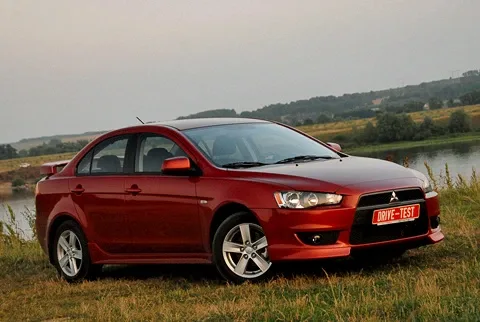
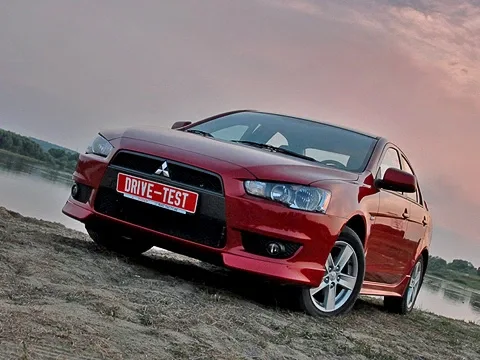
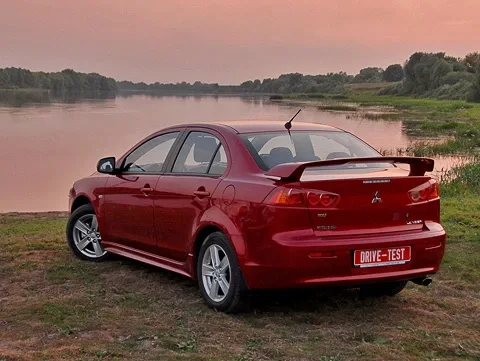
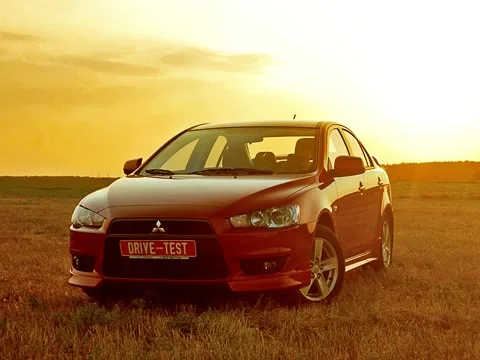
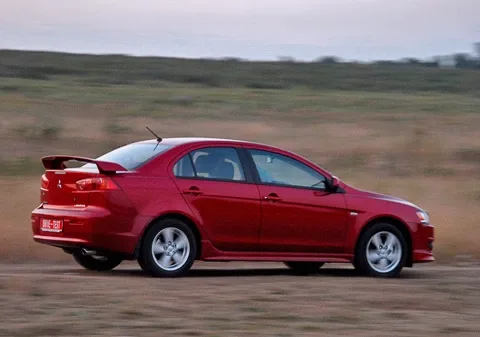
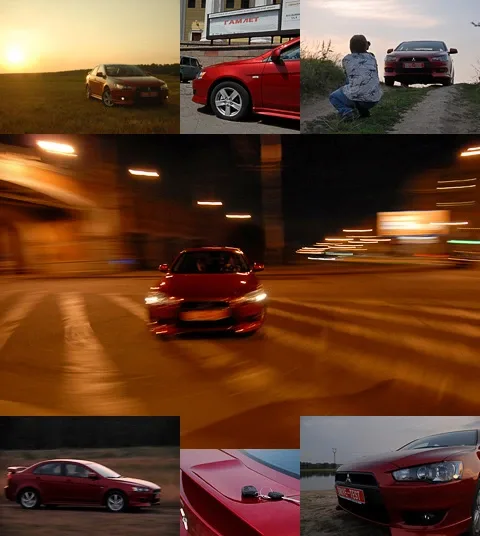
Why Lancer? It's simple: it's affordable, mean, and made in Japan. The new Lancer has become even more aggressive and much more "Japanese," although it has also gotten pricier — on average, the price tag has gone up by two and a half thousand dollars.
It couldn't have been otherwise. Competitors are pressing from all sides, and the previous Lancer looked like an outsider on most markets except ours. Even in the States — the homeland of Mickey Mouse, Windows, and disposable cups — they sold almost twice as few Lancers over the past year as we did. Not to mention Europe… The company urgently needed a breakthrough. No sooner said than done.
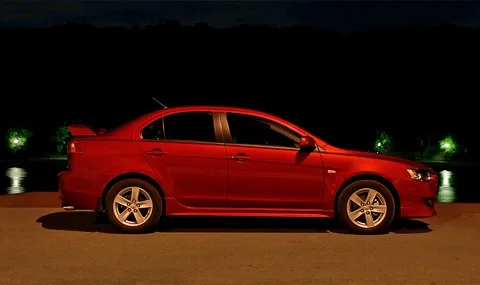
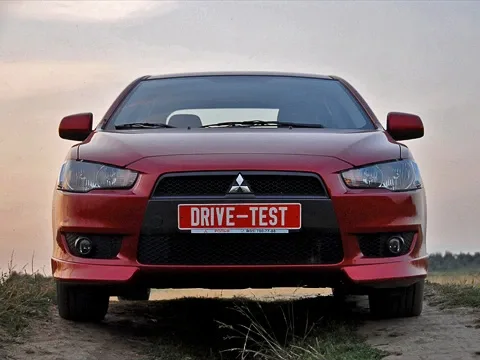
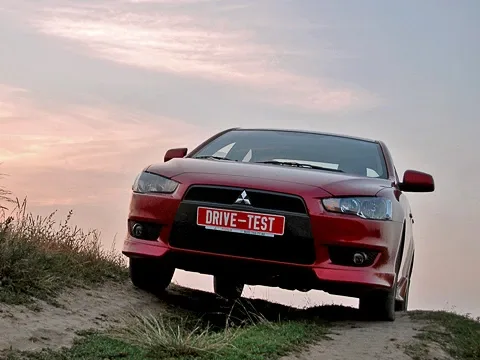
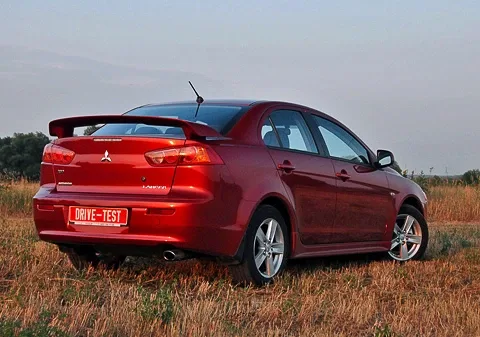
Previously, Mitsubishi's design was headed by Frenchman Olivier Boulay — a man who for a long time was responsible for the style of Mercedes-Benz and created the "six hundred" in the W140 body. He tried to "polish" the design of Mitsubishi cars to European standards. From his pen came the European "snub-nosed" Lancer of the previous generation, Colt, and Outlander. But after the divorce from DaimlerChrysler, Akinori Nakanishi took the helm — the very one who designed the old Galant. And he made the Lancer the way you see it in our photos. Instead of a smooth, rounded lump with a "nose" of Mount Fuji — sharp and laconic, like a katana blade. And its character should be corresponding — sporty and composed. That's encouraging.
The design is magnificent — both outside and inside. The contrast is especially impressive. The Lancer was a dark horse — it has become a thoroughbred stallion. Well, maybe not quite thoroughbred, of course. But the interior no longer feels the old spirit of cheapness and total economy. The cabin is almost an exact copy of the Outlander XL. The materials are, of course, simpler, but everything looks quite decent. However, traces of economy still remain — for example, unlit power window buttons and only one mirror in the sun visors. The mirror control unit is exactly the same as I had on my 2000 Mitsubishi Carisma. And the steering wheel is still only adjustable for height. What did you expect? Implementing a steering column with reach adjustment for Mitsubishi would have cost a couple of tens of millions of dollars. And they don't have the most brilliant financial situation right now.
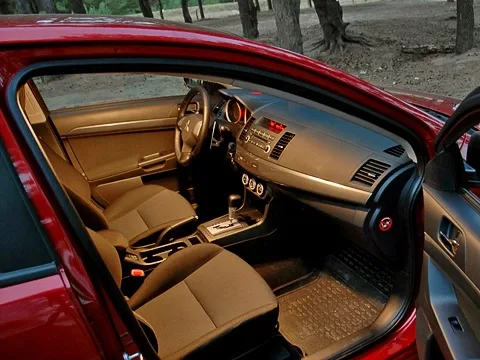
The CVT has a manual mode with six fixed gears, which can be shifted either with the lever on the center tunnel or with paddle shifters. It's honest and doesn't allow spontaneous shifts, but there's not much use from it.
The seating position is generally good. The three-spoke steering wheel is comfortable, the seats are comfortable, the pedals are comfortable, the CVT lever is comfortable. Everything is comfortable. Although the seats slightly surprised me with their "non-sportiness" — they are good in themselves, but I expected to see something with more pronounced lateral support. As it turned out, I didn't immediately understand this hint from the creators.
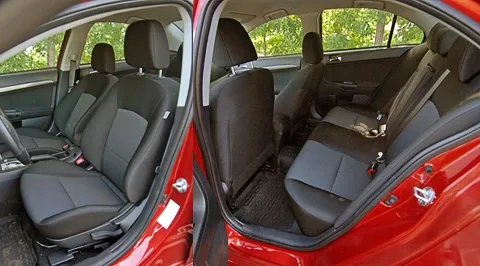
The front seats are good, but you want more reliable lateral support. Sitting in the back is comfortable: the only thing that might bother tall passengers is the low ceiling.
The placement of buttons and switches is such that you can operate them even with your eyes closed, and the climate control unit could be put in the Bureau of Weights and Measures. As a standard. The side mirrors are good, but the view through the interior mirror is complicated by the large spoiler on the trunk lid. By the way, the trunk itself is quite small — only 6 times larger than the fuel tank (315 liters). And although the rear seat back folds in parts, the opening is considerably blocked by a powerful cross member that serves to increase body rigidity.
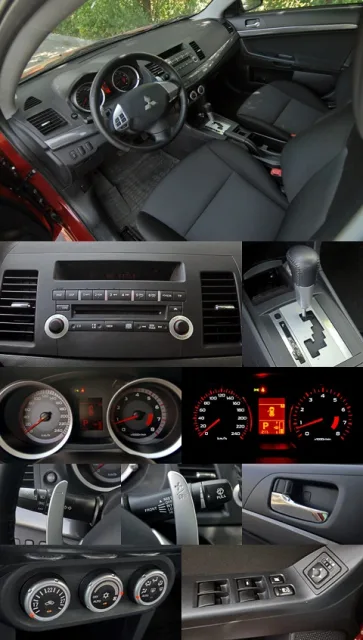
The interior no longer looks like a shack. Everything is done neatly, door handles and paddle shifters are made of metal, climate control knobs are rubberized. But the power window buttons somehow remained without backlighting.
The Lancer is built on the "global" Project Global platform, which Mitsubishi and DaimlerChrysler created back during their alliance. Based on it, Dodge Caliber, Jeep Compass, and Outlander XL are already produced. Of course, the new generation Lancer has grown and become 35 mm longer, 65 mm wider, and 60 mm higher. And that means there's more space inside. Shoulder room has increased by as much as 19 mm, and in terms of cabin length, the Lancer, according to Mitsubishi, surpasses the new Toyota Corolla, Mazda3, and Honda Civic. Sitting is indeed very comfortable — both in front and in back. At the same time, the car has become 60 kilograms heavier. But don't forget about the bunch of airbags that the predecessor didn't have, and the body rigidity that has increased by one and a half times. In the "base" Lancer has only two airbags — for the driver and front passenger. And in the maximum trim there are already five: a pair of side airbags and another small one for the driver's knees.
In front there's McPherson, and in the back a multi-link. A standard set for a modern car, in principle. But the whole point is in the tuning. I remember the previous Lancer also surprised with this. It was as simple as can be, but drove just wonderfully. And the Dodge Caliber, which is built on the same platform as the Lancer, doesn't have refined handling either. But looking at the test car in the maximum Intense trim with a two-liter engine and aggressive body kit, I feel that this should be a completely different song.
When I picked up the test Lancer, I was very surprised — it seemed like a fresh car, but it was already all scratched. More precisely, not all of it, but the front bumper. Before me, only a couple of publications had managed to drive the press fleet car. Could it be that colleagues don't know how to drive and scraped it against curbs? Strange…
"Wow, is this the new Evolution?" — asked the owner of the previous two-liter Lancer standing next to me at a traffic light. "Yeah, the tenth," I joke. "Wow, and how much does it cost?!" — "Ninety thousand!" — I start fooling around. "Damn, they've gotten completely brazen, now I'll have to save and save." Surely today he will be thinking for a long time about what he has achieved in this life.
Yes, the Lancer in the most expensive Intense trim can indeed be easily mistaken for something incredibly powerful and sporty. But what connects it with sports is only that with its low body kit it catches speed bumps (so that's where colleagues scratched the bumper). The car reacts rather lazily to the steering wheel, rolls heavily, and, in general, lacks spark. You turn the heavy steering wheel — and the Lancer accurately, but with laziness, traces the needed arc. But then why is there such a heavy steering wheel here? What's the use of the front strut brace and rear stabilizer, stiffer and lowered by 10 millimeters suspension, which are installed on the Intense? Or did I expect too much from it? Who knows, because Mitsubishi positions their model exactly like that.
You keep driving, and you understand that in fact the handling is very good. The chassis is perfectly worked out and behaves very adequately in any mode. And the whole impression is spoiled by the tires. Dunlop SP Sport 2050M in size 205/60 R16. For a car that claims something, this is simply not serious. The high profile and soft sidewalls do their dirty work, "smearing" and slowing down the car's reactions to steering. As a result, the handling doesn't impress, although it's worth admitting that it's quite good. But it's better to immediately put 17-inch wheels.
After all, even on 16-inch wheels, the car doesn't pamper with comfort. Irregularities respond on the body somewhat stiffly, and all joints are felt too. But this is not bad at all, because the energy intensity is quite decent. The suspension is very dense, elastic, and on asphalt waves the car doesn't rock. Very similar to the previous Lancer. But you won't be able to drive off-road — the low ground clearance and long overhangs won't allow doing it with impunity. But in winter you can earn extra money by clearing snow in yards with the low bumper.
On the highway, the Lancer goes excellently. Ruts almost don't affect directional stability, and sound insulation is quite decent. The "music," by the way, is also good. But in "long" arcs, some uncertainty is felt — and again, most likely, because of the tires. They need to be changed, changed.
And what about the engine and transmission? Everything seems decent, but even here you don't feel sportiness. An undoubted plus is that the engine calmly digests inexpensive 92-octane gasoline and confidently pulls from the very bottom. And the one hundred and fifty "horses" here are absolutely real. However, the power unit works noisily and without much charisma, and the CVT, which during sharp acceleration keeps the tachometer needle at one mark, only adds irritation. This is all the more annoying because the car's dynamics are, in fact, excellent. On the highway, the car easily reaches 180 km/h, and in city traffic, the smart CVT doesn't "think" at all. It would seem that I should praise it, but for some reason I nitpick at small things.
Why is that? Probably because the previous Lancer was forgiven a lot. The bland appearance, simple interior, flaws in details — all this was offset by the democratic price. But the current car has stepped into a completely different weight category, which means it must be judged differently. Now this car must not just carry its owner on errands, but also bring joy from every trip, evoke a smile.
Judge for yourself: if earlier a Lancer with a 1.3-liter engine could be had from $14,490, now for a new car you need to pay at least $17,990. And that will be the version with a 109-horsepower 1.5-liter engine and modest equipment — air conditioning, electric windows, power mirrors, and preparation for an audio system. But the top 150-horsepower Intense modification with CVT, fog lights, alloy wheels, aerodynamic body kit, climate control, CD-changer, and other amenities will cost $24,300. And even then, for extra money you can't order either xenon headlights or a stability control system. That's a shame.
However, one must admit: the car has become much more attractive. Even more than that — it has become completely different. First of all, this concerns the design. For Mitsubishi, this is a real breakthrough. The new Lancer X both looks, drives, and is perceived completely differently. And even the letter X, which denotes the tenth generation, looks symbolic here. After all, we haven't seen such a Lancer before. So the huge demand for it is quite understandable — the car really turned out well. And the fact that its character is not sporty is already a secondary question. Soon the Evolution X will arrive and show what this beautiful body is capable of.
Technical specifications
| Specifications | Mitsubishi Lancer X |
| Body |
| Number of doors/seats | 4/5 |
| Length, mm | 4570 |
| Width, mm | 1760 |
| Height, mm | 1490 |
| Curb weight, kg | 1355 |
| Gross weight, kg | 1850 |
| Trunk volume, l | 315 |
| Engine |
| Type | Petrol, with distributed injection and variable valve timing and lift system |
| Location | Front, transverse |
| Number and arrangement of cylinders | 4, in-line |
| Number of valves | 16 |
| Displacement, cm3 | 1998 |
| Max power, hp/rpm-1 | 150/6000 |
| Max torque, Nm/rpm-1 | 198/4250 |
| Transmission |
| Gearbox | Belt-driven CVT |
| Drive | Front |
| Chassis |
| Front suspension | Independent, MacPherson type |
| Rear suspension | Independent, multi-link, with rear-wheel steering |
| Front brakes | Ventilated disc |
| Rear brakes | Disc |
| Tires | 205/60 R16 |
| Ground clearance, mm | 150 |
| Steering |
| Type | Rack and pinion with hydraulic power steering |
| Turning diameter, m | 10 |
| Performance characteristics |
| Maximum speed, km/h | 200 |
| Acceleration time from 0 to 100 km/h, s | 10.5 |
| Fuel consumption, l/100 km |
| Urban cycle | 11.9 |
| Extra-urban cycle | 6.4 |
| Combined cycle | 8.4 |
| Emission standard | Euro-4 |
| Fuel tank capacity, l | 59 |
| Fuel | A-91 — A-95 |
Equipment of the tested car
Basic equipment - Front dual-stage airbags for driver and front passenger (with deactivation function)
- Seat belts for driver and front passenger with inertia reels and pretensioners with force limiters
- ABS
- EBD
- Power steering
- Height-adjustable steering column
- Air conditioning
- Power and heated exterior mirrors
- Front and rear electric windows with automatic mode
- Central locking
- Full-size spare wheel
Additional equipment - Side airbags for driver and front passenger
- Fog lights
- Driver's knee airbag
- Strut brace between front shock absorber towers
- Sport suspension with reduced ground clearance
- Front aerodynamic spoiler painted in body color
- Multifunction steering wheel
- Heated front seats
- Body-colored side sill extensions
- Rear spoiler
- Climate control
- Carbon-look dashboard trim and chrome handles
- Six-channel audio system with six-disc CD/MP3 receiver
Price of base version — $17,990 Price of tested car — $24,300 The car for the test was provided by
Rolf Holding, the distributor of Mitsubishi Motors in Russia.
Technology
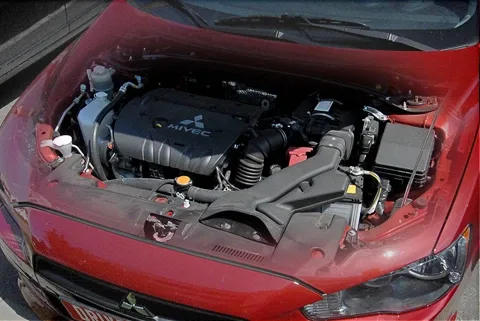
The two-liter DOHC engine with two camshafts in the Mitsubishi Lancer also belongs to the family of "global" engines. It is equipped with the MIVEC (Mitsubishi Innovative Valve timing Electronic Control system) electronic variable valve timing system. It continuously controls the timing and lift of the valves, while the duration remains unchanged.
Design
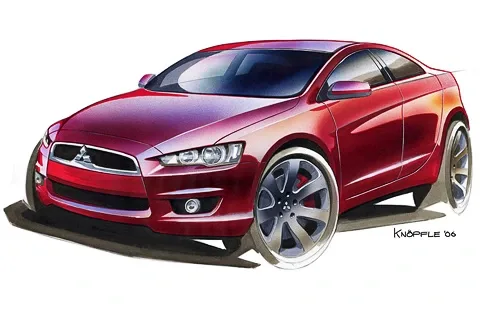
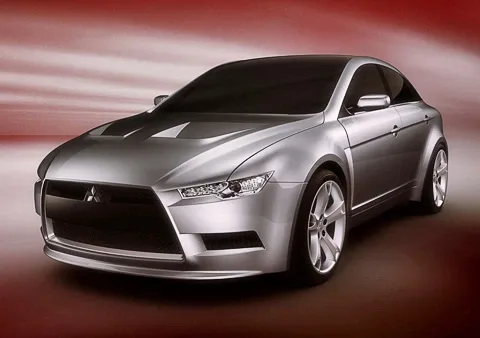
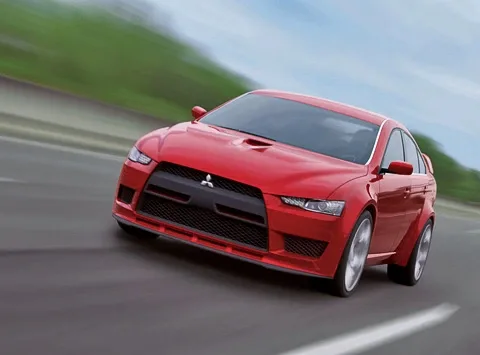
The appearance of the new Lancer is a sharp departure from the rounded style set by Mitsubishi's chief designer Olivier Boulay during cooperation with the DaimlerChrysler concern. After the collapse of the alliance between the companies, Akunori Nakanishi took the helm of the design department. And he decided not to make a European design, but to return to the roots. Nakanishi-san brought back sharp and laconic lines and the signature grille with a reverse rake. The premiere of the production Mitsubishi Lancer was preceded by two concepts. First, the Sportback concept debuted — by the way, the forerunner of the future Lancer hatchback. Then there was the Concept-X — the prototype of the "tenth" Evolution. By the way, note that the production Lancer has a completely different hood seam. This is done so that in a minor accident only the bumper needs to be replaced, while the hood remains intact.
History
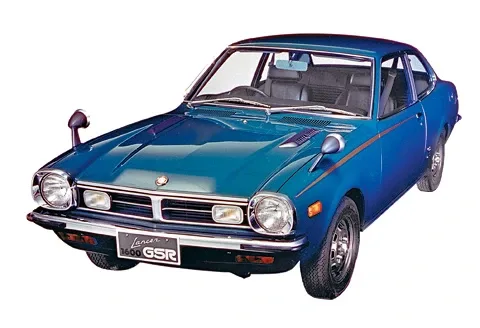
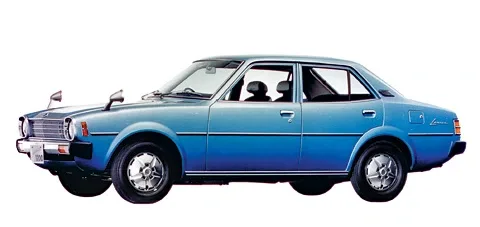
In the early 70s of the last century, Mitsubishi did not have a mid-size car in its model range. It was precisely such a car that the Lancer became in 1973 (initially called Colt Lancer). The car had rear-wheel drive and was produced in twelve different versions, ranging from the "budget" 1.2-liter to the semi-rally 1600 GSR with a 1.6-liter engine producing 98 hp. The Lancer was produced with various body types — two- and four-door sedans, a station wagon, and a three-door hatchback, which appeared in 1975 under the name Lancer Celeste. The car, by the way, was made not only for the domestic market but was also actively exported — in the US, for example, it was sold under the names Plymouth Arrow and Dodge Colt, and in Australia — Chrysler Lancer Coupe.
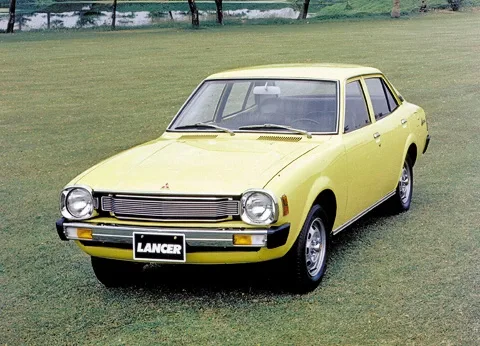
The second generation Lancer, which appeared in 1976, was actually a restyling of the previous model. The car became more angular and this time was made only in a four-door body. Initially, the Lancer had only one 1.4-liter engine, and later a 1.8-liter turbo engine was added.
A real novelty was only the third generation Lancer, presented in 1979. The model again received several body variants and acquired a new independent suspension.
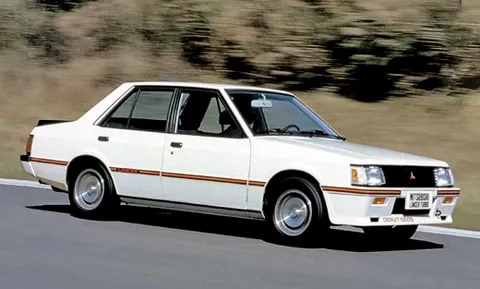
In 1982, the fourth-generation Lancer debuted, which was sold outside Japan under the name Fiore. This version received front-wheel drive and an optional automatic transmission, and its production ran in parallel with the third-generation model.
Such confusion did not last long — just a year later, the fifth Lancer came on the scene, and the Fiore was retired. In 1985, a station wagon appeared, which could also be ordered with all-wheel drive. Under the hood of the fifth generation, various fuel-injected petrol engines were found, including turbocharged ones, as well as a 1.8-liter diesel.
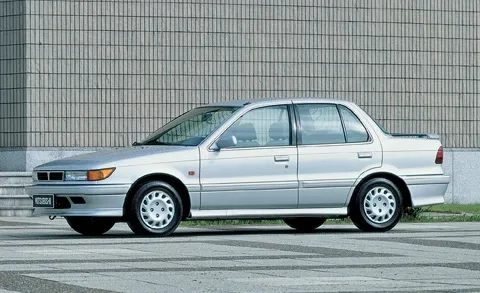
The sixth-generation Lancer appeared in 1988 and was offered in two body types — hatchback and sedan. At the same time, the station wagon of the previous generation continued to roll off the assembly line. However, this version no longer had any bold technical solutions like turbo engines or all-wheel drive.
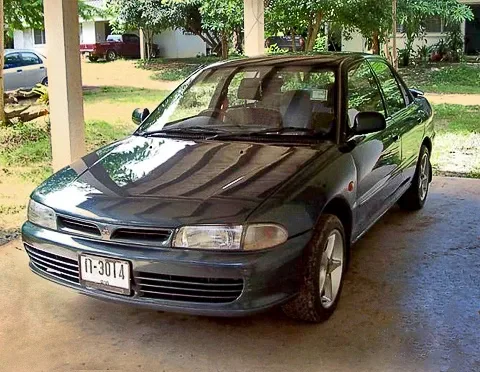
In 1993, the seventh-generation Lancer saw the light of day. The GSR modification was especially memorable, giving rise to the famous Evolution line. Under its hood was a two-liter turbocharged four-cylinder engine producing 244 hp, and the all-wheel-drive transmission came from the rally Galant VR-4. The Japanese also got another rarity — a version with the world's smallest production V6, with a displacement of just 1.6 liters. In America, this Lancer was sold as the Eagle Summit, and in Malaysia under the name Proton Wira.
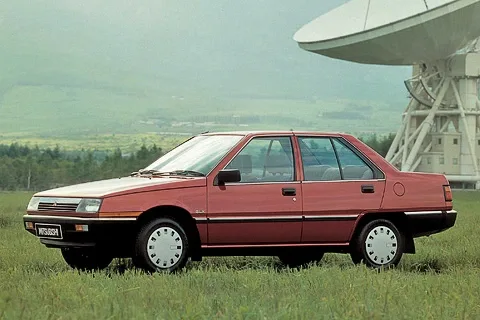
In 1995, another Lancer came out, whose appearance became more angular and rough. Engines were offered with displacements of 1.3 and 1.6 liters, and the car was in demand, including in Russia. It was on the Lancer Evolution that Tommi Mäkinen won four championship titles in the WRC. There was also a budget all-wheel-drive variant, available exclusively as a station wagon.
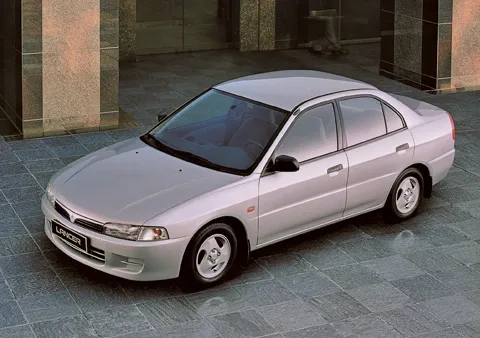
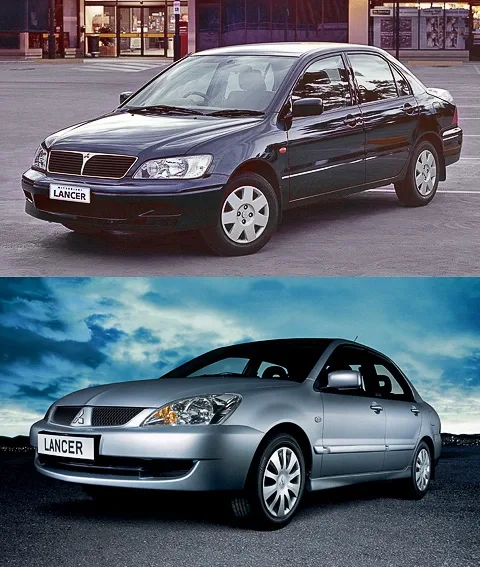
At the turn of the century, Mitsubishi showed another Lancer, which the Japanese knew as Cedia (from CEntury DIAmond). The car was supplied to the USA and some Arab states, but the European premiere took place only in 2003. In Moscow, a restyled version with a modified front end was presented, on which Olivier Boulay worked. It was this one that became the best-selling here. And in total, since 1973, over six million Lancers have been produced.
Future
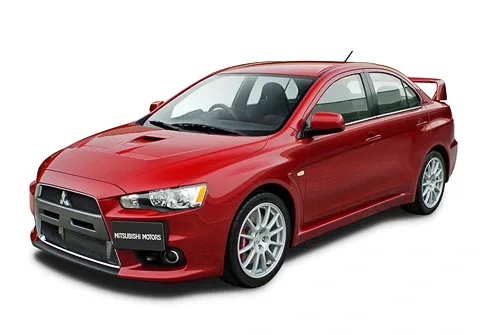
Lancer sedans with 1.5 and 2-liter engines are just the starting point. Already in autumn in Frankfurt, a monster named Evolution will be shown with an engine of about 300 horsepower and an intelligent all-wheel-drive transmission. However, sales will start only next year. Then a hatchback called Sportback will also appear. But there will be no more station wagon. In addition, a Ralliart version is planned with plug-in all-wheel drive and a turbo engine of about 200 hp — it will occupy a niche between the regular civilian Lancer and the Evolution.
Behind the scenes
Want to feel like a superstar? Nothing could be simpler — just buy a new Lancer. While the car hasn't yet become boring on the roads, the interest from drivers is simply incredible! Everyone asks about the price and driving characteristics, or just stares. However, this happens with any "hot" new product — no less attention in its time went to the Honda Civic or Mercedes-Benz CL 500. On them, we also caught so many glances in a couple of days that any pop star would have been envious.