
 "Those were the cars in our time," remarked my friend, who has racked up thousands of kilometers behind the wheel of various "evolutions." Perhaps here I fully agree with him.Comments (3)
In those years, the hot versions of Mitsubishi Lancer, including the legendary Lancer Evolution VI Tommy Makkinen Edition, were true rebels. Sharp, almost rally-like handling and an extreme character brought drivers of the Evolution series closer to professional motorsport. But times change: even with increased power, the new "ten" (the very Lancer Evo X) became less daring and acquired much more comfort.
 |
| The current Evo X modification is no longer a completely different body as before, but only widened pronounced wheel arches, technological slots on the hood, plus different bumpers and sill trim. |
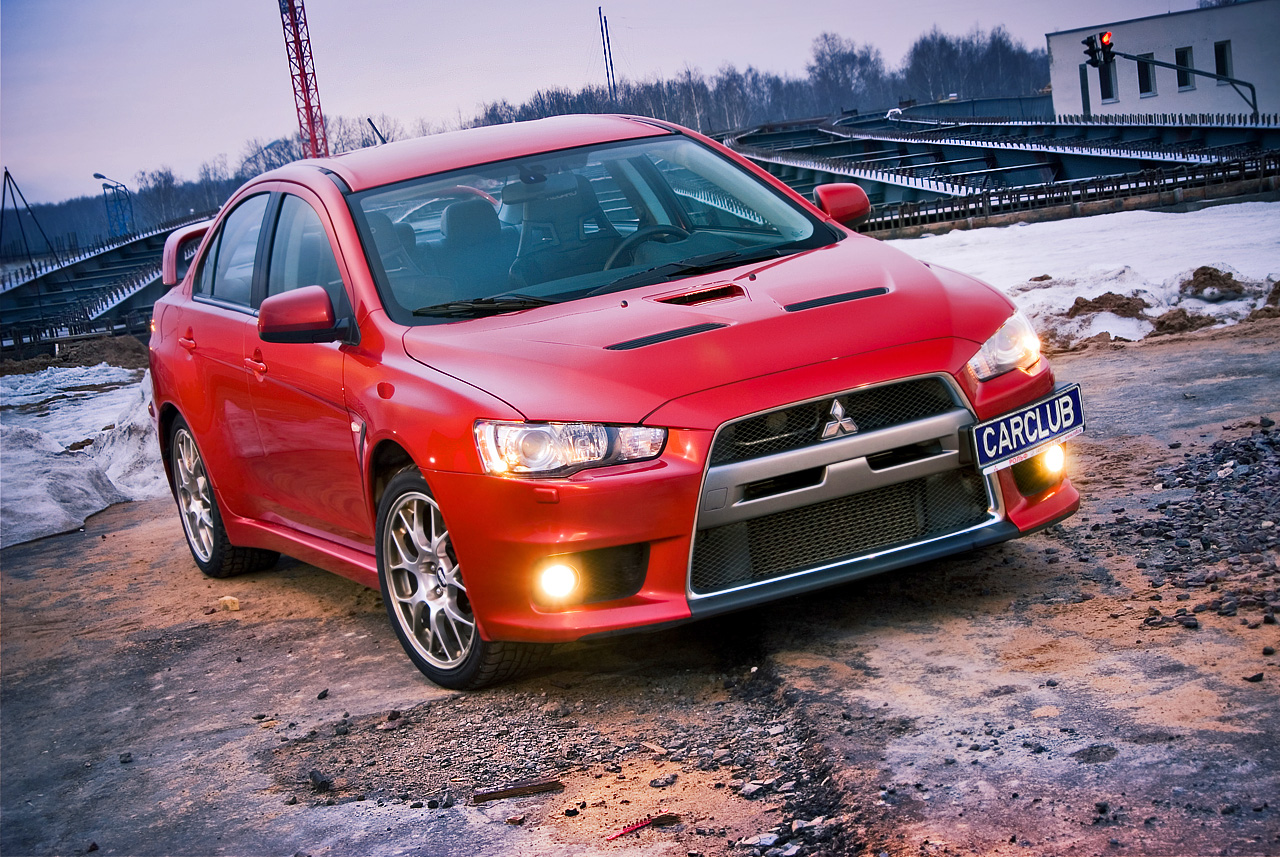
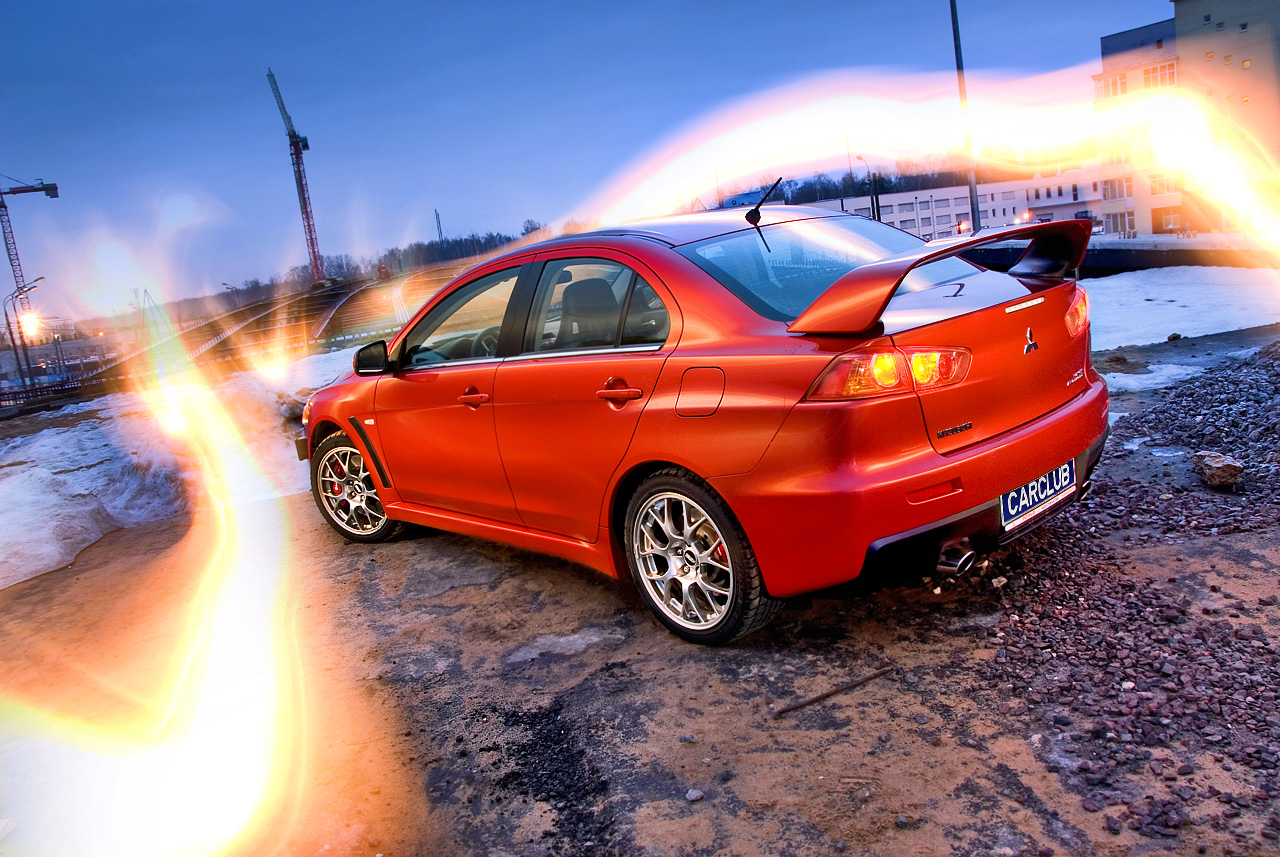
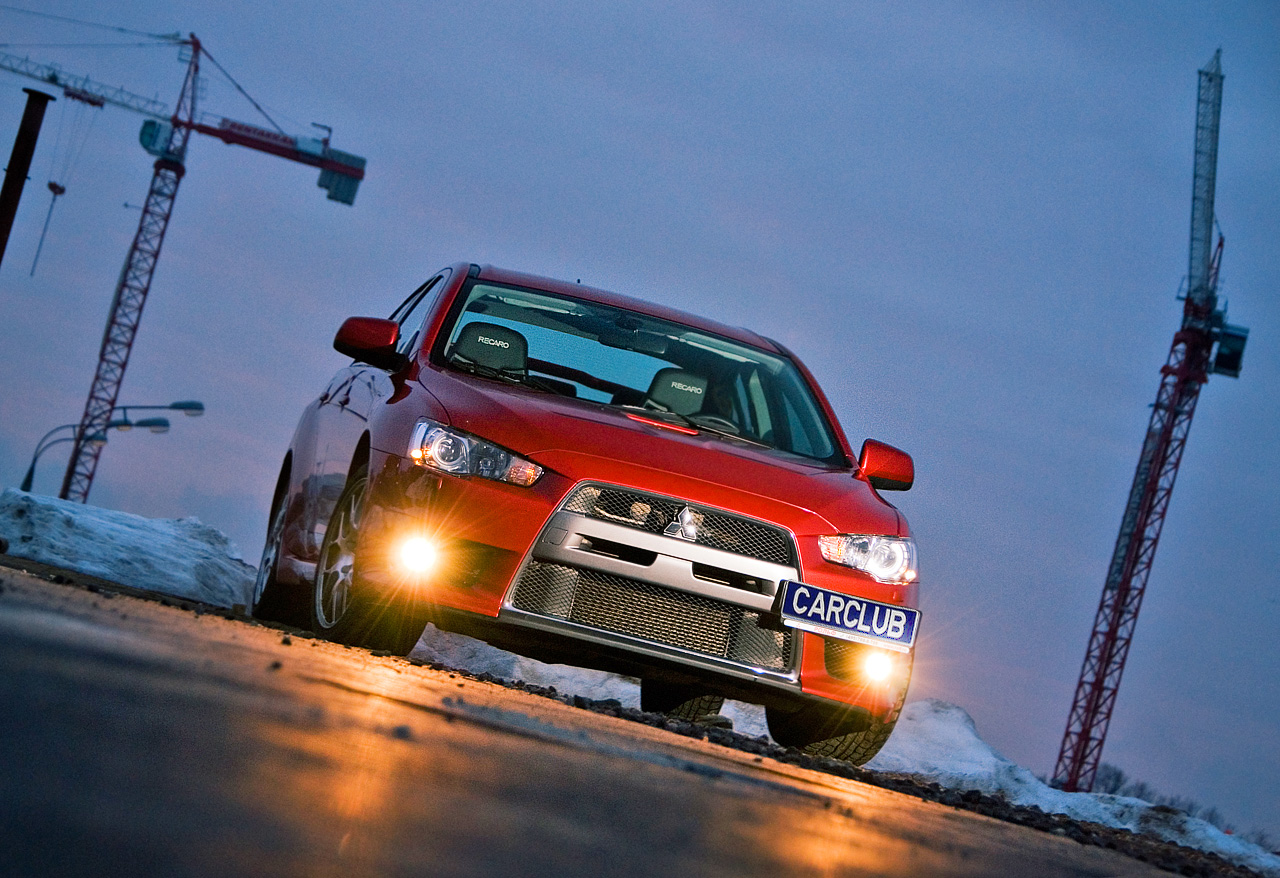
On the outside, the "tenth evolution" looks great — thanks to the donor Mitsubishi Lancer X, whose exterior turned out menacing and swift. But the current Evo X modification is no longer a completely different body as before, but only widened pronounced wheel arches, technological slots on the hood, plus different bumpers and sill trim. At the front, a huge air intake mouth and fenders with "gills" immediately reveal the tough nature of this race car. On the sides, powerful 4-piston brake mechanisms from Brembo are neatly covered by 18-inch alloy wheels from BBS. Completing the picture are a large spoiler on the trunk and a diffuser in the bumper, with exhaust pipes peeking out at its edges. As a result of all these modifications, the Lancer Evo X turned out truly beautiful, cohesive, and striking.
 |
| At the front, a huge air intake mouth and fenders with "gills" immediately reveal the tough nature of this race car. |
And what about inside? The interior design of the new Evolution almost completely repeats the familiar "tenth" Lancer. The same hard panels and mediocre plastic. But previous "evolutions" couldn't even boast that. The front Recaro seats seem to envelop the bodies of front passengers. The range of adjustments is sufficient. However, the lack of seat height adjustment and steering column longitudinal adjustment is a clear oversight. Although with average height, a comfortable driving position can be found in no time.
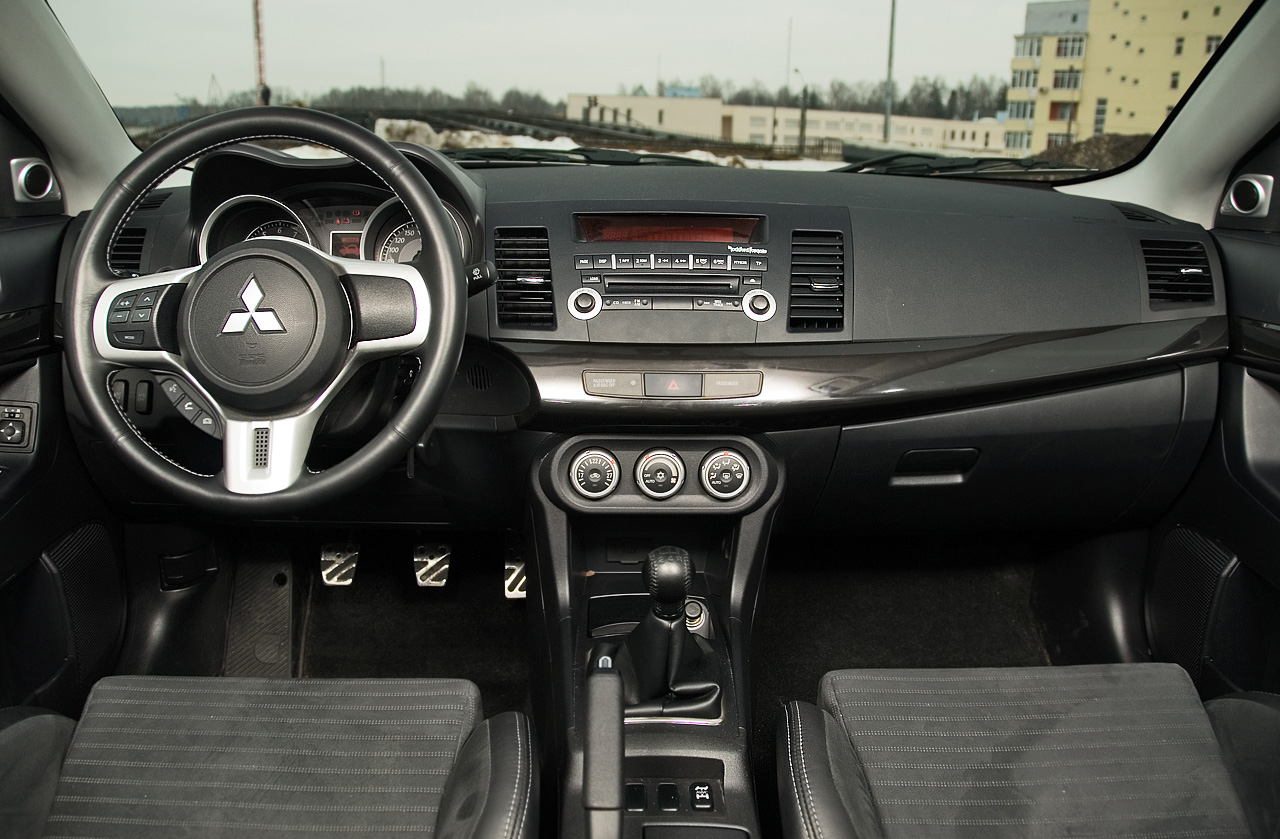 |
| The interior design of the new Evolution actually completely copies the familiar "tenth" Lancer. All the same hard panels and mediocre plastic. But previous "evolutions" couldn't boast even that. |
In the back, there's as much space as in the regular Lancer — two people are quite comfortable here. Additionally, there's a convenient armrest with built-in cup holders. The small trunk of the Mitsubishi Lancer in the Evo X has become even smaller — for better weight distribution, the battery and washer fluid reservoir have moved to the rear. Furthermore, the Evo X is equipped with an excellent Rockford Fosgate audio system with 8 speakers and a subwoofer, which made the trunk even smaller. And finally, under the floor we found a full-size 18-inch spare wheel on an alloy Enkei rim.
 |
| Under the hood of the Mitsubishi Lancer Evo X sits a 2.0-liter turbocharged engine that produces 295 hp at 6500 rpm. The increase in power is impossible not to notice. Clutch, first gear, gas – and the angry red sedan shoots out no worse than a bullet. |
In addition to the listed benefits of civilization, the new Lancer Evo X can boast climate control, built-in Bluetooth, heated front seats, xenon headlights, and seven airbags. As a result, even before getting behind the wheel, you understand that the new Evolution is no longer that teeth-rattling stool on which you could only "fly" in combat mode, but a quite modern and moderately comfortable car adapted for everyday driving.
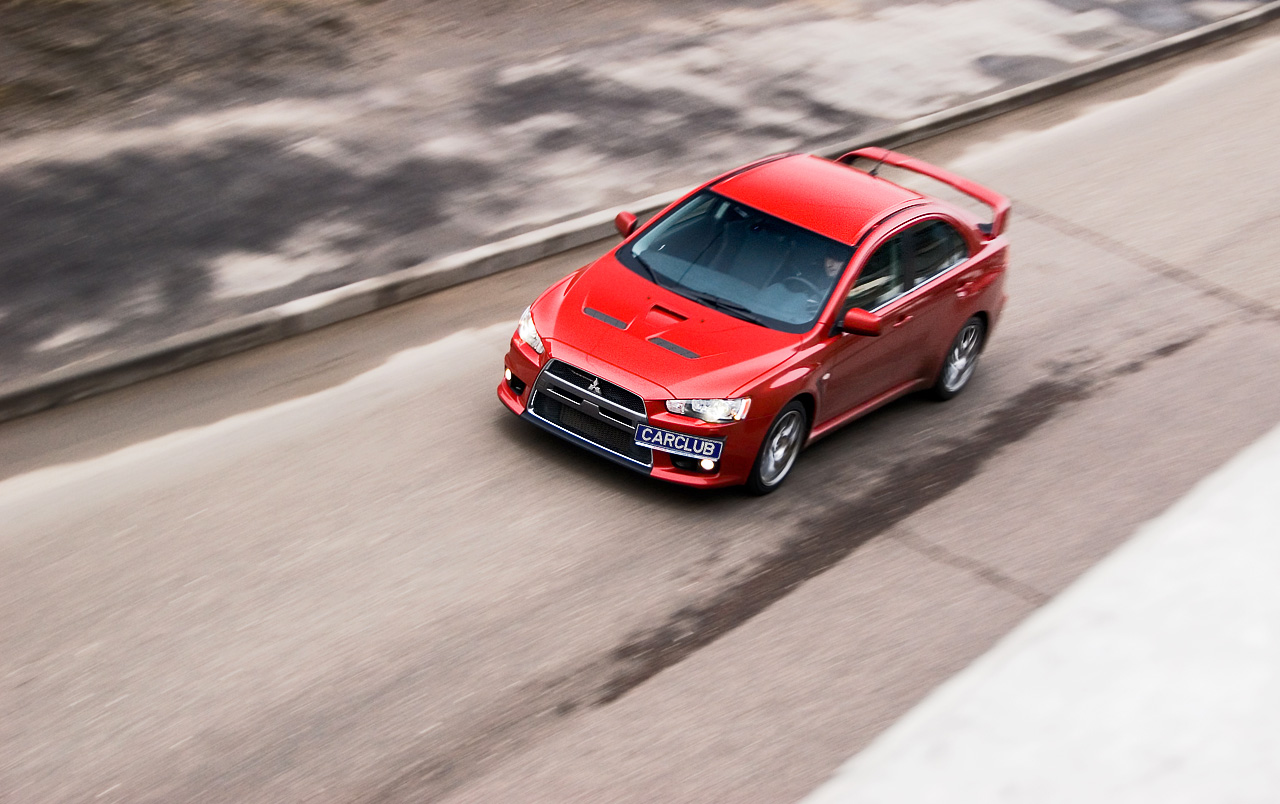 |
| The Evo X delivers excellent handling! The driver only needs to choose the desired trajectory, and the Evolution will do the rest itself. Much credit goes to the proprietary all-wheel-drive system with electronically controlled differentials. Additionally, the Evo X has an active rear differential Super AYC, which, if necessary, can spin up the unloaded wheel to tuck the car into a corner. |
Under the hood of the Mitsubishi Lancer Evo X sits a 2.0-liter turbocharged engine that produces 295 hp at 6500 rpm. The increase in power is impossible not to notice. Clutch, first gear, gas — and the angry red sedan shoots out no worse than a bullet. The obvious turbo surge around 3000 rpm that distinguished previous "evolutions" is no longer there — instead, there's powerful acceleration all the way to the rev limiter. Once you get used to the somewhat stiff clutch pedal, you can easily sit in traffic jams and pull away. The gears of the traditional for Evo 5-speed manual gearbox engage clearly, but the transmission throws could be shorter.
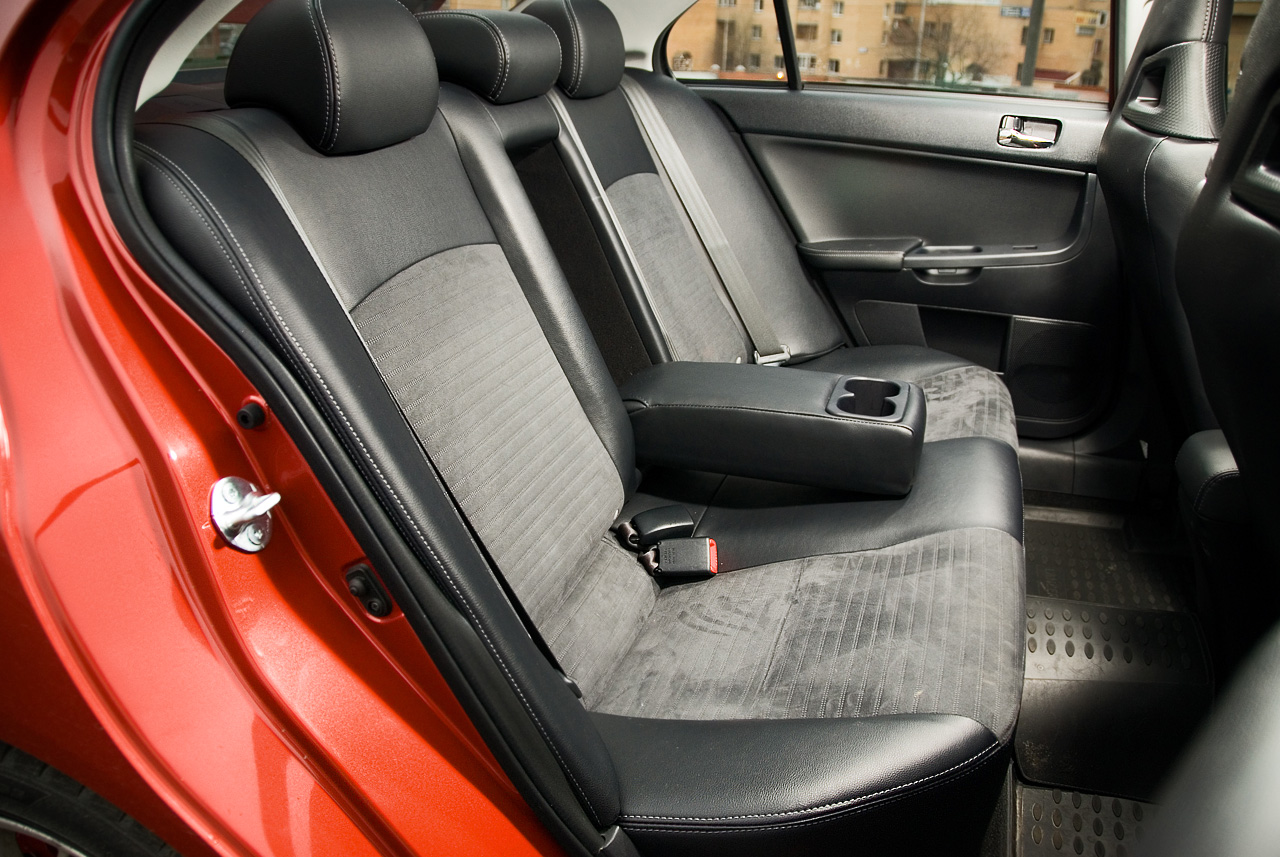 |
| In the back, there's as much space as in the regular Lancer – two people are quite comfortable here. Additionally, there's a convenient armrest with built-in cup holders. |
Furthermore, for the Evo X, a new 6-speed robotic transmission Twin Clutch SST with two clutches is now available. Three modes are offered: Normal, Sport, and S-Sport. You can also shift manually — both with the selector lever itself and with paddle shifters that add a special charm to the car.
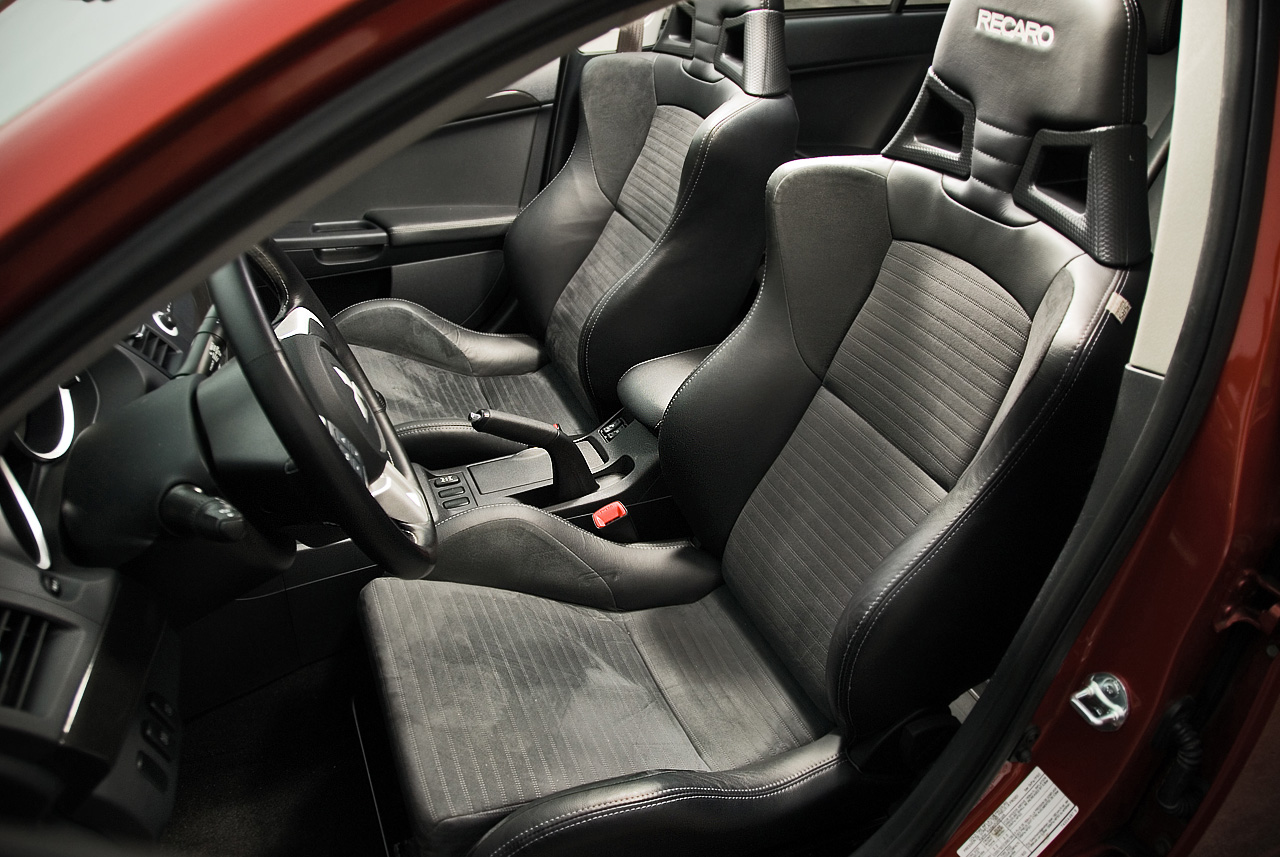 |
| The front Recaro seats seem to envelop the bodies of front passengers. The range of adjustments is sufficient. However, the lack of seat height adjustment and steering column longitudinal adjustment is a clear oversight. |
On the highway, the Evo holds the road like glued. The stiff sport suspension clearly handles every bend in the road surface. The first thing you notice is the noticeably improved sound insulation. Compared to previous models, the Lancer Evo X is like a luxury sedan. In the near-zero zone, the steering sharpness is slightly less than you'd expect. But how it carves corners — fantastic! The driver only needs to choose the desired trajectory, and the Evolution will do the rest itself. Much credit goes to the proprietary all-wheel-drive system with electronically controlled differentials. Additionally, the Evo X has an active rear differential Super AYC, which, if necessary, can spin up the unloaded wheel to tuck the car into a corner. If the electronics determine insufficient brake pedal effort, the pads will slightly press the inner front wheel, helping to avoid understeer and safely make the turn.
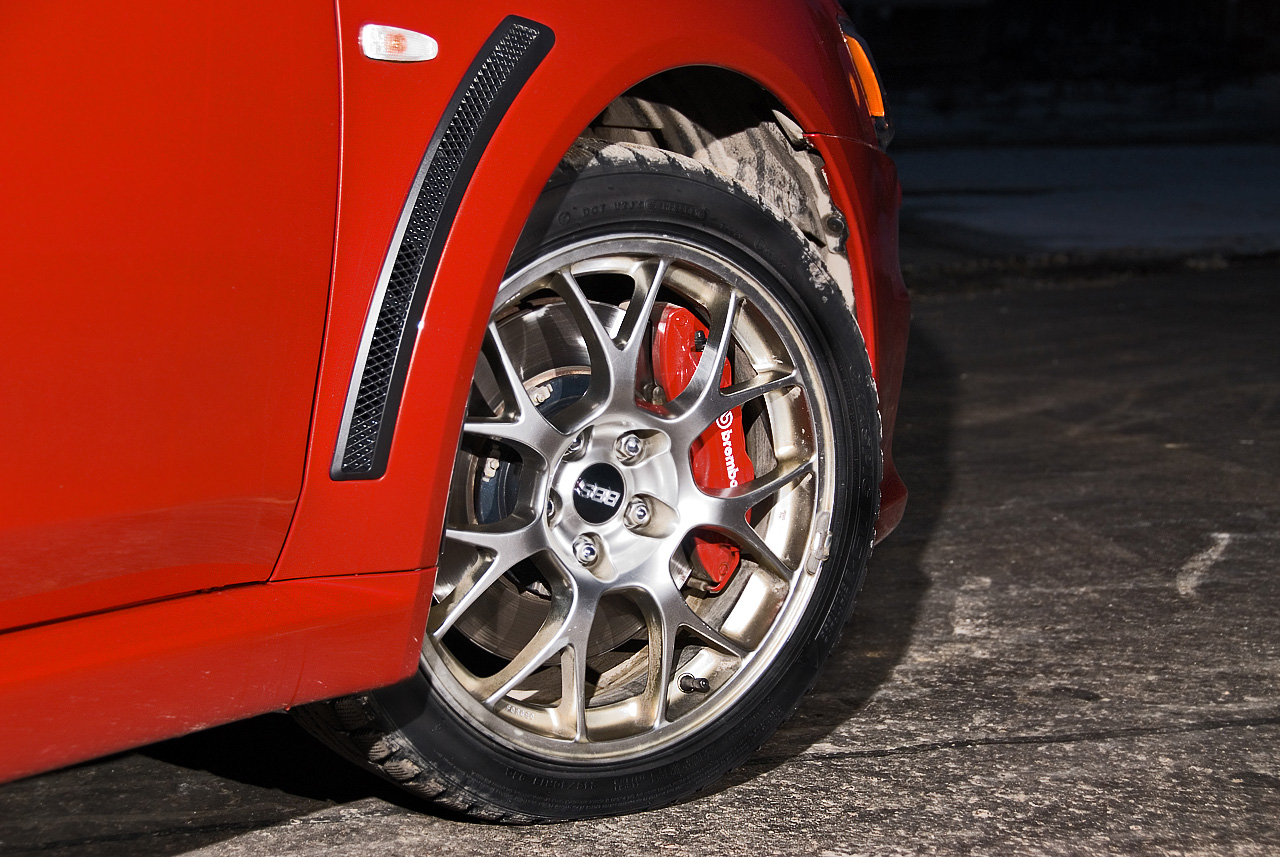 |
| On the sides, huge 4-piston brake mechanisms from Brembo are kindly covered by 18-inch alloy wheels from BBS, which are designed to reduce unsprung masses. |
On potholes, which are countless on our streets after another winter, the occupants get shaken badly, but the grip on the road remains excellent. If the driver gets carried away and "loses" the car, the "electronic collar" comes into play. Yes, I didn't make a mistake. Now the Mitsubishi Lancer Evolution is equipped with a stability control system! Another step towards safety has been taken. And this step is undoubtedly correct. How many inexperienced drivers who overestimate their abilities will ESP save. However, for seasoned masters, there is the option to completely disable the stability control system.
The new Lancer Evolution is a completely different car. Perhaps none of the previous "evolutions" has sparked as much debate. On one hand, fans of the model are disappointed: they miss that semi-rally audacity and extreme that were the hallmark of generations six through nine. On the other hand, the Evo X has gained an army of new fans. This Lancer has become noticeably more agile and powerful, and at the same time it is quite suitable for daily city driving. You no longer need to handle it with the special skill of counter-steering rally driving — Mitsubishi engineers have shifted these concerns onto the shoulders of modern electronics.
The base GSR version is priced at 1,850,000 rubles on the Russian market. For this money, you get Enkei alloy wheels, Brembo brakes, adaptive bi-xenon headlights, rain and light sensors, as well as seven airbags.
The test car was in the MR trim, which features a tuned suspension with Bilstein shock absorbers and Eibach springs. This version also boasts composite front Brembo brake discs and forged aluminum BBS wheels — all to reduce unsprung mass. The price of such a Lancer Evo X is higher — 2,098,000 rubles. And if you want the Twin Clutch SST robotic gearbox, be prepared to pay an additional 150,000 rubles.
Ruslan Galimov