
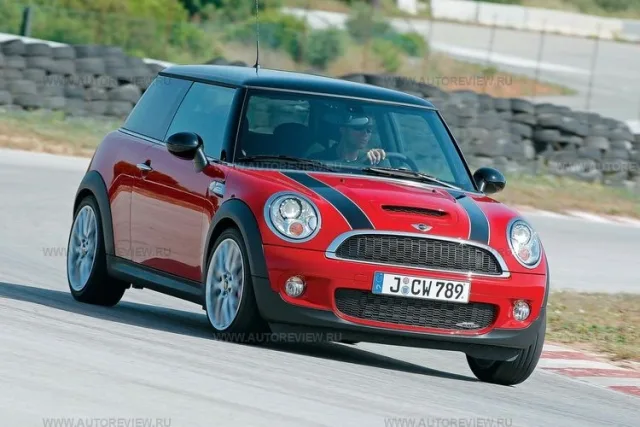
Damn! For the first time in my life, I went on a business trip leaving my driver's license at home. It seems like this happens to everyone. But why did it have to happen now, when ahead was a meeting not with some family wagon, but with the most "angry" hatchback in the Mini lineup — John Cooper Works? With a turbo engine producing 211 hp, lowered sports suspension, and more powerful brakes.
Around — gorgeous mountain serpentines of Mallorca, and my role is a passenger. Sit, breathe fresh air, and admire the scenery!
What a predicament.
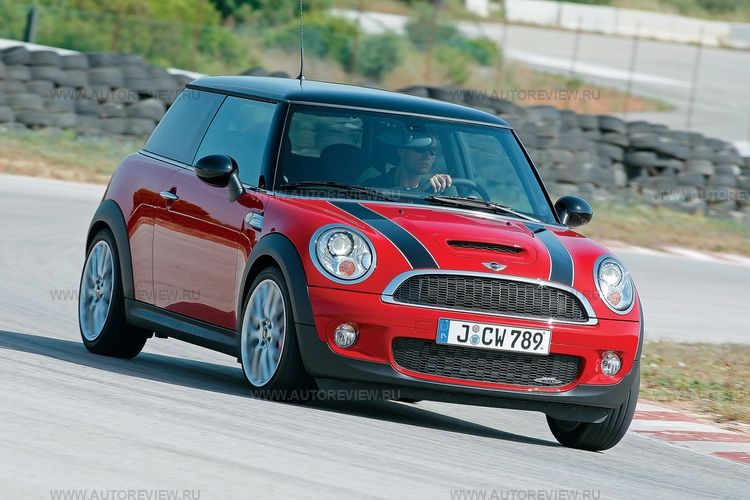
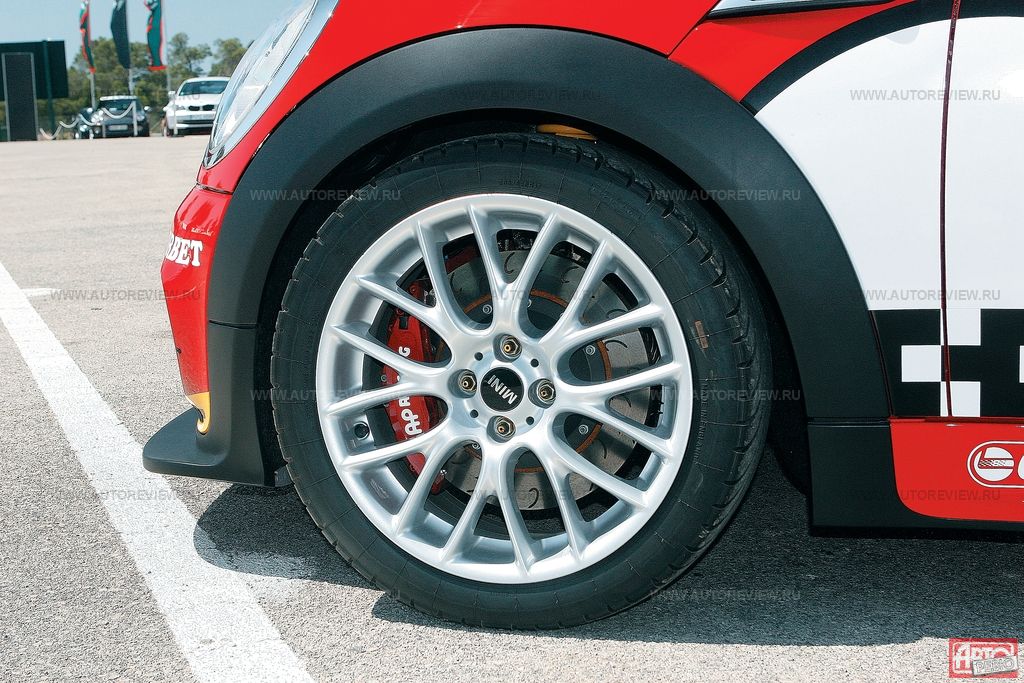
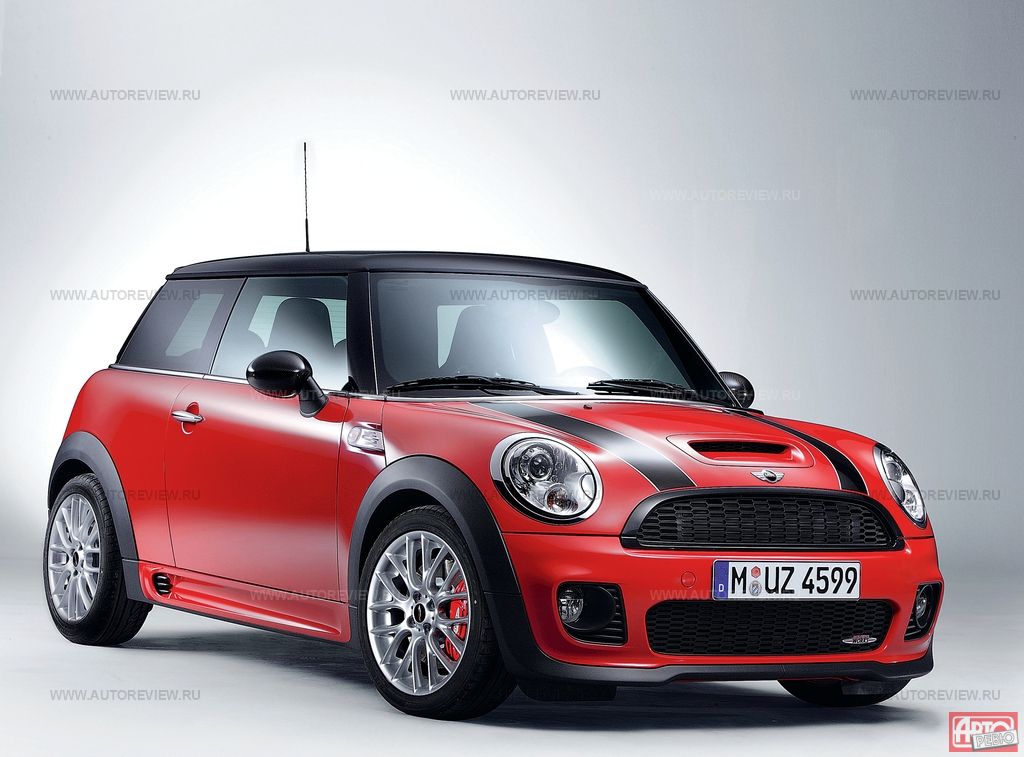
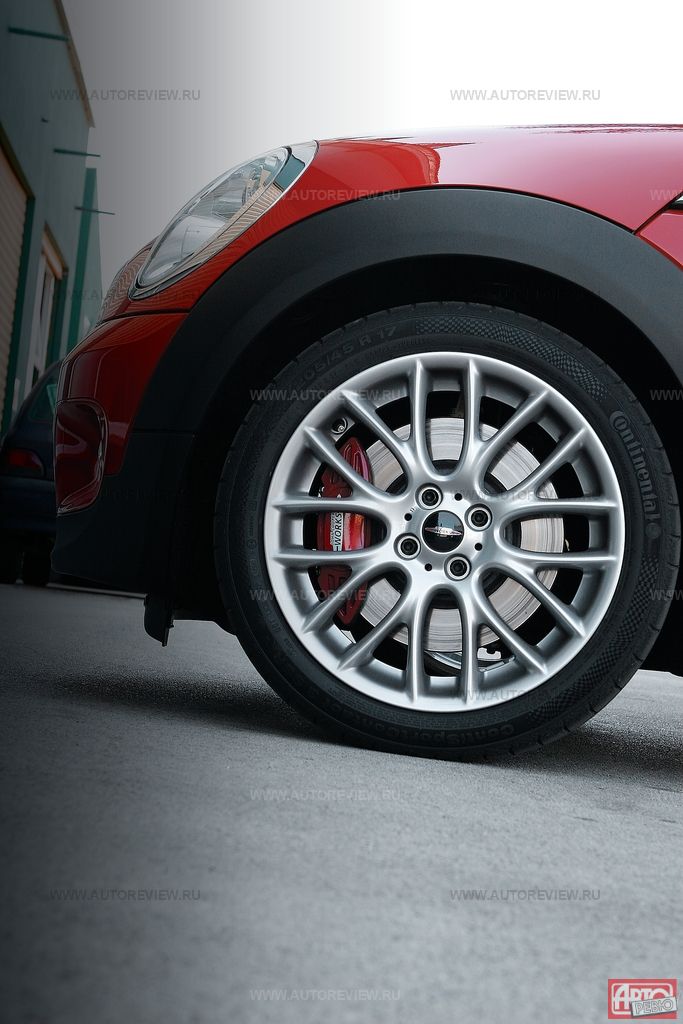
From a distance, the test car park looks like a swarm of huge ladybugs — all Minis are equally red with black stripes. But if you look closely, they hardly differ from the regular Cooper S. No sculpted side sills, no bumpers with additional air intakes on the sides that adorned the John Cooper Works in the premiere photos. As it turned out, the aerodynamic body kit for the JCW is an option. Without it, the most powerful Mini is recognized only by its badges and 17-inch wheels, each weighing less than 10 kilograms — almost like on the racing cars of the Mini Challenge series.
Playing the game "find the differences from a regular Mini" in the cabin won't work either. Steering wheel, seats, pedals — everything is the same. There are only three differences: the speedometer scale marked up to 260 km/h, a slightly different gearshift knob, and door sills with the John Cooper Works logo.
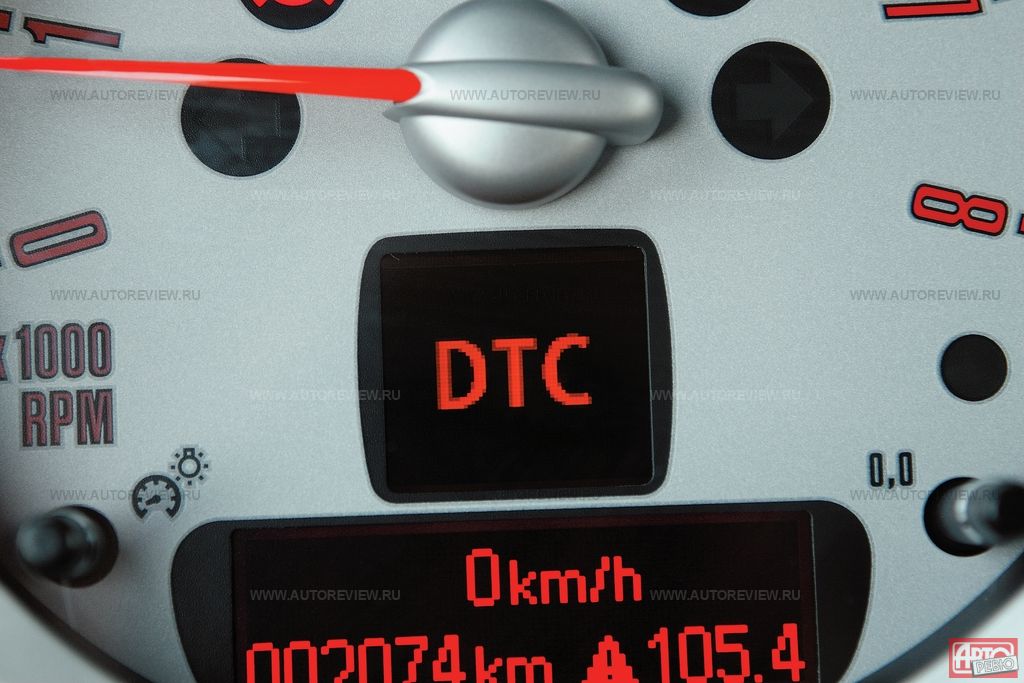 | 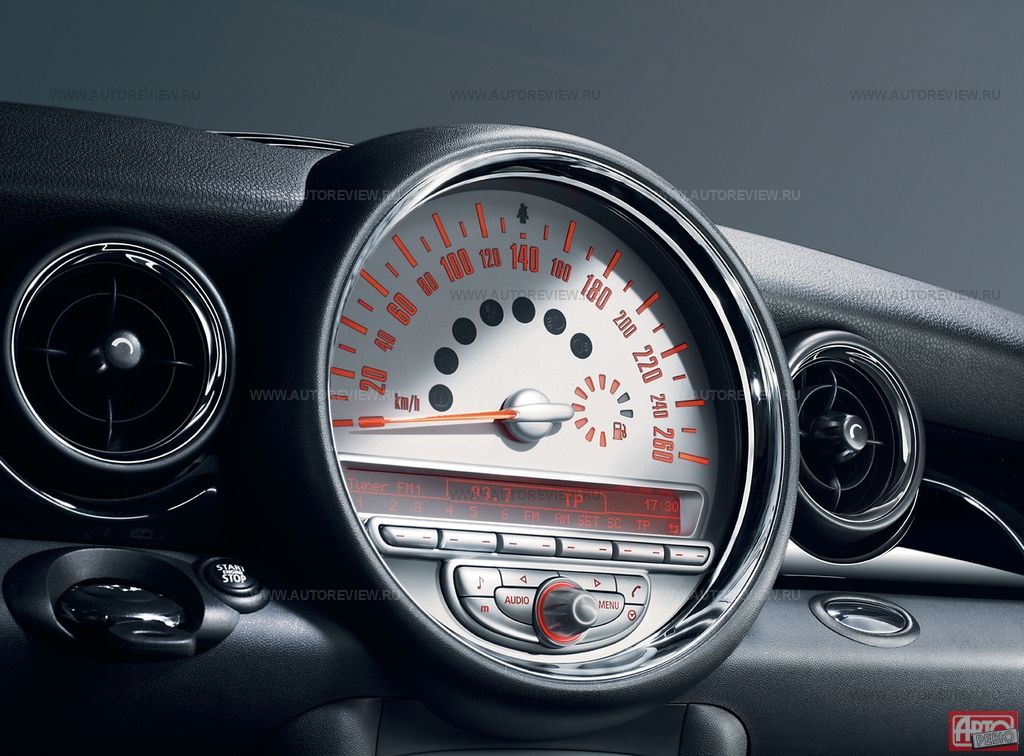 |
| The Mini JCW features the DTC traction control system, like on current BMWs. The mechanical "self-lock" was replaced with an electronic imitation | The speedometer on the Mini JCW is marked up to 260 km/h |
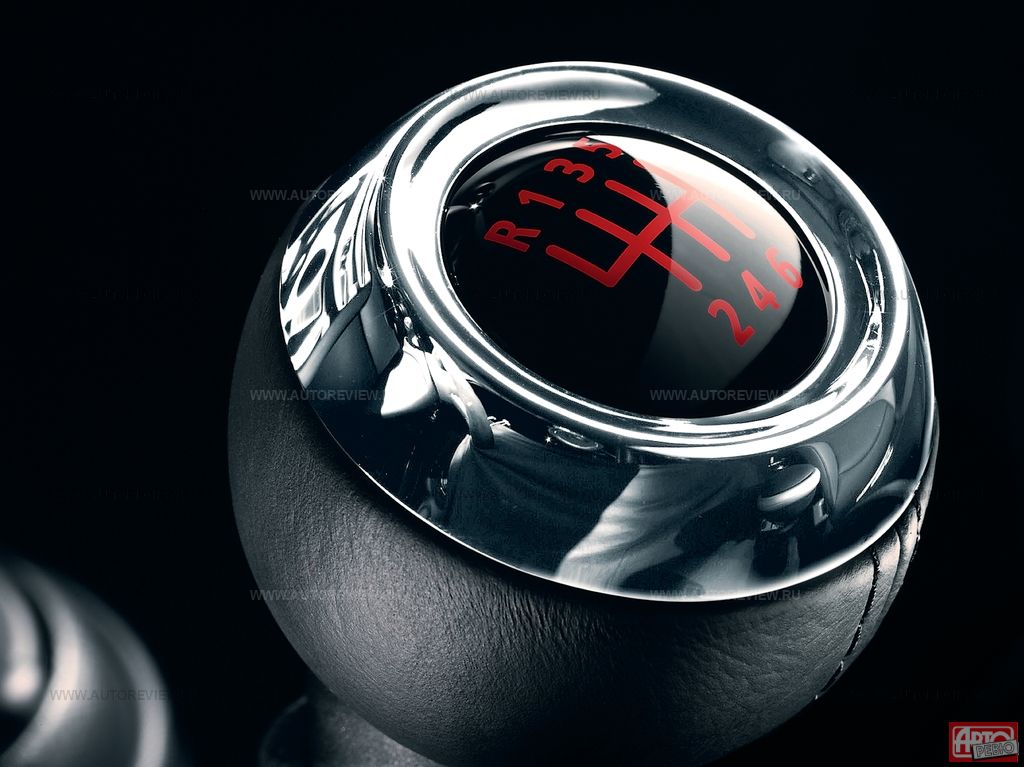 | 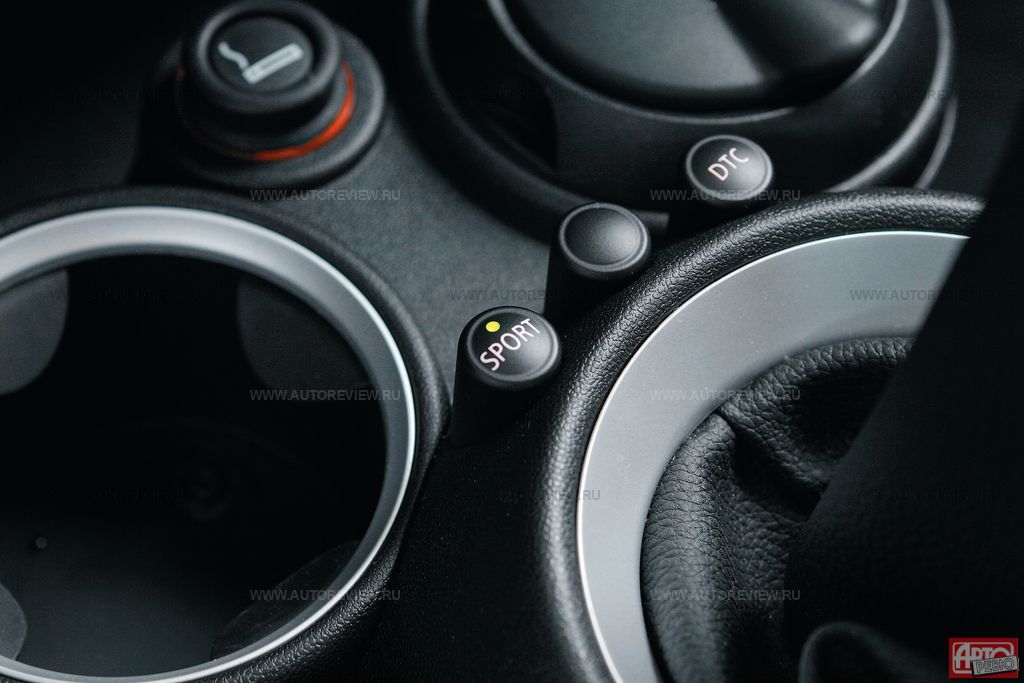 |
| The refined gearshift mechanism works more precisely than on the regular version, with shorter lever throws. But on the track, I missed second gear a couple of times — the "safety" spring for reverse is a bit weak | The Sport button gives the engine a double life: in one mode, it is calm and obedient; in another, at the slightest press of the gas pedal, it tends to spin the wheels |
By the way, if earlier the "hot" hatchback bore a long name, like a noble title — Mini Cooper S John Cooper Works — now it is called simply: Mini John Cooper Works. And this is more logical: after all, the new version differs from the regular Mini with the letter S much more strongly than before.
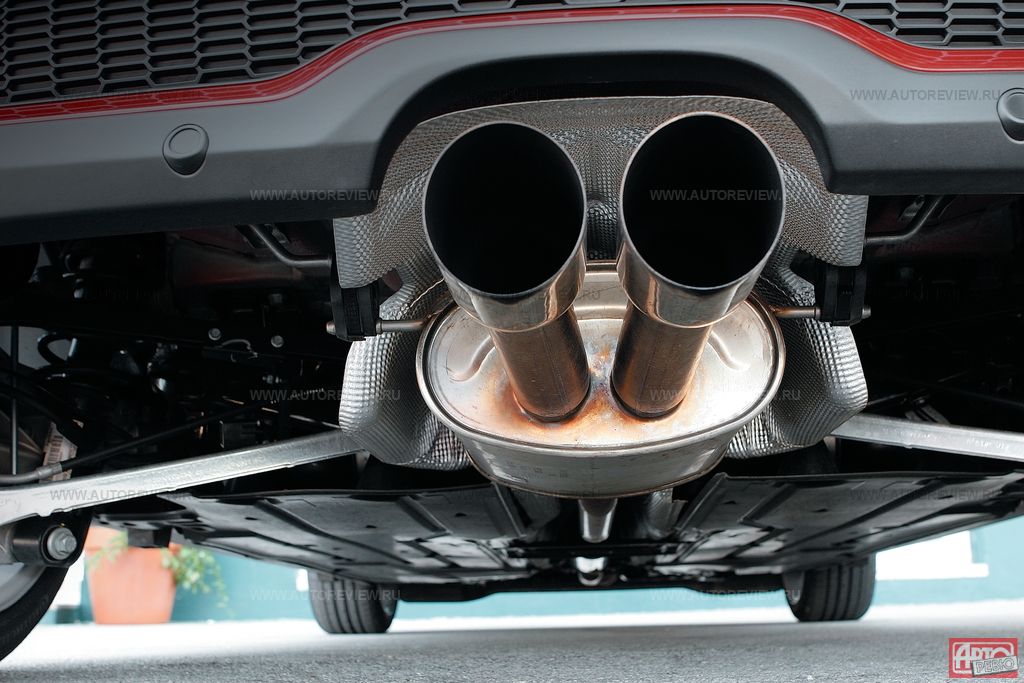
The engine was thoroughly "shaken up" — the cylinder block and forged crankshaft remained the same, but the pistons became reinforced, and the cylinder head is new — with thicker walls and enlarged cooling channels. The compression ratio was reduced from 10.5 to 10, but the new turbocharger "blows" air into the cylinders at a pressure of 1.3 atm instead of 0.9 atm in the "regular" Cooper S. Plus, larger intake ducts and a freer exhaust. As a result, power increased from 175 hp to 211 hp, and torque — from 240 Nm to 260 Nm. The Overboost mode is also preserved — for 12 seconds, the boost pressure rises to 1.45 atm, and torque — to 280 Nm. Exactly the same engine is installed on the cars of the international Mini Challenge racing mono-series!
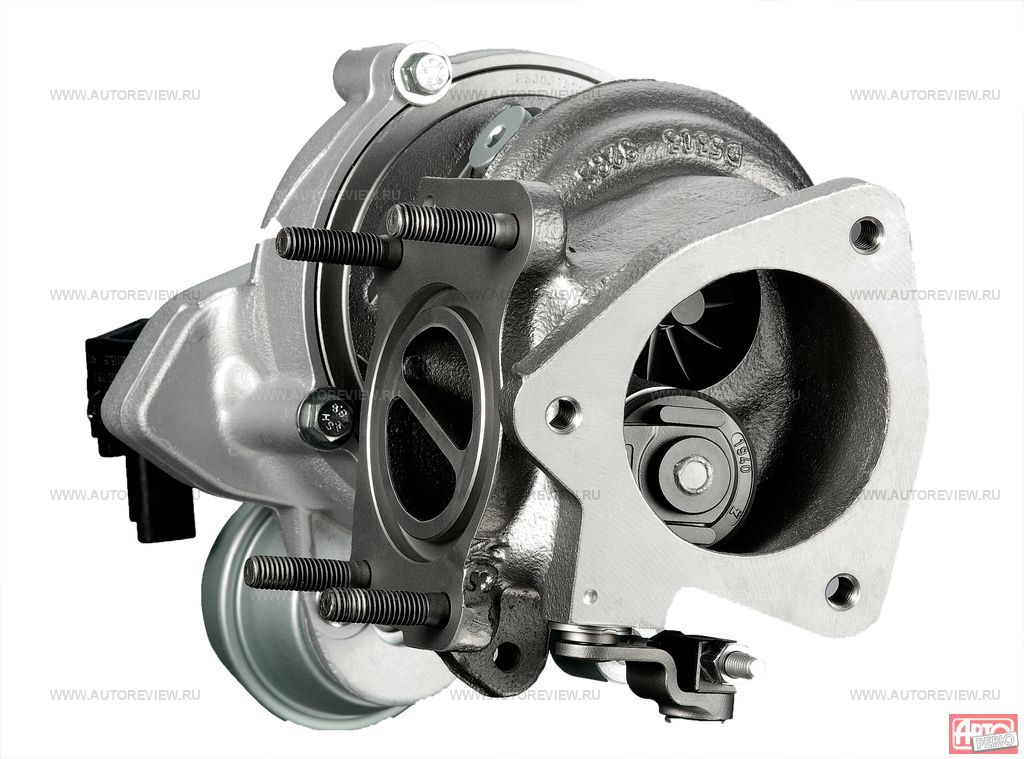 | 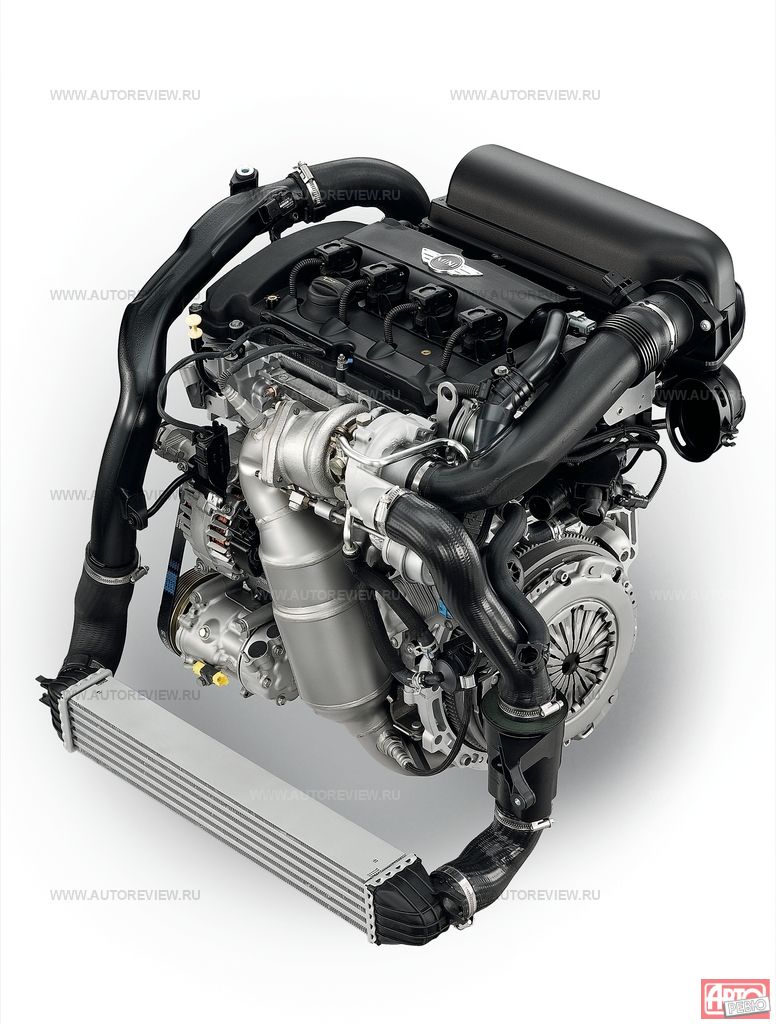 |
| The boosted engine has reinforced pistons and cylinder head, as well as new intake and exhaust. The cross-sections of the air ducts, catalytic converter, and exhaust pipes are enlarged — with a corresponding replacement of the air flow meter. And the main component is a new twin-channel turbocharger providing higher boost pressure. The engine mass remained the same — 115 kg | |
The gearbox is only a six-speed manual. The gear ratios were not touched, but the synchronizers were strengthened and the shift mechanism was refined. In the "base" configuration, the Mini John Cooper Works is equipped with a standard suspension — or rather, its "sport" variant. But you can also order the car with stiffer springs, shock absorbers, and stabilizer bars. And for track enthusiasts, there is also a "kit" that brings the Mini as close as possible to the Challenge Cup cars — with ultra-stiff settings and a 10 mm lower ground clearance. The brakes are reinforced — larger diameter discs are installed, and the front calipers are not "floating" but with a fixed bracket.
Finally, the driver electronics on the JCW version have undergone a serious "upgrade." Firstly, for the first time on a Mini, the DSC stability system is supplemented with the DTC traction control system. Its algorithm is like on BMW cars. A single press of the DSC button disables only the traction control; a long press turns off the stability system completely. However, the driver is not left one-on-one with the car. Another new feature helps him — Electronic Differential Lock Control (EDLC), an electronic imitation of a differential lock, first used by BMW on rear-wheel-drive "ones." If one of the wheels starts to slip during acceleration or in a corner, the electronics brakes it, "loading" the opposite wheel with torque. According to the engineers, the EDLC system is as effective as a mechanical "self-lock," but lacks its main drawback — the torque steering effect that tugs the steering wheel during hard acceleration.
| I asked rally veteran Rauno Aaltonen: "How do you like these, not at all rally-style Mini settings?" After a moment's hesitation, he replied diplomatically: "But it's easier and safer to drive." |
And all this splendor I can only behold from my right seat...
From complete fiasco, falling into depression, and a "severe reprimand" from the editor-in-chief, I was saved only by a short racing track near Palma de Mallorca.
The briefing even turned out to be "combat" — it was conducted by Rauno Aaltonen himself, who won the Monte Carlo Rally in a Mini back in 1967. The smiling Finn spoke mostly not about "safety," as is usually the case at journalist tests, but about something else: "In corners, hug our cone markers — that way you'll go faster. This gentle curve can be taken without braking — just lift your foot off the gas pedal slightly at the entry and confidently turn the steering wheel. Try how the new stability system works by disabling only the traction control. And then, when you're left one-on-one with the track, without the pace car, turn off the DSC and floor it!"
And I floored it.
The guy driving the pace car, apparently, had long been tired of leading journalists in a "little train from Romashkovo." So when I "got on his tail," by the end of the first lap, the other cars were somewhere far behind in the rearview mirrors. And on the second lap, I realized that I could catch him only by turning off the stability system, which, although relatively intelligently, still "chokes" the engine in corners, and pressing the Sport button on the center tunnel. Then the engine's responses to the gas pedal become truly sporty — quick, sharp. At the same time, the electric power steering setting changes — the steering wheel fills with additional reactive force, allowing more precise cornering lines.
The racing track, like a litmus test, clearly reveals all the character traits of a sports car. The boosted engine on regular roads seems omnipotent. A colleague, next to whom I admired the views of Mallorca from the passenger seat, drove half the serpentine in fourth or fifth gear. On the tachometer — one and a half to two thousand rpm, and the Mini JCW confidently climbs the hill without even flinching. But on the track, it becomes obvious that, despite the declared torque "shelf" from two to five and a half thousand rpm, the engine settings are close to racing. The engine really accelerates the hatchback quickly only after passing the four thousand mark, but then all the way to the "cutoff." And with what sound it does it — no music in the cabin is needed!
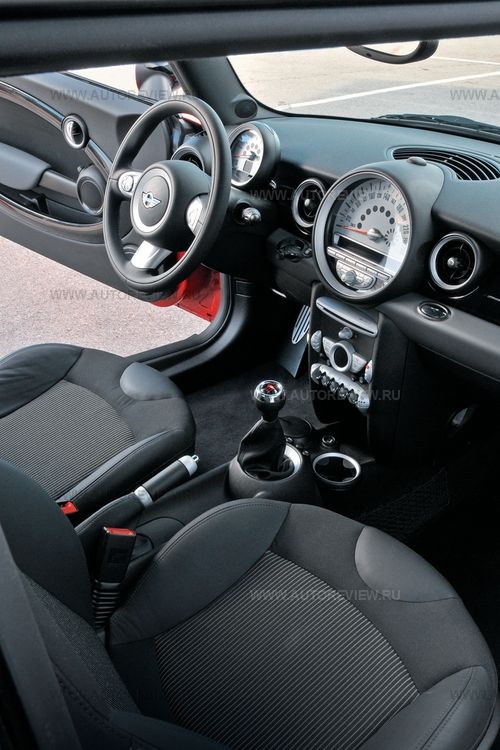 |
| In the Mini cabin, everything is as before: "frivolous" details, an abundance of silver plastic. The standard trim option for the JCW version is black glossy plastic |
The braking system fitted to this version is truly impressive: it is powerful, keeps the driver perfectly informed, and does not succumb to overheating even after a series of intense decelerations. There are no complaints about the handling either. I recall how at Myachkovo our invited driver Kirill Ladygin complained about the "twitchiness" of the regular Cooper S. But the "tuned" Mini behaves surprisingly stable in corners. It seems they haven't even heard of rear-axle oversteer here: I tried to provoke a slide with sharp steering inputs through a series of S-bends, but the car held its line without a hint of capriciousness. It is a pleasure to drive: you brake, turn, get back on the throttle at the apex, and hold it until the next braking point. If the entry speed into a corner is slightly above ideal — no problem, the Mini simply widens its arc slightly with the front wheels. And if you overdo it even more — the car will smoothly drift outward with all four wheels until the speed drops to a safe level.
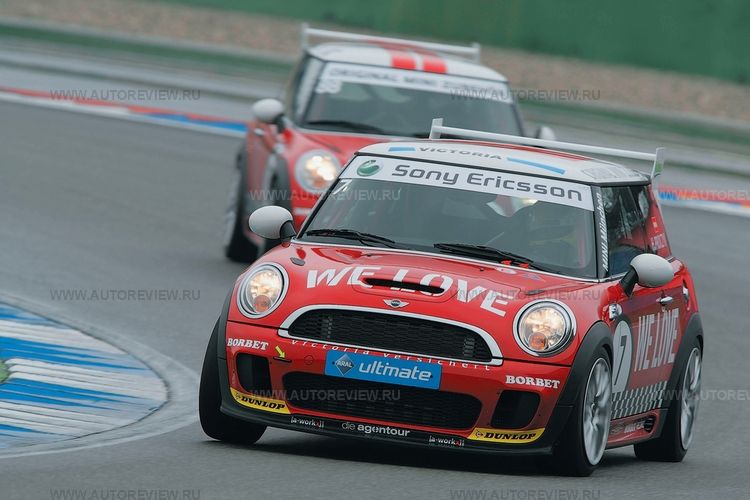
On corner exit, the EDLC system kicks in, and it does so absolutely imperceptibly for the driver — the steering wheel always remains "clean." By braking the inner wheel, the electronics help the Mini accelerate faster, allowing the driver to be bolder with the throttle without fear of the driven wheels spinning up and causing understeer. Everything is simple and reliable. So much so that during the sessions I saw only one off-track excursion — the driver simply didn't brake in time. And I also spent a couple of laps glued to the racing taxi driven by Aaltonen himself, even though I have no rally wins to my name…
 |
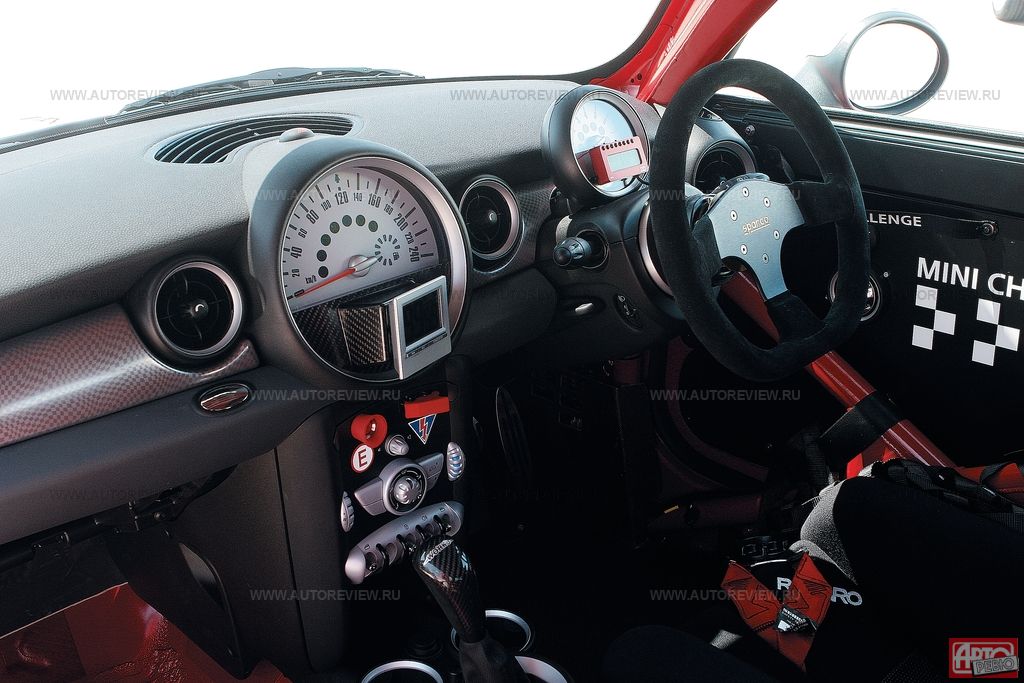 |
| The JCW version and the Challenge Cup car were developed simultaneously, but the racing Mini debuted earlier — its "coming out" took place back in March, at the first round of the Australian national championship. The cars have not only identical engines, but even their settings are the same. However, the racing AP Racing brakes are even more powerful, and the suspension is naturally stiffer and shorter-travel | |
However, such impeccable handling has a downside. With this "correct," reliable, and safe character, the regular Cooper S should have been built — a fast hatchback for the broad glamorous masses. But the John Cooper Works is a car for us, enthusiasts, adrenaline junkies with experience. And on the racetrack, I want the Mini JCW to demand my full commitment! I want it to not forgive mistakes and force careful throttle application, to respond to careless steering inputs with a slide that I could control, feeling that very torque steering through my hands. Damn it, I want to drive a car that is imperfect but "alive"!
 |
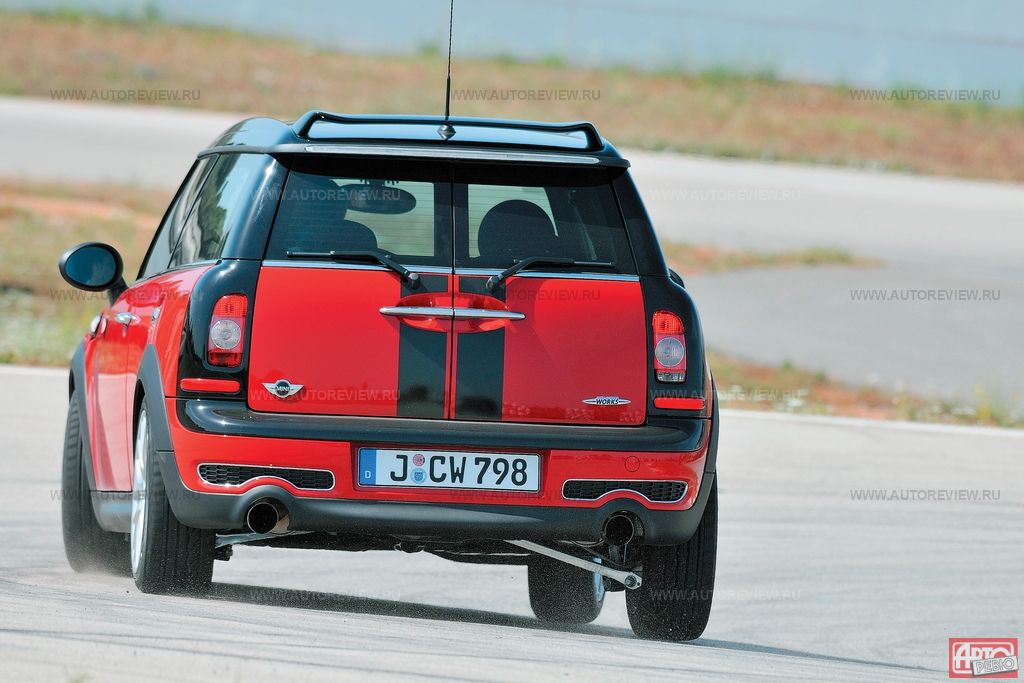 |
| The signature John Cooper Works body kit with light touches turns the Mini into an even more "muscular" car. But, unfortunately, it is not included in the base trim | Simultaneously with the "regular" Mini, the Clubman also received the John Cooper Works version. The wagon is 75 kg heavier and accelerates to 100 km/h 0.3 s slower — in 6.8 s versus 6.5 s |
But the John Cooper Works is too perfect. And perhaps that is why there is less of his spirit in the "John Cooper Works." The spirit of the man who, half a century ago, came up with the modern version of the mid-engine layout and proved its advantages with victories in Formula 1, and ten years later created a tiny rally car that thrashed much more powerful rivals on the stages.
After all, the previous-generation Cooper Works was conceived and created within the walls of a tuning workshop where the soul of its creator still lingered, and only later was it adopted by the people at BMW. Now Michael Cooper's company is much more deeply integrated into the concern's structures. And the new car is essentially just another modification of the Mini, a product of "collective intelligence." Factory specialists played a very active role in its development, and it is they who achieved the "correctness" in the car's behavior. The tuned engines will now be assembled alongside the others at the Hams Hall plant. Moreover, some of their technical features have already gained "retroactive effect." In particular, the upgraded cylinder head will also be installed on the "regular" Cooper S — unification!
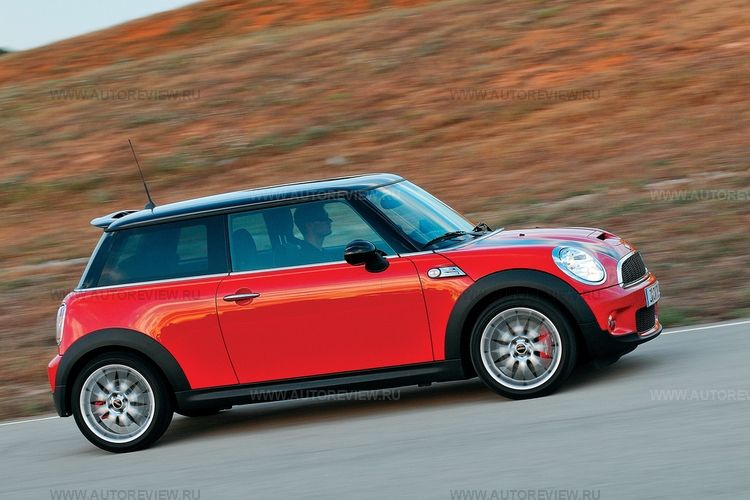
But the ideology of a "car for enthusiasts" seems to be a thing of the past…
And when the opportunity arose to do a few more laps on the track, I declined — "lapping" the same corners in such a car was simply boring. If only they had let me try the Mini John Cooper Works Clubman… The wagon has been "tuned" to the same program, and colleagues' experience shows that its standard sibling, the Clubman S, drives more interestingly and more eagerly than the short-wheelbase version. But only BMW instructors were tearing around the track in those cars.
Well, let's wait for the arrival of the "long" Clubman JCW in Russia. Orders for both cars are already being taken. The Mini John Cooper Works is priced at 1,125,000 rubles, and in the top Chili trim at 1,265,400 rubles. The Clubman "John Cooper Works" is more expensive — from 1,215,000 rubles "in base" to 1,350,000 rubles for the Chili equipment.
 |
 |
 |
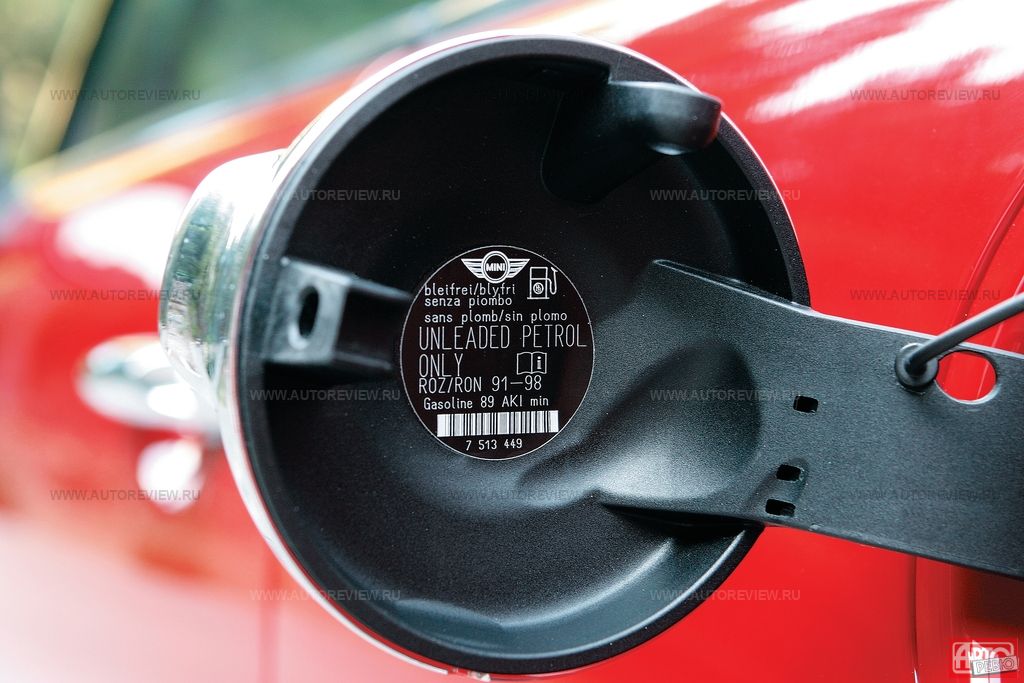
| Boost pressure and the degree of tuning are high, but the Mini JCW engine can also "feed" on 91-octane gasoline | The exhaust system on the JCW version is "freed up." And what a sound it makes! |
Front brakes with fixed calipers. Each 17-inch wheel weighs less than 10 kg. The wheels for cup racing look the same but are even lighter due to less stringent strength requirements for "circuit" wheels |
Maybe at the tests in Myachkovo, the spirit of John Cooper will still appear to us?
| Specifications | ||
| Parameters | Modifications | |
| Mini John Cooper Works | Mini John Cooper Works Clubman | |
| Body type | Three-door hatchback | Five-door station wagon |
| Number of seats | 4 | 5 |
| Dimensions, mm | ||
| Length | 3714 | 3958 |
| Width | 1683 | 1683 |
| Height | 1407 | 1432 |
| Wheelbase | 2467 | 2547 |
| Track front/rear | 1453/1461 | 1453/1461 |
| Trunk volume, l | 160–680 | 260–930 |
| Curb weight, kg | 1130 | 1205 |
| Gross weight, kg | 1580 | 1690 |
| Engine | Petrol, direct injection, turbocharged | |
| Location | Front, transverse | |
| Number and arrangement of cylinders | 4, in-line | |
| Displacement, cm³ | 1598 | |
| Cylinder bore/piston stroke, mm | 77.0/85.8 | |
| Number of valves | 16 | |
| Maximum power, hp/kW/rpm | 211/156/6000 | |
| Maximum torque, Nm/rpm | 260 (280)*/1950–5600 | |
| Transmission | Manual, 6-speed | |
| Drive | Front | |
| Front suspension | Independent, coil spring, McPherson type | |
| Rear suspension | Independent, coil spring, multi-link | |
| Front brakes / disc diameter, mm | Disc, ventilated / 316 | |
| Rear brakes / disc diameter, mm | Disc / 280 | |
| Tires | 205/45 R17 | |
| Maximum speed, km/h | 238 | 238 |
| Acceleration time 0–100 km/h, s | 6.5 | 6.8 |
| Fuel consumption, l/100 km | ||
| Urban cycle | 9.2 | 9.3 |
| Extra-urban cycle | 5.6 | 5.7 |
| Combined cycle | 6.9 | 7.0 |
| CO₂ emissions, g/km | 165 | 167 |
| Fuel tank capacity, l | 50 | |
| Fuel | Petrol AI-91–98 | |
| * In Overboost mode | ||