
Mykhailo PETROVSKYI, photos by BMW
It's hard to find the right words. I'm searching for a way to describe to Andreas Decker, the man responsible for tuning the Mini's chassis, my feeling that the car has become too "proper":
— New Mini gives me more driving pleasure but it just doesn’t thrill me anymore, — the new Mini gives me more joy behind the wheel, but it no longer evokes that same thrill!
From Decker's look, it's clear he's heard this before. And I can even guess when and from whom: a year ago from Leonid Golovanov. Lonya also complained that the second-generation Mini had lost its fighting spirit (see AR No.20, 2006).
— The technical specification didn't include a clause for "evoking thrill," — Decker smiles, — buyers wanted simplicity, comfort, and practicality.
Mini representatives have surely memorized this phrase by now. And here they are repeating it to me, though now for a different reason: in Spain, journalists are being introduced to the Mini Clubman.
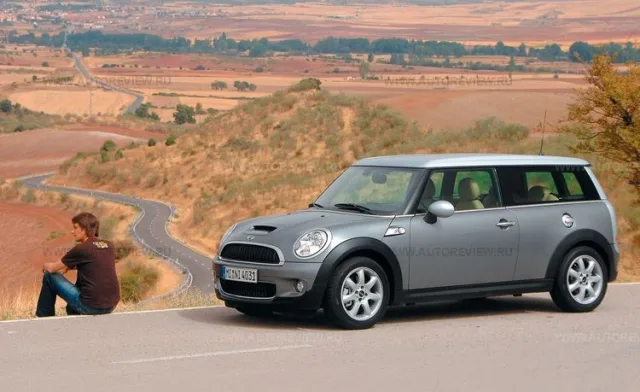
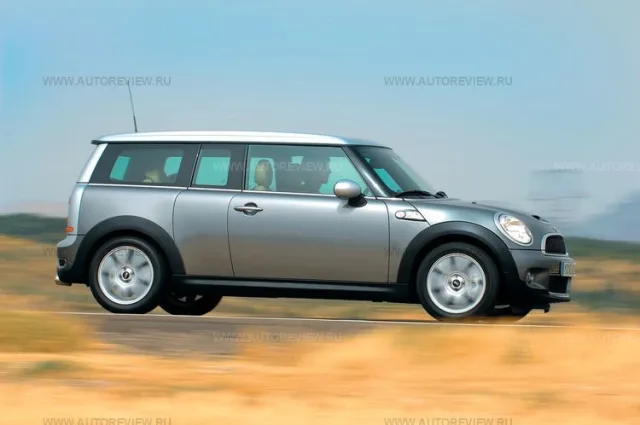
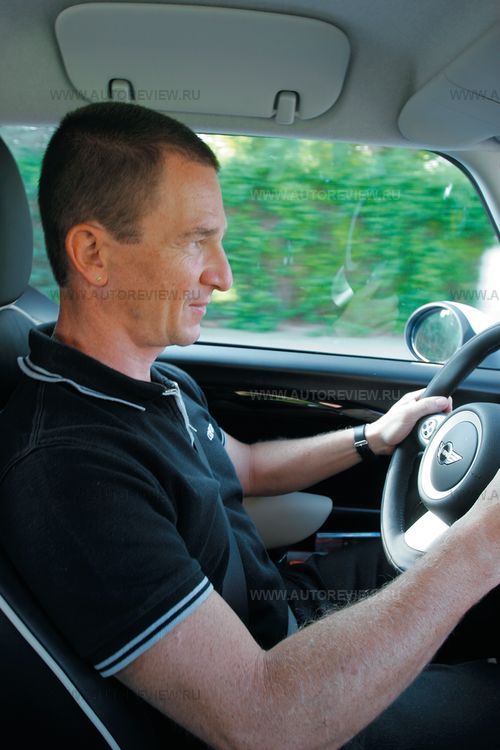 Golovanov wrote then: "The character of the new Mini was created for the majority. In politics, this is called democracy — the power of the people. And in commerce, it's just common sense." It turned out that the "people" wanted not only convenience and obedience. They needed more space. More space in a Mini, can you imagine? And the people's desire, as we know, is law. And so, a year later, on the same Spanish roads, the Mini Cooper S Clubman races — 24 cm longer, 75 kg heavier, and head and shoulders more practical.
Previously, this name was given to Mini cars with a slightly "squared-off" front end, while classic Mini station wagons bore the names Traveller or Countryman. But the rights to those names have long belonged to other, non-automotive companies, while the name Clubman remained with BMW. The classic Clubman also had a cargo-passenger version, the Clubman Estate, but try selling a car with a name a kilometer long — Mini Cooper S Clubman Estate. So they kept just Clubman, and so the name wouldn't seem forced, the Bavarians called the rear-hinged "half" door Clubdoor: either in honor of golf clubs, or in honor of drunk partying friends, from whom the owner of the new Mini now can't escape. From club to club — in a Mini. Yes, the Clubman is not for egoists; it's for sharing. After all, all 80 mm of the wheelbase increase are given to rear passengers. A royal gift! The additional door only slightly eased entry, but now I can sit "behind myself" without my knees touching the front seatbacks. The rear bench can be three-seat, but in this car it's molded for two: a cool profile! It's no wonder that everything behind the B-pillar was handled by Charles Coldham, the interior designer for Rolls-Royce.
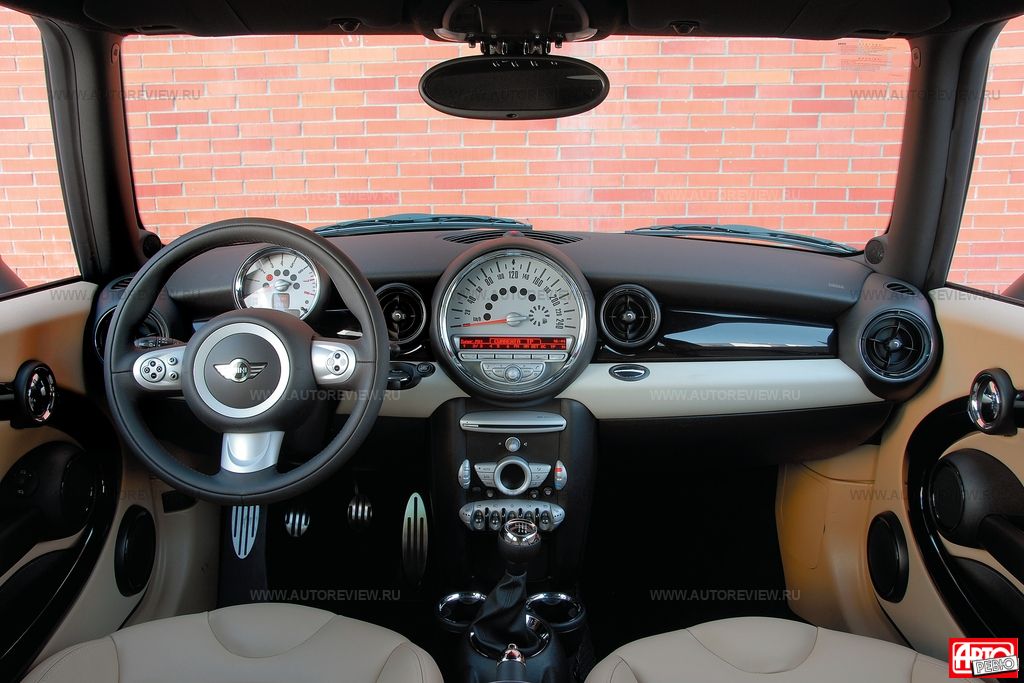 | 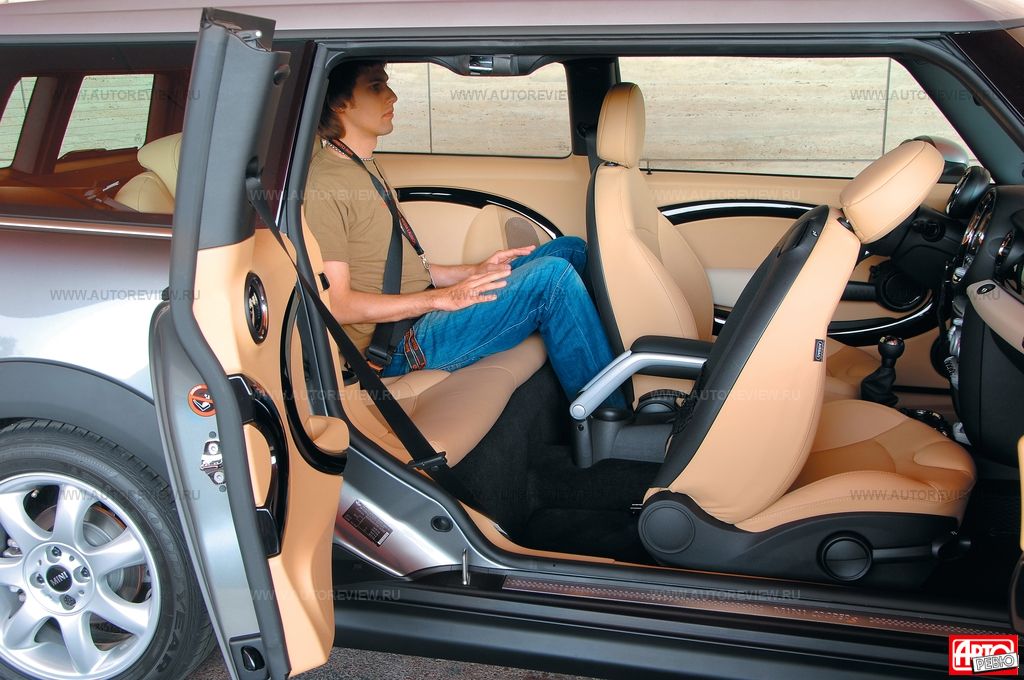 | 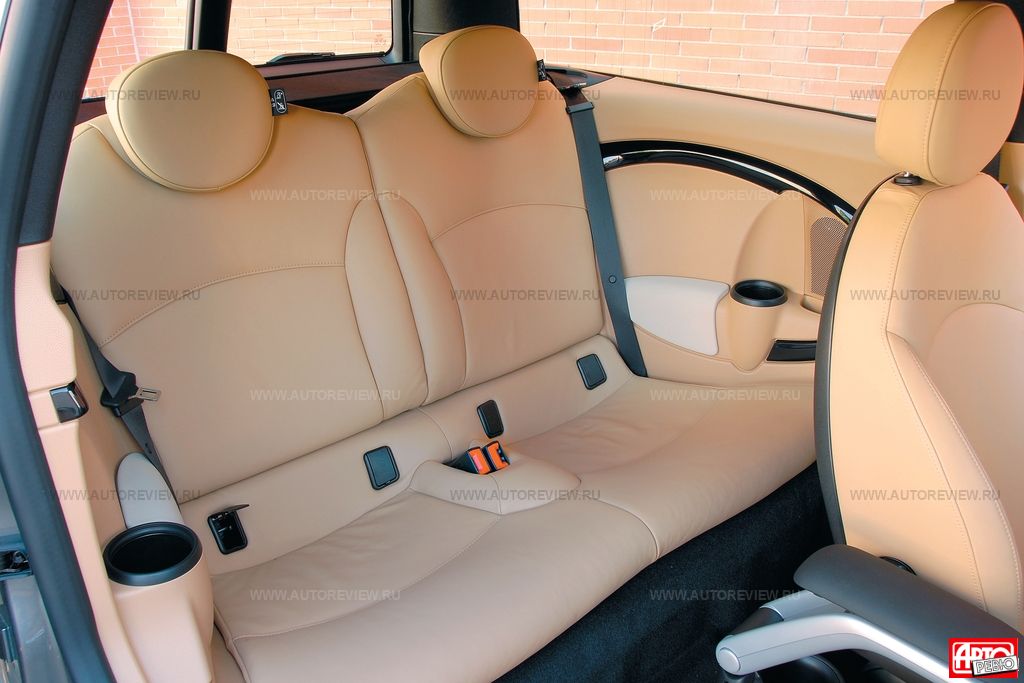 |
| The front half of the interior of the extended Clubman is identical to standard Mini hatchbacks | A person 188 cm tall in the back seat: such a trick can be shown for money to owners of regular Minis. The front passenger's seatbelt attaches to the opening door and slightly hinders entry to the rear. The rear bench can also be three-seat | |
And the two split tailgate doors are a true family trait. That's how the cargo compartment opened on the extended Minis of the 60s. Two chrome handles in an oval recess are devilishly attractive. You just want to grab them with both hands, click the "triggers" — and gas struts will open the doors 90 degrees. The taillights remain on the rear pillars, as required by law: the car must be visible in the dark even with the trunk open. The rear overhang increased by 16 cm added 100 liters to the volume, although even 260 liters is far from a record. But compared to the regular hatchback, the Clubman is pure utility.
Interestingly, with its four and a half doors and asymmetrical side openings, the Clubman not only hasn't become less safe in a side collision, its body is even stiffer. This is aided by the two middle pillars on the right, cleverly redistributing load to the left side, a special steel frame in the area of the rear pillars, many additional stiffening ribs, and a combination of spot welding with adhesive bonding of welds. Telling about this, Decker emphasizes that it's the body stiffness that is the foundation of the confidence with which the extended Mini races along Spanish serpentines.
Decker surely voted for the extended version even before the focus groups, because the extra 80 mm of wheelbase and stiffer rear springs allowed him to work his magic on the handling.
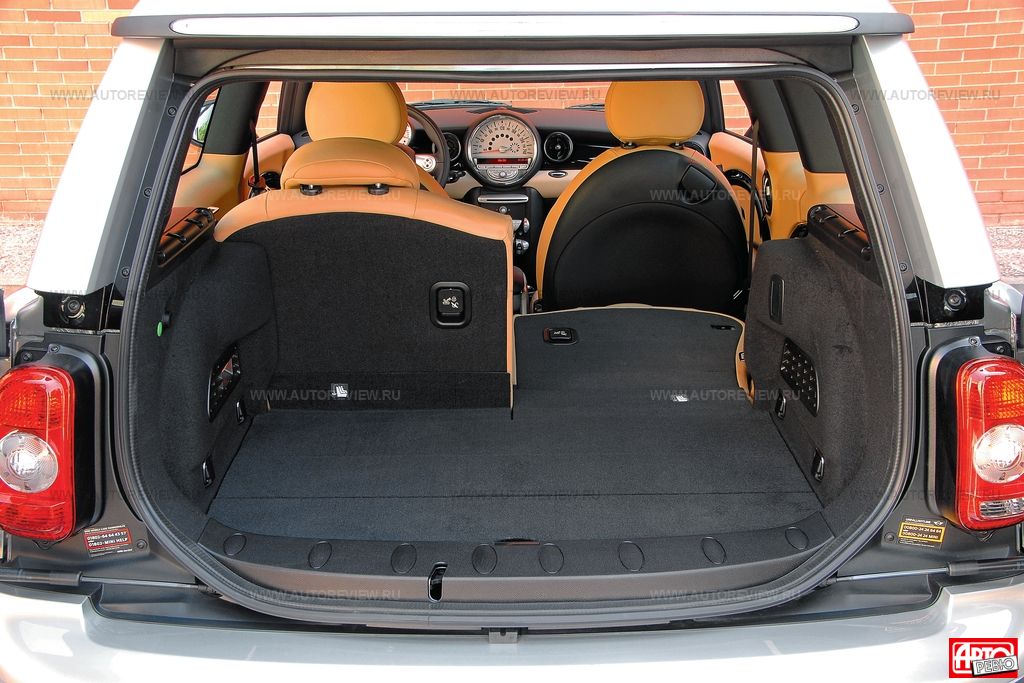 | 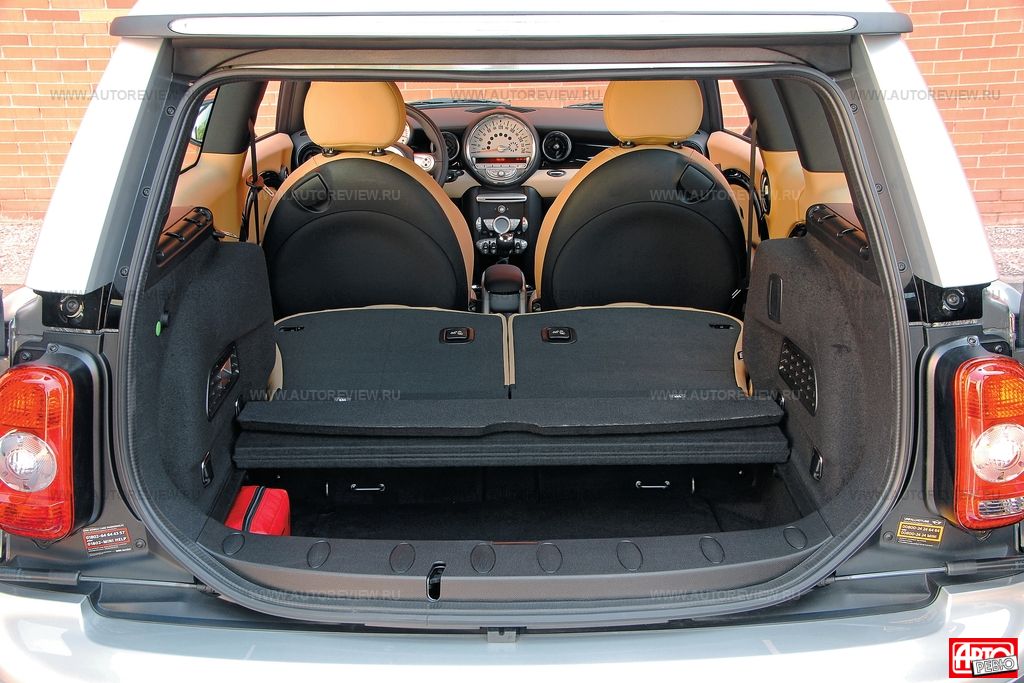 | |
| With the rear seatbacks folded, the trunk volume grows from 260 to 930 liters, but the "flat floor" effect is achieved by installing a partition that cuts off a considerable portion of the useful space | The chrome trunk handles "for a natural grip" are aesthetic and convenient — while clean | |
— The previous Mini, which you regret so much, was good in many ways, but we had to work within very strict limits back then. And the softer suspension opened up wide possibilities for chassis tuning. Can't you see?
That's an understatement! Though I miss the heavy, extremely informative steering and racing composure of the previous Mini, that car never dreamed of such neutrality in corners. And the Mini Clubman seems to steer even more with the rear suspension in turns compared to the regular hatchback, although in reality the elastokinematics haven't changed. Lateral G-forces make me blush: either blood is sloshing from cheek to cheek, or I'm embarrassed in front of my companion. She's also an automotive journalist, but she's still a bit scared. And we're far from the limit! After a few kilometers of serpentine, I'm no longer sure that the best electric power steering in the world is in the Golf. The long-wheelbase Mini can easily compete for the title of best front-wheel-drive chassis. Even the safety electronics don't interfere, and if you turn off the stability system, you get a great imitation of a limited-slip differential. And you can even install a differential with a real, "iron" lock on the Mini!
Listen to Decker, and you'll lose all fear. They've reached some kind of extreme perfectionism: they tune the chassis for each specific car depending on the mass of additional equipment! Not only are there four sets of shock absorbers and three types of stabilizers (for the diesel Cooper D, gasoline Cooper and Cooper S, plus a special sport set) — but each version also has four to five types of springs. Needless to say, the "software" of the electric power steering is also different everywhere. BMW's prosperity creates a paradox: previously they unified components, now they unify driver sensations. They must remain the same regardless of the modification.
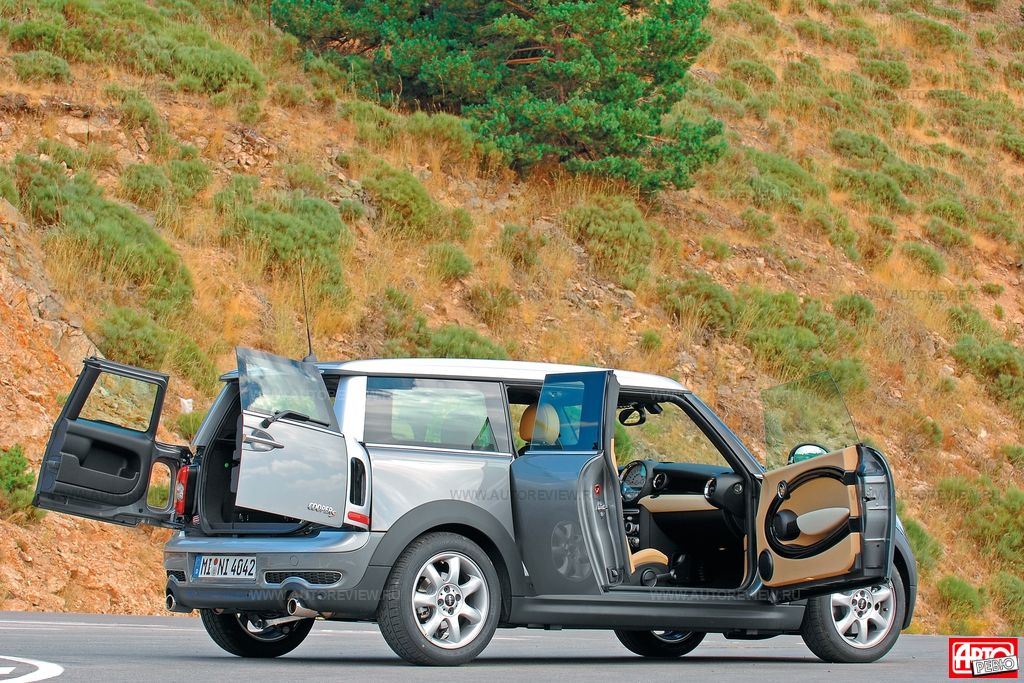 | 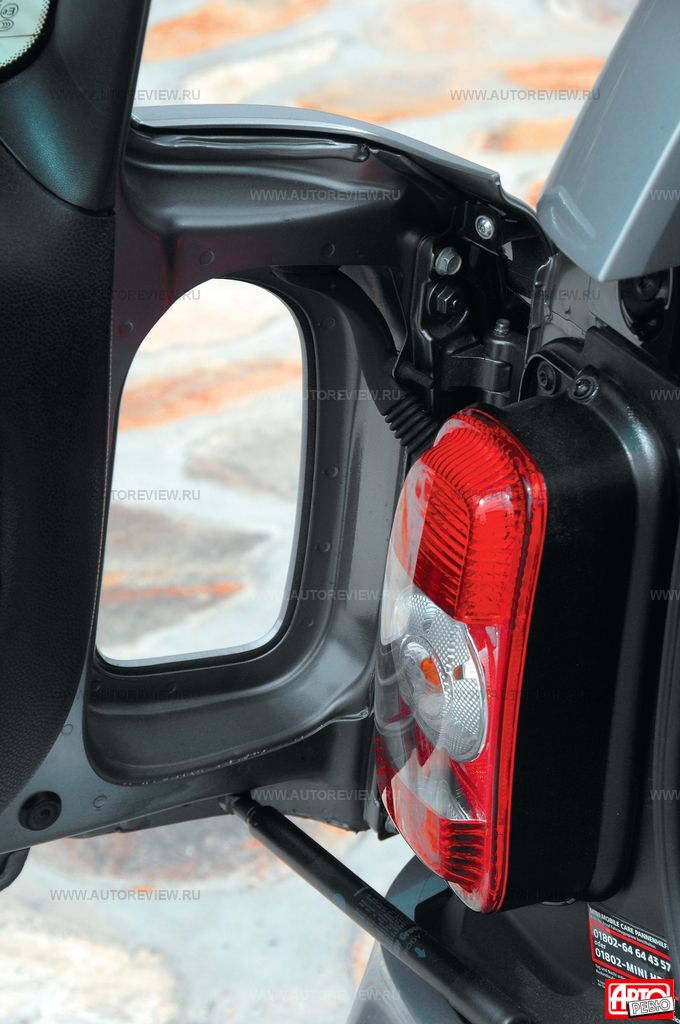 |
| The Mini Clubman is open to passengers and cargo. I'm sure that scale models of the Clubman will be in special demand — even the "live" car looks like a super toy | The rear lights are mounted on the pillars, and the split doors have special openings |
True, in Madrid all cars were in identical trim, but with two types of suspension: standard and sport. The latter is a whim: the unique spirit of the previous-generation Mini still can't be brought back. The standard suspension perfectly suits the glamorous essence of the new Mini. Surprisingly, just eight additional millimeters of shock absorber compression travel — and the car is unrecognizable. No teeth-rattling shaking, no painful bottoming out when hitting a cigarette butt — a Mini with a human face.
The face, of course, has the characteristic overgrown nostril: for journalists, only the 175-horsepower Mini Cooper S Clubman. Nominally, in acceleration to 100 km/h, the Clubman loses half a second to the regular Cooper S hatchback. But subjectively, the addition of four hundred grams per "horse" went unnoticed: between "here" and "there" you always have just one press of the pedal. And it's better if the green light of Sport mode is on the center tunnel: that way you communicate with the engine at least through a secretary, not an answering machine. The engine is magnificent in every way except sound: no acoustic tricks can replace the moan of the Roots supercharger for me.
Specifications
| Specifications | |||
| Parameters | Vehicle | ||
| Mini Clubman | |||
| Modification | Mini Cooper Clubman | Mini Cooper S Clubman | Mini Cooper D Clubman |
| Body type | 3-door estate | 3-door estate | 3-door estate |
| Number of seats | 4 | 4 | 4 |
| Dimensions, mm | |||
| length | 3937 | 3958 | 3945 |
| width | 1683 | 1683 | 1683 |
| height | 1426 | 1432 | 1426 |
| wheelbase | 2547 | 2547 | 2547 |
| track front/rear | 1459/1467 | 1453/1461 | 1459/1467 |
| Trunk volume, l | 260—930* | 260—930* | 260—930* |
| Curb weight, kg | 1145 (1185)** | 1205 (1230)** | 1175 (1205)** |
| Gross weight, kg | 1645 (1685) | 1690 (1715) | 1675 (1705) |
| Engine | petrol, with distributed injection | petrol, with direct injection and turbocharging | diesel, with turbocharging |
| Location | front, transverse | front, transverse | front, transverse |
| Number and arrangement of cylinders | 4, in-line | 4, in-line | 4, in-line |
| Displacement, cm³ | 1598 | 1598 | 1560 |
| Cylinder bore/piston stroke, mm | 77.0/85.8 | 77.0/85.8 | 75.0/88.3 |
| Compression ratio | 11.0:1 | 10.5:1 | 18.0:1 |
| Number of valves | 16 | 16 | 16 |
| Max power, hp/kW/rpm | 120/88/6000 | 175/128/5500 | 110/80/4000 |
| Max torque, Nm/rpm | 160/4250 | 240/1600—5000 / 260/1600—5000*** | 240/1750—2000 / 260/1750—2000*** |
| Gearbox | manual, 6-speed (automatic, 6-speed) | manual, 6-speed (automatic, 6-speed) | manual, 6-speed (automatic, 6-speed) |
| Drive | front | front | front |
| Front suspension | independent, spring, McPherson | independent, spring, McPherson | independent, spring, McPherson |
| Rear suspension | independent, spring, multi-link | independent, spring, multi-link | independent, spring, multi-link |
| Front brakes | disc, ventilated | disc, ventilated | disc, ventilated |
| Disc diameter, mm | 280 | 294 | 280 |
| Rear brakes | disc | disc | disc |
| Disc diameter, mm | 259 | 259 | 259 |
| Tires | 175/65 R15 | 195/55 R16 | 175/65 R15 |
| Maximum speed, km/h | 201 (195) | 224 (219) | 193 (188) |
| Acceleration time 0—100 km/h, s | 9.8 (10.9) | 7.6 (7.8) | 10.4 (10.9) |
| Fuel consumption, l/100 km | |||
| urban cycle | 7.1 (9.2) | 8.0 (9.8) | 4.9 (6.6) |
| extra-urban cycle | 4.5 (5.1) | 5.3 (5.4) | 3.6 (4.2) |
| combined cycle | 5.5 (6.6) | 6.3 (7.0) | 4.1 (5.1) |
| Fuel tank capacity, l | 40 | 50 | 40 |
| Fuel | petrol AI-91—98 | petrol AI-91—98 | diesel fuel |
| * With rear seats folded | |||
| ** In parentheses — data for modification with automatic transmission | |||
| *** In overboost mode | |||