
Advertising
About the Mercedes-Benz brand
Germany founded in 1926 Model range
General Information
Mercedes-Benz is a German manufacturer of passenger cars and engines, founded in 1926. The company's headquarters is located in Stuttgart. Today it is part of the Daimler-Benz concern as a subsidiary.Corporate History
After Gottlieb Daimler's death in 1900, his business was continued by his son Paul and engineer Wilhelm Maybach, who took over the management of the firm. In the same year, Maybach began developing a new car with a classic layout: the engine and radiator were placed at the front under the hood, and torque was transmitted to the rear wheels via a gearbox. The car was equipped with a 4-cylinder engine producing 35 hp. The first prototype was a two-seat racing car. The model was named Mercedes in honor of the daughter of one of the company's co-owners — Austrian entrepreneur, diplomat, and racing driver Emil Jellinek.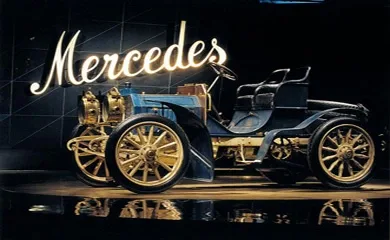 In 1899, Jellinek won a race driving an improved version of this car, which brought worldwide fame to the Daimler firm and the name Mercedes. Since then, all passenger cars of the company were produced under the Mercedes brand. The first Mercedes became the basis for a more advanced model, the Mercedes Simplex, which opened the era of powerful and comfortable cars of the brand. In 1902, Daimler officially registered the name Mercedes as a trademark, and Jellinek's personal car was named "Emile Jelinek-Mercedes".
In 1921, Mercedes became a pioneer in producing supercharged cars, and in 1923 the company focused on a model with a six-liter engine, which formed the basis for short-wheelbase modifications — Model K and Model S. Later, the Mercedes Model SS was based on them. During this period, engineers Ferdinand Porsche, Fritz Nallinger, and Hans Nibel played a key role in building the reputation of the Daimler-Benz concern.
The first production cars were equipped with a 100-hp engine, which developed up to 140 hp when the supercharger was engaged. Later, the engine displacement was increased to 7 liters, leading to the creation of the sports model SSK with 170/125 hp. The top speed of such cars reached about 160 km/h. The next step was a shortened version "SSKL" with a 300-hp engine, which became a favorite in sports competitions of those years.
In 1926, Daimler Gesellschaft and Benz und Co began negotiations on a merger. The result of the union was a three-pointed star, symbolizing three elements — air, water, and earth. This emblem, belonging to Daimler senior, became common for the new concern, and cars began to be supplied to the market under the Mercedes-Benz brand.
In the 1930s, Mercedes-Benz established itself as a manufacturer of elite cars. Hans Nibel prepared the model 770 Grosser with a 7.7-liter supercharged engine for production. This super-powerful car was in demand among high-ranking customers, including former Kaiser Wilhelm II and Emperor Hirohito of Japan. The modification launched in 1938-1939 was intended exclusively for the top of the Third Reich.
In 1899, Jellinek won a race driving an improved version of this car, which brought worldwide fame to the Daimler firm and the name Mercedes. Since then, all passenger cars of the company were produced under the Mercedes brand. The first Mercedes became the basis for a more advanced model, the Mercedes Simplex, which opened the era of powerful and comfortable cars of the brand. In 1902, Daimler officially registered the name Mercedes as a trademark, and Jellinek's personal car was named "Emile Jelinek-Mercedes".
In 1921, Mercedes became a pioneer in producing supercharged cars, and in 1923 the company focused on a model with a six-liter engine, which formed the basis for short-wheelbase modifications — Model K and Model S. Later, the Mercedes Model SS was based on them. During this period, engineers Ferdinand Porsche, Fritz Nallinger, and Hans Nibel played a key role in building the reputation of the Daimler-Benz concern.
The first production cars were equipped with a 100-hp engine, which developed up to 140 hp when the supercharger was engaged. Later, the engine displacement was increased to 7 liters, leading to the creation of the sports model SSK with 170/125 hp. The top speed of such cars reached about 160 km/h. The next step was a shortened version "SSKL" with a 300-hp engine, which became a favorite in sports competitions of those years.
In 1926, Daimler Gesellschaft and Benz und Co began negotiations on a merger. The result of the union was a three-pointed star, symbolizing three elements — air, water, and earth. This emblem, belonging to Daimler senior, became common for the new concern, and cars began to be supplied to the market under the Mercedes-Benz brand.
In the 1930s, Mercedes-Benz established itself as a manufacturer of elite cars. Hans Nibel prepared the model 770 Grosser with a 7.7-liter supercharged engine for production. This super-powerful car was in demand among high-ranking customers, including former Kaiser Wilhelm II and Emperor Hirohito of Japan. The modification launched in 1938-1939 was intended exclusively for the top of the Third Reich.
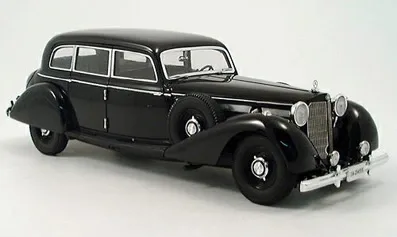 For ordinary buyers, an inexpensive model "Type-170" with a tubular frame and independent front and rear suspensions was offered, production of which started in 1931. Later, the concern began producing the first diesel passenger cars, offering the 2.6-liter "Type-260 D". A team of designers led by Porsche was preparing rear-engine models "130 H", "150 H", and "170 H" for production.
In the early 1940s, demand for luxurious and powerful Mercedes grew in Germany. They were produced at the Stuttgart plant by special order for heads of state, high-ranking Nazis, and those for whom traditional cars seemed insufficiently ambitious. After World War II, Mercedes returned to sports and won the 24 Hours of Le Mans race in 1952. In 1963, the model "600" was released, which was intended to compete with Rolls-Royce.
In November 1979, the new S-class (W126) was presented. Even then it was stated that these sedans would become the best cars of the 1980s, and this was confirmed. In May 1991, the company officially announced the cessation of W126 production. In the 1980s, Japanese firms competed in the expensive car market, but European manufacturers responded adequately. The latest Mercedes S-class models with 12-cylinder engines confirmed the competitiveness of German technology. The Mercedes 600S is renowned for its power, reliability, and maneuverability despite its size, and is considered one of the company's best cars.
For ordinary buyers, an inexpensive model "Type-170" with a tubular frame and independent front and rear suspensions was offered, production of which started in 1931. Later, the concern began producing the first diesel passenger cars, offering the 2.6-liter "Type-260 D". A team of designers led by Porsche was preparing rear-engine models "130 H", "150 H", and "170 H" for production.
In the early 1940s, demand for luxurious and powerful Mercedes grew in Germany. They were produced at the Stuttgart plant by special order for heads of state, high-ranking Nazis, and those for whom traditional cars seemed insufficiently ambitious. After World War II, Mercedes returned to sports and won the 24 Hours of Le Mans race in 1952. In 1963, the model "600" was released, which was intended to compete with Rolls-Royce.
In November 1979, the new S-class (W126) was presented. Even then it was stated that these sedans would become the best cars of the 1980s, and this was confirmed. In May 1991, the company officially announced the cessation of W126 production. In the 1980s, Japanese firms competed in the expensive car market, but European manufacturers responded adequately. The latest Mercedes S-class models with 12-cylinder engines confirmed the competitiveness of German technology. The Mercedes 600S is renowned for its power, reliability, and maneuverability despite its size, and is considered one of the company's best cars.
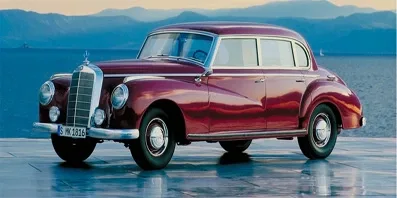 With the appearance of the model 190 (W201) in November 1982, Mercedes-Benz took a leading position in prestige in the European D-class segment. In September 1983, the premiere of the 190D model took place, which quickly gained popularity among taxi drivers. In May 1993, at the Bremen plant, the W201 was replaced by C-class sedans (W202).
Mercedes E-class, a series of upper-middle-class cars, was first shown in 1984. A new generation appeared in 1995. In Frankfurt in 1997, the E 55 AMG modification with a V8 engine was presented. Since 2000, models are equipped with 270 CDI and 320 CDI engines. The most popular Mercedes-Benz series of all time was the W124 — over 2.7 million units were produced in eleven years.
Mercedes SL is a luxury sports car with a roadster body and removable roof, presented in Geneva in 1989. In 1992, the model range was supplemented with the SL600 modification, and in spring 2001 a new generation appeared. The debut of the S-class (W140) in Geneva in 1991 caused a sensation: in size, luxury, capacity, and material quality, it had no equal. Production of this model was stopped in the second half of 1998, replacing it with a more compact S-class W220.
Mercedes C-series, a mid-size sedan, was first shown in April 1993. Since autumn 1995, it has been equipped with a supercharger and is among the most dynamic cars in the segment. The second generation of the C-class (W202) appeared in April 1993.
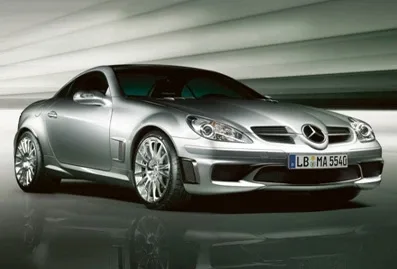
Mercedes-Benz SLK, a two-seat roadster with a folding roof, was first presented in April 1996 in Turin. The car received more than 35 international awards, including the "Golden Steering Wheel" (Germany, 1996), "The Most Beautiful Car in the World" (Italy, 1996), "Car of the Year" (USA, 1997), "Best Convertible in the World" (Germany, 1998), "Most Popular Convertible" (Italy, 1999).
With the appearance of the model 190 (W201) in November 1982, Mercedes-Benz took a leading position in prestige in the European D-class segment. In September 1983, the premiere of the 190D model took place, which quickly gained popularity among taxi drivers. In May 1993, at the Bremen plant, the W201 was replaced by C-class sedans (W202).
Mercedes E-class, a series of upper-middle-class cars, was first shown in 1984. A new generation appeared in 1995. In Frankfurt in 1997, the E 55 AMG modification with a V8 engine was presented. Since 2000, models are equipped with 270 CDI and 320 CDI engines. The most popular Mercedes-Benz series of all time was the W124 — over 2.7 million units were produced in eleven years.
Mercedes SL is a luxury sports car with a roadster body and removable roof, presented in Geneva in 1989. In 1992, the model range was supplemented with the SL600 modification, and in spring 2001 a new generation appeared. The debut of the S-class (W140) in Geneva in 1991 caused a sensation: in size, luxury, capacity, and material quality, it had no equal. Production of this model was stopped in the second half of 1998, replacing it with a more compact S-class W220.
Mercedes C-series, a mid-size sedan, was first shown in April 1993. Since autumn 1995, it has been equipped with a supercharger and is among the most dynamic cars in the segment. The second generation of the C-class (W202) appeared in April 1993.
Mercedes-Benz SLK, a two-seat roadster with a folding roof, was first presented in April 1996 in Turin. The car received more than 35 international awards, including the "Golden Steering Wheel" (Germany, 1996), "The Most Beautiful Car in the World" (Italy, 1996), "Car of the Year" (USA, 1997), "Best Convertible in the World" (Germany, 1998), "Most Popular Convertible" (Italy, 1999).
 The Vito van family (Mercedes-Benz V-class) won the title of best van of the year in 1996. The Sprinter family includes 9 base models and 137 modifications. Mercedes ML combines the characteristics of an SUV, minivan, station wagon, and passenger car, being a multi-purpose vehicle. The high-cross-country family with permanent all-wheel drive is produced in the USA; the model was first presented in 1997.
Since October 1997, the Mercedes-Benz A-class compact car family has been sold, which remained virtually unchanged in 2000. Mercedes-Benz CLK is a family with coupe and convertible bodies of an intermediate class between C and E, created on the basis of the C-class. The CLK coupe was first shown in winter 1997 in Detroit. Mercedes-Benz CLK-GTR is a unique road version of the GTR "Grand Tourismo" racing car, produced in a limited series (25 units). The first presentation took place in November 1998.
Seeking to expand its product range, the company began producing the Smart minicar. In 1998, the merger of Daimler-Benz AG and Chrysler Corporation took place. Mercedes Vision SLR Roadster Concept, a two-seat sports car, was first presented in Detroit in July 1999. The model is used in Formula 1 races.
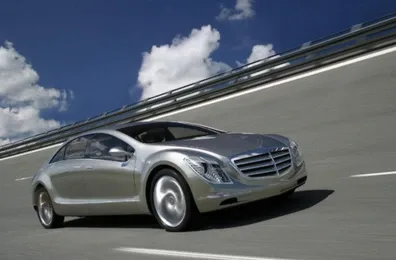
In 2007, the F700 concept car was presented in Frankfurt. According to the manufacturer, it demonstrates the harmony of dynamics and environmental friendliness, high power, and low fuel consumption. The F700 is the first car in the world capable of recognizing road conditions and coping with irregularities thanks to the active PRE-SCAN suspension: two laser scanners analyze the surface, and the suspension adapts to it.
The Vito van family (Mercedes-Benz V-class) won the title of best van of the year in 1996. The Sprinter family includes 9 base models and 137 modifications. Mercedes ML combines the characteristics of an SUV, minivan, station wagon, and passenger car, being a multi-purpose vehicle. The high-cross-country family with permanent all-wheel drive is produced in the USA; the model was first presented in 1997.
Since October 1997, the Mercedes-Benz A-class compact car family has been sold, which remained virtually unchanged in 2000. Mercedes-Benz CLK is a family with coupe and convertible bodies of an intermediate class between C and E, created on the basis of the C-class. The CLK coupe was first shown in winter 1997 in Detroit. Mercedes-Benz CLK-GTR is a unique road version of the GTR "Grand Tourismo" racing car, produced in a limited series (25 units). The first presentation took place in November 1998.
Seeking to expand its product range, the company began producing the Smart minicar. In 1998, the merger of Daimler-Benz AG and Chrysler Corporation took place. Mercedes Vision SLR Roadster Concept, a two-seat sports car, was first presented in Detroit in July 1999. The model is used in Formula 1 races.
In 2007, the F700 concept car was presented in Frankfurt. According to the manufacturer, it demonstrates the harmony of dynamics and environmental friendliness, high power, and low fuel consumption. The F700 is the first car in the world capable of recognizing road conditions and coping with irregularities thanks to the active PRE-SCAN suspension: two laser scanners analyze the surface, and the suspension adapts to it.
 Mercedes-Benz maintains leading positions in the automotive industry, as it did a century ago. Producing high-quality cars and engines, the concern with a three-pointed star on its emblem continues to hold leadership and high competitiveness.