
Another Mercedes AMG? This news no longer surprises anyone. Yes, the new Mercedes AMG will surely be more powerful than all its competitors. But on a winding road, let alone a race track, rivals will be faster…
The Mercedes-Benz CL 65 AMG, which we tested on roads near Los Angeles for AMG's 40th anniversary, turned out to be exactly that. But the Mercedes-Benz CLK 63 AMG Black Series was a real revelation!
And I also saw Paris Hilton's trash cans...
— The Beckhams recently bought this house: they're renovating now. And behind that fence lives the Ozzy Osbourne family — see the brass plaque on the gate: "Don't fear the dogs, beware of the owners"?
An old Jaguar XJ with a chatty female guide, its suspension rumbling over the joints of American asphalt, slowly crawls along the deserted streets of Beverly Hills. The two-hour tour for three costs $360 — $120 per person. A bit pricey? But Beverly Hills is the Rublevka of the world, the center of prestige and luxury. On these picturesque hills at the foot of the cliff with the white HOLLYWOOD sign, all celebrities dream of settling.
— Frank Sinatra lived in this house. He had a plaque next to the doorbell: "I hope you had a reason to press this button." And Paris Hilton lives here. See the paparazzi sitting over there, waiting for her to come out?
Opposite the next gate, indeed, two onlookers sat on the parapet. The house differed from its neighbors only in that a silver Range Rover, a cherry-red Bentley GTC convertible, and a black Mercedes McLaren SLR were dumped right on the street by the garage. Even by American standards, this trio is worth about seven hundred thousand.
— And here are her trash cans, — the guide continues. — You can peek and find out what Paris Hilton had for breakfast!
What jokes these local tour guides have... Or is that the main purpose of the trip? After all, they surely told her we're journalists. And what do sharks of the pen usually do? Dig through celebrities' trash cans...
If so, then I'm lucky. I saw Lenin!
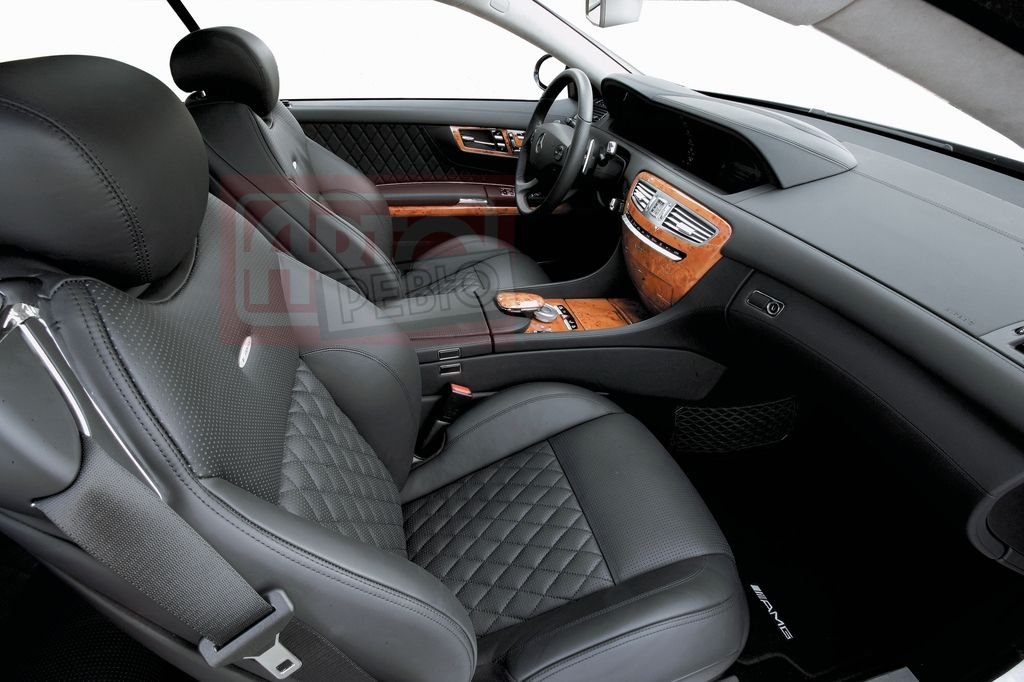 | 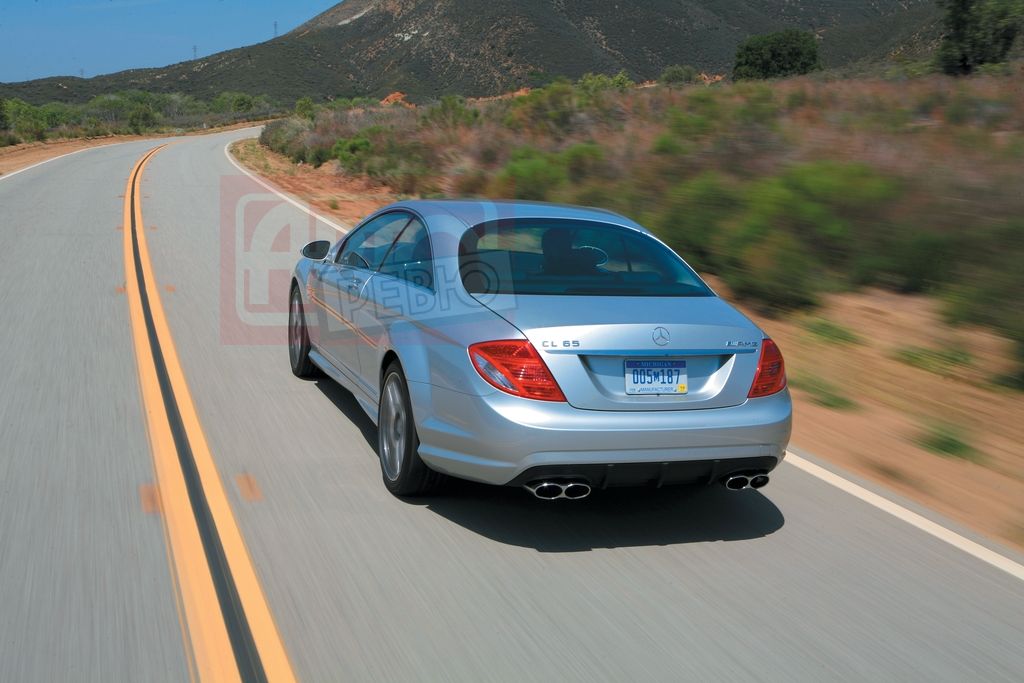 |
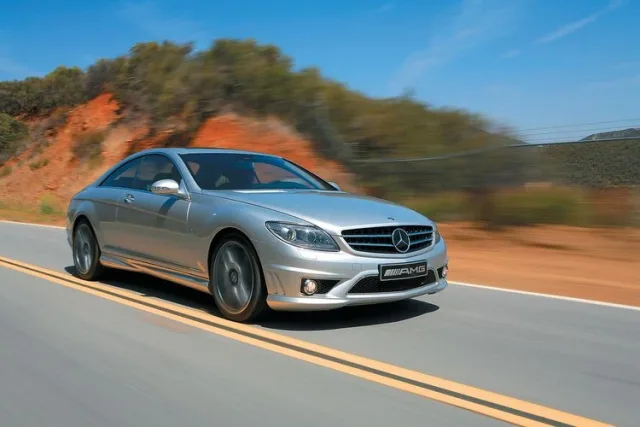
| Mercedes CL 65 AMG: an office where you can calmly accelerate to 100 km/h in less than five seconds | From the outside, you can distinguish the Mercedes CL 65 AMG with its 12-cylinder turbo engine only by the badge and the "fused" twin exhaust tips: on the eight-cylinder CL 63 AMG, they are separated |
For the curious, I report: Paris Hilton's trash cans are pink, with Swarovski crystals. Just kidding. The cans are just cans — green, plastic. And the black SLR left under the windows is dirty. Not washed, probably for two months. Maybe she didn't like it? Or do they use it to go for pizza?
But why can we leave unwashed Zhiguli in front of our dacha, and Paris Hilton can't? For the Hollywood crowd, a Mercedes is like a Zhiguli for us. The people's Hollywood brand. There are clearly more cars with the three-pointed star here than in Moscow, and it's in Beverly Hills that the two largest Mercedes-Benz dealerships in the States are located.
In short, it's no surprise that Mercedes decided to celebrate AMG's 40th anniversary right here. In the world capital of glamour, luxury, and cars with the three-pointed star.
And although they say it's better not to celebrate a 40th anniversary, I still hoped for a real celebration. They'd gather old cars with the AMG badge in Los Angeles, invite the founders of the Affalterbach studio, Hans-Werner Aufrecht and Erhard Melcher — there'd be talks in the spirit of "fighters remember past days and battles in DTM, where they fought together." And there'd also be rides in old cars — real ones, without the electronics that get on your nerves...
Alas...
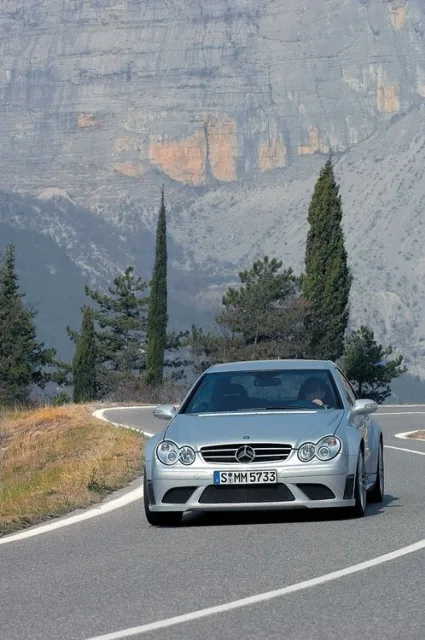
Mercedes CLK 63 AMG Black Series: wider due to the body kit, slightly more powerful, stiffer… And much faster on a winding road
A few old AMGs were indeed brought to America. But they were displayed at the dealership on Beverly Hills, and no one intended to drive them. Neither Aufrecht nor Melcher was there. And the "driving" program turned out to be modest: several modern Mercedes from the AMG lineup, of which the only new items for us were the large CL 65 AMG coupe with a 12-cylinder turbo engine and the "compact" Mercedes CLK 63 AMG in Black Series trim.
The majestic CL 65 AMG was first.
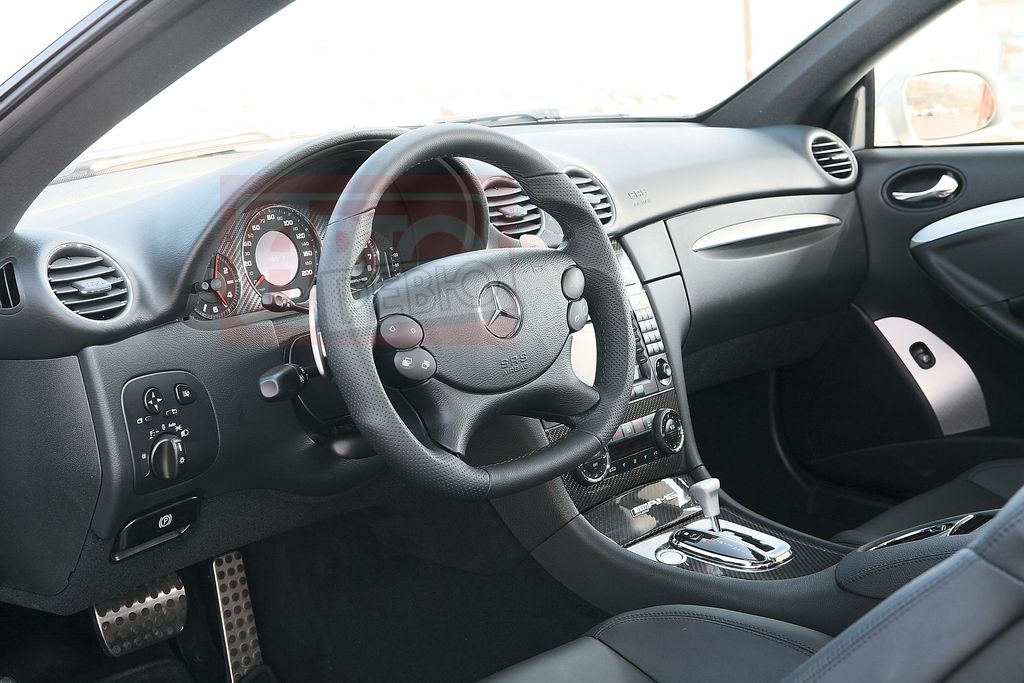 | 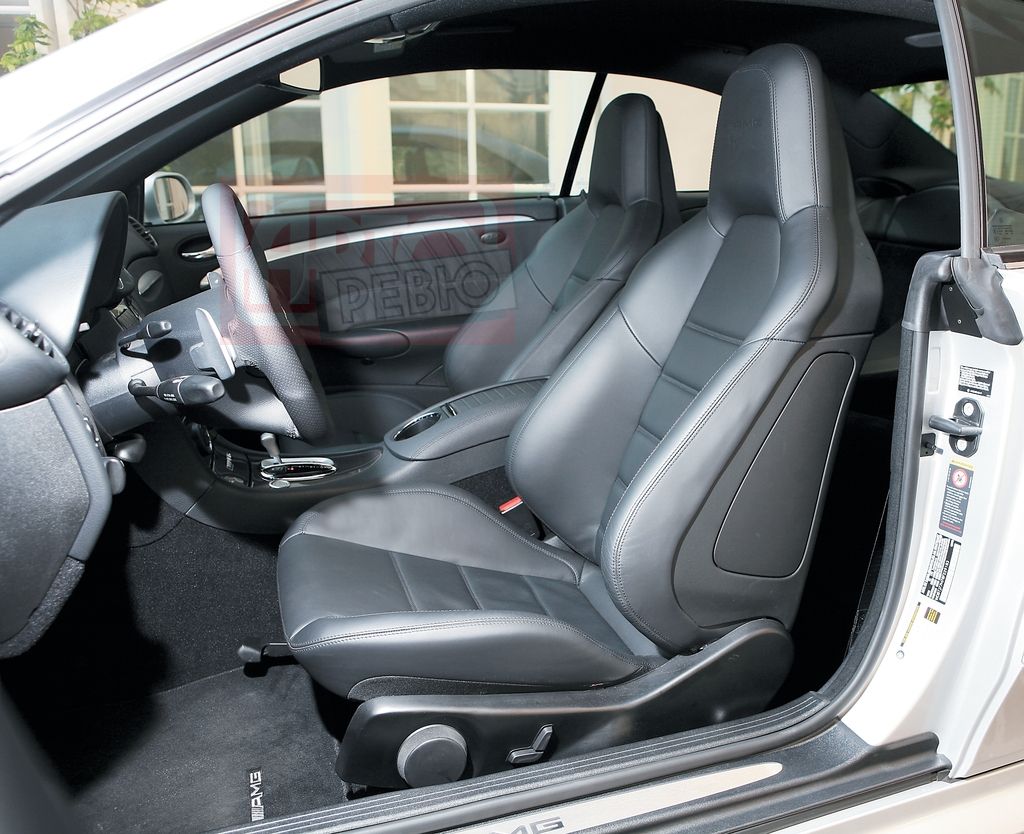 | 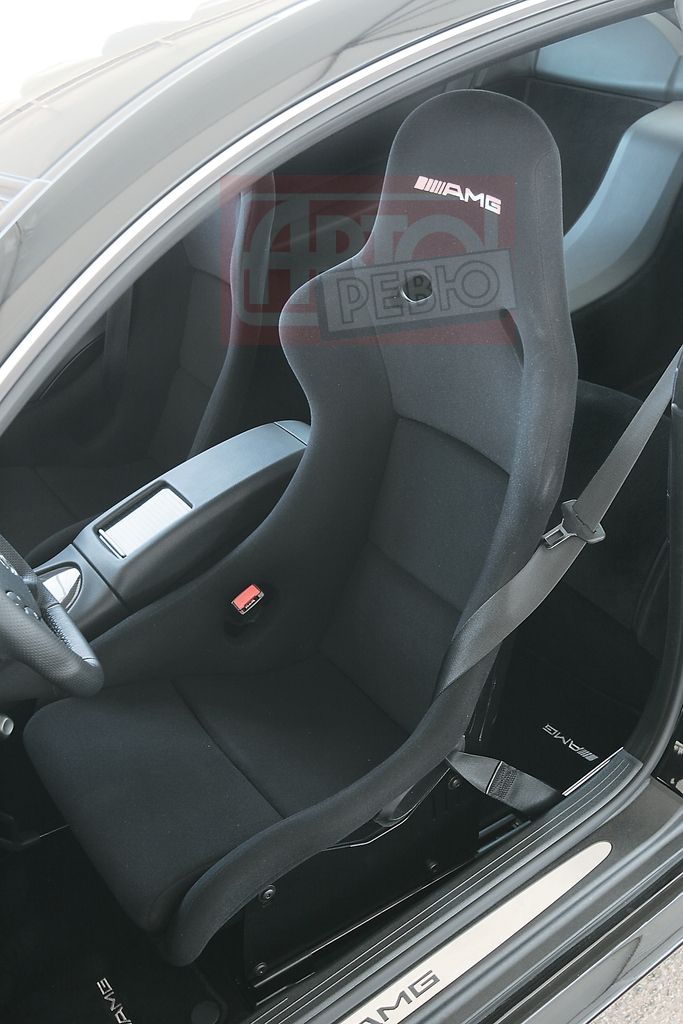 |
| Interior of the Black Series car: flat-bottomed steering wheel and minimal aluminum trim | On the CL Black Series for the American market, massive seats with "stitched" cushions are installed — otherwise, it won't pass the stricter side crash test than in Europe. And in the right photo — the Spartan and lightweight "buckets" of the European version | |
The new flagship coupe based on the S-class makes a strange impression. A streamlined yacht-like front end with a cunning "squint" of the headlights, monumental sides with a dynamic stroke of the "stiffening rib," a complex-shaped rear window "inspired by" the previous generation C215... And a sloping trunk with some vague taillights. Beautiful, but somehow unfinished. There's no integrity. Not to mention the noble minimalism with which the Mercedes SEC of the C126 series from the 80s — the distant predecessor of the current CL coupe of the C216 series — went down in history.
The interior is luxurious. Expensive leather quilted with a cozy check, like Barbour jackets. Lacquered wood panels, generously inlaid with metal buttons. Neon glow of the dials, beautiful graphics of the huge display... In short, everything is like in the S-class, only even richer.
I immediately rushed to the Comand system menu — to adjust the seat firmness and experiment with suspension settings, like in the S-class. But no such luck: in the AMG coupe, these adjustments turned out to be fixed, maximally stiff. Like, don't interfere — everything is already tuned in the best way.
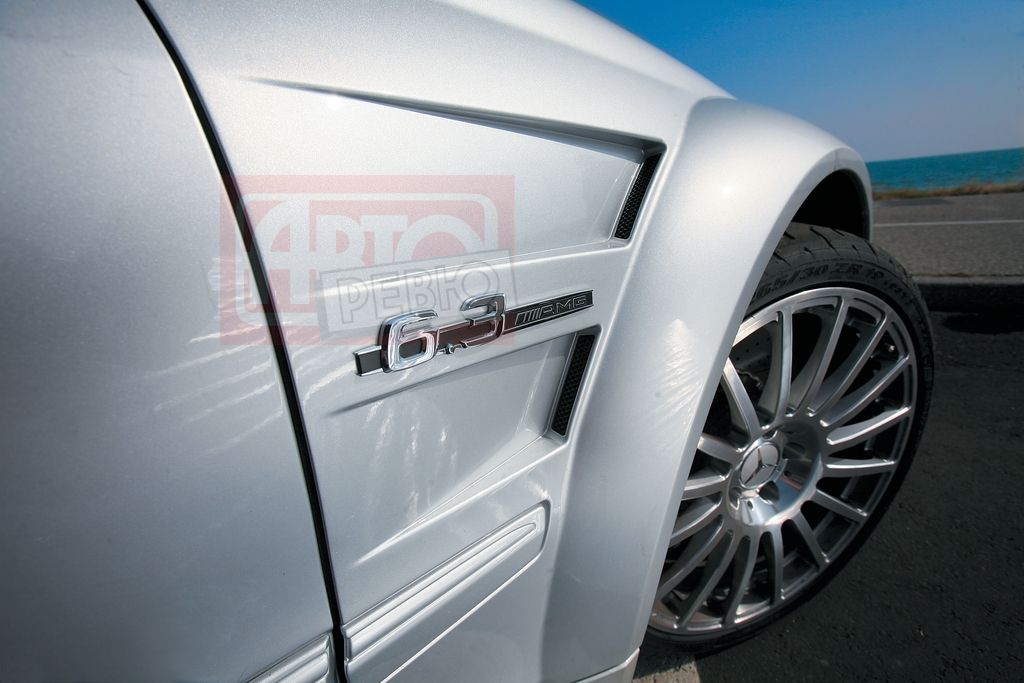 | 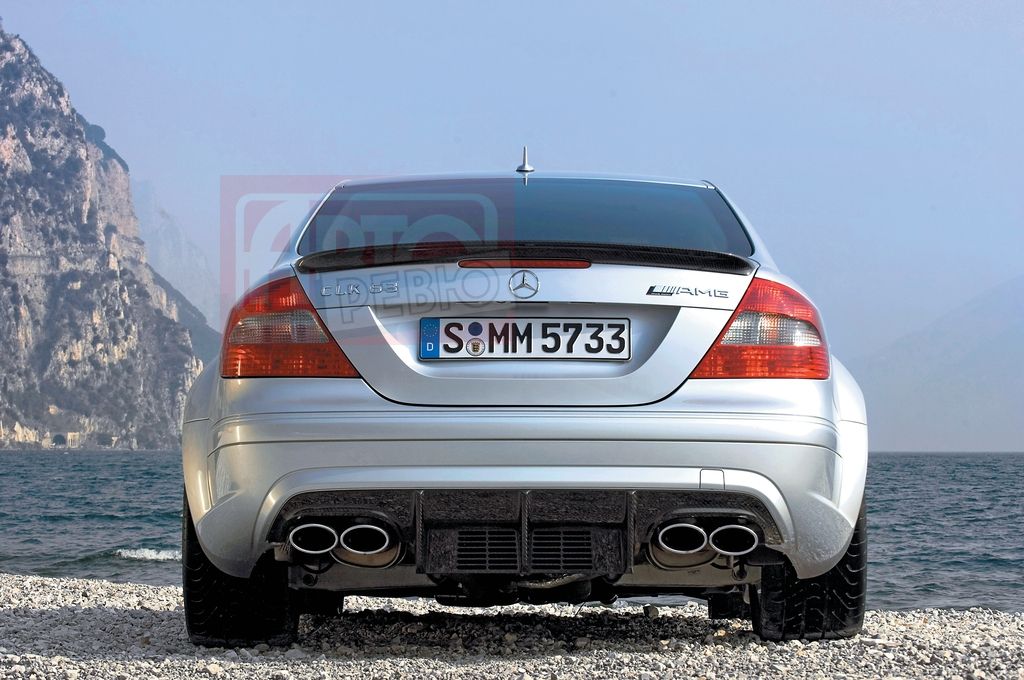 |
| The "gills" behind the front wheel arches also serve an aerodynamic function | Rear bumper diffuser, spoiler on the trunk lid — and split twin tips, like all Mercedes with the "naturally aspirated" V8 6.2 AMG engine |
If only that were the case...
The seats turned out to be too uncompromising — the leather bolsters persistently massaged my back the whole way. The magical hydropneumatic suspension ABC, Active Body Control, in the stiffened version of the CL 65 AMG, still smoothed out asphalt waves magnificently and "swallowed" road imperfections without a trace — on smooth pavement, the Mercedes glides, flies, flows! But any seam or joint — and through the stiffer springs and strut mounts, impacts come to the body, especially noticeable against the overall seismopassive background.
And, alas, no sportiness or excitement.
It would seem — a super-Mercedes. Twelve cylinders, six liters. A slight movement of the right foot — and the five-speed "automatic" shifts "down," two upgraded turbochargers blow air compressed to one and a half atmospheres into the intake tract, enlarged liquid intercooler radiators cool it before feeding it to the cylinders... And the electronically controlled fuel pump raises injection pressure to five atmospheres — so the engine doesn't starve, so it reliably delivers its rated 612 horsepower at the peak of the external speed characteristic.
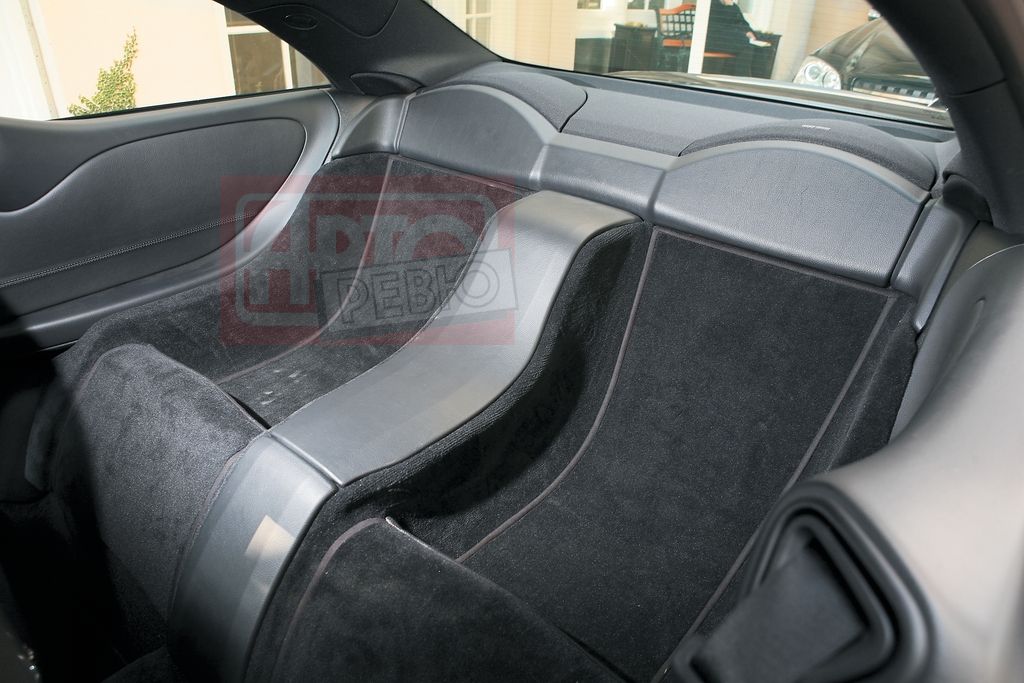 | 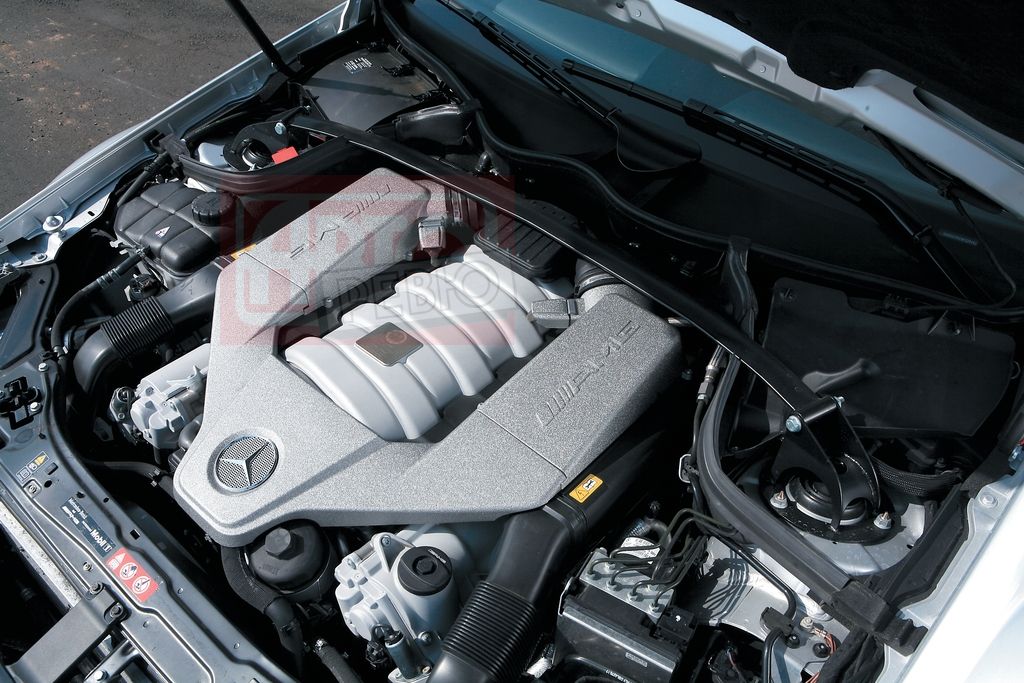 | |
| The amplifier in the trunk increases body rigidity — Mayer is confident of this even without measurements on a special stand | Instead of rear seats — a plastic dummy | The V8 6.2 engine is boosted from 481 to 507 horsepower — the cramped engine bay doesn't allow more |
But the feeling is like being in a passenger Boeing 747 taking off. Very fast, but as if without your participation. You're tempted to turn away from the window and switch to reading a newspaper.
Looking at the road while sitting behind the wheel of this two-ton monster with a speedometer marked up to 360 km/h is certainly worth it. But enjoying driving it — hardly. The steering here is absolutely "artificial": effort appears only in smooth arcs. Body roll is absent, but the front axle starts losing grip too early. If you don't touch ESP, the electronics harshly suppress understeer, not to mention oversteer. And if you press "ESP off" and try to aggressively take a corner, the CL 65 AMG turns into a hard-to-manage barge. The front "floats", the rear tends to slide into a long oversteer, and the steering gives not a gram of information…
 |
| Arnd Maier: an enthusiast racer and AMG's lead "driving" engineer. He is the one who sets all the lap times on the Nordschleife |
And yet there is also the Mercedes CL 63 AMG with a naturally aspirated V8 of 6.2 liters and a seven-speed automatic. And it is 155 kg lighter than the CL 65 AMG! Of course, the twin-turbo V12 overwhelms with its torque — a thousand newton-meters. But without electronics, the Mercedes struggles to "digest" this torque. The differential here is ordinary, without a lock, so with excess traction and ESP off, one of the rear wheels first spins in place with a thin squeal, and then… Whoa — the rear of the heavy Mercedes sharply, with a jerk, swings out! And then the huge tires just as sharply regain grip — even if you've lifted off the gas in time and managed to correct with the steering.
At least the engine sound was impressive! Alas — just a plain hum. Which, by the way, reminds that under the hood is — albeit boosted by turbocharging, but still an outdated engine with three valves per cylinder and two camshafts. And the "automatic" is old, five-speed…
No, better to switch to the Mercedes CLK 63 AMG Black Series!
This is already the second car of the so-called Black Series from AMG — after the Mercedes SLK 55 AMG Black Series roadster. The name "Black Series" doesn't mean the cars are only painted black. It turns out there are such credit cards — black ones, which are even more prestigious than gold and platinum. The most elite. And the Mercedes CLK 63 AMG Black Series is the "most elite" Mercedes CLK 63 AMG.
First, it's more expensive: in Germany, about 30 thousand euros more than a regular Mercedes CLK 63 AMG (120 thousand instead of 89 thousand euros). Second, it's more powerful. The same new AMG V8 with 6.2 liters under the hood of a regular CLK 63 AMG produces 481 hp, while for the Black Series car the engine is boosted to 507 hp. By the way, under the hood of the big CL 63 AMG, the same engine produces all 525 hp.
And third, the Mercedes CLK 63 AMG Black Series looks different — exactly like the Mercedes CLK that drives with orange "flashing lights" on Formula 1 tracks as a safety car. Widened wheel arches and sills, striking "gills" behind the front fenders, carbon fiber inserts… At the same time, the CLK Black Series coupe has no rear seats, the front seats are replaced with Spartan "buckets", and instead of the automatic gear selector lever, a short and uncomfortable metal "stick" protrudes from the tunnel.
Props?
That the CLK 63 AMG Black Series is genuinely fast, we were to verify on a small oval racing track winding through the desert near Los Angeles.
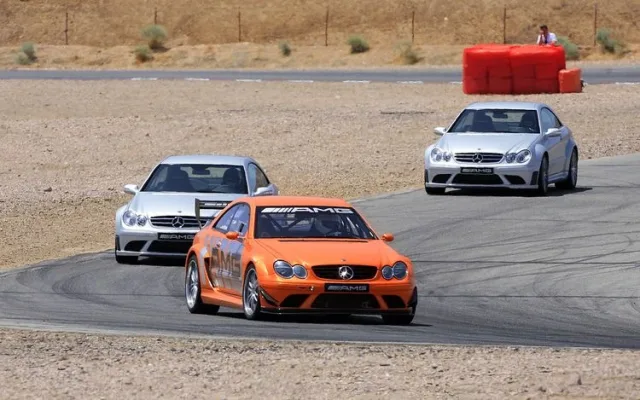
Journalists are being "chauffeured" around the track in an experimental CLK 63 AMG Black Series used during development — with a lightweight body (note the plastic side windows), no interior, a roll cage, and a rear wing. Practically a race car
I know these Mercedes "joyrides": drive strictly behind the leader, don't turn off the stability system under threat of death… But when I, having put on a helmet, sat behind the wheel of the handsome CLK 63 AMG Black Series, no one said a word to me about ESP: I set off onto the track following the yellow "racing" CLK 63 AMG with a roll cage with the "stability control" off.
And I didn't regret it. After the heavy and unwieldy twin-turbo Mercedes CL 65 AMG, the "Black Series" Mercedes CLK was a breath of fresh air!
If the CL, when you press the gas, moves off reluctantly and slowly, the CLK takes off instantly with the eager rumble of the "tuned" exhaust. What fun torque! And what a "feel of the steering"… It's been a long time since I've encountered a Mercedes with such a "clean" reactive effort — low but linear and crystal "transparent". At the same time, on the track asphalt heated by the California sun, the Mercedes CLK Black Series holds on tenaciously and intelligently — "neutrally", starting to slide with all four wheels almost simultaneously.
And if you give it a bit more gas in a corner?
Yes!
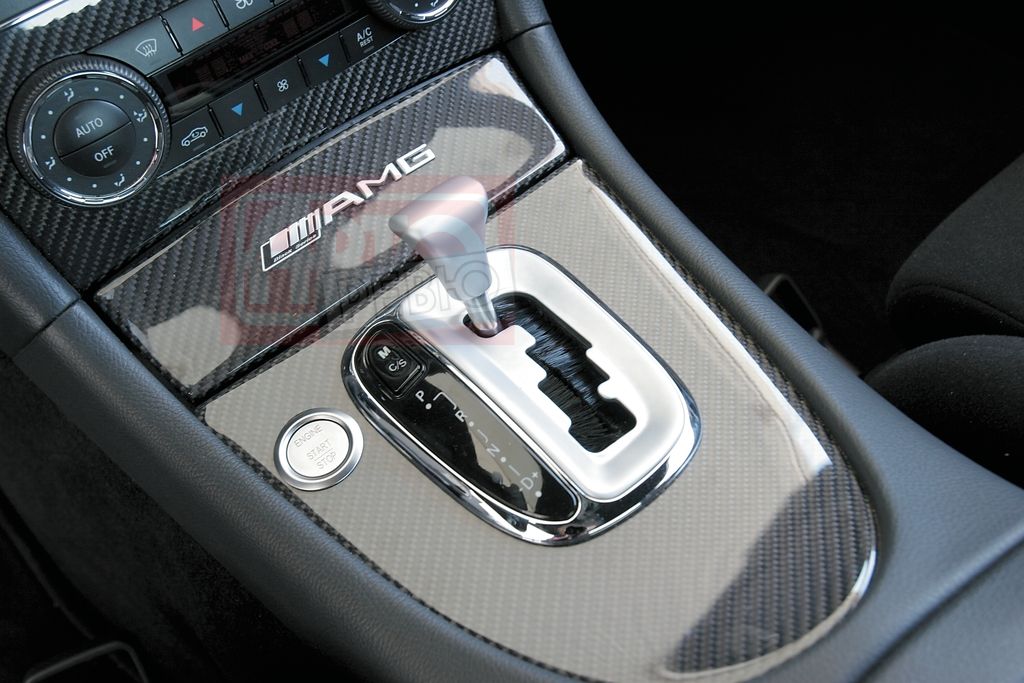 | 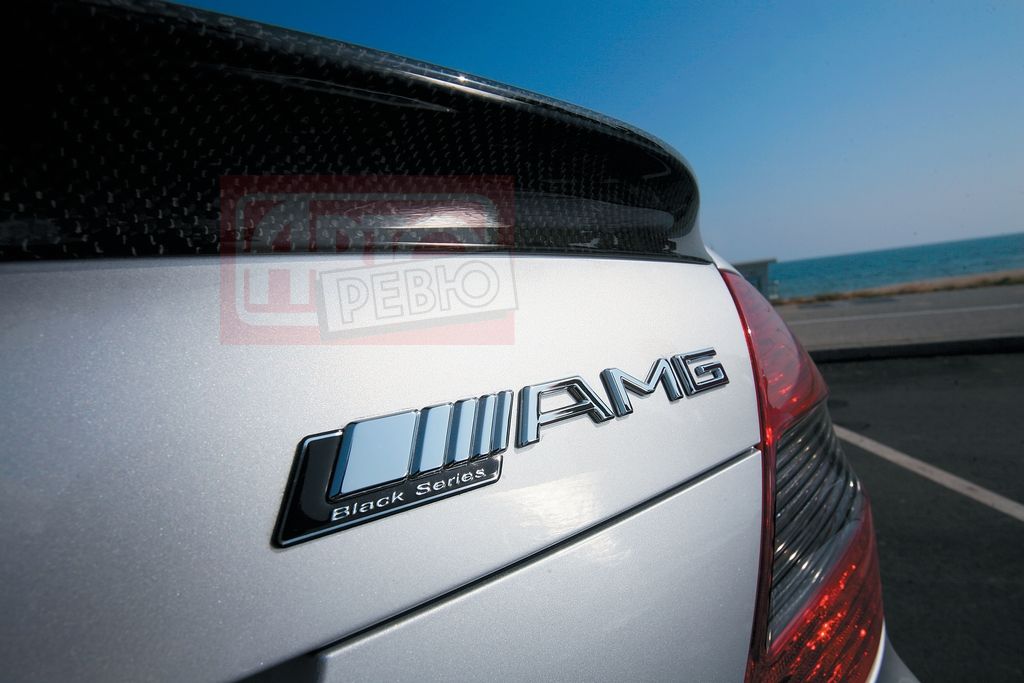 |
| The short metal knob is extremely uncomfortable. And how it heats up! | Laconic badge: Black Series |
The super-powerful Mercedes obediently "sets itself" into a drift — and is "caught" with a single precise steering input. As if this isn't a Mercedes, but… No, not every BMW these days is so docile in a controlled drift, even when it comes to cars with the M badge. Of the recent ones — maybe only the BMW Z4 M Coupe.
And the leader in the yellow car floors it — you just have to keep up! But it's hard for me. Oh devil, where's second gear? Why doesn't the "automatic" obey the paddle shifters, shifting on its own?
After completing my three required laps, I complained to the Mercedes folks about the gearbox's behavior. "Looks like it overheated," the Germans reluctantly admitted.
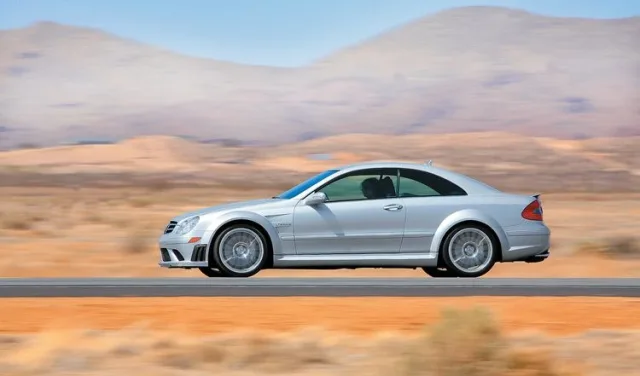
The top speed of the Black Series version is electronically limited to 300 km/h — the "regular" CLK 63 AMG stops accelerating after 250 km/h
Ah, we're already familiar with this phenomenon. A year ago on a mountain Italian road, the "automatic" of the CLK 63 AMG cabriolet (see AR No. 8, 2006) lost manual mode after ten minutes: out of the trio of positions C/S/M, that is, "comfort"/"sport"/"manual", the letter "M" simply "dropped out". The same thing happened now. No wonder: on a race track, and in thirty-degree heat…
Stop. Is this normal? Should a Mercedes-brand car's gearbox overheat at a generally normal summer temperature?
After a break, when the cars had cooled down a bit, I was allowed out onto the track a second time as an exception. Mode M appeared! And it lasted two laps: the finicky electronics, fearing a gearbox failure as oil temperature rose, "dropped" it on the third lap.
But those two laps I finally drove as I wanted. The chassis balance is top-notch! You can play with the car however you like. At the very least, you don't have to fear a spin from careless over-application of throttle. In one of the "slow" corners, I deliberately got cocky and "set" the Mercedes sideways at almost a right angle, no longer afraid of embarrassing myself in front of everyone. And nothing — "caught" it in one go, without a secondary "whip".
And then there was a drive on public roads. Unfortunately, on straight and boring American highways. But, fortunately, behind the wheel of such a wonderful car as the Mercedes CLK 63 AMG Black Series.
It's fast. It's sensitive and responsive. Yes, it's unceremoniously harsh — it always shakes. But, unlike the big CL 65 AMG coupe, here this stiffness is constant, "honest", and one hundred percent justified by the beautifully tuned, truly sporty chassis.
And how the V8 under the hood sings in all its glory…
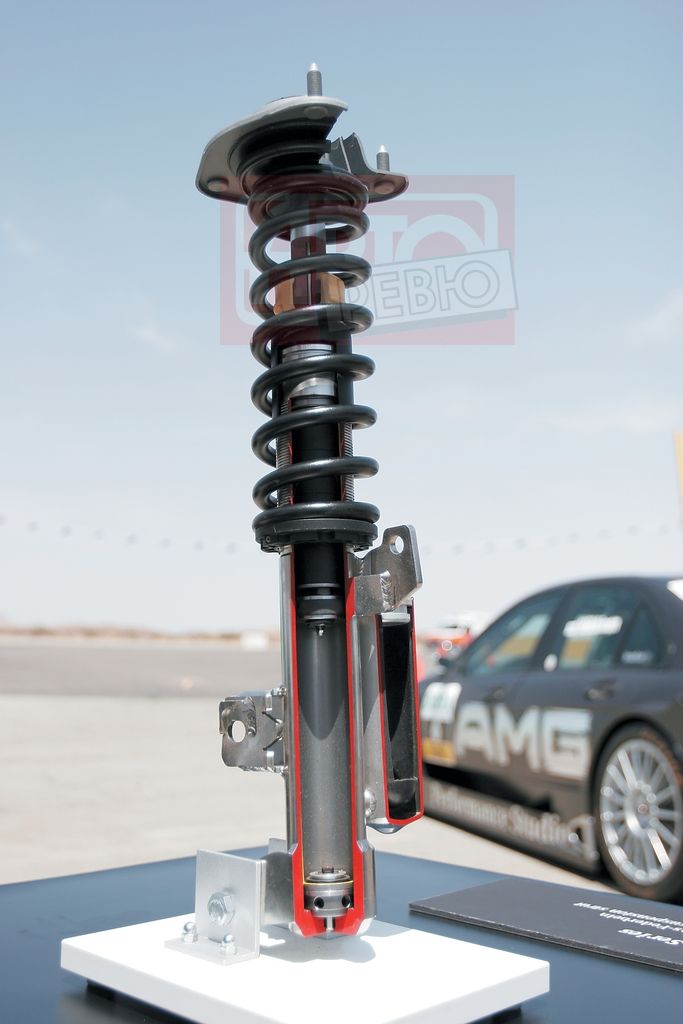 | 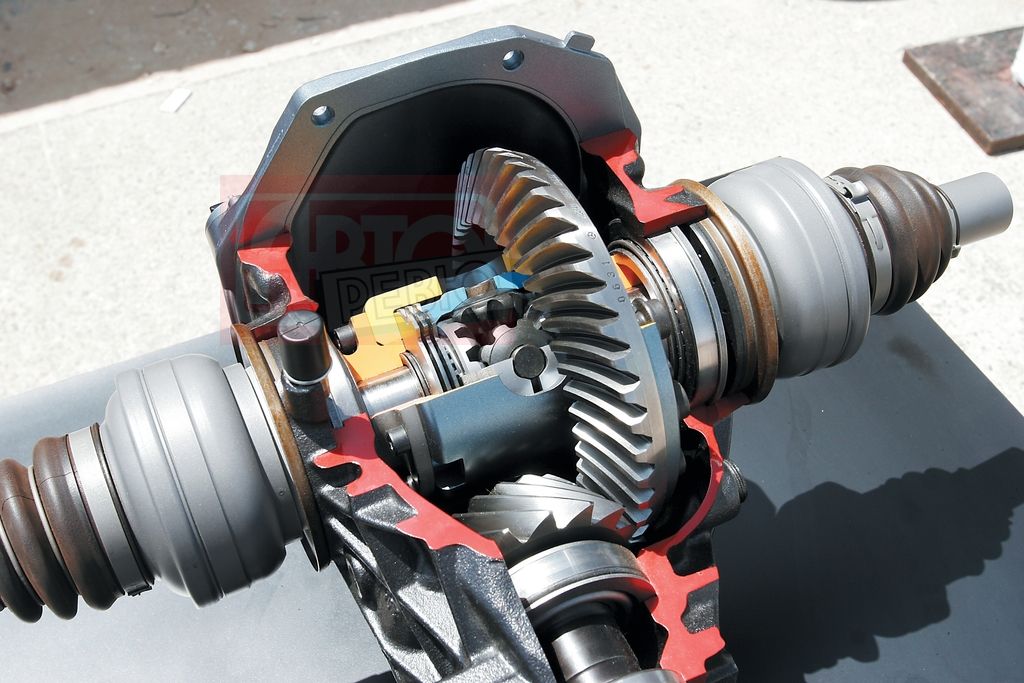 |
| Racing shock absorbers from German company KW: twin-tube, gas-filled, with adjustable travel and rebound/compression resistance | The final drive is slightly "shortened" and with a Drexler differential with a disc-type self-locking mechanism |
But what exactly made the Mercedes CLK 63 AMG change so much? After all, it's not the body kit or the extra 26 hp under the hood, right?
Not what, but who.
This man's name is Arnd Maier. His position at Mercedes-AMG GmbH is: Head of Vehicle Dynamic Development. This means Maier is the chief for tuning the chassis of all Mercedes AMG cars. For suspension, brakes, steering… And the Mercedes CLK 63 AMG Black Series is his favorite child.
— Differential? Do you know the company Drexler? It makes "self-locking" units for all the race cars in the "long" races at the Nürburgring. If you only knew how long we experimentally selected the locking percentages under acceleration and deceleration! We worked on weekends, in the evenings... Suspension? Of course, KW — in the racing world, in terms of price-to-quality ratio, they are currently unrivaled…
Mayer is not a typical engineer, but a person truly passionate about his work. Back in the eighties, he designed and built racing cars, including Lancia Delta Integrale and Ford Escort RS2000 for German rally championship teams. In the next decade, he worked as a leading test engineer at Conti-Teves, where he was involved in advanced developments: refining electromechanical brakes and "electronic" chassis. At the same time, Mayer did not give up racing — he participated in VLN marathon races at the Nordschleife, starting in his own BMW 2002 and M3 in the E30 body. There is no doubt that he learned the North Loop down to the last turn. — Behind the wheel of the Mercedes CLK Black Series, I complete a full lap of the Nordschleife in 7 minutes 56 seconds — no one drives faster than me in AMG at the Nürburgring. The regular CLK 63 AMG is noticeably slower: about 8:22. True, the tires are also different: for the Black Series, we reworked the entire elastokinematics of the suspension and thanks to this we were able to install Pirelli Corsa series tires… Mayer knows everything about his cars down to the smallest detail. Creating fast cars and racing them at the Nürburgring, repeatedly retuning the chassis and winning precious seconds on every kilometer of the Green Hell — this is his job and his passion. That is why the Mercedes CLK 63 AMG Black Series stands apart from other models — a true labor of love. Under the hood and in the trunk, strut braces appeared, instead of an "open" differential, a self-locking one was installed, the engine mounts became stiffer, the shock absorbers are racing, adjustable, from KW, and the wheel alignment angles were completely revised. In addition — new silent blocks. We have a completely different Mercedes before us! Yes, in terms of lap time at the Nordschleife, even the CLK 63 AMG Black Series does not reach the less powerful BMW M3 CSL or Porsche 911 Turbo — especially if Walter Röhrl himself is behind the wheel. But now the 500-horsepower Mercedes outperforms the regular Porsche 911 Carrera S and Chevrolet Corvette Z51. However, the main thing here is not the seconds per lap at all. The main thing is the driving pleasure, and in this regard, the Mercedes CLK 63 AMG Black Series is quite capable of competing with both Porsche and BMW. But who will appreciate this car? Certainly not Paris Hilton, who parks a 626-horsepower Mercedes SLR under her windows. For her, the name, price, and automatic transmission matter in a car. And such buyers are the majority. Especially in America, where 45% of all Mercedes AMG cars are sold. Should Mercedes AMG be as obedient in the hands of an experienced driver as BMW M or Porsche? Perhaps Black Series cars are precisely designed to answer this question. Will there be demand for the Mercedes CLK 63 AMG Black Series? Will holders of black credit cards — and also gold and platinum ones — buy it? After all, you can't live on the praises of automotive journalists alone. And it is no coincidence that at the fortieth anniversary of AMG, Mercedes showed two cars with completely different characters — the pompous Mercedes CL 65 AMG and the "racing" Mercedes CLK 63 AMG Black Series. In essence, this is a choice of concept. What will AMG cars be like in the future? Heads or tails, even or odd, wallet or life? In any case, I did everything I could: I told how boring the super-powerful and super-heavy CL is and how fun and pleasant the CLK Black Series is. And since for creating such cars as the CLK 63 AMG Black Series, Mercedes opened a new Performance Studio in Affalterbach, there is hope for the better. That soon we will be waiting for a new Mercedes AMG with the same impatience as for new BMWs with the coveted M badge. Isn't that right, Herr Mayer?Aufrecht, together with his team, planned to offer services for boosting Mercedes engines, taking as an example the approach of Burkard Bovensiepen from Alpina and Josef Schnitzer, who were involved in tuning BMWs. True, Mercedes rarely appeared on race tracks then — Porsche 911, Ford Capri, Alfa Romeo Giulia, and BMW 2002 Ti reigned supreme there. Aufrecht, however, bet on increasing the power of the engines of large Mercedes 300SE sedans from the W109 series. And then AMG took a bold step: to enter one of the marathon stages of the European Touring Car Championship ETCC… in an extended Mercedes 300SEL. These sedans with 250-horsepower V8 6.3 engines were already considered the fastest production cars in Germany. Melcher, who was responsible for boosting at AMG, together with colleagues, bored the block to 6.8 liters, and with the help of "high" camshafts and retuned intake and exhaust, squeezed out 428 hp. With a top speed of 265 km/h, retuned suspension, and racing tires, this long-wheelbase Mercedes, even despite the standard automatic transmission, turned out to be surprisingly lively and reliable. As a result, Hans Heyer and Clemens Schickentanz, overtaking small Fiats, Alfas, and BMW 2002s, brought the huge sedan to second place overall at the 24-hour marathon in Spa in 1971.
However, Aufrecht's racing experiments were rare — the company mainly focused on refining ordinary road cars. By the mid-70s, 40 people worked at AMG, and in 1976 the company moved to neighboring Affalterbach, where it is still based today. Tuned Mercedes became so popular that many European firms decided to follow in AMG's footsteps. Thus, in 1977, Brabus and Lorinser appeared, and at the 1981 Frankfurt Motor Show, 176 companies already offered their services, one way or another modifying Mercedes.
However, the first half of the 80s was difficult for AMG: due to the oil crisis, interest in powerful cars fell, and Aufrecht even had to lay off people. The situation improved only by the middle of the decade, when the new Mercedes 190 of the W201 series (in 1982) and the Mercedes 300E of the W124 series saw the light of day. Just a couple of months after the premiere of the "one hundred twenty-fourth," the Mercedes 300E 5.6 AMG was assembled in Affalterbach, replacing the standard three-liter inline-six with a V8 5.6 from the then S-class W126. And in 1986, with a boosted 360-horsepower "eight" that received an original cylinder head with four valves per cylinder, this sedan accelerated to 300 km/h.
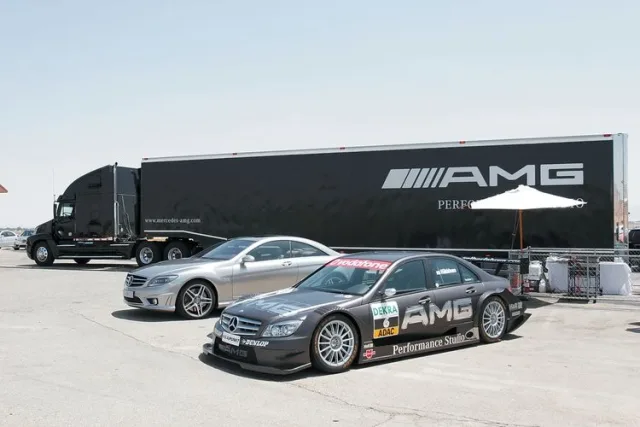
At the front — a fresh racing prototype from Mercedes for DTM, styled after the C-class. These cars are built by HWA. Behind — the Mercedes CL 65 AMG in the 40th Anniversary edition, covered with unique Alubeam enamel with pigment particles 30—50 nm in size. In the background — a truck of the new AMG Performance Studio division, which will now become the home for special projects like Black Series cars
In the same 1986, Mercedes returned to the ETCC circuit championship — to the senior DTM class, where the Mercedes 190E 2.3-16 fought with the BMW M3 of the E30 series. The preparation of engines for racing cars was entrusted to Aufrecht's firm, and soon this direction became even more profitable for AMG than refining road models. There were times when the sports division fed the entire AMG company! During this difficult period, AMG tried to cooperate with Mitsubishi. In 1986, the front-wheel-drive sedan Mitsubishi Debonair V3000 in the Royal AMG version with an aerodynamic body kit from AMG appeared on the Japanese market, and in 1989—1990, the Mitsubishi Galant AMG with a two-liter "four" boosted by the Germans — 170 hp versus the standard 140 hp — was produced in small series in Japan.
And Mercedes at the same time, for the development and production of the eight-cylinder E-class (Mercedes 500E), turned not to AMG, but to Porsche…
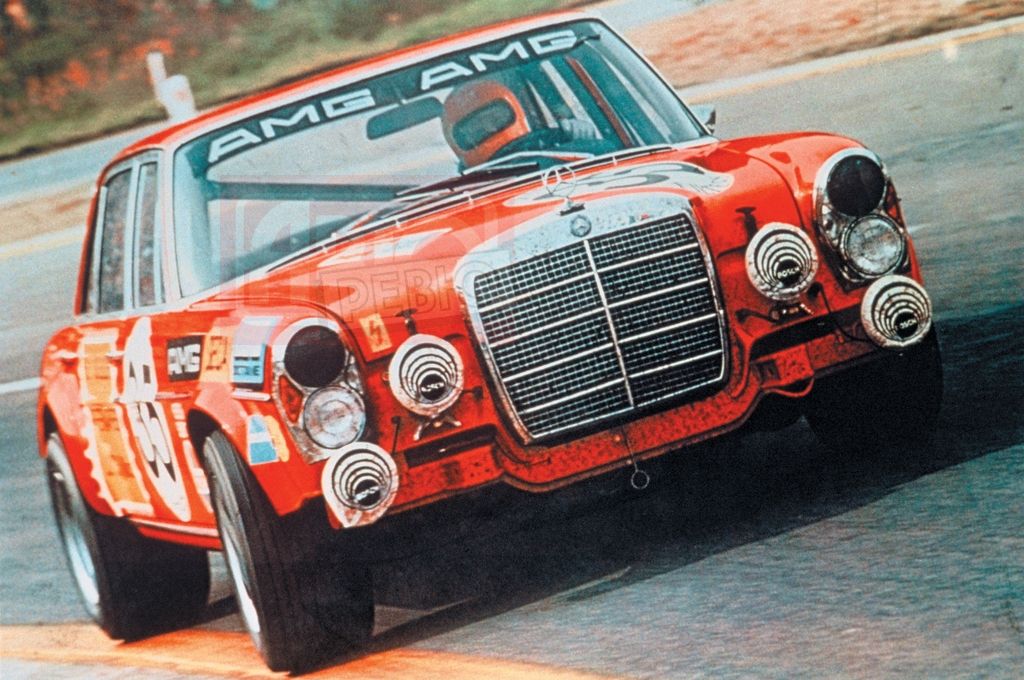 | 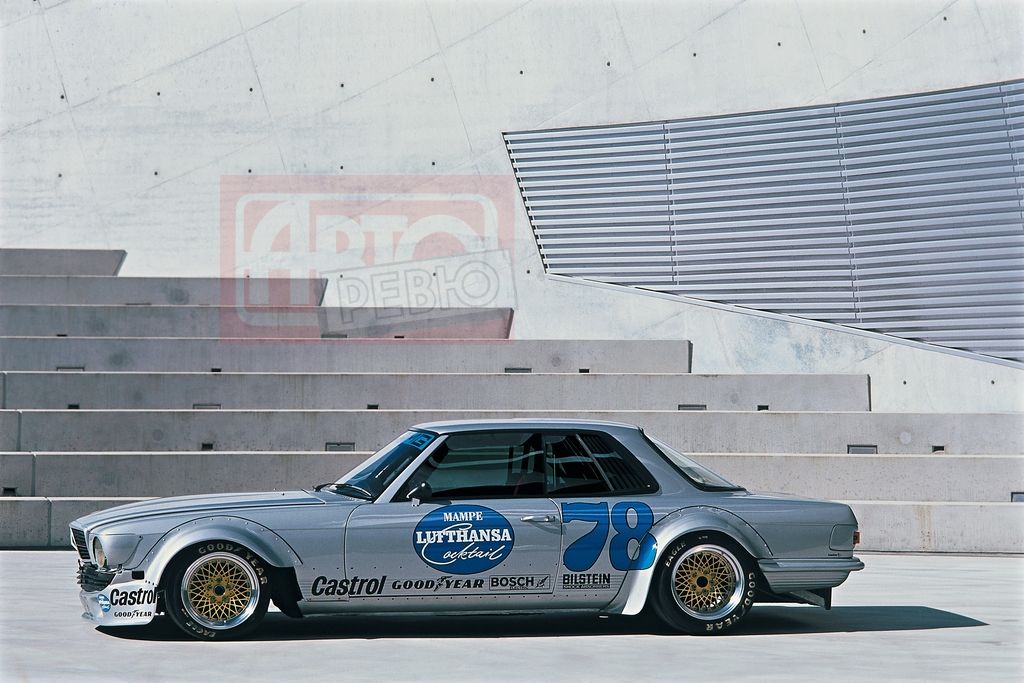 | |
| The only success of AMG in 1971: the crew of the Mercedes 300SEL super sedan with a 6.9 engine finished second at the 24 Hours of Spa, losing to the leaders on the Ford Capri RS 2600 coupe with V6 2.9 by only three laps, but ahead of the bronze medalists on the two-liter Alfa Romeo 2000 GTam by 20 laps. Moskvich-412s of the Belgian dealer Skaldia Volga also started in that race | And this is the road Mercedes 300SE 6.3 AMG. With the same displacement, but with a modified cylinder head, the engine produced 280, 300, or 320 hp: in the maximum version, the sedan accelerated to 235 km/h and reached a hundred in 6.7 seconds — 1.3 seconds faster than the "standard" | The second AMG entry into ETCC tracks happened in 1978—1980: the Mercedes 450SLC AMG, lightened in Affalterbach from 1700 to 1225 kg and with a V8 4.5 boosted to 375 hp, successfully competed in individual stages (again with the standard "automatic"!). And in 1980 at the Nürburgring, the Mercedes 450SLC AMG finally won |
The rapprochement of AMG and Mercedes happened thanks to DTM racing: since 1988, Aufrecht's atelier became the main partner of the factory team. And since 1990, road AMG cars began to be sold through the Mercedes-Benz dealer network with a factory warranty. By that time, 400 people already worked in Affalterbach, and a third plant opened.
The first joint model of AMG and Mercedes appeared in 1993 — the compact sedan C 36 AMG with an inline "six" of 3.6 liters and 280 hp. At the same time, AMG was registered as an official trademark. The entire 90s passed in the search for mutual understanding between AMG and Mercedes engineers — sometimes successful, sometimes not. In 1999, Aufrecht sold 51% of the shares of his atelier to DaimlerChrysler AG and founded a new company HWA (from the first letters of his initials) in the same Affalterbach, focusing on the racing business.
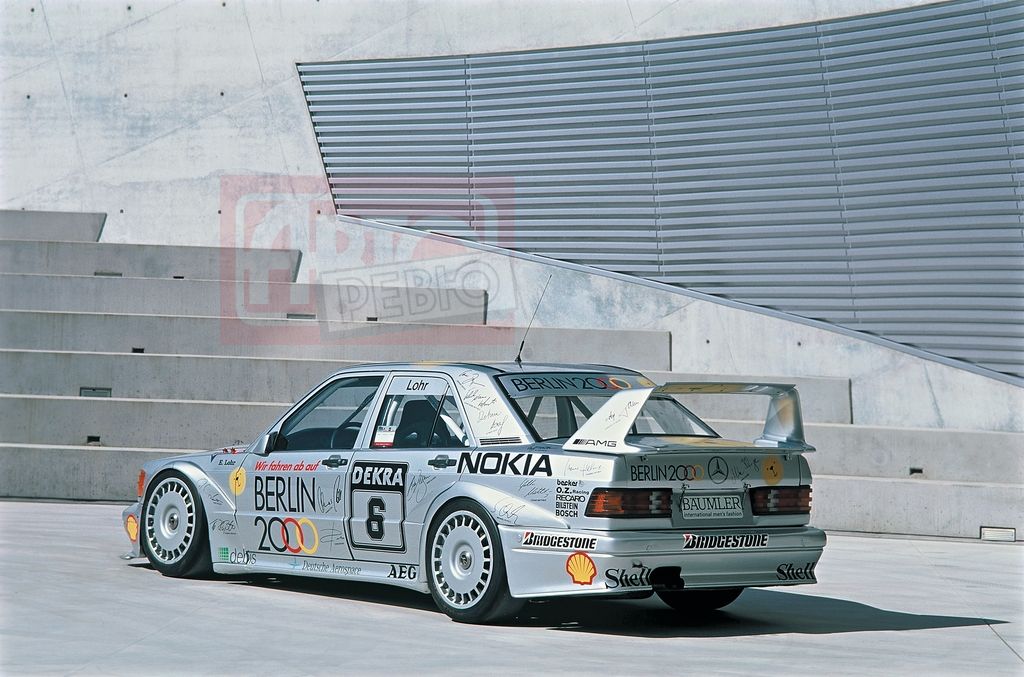 | 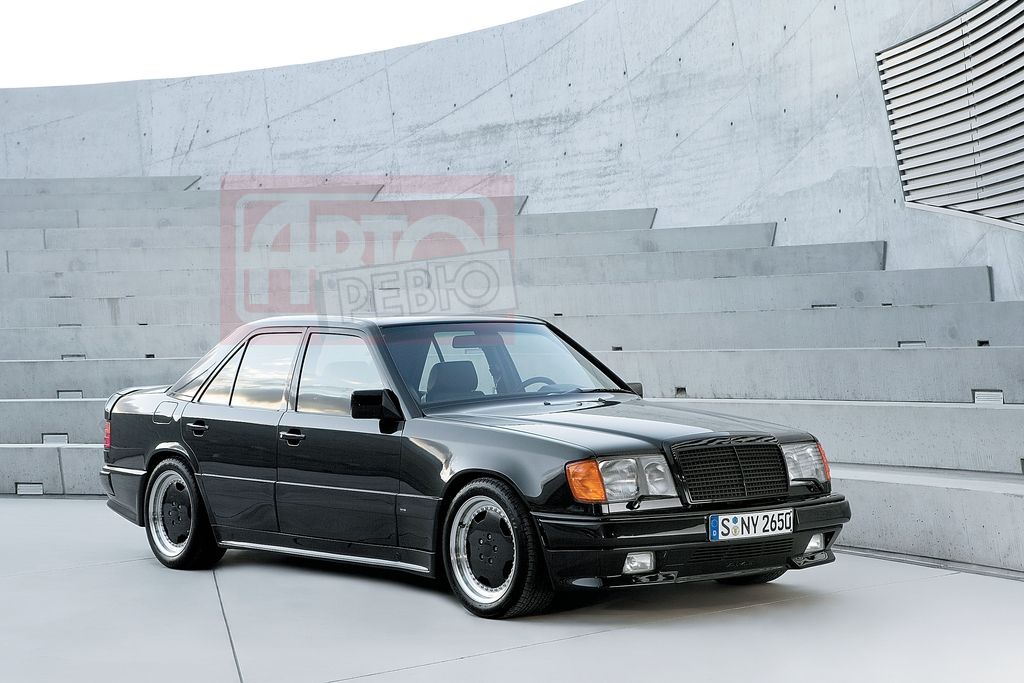 |
| In 1986, Mercedes returned to circuit racing with the 190E 2.3-16 sedan. Aufrecht's workshop initially prepared engines for DTM Mercedes, and later entire cars | The 1987 Mercedes 300E 6.0 AMG, nicknamed "Hammer," was a development of the record-breaking sedan with a 5.6-liter engine that had appeared two years earlier. The V8's power is 385 hp, and its top speed exceeds 300 km/h. After sales began in the US, the AMG brand became known overseas |
| Mitsubishi Galant AMG (1989) — Aufrecht's attempt in the late 80s to find new partners was unsuccessful | The Mercedes-Benz CLK GTR (1997) was also assembled at AMG's facilities. Only 25 units were sold — at $1.5 million each. The V12 engine with 631 hp was mounted longitudinally in the wheelbase |
Today, HWA AG is a factory where 224 employees build Mercedes DTM racing prototypes (this year styled after the new C-Class) and prepare engines for European Formula 3. It is also at HWA's facilities that the small-series Mercedes CLK DTM supercars were made. There are persistent rumors that Mercedes is dissatisfied with its collaboration with the McLaren factory in Woking, where the Mercedes SLR was developed and produced — perhaps its successor will emerge at the Affalterbach-based HWA company…
As for the AMG workshop, whose remaining shares Aufrecht sold to the DaimlerChrysler concern in 2005, it has transformed into the factory-owned Mercedes-AMG GmbH. Currently, 750 people work there, producing over 20,000 engines annually for Mercedes AMG vehicles. The cars themselves are mostly assembled on Mercedes factory lines alongside other versions — with the exception of exclusive models like the CLK 63 AMG Black Series, which will now be built at the new AMG Performance Studio center.