
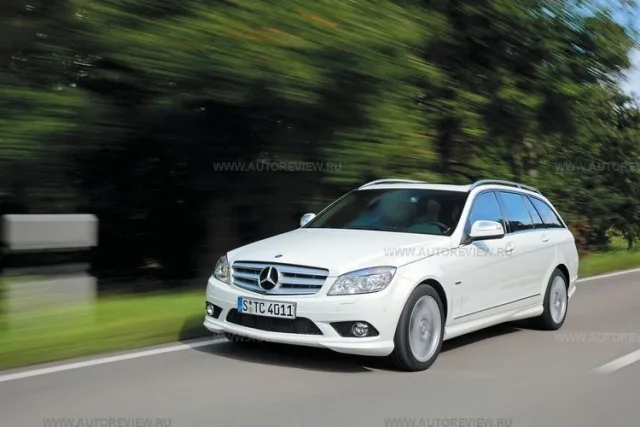
The snow-white Mercedes C 350 Estate station wagon in Avantgarde trim starts briskly, but without a spark — even despite the AMG package, a 272 hp engine and a seven-speed automatic gearbox. Plus this "cotton" steering wheel near the zero position... But the cargo compartment can easily fit a large washing machine. Or an antique bathtub. Or as many as 36 boxes of wine from the vineyards near Stuttgart. Hark! There is a Swabian spirit in the air, it smells of Swabia!
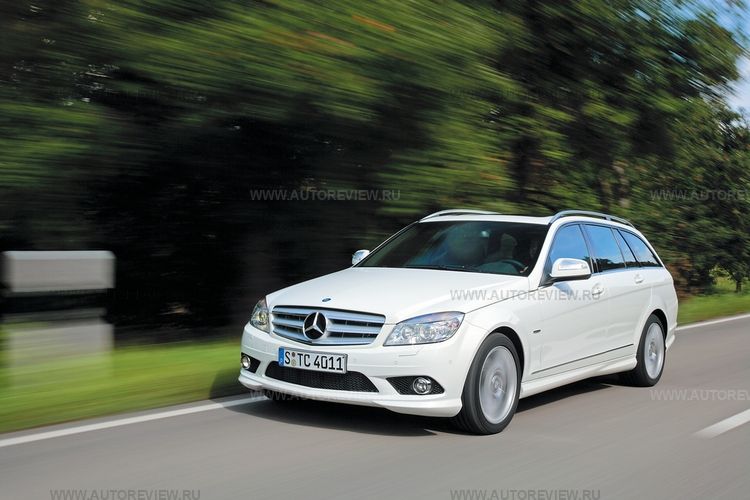
Swabia is the homeland of sedate, thorough, unhurried, thrifty and unpretentious people in food: stewed cabbage, potatoes, fried sausage. But the previous C-class station wagon (S203 series, 2001) seemed to be created in Bavaria — a sloping roof, a modest trunk... A sport wagon! Practicality was sacrificed to style.
However, the star of sport wagons is setting just as it has risen — buyers "with a racing streak" are increasingly looking towards all-wheel-drive crossovers. So why would Mercedes need a compact sport wagon when they are about to get the GLK based on the C-class? That is why the new T-model (as the Germans have called cargo-passenger versions of Mercedes since the W123 series) has returned to its Swabian roots — above the sloping window line, like that of the E-class estate, a "patch" of purely utilitarian purpose has grown. When loaded to the ceiling, it provides an additional 45 liters of volume. And if you fold the rear sofa, the new C-class estate will accommodate a rectangular parallelepiped about one and a half meters long, a meter wide and 60 cm high. Not to mention the ability to carry a nearly three-meter skirting board.
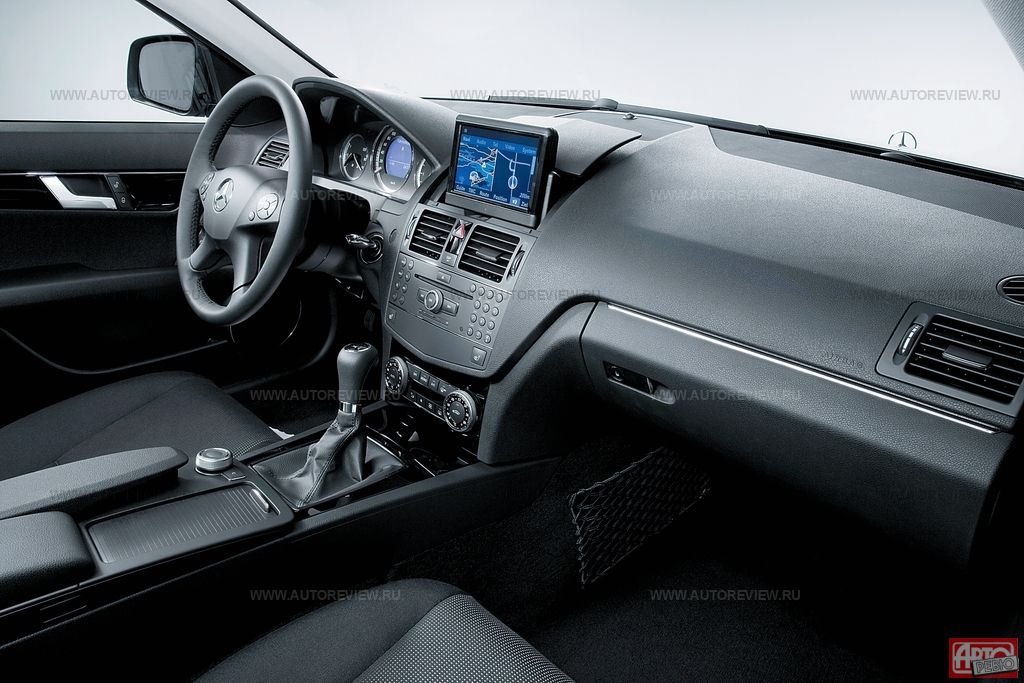 | 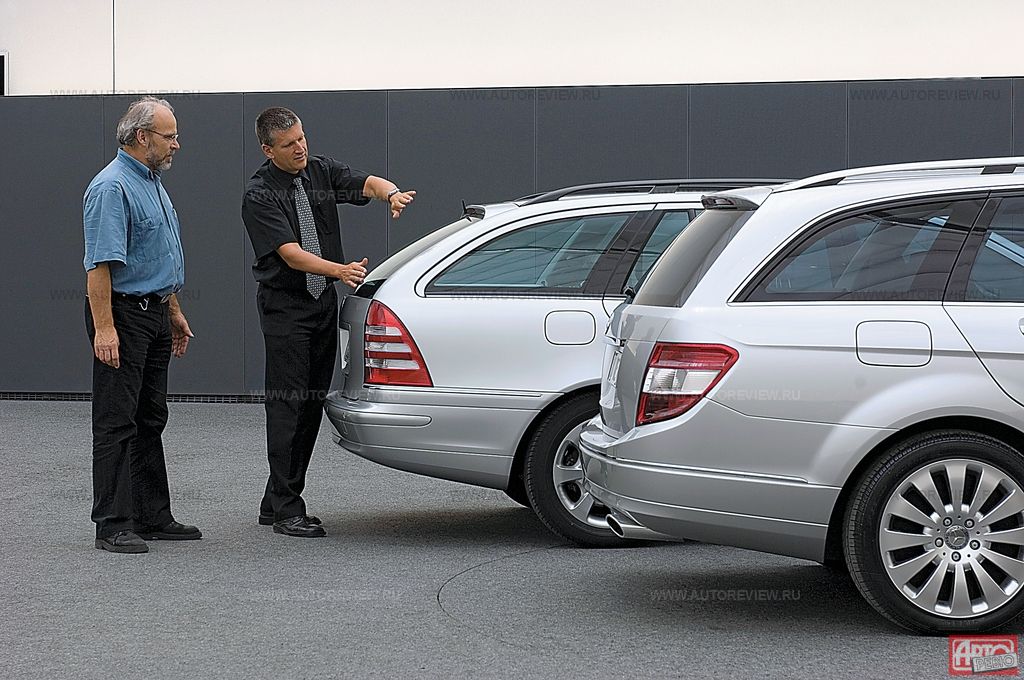 |
| The interior of the new C-class has changed radically — it has become more modern, but has lost in coziness. And the shagreen texture of the plastic suggests savings | Here it is, a clear demonstration of the change in concept of C-class station wagons of two generations |
And how the trunk is organized! It is a song, a folk Swabian song. Smooth walls with nets and hooks, a spacious underfloor with boxes and recesses, the Easy Pack system for reliable cargo securing with an electromechanical drive for the fifth door — and a sturdy crossbar behind the rear sofa backrest with a built-in pull-out net that will "catch" the cargo during hard braking or, God forbid, a frontal impact. Safety above all!
But does the trunk volume of 1500 liters impress the imagination — including the space "for the legs" under the folded rear sofa and the trunk underfloor? Alas, no. Yes, now it is more than that of BMW 3 Series estates (1385 l) and Audi A4 Avant (1355 l). But exactly the same amount fit into the first C-class estate of the W202 series from 1996. And today in the D class there are much more spacious cars — for example, the Volkswagen Passat (1730 l).
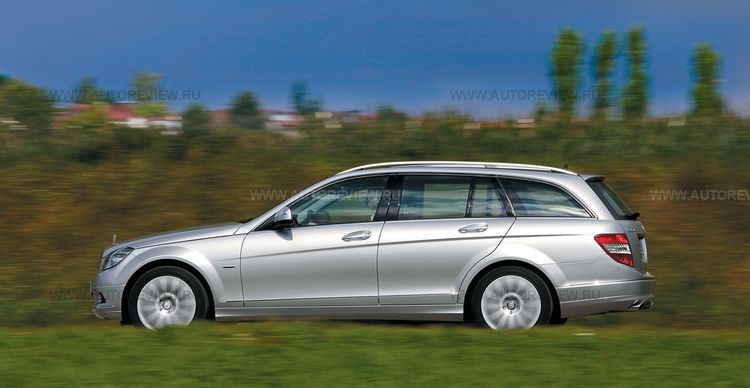
However, a Mercedes is a Mercedes! Elegant and swift, even despite the "cargo" utilitarian patch — it is well disguised by the sloping window line. But the headlights with large brows of colorless "turn signals"... Was it not the Opel Astra that inspired the pets of Mercedes chief designer Peter Pfeiffer? And the interior with sharp chopped edges is definitely Opel motifs!
The new Mercedes C-class has generally become completely different — compared to its predecessor, this is a design revolution. Everything was smooth-rounded and flowing — it became sharply outlined, faceted, youthfully perky. However, such alternation is in the traditions of the C-class. The first Mercedes 190E of the W201 series was faceted, the second (W202) was solidly sleek, the third and previous (W203) still stands out with bright and feminine beauty. Esotericists would say that such metamorphoses are dictated by the very name of the brand, where through a short hyphen the female Spanish name and the surname of the German inventor coexist. Mercedes Jellinek and Karl Benz — a charming girl and a gray-haired inventor are forever bound by a metaphysical marriage within the brand, like the Chinese energies of yin and yang. And after all, the unity of opposites, as the classics of Marxism-Leninism taught, is inevitable without their struggle...
Obviously, in the course of this struggle, a very important quality of the interior, characteristic of the previous "C-class", was lost — anatomical roundness, a sense of coziness. For example, previously the door panels had special recesses for knees, so that one could sprawl more freely on the seat — but now these niches are blocked by extended armrests.
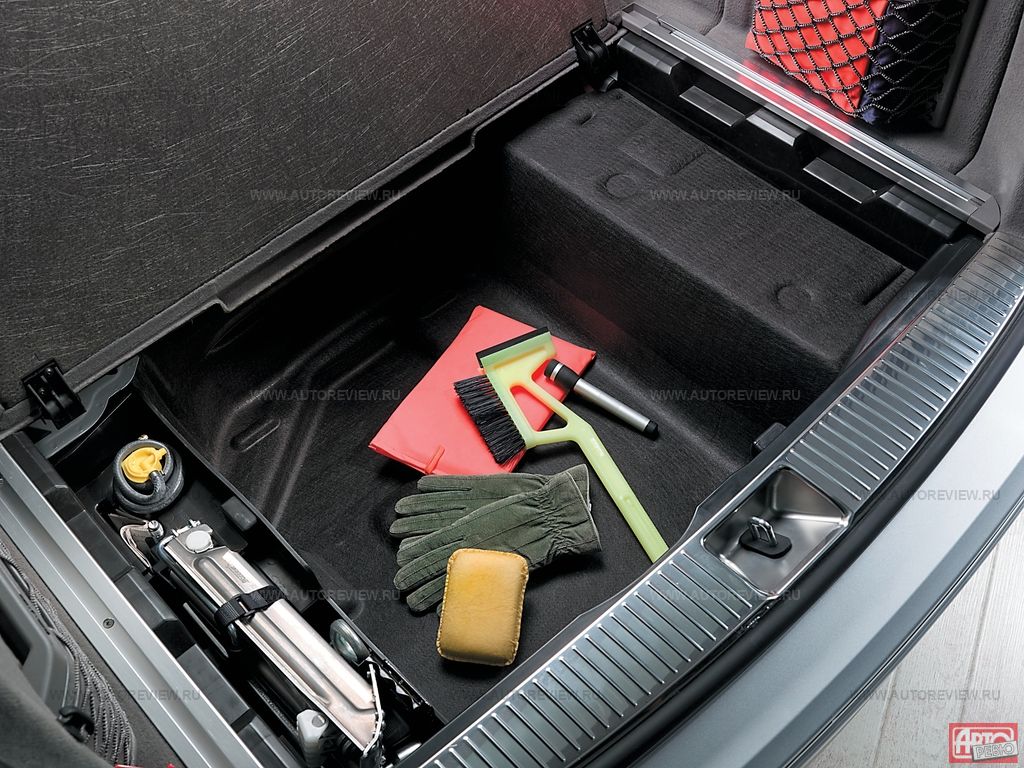 | 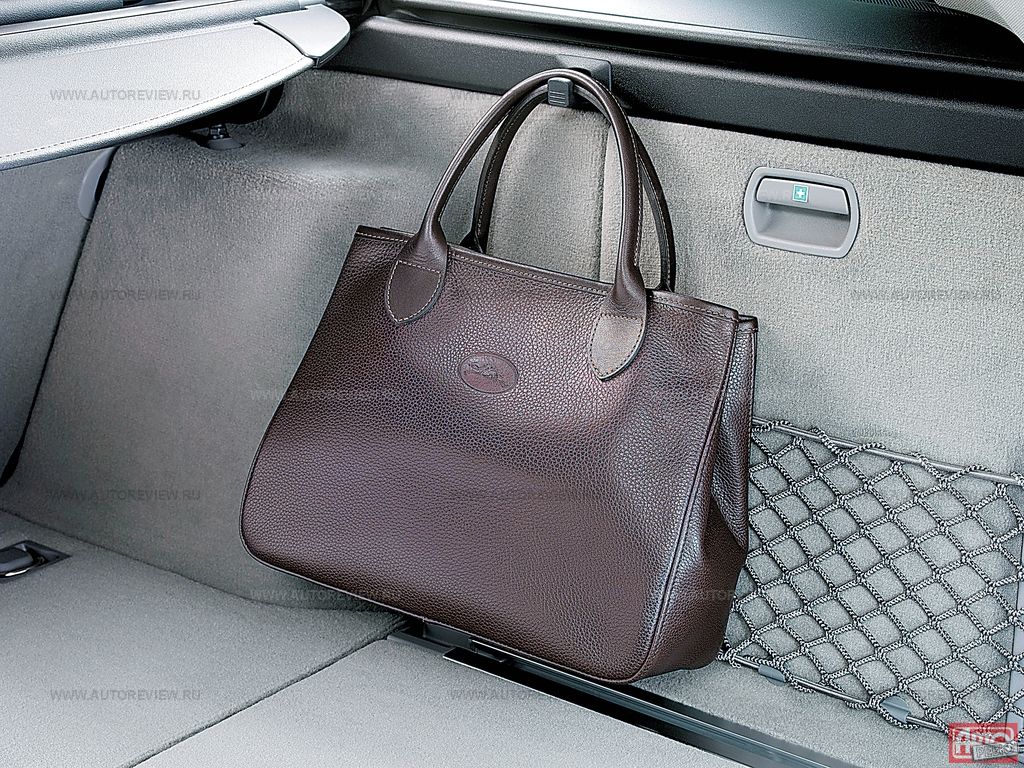 |
| In the spacious underfloor you can neatly place a lot of small items, on the sides there are nets and pull-out hooks | |
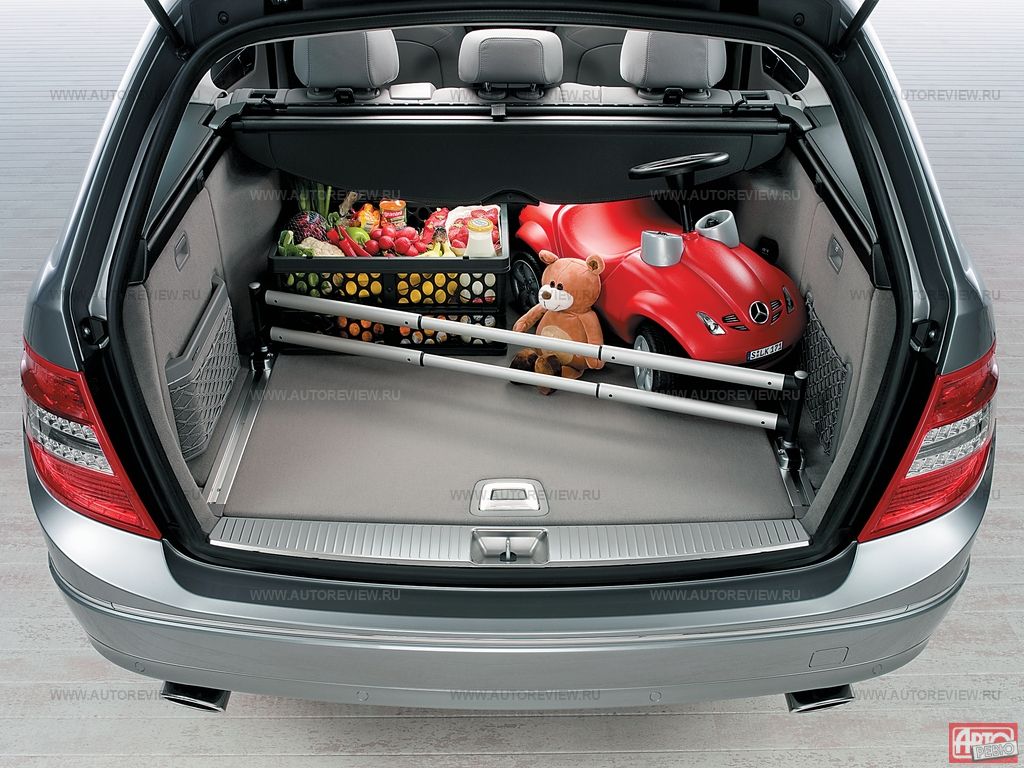 | 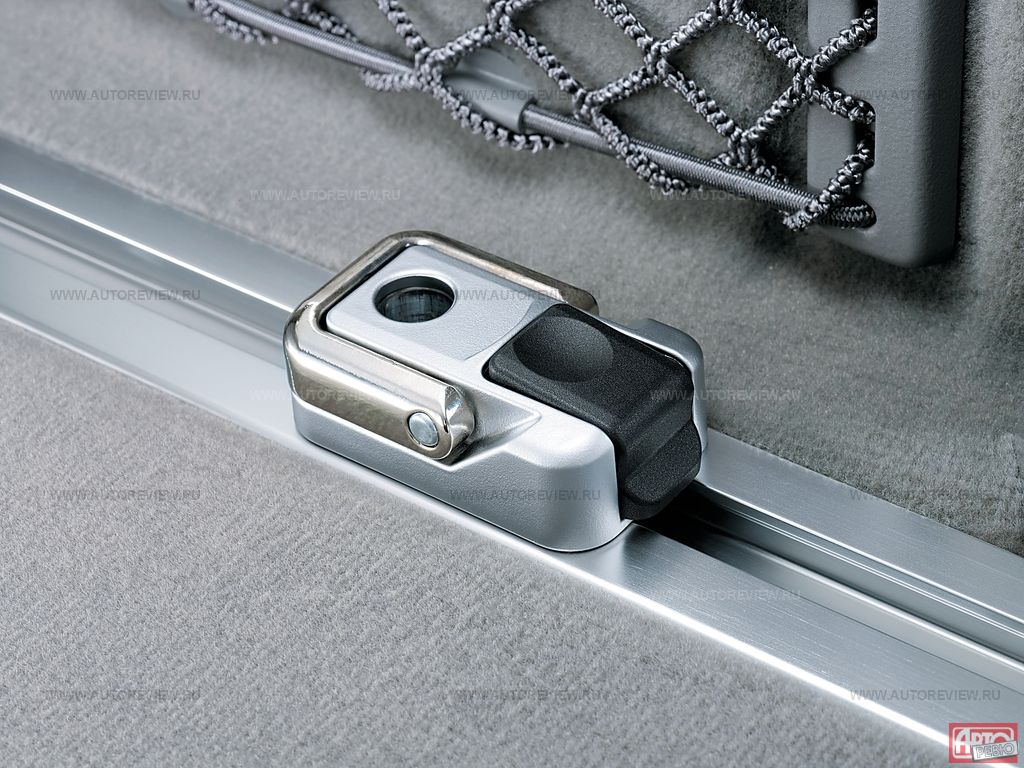 |
| The Easy Pack set includes not only aluminum rails with a cargo securing system, but also a folding plastic box | |
Or take the idea of an opening lid above the display at the very top of the center console. In the expensive version with the APS Comand system, the lid rises automatically, and from under it a huge color display with stunningly detailed graphics of all menu pages silently slides out. But in simple versions, the lid must be opened manually — only to find under it a simple and narrow LCD screen rigidly built into the panel. And how pale the "entry-level" Audio 20 sound system with Panasonic electronics sounds on "base" Mercedes C-class (expensive music with acceptable sound is supplied by Harman Kardon)...
Immediately the American saying from the times of the Wild West conquest comes to mind: "The only good Indian is a dead Indian." Is a good Mercedes an expensive Mercedes?
Confirmation of this is the powertrain policy. Why are the new seven-speed 7G-Tronic "automatics" equipped only on six-cylinder models — both diesel and petrol?
— We specifically compared how dynamics and fuel efficiency change when switching from five-speed "automatics" to seven-speed ones, — explains elderly Rainer Tiefenbacher, head of the new C-class development team. — And in the standard NEDC driving cycle, which we call the Stuttgart cycle, we simply did not find serious advantages of seven-speed transmissions for cars with four-cylinder engines...
But life is not a sterile "driving cycle". After all, it was the Mercedes C 200 Kompressor with a five-speed "automatic" that our experts complained about during a comparative test (see AR No. 12, 2007): "Illogical jumps through gears, a two-second delay in response to kick-down mode, a damped, 'heavy' pedal, jerks..." Maybe adapting the new 7G-Tronic to the old inline "fours" was simply too expensive, and they gave up on tuning the old transmissions?
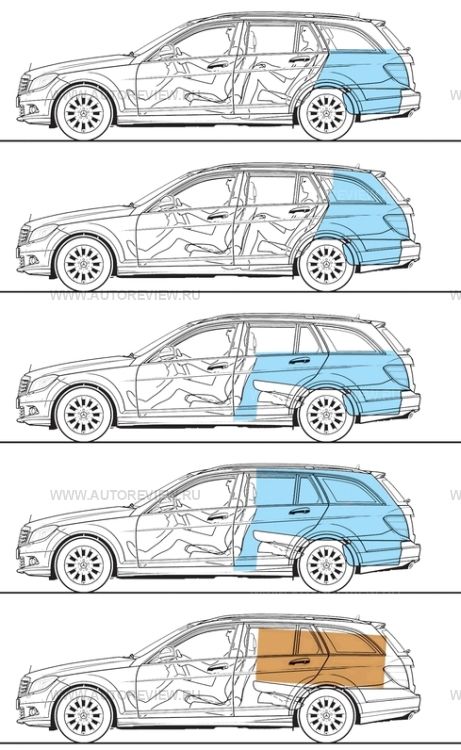 | Trunk volume "under the blind" — 485 l (+15 l compared to the predecessor) |
| Volume "to the ceiling" — 690 l (+60 l) | |
| Volume with the sofa folded to the window line — 910 l (+35 l) | |
| Maximum compartment volume — 1500 l (+146 l) | |
| Also, the estate will fit a rectangular parallelepiped with sides of 943x599x1465 mm |
However, even the top Mercedes C 350 Estate with a 272-horsepower "six" and a seven-speed "automatic" did not cause a surge of enthusiasm. Yes, acceleration is fast and smooth, but it does not take your breath away — the estate is 50 kg heavier than the sedan. True, the aerodynamics and weight distribution of the cargo-passenger "C-class" are traditionally better. There is practically no lift, which saved Mercedes from the need to use clever grooves in the trim of the rear lights that reduce "lift" on sedans. And each axle accounts for exactly half of the curb weight — while in the sedan it is unequal 52.8% at the front and 47.2% at the rear.
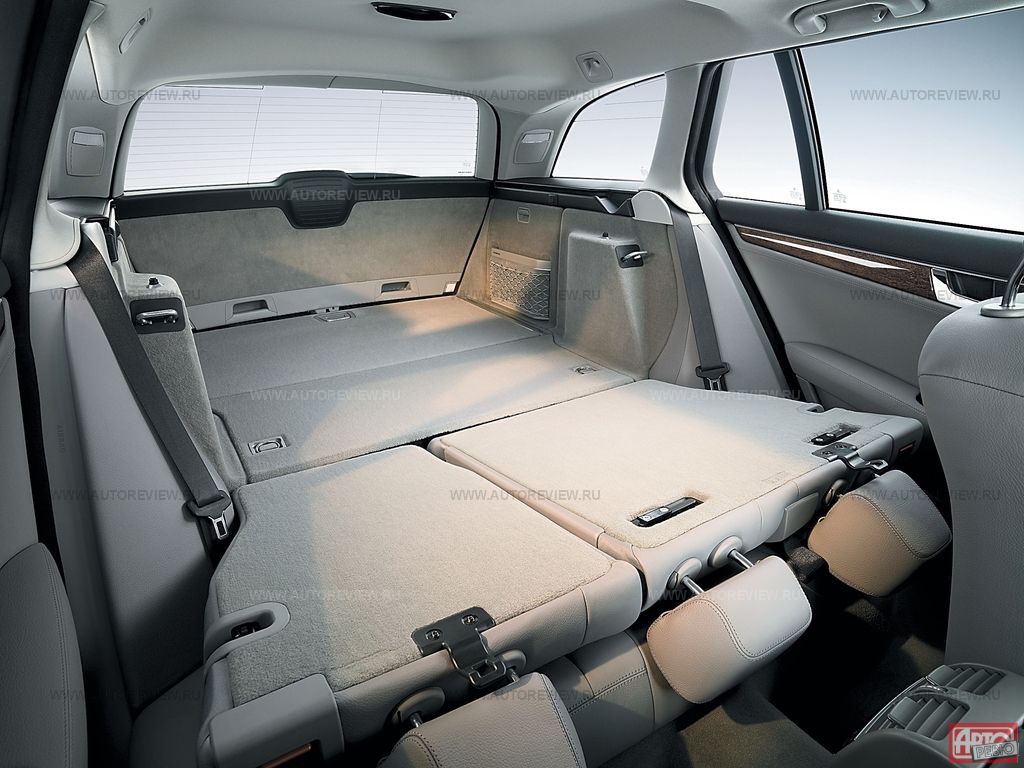 |
| By folding the seat, you can get an almost flat floor with an area of 2.2 m² |
The chassis of this estate is well-tuned: it holds confidently in corners, and reactions to driver inputs are adequate. But there is one nuance — the steering wheel in the "zero" zone is absolutely empty, as if someone cracked a safe and took out all the driving pleasure. Just a second of distraction by shop windows, and the Mercedes already tends to rub against the curb. And that's at just 50 km/h in the city.
Although I know for sure that the C-class can be different. Take, for instance, the Mercedes C 63 AMG — there, a conventional steering mechanism with a "pinched" spool valve gives a perfectly linear and honest steering feel. So honest that in this component, the C 63 AMG can outdo even the BMW M3.
But Mercedes is not just Mercedes.
Engineers offer three chassis options: two passive ones with Sachs shock absorbers equipped with hydraulic inertia valves (standard version and one lowered by 15 mm), plus an electronically controlled suspension from Monroe with Comfort and Sport modes. Steering comes in two variants — with a standard rack and with one shortened by 6%. Additionally, you can order rear Sachs Nivomat shock absorbers with self-leveling. If you multiply all body, engine, and trim options, you get 54 versions. Moreover, all-wheel drive 4Matic is available only for the most powerful diesel estate, the C 320 CDI.
And they are all different.
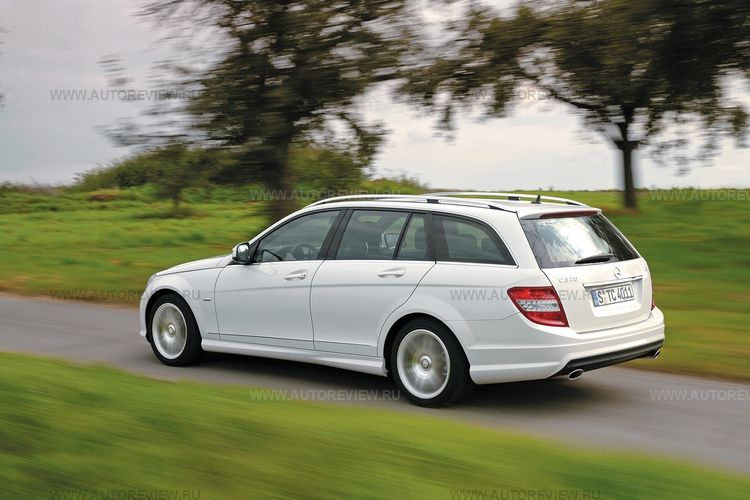
So the phrase "I have a Mercedes C-class" by itself means little. Which one exactly? The base diesel C 220 CDI Classic with a "thoughtful" five-speed automatic (accounting for 40% of all C-class sales) or the C 350 Avantgarde with sport suspension? True, diesel versions won't come to us — only six petrol ones: two supercharged four-cylinders (C 180 K and C 200 K), three six-cylinders (C 240, C 280, C 350), and the magnificent C 63 AMG.
The answer to the question "what are you, Mercedes C-class" slips away like sand through fingers. It's impossible to assess the entire model range after driving just one estate. But honestly, the lack of a pronounced character is unlikely to help Mercedes in the fight against competitors — Audi A4, BMW 3 Series, and Lexus IS. So far, judging by Russian sales, Mercedes is losing this battle.
One thing is clear: if you're going to get a C-class, you shouldn't skimp. As old Indians used to say — once you've cut off your head, you don't cry over your hair. A good Indian is a dead Indian. A good Mercedes is an expensive Mercedes?
| Specifications | |||||
| Parameters | Vehicle | ||||
| Mercedes-Benz | |||||
| Modification | C 180 Kompressor | C 200 Kompressor | C 230 | C 280 | C 350 |
| Body type | 5-door estate | 5-door estate | |||
| Number of seats | 5 | 5 | 5 | 5 | 5 |
| Dimensions, mm | |||||
| length | 4596 | 4596 | 4596 | 4596 | 4596 |
| width | 1770 | 1770 | 1770 | 1770 | 1770 |
| height | 1459 | 1459 | 1459 | 1459 | 1463 |
| wheelbase | 2760 | 2760 | 2760 | 2760 | 2760 |
| track front/rear | 1541/1544 | 1541/1544 | 1541/1544 | 1541/1544 | 1533/1536 |
| trunk volume, l | 485—1500* | 485—1500* | 485—1500* | 485—1500* | 485—1500* |
| Curb weight, kg | 1460 | 1465 | 1510 | 1525 | 1580 |
| Gross weight, kg | 2065 | 2070 | 2115 | 2130 | 2185 |
| Engine | petrol, with multipoint injection and mechanical supercharger | petrol, with multipoint injection | |||
| Location | front, longitudinal | front, longitudinal | front, longitudinal | front, longitudinal | front, longitudinal |
| Number and arrangement of cylinders | 4, in-line | 4, in-line | 6, V-shaped | 6, V-shaped | 6, V-shaped |
| Displacement, cm3 | 1796 | 1796 | 2496 | 2996 | 3498 |
| Cylinder bore/piston stroke, mm | 82.0/85.0 | 82.0/85.0 | 88.0/68.4 | 88.0/82.1 | 92.9/86.0 |
| Compression ratio | 9.3:1 | 8.5:1 | 11.4:1 | 11.3:1 | 10.7:1 |
| Number of valves | 16 | 16 | 24 | 24 | 24 |
| Max power, hp/kW/rpm | 156/115/5200 | 184/135/5500 | 204/150/6100 | 231/170/6000 | 272/200/6000 |
| Max torque, Nm/rpm | 230/2500—4200 | 250/2800—5000 | 245/2900—5500 | 300/2500—5000 | 350/2400—5000 |
| Gearbox | manual, 6-speed (automatic, 5-speed)** | manual, 6-speed (automatic, 7-speed) | automatic, 7-speed | ||
| Drive | rear | rear | rear | rear | rear |
| Front suspension | independent, coil spring, McPherson | independent, coil spring, McPherson | |||
| Rear suspension | independent, coil spring, multi-link | independent, coil spring, multi-link | |||
| Front brakes | disc, ventilated | disc, ventilated | disc, ventilated | ||
| Rear brakes | disc | disc | disc | disc | disc, ventilated |
| Tires | 205/55 R16 | 205/55 R16 | 205/55 R16 | 205/55 R16 | 225/45 R17 |
| Maximum speed, km/h | 218 (n/a)*** | 228 (223) | 232 (n/a) | 242 (n/a) | 250 |
| Acceleration time 0—100 km/h, s | 9.8 (n/a) | 8.8 (n/a) | 8.6 (n/a) | 7.5 (n/a) | 6.5 |
| Fuel consumption, l/100 km | |||||
| combined cycle | 7.7 (n/a) | 7.8 (n/a) | 9.3 (n/a) | 9.4 (n/a) | 9.9 |
| Fuel tank capacity, l | 66 | 66 | 66 | 66 | 66 |
| Fuel | petrol AI-95 | petrol AI-95 | petrol AI-95 | petrol AI-95 | petrol AI-95 |
| * With rear seats folded | |||||
| ** Data in parentheses for vehicles with automatic transmissions | |||||
| *** N/a — no data | |||||
Tourism and Transport
Igor VLADIMIRSKYAn estate based on a Mercedes-Benz? Until the second half of the 70s, such a combination seemed as unthinkable as a Porsche SUV. Before the war, delivery vans, ambulances, and hearses were built on Mercedes passenger car chassis, but that was done by third-party coachbuilders. Closer to the 70s, cargo-passenger versions of sedans appeared, but that was custom work.
In 1977, at the Frankfurt Motor Show, the first production Mercedes-Benz estate based on the W123 sedan debuted. It received the letter T — from the words Tourism and Transport. Since then, all estates with the three-pointed star are called "T-model," although this letter is no longer used in the designation. And although the S123 is a direct ancestor of the cargo-passenger versions of the E-class (S124, S210, and the current S211), in terms of dimensions and trunk volume, it more accurately corresponds to today's C-class cars. And in terms of payload, it even surpasses: the new C-class estate takes on board 605 kg, while the "one twenty-three" on 15-inch tires could carry 700 kg.
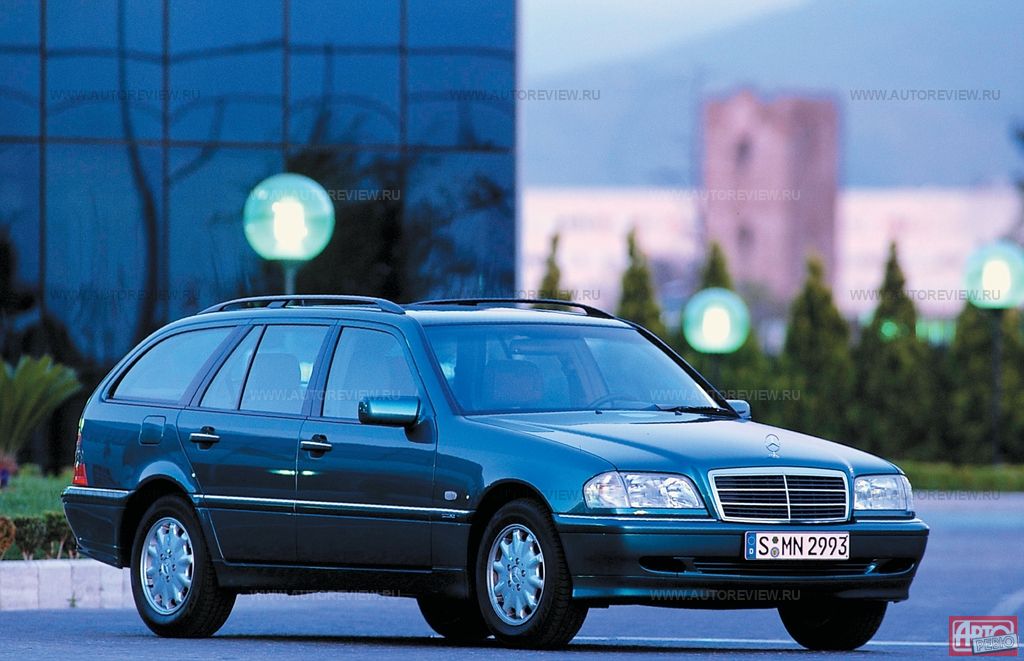
The successor to the S123 in 1985 was the first cargo-passenger E-class of the S124 series. And the first compact Mercedes estate of the S202 series appeared only in March 1996 at the Geneva Motor Show — three years after the debut of the W202 sedan. In 1997, the Mercedes C 43 AMG estate with a V8 engine producing 306 hp was added to the lineup.
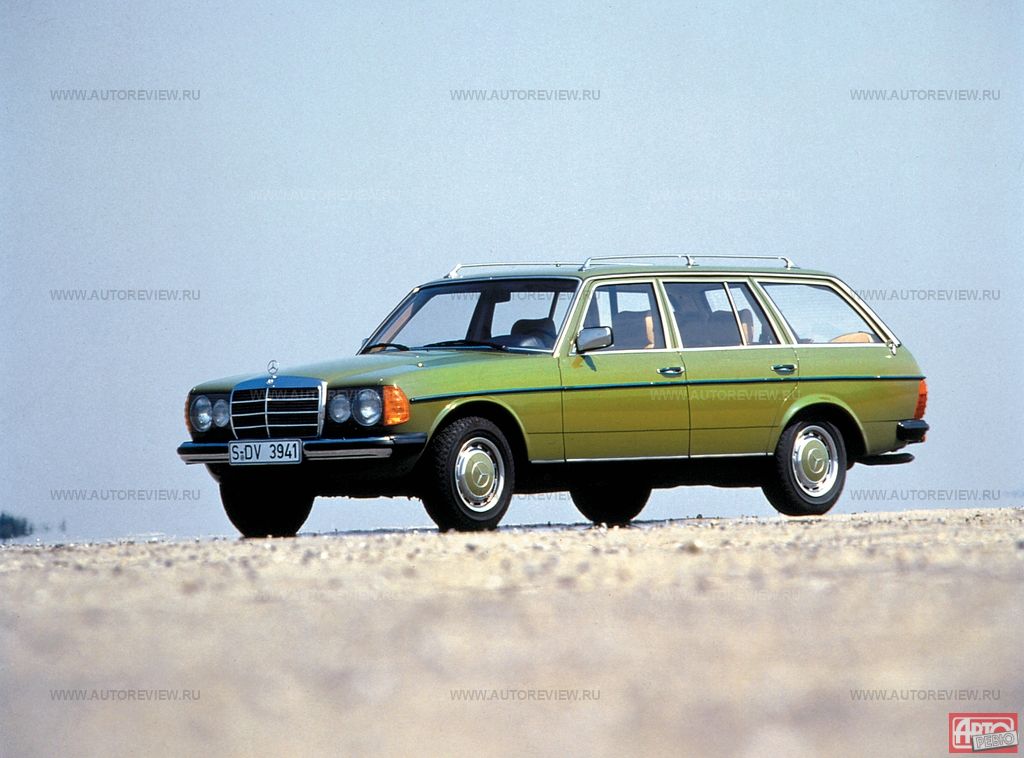 |  |  |
| Mercedes-Benz S123 series (1977) — the first production estate of the brand. Trunk volume — from 523 l to 870 l "under the roller blind" |
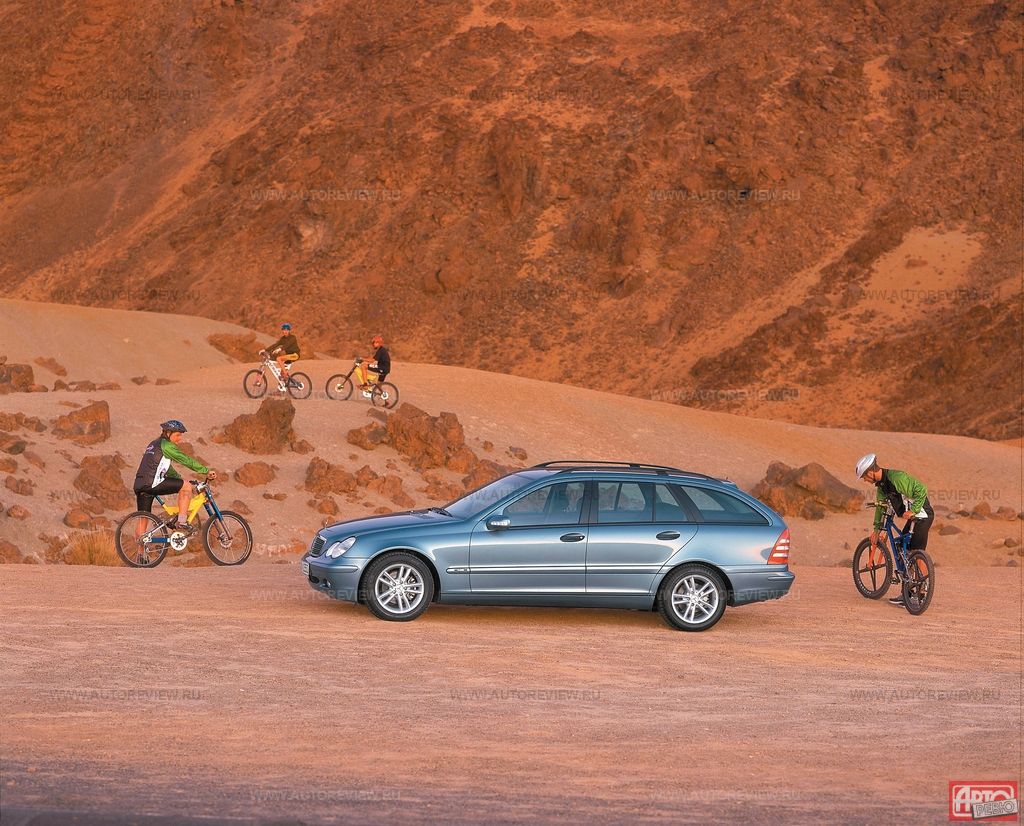
| The first-generation Mercedes-Benz C-class estate (S202 series) appeared in 1996. Trunk volume — from 465 l to 1510 l | The second-generation Mercedes-Benz C-class estate (S203 series, 2001) — a more dynamic silhouette and a reduced trunk volume of up to 1355 l |
In 2001, the lineup of station wagons was updated: the car based on the C-class series S203 got a different exterior look, but lost some of its cargo space. However, closer to the end of 2002, the 4Matic version with permanent all-wheel drive appeared in the range, where torque was distributed between the axles in a 40:60 ratio.
Production of the second-generation station wagon ended in early 2007. And recently, at the Frankfurt Motor Show, the successor to the S204 series debuted — it has again become as spacious as the first models of this family.