
At the end of March, over Spanish Valencia — a city where the sun shines more than three hundred days a year — the "pipe burst": it rained for two days. And it just had to happen that the presentation of the new Mercedes C-Class was organized exactly on these days — no chance to properly photograph the car or tear around! However, by the end of the test program, I was already thanking the heavens for the abundance of precipitation: it was precisely this that helped me figure out and savor the C-Class.
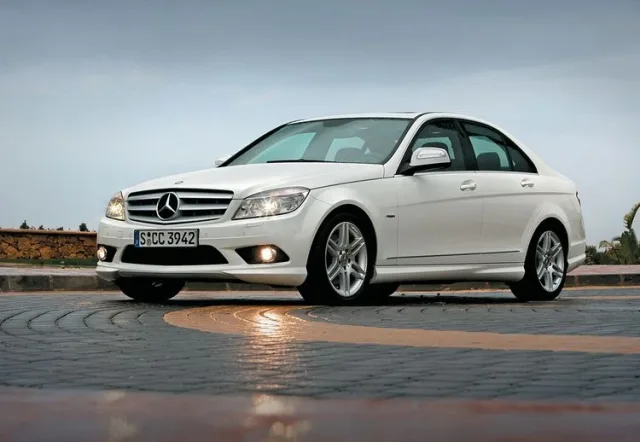
It all started as usual: handing over the keys and the absence of the most popular (read: affordable) versions of the cars. A well-known move: let journalists admire cars that are one and a half or even twice as expensive as the base models! Judge for yourself: prices for the most accessible Mercedes-Benz C 180 Kompressor start in Russia from 30,500 euros, the C 200 Kompressor will cost 34,100 euros. And in Spain, you could choose either the petrol C 350 (from 47,800 euros) or the diesel C 320 CDI, which won't be sold in Russia at all. Likewise, the cheaper diesel C 200 CDI and C 220 CDI — Mercedes folks don't trust our diesel fuel. So I'll have to praise the top version — the Mercedes-Benz C 350. Or maybe not?
No, I will: the car turned out well-proportioned, from the design to the suspension settings. But let's take it in order.
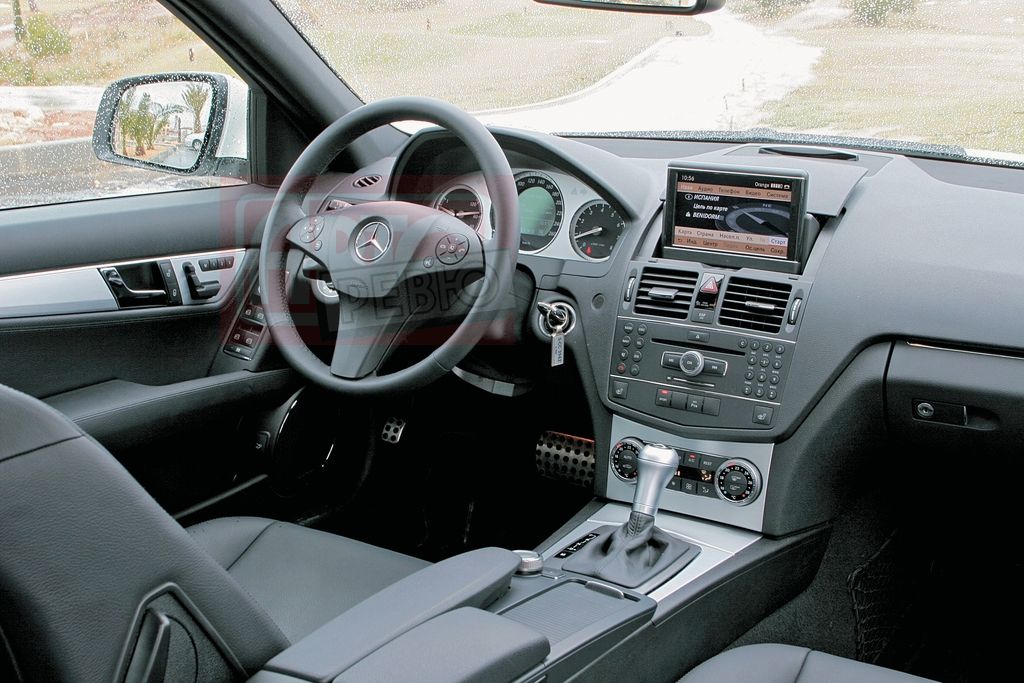 |  |
| The interior of the Avantgarde version is crafted in a techno style. The three-spoke steering wheel and pedal covers are elements of the AMG package | The interior of the Avantgarde version is crafted in a techno style. The three-spoke steering wheel and pedal covers are elements of the AMG package |
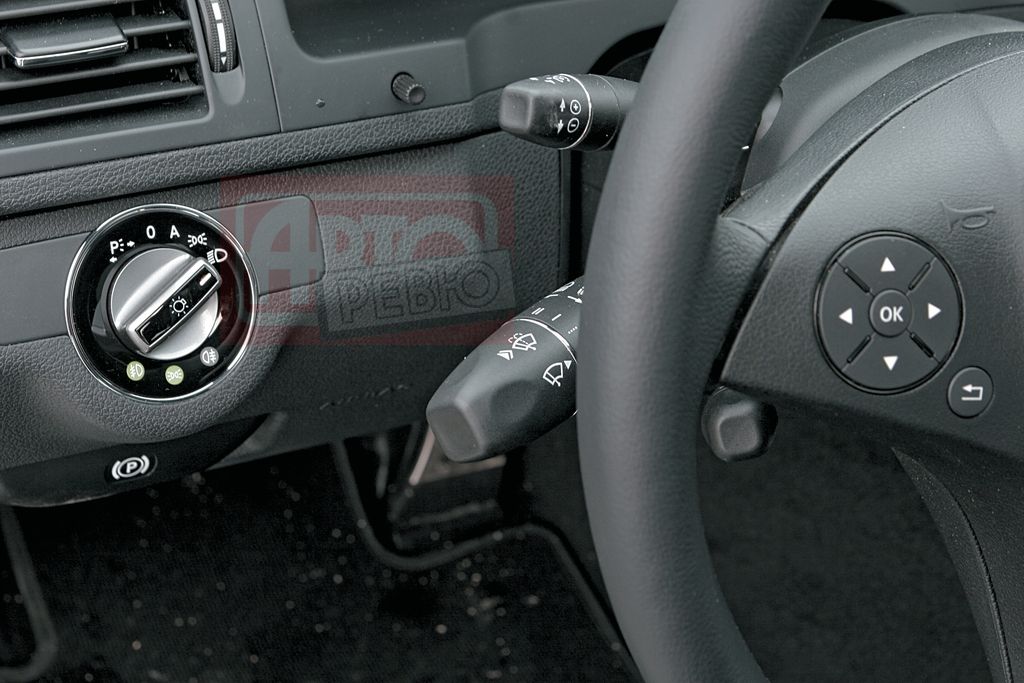 | 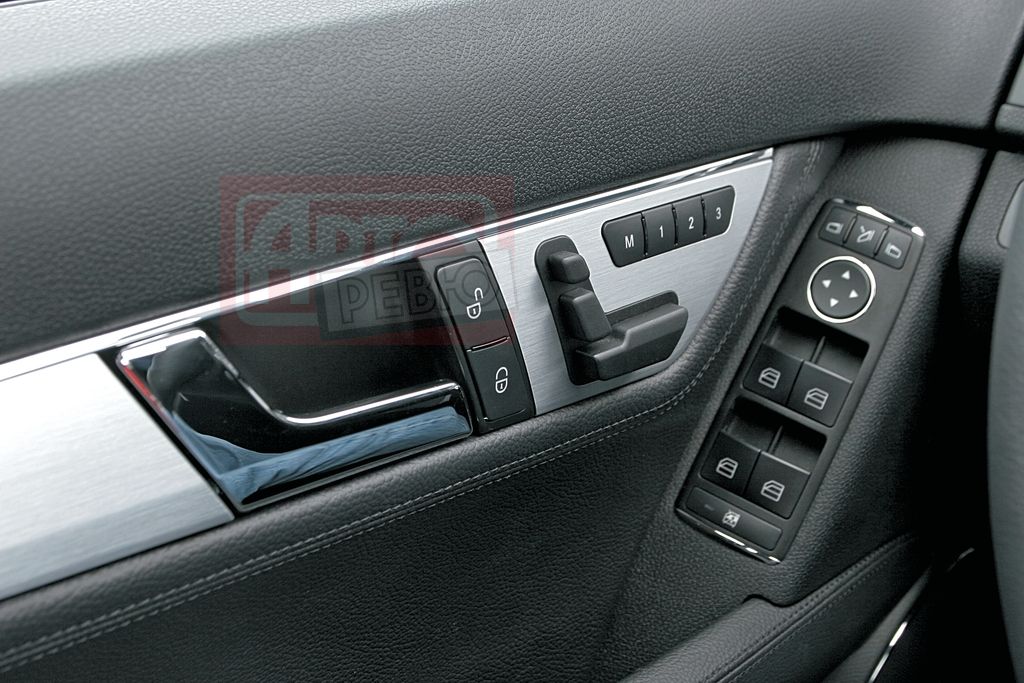 |
| On the left are three levers: cruise control, turn signals/wipers, and electric steering wheel adjustment | Seat adjustment buttons on the door — a very convenient solution |
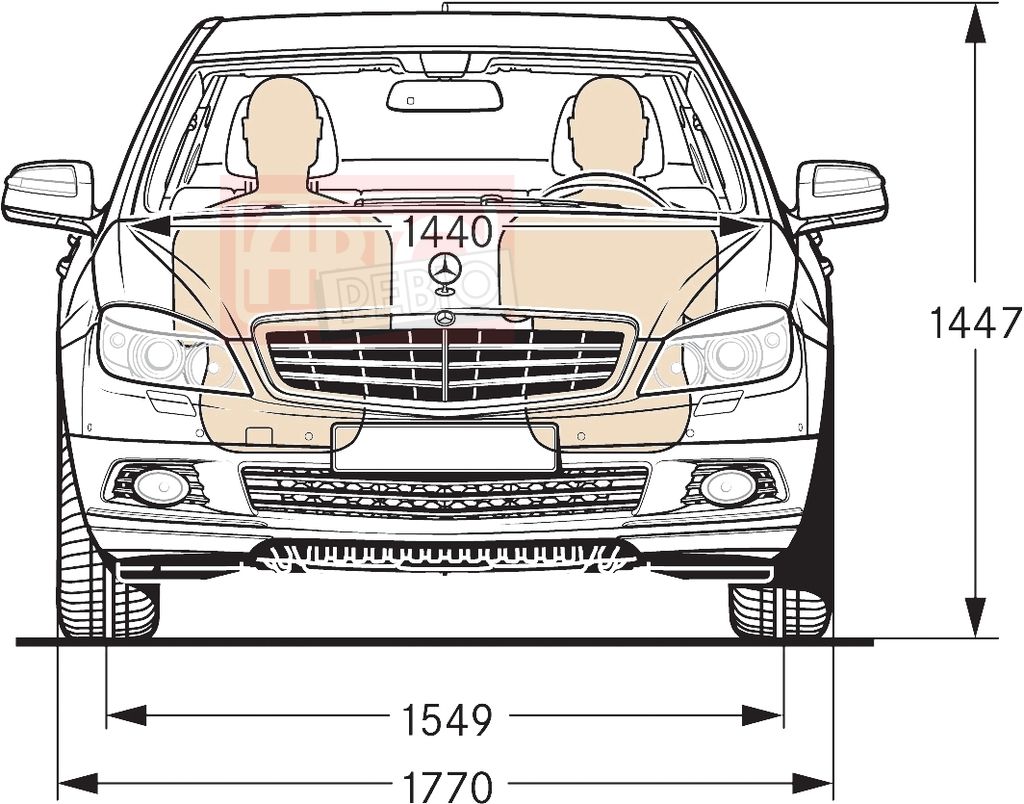
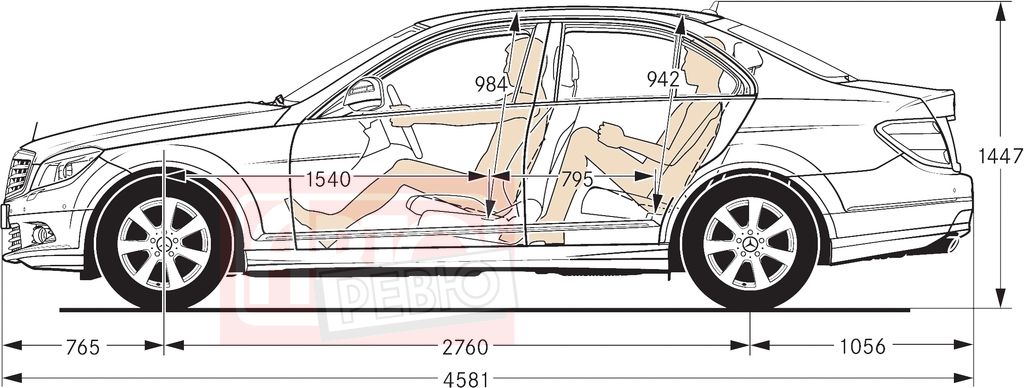
The youngest of the sedans in the Mercedes lineup has noticeably grown: length increased by 55 mm, width by 42 mm, and the wheelbase stretched by 45 mm. It's clear that the car really wants to be big. It wants to be like its "big brother" — the Mercedes S-Class. The wheel arch flares, the shape of the rear — everything is like the flagship. And it also wants to be sporty, athletically built. And that worked out too. Along the body runs an impressive line that appears on the front fender, crosses the doors, and ends at the corner of the taillight. They say a friendly team of designers worked on the image, but it seems they couldn't come to a consensus on the front end design. The younger ones proposed a more sporty style, while the veterans defended classic forms. As a result, they decided to produce the C-Class in two fundamentally different versions! Classic fans are addressed by the Classic and Elegance versions with traditional louvered radiator grilles and the Mercedes "sight" on a stem. And "athletes" should like the Avantgarde version with a huge three-pointed star on the grille — in the style of the Mercedes-Benz CL coupe.
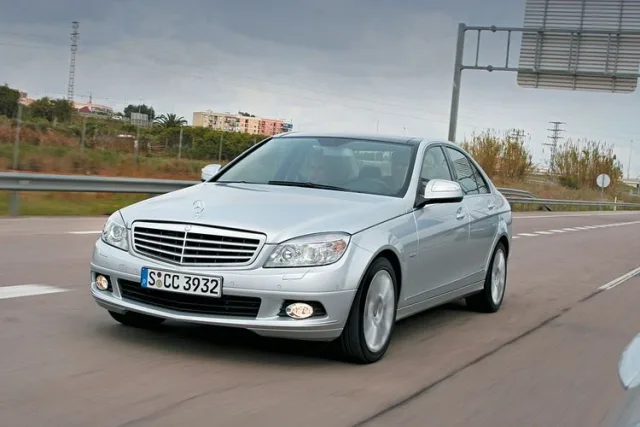
The Elegance version has the signature Mercedes "sight" on the hood; in the Avantgarde trim, the emblem is integrated into the radiator grille
However, when "drawing" the body of the new C-Class, designers solved not only aesthetic tasks. A huge amount of work was done in the wind tunnel: the drag coefficient was reduced to a record value in its class — 0.27. To achieve this, they even had to use ventilated rear lights — drainage channels in their housings prevent airflow separation and thus the transition of the air stream from laminar to turbulent state. True, in a side conversation it turned out that 0.27 is for cars with four-cylinder engines. For six-cylinder modifications, the aerodynamics are worse — air finds it harder to "push through" the engine compartment space.
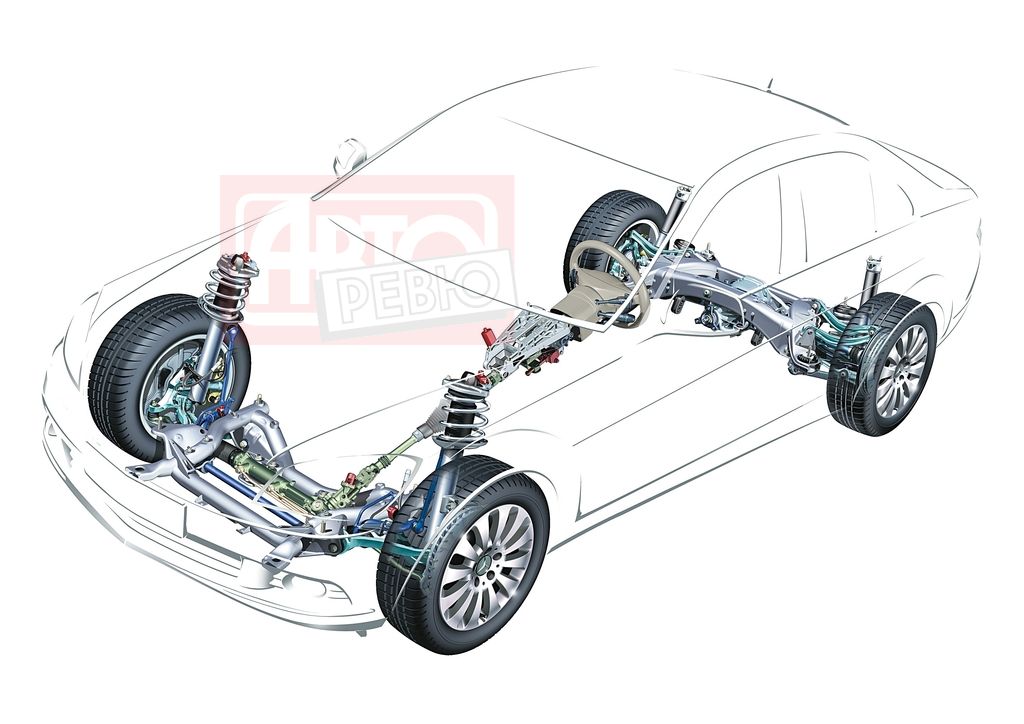 | ||
| The suspension layout hasn't changed: McPherson struts in front, multi-link in the rear. But the power steering is new — with variable "assistance" (as speed increases, it smoothly decreases and by 200 km/h amounts to only a third of the "parking" level) and with a mechanism for additional steering wheel centering at high speed, like on the S-Class | The Advanced Agility package includes electronically controlled shock absorbers — their resistance changes through the operation of a valve installed in an additional reservoir (indicated by the arrow) | In standard configuration, the Mercedes C-Class is equipped with adaptive shock absorbers. But without electronics during active driving, the valve (indicated by the arrow) locks additional channels in the piston, increasing the shock absorber's resistance |
The engine lineup hasn't changed. The familiar supercharged engines 180 Kompressor and 200 Kompressor have gained 13 and 20 hp respectively. A similar picture with the diesels 200 CDI (+14 hp) and 220 CDI (+20 hp). The six-cylinder petrol engines C 230 and C 280 with 2.5 L and 3.0 L displacement have changed little. And the diesel lineup is still topped by the 320 CDI engine with 224 hp. A wonderful engine! Very torquey and Mercedes-like comfortable. In terms of dynamics and acceleration control convenience, the diesel C 320 CDI differs little from the petrol top model C 350 — I specifically compared. Moreover, the interior of the diesel Mercedes is just as quiet as in the petrol car. And no vibrations on the controls! It's a pity such an engine won't be available in Russia.
Stop. Where are the petrol engines with direct injection, where are their forced turbo versions that the main competitors — BMW and Audi — offer? Does Stuttgart have nothing to answer this challenge? Mercedes folks say evasively: yes, work is underway. And nothing concrete. They only admitted that the AMG version of the C-Class, which will appear next year, will be equipped with a V8 engine. That's right: the BMW M3 will also now have a "eight."
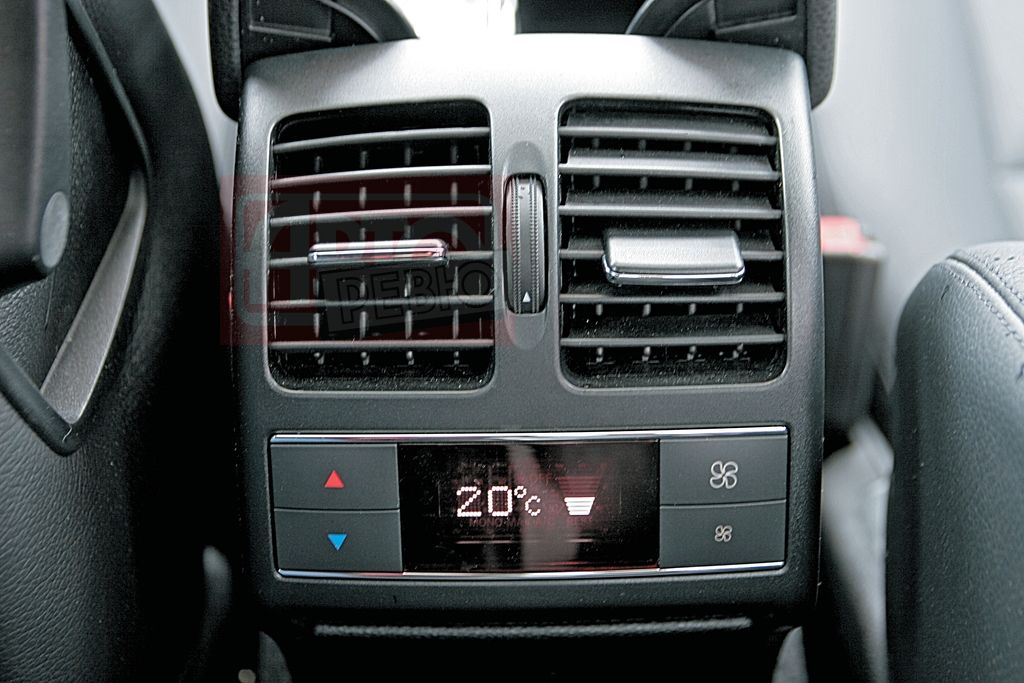 | 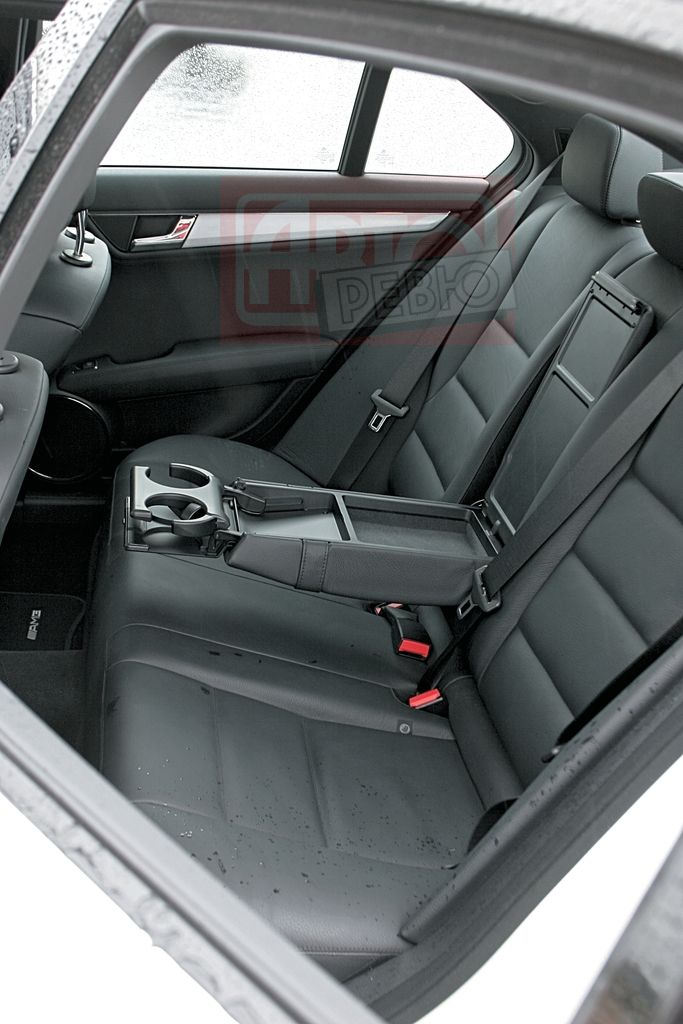 | |
| For an extra charge — a "climate" unit for rear passengers | Standard seats are not the most comfortable. Sport seats are better, and in autumn you can order a car with multicontour seats that allow you to adjust both the backrest width and the cushion length | The rear is quite spacious — only the "reclined" backrest of the sofa is a bit off-putting |
By the way, the so-called AMG package is available now, and you have to pay from 2,857 to 4,379 euros for it. This includes 17-inch alloy wheels, perforated brake discs, a sporty "skirt" of the front bumper in the style of a Formula-style wing, suspension with reduced ground clearance by 15 mm, sport seats, aluminum pedal covers, and a three-spoke steering wheel instead of a four-spoke one. With such a package, I got the car on the second day. It was the "weakest" of the Mercedes-Benz C 280s presented in Valencia with a seven-speed automatic 7G-Tronic, but here there was also another package with the fancy name Advanced Agility (price from 1,700 to 2,800 euros). Its presence is revealed only by a small Sport button on the center console, while the rest is hidden in the "electronic brains." By pressing the Sport button, the driver switches the shock absorbers to a stiffer state, increases the sensitivity of the accelerator pedal, reduces the performance of the power steering pump, and switches the "automatic" to a sporty gear selection mode.
 |  |
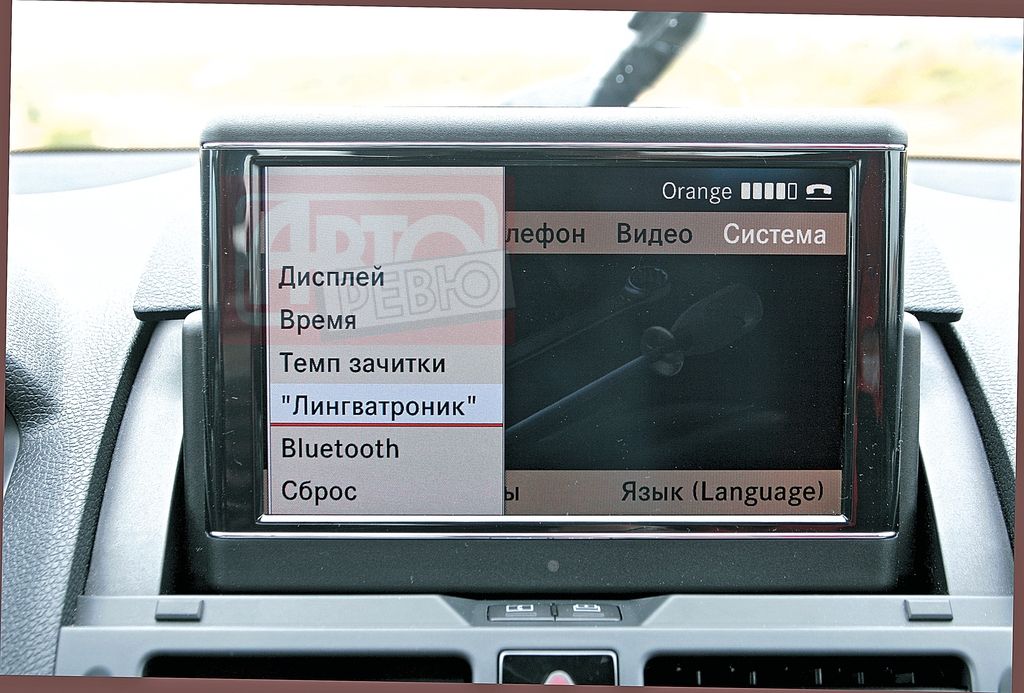 | 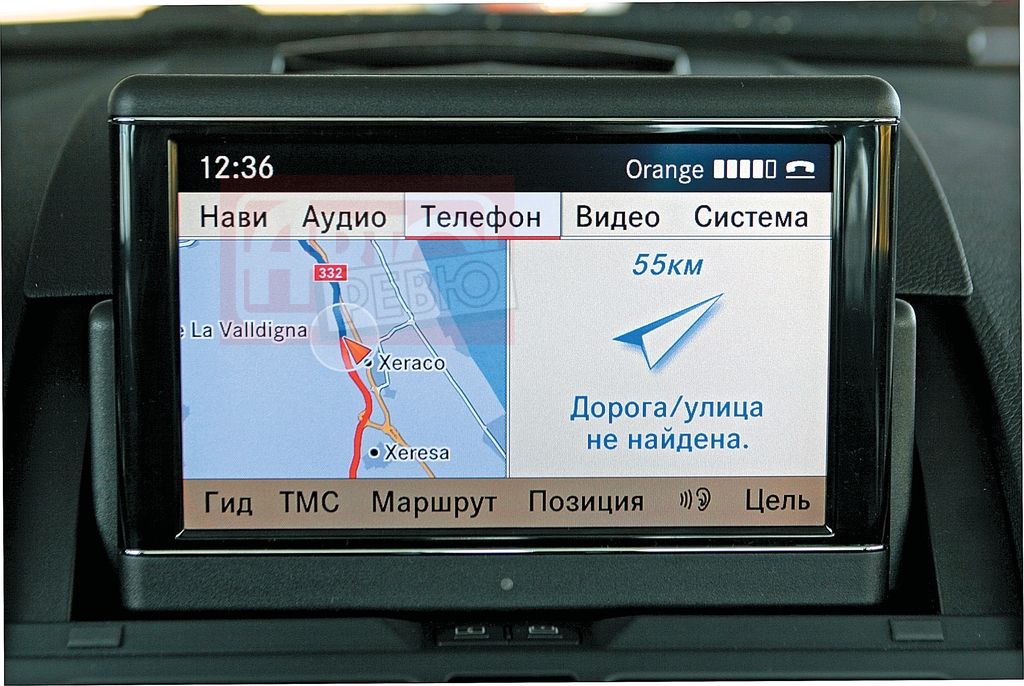 |
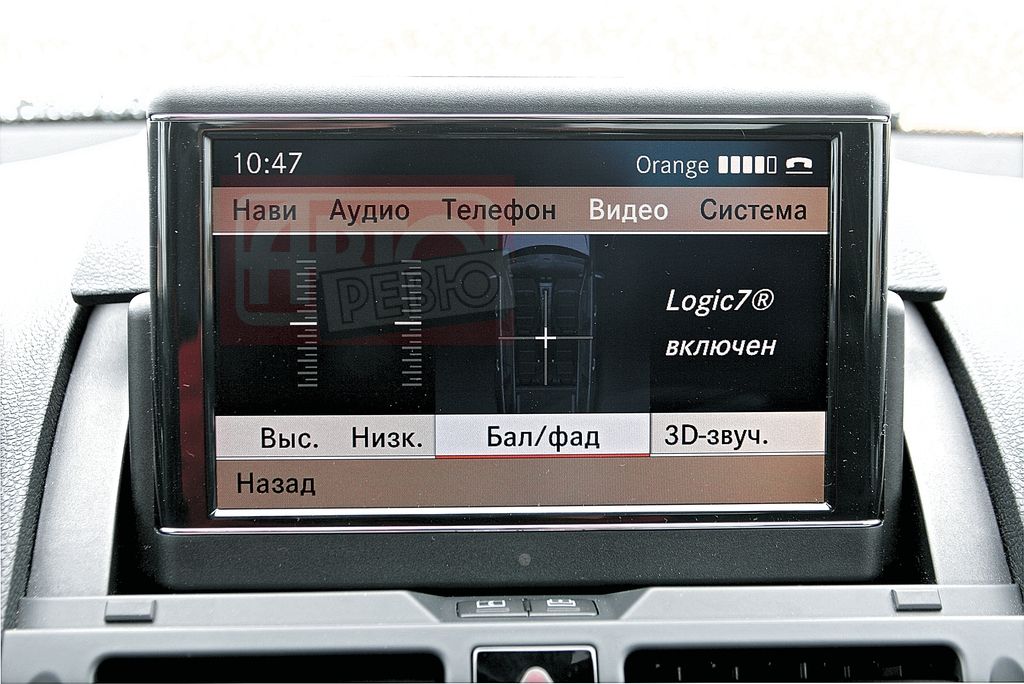
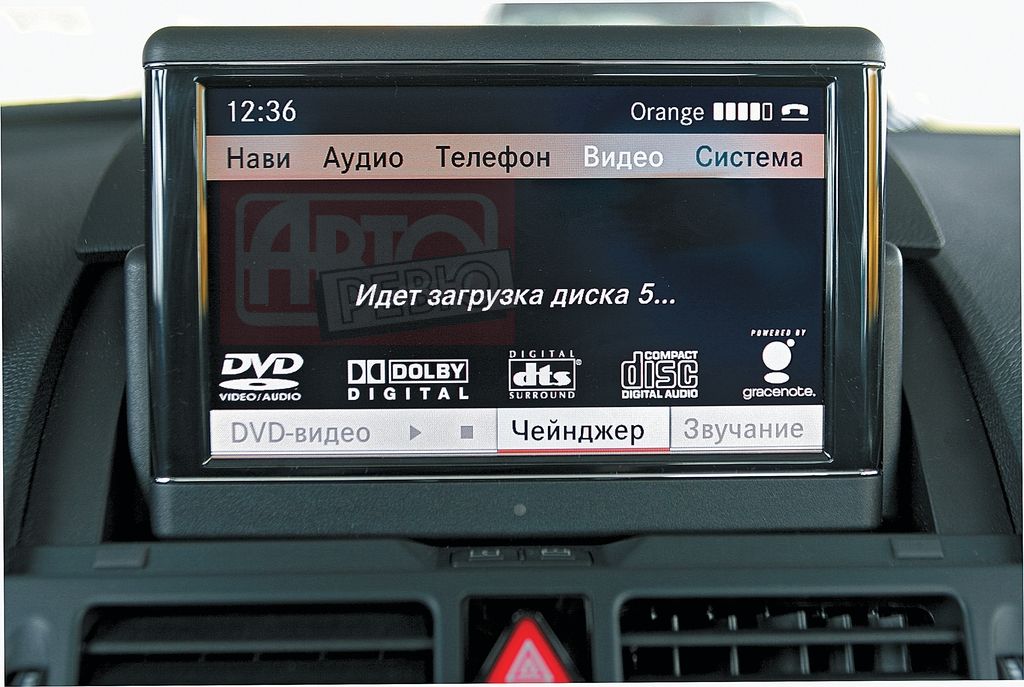
| The menu of the Comand APS multimedia system with a seven-inch display is rich but extremely clear, and moreover Russified. And the "Linguatronic" function will help teach the car to execute voice commands — for example, turn on the radio or dial a phone number | |
The rain was falling almost as a solid wall, and our route wound through serpentines where sand was constantly washed onto the asphalt from the surrounding slopes. Each turn added adrenaline to the blood — the main thing is that this dose doesn't turn out to be lethal. However, pretty soon I realized that an overdose doesn't threaten me. The car behaves remarkably reliably! The steering wheel and pedals require academically precise efforts, the connection with the road is excellent, and the stability control system is tuned impeccably. Before the next bend, I'm already completely calm: even if I make a rough mistake with speed, the electronics will carefully, without preventing me from enjoying the drive, return the car to the correct line. And if I turn off ESP? You still can't do without it — only the traction control function is deactivated, and the insurance continues to work during lateral slides. It's just that now it intervenes with a slight delay. Amazingly, driving at the limit of tire grip turns out to be very comfortable as well. No jerks or jolts — all acceleration peaks are smoothed into a gentle sine wave. The passenger on the right even started to doze off... Then I pressed the Sport button. Sleep vanished instantly. But the cause wasn't increased lateral load, but vibration that now transferred to the body on every small bump. However, the rocking disappeared, and body roll decreased. But the speed in corners increased only slightly — at least, not enough to sacrifice comfort for it. I think this package isn't very relevant for Russia. So I switch the Sport mode back and continue to enjoy fast but smooth driving.
Honestly, even before the trip, I was skeptical about the seven-speed 7G-Tronic gearbox — why so many gears? Surely the electronics will get confused and jump from one gear to another inappropriately. Nothing of the sort! Shifts are smooth and prompt, and on kick-down the gearbox immediately drops to the needed gear without going through all the intermediate ones, as regular automatics do.
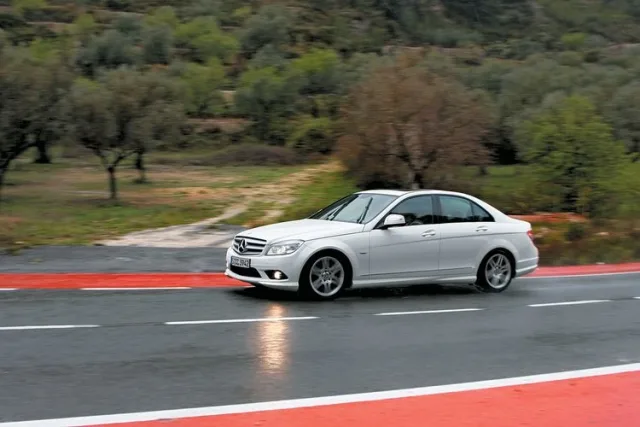
Of course, the Mercedes C 280 isn't as lively as the C 350 — this is especially noticeable in the mountains. But on the plain, the three-liter engine is quite enough to easily reach 200 km/h. But isn't it madness to rush at such speed in the rain? No, guys in old Seats, I'm not crazy and I quite soberly assess both my skills and the car's capabilities. It's you who get thrown from side to side, while the new C-Class goes as if on rails. It's you who can't figure out how much to turn the steering wheel to take a corner precisely on the line, while I do it easily and immediately. It's you who might get a shock if the car floats on a puddle, while I just see a yellow triangle flash on the dashboard, the Mercedes brakes slightly — and then flies on. It's you whose windows fog up like in a greenhouse, while mine are always clean — the dual-zone climate control maintains the right temperature and humidity without extra noise. It's you who can't see in the mirrors what's behind, while my mirrors are large and they don't fog up — the heating turns on automatically based on the rain sensor signal. Yes, I agree: for your five or six thousand euros, your worn-out Seat drives decently. But my Mercedes races for its 40,000 euros...
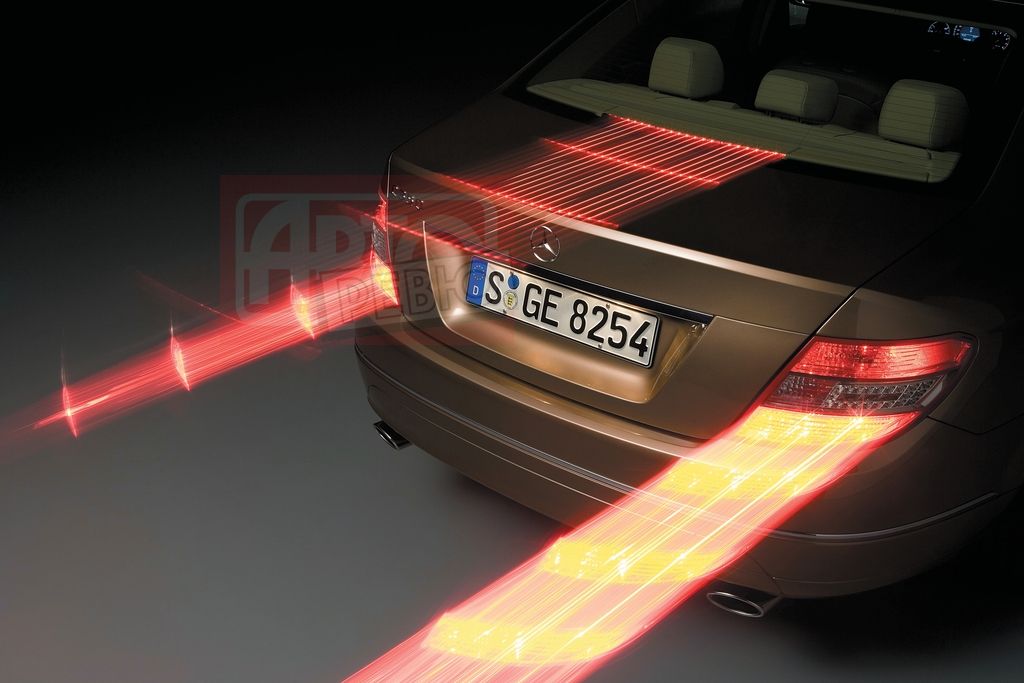 | 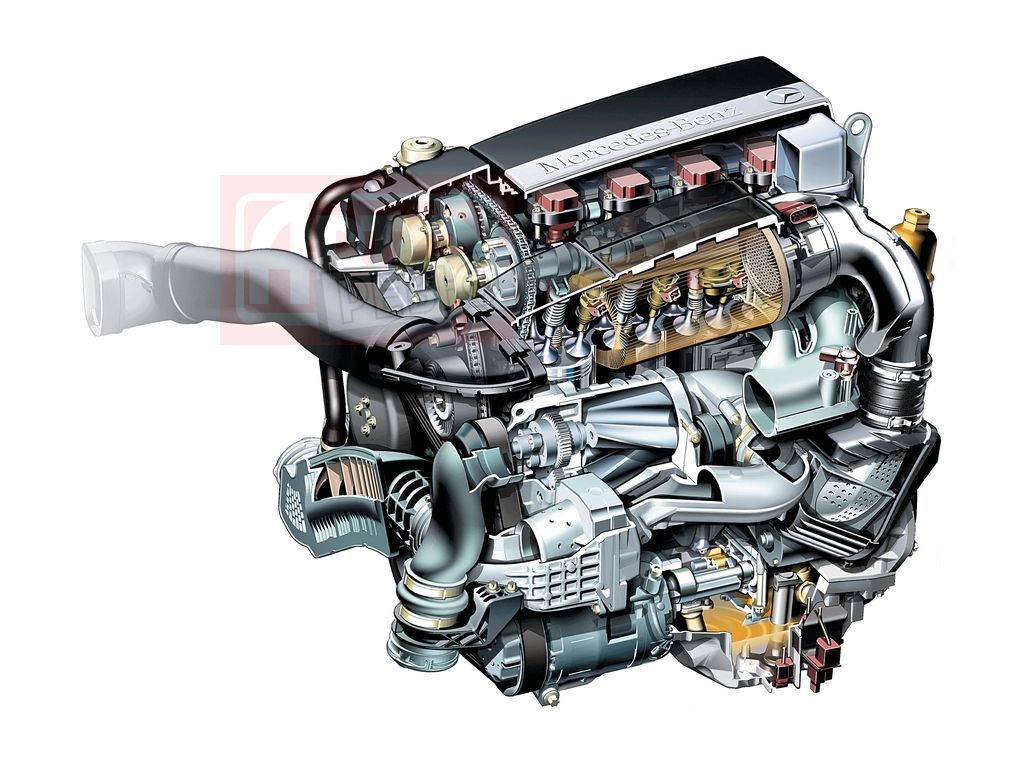 | 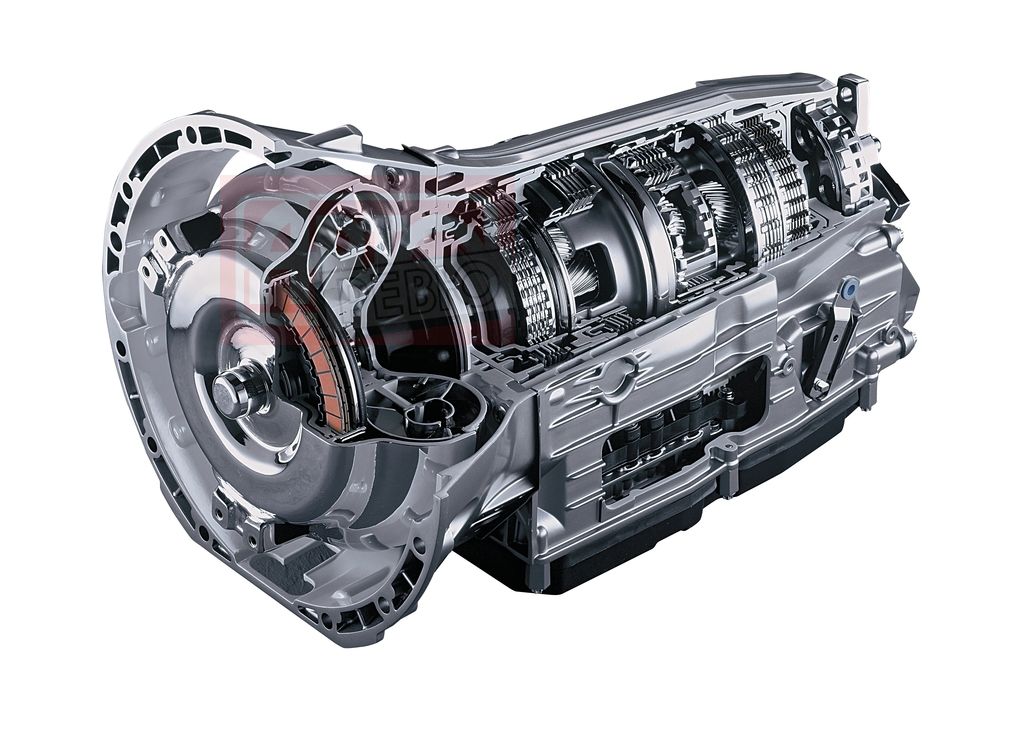 |
| During hard braking, the stop lights start flashing | The base engines 180 K and 200 K (they have the same displacement but different boost pressure and compression ratio) with mechanical superchargers haven't fundamentally changed. However, a refined valve timing system, a more "dynamic" compressor, and new pistons allowed increasing power while reducing fuel consumption — by 0.2 l/100 km for the C 180 K and 0.5 l/100 km for the C 200 K | The seven-speed automatic 7G-Tronic is only installed with six-cylinder engines, and for the C 350 version it's the only available gearbox |
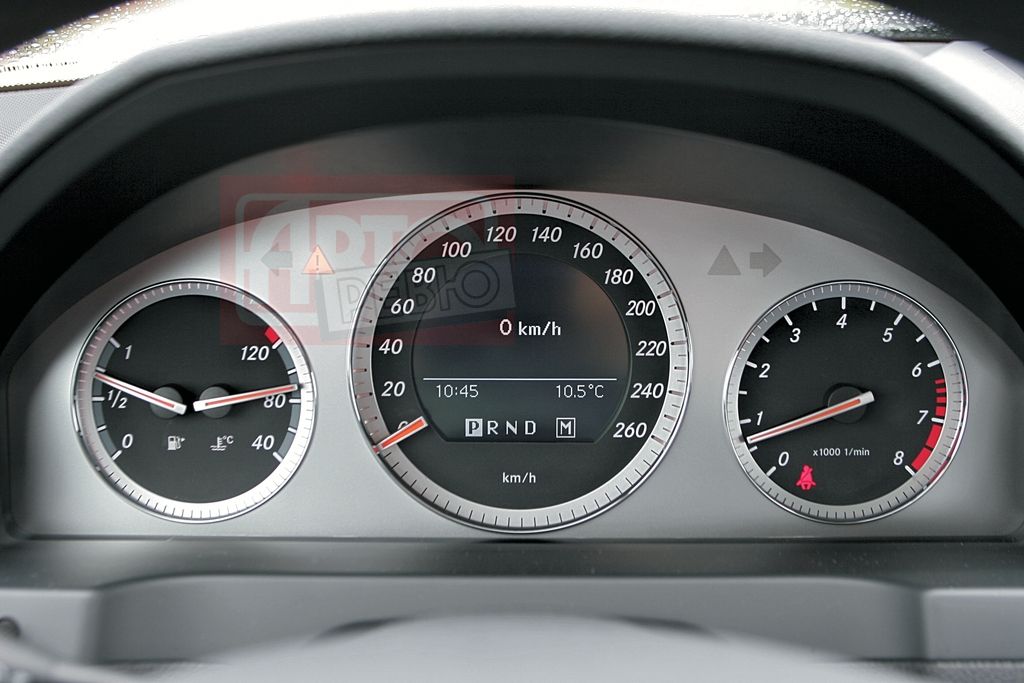
You sit perfectly behind the wheel: the sport seat hugs your lower back tightly, and there's a large range of electric adjustments — at my height of 190 cm, I only move slightly closer to the steering wheel from the extreme position. The steering wheel itself for the sport version could be smaller; it looks a bit plain. I like the regular four-spoke one more. But the instruments are impeccable in any trim: in the center is a large "saucer" speedometer filled with a blue screen that displays a wealth of information. Fuel consumption, average speed, radio frequency. And what are those ten digits that appeared on the display? It's a phone number — someone is calling me. I press the button with the green handset on the steering wheel and talk calmly.
Special attention deserves the Comand APS multimedia system: it has a six-disc DVD changer, advanced navigation (maps and other data are stored on a 30 GB hard drive), and a slot for PC Memory Cards. Plus a built-in music server with four gigabytes. For lovers of surround sound, Logic7, you can additionally install harman/kardon speakers. But what impressed me most is how simple everything is to control! Much simpler than with the iDrive system in BMW. And when I discovered that the system can communicate in Russian, I wanted to say thank you to it — and repeat that every time a pleasant female voice instructed me: "please keep right," "at the roundabout take the second exit," "follow the road straight." And not a single mistake! They promise it will work just as well in Russia — next year, the C-Class will get proprietary navigation with Russian maps. By the way, on the S-Class and CL coupe, such navigation will be available as early as this summer.
Some colleagues complained about the plain trim materials — saying the plastic on the center console is smooth, and the grain on the dashboard is a bit rough. But I liked it. After all, this is the "youngest" sedan in the Mercedes lineup!
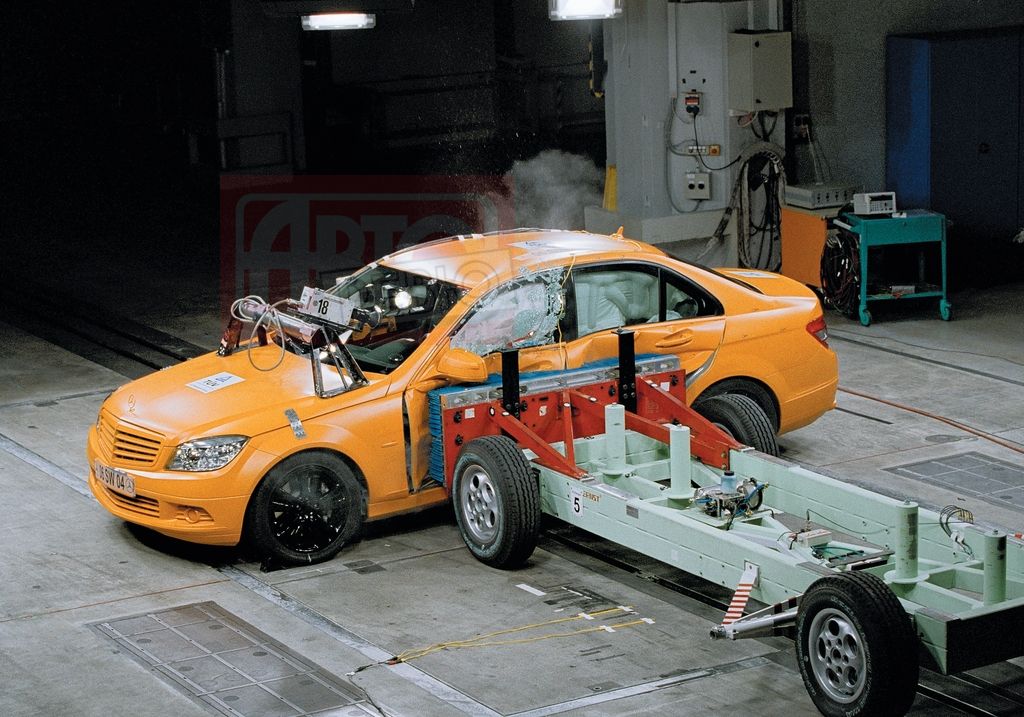 | During development and refinement, 5,500 virtual and 100 real crash tests were conducted. Already in the "base" the new car has seven airbags, and for an extra charge, the Pre-Safe system is offered, which has been installed on the S-Class since 2002. In case of danger (emergency braking, sharp skid), the seatbelts tighten, the passenger seat moves to an optimal position via electric drive, and the side windows and sunroof close |
The almost flawless ergonomics are spoiled by only one detail — that steering column stalk, which has controls for the windshield wipers, turn signals, and also the high beam activation.
The increase in the body's exterior dimensions also benefited rear passengers — the distance between rows of seats grew by 20 mm, and shoulder room increased by 40 mm. However, sitting "behind myself," I didn't feel spaciousness — my knees already touch the back of the front seat. And another trick: so that tall passengers don't hit their heads on the sloping roof, the designers "reclined" the rear seatbacks. You sit like in an airplane seat with the backrest reclined — not everyone will like that.
Opening the trunk, I expected to see a power button. No, it hasn't come to that yet, but there is a handle. And the spare wheel under the floor mat is in place. In general, a large and convenient trunk with a volume of 475 liters — 20 liters more than its predecessor.
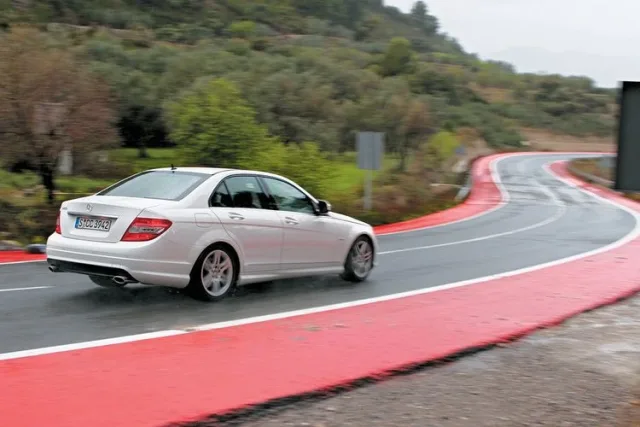
On a wet winding road, the C-Class allows you to drive fast and safely
While studying the interior, racing through the mountains and highways, I constantly remembered the BMW 3 Series. It's clear that the new Mercedes will be compared to it. We will definitely do that too — on Russian roads. But already now I'm ready to assume that the Mercedes will be more comfortable — both in terms of noise, ride smoothness, and responses to controls. But if the cars meet on a track, then most likely the BMW will show a better time. The Mercedes can't catch up with it even with the Advanced Agility package. And is it necessary?
 |  |
| Specifications | ||||||
| Parameters | Mercedes-Benz C-Class | |||||
| Models: C 180 K, C 200 K, C 230, C 280, C 350, C 320 CDI | ||||||
| Body type | 4-door sedan | |||||
| Capacity | 5 persons | |||||
| Trunk | 475 liters | |||||
| Curb weight, kg | 1485 (1500)* | 1490 (1505) | 1540 (1560) | 1555 (1575) | 1610 | 1700 (1700) |
| Gross weight, kg | 1970 (1985) | 1975 (1990) | 2025 (2045) | 2040 (2060) | 2095 | 2185 (2185) |
| Engine | Petrol, multi-point injection, supercharger | Petrol, multi-point injection | Diesel, turbocharged | |||
| Layout | Front, longitudinal | |||||
| Cylinders | 4, in-line | 6, V-type | 6, V-type | |||
| Displacement, cc | 1796 | 1796 | 2496 | 2996 | 3498 | 2987 |
| Compression ratio | 9.3:1 | 8.5:1 | 11.4:1 | 11.3:1 | 10.7:1 | 17.7:1 |
| Valves | 16 | 16 | 24 | 24 | 24 | 24 |
| Power, hp/kW/rpm | 156/115/5200 | 184/135/5500 | 204/150/6100 | 231/170/6000 | 272/200/6000 | 224/165/3800 |
| Torque, Nm/rpm | 230/2500-4200 | 250/2800-5000 | 245/2900-5500 | 300/2500-5000 | 350/2400-5000 | 510/1600-2800 |
| Transmission | MT-6 (AT-5) | MT-6 (AT-7) | AT-7 | MT-6 (AT-7) | ||
| Drive | Rear | |||||
| Front suspension | Independent, coil spring, McPherson | |||||
| Rear suspension | Independent, coil spring, multi-link | |||||
| Front brakes | Disc, ventilated | |||||
| Rear brakes | Disc | Disc, ventilated | ||||
| Tires | 195/60 R16 | 205/55 R16 | 205/55 R16 | 205/55 R16 | 225/45 R17 | 225/45 R17 |
| Maximum speed, km/h | 223 (220)* | 235 (230) | 240 (233) | 250 (244) | 250** | 250 (250)** |
| Acceleration 0-100 km/h, s | 9.6 (9.8) | 8.6 (8.8) | 8.4 (8.7) | 7.3 (7.2) | 6.3 | 7.7 (6.8) |
| Average consumption, l/100 km | 7.6 (7.8) | 7.9 (8.1) | 9.2 (9.2) | 9.3 (9.3) | 9.7 | 6.9 (7.3) |
| Tank, l | 66 | 62 | 62 | 62 | 62 | 66 |
| Fuel | AI-95 | AI-95 | AI-95 | AI-95 | AI-95 | Diesel |
| * In parentheses - data for versions with automatic transmission | ||||||
| ** Electronic limiter | ||||||