
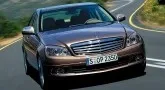
Sun, sea breeze, winding roads. A fiery red car races along the coastal highway, swiftly navigating a series of turns and disappearing into the distance on straight stretches. On the scorching asphalt, only a trail of rubber remains…
This is exactly the video that was first shown to journalists gathered at the Mercedes museum near Stuttgart for the premiere of the new C-Class sedan. Later, the slogan of the new model appeared on the screen — Culture of Driving. Driving culture!
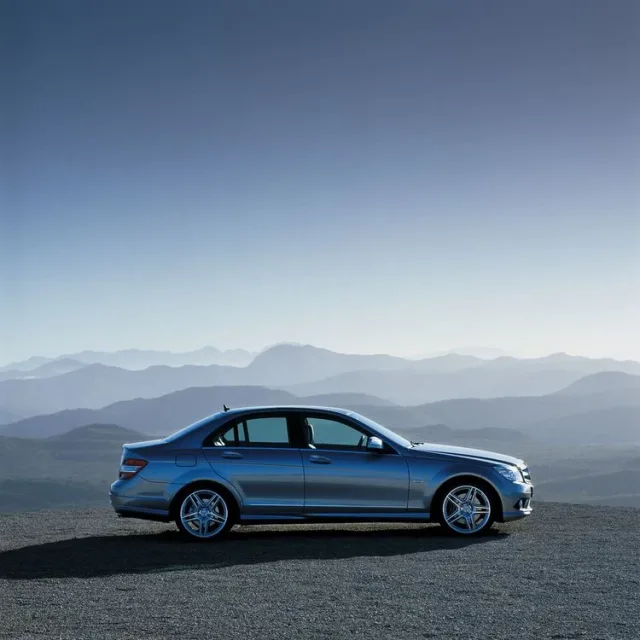
Officially, the concept of the new C-Class is formulated as Safety, Comfort, Agility — that is, safety, comfort, and agility. However, Mercedes emphasizes that everyone can prioritize these according to their own preferences. The head of DaimlerChrysler, Dieter Zetsche, did exactly that — in his speech, he mentioned the word agility twice as often as the other two.
It must be said that the driver-oriented character was inherent in compact Mercedes models before as well. Let us recall at least the Mercedes 190 — the first model of the brand with a multi-link rear suspension, which German experts still consider one of the best chassis of the eighties. And what about the restyling of the previous C-Class in 2004, which took place under the motto direct control — “direct control”?
But, as the head of the marketing department Klaus Maier admitted, for the first time in the history of Mercedes-Benz, the main emphasis in the new model is placed precisely on driving qualities. The market dictates this — athleticism is now in trend. Plus competition: the BMW “three” sells better. For now, better, Maier immediately clarifies.
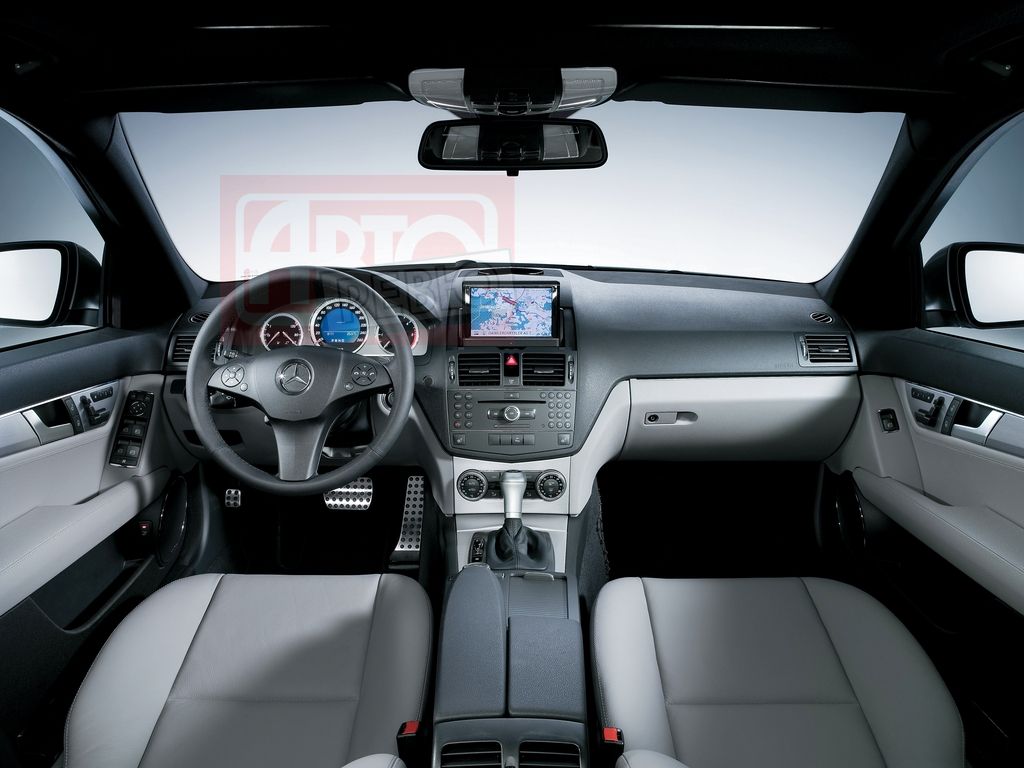 | 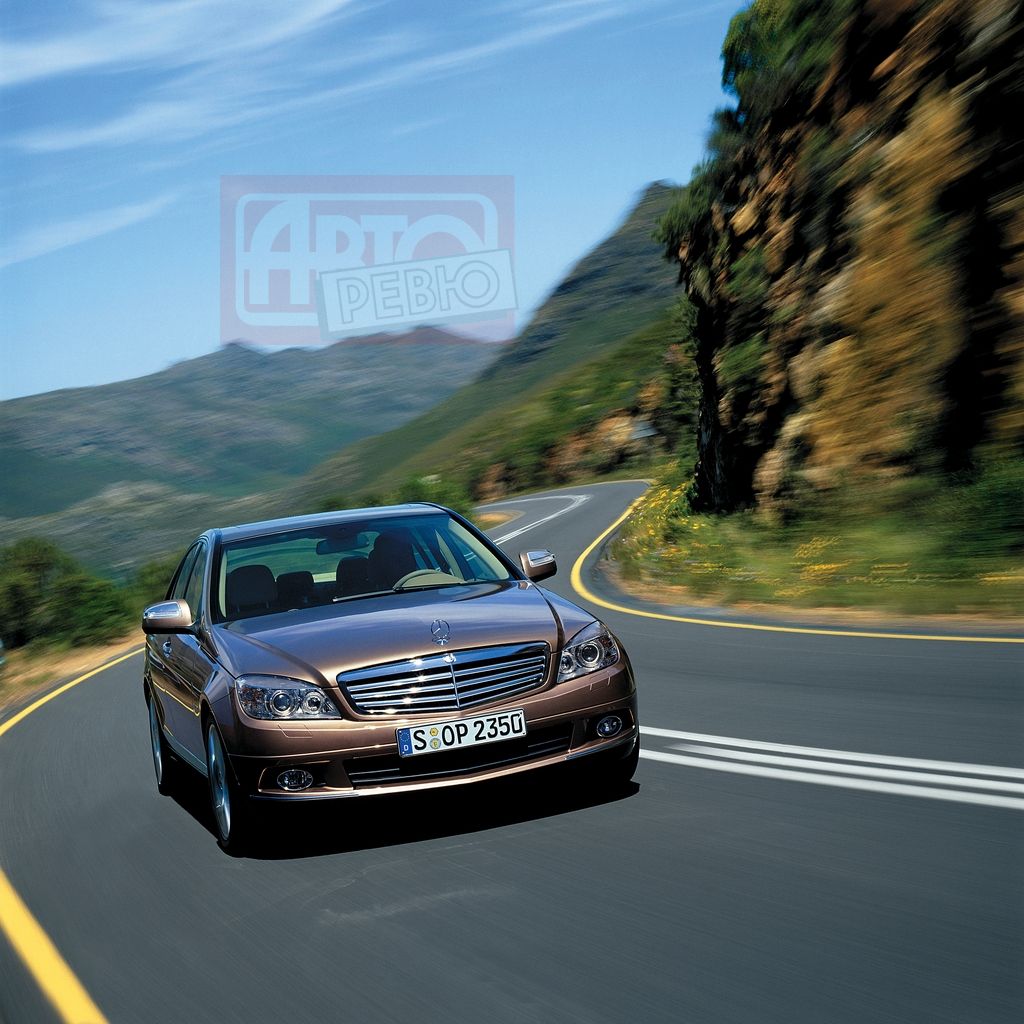 |
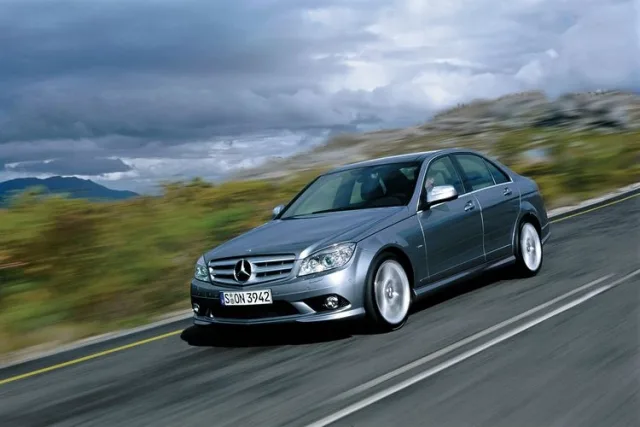
| The interior is completely redesigned — now it is technocratic. Wooden inserts are offered only for the lower part of the center console and the area around the gear selector. The top version Avantgarde (pictured) uses aluminum. The three-spoke steering wheel and metal pedal covers are elements of the AMG package | The three versions of the C-Class have different appearances. The most striking is Avantgarde (photo below) with a large star on the hood and a body kit from AMG. The Elegance version (photo above) looks more modest and differs from Classic only by a more expressive radiator grille and chrome details |
The design of the new car emphasizes its “agility” in every way. From the front and side, the C-Class clearly looks back at its older brother, the S-Class. But smooth lines are no more: the era of swift contours, sharp shapes, embossed wheel arches, and sharp edges has arrived. Or did it seem to me that the appearance of the “C” hints at BMW motifs? Maybe Lexus?
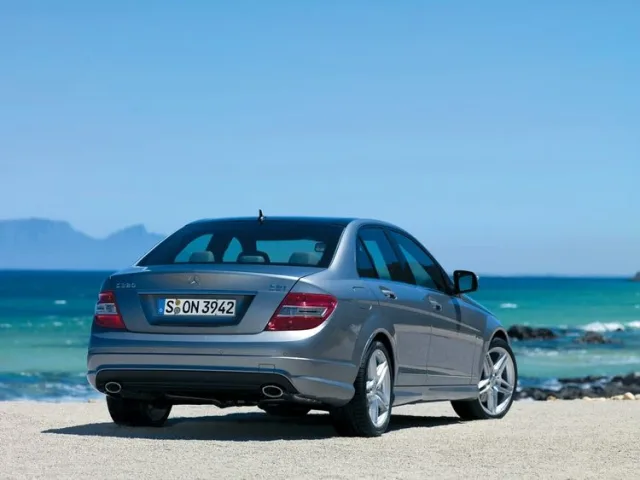
In any case, the C-Class looks very decent: a short front overhang, a wedge-shaped profile, a high rear. It is immediately clear — the car is rear-wheel drive, fast, and driver-oriented. The Classic version has a flat radiator grille, the Elegance has a more convex one with a curve around the vertical crossbar. But the Avantgarde flaunts a large star on the hood and an aggressive bumper. This front-end design first appeared on the legendary Mercedes 300 SL and subsequently became the hallmark of sports models. Now the large star also adorns the C-Class.
But here is the interior… I sit behind the wheel, place my palm on the hub, covering the emblem — and I am lost. Where am I? The black plastic of the center console with faceless buttons brings to mind a golf-class car.
Of course, the familiar climate control unit, the seat “icons” on the door cards, and the instrument panel in the style of the E-Class — three wells with an elegant display inside the large speedometer — give away the brand. But, as usual, expensive Mercedes versions look much more “Mercedes-like” than base ones. Wood trim, multicontour seats, automatic transmission… And the Comand APS system with a joystick washer under the right hand. You press it — and a seven-inch color screen emerges from the front panel, like in the Audi A8. The graphics are like on the S-Class, but with fewer functions: navigation with a 30-gigabyte hard drive, DVD player, phone, and a music server with four gigabytes of memory. The menu is fully Russified — excellent! True, the Linguatronic voice control does not yet understand Russian speech.
As before, the lineup will include eight versions — from the 136-horsepower diesel C 200 CDI to the flagship six-cylinder C 350 with 272 hp. You will not have to relearn the indices — the engines remain the same. Only two “fours” were modernized — the 1.8-liter gasoline with a mechanical supercharger and the 2.2-liter turbodiesel. Since both have two stages of boost, there are four engine variants. Each has become more powerful, torquier, more environmentally friendly, and more economical. But the “sixes” — both gasoline and diesel — remained untouched.
But where is direct injection? Where are the electronically controlled oil and water pumps? Where is turbocharging, which in terms of economy surpasses superchargers?
The BMW “three” has all this…
As for transmissions, there is also nothing radically new, except for a newly developed six-speed manual for the three-liter diesel C 320 CDI. Gasoline “sixes” are entitled to a seven-speed automatic 7G-Tronic — for the C 350 it is standard, for others it is an option. Four-cylinder versions can get a regular five-speed automatic for an extra charge instead of the standard six-speed manual.
The suspension architecture has not changed since the Mercedes 190 — McPherson struts in front and a multi-link rear. But for the new C-Class, a fresh option is prepared — shock absorbers with variable characteristics. The rod has a bypass channel with a valve that closes with increasing speed and amplitude of travel — and all this without electronics. The idea is to improve ride smoothness on a flat straight road and automatically increase energy intensity on bumps and during active maneuvers. The approach is not new — recall Koni FSD shock absorbers. Mercedes called its system Agility Control and installs it as standard on all C-Class modifications. Optionally, a sport suspension is available — with shortened springs, different shock absorbers, and stabilizers. And by autumn, the Advanced Agility package will appear: there each shock absorber is controlled by electronics, and the driver switches modes Sport or Comfort with a button. Press it — and the suspension becomes stiffer, the gas pedal sharper, the automatic (if present) shifts more actively. In addition, cars with this package have a “shorter” steering mechanism — a gear ratio of 13.5 instead of the standard 14.5.
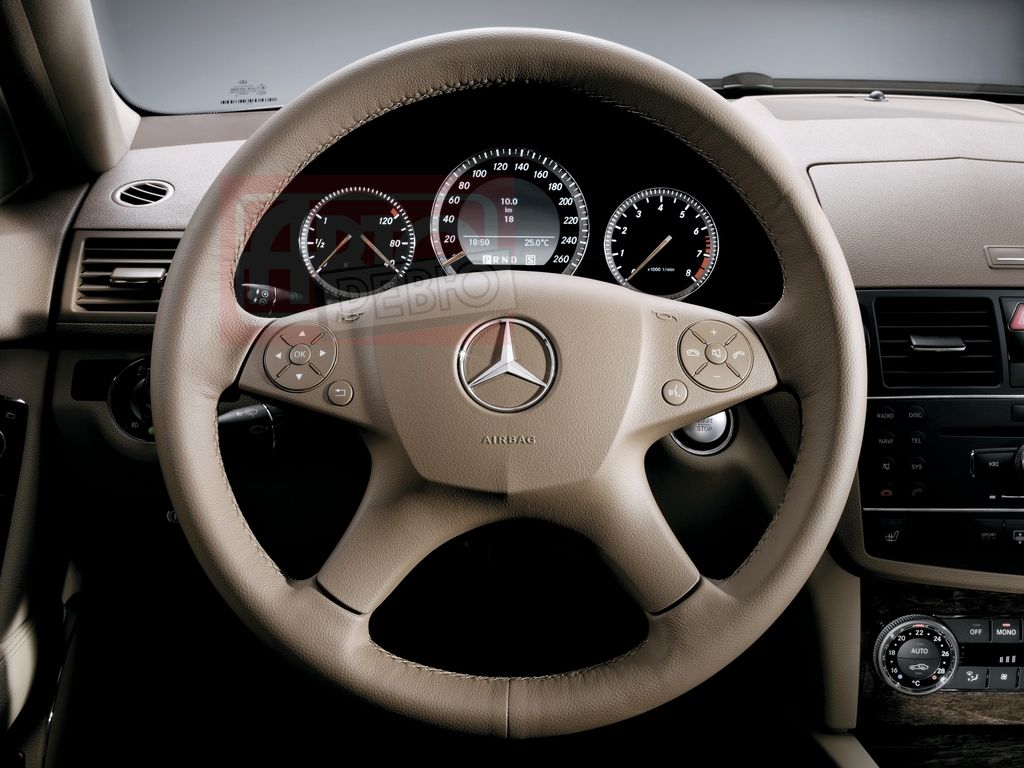 | 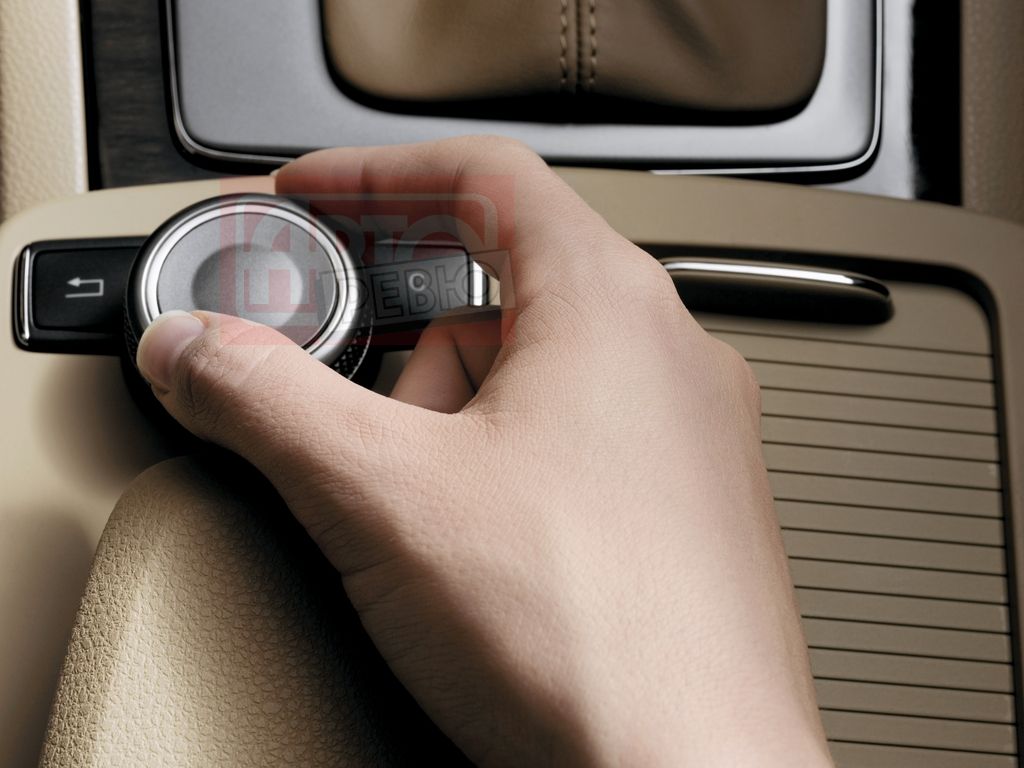 |
| The standard steering wheel is four-spoke. Navigation and audio system control buttons, as well as a display inside the speedometer, are standard equipment for the Elegance and Avantgarde trims | The controller washer of the Comand APS system can be rotated or tilted in eight directions. Auxiliary keys are located on the sides |
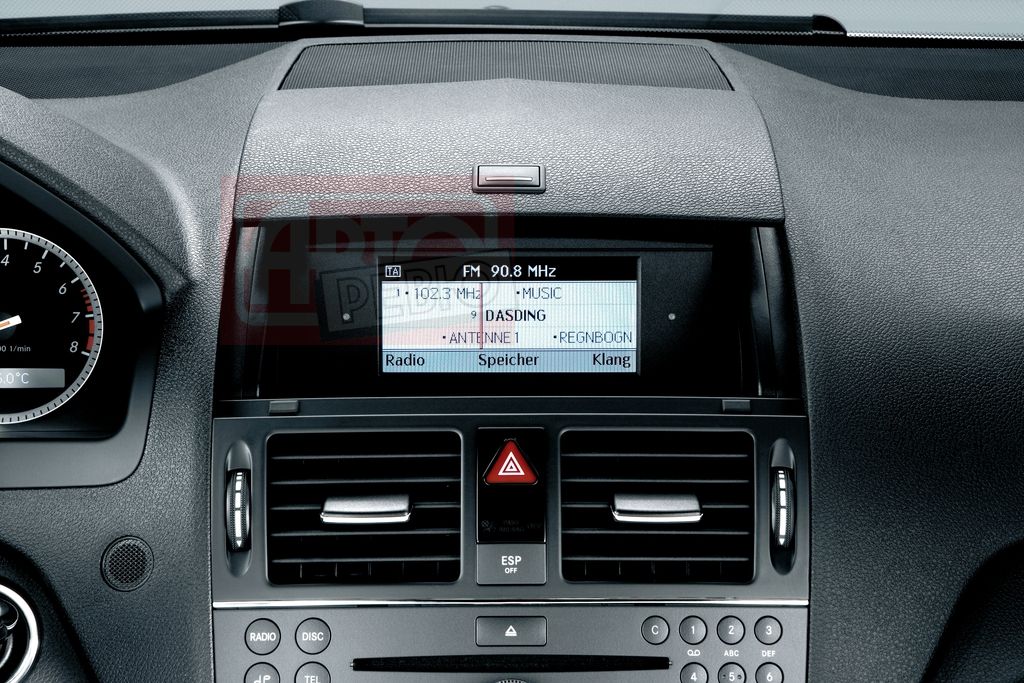 | 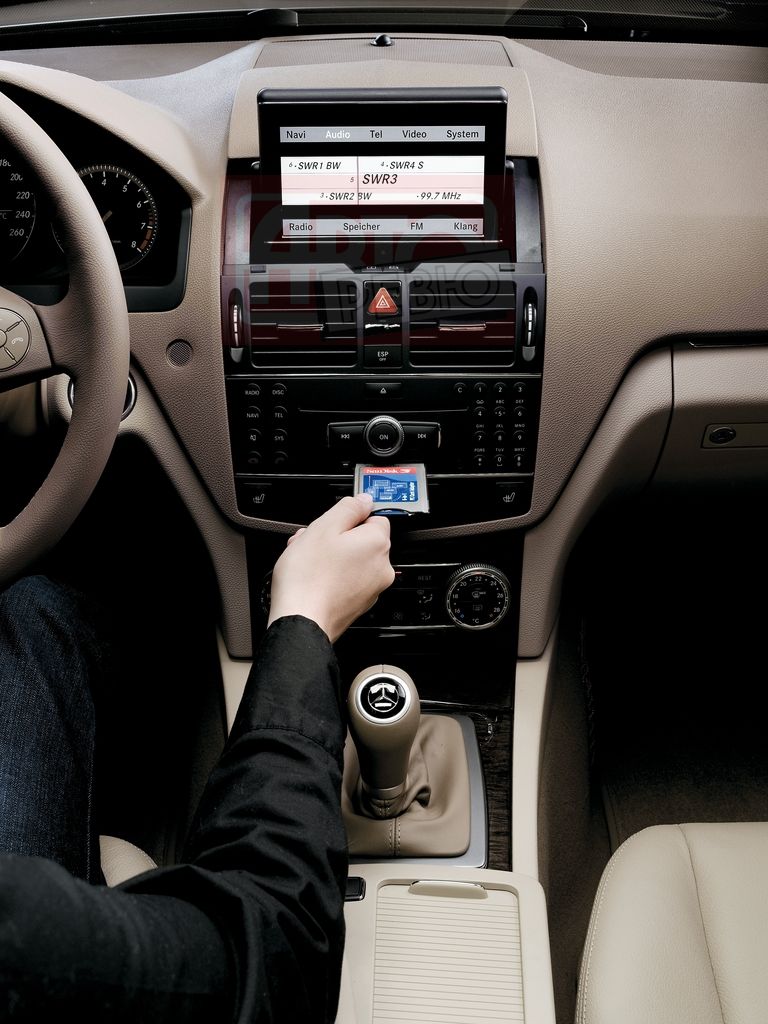 |
| There are three multimedia systems. Audio 20 is a CD player with a 4.9-inch screen (photo on the left) and Bluetooth. Audio 50 APS adds DVD navigation and voice control. Comand APS includes navigation with a 40-gigabyte hard drive, a music server with four gigabytes, a PCMCI expansion slot, and a 7-inch display | |
— But BMW has a variable steering ratio… — I try to catch the chief suspension specialist Arno Röhringer.
— Perhaps it is more convenient, but for me, the direct connection between the driver and the car is more important.
I listened to Röhringer’s words especially carefully: after all, it was his views that determined the “driving” philosophy of the new C-Class. And I like them.
— Electronics… You know, when did BMW start working on the xDrive all-wheel drive system? Twenty years ago. And they were able to perfect it only by 2003. I prefer other solutions — simple, mechanical…
Healthy conservatism — is that what drives Stuttgart?
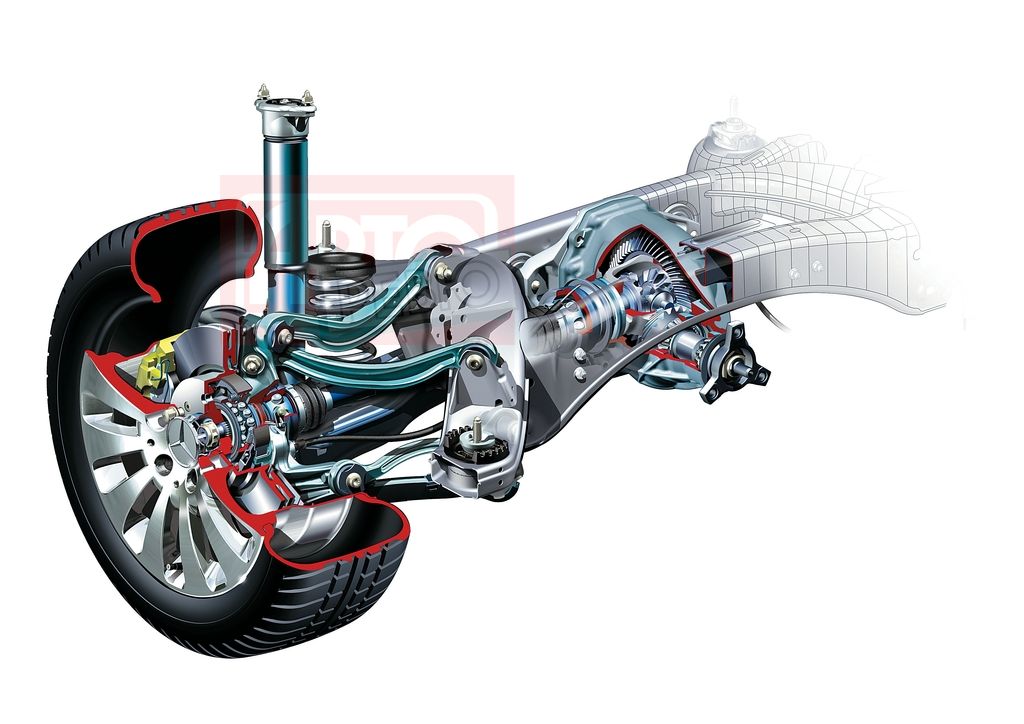 | |
| In front — McPherson struts. The attachment points of the subframe to the body are reinforced | The rear five-link suspension is a tradition of the C-Class. The subframe has become lighter, additional attachment points to the body have appeared |
In the new C-Class, you will not find either “active steering” or electronic stabilizers. All-wheel drive here is also familiar: permanent, with an asymmetric center differential that sends 45% of the traction to the front axle. The scheme is borrowed from the flagship S-Class.
The first "hot" versions of the new C-Class won't keep us waiting long — their debut is expected as early as August. And in autumn, we anticipate the premiere of an AMG modification with an incredible 6.3-liter V8. But the model's development isn't limited to just increasing power: over time, the lineup will be joined by the familiar estate and SportCoupe hatchback. Is there anything else? Klaus Maier answered this question categorically: "No, the C-Class will remain within the framework of three body types."
However, engineers at the presentation actively emphasized the "flexibility" of the new platform. This hints at the imminent appearance of other models on the same base. And this concerns exclusively Mercedes-Benz cars: the American Chrysler will not get such a chassis. There are already rumors that a compact crossover (possibly with the GLK index), built on the C-Class platform, is in the final stages of testing.
The logic is simple: the more models on one platform, the lower the development cost of each. And the expenses are truly enormous. Investments in the new C-Class are among the most significant of all cars with the three-pointed star. Just look at the testing program: 280 pre-production prototypes covered 24 million kilometers! That's three times more than its predecessor required and an absolute record in the brand's history. And that's not counting the extensive virtual work: one and a half thousand processors processed 2130 gigabytes of data to pre-calculate handling, ride comfort, aerodynamics, and safety.
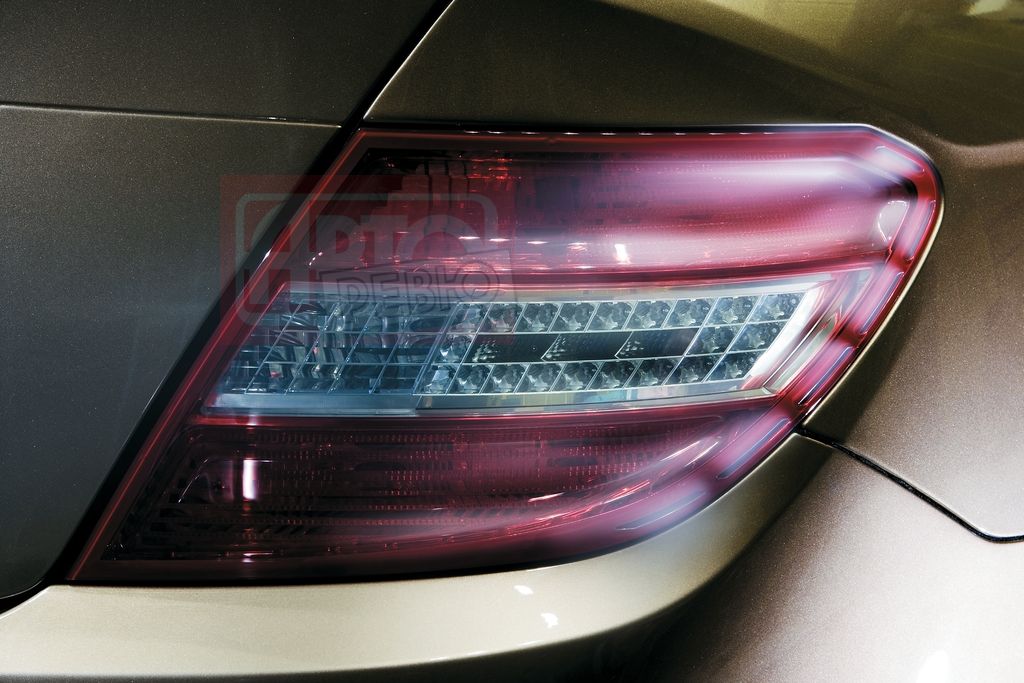 | |
| Special slots along the outer edge of the rear lights act as spoilers. Top left photo shows airflow with "ventilated" lights. Right — with regular ones. Drag coefficient Cd is 0.27 | |
And even with this approach, the development of the C-Class took a long five years.
Sales of the new C-Class sedan will begin in spring, after its premiere at the Geneva Motor Show. First, three petrol versions will appear — Mercedes C 200 Kompressor, C 280, C 350 — and the diesel C 220 CDI. Later, the lineup will be expanded with the C 180 Kompressor, C 200 CDI, and C 320 CDI. In Russia, the cars will arrive at the end of April, and orders can already be placed with dealers. However, diesel versions will not be supplied to us. Prices are still kept secret, although in Germany they promise to keep the starting price below 30 thousand euros.
The new C-Class is a kind of exam for the entire company and personally for Dieter Zetsche. Will his reforms, cuts, and restructuring justify themselves if the brand's best-selling model fails to meet its targets? And expectations are huge: it needs to surpass the predecessor's result of over two million units sold, take leadership in the class from the BMW 3 Series, and make Mercedes-Benz the largest manufacturer in the premium segment.
In short, to show top-class performance.
| Specifications | ||||||
| Parameters | Vehicle | |||||
| Mercedes-Benz C-Class | ||||||
| Modification | C 180 K | C 200 K | C 230 | C 280 | C 350 | |
| Body type | sedan | sedan | sedan | sedan | sedan | |
| Number of seats | 5 | 5 | 5 | 5 | 5 | |
| Trunk volume, l | 475 | 475 | 475 | 475 | 475 | |
| Curb weight, kg | 1485 | 1490 | 1540 | 1555 | 1610 | |
| Engine | petrol, with mechanical supercharger | petrol, with multi-point injection | ||||
| Location | front, longitudinal | |||||
| Number and arrangement of cylinders | 4, in-line | 4, in-line | 6, V-shaped | 6, V-shaped | 6, V-shaped | |
| Displacement, cm³ | 1796 | 1796 | 2496 | 2996 | 3498 | |
| Cylinder bore/piston stroke, mm | 82.0/85.0 | 82.0/85.0 | 88.0/68.4 | 88.0/82.1 | 92.9/86.0 | |
| Compression ratio | 9.3:1 | 8.5:1 | 11.4:1 | 11.3:1 | 10.7:1 | |
| Number of valves | 16 | 16 | 24 | 24 | 24 | |
| Max power, hp/kW/rpm | 156/115/5200 | 184/135/5500 | 204/150/6100 | 231/170/6000 | 272/200/6000 | |
| Max torque, Nm/rpm | 230/2500—4200 | 250/2800—5000 | 245/2900—5500 | 300/2500—5000 | 350/2400—5000 | |
| Gearbox | manual, 6-speed/automatic, 5-speed | manual, 6-speed/automatic, 7-speed | automatic, 7-speed | |||
| Drive | rear | rear | rear | rear | rear | |
| Front suspension | independent, coil spring, McPherson | |||||
| Rear suspension | independent, coil spring, multi-link | |||||
| Front brakes | disc, ventilated | |||||
| Rear brakes | disc | disc | disc | disc | disc | |
| Top speed, km/h | 223* | 235* | 240* | 250* | 250 | |
| Acceleration 0—100 km/h, s | 9.5* | 8.6* | 8.4* | 7.3* | 6.4 | |
| Fuel consumption, l/100 km | ||||||
| combined cycle | 7.8* | 7.9 | 9.6 | 9.4 | 9.7 | |
| Fuel tank capacity, l | 66 | 66 | 66 | 66 | 66 | |
| * Data for versions with manual gearbox | ||||||
Predecessors
The founder of the C-Class is rightfully considered the pre-war four-door Mercedes 170. Its appearance in 1931 in Paris was a real sensation: Daimler-Benz, a renowned manufacturer of luxury and sports cars, releases an affordable compact sedan! And with fully independent suspension: two transverse leaf springs at the front, springs and swing axles at the rear.
This independent suspension on all wheels was inherited by the more modern Mercedes 170 V, presented in 1936. It is this car that Stuttgart's official historians consider the starting point of the C-Class history. The main argument is the "democratic" four-cylinder engine instead of the in-line six in the first 170. The engine displacement remained unchanged (the same 1.7 l), but power increased from 32 to 38 hp. The affordable Mercedes 170 V quickly won the hearts of German burghers, but the approach of war was already felt in Europe. In 1942, sedan production was halted, and the Allies only allowed the resumption of passenger car production in 1946. On surviving equipment, they began assembling the most "people's" pre-war model — the Mercedes 170 V. In 1949, the car received a diesel engine, then underwent modernization, and finally left the scene three years later, having fulfilled its mission of reviving the company.
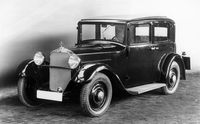 | 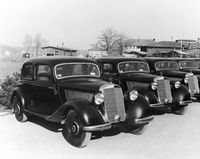 |
| Affordable, maneuverable, and economical Mercedes 170 (W15) — it helped Germany drive out of the economic depression | Mercedes-Benz 170 V (W136) was popular both before and after the war — it was this car that brought the company back to life |
It was replaced by the Mercedes-Benz 180, nicknamed Ponton, with a unibody construction, which became noticeably larger. From it came the mid-size sedans of the W114 and W123 series, which eventually evolved into the current E-Class. And the return "one step down" happened only in 1982 — with the appearance of the compact sedan Mercedes-Benz 190 of the W201 series.
The "one ninety" was a real revolution. The new "chiseled" style of then-chief designer Bruno Sacco, a fresh chassis with a rear multi-link suspension that, in modified form, survived into the 21st century. The main engines were four-cylinders ranging from 1.8 to 2.5 liters. In 1983, the first Mercedes sixteen-valve engine appeared. And in 1985, the public was surprised by an in-line six-cylinder with a displacement of 2.6 liters (166 hp) and a 90-horsepower five-cylinder diesel with a displacement of 2.5 liters. The "Baby Benz" turned out to be extremely successful: over ten years, 1.9 million cars were assembled at plants in Sindelfingen, Bremen, and South Africa.
Back in 1993, when the company was revising its product lineup, the first C-Class came into being. It did not lose its affordability but became noticeably more spacious and better equipped than its predecessor. Moreover, the "C" debuted with as many as seven different engines! And just a couple of years later, in 1995, exactly half a century later, Mercedes began installing superchargers again — in particular, on the C 180 K and C 230 K versions. In 1997, the model underwent a light facelift, and a year later it received V-shaped six-cylinders with three valves per cylinder. The result: the first C-Class managed to repeat the success of the legendary "one ninety" — 1.9 million cars sold. Thus, the "C" even surpassed the S- and E-Classes and became the brand's most sought-after model.
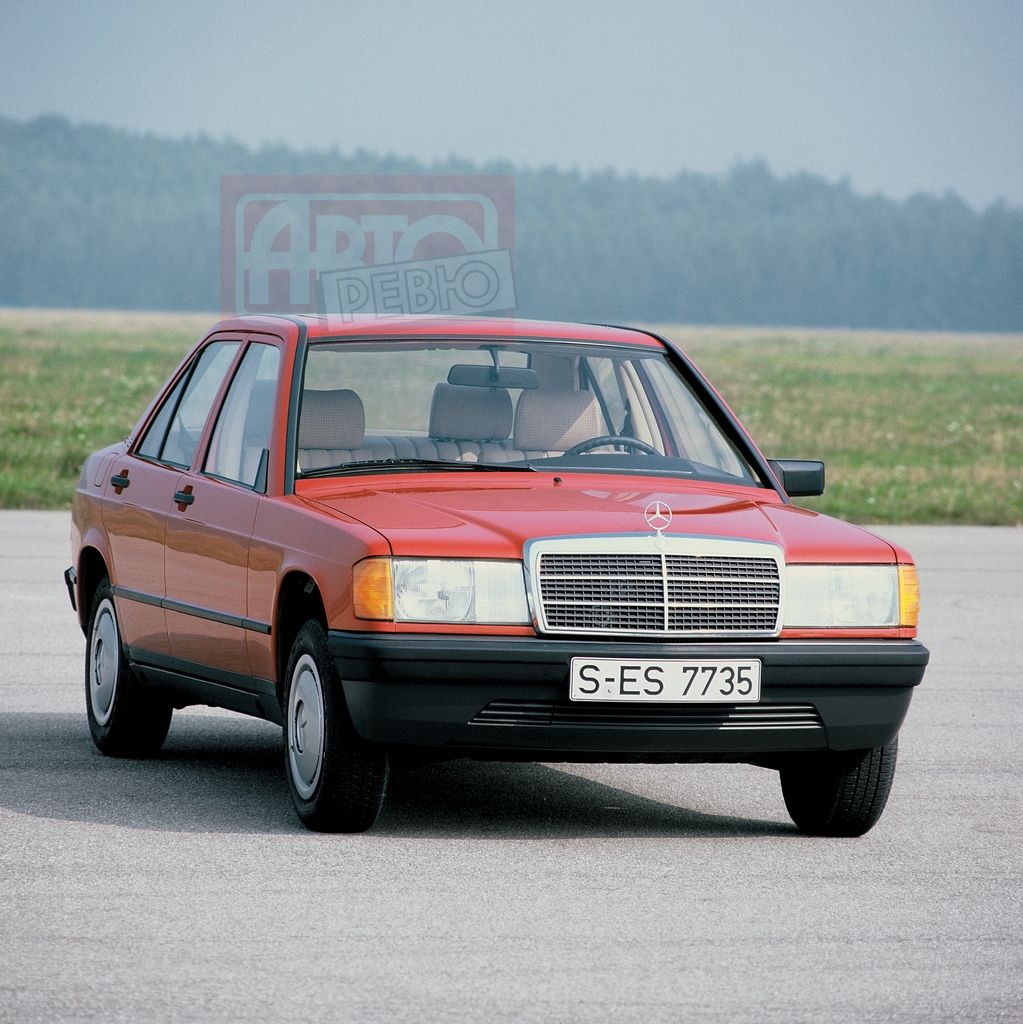 | 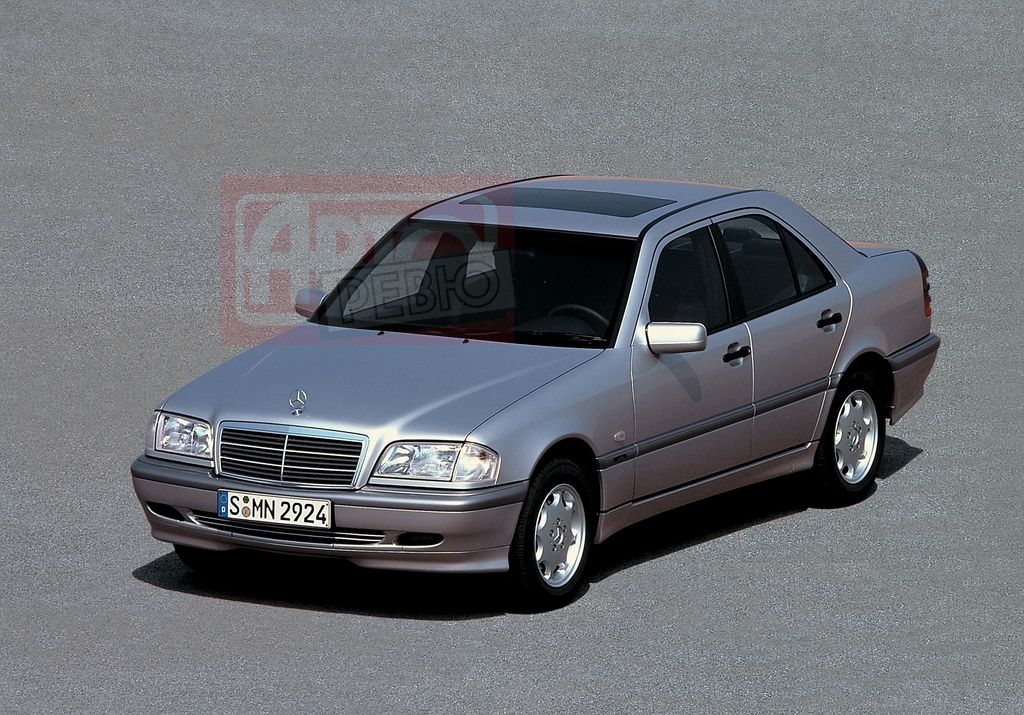 | 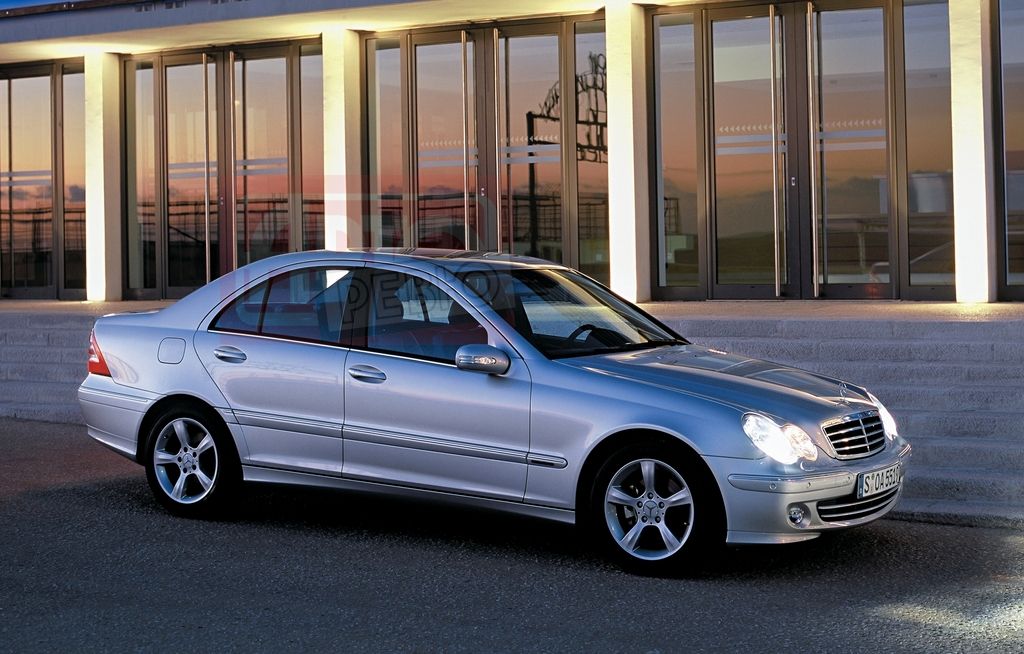 |
| Even after a quarter of a century, the compact Mercedes-Benz 190 (W201) is considered a "real" Mercedes — for quality and reliability | Mercedes-Benz W202 officially became the first C-class, and since 1996 a station wagon was added to the sedan | Mercedes-Benz W203. The most mass-produced C-class was available in three body styles — sedan, station wagon, and three-door hatchback |
Starting in 2000, the second generation of the C-class was assembled at three plants simultaneously — in Germany and Africa. Engineers from Stuttgart never stopped improving supercharged engines, common rail and variable-geometry turbochargers appeared on diesel units, and all-wheel drive 4Matic was added to the list of transmissions. By the end of its life cycle, the W203 model set a new benchmark — more than two million cars sold!
Will the new C-class W204 be able to beat this record?