
I asked for a salad. A plain salad. But they brought a giant platter piled with greens, potato chips, and generously cut pieces of unfortunate Texas broilers. To my surprise, the waitress just smiled and uttered the sacramental: «Everything is big in America».
In America, everything is huge. Even crossovers that have grown to five meters in length, two tons in weight, and seven seats, like the Mazda CX-9.
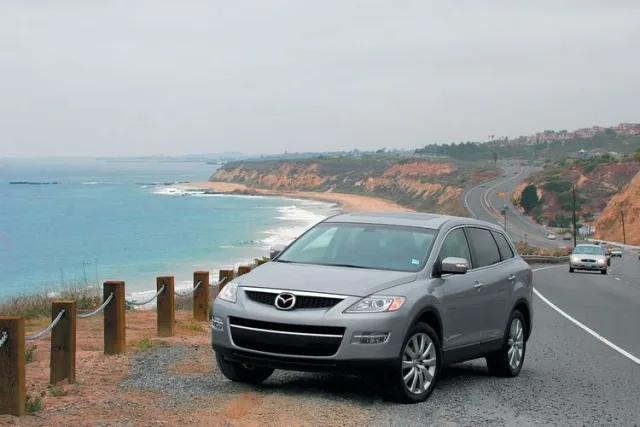
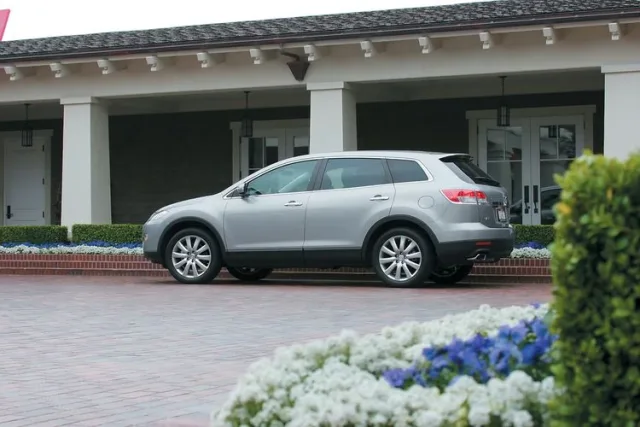
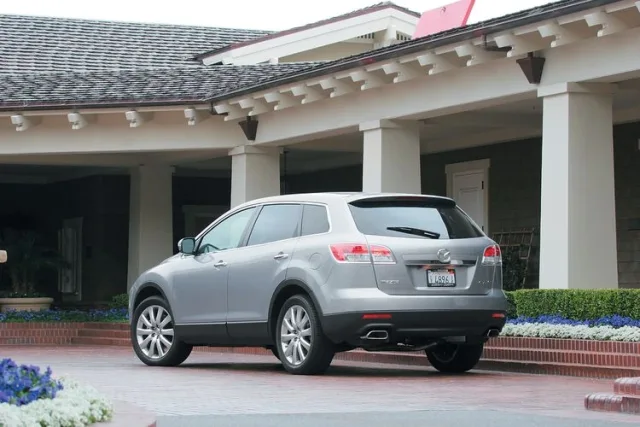
Optical illusion? A test of eyesight? «He could not tell iamb from trochee, no matter how we tried...» You could kill me, but from ten steps away I cannot confidently say that a Mazda CX-9 is parked at the entrance of the posh Los Angeles hotel Montage Resort, and not a CX-7. Both models are like twins. Or rather, like sisters. All because the style of the brilliant Iwao Koizumi, the author of the Mazda 6 and bearer of Mazda's design genetic code, is marked by femininity — a special, Japanese-Asian one, with slanted lines and thin, elegant forms.
| Without repeaters on the mirror housings, it's now impossible to do | Light makeup: a thin strip of chrome on the «fog light» |
The Mazda CX-9 is the elder of the sisters. It is larger: the wheelbase is 125 mm longer than the CX-7's, and the body is stretched by 399 mm. However, there is no disharmony or disproportion in this. And the «decorations» match the age and status: if the rear lights of the «seven» with intricate partitions under the caps are a legacy of bold concept-car youth, then the optics of the «nine» look stricter and more restrained. The interior has especially «matured». Here it's even a bit boring: simple architecture, ordinary massive seats without original stripes down the center of the backrests, like the «seven», a strict chopped central console. The plastic is perhaps of better quality, but it still doesn't reach European «premium» standards. However, what am I saying — we're in America, and the Mazda CX-9 is created exclusively for the US market...
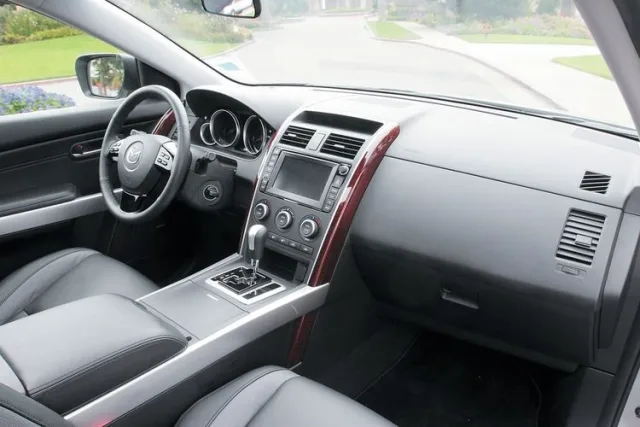
Solid, isn't it? At the same time, sitting behind the wheel is very comfortable, and the quality of the plastic is clearly better than «American». It's just that the tunnel is too massive
In fact, for an American car, the Mazda is incredibly good. Starting with the design, continuing with the interior plastic, and ending with driving characteristics.
Mazda doesn't have its own six-cylinder engine, and the «turbo-four» like the CX-7's is too weak for a two-ton seven-seater. Therefore, under the hood of the CX-9 — naturally, transversely — is a new Ford V6 3.5 engine. In power, it is comparable to Mazda's turbocharged 2.3 DISI — 263 hp versus 244 hp. But the torque is higher — 339 newton-meters versus 258. And the automatic transmission is not five-speed, but six-speed.
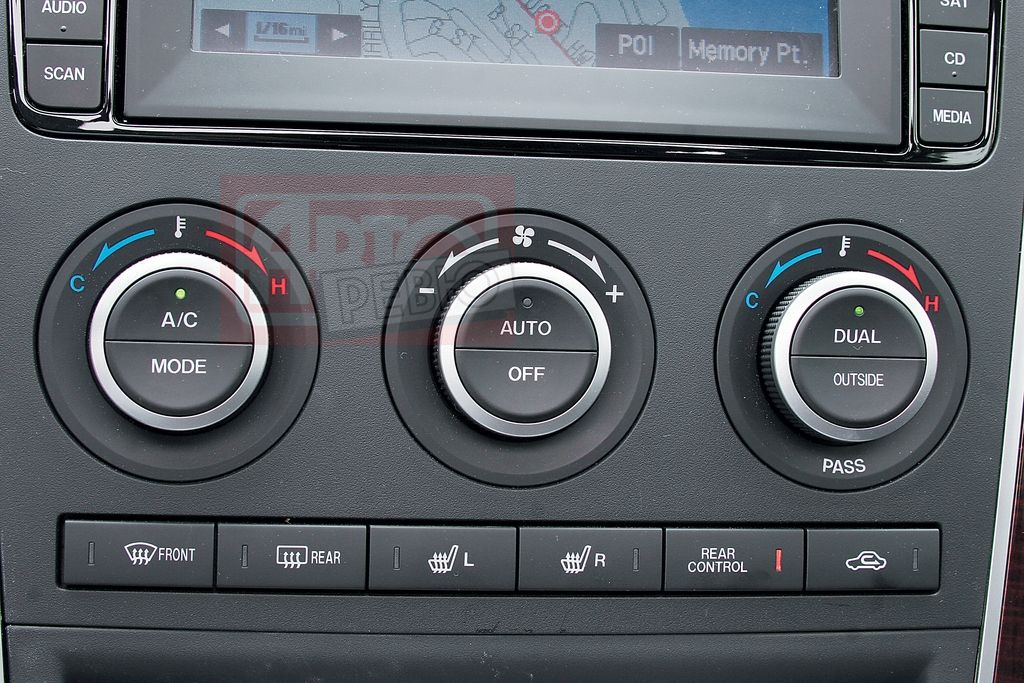 |  | 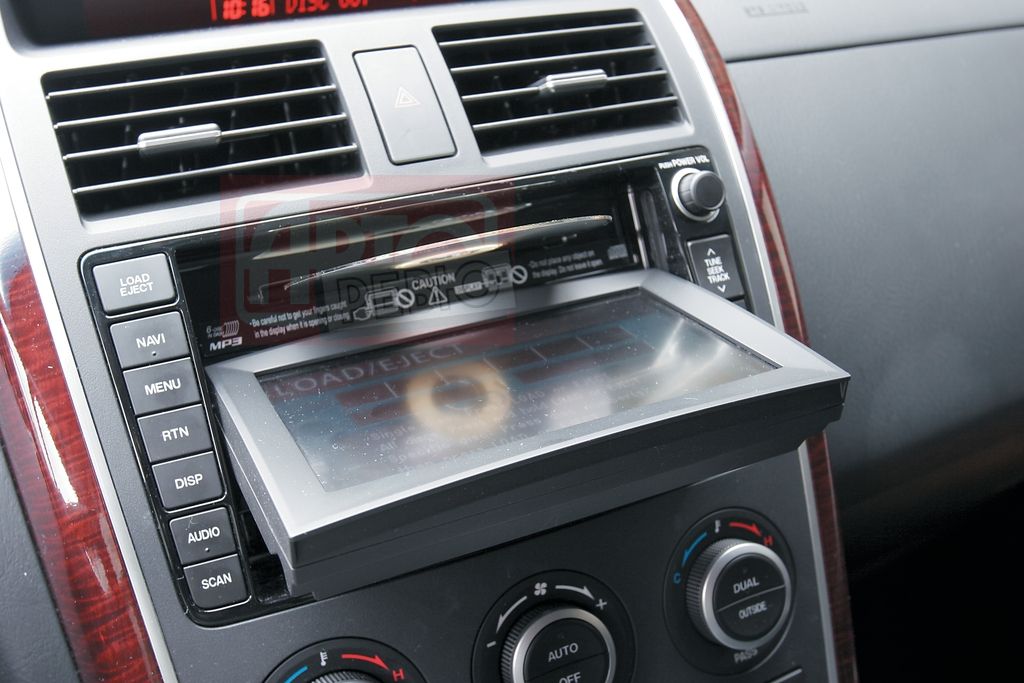 |
| Climate control management is simplicity itself | The Aisin «automatic» is almost ideal — it just lacks a bit of adaptability | The slot for loading the CD changer is inconveniently located — behind the display that slides down |
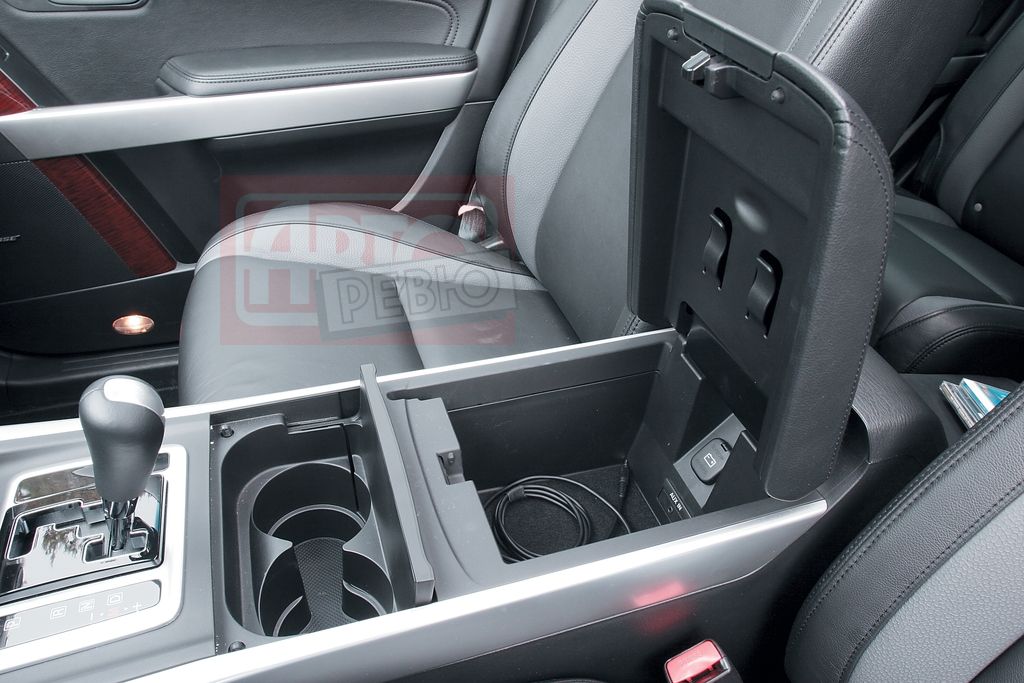 | ||
| The keyless access card is no thicker than a Mercedes one, and you don't need to take it out of your pocket — just press the door button | In the depths of the central box, a cable with a small «jack» is coiled like a snake — you can connect any portable player | |
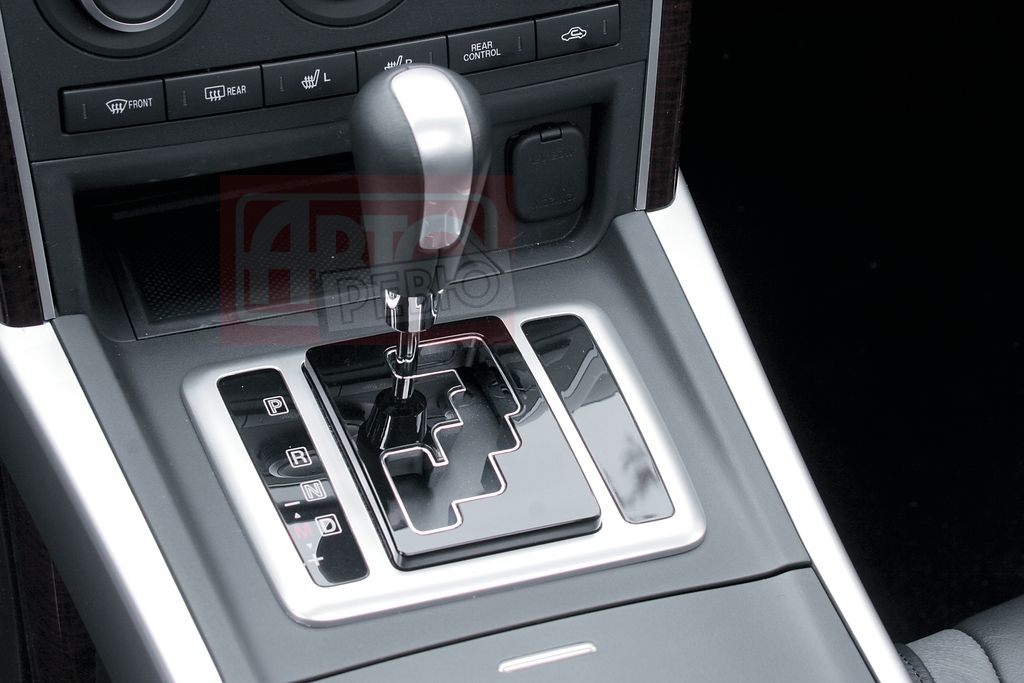
Excellent! The Mazda CX-9 starts off easily, willingly, and cheerfully — completely in a car-like manner. The engine is quiet and pleasant to the ear. It pulls «at the bottom» moderately, despite variable intake phases, but with increasing revs it becomes livelier and livelier. The new six-speed «automatic» also supports the high-rev concept — just press the gas a little, and the gearbox immediately nimbly offers the engine a lower gear, and it's happy to oblige... At the same time, the «automatic» shifts quickly but smoothly and softly. Almost ideal! If only it would temper its haste in downshifting and teach the gearbox to react more calmly to throttle release... Otherwise, you just ease off the accelerator — and the «automatic» immediately shifts to higher gears. A bit less fuss, a bit more adaptability, fuzzy logic in the shift algorithm — and everything would be just fine.
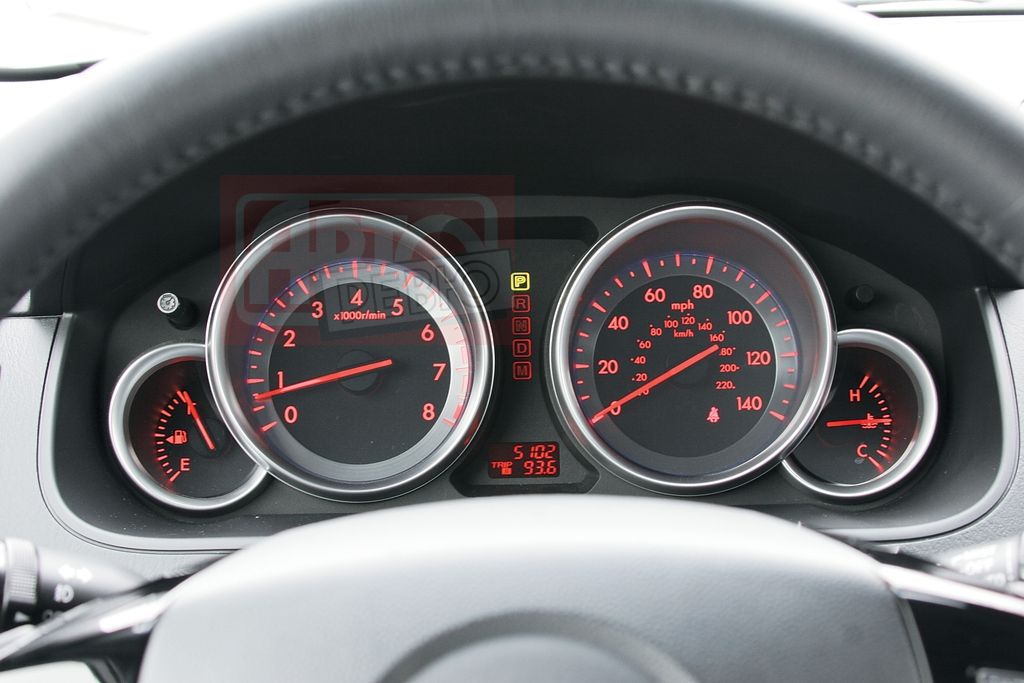 | 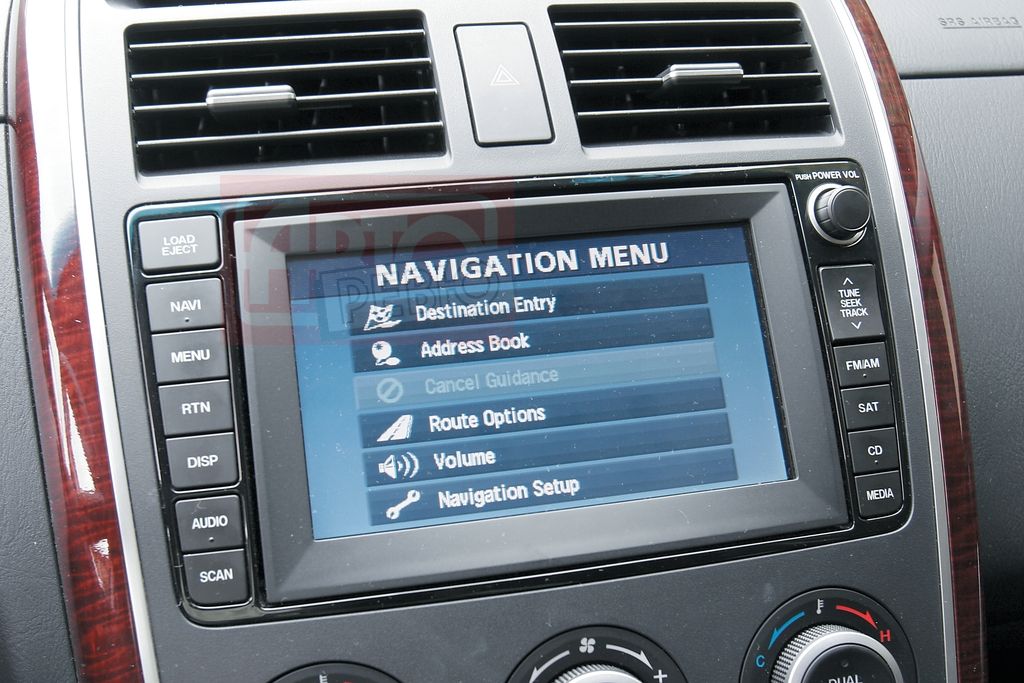 |
| Hark! A sporting spirit! And also a clear indication of the «automatic»'s operating modes | The interactive display responds to touch. Too bad the interface isn't the most successful — both in graphics and logic |
And what a chassis! «Car-like» sharpness and clarity of reactions, pleasant informative heaviness of the steering wheel in corners...
Truly, Americans won't appreciate it. Have you driven on their roads? Have you seen what they drive? Wild people, children of the prairies. Although, when the country from under the airplane's wing resembles a notebook ruled with lines...
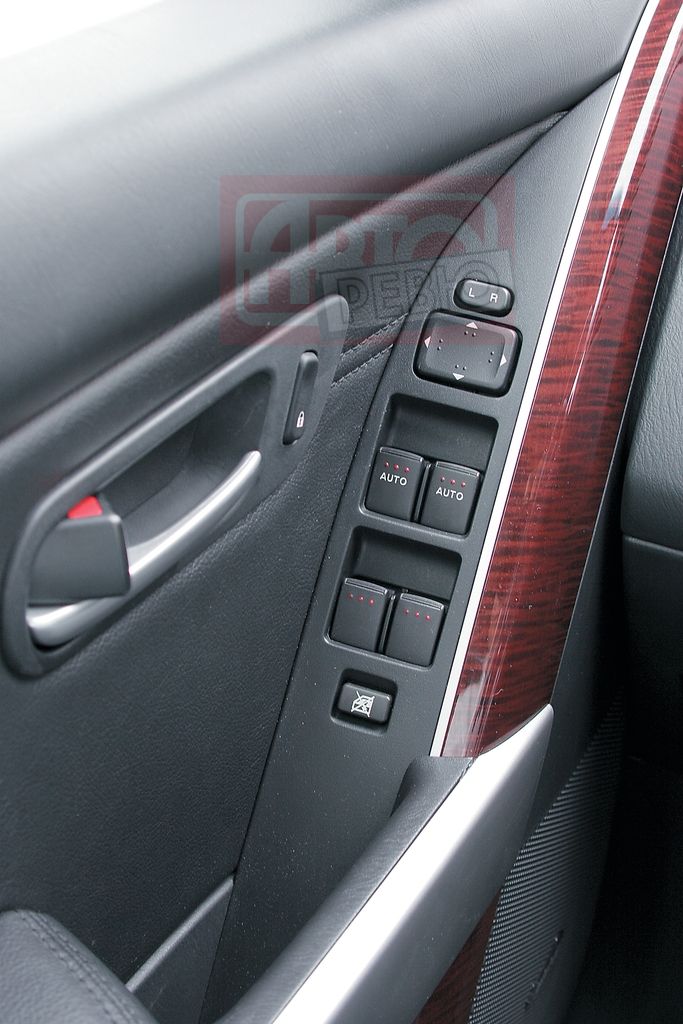 | 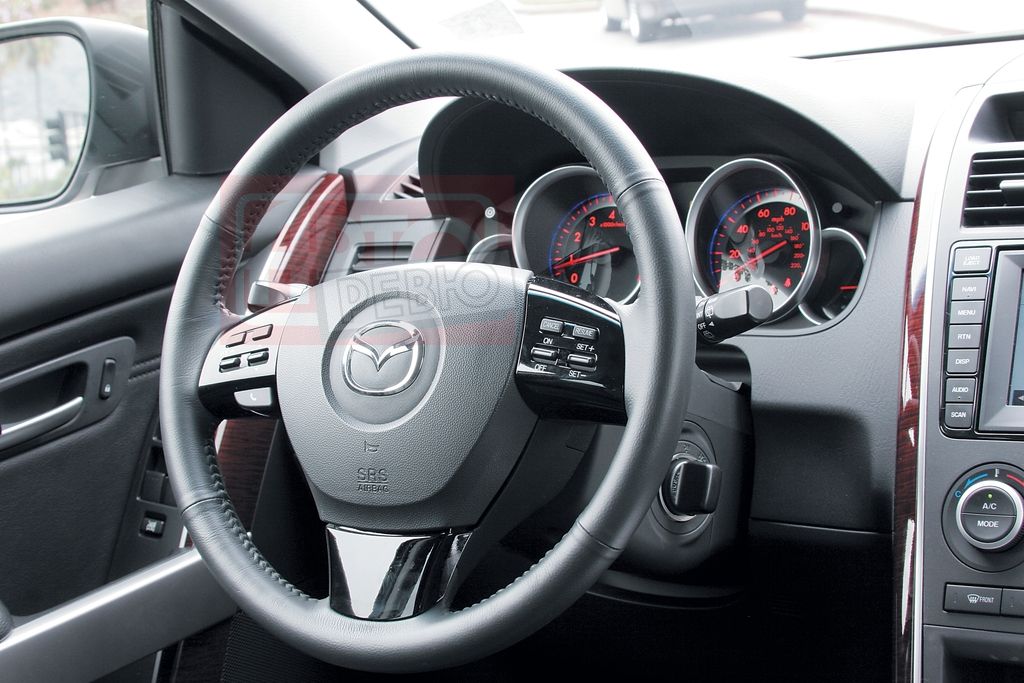 | |
| All buttons on the door panel are at hand. Convenient! | Above the driver's left knee — a cubby and a button to disable traction control (the stability system is always active) | There are even more keys on the multifunction steering wheel than on the Mazda CX-7. From lock to lock, the wheel makes 3.1 turns — a «car-like» sharpness |
In general, straight American highways are a threat to road safety. Seriously! Of course, on one hand, stupidly cruising along a multi-lane straight highway is a priori less risky than speeding along a winding German autobahn. But if a winding road forces you not to lose concentration, the highway, on the contrary, relaxes you. Lulls you. Corrupts you. You get used to the car rolling by itself (especially on cruise control). That's why rollovers are so popular in America: people fall asleep and drift onto the shoulder. And side collisions — are they America's woe? You doze behind the wheel in an amoeba state and simply don't notice an uncontrolled intersection at a right angle. And without braking (that's the trouble!) you drive into the side of another car or receive a terrible blow yourself.
By the way, uncontrolled intersections in America must be passed according to the primitive principle «first come, first served». Isn't that savagery?
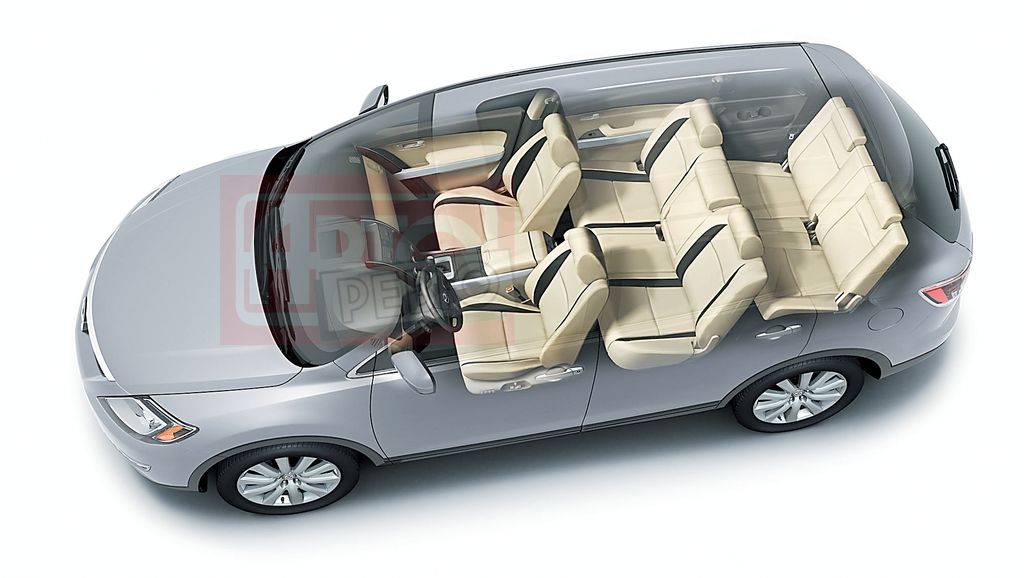 | 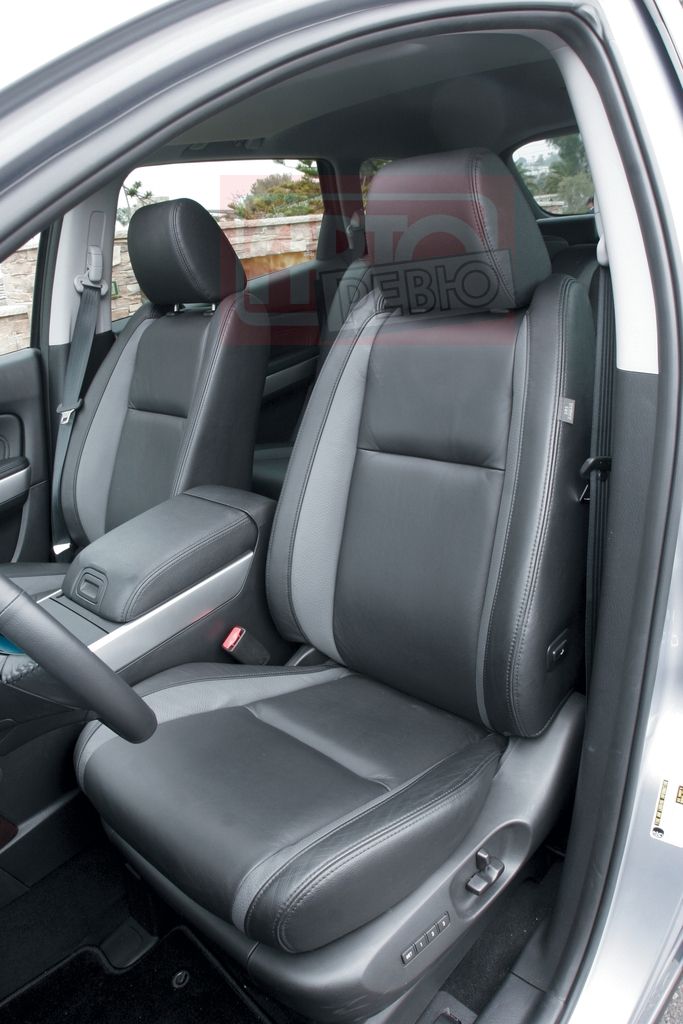 |
| Seven people can sit quite comfortably in the cabin. If necessary, the middle row sofa can be moved forward and backward along the rails in the floor | The seats are wide and quite comfortable |
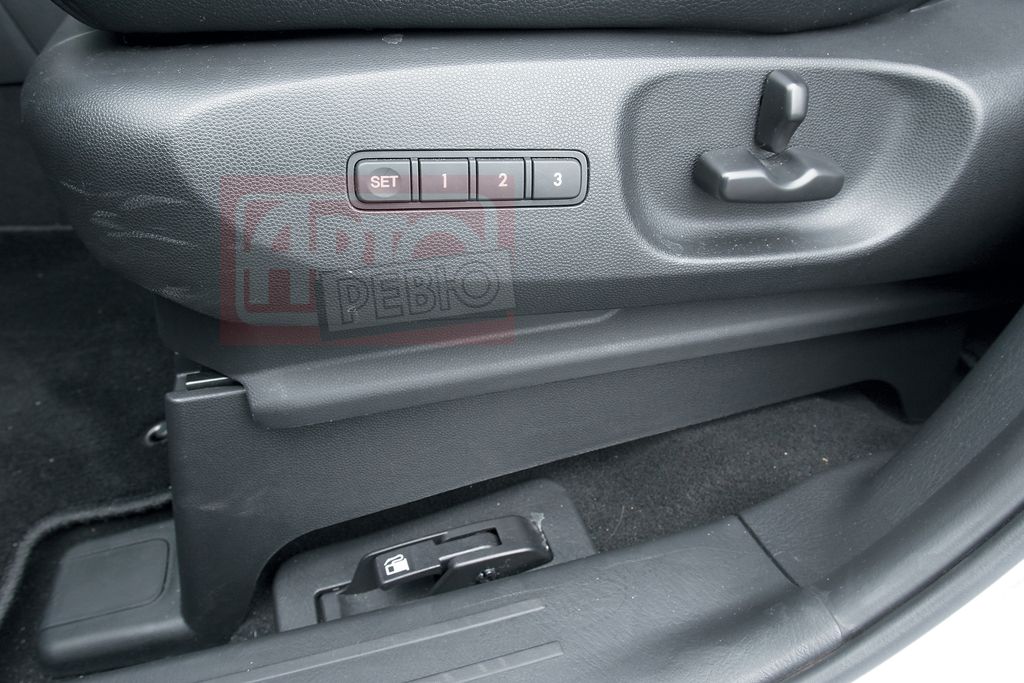 | |
| The fuel tank flap opens in a Japanese way — with a lever on the floor | There's even a servo adjustment for lumbar support! |
America fights side collisions by tightening passive safety standards. And cars like the Mazda CX-9 make you feel protected — a strong body, six airbags...
But to avoid falling asleep behind the wheel, you need to somehow feel involved in the process of driving. You need a good interactive chassis! And the Mazda has it. It is even worthy of the winding roads of the Côte d'Azur or the serpentines of Portuguese Faro! Although claiming this after just a single sequence of turns, which I did find in the hinterland near Los Angeles and was as happy as a child, driving it to the edge of sliding, is probably premature. But the Mazda went through that sequence very correctly, with slight understeer and without unpleasant wobbles and sways. And it weighs over two tons.
But — a rigid unibody, front McPherson suspension, rear clever multi-link... The main thing is that all this is tuned very decently. Interestingly, the platform-sharing five-seat crossovers Ford Edge and Lincoln MKX, structurally identical to the Mazda CX-9, according to reviews from competent American journalists, behave worse on the road...
To be fair, the Mazda feels quite stiff. The all-wheel-drive version, however, does not cross the line of comfort: it simply tosses you about on the seams and joints of American highways. But the front-wheel-drive Mazda CX-9 shudders noticeably more on the same bumps — probably because it is 100 kg lighter, while the springs and shock absorbers are calibrated the same.
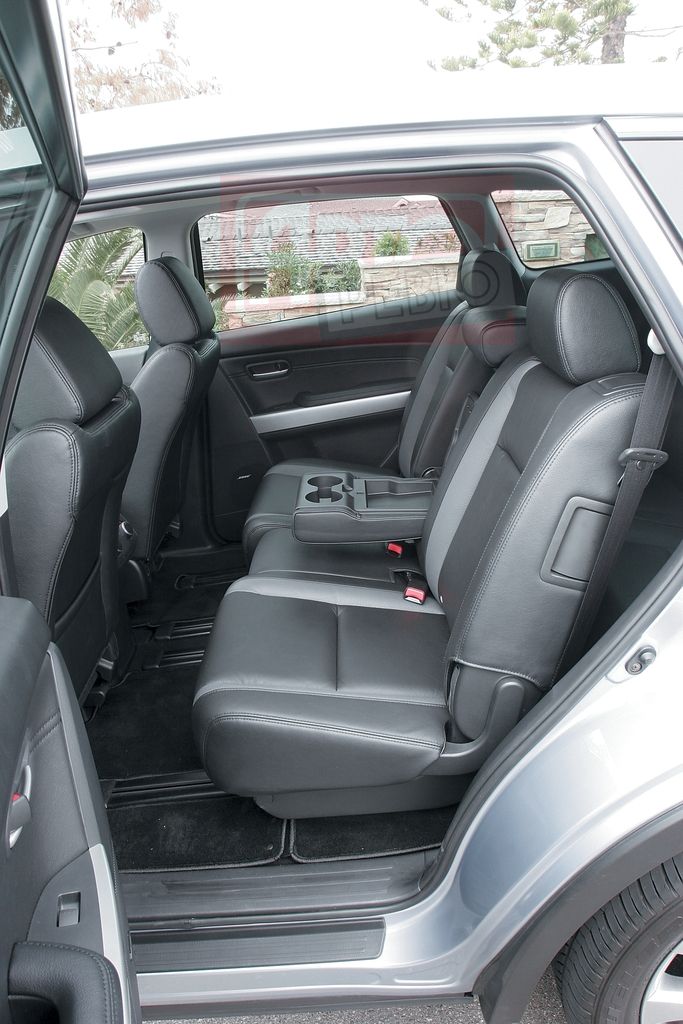 | 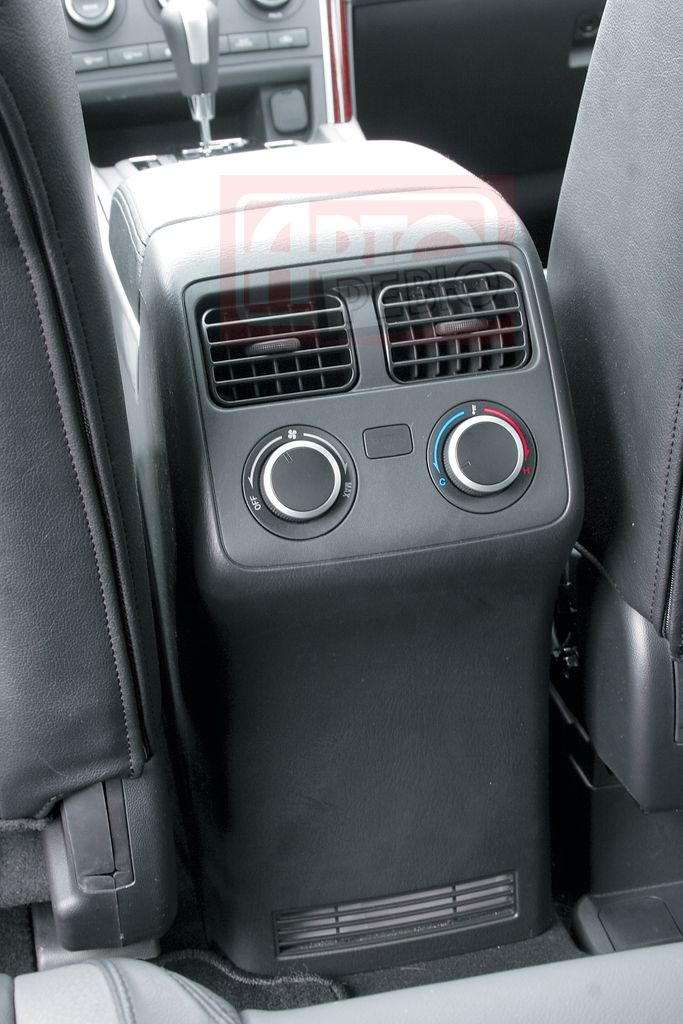 | 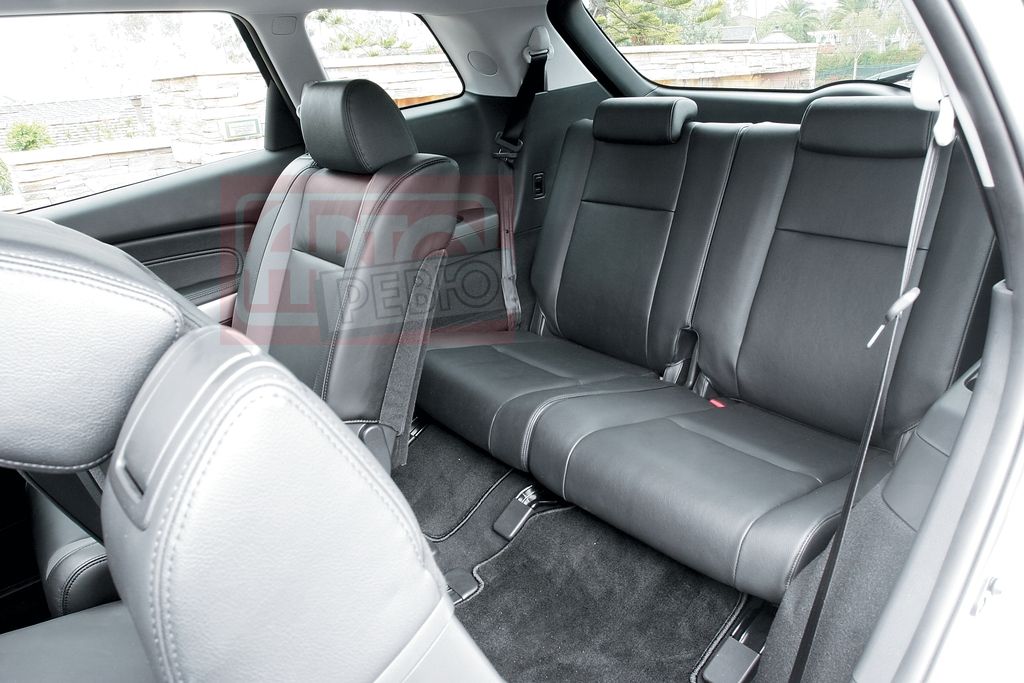 |
| Comfortable in the second row — there is an armrest… | …and its own climate control adjustments | Even an adult can fit in the third-row seats |
But nobody needs front-wheel-drive versions in Russia, right?
Stop. Who even said that the Mazda CX-9 will go on sale here?
Right now, representatives of Mazda's European division are deciding whether to bring the CX-9 to Eastern European markets in addition to North America and Australia. Certification in Russia only makes sense if they can sell more than 2000 cars. However, the CX-9 will definitely not be cheap here. If the CX-7 costs about $50000, then the "nine," by marketing logic, should cost more than $60000. And $60000 is exactly twice the $29000—34000 for which the CX-9 is sold in the US.
Getting such a car for just over thirty thousand dollars is a dream!
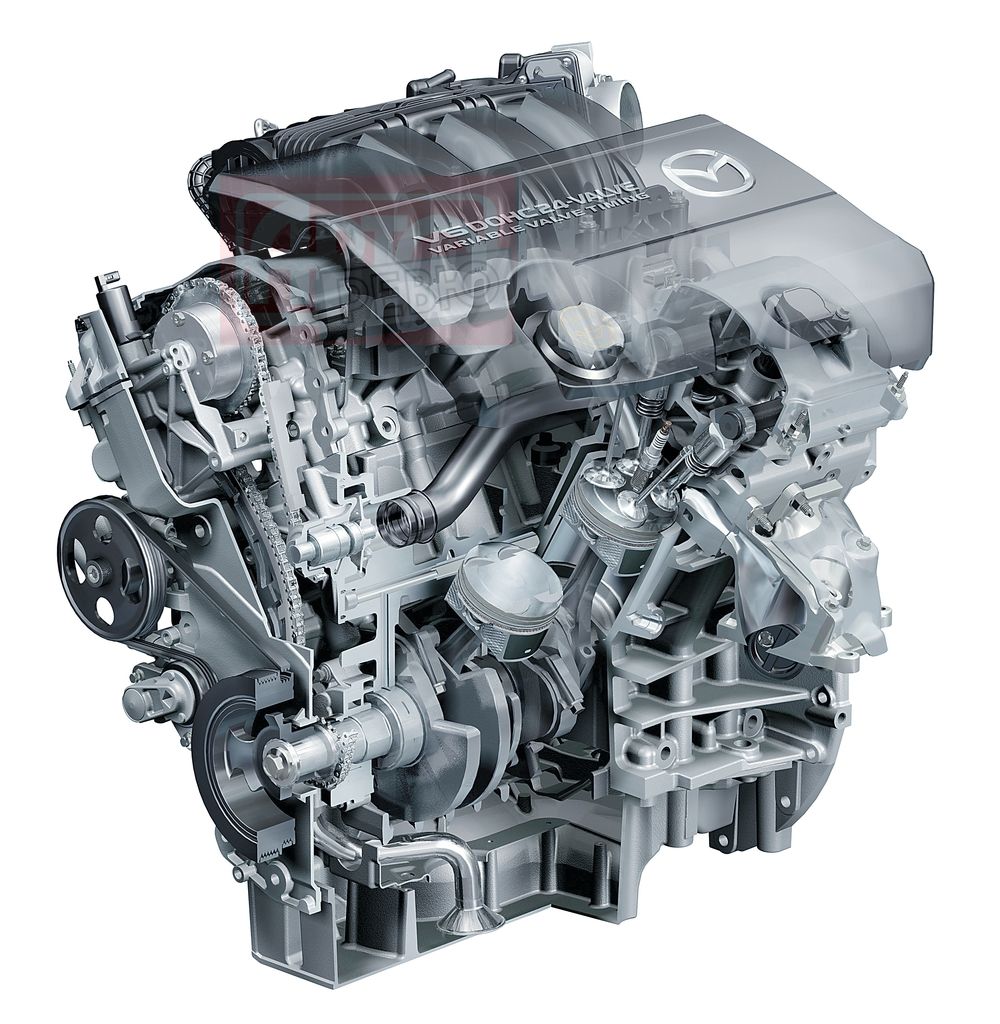 | 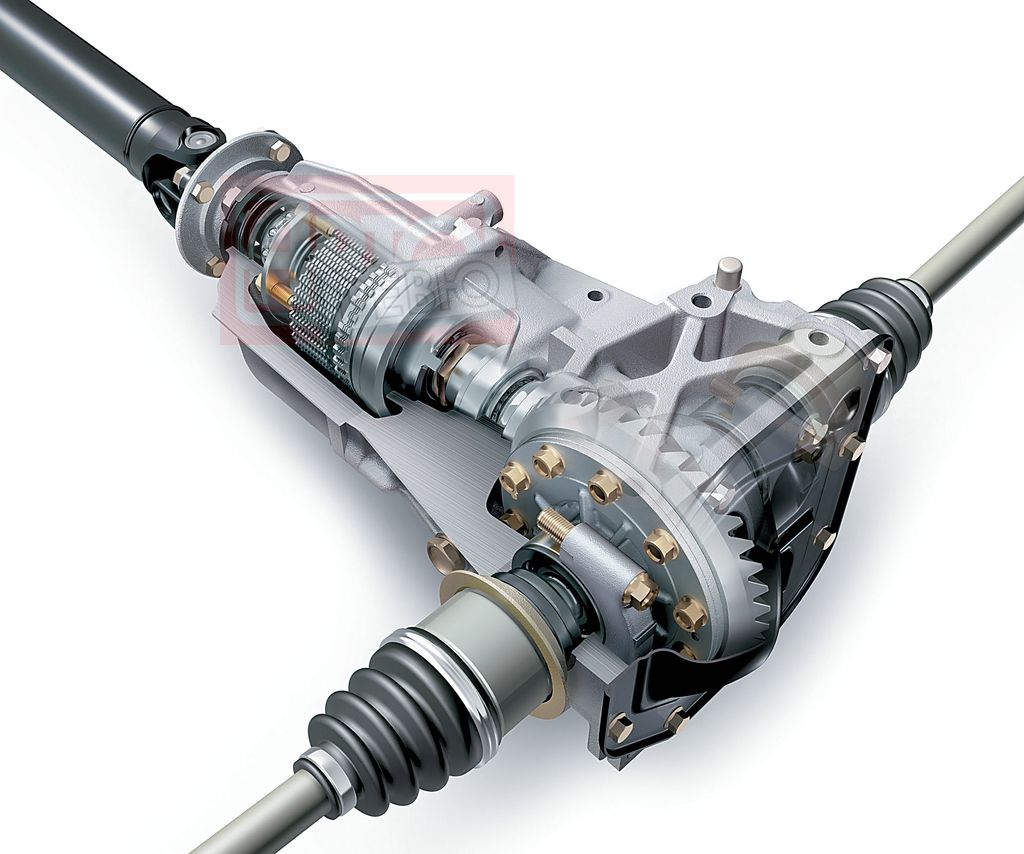 |
| The Ford Duratec 35 engine is the latest development of American engine builders at the Ford concern. It fully meets modern standards: aluminum block and heads, four valves per cylinder, and variable valve timing, albeit only on the intake (note the hydraulic phaser on the intake camshaft). The new V6 3.5 is already installed on Ford vehicles (Edge, Flex, Five Hundred), Lincoln (MKX and MKZ), and the Mazda CX-9 | The multi-disc clutch with electromagnetic drive, which connects the rear wheels on command from the electronics, is the same as on the all-wheel-drive versions of the Mazda 6 and Mazda CX-7 |
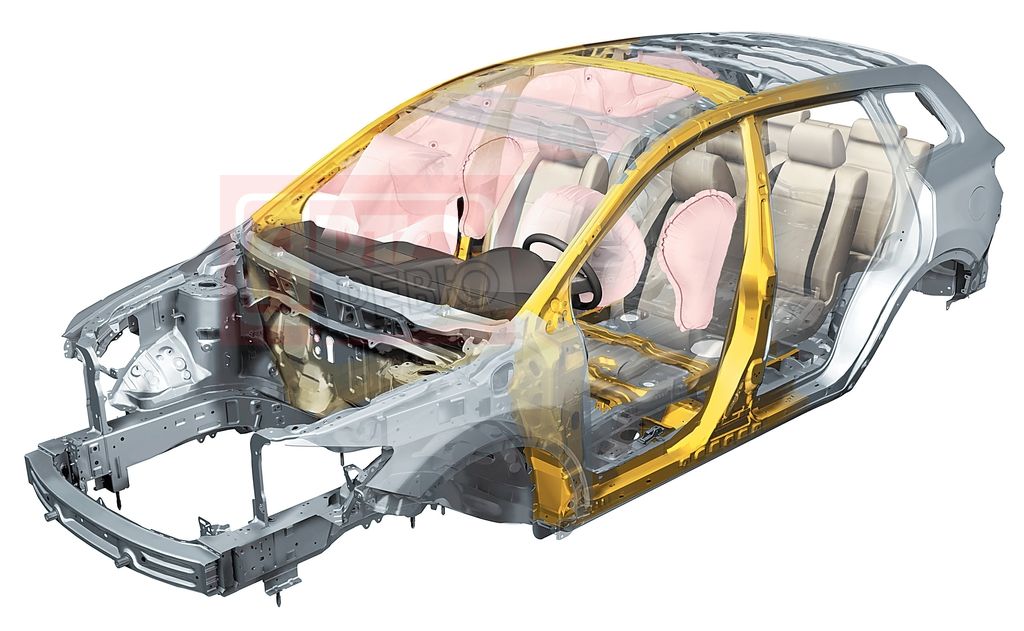 | 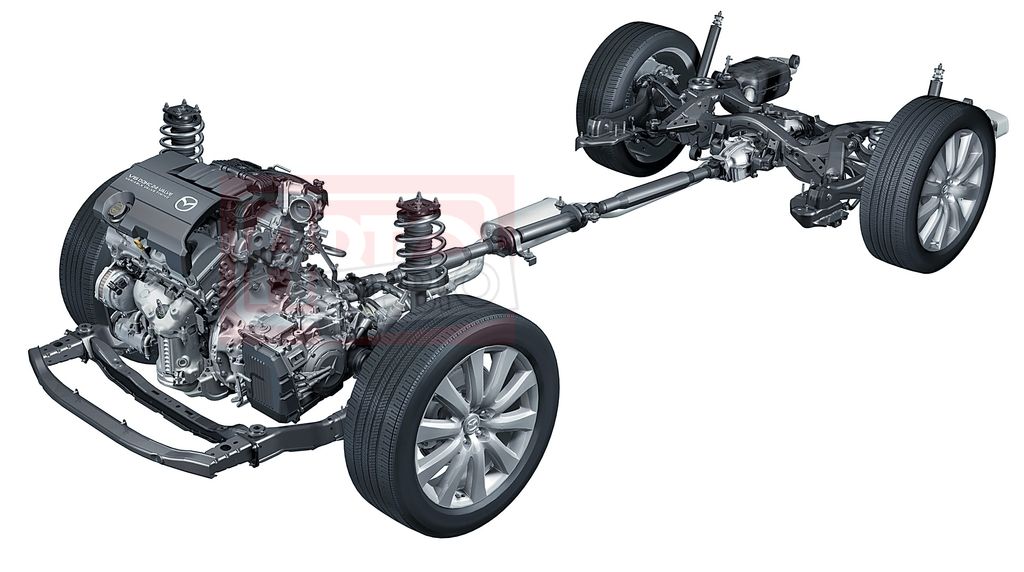 |
| Safety systems are at the most modern level: a strong body and six airbags, including "curtains" to protect the head, which in a side impact or rollover (which Americans fear most) will even cover the heads of third-row passengers | The Mazda CX-9 is not a "stretched" Mazda CX-7. It is more complex. The front part of the body is very similar in both models, as is the front McPherson suspension based on the Mazda 6. But the Ford V6 3.5 engine and the rear multi-link suspension are the same as on the Ford Edge crossover. Accordingly, the floor of the Mazda CX-9 is unified with the Ford. But, unlike it, it has a different automatic transmission — a six-speed Aisin |
Put yourself in the shoes of an American. For this money, you could buy, for example, the Acura TL or TSX sedans, which are the size of a Honda Accord — simple five-seat passenger cars. Or a big but brutal SUV — like the Chevrolet Tahoe, Chrysler Aspen, or Dodge Durango. And Mazda for this money offers an uncompromising compromise — a semi-SUV, semi-passenger car, and even with the beginnings of a minivan.
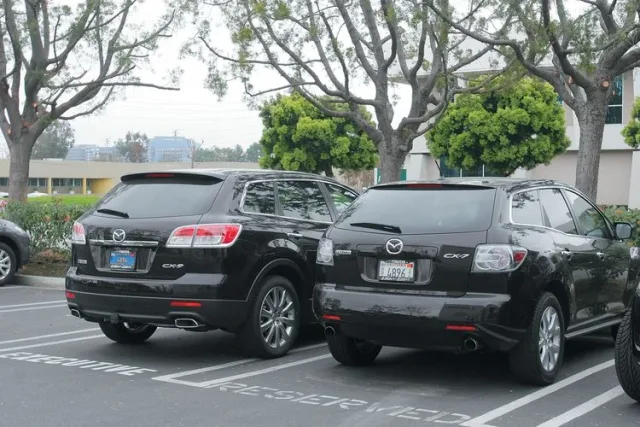
Two sisters — the older and the younger, CX-9 and CX-7. The style is common, the details and dimensions are different
Of course, Mazda is not alone — the American market already has large crossovers like the Honda Pilot and the related trio Buick Enclave/GMC Acadia/Saturn Outlook. Now they are joined by the Ford Flex — built, interestingly, on a different platform than the Mazda CX-9, but with the same V6 3.5 engine.
None of these cars will be sold in Russia. We currently have only two seven-seat crossovers. For those who are not very rich, the Chevrolet Captiva for $30000—38500. For those who have no money problems at all, the Audi Q7 from $81500.
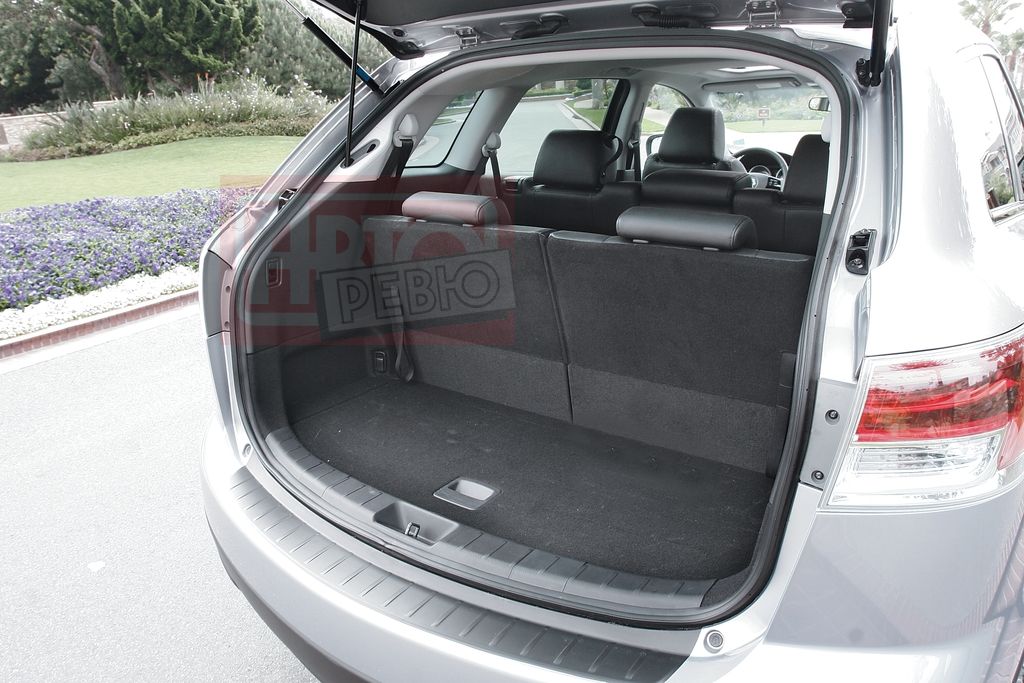 | 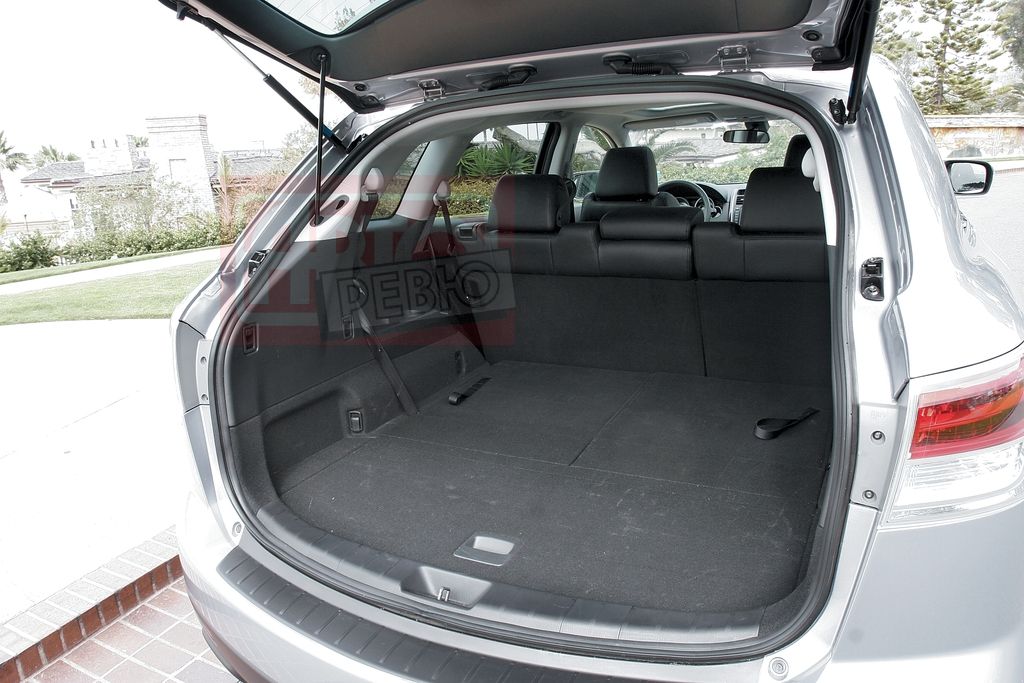 |
| The trunk is spacious even in the seven-seat configuration. And if you fold the third-row seats… | |
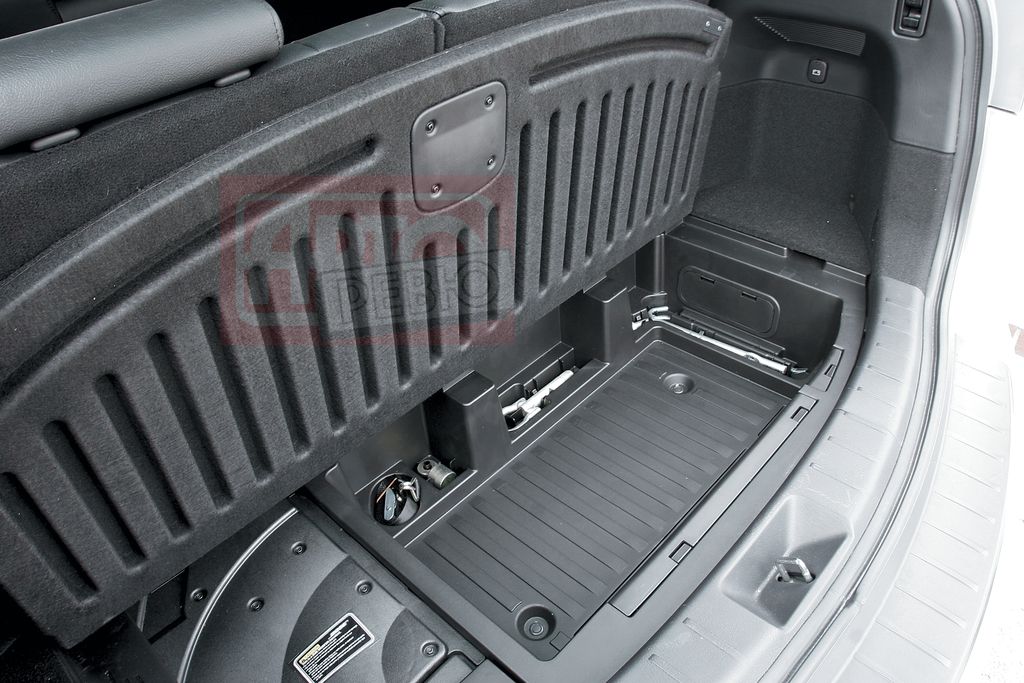 | |
| There is even a servo drive for the fifth door — like the Audi Q7! | Under the trunk floor is a neat compartment for small items |
And somewhere in between, the Mazda CX-9 could theoretically fit. If things go well in Russia. If we have more married couples who earn decently and live outside the city. And if every Russian diner starts serving the same large portions of salad as in America…
| Specifications | |
| Vehicle | Mazda CX-9 |
| Body type | 5-door wagon |
| Number of seats | 7 |
| Length, mm | 5074 |
| Width, mm | 1936 |
| Height, mm | 1728 |
| Wheelbase, mm | 2875 |
| Track front/rear, mm | 1654/1644 |
| Departure/approach angle, deg. | 17.0/21.1 |
| Trunk volume, l | 487—2852 |
| Curb weight, kg | 1958 (2064)* |
| Gross weight, kg | 2635 (2735) |
| Engine | petrol, with distributed injection |
| Location | front, transverse |
| Number and arrangement of cylinders | 6, V-shaped |
| Displacement, cm³ | 3496 |
| Cylinder bore/piston stroke, mm | 92.5/86.7 |
| Compression ratio | 10.3:1 |
| Number of valves | 24 |
| Max. power, hp/rpm | 263/6250 |
| Max. torque, Nm/rpm | 339/4500 |
| Transmission | automatic, 6-speed |
| Drive | front (all-wheel, with automatically engaged rear-wheel drive) |
| Front suspension | independent, coil spring, McPherson |
| Rear suspension | independent, coil spring, multi-link |
| Front brakes | disc, ventilated |
| Rear brakes | disc, ventilated |
| Tires | 245/60 R18, 245/50 R20 |
| Maximum speed, km/h | 192 |
| Acceleration time 0—100 km/h, s | n.a.** |
| Fuel consumption, l/100 km | |
| urban cycle | 13.1 (14.7) |
| extra-urban cycle | 9.8 (10.7) |
| combined cycle | n.a. |
| Fuel tank capacity, l | 76 |
| Fuel | petrol AI-92 |
| * In parentheses — data for the all-wheel-drive modification | |
| ** N.a. — no data | |
Hey, seven-seaters!
Telling the story of Mazda's seven-seat crossovers is funny — the company from Hiroshima had never made such cars before. However, multi-seat vehicles had been in the production program since 1968 — when the cargo-passenger version of the funny Bongo van with three rows of seats appeared. The little car was rear-engined, with an engine of only 800 cm³…
Mazda also had an eight-seat passenger model — the Mazda MPV, Multi Purpose Vehicle. In September 1988, the Mazda MPV became the first Japanese minivan created on a passenger car platform — the "donor" was the large rear-wheel-drive Mazda 626 sedan. The MPV also featured a hood layout and the availability of all-wheel-drive versions. Does that remind you of the Mazda CX-9?
Alas, in the 21st century, Mazda is among the laggards in the seven-seat crossover niche: such cars have long been available from Toyota and Honda… They also exist at Ford, Mazda's parent company — the huge Ford Flex and the slightly smaller Taurus X. Both are built on the D3 platform (previous-generation Volvo S80).
And the Mazda CX-9 is made on a different platform — CD3 (Mazda 6). The five-seat crossover twins Ford Edge and Lincoln MKX are also built on this base.
Not confused?
In short, today Ford has seven large crossovers on the American market. The five-seaters are the Ford Edge, Lincoln MKX, and Mazda CX-7, while the seven-seaters are the Ford Flex, Ford Taurus X, Volvo XC90, and Mazda CX-9. At the same time, they all are based on components from just two platforms.
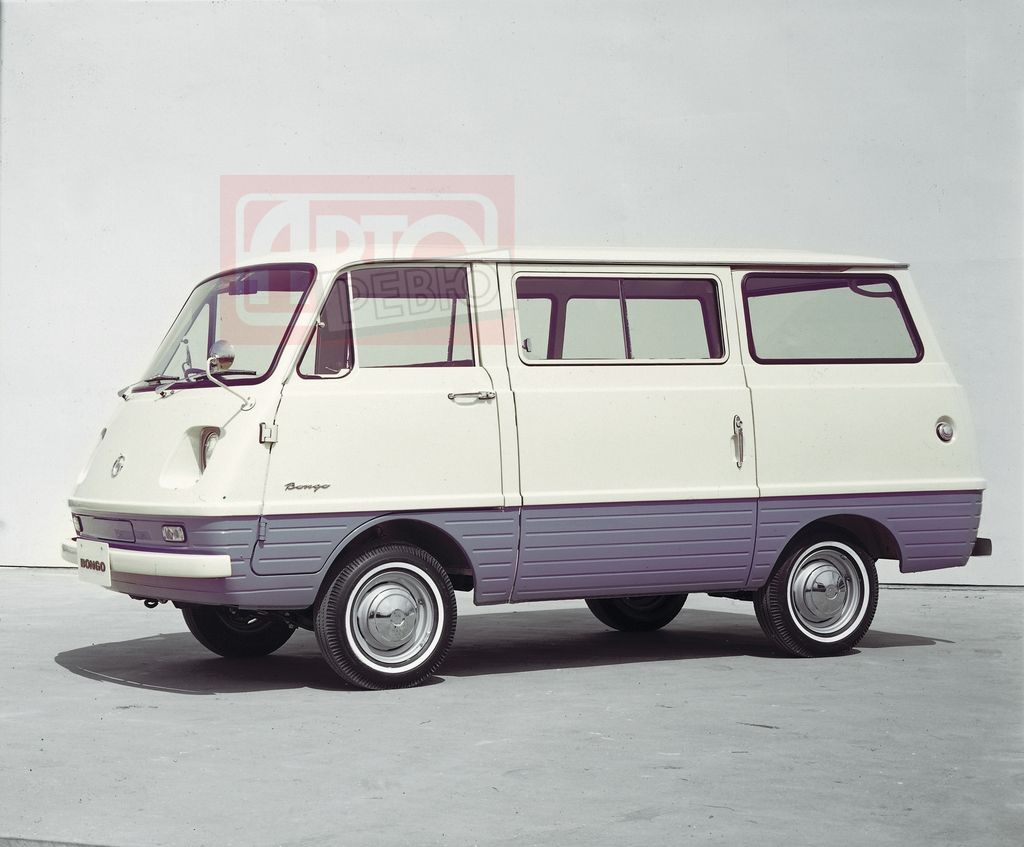 | 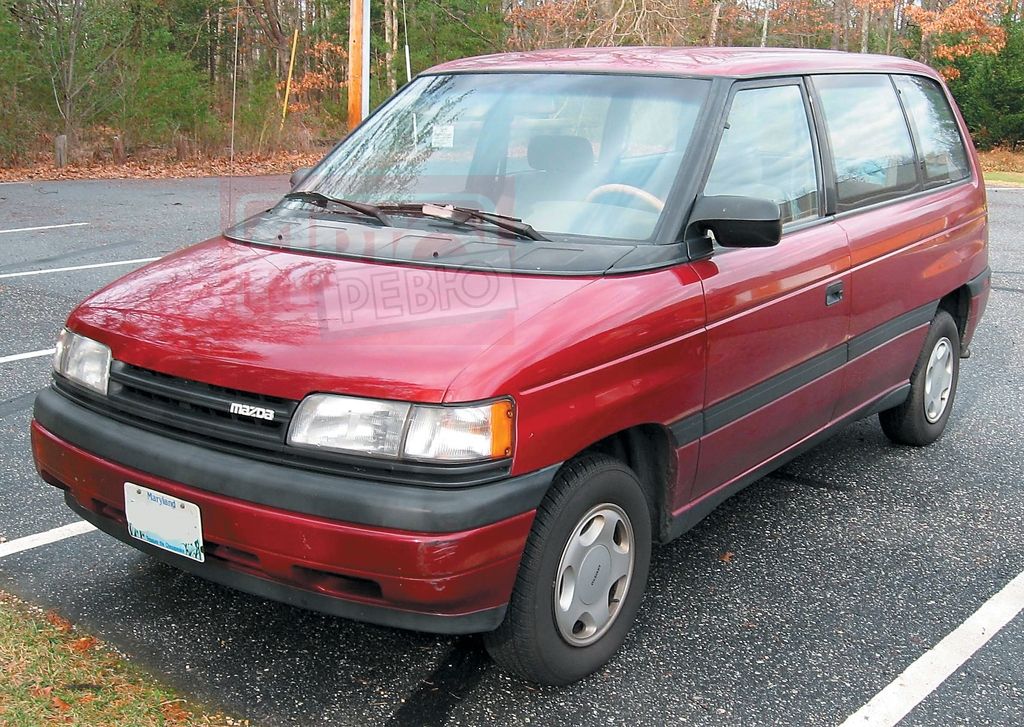 | 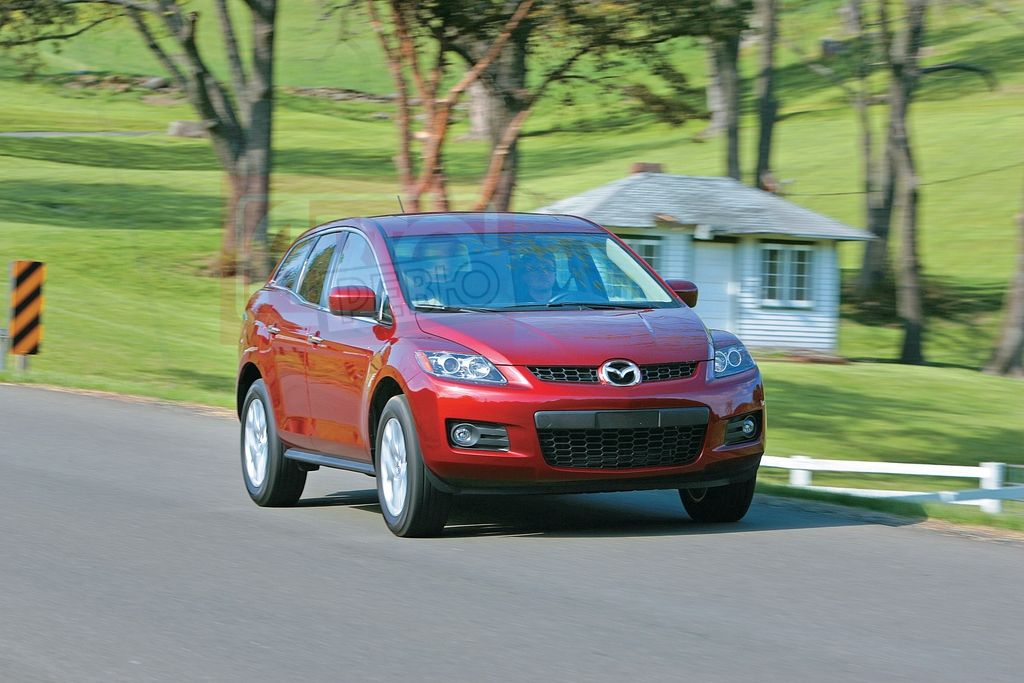 |
| Mazda Bongo 800 (1968—1978), three rows of seats | Mazda MPV first generation (1988—1999), 7-8 seats | Mazda CX-7 (since 2006), 5 seats |
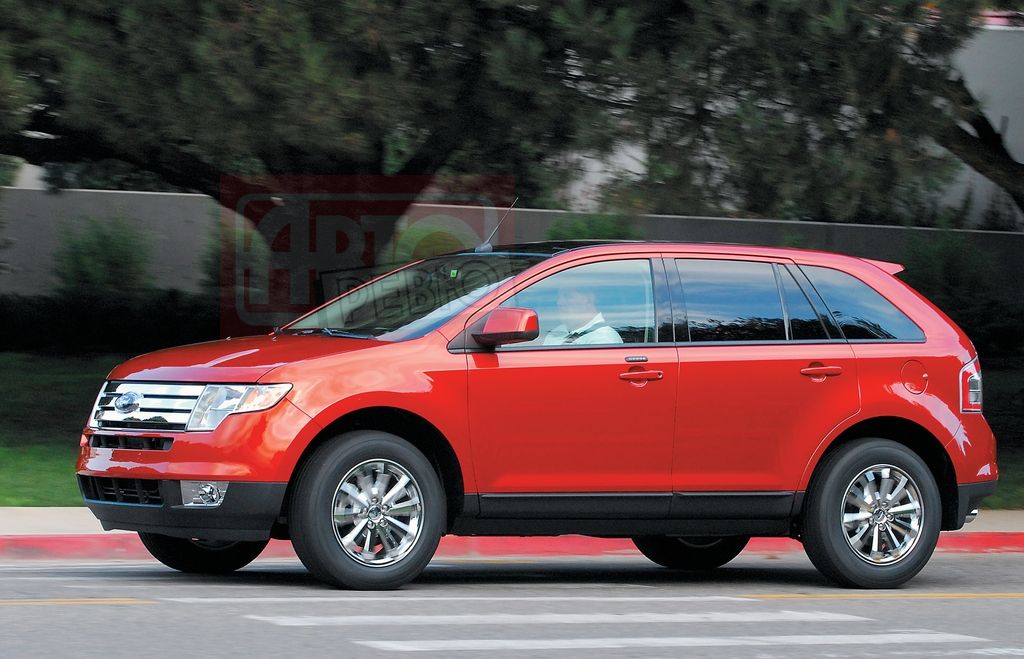 | ||
| Ford Taurus X (since 2005), 7 seats | Ford Edge (since 2006), 5 seats | Ford Flex (since 2007), 7 seats |
While the SUV market is actively filling with models styled as off-roaders, classic family minivans are gradually leaving the stage. For comparison: in 2000, Americans bought 1.4 million such one-box vehicles, and in 2006, only 970 thousand, and in the coming years the decline will continue. Crossovers, on the contrary, are gaining popularity: they are not inferior to minivans in practicality and capacity, but at the same time they have better off-road capability and cost only slightly more.
It is for this reason that Mazda and Ford have discontinued sales of their minivans MPV and Freestar in the US. Their place will be partially taken by seven-seat crossovers — Mazda CX-9, Ford Flex, and Taurus X. Pure marketing logic!