
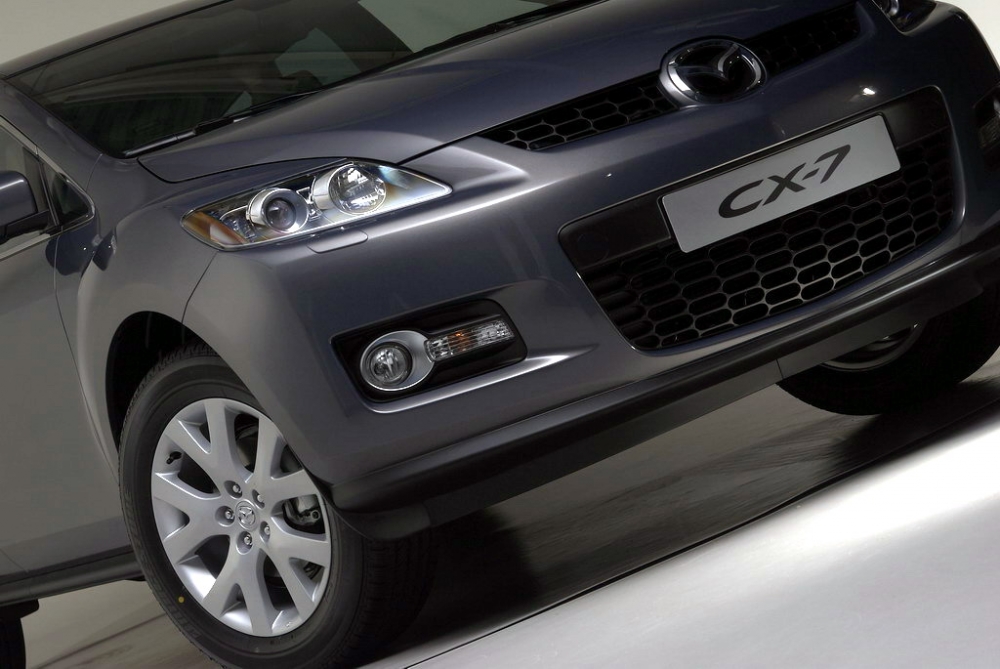
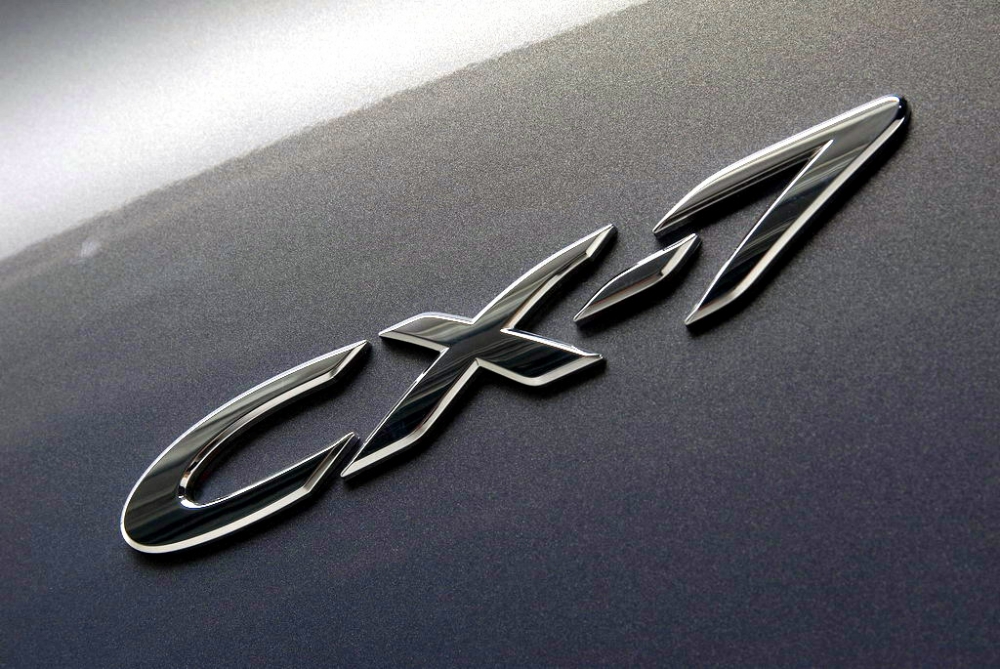
 Before heading off on a test drive in Europe, I decided to refresh my memory of the official press releases to understand how the Japanese position the new model. The main points are “sports car genes” and the desire to “shake up the European SUV segment.” Bold words, and as we know, they must be backed up. Let me remind you that the CX-7 was first shown in 2005 in Detroit as the Crossport concept. A year later, the show car became a production model, which first appeared in the US and then illegally made its way to Russia. Another year later, the car officially arrived in Europe. Moreover, the decisive role in this was played by the Russian Mazda office — it was their activity that pushed the head office to supply to Europe and Russia. Before heading off on a test drive in Europe, I decided to refresh my memory of the official press releases to understand how the Japanese position the new model. The main points are “sports car genes” and the desire to “shake up the European SUV segment.” Bold words, and as we know, they must be backed up. Let me remind you that the CX-7 was first shown in 2005 in Detroit as the Crossport concept. A year later, the show car became a production model, which first appeared in the US and then illegally made its way to Russia. Another year later, the car officially arrived in Europe. Moreover, the decisive role in this was played by the Russian Mazda office — it was their activity that pushed the head office to supply to Europe and Russia. |
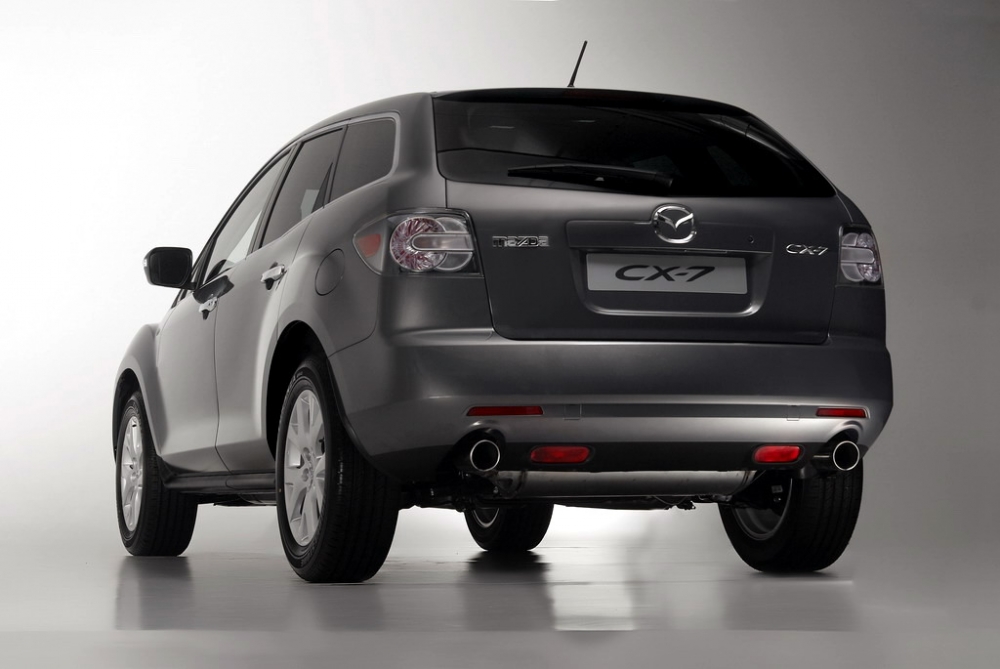
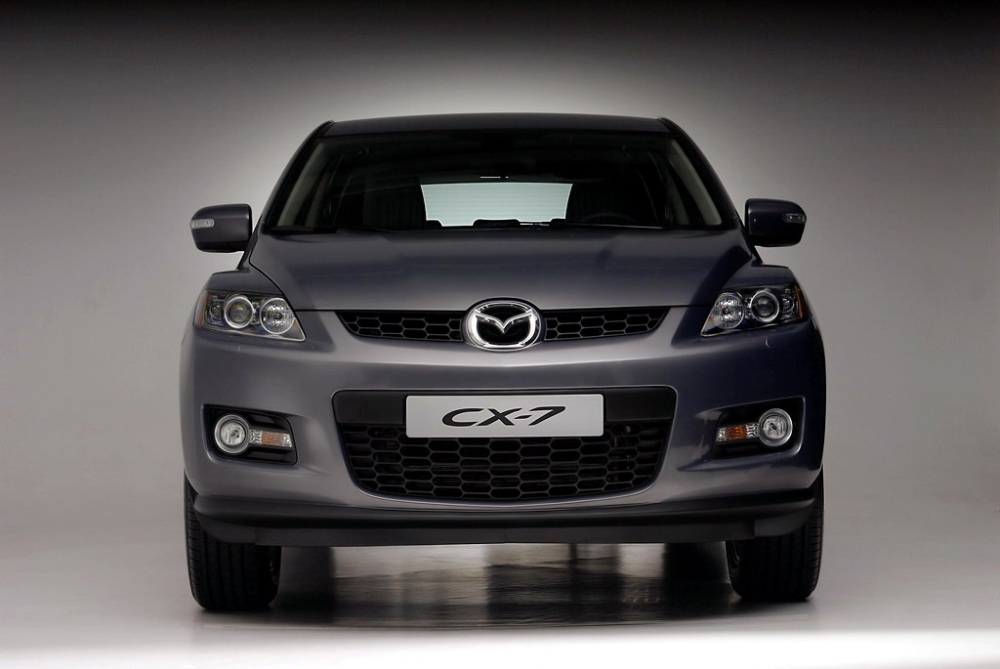
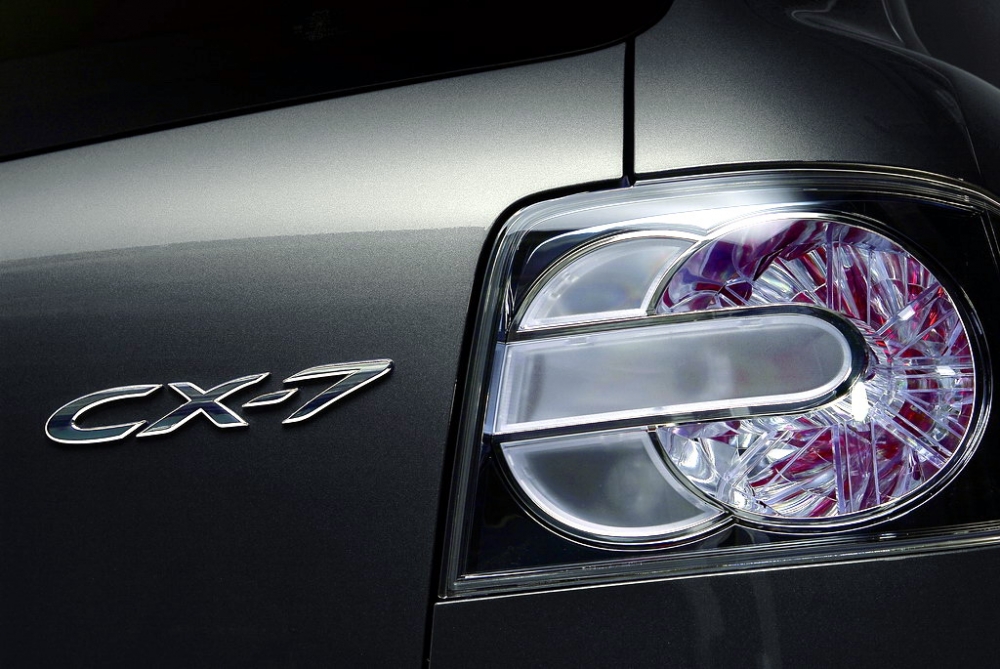
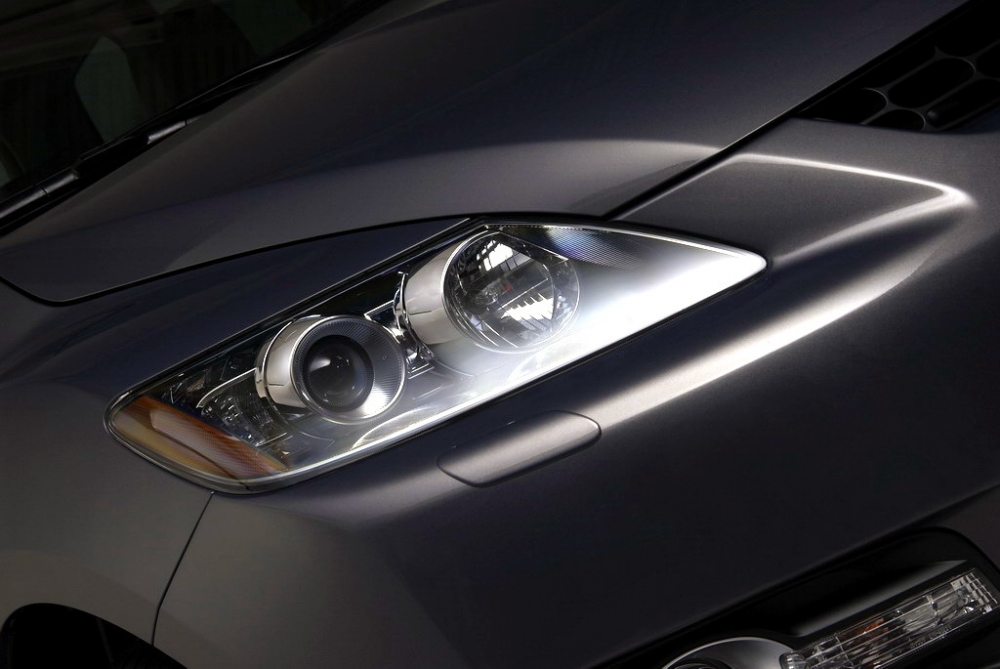
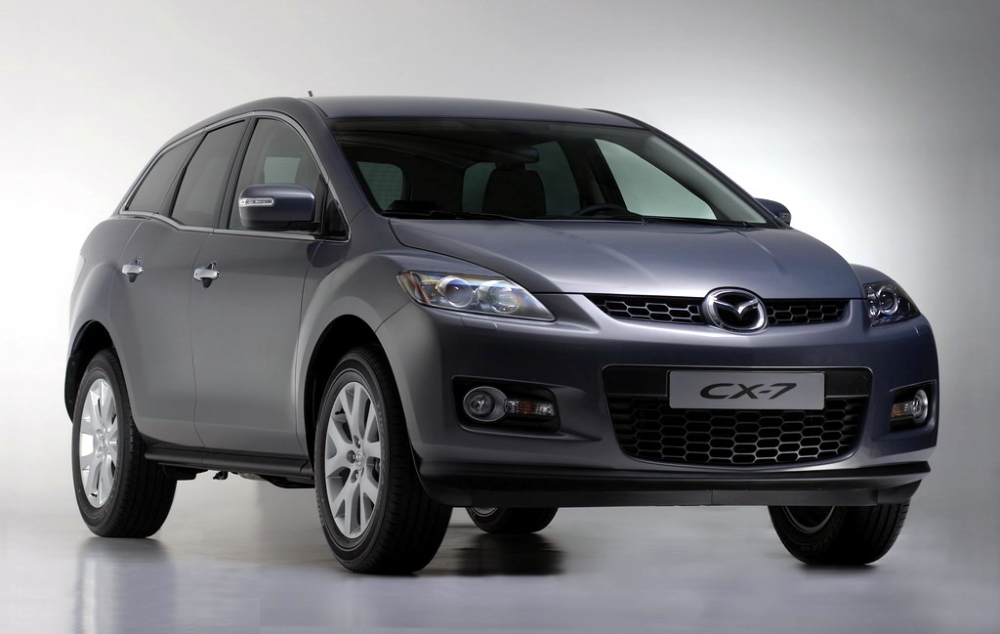 The exterior is done in the signature style that is instantly recognizable. There are the sculpted front fenders referencing the RX-8, and the front end in the spirit of the Mazda6 and Mazda3. There are also fresh details — for example, the smooth curve of the beltline at the rear. The wheel arches are accentuated, and the rear lights look elegant. And at the bottom under the bumper, you can see chrome exhaust tips spread out to the edges. In the arches are 18-inch wheels with 235/60 tires. The car looks muscular and fit, which fully corresponds to Mazda's philosophy. And what about the inside? The exterior is done in the signature style that is instantly recognizable. There are the sculpted front fenders referencing the RX-8, and the front end in the spirit of the Mazda6 and Mazda3. There are also fresh details — for example, the smooth curve of the beltline at the rear. The wheel arches are accentuated, and the rear lights look elegant. And at the bottom under the bumper, you can see chrome exhaust tips spread out to the edges. In the arches are 18-inch wheels with 235/60 tires. The car looks muscular and fit, which fully corresponds to Mazda's philosophy. And what about the inside? |
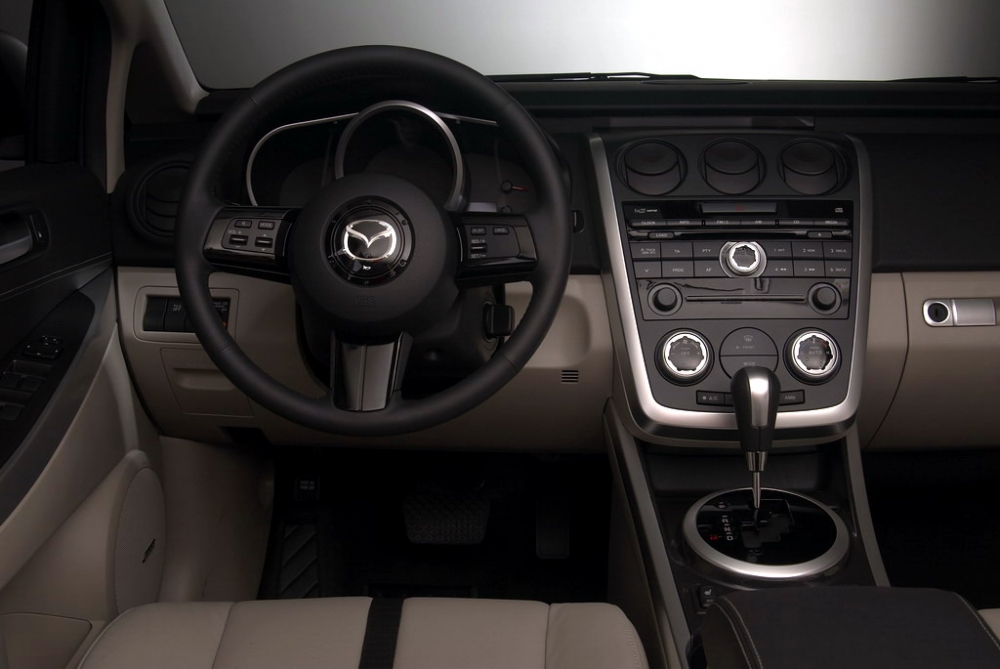 The front panel is absolutely hard to the touch, and its upper part is styled with a noticeable step. The center console is generously decorated with plastic imitating polished metal. The steering wheel is three-spoke, clearly echoing the MX-5 in design. The gear knob of the manual transmission is exactly like on the MPS models. The instrument needles, hidden in deep “wells,” point strictly downward. Only the seats stand out from this pseudo-racing ensemble: they lack pronounced lateral support and are upholstered in slippery-looking leather. However, when you sit down, you sink into them a bit, so there is some fixation. Moreover, the seats distribute body mass well — this is important on a long journey. The nice key card (optional) doesn't even need to be taken out of your pocket: sensors read the signal, and the engine starts by turning the knob in the usual place of the ignition switch. The instruments immediately light up bright red, and under the hood, the familiar turbo engine wakes up. The front panel is absolutely hard to the touch, and its upper part is styled with a noticeable step. The center console is generously decorated with plastic imitating polished metal. The steering wheel is three-spoke, clearly echoing the MX-5 in design. The gear knob of the manual transmission is exactly like on the MPS models. The instrument needles, hidden in deep “wells,” point strictly downward. Only the seats stand out from this pseudo-racing ensemble: they lack pronounced lateral support and are upholstered in slippery-looking leather. However, when you sit down, you sink into them a bit, so there is some fixation. Moreover, the seats distribute body mass well — this is important on a long journey. The nice key card (optional) doesn't even need to be taken out of your pocket: sensors read the signal, and the engine starts by turning the knob in the usual place of the ignition switch. The instruments immediately light up bright red, and under the hood, the familiar turbo engine wakes up. |
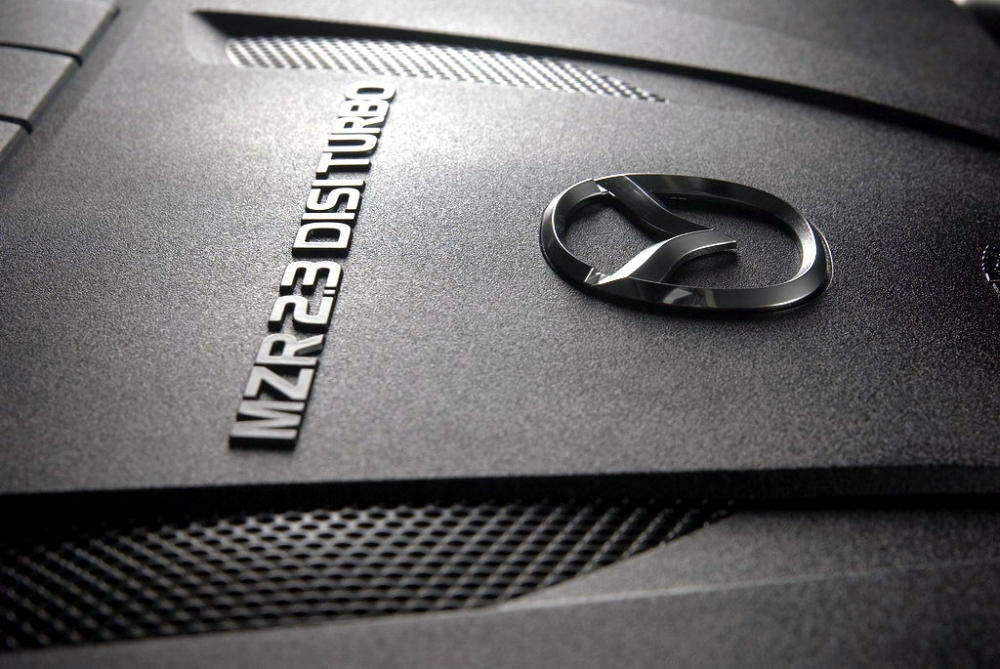
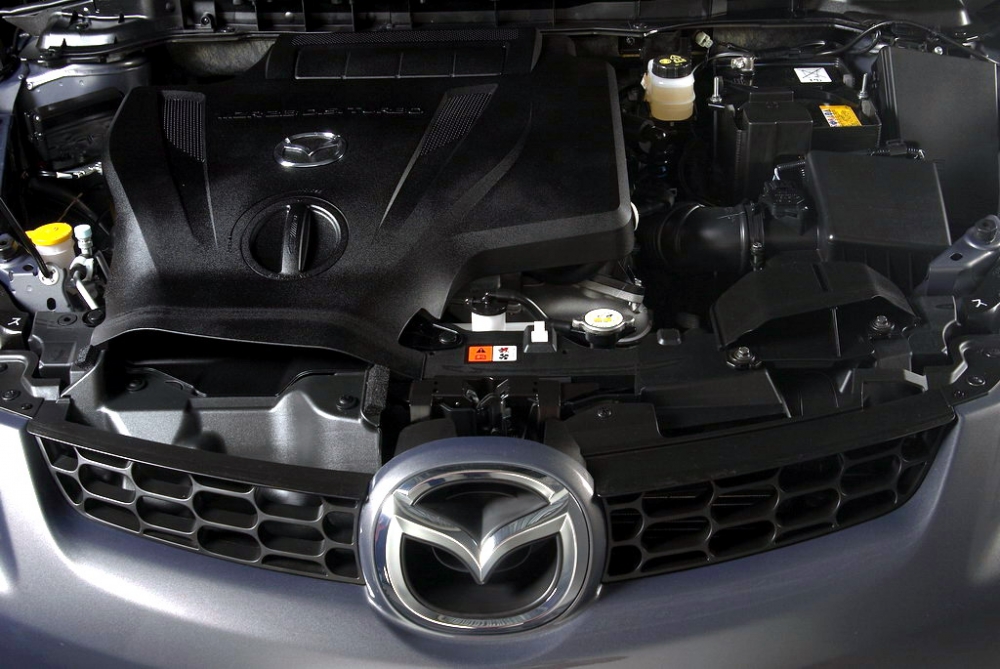 Yes, this is the same unit that we have already studied in the MPS versions of the Mazda3 and Mazda6. The MZR 2.3 DISI Turbo is equipped with direct fuel injection and turbocharging. For Europe, the power is 260 hp. With this version, the crossover accelerates to 100 km/h in 8 seconds, and the top speed is 210 km/h. True, Russian fans of fast crossovers will be disappointed. There will be no manual — only the “automatic” from the American version, which reduces power to 238 hp (according to the company, the automatic transmission cannot handle more torque). Yes, this is the same unit that we have already studied in the MPS versions of the Mazda3 and Mazda6. The MZR 2.3 DISI Turbo is equipped with direct fuel injection and turbocharging. For Europe, the power is 260 hp. With this version, the crossover accelerates to 100 km/h in 8 seconds, and the top speed is 210 km/h. True, Russian fans of fast crossovers will be disappointed. There will be no manual — only the “automatic” from the American version, which reduces power to 238 hp (according to the company, the automatic transmission cannot handle more torque). |
 Acceleration to “hundred” with the “automatic” increases by 0.2 seconds, and the top speed is limited to 180 km/h. The only plus is that you can use gasoline with an octane rating of 95. Our market also has its own suspension settings: the chassis turned out to be slightly softer than the European one, but slightly stiffer than the American one. “Golden mean” — that's how it's presented. Acceleration to “hundred” with the “automatic” increases by 0.2 seconds, and the top speed is limited to 180 km/h. The only plus is that you can use gasoline with an octane rating of 95. Our market also has its own suspension settings: the chassis turned out to be slightly softer than the European one, but slightly stiffer than the American one. “Golden mean” — that's how it's presented. |
 Well, let's get acquainted with the most “extreme” version of the CX-7 that is being prepared for Europe. Sports genes, are you there? I note that Europe also has plenty of bad roads, but we got to them later. First was Paris and the network of smooth highways around it. The light clutch turned out to be quite informative, so pulling away smoothly was not difficult. In the cabin, besides me, there were two passengers and a little luggage, but this did not affect the dynamics — the car briskly took off and confidently gained speed. The turbo engine pleased with its elasticity: it pulls calmly from 2000 rpm. All thanks to the large displacement and direct injection, which allowed raising the compression ratio. As a fan of fast driving, I immediately started revving the engine almost to the limiter. It likes it: power grows smoothly throughout the entire range, reaching its peak at 5500 rpm. The character is even, without obvious surges, and managing the thrust is very convenient. Well, let's get acquainted with the most “extreme” version of the CX-7 that is being prepared for Europe. Sports genes, are you there? I note that Europe also has plenty of bad roads, but we got to them later. First was Paris and the network of smooth highways around it. The light clutch turned out to be quite informative, so pulling away smoothly was not difficult. In the cabin, besides me, there were two passengers and a little luggage, but this did not affect the dynamics — the car briskly took off and confidently gained speed. The turbo engine pleased with its elasticity: it pulls calmly from 2000 rpm. All thanks to the large displacement and direct injection, which allowed raising the compression ratio. As a fan of fast driving, I immediately started revving the engine almost to the limiter. It likes it: power grows smoothly throughout the entire range, reaching its peak at 5500 rpm. The character is even, without obvious surges, and managing the thrust is very convenient. |
 On smooth surfaces, the suspension and steering seem ideal. Excellent feedback, clear and quick responses to steering movements, minimal body roll, and no pitching. At the same time, it is completely unclear how this is achieved. And only when the route took us from the highway onto slightly broken country roads did I realize that the exemplary behavior on smooth asphalt is a consequence of the stiff suspension. The passengers felt it no less than I did. On bumps, the car shakes and bounces considerably, the body meticulously tracks the road profile. Here I would even draw a parallel with the mentioned MPS versions. The stiffness of the chassis is complemented by energy intensity — an excellent balance. It's no wonder the company's testers drove prototypes around the Nürburgring and German autobahns during the tuning stage. By the way, for the European version, Mazda not only worked on the suspension but also strengthened the body. On smooth surfaces, the suspension and steering seem ideal. Excellent feedback, clear and quick responses to steering movements, minimal body roll, and no pitching. At the same time, it is completely unclear how this is achieved. And only when the route took us from the highway onto slightly broken country roads did I realize that the exemplary behavior on smooth asphalt is a consequence of the stiff suspension. The passengers felt it no less than I did. On bumps, the car shakes and bounces considerably, the body meticulously tracks the road profile. Here I would even draw a parallel with the mentioned MPS versions. The stiffness of the chassis is complemented by energy intensity — an excellent balance. It's no wonder the company's testers drove prototypes around the Nürburgring and German autobahns during the tuning stage. By the way, for the European version, Mazda not only worked on the suspension but also strengthened the body. |
 Now it's clear why Mazda developed a separate set of springs and shock absorbers for Russia. We have far fewer ideal roads, and most potential buyers are unlikely to agree to shake most of the time for the sake of a “sporty idea.” We will definitely take the Russian version for a test to understand how much it differs from the European one. It, by the way, according to subjective feelings, drives much more fun and interesting than its main competitors — the Mitsubishi Outlander XL and Nissan Murano. It's truly a driver's car, perhaps the most driver-oriented in its class. And what about practicality? Now it's clear why Mazda developed a separate set of springs and shock absorbers for Russia. We have far fewer ideal roads, and most potential buyers are unlikely to agree to shake most of the time for the sake of a “sporty idea.” We will definitely take the Russian version for a test to understand how much it differs from the European one. It, by the way, according to subjective feelings, drives much more fun and interesting than its main competitors — the Mitsubishi Outlander XL and Nissan Murano. It's truly a driver's car, perhaps the most driver-oriented in its class. And what about practicality? |
 Having given up the driver's seat to a colleague, I moved to the second row. It's spacious. The ceiling doesn't press, and there's a decent amount of shoulder room. The trunk is also roomy (455–1348 L), and the loading height is not too high. The rear seat backs fold easily — just pull the special levers in the trunk. The trunk floor is double-sided, which will allow transporting wet or dirty items with minimal consequences. Having given up the driver's seat to a colleague, I moved to the second row. It's spacious. The ceiling doesn't press, and there's a decent amount of shoulder room. The trunk is also roomy (455–1348 L), and the loading height is not too high. The rear seat backs fold easily — just pull the special levers in the trunk. The trunk floor is double-sided, which will allow transporting wet or dirty items with minimal consequences. |
 The CX-7 pleasantly surprised with its sound insulation. The engine is heard exactly as much as needed, the arches don't bother, and street noise doesn't penetrate at all. The optional Bose audio system with nine speakers and Centerpoint panoramic sound function plays well. The CX-7 is an all-wheel-drive vehicle. As on the Mazda6 MPS, it uses a scheme with an electronically controlled clutch that connects the rear axle when necessary. By default, all torque goes to the front wheels, and up to 50% can be transferred to the rear. The all-wheel-drive control system is integrated with the DSC stability system. The latter brakes spinning wheels and redistributes torque across the axles, returning the car to the desired trajectory. By the way, DSC cannot be turned off (only the TCS traction control can be deactivated). So it turns out that the European version of the CX-7 is a very practical crossover with pronounced driver qualities. I don't think these qualities will deteriorate much in the Russian version, so we can state that a potential bestseller is coming to us. The CX-7 pleasantly surprised with its sound insulation. The engine is heard exactly as much as needed, the arches don't bother, and street noise doesn't penetrate at all. The optional Bose audio system with nine speakers and Centerpoint panoramic sound function plays well. The CX-7 is an all-wheel-drive vehicle. As on the Mazda6 MPS, it uses a scheme with an electronically controlled clutch that connects the rear axle when necessary. By default, all torque goes to the front wheels, and up to 50% can be transferred to the rear. The all-wheel-drive control system is integrated with the DSC stability system. The latter brakes spinning wheels and redistributes torque across the axles, returning the car to the desired trajectory. By the way, DSC cannot be turned off (only the TCS traction control can be deactivated). So it turns out that the European version of the CX-7 is a very practical crossover with pronounced driver qualities. I don't think these qualities will deteriorate much in the Russian version, so we can state that a potential bestseller is coming to us.PRICES AND TRIM LEVELS The car is offered in two trim levels — Touring and Sport. Both have one engine (2.3 turbo, 238 hp) and a five-speed “automatic.” The Touring is priced at approximately 1,141,000 rubles. The list of standard options includes “metallic” paint, fabric interior, multifunction leather-wrapped steering wheel, climate control, remote central locking, heated front seats, trip computer, a full set of electronic driver assistance systems, immobilizer, security alarm, halogen headlights, headlight washers, R18 wheels, and a CD receiver with four speakers. For the Sport, they ask from 1,239,000 to 1,265,000 rubles. Added are leather interior, sunroof, power-adjustable driver's seat, keyless entry system, rain sensor, xenon headlights, fog lights, and a Bose audio system with nine speakers. |
Word and deed
Japanese company Mazda has joined the short list of automakers that not only have sporting ambitions but also successfully realize them.
Test drive photos
Comments
No comments yet. Say the first word.